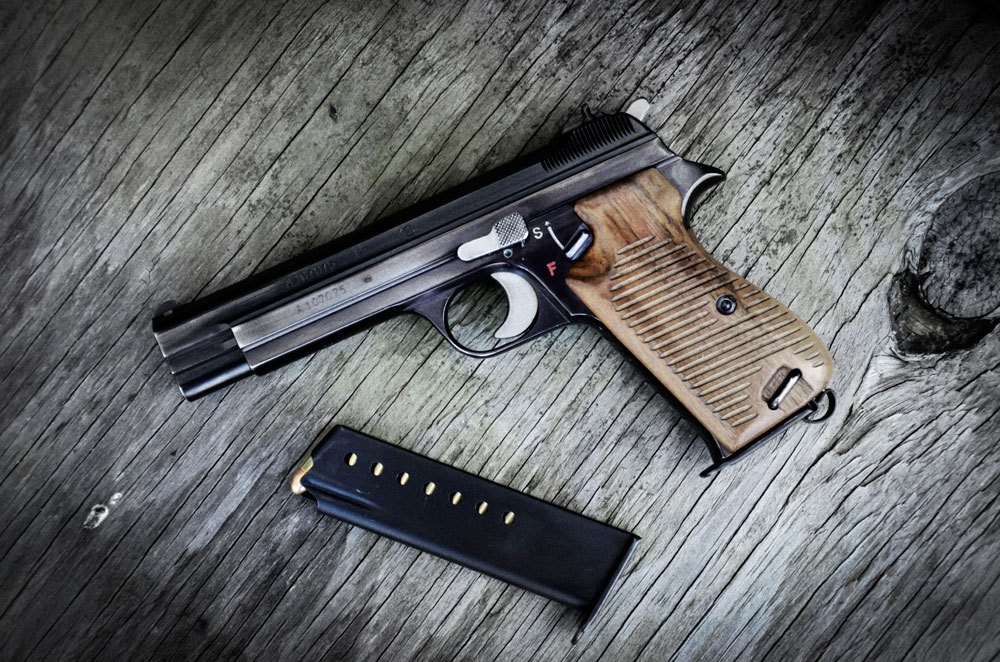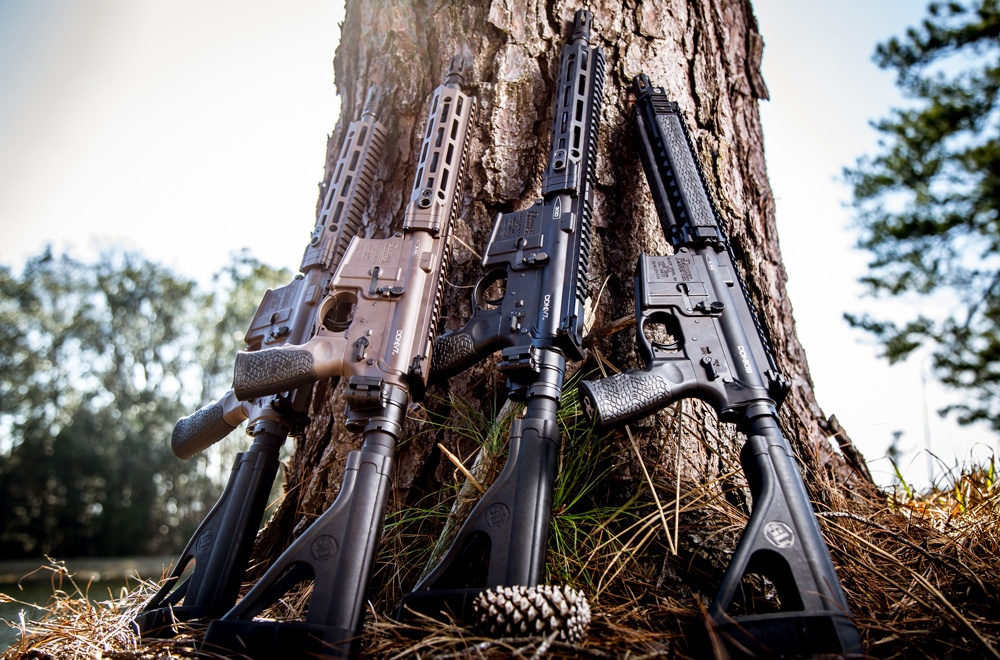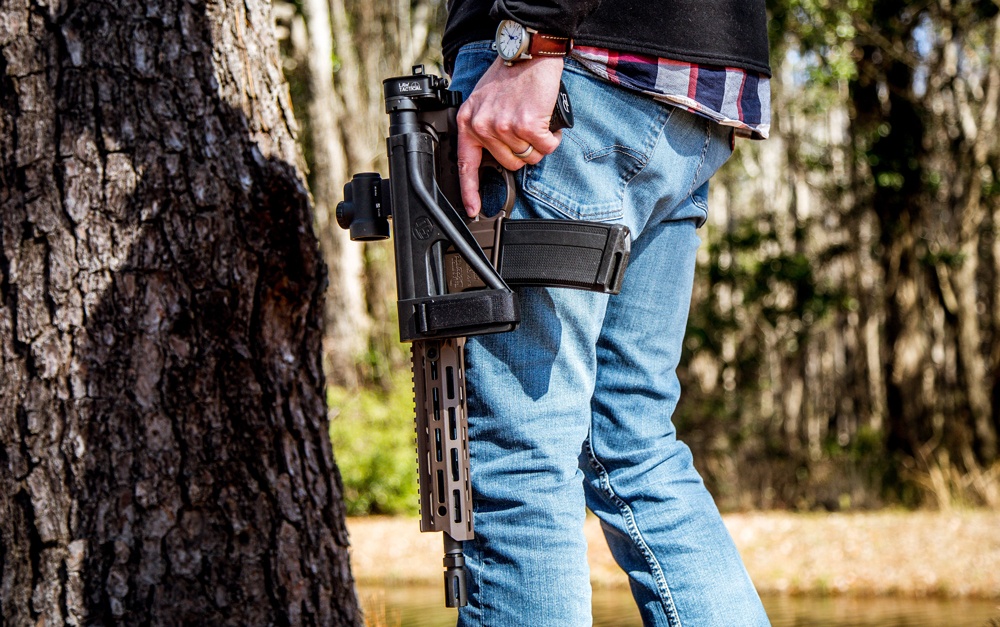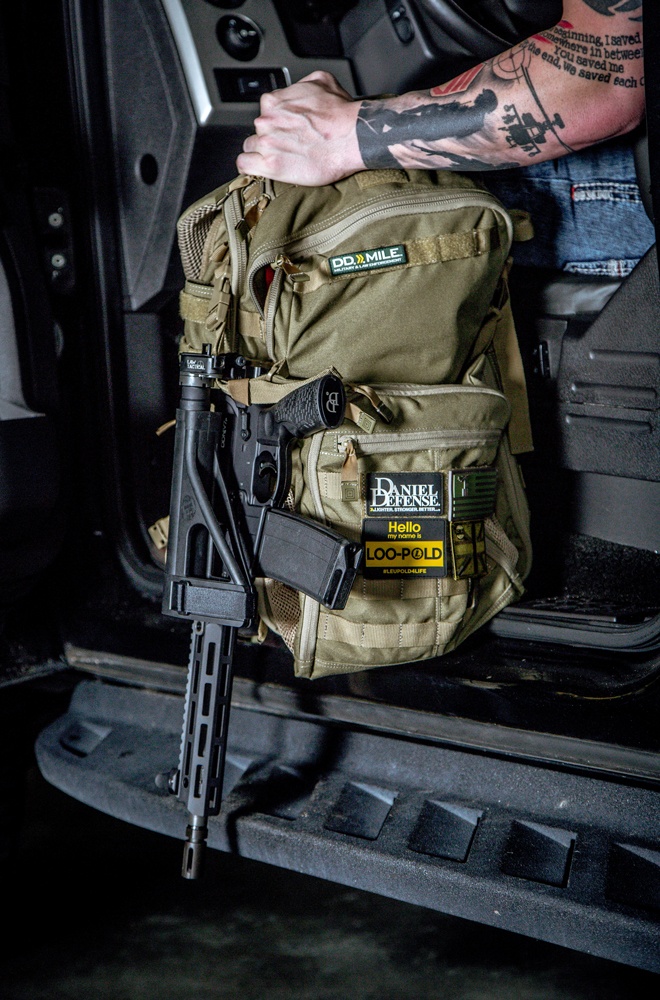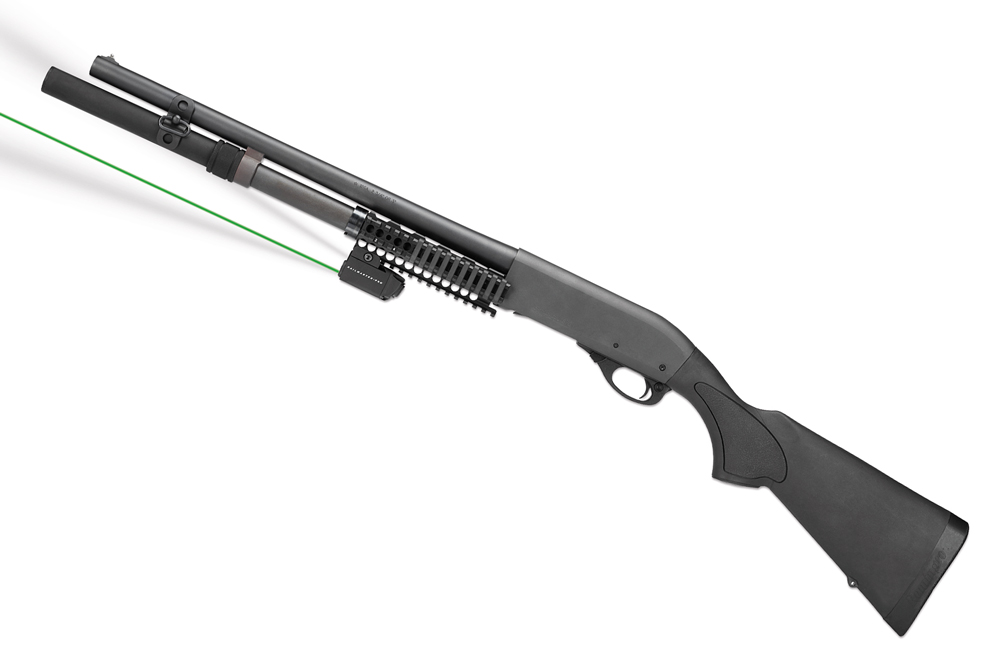
Remington has upped its popular pump-action shotgun's game with the introduction of a detachable box magazine variation — the 870 DM.
What do the new Remington 870 DM shotguns offer?
The 870 DM's box magazine permits faster reloads and more versatile ammunition.
Three- and six-round magazines are available for the pump-action shotgun.
The 870 DM's receiver has been reworked and is not compatible with earlier models.
The controls and trigger remain the same, making it intuitive to operate.
You would think a gun that has sold in the tens of millions, wouldn’t need any improvements. After all, with that sort of production run, the proof is in the proverbial pudding that the gunmaker has plum figured the magic formula. But, as it pertains to the most prolific shotgun of all time, you’d be dead wrong about the potential for improvement.
Adding a detachable magazine variant to the Remington 870 pump-action line — the 870 DM — must have been obvious to many. But it has taken more than half a century to turn this elegantly simple shotgun daydream into reality. And, in most respects, the execution of the new variant and highly desirable ammunition-feeding system appears well worth the wait.
Remington hasn’t just slapped together a magazine attachment that turns the 870 into a shotgun lightning-fast on the reload. Instead, it has redesigned the receiver to work flawlessly with the mag system, while retaining all other design points and operation that make the scattergun a classic.
In the process, Big Green appears to have injected some fresh blood into the proven design, especially in an era defined by firearms versatility.
Why Box It Up?
You needn’t delve into the tactical applications — of which are legion — to discover the usefulness of the 870 DM. A duck blind on a late autumn day will do nicely.
Switching from 2¾-inch shells loaded with No. 4 shot for those ducks over decoys to say 3-inch shells loaded with BB or BBB for a pass-shot opportunity on some Canada honkers is now a reality. What was a missed chance or a mad scramble to empty and reload a shotgun with the appropriate ammo is now simply an exercise in trading one box magazine for another.
Now apply this concept to anything you might work the trigger of you’re 870 on, and the advantage of the DM variants become obvious. It has the potential to all but do away with the need for a side-rail on a home-defense shotgun. And Remingtion has done the utmost to make the 870 DM as fast as it is versatile.
Mercifully, the three- and six-round magazines do not require rocking to insert or release from the well. The large paddle release doesn’t drop the mag like an AR, it requires the operator to slide it out. But it does slam back in just like the popular rifle, making the system intuitive and fast.
Same Old Gun, Only Different
The 870 DM certainly cuts a different profile with a six-round box magazine dangling off its underbelly. But, for the most part, it’s the same old pump-action that’s been pelting coyotes and bad folks for decades.
The shotgun comes with the same trigger components, same cross-bolt safety and same dual action-bars. Nothing in particular has been moved around on the 870 DM — just the addition of the mag release — so shooting one is like slipping into an old pair of slippers.
The new shotgun, however, is not a carbon copy of the original. While the receiver of the 870 DM looks like the original's, only with a mag well, it is not compatible with existing 870s. This is namely due to the other big difference with the detachable magazine variant to the line — the lack of a tubular magazine. It’s quite apparent the tube is still there, but it no longer feeds ammunition, it only acts as a mount for the charging forend.
This revelation is certain to disappoint some hopefuls on the Internet, who upon first release of the 870 DM postulated the gun operated off both ammunition-feeding systems. No such luck.
Full Magazine Of Models
Remington hasn’t held back with the release of the 870 DM, introducing six models of the box-fed beast. Given the configurations range from the short and stout Tac-14 to a classic wood-stocked model, it’s apparent Remington has no plans to pigeonhole the shotgun. And perhaps best of all, like the original pump-action, the DM doesn’t break the bank with models starting at $529 and running up to $799.
870 DM Gauge: 12-gauge Barrel Length: 18.5 in. Choke: Fixed Cylinder Bore Furniture: Black Synthetic Stock with Super Cell Recoil Pad Magazine Capacity: 6 rounds MSRP: $529.00
870 DM Magpul Gauge: 12-gauge Barrel Length: 18.5 in. Choke: Rem Choke Barrel with Extended Ported Tactical Choke Furniture: Magpul SGA Stock with Super Cell Recoil Pad, Magpul MOE M-LOK Forend Magazine Capacity: 6 rounds MSRP: $799
870 DM Tactical/Predator Gauge: 12-gauge Barrel Length: 18.5 in. Choke: Rem Choke Barrel with two Trulock Extended Chokes (Boar Blaster and Turkey /Predator) Furniture: Over Molded ShurShot Thumbhole Stock with Super Cell Recoil Pad, Tactical “Corn Cob” Fore-end Magazine Capacity: 3 and 6 round MSRP: $799
The quickest and easiest way to tighten your groups is to improve the trigger in your gun. Without a top-notch trigger, your shooting skills can only take you so far.
Aftermarket replacement triggers fast facts:
Pull on a mil-spec trigger is anywhere between 5 and 9 pounds
Up to a pound of pull weight fluctuation can be present from shot to shot on mil-spec triggers
Mil-spec triggers travel dramatically — while safety is engaged
A drop-in trigger can be installed in less than 10 minutes
Velocity Trigger cost: $150
You don’t have to be the Head Line Leader of a TSA battalion to know that a poor-quality trigger will rob you of the true shooting potential both you and your rifle are capable of producing — especially in AR-style rifles. And although I might ruffle some feathers, I’ve ran enough A/B accuracy tests on a variety of rifle brands, models and platforms to say that upgrading the trigger is the first thing you should change on any and every AR you own, and it will enhance the performance of your rifle more than any other upgrade you can make.
If we break down this concept of spending money to replace a functioning piece of a gun that already comes standard on every single rifle manufactured, it all comes down to performance and price. How much will it help me, and how much will it cost?
The simple answer: a lot more than you think for a lot less than you think.
Allow me to come at this from another way. The key to mastering any shooting discipline is unwavering consistency — consistency in the gun (including optics and ammo), consistency in the shooter and, most importantly, consistency in the interaction between the gun and the shooter.
As a shooter, you could win the Guinness World Record for being the World’s Most Aggressive Flincher, but as long as you flinch exactly the same way every single shot, you’d likely find yourself on par with some of the best shooters in the world, too. That’s the truth. In our world of shooting — again, regardless of discipline — consistency is king.
Mil-Spec Triggers
In all fairness, I must disclose that there are some AR-style rifle manufacturers out there who are doing a good job with their factory triggers, but you’ll find those guns in the upper tier of the price scale. It’s a very easy argument to make for buying a gun in the middle of the price pack, building that AR exactly how you want it, and still saving money that’s equally well spent on ammo or firearms training.
The overwhelming majority of AR manufacturers today are outfitting their rifles with mil-spec triggers. You know this. It’s not good or bad — it just is — and the mil-spec trigger does help keep the final price tag lower than it would otherwise be. But how much do you really know about mil-spec triggers?
The mil-spec trigger is the lowest quality trigger that can purchased, but it’s also the cheapest. All components are cast with loose tolerances, and it’s rare that the finished surfaces are smooth.
Spec pull is anywhere between 5 and 9 pounds.
Up to a pound of pull weight fluctuation can be present from shot to shot, leaving you to always guess when the gun is going to fire.
You’ll feel a large amount of gritty creep and an inconsistent pull weight.
When the safety is engaged, the trigger can still travel a large amount.
With a mil-spec trigger, the trigger travels farther on safe than an after-market drop-in trigger does to fully function.
Have I made my point? A mil-spec trigger on a gun with a good barrel is exactly like buying a high-dollar precision rifle and putting iron sights on it. If you’re banging away at point-blank targets, then you might argue that none of this matters. Maybe. But I would argue that, in that instance, you’d be better served with a handgun anyway. For all other applications, you’ll be much better served with a replacement trigger.
So, as you’re reading this, you ought to be asking yourself, sweet, but assuming you have convinced me to upgrade my trigger, what’s this gonna cost me?
Look, I’ve got kids who keep taking food from my fridge, my bank still expects my mortgage payment every month and I have a chronic condition called trigger finger itchitis that can only be remedied with the smell of freshly fired ammunition. Aftermarket triggers are like ARs: There are some really good ones out there, but I won’t tell you to buy the top-of-the-line model because it’s not always necessary.
But here’s my short answer to your question above: $150.
I am intimately familiar with the triggers both Timney and Geissele are producing, and you’ll never catch me saying a bad word about either simply because they both make great products. However, when it was brought to my attention that Velocity Triggers is making an after-market, modular drop-in trigger of equal quality with a massively slashed price tag, I got curious.
The old adage you get what you pay for often holds true, but on the flip side of that coin, you can find yourself unnecessarily paying for a brand name — not necessarily a superior product — if you’re not careful.
The Trigger Family Business
Tom Vehr owns and operates Velocity Triggers out of Phoenix, Arizona, and when I learned that he builds topnotch triggers for substantially less than his competition, I figured we all deserved to know how — and why.
In 1981, Tom Vehr’s parents bought Timney Triggers, and for a full year after that purchase, Alan Timney — one of the pillars of aftermarket trigger innovations — mentored Tom on the nuances of building good triggers. And from his parents’ purchase until 1995, Tom ran Timney Triggers.
In 1995, Tom went to work for Knight Rifles, and for the next 13 years he built the tooling and oversaw the manufacturing of more than a half-million triggers for Knight during that company’s glory days when Knight was the standard all other muzzleloaders were measured against.
In 2008, Vehr left Knight Rifles and started his own custom machine shop before opening the doors to Velocity and building it from the ground up.
So why does all this matter? For starters, it’s interesting. I find the stories behind some of the oldest and most innovative brands in our industry to be fascinating. Want a good read? Do some research on the Mossberg or Beretta families.
But more importantly, this information on Tom’s background tells me two very important things in my mission to determine whether I can recommend a Velocity Trigger to you: The man at the helm of Velocity Triggers knows triggers better than most anyone else in gun world, and that gives immediate legitimacy to the Velocity brand.
So, I called Tom Vehr for some real answers:
LH: What inspired you to get into the aftermarket trigger business? TV: I saw a need for a high-quality trigger, and just as importantly, it needed to be available at a reasonable price. There are no other aftermarket, drop-in triggers available well below $200. I knew I could manufacture a high-quality trigger at a fair price.
LH: So, Velocity has been around since 2013? Why have I not heard about you before earlier this year? TV: It always takes time to build a brand. Velocity was started in 2013, and in 2015 I quit taking in outside machining work to focus on Velocity because of growth. In early 2017, we doubled the square footage of our manufacturing facility.
LH: How many triggers can you produce annually? TV: I will tell you that we have two wire EDMs running 24/7 and we’re not keeping up. The wire EDM is the most precise way to manufacture internal components: — hammer, trigger and disconnect — and that precision matters. We also decided to bring all the manufacturing in-house so we could completely control consistency and maintain the quality of each and every part that goes into a Velocity Trigger. This also eliminates outside vendor costs. If it costs me less to make, then it costs the shooter less to buy.
LH: Generally speaking, when a shooter replaces a mil-spec AR trigger with a Velocity Trigger, what are the first things he or she is going to immediately notice within the first few shots? TV:
Exceptional consistency — consistency is everything
There’s no creep and/or take-up
The pull is exceptionally smooth
Less than a couple ounces of pull deviation from shot to shot
Accuracy will improve dramatically; groups will generally be cut in half
Complete trigger change from AR to Velocity in 5-7 minutes.
LH: How many different triggers, or models of triggers, does Velocity offer? TV: Velocity makes a few different triggers, but for ARs we offer both curved and straight models with either a 3-, 4- or 4.5-pound pull. The shape and pull weight is purely personal preference, but 80 percent of the Velocity Triggers that go out the door are curved, 3-pound AR triggers.
LH: After installing a Velocity trigger, what long-term maintenance is required? TV: Blow it out with air annually with general use, or more often in very dusty conditions. There’s no lube required.
LH: You’ve recently introduced a new trigger. Give me some details on that. TV: Yup, it’s the MPC: Marksman Performance Choice. The MPC sports a new design in which we moved the trigger forward a half-inch, which allows for quicker trigger engagement and a more ergonomic setup because the shooter’s finger isn’t forced to curl in so far.
Tom is clearly a modest man, and although he didn’t talk much about it, I’d argue that the coolest feature on the MPC is that the trigger shoe is 3/8-inch wide rather than the standard 1/4-inch. Because of an AR’s receiver design, the max width of a drop in trigger assembly is only 1/4-inch. By using a cap screw to simply attach the trigger shoe to the trigger itself after installation, a wide trigger can be achieved.
A quick peruse of the website also indicated that Velocity hangs it’s hat on “Diamond Like Carbon Coating,” so I dug deeper into what DLC is and what it does. In short, DLC is a surface treatment of the engaging area between the trigger and the hammer. Multiple passes with the EDM achieve a super-fine finish that creates a low fractional coefficient on the trigger. No hand-polishing is needed, it never needs lubrication, and it will never rust — and most importantly, it will never wear.
You heard me ranting earlier that consistency is king, and DLC seems to be the new industry standard upon which all others must now abide. In fact, I dug into DLC deep enough to find a testing report where a brand new AR was used. The gun’s barrel needed replacing just after 10,000 rounds. At about 40,000 rounds, the lower needed replacing … and the Velocity trigger showed negligible wear.
I like to lecture for as long as anyone will listen about how a drop-in trigger should be the first enhancement to every single AR they buy — and I haven’t yet heard a counter argument that holds up. But either way, whether you agree with me or not, you will never convince me that a $150 drop-in trigger, that can be installed by a first-timer in less than 10 minutes, is not worth every single penny.
I’d pay twice that amount of money for a trigger half as good — and I have — but I’ll never do it again.
Ruger has drastically expanded its external-hammer line of lightweight, concealable revolvers with four new LCRx configurations.
What the new LCRx revolvers have to offer:
Ruger has added a new 9mm, .327 Fed. Mag and two .22 WMR models to the LCRx line.
The .22 WMR is available in a 1.87- and 3-inch barrel models.
The 9mm and .327 Fed. Mag. are optimized for concealed carry, with 1.87-inch barrels.
It’s difficult to improve on a design as tried and true as a revolver. Really, what can be done to polish a gun that has shined for going on two centuries? Honestly, not a lot, but a few years back Ruger went a long way to cracking that riddle with what has become a couple of its most popular revolver lines.
Turning to cutting-edge materials, the New Hampshire gunmaker redefined the concept of a lightweight wheelgun with the LCR and LCRx. Heavy use of high-strength polymers and aluminum and drastically milling down metal components made for one of the easiest-to-carry revolvers to ever hit the market.
And with a couple other slick feats of engineering — such as the trigger — the LCR and LCRx have found their way into more than just armed citizen’s holsters. The very shootable revolvers have become real players in the overall revolver market, even with shooters looking to punch holes into paper on the weekend.
The lines have continued to grow over the years, and the newer LCRx recently enjoyed a large expansion. Ruger added four new configurations, giving fans of the external-hammer variant three new calibers to choose from — 9mm, .327 Fed. Mag., and .22 WMR.
The company continues to turn an eye to the concealed-carry market, with all four of the new revolvers available in 1.87-inch barrel, snub-nose models. But the company saw an opportunity for the .22 WMR as a utility handgun, also introducing a 3-inch barreled model. Given its weight —17.8 ounces — this seems like a good move, with the 6-round wheelgun set to be a dandy backpack gun that takes up little space and adds little weight in a trek into the backcountry.
Ruger has had success with the 9mm and .327 Fed. Mag., chamberings in its hammerless LCR line and it's logical it’d make the leap with each caliber into the sister line. In fact, the company has been pretty heavy into .327 for some time, counter to much of the handgun market, also offering the SP101 in the snappy, yet manageable magnum. As for the 9mm, it offers shooters a practical defensive wheelgun for the popular caliber. In particular, and making it more concealed-carry viable, the five-round revolver is moon-clip compatible, hastening reloads when the situation calls for it.
The small bore LCRx revolvers are built around an aluminum frame, while the 9mm and .327 Fed. Mag.’s more powerful rounds require stainless steel. All of the handguns, however, boast a polymer fire-control housing that drastically cuts down on their overall weight. They are outfitted with a highly fluted stainless steel cylinder and Ruger’s friction-reducing cam fire control, producing a much more manageable trigger pull.
The snub-nose models have a u-notch integral rear sight and replaceable pinned front. The 6-inch barreled .22 WMR, on the other hand, has an adjustable rear sight. The .22-caliber pistols both have MSRPs of $579, while the .327 Fed. Mag., and 9mm are each $669.
Specifications:
LCRx .22 WMR (3-inch barrel) Caliber: .22 WMR Grip: Hogue Tamer™ Monogrip Front Sight: Replaceable, Pinned Ramp Barrel Length: 3 in. Cylinder Finish: PVD Twist: 1:9 RH Rear Sight: Adjustable Black Blade Finish: Matte Black Weight: 17.8 oz. Height: 5.80 in. Overall Length: 7.50 in. Capacity: 6 Grooves: 6 Suggested Retail: $579.00
LCRx .22 WMR (1.87-inch Barrel) Caliber: .22 WMR Grip: Hogue Tamer™ Monogrip Front Sight: Replaceable, Pinned Ramp Barrel Length: 1.87 in. Cylinder Finish: PVD Twist: 1:9 RH Rear Sight: U-Notch Integral Finish: Matte Black Weight: 15.4 oz. Height: 4.50 in. Overall Length: 6.50 in. Capacity: 6 Grooves: 6 Suggested Retail: $579.00
LCRx .327 Fed. Mag. Caliber: .327 Federal Magnum Grip: Hogue Tamer™ Monogrip Front Sight: Replaceable, Pinned Ramp Barrel Length: 1.87 in. Cylinder Finish: PVD Twist: 1:16 RH Rear Sight: U-Notch Integral Finish: Matte Black Weight: 17.7 oz. Height: 4.50 in. Overall Length: 6.50 in. Capacity: 6 Grooves: 6 Suggested Retail: $669.00
LCRx 9mm Caliber: 9mm Grip: Hogue® Tamer™ Monogrip® Front Sight: Replaceable, Pinned Ramp Barrel Length: 1.87 in. Cylinder Finish: PVD Twist: 1:16 RH Rear Sight: U-Notch Integral Finish: Matte Black Weight: 17.4 oz. Height: 4.50 in. Overall Length: 6.50 in. Capacity: 5 Grooves: 6 Suggested Retail: $669.00
Beretta’s most famous firearm might well be its Model 92 pistol, first offered in 1975 in 9mm. Now, the impressive new Beretta M9A3 model is a serious contender as a modern survival gun.
Beretta's M9 is time proven, being the standard-issue U.S. Army pistol for many years.
Now it is back with refinements appealing to civilian shooters, especially preppers.
The Beretta M9A3 configuration holds 17 rounds and has an earth tan Cerakote finish.
It also has an extended 5.1-inch barrel, built-in 1913 accessory rail and improved grip.
Night sights are standard on the M9A3, which is a DA/SA design.
A Closer Look At The Beretta M9A3
Of course, military missions and doctrine change over time, and the Beretta M9 has kept pace. Now, they have developed the Beretta M9A3 with even further significant changes.
The M9A3 is a short-recoil, semi-automatic, hammer-fired pistol with a standard 17-round capacity magazine firing in double action for the first shot with the trigger pull both cocking and releasing the hammer, and single action for all subsequent shots.
The latest Beretta is the M9A3 (not officially adopted by the military), which features a desert tan finish, threaded barrel, night sights, and a smaller grip with interchangeable panels.
The tilting locking block has been redesigned for a longer service life. The 17-round magazine itself is one of the many improvements, adding two extra rounds from the original mag design and a PVD coating.
To further appeal to combat troops in arid environments, the M9A3 has a two-tone earth Cerakote finish on the slide and barrel, which provides improved lubricity, corrosion resistance, and durability. This finish creates a reduced IR signature, too.
The steel components that are left in black feature Beretta’s special Bruniton finish, a Teflon-based paint finish that provides far superior corrosion resistance over bluing or Parkerizing. Tritium night sights are standard on the M9A3.
The Beretta M9A3’s barrel has a chrome-lined bore and chamber and has been extended to 5.1 inches and threaded with a 1/2 x 28-inch thread pattern to use with standard suppressor devices. A knurled thread protector is included as well.
The earth color anodized frame on the M9A3 has been significantly upgraded to respond to changing military needs.
At 25 yards this full-sized Beretta pistol is capable of solid combat accuracy.
At the front dust cover, Beretta has added a three slot MIL-STD 1913 accessory rail, a big improvement over the M9’s lack of any rail and the M9A1’s single slot rail. The traditionally squared trigger guard has been machined much flatter in the front to more easily accommodate rail mounted accessories.
Another improvement is the grip, with the backstrap now featuring a flat mainspring housing instead of the traditional bulged type. This significantly reduces the size of the grip, which was sometimes hard to handle for smaller stature shooters.
To further reduce grip size, the M9A3 uses slim Vertec Thin Grip panels that feature distinct and aggressive checkering. Beretta does include Hogue rubber over-molded replacement grips that provide an original grip size and feel.
Left-handed shooters will appreciate the reversible magazine release button, which has been enlarged for easier and faster manipulation.
The rest of the controls on the M9A3 remain standard, with a left-side slide lock/release and the takedown lever directly in front of it on the left side of the receiver.
The Beretta M9A1 is an improved version that adds a Picatinny rail to the frame, high-profile three dot sights, heavy checkering, and a beveled magazine well.
The use of polymer parts, reducing both manufacturing costs and weight, is minimal on the M9A3 and limited to the recoil spring guide rod, lanyard ring, magazine floorplate, and follower.
Beretta was established in 1526 and is the oldest continuously operating firearms manufacturer in the world. It is family owned, having been passed down through 16 generations. This gives Beretta a level of tradition and pride in manufacturing that is unparalleled.
The M9A3 continues this tradition and is made entirely in the United States. Today, after 30 years, the M9 is still serving the needs of our military both at home and overseas, and the new M9A3 shows no signs of slowing down.
There can be a vicious cycle when it comes to a good rimfire handgun. Inherently accurate, these pistols and revolvers are like a spring meadow in their ability to sprout tidy little clover leafs. But once a shooter gets a taste for these firearms’ precision printing, they only want more and smaller. Then the obsession begins — check out a precision pistol match to see what I mean.
Thankfully, gunmakers have fueled this mania, turning out true classics in the genre of rimfire handguns. And a shooter needn’t be a competitor to truly appreciate what these guns bring to the table. Whether placing a dead-accurate head shot on a brushy tail high in a beech tree’s boughs or making soda cans dance up a hillside, precision plinkers are truly one of life’s small pleasures.
With that in mind, here are seven of the greatest rimfire handguns to ever pitch small-bore lead. If you don’t have at least one of these in your arsenal, then your collection isn’t complete.
Colt Woodsman
When John M. Browning’s influence over pistol design is considered, typically the 1911 comes to mind — rightfully so. However, the Colt Woodsman deserves its share of the spotlight, for much of the modern rimfire pistol world rests on its shoulders. From its fixed barrel to its blowback action to borrowing Luger’s raked grip, the Woodsman set the standard for what was expected out of a .22 pistol.
Though, in truth, Browning doesn’t get all the credit for this still intriguing gun design. Among his last handguns while employed at Colt, a number of other designers had a hand in bringing the Woodsman to the public in 1915 after his departure. And what they offered the shooting world was one slick little rimfire, ideal for an afternoon target shooting or bagging the odd rabbit in the field.
Browning and the Colt team did something right, given the 10-round Woodsman had a 62-year run and was only jettisoned after manufacturing costs exceed sales. There were three series of the hammer-fired Woodsman (one through three) over this time with three models available in each: Target, Sport and Match.
The differences between the models are minor, generally barrel length, sights, grips and frame (particularly the squared-off section at the front of the receiver). Later, Colt also introduced economy variants of the Woodsman — first the Challenger, then the Huntsman. While they lacked the refinements of the Woodsman, both had identical actions to the higher-end models.
With some hard searching, acceptable specimens of the Woodsman are available. And if you really want to break the bank, there are some extraordinary examples of the pistol complete with elaborate engraving and all the bells and whistles.
Rimfire pistols, at least in the modern era, are rarely associated with military conflict. However, the H-D was up to its cocking serrations in global conflict for the better part of a quarter century. Cutting its teeth as a military training pistol in World War II after its release in 1940, due to similarity in operation to the M1911A1, it would go on to cloak-and-dagger work.
The OSS (forerunner of the CIA) ordered around 2,000 of the integrally suppressed High Standard HD-MS models late in the conflict. And it continued to serve spy types into the Cold War or that can at least be inferred with one produced by the Soviet’s trial of Air Force pilot Lt. Gary Powers after his U-2 aircraft was shot down over the U.S.S.R.
The H-D was also a hit with everyday, average shooters and finished its run among the most popular pistols ever produced by High Standard. With a pinned barrel, Luger-style grip and weight of a full-sized pistol, the H-D was designed for accuracy and delivered in competition and plinking.
The Model HDs aren’t terribly tough to come by, if you’re willing to search, but they can tax a shooter’s budge. The HD-MS, well that’s a completely different story. Few were made and of those just a handful were ever registered with the ATF for civilian ownership. Translation: They are plum expensive.
Smith & Wesson Model 41
To many competitive shooters, pistols don’t get any sweeter than the Model 41. The high-end Smith & Wesson rimfire pistol has been a mainstay on the national competition stage for more than half a century, and doesn’t show any signs of letting up soon.
But producing a pistol meant to gun down gold required plenty of time at the drawing board — a decade in fact. Smith & Wesson developed two semi-automatic prototypes in 1947 — the X-41 and X-42, however, the company’s actual offering — the Model 41 — wasn’t unleashed on the shooting public until 1957.
To win hearts, the pistol has a familiar feel to handgun shooters. The angle of the Model 41 directly draws upon one of the most prolific pistols of all time — the 1911. And the similarities between the small- and large-bore handguns don’t end there. Smith & Wesson also configured the slide release and manual thumb safety in the same positions found on the 1911.
In addition to a fixed barrel (notice a trend here?), the 10-round pistol also has another element that makes it lights-out accurate — perhaps the finest trigger ever to grace a rimfire pistol. It has a smooth pull and a terse 3-pound break, as well as over-travel adjustment.
While the Model 41 has pulled disappearing acts from Smith & Wesson’s catalog in the past, it is now presently available. And the newest iteration has some intriguing upgrades, such as a switch-barrel design and micrometer click adjustable target rear sight. Just the tickets for competitive types to stay right on target.
Smith & Wesson Model 17
Smith & Wesson had dabbled in .22-caliber revolvers in the late 19th and early 20th Century, but got it next to perfect with the release of this post-World War II gem. The Model 17, introduced in 1947, is quite possibly the best double-action rimfire revolver of all time, combining rock-solid construction and lights-out accuracy. To boot, the rimfire looks unmistakably like a Smith & Wesson wheelgun — never a bad thing.
Much of the six-round revolver’s durability, accuracy and looks are thanks to the gun’s hefty construction. The Model 17 is a full-sized revolver built around S&W’s legendary K-frame. And it can be configured for everything from dropping squirrels to dominating a rapid-fire competition. The company offered three barrel options — 4, 6 or 8 inches — and outfitted the six-round revolver with an adjustable rear sight and an un-pinned, fixed ramp or Patridge style front sight.
In the past, serious marksmen could get the Model 17 with “The Three T’s”: target trigger, target hammer and target front sight.
The Model 17 did a disappearing act for a spell, with Smith & Wesson discontinuing the revolver for 11 years. The stainless steel Model 617 was available, but for the diehards it was no replacement for the blued-steel beauty. Wisely, in 2009 the company reintroduced the original again as the Model 17 Masterpiece, allowing an entirely new generation to revel in one of the true greats of the rimfire world.
Ruger Standard
The story is familiar to most .22 fans: Bill Ruger banged away in his garage on a pistol with the styling of the P08 Luger and the guts of a Japanese Nambu. With a little financial backing from Alex Sturm, he struck firearms gold in 1949 with the Standard — one that blossomed into an empire. But the Standard forms more than just the roots of a thriving manufacturer; it’s also fair to say it’s the origin of today’s booming rimfire pistol market.
The interest the best-selling .22 pistol of all time kindled has erupted into an inferno at this point.
Accuracy, not to mention a fair price, is how the Standard captivated shooters. The fixed barrel deserves the lion’s share of the credit for the pistol’s ability to launch bullets with deadly accuracy. Only the unique cylindrical bolt moves when the gun cycles, giving the pistol the rigidity required to stay on target shot after shot.
But there’s more to the Standard than just its barrel. The gun’s ergonomics are superb; there are few handguns that have better balance and point as naturally. The angled grip facilitates much of this, as does the gun’s overall heft — which is plenty for a .22.
If there is any one hitch in the pistol’s giddy up it’s the takedown of the early models — it’s a bit of a bear to field strip. Ruger, however, has done its utmost to rectify this in the most recent Mark IVs, with a simplified push-button takedown.
Ruger Single-Six
Credit Bill Ruger; he knew when he had a winner — and the self-taught engineer certainly had one in .22-caliber handguns. It didn’t take him long to realize this after the introduction of his masterpiece Standard, and he followed it up with one of the truly great single-action revolvers of all time — the Single-Six.
The rimfire, styled after the Colt Single Action Army revolver, Ruger harnessed the enthusiasm for America’s Old West percolating in the country in 1953. The popularity of the throwback revolver proved so great it eventually led to the launch of the legendary Blackhawk line of centerfire single-action revolvers.
A gun, however, doesn’t rise and then stay on top off nostalgia alone, and the Single-Six offered wannabe cowpokes a whole bunch more, including an affordable price. Ruger pulled off this minor economic coup by manufacturing the frame through investment casting. In fact, the Single-Six was among the first firearms the company produced utilizing this process, one it still relies on heavily today. The results were magnificent, providing backpackers, campers, plinkers, competitors and every other rimfire enthusiast a strong and accurate revolver, with a dash of American history.
Despite its timeless design, the Single-Six continues to remain relevant to today’s shooters through a number of upgrades over the years. Among the weightiest was the addition of the transfer bar safety in 1973 (these revolvers are known as the New Model) that allowed the safe loading of every cylinder.
More recently, Ruger has embraced other popular rimfire cartridges, offering a .22 WMR along with a .22 LR cylinder in its Convertible model and expanding the Single-Six to the red-hot .17 HMR rounds. Available in barrel lengths from 4.62 to 9.5 inches, the Single-Six is truly a revolver for all occasions.
Browning Buck Mark
Though released in 1985, the Buck Mark has a lineage that can be traced all the way back to the company’s namesake. The pistol was the evolution of the Browning Challenger, which was a tweak on the Nomad, which was a redesign of John M. Browning’s Colt Woodsman. With this sort of pedigree, it’s no wonder the company believed it could stand tall against the heavyweight of the rimfire pistol world — the Ruger Mark series.
While it has not enjoyed the absolutely stratospheric success of the Marks, the Buck Mark has held its own. The 30-some models that have come down the pike have captivated shooters, whether drilling bullseyes in rapid fire or dispatching coyotes on a trap line.
The Buck Mark turns to a successful formula of many rimfire pistols — a fixed barrel. This one simple design feature ensures the gun stays on target by doing away with all potential play. On top of that, for American shooters, the gun is extremely familiar to operate, given its slide.
This somewhat unusual design for modern rimfires bestows an admirable attribute, often overlooked — less fouling. Since the action opens more than many pistols in its class, it kicks out more carbon — making the Buck Mark as reliable chewing through cheap ammo as it is the top-shelf stuff.
At extended ranges, air pressure alters bullet flight — and impact — more than you might think.
How does air pressure influence a bullet's trajectory?
Denser air slows a bullet, thus exposes to more of gravities effects.
More air pressure, due to elevation or weather patterns, results in denser air.
For shooting purposes, barometric pressure is of little use.
Instead, station pressure provides the data required.
Ballistic calculators are often required to figure out effects of air pressures on a bullet.
In past articles, I’ve dissected how gravity and wind are the two main variables that affect your bullet’s path. Yes, other environmental variables matter, too; however, they only change how much of an effect gravity and wind will have.
The reason your bullet falls more by the time it reaches a 900-yard target than it does for a 100-yard target is because it was exposed to gravity longer. Therefore, the longer it takes a bullet to reach the target, the more gravity and wind will move the bullet off of its original flight path.
A Bullet’s Speed
There are three variables that determine a bullet’s speed on its way to the target:
The initial speed of the bullet
The efficiency of the bullet
The external and environmental variables
In discussing a bullet’s speed, we’ve already covered the initial speed of the bullet and the aerodynamic efficiency of the bullet. Now it’s time to explore environmental variables.
The environmental variables that affect a bullet’s path are:
Air pressure
Temperature
Humidity
There are also things called “spin drift” and the Coriolis (and Eötvös) Effect that can change your bullet’s path. However, we’ll save those for future discussions.
Air Density
Each of the three listed variables can change the density of the air. Simply, a bullet doesn’t travel as well through denser/thicker air.
Therefore, a bullet will slow down faster in dense, thick air than it will in less-dense, thinner air. Why does this matter? A bullet that slows down more will take longer to reach a target — and be moved off of its original path more by gravity and wind.
If you are recoil-sensitive, it is always a temptation to let someone else sight-in your rifle, but it is much better if you do it yourself.
Remember this:
Denser air = slower bullet = lower impact on a target
Going forward, we’re going to explore each of the three variables that affect air’s density individually because each are extremely important to understand. In this column, we’re going to explore air pressure.
Can You Handle The Pressure?
More air pressure results in denser air. The air’s pressure will change based on certain weather patterns and also the altitude. As a general rule, air pressure is lower the higher you are above sea level, and vice versa.
This is because air actually has some mass and is pulled down by gravity. At higher altitudes, there are fewer air molecules being pulled down on your head than there are at lower altitudes. Compare this to water pressure. The deeper you go into water, the higher the pressure. The same phenomenon causes this — there’s more water above you that gravity is pulling down on.
However, it’s not always true that a higher altitude will have less air pressure. Weather patterns can also have an effect. Typically, when a storm is coming, the air pressure drops.
Therefore, you could be hiking a mountain with an altimeter in your hand, which measures the air pressure and tells you your altitude. As you hiked up the mountain and watched the altimeter, you’d see your elevation measurement go higher as you hiked into less dense, lower-pressure air. If you stop to take a break and you notice that the altimeter keeps going up, that’s a sure sign that a storm is coming — the air pressure is decreasing even though you’re not changing altitude.
Air pressure is typically measured in the amount of mercury that’s pushed up a measurement column (in either inches or millimeters). For example, an air pressure of 29.95 inHg (inch of mercury) means that the actual pressure of the air on the mercury in a gauge is enough to push the column of mercury 29.95 inches up the measurement column.
Barometric vs. Station Pressure
Air pressure is usually measured and described as “barometric pressure.” Barometric pressure, which you probably hear about on your local weather report, is useful in day-to-day life because it has been corrected to remove altitude as a variable and instead only focuses on the weather patterns. This is helpful for weather reports because the barometric pressure reading allows for the air pressure to be compared between Denver and New Orleans. This is not helpful, however, for shooting long range.
When shooting long range, we want to know the actual pressure of the air through which our bullet is flying. An artificial number that has been “normalized” to help compare different cities is not helpful for shooting.
Instead of barometric pressure, I encourage you to pay attention to “station pressure,” which is the actual measurement of the air’s pressure on mercury at that specific location (weather station) where you’re at.
To convert from barometric to station pressure, subtract about 1 inch of mercury for every thousand feet of elevation. By using station pressure, you might see that the air pressure at position “A” is 29 inHg, while the air pressure at position “B” (3,000 feet higher) is 27 inHg. This shows that the air will be thinner at position “B” and you can expect your bullet to get to the target faster and not fall as much due to gravity if air pressure is the only variable that changed. If the weather patterns were similar between these two locations, the barometric pressure would be the same.
Air Pressure’s Effect On Your Bullet’s Path
There’s no standard change to every bullet’s speed and path due to air pressure changes. This is because bullets of different initial velocities, aerodynamic shape and weight will all behave differently. Despite the different behavior among individual bullets, the net effect is still the same — less air pressure results in a faster bullet.
To figure out how air pressure changes your particular bullet’s path, you are going to have to use ballistic software. There are many applications available for your smartphone that can compute this for you, and some manufacturers of bullets and scopes also provide free software. For example, I’m a big fan of the free software on the Vortex Optics website.
Cold dry air creates more resistance to a bullet in flight than warm humid conditions. Such environmental considerations must be taken into account when making an accurate long-range shot.
By recording the effect of gravity on your bullet at different distances at a certain air pressure, you can then adjust the air pressure in the various software solutions to see the change it will have on your bullet’s path. Also, there are tools that you can take with you into the field that will measure the air’s pressure at your location and also compute the corrections for your bullet.
The Bad News
Unfortunately, it’s not quite this simple. You can’t just look at air pressure and assume that shooting at higher altitudes will result in a faster bullet that doesn’t drop as much. Other variables are also going to affect the air’s density. The one we’ll cover in the next column, temperature, often has the opposite effect of air pressure.
Colder temperatures result in denser air and slower bullets. And where do we often find colder temperatures? That’s right — higher altitudes.
Should you take apart your suppressor to clean it? The answer is yes/always for some and no/never for others. Knowing the answer for your suppressor can save you time, money and aggravation.
What you need to know about cleaning your suppressor:
Pistol and rimfire suppressors absolutely must be cleaned.
Those meant for centerfire rifles might or might not require it.
Centerfire rifles run so hot and burn power so completely they leave little residue.
Suppressor cleaning supplies are minimal; often they're already part of a cleaning kit.
Baffles are easily hand cleaned with solvent and a little elbow grease.
A small diameter dowel is handy in restacking the baffles and sliding them into the tube.
There are two classes of suppressors: “must clean” and “never clean.” You absolutely must clean your rimfire and pistol-caliber suppressors. As a result, suppressors meant for those applications will always be of a design you can take apart. Let’s call them MC (must clean) suppressors. Centerfire rifle suppressors may or may not be of the take-apart design. We can call them NC (never clean) suppressors. Why?
Rimfire and pistol-caliber suppressors get really dirty. If you do not clean them, they will become one-piece suppressors.
Rifle suppressors (and again, centerfire rifle, not rimfire rifle) run so hot and the powder burns so completely that there is no real residue left behind to clean out. I had a graphic encounter with this while in a suppressor class being taught by Dr. Phil Dater.
There was a rifle-caliber suppressor that had been band-sawed down the center, splitting it into two. Once it had been passed around, Dr. Dater asked us “How many rounds do you think have gone through it?” We hemmed and hawed, and a few numbers were tossed out. In the spirit of full disclosure, there was a hard, thin, coating of powder residue on the inside, but it was about as thick as the brass thickness of the case mouth of an empty piece of brass, not really built-up at all.
I stuck my hand up. “Doc, the way you are suggesting we answer leads me to believe that we’re way under the number. So, how about ten to twenty thousand rounds?” With a smile, he said “Closer than anyone usually guesses. That particular silencer had 108,000 logged rounds of .223 and 5.56 through it before we cut it up.”
Here it is, a suppressor that had 108,000 rounds of .223/5.56 through it.
So, even if you take care of your rifle barrel, that suppressor had ten barrels worth of ammunition through it and was still working fine when they cut it open to find out what was going on inside.
At current ammunition prices, that suppressor was good for over $22,000 worth of ammo, at vanilla-plain, FMJ, import ammo prices. (108,000 rounds, at $205 per thousand, although I’d bet if you ordered 100,000 in one delivery, they’d give you a discount.) Twenty-two thousand dollars in ammo for the service life on a suppressor, and you’re sweating the cost of an extra QD mount to put on your second rifle? You will literally wear out several barrels each on those rifles before you even have to wonder, “Is my suppressor used up yet?”
So, rimfire and handguns, clean regularly. Centerfire rifles, run them hot at least once in a range session and don’t worry about it. (Unless you are reloading cast bullets for subsonic rounds, and then you treat it like a rimfire or handgun suppressor. And, obviously, do this only with a suppressor you can take apart.)
The Exception
There’s always an exception. What if, since the threads are the same, you used your centerfire rifle suppressor, meant for .223/5.56, on your rimfire rifle? What then? You will have built up residues inside of the suppressor, residues that cannot be easily cleaned out. One option is to use one of the ultrasonic cleaners (which we’ll get to shortly) but then you have liquid left inside. Unless you bake the suppressor to dry it out (and do not, I repeat DO NOT do this in the oven your wife cooks in), the liquid will be adding stress to the suppressor on every shot, until you burn it out. Not good, unless it was designed to be run wet.
The second way is to take it off the rimfire rifle, put it on a centerfire rifle, and shoot it enough to burn out the residues. Let’s take a moment and do the math on that. Let’s say you can (and I’m not saying this is the correct number, I’m just using it as an estimate) heat up the suppressor hot enough to clean it in 100 rapid-fire rounds. That’s one-tenth of a case of ammo, so $20. That's one percent of the service life of the barrel, so there’s another couple of bucks there. We’ll overlook whether the range, gun club, buddy whose field you are using will be happy at three magazines straight of rapid fire.
How many “cleanings” like that can you do, before you’ve reached the cost of a rimfire-specific suppressor? Ten? Twenty?
This is what can happen if you do not clean your rimfire or pistol-caliber suppressor. Don’t be this guy.
Don’t be “that guy” at the range. Restrain yourself, save up the money, get a dedicated rimfire suppressor, one that can be taken apart and cleaned, and then use it on your rimfires.
Cleaning Essentials
At a bare minimum, you will need a plastic bristle brush, cleaning patches, (I’d suggest a roll of paper towels as well), cleaning solvents for powder and lead residues, and gloves. Gloves? Yes, you will be handling the baffles or monocore directly, and in rimfire and handgun calibers the residues will have a good dollop of lead in them. One might even be tempted to use the pun “a healthy dose” of lead. Keeping that stuff off your hands is a good idea, even if you diligently wash up afterwards, because it will take a lot of washing.
Avoid using brass or steel-bristle brushes, as the baffles might not like it. If you have aluminum or titanium baffles, a stainless steel brush will be entirely too harsh. Finding out the hard way will be expensive.
Cleaning a suppressor is like cleaning a firearm, only dirtier.
A cleaning apron specifically for this task is another good idea. The brush will splatter solvent, and your hands and arms will quickly be enveloped in a mist of solvent, with lead and powder residues mixed in. The carbon black of that mixture will stain clothes. (You know how we, other suppressor owners and I, know this, right?)
And it would not be a bad idea to invest in lead-specific soap, for cleaning your hands after you have cleaned your suppressor. You can get some basic soap, or abrasive soap meant specifically for cleaning lead off your hands from D-Lead. If the top of your workbench is not sealed, you should seal it before more solvents, lead and other stuff soaks in. Once sealed (any polyurethane will do, if the top surface is wood), you can use the D-Lead wipes to wipe the lead gunk up when you are done cleaning your suppressor.
Takedown
Every design is different. Some are threaded on the front cap, some on the rear, some on both. One thing you can be certain of is this: the manufacturer will have either included a special wrench with the suppressor, or designed one or both of the caps to accept a standard open-end wrench. Before you start, make sure you have all the cleaning equipment on hand – solvents, brushes, patches, gloves, etc. – and proceed.
Apply a few drops of penetrating oil to the joints of the front and or rear caps. These could be Kroil, Liquid Wrench, or whatever your favorite loosening liquid might be. While those drops soak in, assemble the tools you’ll need.
Use the tool the maker provided. Get it apart before it gets too dirty. Clean it, and put it together. It isn’t rocket science.
Hand-Cleaning The Suppressor
Use the provided wrench, or an open-end wrench if that is the appropriate tool, and remove the cap or caps. In the case of a baffle stack design, you will probably find the baffles wedged in tightly. Use a section of wooden dowel to push them out. You can find this at the local hardware or big-box store, and you’ll probably have to buy a three-foot section of it, for a couple of dollars. Choose one that’s a diameter that will fit inside of the tube, not to tight, but not so small it will flew. A dowel 3/4 inch will do for most sizes, but a quick check on yours will let you know what the maximum size yours can take. You can also use a similarly sized section of PVC pipe.
While you’re there, also pick up a section of doweling, or PVC, that will be a snug but not tight fit down the center hole of the baffles. Don’t take the baffle with you, measure the ID of the hole, write it down, and get a dowel at the store.
The way to remove the baffle is not necessarily straightforward. To remove the baffles, place a shop rag or old towel on your workbench or the floor. Place the rod, standing up, on the towel, put the suppressor minus its caps on top of the rod, and grasp the tube. Push the tube down over the rod, pushing the baffles out of the tube. (Some suppressors might be directional, that is, the baffles go out only one way. Again, read the instructions.)
If you try to hold the tube in one hand and push the rod with the other, you end up not pushing the baffles out. When the alignment goes off-center enough, you can hurt yourself as you push one hand into the end of the suppressor tube.
The correct method will cause the baffles to pop up out of the tube and spill out onto the towel/bench/floor.
Some designs use a common tool, in this case the AR-15 carbine stock wrench, a tool we all have.
Gather them up, count them to make sure you have them all, and begin cleaning. How extravagant you wish to be with the cleaning solvent is between you, your wallet, and the space you clean in. You can simply put the baffles in a stainless steel pan, pour in solvent, let them soak, and then start scrubbing and wiping. Get off as much of the caked-on residue as you can from the baffle surfaces, but pay particular attention to the edges. That’s where they bind in the tube.
After you’ve given the baffles a once-over, use the solvent, brush and a piece of paper towel on the inside of the tube. Also scrub the end caps, especially their threads.
Now, go back and give the baffles another wipe with a paper towel damp with whatever cleaning solution you find works best.
Use a dry shop rag or old towel or paper towels to wipe everything dry.
Re-Stacking
Getting all the baffles to stack correctly, and keep them there while you slide them into the tube, can be a hassle. This is especially true if the baffles have index tabs or interlocking edges. This is where your smaller-diameter dowel comes in handy. Assemble the baffle stack over the dowel, keeping the tabs in their slots. Then, you can hold the assembly all in one stack, and slide the stack, with the dowel, into the tube. Once in place, with everything nestled correctly, you can pull the dowel out and screw on the caps.
On re-assembly, put a drop of oil on the threads of the end caps, before you screw everything back together.
Tighten to the manufactures specs (you did read the manual, right?) but not tighter. The powder residue and gunk will act to tighten the assembly once you do some shooting, and if you over-tighten you’ll simply make it that much harder to take apart when it comes time to clean again.
This stack of baffles on the rod is ready to go into the tube.
If you aren’t sure if you have it tight enough, don’t make it tighter. When you next shoot at the range, test the tightness of the caps after a couple of magazines of shooting. If anything is loose, you need to be a bit firmer the next time. If they are all tight, you have done it right.
Set to ring the gong from a country mile, Savage's MSR 15 Valkyrie embraces the ballistic talents of Federal's new cartridge.
What does the new Savage MSR 15 Valkyrie bring to the table?
The MSR 15 Valkyrie is chambered for Federal's red-hot new cartridge the .224 Valkyrie.
The Valkyrie offers greater capacity than other .22 calibers and heavy-for-caliber bullets.
The projectile maintains supersonic velocity beyond 1,300 yards.
According to Federal, it outperforms all other AR-15 cartridges in terms of drop and drift.
The MSR 15 Valkyrie has a faster 1:7 twist and 18-inch barrel for improved ballistics.
Only gravity has been more constant than Savage Arms. Since the sunset of the Model 99, another release from the Massachusetts gunmaker meant one thing and one thing only — the market was growing by another bolt-action.
This isn’t to say the Massachusetts manufacturer hasn’t turned out tip-top rifles at more than fair prices — they have. But, for the most part, the company’s catalog is chalked full of riffs off its tried and true Model 10 and Model 110 bolt actions and not much else.
Things, however, have changed in recent years. Venerable Savage’s slow-and-steady ethos has begun to pick up pace and, a surprise to many, the company has begun churning out AR-15 and AR-10 rifles.
Now the company is going even further out on a limb with its newest rifle release. The MSR 15 Valkyrie embraces a brand new cartridge and is among the first rifles chambered for the small-bore wonder. Then again, the .224 Valkyrie might not be a big gamble at all.
If it pans out the way Savage’s sister brand Federal Premium promises and the new MSR helps it deliver, it has a real chance at putting an entirely new spin on the long-range shooting game.
Flight Of The .224 Valkyrie
Hot loads are nothing new in the world of centerfire .22 cartridges. But Federal has gone a step beyond just capacity with the newly minted .224 Valkyrie. It also has given it space for a projectile that can harness it.
In addition to room for more propellant, the 30 Rem./6.8 SPC case also has the space for longer projectiles with their trim ogives. Not only does this mean the Valkyrie launches bullets with sexier ballistic coefficients, but also greater sectional density. And as every shooter learns sooner or later, these factors are key in defeating drag, and in turn gravity, as well as wind drift.
And from what Federal has released so far on the Valkyrie, they appear to have a winning recipe.
The company claims the round maintains supersonic velocities out to 1,300 yards, outperforming nearly everything in its class — 22 Nosler, .223 Rem., and 6.5 Grendel. Just so they didn’t leave any sacred cows un-tipped, the ammo company also said the Valkyrie produces less recoil than the 6.5 Creedmoor, while nipping at its heels in performance. To top it all off, aside from bolt and barrel, the round works in a standard AR-15. Federal pitches the Valkyrie as a cartridge for all shooting situations, from small to medium game hunting to competition and plinking. And it has released a full suite of ammunition to meet all occasions: 90-grain Gold Medal Sierra MatchKing, 60-grain Nosler Ballistic Tip Varmint, 100-grain Fusion MSR and 75-grain American Eagle TMJ.
The American Eagle offering (rumored to run $14 per box of 40) brings up another potential advantage of the Valkyrie: affordability. That’s something not often associated to the long-range game.
At present, there is little hard data and specs available on the Valkyrie, aside from company-supplied ballistics (which are scant) and some backstage reviews by shooting's mucky-mucks. In turn, time will tell if it lives up to Federal’s boasts.
Everyday shooters' chances to give the .224 Valkyrie its day in court will come early next year, once approved by the Sporting Arms and Ammunition Manufacturers’ Institute in January 2018. Reloading specs on the Valkyrie will then soon follow.
MSR 15 Valkyrie
Savage knows bolt-actions and, with the release of the MRS 15 Valkyrie, is proving it also knows ARs. The gunmaker has put together what appears a pretty solid package to set the .224 Valkyrie to flight.
Savage bills the MSR 15 Valkyrie as “competition ready.” At just under 8 pounds and 35.5-39 inches in overall length, it has the potential to hold down other duties. Given the range expectations of the .224 Valkyrie, this news should get coyotes shaking in their boots. As would be expected, the rifle is optimized for the round, this is particularly seen in the barrel. While Savage didn’t go for a full 20-inch barrel on the MSR 15 Valkyrie, it got darn close at 18. This should provide plenty of bore to milk the round for all of its ballistic potential. On top of that, it boasts a faster 1:7 twist rate, logical given the .224’s heavier bullets. Following present black rifle trends, the rifling is 5R — a beveled land, meant to minimize bullet deformation and make the bore easier to clean.
The Savage has a mid-length gas system, which is becoming all the more common, even on shorter-barreled ARs. But there is solid reasoning for opting for mid over carbine length. In addition to dampening the recoil, the mid-length gas system’s extra 2 inches also keeps the higher capacity cartridge from battering the heck out of the bolt-carrier group and buffer. And there is little worry for shooters who plan to run every conceivable round through the rifle, as the MSR 15 Valkyrie boasts an adjustable gas block.
The rifle is set for precision work out of the box with an adjustable two-stage trigger, which is tunable between 2.5 and 6 pounds. It has a free-floating M-LOK handguard, with ample slot real estate around the circumference and is Cerakoted (same goes for the receivers) in FDE with the Valkyrie logo on the side. It has a full-length Picatinny rail, a UBR Gen 2 buttstock and Hogue pistol grip. And the MSR 15 Valkyrie is topped off with a with a muzzle brake similar to the one found on the 10/110 Stealth, attached with a 1/2×28 thread pattern. While Savage has allowed word to slip about the MSR 15 Valkyrie now, interested shooters will have to show patience. The rifle’s official release isn’t until SHOT Show 2018, but the price has already been set, with the MSRP at $1,499.
Until then, long-range freaks and collectors of the latest-and-greatest AR will just have to ponder the rifle and cartridge and whether they will find shooting Valhalla with these Valkyries.
While it has yet to achieve widespread acceptance, the .41 Remington Magnum is a sharp all-around hunting cartridge that is more manageable than the .44 Magnum.
The .41 Remington Magnum is a true .410-inch diameter cartridge.
This is as opposed to the .401-inch diameter of the .41 Long Colt.
The round is a more practical hunting cartridge than the .44 Magnum.
And it's more potent than the .357 Magnum.
The .41 Magnum has substantial recoil and muzzle blast, but less than the .44 Mag.
The .41 Remington Magnum revolver cartridge was introduced in June 1964 along with the S&W Model 57 revolver. Bore diameter of the .41 Magnum is a true .410-inch, rather than the .401-inch of the .41 Long Colt.
The new round was a more practical all-round hunting cartridge than was the .44 Magnum. The .357 is not entirely adequate for big game, except in the hands of an experienced handgun hunter. The .44 Magnum is overpowered for anything but big game, and most people do not shoot well with it. The .41 Magnum covers the small-game, medium-game, and varmint-through-deer classes quite adequately. Its effectiveness on anything heavier than deer would depend upon who was using it and under what conditions.
Recoil and muzzle blast of the .41 Remington Magnum are slightly less than the .44 Magnum, but still heavy. For the average shooter, mastering either will require about the same amount of training and practice. The .41 Remington Magnum is not quite as powerful as the .44 Magnum, but it is all the gun the average handgun hunter needs. All major domestic commercial ammunition makers have offered this cartridge, but, as of this writing, it has yet to find truly widespread popularity.
AR-style rifles aren’t only relegated to the range or competitive shooting. Here’s a list of new hunting ARs that could make your next season one for the hunting journal.
What are 9 great new hunting ARs to bring home game?
Call them black rifles, ARs or modern sporting rifles. Call them anything you want, but don’t call the latest round of AR platform guns unsuitable for hunting. Thanks to a growing demand for accurate, reliable, high-quality and diverse semi-auto rifles, gun manufacturers are producing some of the finest hunting ARs available today.
Whether you prefer to pop prairie dogs at long ranges, thin out hogs on the Back 40 or hunt deer, bears or even elk, there are plenty of hunting ARs to choose from. Some are stripped down and affordable for everyone. Others are customized with the highest quality components. The good news is that with all these options available, you can readily find one that’s almost built custom for your needs.
Colt Trooper Patrol Carbine It might not be wrapped in camouflage, but Colt’s Trooper M4 Carbine is everything you could want when it comes to basic hunting ARs. Chambered in 5.56 NATO, it’s fully customizable yet fully capable just as it is — and it’s an ideal starter gun for hunting everything from coyotes to prairie dogs. The Trooper is built with a direct gas impingement system. It comes with an M-LOK handguard and a flat-top upper that’s ready for lights, optics and other accessories to help you hunt more effectively. At just 32 inches and 6.5 pounds, the Trooper is the ideal gun to keep in your truck’s gun rack as you ride the ranch. Coyotes, hogs and other varmints don’t stand a chance. $1,049
Daniel Defense Ambush 308 Deer, hogs and just about any other big game animal in North America be warned: Daniel Defense’s new rifle is coming for you. Chambered in .308 Win. and built with the highest quality parts, this rifle isn’t just a workhorse — it’s accurate, thanks to a free-floating, cold hammer-forged, 18-inch barrel connected directly to the upper. It also comes with a KeyMod handguard with a four-bolt connecting system. All controls are ambidextrous, including the charging handle, and magazine and bolt release. The safety can also be converted. The Ambush comes with a two-stage Geissele SSA trigger and is available in Kryptek Highlander camo. $3,096
LaRue Tactical PredatOBR 556 It’s not just a great hunting rifle: The PredatOBR 556 is a great rifle that’s built to the highest standards. It’s also user-friendly and can be broken down in a matter of minutes, allowing for safe storage and transport. A locking stainless QD lever makes handguard removal a snap. The gun is available with a 14.5-, 16.1-, 18- or 20-inch barrel, so you can choose the perfect model for your hunting needs. It uses a direct impingement gas system, which is built with LaRue’s PST port selector. The PredatOBR comes with LaRue’s own MBT trigger, two 30-round magazines and three, 3-inch rail sections. Each rifle also shoots a sub-MOA group before leaving the factory. $2,245
LWRCI Razorback II It might not be the most popular AR maker, but LWRC International sure knows how to make a high-quality gun. The company’s new Razorback isn’t just a good-looking rifle; it’s solid, reliable and accurate. It’s chambered in 6.8 SPC II, a proven and very capable big-game cartridge, making it one of the most capable hunting ARs on this list. The Razorback is also packed with features: All lower controls, including the magazine release, charging handle, bolt catch and release, and the selector are ambidextrous. It’s built with a Magpul MOE grip and PMAG magazine and a LWRCI Advanced trigger guard. The barrel measures 16.1 inches and the gun weighs 6.7 pounds. The rail is 12 inches long and is scallop-cut for weight reduction and versatility. $2,804
Rock River Arms LAR-15 Fred Eichler Series If the Rock River name isn’t enough to convince you to buy this gun, then the Fred Eichler name ought to push you over the edge. Not only does RRA make some of the finest AR rifles available, Eichler is one of the most demanding hunters. If it’s good enough for Fred, then it’s most certainly good enough for you. Why not? The LAR-15 is ready to hunt out of the box, thanks in part to the Ghost Camo surface. It’s chambered in .223 Wylde, making it the perfect predator rifle. The 16-inch stainless-steel barrel is fluted, and the trigger is a two-stage match trigger. The free-floating handguard has a full-length rail and a 2.5-inch rail on the bottom. The LAR-15 measures 33.5 inches and weighs 7.6 pounds. $2,250
Rock River Arms Predator LAR-8M HP 243 Can’t decide on the perfect caliber for the perfect hunting AR? Rock River just made your life a little easier with its new Predator HP chambered in .243 Win. It’s a big enough caliber for deer-sized game and light, flat and fast enough for a variety of varmints and predators. Like all RRA guns, this one is loaded with features that help you shoot better and easier. It’s fitted with a 20-inch, fluted stainless-steel barrel, a low-profile gas block, a RRA two-stage match trigger and a RRA Operator A2 stock. The handguard is RRA’s own DLX with a free-float rail and three accessory rails. The Predator HP weighs 9.2 pounds and measures 42.25 inches in length. This is one of the most versatile hunting ARs listed here. $1,950
SIG Sauer M400 Vanish SIG’s newest gun is a spin-off on the company’s popular, reliable and field-proven M400. The Vanish, however, is designed specifically for hunting and long-range accuracy, thanks in part to the 20-inch heavy-contour precision barrel, Matchlite Duo trigger and Kuiu Vias camo finish. It’s built with a Magpul MOE fixed stock and grip and comes with a Magpul 5-round magazine. Chambered in .223 Rem., it weighs 7 pounds, 4 ounces and is 38 inches in length. $1,336
Smith & Wesson M&P 10 Sport No camouflage? No worries. The critters you hunt won’t have time to notice. Thanks to Smith & Wesson’s high standards and demand for accuracy, the M&P 10 Sport shoots fast and flat. Chambered in .308 Win., it’s the perfect hunting gun for a variety of game. The M&P 10 Sport includes a built-in sling swivel, ambidextrous features, an Armornite finish for reduced glare and added durability, and a flash suppressor for stealthy hunting. The stock is adjustable, and the receiver is optics-ready for your favorite scope. Overall length is 34 inches, and the rifle weighs 8 pounds. It’s also backed by S&W’s lifetime service policy. $1,049
YHM Hunt-Ready Carbine Just in time for hunting season, Yankee Hill Machinery introduces a gun that’s ready to go, straight out of the box. All you have to do is buy some ammo. The gun comes with a sling and a Bushnell Trophy 3-9x40mm scope and is already zeroed at 100 yards. (Of course, it’s always a good idea to shoot a few rounds at some paper just to make sure.) It’s available in 5.56 NATO, 300 BLK and 6.8 SPC, giving you the option of the perfect caliber for a variety of large and small game. It’s built with a free-floating, fluted 16-inch barrel; an aluminum YHM upper and lower receiver; a rifle-length handguard; and a telescoping butt stock. It also comes with a forward assist and a flash hider. Even better, it’s covered in Kryptek Highlander camo, and it comes with a sling. $1,579
Editor's Note: This article is an excerpt from the October 2017 issue of Gun Digest the Magazine.
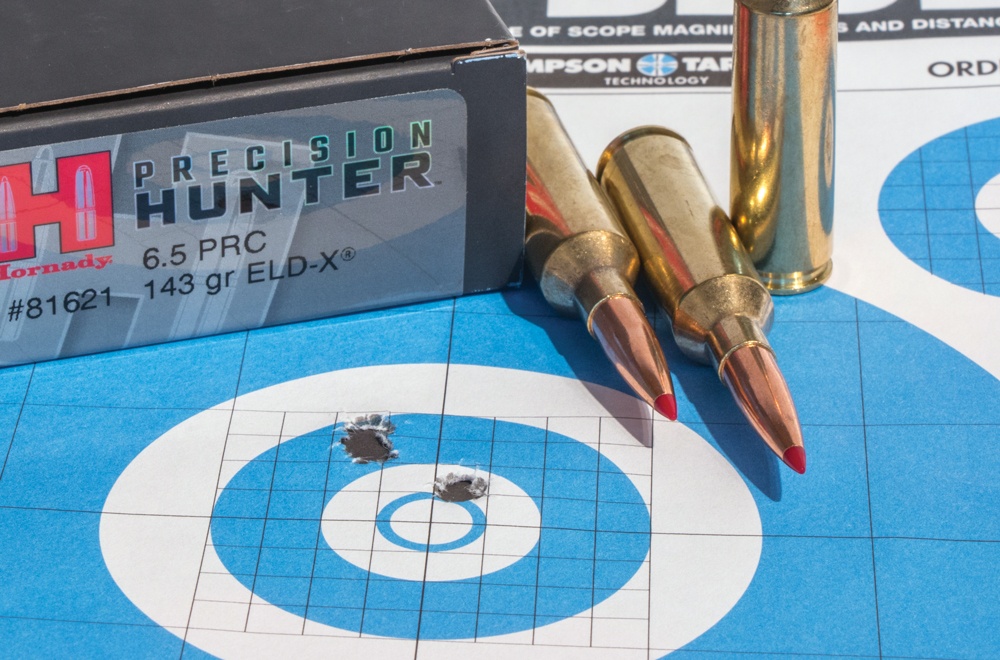
Tacticool instruction might be fun, but it won't make you a more prepared armed citizen. Handgun training should focus on the skills with practical tools that will save your skin.
What should handgun training focus on?
State of Mind
Functional Handgun
Handgun Presentation
Keeping Your Gun Running
Solid Hits
Unfortunately, much of what passes for defensive handgun training these days is “edutainment,” a word coined by famous trainer Pat Rogers. It’s a combination of education and entertainment, and unfortunately, the entertainment side is often more heavily weighted.
If you want to go to man camp and spend five days crawling on the ground, shooting thousands of rounds through your AR or AK, that’s fine. It’s great fun. Chalk that up to your vacation budget, NOT your handgun training budget.
When you’re at your office or at the mall, you won’t have a chest rig and a rifle. You’ll have a concealed handgun and a spare magazine (unless you want to be another “forfeit”). The only gear you will get to defend yourself and your loved ones with will be that gear which is on your person when the incident occurs.
So, our handgun training program should be geared toward excellence in the following areas:
1) Develop an alert, aware state of mind, accepting the fact that violence can occur anytime, anywhere. Do not be surprised or astonished that someone is unlawfully attacking you. Instead of “I can’t believe this is happening!,” your mental response should be, “My day at bat.”
2) Acquire a reliable, functional handgun you can shoot well, a good carry system (belt, holster and ammunition carrier), and wear it on a routine, daily basis. You do not get to pick which day you will need your gun. Someone else makes that decision for you, and you will typically be informed at the very last minute!
3) Work on a safe, efficient, fast presentation of the handgun from its concealed mode of carry. Practice in the clothes you will wear daily. If you ever need that gun to save a life, you will need it quickly. You will have a very finite amount of time once the flag flies. The faster you can access your equipment, the more time you have to make life-altering decisions, and if necessary, get good hits.
4) Learn to keep your gun running. If it runs empty, reload it. If it malfunctions, fix it.
5) Do the bulk of your practice on getting solid hits in the 3- to 7-yard range, quickly and reliably. Do some handgun training at 15-20 yards, but not much.
In short, concentrate your handgun training on the skills we are most likely to need.
Does the small and speedy .223 Remington have what it takes to put meat on the table? With the right bullet, you bet.
With the proper bullet the .223 Remington is more than adequate for deer.
The bullets used must be tough, as they move at such high velocities.
Contrary to popular belief, the .223 is a legal big-game cartridge in most states.
Some hunters think the .223 Remington is too small of a caliber, without enough bullet weight, for deer. I’d classify those folks as fools. Some hunters think the .223 Remington is only legal for deer hunting in a few states. Those folks are just wrong. Dozens of deer I’ve taken or seen cleanly killed with a .223 Remington stand as evidence of its capabilities, and the hunting regulations of all 50 states prove its lawfulness.
Remington’s new HTP Copper load for the .223 Remington should prove to be ideal for smallish big game because of its velocity. Mono-metal bullets like the Triple Shock are very lethal and effective when pushed fast.
When proper bullets are used, the .223 Remington is more than adequate for any whitetail or mule deer out to the other side of 100 yards. What type bullets are we talking about? With the .223 Remington, the tough bullets come into their own because the cartridge pushes them fast. Remington’s new HTP Copper load for the .223 Remington pushes a 62-grain Barnes Triple Shock bullet to 3,100 fps. Similarly, the Barnes VOR-TX 52-grain load can leave the muzzle 100 fps faster.
Mono-metal bullets such as the Triple Shock work very well at high speeds like this because their energy dump is increased. The downside to the .223 Remington is that these bullets have low ballistic coefficients, so they slow down quickly, limiting the effective range of the cartridge.
As far as legality, a few years back I took the time to research the hunting regulations for all 50 states in order to determine the minimum caliber allowed for big-game hunting. I found 35 states that permitted its use. That’s 70 percent, which qualifies as most in my book.
Editor's Note: This article originally appeared in the October 2017 issue of Gun Digest the Magazine.
Winchester’s Model 65 was produced for a relatively short time, but it was a big hit with lever-action fans.
The Model 65 had a relatively short run in the time-span of Winchester lever-action rifles. Manufactured from 1933 to 1947, the Model 65 could be described as a successor to the Model 53, which itself was an improvement on the design of the famous Model 1892. The Model 65 was the rarest of the 1892 family. Only about 5,700 were manufactured, compared to 25,000 for the Model 53 and approximately a million for the 1892.
These three models were built on short actions that were scaled-down versions of the Model 1886 and were chambered for several popular small-game cartridges of the day. The 1892 was offered in .25-20, .32-20, .38-40 and .44-40. The same stood for the Model 53 except for the .38-40, and the Model 65 originally in just the .25-20 and .32-20.
However, in 1938, Winchester introduced a new cartridge in the Model 65 that gave the rifle a special place in hunting circles, the .218 Bee. It had a rimmed, bottle-necked case based on the .25-20 Winchester necked down for a .224 bullet. The .218 Bee was named for the bore diameter of the barrel rather than the more common practice of using the bullet diameter for the name of the cartridge.
Fancy wood stock on a Deluxe Model 65.
The Bee was the first competition for the .22 Hornet in the category of varmint cartridges. The Hornet had come to life in the late 1920s, and by the early ‘30s it was available in various bolt-action and single-shot rifles. While the Hornet had become very popular, the Model 65 had its own niche — a lever-action varmint rifle. To those with a fondness for lever guns and small game/varmint hunting, it quickly became an “I want one, too” item.
It should be remembered that the .218 Bee came along in the late 1930s at the end of the Great Depression, before World War II, and more than a decade before the introduction of the excellent .222 Remington. During this period, the Bee and the Hornet were pioneers: The only cartridges that were designed for those varmint and small-game shooters who wanted a flat-shooting round with higher velocity than the .25-20 and .32-20.
As can be seen in the comparison chart, the .218 Bee has a slight edge in velocity, but it was apparently not enough to beat the Hornet in the marketplace. There were many rifles chambered for the .22 Hornet, all either single-shots or bolt-actions. The Bee was only available in the lever-action Model 65 until Winchester introduced the bolt-action Model 43 in 1949, which was offered in .218 Bee, .22 Hornet, .25-20 Win., and .32-20 Winchester.
Model 65s were chambered in .218 Bee, .25-20 WCF and .32-20 WCF. Most collector interest seems to be in the Bee.
Failure To Launch Why did the .218 Bee never catch up with the Hornet in popularity? Some say the reason was because the bolt-action .22 Hornet models generally had a slight edge in accuracy over the lever-action Model 65. That might have been true, but for the avid lever-gun fan, the Model 65 was the preferred rifle. The limited number of Model 65s manufactured (5,700 compared to 62,000 for the Model 43) created somewhat of a “cult” of followers. Even though the .25-20 was the rarest caliber, there seems to be more interest in the .218 Bee.
In 1989, Browning marketed an excellent replica of the Model 65, made by Miroku in Japan. A faithful reproduction, 3,500 were made in Grade 1 and 1,500 in High Grade — all in .218 Bee. The High Grade came with silver-inlayed scrolling, gold-plated game animals and a checkered stock and forend. These models can be found on the used gun market at a fraction of the estimated values shown for the original Winchester rifles.
Editor's Note: This “Collector's Corner” column is an excerpt from the Winter 2017 issue of Gun Digest the Magazine.
The Windham Weaponry MPC 16 doesn’t have a lot of extra bells and whistles — making it a top pick for a survival gun.
How the MPC 16 thrives as a survival gun:
Windham Weaponry ARs have a lineage of quality going back to the Bushmaster days.
For survival, a simple, rugged AR-15 might be all you need; Windham's MPC 16 delivers.
Completely Mil-Spec throughout, this 16-inch-barreled carbine runs reliably.
It can also be handled by a variety of shooters based on skill level and experience.
The Windham Weaponry MPC 16 is simple, which makes it easy to maintain and use. During the stress of a survival situation, you don’t want things overly complicated. Photo: Windham Weaponry
Windham Weaponry, named after the town of Windham, Maine where the guns are made, may be an unfamiliar name, but it is far from a new manufacturer. The factory, machinery, owner, and most all the employees were formerly under the Bushmaster name. Now, that same experience and attention to detail are being devoted wholeheartedly to this endeavor.
I was quite eager to see how the new Windham Weaponry MPC 16 would look and perform, and I was not disappointed. The rifle is an M4-style carbine with a direct gas impingement system chambered for 5.56 NATO. The rifle’s solid, proven design and features — without a lot of extra bells and whistles — lend themselves ideally for use as a survival rifle.
Both the upper and lower receiver of the MPC 16 are manufactured from forged 7075 T6 aluminum and have a hardcoat black anodized finish. The upper receiver has a flattop design with a removable carry handle and A4 dual aperture sights that are elevation and windage adjustable.
There are no indexing marks on the top Picatinny rail; so, you would need to take care when removing and replacing optics to maintain proper zero.
The 16-inch chrome-lined barrel of the MPC 16 has an M4 profile and is made from Mil-Spec 4150 chrome-moly vanadium steel. Chrome-moly results in increased carbon content in the steel and adds significant strength and durability, both very desirable features in a duty rifle.
The 16-inch chrome-lined barrel on the Windham AR has an M4 profile and is made from Mil-Spec 4150 chrome-moly vanadium steel. Photo: Windham Weaponry
The barrel has a standard 1 in 9-inch twist rate, which does a good job of stabilizing a wide range of bullet weights, including very low-weight projectiles.
Another Mil-Spec feature is the addition of M4 feed ramps at the back of the chamber. The standard threaded muzzle is topped off with a removable A2 flash hider, and the front sight base is elevation adjustable.
Standard Mil-Spec AR
Some folks are sticklers for properly F-marked bases on carbines; the Windham Weaponry AR is not so marked, but this is a distinction with very little real-world application.
Because of the difference in sight radius of a carbine over a rifle, an F-marked sight base is infinitesimally lower than a standard base. This is only an issue when using iron sights at distances past 200 yards, and it can easily be corrected by installing a taller front sight post.
The CAR black plastic handguards have double aluminum heat shields and were extremely effective at protecting the carbine-length gas tube (as well as my hand) from a hot barrel during a full day of range testing. The bolt and bolt carrier are phosphate finished and chrome-lined.
The MPC 16's bolt carrier has a Mil-Spec M16 contour (as opposed to a cheaper commercial bolt), which is stronger and heavier to ensure longer and more reliable operation — and it’s paired off with a standard carbine buffer. It should be noted that Mil-Spec M-16 bolt carriers are legal to install in semi-auto rifles.
The controls on both upper and lower receivers, dust cover, forward assist, bolt release, magazine release, charging handle, and safety selector are all located in the familiar places with nothing ambidextrous. The trigger guard is the fold down aluminum type for use with gloves.
The M4-type collapsible buttstock has six positions for length of pull to adjust for shooters of varying stature or with use while wearing body armor, and it features the Windham Weaponry logo.
The stock of the MPC 16 was well installed and exhibited excellent fit with very little play. Also, the fit between the upper and lower receiver was excellent with only the slightest amount of play between the two. The lower receiver comes with a standard military-type plastic pistol grip with finger grooves and a slightly flared magazine well.
During his range sessions, the author did not experience a single malfunction of any sort from the Windham, and it performed admirably, certainly capable of 1 MOA accuracy.
The trigger is of the standard, single-stage AR variety with the typical utilitarian feel I have come to expect. Unfortunately, that means it’s not great, and the trigger exhibited a fair amount of noticeable creep that felt quite gritty, but mercifully avoided any stacking or over-travel.
It did break consistently at 7.5 lbs., and it should be noted that this was not developed as a sniper-grade rifle but rather as a utility survival gun. And in that regard, it should serve well.
Survival Gun Simplicity
At 6.9 pounds, this isn’t the lightest AR carbine one can purchase, but it is lighter than some of the feature-laden alternatives out there, and its short overall length and excellent balance make it easy to handle and pleasant to shoot. During my entire range session, I never experienced a single malfunction of any sort, and the rifle performed admirably.
Accuracy from a bench rest at 100 yards was about what one should expect from a Mil-Spec rifle, with groups measuring from the best of the day at 1 MOA to the worst at 4 MOA and averaging in between. With the right ammunition and a better trigger, this rifle is certainly capable of pinpoint accuracy.
Windham Weaponry ships their rifles in a black hard plastic case with one 30-round magazine, a sling, and a well-illustrated operators’ manual. Currently, the company’s offerings include state-compliant models.
Specifications:
Windham Weaponry MPC 16 Caliber: 5.56mm/.223 Rem. Barrel: 16-inch chrome-lined 1:9 twist Overall Length: 36.25 in. stock extended, 32.5 in. collapsed Weight: 6.9 lbs. empty Stock: M4 double heat shield handguards/6-position telescoping buttstock Sights: Removable A4 adjustable rear sight and A2 standard base front Action: Semi-auto Finish: Black hardcoat anodized Capacity: 30-round magazine MSRP: $1,086 Contact: 855-808-1888; www.windhamweaponry.com
Lighter and smaller, Springfield Armory gives AR-15 fans something to consider with the additions of the SAINT Edge and SAINT Pistol to its lineup.
Material around the Edge's mag well has been removed — it's the lightest SAINT model.
The carbine boasts a match-grade single-stage trigger.
The SAINT pistol is outfitted with an SB Tactical forearm brace.
It also comes with a proprietary blast diverter.
Both new models have heavy “H” tungsten buffers to help with felt recoil.
Saturated with every conceivable breed of AR-15, Springfield Armory set out to do the impossible a year ago — launch a new black rifle. But at this point, the gamble on well priced and built SAINT AR-15 appears to have paid off.
A little more than 365 days into its history, the carbine has won its share of accolades not to mention a solid place in the overall market. Nowadays, when it comes to black guns, neither is simple to do, if for any other reason than the rifle is seemingly more common than highway mile markers in America (no small feat).
And now Springfield Armory is shooting to parlay the SAINT’s strong start with a pair of releases this past month that take the line in some new and appealing directions.
Saint Edge
As a rule, a carbine should be light. After all, it’s meant for fast handling, excelling when quarters are close and proving less burdensome when humped in and out of an operating area.
The SAINT Edge seems nearly the dictionary definition of this. At 6 pounds, 3 ounces, the carbine should provide the handling attributes that will make it lightning quick on target transitions and easy to carry, no matter the situation.
Springfield trimmed back the Edge’s weight through a unique lower-receiver design, removing material around the mag well to make it feather light. And given the company has retained the mid-length gas-system, and heavier “H” tungsten buffer system, the carbine’s recoil is noticeably tamed, despite its lack of heft. An added bit of insurance against kick, the .223 Rem./5.56 NATO comes standard with Springfield’s proprietary SA Lite muzzle brake, which dampens recoil to next to nothing.
Aside from shootability, the new SAINT has another ace in the hole with an upgraded fire control. While Springfield won points by including an upgraded GI-style trigger in the original iteration — nickel-boron coated — it has left nothing to chance with the Edge. The company’s single-stage modular match trigger is Melonite treated, ensuring it has a crisp and clean brake each and every squeeze. And it should prove fast shot to shot, with a noticeably short reset.
Like the original, the 7075 T6 aluminum upper and lower receivers mate with the Accu-Tite tension system, a nylon-tipped tension set screw that tightens the fit to remove any play. Being outfitted with a 16-inch lightweight profile barrel — Melonite finished — with a 1:8 twist allows the carbine to digest a wide spectrum of ammunition. And it comes with Bravo Company furniture, including the Mod 0 SOPMOD adjustable buttstock, with QD swivel mounting points.
The SAINT Edge has the same proprietary full-length aluminum handguard as the SAINT Free Floating model. This is a nice carry-over, giving ample M-LOK slots at seven points around the handguard. The carbine is a flattop, with full-length Picatinny rail, but comes with Springfield’s low-profile flip-up sights.
The SAINT Edge is, presently, the top end AR of the line and has the price to prove it, with an MSRP of $1,299.
Saint Pistol
Often times, it seems gun companies don’t invest a ton of thought when they move their AR lines into pistols. Shorten the barrel and gas system, jettison the buttstock of an existing AR and, voilà, pistol.
This is not the case with Springfield. The execution of the SAINT Pistol shows a bit more forethought, as it is well configured to offer more than just a scaled-down carbine. And it appears ready to excel at any small job thrown at it.
The .223 Rem./5.56 NATO variant comes in at a scant 26.5 inches in overall length and light at 5 pounds, 8 ounces. These are expected in a gun boasting a 7.5-inch barrel. But where the design succeeds is in the accessories it’s outfitted with — particularly at the butt and muzzle.
Giving the pistol greater overall control, the small SAINT comes equipped with a SB Tactical SBX-K forearm brace. The shorter version of the original SBX offers a lower profile, ensuring a clear line of sight. But, while trim, it still provides the same amount of support as the older brace, giving the platform greater controllability.
At the other end of the gun, the blast diverter should make the pistol a heck of a lot more pleasant to shoot, as well as increase its accuracy potential. Routed forward and away from the shooters, once again enhancing the line of sight, the muzzle blast is less distracting and the pistol is easier to keep on target shot to shot.
Additionally, the diverter just peeks out from the handguard, giving it a fairly sleek look. Yet, it adds enough length to the barrel that it should nearly be impossible for a thumb to inadvertently slip over the muzzle, always a concern on AR pistols. Aiding in the overall safety, Springfield has made a hand stop standard on the pistol, once again protecting shooters from over extending their grip into dangerous territory.
The handguard itself is a modified variation of the company’s free floated model, featuring SA locking tabs and M-LOK slots. Intelligently, Springfield has done away with the greater part of the handguard’s upper Picatinny rail, typically unused on AR pistols and obtrusive on the grip. It has, however, left enough for the installation of a front post or flip-up sight — just in case.
Like the rest of the SAINTs, the pistol’s barrel is Melonite finished, as is the carrier group. It features the Accu-Tite Tension System, which takes away the play between the upper and lower receivers. And it comes outfitted with Springfield’s nickel-boron-coated GI-style trigger that breaks cleaner than most stock AR triggers. Importantly, the company has also retained the line’s heavy “H” tungsten buffer, a nice point that should do plenty to tame the pistol’s recoil.
The SAINT Pistol is competitive with much of the AR pistol market, with an MSRP of $989.
Specifications:
SAINT Edge
Caliber: 5.56x45mm NATO (.223REM) Length: 35.75 in. Fully Extended / 32.5 in. Collapsed Weight: 6 lbs., 3 oz. Upper Receiver: Forged Type III Hard Coat Anodized Aircraft Grade 7075 T6 Aluminum Flat Top w/ Forward Assist & M4 Feed Ramps Lower Receiver: SA Proprietary Machined Aircraft Grade 7075 T6 Billet w/ Accu-Tite™ Tension System & QD Swivel Mounting Points Barrel: 16 in., 1:8 Twist, LT WT Profile, CMV Melonite® Finish Internally & Externally – Unique SA Multiport Muzzle Brake Gas System: Mid-Length, Low-Profile Multi/Mode Adjustable Gas Block Trigger: Springfield Armory® Proprietary, Modular Match Short Reset Single Stage Sights: Springfield Armory® Low Profile Flip-Up Rear, Dual Aperture Sights, 1/2 MOA Windage Adj. & Flip-Up Front, 1/2 MOA Elevation Adj. Trigger Guard: Integral to Receiver Pistol Grip: Bravo Company Mod 3 Handguard: Unique SA Proprietary Patent-Pending, Full Length Aluminum Free Floating w/ SA Locking Tabs, M-Lok Butt Stock: Bravo Company Mod 0 SOPMOD Buffer Assembly: Carbine “H” Heavy Tungsten Buffer Receiver Extension: Mil-Spec Dimension Carbine Receiver Extension Manufactured from 7075 T6 Type III Hard Anodized Aluminum Charging Handle: SA Proprietary Mid SIze Bolt Carrier Group: Enhanced M16 Melonite® Finish, MPT, 9310 Steel Bolt MAGAZINE: 1 – 30-round Magpul PMag Gen M3 MSRP: $1,299
Specifications:
SAINT AR-15 Pistol
Caliber: 5.56x45mm NATO (.223REM) Length: 26.5 in. Weight: 5 lb., 8 oz. Upper Receiver: Forged Type III Hard Coat Anodized, 7075 T6 Aluminum Lower Receiver: Forged Type III Hard Coat Anodized, 7075 T6 Aluminum w/ Accutite™ Tension System Barrel: 7.5 in., 416R Stainless Steel, 1:7 Twist, Melonite® Gas System: Direct Impingement Pistol-Length Gas Port w/ Low Profile Pinned Gas Block Trigger: Springfield Armory® Proprietary, Nickel Boron Coated GI Sights: Not Included Trigger Guard: Bravo Company Pistol Grip: Bravo Company Mod 3 Handguard: M-LOK Aluminum SA Patent Pending Free Float w/ SA Locking Tabs & Forward Hand Stop Butt Stock: SB Tactical – SBX-K Forearm Brace Buffer Assembly: Carbine “H” Heavy Tungsten Buffer Receiver Extension: SA w/ QD Swivel Mount Charging Handle: GI Style Bolt Carrier Group: Enhanced M16, Magnetic Particle Tested, Melonite® Magazine: 1 – 30-round Magpul PMag Gen 3 Case: Soft AR-15 Pistol Case MSRP: $989
The AR has come a long way since it rolled off Eugene Stoner’s drawing board. Find out what’s the best of the best when it comes to black rifles from 2017.
SIG Sauer has been expanding its reach into optics and suppressors the past couple of years, but it’s never lost sight of its ability to craft some of the best firearms on the planet. The M400 Predator is a case in point. Chambered in 5.56 NATO, the M400 Predator AR is equipped with an 18-inch barrel with 1:8-inch twist, two-stage match trigger and has an overall weight of 7 pounds. An M-LOK accessory rail makes attachments for predator hunting a walk in the park, while ½-28-threading makes for quick, easy attachment of a suppressor. On a coyote hunt in the Sandhills of Nebraska, the M400 proved exceptionally reliable in the cold and highly accurate even with fast follow-up shots. For a high-quality build with a great trigger, the M400 comes in at a relative bargain. MSRP: $1,582
Savage MSR 10 6.5 Creedmoor
Savage has built a solid reputation in the bolt-gun world with its highly affordable, highly innovative designs that the company is now rolling over to its new MSR line. Built explicitly for hunters and long-range enthusiasts, Savage’s MSR 10 Long Range is available in .308 Win. and 6.5 Creedmoor. The Creedmoor variant features a 1:8-inch twist in a 22-inch, fluted heavy barrel with QPQ finish, Magpul PRS Gen3 buttstock and free-float M-LOK handguard. The rifle also utilizes a non-reciprocating side-charging handle and Blackhawk’s two-stage target trigger, which makes for one highly accurate rifle. MSRP: $2,284
Noveske/Nosler Varmageddon in Nosler 22
If there’s one manufacturer that stands out in the world of cartridge development during the last couple of years, it’s Nosler. Pioneering new commercial loads such as the 26, 28 and 30 Nosler, the company is working hard to perfect the high octane, hot rod cartridge. The newest addition is the 22 Nosler, which is available in a Noveske-built Varmageddon AR and offers an incredible 300 fps increase in velocity over the .223 Rem. The rifle features an 18-inch barrel with 1:8-inch twist, MOE pistol grip and Super Badass charging handle. An NSR-15 FDE handguard features Key-Mod attachment points and matches the FDE finish on the rest of the rifle. Perfect for extending the range on predators, the Varmageddon AR in 22 Nosler is a tack-driving machine. MSRP: $2,869
S&W M&P 15 Tactical M-LOK
Smith & Wesson’s line of M&P AR-15s has long been a benchmark in the AR world, and the newest iteration, the M&P15T, certainly lives up to that reputation. The M&P15T features a 16-inch barrel with a 1:8-inch twist and 13-inch M&P slim, free-float modular rail system with M-LOK attachment points for maximum accessorizing. At just 6 pounds, the M&P15T is ideally suited for home defense and doubles as a fantastic truck and coyote rifle. Highly accurate, reliable and incorporating a lightweight, contoured barrel for maximum maneuverability, the M&P15T is also incredibly affordable. MSRP: $1,189
Alexander Arms .50 Beowulf Tactical
Let’s face facts: a .50-caliber AR with a name like the Beowulf immediately garners attention. And rightfully so. Bill Alexander has been a frontrunner in new AR designs and concepts, and the new .50 Beowulf Tactical is no exception. Featuring a Bravo Company B5 Systems SOPMOD stock, Geissele SSA or Alexander Arms Tactical trigger and Manticore Arms Transformer Rail handguard, the .50 Beowulf Tactical is no doubt one of the heaviest hitters ever built on the AR platform. The rifle comes in FDE, OD green or black, and features a flat-top receiver and 16.5-inch barrel with 1:20 twist rate. MSRP: $1,750
Rock River Arms Predator HP in 6.5 Creedmoor
I had the chance to shoot Rock River Arms’ newest AR, the Predator HP in 6.5 Creedmoor, during a long-range shooting class at The Site in Illinois, and I have to say I was thoroughly impressed. Featuring a forged LAR-8M lower receiver and A4 upper with Rock River’s crisp two-stage match trigger, the Predator HP performed exceptionally well on steel at 400 yards and was dead-on when we switched to shooting moving targets. The trigger is excellent, the operation is flawless and the barrel produced pin-point accuracy all day long. The rifle features a 20-inch fluted, stainless-steel barrel with 1:8-inch twist, low-profile gas block and RRA Operator Brake, as well as a Hogue rubber grip. Paired with Copper Creek loads in the 6.5 Creedmoor, the Predator HP proved to be a dependable, highly accurate rifle even at extended range. MSRP: $2,000
Editor's Note: This article originally appeared in the Winter 2017 issue of Gun Digest the Magazine.
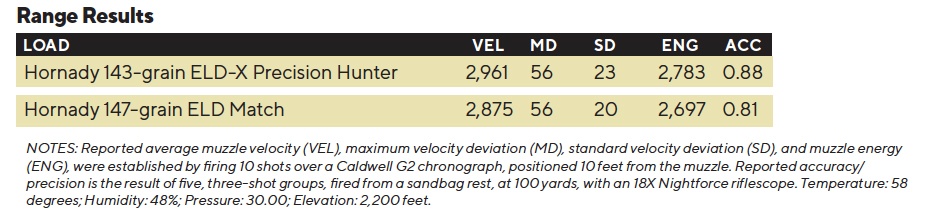
Looking to go armed, but are stuck in the weeds as to what to arm yourself with? Here are 20 excellent concealed carry gun options that will keep you on the defensive.