Once upon a time, if a shooter was in the market for a single-stack .45 ACP for the most part the choices were 1911 and 1911. Those days, however, are long gone.
The venerable John M. Browning-designed handgun is still as ubiquitous as dandelions in summer. But gun makers have expanded options when it comes to single-stack pistols chambered for the hard-hitting, popular round.
As anyone familiar with handgun trends can guess, this has meant more polymer-framed, striker-fired .45s. Smith & Wesson is one of the most recent to join this club.
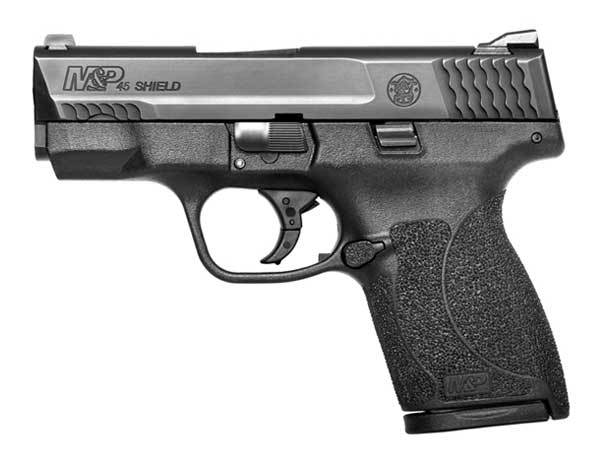
The Massachusetts gun maker unveiled the M&P45 Shield earlier this month at the 2016 NRA Annual Meeting and Exhibits. And from the looks of it, the pistol should get the hearts of those searching for a potent, yet clandestine concealed carry piece fluttering.
As with the entirety of Smith & Wesson’s compact, single-stack line, one of the M&P45 Shield’s biggest selling points is its concealability.
The new pistol matches the slight dimensions of the earlier Shields, measuring only .99 inches in width and 6.45 inches in length. However, tipping the scales at 20.5 ounces, the new Shield is a whisker heavier than its smaller-caliber counterparts, but not so much as to be noticeable.
The M&P45 Shield is outfitted with a 3.3-inch stainless steel barrel, which helps keep its overall size in check. But this means a reduced sight radius and the potential for more muzzle flip — both can be challenges to accuracy. Of course, these are more than manageable facets to this and all compact pistols that can typically be resolved through practice.
Smith & Wesson, however, has made an attempt at making the M&P45 Shield more manageable with upgraded grips. Giving the pistol an aggressive texturing should facilitate a positive grip, thus making it more manageable. The company has also aimed to make the pistol easier to operate, giving it front cocking serrations.
The M&P45 Shield comes with two magazines — one extended, the other flush fit. The extended magazine gives the pistol a 7+1 capacity, while the flush fit gives it 6+1. It is outfitted with white-dot sights, adjustable for drift and its metal components have an Armomite finish. Smith & Wesson is also giving shooters the option of a thumb safety, if they so desire.
Presently, Smith & Wesson’s M&P45 Shield has an MSRP of $479.
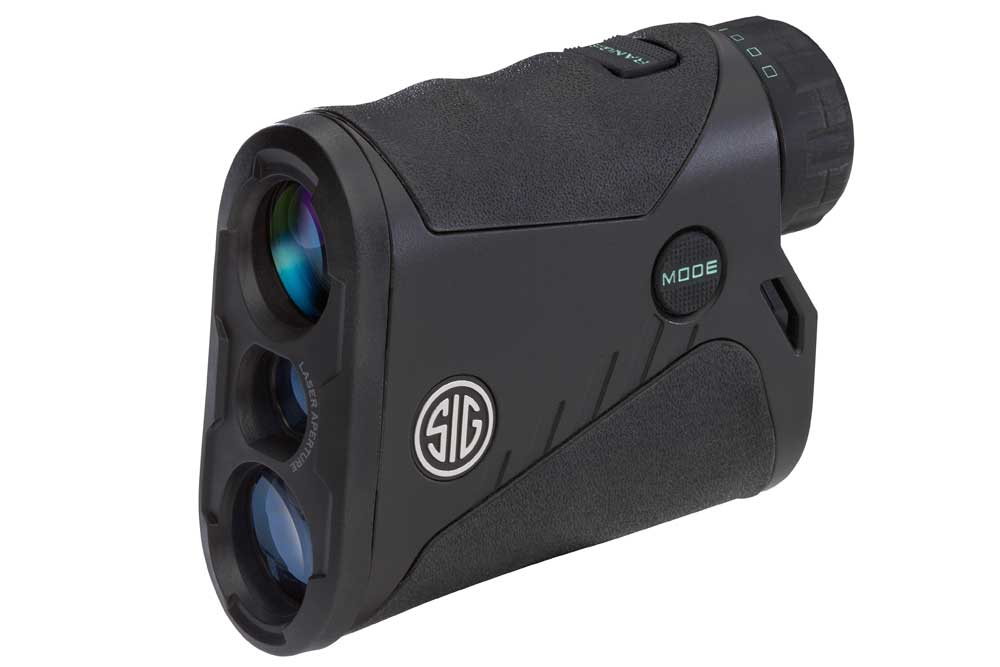
SIG Sauer has added two new products to its respected KILO rangefinder line: the KILO850 for archery and the KILO1250 for hunting.
Over the past few years, SIG Sauer’s Electro-Optics line has grown exponentially, and the manufacturer has continued to expand into new categories and add to existing optics lines. The company now offers a wide assortment of optics ranging from tactical and hunting riflescopes to red dot and reflex sights to binoculars and rangefinders.
One of the manufacturer’s most impressive introductions came last year in the form of its KILO2000 rangefinder, an advanced design featuring a lightning-fast processor. Now, SIG is continuing its expansion by adding two more products to the KILO rangefinder line: the KILO850 and KILO1250.
“The SIG SAUER KILO2000 has set a new standard in rangefinders,” said Andy York, President SIG SAUER Electro-Optics Division. “Now we have incorporated that same LightWave DSP core with blazing fast scan speeds into both the 6X KILO1250 for Hunting and the 4X KILO850 which is ideal for Archery with lower magnification and a higher field of view.”
Like the previous KILO2000, both of these new rangefinders feature SIG’s anti-reflection SpectraCoat coating for superior light transmission and excellent optical clarity. Similarly, the KILO850 and KILO1250 also come equipped with the incredible LightWave digital signal-processing core, which ranges targets incredibly fast and at long distances, and HyperScan mode, which provides four range updates per second.
The KILO850 is a 4x20mm monocular that can range reflective targets out to 1,200 yards, while the KILO1250 is a 6x20mm monocular that ranges reflective targets to 1,600 yards. The 850 utilizes a transmissive LCD display, whereas the 1250 features a High Transmittance LCD display.
Both models offer line of sight (LOS) or angle modified range (AMR) in yards or meters to tenth Y/M resolution and allow users to choose between target modes featuring “Last” or “Best” for pinpoint accuracy. The two models both feature a sleek and slim design well suited for one-handed operation and come equipped with lanyard attachment points for field use.
The KILO850 is available for $239.99 in black or $264.99 in a camouflage pattern. The KILO1250 is available at a price of $359.99 for black, or $384.99 for the camouflage version. Product specifications for each can be found below.
For more info on either KILO rangefinder or on SIG Sauer’s other Electro-Optics products, visit SIGOptics.com.
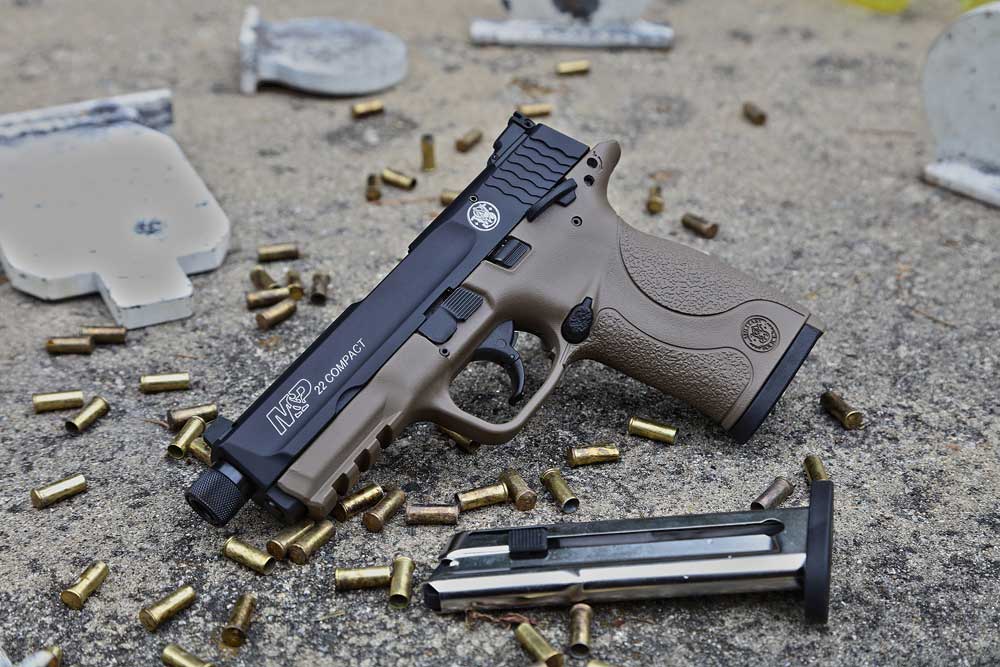
Over the years Smith & Wesson’s M&P line of polymer pistols has grown incredibly large, with a wide variety of full size, compact and carry models to meet the different needs of shooters. The M&P22 Compact branch of the M&P family offers shooters comfortable, easy-to-use pistols chambered in less expensive rimfire .22 LR ammo, and it has been very successful for S&W.
Building off this success, the company has announced that it is adding another model to the M&P22 Compact line, this one with a durable and rugged Cerakote Flat Dark Earth (FDE) finish on the frame. Designed to be a 15 percent smaller than the full size M&P 9/40, the M&P22 Compact with FDE finish is a tactically inspired rimfire pistol that is both accurate and reliable.
“This new M&P22 Compact model sports a desirable Cerakote flat dark earth frame finish. The Cerakote polymer-ceramic-composite coating on the frame provides a durable finish and enhances the appearance of this popular M&P22 rimfire pistol,” said Jan Mladek, General Manager of the M&P Brand. “Target shooters and recreational shooting enthusiasts will appreciate having a new finish option in this compact, two-tone finished M&P .22 LR semi-automatic pistol.”
Similar to its larger, centerfire counterpart, the M&P22 Cerakote FDE pistol is friendly to both left- and right-handed shooters. It provides an ambidextrous manual safety, and it also features a reversible magazine release.
The gun incorporates a Picatinny accessory rail beneath the barrel for aftermarket lights and/or laser sights. The pistol is also suppressor-ready, with 1/2″x28 threads on the barrel and a muzzle cap coming standard.
The new Smith & Wesson M&P22 Compact Cerakote FDE pistol is available at a price of $429 and ships with two 10-round magazines. Specifications for the M&P22 Compact Cerakote FDE pistol can be found below.
For more info on this new pistol and other Smith & Wesson products, visit Smith-Wesson.com.
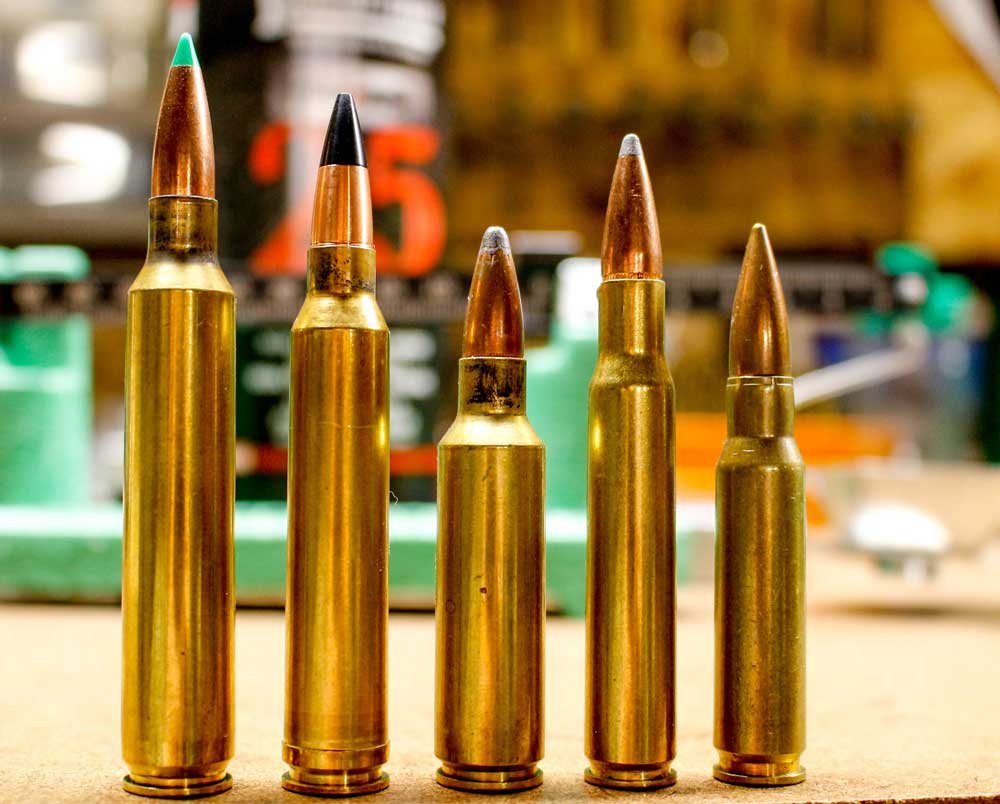
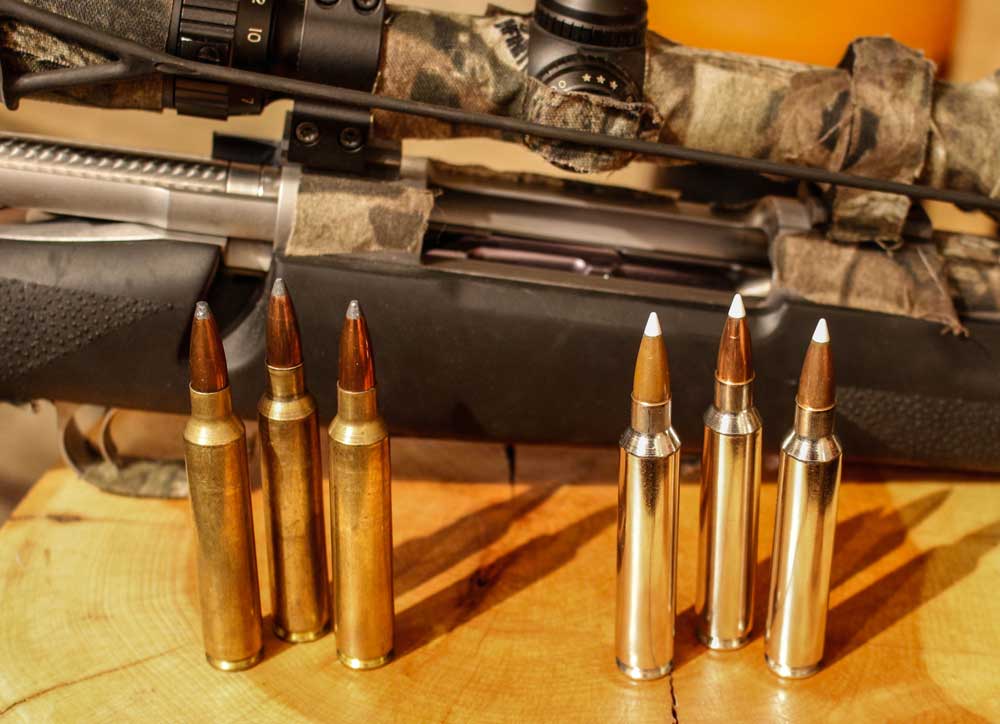
Left to Right: .300 RUM, .300 Win. Mag., .300 WSM, and .30-06 Springfield.
A .300 Remington Ultra Magnum story, if you will…
The phone rang on a snowy Saturday afternoon in early 2000, and upon answering I found my dad – Ol’ Grumpy Pants – on the other end of the line. The original conversation I can’t recall, but I do remember we got onto the subject of hunting caribou. You see, Grumpy Pants had just returned from a late-season caribou hunt in Quebec’s James Bay area, at the southern tip of the migration, and saw some of the longest shots he’d ever seen.
“What’s the flattest shooting .30 caliber they make?” asked GP. You see, being a veteran who was U.S. Army-trained to shoot the M14 in the Vietnam era, my father didn’t truly believe any other caliber really existed.
“Well Pop, there are no flies on your .300 Winchester, and that’s a great caribou rifle.” He liked the .300 Winnie, and still does, but he was looking for a hot rod.
“I know, just answer the question. What’s the flattest?” Here we go.
“I’d have to say the .30-378 Weatherby probably rules the roost, with the .300 Remington Ultra Magnum either tying or coming very close behind.” Both are huge cases, and both can really drive a .30 caliber bullet.
“I can’t afford a Weatherby (liar), can I get that Ultra thing in a good, cheap rifle?” You see, GP has an affinity for, well, inexpensive firearms.
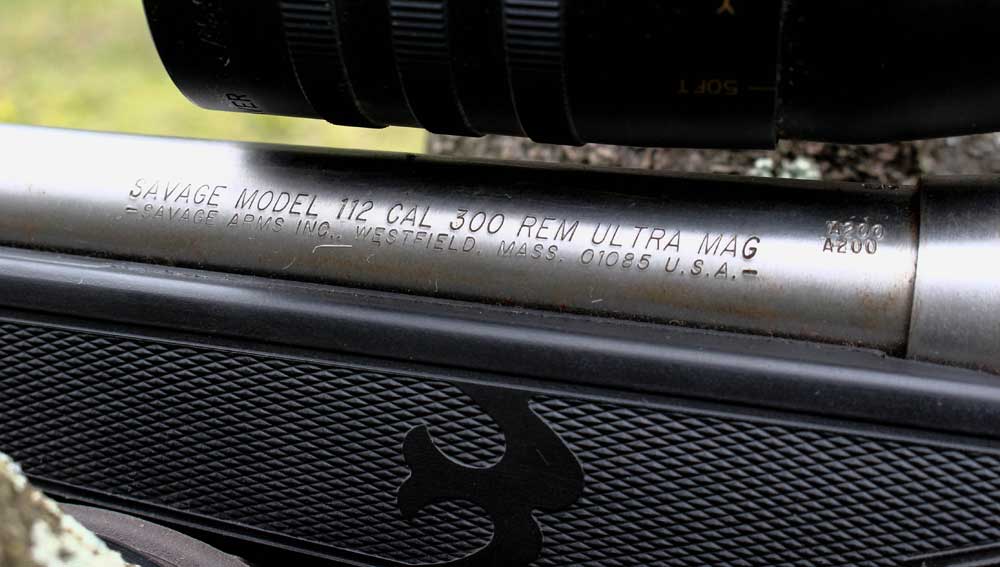
“Yes, El Cheapo, Savage is chambering for it, and while affordable, it’ll shoot.” So, GP ordered a Savage Model 112 in .300 RUM – stainless barrel and synthetic stock to combat the weather of the Tioga of Quebec – and we set forth to develop some handloads for his new, flat-shooting firebreather. A couple hundred rounds of Remington brass was ordered, and though I had a hard time convincing him there were better choices for this gun than his tried-and-true 165/168-grain bullets (that wasn’t easy), we soon had the Savage rifle printing ¾-inch groups with a good Sierra 180-grain flat base ProHunter, cooking along at unprecedented speeds, at least in our experiences.
Old Meets New
The .300 Remington Ultra Magnum was released in 1999, the first of a series of cartridges that are based on the venerable .404 Jeffery, a classic African big game cartridge. They took the tapered body and gentle, sloping 8˚ shoulder of the .404 Jeff and blew it out to give maximum case capacity, so much so that the Remington Ultra Magnum series features a slightly rebated rim. The Ultra Magnum’s rim is slightly smaller than the .404 Jeffery (0.534 inches vs. 0.543 inches), and the length has been shortened from 2.875 inches to 2.850 inches, so it will fit in a standard .375 H&H-length magazine. The .300 RUM uses a nice 30˚ shoulder for headspacing; like its father the .404 Jeffery, this is a rimless design. All that body work resulted in a case which will hold over 110 grains of water, depending on the brand of case.
Even with a 30˚ shoulder, I’ve never had a feeding problem with any .300 Ultra, nor have I experienced any extraction issues due to the rebated rim, and I’ve used this cartridge in three or four brands of action, in both controlled round feed and push feed varieties. With a severe bottleneck – as the .300 RUM has – you can expect a quick and impressive recoil, not the classic push of the larger calibers, but a nasty slap associated with the overbore magnums. Though I’m not a proponent of using a muzzle brake, this is one of those situations where a brake is worthwhile. I’ve shot a couple of .300 RUMs without a brake: One had a well-fitting McMillan stock and one had a not-so-good-fitting stock. The McMillan stock had a recoil that was totally bearable, the other kicked so hard I was concerned about some of my fillings.
Because of the huge case capacity, most of the popular factory loads utilize a bullet on the heavier end of the spectrum – usually 180 grains and upward – but some of the monometal bullets are loaded as low as 150 grains. This has much to do with the high impact velocities associated with the .300 RUM. Should you use a bullet of low Sectional Density and have a close shot, premature expansion is a definite concern, and penetration could be an issue. My own personal findings have shown that a premium bullet serves the .300 RUM very well, and if you’re serious about this cartridge, I’d highly recommend them.
Laser-Beam Trajectories and Bone-Smashing Power
The beauty of the .300 Remington Ultra Magnum lies in its flat trajectory, though it does generate a whole bunch of kinetic energy. While many folks look at the energy figures for .30-caliber cartridges, I feel this can often be a bit misleading. For example, a .300 Remington Ultra Magnum firing a 200-grain bullet at 3,100 fps (a very popular combination) generates 4,000 ft.-lbs. of energy at the muzzle. The .375 Holland & Holland Magnum (an undeniable big-game classic) pushes a 300-grain bullet at 2,500 fps or so, for the same energy figure. However, we can all agree that the .375 H&H makes a much better choice for truly big game than does the .300 Remington Ultra, so I think that sometimes energy figures can be misleading (I, for one, much prefer John Taylor’s KO system, but that’s another article) and should be taken in context.
That trajectory though! I think the term ‘frozen rope’ may be perfectly applicable here. Pushing a 180-grain projectile, with a G1 Ballistic Coefficient of somewhere around 0.500 – pretty standard – at a velocity of 3,300 fps you can zero the rifle at 300 yards, and maintain a mid-trajectory rise of less than 4 inches –usually at around 150 to 175 yards. Yes, you’ll have to remember to hold a bit low for the closer shots, but you’ll only be 6” low at the 400-yard mark, and 15” low at 475 yards. That’s pretty impressive, if you ask me, and makes hitting a distant target much easier than if you were shooting a .308 or .30-’06. The lighter and faster bullets make that trajectory even flatter, while the heavier bullets will retain their energy a bit better at those longer ranges, and still offer a definitive advantage over the other .30-caliber cartridges – save that .30-378 Weatherby.
The Down Side
All that energy and velocity comes at a cost, and the piper must be paid. The sheer friction caused by driving a bullet that fast down the barrel will cause things to heat up in an awful hurry. This is one of those cartridges that I feel is best served by shooting three-shot groups, not five. Heating things up just for a five-shot group is, to me, a waste of time. The throat can be eroded rather quickly – I’ve had some shooters tell me that after 300 rounds there was a degradation in accuracy, while other feel 1,000 is a better number. I can’t attest to the actual number, but I’ve seen a .300 RUM barrel so hot I believe I could’ve lit a Marlboro off the chamber, and that’s not a good idea. I actually prefer to assess accuracy in this style of cartridge by shooting three shots from a cold barrel – even if I have to wait 30 minutes between shots. The shot from a cold barrel is invariably what’s going to count at long ranges, and it’s important to be sure of where that’s hitting.
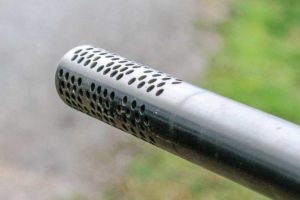
A good muzzle brake helps tame some of the .300 RUM’s substantial recoil.
That recoil is also a factor – as I mentioned earlier – and there’s no point in owning a long-range rifle so powerful that it causes a flinch and a resulting miss. It takes discipline to master a rifle with this level of recoil, and a muzzle brake will definitely help tame things. I’ve found that a good brake will bring the .300 RUM’s recoil down to .308/.30-06 levels, and that’s much more palatable. Be absolutely sure to wear good hearing protection both at the range and in the fields; I have tinnitus from too many years of playing in rock bands in small clubs as well as exposure to rifle fire, and take my word for it – it’s not fun at all. If you’re using a rifle with this kind of report, at the longer distances usually associated with a cartridge of this class, you’ll have an opportunity in the field to slip in a set of plugs, and preserve your hearing.
Is it the rifle for you? Well, if you’re into the long-distance game, whether hunting or punching paper, I’d say yes. Personally, I limit my distance to 400 yards – under optimal conditions – while hunting, and I can do that with a .300 Winchester. That said, I’ve seen Grumpy Pants make some rather impressive shots with his .300 RUM, so there’s no denying that it works as a hunting round. It’s rather accurate as well, as you’ll soon see.
The Factory Loads
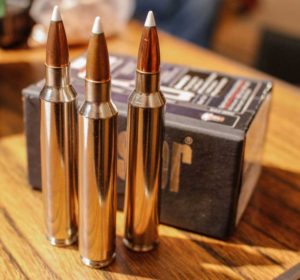
The AccuBond, with its bonded core and sleek profile will work perfectly in the .300 RUM.
There’s plenty of stuff on the market for those that don’t handload, and the factory ammo for the .300 Remington Ultra is rather impressive. The new Hornady Precision Hunter ammo, featuring the ELD-X bullet at 200 grains, has given ½ MOA in a Hillbilly Custom Rifle. Leaving the muzzle at just over 2,900 fps – from a 26-inch tube – this sleek bullet will retain all kinds of downrange energy: over 2,200 ft.-lbs. at 500 yards. Norma loads its fantastic pair of bullets – the Oryx and the Kalahari – for the .300 RUM; the Kalahari being a 155-grain monometal at 3,360 fps, and the Oryx (a great bullet, with the rear portion being bonded to slow expansion) offered in 165 and 180 grains. The lighter Oryx leaves at 3,360 fps, while the heavier leaves at 3,250 fps. I’d opt for the 180, were I to hunt with this ammo. Remington, at one time, offered a system of ammunition for the .300 RUM that had three different power levels: the lowest mimicking .30-06 Springfield ballistics; the second at a level on par with the .300 Winchester Magnum; and the last being a full-house load. While I don’t see it on the Remington website, it made for a good means of extending the versatility of this cartridge. Big Green still makes a Managed-Recoil load for the .300 RUM, pushing a 150-grain bullet at 2,815 fps, which would be a good load for deer and the like within 200 yards.
Nosler has recently gotten into the factory ammunition game, offering their 210-grain AccuBond Long Range bullet at 2,920 fps for a great long-range hunting load. The brass cases that Nosler uses are excellent, and I’ve found its factory ammunition to be very accurate. It also offers its Partition and E-Tip bullets for those who enjoy their performance.
Federal Premium produces a trio of loads for the .300 RUM, featuring the 200-grain Nosler Partition, and a pair of 180-grainers: the Trophy Copper and the Trophy Bonded Tip. I’ve used all of these bullets, and they work perfect if you do your part. So, there’s no lack of choices for the shooter who uses factory ammo. But…
Where Things Come Alive – The Reloading Bench
Handloading for the .300 Remington Ultra Magnum will really show the true potential of the cartridge. It is one of the few instances where the handloader can actually top the factory velocities, and I’ve done it safely on more than one occasion. You’ll need a very slow burning powder – my own best results have come with Reloder 25 and 33, and IMR7828, but there are other powder choices. Hodgdon H1000, Alliant 4000-MR, and the new Enduron IMR 7977 would all be suitable for the big RUM case. The .300 Remington Ultra Magnum can easily burn 100 grains of powder, and will require the hotter spark of a large rifle magnum primer to ignite that large powder column. I like the Federal Gold Medal Match GM215M primers; they have given me nothing but consistent results. Norma makes excellent brass for the .300 Ultra, and when I load for customers, it’s usually Norma brass that gets the nod.
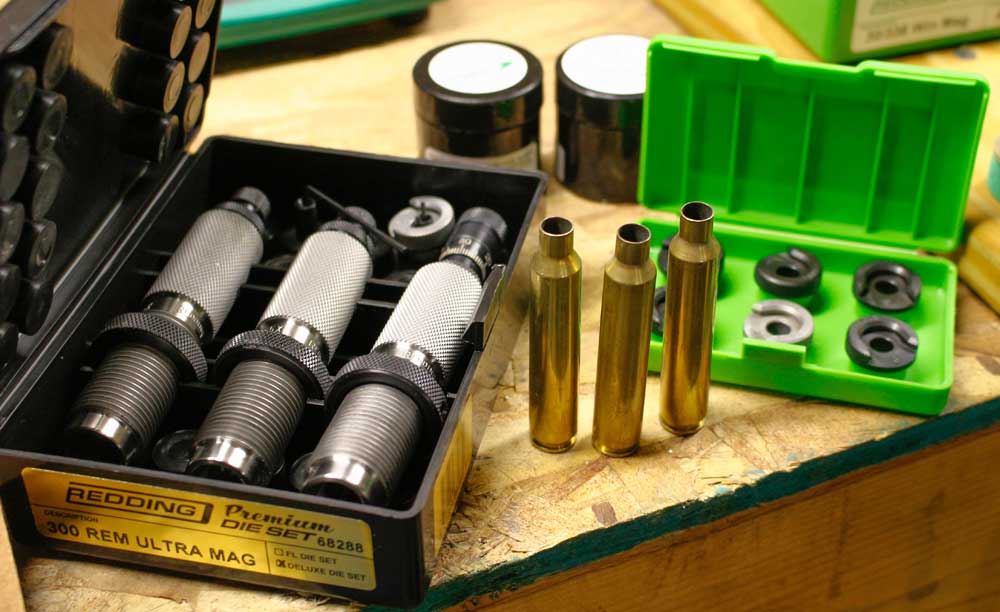
I rely on Redding dies for the best results in the .300 Remington Ultra; their Premium Die Set not only has the very tight tolerances I’m looking for but incorporates a couple of features I’m very fond of. The Premium set includes both a full-length sizer and a neck-sizing die, in addition to the micrometer-adjustable seating die. This gives me the option to neck-size my brass for a finicky rifle, and that special seating die gives some of the most consistent results I’ve ever obtained. To further control proper dimensions, Redding makes a set of Competition shellholders that will allow the handloader to control the amount of shoulder bump, in increments of 0.002 inches, so you can best match your ammunition to the dimensions of your particular chamber. These Redding dies have greatly improved the accuracy of many .300 RUMs, shrinking group size from MOA or just over to ½ MOA, and that’s an appreciable difference. I use no crimp for the .300 Remington Ultra Magnum, as there is more than sufficient neck tension to keep things in place.
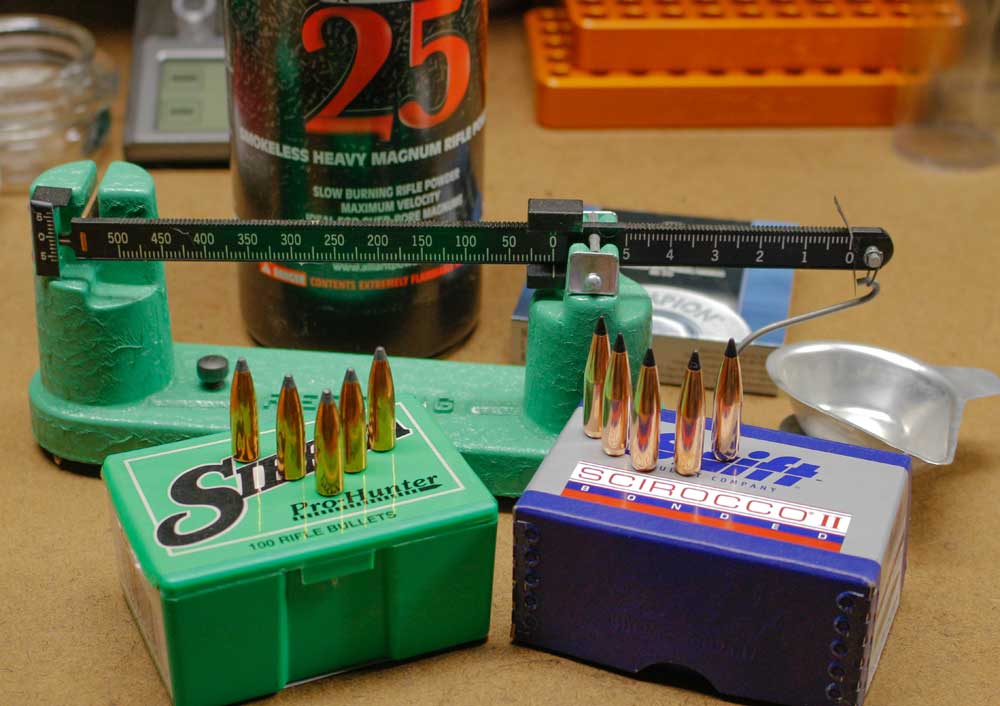
Left: The 180-grain Sierra ProHunter. Right: The 180-grain Swift Scirocco. Both give excellent accuracy in the .300 RUM.
My own personal favorite load for the .300 Ultra is built around a healthy charge of Reloder 25, and a couple of 180-grain slugs. Grumpy Pants’ load uses the 180-grain Sierra ProHunter, and while I feel that bullet may give him some trouble on a close shot, he’s taken several big-bodied moose and caribou, as well as African plains game, at longer ranges with no issues. Over 95.5 grains of RL25, delivered from a 26-inch Savage barrel (before the brake) and sparked by a Federal GM215M primer, my Oehler 35P indicates a muzzle velocity of 3,360 fps. The same load underneath a 180-grain Swift Scirocco II leaves the muzzle at 3,335 fps, with the same ¾ MOA accuracy, and that combination has accounted for trophy elk, as well as many other species.
My pal Marty Groppi prefers to load his .300 RUM with a pair of Nosler bullets: the 180-grain Partition and the 180-grain AccuBond. The Partition prefers a load of 86.0 grains Hodgdon’s H4831SC, and that flies from the muzzle at 3,200 fps. The AccuBond likes things a little rougher, and when seated over a charge of an even 100.0 grains of Hodgdon’s RETUMBO, gives a muzzle velocity of 3,310 fps from the Winchester Model 70, in nice little cloverleaf groups.
Nosler Partitions and AccuBonds serve the .300 RUM case well.
In Conclusion
Take a long, hard and honest look at your own hunting needs when considering the .300 Remington Ultra Magnum. Do you anticipate hunting or shooting at the ranges where the benefits of the .300 RUM become effective – say out past 400-450 yards? Or do you feel the additional velocity of this cartridge gives you the energy figures you’ll need to extend the hunting capability of the premium .30-caliber bullets? Only you can answer that question. Hands down, it is undeniable that the .300 Remington Ultra Magnum is an effective long-range tool, fully capable of taking game out to ranges beyond the comfort level of most shooters – the essential question is this: Are you willing to do your part to become proficient enough to wield such a tool? If the answer to that question is yes, then this is a cartridge for you, and I hope it serves you well.
The new Toric Ultra HD from Tract Optics offers a ton of performance at an accessible price point.
Just in time for some early season prairie dog shooting, Gun Digest magazine requested I take a hands-on look at a new riflescope brand coming to the outdoor market labeled as Tract riflescopes. The scope provided appeared to be a tight package using quality materials and optic coatings that offered a good medium-range, big-game optic or varmint hunting system.
In terms of this review, I was sent a sample scope labeled as a “Toric Ultra HD.” This scope makes use of a 3-15x42mm objective lens and mounts a reticle design centering on the basic T-Plex etched glass system. As indicated by the manufacturer, the Toric scope can also be obtained with a BDC Reticle as a second option. More on this element of the scope’s design a bit later.
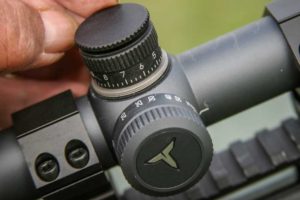
The scope makes use of a 1-inch main tube and capped turret adjustments that would appear to be ¼ clicks per inch. The model tested was a prototype and directional marks weren’t readily apparent on the turrets, which made things a little more challenging; however, I addressed this by simply looking downrange at impact points and adjusting as necessary.
The turret housing on the Toric glass sight retains the third adjustment for parallax / focus correction at given ranges. The focusing eyepiece (at the rear of the scope) makes use of a full 4-inch eye relief, which will fight off “ring eye” from heavy, magnum calibers. Magnification graduations from 3x-15 were selected for use in this optical system. Tract Optics built this scope in the first focal plane, which indicates that as magnification is increased or decreased, the cross hair or other reticule design will remain the same. Second focal plane scopes will change the size of those cross hairs as magnification changes. I personally like the first focal plane system.
Rifle
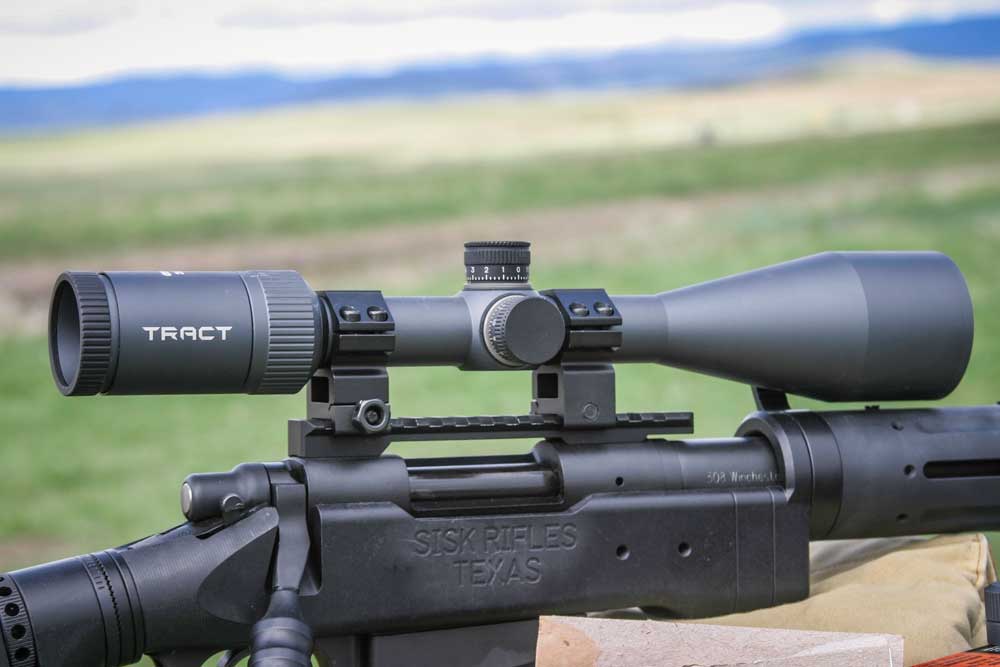
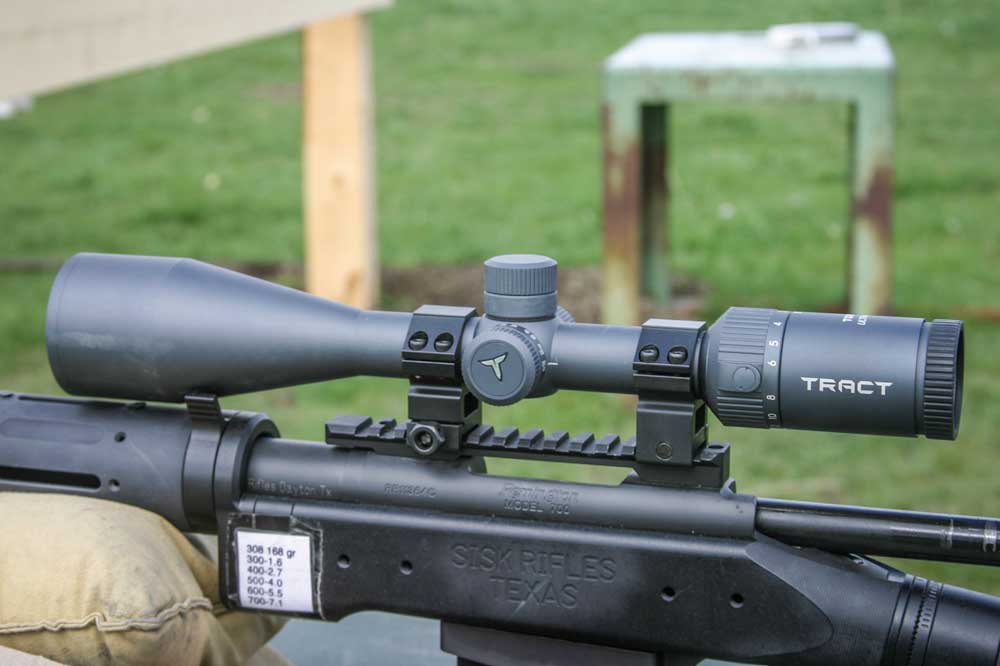
In terms of a test rifle I chose the new Sisk Star custom-built .308 Win. This modular sniper rifle is handmade one at a time by Charlie Sisk, and as such it is a tack-driver out to its zero range. Based on my testing of the system at Gunsite Academy in Arizona, it is a solid MOA performer in law enforcement circles to any normal, urban sniper range limit. My test ammunition was all handloaded and used the new Sierra 168-grain Match King (Tipped) bullets, Lake City US Army “Match” cases, Federal LR primers, and 43.3 grains of H-4895. Muzzle velocity on this load was a mild, but deadly accurate 2,600 feet per second (fps).
In the Field
I mounted the Tract scope on a Sisk-built Weaver rail with heavy, tactical-style rings and took the system out onto the test range for basic zeroing at 100 yards. I then conducted a series of special optic tests so as to gain more information as to the basic function of the new scope system. After bore sighting and sending shots downrange for zero, I shot a cross-shaped pattern consisting of 8 MOA of elevation from zero using the scopes turret clicks. After re-centering to zero, I turned eight more MOA clicks to send bullets to the 6 o’clock position below the center zero point. Now with a second, and third return to center, I then shot both left and right 8 MOA spreads.
At the completion of the test, the target returned a cross pattern indicating that the scope was performing correctly and returning each time to the correct zero setting. No drift or failure to make corrections was noted. It’s worth noting that even when I was doing basic zeroing, walking the bullet to dead-on zero was only a three-round event after bore sighting the scope to the rifle. However, I would still have liked to see indicators denoting up, down, right, and left on the turrets. With plenty of time and no pressure, it’s easy to remember which direction to adjust, but what if you find yourself suddenly faced with a 180-score whitetail standing at 450 yards? Would you be able to remember which way to turn those elevation adjustments in a more high-pressure scenario such as that?
As a second test, I selected a warm target (prairie dog) at a ranged 300 yards, centered the cross hair on the target, adjusted the focus control by the knob on the left side of the turret, then increased the scope’s magnification from 6x to a full 15x. The observation was to see if the target blurred with a change in magnification. When reaching the 15x mark, it required a full one-half turn on the parallax knob to bring the dog back into focus. This is a normal function, and there are few scopes under about $1,000 that are so accurate in matching the focus knob to varied target ranges that the knob can in effect be used as a range finder of sorts in a pinch.
Tract turret knobs are also offered in a high turret casing design.
On Target
The local test range is setup as basically a one-stop shop, with a square mile of dogs running amongst the steel targets, and the transition from steel targets to live prairie dogs is instantaneous. The scope’s lens system was clear to the edges and offered good positive identification from young to old dogs quickly. With a week of rain and now high winds and clouds, shooting was less then great, but I did get enough rounds downrange to adequately assess the effectiveness of the optic. My conclusion was that the scope returned good, positive field results. That said, there were a few areas that I feel need to be addressed.
As live targets changed position and it became necessary to advance or retard range during target acquisition, the duplex-style standard reticle was of no help and required me to reach for the turret knobs and advance or retard clicks for changes in target range. What I feel would move this optic into a whole new ball game would be the inclusion of a basic MOA military-style reticle, which would make for a game changer when rapid targeting is the order of the day. I realize the system makes use of a special order BDC reticle, and I know the system well. However, it is not an MOA search-and-destroy reticle by any means, as it falls into line with one of many brand-designed reticles that are often slaves to one cartridge load choice.
Author with Sisk Star .308 Sniper Rifle with the new Tract scope mounted.
Couple the MOA reticle with the fact that this turret retains a full 45 MOA clicks beyond the basic 100-yard zero setting when pulling for ultra-long-range elevation shots, and this scope can turn into a mail-sending long-range optic of the first order. As it was, given that the .308 Win. is not a flat-shooting cartridge, I was required to hunt and peck using more rounds than necessary on warm targets from 300 to 500 yards. Also with the scope using that first focal plane, it is a natural for MOA reticle applications.
With the scope priced at the $400 mark, I feel that based on my short-term testing this optic is a value for the money, and with a few small changes, this system can push its ranging optics limits a good deal further than it currently does.
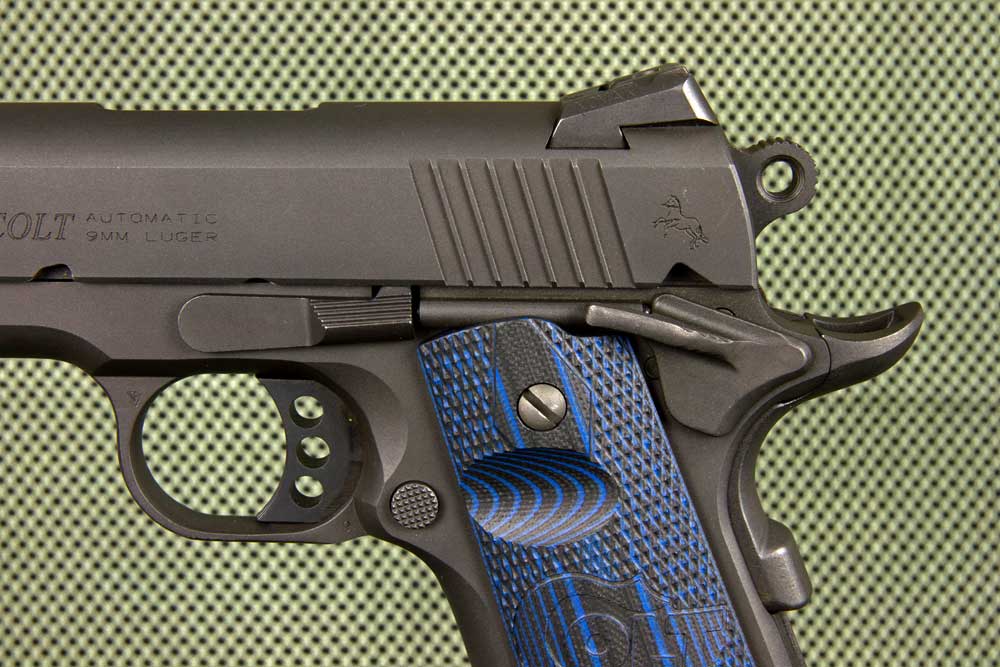
Ready right out of the box for competition or personal defense, the new Colt Competition pistol is a high-quality performer. Here is a Colt Competition 1911 review.
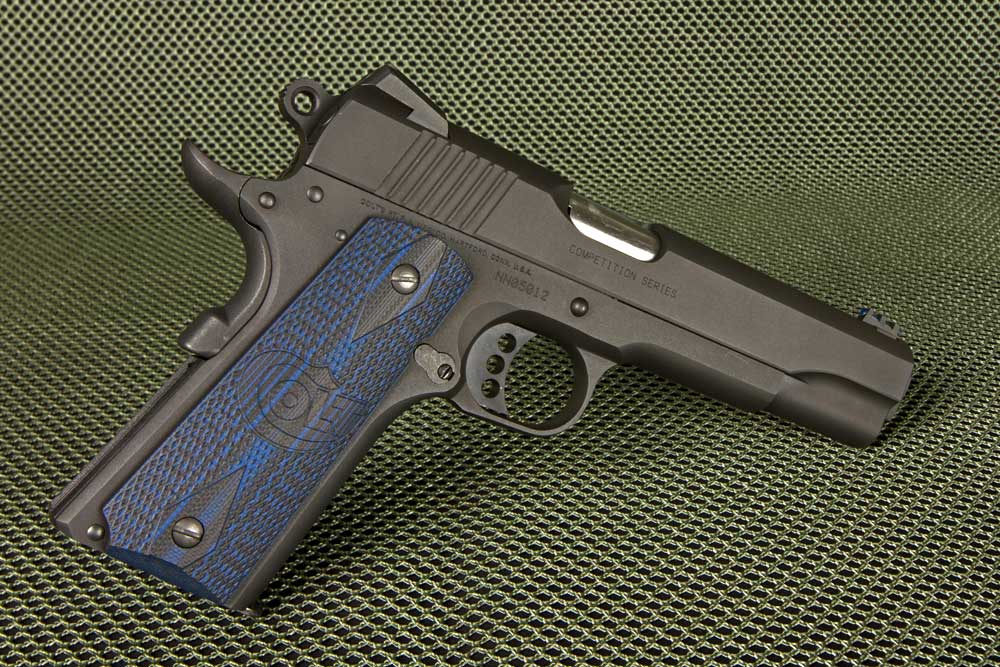
With all the 1911s it has manufactured over the years, Colt has developed great expertise and know-how in building the Browning-designed handgun. But the company has focused its efforts elsewhere than the consumer market, where that knowledge has been in high demand—until now. Revealed to the gun press in November of 2015, the 1911 Competition Government was well received, and although it is also available in .45ACP, the 9mm version is reviewed here. It is pure Colt with all the familiar features, plus some enhancements that make it ready for action on the competition range or when a criminal threatens one’s life.
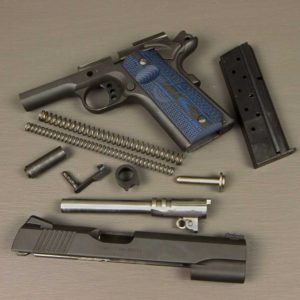
The dual recoil spring that replaces the standard single spring not only reduces felt recoil, but it also lasts longer.
The 9mm Luger
For years, many in the gun community worried that Colt had forever abandoned the commercial market in favor of concentrating on fulfilling government contracts. Colt has consistently produced the 1911 in various models, but the most popular chambering was .45ACP, the traditional cartridge for the 1911. And that made sense, because the 1911 is a gun designed for personal protection in war and at home, and the .45ACP has a very good reputation as a self defense round. However, that was based on old bullet technology.
Bullet design has evolved since 1911, and the full metal jacket round which was the standard at the time has given way to hollow point designs that offer controlled expansion and better delivery of power to stop an attacker. In fact, the technology has advanced to the point that some old adherents to the .45ACP, who have relied on it in law enforcement, are changing to guns chambered in 9mm.
There are a few reasons for that. First, the gap between the fight-stopping ability of the 9mm compared to the .45ACP has narrowed to the point that some feel it is irrelevant. Guns built around the 9mm can carry more ammunition without being significantly larger because the 9mm is smaller in diameter. That’s important because more ammunition is a good thing to have in a lethal force encounter. And the 9mm delivers less recoil than a .45ACP, which means less muzzle rise and a quicker return to target for follow up shots.
Since the 9mm is becoming so popular, not only among those who carry a gun for a living, but also in competition circles, it made sense to chamber the new Competition in 9mm. Besides, most everyone who has fired a 1911 in .45ACP and in 9mm remarks about how pleasurable the 9mm is to shoot.
Details
When viewed for the first time, there is no doubt the gun is a Colt. Not only are the grip panels Colt blue with black contrast, the word Colt is displayed on them. The G10 checkered grips are made for Colt of a fiberglass composite by VZ Grips and feature a scallop or groove on the left side just behind the magazine release to make it a bit easier to activate with the thumb of the firing hand for right handed shooters. And the grips are checkered to encourage a sure grip.
A serrated mainspring housing further enhances grip. To keep costs down, the frontstrap is not checkered, but that is not necessarily bad for a gun that will be drawn and fired a lot. Checkering is sharp and can cut and scrape hands badly—sometimes drawing blood—in hard use over a couple of days of training, practice or competition. Besides, the checkering on the grip panels is fairly aggressive.
The Colt Competition comes standard with a beavertail grip safety and large palm bump to help assure positive activation when the gun is gripped, even with the thumb held high on top of the thumb safety, which is extended and easy to engage and disengage. Forward of the thumb safety is the slide stop that is also easy to manipulate, and during assembly was not difficult to insert, as so many are.
The magazine release is checkered, and the three-holed aluminum trigger on the test gun broke cleanly at about four pounds with just a little take-up, and absolutely no discernible creep or overtravel. Although the concept of reset is overrated, the reset was distinct and short. This is a good trigger right out of the box and is set at a weight that most would find acceptable for both competition and personal defense.
Sights
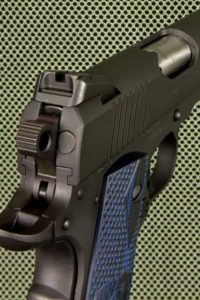
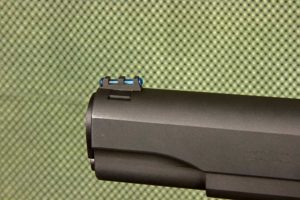
Except for the sights, the slide is pure Colt Government in appearance, and the rear cocking serrations are deep enough to afford a good grip when cycling the gun by hand. On the left side of the slide is the legend Government Model Colt Automatic 9mm Luger with the so-called rampant colt at the rear. The right side of the slide is marked Competition Series, and the finish is an evenly applied blue that matches the blued frame. Atop the slide is a blue front fiber optic sight and at the rear is something new—an elevation-adjustable sight made by Novak that looks surprisingly like the traditional and highly desired Novak sight everyone is used to seeing. It is also drift adjustable for windage.
The adjustable rear sight is an impressive piece of engineering and execution. True to traditional Novak lines, the sight is snag resistant and won’t cut the shooter’s hand when racking the slide in an emergency. Fortunately, Colt supplies the gun with a green and red fiber optic insert to easily replace the blue insert, which does a poor job of drawing the eye. It just doesn’t provide enough contrast or glow as brightly as do red or green.
Inside the slide is a stainless steel national match barrel with six grooves and a 1:16-inch left hand twist. It’s a good barrel, and the one on the test gun delivered small groups with a variety of ammunition.
The recoil spring guide rod is short like Browning designed it, but the recoil spring has been replaced with dual springs, one that surrounds the other. Also found on the Combat Unit Pistol and the Marine Corps M45A1 pistol, dual recoil springs last longer than the single spring—a lot longer, with reports of 10,000 rounds or more before needing replacement. The duals also make recoil feel smoother and softer, making for less muzzle rise and faster return to target for follow up shots.
It’s pleasant to shoot a full size 1911 chambered in 9mm. There are more rounds on board, and recoil is lighter.
During testing, the sample gun ran without incident. Substituting Crimson Trace Green Laser Grips to aid the aiming ability of aging eyes, the gun delivered consistent, small groups ranging from just over one inch to about 2.75 inches from the rest. The average was less than two inches for two of the three loads tested.
Although it has the word Competition in its name, this is not just a competition gun. Change the front sight insert to one that is easier to see and perhaps add Crimson Trace Laser Grips, and the gun is also ready to defend life.
By the way, it won’t cost a king’s ransom, either. The MSRP on the Colt Competition 1911 is only $899, so it is apparent that Colt is working hard to provide products the consumer wants and can afford. For more information, contact Colt’s Manufacturing Company, 800-962-2658, Colt.com.
Specifications: Colt Competition Government 1911 Caliber: 9mm (reviewed) or .45 ACP Barrel Length: 5 in., 1:16 twist Overall Length: 8.5 in. Weight: 36 oz. (unloaded) Grips: Blue G10 Checkered with Scallop Sights: Novak Front Fiber Optic, Novak Adjustable Rear Action: Single Action, Semi-Auto Finish: Blued Capacity: 9+1 Price: $899
Performance: Black Hills 124-gr. JHP Velocity (fps): 1,131 Average Group (in.): 1.58 Best Group (in.): 1.26
Hornady 115-gr. Critical Defense FTX Velocity (fps): 1,126 Average Group (in.): 2.30 Best Group (in.) 2.07
Winchester PDX1 147-gr. JHP Velocity (fps): 999 Average Group (in.) 1.95 Best Group (in.) 1.71
Guns, ammo and optics are certainly important to shooters, but what about those other essential accessories and other pieces of gear? We’ve got you covered.
Any shooter can certainly get by with a gun and a handful of ammo, but what fun is that? Besides, it takes more than a rifle and a box of bullets to have a productive, fulfilling day at the range. You need stuff, lots of stuff.
Whether it’s a new storage system, some new cleaning supplies or something to make your range time a little easier or a little more productive, there’s a whole host of new products on the market this year. Here’s a look at several of the best new products.
Every range bag needs one of these in it. These top-selling ear protection muffs feature unique push-in on/off switch, plus two recessed microphones provide enhanced sound of normal conversation, while the muffs compressed. Extra cool features include separate volume control for each ear, a wind filter, and extended battery operation provides up to 300 hours of use. Uses 4 AAAA batteries (included). Get Yours Now
PolyCase Ammunition is one of the newer manufacturers to enter into the ammunition market, with the company springing onto the scene just within the past several years. However, in this short time PolyCase has made a big splash in the ammo sector, especially with its innovative Inceptor ARX defensive projectiles.
These advanced bullets are injection molded from a specially blended metal/polymer matrix and are typically much lighter than standard defensive projectiles. Also unlike usual defensive bullets, the ARX bullets are non-expanding and rely on the revolutionary grooves in the nose of the projectile to transfer energy into the target using both directional and rotational force.
Now, PolyCase Ammunition is bringing this radical bullet technology into the hunting sphere with the introduction of its new .50 Beowulf Inceptor ARX offering.
For those unfamiliar with the .50 Beowulf, it was designed by Bill Alexander, of Alexander Arms, in 2001. It was built to provide enhanced stopping power to AR platform users with an appropriately modified upper and a standard lower, and its dimensions allow it to feed through AR magazines. The .50-caliber cartridge features a heavy projectile typically somewhere in the 300- to 400-grain range traveling anywhere from 1,750 to 1,900 feet per second (fps) or so.
While its slower velocity and heavier bullet limit its effectiveness at longer ranges, the round can be devastating on closer targets. One of the cartridge’s most touted uses is as a tactical option for vehicle checkpoints; however, many hunters have also begun to recognize the .50 Beowulf’s potential on big game at relatively closer ranges.
For more information on PolyCase Ammunition’s new .50 Beowulf Inceptor ARX, check out the video above from our friends at Deer & Deer Hunting.
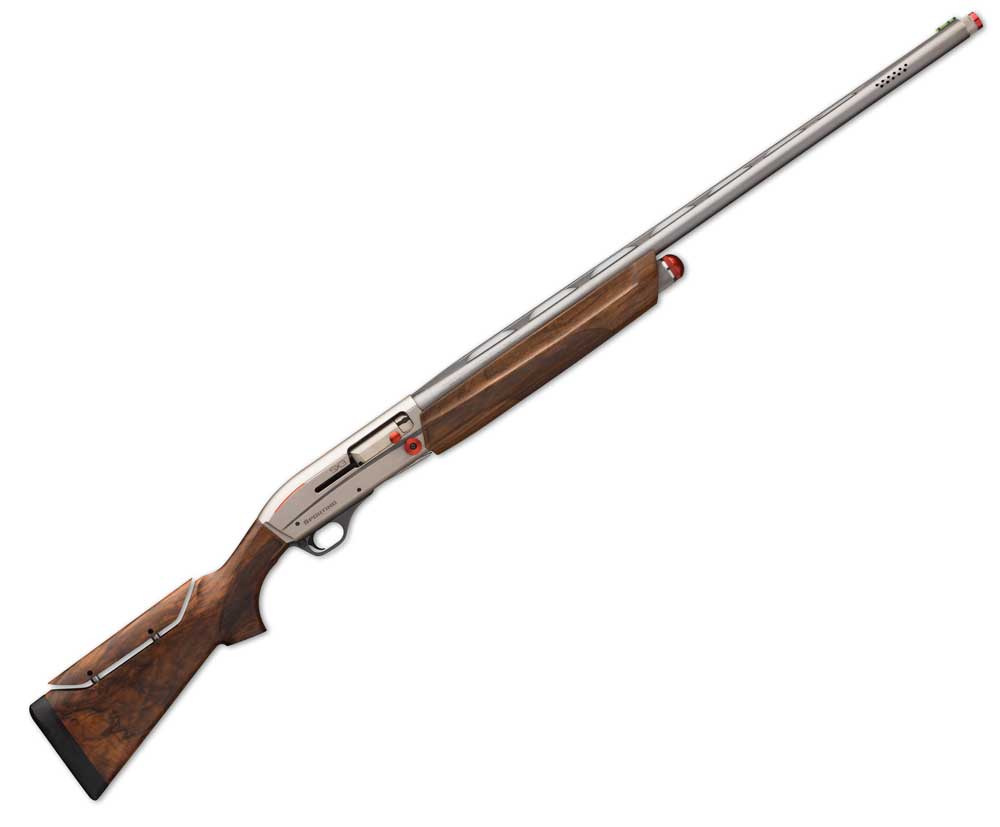
Winchester Repeating Arms has won its share of smoothbore fans with its line of Super X3 shotguns. And the company is shooting for more with a recent expansion of the line of semi-automatics.
Winchester has turned its eye to sport shooters with the addition of the Super X3 Ultimate Sporting Adjustable model and Composite Sporting Carbon Fiber model. And while each shotgun has its own specific features, both appear ready to break their fair share of clays.
The Super X3 Ultimate Sporting Adjustable is an upgraded model of Winchester’s Sporting Adjustable Shotgun. Like its predecessor, the new smoothbore features an adjustable comb, which will go a long way to facilitate a more intuitive shouldering and pointing of the gun. But the company has included a few new perks that sets the shotgun off from older iterations. In particular, the Super X3 Ultimate Sporting Adjustable is outfitted with a signature Red Briley bolt handle and bolt release button and magazine cap weight system. The final feature is intriguing, as it expands the customization of the gun by allowing the user to fine-tune its balance by adding or removing weight.
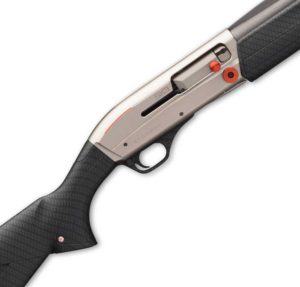
The Super X3 Composite Sporting Carbon Fiber boasts nearly all the features of the Ultimate Sporting; there are some notable exceptions, such as the adjustable comb. But it is a marked break from the other new semi-automatic with its furniture, as it is outfitted with a synthetic stock. The carbon fiber dipped finish should make the gun quite resilient to the bumps and bruises that can come with hard use. Not to mention, it gives the shotgun a rather modern, sporty look to boot.
Presently, the MSRP of the Winchester Super X3 Ultimate Sporting Adjustable is $1,869.99 and the Super X3 Composite Sporting Carbon Fiber is $1,739.99.
Shot timers are typically associated with shooting competitions. But as Adam Painchaud shows in the above video from the National Shooting Sports Foundation, the devices have their place in defensive firearm drills. As the instructor at the SIG Sauer Academy points out, much of what shot timers bring to the table is mental training, injecting a sense of urgency to common drills. But they can also be important diagnostic tools, giving shooters instant feedback as to whether they have been accomplishing a specific movement or are breaking shots in a timely fashion. Perhaps best of all, nearly any shooting range will allow its patrons to use these training tools. This cannot be said for other important aspects of defensive firearms training, such as shooting on the move or from different positions.
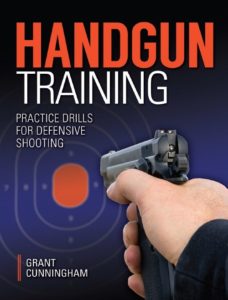
Self defense can be a matter of life and death for your family. Keeping your shooting skills sharp is important to using the best home defense weapon possible when the unexpected occurs. Turn your handgun into the best handgun for home defense with the drills outlined in Handgun Training – Practice Drills for Defensive Shooting. Nothing will give you more peace and security in your own home than the confidence you will hit your target. Learn More
Cooperation between manufacturers in the firearms industry has historically lead to some pretty incredible developments and innovations. Combining the resources and talents of two, or more, manufacturers in the pursuit of a single shared production goal can naturally translate to dramatic improvements.
This is the guiding principle behind the recently formed Beretta Defense Technologies (BDT), which is a strategic alliance of four Beretta Holding defense companies: Beretta, Benelli, Steiner and Sako. With the stated purpose of producing some of the finest weaponry and equipment in the market, BDT’s hope is to become a single source contact for military, government and law enforcement organizations.
This Saturday, May 21, from 7 p.m. to 8 p.m., the Sportsman Channel is airing a special episode that highlights the story of BDT. The episode will offer a behind-the-scenes look at BDT’s journey to build the ultimate integrated weapons system by going inside all four companies and providing viewers with never-before-seen footage. Those who tune in will be able to see how BDT builds a weapons system that unifies the operator, firearm, optics, cartridge and support equipment to give customers the confidence to reliably hit any target, control any situation, and accomplish any mission.
“The mission of BDT is to create a safer world,” said Stephen McKelvain, Chief Global Marketing Officer for Beretta’s Optics Division. “We advance the success of our customers working in complex modern operational environments. We understand the deep, and sometimes subtle, interoperability issues where each piece of equipment must seamlessly interact with the other. BDT minimizes the compromises to operational effectiveness at the individual, unit and organizational levels.”
Watch the trailer above to get a glimpse at BDT’s manufacturing process, or visit the group’s website to learn more.
Gun Digest Shooter’s Guide to the AR-15is a comprehensive look at today’s most popular modern sporting rifle. Among a wide variety of topics, the firearms expert and noted author provides helpful ammunition and accuracy tips, an explanation of the AR platform, a wide range of AR-15 applications, and much more, enhanced by 250 photos. Keep up with the increasing popularity of the versatile AR-15 with this indispensable shooter’s guide. Get your copy now.
Arguably the most popular cartridge ever conceived, the .22 Long Rifle has been serving shooters well for more than 100 years.
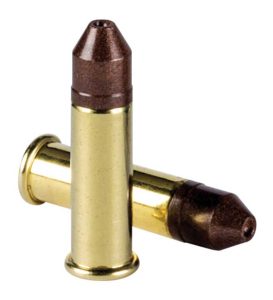
CCI Copper-22 21-grain copper hollowpoint.
Information available indicates that the .22 Long Rifle was developed by J. Stevens Arms & Tool Co. in 1887. It is the .22 Long case with a five-grain black-powder charge (likely with a granulation similar to what we would now call FFFFg), and a 40-grain bullet instead of the original 29-grain.
The .22 Long Rifle is the most popular match cartridge in existence, and also the most widely used small-game and varmint cartridge.
The high-velocity hollowpoint is the best field load and will do a good job on rabbit-sized animals out to 75 yards. Beyond that, it is unreliable. At close range, the high-velocity load with the solid-lead bullet will penetrate six inches of soft pine board and has a maximum range of nearly two miles. Maximum range is achieved at the relatively low angle of between 25 and 30 degrees, so one must be very careful.
At one time, the .22 Long Rifle was available in black-powder, semi-smokeless, and smokeless powder loads. Remington introduced the first high-velocity type, in 1930. The 40-grain solid and 36- and 38-grain hollowpoint bullet have been available for many years.
The original case was not crimped, a feature that finally appeared in 1900. Space does not permit a full discussion of the different loads and types of .22 Long Rifle cartridges or the rifles and handguns that chamber it.
This brief is an excerpt from Cartridges of the World 14th Edition.
For a little more than two decades now, American Gunsmithing Institute, or AGI as it’s commonly known, has been one of the world’s premier gunsmithing schools, educating more working gunsmiths than all other gunsmithing schools combined. Relying on a comprehensive system of video instruction, AGI offers an array of courses on every aspect of gunsmithing for a wide variety of firearms—all of which can be completed in the comfort of one’s own home. For those wanting to elevate their firearms knowledge and skills or make gunsmithing a professional endeavor, AGI represents an invaluable resource.
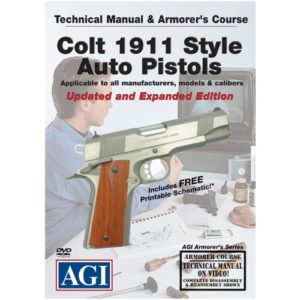
Check out this 1911 Armorer’s Course and other AGI courses offered at the Gun Digest Store.
Now, Gun Digest is pleased to make these great resources available to buyers on the Gun Digest Store at a discount from their typical retail prices.
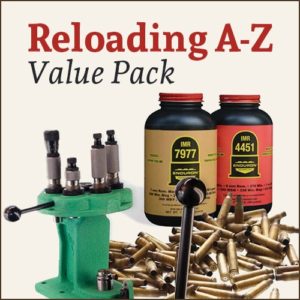
The Gun Digest Store is offering many of the AGI armorer’s courses, as well as disassembly/reassembly courses for a wide variety of popular firearms. Also available is the company’s brand new Reloading A-Z course, which covers all aspects of reloading and is available in a bundle alongside three other Gun Digest reloading resources.
Those purchasing an AGI product before June 16, 2016, will also receive a coupon for $5 off their next purchase from the Gun Digest Store. This is valid once for each purchase of an AGI product made before June 16, and each coupon is valid through December 31, 2016.
A valuable partnership for Gun Digest and American Gunsmithing Institute customers has arrived. The Reloading A-Z Value Pack is the first bundle of GD and AGI products, and offers the newest reloading resources at an incredible value. The Reloading A-Z DVD with Fred Zeglin is over 7 hours of explanation about reloading, but more than simple demonstration he explains why for all processes and directions. Get Yours Now
When it comes down to it, choosing a holster for concealed carry is almost completely about comfort and personal preference. A shooter will choose the holster that fits most comfortably for the chosen firearm, and that fits his or her carry position preference, whether that be inside-the-waistband (IWB) in the appendix area, tucked behind the hip, belt-mounted on the strong side, or any other position. Often, shooters must purchase a different holster depending on their method of carry, and that cost adds up.
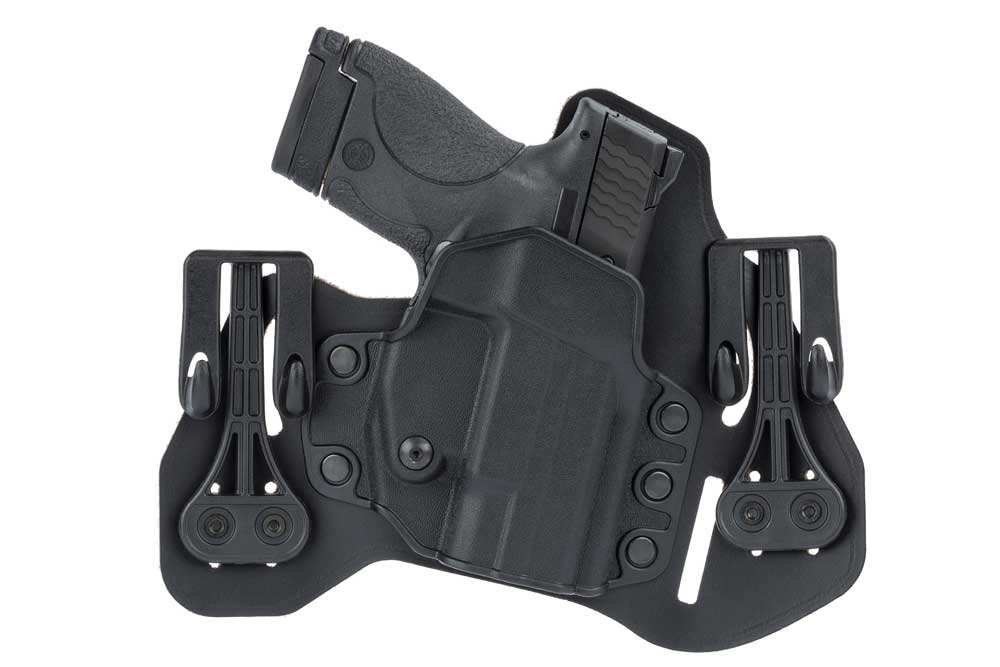
Luckily, the folks at Blackhawk have just released a new concealed carry holster with incredible versatility that adapts to most popular carry configurations. The new Leather Tuckable Pancake Holster blends premium leather and injection-molded plastic for a comfortable, yet ruggedly durable product; and best of all, this new design allows civilian and law enforcement users to choose from IWB, tuckable or belt-mounted wear.
A truly adaptable option, the Blackhawk Leather Tuckable Pancake Holster utilizes a three-slot design, meaning shooters can carry in the strong-side, behind-the-hip, appendix and cross-draw positions on belts up to 1.75 inches in width. Belt clips are also included for traditional inside-the-pants wear or use as a tuckable holster.
This new Blackhawk holster is also adjustable for cant and ride and features a built-in shirt shield to keep moisture from the firearm. The level of retention is tension-adjustable, and the holster features a trigger guard for safety and security.
“We know that our customers rely on their equipment to keep them safe, and we are excited to offer such a multifaceted holster,” said Jarrett Beck, BLACKHAWK! Product Director. “This new holster offers personal adjustability, safety, convenience and value in an all-in-one package.”
The Blackhawk Leather Tuckable Pancake Holster currently fits the Smith & Wesson M&P and M&P Shield, the Ruger SP101 and Taurus 85 revolvers, and the Kahr 9/40, with other fits becoming available. The MSRP on this new 3-in-1 holster is listed at $86.95.
For more information on the new Leather Tuckable Pancake Holster or other Blackhawk products, visit Blackhawk.com.
Smith & Wesson has upgraded its M&P 15-22 lineup yet again, this time with Sport MOE-SL models.
Smith & Wesson’s M&P 15-22 has been one of the most popular and effective .22 LR AR platforms for several years. A rimfire AR affords shooters the ability to train and become familiar with the AR’s ergonomics and operation without the recoil and added expense of .223/5.56 NATO rounds, and the M&P 15-22 has consistently been one of the more reliable offerings in this category.
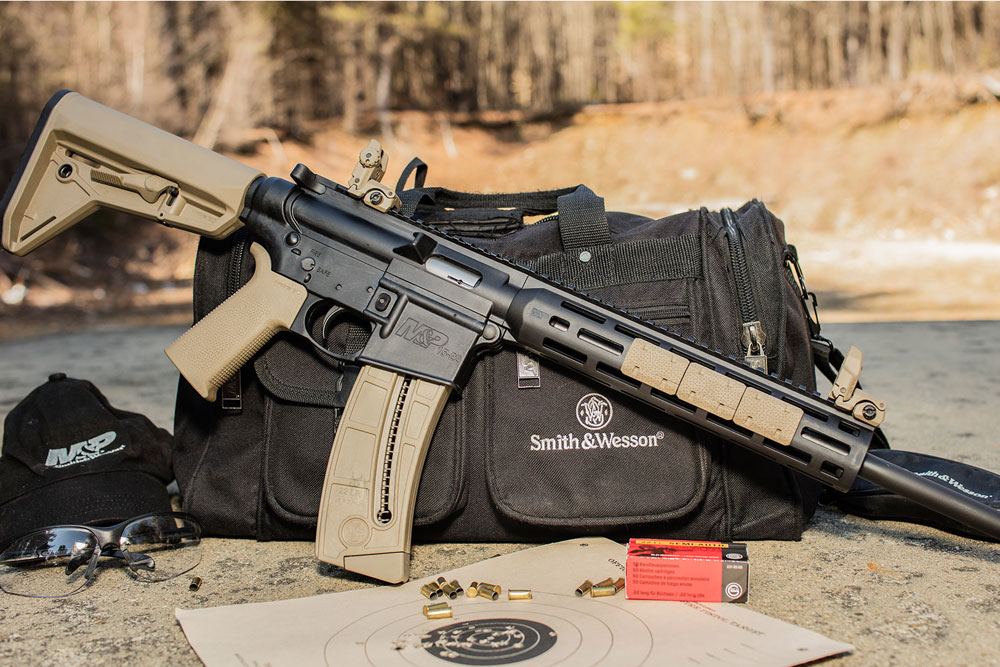
Earlier this year, Smith & Wesson revealed a new Sport version of the classic M&P 15-22 that offered the rifle with premium Magpul accessories straight from the factory. Now, the manufacturer has expanded the M&P 15-22 Sport line by introducing new MOE-SL (Magpul Original Equipment – Slim Line) models.
“As we continue to offer shooters enhanced features and control on a factory built platform, we are especially excited about this new addition to our extremely popular family of M&P15-22 Sport rifles,” said Jan Mladek, General Manager of Smith & Wesson’s M&P Brand. “We continue to look for new and innovative ways to evolve the M&P rifle series and offer consumers enhanced features. Outfitting the M&P15-22 Sport MOE SL with Magpul original equipment is just another step in creating the ultimate shooting experience.”
The new Smith & Wesson M&P 15-22 Sport MOE-SL is engineered on a high-strength polymer upper and lower receiver for weight reduction and comes with features standard on all M&P 15-22 Sport rifles such as Magpul’s MBUS front and rear folding sights and Slim M-LOK handguard. These features already make the M&P 15-22 Sport MOE-SL an excellent choice for tactical training or for simple plinking.
However, the new M&P 15-22 Sport MOE-SL models also come equipped with a Magpul MOE SL mil-spec carbine stock, SL Grip and Magpul Type-2 M-LOK rail covers. The MOE SL carbine stock provides improved cheek weld and has a shielded, ambidextrous release lever for adjustment, and the SL Grip offers a slimmer, more ergonomic feel with a greater vertical grip angle, a beavertail backstrap and an aggressive TSP (Trapezoidal Surface Projections) texture for added control. The rail covers similarly feature a heavily textured surface for positive control in any environment.
The new Smith & Wesson M&P 15-22 Sport MOE-SL models are available in black or FDE (flat dark earth) finishes and come with one, 25-round magazine. MSRP is currently listed at $499. For more information on this new product offering or other products, visit Smith-Wesson.com.
Aguila Ammo has been expanding its presence in the U.S. shooting industry as of late, adding high-profile competitive shooters to its pro staff and increasing its marketing efforts in the American market. Now, the company has announced it is also partnering with up-and-coming shooter Alexis Welch, an 8-year-old who has wowed the industry with her abilities and her competitive drive.
Welch learned to shoot at the age of 5 and is only in her second year of competing. However, she has garnered a lot of publicity and attention due to her young age, small size, her shooting skills and her excellent personality.
“We are excited for our pro-staff team to be expanding, and even more excited to have Alexis be part of it. She is everything we look for in a shooter; enthusiastic, engaging and passionate about the shooting sports,” says Kristi Drawe, Director of Marketing for Aguila Ammunition. “With Alexis’ personality, inspiring story, and her incredible shooting ability, she is exactly what other youth shooters should aspire to be. Right now she is a very new and young shooter at the brink of her shooting career, and we are honored to be part of her journey.”
Even at her young age, Welch has already had to face challenges. She overcame being born deaf, and recently lost her grandfather, who taught her to shoot and had coached her through every competition. Although it isn’t the same without having her grandfather there, Welch is already competing again. She routinely competes against shooters twice her age.
“I’m super excited to join the Aguila team this year! I have been using their .22 ammo for a long time now and I love that it fires great every time I shoot it,” says Alexis. “Having Aguila as a sponsor really helps my shooting career. I look forward to building a lasting relationship with some great people that produce a great product.”
Welch is currently competing in Rimfire: open division, limited, 8 stages rifle and 8 stages pistol events. Of course, she also is very interested in competing in 3-Gun and AR competitions in the future.
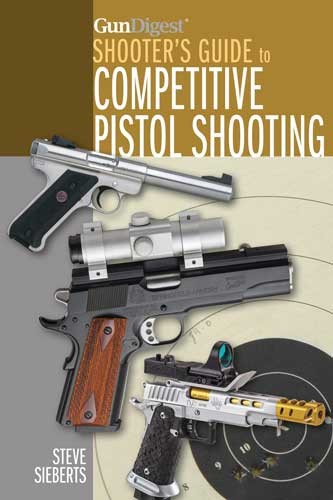
Seconds are precious in any shooting competition. And Gun Digest Shooter’s Guide to Competitive Pistol Shootingarms shooters with the knowledge to get into the game. The comprehensive resource breaks down the most popular pistol events — IDPA, IPSC, Steel Challenge, GSSF, Bull’s Eye, Cowboy Action, Bianchi Cup and 3-Gun — to their bare essentials, giving shooters a solid grasp of what it takes to set their sights on gold. Get Your Copy
Looking to go armed, but are stuck in the weeds as to what to arm yourself with? Here are 20 of the best concealed carry gun options that will keep you on the defensive.