
Blaser is shooting for nimbleness with it’s new over/under — the F16.
The shotgun’s brutish firepower is usually what catches a shooter's attention. But there is another asset, often overlooked, that helps define a quality scattergun — agility.
Fast to the shoulder, quick on the point and right on time delivering its payload, these are all qualities shooters look for in a good shotgun. And these are the properties Blaser is shooting to deliver in the newest shotgun to grace the pages of its catalog. The German gun maker recently released the F16, an over/under shotgun tuned to make it among the swiftest at the range and in the field.
Perhaps the key element Blaser has engineered into its new F16 Sporting and Game models that should aid the speedy delivery of shot is its receiver. The company touts the F16 as having the lowest profile receiver on the market, which should deliver a couple desirable qualities to the shotgun.
First, it drops the center of the smoothbore’s gravity, giving shooters more control over the firearm. This means the F16 should mount the shoulder intuitively, thus facilitating a quicker point. It also opens up the shooter’s peripheral vision, thus giving them a wider field of vision. Blaser tapering the rib towards the rear has further enhanced this aspect of the shotgun. Whether busting clays or bagging birds, these new features have the potential to make doubles all the more frequent.
Blaser’s new F16 features a lowered receiver, making it easier to handle and opening up a shooter’s field of vision.
The company gives shooters direct control over the 12-gauge (3-inch chamber) with a select mechanical trigger. The controls are positioned within easy reach at the front of the trigger. And from Blaser’s specs on the F16, the trigger itself should prove to be snappy, with around a 4-pound pull weight. The manufacturer has also included its Inertia Block System, which prevents doubling or fan fires.
The F16 also has the aesthetic qualities that should turn shooters’ heads. Blaser has given the shotgun a sleek look, rounding the edges of the metal components. But, it has retained a timeless “over/under” look to the gun, stocking it in Grade 2 (there are Grade 3 and 4 options) walnut and giving it an English style forearm.
The F16 Sporting is available with the option of a 30- or 32-inch barrel and weighs in at 7.5-8.4 pounds (depending on barrel length); the Game is available with a 28- or 30-inch barrel and tips the scales at 6.8 pounds. Both come outfitted with Blaser’s Comfort Recoil Pad and are shipped with a gun case. The MSRP of the Sporting model is $4,195, while the Game is presently priced $3,795.
Most activity today is in semi-auto pistols at about 49 percent of public data sampled from firearms listings. SIG Sauer leads with 7.5 percent of the pistol activity, with their 1911 models being most active. That is followed by Ruger at 6.5 percent, with the LCP Model most active, then the H&K P30 Model and the Beretta Model 84 .380 ACP pistol.
Next is rifles at 36 percent of activity. Bolt-action rifles have over 60 percent of the rifle activity. Ruger is out front with over 10 percent of the bolt-action rifle activity. The American Model is the most popular. Next is Blaser with 5 percent of the bolt-action rifle activity, with the Model R93 in .300 Win. Mag. being most popular, followed by Savage with its Mark II rifles.
Semi-auto rifles post now at 30 percent of rifle activity, with Ruger out front with over 10 percent of the activity. The 10/22 is most popular for Ruger, and IWI (Israel Weapon Industries) is next with its Tavor.
Lever-action Henry Repeating Arms Co. is behind IWI, followed by Winchester and Marlin, followed by single shot and then slide-action rifles.
Shotguns are next—9.5 percent of listings. Slide actions are first with approximately 30 percent of all shotgun activity. The Mossberg Model 500 is in front, followed by the Winchester Model 12 and the Kel Tec KSG.
Semi-auto shotguns are in line after that with Benelli's M2 Field out front and Browning's A-5 a distant 2nd.
Last is revolvers with approximately 5.5 percent of the firearms listings. S&W has approximately 23 percent of revolver listings; their Model 686 is most popular, followed by Ruger and its LCR, then Taurus' Model 85, and Colt's SAA or Python is a tossup.
What's really hot? Ruger anything, almost 2nd in semi-auto pistols, 1st in bolt-action rifles and 1st in semi-auto rifles.
A special report for Gun Digest by the experts at Blue Book on what's hot and what's not in the world of gun values and online gun auctions.
Few people in the industry keep their finger on the pulse of online gun buying and selling like the folks at Blue Book. In this special report for Gun Digest, they've peeled the curtain away and allowed us an insider's glimpse at their notes. Here's their take on the current state of affairs at online firearm auctions, the bazaars that are driving current gun values.
Hot—Anything Colt Python or Double-Action Colt Revolvers (Snake Guns)
Transacting with great velocity and volumes at high prices.
Seems to be sustainable and not a fluke; but that could change overnight.
Now is the time to sell!
Hot—Double-Action Revolvers Make a Resurgence
Buyers enjoy the feeling of nostalgia.
S&W has never before turned out as many revolvers, and they’re nice!
Brings them back to the era of Dirty Harry and their youth.
Classy, refined and elegant in a world of tactical.
Hot—Antique Firearms (Pre-1899)
Emerging collectibles market.
Percussion to flintlock.
Few fine examples exist.
We have a new antique database specifically for this market.
Hot—1911’s
Over 300K listings on Gunbroker.com alone.
Notable—Colt Single Actions
Jumped in sales volume over last 4 months.
Almost neck and neck with Python.
Not So Hot—Tactical Rifles (Exception: Precision and Long-Range Rifles)
Except manufacturers like JP Enterprise and Larue. They still have a huge backlog and command a premium.
DPMS, Bushmaster, Low-Mid end stuff is cheap.
GREAT time to buy AR-15’s. Prices will never be lower *We hope.
The Political Factor
Drum beats for gun control.
Could be slight repeat of 2013 panic.
Military caliber shortage, price-hike.
See a hard road ahead to actually pass legislation.
Perhaps one of the most asked questions in the world of firearms is, “What's my gun worth?”
As a gun catalog writer, one, if not the most, important aspect to a client, is how an estimate on a firearm is determined. Price guides are often a year in the making before they are ever published and as such, current market trends may have already shifted. Price guides serve a great purpose as to knowing what you have and whether it is a valuable gun or not. Knowing what a gun is actually selling for at any given moment has far more variables. As usual, condition and demand are the driving factors in any collectible regardless of field. Rarity is important – but a very rare gun with little collector interest or condition is always triumphed by the former. Markets trend in all collectible categories based on age groups, current crazes (such as the unprecedented Colt Snake Guns wild ride into the stratosphere), the economy, the political climate with some added difference to regional interest and seasons.
We have seen downward trends in the last decade in many areas. Pre-64 Winchester Model 70’s have cooled at least 25 percent in the last five years. We have witnessed this same trend in Henry rifles, Sharps rifles, Kentucky rifles and Civil War firearms. Some of this can be attributed to the economy, some to an aging group of collectors entering the era of collection disbursement or aging collector base with diminishing numbers, while some downturn is due to the sizzle of a craze finally coming to its end. Younger collectors are entering into their peak earning years with an increased interest in military weapons with WWII forward being the strongest at the moment. But even if something has been trending down, the best examples still command large amounts of interest and at times – world record prices. The moral here: Always buy the best condition you can afford, one gun over several, in an established collector category with a solid base. Up or down, you will always find an eager buyer. Junk is, and always will be, hard to sell.
If your eye is on usable hunting guns, the best quality and condition will still offer a safety net of future buyers, while inexpensive utility quality guns will lose their value far more quickly and permanently. Remember when a Colt Python was still being produced and could be had for under $400? Even if you bought it and used it to the point that it now remains with about 50-percent original finish, that gun will still sell for 3-4 times what you paid for it. On the other hand, if you bought an inexpensive Spanish .357 magnum at the same time and used it in the same manner, you might be lucky to get half of what you paid if you could find a buyer. As quality newly made guns either go out of production or their list price climbs year after year, you still retain an investment that should pay dividends rather than a gun that loses value like a used car.
When attempting to ascertain a firearm's values, there are three key considerations to keep in mind: condition, quality and demand. Photo: NSSF
One new trend in collecting are guns that are expertly restored back to ‘as new’ condition. This practice has long been accepted in collecting venues such as automobiles or motorcycles. Shotgun collectors as well as big bore custom or English rifle collectors have accepted such examples with far more enthusiasm than, let’s say – Colt, Smith & Wesson, or Winchester collectors – but that is changing somewhat. Regardless, a completely restored gun will still sell for a fraction of a like-condition original. Poorly refinished guns and those that have been altered by amateur gunsmiths become simply tools or fillers at best.
Bottom line, when thinking about gun values, always think condition, quality and demand. We will all have to sell our collection at some time or someone else will. Make smart choices and you should see a good return in time. Above all else, if you are new to the game, get every book you can find on your collecting interest and read them. Attend several gun shows and seek advice, consult and get opinions from others, and you will not be sorry.
Fully updated, The Official Gun Digest Book of Guns & Prices, 11th Edition is the perfect companion to take to any gun store, show or auction. The comprehensive guide gives you the power to identify and price thousands of non-military firearms from around the globe. Yet the wealth of information this volume provides has been condensed into an easy-to-use format and portable size. It is the perfect price guide for research on the fly, helping you maximize your next gun sale or purchase, no matter where you are. Get A Market Edge
Morphy Auctions had a heck of start to 2016, moving $1.1 million worth of firearms at its January Las Vegas sale. And the Pennsylvania-based company is shooting to keep its momentum rolling with its next event of the year. Morphy is slated to hold a two-day auction April 9-10 at its Denver, Pa., location, with more than 1,500 lots ready to cross the block. The auction house has a fairly wide spectrum of firearms set for sale, including a number of one-of-a-kind guns. Here is a sneak peak of a few of the more desirable guns that are certain to have firearms collectors drooling at the sale.
Brand new for 2016, Lyman’s Auto-Advance Remote Controlled Target System permits shooters to change over targets using a hand-held remote from up to 200 yards away.
This means that shooters don’t have to wait for ceasefires to swap targets or walk down to the target stand to place a new sheet. Remote activation operates a scroll-like system, removing the used target and conveniently replacing it with a fresh sheet.
Whether used for serious target shooting or for casual plinking, no one can deny the inherent fun of shooting rimfire guns. Rimfires recoil very little, making them manageable for just about any shooter, and ammo is generally inexpensive in comparison to some of the larger centerfire cartridges. This ideal combination of affordability and lack of recoil means that shooters can participate in extended range sessions without tiring and without their pocketbook taking an intense hit.
Of course, shooters will need plenty of targets to make full use of their rimfire firearms. Many shooters will purchase sheets of bullseye, varmint and other paper targets to facilitate their target shooting needs. While this is certainly an effective way to shoot, there are some downsides, especially if you shoot at a public range or at a private range where other shooters will be present.
Every time a shooter wants to put up new targets, he or she must wait until a ceasefire is called and the firing line goes cold to walk out to where the targets are located. Because of this, time can be wasted waiting for the line to go cold or walking out to place new targets. Lyman's new target system saves time and allows rimfire shooters to get the most out of their trips to the range.
The Auto-Advance Target System is battery-operated and is easy to assemble and disassemble for transportation to and from the range. The target system’s stand utilizes easy-to-find and inexpensive standard electrical conduit tubing, and its protection plates are rated for use with all rimfire calibers.
It comes with a 50-foot roll of standard bullseye targets, and additional 50-foot target rolls are available with bullseye, animal and silhouette designs. This kind of remote target advancing has only previously been available in expensive industrial-type systems, but this system is available at a more price-friendly $229.95. Additional target rolls are $19.98 each.
The Ruger 22/45 Lite is an accurate, lightweight and fast-shooting rimfire pistol that’s now available with a sharp, OD green finish.
The new Ruger 22/45 Lite features an OD green finish and comes ready-made for customization.
Ruger’s reputation as the king of rimfire is well deserved. For decades it has produced affordable, accurate plinkers, varmint rifles and handguns. Countless shooters made their entry into the world of shooting with a Ruger rimfire handgun. Indeed, my first rimfire pistol was a bull-barrel stainless MK II. While I love this handgun for reasons equal parts nostalgia and objective appreciation, it does have a few shortcomings.
The grip angle is comfortable and works well but doesn’t directly translate to any centerfire handgun other than a P08 Parabellum or Nambu—neither are suitable home defense or competition pistols. Additionally, the European heel-type magazine release doesn’t lend itself to expedient magazine changes.
Ruger addressed both of these concerns with the introduction of its 22/45 and MK III series of handguns. Yet two additional minor concerns remained as my shooting tastes evolved: weight and suppressor compatibility.
All-steel Ruger MK II and MK III pistols are hefty pieces of equipment, especially with a bull barrel. While the 22/45 series of handguns does much to relieve this, replacing the steel lower assembly with a polymer one, the pistol becomes nose heavy and tiresome to hold on target. My other issue with Ruger’s prolific plinker is its inability to readily accept muzzle devices like suppressors and compensators. At least, that was the case until the recent release of the Ruger 22/45 Lite.
The author enjoyed the loading assist nub, which takes pressure off the top round for easy loading.
The Ruger 22/45 is a semi-automatic, single-action-only, direct blowback pistol chambered in .22 LR. It feeds from a single-stack box-type magazine containing 10 rounds of ammunition, and it ships with two in the box. One thing I personally love about these magazines is the loading assist nub.
This little button protrudes through a vertical witness cut running nearly the length of the magazine body. It’s directly attached to the follower, and allows shooters to release pressure from the top most round, thus permitting effortless loading of cartridges. One thing to note, though, is despite the similarity to the Ruger MK III magazines, the 22/45 Lite cannot use them without modification.
However, the new 22/45 can use all magazines intended for other versions of the 22/45 pistol. The new Ruger gets the Lite portion of its name from the incorporation of a few weight-reducing improvements to the design. The receiver is constructed from aerospace-grade aluminum, which provides comparable strength to steel at a fraction of the weight.
Additionally, the barrel shroud is ventilated, shaving a few extra ounces off the design while providing additional airflow to the barrel. This is important, because as the barrel heats up from shooting, the material expands and shifts the point of impact. The added ventilation allows heat from the barrel to quickly dissipate, preserving accuracy.
This new featherweight aluminum receiver is available in a number of anodized colors, including blue, red, black and the olive drab model reviewed. The lower receivers are constructed from high-impact Zytel polymer and, while normally all black, some distributor exclusives offer atypical camouflage patterns like Muddy Girl.
One unexpected benefit of the 22/45’s use of an M1911-style lower assembly is its capability to accept standard 1911 grip panels. This effectively opens the pistol up to an exhaustive selection of aftermarket grips. However, the left side grip panel does require minor modification to fit, due to the location of its safety and slide release lever.
The 1911 influences don’t end there. The Ruger 22/45 Lite also features a serrated front strap and flat 1911-inspired backstrap. As someone who learned to shoot on a government-sized 1911, the pistol felt immediately familiar and comfortable.
I really enjoyed the grip angle and material, though I wish the included panels were a tad thicker; as it stands, the grip is so narrow it doesn’t properly fill the swell of a shooter’s palm. Given that the pistol is chambered in .22LR, the recoil-absorbing benefits of this are negligible.
Even still, the Ruger points very well. Bringing the pistol to target was extremely quick, and not simply because of its lightweight construction. The grip angle and generously sized post and notch iron sights make target acquisition lightning fast.
While the pistol’s front sight is fixed, its rear sight is adjustable.
The sights are also the perfect height to clear most muzzle devices attached to the pistol’s 1/2x28mm threaded barrel. Shooters preferring reflex sights can utilize the included scope rail attached to the pre-tapped receiver.
Personally, I’m not a tremendous fan of optic-equipped pistols. I generally find they impede fast shooting, not enhance or accelerate it. I make an exception for Ruger MK II/III pistols and their derivatives, simply because I have won bullseye pistol matches with them outfitted with optics. I don’t know if they promote faster shooting, but the Ruger MK III series of handguns are definitely easier to shoot accurately with an optic.
I had a chance to run a few different types of ammo through the Ruger 22/45 Lite OD green and found that it ran flawlessly with most types. A few specialty rounds like the Aguila Super Colibrí wouldn’t always feed, but even the massive 60-grain SSS subsonic rounds fed and functioned perfectly.
As cliche as it sounds, the 22/45 was an absolute tack-driver; I expected nothing less from the platform. Ruger attributes this inherent accuracy to the inline bolt design, but it’s mostly the result of two influences. The barrel is very well made, and, equally as important, it doesn’t move.
Because the Ruger is a direct blowback pistol, the bolt is locked simply by spring pressure, nothing else. This is also why the 22/45 makes such a great suppressor host. Because the barrel is stationary, the weight of the suppressor doesn’t affect the action’s functionality. Thus, it doesn’t require a recoil booster to cycle properly.
The Ruger 22/45 Lite comes with a threaded barrel for attaching muzzle devices.
I confirmed this with a Griffin Armament Checkmate QD suppressor, provided by SilencerShop. Even with the sound suppressor installed, the pistol ran perfectly. I later used the pistol in this configuration to teach a few new shooters how to properly use a handgun. Since the pistol was quiet enough to use without hearing protection, the students better understood my instruction. This, combined with the minimal recoil of .22 LR rounds, made for an effective teaching tool.
The new colors available on these pistols may be a little wild, but at the core they’re still the rock-solid handguns developed by Bill Ruger half a century ago. Many folks believe old world quality is dead, but Ruger proves once again it can offer solid firearms with modern features and rugged over-built quality not normally found on guns at this price point.
Ruger 22/45 Lite OD Green Caliber: .22 LR Type: Semi-auto, direct blowback Barrel: 4.4-in., 1/2 in.-28 threaded Overall Length: 8.5 in. Overall Height: 5.5 in. Overall Width: 1 in. Frame: Polymer Receiver: Aluminum Finish: OD Green Anodized Weight: 22.7 oz. Sights: Fixed front, adjustable rear Magazine Capacity: 10 MSRP: $549 Manufacturer: Ruger.com
This article appeared in the Spring 2016 issue of Gun Digest the Magazine.
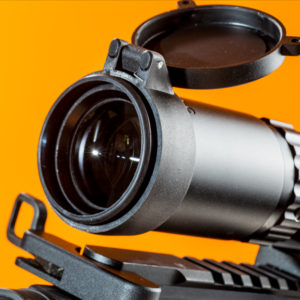
A used rifle, priced right can be a real find or it could turn out to be a lemon. Like all used guns, you’ll never know until you inspect it and make sure it’s in working order before purchasing. Photo: Meniscus
The used gun market is a great place to find a solid deal. But, shooters better know how to evaluate a firearm, to ensure they aren’t spending their cold, hard cash on a lemon. With that in mind, master gunsmith Patrick Sweeney goes over how to inspect a used rifle.
Open the action. With a light or reflector — and with the action open and bolt removed if appropriate — look down the bore. Clean, shiny and clear of obstructions, right? If not, let the bargaining begin!
While many rifles will shoot accurately with a slightly pitted bore, some won't – and all will require more frequent cleaning. Work the action and see if there are any binding spots or if the action is rough. Ask if you can dry fire it to check the safety.
Some people do not like to have any gun in their possession dry-fired; others don't care. If you cannot, you may have to pass on the deal. Or, you can assure the owner that you will restrain the cocking piece to keep the striker from falling.
Close the action and dry-fire it. How much is the trigger pull? Close the action, push the safety to ON, and pull the trigger. It should stay cocked. Let go of the trigger and push the safety OFF. It should stay cocked. Now, dry-fire it. Is the trigger pull different than it was before? If the pull is now lighter, the safety is not fully engaging the cocking piece, and you'll have to have someone work on it to make it safe. If the rifle fires at any time while manipulating the safety (even without your having touched the trigger) it is unsafe until a gunsmith repairs it.
While you were checking the safety, just what was the trigger pull? A very light trigger pull is not always bad, but may need adjustment. As an example, if you are handling a Remington 700 or Winchester 70, and the trigger pull is one pound, someone may have adjusted the trigger mechanism. If you are handling a Winchester '94 and the trigger pull is a pound, someone has been stoning the hammer or sear. On the first two, you or your gunsmith can adjust the weight back to normal ranges. On the '94 you may have to buy a new hammer or sear — or both — to get the pull back into the normal range.
Inspect the action and barrel channel. Is the gap between the barrel and the channel uniform? Or does the forearm bend right or left? Changes in humidity can warp a forearm and, if the wood touches the barrel, alter accuracy. The owner may be selling it because the accuracy has “gone south,” and not know that some simple bedding work can cure it.
The bore, action and trigger aren’t the only features to turn a keen eye to in evaluating a used rifle. Also inspect the stock, which could be cracked or warped, and the screw or pins, which might need to be replaced.
Look at the action where it meets the stock. Is the wood/metal edge clean and uniform? Or do you see traces of epoxy bedding compound? Epoxy could mean a bedding job,and it could mean a repair of a cracked stock. Closely inspect the wrist of the stock, right behind the tang. Look for cracks and repairs.
Turn the rifle over and look at the action screws. Are the slots clean, or are they chewed up? Mangled slots indicates a rifle that has been taken apart many times – and at least a few of those times with a poorly-fitting screwdriver.
Remove the bolt if you can. If not, use a reflector or light to illuminate the bore. Is the bore clean and bright? Look at the bore near the muzzle. Do you see jacket fouling or lead deposits? Many an “inaccurate” rifle can be made accurate again simply by cleaning the jacket fouling out of the bore. While looking down the bore, hold the barrel so a vertical or horizontal bar in a window reflects down the bore. If the reflection of the bar has a ‘break’ in it, the barrel is bent. Sight down the outside of the barrel and see if you can spot it. A slightly bent barrel can still be accurate, but will walk its shots when it heats up. A severely bent barrel must be replaced.
Over the years, Crimson Trace has been a big-time innovator in the field of laser sighting solutions for personal and home defense. One of the manufacturer's most exciting new products for 2016 is its LINQ Wireless Laser Sight and Tactical Light system designed for AR-style rifles.
According to the company, this new product is the world's very first wireless laser sight and LED white light for modern sporting rifles, an impressive development for those who use their AR in a home defense role or for other tactical applications. The system pairs a combination 300-lumen LED white light/green laser sight module that mounts to a rail with an instinctive activation grip that serves as a replacement grip on any standard AR.
The really groundbreaking thing about the Crimson Trace LINQ Wireless Laser Sight is that it removes the need for any kind of wire running down the length of the forend or any sort of tricky activation with the support hand. Once the instinctive activation button on the grip is depressed, it triggers the module via a unique closed wireless system that is secure and has an individual signature for each unit.
The new Crimson Trace LINQ Wireless Laser Sight and Tactical Light system features four different modes: laser only, light only, laser and light, and laser and strobe light. The device also has over two hours of battery life.
The Gun Digest editorial staff was able to get a firsthand look at the new system at the Crimson Trace booth during the 2016 SHOT Show in Las Vegas. Check out the video above to see how the LINQ system works.
Recommended:
Gun Digest Shooter’s Guide to the AR-15
Gun Digest Shooter’s Guide to the AR-15 is a comprehensive look at today’s most popular modern sporting rifle. Among a wide variety of topics, the firearms expert and noted author provides helpful ammunition and accuracy tips, an explanation of the AR platform, a wide range of AR-15 applications, and much more, enhanced by 250 photos. Keep up with the increasing popularity of the versatile AR-15 with this indispensable shooter’s guide. Get your copy now.
Crimson Trace has always devoted a lot of its efforts to the concealed carry market, and with more and more people choosing to carry, that market has only grown in the past few years. One of the company's newest products is the ShockStop system found on Crimson Trace's LG-350 Lasergrips, which are designed for Smith & Wesson J-Frame revolvers.
The Crimson Trace ShockStop system incorporates soft, anti-vibration material and a cushioned grip to reduce recoil while improving accuracy and comfort. An instinctive activation button for the laser is located on the front of the grip to provide simple activation without any additional maneuvering by the shooter.
The Gun Digest editors stopped by the Crimson Trace booth during the 2016 SHOT Show to get an exclusive first look at the system. Watch the video above to learn more and to see a demonstration.
Recommended:
Gun Digest Guide To Concealed Carry Handguns Are you interested in carrying a handgun for self defense, but don’t know where to start? Perhaps you’re already an armed citizen and are looking for a new carry choice? Let the Gun Digest Guide to Concealed Carry Firearms be your complete guide to the fast-growing world of concealed carry handguns. Learn more
Crimson Trace's fantastic Laserguard laser sight has been a reliable option for concealed carriers and home defenders for some time, offering simple, instinctive activation and an effective laser aiming aid. Now the company is improving the concept with its Laserguard Pro series by adding a 150-lumen LED white light to the compact unit.
As with previous Laserguards, the new Pro series features Instinctive Activation via a button on the front of the grip. The button easily depresses when the shooter grips the handgun in a natural firing position.
The new Crimson Trace Laserguard Pro has four modes of activation: laser and light, laser only, light only and laser and strobe light. The unit is user-adjustable for windage and elevation, comes equipped with a master on/off switch and has a battery life of around two hours. It's currently available for the Glock 42 and 43, Smith & Wesson M&P Shield and Springfield Armory XD-S pistols.
The Gun Digest editorial staff caught up with Crimson Trace at the 2016 SHOT Show in Las Vegas to see the new Laserguard Pro firsthand. Check out the video above for more info and to see it in action.
Recommended:
Gun Digest Guide To Concealed Carry Handguns Are you interested in carrying a handgun for self defense, but don’t know where to start? Perhaps you’re already an armed citizen and are looking for a new carry choice? Let the Gun Digest Guide to Concealed Carry Firearms be your complete guide to the fast-growing world of concealed carry handguns. Learn more
Just the facts, ma'am. Guns & Prices 2016 lists gun values and descriptions, sans photos to make for a more compact book that can be carried to gun shows and auctions.
Gun Digest:How can the Guns & Values book save gun buyers on their next purchase?
Jerry Lee:The Official Gun Digest Book of Guns & Prices covers virtually every brand and model of firearm made or sold in the United States since the mid 1800s. We include information on the many different model variants, specifications, calibers, and features that can add or detract from values. Prices are shown for different grades of condition and give the reader a starting point for determining what a given gun is worth in today’s market.
Gun Digest:How does it help gun buyers and sellers understand the gun market (should it be carried to gun shows?)
Jerry Lee: This book gives estimated retail values for firearms — in other words, the probable asking prices one would expect to see in a gun store or at a gun show. Whether buyer or seller, it’s important of course to have an idea of “what’s it worth?” before you walk in the door. As with any item, you have to allow for a reasonable profit margin for the seller. What’s reasonable? That depends on the gun’s rarity or popularity, the seller’s overhead, and often regional and seasonal differences. Deer rifles in late summer or early fall are likely to be priced higher as hunting season approaches than at other times of the year. So, if you are offering a gun to a dealer, do not expect to get a “retail” price but probably 20 to 40 percent below what the dealer expects to get for it. Which means you are usually better off selling it yourself. (Be sure you know the laws in your area and follow them. Background check legislation is an ever-changing thing today.)
The Official Gun Digest Book of Guns & Prices is sized to make it portable enough to take to a gun show. I can’t image going to a show without it. Whether you’re buying or selling, you have to know the market. Plus, the book is full of information on the history of many popular guns, when they were made, changes over the years, etc. Guns that are currently in production are many times priced less than the MSRP.
Gun Digest:From where are the values derived?
Jerry Lee: We consult the major auction companies that specialize in firearms, among them James Julia, Rock Island, Heritage, Amoskeag and others. Auction prices are especially helpful in keeping up to date on high-end collectible values. We also have a group of experts who give us input every year on specific brands and models, trends in popularity, what’s hot and what’s not.
Gun Digest: What is the scope of content, how does it compare to other gun value books?
Jerry Lee: To keep the size of the book more compact and portable, the main difference in the Official Gun Digest Book of Guns & Prices and Standard Catalog of Firearms is that Standard Catalog includes thousands of photos to illustrate the guns. This adds hundreds of pages to the size of Standard Catalog. The photos are nice to have if you’re reading the book in your easy chair at home, but not if you’re walking through a gun store or a show. Blue Book also has no photos, except for a few to illustrate a rather complex grading system. Blue Book also has information on some of the more obscure manufacturers, which pushes the number of pages much higher, plus a higher suggested retail price than the other gun value guides.
Included in Guns & Prices 2016 is a complete description of how to evaluate gun condition – key to getting gun prices right.
Gun Digest: Can you share any personal examples of yourself or someone you know being ripped off? How would a book of this type have helped?
Jerry Lee: In my younger days I often bought, sold or traded guns at gun shows. This was long before any price guides for used guns were in print. There were times when I later realized I got the short end of a deal, mainly just for not having a better idea what the gun or guns were worth.
Gun Digest: Anything that didn't make it into the book you can share?
Jerry Lee: It’s a long process, generally four to six months to gather the information on new guns, consult with our experts on changes in values, new companies that have come along, old companies that have gone out of business, moved or merged with other companies. We often hear rumors about things going on in the industry and firearms legislation, for example, but we have to remember that what we publish will be on the bookshelf for years. That often leads to last minute changes in the book. We are careful not to list a new gun company until we know that production is under way and that they will be around for a while. As in other industries, a new company or even an existing one, will introduce an exciting new model at the SHOT Show, and then wait for orders to come in before actually putting it into production. So, we try very hard to make sure that what is in our book is accurate and up to date.
Get your copy here…
The Official Gun Digest Book of Guns & Prices 2016, 11th Edition Fully updated, The Official Gun Digest Book of Guns & Prices, 11th Edition is the perfect companion to take to any gun store, show or auction. The comprehensive guide gives you the power to identify and price thousands of non-military firearms from around the globe. Yet the wealth of information this volume provides has been condensed into an easy-to-use format and portable size. Order here
Gun Digest asked co-editor Andrew Johnson to highlight some things he learned about current gun offerings while researching gun values for the latest edition of Gun Digest Book of Modern Gun Values. Here are his responses.
The concealed carry market remains a driver in current firearms, as the Beretta Pico proves.
Gun Digest: In putting together the new Gun Digest Book of Modern Gun Values, what were some notable examples of new guns that caught your attention?
Andrew Johnson: Being an avid upland game hunter from South Dakota, Benelli's entry into the over-under shotgun market with the addition of the 828U to their existing lineup of semi-auto and pump shotguns was noteworthy. It'll be interesting to see if Benelli continues down this path with even more models after dipping their toes into the over/under market.
The new handguns from Armscor/Rock Island Armory also caught my eye. At first blush, their various lines of full-size, sub-compact and compact styles would seem to fit any handgunner's personality. Perhaps what's more interesting is their new, proprietary 22 TCM caliber offering in several 1911-style semi-auto pistols. Armscor/Rock Island claims the 22 TCM is a low-recoil load that can still produce muzzle velocities of 2,000 fps, which is flat-out amazing from a handgun.
Gun Digest: Your main role in editing the latest edition of the book was hunting up new firearms. What trends did you uncover?
Andrew Johnson: While 1911-style handguns still reign supreme, it seems the idea of lighter, compact models is the new mantra of many handgun manufacturers.
For example, several large manufacturers added compact and subcompact models to their existing lines of full-size, popular models. Updated models from Kimber, Sphinx and Ruger reflect this trend.
The Tikka T3x Battue, a budget-friendly centerfire that doesn't sacrifice function.
What's more, several manufacturers chose to add completely new compact models instead of updating their existing lines of handguns. Beretta, for example, has made a conscious effort with its Pico and Nano models to appeal to the growing interest of the compact conceal-and-carry crowd.
With rifles, it seems the market is trending toward satisfying the growing desire consumers have for modern sporting rifles. It was apparent when compiling the list of new rifles that manufacturers were developing more AR-platform models than adding updated or new models of bolt-action rifles.
At the same time, the apparent trend with the new bolt-action rifles hitting the market was that less is more. Several manufacturers now carry budget-friendly, no-frills series of bolt-action rifles that appeal to a buyer's wallet without sacrificing accuracy. Updated or new examples of this trend include the Savage Axis, Mossberg Patriot, Ruger American, Remington 783, Tikka T3 and Winchester XPR models. A variety of calibers, stock options, finishes and even scoped packages are available within each of these series, appealing to a wide range of shooting and hunting interests.
An inside look at the new Gun Digest Book of Modern Gun Values.
Gun Digest: For someone unfamiliar with the book, what can they expect to find inside — how can the average gun owner who buys, sells and researches guns use the book to his/her advantage?
Andrew Johnson: This book is a great tool not only for gun lovers and collectors, but it's also ideal for people in the market for a new or used handgun, rifle or shotgun. It's also useful for folks who plan on selling firearms for the proper value.
The book provides a brief description of each gun on the market today, as well as those that have been discontinued. Below each model's description is a basic price guideline for varying degrees of quality, such as new, excellent and very good. The prices, of course, are meant for reference only, but they can provide an accurate estimate for most anyone on how much a firearm is, or perhaps more importantly, isn't worth.
Additionally, thousands of photographs have been carefully selected to represent the best picture of many models or even to help illustrate subtle nuances that set certain models apart from other firearms.
Long story short, this is a comprehensive list of firearm models and values that is a must-have for anyone looking to increase their knowledge and understanding of today's market.
The skilled gunsmiths at the Colt Custom shop have more than 150 years of combined experience. Colt Photo
The Colt Custom Shop has always been copied, but never equaled.
While other manufacturers may offer custom services, Colt’s Custom Shop creates true masterpieces. Just talk to any collector and they will proudly show you the most prized piece in their collection, and most often this will be a classic customized Colt firearm.
Heads of state including Czar Nicholas I of Russia, King Frederick VII of Denmark, and King Charles XV of Sweden were among the first to be presented with Colt’s highly decorated and engraved guns.
The gunsmiths in the Colt Custom Shop have over 150 years of combined experience building and customizing America’s finest firearms, which are truly one-of-a-kind heirlooms. There's always been a sense that, by owning a Colt firearm crafted in the Custom Shop, you become a part of an elite group with members around the world and throughout history.
If you desire to have your Colt pistol or revolver tuned, customized, or engraved, the Custom Shop offers a variety of customized packages and individual services to suit your needs. They can also hand-craft your one-of-a-kind masterpiece to exact specifications. Colt’s Custom Shop will work directly with you to create your dream Colt firearm.
The only limitation to customizing your Colt firearm is your imagination.
From the local gun store to massive online retailers, anybody who has braved the gun market in recent years understands it’s red hot. Gun Digest is here to make sure collectors and enthusiasts don’t get burned on a firearms transaction with these five best gun buying and gun selling articles.
Buying Guns on Internet Auctions
Perhaps more than any other factor, online retailers have done more in the recent decade to reshape the gun market. Phillip Peterson arms you with the knowledge you need to get the most from internet gun purchases. Read More
10 Tips for Choosing a Concealed Carry Handgun
Bruce N. Eimer focuses on shopping for a specific category of firearms in this post. However, the rules of thumb he lays out can be applied to nearly every type of gun. Learn The Rules Of Thumb
Selling Antique Guns
Truthfully, you don’t have to be a hardcore firearms collector to put this post to good use. Norm Flayderman outlines some of the best routes to sell guns quickly and for profit. Find Out Where To Sell
All About Shipping Guns
So you sold your gun for a tidy profit. Only problem is the buyer is two states over. How do you get that baby to their zip code? Phillip Peterson draws upon his personal experience to give you tips to successfully ship firearms. Ship Out
A Primer On Buying Used Handguns
The secondhand gun market has some real gems. But shooters better know how to weed out the lemons. Master gunsmith Patrick Sweeney goes through what you need to look for when it comes to finding a functional used handgun. Learn More
The Colt Expanse M4 is priced affordably and comes ready-made for customization.
Ready for customization, the Expanse™ M4 comes with a 16-inch barrel and A2-style components.
Although many gun store owners have been reporting declining sales for so-called “black rifles,” the AR-15 is, without question, still one of the most popular rifles in the nation. For this reason, manufacturers are continuing to produce “America’s Rifle,” and especially affordably priced versions that are attainable to the average gun owner.
Colt has long been a recognized name regarding ARs. In fact, for many years after the AR-15/M16’s official introduction, Colt was essentially the only name in the AR business. Despite this historical association with the AR-15, for the past several years Colt really hasn’t had a truly entry-level AR for buyers. This appears to be changing in 2016.
Keeping in step with the affordable AR trend, Colt is introducing the Expanse™ M4, a quality-manufactured black rifle in 5.56x45mm NATO that comes with all the basics a shooter needs to start delving into ARs and sells at a very palatable price point. Retail priced at $699, the Expanse™ M4 could be a very attractive option for those looking for a base rifle to customize, which is one of the main draws of the AR platform.
The Expanse™ M4’s upper and lower receivers are manufactured from 7075-T6 aluminum and have a black hardcoat anodized finish. The rifle incorporates a 16-inch, 1:7-inch twist, non-chrome-lined barrel manufactured from 4150 CMV steel with a manganese phosphate finish.
Colt’s new Expanse™ M4, which has an MSRP of $699, is the first budget-friendly AR offered by the company.
Additionally, the Expanse™ M4 comes with many of the same features found on other ARs. Namely, these include Eugene Stoner’s enduring direct-impingement gas system; an A2 front sight and A2 pistol grip; a right-handed safety selector; a standard, M4-style collapsible stock; and a Mil-Spec single-stage trigger.
What it does lack, however, is a forward assist and a dust cover. This is done because the average user simply doesn’t need or use these features. That said, a dust cover and forward assist can easily be added if needed.
Everything about the Expanse™ M4 points to future customization on the part of the user. The upper receiver has a flat top for adding optics or rear iron sights, and all of the standard parts—grip, stock, safety, charging handle, handguard—can be easily replaced with aftermarket parts if desired. This is exactly what most AR owners want from a basic rifle.
The Expanse™ M4 accepts standard AR magazines and comes with a 30-round steel magazine. It has an overall length of 32 to 35.5 inches, depending on whether the stock is collapsed or fully extended.

Colt Expanse™ M4 Type Direct-impingement gas, semi-automatic Caliber 5.56 NATO/.223 Rem. Barrel 16-in., 1:7-in. twist, non-chrome-lined Overall Length 32 to 35.5 in. Weight 6.44 lbs. Handguard Standard Mil Spec AR/M4 Stock Standard collapsible Mil Spec AR/M4 Grip Standard Mil Spec AR Trigger Standard Mil Spec AR MSRP $699 Manufacturer Colt.com
Looking to go armed, but are stuck in the weeds as to what to arm yourself with? Here are 20 excellent concealed carry gun options that will keep you on the defensive.