Home Blog Page 209

Concealed Carry: After the Shooting

0

Shooting - Deadly force Ayoob

Defensive shooting rights - deadly force ayoob
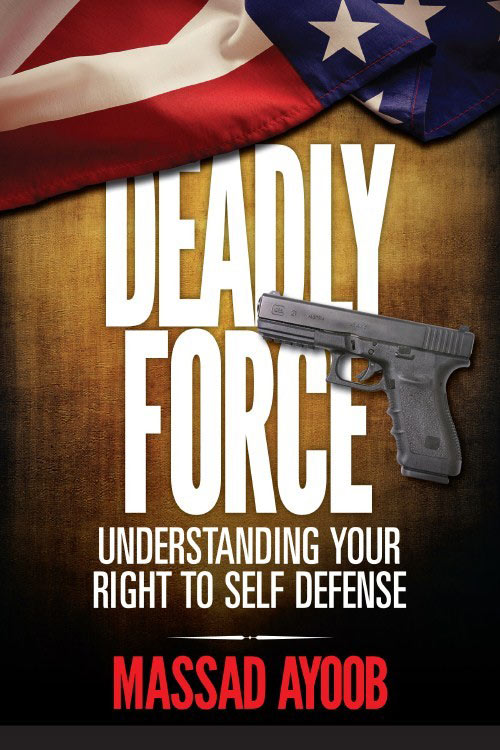
The world's most authoritative expert on all aspects of self-defense, Massad Ayoob's Deadly Force is a must for anyone who carries concealed.

Never forget that when you shoot someone, however necessarily and justifiably, you look an awful lot like a killer and he looks an awful lot like a victim. The stereotype can take hold quickly if you don’t act to let the authorities – from the first responding officer to the designated lead investigator – know what happened. The old saying “You only get one chance to make a first impression” is absolutely true here.

Decades ago, I developed a five-point checklist of things I feel the righteous shooter needs to establish as soon as possible in the aftermath. It has been widely adopted, sometimes with attribution and sometimes without, and is now recommended by entities ranging from the Armed Citizens Legal Defense Network to the US Concealed Carry Association. I’m rather proud of that.

Five-Point Checklist

  1. Establish the active dynamic. That is, let the authorities know immediately what happened here. If you have harmed someone in self-defense, always remember that the active dynamic is not what you did to him, it’s what he was trying to do to you or another victim. The active dynamic is his action that forced your lawful response. It’s not, “I shot him.” It’s, “This man tried to kill me.” Or, “This man attacked my wife.” Whatever it was that led to your use of force.This makes it clear that the guy on the ground doing a convincing imitation of a victim is in fact the criminal perpetrator. It makes it clear that you, the person with the smoking gun who just shot someone, are in fact the intended victim. If one or more of your attackers has left the scene, explain that now, and give their description. It’s going to be hard for people to see you as the innocent party if you failed to let police know that a violent criminal was at large.
  2. Advise the police that you will sign the complaint. There are two roles open in this particular play: victim and perpetrator. As noted, appearances can create mistaken role reversal if things aren’t immediately clarified. By making a statement to the police to the effect of “I will sign the complaint,” you reinforce the fact that you are the victim-complainant, the good guy or gal, and the person you’re signing the complaint on is the bad guy who forced you to harm him in legitimate defense of self or others. (Note: I would not advise using the phrase “I will press charges.” The reason is that legal terminology varies slightly jurisdiction to jurisdiction. While in many jurisdictions it is indeed the complainant who presses charges, there are some places where the local terminology is such that the prosecutor “presses charges.” If you inadvertently find yourself in one of those places and say “I will press charges,” it sounds to the police as if you have delusions of being the elected chief prosecutor, and you won’t be off to a good start. “I will sign the complaint” is neutral and universal.)
  3. Point out the evidence. The scene will be chaotic. Witnesses will be trampling the scene. So will paramedics and police officers. I’ve seen cases of the bad guy’s gun being picked up by his accomplice or by a well-meaning neighbor who didn’t want to leave it where a child could find it. I’ve seen spent casings kicked away from their original resting place, or picked up in the treads of emergency personnel’s boots or the wheels of an ambulance gurney, thus altering the dimensions of the shooting scene and making it look like something it wasn’t. The sooner you point out the evidence to the first responding officers, the more likely it is to be secured. When you’ve done the right thing, evidence helps you.
  4. Point out the witnesses. Witnesses worry about having to lose time from work to testify in court, or being the target for vengeance by criminals. A lot of them “don’t want to get involved.” Once they leave the scene unidentified, their testimony that would have helped to prove your innocence leaves with them. Point out the witnesses to the police at the first opportunity. (Some have asked, “What if the witness is a friend of the attacker and lies about what happened?” The fact is, he was going to do that anyway, so you haven’t lost anything. However, your having pointed him out to the police can be seen as an indication that you believed in your own innocence, or you wouldn’t have steered the police to him, and that can’t hurt.)
  5. Politely decline further questioning until you have consulted an attorney. Studies show that, in the immediate aftermath of a life-threatening encounter, we may forget some things or get some details wrong. The questions to you will come at random as they occur to the officer, and you will answer them in the same order; in reviewing the cop’s notes and his recollection of the discussion later, this can create the false illusion that you were giving a narrative of events in the order in which they occurred, which of course is not the case. But later, when you do narrate events in the sequence of their occurrence, it creates a false perception that you have changed your story. Often, very frightening things that happened are blocked in short term memory by a subconscious that doesn’t want to recall them; when you mention something later that you didn’t mention at the scene, it sounds made up. You don’t want to answer detailed questions as to exact words spoken, distances, or time frames. None of us are human tape recorders. The tunnel vision that afflicts well over half of people caught up in something like a gunfight creates the literal optical illusion that things and people appear closer and larger than they are. If your memory tells you your attacker was six feet away when you shot him but he turns out to have been six yards away, you sound like a liar. Tachypsychia is likewise very common, the sense of things going into slow motion. It seemed to you as if the fight took a whole minute, and you say so, but a security camera shows it was actually only ten seconds, and now you look like a liar. The involved victim who had to fight for his or her very survival is the worst possible witness for measuring things in feet or inches, or counting how many shots were fired.

Experts recommend 24 to 48 hours between one of these “critical incidents,” as they are now euphemistically called in the emergency services, and when the participant is subjected to a detailed debriefing. The Force Science Institute recommends “one full sleep cycle.”

This is why my recommendation – practical advice, not legal advice – is to establish the active dynamic, indicate that you’ll sign the complaint, point out evidence and witnesses known to you…and then stop. Be polite. Do not raise your voice. I for one would answer subsequent questions with, “Officer, you’ll have my full cooperation after I’ve spoken with counsel.”

Editor's Note: This article is an excerpt of Massad Ayoob's Deadly Force: Understanding Your Right to Self Defense.

Speed Demon: Savage B.Mag Review

5

Savage B.Mag review rifle

The Savage B.Mag chambered in the screaming .17 WSM is a handy little rifle that's perfect for serious varmint slaying or plinking at the range.

There we sat, a group of gun writers perched on a rolling South Dakota hill on the Rosebud Indian Reservation, blasting away at prairie dogs with a host of new Savage rifles. The summer sun baked down on us and the barrels ran hot, but none of it was enough to deter us from slinging round after round at the hundreds of dogs scattered before us. We drank from giant, frozen jugs of ice melted in the sunlight, quenching our thirst but not our appetite for more shooting.

It was on that trip that I inherited a fondness for Savage’s new B.Mag, a bolt-action rifle chambered in .17 Winchester Super Magnum (WSM). At first glance it’s just another black, synthetic-stocked rifle, but upon closer inspection, there are plenty of features to fall in love with. Over the course of a few days spent in South Dakota, I had ample time behind the rifle, most of which was marked by the kind of hearty laughter and cackling that every experienced prairie dog shooter knows all too well.

Savage B.Mag review bolt action openSpeed Kills

The .17 WSM, which was released in conjunction with Savage at the 2013 SHOT Show in Las Vegas, launches a 20-grain projectile at roughly 3,000 fps, an impressive feat for such a pint-sized cartridge. During the trip we shot Federal Premium’s American Eagle loads with 20-grain tipped bullets. The load performed admirably and is a good choice for a full day of blasting away, with a box of 50 rounds running about $16 at your local sporting goods store. The rifle and ammunition, not to mention the 2.5-pound AccuTrigger, made for an incredibly accurate combination.

Savage B.Mag review AccuTriggerInterestingly enough, the .17 WSM was developed from a .27-caliber nail gun blank, which was then necked down for a .17-caliber bullet. Maximum internal pressure is around 33,000 psi and roughly 7,000 psi more than the .17 HMR. The 3,000 fps velocity is about 630 fps faster than the HMR, giving you about 7.5 inches of movement in a 10 mph crosswind at 200 yards versus the HMR’s 16.5 inches. Less wind drift and bullet drop mean better accuracy at considerable range. The .17 WSM doesn’t create the kind of carnage and high-flying gymnastic moves on prairie dogs that are so common with cartridges like the .22-250 or .204 Ruger, but it’s got plenty of pop out to at least 150 yards and is still more accurate at longer ranges than the .17 HMR or .22 Magnum, both close range killers in their own right.

It also lacks the wallop of another of my favorites, the .17 Hornet, but is affordable to shoot and produces virtually no recoil. While Winchester boasts of “devastating performance” at “ranges well past 200 yards,” I found the cartridge consistently accurate and lethal out to 150 yards, especially given South Dakota’s notoriously obnoxious winds. If you’re coyote or bobcat hunting, the .17 WSM is effective out to moderate ranges and helps limit pelt damage, something everyone who’s spent evenings sowing fur can appreciate.

Savage B.Mag review in .17 WSM17 Series

The B.Mag rifle fits neatly into Savage’s 17 Series and weighs about 4.5 pounds without a scope, making it an ideal walk-around or maneuverable truck gun. With scope you’re still at less than 7 pounds, which is ideal for field carry but more susceptible to movement with the wind. To help alleviate that issue, I employed sandbags in the front and rear of the rifle atop a sturdy steel tripod-style shooting bench.

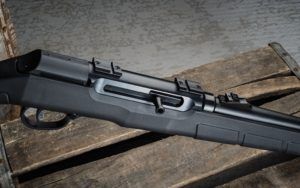
One of the most interesting features on the B.Mag is the bolt, which is a completely new design for this rifle. Savage’s engineers tailored the bolt specifically for the .17 WSM; it features dual, opposed, rear-locking lugs and it cocks on closing. The rationale is that this gives the shooter better cocking leverage against a stout firing pin spring, which is also required for reliable ignition on the rimfire. Practically, this means it’s easy to short stroke the bolt, and many times you think you’ve closed it but haven’t. The solution, which requires a bit of practice and reformed muscle memory, is to firmly push all the way forward and then close the bolt. A bit unusual and not altogether smooth, but it’s a workable design once you figure out the mechanics of it.

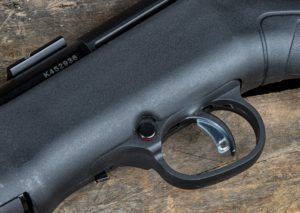
Savage B.Mag review BoltThe other staple of the rifle is of course the AccuTrigger, a revolutionary design that incorporates an adjustable, finely tuned trigger into an affordable package. Out of the box, the trigger on my rifle was under 3 pounds and crisp as always.

The 22-inch barrel is button rifled and features a light contour, sporter-type barrel. A heavier barrel contour makes sense for hardcore varmint applications, an option Savage now offers in several other B.Mag packages, including blued heavy barrel, stainless heavy barrel, sporter and target models. Prices range from $379 for the standard rifle to $578 for the target model.

Savage B.Mag review forendField Comparisons

One of the biggest benefits of our South Dakota adventure was that we got to shoot multiple different calibers and rifles in the same conditions, everything from .17 HMR to .22-250. So how do the mighty .17s stack up? Personally, I’d rank them in this order: .17 Hornet, .17 WSM, .17 HMR. It’s not really a fair comparison, two being rimfires and the Hornet a centerfire, but it’s always fun to stir the pot.

The .17 Hornet is, in my opinion, one of the finest of the varmint cartridges around, sending a 20-grain V-Max bullet downrange at a whopping 3,650 fps. I shot the Savage rifle in .17 Hornet one afternoon until, ammo supplies starting to run low, they had to pry that rifle out of my hands. Not only is the round insanely accurate, it remains steady in the wind and relatively flat shooting out to 300 yards. Impact on prairie dogs is more similar to what you’d see from the .204 and .22-250 and again, there’s very little recoil. On the downside, Hornet ammo is about double the price of WSM, depending on which load you select.

Next, I’d rank the .17 WSM. It carries more velocity and is accurate to greater distances than the HMR, and prices on ammunition are fairly similar (depending on load). Both are effective rounds for varmint and coyote, so long as you don’t go trying to pull off a 300-yard shot in 30 mph winds. Especially inside 100 yards, the HMR is extremely effective. The main thing, as always, is knowing your own capability as a shooter, combined with your load, optic, rest and rifle pairing.

Savage B.Mag review left sideParting Shots

For a budget-friendly rifle that’s built to last, incredibly accurate and enjoyable to shoot, Savage’s B.Mag does the trick. The .17 WSM is a highly accurate, lethal round out to 200 yards, great for varmint and coyote applications and assuredly pelt-friendly. The rifle is light (4.5 pounds) and thus great for carry afield or for shooters of smaller stature. While the bolt design takes some getting used to, it makes for a reliable platform. For well under $400 on the street, the B.Mag in .17 WSM is one of the best varmint rifles available today.

Editor's Note: This article is an excerpt from the Spring 2017 issue of Gun Digest the Magazine.

Gallery: Great New Ammo for 2017

0

[imagebrowser id=489]

There’s ammo, there’s good ammo, and then there’s great ammo. They all work, but some clearly work better than others. Thanks to high-quality components, carefully engineered loads and hours of testing, ammo makers have created yet another batch of high-quality ammo for hunting, plinking, precision target shooting and personal defense. Yep, there’s some great ammo for just about everyone who owns a gun and who likes to use it. After countless hours at the range and in the field, our editors and writers built this list of the best new loads this year. Whether you prefer handguns, shotguns, rimfires, ARs, bolt-action rifles or all of the above, you’ll find at least one more reason to head to your favorite gun store here.

Editor's Note: This article originally appeared in the Winter 2016 issue of Gun Digest the Magazine.


Cartridges of the World, 14th Edition
Know Your Cartridges

Whether you're a reloader, cartridge collector, or a serious firearms enthusiast, you'll master the universe of ammunition with Cartridges of the World, 15th Edition. The most widely read reference on the topic, the book has been the go-to resource for serious firearms owners and ballisticians for years. Order Your Copy Now

New Rifles: Kimber Adds a Pair of Sharp-Looking Shooters

0
Kimber
Mountain Ascent with new Moss Green Stock.

Given all the shimmer, shine and performance of Kimber’s pistol catalog, it’s easy to be blinded to the company’s foundation. It’s built on a much different style of firearm.

Way back when it was “Kimber of Oregon,” the company’s focus was rifles — high-quality, sturdy-built bolt-actions. Luckily for shooters, market demands and numerous reorganizations forced the company to diversify its firearms roster, thus thrusting them to the top of the handgun market, particularly the 1911 market.

While the scrollwork, mirror finishes and downright flashy grips of Kimber’s pistols steal much of the spotlight nowadays, the company has never strayed from its original aim. Top-notch rifles still roll off the company’s assembly lines in New York and New Jersey, outfitting discerning hunters of every stripe. Kimber turned plenty of attention to this corner of its manufacturing concern this year, releasing two new rifle models and expanding the options for two of its existing classics.

Kimber
Subalpine

Subalpine
Kimber’s Mountain Rifles had the most attention paid to them this year, but it’s the new Subalpine that has the greatest potential to turn hunters’ heads in this family. The ultra-light bolt-action fills the gap between the company’s Mountain Ascent and Montana rifles, offering mule deer and elk hunters a right-sized option. Built on a reinforced carbon fiber stock — decked out in Gore Optifade Subalpine camo — the Subalpine tips the scales at an inconspicuous 4 pounds 13 ounces. While the platform shaves off precious weight for humping into the hills, the laws of physics suggest this attribute could make it a thumper in the recoil department given some of the caliber choices. Kimber is initially offering the Subalpine in .308 Win., .280 Ack. Imp., .30-06 Spring., .300 WSM and .300 Win. Mag. Like all Kimber rifles, the Subalpine should be a favorite with traditionalists given its controlled feed Mauser-style extractor. And it appears to be ready to be put to the test with an all-weather fluted stainless steel barrel. Also, the muzzle is threaded, so it is suppressor-ready out of the box, and it comes outfitted with a match-grade adjustable trigger.

Kimber
Open Country (threaded barrel not pictured).

Open Country Varmint
Kimber’s Open Country rifle lives in the Varmint family, but it definitely appears to have the chops to handle more than just prairie dogs. Chambered in the highly accurate 6.5 Creedmoor, the new rifle certainly wouldn’t object to drawing a bead on the occasional pronghorn and such — especially at distance. It’s certainly configured to hike deep into the vast expanses of America’s interior, only adding a total of 6 pounds 15 ounces to a hunter’s kit. This is facilitated by the rifle’s reinforced carbon fiber stock, wearing a versatile Gore Optifade pattern forend to buttstock. The Open Country is outfitted with a 24-inch heavy stainless steel barrel, fluted to keep it light and finished with KimPro II to keep it impervious to the elements. It features pillar bedding in the stock, free floating the barrel to ensure it lives up to Kimber’s sub-MOA accuracy standard. For a modern touch, the rifle has a threaded barrel (5/8-24”), so a suppressor is no big deal to slap on. Also adding to it, like nearly all Kimbers, the Open Country comes with rifleman favorites such as a match-grade adjustable trigger and Mauser-style extractor.

Montana Rifle with new Moss Green stock.

Stocking Up
Two of Kimber’s tried-and-true Mountain Rifles have expanded stock options this coming year. The Mountain Ascent and Montana rifles each are now being offered with a Moss Green reinforced carbon fiber stock. With their free-floating stainless steel barrels, the rich tones of the new stock give the rifles a striking appearance. To boot, it does not do anything to modify the already desirable specs of the long guns — both are as light as ever. For hunters looking for a more clandestine treatment to their stock, the Mountain Ascent still comes in Gore Optifade Open Country.

Subalpine Specs
Calibers: .308 Win., .280 Ack. Imp., .30-06 Spring., .300 WSM, .300 Win. Mag.
Approximate Weight: .308 Win.: 4 pounds 13 ounces, .280 Ack. Imp./.30-06 Spring.: 5 pounds 5 ounces, .300 WSM: 5 pounds 12 ounces, .300 Win. Mag.: 6 pounds 7 ounces
Overall Length: .308 Win.: 41.25 inches, .280 Ack. Imp./.30-06 Spring.: 43.75 inches, .300 WSM: 43.5 inches, .300 Win. Mag.: 46.5 inches
Barrel Length: .308 Win.: 22 inches, .280 Ack. Imp./.30-06 Spring./.300 WSM: 24 inches, .300 Win. Mag.: 26 inches
Twist Rate: .308 Win. 1:10″, .280 Ack. Imp. 1:9″, .30-06 Spring./.300 WSM/.300 Win. Mag. 1:10″
Trigger: Match Grade Adjustable
Stock Material: Reinforced Carbon Fiber, Gore Optifade Subalpine soft touch treatment
Recoil Pad: 1-inch Pachmayr Decelerator
Length of Pull: .308 Win. 13.7 inches, .280 Ack. Imp./.30-06 Spring. 13.8 inches, .300 WSM 13.5 inches, .300 Win. Mag. 13.8 inches
Drop at Heel: .54 inches
Drop at Comb: .43 inches
Action Type: .308 Win. 84M, .280 Ack. Imp./.30-06 Spring. 84L, .300 WSM 8400 SM, .300 Win. Mag. 8400 LM
Action Material: Stainless Steel
Magazine Capacity: .308 Win./.280 Ack. Imp./.30-06 Spring./.300 Win. Mag. 4, .300 WSM 3

Open County Specs
Caliber: 6.5 Creedmoor
Approximate weight: 6 pound 15 ounces
Overall length: 43.25 inches
Barrel Length: 24 inches
Twist Rate: 1:8″
Trigger: Match Grade Adjustable
Stock Material: Reinforced Carbon Fiber, Gore Optifade Open Country soft touch treatment
Recoil pad: 1-inch Pachmayr Decelerator pad
Length of pull: 13.8 inches
Drop at heel: 0.54 inches
Drop at comb: 0.43 inches
Action Type: 84M
Action Material: Stainless steel
Magazine Capacity: 5

Gallery: Prime New Optics for Shooters

0

[imagebrowser id=488]

Expanding technology has allowed changes in optics that could only have been dreamed about just a few years ago, and the options and features continue to expand. New coatings, resistant to scratches and abrasions, make optics more durable. Better science in lens coatings continues to increase light transmission levels, and features like zero stop prevent the long-range shooter from losing the short-range zero of his riflescope.

Imagine a spotting scope that allows comfortable high resolution far past the time when earlier scopes were unusable, or a riflescope that allows a wide field of view for fast moving targets, but at the twist of a lever, transforms into a scope suitable for precision long-range shooting. There’s no longer a need to wish for such features—they’re here.

Editor's Note: This article originally appeared in the Winter 2016 edition of Gun Digest the Magazine.


Recommended:

Meopta MeoTac -Gun Digest Book of Long-Range Shooting, 2nd EditionGun Digest Book of Long-Range Shooting, 2nd Edition

Get the most recent advances in guns and gear to extend your range for hunting, informal target shooting, and formal competition. Discover new tools for long-range shooters both in the field and on the firing range, with coverage of new developments from advances in military applied combat theory. Learn more

The Best Rimfire Cartridges Ever Made

1

Best Rimfire Cartridges main image

The Beginning

It was a warm October afternoon, and my Dad was sitting maybe 10 or 12 yards away, on a smooth oak stump, looking up. The subtle, furtive motion of his index finger directed me to look up into the big oak we were watching, and I could see the flicking tail of the gray squirrel. Within seconds, a fuzzy head appeared, replete with yellowing chompers, and twitching whiskers.

The younger me slowly raised the rifle, aligning the iron sights just as Ol’ Grumpy Pants had so often instructed, and squeezed, not jerked, the trigger. The resulting report and the sound of something landing in the freshly fallen leaves were music to my ears, for something monumental had just happened: I became a hunter.

I still have that .22 LR; it is a 1985-vintage Ruger Model 77/22, and I use it often, as both a training tool and a hunting rifle. There’s no denying the validity of the .22 Long Rifle cartridge, but it isn’t the only rimfire cartridge out there. As matter of fact, there are many rimfire catrirdges, and it may warrant owning several. Let’s take a look at some of the best—and not so obvious—rimfires ever made.

The .22-caliber Rimfires

The .22 Long Rifle is, invariably, the most popular of the rimfire cartridges, for good reasons we’ll get into momentarily. However, it wasn’t the first, and it isn’t alone. It has many siblings, like the BB cap and CB cap, but among the most popular are a couple of older brothers, and a younger brother.

Best Rimfire Cartridges - .22 shortThe .22 Short

Being the smallest of the bunch, the .22 Short has been with us for 160 years. Originally a black powder cartridge, the .22 Short has survived the transition to smokeless powder and is still a fun cartridge to shoot. Using a 29-grain bullet at just over 710 fps, the Short is an effective tool for small game like squirrels and rabbits at close ranges, say within 50 yards or so. Many “parlor” guns were chambered for the .22 Short, and while it’s become a bit of a novelty, if you want to hunt at close ranges, the .22 Short will present a fun challenge.

The .22 Long

A bit longer and just a bit younger, the .22 Long was an improvement over the .22 Short, using 20 percent more powder and a 45-grain bullet. CCI still offers ammunition, using a 29-grain bullet at a muzzle velocity of 1,215 fps. Like the .22 Short, it has become a rarity, but it’s still a fun cartridge to shoot. You’ll see many older rimfire rifles marked as being capable of handling .22 Short, .22 Long and .22 Long Rifle. If you have one and want to give the .22 Long a whirl, it’ll work, but I think you’ll find the search for ammo more trouble than it’s worth, considering the performance of the .22 Long Rifle.

Best Rimfire Cartridges .22 LRThe .22 Long Rifle

Few cartridges can claim the success that the .22 Long Rifle has achieved. I don’t know any hunter that doesn’t have at least one .22 LR in their cabinet; it is that popular. It dates back to 1887—like the others, it started off fueled by black powder—and has been offered in a multitude of action styles, including single-shots, pumps, bolt guns and autoloaders. The standard loading is a 40-grain bullet at a muzzle velocity of 1,240 fps or so, depending on the manufacturer. There are many hyper-velocity loads, some using lighter bullets, some a hotter charge, which will extend the range of your .22 Long Rifle.

Best Rimfire Cartridges - .22 LR CCI The CCI Stinger, using a light bullet and a slightly elongated case, was among the first, and remains a solid choice. The Remington Yellow Jacket and Viper, and Browning BPR ammo will also give higher-than-normal velocities. On the other end of the spectrum, there are many good subsonic loads for those who like to keep things as quiet as possible. Norma Sub-Sonic .22 and CCI’s Quiet-22 are good choices for quieter loads for hunting or for training a new shooter. Please be aware that many of the autoloading rifles and pistols require a certain muzzle velocity, or more specifically, an energy level, to cycle the action.

There are all kinds of projectiles available for the “twenty-two,” as it’s known here, or the “two-two,” as it’s known across the pond, from waxed lead bullets to plated hollowpoints to shotshells to fragmenting bullets. If you think about it, the .22 Long Rifle might just be the most versatile cartridge ever invented.

The .22 Winchester Magnum Rimfire

Developed in 1959, the “.22 Mag.” is definitely a different sort of rimfire cartridge, delivering a 40-grain bullet at 1,900 fps or more. This combination makes for a 150-yard gun, without problem, and it is fully capable of taking coyotes and foxes. Like the .22 LR, there are many projectile types available, from the full metal-jacketed slugs, to frangible hollowpoints to polymer tipped bullets—as used in the CCI .22 Mag. V-Max load, built around the 30-grain Hornady bullet. If you want a .22 rimfire with a bit more reach than the LR, look no further than the .22 WMR. It can be a bit harsh on squirrels and rabbits, but it’s a better choice for larger furbearers and distant varmints.

The .17-caliber Rimfires

Best Rimfire Cartridges - .17 HMRThe .17 HMR

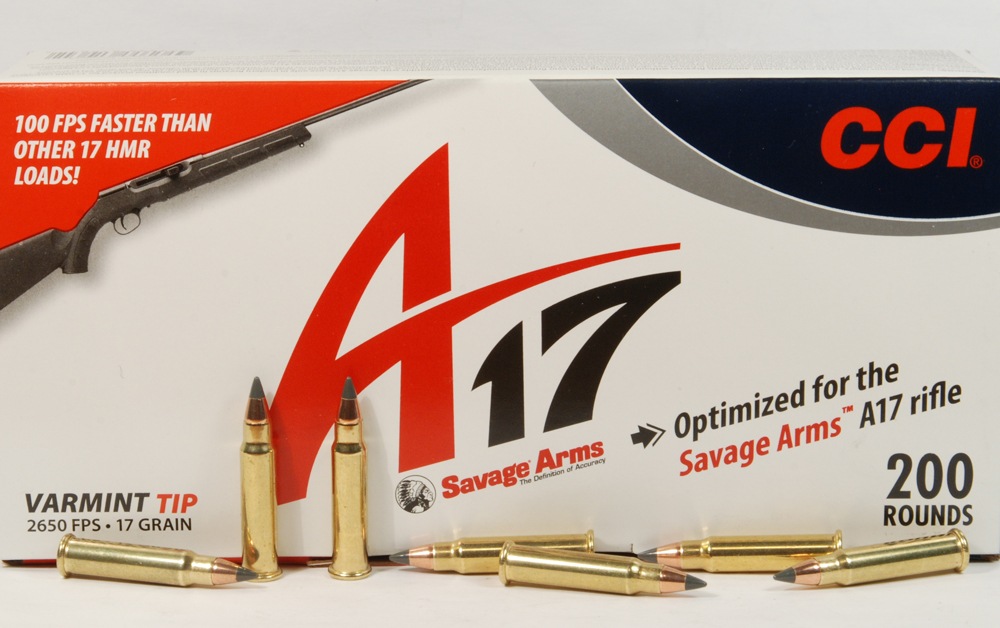
Shortly after the turn of the 21st century, Hornady announced the first new rimfire cartridge since the .22 WMR: the .17 Hornady Magnum Rimfire (HMR). Using the .22 WMR case necked down to hold .172-inch bullets, the new cartridge would push a 17-grain bullet at 2,550 fps, resulting in a flat-shooting small game rimfire cartridge. While it is susceptible to wind drift, under good conditions this cartridge can make solid hits out to 200 yards, and sometimes more. The light-for-caliber frangible bullet does less damage to furbearers, yet will create the “red mist” when used on prairie dogs and woodchucks. Recoil is virtually non-existent, and the .17 HMR can be very accurate. It has caught on, and it makes a good choice for those who prefer rimfire cartridges to the bigger cases of the .17 centerfires.

Best Rimfire Cartridges - .17 Mach 2The .17 Mach 2

Two years later, Hornady struck again, using the CCI Stinger case (just slightly longer than the standard .22 LR case) necked down to hold the same bullets as the .17 HMR. There are two bullet weights offered: a 15.5-grain bullet and the same 17-grain bullet the HMR uses. While it is a fun gun to shoot, the Mach 2 is declining in popularity. Velocities for the 15.5-grain bullet run at 2,050 fps, while the 17-grain pill is moving at 2,100 fps.

Best Rimfire Cartridges - .17 WSMThe .17 Winchester Super Magnum

This may be the sleeper of the bunch, and I like this cartridge quite a lot. Winchester used a .27-caliber nail gun blank as the parent case for this little gem, and it will drive a 20-grain bullet to an even 3,000 fps. I’ve used this cartridge in the windy plains of South Dakota to effectively kill prairie dogs out to 300 yards, and sometimes more. Were I looking for a true, long-range rimfire rifle, I’d look no further than the .17 WSM; it’s hot on the heels of the .17 Hornet, and one helluva lot of fun to shoot.

The Others

There are other rimfire cartridges that have either fallen to the hands of time or a lack of following. The 5mm Remington had a brief moment in the sun, but never caught on. There are some classics, like the .44 Henry Rimfire—think Kevin Costner in “Dances With Wolves”—and a whole slew of larger caliber rimfires that were designed for both rifle and pistol. They were early developments, and while the odd firearm may pop up once in a while, the ammunition is very difficult to come by. In our age, the rimfire cartridges are relegated to .22 or .17 caliber, but what we have is very useful. Long live the rimfires!

Editor's Note: This article is an excerpt from the Spring 2017 issue of Gun Digest the Magazine.

Howa Long Range Rifle is Ready to Go the Distance

0

Howa Long Range rifle 1

Japan can often be an afterthought when talking about modern firearms manufacturing. Perhaps it’s the nation’s Draconian gun laws or the fact that the sector, in the scheme of the greater gun world, is rather narrow. Whatever the case, the Land of the Rising Sun typically doesn’t make it into gun banter.

Maybe it should, however, given the quiet role it plays in the American gun market. Howa Machinery Company in particular has become a major player in the U.S. over the years, producing components for a number of well-known and popular American gunmakers. The manufacturer has especially built a name for its precision machining and quality barrels, drawing on more than a century of Japanese industrial know-how. The company has also carved a comfortable niche for itself in the consumer market this side of the Pacific with the help of importer Legacy Sports International.

For four decades, the Model 1500 has been a popular choice in many hunting and target-shooting circles. And Howa’s tried-and-true design has been tweaked this year and configured to satiate the growing throngs of shooters aiming a country mile. The Long-Range Rifle (HLR) — available in 6.5 Creedmoor and .308 Win. — integrates much of the company’s proven designs into a platform meant to hit the mark no matter the distance.

Of Howa’s time-tested technology is the 1500 bolt action that features a two-lug bolt and M16-style extractor. It is topped off with a 26-inch heavy bull barrel (#6 contour) and the company’s two-stage HACT trigger that has a pull-weight range of 2.8-3.8 pounds (factory set for 3 pounds).

Howa Long Range Rifle
With a Bell and Carlson tactical stock, the new Howa Long Range Rifle is ready to go the distance.

Where Howa has tweaked the rifle to go the distance is dressing it up with a Bell and Carlson tactical stock. The rigid composite stock should provide the steadiness to make precision shots, no matter the difference.

It features a raised cheek piece to more intuitively shoulder the rifle and has a wide-based forend, meant to better facilitate a solid reset or incorporate a bipod. It also has been outfitted with ports beneath the barrel, to help it cool on longer shot strings, comes with with a Pachmayr Decelerator Recoil Pad and is available in green/black or tan/black color choice.

Unsurprisingly for any rifle even remotely sold as tactical at the present time, the HLR comes with a threaded barrel, giving users the opportunity to add a suppressor right out of the box.

Similar to past rifles, Howa's new long-range model can be purchased as a stand-alone gun or scoped. With the scope package, the HLR comes topped off with Nikko Stirling’s new Diamond First Focal Plan 4-16x44mm scope, which should give shooters enough power to hit the bull’s eye right off the bat.

The MSRP on the stand-alone rifle is $1,015, while the scope package runs $1,299. Given the price and the accouterments, Howa could get shooters talking Japanese guns when it come to long-range options.

HLR Specs:
Calibers: 6.5 Creedmoor, .308 Win.
Overall Length: 46 inches
Length of Pull: 13.5 inches
Barrel Length: 26 inches
Weight (w/o scope): 9.5 pounds
Weight (with scope): 11.4 pounds
MSRP: $1,015; with scope $1,299

How To: Simple System for Zeroing the AR

0

There are a variety of methods or formulas for zeroing the AR, but this might be one of the simplest and most precise systems out there.

Zeroing the AR means adjusting the sights so your point of impact — where the bullet strikes the target — is the same as your point of aim — where you are holding the sights. There is a variety of methods or formulas for zeroing the AR. Instead of trying to use different size targets at various distances and flipping back and forth between one aperture and the other on the rear sight — as required by some methods — I prefer to use the simple technique described below.

In my opinion, to get a “hard” zero with the AR you have to actually shoot it at the distance you’ve chosen for your zero, rather than simulate distance by using smaller targets. Once you’ve zeroed the AR, it’s time to fire it various distances to discover what the difference will be between your point of aim (POA) and the point of impact (POI).

When it comes to choosing the distance for your zero there are several factors to consider. First is the offset between the sights and the barrel; the sights are higher than the barrel. This offset comes into play especially at close distances, where the POI will be lower than the POA. You have to aim or hold high for your round to hit where you need it to go. You also have to consider the trajectory of the round. For example, with a 55-grain bullet firing with a one hundred yard zero the POI will be approximately two inches low at 200 yards.

Before beginning the zero process you need to pick the distance for your zero. I use a 100-yard zero. The sights are adjusted so that at 100 yards the bullet strikes the exact point the sights are holding. A 75-yard zero gives you the least deviation between your POA and POI between 25 and 100 yards. At 25 yards the POI will be roughly one and one half inches lower than your POA. The POI at 100 yards will be and one half inches higher than your POA, which will give you a POI of about an inch or so low at 200 yards.

Take your time during the zeroing process. This isn’t something you can do quickly. For the best results, work from a bench, with rests or bags for support. Make sure the handguard is supported, as opposed to the actual barrel touching or resting on the bags. If the barrel is making contact with your rest, it will throw the shots off. For example, when the bottom of the barrel is touching the rest it will throw the shots high. Your goal is to create a solid, stable position – consistency – and apply the fundamentals of marksmanship for every shot.

Start the zeroing process at 25 yards. Make sure you have a steady position, using a rest in order to take out as much of the human element as possible. Normally I’ll fire five or six shots, enough to satisfy myself that I’ve got a good group established. By firing several rounds, even if you have one or two shots that weren’t good, you’re still going to have a solid group to work with.

After establishing a good group you’re ready to adjust the sights — elevation and windage — but first unload the AR. Do not get into the habit of adjusting or doing any work on your firearm while it’s loaded. Unload, check and check again to confirm it’s clear, and then remember the safety rules are still in effect. After making adjustments you load and start again. The additional benefit of all this is that you’re getting in practice on your manipulations.

Zeroing the AR
When zeroing, work in the most stable position you can, using rests or support to create stability.

As mentioned earlier, at 25 yards your bullets should be hitting lower than where you are aiming. This low POI is necessary because of the offset between the sights and barrel. (Don’t get too worried about exact measurements here; you’re just looking to get it close, and will fine tune the sights as you move back, creating more distance.)

Once you have a rough zero at 25, again with the bullets striking about two inches below your point of aim, move back to 50 yards. Fire a good group, and adjust as necessary. At this distance your point of impact will be closer to the center of the target where you’re aiming. As you increase the distance the POI will move upward towards your POA. For example, if you’ve decided to work with a 100-yard zero, at 50 yards the bullets should be hitting about an inch below where you are aiming.

Fire a good group, and then adjust the sights as needed. Normally I will only adjust one direction at a time. For example, I’ll adjust the elevation with the front sight until getting that right, then adjust windage to get it in the right spot. Trying to adjust both the elevation and windage at the same time can sometimes get a little complicated, for example as you adjust the windage it can change the elevation slightly. You may find that after adjusting the front sight and then the rear sight for windage that you have to go back to the front sight for final adjustments.

After getting close at 50 yards, move back to 75 and repeat the process. If you want a 75-yard zero your bullets should be hitting where you’re aiming. Point of aim and point of impact are the same. For a 100-yard zero you’ll need to move back to that distance and repeat the process one last time, adjusting until your POI is spot on for where you are aiming.

Zeroing the AR
New versions of the AR have rear sights with elevation adjustments. When zeroing, make sure to start with the drum on it’s lowest setting, 6/3 or 8/3.The rear sight on early versions of the AR requires a sight tool or bullet tip to adjust. The newer versions have a drum that can be adjusted by hand.

You’ll also need to shoot it at distances closer than your zero, again to find out the difference between your point of aim and the point of impact. Remember, the sights are offset, higher than the barrel, so as you move closer than your zero the point of impact will begin to drop. At distances closer than 25 yards you’ll be aiming about two and one half inches high to compensate for this offset. (XS Sights have a modified rear sight that has a notch on top of the peep sight that you use for aiming at close distances that compensates for the offset.)

For zeroing a red-dot sight or a more traditional optic with magnification I use the same process. I start at 25, get a rough zero with the point of impact two to two and one half inches lower than the point of aim. Don’t’ worry about an exact measurement, you’ll have to be making more adjustments as you increase the distance.

This article is an excerpt from AR-15 Skills & Drills — Learn to Run Your AR Like a Pro.

Daniel Defense Adds Finish Options to DD5V1

0
Daniel Defense
Daniel Defense Tornado finish.

Daniel Defense is offering two new finish options to its lightweight .308 platform, giving shooters the ability to give their rifles a custom look.

Daniel Defense took its first foray into .308 Win. not long ago with relatively good success. The DD5V1 proved to be a light, maneuverable semi-auto, executed with all the deftness of the rest of the Georgia gunmaker’s catalog. And now the manufacturer is adding a splash of color to the high-performance rifle.

Daniel Defense has added two new finish options to the basic black with the grayish Daniel Defense Tornado and the tan Mil Spec +. In both cases, colors options are thin-filmed polymer-ceramic Cerakote finishes, which shouldn’t only add to the shooter’s ability to customize their firearms, but also extend their lifespan.

Cerakote protects the exterior metal from impact, corrosion, wear and chemical exposure, as well as provides a certain level of additional hardness. In short, the finish does a pretty solid job of adding an extra layer of protection, giving shooters the piece of mind that their rifle will withstand the harshest environments.

DD5V1
Mil Spec + finish.

The Mil Spec + is a bit flashier than the typical Flat Dark Earth, having a slightly metallic tone to it, while the Tornado is a bit flatter in finish, but equally eye-catching in color. Whatever the case, the somewhat unusual color choices certainly give the rifle a sleek appearance that could turn heads at the range — if that’s the shooter’s aim.

The new finishes protect the same top-of-the-line features and design points of Danial Defense’s original DD5V1. Some of the features include a unique four-bolt connection system securing the barrel and handguard to the upper receiver, oversized cam pin and dual ejectors on the bolt and Key-Mod handguard.

The new finishes tack on about $100 to the DD5V1’s base price, with the MSRP on the rifle with the color options being $3,198.

Gallery: Top Concealed Carry Guns and Gear

0

[imagebrowser id=487]

Any carry gun is a good one when you need it, but some just outshine the competition. They feel a little better, they shoot straighter and they do exactly what they are supposed to do every time you pull the trigger. That’s why Gun Digest is highlighting a handful of firearms in this Gear of the Year issue. Of course, a concealed carry gun needs to be carried and concealed. We’ve also included some of the best holsters on the market. They not only give you a place to put your favorite CC gun, they allow you to carry in comfort and style.

Editor's Note: This article originally appeared in the Winter 2016 edition of Gun Digest the Magazine.

Video: Importance of Magazine Rotation

3

Making certain a defensive firearm is in working order is imperative, but simple. They need cleaning, lubrication and, if magazine fed, magazine rotation. What’s that last one, you say? Magazine rotation? Yes, like any mechanical device, a magazine is prone to ware. Particularly, if loaded consistently, the springs can soften and eventually lead to a failure to feed. In turn, it’s important to give the magazines a rest and call a fresh one into action. Firearms instructor and member of Colt Combat Unit Ken Hackathorn goes over a simple magazine rotation system in the above video that ensures they perform when they’re called into duty. Granted, the system costs a little extra money, given it requires having extra magazines on hand. But it will get more life out of each magazine and, more importantly, ensure they function flawlessly if ever called into duty.

A Rifleman’s Rifle: Remington Model 7 LS

0

Remington Model 7 LS rifle In 1983 Remington introduced the Model Seven. Best described as a compressed model 700, it was sort of a replacement for their discontinued model 600. It had a suggested price of $449.95, and at just a shade more than 6 pounds and less than a meter in length, riflemen immediately adored it. I always thought the LS version with the laminated stock and fixed sights was the best of the bunch. It was discontinued in 2005.

For 2016 Remington revived the model Seven LS. It’s the first Seven in a long time with the short 18.5-inch barrel and iron sights. I ordered one immediately and haven’t put it down since. This is partly because I lusted after a model Seven in 1983 – the year I graduated high school – and partly because this rifle has satisfied my craving for a model 600, like Jeff Cooper built his first scout rifle on.

I did not intend to mount a scout scope on this rifle; I wanted to build it with rugged iron sights, making it a general-purpose rifle like the 600 Cooper carried to South America. However, I could not resist installing a traditional riflescope to see how well it would shoot. So, I ordered a set of Talley steel rings and the company’s one-piece base and mounted a Leupold 1-4x VX2. This upped the weight to 7 pounds, 3 ounces.

Remington Model 7 LS leupold scopeBefore any shots were fired, I addressed the only real issue I had with the rifle. The factory trigger broke crisp but at a shade more than 6 pounds. A rifleman’s rifle should never have a trigger pull weight of more than half the rifle weight. I ordered the best replacement trigger I could find, a Calvin Elite from Timney Triggers, and had it set for 2.5 pounds at the factory. (When Timney owner John Vehr asked Calvin Motley – his lead engineer – to build the best trigger he could, Vehr was so impressed with it, he named it after the man who created it.) I installed the Timney in about 15 minutes.

Timney Trigger - Remington Model 7 LSI was not disappointed. Six loads, firing three, three-shot groups, were tested from a bench at 100 yards. The average group size was 1.67 inches. Fortunately for me, the standout load was Hornady’s new Custom Lite 125-grain SST load. It averaged 1.03 inches, was very comfortable to shoot, and is totally deer or bear capable at any range I can shoot accurately with iron sights.

My intent all along had been to install an XS aperture rear sight and the company’s white-striped post front. But before I went there, thinking having the option to mount a scope might be a good thing, I ordered a Talley Back-Up Peep Sight. This sight installs directly on the Talley base, all you have to do is file down the rear lug. The result is a back-up sight option that can be installed in seconds, without loss of zero. Then, I turned my attention to the front sight.

Remington Model 7 LS - filing for back sightIn the past, it’s been possible to drive the bead out from the dovetail in Remington sights but new Remington front sights are one-piece units. Additionally, instead of using two screws, they’re attached with one screw and a stud that’s molded into the sight base. The XS sight kit for the model Seven comes with only a dovetailed post front sight. I had to order a front base from XS. This worked but I had to shorten the screws provided with it. XS Sights is revamping their model Seven sights to work with the newer rifles.

With the front base and sight installed, I tried out the Talley Back Up Peep sight. Because this sight is mounted a tad higher than the XS rear sight – which is designed to work with the XS front sight – the point of impact was off. To make this sight work I would’ve needed a front sight 0.20 inch taller. In the end, I decided to go with the XS rear aperture sight and forget about the scope. I have plenty of lightweight scoped rifles anyway.

Remington Model 7 LS - peep sightWith the XS Sights, my bench accuracy did not suffer all that much. In fact, I managed to shoot some groups just as small as those I shot with the scope. Surprisingly, with a tight sling from the seated position at 100 yards, I shot more than one group measuring less than 1.5 MOA.

The rifle proved to be a jewel from field positions. I could repeatedly drop into the prone position and hit a 6-inch target at 100 yards in about 10 seconds. The action was amazingly smooth and reliable; it was as good as any Remington action I’ve worked, and it was no problem to hit a 6-inch circle at 25 yards three times in about 6 seconds. With the XS Sights and the Galco Gunleather RifleMann sling, the rifle weighs 6.63 pounds.

Remington Model 7 LS - field position shootingTo round out the setup, I installed Galco Gunleather’s leather Butt Cuff. With five cartridges inserted, it ups the weight to 7.25 pounds. The idea with the butt cuff was not to provide a means to carry extra ammo, but to serve as storage for the field load of five rounds, four in the magazine and one in the chamber. This way the rifle can be stored or hauled unloaded with a full compliment of ammo on board.

Remington Model 7 LS ScopedAfter a lifetime of lusting for a Remington model 600 and 33 years of yearning for a Remington model Seven, I finally have mine. In 1983 the median household income in the U.S. was $19,000 and a model Seven was 0.023 percent of that. Today, with a median household income of $53,000, the model Seven is a tad more affordable at 0.020 percent. I can’t argue with the price and, I think I ‘ve configured this rifle perfectly for general-purpose use.

You might prefer yours with a riflescope and the Back Up Talley Peep. I take no issue with that, but I’m going for the – Jeff Cooper in South America – old school version.

Specifications:

Remington Model 7 LS specificationsRemington Model 7 LS
Type: Bolt action
Caliber: .223 Rem., .243 Win., 7mm-08 Rem., .308 Win.
Barrel: 18.5 in., light contour
Overall Length: 37.88 in.
Weight: 6.4 lbs.
Stock: Brown laminated hardwood
Sights: Rear notch, ramped bead front
Capacity: 4+1
Price: $1,039
Manufacturer: Remington

Editor's Note: This article is an excerpt from the January 2017 issue of Gun Digest the Magazine.

First Look: Colt Wiley Clapp Lightweight Commander

0

Colt Wiley Clapp Lightweight Commander 1This past November I was able to attend Colt's Media Day Event down at the legendary Gunsite Academy in Paulden, Arizona. While there, I was able to shoot some of Colt's new rifle and handgun models for 2017. Unfortunately, I was unable to talk about these new introductions publicly until back in January, just a little bit before the 2017 SHOT Show.

Since that time, I've discussed most of the new handguns debuting in 2017. The exception to that is the TALO-exclusive Colt Wiley Clapp Lightweight Commander, a lightweight, carry-friendly, Commander-style 1911 designed with input from respected gun writer Wiley Clapp.

Wiley Clapp LW Commander - oval gripsFor those who aren't familiar with Wiley Clapp, he's a writer who's published work in various firearms magazines and has authored and co-authored a number of books, including several for Gun Digest. He also served as a Marine during the Vietnam War and was a deputy sheriff in Southern California for about two decades following his service.

Bone Up On Legendary Colt Firearms

In recent years, he's been collaborating with Colt on a line of 1911-style pistols bearing his name, and the new Wiley Clapp Lightweight Commander is one of the latest designs he's contributed to. Clapp's motto of “Everything you need, nothing you don't,” shows up all over the page on Colt's website devoted to Clapp's namesake pistols, and this new Lightweight Commander definitely lives up to that credo.

Wiley Clapp LW Commander barre/slideThe new Colt Wiley Clapp Lightweight Commander I shot at Gunsite comes with Colt's excellent Series 70 firing system, and to keep things lightweight, as its name suggests, Colt has gone with an aluminum alloy frame with a black anodized finish and a blued carbon steel slide. Total unloaded weight is right at 30 ounces, which makes it a good fit for all-day carry or for extended trips to the range.

As on some of Clapp's previous Colt 1911s, the sights on this Lightweight Commander consist of a Novak brass bead front sight and an extra-wide black rear notch for quicker target acquisition. Genuine Novak sights are widely viewed as some of the best in the business, and these were no exception. I generally prefer a bright fiber optic front sight, but I had absolutely no difficulty in acquiring and rapidly engaging the steel targets Colt had set up at the range with the bead/wide rear notch combo.

Wiley Clapp LW Commander front strapLike with other Colt Wiley Clapp 1911s, this one also comes equipped with oval grips with fingerprint checkering, a comfortable upswept beavertail grip safety and Pete Single's unique 25 LPI (lines per inch) checkering on the front strap and mainspring housing. These features all combine to result in a 1911 that looks fairly striking to the eye, and fits the hand quite well. Having shot both this new Lightweight Commander and the Wiley Clapp Stainless Commander, introduced in early 2016, I can say that the grips and Pete Single checkering are some of my favorite aspects of both designs, and really add a lot in the comfort department while shooting.

Wiley Clapp LW Commander - 9mmBeing a Commander-style 1911, the pistol utilizes a 4.25-inch polished, stainless steel barrel and has an overall length and height of 7.75 and 5.5 inches, respectively. Width is the standard 1.25 inches, and the trigger pull is plenty sufficient at between 4.5 and 6 pounds. The gun also uses a low-profile thumb safety, similar to those found on other Wiley Clapp 1911s Colt has produced.

For more information on the Colt Wiley Clapp Lightweight Commander visit the Colt website, or check out the specifications below.

Specifications:

Colt Wiley Clapp Lightweight Commander
Type: Semi-auto, single action
Caliber: 9mm
Barrel: 4.25 in., polished stainless steel
Overall Length: 7.75 in.
Height: 5.5 in.
Width: 1.25 in.
Weight: 30 oz. (unloaded)
Frame: Aluminum alloy, black anodized
Slide: Blued carbon steel
Sights: Novak brass bead front, Novak black, extra-wide rear notch
Trigger: 4.5-6 lbs., solid aluminum
Grips: Oval with forward taper, fingerprint checkering, 25 LPI checkering front strap and mainspring housing
Capacity: 9+1


Find Out More About Iconic Colt


Nikko Stirling Goes Long with the Diamond First Focal Plane Scope

0

In recent years, the firearms industry has gone long.

From bullets streamlined to slip through the air nearly unimpeded to purpose-built rifles meant to sling copper-jacketed lead a country mile, long-range shooting has been all the rage. The optics end of the market has definitely been riding high on the crest of this wave.

More and more riflescope manufacturers have been turning their eyes to aiming solutions designed to draw a bead on a flea’s behind from 300-plus-yards out. One of the most recent to unveil its high-powered wares was Nikko Stirling, who released an entirely new line dedicated to precisely going the distance.

The company released its Diamond First Focal Plane Scope at the 2017 SHOT Show. And from the looks of it, the 4-16x44mm and 6-24x50mm optics in the line should have the chops to put shooters on target, no matter how many zip codes away it’s placed.

At the heart of the Diamond line is the Skeleton HMD reticle. The red/green illumination reticle delivers a clear sight picture allowing shooters to precisely place the crosshairs no matter the light condition. As the line’s moniker suggests, the reticle is etched on the front focal plane — a must to accurately utilize the .5 MIL subtensions at any magnification. Also, being FFP, the reticle increases in size in the same proportion as the target, ensuring the crosshairs do not blot it out.

The scope is built on a 30mm aircraft-grade aluminum tube and is outfitted with large objective lenses. The 44mm and 50mm lenses should provided excellent light gathering capabilities, always a concern when attempting a distant shot. The scope’s light gathering proficiency is further enhanced with all of its lens surfaces coated with Nikko Stirling’s proprietary Microlux ETE GEN III coating — designed to reduce glare, enhance contrast and sharpen images.

Diamond First Focal Plane Scope
With an illuminated reticle and plenty of magnification, the Diamond looks to be a gem for long-range shooters.

The Diamond First Focal Plane scope features oversized elevation and windage turrets that have tactile and audible clicks, and adjusts at 1/10 MIL increments. The elevation turret is also outfitted with a zero stop, which halts the rotation after one turn turn and allows it to quickly return to zero. The stop can be removed, allowing the elevation turret to rotate freely and adjust to extremely long shots.

The scope is also outfitted with a side parallax adjustment that can be tuned from 10 yards to infinity, ensuring a shot always lands dead in the bull’s eye.

The scope ships with a sunshade, two elevation drop turrets (one blank) and comes with the option of a side-wheel. The MSRP on the 4-16x44mm Diamond First Focal Plane Scope is $459 and the 6-24x50mm is $490.

Kimber Releases New Models of K6s Revolver

0
K6s
K6s Stainless (LG)

While designed for the utmost performance, there is another aspect shooters can expect with a Kimber firearm — aesthetics. The Younkers, N.Y., gunmaker has shown a knack for producing some of the most fetching 1911s on the market today. But a year ago, Kimber turned its trained eye on another style of handgun with equally pleasing results.

K6s
K6s Stainless

The K6s is a purpose-built concealed carry revolver, configured to slip away unseen at the belt line or ankle and never weigh its user down. At 23 ounces, it is the world’s lightest small-framed 6-round .357 Magnum. But the wheel gun’s design points aren’t the only striking aspects of the gun — it also boasts the clean and impressive lines shooters have come to expect from Kimber.

The Kimber K6s' design has become all the more attractive, not to mention useful, with the release of five new models for 2017, including three new stainless steel variations, one decked out concealed carry variant and a limited edition model.

K6s
K6s First Edition

The K6s Stainless features a low-glare brushed stainless steel frame and is outfitted with black rubber grips and white 3-dot sights. The grips provide a more positive hold on the pistol, help deaden the recoil and give shooters the piece of mind they’ll have complete control over the revolver no matter the conditions.

The K6s Stainless (NS) has the same features as the K6s Stainless, except its sights are configured for enhanced low-light operation. The white-dot sights have been swapped out for tritium night sights, allowing a clearer sight picture in dark conditions.

K6s
K6s Stainless (NS)

The K6s Stainless (LG) takes the revolver's aiming abilities to the next level with an integrated laser sight. The handgun features Crimson Trace Master Series Lasergrips, which are constructed out of black wood and rubber. The grips are ergonomically designed allotting the shooter more control and automatically activating the laser sight when the pistol is gripped.

The K6s DCR (Deluxe Carry Revolver) has a smooth satin silver frame finish and heavily checkered Millennium Rosewood grips. It is outfitted with a red fiber optic front sight and black rear. Kimber has also released a limited edition of the revolver, the K6s First Edition. The handgun has a high-grade mirror-polished stainless steel frame, Pao Ferro wood grips and limited run of serial numbers.

K6s
K6s DCR

Like the original Kimber K6s, all of the pistols are double-action only and have an enclosed hammer to ensure it never snags on the draw. Presently, the MSRPs on the revolvers are as follows: K6s Stainless $899, K6s Stainless (NS) $919, K6s Stainless (LG) $1,177, K6s DCR $1,088 and K6s First Edition $2,039.

Mossberg Gunning for Gold with MMR Pro Rifle

0

MMR Pro Rifle

Mossberg & Sons is shooting at another platform in 3-Gun with the release of a rifle tailored for the competition. Here is the Mossberg MMR Pro Rifle.

There are few things that hold a candle to the non-stop action of 3-Gun. The multi-platform competition demands the most out of shooters, requiring a deft mixture of speed, precision and awareness.

Mossberg & Sons has long been a part of this fast-and-furious run and gun, producing the preferred shotguns of many competitors. And the Connecticut-based gunmaker is shooting to stake another claim in the popular and still fast-growing shooting sport with the newest release in its MMR (Mossberg Modern Rifle) line.
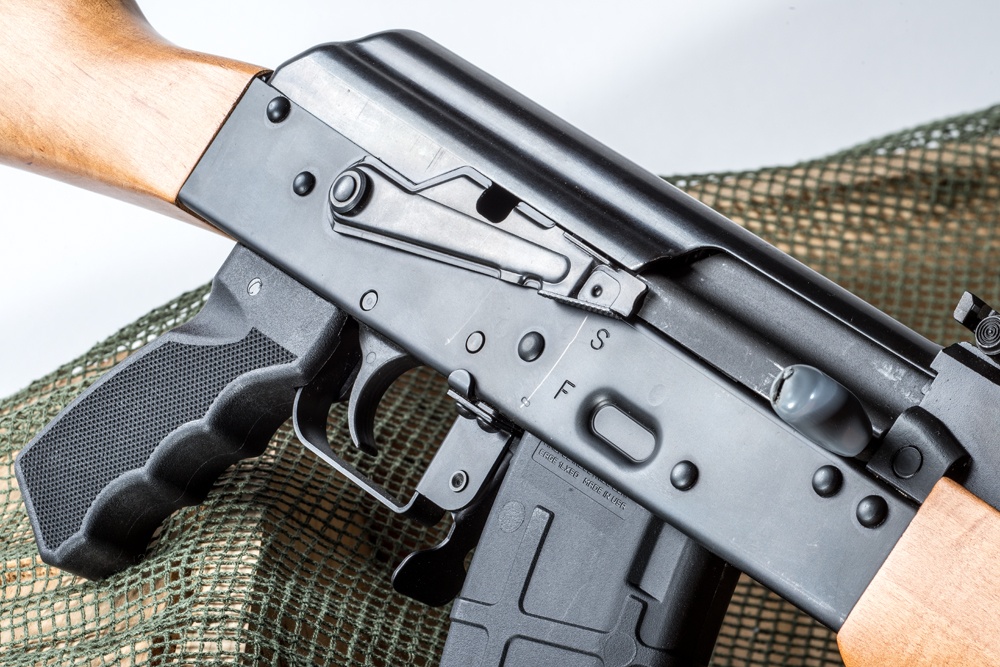
The MMR Pro Rifle appears to have all the bells and whistles the competitive minded look for in a rifle that will gun for the gold. Which should come as a little surprise, given five-time 3-Gun Champion Jerry Miculeck had input in the AR-style rifle’s design.

Miculeck’s heaviest influence came in the trigger that bears his name. The JM Pro Drop-In Match Trigger offers shooters a smooth pull that breaks crisp and clean at 4 pounds. It has been designed to eliminate all creep and offers a desirable extra in its user-adjustable overtravel. In short, the trigger should do everything to keep a shooter on target during the shot and get them reset to take the next in a blink of an eye.
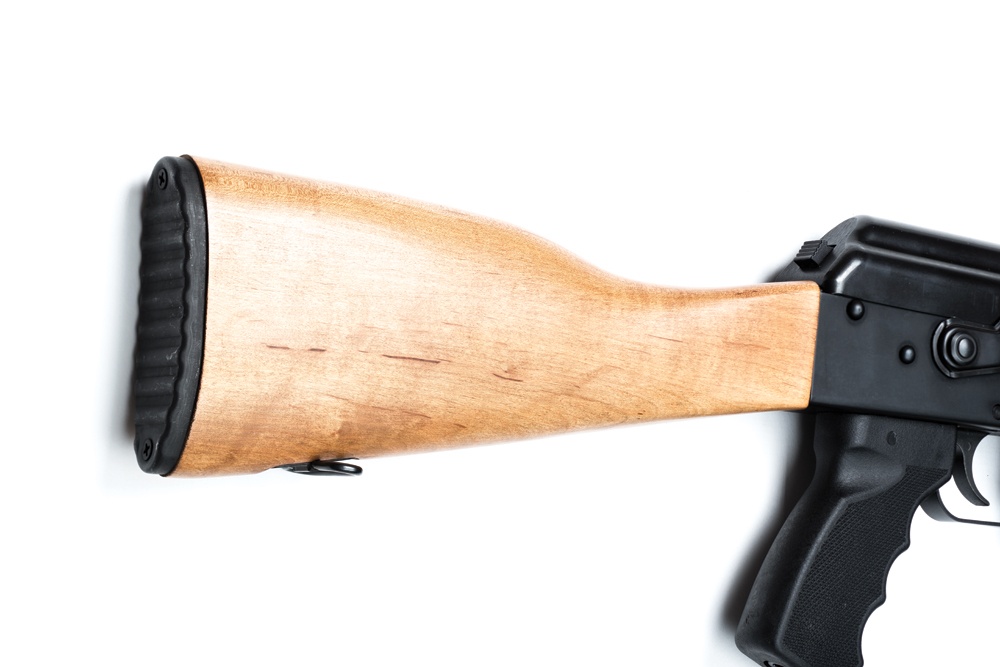
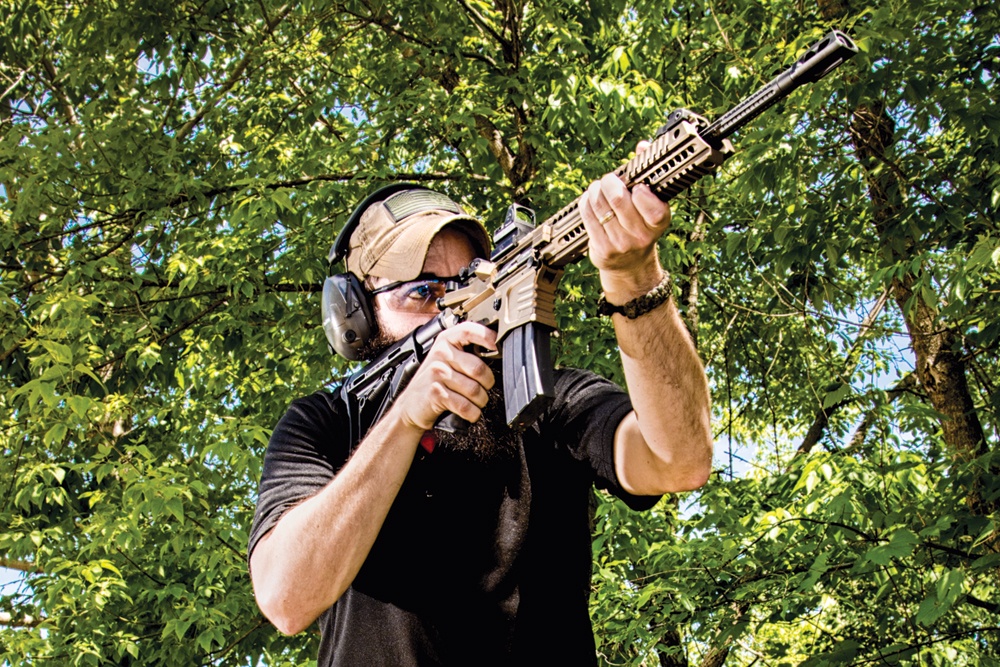
The 35.75-inch rifle, chambered in the standard .223 Rem./5.56x45mm NATO, is deck out with Mossberg’s revamped AR furniture. What this mainly pertains to is the company utilizing the M-LOK modular mounting system on its handguard. The cutouts on the slim 15-inch handguard should be a nice addition, given the system tends to hold accessories more firmly, while allowing quick switchouts.

MMR Pro Rifle
Outfitted with the JM Pro Drop-In Match Trigger, the new MMR Pro Rifle looks to be a sweet shooter.

The buttstock of the direct-impingement gas system rifle is adjustable to six positions, providing an ample 3.25 inches of adjustment to length of pull. The LOP can be fine tuned with Mossberg’s FLEX recoil pad system with three different pad thicknesses.

The MMR Pro Rifle is outfitted with an 18-inch stainless steel barrel, bored with an 1:8-in. twist rate, which should stabilize a wide variety of bullet weights. The free-floating barrel is topped off with SilencerCo’s ARS 3-port muzzle break, eliminating muzzle rise and making the rifle more controllable shot to shot. The break can be removed and switched out for suppressors with a 1/2×28 thread.

Mossberg has rounded out the 7-pound rifle with an ambidextrous charging handle, making it righty and lefty compatible. And it has outfitted it with a forward assist, a feature not found on the MMR Carbine (base model).

In the scheme of rifles designed for 3-Gun, Mossberg has made it easy to get behind the trigger of the MMR Pro Rifle, price wise. The gun is a value in terms of competitive rifles, with an MSRP is $1,393.

MMR Pro Rifle Specs

Caliber: 5.56mm (.223 Rem)
Capacity: 31
Barrel Length: 18 in.
Twist: 1:8-in.
LOP: 11 – 14.25 in.
Barrel Finish: Stainless Steel
Weight: 7 lbs.
Length: 35.75 in.

MUST READ ARTICLES