Home Blog Page 37

Best 10mm Ammo for Self-Defense, Hunting, and Training

5

What 10mm ammo has you covered for self-defense and hunting?

Self-Defense:
Hunting:
Training:

Languishing in semi-obscurity for a good quarter century, the 10mm has earned new-won respect in recent years. There’s plenty of reasons for Col. Jeff Cooper's darling wandering the wilderness all those years. The first pistol chambered for the powerful cartridge – the notorious Bren Ten – didn’t exactly pirouette onto the stage. And similar to the .44 Magnum, average shooters liked the concept of the snappy cartridge on paper better than when the squeezed the trigger.

As to its rise, who’s to say exactly? From my perspective, the safe wager is that it’s the 10mm’s versatility that has captured ever-fickle shooters’ imaginations. It shoots longer, hits harder and has potentially more applications than any other semi-automatic pistol cartridge today. If you’re willing to spend the time to master the 10mm’s stout, yet manageable recoil you have an unparalleled self-defense cartridge and top-notch medium- to large-game option. Heck, once you get to know it, the big ten is also plenty of fun at the range.

Choosing 10mm Ammo

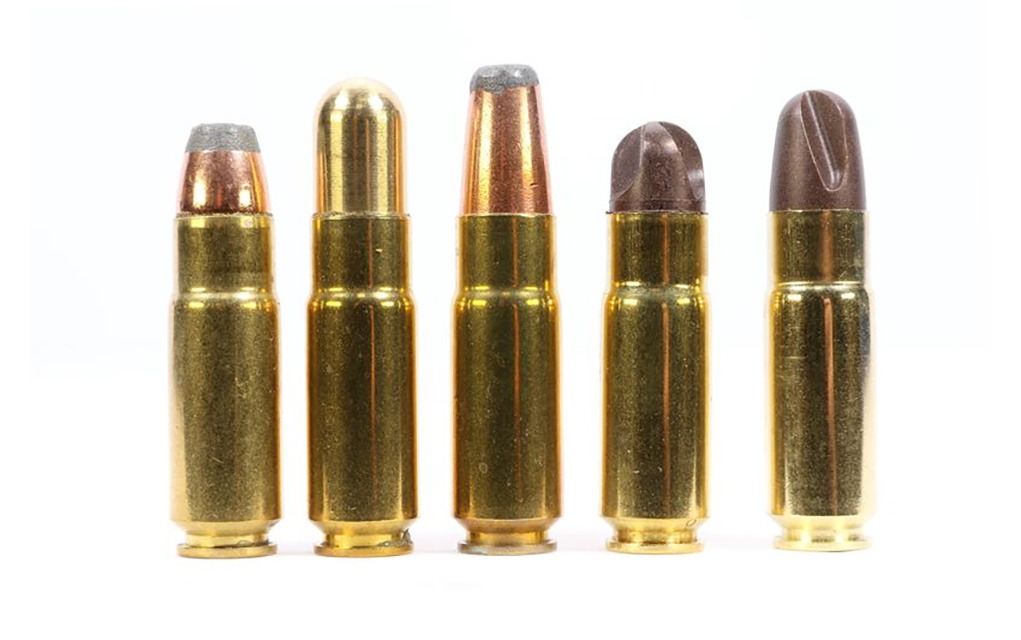
Multi-talented, the 10mm is generally preferred for two primary purposes: self-defense and hunting. There is a crossover between 10mm ammo and these applications. But outside revolvers, perhaps no other caliber has more specialized rounds for these purposes.

This means that not every self-defense round cuts muster on the hunt and not every hunting round is appropriate for personal protection. With that in mind, we've created a 10mm ammo list broken down to these purposes (plus a range fodder suggestion) and we set slightly different criteria in their selection. For self-defense ammo the benchmarks we considered were: met FBI penetration protocol, substantial bullet expansion, manageable recoil for bullet weight and reliable feeding. On the other hand, hunting ammunition was measured on maximum penetration, bullet robustness and potential maximum range. Not that you want to push a handgun shot in the field, but it’s peace of mind if the first shot fails to do the job and you need to follow up.


Get An Edge On The 10mm:


How We Made Our Picks

Delivering you the top pick in 10mm ammo was a team effort, involving not only myself, but other Gun Digest staff and some of our most trusted long-running freelancers. Our backgrounds include everything from master gunsmith to law enforcement and one absolute, dye-in-the-wool 10mm hunting fanatic. These ammo options were tested through multiple handguns by multiple shooters for accuracy and terminal performance. Other options were tested, but these were the ones that came to the top.

Defensive Ammunition

Hornady 175-grain Critical Duty

Springfield Armory XDM 16

Specs

Bullet: 175 gr. FlexLock
Muzzle Velocity (fps): 1,160
Muzzle Energy (ft-lbs): 523
Ballistic Coefficient: .160
Sectional Density: .156
MSRP: $37.99 box of 20

Pros

  • Designed for professional law enforcement use
  • Very reliable terminal performance
  • Consistent performance in all pistols tested

Cons

  • Middling velocity

Why We Picked It

In our testing, we found this a showstopper defensive round.

The 175-grain round is tailored for full-sized handguns and is loaded to provide excellent ballistics and penetration. To the latter, it fully meets not only the FBI’s penetration standards, but also the agency’s barriers tests, giving you a powerful upper hand in almost any self-defense situation.

Over-engineering, a hallmark of Hornady, is to thank for the top-performing 10mm ammo’s performance. Thick jacketed and aided by a Flex Tip core, the FlexLock bullet is designed to expand only when it's supposed to — which isn’t in plywood or heavy clothing.

Furthermore, a jacket-to-core band (Interlock band in Hornady terminology) ensures the bullet holds together and lead core retains mass as it expands. By the company’s statistics, the FlexLock bullet preserves 99-percent of its weight after expansion.

Here's the best part of this ammo, overall we found it extremely manageable out of most handguns we tested it from. Certainly, compact pistols prove jumpier — in our case a Springfield XD-M Elite Compact — but with practice and familiarity controlled followups were achievable.

Speer 200-grain Gold Dot

Gold Dot 200 gr 10mm

Specs

Bullet: 200-grain Gold Dot HP
Muzzle Velocity (fps): 1,100
Muzzle Energy (ft-lbs): 537
Ballistic Coefficient: .151
Sectional Density: N/A
MSRP: $48.99 box of 20

Pros

  • Managable for most shooters
  • Devastating terminal performance
  • Professional-grad ammunition

Cons

  • Tends to be more expensive

In terms of defensive 10mm ammo, 200-grain options are few and far between. Given this, the buzz Speer started at the 2018 SHOT Show with this behemoth addition to the iconic Gold Dot family is understandable.

It’s a lot of jacketed lead to pitch, but it's not just its size that matters.

The round's terminal performance makes it more than worthy of consideration. From our testing on bare ballistics gelatin, the hollow-point expanded nearly a full ¾ of an inch. No matter the situation that should prove more than enough persuasion to halt most attackers dead in their tracks.

Packing plenty of punch, this Gold Dot isn’t loaded to the hilt, thus we found the round very shootable — particularly out of duty-sized pistols (we liked it out of the good ol' Glock 20).

The other area where the ammo acquitted itself well was reliablity across all the pistols we tested it in. Even when the guns were running dirty, we didn't experience a single failure with the ammo.

SIG Sauer 180-grain V-Crown

SIG Sauer 180-grain V-Crown

Specs

Bullet: 180-grain V-Crown JHP
Muzzle Velocity (fps): 1,250
Muzzle Energy (ft-lbs): 624
Ballistic Coefficient: N/A
Sectional Density: N/A
MSRP: $24.99 box of 20

Pros

  • Affordable option
  • Hits hard
  • Expands like the dickens

Cons

  • Fairly bucky round in most guns we tested it in

Near blister hot and offering incredible expansion, SIG Sauer has produced one of the wickedest defensive 10mm ammo choices out there.

While the round kicking out of the muzzle around 1,250 fps is right around what most 10 mm aficionados like to see, it’s what the V-Crown bullet does when it hits the target that turns heads. That said, we found for our defensive rounds that SIG tended to produce the most recoil no matter the platform.

In ballistic gelitan the V-Crown projectile balloons like it's gone off its diet, expanding right around ¾ of an inch. But from our experience, all V-Crown options produce these results relative to caliber. It's just mean ammo.

Geeking out a bit, the expansion is thanks to SIG going the extra mile. While many ammo makers are content skiving just the jackets of a defense round, SIG takes these through the hollow point’s lead core ensuring consistent and dynamite expansion round in and out.

Nickel-plated cases are a nice addition to the round, not only for their deadly good looks, but also making chamber checks easier.

Hunting Ammo

Federal 180-grain Trophy Bonded JSP

The real surprise in the test was the performance of the 180-grain Trophy Bonded JSP load from Federal. This load scoots a flat-meplat bullet along at 1,355 fps, putting 734 ft-lbs. on target. On top of that, its accuracy was second best of all lots tested — 1.50-in. average and .44-inch best groups at 25 yards.

Specs

Bullet: 180-grain Trophy Bonded Bear Claw
Muzzle Velocity (fps): 1,275
Muzzle Energy (ft-lbs): 650
Ballistic Coefficient: 0.134
Sectional Density: N/A
MSRP: $44.99

Pros

  • Very flat shooting and accurate
  • Manageable relative to other hunting ammo

Cons

  • Expensive

Designed to smash through tough hide and bone, Federal’s specialty 10mm hunting ammo is a proven game getter. Topped with a bullet from the renowned Trophy Bonded line, the jacketed soft point won’t go to pieces in medium- and large-sized game — an absolute must in a handgun hunting bullet.

However, in our testing, it's not the terminal performance potential that turned heads, but the light's out accuracy. At 25 from a rest and out of Glock 40 MOS, the ammo printed .44 inches in it's best group and average 1.5 inches at that range.

Furthermore, we found Trophy Bonded 10mm to be very managable as far as huning ammo is concerned. If required, a follow-up shot is more than feasiable.

From our standpoint, the ammunition is right on target as a deer round and other medium game. But it might not be our first choice as backwood protection against more dangerous game.

Buffalo Bore Heavy Outdoorsman 220 grain

With the Rock Island high-capacity 10mm, loaded with Buffalo Bore 220-grain thumpers, hunting camp is a safer place.

Specs

Bullet: 220-grain Hard Cast plain based LFN
Muzzle Velocity (fps): 1,200
Muzzle Energy (ft-lbs): 703
Ballistic Coefficient: .219
Sectional Density: N/A
MSRP: $44 box of 20

Pros

  • Maximum penetration for caliber
  • Respectable accuracy

Cons

  • Expensive
  • Plenty of recoil

Near the heaviest bullet the 10mm can digest, Buffalo Bore has cooked up the answer if penetration is the question. Launching a hard-cast flat nosed bullet, the 220-grain round is designed to handle the largest and toughest critters you’d logically take with a 10mm. A good bet for hunting larger Cervidae or as an insurance policy when traversing bear country.

Engineered for minimal expansion, the bullet nonetheless punches a devastating hole in game and makes child’s play of hide and bone. And with 3 feet of potential penetration at hand from what we saw in ballistic gelatin tests, a well-placed shot will destroy all vitals in the bullet’s path.

The trade-off for these excellent terminal ballistics, Buffalo Bore isn't for the faint of heart. Pushing a 220-grain bullet at around 1,200 fps at the muzzle tends to get a handgun hopping and did so in our case.

Underwood Ammo 150-grain Xtreme Hunter

The overall winner of our 10mm Auto ammo test was the Underwood 150-grain Xtreme Hunter load. It yielded 1.24-inch average and .53-inch best groups at 25 yards. Best of all, it’s doing 1,415 fps for 667 ft-lbs of muzzle energy. That level of accuracy and horsepower can dominate for hunting, survival, home defense and everyday carry.

Specs

Bullet: 150-grain Lehigh Defense Xtreme Hunter
Muzzle Velocity: 1,425
Muzzle Energy: 676
Ballistic Coefficient: N/A
Sectional Density: N/A
MSRP: $47.99 box of 20

Pros

  • Excellent penetration
  • Accurate
  • Manageable shooter

Cons

  • Most expensive option

Don’t let its lightweight fool you, Underwood’s 10mm hunting round is pure dynamite.

Solid copper, the 150-grain round offers incredible penetration potential. Plain and simple, it won’t break up even against bone and pushes well through most targets.But it perhaps has an advantage over some the hard cast options previously mentioned – wound channel. Milled fluting gives the Xtreme Hunter the unique property of creating a permanent wound cavity greater than many bullets designed to expand.

Even more impressive was Underwood’s 150-grain Xtreme Hunter produced light's out accuracy averaging 1.24 inches at 25 yards and printing a very impressive best group of .53 inches.

Being a lighter round, we also found the option much easier to shoot, despite leaving the barrel at a screaming clip — 1,425 fps. At this velocity, its energy at the muzzle is akin to a projectile 30-grains its weight. At first, it may not look it, but the Xtreme Hunter is more than capable medium to large game 10mm ammo.

Training Ammo

CCI Blazer Brass 200-grain FMJ

Range practice ammo proved surprisingly accurate in the Glock 40 MOS. Samples included Federal American Eagle 180-gr. FMJ, Blaser 200-gr. FMJ and the accuracy winner, DoubleTap Colt National Match 180-gr. FMJ. There were no failures to feed or eject from any of the ammunition tested, which is typical of Glock reliability.

Specs

Bullet: 200-grain FMJ
Muzzle Velocity (fps): 1,023
Muzzle Energy (ft-lbs): 465
Ballistic Coefficient: N/A
Sectional Density: N/A
MSRP: $35.99 box of 50

Pros

  • Inexpensive
  • Accurate

Cons

  • Not any nits to pick as training ammo goes

If your only goal is to shoot as much 10mm ammo for the least amount of money possible, CCI Blazer may be the way to go. This stuff is as accurate as the dickens, producing 1.24-inch groups for us at 25 yards, which is pretty dandy for training ammo.

AmmunitionBulletWeight (grains)Muzzle Velocity (fps)Muzzel Energy (ft-lbs)Ballistic CoefficientSectional DensityPrimary Purpose Cost (box of 20)  Cost (per round) 
Hornady 175-grain Critical DutyFlexLock1751160523.160.160Self Defense$37.99$1.90
Speer 200-grain Gold DotGold Dot HP2201100537.138.178Self Defense$48.99$2.24
SIG Sauer 180-grain V-CrownV-Crown JHP1801250624N/A.161Self Defense$24.99$1.24
Federal 180-grain Trophy Bonded JSPBonded Soft Point1801275650.134N/AHunting$44.99$2.25
Buffalo Bore Heavy Outdoorsman 220 grainHard Cast plain based LFN2201200703.219N/AHunting$44$2.20
Underwood Ammo 150-grain Xtreme HunterLehigh Defense Xtreme Hunter1501225676N/A.130Hunting$47.99$2.40
CCI Blazer Brass 200-grain FMJ
FMJ2001023465.173.178Training$35.99*$0.72
*Per box of 50

Load Up On These 10mm Tips

On The Range With The Finks GSP 1911

1

The author reviews the Finks GSP 1911, a hand-tuned 1911 known as the Gunsite Service Pistol.

How is it possible that a handgun design that’s more than a century old is still one of the most popular? The answer is simple: The 1911 is still with us because it still works. Of course, modern 1911s are a bit different from the original, and over the years a collection of custom modifications are now mostly standard. Some might wonder which of these modifications are important. Well, the oldest and largest civilian firearms training academy in the world has answered that question with the return of the Gunsite Service Pistol (GSP).

Origin And History

In 1976, Jeff Cooper, Marine, international firearms trainer and founding president of the International Practical Shooting Confederation (IPSC), took a ranch in Arizona and turned it into a shooting school. The American Pistol Institute (API) is where Cooper taught upstanding Americans to defend themselves with a handgun. Now known as Gunsite Academy, which also trains military and law enforcement, it’s the world’s oldest and largest civilian firearms training school.

Jeff-Cooper-1911-1
This ivory-stocked 1911 Government Model belonged to Jeff Cooper.

As participation there grew, students would often get their handguns tweaked to Cooper standards by the Gunsite Smithy, and it wasn’t long until Gunsite began offering custom pistols. Up until about 2002, you could order a custom 1911 from Gunsite, but over the years the particulars of these pistols varied. However, Gunsite smithy Robbie Barrkman of ROBAR fame did offer a hand-tuned 1911, which was referred to as the Gunsite Service Pistol (GSP).

When Buz Mills purchased Gunsite in 1999, he decided it shouldn’t be in the gun-building business but did offer Gunsite “approved” 1911s through their Pro Shop, which were manufactured exclusively—to Gunsite standards—by Colt. The idea was that these pistols—now known as the Colt Gunsite Service Pistol (GSP)—would be an embodiment of what Cooper felt 1911 perfection to be. Unfortunately, through the years, the Colt GSP has been only sporadically available.

Jeff-Cooper-1911-2-1
This early staghorn-stocked 1911 Government Model belonged to Jeff Cooper.

When Mike Moore retired as the Gunsite Smithy a few years back, Finks Gunsmithing of Chino Valley, Arizona, and Tyler Gunworks of Friona, Texas, began filling in. They completely renovated the shop to best service Gunsite clientele, and since then the talented smiths at Finks have repaired the guns that break during training classes while also offering full custom work. With a master class smithy once again on-site, retired Sheriff Ken Campbell, Gunsite’s CEO, decided it was time for the GSP to ride again. The result is the latest version of the GSP, and it’s 100-percent hand-built by Fink’s Gunsmithing at Gunsite.

The allure of this pistol should be clear: It continues a legacy that’s integral to Gunsite’s history. More importantly, it should be looked at as what’s arguably the best example of a fighting 1911. Its origins date back to when the Gunsite Ranch and API were founded, when Cooper codified the Modern Technique of the Pistol, laid the foundation for defensive handgun training as we know it, and once wrote, “The great 1911 .45 was a very nearly perfect artifact from the day of its birth.” The new GSP from Finks is an expertly crafted amalgamation of nearly 50 years of lessons learned at Gunsite Academy. No other pistol on Earth can claim that.

Springfield-Armory-Gunsite-1
A decade-old 1911 crafted for Gunsite by Springfield Armory.

The Details

Finks starts with a 70 series, forged steel frame and slide sourced through Tyler Gun Works. It’s fitted with a hammer-forged match barrel with a recessed target crown, duty weight springs, extended grip safety, Wilson Combat thumb safety, long skeletonized match trigger, scalloped EGW main spring housing, and the trigger guard is undercut. The entire pistol then receives a carry bevel/de-horning treatment to do away with its sharp edges, front strap serrations, wide-cut cocking serrations on the front and rear of the slide, reliability and trigger job, lowered and flared ejection port, and the magwell is beveled too. A U-notch Wilson Combat battlesight is installed to mate with a Novak yellow outlined tritium front sight that stands out like a ready-to-bust pimple on a fashion model’s nose. The pistol then receives a satin blue finish, and G10 Super Scoop grips are installed with chromed hex head screws.

Finks-GSP-1911-1
The Finks GSP is a 1911, optimally configured for training and fighting.

Other features include a most unique Commander-style hammer with a cutout in the shape of the Gunsite raven. Also, on the right slide of the slide just behind the rear cocking serrations is an engraved Gunsite raven. Just under the ejection port, “GSP Government” is engraved and “Gunsite Service Pistol” is engraved on the left side of the slide. Additional customization is optional, but limited if you want the pistol to retain its GSP identity.

GSP-1911-muzzle-1
There’s a lot to look at in this picture, but notice the keen carry bevel on the bottom edge of the slide.

I consider myself somewhat of a 1911 snob: I’ve been carrying 1911s for protection, training and competition, for more than a quarter century. The only thing I would change on this pistol is for the slide stop to receive just a touch more de-horning along its forward edge to keep it from eating into the holster. And I’d also moderately smooth the texturing on the front edge of the left grip scale where your fingers rest. Yeah, as 1911s go, this pistol is that perfect.

GSP-1911-magwell-1
The magazine well on the Finks GSP is expertly beveled to assist with magazine insertion.

Range Time With The Finks GSP 1911

This is a pretty pistol to look at; it checks all the boxes most often associated with a custom 1911, but there are a lot of modernized 1911s that are very similar. For a pistol like this to be worth the money or suitable for carry or training, the thing has to shoot where it’s pointed, and it needs to go bang every time the trigger is pulled. Time on the range is the only way to sort this out, and I put 300 rounds through the new GSP. After some familiarization fire, I ran an 8-inch plate rack at 25 yards, which quickly established that the pistol shot better than I’m capable of. The next thing I did was expose the pistol to the two shooting drills that I use with every pistol I test.

Gunsite-1911-shooting-1

The first is the Forty-Five Drill, and the goal is to draw from concealment and put five rounds into a 5-inch circle, at 5 yards in 5 seconds. Using Black Hills 200-grain SWC load, I ran this drill five times and cleaned it on all but the first run, where I hammered the first shot and hit a bit low. My average time for this drill was 3.88 seconds, which is about a half-second slower than I can run the drill with my Wilson Combat, commander-sized EDC X9 in 9mm.

forty-five-1

The second drill is the Step Back Drill, which I think is one of the best drills to establish shooter proficiency with a pistol. For this drill, you draw and engage an 8-inch steel plate with two shots at 5, 10, 15, 20 and 25 yards, but each two-shot string is timed separately. To pass, you must get all 10 hits in less than 20 seconds. I ran this drill with standard velocity 230-grain ball five times. On the first run, I missed a shot at 20 yards and both shots at 25. On the second run, I missed one shot at 20 and one at 25. Realizing I needed to hold near the bottom of the plate at 20 and 25 yards, I cleaned the drill on the last three attempts with an average time of 18.68 seconds.

step-back-drill-2

Of course, this isn’t intended as a pistol to just be used on the range; it’s a fighting handgun, and fighting handguns need to be reliable with hollow-point ammunition. Mostly playing with the plate rack and running a quasi-El Prez Drill on life-size steel silhouette targets, I put a good mix of hollow-point ammo through the pistol. Every time I pulled the trigger, with every load tried, the pistol went bang, ejected the empty, and loaded the next round until the magazine was empty and the slide locked back.

Clearly capable of delivering more precision than I can extract from a pistol, four loads were tested at 10 yards from a sandbag rest. The average for 12, five-shot groups—three each, with each load—was an impressive 1.03 inches. The pistol really liked the standard pressure 185-grain Buffalo Bore flat nose FMJ load. It averaged right at a half-inch for three five-shot groups. There are some other good-looking 1911s out there that are reliable and cost less, but they won’t shoot that good.

GSP-1911-test-table-1

Deserving

In 2003, Cooper wrote, “People who write about the ‘comeback of the 1911’ do not seem to be aware that it has never been away.” Two decades later, those words are still true. Countless manufacturers are turning out all manner of 1911s, priced from less than $500 to more than 10 times that much. Kimber and Springfield Armory 1911s are a great example of what the modern 1911 has become, and both offer several versions approaching or near the price point of the Finks GSP. I’ve shot most of those pistols a good bit, and I can confidently tell you, they’re not in the same class as the GSP. Though I cannot speak to its longevity, the GSP does come with a warranty for the lifetime of the original owner, and I think it’s worth the asking price if not more.

Gunsite-1911-with-mag-1
Tested as a fighting handgun, the Finks GSP is accurate, reliable and trustworthy.

This pistol is deserving of the Gunsite and GSP name it carries. As a multi-course Gunsite Academy graduate, where the only diploma on my wall—of the many I’ve earned at many schools—is the one from my first Gunsite 250 Pistol Course, I can proudly say this pistol carries the Gunsite and GSP names. But you don’t have to be a Gunsite alumni to appreciate a 1911 this good, you just need to understand what a trusted and reliable 1911 designed to train and fight with should be. How can you get yours? Call the Gunsite Academy Pro Shop. They have them in stock just waiting for an American patriot like you.

Finks-GSP-1911-specs-1

Editor's Note: This article originally appeared in the March 2024 issue of Gun Digest the Magazine.


More Handgun Reviews:

The Dangerous Ambiguity Of Qualification Drills

3

The author debunks some dangerous assumptions that surround qualification drills and what they really mean.

The military and law enforcement have long used qualification courses to validate a soldier’s or cop’s shooting skill. Qualification is also a part of most defensive handgun training courses and, in some cases, it’s a requirement to obtain a concealed carry permit. The difficulty of these shooting evaluations varies; there’s no universal standard, and a passing score is subjectively set by the responsible administrating body.

So, what specifically does the successful completion of a qualification course really mean?

I’m not exactly sure. This is partly because of the varying requirements, but it’s also because of the tendency to rank performance—based on score—with identifiers such as marksman, sharpshooter, expert or master. It’s hard to divine any real meaning from these scores or ranks, which are mostly used to incentivize shooters to strive to perform at a higher level. If you’re qualified, you’re qualified, right?

Beyond that, what else matters?

I’m not exactly sure about that, either.

On my first day of work as a police officer 32 years ago, the range officer took me to qualify with my service revolver, and I shot expert on the department’s qualification course. But, in no one’s imagination should I have been considered an expert—or maybe even qualified—with a handgun in a law enforcement setting. I didn’t receive any law enforcement specific training; all I’d managed to do was hit the required area of the target 90 percent of the time.

This is one of the two things that troubles me the most about qualification courses.

Qualification-Drill
Firearms qualification is partly a measure of skill, but more than anything it serves as an administrative protection from liability.

Troubling Parameters

The object of shooting is hitting, and a failure to hit what you’re shooting at is, by any measure, a failure. Had I only achieved 70 percent of my hits on that course of fire I would’ve still qualified. How could that be? How could a police officer fire 60 rounds, miss 18 times and still be considered “qualified” to carry, and, more importantly, shoot a handgun in a public setting where real, live, innocent human beings might be walking around Googling their smartphone?

When I went to work as a special agent for the railroad police, I was shocked to discover that, to qualify with my duty handgun, I had to shoot 100 percent—no misses were allowed. This made perfect sense because you’re responsible for every bullet you fire. The other surprise was what the qualification course amounted to. Though my memory is now a bit cloudy on the exact details, it went something like this:

You started walking toward the target with your pistol in the holster. At about 5 yards from the target—on the start signal from the instructor—you drew your pistol and had to place multiple shots inside an 8-inch circle in just a couple seconds. Simple, right?

In theory, maybe, but not so much in practice. As a law enforcement firearms instructor, what I ultimately learned was that the shooters who could pass this simple qualification course also had the ability to pass most any other qualification course in use by other law enforcement agencies.

Interestingly, a few years ago I asked retired Sergeant Major John “The Sheriff of Baghdad” McPhee of SOB Tactical if he could require a shooter to perform a single drill to establish proficiency, what it would be? McPhee said, “That’s one of the most common-sense questions I’ve had in a long time,” and he went on to say he’d use a drill he calls the Placement Test.

The Placement Test

In McPhee’s Placement Test, which is about as minimalist as it gets, you’re required to draw from the holster and put three shots inside a 3-inch circle, at 3 yards, in less than 3 seconds. According to McPhee, if you can do this, you can shoot—meaning, you have a solid grasp of the fundamentals. It’s also a very real-world, because as John’s research in self-defense shootings has shown, in a generic way this drill closely replicates real-life situations. Ironically, the drill is very similar to my often used Forty-Five Drill, which mandates drawing from a concealed holster and putting five shots, into a 5-inch circle, at 5 yards in less than 5 seconds.

Our tests are very similar to the qualification course the railroad police used. What’s most important is that they’re 100 percent pass or fail. Though you could classify performance based on the actual time to successfully complete the drill, it’s unnecessary. These are no-B.S. drills that plainly illustrate whether you can shoot a defensive pistol … or not.

I know some of you are screaming, “That’s not enough shooting and does nothing to document that you can hit at greater distances, shoot from behind cover or from other positions!” You’d be correct. But, if you can pass either of these drills, you’re very likely skilled enough with a handgun to do all of those things, especially with a bit of training. And let me repeat that last word with emphasis: training!

FBI-Qualification-Drills

What Really Matters?

When we showed up for qualification day with the railroad police, qualifying was the first thing we did. It took about an hour for a bunch of us to do it—one at a time with an audience watching—and then we spent the rest of the day learning and practicing with our pistols to the point where we were challenged with scenarios and drills of ever-increasing difficulty. We did the single most important thing that too many police departments, military units and civilian gun owners fail to do. We trained!

And that’s the second thing that bothers me about qualification courses—especially those that turn out marksmen, experts and masters—which is also the main point of all this pontificating: You should not put too much credence on your ability to qualify on any course. Sure, you might need to shoot a passing score to go to war, work the street or carry a concealed handgun, but qualifications tend to bring with them the illusion that you’re actually qualified. And that tends to develop the notion or mindset that no other work, training or practice is necessary.

Being qualified by the government, a school, or some other organization is one thing, but it has no real bearing on the ultimate goal—which is actually being capable of winning a fight with a pistol. The only way to come even close to that is through frequent and continual efforts to learn, train and improve your skill set that challenge you to get better so that you can always hit what you shoot at and never miss. One hundred percent!

Editor's Note: This article originally appeared in the March 2024 issue of Gun Digest the Magazine.


More On Shooting Drills & Training:

Collectible But Usable: Sig P6 Review

0

The author reviews a West German LE surplus Sig P6, a handgun that’s remained practical while becoming collectible.

It was the early 1970s, and European police forces had a new problem: terrorists. Those LE officers had a miscellaneous assemblage of .32s and .380s in their armories … while the bad guys were starting to use 9mm SMGs.

Not good.

So, the West German Federal police issued a request for a new sidearm, and it was to be in 9mm Parabellum. HK offered up the PSP (which we know as the P7), and Walther offered up a newly built P38 with a shorter barrel, dubbed the “P5.” In-between, the tasking authority dubbed the Sig entry as the P6, the model we know as the P225.

All of the new pistols accepted for use were single-stack 9mm pistols, and that was considered a big step up by the police forces (compared to packing a .32 Auto, any of them would be). All three were approved, and each law enforcement agency or administrative state was free to purchase and issue any of them. The P5 (P38) wasn’t popular, and the P7 (HK) was the more expensive one, so most states bought P6s.

Sig-P6-with-box
The later of the author’s two guns came in a commercial P225 box, but with the issued officer’s name handwritten on the lid. Again, why the difference? Who knows.

Rising To The Top

The P6 is basically a pared-down single-stack P226, or a compact P220. It’s smaller and lighter than either, and since it has a single-stack magazine, it’s easier to grasp for those with smaller hands. It’s a traditional double-action system, trigger-cocking on the first shot and with the hammer cocked by the slide on subsequent shots. There’s a hammer-dropping safety lever on the left side, and this safely lowers the hammer after it has been cocked. Manufactured in Eckernförde, Germany, at the J.P. Sauer plant (which Sig bought a controlling interest in so they’d qualify for contracts), most German states purchased the P6 due to it costing less than the other two pistols.

P6-hammer
The special hammer spur, with the notch that lets the police armorers know when a pistol has been dropped on its hammer. Before you laugh, the Germans aren’t the only ones with persnickety regulations.

One interesting detail found on the P6 pistols, and not on the P225 pistols, is the hammer. The German police standards called for a special hammer, where the rowel of the spur has a notch cut through it. This is the Deformationssporn, or “deformation spur.” It exists for one purpose only: to determine if the pistol in question has been dropped and fell on its hammer. If that happened, the spur would be bent and not be bendable back—uh-oh. The obsession with pistols being dropped, especially on the hammer, is a mystery, but once something is written into the specs, it’s there until the end of time.

The P6 trigger pulls are reported to be heavier than the P225s exported to the U.S., but I don’t have a representative sample to check. I also don’t know if this was due to the West German police wanting to reduce ADs, or that they had to deal with harder primers, or Americans wouldn’t put up with a heavier trigger pull. Mine isn’t bad at all.

P6-breechblock-1
The breechblock, a separate machined piece of steel, is pinned into the stamped, heavy-gauge steel slide.

One aspect of the Sig design (that created part of the lower cost) was the slide manufacture. The slide was a heavy (really thick gauge) steel stamping, with the muzzle end block welded to it, and the breechblock pinned into it. The earliest P226s are built like this, as well as the early P220. The feed ramp of the barrel was designed to be best-feeding for FMJ ammunition (can’t have any of those nasty JHPs now, can we?), and some report that their P6s don’t like JHPs. Neither of mine has ever noticed.

P6-breechblock-2
The giveaway for the pinned-in breechblock is the joint on the top of the slide. Later Sig slides, machined from solid, do not have this.

Two, But Different

I actually have two, and they came in different boxes. One came in a fiberboard box, looking very commercial, and the other in a hinged hard plastic (blue) box, apparently the standard police issue box. This is where collecting can come in. Both boxes had the name of the officer to whom they were issued (last names of Kurio and Schaniejel). And my two came in through two different importers: PW Arms and Century Arms.

Sig-Sauer-P6
The author’s two P6s—the one in the blue plastic box dates from January 1980, while the other dates from December 1995.

They also span most of the period of issue. The older one has a “proofmark,” or acceptance date, stamped on it of 1/80, while the other is stamped 12/95. Both came from the German state of Nordrhein-Westfalen, and a lot of the ones you’ll see (if you go looking) will be. It happened to be the most populous state in West Germany (now all of Germany), half again as many people as either of the next two. (No big surprise there. It’s the state encompassing the Rhine-Ruhr industrial area.)

Sig-Sauer-Made-In-Germany
Both of the author’s guns are marked on the left side with the Sig Sauer name and “Made in Germany”. Commercial pistols were marked on the right side with the Sig name and P225.

And, clearly, they used them; by December of 1995, the new standard for police pistols had been adopted, and the P6 was on the way out.

The grips are the same between the P6 and the original P225, as are the magazines and internals. They differ only in markings. However, when Sig went and updated the P225 to the P225A1, they changed the magazines and pretty much everything else. The P6/P225 magazine has a reputation of having feed lips that don’t like to always be loaded. Over time, they’ll wear, and this causes failures to feed.

We Americans expect (and get) magazines that can be left loaded literally for decades and still work. The European police department’s usual process is for an officer to be issued his pistol, magazines and ammo when he reports for duty, load up, go to work, finish his shift, unload and turn it all in. In that process, who would notice a problem? A magazine feed lip that doesn’t like to be loaded for years? They stay loaded eight hours at a time … no problem here.

Well, Sig updated the magazine design, and it’ll withstand American use, but it’s not, alas, compatible with the old P6/P225 (rats!). Grips don’t interchange, nor do much of any other parts. So, if you need to repair or want to upgrade, you need to be very careful, as a lot of sellers don’t know or care between P225 and P225A1 parts.

P6-markings-80
The older one, with the slide markings of the German State that bought it, and the acceptance date. Also note the importer and that the barrel is marked with the last three digits of the serial number.

The West German P6s were marked as to the state that bought them, and mine are marked with the date of manufacture and the state on the right side of the slide, along with the last three digits of the serial number. They don’t have the commercial Sig markings, while the P225 imports do. However, the P6s are marked on the left side of the slide, and the left side of the barrel chamber: “Sig Sauer.” They also have the German-law required proof marks, and here things get interesting for my pair.

P6-markings-95
This had to be one of the last P6s the State of Nordrhein-Westfalen, bought in December of 1995.

The slide nose undersurface is the usual place to mark them, and the markings on mine differ. You’d think, with the P6s being built at one plant, and in this case with them being purchased by Nordrhein-Westfalen, that the proofmarks would be the same. Nope. More collectability variance. The surplus ones will, of course, have markings from the importer, most of which were through Century Arms International, but not all.

P6-nose-marking
The slide is proofmarked on the bottom of the nose, and the two P6s the author has sport different proof houses marks. Why? Who knows.

Calculated Rarity          

You may wonder why you don’t see (or didn’t back when they were coming into the U.S.) many of the P5, P6 and P7 pistols. What I’ve been told is this: When the standards changed back in the mid 1990s, the states (each German state is like a U.S. State with their own responsibilities and authorizations, etc.) were told by the Federal government they could get new pistols from the new list. And the Federal government would trade them, one-for-one, or whatever they needed, provided they traded the old ones in.

If they didn’t trade them in, then they’d have to purchase new ones out of their own budget, and the old ones would have to be disposed of within the requirements of the very strict German laws concerning firearms. Taking the easy way, they just handed them over and got new ones.

Some states didn’t, or they at least tried a few lots of test sales, and that’s how we got the ones we got. This amounted to tens of thousands of P6s, but not the whole lot of them. Still, they’re common enough and less expensive (curiously) than the P225 or P225A1, so if you want to get into collecting easily and without breaking the bank, this is one place to start.         

SigP6-chrono-data
Accuracy results were to be averages of three, five-shot groups at 50 yards off a Champion shooting rest. Velocities are averages of 10 shots measured on a Labradar chronograph set to read 15 feet from the muzzle

I tested mine when I first got them and found that they were, not surprisingly, just like all the other Sigs I’d shot up to that point: accurate, reliable, easy to take apart and clean, and resemble a Sig (which is a good look). I seriously considered using one as an everyday carry pistol, but the background on the magazines was just enough to give me pause. It may be true, or it may take years to happen, but who wants to run the risk?

I could load up a magazine and leave it loaded for a few years (I have tests like that going on right now; the longest one is up to 14 years), but I can’t trust it until I know and that’s years away. Plus, if the test magazine does fail, I’ve just thrashed one of a very few I have.

So, mine are range queens and teaching pistols for new shooters. The grip is big enough to hold, but small enough to be managed by shooters with small hands. While the DA pull is more than I’d want a new shooter to struggle with, the SA trigger pull is plenty nice enough and yet not too light. And either are accurate enough that a new shooter who pays attention will hit what they’ve aimed at.

Collectible, but usable, suitable for teaching new shooters, but fun to shoot for the experienced. It uses standard 9mm ammunition (unlike some historical pieces I have in the safe) and doesn’t mangle the brass. Made by the Swiss in Germany for Germans, but now here in America. What’s not to like?

Sig-Sauer-P6-specs

Editor's Note: This article originally appeared in the March 2024 issue of Gun Digest the Magazine.

SIG Talk: Explore Reviews, Tips, and Insights

Best Semi-Auto Shotgun: Scatterguns For The Field And Defense
1

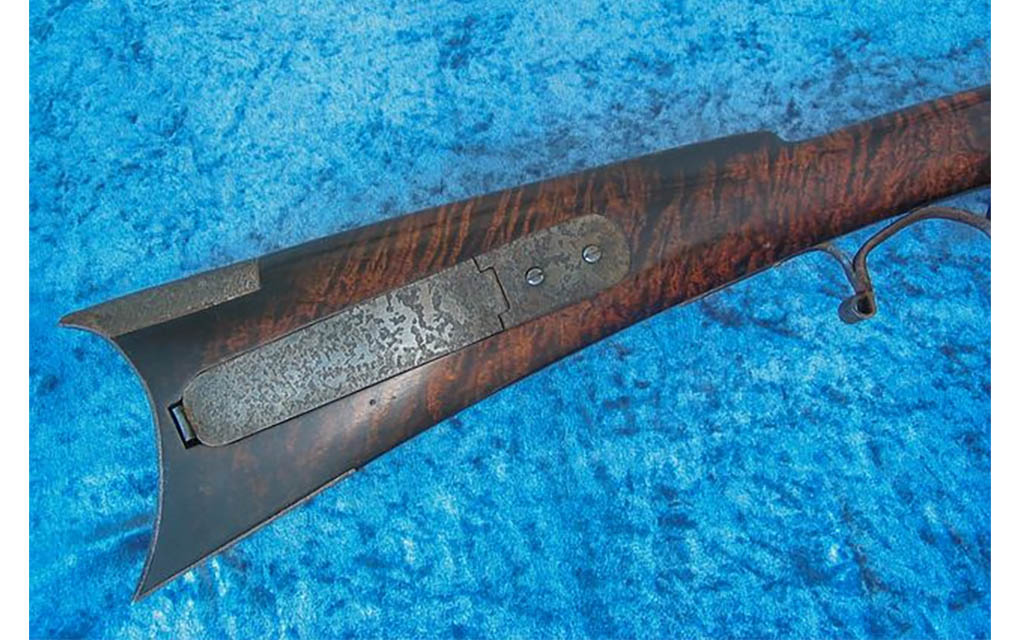
Semi-Auto shotgun makes and models abound. Picking one that will enhance your shooting ability and enjoyment means understanding their operating systems and yourself.

What Are The Best Semi-Auto Shotguns?

Other Great Semi-Auto Shotgun Options:
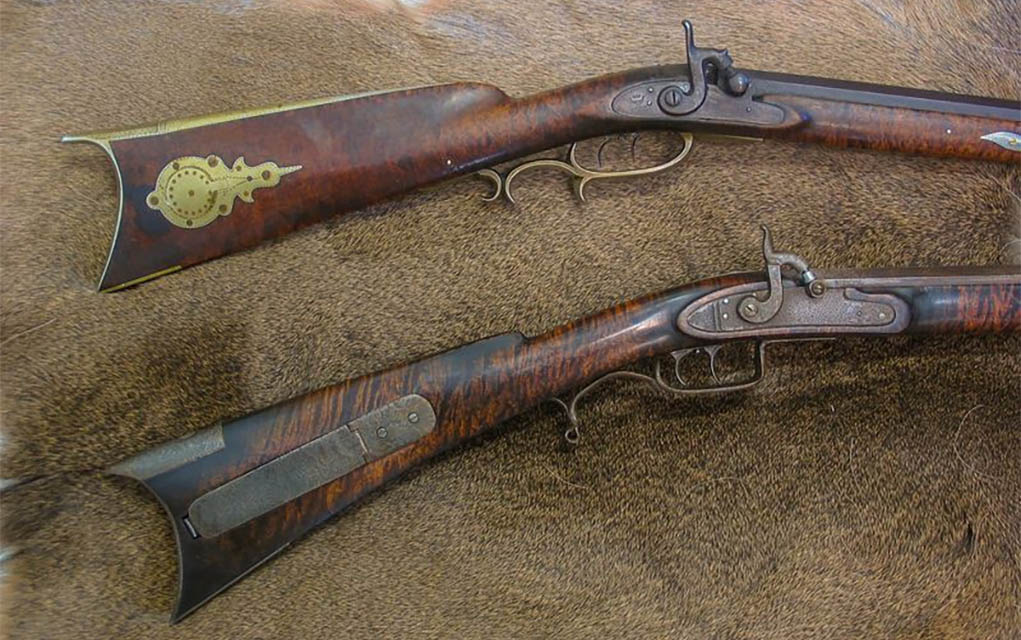
The turn of the 20th Century must have been an amazing time to be alive. The advent of the electric light, moving pictures, the internal combustion engine and, of course, the semi-auto shotgun. The mind reels at the technological advancement. Particularly the smoothbore.

Not to take anything away from the horseless carriage and illumination at the flick of a switch, but the autoloading scattergun must have been mind-boggling to the folks of the age. Five shots with little more than the pull of a trigger? The devil you say! Two short decades before 1905, shotguns were exclusively single barrel or side-by-side affairs, complete with external manually cocked hammers. Not exactly the stuff for rapid-fire. Moving to an autoloading system was dang near akin to jumping from ox-and-cart to GTO.

No wonder the semi-auto shotgun dominated much of the past century and only continues to get better with time.

Already know all this stuff? You can JUMP AHEAD to our picks for the best semi-auto shotguns.

Why A Semi-Auto Shotgun

Avoiding the obligatory Why not a semi-auto shotgun? there are some solid logical reasons to consider this type of smoothbore. The two most significant: firepower and ease of use.

beretta-1301-sadowski
Seriously, who doesn't want a beast such as the Beretta 1301 Tactical. Photo by Robert Sadowski

The first is fairly self-explanatory, in most cases, a semi-auto shotgun is capable of delivering more shot downrange in a shorter period of time than anything else. Competitors understand this, with various semi-auto models—such as the Remington Versa Max Competition Pro—dominating 3-Gun Matches. This advantage translates over to any endeavor you might need to send a mass of pellets on target and quick, from knocking down white wings to protecting hearth and home.

As for ease of use, well that too is pretty simple to get a handle on. Once you know how to load a semi-auto shotgun and chamber a shell, the only thing you concern yourself with—barring a malfunction—is aiming and trigger pull. That’s quite a load off the mind—and muscle memory—allowing you to focus on what’s important—hitting the target.


Draw A Bead On Shotguns:


Though, don’t confuse ease of use with a less complex system. Compared to its cousins—the double-barrel shotgun and pump-action shotgun—the semi-auto shotgun is most certainly not a simpler machine. Granted, its operational systems—recoil (inertia) or gas, we’ll get to those in a second—aren't beyond the grasp of a well-seasoned novice. But they do involve a bit more understanding to troubleshoot, which means dedication to learning exactly what goes on under the hood.

So, what is going on under there?

Recoil Operated Semi-Auto Shotgun

Now dominated by the inertia system, shotguns that cycle via the kinetic energy from a shot being fired have been with us for some time. The semi-auto alluded to at the beginning that got its start around the time light bulbs were becoming a thing, was recoil-operated. In fact, it was an all-time great—John M. Browning’s Auto-5, which ruled semi-auto shotgun sales for the first 60 years of the last century. Though, its operation was much more complex than what we see today.

Consider by many, especially waterfowlers, one of the finest hunting semi-autos around, Benelli's inertia driven Super Black Eagle is a classic.

A long-recoil gun, the A-5’s barrel and bolt both moved rearward in unison after a shot, the barrel returning first and ejecting the shell, then the bolt to load a fresh round. After Browning ironed out the initial bugs, the “Humpback” —so-called due to the prominent rear of its action—became renown for its reliability. Replacing the long-recoil semi-auto is a system that draws upon the same force to cycle the gun, but in a slightly different fashion.

In the inertia operated semi-auto shotgun, the bolt carrier and what is known as an inertia spring float freely in the receiver. When fired, the shotgun as a whole recoils rearward, while these components initially retain their position in a state of inertia. The difference in motion compresses the very stiff spring. The force of the spring decompressing unlocks the bolt head, throws the carrier rearward and cycles the gun.

It doesn't get much simpler than this. An inertia drive system from a Franchi shotgun. The carrier, bolt head and spring (inside the carrier) are the only moving parts of the action.

While the system gained popularity with Benelli engineer Bruno Civolani’s improvements of the late 1960s, the system came about soon after Browning’s A-5, developed by Swede Carl Sjögren. The genius of Civolani’s design was its simplification. Sjögren’s system required a separate weight, while the Italian made the bolt carrier the weight. A small detail, but one that gives inertia semi-auto shotguns one of their most favorable attributes—simplicity.

The Benelli proudly boasts its modern inertia operated shotguns only have three moving parts—bolt head, inertia spring and bolt carrier. In turn, they are easy to maintain and tend to stand up to a licking. Waterfowlers love them, given they’ll take all their marshy abuse and still fill a bag.

Inertia guns are also light, which might be good or bad depending on your standpoint. It’s good if you value a nimble field piece you won’t get bogged down carrying all day. The bad of it, light means thump. By and large, the guns generate more felt recoil than gas-operated guns, which can prove problematic for the recoil sensitive and high-volume shooters.

Gas Operated Semi-Auto Shotgun

High Standard was the first to cobble together a gas-operated semi-automatic shotgun in the late 1950s, sold by Sears and marketed under the retailer’s J.C. Higgins brand. But for the most part, the development of the system—especially as we know it today—was a Remington affair. And while it came out with a few models prior—Model 58 for example—Big Green’s Model 1100 set the standard of what became the dominant style autoloader of the latter half of the 20th Century. Reliability of what was considered a finicky system up to that point, along with shootiblity are what etched the 1100 into shooter’s hearts.

Autoloaders-3
Remington Model 1100 12 gauge. Although a bit hefty at around 7-1/2 pounds, it was still very popular with upland gunners through the 1960s and 1970s. In the lighter 20 gauge at 6-1/2 pounds, it continues to be a popular upland gun.

Opposed to recoil, gas-operated shotguns bled off some of the expanding gas of the deflagrated propellent to cycle the gun. The gas drives a piston(s) reward with it the action bars that subsequently operate the bolt. Out with the old, in with the new, hammer cocked and you’re ready to do it all over again. Simple enough, but it is a slightly more complex system that does overall have more components than inertia guns.

Given this, gas-operated semi-auto shotguns tend to be heftier. This aspect is actually a benefit for many, given the weightier firearms soak up more recoil, thus has built a reputation of being easier to shoot. Trap shooters and the like have gravitated to gas guns exactly for this benefit.

Of course, this can make gas guns more burdensome when you’re on the hoof. On top of that, and compared to inertia guns, they're dirty. Even if it isn’t the poop where it eats AR rifle situation, gas-operated semi-auto shotguns require regular cleanings, lest carbon fouling, well … fouls everything up.

A look at Remington's VersaPort layout. Shorter shells cover up fewer ports allowing more gas to escape, while larger shell cover up more venting less gas. In turn, the shotguns self regulate to cycle no matter what they're fed.

This style of semi-auto shotgun, in the past, has also proven difficult to run a wide spectrum of shells through reliably. While most will kick high brass out like it’s late on its bar tab, low brass often doesn’t have enough oomph to cycle. This has changed in recent years with Remington’s Versa Max and V3, and Savage‘s Renagauge shotguns. Each is designed cycle shells with no gas adjustment, no matter the load. Remington does this through numerous ports and Savage values.

Gas Vs Inertia: Which Wins Out?

The correct answer is both. Honestly, if you buy a reputable brand, which there are many nowadays, you’ll get a semi-auto shotgun that will run like a top. What you have to decide is, given the strengths and weaknesses of each operating system, which fits you best as a shooter?

If you shoot mountains of clays each month and want to stay sharp first shot to last, the slightly milder gas-operated semi-auto might be your cup of tea. If you head into the depths of flooded timber for duck season and need a gun that will function no matter if you drop it into a mud hole, well the inertia system will most likely shine for you. Be honest with yourself about your endeavors and you’re personal preferences as a shooter and the right choice should standout.

Benelli M4, is it the right gun for you? Could be, if you're in the market for a tactical option known for it's manageable recoil.
Benelli M4, is it the right gun for you? Could be, if you're in the market for a tactical option known for its manageable recoil.

The same holds for self-defense. Overall, both gas- and inertia-operated shotguns are more than capable of holding their own as defensive guns. And there are many fine examples of each with a tactical bent, from Stoeger’s inertia-driven M3000 series to Mossberg’s gas-operated 930 Tactical options, among many others. You just need to figure out what will enhance your shooting and not hinder your training.

Our Selection Process

So, what's our criteria for determining the best semi-auto shotguns? It boils down to personal experience with the guns and our team’s hours behind autoloaders. We’ve weighed the guns on a number of factors, some of the most important being:

  • Overall reliability
  • Quality of manufacturing
  • Shootability
  • Aesthetics

Semi-Auto Shotguns Buyer's Guide

Beretta A400
Beretta A400
Used by plenty of competition shooters and hunters, Beretta’s semi-auto shotguns are well respected. The A400 series has more to offer than reliability, however. Equipped with Beretta’s Kick-Off hydraulic dampener recoil reduction system and the Blink gas operating system, each A400 is also fast-cycling and easy on the shoulder. This makes follow-up shots in the field as easy as can be. The controls are also enlarged for easier operation, especially while wearing gloves.

Beretta has several different A400 models available with varying barrel lengths, gauges, stock styles and other features to choose from, each geared toward a specific shooting discipline. Regardless of whether you’re after deer, birds or clays, there’s a Beretta A400 out there that could serve you well.
MSRP: Starts at $1,849 // beretta.com

Benelli Super Black Eagle 3
Benelli Black Eagle
Benelli needs no introduction, as the company’s shotguns are widely regarded as some of the best in the world, regardless of the application. When it comes to waterfowl hunting, however, it’s the Super Black Eagle 3 that takes the cake. It uses a gas-less Inertia Driven System action, similar to the above-mentioned CZ 1012, but Benelli claims that its shotguns have been known to fire over 500,000 rounds without a malfunction. This system also enables reliable function with everything from weak target loads to 3.5-inch magnum shells.

Available in both right- and left-handed configurations, the Super Black Eagle 3 has several features designed to aid with usability and ergonomics. The Comfort Tech 3 stock has shock-absorbing inserts to reduce felt recoil on the shoulder and face, the controls are oversized for faster and easier use and a new loading mechanism makes reloads fast and smooth. It’s available in 12-, 20- and 28-gauge configurations with varying chamber sizes, with a 24-, 26- or 28-inch barrel and with several finish colors and patterns.
MSRP: Starts at $2,199 // benelliusa.com

Beretta 1301 Tactical
Beretta 1300
Another great semi-auto shotgun option from Italy, the Beretta 1301 Tac is the more tactical cousin of the A400 featured in the hunting shotgun section. Like the A400, the 1301 features Beretta’s BLINK gas operating system, allowing for a 36-percent faster cyclic rate than similar designs. This system allows for reliable operation with a variety of shell types as well.

Other tactical features include a 7+1 capacity when using 2.75-inch shells (though it functions with 3-inch shells as well), ghost ring sights with a Picatinny rail for optics and enlarged, highly textured controls. It also has provisions for mounting a light or laser on the forend. Two models are available, one with a pistol grip and one with a traditional stock, but both feature an 18.5-inch barrel and black synthetic furniture.
MSRP: Starts at $1,720 // beretta.com

IWI TS12
IWI TS12
Like the KS-12, the IWI TS12 is another model that excels at on-board ammunition capacity, but it comes at the cost of reload times and bulk. This bullpup semi-auto 12-gauge shotgun holds 15+1 rounds on tap between three rotating tube magazines, but reloading those tubes in a hurry will be much more challenging than swapping box mags.

Despite being so large and bulky, the TS12 weighs only 8 pounds unloaded thanks to its polymer chassis. Its 28-inch overall length keeps it surprisingly compact as well. Another benefit for the tactically-minded is the inclusion of M-LOK rails as standard on the handguard. It’s available in three different finish colors too.
MSRP: $1,399 // iwi.us

CZ-USA 1012
CZ 1012
The biggest appeal of the CZ-USA 1012 semi-auto shotgun line is its gas-less inertia operating system, as it makes for some supremely reliable firearms. The system not only allows for the reliable cycling of a wide variety of shells (from low-power birdshot to hot 3-inch magnums), but it also increases the durability of the system and eliminates the need for regular cleaning. During testing, CZ-USA put 5,000 rounds through a 1012 without any maintenance and experienced zero malfunctions and no broken parts during that time. This means that for the average shotgun user, a CZ-USA 1012 will always be ready for the task at hand regardless of how infrequently it’s been cleaned or oiled.

The standard CZ-USA 1012 comes with handsome walnut furniture and a black metal finish that is available with both 28-inch and 26-inch barrel lengths, as well as two different metal finish colors with 28-inch barrels. Synthetic stock models with camouflage finishes are available too.
MSRP: Starts at $679 // cz-usa.com

Browning A5
Browning A5
The Browning A5 is the OG semi-auto shotgun, and it will never go out of style. While its features might not stand up next to some more modern offerings, just like Browning’s 1911, it’s a truly good-enough design to still be perfectly functional over 100 years after its invention. Whether you pick up an older model made by Browning or FN or a new production Browning with their new Kinematic Drive System, an A5 will serve you well. The new-production models feature some improvements, however, so we’ll look more closely at that.

Besides being available with synthetic stocks in various camo patterns and coming with fiber optic front sights, the new Browning A5s also feature the Kinematic Drive System which Browning claims to be extremely reliable, fast-cycling and soft-shooting. Browning’s confidence in the system is backed by a 100,00-round/five-year warranty. Several models are available with different barrel lengths, chamber sizes, stock materials and finishes.
MSRP: Starts at $1,539.99 // browning.com

Benelli M4
Benelli M4
Benelli graces this list again, only this time on the tactical side. The Benelli M4 has been considered by many to be the gold standard of tactical semi-auto shotguns since it was first introduced in the late 1990s. This shotgun was designed in accordance with U.S. Army specifications for a new 12-gauge semi-automatic shotgun, and it’s been in military service around the globe ever since.

The main appeal of the Benelli M4 is also the system that warranted its adoption by U.S. Marines—the ARGO (Auto Regulating Gas Operated) system. The system runs much cleaner than most gas-operated weapons, improving reliability in all environments and increasing the possible round count between cleanings. These guns have been known to be run long and hard in very harsh conditions only to keep on ticking. Benelli offers the M4 with a couple of different stock, sight and finish options, but all come with an 18.5-inch barrel and a 12-gauge chambering. While the M4 has become a timeless classic, it comes with a hefty price tag, and its 5-shot tube makes it a bit less tactical than some of the other tactical semi-auto shotguns available today.
MSRP: Starts at $2,299 // benelliusa.com

KUSA KS-12
KUSA KS12
The Kalashnikov system has been a good fit for semi-auto shotguns ever since the concept was first fielded in Russia in the 1990s as the Saiga-12. Saigas and VEPRs in 12-gauge, 20-gauge and .410 were imported into the U.S. in large numbers until they were cut off by import bans, but in that time they established themselves as an excellent and reliable semi-auto shotgun system.

While Russian-made examples are no longer available new, the concept is still on the market in the form of American- and Chinese-made clones. Of these choices, the KS-12 from Kalashnikov USA is the best. Each KS-12 comes with black synthetic furniture, although models with side-folding stocks and tactical rails are available as well. All the barrels are threaded to accept 12-gauge muzzle brakes, and they’re compatible with most Saiga-pattern accessories. Arguably the most tactical feature of the KS-12, and one that makes it stand out from many other models on this list, is its ability to feed from detachable box magazines. It comes with a 5-round as standard, but KUSA makes 10-rounders too and aftermarket Saiga drums are still available as well. When it comes to fast reloads and having a lot of ammunition on deck, the KS-12 wins.
MSRP: $1,066 // kalashnikov-usa.com

Mossberg 930 SPX Pistol Grip

Mossberg 930 SPX

While Mossberg is best-known for its pump-actions, we think that the company’s tactical semi-auto shotguns are worth a look too. Namely, the 930 series. Based on a dual gas-vent system, Mossberg promises the 930 to be reliable, durable and smooth-cycling.

Mossberg has a more traditional Slugster model available as well, but the 930 SPX Pistol Grip comes with black synthetic furniture with a pistol grip, an 18.5-inch barrel, ghost ring/fiber optic iron sights and a Picatinny rail for optics. It features a 7+1 capacity, a 3-inch chamber and an ambidextrous safety, plus a button for quickly unloading the tube. It's available with either a black or tan finish.
MSRP: $1,191 // mossberg.com


Editor's Note: Adam Borisenko contributed to this article.

New Guns And Gear February 2024

0

Looking for a new iron or piece of kit to enhance the one you already own? Check out these 7 new bits of guns and gear to grow your firearms wish list.

The New Guns And Gear:

Alpha Titan Suppressor Line

alpha titan
Unless you’re still packing a flintlock as your main shooting iron, the rise of suppressors in recent years most likely hasn’t escaped your notice. While a difficult niche to truly innovate in, Alpha Silencers has done a pretty solid job. The Titan series combines two of the most demanded features—aside from sound and recoil suppression—shooters have sought: weight savings and reduced back pressure. To the former, the user-serviceable cans are constructed with rugged titanium, considerably cutting down on overall mass. The latter is hastened on by Alpha’s flow-through baffle design, pushing the expanding gases forward, thus mitigating undesirable gases in a shooter’s face. The line is composed of five suppressors—A22 (rimfire), Titan 223, Titan 30, Titan 9 and Titan 45.
MSRP: Starting at $500


Armasight Sidekick 320 Thermal Monocular

armasight
Generally, owning the night involves a hefty investment coupled with relatively bulky gear. Armasight, however, may have hit the sweet spot with its Sidekick 320 Thermal Monocular. The smallest fully multi-functional 12-micron 320 thermal imaging monocular on the market, the optic opens the dark to scouting, shooting and recon—all at a relatively competitive price. Boasting a 60Hz frame rate delivered to a high-definition 1024×768 OLED display, the unit provides a seamless and crisp image. Furthermore, weighing in a tick under 7.5 ounces, the headset/helmet mountable optic doesn’t add much to an overall loadout. And, it comes with some nice bells and whistles, such as a simplified three-button control system and one-touch video recording.
MSRP: $2,300


FN 5.7x28mm DFNS Ammunition

FN 57
After wandering the wilderness for the better part of three decades, the FN 5.7x28mm has received some much-needed support as of late. Chief among its patrons has been the company that developed the red-hot mite. Perhaps one of the more intriguing developments is FN’s self-defense line of 5.7 ammunition: FN DFNS. Sport-ing a unique frangible copper jacketed, copper-tin metal core bullet, the 30-grain projectile offers devastating terminal ballistics, without pass-through concerns common to the cartridge. Additionally, FN has tuned the ammo’s load for top performance both out of pistols and carbines—with around 1,900 fps velocity reported out of the former and 2,200 fps out of the latter. This is an intriguing option for the fireball, one certainly upping its self-defense resume.
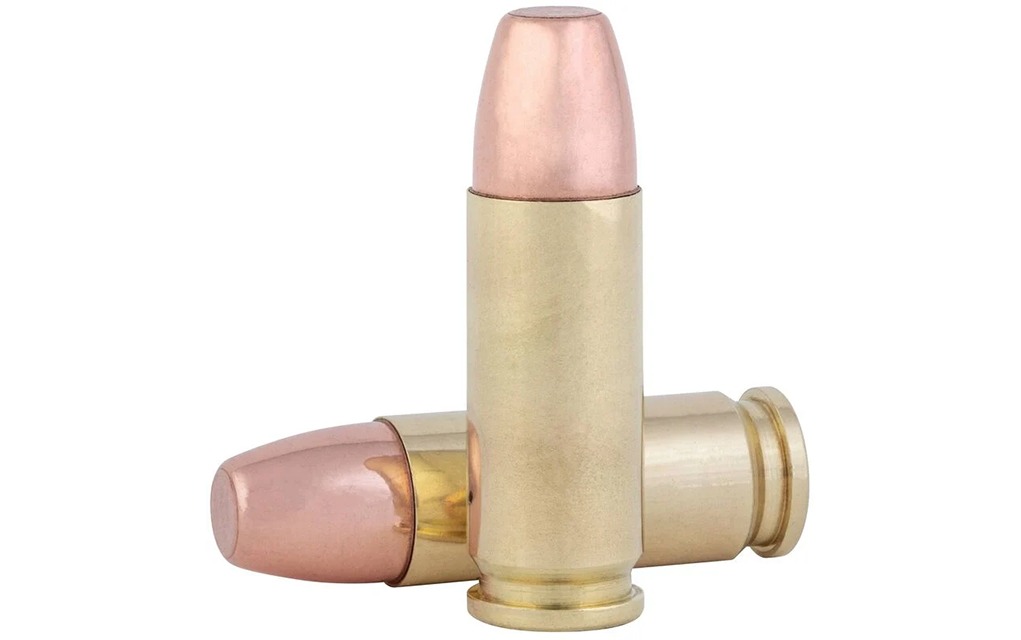
MSRP: $40 per box of 50

Weatherby High Country Rifle

weatherby
Push a few ridges back during hunting season, and you become cognizant of the importance of weight management. This is where Weatherby’s newest mountain rifle proves a valuable asset. Starting at just 5.7 pounds, the Mark V High Country offers an ultra-light hunting rifle that’s easy to carry and deadly accurate. Much of the rifle’s svelteness is thanks to its Peak 44 Bastion stock, a carbon-fiber stick that tips the scales at an incredible 24 ounces. Additionally, the stock’s profile features a more vertical grip, dual front swivel studs and a 3D HEX recoil pad—helping the featherweight not prove too much of a thumper. To the final point, Weatherby also includes an Accubrake on the High Country to tame the gun’s kick even more. Available in a host of popular hunting calibers, the rifle should prove a boon to backcountry hunters.
MSRP: Starting at $2,700


Hornady ELD-VT Bullets

hornady eld-vt
Varmint and long-range bullets, for the most part, have resided at opposite ends of the spectrum. Until now. Hornady has combined the best of both worlds in a unique line of projectiles meant to deliver devastating terminal performance at extremely long distances—the ELD-VT. Conceived as a dual-purpose varmint/target bullet, the offering is meant to strike a balance between the disparate disciplines. It does so by employing the long, sleek and ballistically talented Extremely Low Drag bullet profile, to extend the projectile’s range. Then, it maintains the explosive terminal ballistics at the target with a unique internal design, where the lead core is moved rearward, leaving a cavity that ensures rapid fragmentation and energy transfer.
MSRP: Starting at $33


Girsan MC14T Lady Pistol

girsan
Inspired by the classic Beretta Model 86 Cheetah, the Girsan MC14T Lady offers a self-defense option to women with some unique twists. Like the Cheetah, the Turkish-made .380 ACP offers a tip-up barrel, which allows a round to be loaded without having to manipulate the slide. Not a bad system, especially for those without the hand strength to rack a slide under pressure. Additionally, the hammer-fired pistol comes with an attractive glossy black finish, wooden grip panels and gold-colored accent parts to give it a classy and timeless look. The pistol is also outfitted with a Picatinny-based railed dust cover and ported barrel, the latter mitigating a ton of barrel rise.
MSRP: $682


Smith & Wesson Response Carbine

Smith Wesson
The issue with many pistol-caliber carbines (PCC) is non-compatibility with guns in their own class. That is to say, many of the designs are proprietary. Not so with the Smith & Wesson Response Carbine, which is based on the nearly ubiquitous AR-15 chassis. This makes the 9mm play nice with a great swath of existing parts and accessories, allowing you to tailor the carbine to your needs and wants. Making it even better, the Response boasts what S&W calls its Flexmag System, which makes it compatible with both M&P and Glock-style magazines. As to the carbine itself, it’s outfitted with a 16.5-inch threaded barrel surrounded by a polymer handguard with a Picatinny-style rail on top and M-Lok slots on the sides and bottom. It also comes with a Magpul MOE SL adjustable stock, a flat face trigger and an M&P grip with four interchangeable palm swell adapters.
MSRP: $800

Editor's Note: This article originally appeared in the February 2024 issue of Gun Digest the Magazine.


Get More Guns And Gear:

Best .30-30 Winchester Ammo For Deer & Big Game 

3

The .30-30 Winchester is still an excellent medium game cartridge, so here’s a look at the best hunting loads available.

What Are The Best .30-30 Winchester Loads For Hunting?:

Other Great .30-30 Hunting Loads:

There was a time in deer camps when the “Thirty-Thirty” reigned supreme. The .30-30 Winchester cartridge offers a good compromise between power and recoil, plus the rifles and carbines it was typically chambered in were easy to maneuver and carry all day. While many hunters started with a .30-30 before moving on to something bigger, plenty of others chose to stick with it. After all, why fix what ain’t broken? With modern advances in ammunition and new cartridges being introduced, one would expect the .30-30 Winchester (with over a century of use under its belt) to have faded away into the sunset. Not a chance. The .30-30 is the American deer cartridge, and it remains the benchmark by which all others are compared. 

.30-30 Is Born

Winchester had been providing Americans with lever-action guns since the 1860s, and while popular and effective, these older models were designed to only shoot black powder cartridges. This includes the first iteration of the Winchester Model 1894 which was chambered for .32-40 Winchester and .38-55 Winchester. Smokeless powder was beginning to catch on, however, and Winchester decided to keep up with the times. Just one year after the Model 94 was introduced, the design was revamped to use a harder steel to allow the use of higher-pressure smokeless powder cartridges. The smokeless cartridge they developed for the new Model 94 was called .30 Winchester Centerfire or .30 WCF, more commonly known today as .30-30. This cartridge and rifle combo is perhaps the most popular hunting setup ever made.

30-30-Winchester

The new .30-30 round was originally loaded with a 160-grain .30-caliber bullet over 30 grains of early smokeless powder. This was the old-fashioned way of naming a cartridge similar to the .45-70 Government—.45 caliber bullet over 70 grains of black powder. The .30-30 name stuck. That original load had a muzzle velocity of about 1,970 fps. 

While 1,970 fps is slow by today’s standards, back in the late 1890s the cartridge was seen as a fast, flat-shooting round. It was popular from the beginning, and that helped stoke the legendary status of the cartridge. Today the .30-30 has two common bullet weights in its sweet spot: 150- and 170-grain. Lighter and heavier bullets are available, but these two weights best show off the .30-30’s abilities. 

Game Getter 

In the U.S. alone the .30-30 has been used to hunt all sizes and types of beasts: whitetail deer, mule deer, pronghorn, caribou, elk, moose, and black bear as well as wolves, coyotes and an assortment of other varmints and critters. The round is quite capable of taking game at modest ranges. It is by no means a long-range cartridge. The caliber is best suited in scenarios where shots will be under 100 yards. It is a caliber for the woods and not the prairies for sure. 

30-30-winchester-antlers

Common .30-30 Loads 

The most common .30-30 factory loads are with 150- and 170-grain bullets. Looking at Winchester factory data on Power-Point ammo, the 150-grain soft point has a muzzle velocity of 2,390 fps and 1,902 foot-pounds of energy. The Power-Point 170-grain load only loses a bit of speed and energy with a muzzle velocity of 2,200 fps and 1,827 foot-pounds. The best zero for both of these loads is 100 yards. At 200 yards, the 150-grain bullet drops almost 6.5 inches and has 1,116 foot-pounds of energy left, which means the round is capable of a 200-yard shot but only by a capable marksman. For most hunters, that holdover makes for a tricky shot that is best to pass by. 

One more bullet weight offered for the .30-30 is the 125-grain soft point. Remington makes this cartridge as a managed recoil round. It offers more velocity, but less energy downrange than either the 150- or 170-grain bullets. Another less common bullet weight to consider is 190 grains. These rounds are best suited for long-range shooting or defense in grizzly country. 

The best update .30-30 has received in the recent past was in 2006 when Hornady introduced LEVERevolution ammo. One drawback of .30-30 ammo is the need to use flat- or round-nose bullets. The reason for this is the cartridges feed from a tubular magazine, with the bullet of one round touching the primer of the cartridge in front of it. The blunt bullet design ensures the tip of the bullet doesn’t accidentally fire the cartridge in front during recoil or when dropped. The bad news is these round- and flat-nose bullets have a lousy BC and drag through the air. Hornady cleverly placed a soft rubber tip on a more pointed bullet with a better BC which translates into increased accuracy and power at longer ranges. Best of all, they’re safe to use in tube mags.

Hornady loads these rounds with 140- and 160-grain bullets that have muzzle velocities of 2,465 fps and 2,400 fps, respectively. As you can see in the chart below, the Hornady 140-grain bullet has a slightly flatter trajectory and drops less than five inches at 200 yards. Less common are 165- and 175-grain cartridges. Both of these bullets are specialized, subsonic bullets that offer low noise and reduced recoil. 

30-30-shooterscalc-table-1

.30-30 Vs. Modern Cartridges 

Two modern cartridges that have similar ballistics to the .30-30 are 300 BLK and .350 Legend. The 300 BLK was designed to fire a .30 caliber bullet in AR-15-style rifles. This cartridge is offered in sub and supersonic options in bullet weights ranging from 100 to 220 grains. Winchester offers a 150-grain bullet in the 300 BLK under their Power-Point line. The .350 Legend was designed for use in states that allow straight-wall cartridges and is used in AR-15, bolt-action and single-shot rifles. Bullet weights for the .350 Legend range from 140 to 255 grains with 150-grain bullets being popular. This chart compares the two modern 150-grain bullet loads—the 300 BLK and .350 Legend—against the old-school 150-grain .30-30.  

30-30-shooterscalc-table-2

What’s newer doesn’t necessarily translate into better. All three of these rounds are evenly matched, but interestingly, the .30-30 actually shoots a bit flatter than the 300 BLK and .350 Legend. At 200 yards the 300 BLK drops 11.3 inches and the 350 Legend drops 7.5 inches; the .30-30 only drops 6.4 inches. At 100 yards, the .30-30 has 1,468 foot-pounds of energy, the .350 Legend has 1,290 foot-pounds and the 300 BLK has only 907 foot-pounds. Clearly, the ballistics of the older .30-30 is the top dog in this comparison. All three calibers offer mild recoil. The only disadvantage I see with the .30-30 is the limited types of rifles chambered for it. You have your choice of a lever-action or a lever-action. That might be a detriment to some hunters, while others may just want to cowboy up. Hunting ammo cost for all three calibers is comparable. 

So, why choose the .30-30? The cartridge has been around for well over 100 years now and in that time it’s more than proven itself in the field. It’s a timeless, all-American cartridge that can serve you just as well today as it did when it was invented (or likely even better, given modern ammo developments). If you’re a hunter looking to bag some game with a lever-action, the venerable .30-30 remains an excellent option.

Top Ten .30-30 Hunting Loads 

150-Grain Winchester Super-X

Winchester-30-WCF-SuperX

Super-X ammo is loaded with 150-grain hollow point bullets that feature a rearward weight design to enhance bullet accuracy. At the business end, the jacketed hollow point offers rapid expansion on impact. I’ve used these 150-grain bullets in the past and found that at 50 yards they knock deer down. Factory data states muzzle velocity is 2,390 fps and muzzle energy is 1,902 foot-pounds. The cost per round is about $1.97 or $40 for a box of twenty. Winchester usually runs old-school mail-in rebates where you snail mail your receipt and UPC code on the side of the box, along with a form. All that paperwork knocks a few bucks off the price. This is a great option for deer, black bear and pigs. 

150-Grain Winchester Super-X Specs
Weight: 150 Grains
Bullet: Jacketed Hollow Point
Muzzle Velocity: 2,390 fps
Muzzle Energy: 1902 ft/lbs.
Ballistic Coefficient: .218
MSRP: $37.99

170-Grain Winchester Power-Point

Winchester-Power-Point-30-WCF

This time-proven ammunition uses a 170-grain Power-Point bullet for more penetration. I have shot a lot of this ammo, as have many other deer and bear hunters, in all types of lever-actions, and found I can depend on it to help me fill my tag. Factory muzzle velocity is stated at 2,200 fps and energy is rated at 1,827 foot-pounds. I actually got a bit more speed—2,233 fps—out of my Winchester Model 94 Short Rifle with a 20-inch barrel, and that was on a cold day. Average groups measured 1.8 inches at 50 yards using open sights. This ammo is less expensive than other Winchester cartridges. Expect to pay about $1.20 a round or a bit over $24 for a full box of twenty. Another good option for deer, pigs, and black bear. 

170-Grain Winchester Power-Point
Weight: 170 Grains
Bullet: Jacketed Soft Point
Muzzle Velocity: 2,200 fps
Muzzle Energy: 1,827 ft/lbs.
Ballistic Coefficient: .241
MSRP: $23.99

150-Grain Remington Core-Lokt

Rem-CoreLokt-30-WCF

This .30-30 ammo choice is really a go-to deer cartridge. The 150-grain Core-Lokt soft point bullet with the scallop edge jacket has been extremely popular with hunters for decades. It’s a no-nonsense bullet designed to mushroom on impact. Remington’s marketing used to call Core-Lokt bullets the deadliest mushrooms in the woods. Dad's pal had a Sears Model 100 lever-action (that was made by Winchester) that grouped Core-Lokts at 2.1 inches at 50 yards with open sights. That’s MOD (Minute Of Deer) in my book. Muzzle velocity and energy are 2,390 fps and 1,902 foot-pounds, respectively. They go for about $1.40 each or $28 for twenty. It also comes in a 170-grain bullet version and a 125-grain Managed Recoil option that produces 50 percent less recoil. A good option for deer. 

150-Grain Remington Core-Lokt
Weight: 150 Grains
Bullet: Jacketed Soft Point
Muzzle Velocity: 2,390 fps
Muzzle Energy: 1,902 ft/lbs.
Ballistic Coefficient: .314
MSRP: $35.99

150-Grain Federal Power-Shok

Federal-PowerShok-30-WCF

This is another go-to .30-30 deer round loaded with a 150-grain jacketed soft point flat-nose bullet. Some Marlin 336 hunters find it very accurate in their rifles. Ballistics are what you expect: 2,390 fps muzzle velocity and 1,902 foot-pounds of energy. This ammo is affordable at about $1.13 per round; boxes are about $23. At this price, you can buy more ammo for next season or share it with that buddy who never seems to have ammo come hunting season. Also a good option for whitetails.

150-Grain Federal Power-Shok
Weight: 150 Grain
Bullet: Jacketed Flat Nose
Muzzle Velocity: 2,390 fps
Muzzle Energy: 1,902 ft/lbs.
Ballistic Coefficient: .218
MSRP: $34.99

150-Grain Federal Premium Barnes TSX

Federal-Barnes-30-WCF

I'm a big fan of Barnes TSX bullets since they retain weight, consistently expand to nearly double the diameter and offer great penetration. They have a monolithic copper construction, too, and the bullet shank is grooved for accuracy. The 150-grain offers great penetration, so if it’s feral pigs or black bear you are after, I'd load up with these. Out of my Winchester 94, muzzle velocity clocked at 2,200 fps and 1,641 foot-pounds of energy. I averaged 1.5-inch groups at 50 yards. These rounds are a bit pricey, as they have an MSRP of about $56 per box. This a good option for larger body animals like moose and elk where more penetration is required. It’s also a good choice where hunting regulations dictate or encourage the use of non-lead bullets. 

150-Grain Federal Premium Barnes TSX
Weight: 150 Grains
Bullet: Soild Copper
Muzzle Velocity: 2,820 fps
Muzzle Energy: 2,648 ft/lbs.
Ballistic Coefficient: .369
MSRP: $64.99

170-Grain Prvi Partizan

PPU-30-30-170gr

I have had excellent results with this Serbian-produced ammo in a variety of different calibers, especially the .30-30 loaded with a 170-grain soft point. Not only is this ammo inexpensive, but it does not compromise on performance. It cycles smoothly and loads easily. Muzzle velocity is 2,181 fps and muzzle energy is 1,792 foot-pounds. I have seen this ammo advertised as low as $1.04 a round or $21 for a box of twenty. That strokes the frugal Yankee in me. Good choice for deer and pigs.

170-Grain Prvi Partizan
Weight: 170 Grains
Bullet: Jacketed Soft Point
Muzzle Velocity: 2,181 fps
Muzzle Energy: 1,792 ft/lbs.
Ballistic Coefficient: .264
MSRP: $25.99

160-Grain Hornady LEVERevolution

Hornady-Leverevolution-30-30

The 160-grain FTX bullet literally revolutionized ballistics out of the lever-action rifle. I recommend this for everything from whitetails, pigs and black bear to even large game like moose out to 100 yards. The secret to the performance of this ammo is the elastomer Flex Tip of the FTX bullets. These pointed bullets are safe to use in tubular magazines, and the higher BC offers a flatter trajectory so it drops less than the typical .30-30 bullet. Muzzle velocity is 2,400 fps and muzzle energy is 2,046 foot-pounds. Zero your gun at 200 yards and it will shoot about 3 inches high at 100, but that means you can hold dead-on out to 200 yards and still nail the kill zone of a whitetail. My Model 94 groups these Hornady loads at 1.1 inches at 50 yards. The only downside is price, as these can often go for over $1.50 per round. This is a great choice for black bear, elk, moose and longer shots on deer.

160-Grain Hornady LEVERevolution
Weight: 160 Grains
Bullet: Polymer Tip
Muzzle Velocity: 2,400 fps
Muzzle Energy: 2,046 ft/lbs.
Ballistic Coefficient: .330
MSRP: $30.99

190-Grain Buffalo Bore

Bufallo-Bore-30-WCF

This 190-grain jacketed flat-nose round is jacked up in speed and power with a muzzle velocity of 2,100 fps out of the typical 20-inch barrel on .30-30 rifles. The load uses a Hawk Bullet with a hard core and thicker than typical jacket so it penetrates more than it expands. This is a heavy-duty round well suited for larger beasts like elk and moose or protection in grizzly bear country. This is definitely no plinking round though, as MSRP is about $86 for a box of 20. I do not recommend this round for deer because the bullet will easily over-penetrate.

190-Grain Buffalo Bore
Weight: 190 Grains
Bullet: Jacketed Flat Nose
Muzzle Velocity: 2,100 FPS
Muzzle Energy: 1,860 ft/lbs
Ballistic Coefficient: N/A
MSRP: $85.90

190-Grain Barnes Pioneer

Barnes-Pioneer

This ammunition is specifically designed for use in lever-action rifles to cycle smoothly and deliver on performance. The 190-grain all-copper flat-nose projectile offers expansion, weight retention and penetration with a muzzle velocity of 2,040 fps and 1,756 foot-pounds of energy. This is a great general-use cartridge for deer, boar and black bear. The price is a little steep, about $2.15 per round or $34 for twenty rounds.

190-Grain Barnes Pioneer
Weight: 190 Grains
Bullet: Jacketed Flat Nose
Muzzle Velocity: 2,040 fps
Muzzle Energy: 1,756 ft/lbs.
Ballistic Coefficient: .296
MSRP: $43.99

150-Grain Nosler E-Tip

Nosler-30-30

This ammunition uses an all-copper 150-grain round-nose polymer-tip bullet. The bullet's boat-tail configuration reduces drag and, when combined with the streamlined polymer tip, wrings out longer-distance shots. Like all Nosler E-tip bullets, the polycarbonate tip prevents deformation in the magazine while boosting aerodynamic efficiency and initiating expansion on contact. Muzzle velocity is 2,250 fps and energy is 1,698 foot-pounds. The cost is about $2.90 per round or $58.00 for a box of 20 rounds.

150-Grain Nosler E-Tip
Weight: 150 Grains
Bullet: Ballistic Tip
Muzzle Velocity: 2,750 fps
Muzzle Energy: 2,519 ft/lbs.
Ballistic Coefficient: .469
MSRP: $68.95

Raise Your Ammo IQ:

Best Sniper Rifle Options Available Today

11

Looking for the best sniper rifle there is? Here are the the sharp shots available today.

What are the best sniper rifles available today:

Not all sniper rifles are created equal. With such an intimate firearm there are many details to consider that might make all the difference to one shooter and no difference to another. Chassis construction and material, ease of disassembly, action type, chambering, and barrel design are all worthy of careful consideration.

Best Sniper Rifles On The Market


Barrett MRAD - 1Barrett MRAD

Can one rifle do it all? The Barrett MRAD is trying to adapt to a variety of user needs without sacrificing performance. This bolt-action newcomer defines a whole new class of long-range rifles.

The heart of the MRAD is the rifle’s user-changeable barrel system. This is truly a modular rifle. The precision-grade barrel can be removed by simply unscrewing two bolts using a standard Torx wrench. Besides reducing maintenance and logistical burdens, this unique design paves the way for future caliber interchangeability and serviceability. The base rifle is offered in .338 Lapua and barrels for .300 Winchester Magnum and .308 Winchester are in the pipeline.

The MRAD also boasts Barrett’s new easily accessed trigger module. This match-grade trigger is drop-fire-proof and combat-ready. The thumb-operated safety can be configured for left- or right-handed operation. The ambidextrous magazine release can be used intuitively while retaining a firing grip and cheek weld. Integrated into the MRAD rifle’s 7000 series aluminum upper receiver is an M1913 rail with 30 MOA taper and 21.75 inches of rail space.

The MRAD rifle’s stock is foldable for enhanced portability yet locks in as solid as a fixed-stock rifle, creating a rigid platform for consistent firing. When folded, the stock latches around the bolt handle for added security during transport. Because the stock folds to the bolt handle side of the action, the rifle is the same width overall, folded or extended. The rifle’s length of pull can be set to five different positions with the push of a single button.


IWI USA DAN 338 Lapua Magnum rifle - 1IWI US DAN

IWI US is best known stateside for its Tavor-style bullpup carbines and Galil ACE on the rifle side of things, but the manufacturer recently unveiled its DAN bolt-action rifle. Chambered in the long-range favorite .338 Lapua Magnum, the DAN rifle was designed with input from Israel Defense Forces special forces operatives and was built to fill a long-range sniper and anti-material rifle role.

The rifle is built on a one-piece, lightweight aluminum-alloy chassis and features a full-length, one-piece Picatinny rail up top with 20 MOA of built-in canted drop, along with a full-length bottom rail as well. The DAN’s skeletonized stock is fully adjustable for length of pull, drop of heel and comb height, and it folds to the side to reduce the overall length of the rifle when needed.

The DAN utilizes a 1:10 twist, 28-inch heavy, fluted, free-floating, cold hammer-forged barrel that has 5/8-24 threads at the muzzle for attachments. To support this long and heavy barrel, the DAN comes with an Atlas BT46-LW17 PSR bipod, as well as an ACCU-SHOT BT13-QK-PRM adjustable folding monopod.

The IWI US DAN also features a two-stage adjustable trigger and an ambidextrous safety and mag release. IWI states that the gun achieves sub-MOA accuracy, and reports suggest the rifle is capable of this to ranges of 1,200 meters and perhaps more. At about $9,000, however, you do pay for this performance.


Barrett M107A1 - 1Barrett M107A1

In combat ounces and pounds add up quickly. So Barrett opted to remove some from the equation and help snipers stay hidden as well.

The newest .50 BMG sniper rifle from Barrett may be related to the Model 82A1/M107, but the M107A1 is far from a simple evolution. Driven by the demands of combat, every component was re-engineered to be lighter yet stronger. The result is a high-performance rifle that weighs 4 pounds less than the original M107, but is every bit as tough.

Designed to be used, with a suppressor, the M107A1 allows operators to combine signature reduction capabilities with flawless reliability. An all-new bolt carrier group is key to making the rifle suppressor-ready. Its titanium four-port muzzle brake is engineered to work seamlessly with a quick-attach Barrett .50 BMG Suppressor.

The lightweight aluminum upper receiver features an integrated, rigid 27 MOA optics rail. Inside the upper receiver, the bolt carrier rides on a hardened steel, anti-wear strip for added durability. A thermal-guard cheek piece protects the user’s face from extreme heat or cold.

The rear-barrel stop and front-barrel bushing are bolted and bonded with a compound similar to that used on space shuttles. A titanium barrel key and fully chrome-lined bore and chamber add to the rifle’s durability.

The M107A1 rifle’s lower receiver includes a new aluminum recoil buffer system that’s optimized for use with a suppressor. The bolt carrier’s components are protected with a mix of ultra-hard PVD coatings and advanced nickel Teflon plating that increases lubricity, is corrosion-resistant and greatly eases cleaning.

This is a rifle built for the extreme duty required in modern combat.


Knight Armament M110 SASSKnight's Armament M110 Semi-Automatic Sniper System (SASS)

The M110C is the latest version of the Knight M110 Semi-Automatic Sniper System (SASS) is the U.S. Army’s latest medium-caliber sniper rifle. There are also reports that the United States Marine Corps will soon adopt the weapon. The M110C is lighter than the original version but maintains that legendary Knight reliability and accuracy. The 7.62mm SASS delivers a new level of long-range precision rapid fire that enables execution of operational missions not possible using manually operated weapon systems.

High-capacity, quick-change magazines enable ammo selection optimization in both the suppressed and unsuppressed firing modes. The semi-automatic M110 has increased sniper rate of fire, precision and lethality against personnel and light material targets, especially in target rich environments and scenarios requiring multiple follow-up shots. The SASS is also the first U.S. Army weapon system that integrates an optimized quick attach/detach sound suppressor to aid with Warfighter survivability by reducing weapon firing signature.

Chambered for 7.62 NATO the M110C weighs in at 16 pounds with a barrel length of 20 inches. And an overall length of 47.25 inches.


Savage Model 10 GRS - 1Savage Model 10 GRS

Savage’s time-tested Model 10 action has been around for a while, and although it may not seem as fancy as some of the others floating around out there, it has proven to be an accurate and reliable platform. And it’s also, generally speaking, less expensive, without much, if any, sacrifice in terms of quality.

The new GRS model, available in .308 Winchester, 6.5 Creedmoor and, recently, 6mm Creemdoor, pairs this classic action with GRS Riflestocks’ excellent Berserk stock. The rock-steady stock is adjustable for length of pull and comb height and is constructed using 15-percent fiberglass-reinforced Durethan, with 65-percent glass bedding material. The stock also features a slim design along with textured rubber surfaces for improved grip, even in wet conditions.

Other great features include 5/8-24 threading for attaching muzzle devices; a fluted heavy barrel of 20, 24 or 26 inches, depending on caliber; and flush cup sling loops and sling mount for bipod use. It’s also pretty affordable for a rifle in this category at right around $1,500.


Ruger Precision Rifle - 1Ruger Precision Rifle

Ruger’s Precision Rifle (RPR) has been one of the hottest commodities of the past couple years in the firearms industry. Designed to be relatively affordable while retaining a pretty high degree of performance, the RPR is truly packed with features.

The “upper” receiver and one-piece bolt are both CNC machined from pre-hardened 4140 chrome-moly steel, while the “lower” half is precision machined from aerospace-grade 7075-T6 aluminum and receives a Type III hardcoat anodized finish. The rifle utilizes a medium-contour, cold hammer forged 4140 chrome-moly barrel featuring 5R rifling and equipped with the RPR Hybrid Muzzle Brake.

Up top is a 20 MOA Picatinny rail for mounting optics. The RPR Short-Action Handguard also offers improved scope clearance for some of the larger optics used in long-range applications. The stock is Ruger’s Precision MSR stock, which is a left-folding design that works with an AR-style buffer tube; the use of the AR-style buffer tube also permits the use of other compatible stocks, if the user desires.

The rifle’s three-lug bolt features a smooth, 70-degree throw. And it comes with an oversized bolt handle for more fluid operation. An extended trigger-reach, AR-style grip rests below the bolt, though, any AR-style grip is compatible. In terms of the trigger, the gun uses Ruger’s Marksman Adjustable Trigger, which is variable from 2.25 to 5 pounds of pressure.

All in all, there’s a lot to like about the RPR. And at right around $1,600, it won’t break the bank. It’s available in .308 Winchester, 6.5 Creedmoor, 6mm Creedmoor and .223 Remington/5.56 NATO.


FN Ballista 1FN Ballista

Although SOCOM ultimately awarded its relatively recent PSR (Precision Sniper Rifle) contract to Remington’s MSR, the FN Ballista was also a competitor, and it remains a highly capable sniper rifle system. Featuring a modular, multi-caliber design, the Ballista can be configured, or reconfigured, to shoot .308 Winchester, .300 Winchester Magnum or .338 Lapua Magnum in under two minutes.

The FN Ballista utilizes a lightweight, high-strength, vibration-isolated aluminum-alloy receiver that features a full-length top rail and multiple rail segments at other positions. The barrels are each 26 inches in length and are fluted and come with polygonal rifling.

A fully adjustable trigger (single- or two-stage) is included and breaks at between 3 and 5 pounds of pull. The sniper rifle incorporates multiple safety systems, has an ambidextrous magazine release forward of the trigger guard and features an ambidextrous folding stock.

The MSRP of the Ballista is listed at $7,499.


Kimber SOC II Sniper RifleKimber Advanced Tactical SOC II

Developed to meet the needs of military or law enforcement professionals, the Advanced Tactical SOC II (Special Operations Capable) is available in .308 Winchester or 6.5 Creedmoor and is built by hand. Assembled around Kimber’s 8400 Magnum action, the Advanced Tactical SOC features an adjustable aluminum side-folding stock with a 1-inch Pachmayr Decelerator recoil pad.

The rifle has a 22-inch stainless steel barrel, which is threaded and receives a matte black, KimPro II finish. It comes with an adjustable trigger, which is factory set at 3 to 3.5 pounds.

The Kimber Advanced Tactical SOC II weighs 11 pounds, 6 ounces and comes with a sub-half-MOA guarantee. It is available for $2,583.


Tikka T3x TAC A1Tikka T3x TAC A1

Although it’s perhaps best known for its hunting rifles, the Finnish manufacturer Tikka made an interesting move into the tactical realm at the start of 2017 by introducing its new T3x TAC A1. Built around Tikka’s proven T3x action and a rugged chassis system, the T3x TAC A1 is a highly capable rifle.

Comb height and length of pull are fully adjustable with the chassis system, and a full-length 20 MOA Picatinny rail runs along the top. M-Lok slots are located along the rest of the handguard.

The rifle utilizes a cold hammer-forged barrel (16, 20 and 24 inches, depending on caliber) that is threaded (5/8-24) for attaching muzzle devices. Available chamberings include .308 Winchester, 6.5 Creedmoor and .260 Remington.

Like Ruger’s Precision Rifle, the T3x TAC A1 has a chassis designed to be compatible with any AR-style stock that mounts to a buffer tube, as well as any AR-style grip. The rifle’s two-lug bolt is Teflon coated and features an oversized bolt handle. Both help ensure quick and flawless cycling of the bolt.

The trigger is an adjustable, two-stage design. Pull weight can be set anywhere between 2 to 4 pounds, which is plenty serviceable for any precision rifle.


Sako TRG M10Sako TRG M10

Like the Remington MSR and FN Ballista already mentioned, the Sako TRG M10 was a contender for SOCOM’s PSR contract. In the end, it came down to the MSR and the TRG M10, and the MSR ended up edging out the Finnish design.

Just as with the other two precision sniper rifles, the TRG 10 is a highly modular design, which makes it quite versatile. The stock is fully adjustable and requires no tools to make changes. Similarly, the pistol grip comes with interchangeable backstraps.

Controls are ambidextrous and are large enough to be easily manipulated, even with gloves. The rifle features a two-stage trigger mechanism similar to those found on Sako’s TRG-22 and TRG-42, user adjustable between 2.2 and 4.4 pounds. The three-lug bolt with 60-degree throw is likewise taken from the TRG-22/42, and results in an equivalently short and smooth operation.

The TRG M10 is available in .308 Winchester or .338 Lapua Magnum.


McMillan TAC50A1 - 1McMillan TAC-50A1

The recoil on a 50 BMG rifle can be stout. McMillan has cut it by 90 percent with a new hydraulic recoil mitigation system for the TAC-50.

The heart of the new TAC-50 A1-R2 recoil mitigation system is a proprietary hydraulic piston in the buttstock. As the rifle is fired, the piston compresses, softening the recoil by lowering the peak recoil force and spreading out the recoil over several milliseconds. The sensation for the shooter is that of a long push, rather than a violent punch.

Without the R2 recoil mitigation system, the peak recoil from a 50 BMG cartridge is approximately 7,500 pounds of force. From start to finish, the recoil lasts 1 millisecond in a machine rest. With the R2 system, the peak recoil is only approximately 520 pounds of force. What’s more, the force is spread out over 6 milliseconds. While the total recoil energy is roughly the same, the hydraulic piston lowers the perception of recoil dramatically for a shooter by lowering the peak force and spreading the recoil out over time. The proprietary muzzle brake offered on the TAC-50 A1-R2 provides additional recoil reduction.

In addition to the new R2 recoil mitigation system, the TAC-50 A1-R2 features a new take-down A1-style fiberglass stock with a forend that is 5 inches longer than the original TAC-50 stock, moving the balance point for the bipod forward. There is a saddle-type cheekpiece, and the removable buttstock is attached to the rifle with a quick-detach push pin. The stock incorporates a smaller pistol grip to fit a wider range of hand shapes, with and without gloves.

The TAC-50 A1-R2 has a new bipod that is lighter, yet sturdier than the original TAC-50. The legs adjust vertically, as well as forward and rearward to fine-tune the rifle for elevation.

A new magazine system offers a positive, self-locking magazine latch that is easier to operate with gloved hands. The magazine release lever is repositioned ahead of the trigger bow.

As with the original TAC-50, the TAC-50 A1-R2 features a 29-inch premium selected, hand-lapped match-grade free-floating barrel, threaded muzzle brake, detachable 5-round box magazine, tuned 3.5-pound trigger, and extra-long bolt handle to clear large optics. It utilizes the proven McMillan 50 caliber action. All components are built to benchrest precision tolerances.

The McMillan TAC-50 product line continues to be used by military forces around the world as both an ultra-long range anti-personnel tactical rifle, as well as an anti-materiel rifle used for disabling assets at long range.

For many military units, it is the benchmark for extreme long -range accuracy in a tactical rifle weapons system.


AI AXMCAccuracy International AXMC

From the same company that created the iconic “Green Meanie” L96A1, Accuracy International is still making some head-turning precision rifles. While this model is not a member of the classic Arctic Warfare series of sniper rifles, the company’s AX series has a similarly impressive set of features. The AXMC is the user-configurable, multi-caliber model in the lineup.

This 15-pound bolt-action rifle features a 27-inch barrel, a recoil-reducing tactical muzzle brake and a folding stock. An optional threaded muzzle brake can be used to mount an Accuracy International suppressor as well. It feeds from detachable 10-round box magazines and has enough rail space to mount an optic, a bipod and any other accessories that one might desire. All these features are fairly standard for a modern tactical sniper rifle, however, so let’s dive into what truly sets the AXMC apart.

The “MC” in “AXMC” stands for “Multi Calibre”, the defining feature of this model. This means that while the rifle comes standard chambered for .338 Lapua, it can be easily and quickly swapped to either .300 Win. Mag. or .308 Winchester in the field.

All the caliber conversion process entails is replacing the barrel, bolt and magazine. The only tool required to do so is a 4mm hex key, which is conveniently stored right in the buttstock. The quick change barrel feature could also potentially be used to keep the gun cool during severe fire schedules.

The AX series of rifles have been proven in combat, and the AXMC merely adds an extra level of versatility to this already well-respected sniper rifle line. It has all the features that would be expected and desired in a modern, tactical bolt-action precision rifle, but now with the option of three calibers in one. The .300 Win. Mag. and .308 Winchester conversion kits are sold separately, of course, but that’s still much cheaper than buying three individual rifles of this quality.


Editor's Note: Adam Borisenko contributed to this article.

Daniel Defense Announces The DANIEL H9

0

Daniel Defense has just announced the DANIEL H9, a redesigned and updated version of the original Hudson H9 9mm handgun.

Originally announced at SHOT Show 2017 by Hudson Mfg., the Hudson H9 made a big impression. The 9mm handgun had a lot going for it thanks to its unique design, and those who bought one seemed to be pleased with it, but the company unfortunately went under just a couple of years later. Fans of the H9 should be excited then, as Daniel Defense announced at SHOT Show 2024 that it had purchased Hudson’s patents and was bringing the pistol back as the DANIEL H9.

Despite looking nearly identical from the outside, the DANIEL H9 only shares a single component with the original Hudson. This is because of Daniel Defense’s commitment to quality, and while the Hudson H9 boasted a very innovative design, it ultimately didn’t meet Daniel Defense’s manufacturing standards. A few years, a million rounds of 9mm and a lot of research later, the refined DANIEL H9 was born. Now, Daniel Defense is confident that the pistol will share the same reputation of quality as the company’s rifles.

DANIEL-H9

If you’re not familiar with the H9 design, it’s probably best described as a 1911 updated for the 21st century. It keeps many of the same well-loved features of the 1911, like a slim profile, a straight-pull trigger and a naturally pointing grip angle, with modern features like a striker-fire mechanism, an optics-ready slide and redesigned internals that allow the pistol to have the lowest bore axis in its class. That last detail is probably the most significant. Further, the DANIEL H9 is lighter than the original Hudson thanks to its aluminum frame—an update that Hudson had planned on incorporating before going bankrupt.

Daniel-Defense-H9

There’s a lot more that could be said about the H9, both the original concept and Daniel Defense’s redesigned version. This post isn’t for discussing every unique detail, however. It’s for bringing the good news that one of the most interesting pistols to be announced in recent years is not dead. Now in the hands of a large, reputable manufacturer, its life has really just begun. The DANIEL H9 is available now at select dealers and has an MSRP of $1,299.

For more information on the DANIEL H9’s specs, the features that set it apart from other modern pistols and what Daniel Defense did to improve upon the original Hudson, please visit danieldefense.com.


More On Handguns:

First Look: Midwest Industries Premium Lever Action Stock Series

0

A peak at Midwest Industries’ Premium Lever Action Stock Series, the company’s latest accessories for modernizing your lever gun.

The last time lever-action rifles were this popular, horses were probably still in vogue too. Regardless, new lever gun models weren’t the only thing to be released at SHOT Show 2024, as Midwest Industries announced several new accessories for lever-action rifles as well.

Called the Midwest Industries Premium Lever Action Stock Series, the lineup features more than just stocks. The stocks are compatible with rifles from Marlin, Winchester, Rossi and Henry, and the other new accessories add a lot of potential for customization for anyone looking to bring a lever-action into the 21st century. The new products include ambidextrous stocks with various profiles, G10 M-LOK and grip panels, an M-LOK shell holder, stock spacer plates and more.

MI-Premium-Lever-Action-Stock-Series-accessories

Troy Storch, owner of Midwest Industries, said this about the new lineup:

As the company that kicked off the lever action revolution all those years ago, it feels great to get back to redefining what a lever action rifle can be … Adding modern components and accessories shouldn’t force lever action enthusiasts to sacrifice the old-school feel that drew them to the platform in the first place. We aimed to take what makes a lever action rifle great and make it even better, and I think we accomplished that.

Midwest-Industries-Premium-Lever-Action-Stock-Series

The accessories in Midwest Industries’ Premium Lever Action Stock Series are available now.

For more information, please visit midwestindustriesinc.com.


More Lever-Action Stuff:

  • The Henry .45-70 Gov't
  • Evolution Of The Legendary Lever-Action
  • Cowboy 101: How To Run A Lever-Action Rifle
  • The Rossi Rio Bravo .22 Lever-Gun
  • The Past, Present And Future Of Lever-Action Shotguns
  • Building A Precision Rifle With Faxon’s FX7 Action

    0

    The author discusses Faxon Firearms' new 700-footprint FX7 action and uses one to build a precision rifle.

    There seems to be no limit to the number of variants that can be extrapolated upon using the classic Remington 700 screw spacing. In the past decade, countless actions by dozens of companies, big and small, have introduced their own spin on making a turnbolt action that feeds from AICS mags. The short-action bolt gun is dominant in America and, as a result, there’s a race to make what could be the best one at the best price.

    Indeed, in our era, we have seen the actions—not completed rifles—run up a bill in excess of $1,500 … and sometimes even more.

    Factoring in barrels, stocks, optics and accessories, you can rack up a build easily exceeding $10,000 for a slight edge in performance against other high rollers (you can at least spend that money on a Barrett M107 if you want to truly dunk on your range buddies, but that’s up to you).

    Faxon Firearms sought to change this paradigm and launched what is perhaps the most adaptable, feature-rich action on the market for the price … and the future will only hold more options for their new action at a fraction of the cost of the competition.

    Oh, and they have the ability to swap calibers with pre-fit barrels.

    The Bolt Gun Of Tomorrow

    Bolt-action rifles today are unilaterally descended from the Mauser 1896. Why not the Mauser 98, arguably the most famous Mauser, the Backbone of Hitler’s Wehrmacht? Simply because 1898 actions have a third lug on the bolt—not even the 1903 Springfield, itself a Mauser, can claim true fatherhood of today’s most common actions. The main difference in the operation mode is 1896 actions are cock-on-closing, where today’s guns, and the Mauser 1898, are cock-on-opening. The latter cocking feature has become the predominate mode of fire control, where the lug-free tubular bolt akin to the 1896 action has assumed the role of dominant action style.

    Truth told, the 1896 action, as well as the 1903 Springfield, were “overly safe” in terms of construction; the cartridges and associated pressures present in the earlier Mauser designs were all within standard range, and the 1896 locking lugs were plenty even for modern cartridges. Needless to say, there has been a never-ending attempt to increase the strength of the common bolt gun, largely in a move to increase the number of cartridges that can be fired from one action. The short action needed to exceed what Mauser started, and what we see with the new Faxon FX7 action is one of the strongest to date for its size.

    Faxon-Firearms-FX7-action-2
    The Faxon FX7 action in .308 Win., as it arrived from the factory.

    Faxon has dabbled in bolt actions for a little while. Years ago, the company made Ruger Precision rifle barrels as an aftermarket option. They also did OEM work for some companies. The turn came when Faxon partnered with Stiller for the launch of the 8.6 Blackout as a limited first run.

    Faxon did an incredible job on the barrel, the cartridge itself I found a bit wanting across the board, notably due to some mathematical snake oil found in the advertising from Q, the company from which the 8.6 Blackout “originated” (JD Jones had the .338 Whisper decades ago, just like he also had .300 Whisper. Rebranding is a hell of a thing, I suppose).

    I appreciate Faxon’s enthusiasm for what amounted to a wildcat cartridge at the time, though the overall status and acceptance of the 8.6 Blackout is still in flux. I don’t personally see a glittering future for the conspicuous cartridge beyond boutique end use, though I have been wrong before. Eating crow is a staple diet for gun writers.

    The 8.6 RemAge (a name for barrels that used a Remington 700 standard thread but utilized a Savage-style barrel nut for headspacing) style barrels came after, and these products did very well with consumers. The question then came up, “What if we did this our way? A high-quality product without breaking the bank?”

    It was decided that Faxon would make their own actions in 2022. It was kept relatively quiet and was released with excitement at SHOT Show 2023. The product line was launched to include rifles, barreled actions and pre-fit barrels. Every core component is made in-house, from the bolt to the action body.

    Faxon-Firearms-FX7-action-1
    Note the two small screws holding the trigger hanger plate to the receiver. You won’t need to pound your pins out with a punch like other 700 actions: The heavy lifting is done for you. In fact, this was the easiest trigger install the author ever accomplished.

    The products consist of a strong 416 body and 4340 bolt, easily able to withstand modern ammunition. The design was meant to keep price manageable but offer a feature-rich end-product to include an integral recoil lug and optics rail, 70-degree six-lug bolt (wow!) and Remington 700 compatible trigger options. In short, it would be the strongest, most variable action on the market at a savings compared to other options.

    But Faxon didn’t just settle here: They also wanted the smoothest action and went to great length to provide the user a satisfactory experience in overall operation. The smoothness, they felt, has to be there, and they achieved it. They focused in on the handling experience and not just high-performance function. I, personally, enjoy this approach.

    Actions will include trigger pins, though they’re laid out very differently than in typical 700-footprint actions. The trigger cassette, in this case a Timney Hunter model, is held in by a separate part entirely as opposed to being pinned to the receiver directly, as is done with most 700 clone actions. You will use a Phillips (in the age of Hex bits?) driver to remove two tiny screw on a plate. This plate has contained pins that enable you to attach it to the trigger of tour choice. This plate is then screwed back down to the action.

    In the name of full disclosure, I experienced a bit of wiggle when the firing pin was down/action open, and it made me nervous initially. The wiggle isn’t a worry, and I put several hundred rounds of .308 Win. through the complete rifle prior to taking it hunting … with zero issues. Of note is that the stock itself will keep this separate plate section flush to the action. I was worried it would be an issue, but I tested it with shims to be sure that there was no chance for this novel trigger installation setup to create an issue.

    Faxon-FX7-build-tripod
    The Magpul folding chassis makes for a compact package for easy transport.

    Two finishes, polished DLC and ArmorLube matte finish, are currently being offered. I’m unsure what time will bring on the finishes of the future, but I hope that they are as diverse as the options currently available on Faxon’s other products. I’m not a “tactical” guy or mall ninja, and I like bold, interesting finishes on my guns: I’d love to see a Faxon barreled action in rainbow DLC or gold in the future.

    Faxon plans to offer barrels for their actions and others: Pre-fit, RemAge and profiled blanks coming in 6.5mm, 8.6mm and 7.62mm as main launch calibers. Short mag and .223 bolt-face actions may yet be forthcoming. Short action will be the primary offering, options in long action and rimfire are being considered.

    Also of note, not all the short-action offerings will be caliber compatible: Expect .308-bolt face options to be barrel compatible … but not able to cross over to options using the .223 bolt face. Stand-alone actions will be shipping quarter four of 2023 (at press time barreled actions will likely be shipping already). I eagerly await what may come from Faxon simply as a hobby builder. I take pride in assembling my own guns, and I love that I can now add bolt action complete builds and barrel swaps to my list.

    The Faxon FX7 Action Build

    The rifle I elected to build was to be one that fit in a backpack, namely an Eberlestock Gunslinger 2. This is an excellent pack that, while heavy for a three-day pack, is ideal for transporting a rifle hands-free. I used the progenitor of this pack over a decade ago for coyote and deer hunting, and I am pleased to be using the modern variant for the same animals, plus a ram I put down.

    Faxon-700-action-build-in-bag
    The finished build readily fits into the rifle sleeve of the Eberlestock Gunslinger two-pack.

    I chose a stock I’ve used from time to time on these pages, the Magpul 700 Pro, to give me a reliable base and folding stock capability. The overall length of the finished rifle, with suppressor removed, was just over 28-inch folded, truly backpack concealable. I wanted to make a gun that was not only packable but functional for the role of hunting at medium range, while not sacrificing compatibility with modern ARCA and optical systems.

    In short, I wanted a gun that was able to take game at all reasonable ranges using advanced support gear while at the same time being reasonable in weight and accuracy. I did accomplish this, but I do feel that I still could have saved a few pounds. Call it a prototype if you want, but I think that the 18-inch, medium contour .308 Win. with a 10X optic can accommodate 95 percent of all hunting in America.

    Suppressing a Medium Weight Barrel

    There has to be some discussion on the weight ratio to barrel length when talking suppressors. Ideal barrel length for a .308 Win. rifle is 18 to 20 inches in all platforms; you don’t give up much going to 16 inches, and I’ve gone as short as 13.5 inches, but as far as reason is concerned, the 18- to 20-inch range is categorically ideal for weight to velocity. For field use, the objective should be hearing-safe suppression for 300-yard shots on a kill-zone-sized 10-inch plate. This doesn’t seem unreasonable, but so few hunters or shooters ever shoot this distance enough to know how a rifle and cartridge perform.

    Accuracy with all .308 Win. loads tested was excellent, all shooting ½ MOA at 100 yards. There was really no difference between all Remington, Federal and Hornady factory loads ranging from 150 to 180 grains. My own handloads consisted of Lapua brass and Hornady 168-grain BTHP match bullets over Hodgdon Varget powder. In total, I fired seven factory loads and three handloads, and I’m exceedingly pleased with the accuracy this barreled action delivered.

    Faxon-FX7-action-suppressed
    The SilencerCo Omega 36M is a great can, but it is on the heavy side if you’re using all the bells and whistles. It’s possible to convert this can to be lighter, but the QD function is really nice for transport to help reduce overall length. The Armageddon Gear cover helps reduce mirage and also keeps you from burning your hands.

    This article features a SilencerCo Omega 36M with .30-cal. endcap and Armageddon Gear suppressor cover. This is a heavy can that can handle up to .338 Lapua Mag and everything in between, and while super quiet in .308, it does show some vertical stringing when warmed up. If you plan to hunt with the Gunner profile barrel, be aware of the weight of your suppressor and what it does to your point of impact. In my case, the gun shoots 2 MOA high unsuppressed, which is over a half MIL of elevation difference between suppressed and unsuppressed. I do have the option to swap barrels later on as Faxon pre-fits become available, but I sort of like my results using the light barrel as featured here. If, by chance, they come out with a fluted 16-inch M24 profile barrel in .308 Winchester … well, I’d be interested.

    U.S. Optics And A Reasonable Scope Layout

    I originally began using U.S. Optics a half-decade ago, and I’ve always been impressed with their custom quality. After using their Foundation 5-25X in MOA for years, I contacted the company to send a more compact optic in the same line, but in a max 10X in MIL/MIL. I wanted it in OD green with an integral bubble level and illumination … and they delivered.

    Faxon-Firearms-700-Action-build-optic
    The US Optic featured here is a custom build that the author specified. It’s a solidly built, if not overbuilt, optic that provides a host of features and is very rugged. There are more features packed in than can be taken advantage of by a midrange backpack .308 Win., but they are there if you need them.

    I used this optic on various projects for the past year before it found a final home on the new Faxon action. For .308 Win., there’s no better partner than a high-end optic ending in 10X. It can accomplish everything the cartridge has to offer to its effective distance. I like the U.S. Optics I have here for its raw function on a functional rifle, no other notes required. It gets the job done.

    Closing The Bolt

    I find that what Faxon delivered here is emblematic of what is to come of 700-footprint actions. I love that the company offers an incredibly strong, smooth action, and I love that there’s the ability to field future cartridge designs, thanks to the versatility of the action’s six-lug bolt.

    In my time with their new bolt action, I’ve seen it perform very well … and I think you will be as well should you order one.

    Editor's Note: This article originally appeared in the February 2024 issue of Gun Digest the Magazine.


    More Bolt-Actions:

    SHOT Show 2024 Roundup

    0

    The Gun Digest team has seen a lot of cool stuff at SHOT Show 2024 this year, but here are just a few highlights.

    It’s that time of year again, and just about every big name in the gun industry has congregated in Las Vegas to display their latest products at SHOT Show 2024. We’ve seen a lot of great stuff so far, much of which will be covered more extensively later on. In the meantime, here are a few highlights that caught our eye.

    Henry Lever-Action Supreme

    Henry-Lever-Action-Supreme

    Lever-actions have been extremely popular lately, especially modernized ones, though the pinnacle of the concept that has likely generated the most hype is the modernized lever-gun chambered for .223/5.56 that feeds from AR magazines. Bond Arms announced one of these at last year’s SHOT, and it was very well received. It’s yet to be released, however, and Henry has just thrown its hat in the ring as well.

    Called the Henry Lever-Action Supreme, it features more traditional lever-action aesthetics than Bond Arms’ model thanks to its wood furniture, but Henry’s is still fully modern where it counts. Namely, they’ll be available in both .223/5.56 and .300 BLK, will feed from AR mags and will feature Picatinny rail on top for mounting optics. MSRP will be $1,400.

    Black Rain Ordnance BRO-MATCH

    Black-Rain-Ordnance-BRO-MATCH

    A release that should have long-range and precision shooters excited is the BRO-MATCH from Black Rain Ordnance, the latest addition to the company’s bolt-action line. Featuring the DERECHO 3-lug action, a 60-degree bolt throw and the ability to swap barrels at home, the company says that the rifles are ready to deliver sub-MOA accuracy.

    It’s available chambered for either 6.5mm Creedmoor or 6mm Creedmoor, but both versions will feature the MDT ACC Elite Chassis System, a TriggerTech Diamond Rem 700 Flat Straight Adjustable trigger and a BRO-TEMPEST Self-Timing Muzzle Brake. MSRP is $4,499.

    RISE Armament Watchman XR In 22 ARC

    RISE-Armament-Watchman-XR-SHOT-SHOW-2024

    Another one for the long-range crowd is the new Watchman XR model from RISE Armament. Chambered for 22 ARC, this rifle will be the most precision-oriented gun in the company’s Watchman AR line.

    It appears that it will share a lot in common with the existing Watchman rifles that are chambered for .308 Winchester and 6.5mm Creedmoor, including features like their high-performance barrels, slim handguards with both M-LOK and Picatinny rail and upgraded RISE components incorporated throughout the build. MSRP is $2,099.

    Daniel Defense PCC

    DDPCC-SHOT-Show-2024

    Daniel Defense has also been making waves with its new pistol-caliber carbine, named the DDPCC. Chambered for 9mm and featuring a blowback action, Daniel Defense has added a hydraulic buffer to make the gun as smooth-shooting as possible.

    It will feed from CZ mags, be available as both a rifle and SBR and should have an MSRP of about $2,000, but an official price is yet to be confirmed.

    SAR9 Gen3

    SAR9C-Gen3

    Finally, a quick look at the latest iteration of the SAR9, now in its third generation. Pictured is the SAR9C, the compact model, but these will be available in other sizes including sub-compact, full-size and competition.

    Whichever size you choose, all are loaded with modern features like optics-ready slides and are available in a variety of colors. MSRP starts at $479.99.


    Coverage From SHOT Show 2023:

  • The Smith & Wesson M&P 5.7
  • Midwest Industries Alpha Series AK Furniture
  • The Laugo Arms Creator Pistol
  • The Oracle Arms 2311
  • Anderson Manufacturing Expands Kiger 9C Line
  • The 10 Best Glock 19 Holsters For Any Purpose

    0

    Looking to tote around your G19? Here are our picks for the 10 best Glock 19 holsters on the market.

    The Top Glock 19 Holsters:

    Other Great Glock 19 Holsters To Consider:

    The best thing about having a Glock 19 is that everyone makes Glock 19 holsters. The worst thing about having a Glock 19 is everyone makes Glock 19 holsters. Figuring out which one is worth spending money on is the devil's own job.  

    What are the best Glock 19 holsters? We're going to go over what you should look for, common features to be aware of, picking a holster for a specific use and the 10 best examples that are actually worth spending money on. 

    What Any Glock 19 Holster Has To Do 

    We all know what a holster has to do: hold the gun securely and cover/protect the trigger guard. These days, Kydex holsters are usually the way to go, but leather can be acceptable as well. More on that later.  

    Material costs for modern polymer holsters are minimal; what you're paying for is the molds and the detail work.  

    Here's what you look for:  

    • Minimal, if any, gap between the holster mouth and the back of the trigger guard. There should be no way anything can touch the trigger itself.  
    • The edges of the holster should be rounded or buffed so there are no sharp edges, and there should be no excess material. This is especially true for an IWB holster.  
    • As for leather, quality leather holsters are now and always will be viable, look for vegetable-tanned full-grain or top-grain leather. Cowhide or steerhide is fine, but bullhide or horsehide is better.  
    • Also, if considering a leather Glock 19 holster, look for a reinforced holster mouth. This prevents the holster from collapsing on the draw and prevents the leather at the mouth of the holster from curling in with wear. 
    • Finally, it’s best to look at established brands with a known reputation for quality products, not Facebook ads. Now, let's talk about features and use cases.  

    Matching Your Glock 19 Holster To Your Needs

    Understand what you're going to use a holster for, then choose accordingly.  

    If you're going to carry the gun concealed, an IWB holster is your best choice. OWB concealment, while feasible, is less optimal. If you carry strongside, get a holster optimized for it, or a holster designed for appendix carry if you carry that way.  

    Plenty of quality holsters will do both.  

    Look for a secure belt attachment. Standard FOMI clips kind of work but snap loops, RCS Overhooks, DCC Discrete Carry Clips or Monoblocks are far more durable.  

    Appendix carriers should also look for a relatively flat profile, especially if they add foam, wedges or pillows to the holster. It's also a good idea to make sure the holster is compatible with (or comes with) an appendix carry wing/claw.  

    Henry-Holsters-Spark-concealement-wing
    A carry wing/claw can be seen on the left side of this Henry Holsters Spark. Wings/claws help with concealment by forcing the grip of the pistol closer to one's body.

    As for OWB holsters, there are a lot of options, so keep in mind what you plan on using one for. A competition shooter has different needs than a police officer.  

    For OWB concealment, look for a holster that has a high ride height and a minimalist profile. It has to ride close to the body so the cover garment can conceal it.   

    For duty use or open carry, active retention is a must. For patrol officers, Level III is usually required; almost everyone else is most likely perfectly fine with Level II. Purchase a quality holster from a proven supplier to militaries and police departments.  

    Do not open carry in public without active retention. Gun grabs happen and you don't want to wind up on the news for it.  

    Look for solid, sturdy belt loops; the thin wing-style loops on many holsters are known to be fragile. Paddles are best avoided as few are sturdy enough for more than occasional use.  

    As to optics, only worry about a red dot sight hood with a duty holster, otherwise opt for an optic cutout.  

    On the subject of weapon lights, make sure a light-bearing holster is compatible with your light before purchasing. The more popular your light, the easier it will be to find a holster for it; models from Steamlight and SureFire are the most common.  

    So, start with a quality holster made from quality materials, then match the features to what you are going to use the holster for.  

    Based on the above criteria, here are our picks for the 10 best Glock 19 holsters for different uses and carry methods.

    10 Top Glock 19 Holsters:

    Best Budget Concealed Carry Holster: Dark Star Gear Apollo IWB 

    Darkstar Apollo Glock 19 holster feature

    The Dark Star Gear Apollo is a Kydex IWB with premium features at a working man's price, suitable for strongside or appendix carry.  

    The holster comes with two Raven Concealment Systems Overhook clips and an optic cut. Appendix carriers can add a Dark Wing or supply their own Mod Wing, making it compatible with the PHlster Enigma system. Ride height and cant are adjustable as well. 

    The only downside is there are no light-bearing options. MSRP starts at $49.99 before options, but it's frequently on sale for $39.99. Better holsters for less money don't exist. // darkstargear.com

    Best Leather IWB Holster: Milt Sparks Summer Special 2 

    summer-special-2-holster

    A faithful recreation of the Bruce Nelson Summer Special IWB, just slimmer and with a lower profile than the original.  

    It’s available in vegetable-tanned roughout cowhide or grain horsehide leather with a sweat shield for comfortable carry and a sight channel to ensure a reliable draw. The holster mouth is reinforced with a leather strap over a spring steel band.  

    The belt attachment is dual leather snap loops at the FBI cant angle, though a straight drop (and optics cut) is available on request. Prices start at $165. // miltsparks.com

    Best Duty Holster: Safariland 6360 ALS/SLS Level III Duty Holster 

    safariland-6360-ALS

    The Safariland 6360 is one of the most street-proven duty holsters in current use.  

    The 6360 comes as a Level III mid-ride belt holster, but attachments (including their quick-release systems) are plentiful. Wraps can be added to change color and the holster can be ordered in light-bearing and optics-compatible configurations with the 6360RDSO series.  

    Prices start as low as $85, but can get as high as $180 to $250 depending on options. // safariland.com

    Best Range And Competition Holster: Comp-Tac International 

    comp-tac-international-glock-19-holster

    A simple, slim Kydex OWB with a competition cut, so it's already optics-ready. The base model comes with a belt loop attachment, but plenty of alternatives are available from Comp-Tac or the aftermarket. Retention and cant angle are adjustable to preference, and a light bearing option is available as well.  

    The basic model starts at $74 in the popular color options, but you can get it for as little as $44 if you don't mind it in purple or red. // comp-tac.com

    Best OWB For Compensated Glock 19: C&G OWB Covert 

    c-and-g-holsters-owb-covert

    A simple Kydex pancake OWB with an optic cut, straight walls and an open bottom, allowing most compensators to be holstered. If you have a comp on your 19 for competition or range use with no light, this gives you everything you need and nothing you don't.  

    Sturdy belt loops and adjustable ride position, with over 20 color/pattern choices, optional sight channel for suppressor height sights and more. MSRP starts at $69.99. // candgholsters.com

    Best Light-Bearing Concealed Carry Holster: JM Custom 2.5 Claw/3 IWB Holsters 

    jmcustomkydex-IWB-Glock-19-holster

    The 2.5 Claw and 3 IWB holsters from JM Custom are basically the same holster, just optimized for different things.  

    Both are offered for a Glock 19/19X/45 and are compatible with most popular lights, including Streamlight TLR-1, -7 and -8 models, the SureFire XC1 and X300 and the Modlite PL350. You have your choice of belt attachment, including loops, DCC Monoblock clips and more. A red dot sight cut is an option as well. 

    The 2.5, the AIWB model, includes a Modwing and can be upgraded to be compatible with the PHlster Light Bearing Enigma as well as DCC Discrete Carry Clips/RCS Overhooks.  

    The 3 IWB starts at $70 and the 2.5 Claw at $85. // jmcustomkydex.com

    Best OWB Concealed Carry Holster: Kramer Vertical Scabbard Holster 

    Kramer-Leather-scabbard-Glock-19-holster
    (non-Glock holster model pictured)

    This is Kramer Leather's version of the Askins Avenger style, also designed by Bruce Nelson. A high ride height and trailing belt loop put the gun high on the belt and snug to the body, perfect for OWB concealment, which is why it was a favorite of competition shooters and detectives for decades.   

    The holster throat is reinforced, unlike most pancake holsters. You have your choice of black or mahogany horsehide, or black vegetable-tanned cowhide and a forward rake/FBI cant or a straight drop angle. MSRP is $160 for cowhide and $171 for horsehide. // kramerleather.com

    Best Chest Holster: GunfightersINC Kenai Chest Holster 

    gunfighter-kenai-chest-holster

    The Kenai Chest Holster uses a Kydex pancake holster designed for use with a chest harness, with rivet attachment points to take the adjustable nylon web straps. It's relatively simple, yet rugged.  

    Multiple options are available, including colors, light-bearing capability and optic cuts. MSRP starts at $159. // gunfightersinc.com

    Best IWB For Roland Special Or Fauxland Special: Henry Holsters Spark AIWB/IWB 

    henry-holsters-spark-G19

    The Henry Holster Spark has an open bottom and straight walls, allowing any Glock 19/17/34 with a TLR-7, TLR-1 or Surefire X300 light to be holstered, including those with a compensator. The comp will just stick out the bottom a little. An optic cut is standard. 

    It can be ordered with dual snap loops or dual DCC clips and comes with a Modwing (removable if desired) and is compatible with the PHlster Light Bearing Enigma. MSRP starts at $95. // henryholsters.com

    Best Sidecar Holster: Tier 1 Concealed Axis Slim

    tier-1-axis-slim-sidecar-holster

    For those who want a sidecar, the Tier1 Concealed Axis Slim solves the classic issues associated with them. The holster and mag carrier are joined by bungee cable, allowing the holster to flex for comfortable carry.  

    Dual overhook clips (DCC and UtiliClips are available as add-ons) an optic cut, mid-length sweat guard and configurable concealment wing are standard features. Light-bearing and threaded muzzle compatibility can be added as well, and the holster is available in a host of colors. 

    MSRP starts at $131.99. // tier1concealed.com


    For more information on concealed carry holsters check out:

    Best .17 HMR Rifle Options [Reviewed]

    6

    This small buyer’s guide looks at a spread of some of the best .17 HMR rifle options on the market.

    The .17 HMR is a relatively new cartridge in the grand scheme of things, but its attributes made it an instant success upon its introduction. While it still may be somewhat of a niche cartridge mostly appreciated by small game hunters, it has secured its place in the rimfire market and isn’t going away anytime soon. Short for “Hornady Magnum Rimfire”, .17 HMR is really just .22 WMR necked-down to a .17-caliber projectile. The result is a very small bullet with a high velocity and very good accuracy. As a velocity-dependent cartridge, its benefits are best exploited out of something with a rifle-length barrel, but there are a few different kinds available.

    How We Made Our Picks:

    We took a look at the .17 HMR rifles on the market and compared each of their features, prices and overall utility to determine which would best serve most shooters. There are other great models out there, but based on our time behind these guns and rimfire rifles in general, these are our top five picks of the currently available options.

    Top 5 .17 HMR Rifles:

    Best Bolt-Action .17 HMR Rifle: Ruger Precision Rimfire

    Ruger Precision 17 HMR Rifle

    Specs

    Action: Bolt
    Barrel Length:
    18 Inches
    Weight: 6.8 Pounds
    Capacity: 15
    MSRP: $619
    Website: ruger.com

    Pros

    • Very accurate, ideal for precision shooting and varmint control
    • Highly-adjustable chassis
    • Threaded muzzle

    Cons

    • On the heavy side, not the best field gun
    • Expensive

    The majority of available .17 HMR rifle options are bolt-actions, so this category had the stiffest competition. There are many good bolt-action .17 HMR rifles made by many different manufacturers, but at the end of the day, we feel as though the Ruger Precision Rimfire was the best all-around option. It’s reasonably priced compared to other similar quality bolt-actions in this caliber, but also has some features that most of its competitors are missing. Besides being well-established as a solid, reliable and accurate rifle, Ruger’s precision model includes several features that should be appreciated by hunters, plinkers and competitors alike. The Ruger’s chassis comes with an adjustable precision-style stock that should provide better ergonomics than any of the traditional stock models out there. It also has an adjustable trigger, a free-floated handguard, a threaded barrel and includes a 15-round magazine. For the price, this is one solid, feature-rich .17 HMR rifle.

    Best Autoloader .17 HMR Rifle: Savage A17

    Savage A17

    Specs

    Action: Semi-auto
    Barrel Length:
    22 Inches
    Weight: 5.63 Pounds
    Capacity: 10
    MSRP: $559
    Website: savagearms.com

    Pros

    • Affordable semi-auto
    • Reliable

    Cons

    • Lacking in features

    There aren’t too many semi-auto .17 HMR rifle options to begin with, so this choice wasn’t as difficult to make. One of .17 HMR’s original shortcomings upon its introduction was that it was notoriously unreliable out of autoloaders, so when Savage succeeded in making the first reliable model with the A17, it was regarded as a big deal. The A17’s best trait is its reliability, but it is otherwise a mostly standard sporting rifle. It feeds from a 10-round rotary magazine and also includes an adjustable trigger.

    Best Lever Action .17 HMR Rifle: Henry Varmint Express

    Henry Varmint Express

    Specs

    Action: Lever action
    Barrel Length:
    19.25 Inches
    Weight: 5.75 Pounds
    Capacity: 11
    MSRP: $667
    Website: henryusa.com

    Pros

    • Your only lever-action option
    • Good middle ground on speed between bolt-actions and semi-autos
    • Accepts scopes and has fiber optic sights

    Cons

    • No threaded muzzle
    • Wood stock is handsome but not as durable as polymer

    Other companies have made .17 HMR lever-actions in the past, but as far as I know, Henry is the only company that has any still in production. While that makes them somewhat of the de facto winner in this case, it doesn’t mean the Henry Varmint Express is a bad rifle. Henry is well-regarded for their rimfire lever-actions, and their .17 HMR models are no different. These certainly won’t be the most practical option for hunting or competing, but they probably will be the most fun to shoot and look the coolest while doing it. Henry has a few variants available depending on your style and budget, but they should all be solid shooters that add some historical charm to this relatively new cartridge. It also has a leg up in terms of capacity and speed compared to most bolt-actions available.

    Best Budget .17 HMR Rifle: Mossberg 817

    Mossberg 817

    Specs

    Action: Bolt
    Barrel Length:
    21 Inches
    Weight: 4.5 Pounds
    Capacity: 5
    MSRP: $269
    Website: mossberg.com

    Pros

    • Affordable
    • Lightweight

    Cons

    • Plain design

    If you want the least expensive .17 HMR rifle you can find, you’d be hard-pressed to do better than the Mossberg 817. This is a very basic bolt-action rifle, but the word on the street is it can still perform where it counts. Its plastic stock likely isn’t the most durable, but it certainly is lightweight. The action isn’t the smoothest out there, but it cycles and is accurate enough for .17 HMR to be appreciated when fired out of it. It feeds from 5-round mags and has provisions for mounting a scope, so if you need the cheapest varmint-slayer you can find the Mossberg 817 can still be a very decent option to look at.

    Best Non-Budget .17 HMR Rifle: Alexander Arms Tactical

    Alexander Arms Tactical

    Specs

    Action: Semi-auto
    Barrel Length:
    18 Inches
    Weight: 7.5 Pounds
    Capacity: 10
    MSRP: $1,696.95
    Website: alexanderarms.com

    Pros

    • AR-15 manual of arms
    • Compatible with Mil-Spec parts

    Cons

    • Expensive
    • Heavy

    This is another one of the few semi-auto .17 HMR guns out there, and it’s simply too expensive to be our pick for the best semi-auto .17 HMR rifle category. For those whose rimfire budgets accommodate this rifle, however, it is still worth considering. The Alexander Arms Tactical’s biggest draw is its AR-15 manual of arms and modularity. As the only AR-based rifle in .17 HMR, those who want to fire this zippy rimfire in the most tactical way possible are limited to this model. Capable of accepting most standard AR-15 furniture and accessories, this rifle could be configured in several different ways. Its biggest downside is it’s pretty damn expensive for a rimfire that won’t be any more accurate or reliable than many of the other options on this list. For those dedicated to the AR platform who want to clear their property of varmints in style, the Alexander Arms Tactical in .17 HMR is probably the best tool to do it with.

    MODELACTIONBBL LENGTH (In.)WEIGHT (lbs.)CAPACITYMSRP
    Ruger Precision RimfireBolt186.815$619
    Savage A17Semi-auto225.6310$559
    Henry Varmint ExpressLever Action19.255.7511$667
    Mossberg 817Bolt214.55$269
    Alexander Arms TacticalSemi-auto187.510$1,696.95

    Small Caliber, Big Questions: Dive Into .17 HMR

    Shadow Systems Announces Integrally Compensated MR920P And XR920P

    0

    Shadow Systems has just announced the MR920P and the XR920P, two new integrally compensated 9mm pistols.

    Shadow Systems makes some pretty sleek pistols. Gun Digest has published several reviews on the company’s guns, all of which left the author impressed. Those reviews will be linked at the bottom of this post, but here we’ll be looking at the company’s two latest models—the compact MR920P and the crossover-sized XR920P.

    Shadow-Systems-XR920P

    Firstly, the standard Shadow Systems MR920 and XR920 pistols have been available for some time. The addition of the “P” suffix on the new models is what indicates that they’re integrally compensated. The MR920 is equivalent in size to a Glock 19 and the XR920 is a crossover pistol with a Glock 17-sized frame and a Glock 19-sized slide and barrel. One of the most impressive aspects of the new models is that their compensators only add one-half inch to their overall lengths. This means both pistols should be able to fit most existing Glock 17 holsters.

    Shadow-Systems-MR920P

    The compensators are also touted for their reliability, so much so that even some police agencies have adopted compensated Shadow Systems pistols. The company says that the comps were designed to function properly with standard springs and a variety of different bullet weights, and users tended to report a significant reduction in muzzle rise when shooting the MR920P and XR920P. Further, Shadow System’s compensators are quick-detach, something that both allows for easy maintenance and eliminates the need for a threaded barrel. This also means that these models should be legal in states with bans on threaded muzzles.

    The Shadow Systems MR920P has an MSRP of $1,269 and the XR920P has an MSRP of $1,293.

    For more information, please visit shadowsystemscorp.com.


    Get Eclipsed: Explore More from Shadow Systems

    Smith & Wesson Announces Model 1854 Lever-Action Series

    1

    Smith & Wesson has just announced the Model 1854 series, the company’s first line of lever-action rifles.

    If you haven’t been paying attention to the gun industry these past few years, lever-guns are back in a big way. This recent trend has resulted in multiple manufacturers that are not typically associated with lever-actions taking a stab at the concept, and now Smith & Wesson is among them with their announcement of the Model 1854 series. Smith & Wesson says that the Model 1854 series is a tribute to the company’s history, as in 1854 founders Horace Smith and Daniel Wesson patented their first lever gun. While the new Model 1854 is very different than the Volcanic, the company says that the rifles will share the same incredibly smooth actions and impressive craftsmanship that its revolvers are known for.

    SW-Model-1854-SHOT-2

    The Smith & Wesson Model 1854 series is initially launching with two variants, but the differences are mostly cosmetic. The standard variant, like many lever-actions being introduced today, sports many modern features and prioritizes function over form. The Limited Edition Model 1854 rifle naturally forgoes some practicality for prettier, wood furniture instead. Regardless, both models are chambered for .44 Remington Magnum, feature 19.25-inch barrels and have a 9+1 capacity. Further, both models have Picatinny rails on their receivers for optics,  XS Sights ghost ring/gold bead sights, threaded muzzles, large loop levers and flat triggers. All 1854 models also feature side loading gates and side ejection.

    SW-Model-1854-SHOT-1

    As mentioned, the Limited Edition Model 1854 is the more attractive of the two, as it ships wearing high-grade walnut furniture and a black PVD finish. Conversely, the standard model has black synthetic furniture and a stainless finish, but the forend has M-LOK slots for mounting accessories as well.

    Mark Smith, President and CEO of Smith & Wesson, said this about the new lever-actions:

    Today, as we proudly unveil the Model 1854 Series, we embark on a journey that pays homage to this timeless design. Meticulously crafted, these rifles fuse the classic craftsmanship of the iconic lever-action with modern engineering to deliver a platform built on reliability and performance. Our new Model 1854 rifles are a nod to tradition and a testament to Smith & Wesson’s legacy as an American firearms manufacturer,

    MSRP for the standard Model 1854 is $1,279 and MSRP for the Limited Edition Model is $3,499.

    For more information, please visit smith-wesson.com.


    More On Lever-Actions:

  • The Henry .45-70 Gov't
  • Evolution Of The Legendary Lever-Action
  • Cowboy 101: How To Run A Lever-Action Rifle
  • The Rossi Rio Bravo .22 Lever-Gun
  • The Past, Present And Future Of Lever-Action Shotguns
  • MUST READ ARTICLES