[imagebrowser id= 459]
Lyman Auto-Advance Remote Controlled Target System
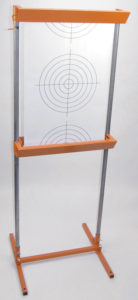 Brand new for 2016, Lyman’s Auto-Advance Remote Controlled Target System permits shooters to change over targets using a hand-held remote from up to 200 yards away.
This means that shooters don’t have to wait for ceasefires to swap targets or walk down to the target stand to place a new sheet. Remote activation operates a scroll-like system, removing the used target and conveniently replacing it with a fresh sheet.
Whether used for serious target shooting or for casual plinking, no one can deny the inherent fun of shooting rimfire guns. Rimfires recoil very little, making them manageable for just about any shooter, and ammo is generally inexpensive in comparison to some of the larger centerfire cartridges. This ideal combination of affordability and lack of recoil means that shooters can participate in extended range sessions without tiring and without their pocketbook taking an intense hit.
Of course, shooters will need plenty of targets to make full use of their rimfire firearms. Many shooters will purchase sheets of bullseye, varmint and other paper targets to facilitate their target shooting needs. While this is certainly an effective way to shoot, there are some downsides, especially if you shoot at a public range or at a private range where other shooters will be present.
Every time a shooter wants to put up new targets, he or she must wait until a ceasefire is called and the firing line goes cold to walk out to where the targets are located. Because of this, time can be wasted waiting for the line to go cold or walking out to place new targets. Lyman’s new target system saves time and allows rimfire shooters to get the most out of their trips to the range.
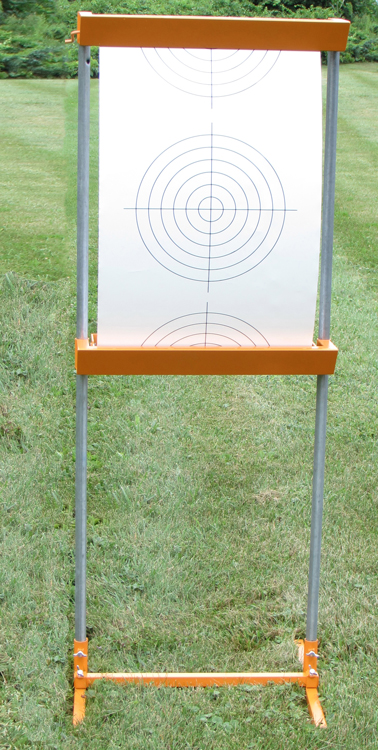 The Auto-Advance Target System is battery-operated and is easy to assemble and disassemble for transportation to and from the range. The target system’s stand utilizes easy-to-find and inexpensive standard electrical conduit tubing, and its protection plates are rated for use with all rimfire calibers.
It comes with a 50-foot roll of standard bullseye targets, and additional 50-foot target rolls are available with bullseye, animal and silhouette designs. This kind of remote target advancing has only previously been available in expensive industrial-type systems, but this system is available at a more price-friendly $229.95. Additional target rolls are $19.98 each.
For more info visit lymanproducts.com
This article appeared in the Spring 2016 issue of Gun Digest the Magazine.
Featherweight Plinker: Ruger 22/45 Lite Review
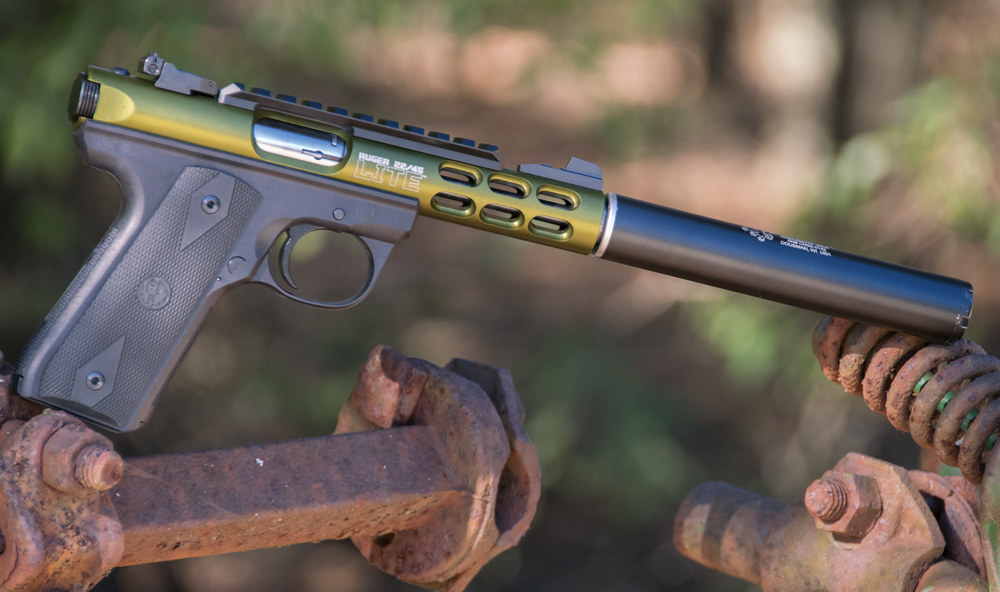
The Ruger 22/45 Lite is an accurate, lightweight and fast-shooting rimfire pistol that’s now available with a sharp, OD green finish.
Ruger’s reputation as the king of rimfire is well deserved. For decades it has produced affordable, accurate plinkers, varmint rifles and handguns. Countless shooters made their entry into the world of shooting with a Ruger rimfire handgun. Indeed, my first rimfire pistol was a bull-barrel stainless MK II. While I love this handgun for reasons equal parts nostalgia and objective appreciation, it does have a few shortcomings.
The grip angle is comfortable and works well but doesn’t directly translate to any centerfire handgun other than a P08 Parabellum or Nambu—neither are suitable home defense or competition pistols. Additionally, the European heel-type magazine release doesn’t lend itself to expedient magazine changes.
Ruger addressed both of these concerns with the introduction of its 22/45 and MK III series of handguns. Yet two additional minor concerns remained as my shooting tastes evolved: weight and suppressor compatibility.
All-steel Ruger MK II and MK III pistols are hefty pieces of equipment, especially with a bull barrel. While the 22/45 series of handguns does much to relieve this, replacing the steel lower assembly with a polymer one, the pistol becomes nose heavy and tiresome to hold on target. My other issue with Ruger’s prolific plinker is its inability to readily accept muzzle devices like suppressors and compensators. At least, that was the case until the recent release of the Ruger 22/45 Lite.
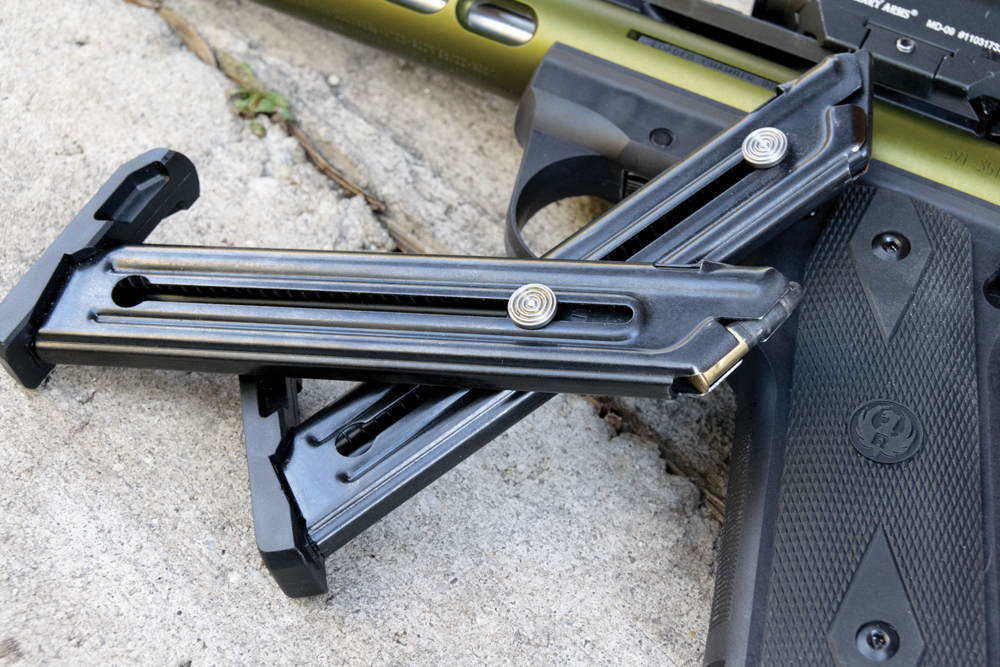
The Ruger 22/45 is a semi-automatic, single-action-only, direct blowback pistol chambered in .22 LR. It feeds from a single-stack box-type magazine containing 10 rounds of ammunition, and it ships with two in the box. One thing I personally love about these magazines is the loading assist nub.
This little button protrudes through a vertical witness cut running nearly the length of the magazine body. It’s directly attached to the follower, and allows shooters to release pressure from the top most round, thus permitting effortless loading of cartridges. One thing to note, though, is despite the similarity to the Ruger MK III magazines, the 22/45 Lite cannot use them without modification.
However, the new 22/45 can use all magazines intended for other versions of the 22/45 pistol.
The new Ruger gets the Lite portion of its name from the incorporation of a few weight-reducing improvements to the design. The receiver is constructed from aerospace-grade aluminum, which provides comparable strength to steel at a fraction of the weight.
Additionally, the barrel shroud is ventilated, shaving a few extra ounces off the design while providing additional airflow to the barrel. This is important, because as the barrel heats up from shooting, the material expands and shifts the point of impact. The added ventilation allows heat from the barrel to quickly dissipate, preserving accuracy.
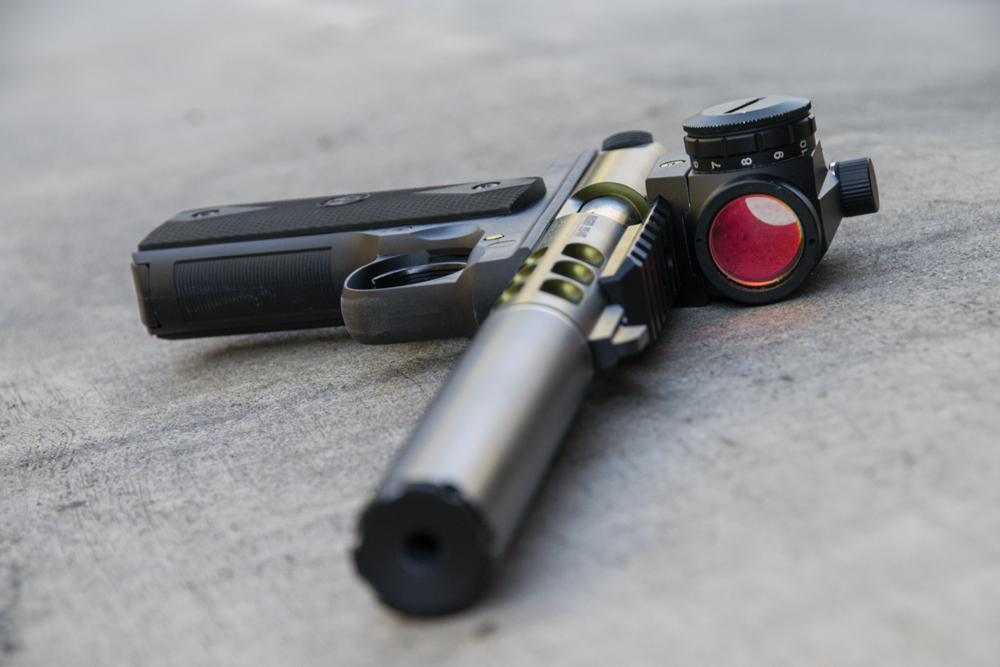 This new featherweight aluminum receiver is available in a number of anodized colors, including blue, red, black and the olive drab model reviewed. The lower receivers are constructed from high-impact Zytel polymer and, while normally all black, some distributor exclusives offer atypical camouflage patterns like Muddy Girl.
One unexpected benefit of the 22/45’s use of an M1911-style lower assembly is its capability to accept standard 1911 grip panels. This effectively opens the pistol up to an exhaustive selection of aftermarket grips. However, the left side grip panel does require minor modification to fit, due to the location of its safety and slide release lever.
The 1911 influences don’t end there. The Ruger 22/45 Lite also features a serrated front strap and flat 1911-inspired backstrap. As someone who learned to shoot on a government-sized 1911, the pistol felt immediately familiar and comfortable.
I really enjoyed the grip angle and material, though I wish the included panels were a tad thicker; as it stands, the grip is so narrow it doesn’t properly fill the swell of a shooter’s palm. Given that the pistol is chambered in .22LR, the recoil-absorbing benefits of this are negligible.
Even still, the Ruger points very well. Bringing the pistol to target was extremely quick, and not simply because of its lightweight construction. The grip angle and generously sized post and notch iron sights make target acquisition lightning fast.
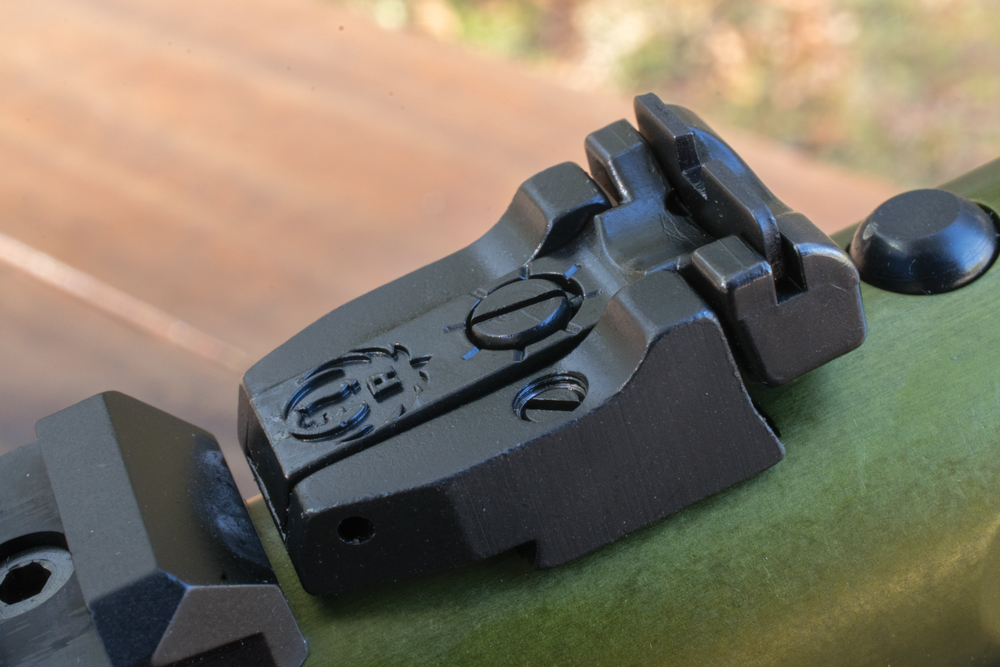
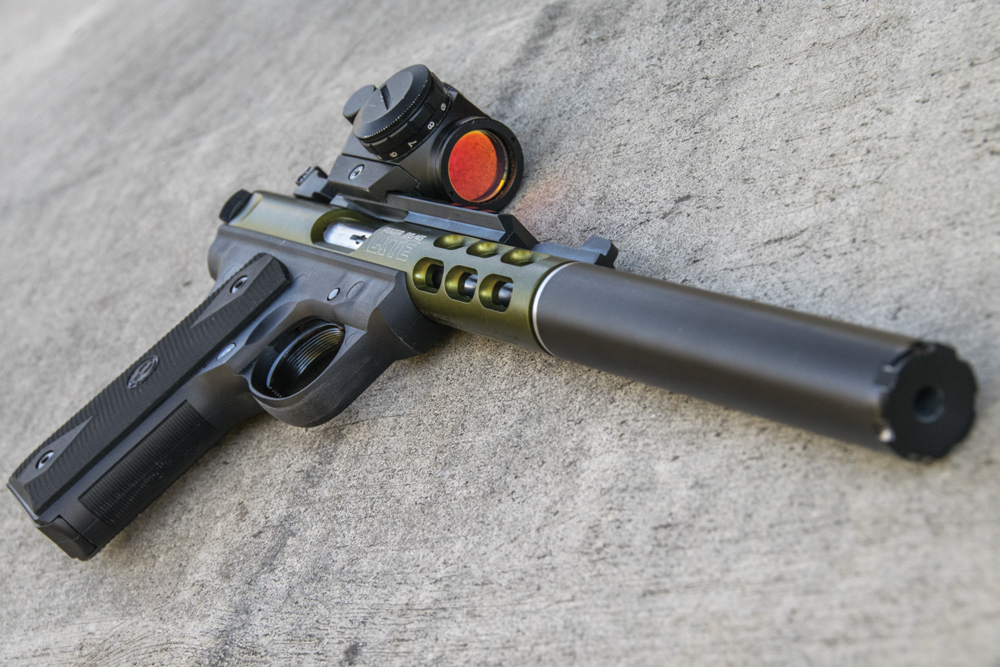
The sights are also the perfect height to clear most muzzle devices attached to the pistol’s 1/2x28mm threaded barrel. Shooters preferring reflex sights can utilize the included scope rail attached to the pre-tapped receiver.
Personally, I’m not a tremendous fan of optic-equipped pistols. I generally find they impede fast shooting, not enhance or accelerate it. I make an exception for Ruger MK II/III pistols and their derivatives, simply because I have won bullseye pistol matches with them outfitted with optics. I don’t know if they promote faster shooting, but the Ruger MK III series of handguns are definitely easier to shoot accurately with an optic.
I had a chance to run a few different types of ammo through the Ruger 22/45 Lite OD green and found that it ran flawlessly with most types. A few specialty rounds like the Aguila Super Colibrí wouldn’t always feed, but even the massive 60-grain SSS subsonic rounds fed and functioned perfectly.
As cliche as it sounds, the 22/45 was an absolute tack-driver; I expected nothing less from the platform. Ruger attributes this inherent accuracy to the inline bolt design, but it’s mostly the result of two influences. The barrel is very well made, and, equally as important, it doesn’t move.
Because the Ruger is a direct blowback pistol, the bolt is locked simply by spring pressure, nothing else. This is also why the 22/45 makes such a great suppressor host. Because the barrel is stationary, the weight of the suppressor doesn’t affect the action’s functionality. Thus, it doesn’t require a recoil booster to cycle properly.
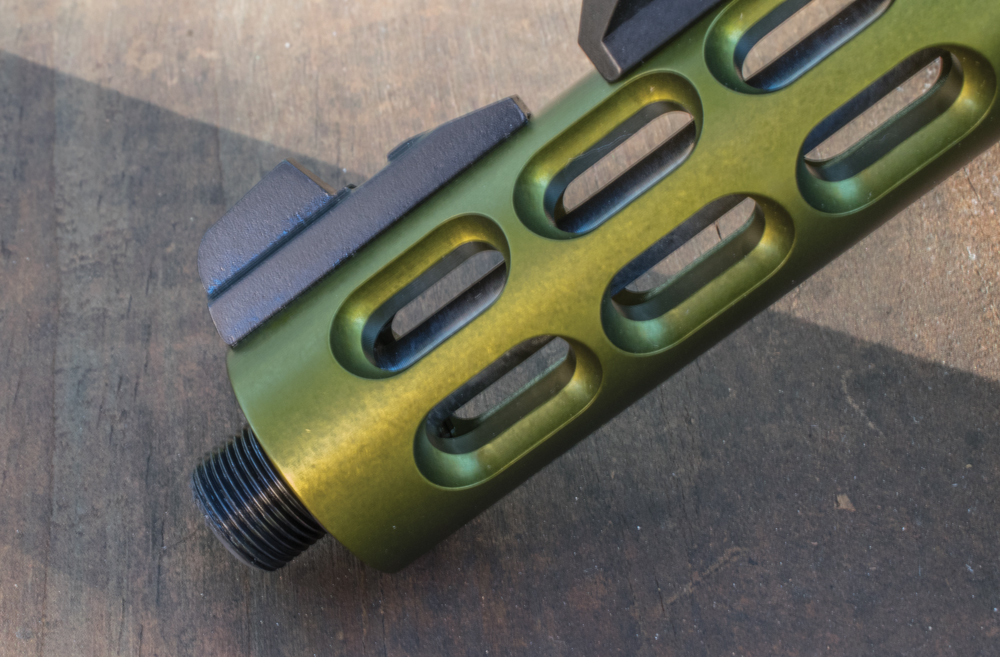
I confirmed this with a Griffin Armament Checkmate QD suppressor, provided by SilencerShop. Even with the sound suppressor installed, the pistol ran perfectly. I later used the pistol in this configuration to teach a few new shooters how to properly use a handgun. Since the pistol was quiet enough to use without hearing protection, the students better understood my instruction. This, combined with the minimal recoil of .22 LR rounds, made for an effective teaching tool.
The new colors available on these pistols may be a little wild, but at the core they’re still the rock-solid handguns developed by Bill Ruger half a century ago. Many folks believe old world quality is dead, but Ruger proves once again it can offer solid firearms with modern features and rugged over-built quality not normally found on guns at this price point.
Ruger 22/45 Lite OD Green
Caliber: .22 LR
Type: Semi-auto, direct blowback
Barrel: 4.4-in., 1/2 in.-28 threaded
Overall Length: 8.5 in.
Overall Height: 5.5 in.
Overall Width: 1 in.
Frame: Polymer
Receiver: Aluminum
Finish: OD Green Anodized
Weight: 22.7 oz.
Sights: Fixed front, adjustable rear
Magazine Capacity: 10
MSRP: $549
Manufacturer: Ruger.com
This article appeared in the Spring 2016 issue of Gun Digest the Magazine.
Video:
How to Inspect a Used Rifle
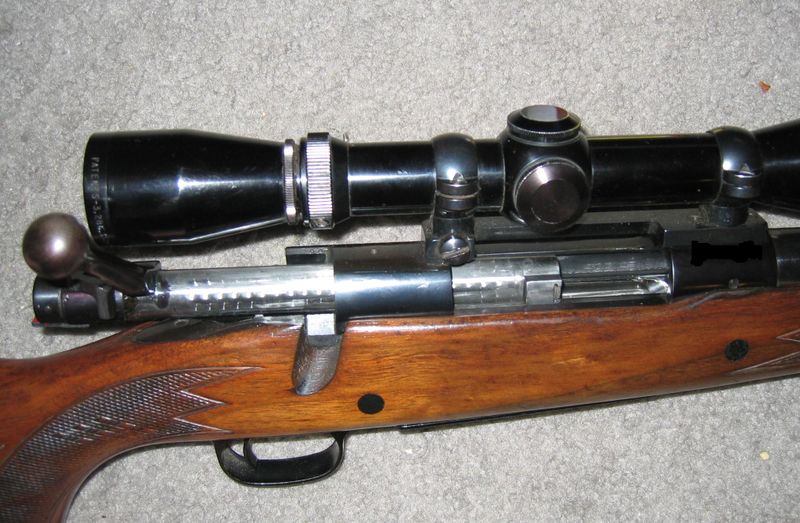
The used gun market is a great place to find a solid deal. But, shooters better know how to evaluate a firearm, to ensure they aren’t spending their cold, hard cash on a lemon. With that in mind, master gunsmith Patrick Sweeney goes over how to inspect a used rifle.
Open the action. With a light or reflector — and with the action open and bolt removed if appropriate — look down the bore. Clean, shiny and clear of obstructions, right? If not, let the bargaining begin!
While many rifles will shoot accurately with a slightly pitted bore, some won’t – and all will require more frequent cleaning. Work the action and see if there are any binding spots or if the action is rough. Ask if you can dry fire it to check the safety.
Some people do not like to have any gun in their possession dry-fired; others don’t care. If you cannot, you may have to pass on the deal. Or, you can assure the owner that you will restrain the cocking piece to keep the striker from falling.
Close the action and dry-fire it. How much is the trigger pull? Close the action, push the safety to ON, and pull the trigger. It should stay cocked. Let go of the trigger and push the safety OFF. It should stay cocked. Now, dry-fire it. Is the trigger pull different than it was before? If the pull is now lighter, the safety is not fully engaging the cocking piece, and you’ll have to have someone work on it to make it safe. If the rifle fires at any time while manipulating the safety (even without your having touched the trigger) it is unsafe until a gunsmith repairs it.
While you were checking the safety, just what was the trigger pull? A very light trigger pull is not always bad, but may need adjustment. As an example, if you are handling a Remington 700 or Winchester 70, and the trigger pull is one pound, someone may have adjusted the trigger mechanism. If you are handling a Winchester ’94 and the trigger pull is a pound, someone has been stoning the hammer or sear. On the first two, you or your gunsmith can adjust the weight back to normal ranges. On the ’94 you may have to buy a new hammer or sear — or both — to get the pull back into the normal range.
Inspect the action and barrel channel. Is the gap between the barrel and the channel uniform? Or does the forearm bend right or left? Changes in humidity can warp a forearm and, if the wood touches the barrel, alter accuracy. The owner may be selling it because the accuracy has “gone south,” and not know that some simple bedding work can cure it.
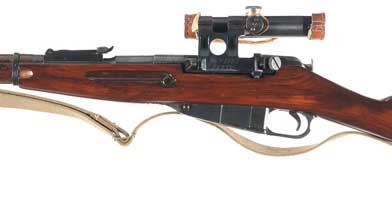
Look at the action where it meets the stock. Is the wood/metal edge clean and uniform? Or do you see traces of epoxy bedding compound? Epoxy could mean a bedding job,and it could mean a repair of a cracked stock. Closely inspect the wrist of the stock, right behind the tang. Look for cracks and repairs.
Turn the rifle over and look at the action screws. Are the slots clean, or are they chewed up? Mangled slots indicates a rifle that has been taken apart many times – and at least a few of those times with a poorly-fitting screwdriver.
Remove the bolt if you can. If not, use a reflector or light to illuminate the bore. Is the bore clean and bright? Look at the bore near the muzzle. Do you see jacket fouling or lead deposits? Many an “inaccurate” rifle can be made accurate again simply by cleaning the jacket fouling out of the bore. While looking down the bore, hold the barrel so a vertical or horizontal bar in a window reflects down the bore. If the reflection of the bar has a ‘break’ in it, the barrel is bent. Sight down the outside of the barrel and see if you can spot it. A slightly bent barrel can still be accurate, but will walk its shots when it heats up. A severely bent barrel must be replaced.
Editor’s Note: This article is an excerpt from Gun Digest Book of Modern Gun Values, 18th Edition.
First Look: Crimson Trace LINQ Wireless Laser Sight
Over the years, Crimson Trace has been a big-time innovator in the field of laser sighting solutions for personal and home defense. One of the manufacturer’s most exciting new products for 2016 is its LINQ Wireless Laser Sight and Tactical Light system designed for AR-style rifles.
According to the company, this new product is the world’s very first wireless laser sight and LED white light for modern sporting rifles, an impressive development for those who use their AR in a home defense role or for other tactical applications. The system pairs a combination 300-lumen LED white light/green laser sight module that mounts to a rail with an instinctive activation grip that serves as a replacement grip on any standard AR.
The really groundbreaking thing about the Crimson Trace LINQ Wireless Laser Sight is that it removes the need for any kind of wire running down the length of the forend or any sort of tricky activation with the support hand. Once the instinctive activation button on the grip is depressed, it triggers the module via a unique closed wireless system that is secure and has an individual signature for each unit.
The new Crimson Trace LINQ Wireless Laser Sight and Tactical Light system features four different modes: laser only, light only, laser and light, and laser and strobe light. The device also has over two hours of battery life.
The Gun Digest editorial staff was able to get a firsthand look at the new system at the Crimson Trace booth during the 2016 SHOT Show in Las Vegas. Check out the video above to see how the LINQ system works.
Recommended:

Gun Digest Shooter’s Guide to the AR-15
Gun Digest Shooter’s Guide to the AR-15 is a comprehensive look at today’s most popular modern sporting rifle. Among a wide variety of topics, the firearms expert and noted author provides helpful ammunition and accuracy tips, an explanation of the AR platform, a wide range of AR-15 applications, and much more, enhanced by 250 photos. Keep up with the increasing popularity of the versatile AR-15 with this indispensable shooter’s guide. Get your copy now.
First Look: Crimson Trace ShockStop System
Crimson Trace has always devoted a lot of its efforts to the concealed carry market, and with more and more people choosing to carry, that market has only grown in the past few years. One of the company’s newest products is the ShockStop system found on Crimson Trace’s LG-350 Lasergrips, which are designed for Smith & Wesson J-Frame revolvers.
The Crimson Trace ShockStop system incorporates soft, anti-vibration material and a cushioned grip to reduce recoil while improving accuracy and comfort. An instinctive activation button for the laser is located on the front of the grip to provide simple activation without any additional maneuvering by the shooter.
The Gun Digest editors stopped by the Crimson Trace booth during the 2016 SHOT Show to get an exclusive first look at the system. Watch the video above to learn more and to see a demonstration.
Recommended:
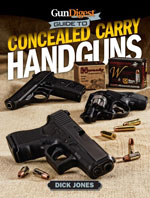 Gun Digest Guide To Concealed Carry Handguns
Are you interested in carrying a handgun for self defense, but don’t know where to start? Perhaps you’re already an armed citizen and are looking for a new carry choice? Let the Gun Digest Guide to Concealed Carry Firearms be your complete guide to the fast-growing world of concealed carry handguns. Learn more
First Look: Crimson Trace Laserguard Pro
Crimson Trace’s fantastic Laserguard laser sight has been a reliable option for concealed carriers and home defenders for some time, offering simple, instinctive activation and an effective laser aiming aid. Now the company is improving the concept with its Laserguard Pro series by adding a 150-lumen LED white light to the compact unit.
As with previous Laserguards, the new Pro series features Instinctive Activation via a button on the front of the grip. The button easily depresses when the shooter grips the handgun in a natural firing position.
The new Crimson Trace Laserguard Pro has four modes of activation: laser and light, laser only, light only and laser and strobe light. The unit is user-adjustable for windage and elevation, comes equipped with a master on/off switch and has a battery life of around two hours. It’s currently available for the Glock 42 and 43, Smith & Wesson M&P Shield and Springfield Armory XD-S pistols.
The Gun Digest editorial staff caught up with Crimson Trace at the 2016 SHOT Show in Las Vegas to see the new Laserguard Pro firsthand. Check out the video above for more info and to see it in action.
Recommended:
Gun Digest Guide To Concealed Carry Handguns
Are you interested in carrying a handgun for self defense, but don’t know where to start? Perhaps you’re already an armed citizen and are looking for a new carry choice? Let the Gun Digest Guide to Concealed Carry Firearms be your complete guide to the fast-growing world of concealed carry handguns. Learn more
Ask the Editor: How to Use Guns & Prices 2016
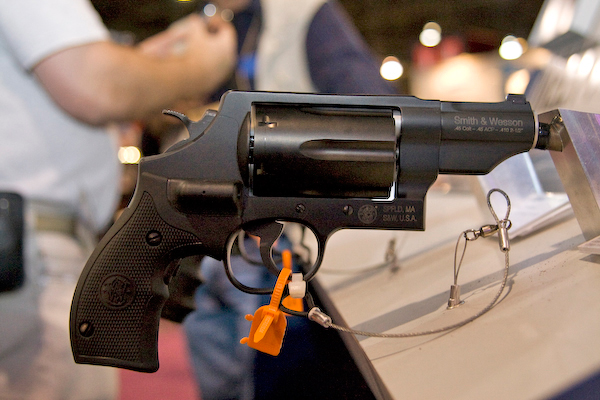
An insider’s Q&A with Jerry Lee, editor of the newly released Official Gun Digest Book of Guns & Prices 2016, 11th Edition, to learn why every gun buyer and seller needs this book.
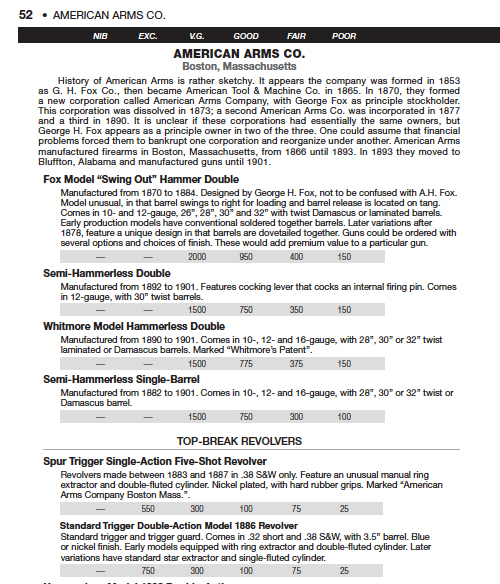
Gun Digest: How can the Guns & Values book save gun buyers on their next purchase?
Jerry Lee: The Official Gun Digest Book of Guns & Prices covers virtually every brand and model of firearm made or sold in the United States since the mid 1800s. We include information on the many different model variants, specifications, calibers, and features that can add or detract from values. Prices are shown for different grades of condition and give the reader a starting point for determining what a given gun is worth in today’s market.
Gun Digest: How does it help gun buyers and sellers understand the gun market (should it be carried to gun shows?)
Jerry Lee: This book gives estimated retail values for firearms — in other words, the probable asking prices one would expect to see in a gun store or at a gun show. Whether buyer or seller, it’s important of course to have an idea of “what’s it worth?” before you walk in the door. As with any item, you have to allow for a reasonable profit margin for the seller. What’s reasonable? That depends on the gun’s rarity or popularity, the seller’s overhead, and often regional and seasonal differences. Deer rifles in late summer or early fall are likely to be priced higher as hunting season approaches than at other times of the year. So, if you are offering a gun to a dealer, do not expect to get a “retail” price but probably 20 to 40 percent below what the dealer expects to get for it. Which means you are usually better off selling it yourself. (Be sure you know the laws in your area and follow them. Background check legislation is an ever-changing thing today.)
The Official Gun Digest Book of Guns & Prices is sized to make it portable enough to take to a gun show. I can’t image going to a show without it. Whether you’re buying or selling, you have to know the market. Plus, the book is full of information on the history of many popular guns, when they were made, changes over the years, etc. Guns that are currently in production are many times priced less than the MSRP.

Gun Digest: From where are the values derived?
Jerry Lee: We consult the major auction companies that specialize in firearms, among them James Julia, Rock Island, Heritage, Amoskeag and others. Auction prices are especially helpful in keeping up to date on high-end collectible values. We also have a group of experts who give us input every year on specific brands and models, trends in popularity, what’s hot and what’s not.
Gun Digest: What is the scope of content, how does it compare to other gun value books?
Jerry Lee: To keep the size of the book more compact and portable, the main difference in the Official Gun Digest Book of Guns & Prices and Standard Catalog of Firearms is that Standard Catalog includes thousands of photos to illustrate the guns. This adds hundreds of pages to the size of Standard Catalog. The photos are nice to have if you’re reading the book in your easy chair at home, but not if you’re walking through a gun store or a show. Blue Book also has no photos, except for a few to illustrate a rather complex grading system. Blue Book also has information on some of the more obscure manufacturers, which pushes the number of pages much higher, plus a higher suggested retail price than the other gun value guides.
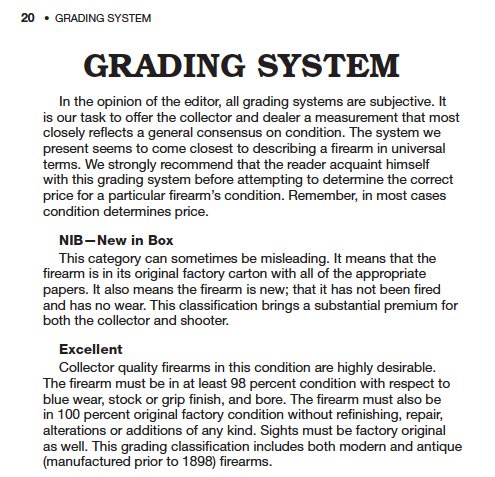
Gun Digest: Can you share any personal examples of yourself or someone you know being ripped off? How would a book of this type have helped?
Jerry Lee: In my younger days I often bought, sold or traded guns at gun shows. This was long before any price guides for used guns were in print. There were times when I later realized I got the short end of a deal, mainly just for not having a better idea what the gun or guns were worth.
Gun Digest: Anything that didn’t make it into the book you can share?
Jerry Lee: It’s a long process, generally four to six months to gather the information on new guns, consult with our experts on changes in values, new companies that have come along, old companies that have gone out of business, moved or merged with other companies. We often hear rumors about things going on in the industry and firearms legislation, for example, but we have to remember that what we publish will be on the bookshelf for years. That often leads to last minute changes in the book. We are careful not to list a new gun company until we know that production is under way and that they will be around for a while. As in other industries, a new company or even an existing one, will introduce an exciting new model at the SHOT Show, and then wait for orders to come in before actually putting it into production. So, we try very hard to make sure that what is in our book is accurate and up to date.
Get your copy here…
 The Official Gun Digest Book of Guns & Prices 2016, 11th Edition
Fully updated, The Official Gun Digest Book of Guns & Prices, 11th Edition is the perfect companion to take to any gun store, show or auction. The comprehensive guide gives you the power to identify and price thousands of non-military firearms from around the globe. Yet the wealth of information this volume provides has been condensed into an easy-to-use format and portable size. Order here
Gun Value Trends: New 2016 Firearms

Gun Digest asked co-editor Andrew Johnson to highlight some things he learned about current gun offerings while researching gun values for the latest edition of Gun Digest Book of Modern Gun Values. Here are his responses.
Gun Digest: In putting together the new Gun Digest Book of Modern Gun Values, what were some notable examples of new guns that caught your attention?
Andrew Johnson: Being an avid upland game hunter from South Dakota, Benelli’s entry into the over-under shotgun market with the addition of the 828U to their existing lineup of semi-auto and pump shotguns was noteworthy. It’ll be interesting to see if Benelli continues down this path with even more models after dipping their toes into the over/under market.
The new handguns from Armscor/Rock Island Armory also caught my eye. At first blush, their various lines of full-size, sub-compact and compact styles would seem to fit any handgunner’s personality. Perhaps what’s more interesting is their new, proprietary 22 TCM caliber offering in several 1911-style semi-auto pistols. Armscor/Rock Island claims the 22 TCM is a low-recoil load that can still produce muzzle velocities of 2,000 fps, which is flat-out amazing from a handgun.
Gun Digest: Your main role in editing the latest edition of the book was hunting up new firearms. What trends did you uncover?
Andrew Johnson: While 1911-style handguns still reign supreme, it seems the idea of lighter, compact models is the new mantra of many handgun manufacturers.
For example, several large manufacturers added compact and subcompact models to their existing lines of full-size, popular models. Updated models from Kimber, Sphinx and Ruger reflect this trend.

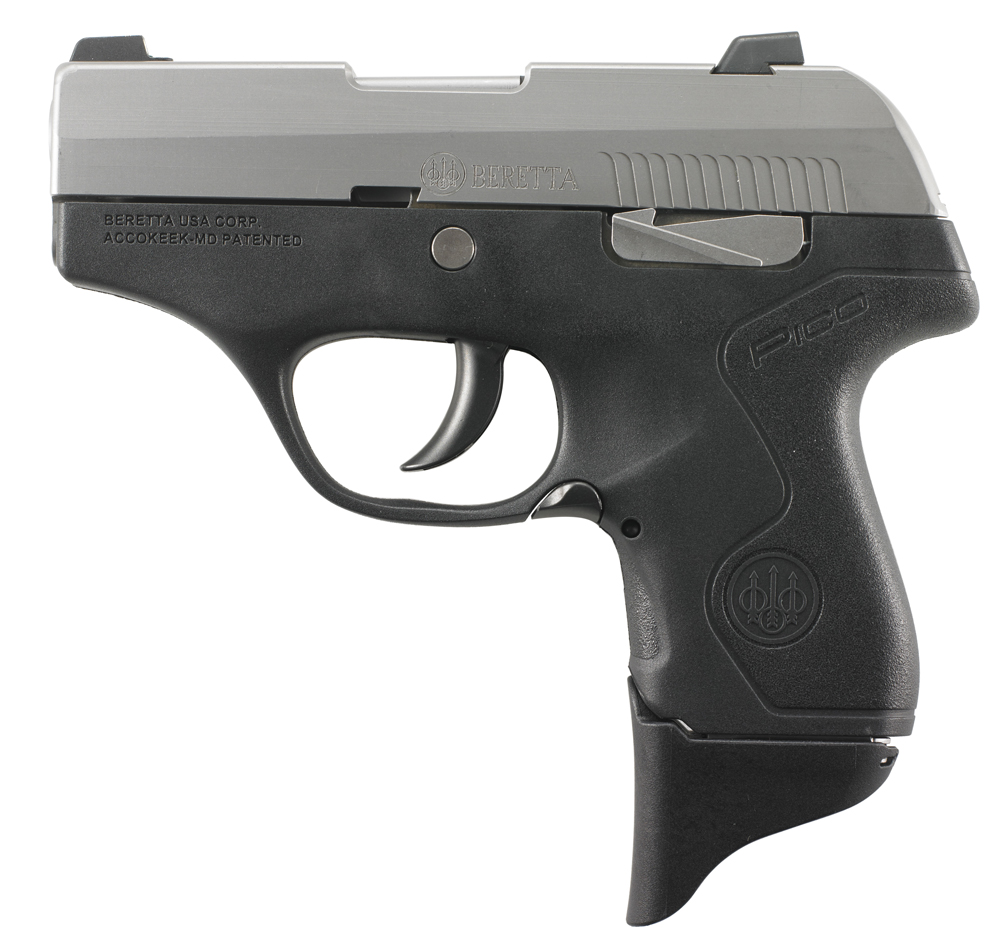
What’s more, several manufacturers chose to add completely new compact models instead of updating their existing lines of handguns. Beretta, for example, has made a conscious effort with its Pico and Nano models to appeal to the growing interest of the compact conceal-and-carry crowd.
With rifles, it seems the market is trending toward satisfying the growing desire consumers have for modern sporting rifles. It was apparent when compiling the list of new rifles that manufacturers were developing more AR-platform models than adding updated or new models of bolt-action rifles.
At the same time, the apparent trend with the new bolt-action rifles hitting the market was that less is more. Several manufacturers now carry budget-friendly, no-frills series of bolt-action rifles that appeal to a buyer’s wallet without sacrificing accuracy. Updated or new examples of this trend include the Savage Axis, Mossberg Patriot, Ruger American, Remington 783, Tikka T3 and Winchester XPR models. A variety of calibers, stock options, finishes and even scoped packages are available within each of these series, appealing to a wide range of shooting and hunting interests.
Gun Digest: For someone unfamiliar with the book, what can they expect to find inside — how can the average gun owner who buys, sells and researches guns use the book to his/her advantage?
Andrew Johnson: This book is a great tool not only for gun lovers and collectors, but it’s also ideal for people in the market for a new or used handgun, rifle or shotgun. It’s also useful for folks who plan on selling firearms for the proper value.
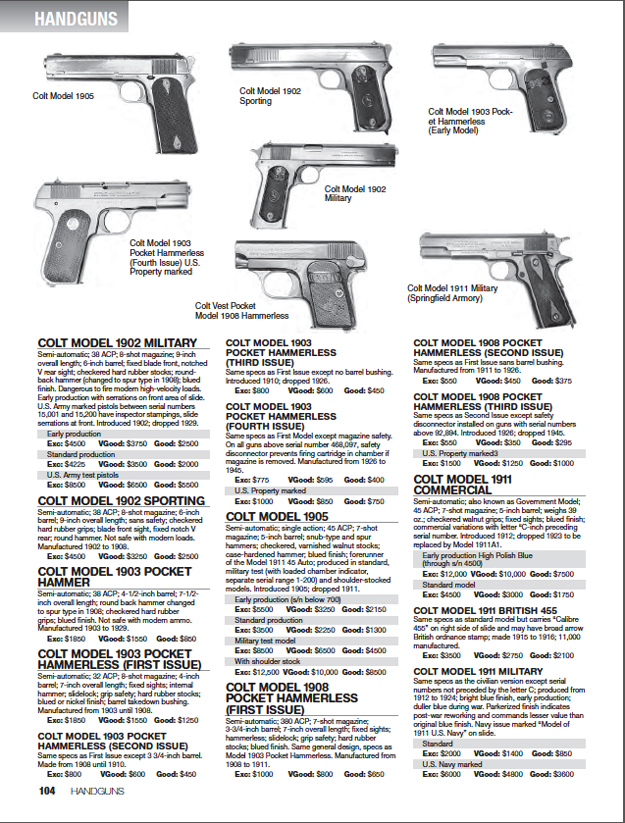
The book provides a brief description of each gun on the market today, as well as those that have been discontinued. Below each model’s description is a basic price guideline for varying degrees of quality, such as new, excellent and very good. The prices, of course, are meant for reference only, but they can provide an accurate estimate for most anyone on how much a firearm is, or perhaps more importantly, isn’t worth.
Additionally, thousands of photographs have been carefully selected to represent the best picture of many models or even to help illustrate subtle nuances that set certain models apart from other firearms.
Long story short, this is a comprehensive list of firearm models and values that is a must-have for anyone looking to increase their knowledge and understanding of today’s market.
Inside the Colt Custom Shop
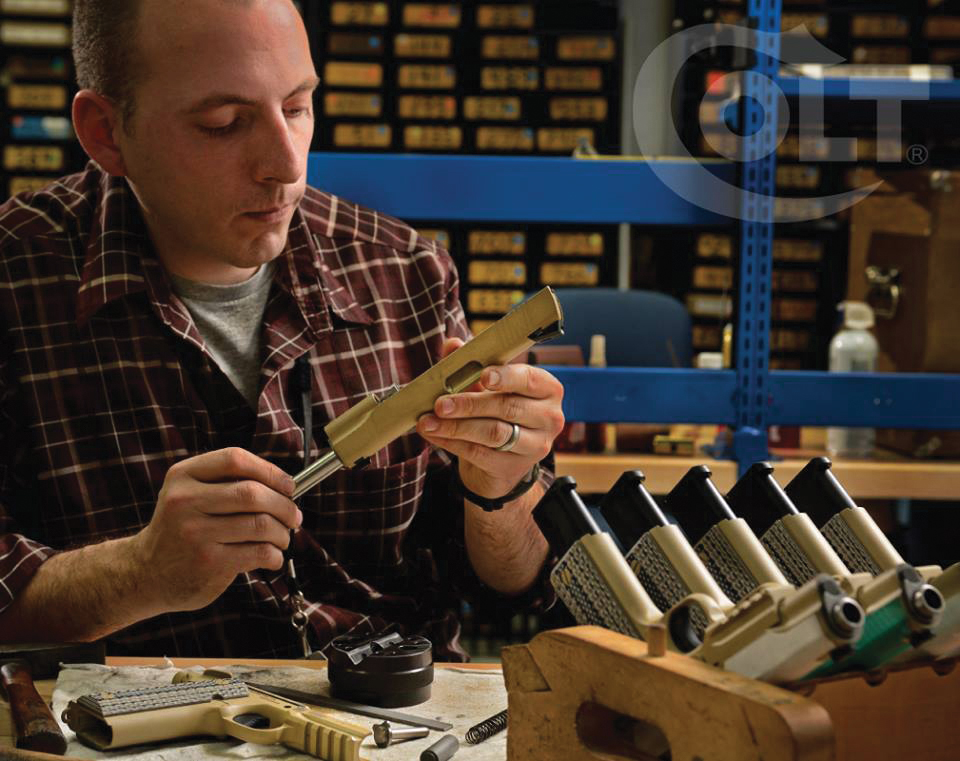
The Colt Custom Shop has always been copied, but never equaled.
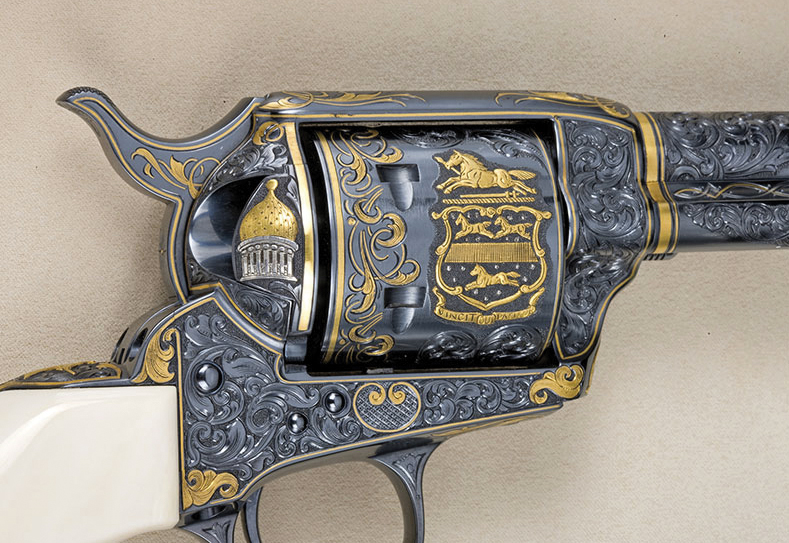 While other manufacturers may offer custom services, Colt’s Custom Shop creates true masterpieces. Just talk to any collector and they will proudly show you the most prized piece in their collection, and most often this will be a classic customized Colt firearm.
Heads of state including Czar Nicholas I of Russia, King Frederick VII of Denmark, and King Charles XV of Sweden were among the first to be presented with Colt’s highly decorated and engraved guns.
The gunsmiths in the Colt Custom Shop have over 150 years of combined experience building and customizing America’s finest firearms, which are truly one-of-a-kind heirlooms. There’s always been a sense that, by owning a Colt firearm crafted in the Custom Shop, you become a part of an elite group with members around the world and throughout history.
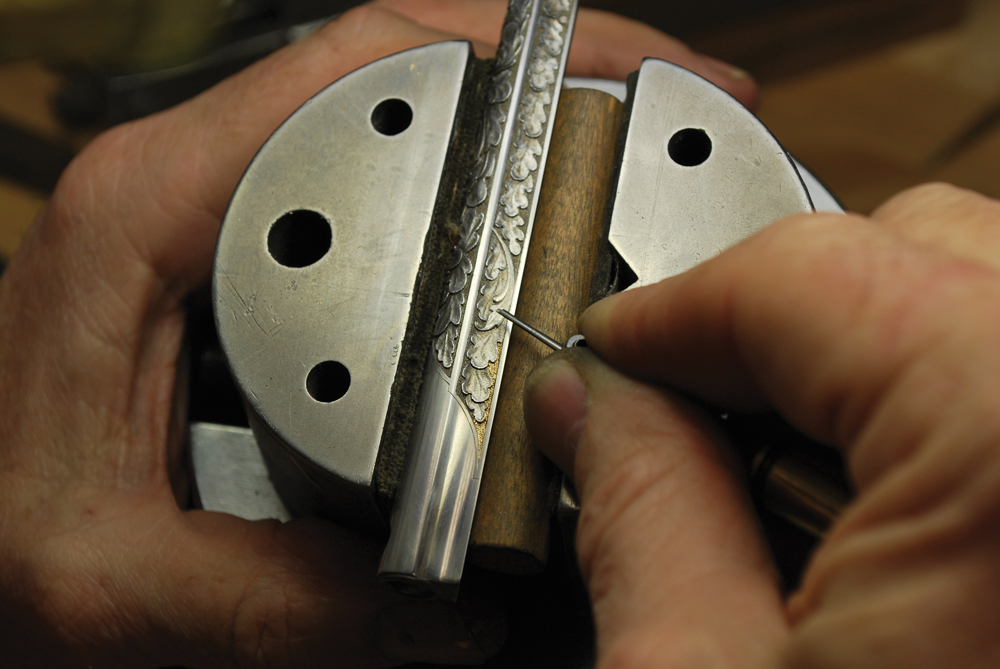
If you desire to have your Colt pistol or revolver tuned, customized, or engraved, the Custom Shop offers a variety of customized packages and individual services to suit your needs. They can also hand-craft your one-of-a-kind masterpiece to exact specifications. Colt’s Custom Shop will work directly with you to create your dream Colt firearm.
The only limitation to customizing your Colt firearm is your imagination.
Gun Digest’s Five Best Posts on Gun Buying and Gun Selling

From the local gun store to massive online retailers, anybody who has braved the gun market in recent years understands it’s red hot. Gun Digest is here to make sure collectors and enthusiasts don’t get burned on a firearms transaction with these five best gun buying and gun selling articles.
 Buying Guns on Internet Auctions
Perhaps more than any other factor, online retailers have done more in the recent decade to reshape the gun market. Phillip Peterson arms you with the knowledge you need to get the most from internet gun purchases. Read More
 10 Tips for Choosing a Concealed Carry Handgun
Bruce N. Eimer focuses on shopping for a specific category of firearms in this post. However, the rules of thumb he lays out can be applied to nearly every type of gun. Learn The Rules Of Thumb
 Selling Antique Guns
Truthfully, you don’t have to be a hardcore firearms collector to put this post to good use. Norm Flayderman outlines some of the best routes to sell guns quickly and for profit. Find Out Where To Sell
 All About Shipping Guns
So you sold your gun for a tidy profit. Only problem is the buyer is two states over. How do you get that baby to their zip code? Phillip Peterson draws upon his personal experience to give you tips to successfully ship firearms. Ship Out
 A Primer On Buying Used Handguns
The secondhand gun market has some real gems. But shooters better know how to weed out the lemons. Master gunsmith Patrick Sweeney goes through what you need to look for when it comes to finding a functional used handgun. Learn More
AR-15 Review: Colt Expanse M4
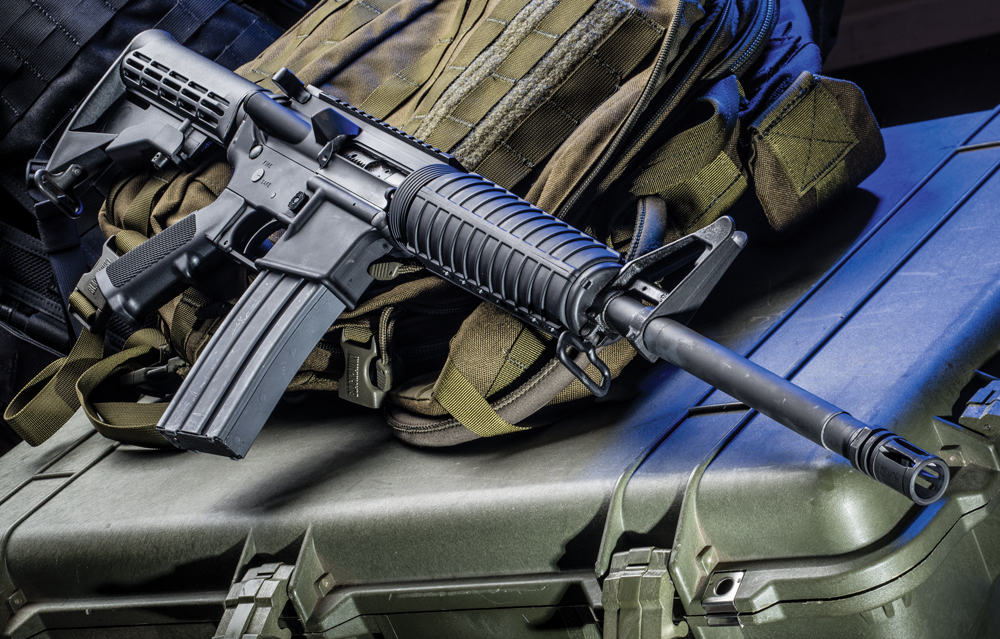
The Colt Expanse M4 is priced affordably and comes ready-made for customization.
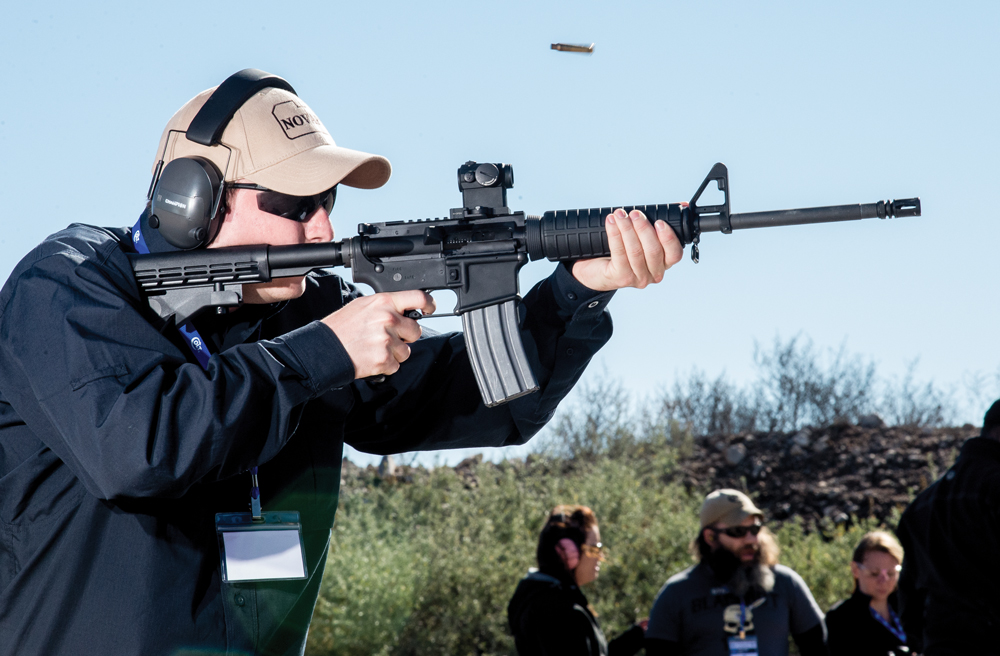
Although many gun store owners have been reporting declining sales for so-called “black rifles,” the AR-15 is, without question, still one of the most popular rifles in the nation. For this reason, manufacturers are continuing to produce “America’s Rifle,” and especially affordably priced versions that are attainable to the average gun owner.
Colt has long been a recognized name regarding ARs. In fact, for many years after the AR-15/M16’s official introduction, Colt was essentially the only name in the AR business. Despite this historical association with the AR-15, for the past several years Colt really hasn’t had a truly entry-level AR for buyers. This appears to be changing in 2016.
Bone Up On Legendary Colt Firearms
Keeping in step with the affordable AR trend, Colt is introducing the Expanse™ M4, a quality-manufactured black rifle in 5.56x45mm NATO that comes with all the basics a shooter needs to start delving into ARs and sells at a very palatable price point. Retail priced at $699, the Expanse™ M4 could be a very attractive option for those looking for a base rifle to customize, which is one of the main draws of the AR platform.
The Expanse™ M4’s upper and lower receivers are manufactured from 7075-T6 aluminum and have a black hardcoat anodized finish. The rifle incorporates a 16-inch, 1:7-inch twist, non-chrome-lined barrel manufactured from 4150 CMV steel with a manganese phosphate finish.
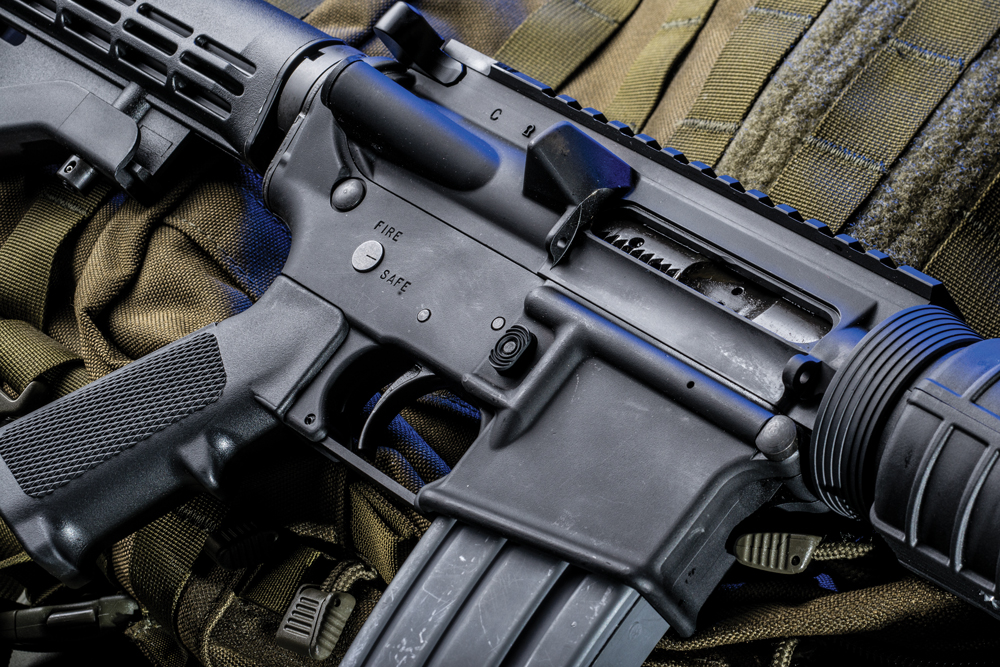
Additionally, the Expanse™ M4 comes with many of the same features found on other ARs. Namely, these include Eugene Stoner’s enduring direct-impingement gas system; an A2 front sight and A2 pistol grip; a right-handed safety selector; a standard, M4-style collapsible stock; and a Mil-Spec single-stage trigger.
What it does lack, however, is a forward assist and a dust cover. This is done because the average user simply doesn’t need or use these features. That said, a dust cover and forward assist can easily be added if needed.
Everything about the Expanse™ M4 points to future customization on the part of the user. The upper receiver has a flat top for adding optics or rear iron sights, and all of the standard parts—grip, stock, safety, charging handle, handguard—can be easily replaced with aftermarket parts if desired. This is exactly what most AR owners want from a basic rifle.
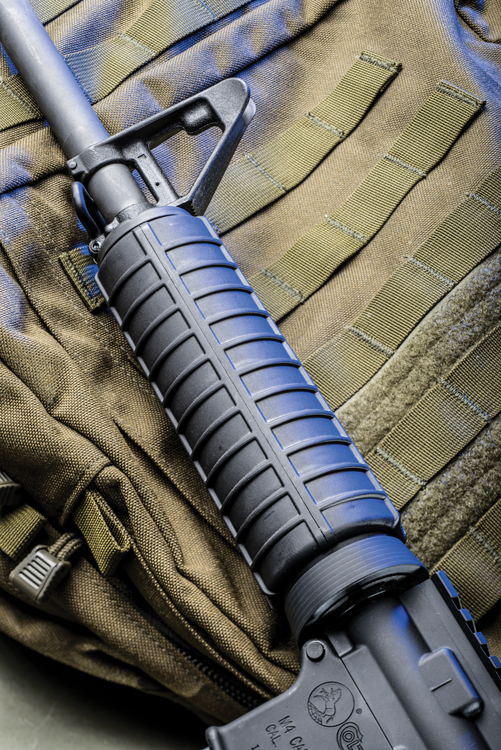 The Expanse™ M4 accepts standard AR magazines and comes with a 30-round steel magazine. It has an overall length of 32 to 35.5 inches, depending on whether the stock is collapsed or fully extended.
Colt Expanse™ M4
Type Direct-impingement gas, semi-automatic
Caliber 5.56 NATO/.223 Rem.
Barrel 16-in., 1:7-in. twist, non-chrome-lined
Overall Length 32 to 35.5 in.
Weight 6.44 lbs.
Handguard Standard Mil Spec AR/M4
Stock Standard collapsible Mil Spec AR/M4
Grip Standard Mil Spec AR
Trigger Standard Mil Spec AR
MSRP $699
Manufacturer Colt.com
Find Out More About Iconic Colt
- Classic Colt Guns
- Colt 1911
- Colt Python
- Colt Cobra
- Colt Single Action Army
- Colt AR 15
- Colt Defender
- Colt Delta Elite
- Colt 1903
- Colt 1908
- Colt Commander
- Colt AR15A4
- Colt King Cobra
- Colt Competition
- Colt Gold Cup
- Colt M16A1
- Colt Combat Unit Carbine
- Colt Detective Special
Antique Guns: Can You Spot a Fake?

When it comes to fake antique guns, it’s easy to wind up as the proud owner of a dud. Even a trained eye can be fooled by modern reproduction firearms that have been faked to look like the real thing.
The gun book business is the nuttiest enterprise I’ve ever been involved in. Take one of my recent projects, for example: The Gun Digest Book of Firearms Fakes and Reproductions by Rick Sapp.
I dreamed up this title after speaking to a number of prominent firearms auctioneers who told me that they’ve encountered a staggering amount of faked or fraudulent vintage firearms.
I thought that perhaps gun buyers would appreciate a nice little volume that showed them how to keep from getting burnt by buying a supposedly antique or rare firearm that’s really no such thing.
I could have used a book like this myself about 15 years ago when I was in a small antique store in Fort Wayne, Indiana, now long out of business. (I mean the antique store is out of business, not Fort Wayne. Come to think of it, Fort Wayne’s out of business, too.)
As I passed row after row of glass cases, I glanced down and there it was, unbelievably: a Cochran Turret Revolver.
The Cochran, as you might recall, had a cylinder that rotated horizontally, like a turntable, with the consequence that at least one of its chambers was always pointed back toward the shooter. Not a good quality to have in a percussion pistol, which have been known to chainfire.
I asked the elderly lady in charge to open the case so I could handle the Cochran. No doubt about it, it was obviously the real deal. Patinated finish, old-style nipples, saw-handle grip made of shrunken, dried-out walnut.
I furtively glanced at the price tag. Two hundred dollars for a Cochran! I drew my credit card with a noise like a whip cracking, and that was that. Well, not quite. I asked the lady to wrap up the Cochran in tissue paper and began mentally congratulating myself on being such a shrewd cookie.
I was almost out the door when the lady called after me, “Have fun with that! My husband made it in 1948 when he was a high school shop teacher. Bye-bye!”
I was too ashamed to ask for my money back, so I sold the pseudo-Cochran at a magnificent loss a short time later. Bye-bye indeed!
Had I read a decent book on firearms fakes, I would have kept that $200 and. . .and. . .well, I probably would have spent it on Stroh’s and onion rings. But that’s beside the point.
There’s an old saying that holds that you can’t judge a book by its cover. This is blasphemy in the book publishing business, where you damn well better be able to judge a book by its cover. So I had to think of some nifty photo for the cover that would really demonstrate what the book was about. Eureka! I’d show a faked gun.
Sounds simple enough, doesn’t it? Well, it wasn’t. No one I talked to wanted to fess up to owning a faked gun. In my wide-eyed naiveté, I had neglected to consider that owning a faked gun isn’t exactly something you’d want to brag about, let alone plaster all over the cover of a book.
Then a little bell rang in my head, and I picked up the phone and called Richard Clauss of Garrett, Indiana. Richard is a master at restoring relic firearms. Could he, I asked, reverse the process and reduce a new gun to a relic for the cover of my book?
At first, Richard balked at the idea. To suggest such a thing was like slapping him in the face with a dead carp. When I explained why I needed a faked “antique” gun, however, Richard reluctantly relented and agreed to help me. He clearly felt ill-used, however, and kept saying, “I don’t know, Daniel. Somehow this just doesn’t seem right.” These artists! Sheesh!
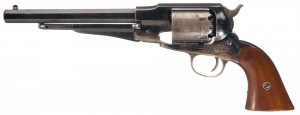
Next I had to find the right gun. It didn’t take long for me to get my hands on a brand-new Pietta 1858 Remington Army Model revolver for $200, give or take a few dimes.
Now, I really like Pietta guns and think they’re some of the best replicas on the market, right up there with Pedersoli and Uberti. When I took the big .44 out of its box, I began to share some of Richard’s misgivings.
The gun was almost too pretty to monkey with. But I had a job to do, by gum, so I packed it up and sent it off to Richard. Next I had to find an original 1858 Remington for Richard to use as a go-by. By great good luck, my associate Ken Ramage, editor of the annual Gun Digest book, has an original 1858 Remington in just the right condition, one that collectors would probably call “heavily patinated with virtually no traces of original finish.”
Ken’s gun was just as tight as it was when it left the factory in Ilion, New York, over 140 years ago. What a great old gun! I photographed it and sent the pictures to Richard with this instruction: “Make the Pietta look like this.”
Richard received the gun around noon on a Monday. At about 2 p.m. that same day he called me and asked, “You sure you want me to do this?” Hell yes, I said. Tuesday morning the phone rang again. It was Richard. “Are you really sure you want me to do this?” Yes, yes, yes. “Okay, then,” Richard said. “I’ll call you when it’s done.”
Two weeks later Richard called me. “It’s finished,” he said. I fired up the VW and sped down to Garrett. When I entered the shop, there was Richard holding a weathered, original 1858 Remington.“Where’d you get that?” I sputtered. “Did Ken Ramage send you that?” Richard looked at me as though I’d just hit my head on something. “You sent me that,” he said. “It’s your Pietta.”
No it wasn’t. Yes it was! Richard Clauss had come through for me again — and, as usual, he was apologetic. “It didn’t turn out the way I first thought it would,” he said. “I was going to put wrench marks on the barrel and punch some rust pits in it, but I just couldn’t do it. Couldn’t turn it into junk. I even plugged the barrel and chambers before I rusted it so you can still shoot it.”
I was delighted. I had asked Richard not to buff away the Italian markings, warnings and the Pietta name, since I didn’t want the gun to end up in somebody’s garage sale (probably mine) some day with a $600 price tag on it. But aside from the markings, the Pietta looked as though it had just spent the last 144 years in a barn in Appomattox, Virginia. How did Richard do it? Chemicals?
“No,” Richard said. “I tried to do it the way Nature would have done it. I built a little humidity cabinet and rusted the finish off it. Then I rubbed the gun with oil, degreased it, and browned it. Then I rusted that and started the whole process over again. I did that for a week and a half, and this is what I ended up with.”
And the grips? How did he age the grips?
“That was simple,” he said. “I just took them off and ground them into the gravel outside with my foot.”
Richard also explained that he had patinated the brass trigger guard with a commercially available solution made for that purpose. The result was a fake “antique” that would fool the casual, trusting buyer.
None of what Richard did was top-secret, but I wanted to be able to show the reader of the book how easily one could be led astray, and there was no way to do that except by demonstrating how realistic a faked gun could be.
I was delighted with the whole project, but Richard wasn’t.
“Daniel,” he said, “please don’t ever ask me to do this again, because I won’t. No good gunsmith should ever do such a thing.”
Amen, brother. I promised Richard that I’d pitch the gun into Simonton Lake before I ever sold it, and I meant it. The moral of the story? Caveat emptor, my friends. Let the buyer beware.
Gun Digest’s Top 10 Gun Collecting Articles

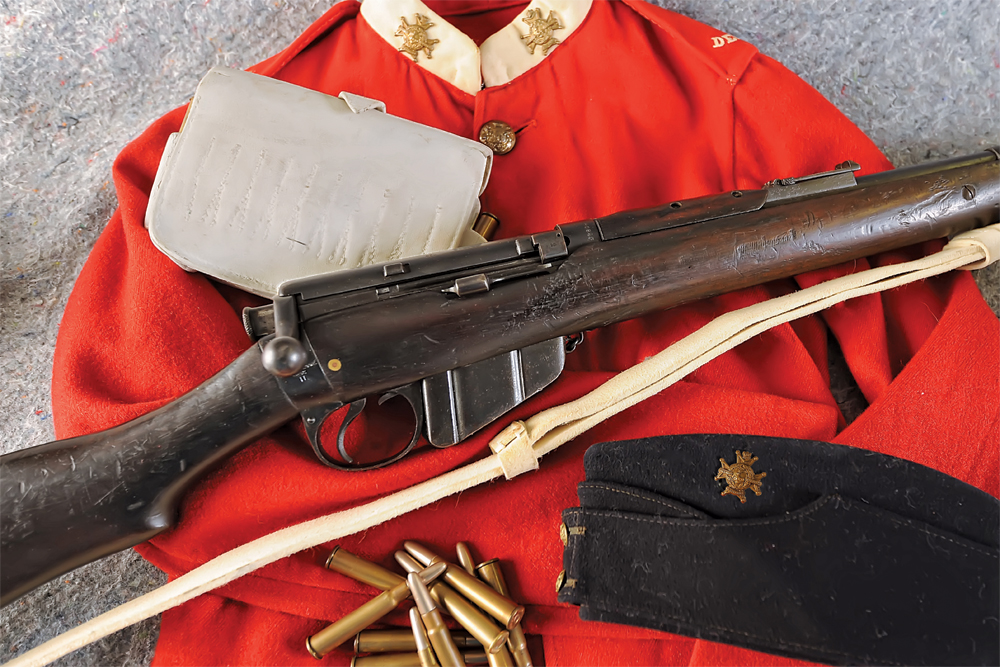
Gun collecting can be a tricky business; heck, nailing down gun values alone can fill volumes. GunDigest.com is here to help with 10 of our best classic gun reviews, gun collecting and gun value articles of all time!
 Collectors Love The FN-49 Rifle (Our Most Popular Gun Collecting Article EVER!)
Phillip Peterson looks at the history and many varieties of the unique and collectable FN-49. This nifty semi-automatic doesn’t get the press it should, that’s for certain. Read More
 Gun Collecting: Tokarev’s TT-33 and Its Clones
Da comrades, Phillip Peterson’s piece on the Tokarev TT-33 is among the most popular gun collecting posts. After this lengthy piece, you’ll be an expert on this Soviet Army sidearm and its copies. Learn More
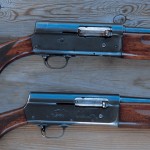 Those Hammerin’ Humpbacks
To no one’s surprise, an article on a gun designed by John M. Browning is among our top gun collecting posts. But what Browning creation made the list might raise a few eyebrows — the Auto-5 shotgun. Read More
 Are Your Guns Insured?
Larry Sterett broaches a subject that gun collectors often overlook in protecting their investments. But given the time and energy procuring dream guns, insurance should be on every collector’s mind. Learn More
 Gun Collecting: The British .303 Jungle Carbine
Officially known as the Lee-Enfield Rifle No. 5 Mk. 1, this nifty carbine was a late variation of the British battle rifle. Purpose made, the Jungle Carbine is an excellent addition to any gun collection. Learn More
 A Gun Collector’s Regrets of Purchases Not Made
As sweet as gun collecting can be, there is also a dose of bitterness to it. Here’s one collector’s lament on gems he missed adding to his collection. Read On
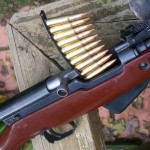 SKS Collecting: The Last Hold Out?
Late Gun Digest editor Dan Shideler fully admits he was a late adopter of the SKS at the beginning of this post. And by the end, he confesses his pokiness in warming up to the carbine was a mistake. Read More
 The 3 Deadliest Gunfighting Pistols of All Time
What were the three greatest gunfighting pistols of all time, based on the number of kills and casualties made with them? Jim Dickson runs down the list in this very popular post. Discover The Deadliest
 Protecting Your Gun Collection
This is a solid read for anyone who has an extensive gun collection and wants to make sure their family doesn’t get taken after they’re gone. Honestly, this is a must read. Learn More
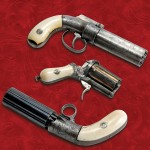 Gun Collecting and Grading
Every price guide worth its salt has values based off condition grades. Understanding exactly what condition a firearm is in goes a long way in buying or selling it for the best possible price. Make The Grade
Which Firearms Price Guide is Right for You?

A shooter wouldn’t buy a Winchester Model 12 for concealed carry. Then why should they buy a price guide not tailored to their particular needs?
Luckily, this isn’t a problem gun enthusiasts have to face, thanks to the comprehensive choice of Gun Digest’s firearms values references. Over the past quarter century, the company has grown its library of price guides to match the wants, needs and desires of the shooting public.
In turn, Gun Digest offers a volume that will help every shooter get the gun of their dreams, while keeping more money in their pocket, no matter the make, model or vintage. With that in mind, the only question really becomes, which guide is right for you?
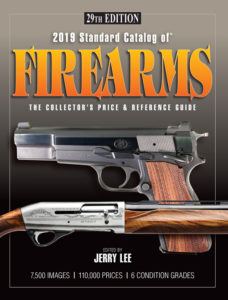
 The Standard Catalog of Firearms
The Standard Catalog of Firearms is more than a price guide. It is a definitive firearms reference.
The massive 1,400-page book is filled with all the tools gun enthusiasts need to not only price firearms, but to also understand their history and identify them.
Editor Jerry Lee has accomplished this through the inclusion of more than 7,500 detailed images of the firearms listed. In addition to this, the book also includes strongly researched descriptions of the all the rifles, handguns and shotguns, detailing their history and features.
Few other price guides are as comprehensive when it comes to firearms valuations. The Standard Catalog of Firearms boasts a whopping 110,000 prices across six condition grades, covering the past 150 years. And these prices come from some of the top gun shows, auctions and retailers, giving shooters accurate and up-to-date valuations.
If you are a gun retailer, a serious collector or someone shooting to raise their firearms IQ, this is a must-have desk reference.

 The Official Gun Digest Book of Guns & Prices
The Official Gun Digest Official Book of Guns & Prices is a comprehensive price guide, designed for research on the go.
The 1,300-page volume has been streamlined to a convenient 5.5”x8” size, making it an ideal companion for any trip to a gun show, gun auction or gun store. But just because editor Jerry Lee has helped produce a compact volume doesn’t mean this expert-level price guide wants for vital information.
The guide covers a broad swath of firearms, from the early 1900s to present day. It offers shooters comprehensive descriptions of nearly every firearm listed. And, most importantly, it boasts 46,000 gun values across six condition grades of non-military firearms. Like the Standard Catalog of Firearms, this handy guide turns to top retail sources — well-respected gun stores, shows and auctions — to deliver current gun values.
For those who are often out and about expanding their gun collections, this is an investment that will help deliver the best deal.
Gun Digest Book of Modern Gun Values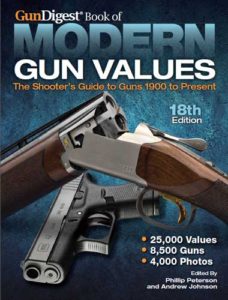
Gun Digest Book of Modern Gun Values is made-to-measure for gun enthusiasts more concerned about procuring firearms to shoot, rather than to display. Focusing on the most frequently bought and sold firearms from the past 100 years, the reference is a vital tool to navigate today’s gun marketplace.
And editors Phillip Peterson and Andrew Johnson go beyond just providing more than 25,000 valuations on 8,500 firearms. They also give shooters the ability to quickly and accurately identify firearms with detailed descriptions and a slew of striking images.
Whether a shooter is in the market for the latest concealed carry pistol or a new deer rifle, Gun Digest Book of Modern Gun Values will help ensure they’re getting a square deal.
Standard Catalog of Military Firearms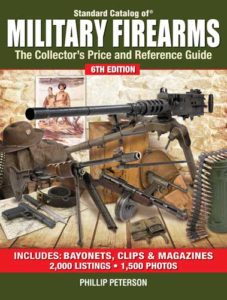

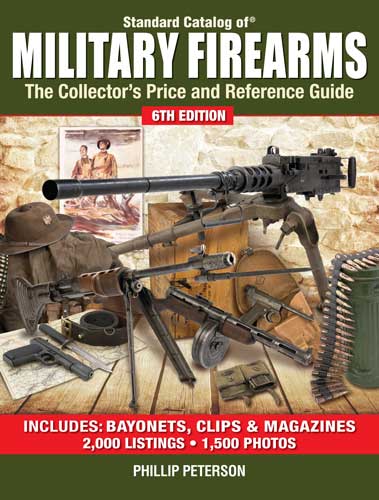
The Standard Catalog of Military Firearms is tailored for shooters who swoon over M1 Garands, vintage Mausers and any other battle-tested firearm.
This can be a tricky end of the market, filled with nuance that can swing prices wildly in one direction or another. Editor Phillip Peterson, however, arms readers with a wealth of vital information on more than 2,000 models of military arms.
Drawing from the expertise of the Rock Island Auction Company and Cowan’s Auctions, Inc., this reference has thousands of prices over four condition grades.
On top of that, the Standard Catalog of Military Firearms also includes the tools collectors require to identify what can often be obscure firearms. These include more than 1,500 detailed photos and detailed descriptions of the rifles, handguns and shotguns that have seen duty. The guide also gives the price differentiation between import-marked and non-import-marked models — most military price guides do not include this important information.
This is definitely the sort of reference that gets gun collectors to stand at attention.
Blue Book of Gun Values


Admittedly, Gun Digest does not publish the Blue Book of Gun Values. But the company proudly sells it alongside its own price guides for a good reason. Gun Digest tries to bring gun enthusiasts the best, and the Blue Book is among the best when it comes to gun value guides.
What makes this reference so special is the comprehensiveness of the information it provides. Its more than 2,500 pages contain 180,000 gun prices for nearly 30,000 models of firearms. This includes prices for modern, antique and discontinued firearms, in addition to new domestic and imported makes and models. Truly, a collector would have to come up with a pretty oddball gun to stump the Blue Book.
Like the Standard Catalog of Firearms, the Blue Book of Gun Values is more than just a price guide; it’s an indispensible gun reference. Author S.P. Fjestad includes highly informative descriptions of nearly all the firearms listed, giving readers solid footing when identifying a gun. He has also included an extensive full-color section explaining the factors going into grading guns.
This volume is a must-have for any serious gun collector or gun enthusiast who is looking to truly understand the firearms market.
Firearms Still Hot, RIA February 2016 Gun Auction Tops $7.3 Million
Rock Island Auction Company’s 2016 February Regional gun auction was the largest event in the company’s history, with more than 9,000 firearms and over 4,400 lots.
When you make a change to a winning formula, sometimes there can be an air of uncertainty, but those concerns were dashed as the auction grew nearer and we continued to receive a record number of bids.
By the end of the auction, RIA posted record participation — nearly 22,000 sealed bids — to accompany the record number of items. Those sealed bids represent only those received through the RIAC website. The figure doesn’t include live bids, telephone bidders, plus the sealed and live bids on third party sites such as Invaluable and Proxibid. When the dust finally settled, a new record sales level was reached, realizing a total of $7.3 million dollars.
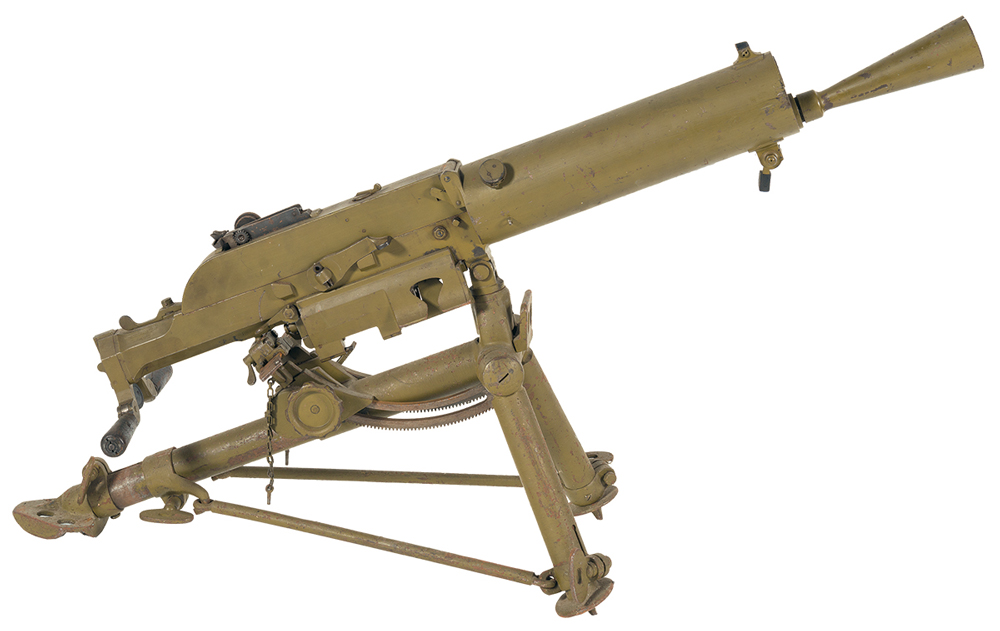
The gun auction kicked off on Thursday as bids were flying in from all corners of the room, and the items’ estimates fell like dominos. Winchesters were whisked away, Colts were captured, and Smith & Wessons were scooped up en masse. Even by midday the excitement had not abated, with jump bids being hollered out in the auction, even for lots containing machine gun parts that typically do not enjoy such raucous enthusiasm. Many of the Class III items listed in this sale as “unserviceable” outperformed their estimates in dramatic fashion. Notable sellers included a Steyr Schwartzlose Model 07/12 mounted on its tripod, that demolished a humble $5,000 estimate to sell for $14,950. Likewise, a DEWAT German MP3008 submachine gun, one of the “last ditch” weapons of the Third Reich, left its $4,000 estimate in the dust before stopping at $12,650.
Civil War items were hotly contested; guns embellished in every way imaginable brought premium prices, and rare Henry and Winchester rifles continued to be offered so frequently that President Kevin Hogan began reminding those in attendance, “Don’t be fooled by the availability of these guns at this auction. We might get 1-2 of these a year, and right now we’re making something rare appear very available.”
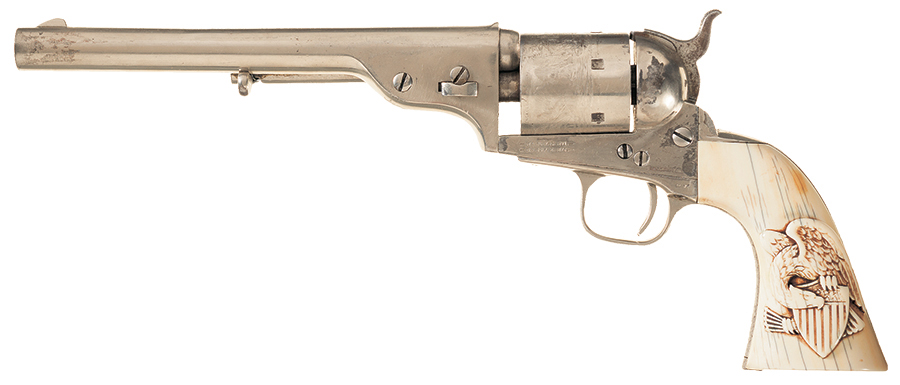
Colt revolvers were strong contenders. A Model 1871-1872 Open Top with an eagle carved grip brought $5,750, while the tried and true, antique Single Action Army matched with a stunning tooled holster rig bested its $1,800 estimate with a $4,025 sale price. European military arms were also an extremely hot ticket. Sniper rifles and standard long arms from numerous nations drew dozens of bids, never more clearly than two SVT-38 and SVT-40 semi-automatic Soviet rifles. This remarkable pair drew 70 bids before the auction even started and drove the winning bid up to $4,600.
Strong performing Winchsters and pre-Winchesters kept bidders guessing. One of those surprises was a framed UMC “bullet board” that surpassed its $2,500 estimate en route to its $6,900 payday. A Sharps Model 1869 sporting rifle knocked down its $1,800 estimate, and was brought to a new home for $6,900, while an attractive engraved and gold inlaid Smith & Wesson Russian Model outshone its $1,700 estimate to bang the gavel at $5,750.

The final day brought out the die hards. It had been a long weekend already, but dedicated collectors had stuck around for a chance at the fantastic variety available on the final day at auction. Their perseverance was well rewarded several times, as two Civil War revolvers that whooped a $1,000 estimate realized an overachieving $5,750. A scarce miniature flintlock pistol made by miniature master Stanley Blashak, estimated at $850, dropped jaws when it settled at $5,175. German handguns also got in on the act when two scarce semi-autos bested a $1,200 estimate and rang the bell at $4,025.
All in all, it was a record-setting weekend on many different levels: number of sealed bids, number of lots, and a new record realized total for Rock Island’s Regional Auctions. Winchester and Henry lever actions abounded and provided collectors with unheard of opportunities, but thankfully never at the expense of other genres.
Source: Rock Island Auction Company
Recommended:
 2016 Standard Catalog of Firearms
Standard Catalog of Firearms is the leading illustrated guide to guns and their values. Each edition is updated with the newest entries from today’s manufacturers of handguns, rifles and shotguns, plus the latest values from a wide range of experts, editors and auction houses for virtually every gun made or sold in America since the early 1800s. Get your copy
MUST READ ARTICLES

Best Concealed Carry Guns In 2026 [Field Tested]
Looking to go armed, but are stuck in the weeds as to what to arm yourself with? Here are 20 of the best concealed carry gun options that will keep you on the defensive.