Attorney General Eric Holder vigorously denied a “coverup” by the Justice Department over “Operation Fast and Furious,” telling a House panel investigating the botched gun-running program that he has nothing to hide and suggesting the probe is a “political” effort to embarrass the administration.
“There’s no attempt at any kind of coverup,” Holder told lawmakers well into a hearing about whether he had been forthright in responding to requests of the House Oversight and Government Relations Committee led by Chairman Darrell Issa, R-Calif.
“We’re not going to be hiding behind any kind of privileges or anything,” he said.
The hearing came after Issa and Sen. Charles Grassley, R-Iowa, his Senate partner in the probe, asserted that top Justice officials are covering up events surrounding the flawed gun-smuggling probe.
Issa made the accusation in a letter threatening to seek a contempt of Congress ruling against Holder for failing to turn over congressionally subpoenaed documents that were created after problems with Fast and Furious came to light. Read more
When you think of Kimber handguns, you should be thinking of top-quality 1911 pistols. But that does not mean you have try to hide a full-sized concealed carry handgun. One of the more recent offerings from Kimber and one that is available now, is the Kimber Solo, a 17-ounce pistol that is only 5.5 inches long. Sporting near-perfect ergonomics borrowed from 1911 pistols, a great trigger and 3-dot sights this little pistol is ready to go to work. Just pull it out of the box, load it and slide it in your concealed carry holster.
The Kimber Solo is an outstanding concealed carry handgun.
Standard Solo features include stainless steel slide and barrel, machined aluminum frame, ambidextrous thumb safety, removable grips and ambidextrous magazine release button. You can also get Solo CDP (LG) with Crimson Trace laser grips. The premium KimPro IITM finish standard on Solo frames is both self-lubricating and extremely resistant to salt and the elements. Magazine capacity is 6 rounds with an extended 8-round magazine available. Their suggested retail price is just $725.
And if you love the 1911 platform, check out this great information we have available:
Bushnell Outdoor Products, an industry leader in sports optics and outdoor accessories, contributed $200,000 in 2011 to the Folds of Honor Foundation. Since establishing a partnership in 2010, Bushnell has contributed nearly $300,000 to Folds of Honor.
Founded by Major Dan Rooney in 2007, Folds of Honor provides post-secondary educational scholarships to the spouses and children of service members disabled or killed during U.S. military service. Major Rooney, a former F-16 pilot who served three tours in Iraq, founded Folds of Honor to ensure that families of fallen service members never have to endure alone.
“Thanks to support from partners like Bushnell, 2011 was a monumental year for Folds of Honor Foundation,” said Rooney, Folds of Honor president. “Last year alone we were able to double the number of scholarships provided, and as a result of that incredible momentum we hope to provide 1,000 scholarships in 2012.”
In 2012 Bushnell will continue its product partnership with Folds of Honor with two exclusive golf laser rangefinders: Bushnell Tour V2 Patriot Pack and Tour V2 Slope Patriot Pack. A portion of the proceeds from each Patriot Pack sold will be donated to Folds of Honor.
For more information about the Bushnell and Folds of Honor partnership, visit www.bushnell.com/folds.
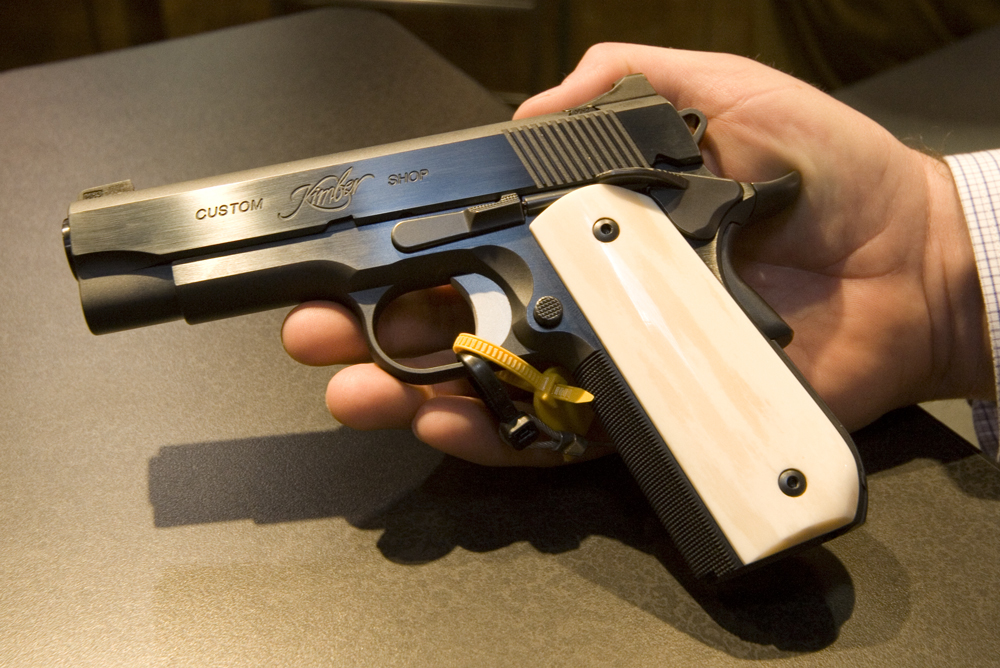
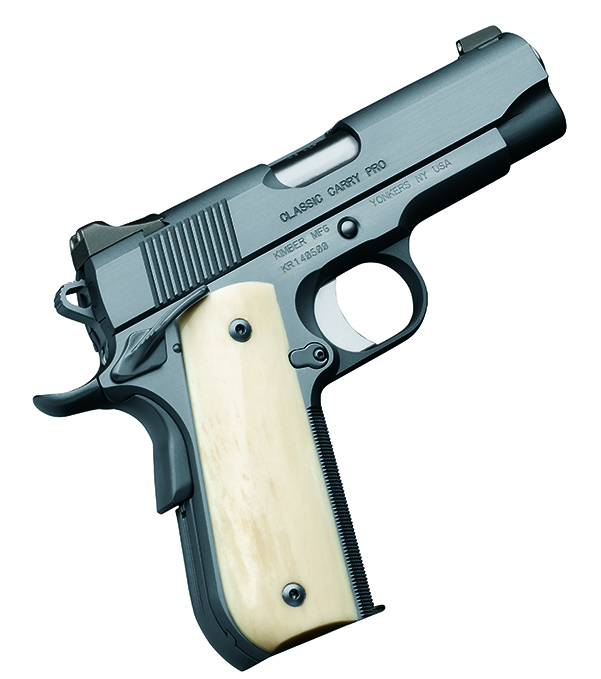
The Kimber Classic Carry Pro is a 35 oz. 1911, with 4-inch barrel and available in .45 ACP. The grips are bone. Photo by Corey Graff
Described as a “gentleman’s gun,” the new Kimber Classic Pro Carry is an officer’s size 1911 combining practical features for concealed carry with a touch of class. In fact, I liked it so much, I gave it an award.
One of the funnest things any blogger can do is try to sneak blog posts past his publisher. A fine sport in its own right — right up there with ordering expensive room service on corporate trips — this can tend to upset the powers that be if you get caught. Accordingly, just to push the limits and see if Jim is paying any attention, I’ve gone out on a limb here by inventing my own personal award. It is aptly dubbed the Gun Digest Military & Tactical Guns Blog Best Gun of SHOT Show 2012 Award.
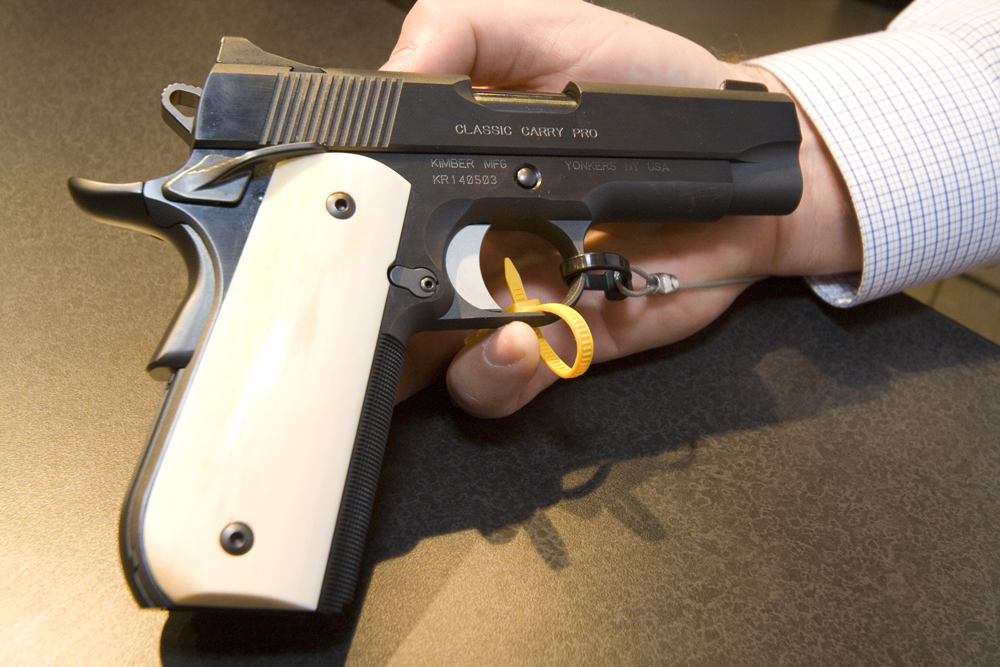
The Kimber Classic Pro Carry 1911 unveiled at SHOT Show 2012. Photo by Corey Graff.
Disclaimer: What follows is not an official contest or statement of Gun Digest in any way and wasn’t arrived at by any quorum of the editors. This post represents my own personal views and no one else’s.
However, if a blogger is entitled to any thing it’s his opinions. And so what follows is my opinion and mine alone (Jim, are you reading this?)
Having said that, let’s start with some background. At last year’s 2011 SHOT Show, I came across a very sightly 1911 at the Kimber booth, new for that year, called the Kimber Royal II. The Royal II is a full-size charcoal blued 1911, available in .45 ACP or 9mm. It has white bone grips. I have a soft spot for white bone grips. It was just about the prettiest gun I’d seen all week at the show. It got my attention. And when you consider where the show takes place (Las Vegas) that’s saying quite a lot.
I’d also caught the SHOT Show Plague that week and wasn’t feeling too swell. But after getting a first look at the Royal, I’ll admit I felt a wee bit more chipper.
Yet, as much as I liked that pistol, I couldn’t help but think that with just a couple tweaks the Royal could be so much more. My thought process was influenced by one of the things Kimber also did that year with the introduction of the Super Carry Ultra HD line. These modernish-1911s had the distinctive round heel frame for a drag-free draw from concealment. “HD” stood for “Heavy Duty” and referred to their all-stainless steel construction. They weighed 35 ounces empty — that’s a Ritz cracker or two over two pounds.
I reasoned at the time that a Royal, only offered in a “Pro Carry” 4-inch design, outfitted with night sights and a rounded heel frame, yet keeping the classy look of the white bone grips would be just about the most perfect combination of features and looks you could get. Kimber must’ve read my mind.
Fast forward to SHOT Show 2012. Like Ralphie gazing starry-eyed through the Higbee’s department store window at the “Holy Grail of Christmas gifts,” there I was at the Kimber booth, and there it was: The Kimber Classic Carry Pro. It was classic alright, everything I’d dreamed it could be. No compass in the stock, and no thingy that tells time, but it instantly became my very own Red Ryder BB Gun. There was just no doubt in my mind that the Kimber Classic Carry Pro would win my own personal “Best of Show” award. I just had to concoct said award, first.
A Look at the Pistol
Created in the Kimber Custom Shop, the new Classic Carry Pro .45 ACP is a truly spectacular 1911. When you handle the thing, the craftsmanship is impeccable. With a deep charcoal blue finish from Turnbull Restoration over brush-polished flats complemented by bone grips, it combines classic style with performance.
The steel frame and slide combine with a 4-inch bushingless match grade bull barrel for perfect balance. It has an ambidextrous thumb safety, thin slide serrations and a recessed slide stop pin as standard features, plus as mentioned the round heel frame that makes it more comfortable to carry. Heck, it’s even built with a hefty all-steel design and, like the Ultra Pro Carry HD, weighs a stout 35 ounces. I like heavy guns because they counteract recoil, and Kimber got this part right.
A match grade chamber and trigger, lowered and flared ejection port and beveled magazine well are also baked into the design. A serrated flat top slide, night sights with cocking shoulder for single-hand cycling and 24 lines-per inch front strap checkering for a positive grip round out the package. The only thing it doesn’t come with is room service. The suggested retail price is $1,940.
In a video interview we did with Kimber’s Dwight Van Brunt, he described the pistol as a “gentleman’s gun” and one that General Patton himself would have carried. I simply stood there speechless, and it was everything I could do to spit out something intelligible like, “May … I … touch … it? … Please?” I was later informed by colleagues that what I actually muttered came out sounding like some unknown ancient language, something akin to Ewok.
What can I say? Like nervously stammering up to ask a pretty lady her phone number, great guns of this caliber make me nervous. This one floored me. Check out the photos and see if you don’t agree. Ain’t she pretty?
Only my vote is in, and so it’s unanimous: The Kimber Classic Carry Pro is the proud recipient of my Gun Digest Military & Tactical Guns Blog Best Gun of SHOT Show 2012 Award. That’s just my opinion. There was no shortage of great guns at this year’s SHOT Show, but for me this one leapfrogged the rest of the pack by a mile.
Having had my fun, there’s only one thing I have to ask: Jim, if you’re still reading this, may I please have my job back?
Editor’s note: I’ve told you my opinions about this pistol. Now let’s hear yours. Leave a comment below and let me know what you think about the Kimber Carry Pro.
Gun Digest is the source for firearms news, pricing and guns for sale. Readers benefit from in-depth editorial expert advice, show reviews and practical how-to instructions. With your Subscription, you’ll also learn about threats to your Second Amendment rights. Click here to begin your subscription to Gun Digest.
While some traditionalists may not like kydex for a concealed carry holster, I love the that the Reflex from Uncle Mike’s offers concealment and positive locking retention in a concealed carry holster that won’t break the bank. Take a look at this video I made showing the benefits.
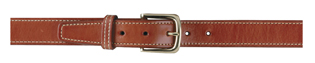
This belt by Gould and Goodrich is tough and good-looking; a perfect platform for your concealed carry holster.
You want your concealed carry holster to be stable and secure. But you also want to look good. Gould and Goodrich offers a great-looking reinforced belt that is the perfect platform for your concealed carry holster. The Model 191 reinforced belt won’t sag under the weight of your weapon, provides a firm platform for a smooth draw and offers all-day comfort. With a removable brass buckle, this 1-1/2-inch-wide wide belt looks good and works hard. It is available in black and tan to match your fashion and your concealed carry holster.
For more great books on concealed carry holsters and their use, check out www.gundigeststore.com and search for “concealed carry.”
KANSAS CITY, Mo. — A Kansas City woman was able to protect herself and her home from multiple intruders over the weekend.
Neighbors said three people forced their way into the woman’s home in the 7600 block of Richmond Avenue.
Police said the intruders were looking for the basement, where multiple firearms were stashed away in safes.
“Someone had to be watching her or casing her to know,” Porter said. “A lot of people know she has a lot of weapons because (they were) her husband’s and she’s a widow.”
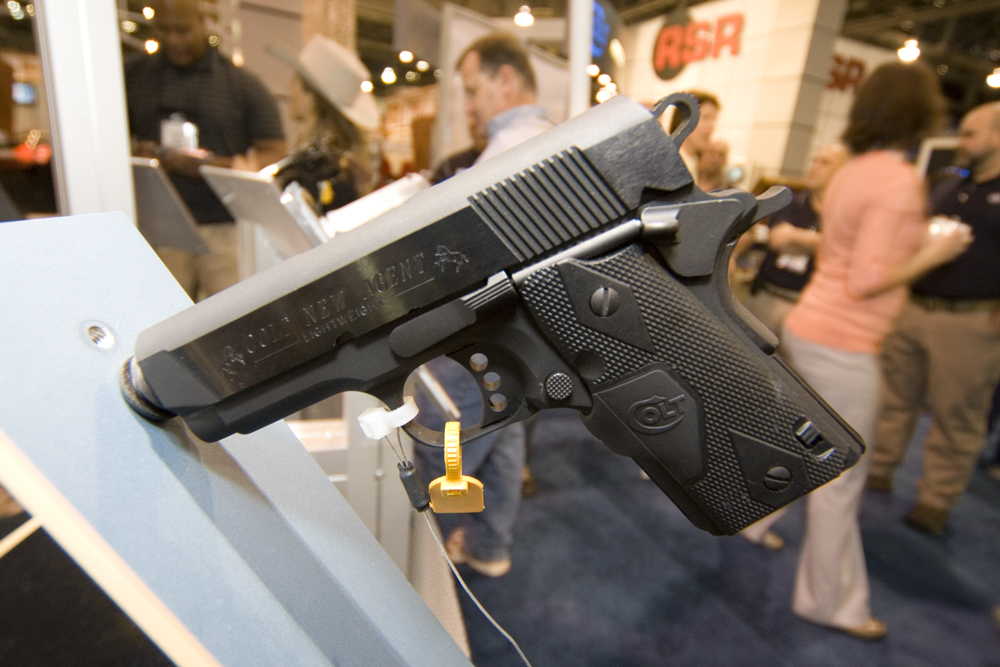
The Colt New Agent — with its subtle, all-business trench-style sights — stood out from the crowd at SHOT Show 2012 and might be the ideal backup gun for concealed carry.
After several days of wandering about the SHOT Show, one begins to get the “2,000-yard stare.” People afflicted by this sorry condition cast a hollow gaze out upon the show floor. Usually the stupor is harmless enough, but occasionally the more serious cases require the patient to be carted off in a white straight jacket. Just about anything can trigger it, but the most common culprit is processing too much data on guns sporting everything but the kitchen sink. And I believe some next year will very likely feature kitchen sinks.
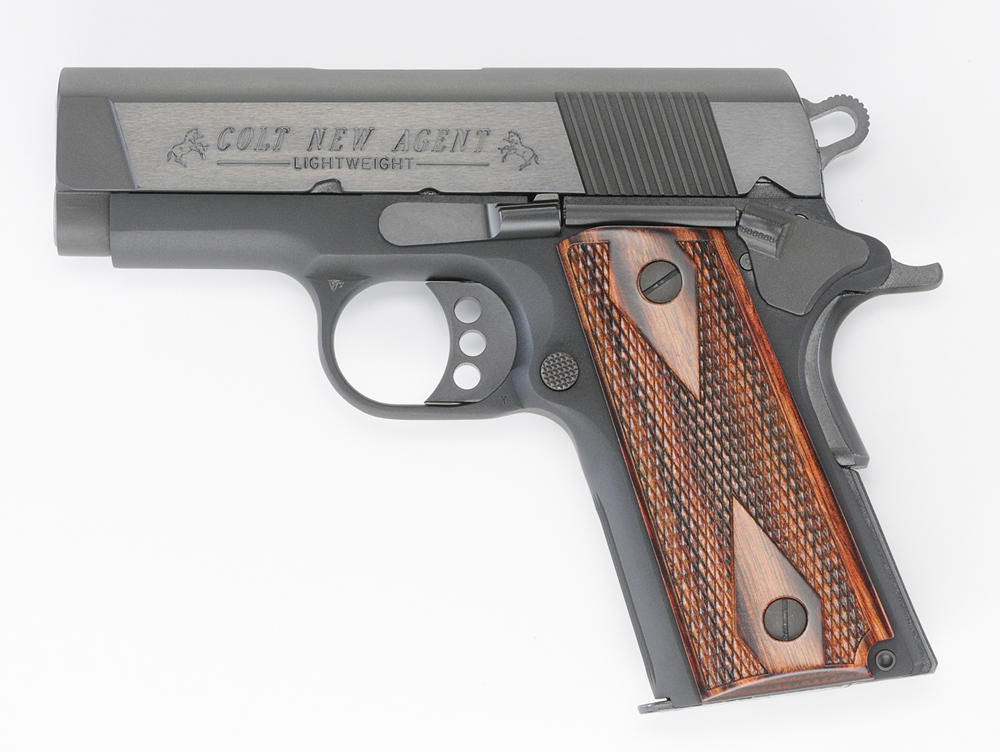
The Colt New Agent Model 07810D, with traditional-style finish and grips.
It was amidst this backdrop that the Colt New Agent — with its subtle, all-business trench-style sights — stood out from the crowd and jolted me back to reality.
This is a seemingly quaint little handgun that isn’t trying to please everybody or fit into a multitude of shooting disciplines: It’s got one identity and that’s as a so-close-and-there’s-no-time-I-must-shoot-right-now gun. In other words, this gun is all business.
While I’m sure the trench-style sights (essentially a full-length groove running along the top of the slide) will get the job done under 7 yards, the model I saw (07812DCT), in all black, was outfitted with a Crimson Trace laser grip. I have to admit that I was surprisingly attracted to the looks of this pistol. And its lack of obtrusive sights on top is obviously conducive to a snag-free draw from deep concealment.
Actually, according to the Standard Catalog of Firearms, the Colt New Agent was first introduced in 2007. That source lists it as having “fixed” sights and a series 80 action.
Of course, the New Agent’s namesake is derived from the Colt Agent — its revolver counterpart from the ’50s era. The Standard Catalog of Colt lists the Colt Agent revolver as being introduced in 1955 and produced through 1973 as the Colt Agent 1st Issue. A slightly more streamlined version, the Colt Agent 2nd Issue, was manufactured from 1973 to 1986.
Both sixguns were essentially identical to 1st Issue Colt Cobra six-shooters, but with shortened grip frames for easier concealment.
The Colt New Agent carries this torch only in a semi-automatic format.
Now, if you’re like me and find the all black finish and laser treatment of the 07812DCT Model not quite to your stylistic liking, you might check out the Model 07810D Colt New Agent. It has a more traditional style grip and finish.
Both pistols feature an enhanced hammer, 1918 style safety lock, standard grip safety and 3-hole aluminum trigger. A lowered and flared ejection port is common to both, and Colt claims this feature enhances reliability and accuracy.
The models 07812DCT, 07810D and 07812D are all single-action hammer guns that come in either .45 ACP or 9mm. There is a double-action only model, hammerless, designated the 07810DA. It is .45 ACP only.
The Colt New Agents sport 3-inch stainless steel bushingless barrels. The .45 ACP offerings are 7-shot; the 9mm Parabellum is an 8-round gun. The MSRP, depending upon model, runs from $995-$1263.
In my opinion, the Colt New Agent is ideal as a secondary backup gun for concealed carry.
And believe me when I say: if this little pistol can cure the SHOT Show Stare, it can do just about anything.
Shooting retailer Midway USA has continued its generous support of the Youth Shooting Sports Alliance (YSSA) by recently donating over 500 rifles to help YSSA in its mission to introduce young people to hunting and the shooting sports.
In 2010, the YSSA developed a practical plan to organize and administer an industry-wide firearms loaner program for supporting its youth programs. Because of the popularity of this program with Boy Scout Councils, 4-H and other shooting sports programs, the loaner inventory was expected to double by the summer of 2013.
“MidwayUSA will continue to be a non-stop supporter of youth hunting, shooting and hunter’s education,” says Larry Potterfield, Founder and CEO of MidwayUSA. “We believe in supporting programs whose mission is to preserve the future of youth shooting sports. The rifles we’re donating to YSSA will be auctioned off and the proceeds will directly benefit their Equipment Loan Program.”
“The majority of shooting sports equipment is needed by youth programs for limited or seasonal use,” said Steve Miller, Executive Director of YSSA. “Equipment may be intensively used during selected seasons and languish in storage for the remainder of the year. This noteworthy donation in support of our Equipment Loan Program will allow the YSSA to provide more efficient support to youth shooting sports programs.”
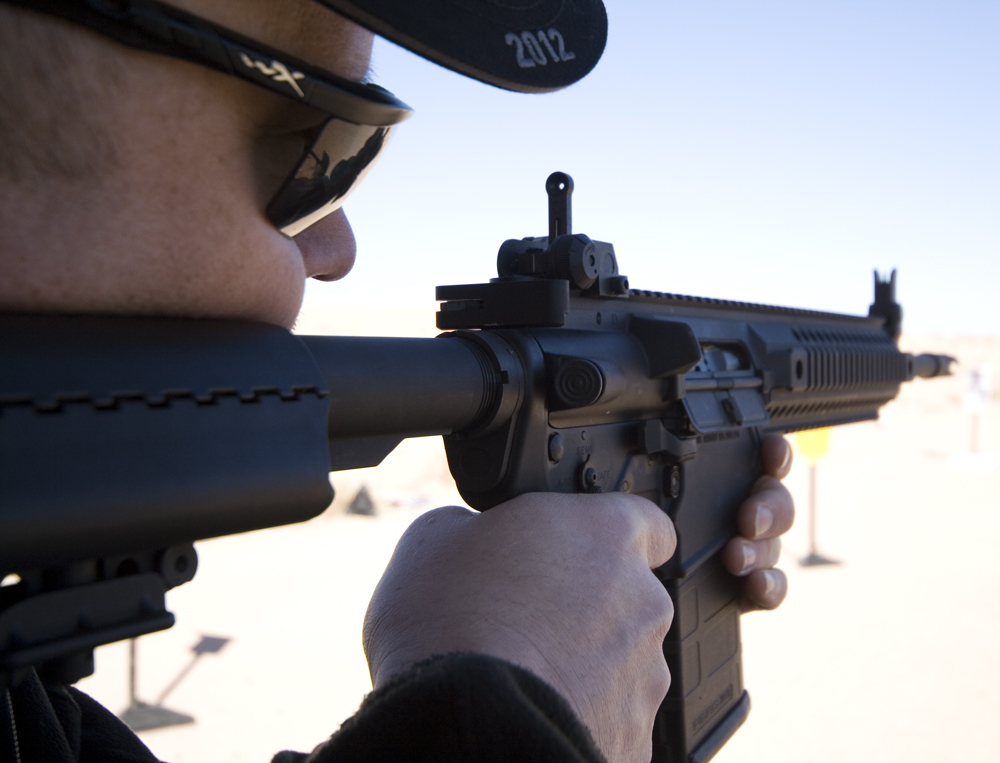
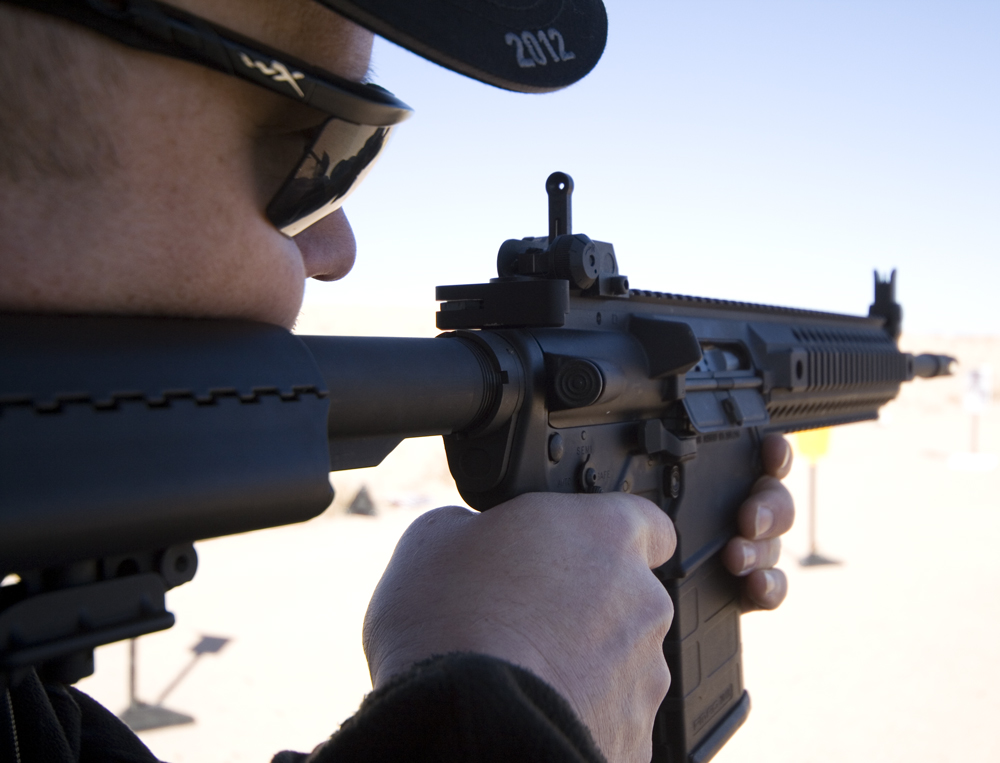
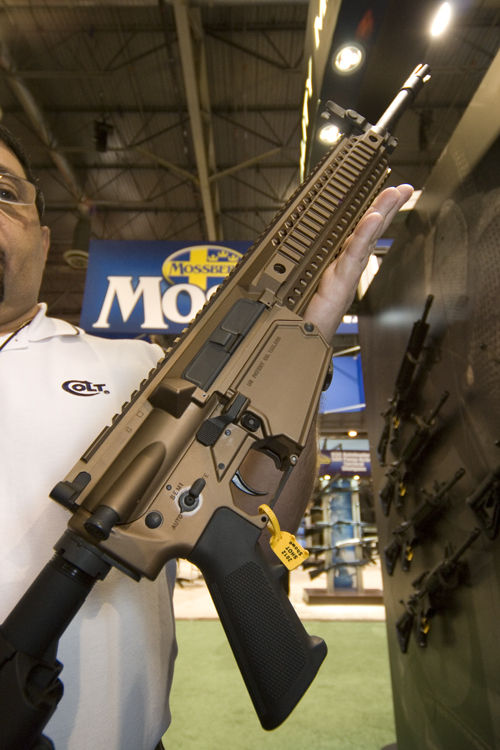
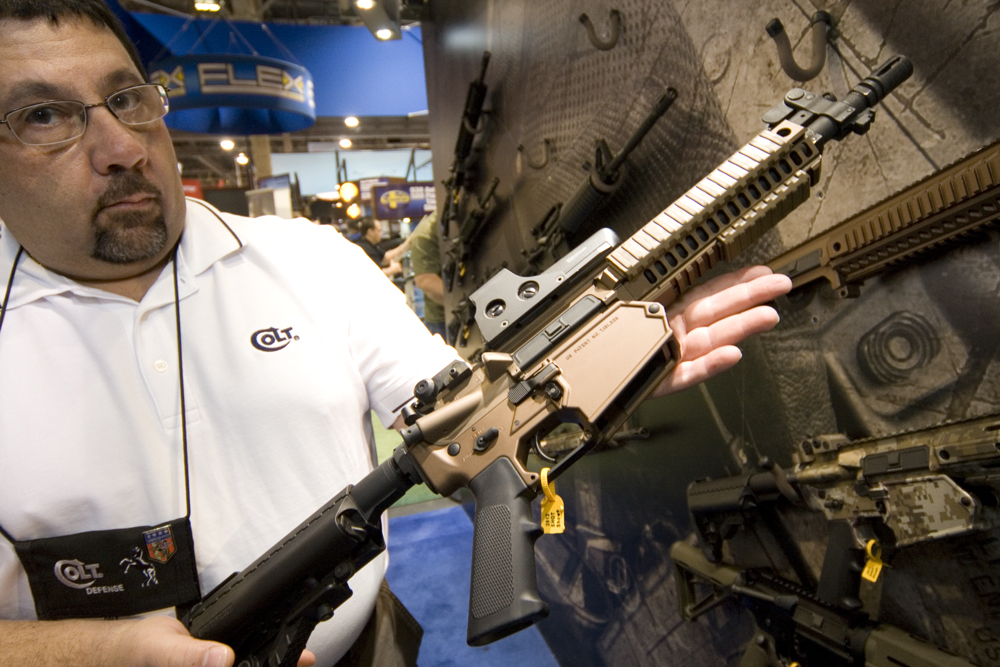
There was no shortage of AR-style rifles at SHOT Show 2012. But one of the most interesting was the Colt LE901-16S, a select-fire rifle designed to allow you to change the upper from 5.56 to 7.62 in a matter of seconds.
With a simple swap of the upper receiver, the chambering can be altered from .308 Winchester to .223 Remington, making the Colt LE901-16S a versatile rifle for a variety of shooters.
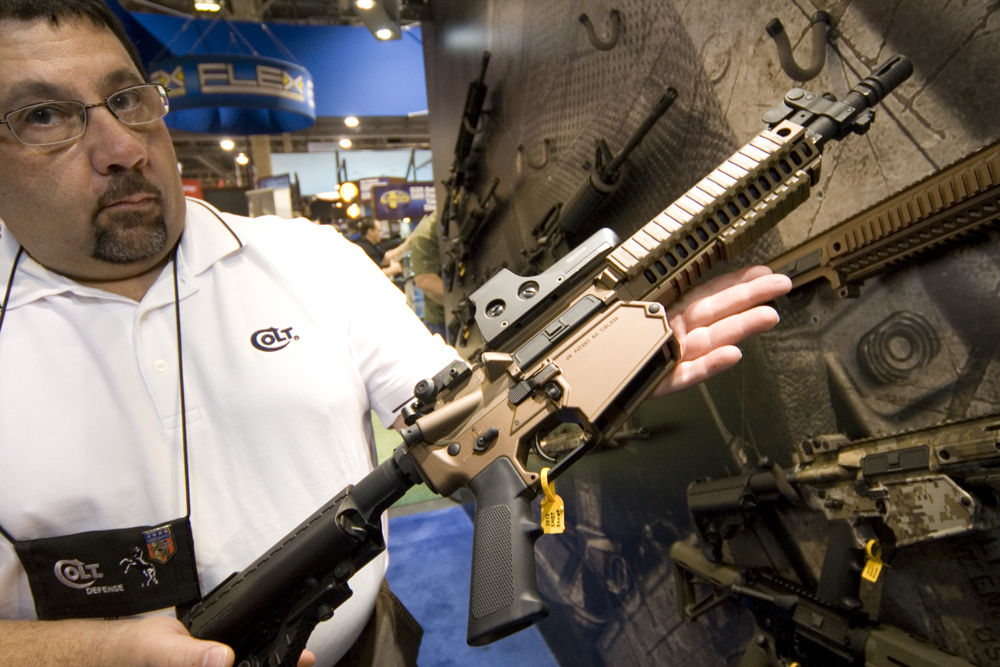
The Colt LE901-16A configured with 7.62 upper.
Outdoorsmen who need a versatile hunting weapon, sport shooters seeking a high-performing target rifle and tactical professionals seeking an accurate shot in a sniper situation will all find what they are looking for in the Colt LE901-16S.
“This is an exceptional rifle for a wide variety of shooters due to the interchangeability in caliber,” said David Ridley, Vice President of Colt Defense, LLC, “With a simple swap of the upper receiver shooters can switch to the caliber they need for the shot they want to achieve.”
In the classic .308 Winchester (7.62×51 NATO), the LE901-16S is chambered perfectly for a tactical professional’s sniper shot. By changing the upper receiver and buffer system, you get a .223 Remington (5.56×45 NATO) weapon.
The Colt LE901-16S rifle weighs only 9.4 pounds and measures 37.5 inches with the stock extended. It has an effective range of 700 meters and a rate of fire between 700 and 950 rounds per minute when configured for .308. Exceptional accuracy comes by way of the free floated, 16-inch, chrome-lined barrel and one-piece monolithic upper receiver.
The Colt LE901-16S set up with a 5.56 upper.
All operating controls on the LE901-16S are ambidextrous, including the magazine release, bolt catch and fire control selector. The monolithic rail covers the foreend and is suitable for mounting optics in addition to the back up iron sight (BUIS) offered standard on the rifle. The LE901-16S features a black Vltor buttstock and comes with two black 20-round Magpul PMAGs.
The rifle will come in five different anodized camo finishes, in addition to black. I was told that the anodizing process used by Colt is itself a tightly-guarded secret (the rep at the SHOT Show wouldn’t even disclose who does it) because it masks the weapon’s Infrared Red (IR) signature.
As a designated marksmanship rifle (DMR) the benefits are obvious: The sharpshooter can enter and exit an area with the upper configured as a 5.56 CQB carbine to fight his way in and out; and once in position it’s only a matter of seconds to swap the upper for sniping.
While the Colt rep I spoke to at SHOT said it takes about 30 seconds to change the upper, I witnessed him do it in about half that time. MSRP is $2129.00.
We couldn’t immediately understand why an AR-style weapon was situated in the shotgun area of Media Day at the Range during SHOT Show 2012. But we soon realized we were looking at the Akdal MKA 1919 shotgun.
The Akdal MKA 1919 is a gas operated, semi-automatic shotgun manufactured in Turkey by Ucyildiz Arms.
The MKA 1919 not only resembles the M16 rifle but the control and function are similar. The MKA 1919 is unlike any other 12 gauge shotgun in the U.S. as it is very light, ergonomic, and magazine fed.
As a semi-automatic shotgun, it uses a conventional gas-operated action which is located around the support tube that runs below the barrel. The return spring is also located around the same support tube which is concealed by an enlarged polymer handguard.
Its barrel can be very easily removed from the upper receiver. The upper receiver is manufactured from an aluminum alloy while the lower receiver, pistol grip, and stock are manufactured as one piece from impact resistant polymer.
The potential uses of the gun for tactical applications are obvious. But this thing – even when outfitted with red-dot type optics – can break clays like you wouldn’t believe.
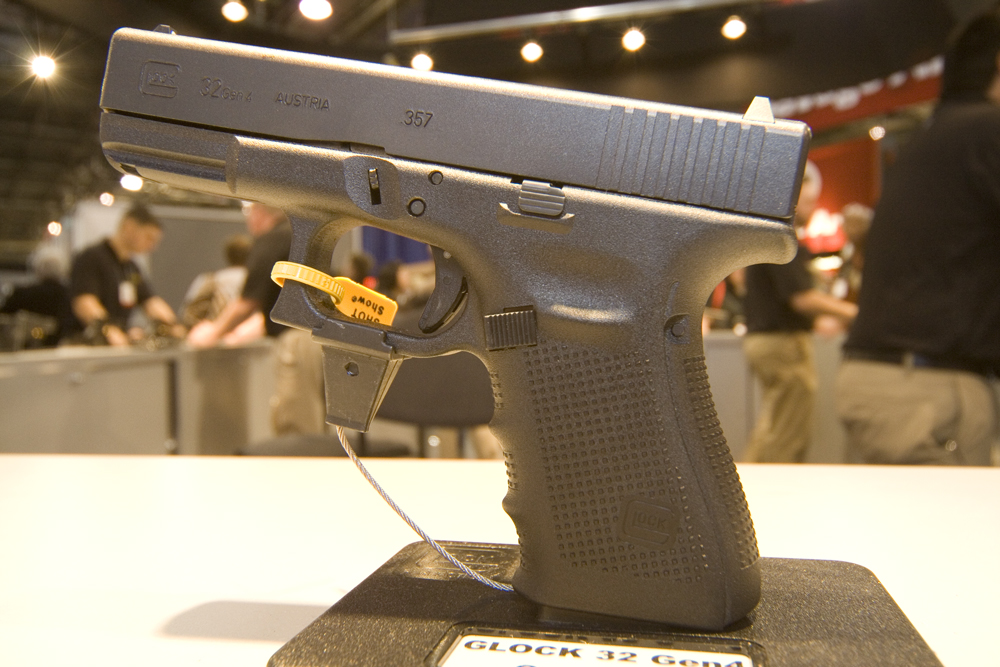
As previously reported here on TacticalGearMag.com, Glock announced it would introduce the G21 (.45 Auto), G32 (.357) Gen4 models at the 2012 SHOT Show in Las Vegas.
Known for their improved ergonomics, the Gen4 pistols utilize the Multiple Back Strap (MBS) system to enhance the grip of the pistol. Each Gen4 comes with three difference grip options: a short, medium and large size, enabling the pistol to adapt to each individual shooter’s hand size with the removal and insertion of a single pin. In addition, the grip has also been given a new Rough Textured Frame (RTF) to increase grip traction.
The Glock Gen 4 32 in .357 Sig at SHOT Show 2012. Photo by Corey Graff
The Gen4 magazine release catch has been enlarged and is reversible for the ambidextrous shooter. To utilize the interchangeable magazine release feature, the Gen4 magazines have two notches cut on each side of the magazine body, allowing users to switch access of the catch to the left or right side of the pistol with no additional parts.
The Colt LE901-16S at SHOT Show 2012 Media Day. Photos by Corey Graff
There was no shortage of AR-style rifles at SHOT Show 2012. But one of the most interesting was the Colt LE901-16S, a select-fire rifle designed to allow you to change the upper from 5.56 to 7.62 in a matter of seconds.
With a simple swap of the upper receiver, the chambering can be altered from .308 Winchester to .223 Remington, making the Colt LE901-16S a versatile rifle for a variety of shooters.
Outdoorsmen who need a versatile hunting weapon, sport shooters seeking a high-performing target rifle and tactical professionals seeking an accurate shot in a sniper situation will all find what they are looking for in the Colt LE901-16S.
“This is an exceptional rifle for a wide variety of shooters due to the interchangeability in caliber,” said David Ridley, Vice President of Colt Defense, LLC, “With a simple swap of the upper receiver shooters can switch to the caliber they need for the shot they want to achieve.”
In the classic .308 Winchester (7.62×51 NATO), the LE901-16S is chambered perfectly for a tactical professional’s sniper shot. By changing the upper receiver and buffer system, you get a .223 Remington (5.56×45 NATO) weapon.
The Colt LE901-16S rifle weighs only 9.4 pounds and measures 37.5 inches with the stock extended. It has an effective range of 700 meters and a rate of fire between 700 and 950 rounds per minute when configured for .308. Exceptional accuracy comes by way of the free floated, 16-inch, chrome-lined barrel and one-piece monolithic upper receiver.
All operating controls on the LE901-16S are ambidextrous, including the magazine release, bolt catch and fire control selector. The monolithic rail covers the foreend and is suitable for mounting optics in addition to the back up iron sight (BUIS) offered standard on the rifle. The LE901-16S features a black Vltor buttstock and comes with two black 20-round Magpul PMAGs.
The rifle will come in five different anodized camo finishes, in addition to black. I was told that the anodizing process used by Colt is itself a tightly-guarded secret (the rep at the SHOT Show wouldn’t even disclose who does it) because it masks the weapon’s Infrared Red (IR) signature.
As a designated marksmanship rifle (DMR) the benefits are obvious: The sharp-shooter can enter and exit an area with the upper configured as a 5.56 CQB carbine to fight his way in and out; and once in position it’s only a matter of seconds to swap the upper for sniping.
While the Colt rep I spoke to at SHOT said it takes about 30 seconds to change the upper, I witnessed him do it in about half that time. MSRP is $2129.00.
Every year the shooting industry rolls out the latest guns and gear at Media Day at the Range, held during the annual Shooting, Hunting and Outdoor Trade (SHOT) show. This year the fun was in the desert, outside of Las Vegas, Nevada. Gun Digest was there, shooting everything we could get our hands on.
Looking to go armed, but are stuck in the weeds as to what to arm yourself with? Here are 20 of the best concealed carry gun options that will keep you on the defensive.

 Attorney General Eric Holder vigorously denied a “coverup” by the Justice Department over “Operation Fast and Furious,” telling a House panel investigating the botched gun-running program that he has nothing to hide and suggesting the probe is a “political” effort to embarrass the administration.
 New! The Gun Digest Book of the AR-15 Vol. III