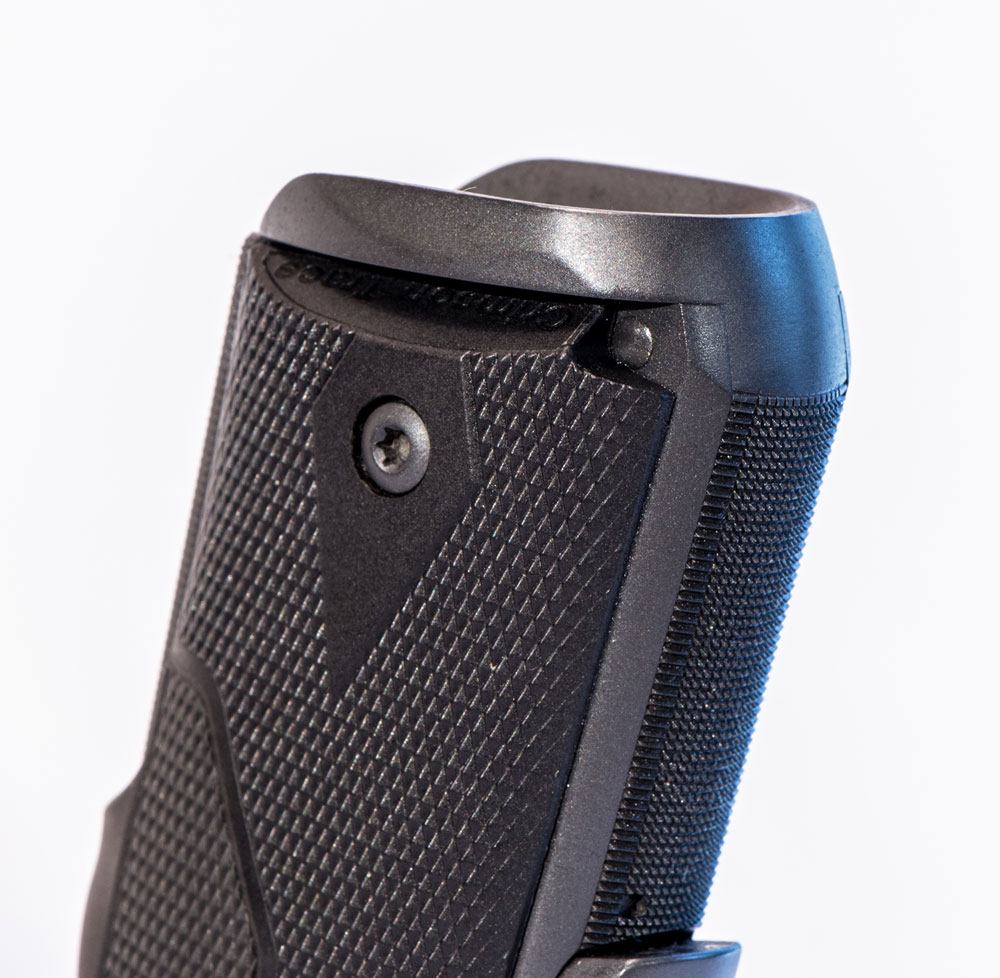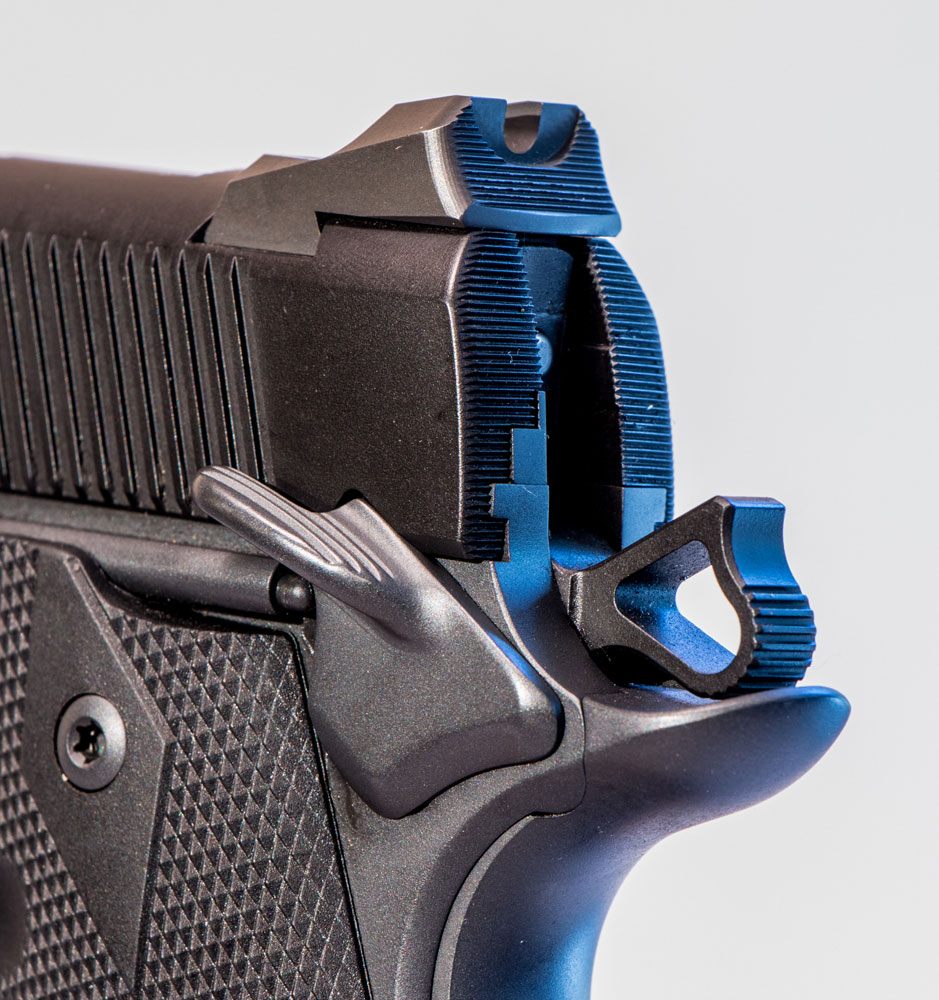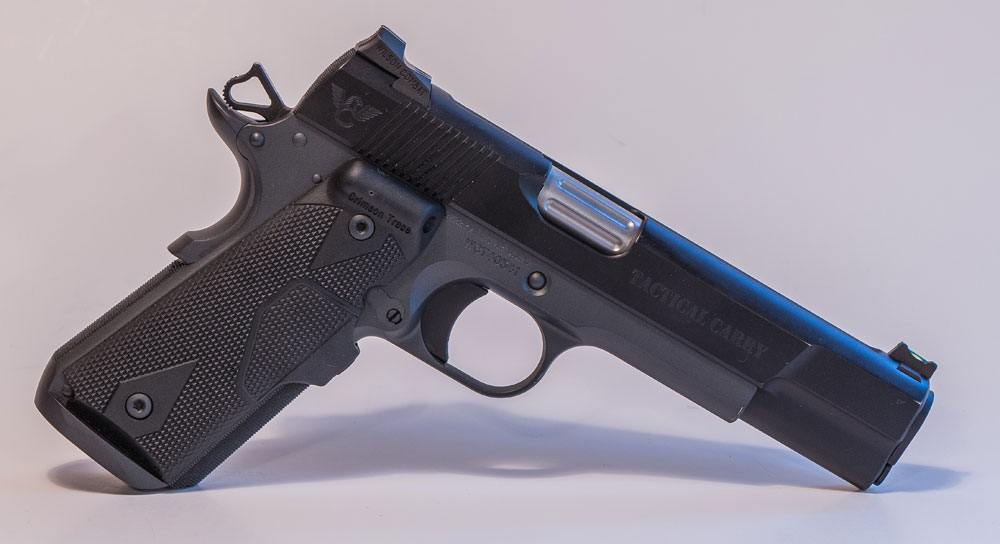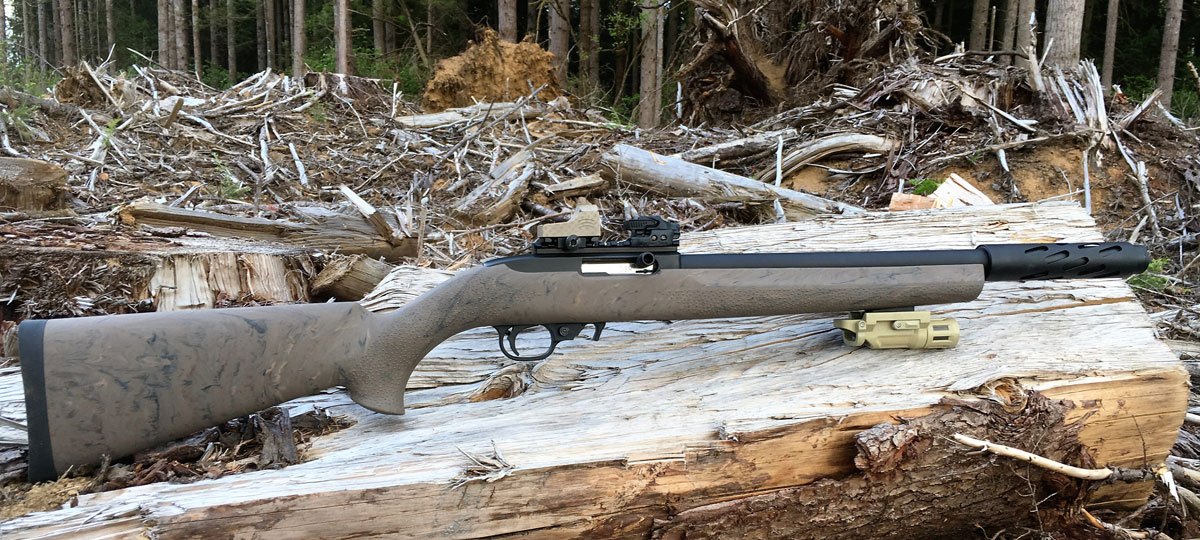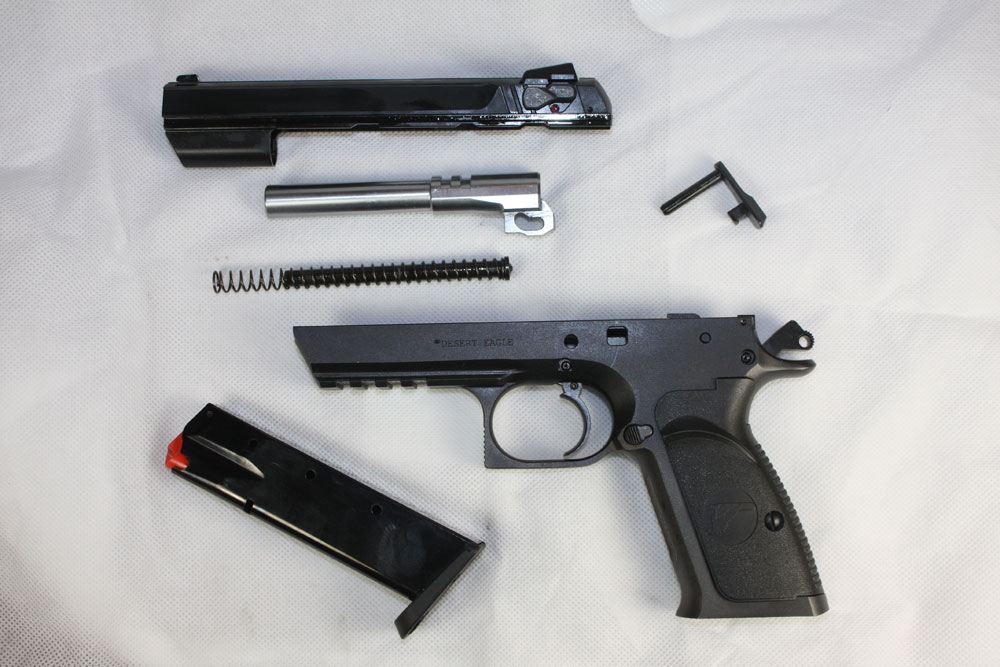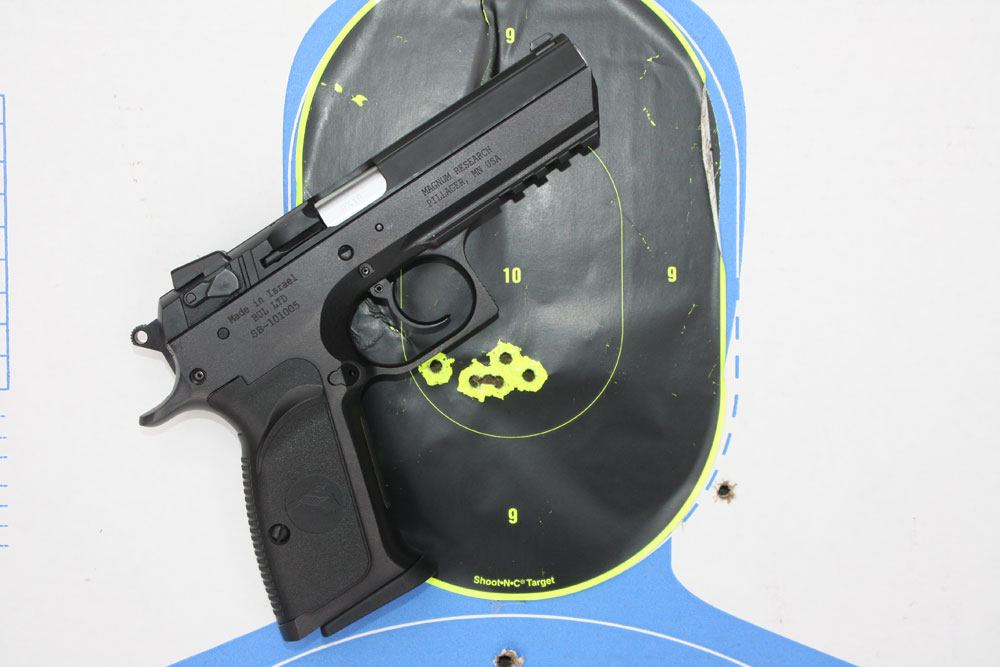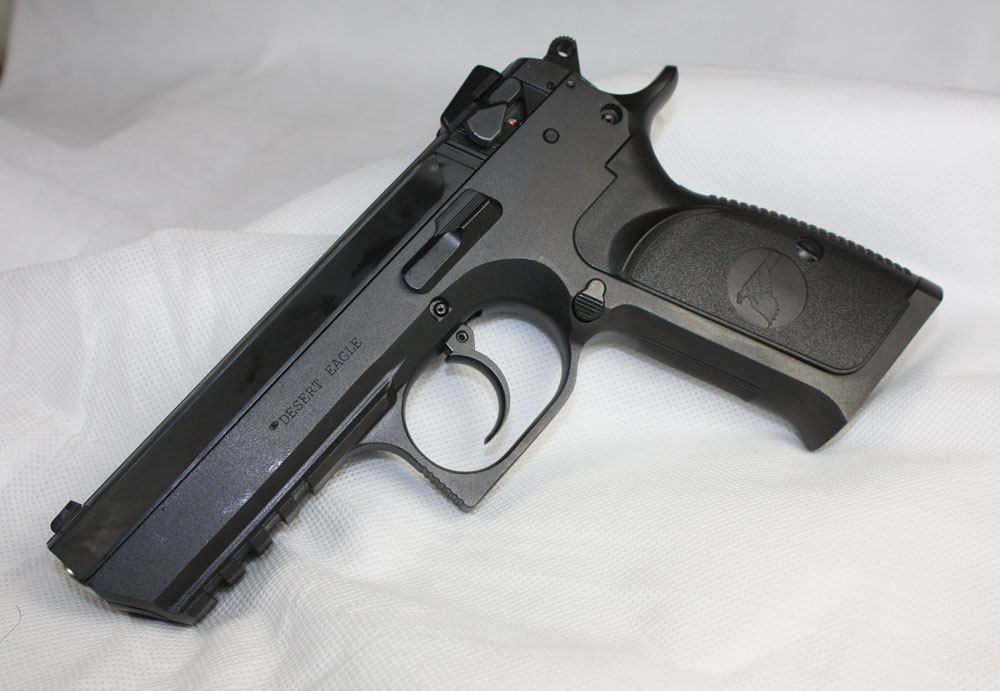
Ruger is continuing to bet on the American Pistol, expanding the options for shooters with a new variation for 2017.
The American Pistol seemed to have an impossible task. Ruger’s polymer-framed, striker-fired pistol was released to a market plum lousy with that particular style of handgun. Perhaps beating the odds, the pistol has found its place in the ocean of black plastic.
The New Hampshire gunmaker is continuing to bet on the American Pistol, expanding the options with a new variation for 2017. The .45 ACP Compact model is now available with an ambidextrous manual safety.
Located at the rear of the frame and configured to be engaged and disengaged with a flick of the thumb, the safety offers ample real estate for manipulation. The size is a plus, allowing quick operation with gloves or when fine motor skills are degraded by adrenalin. It also adds a peace of mind to the popular concealed-carry sized pistol, adding a redundancy against a negligent discharge.
The only vital spec the manual safety modifies on the pistol is its width, and it scarcely does that. The option tacks on .11 inches of width to the original’s dimensions, giving it a final measure of 1.51-inches across.
From there, the 29-ounce .45 ACP American Pistol Compact is familiar to those who know the line. The pistol has a 3.75-inch barrel and ships with a 10- and 7-round magazine. The handgun features replaceable grip modules, allowing shooters to customize the gun’s fit to their hand. And it is outfitted with genuine Novak LoMount Carry three-dot sights and a mil-standard 1913 accessory rail.
This is the second .45 ACP in the American Pistol line to be released with a manual safety. Earlier on, the 4.2-inch barreled Duty model was offered with the option. Ruger is also releasing the Duty and Compact 9mm with the same feature.
The manual safety variation of .45 ACP American Pistol Compact MSRP is $579.
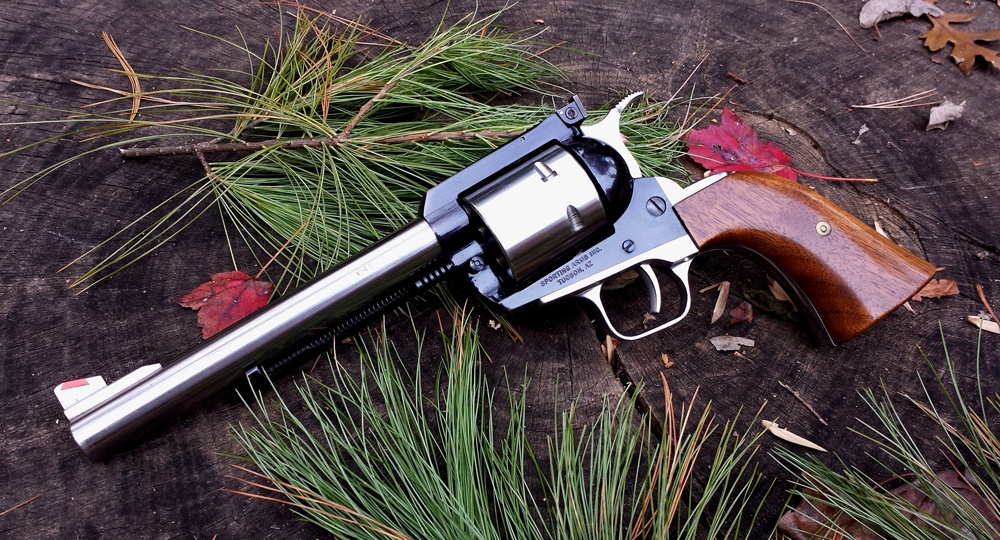
The new Uberti 1872 Open Top is a classic beauty that faithfully replicates the old school Richards/Mason conversion revolver.
Shooters today tend to take for granted self-contained metallic cartridges that combine the primer, powder and projectile into one unit that is easy to load and handle. But when they first appeared, they were a gigantic advancement over the time-consuming process of stuffing powder, wad and ball into a barrel and then adding a cap to set it all off.
The first practical metallic cartridge revolvers developed by Colt were introduced in 1871. A Colt engineer named Richards designed a system to allow old cap and ball revolvers to fire the newfangled metallic cartridges. Modified guns were called Colt Richards conversions and had a new breech plate, firing pin, rear sight, ejector rod and usually a new cylinder.
Then another Colt engineer named Mason made some improvements, which included mounting a firing pin on the hammer. By this time though, all the old cap and ball barrels that were fitted with a loading rammer had been used up, so new barrels were used that did not have the rammer recess. These newer modified guns were called Richards/Mason conversions.
A great many old cap and ball revolvers were sent to Colt to be converted to fire metallic cartridges using either the Colt Richards or Richards/Mason conversion. These conversions were very popular in the Old West even after the Colt Singe Action Army (SAA) had been made the primary military handgun. It seemed that the public was satisfied with the conversions and most SAA production was going to the government anyway.
There were mainly three calibers or cartridges used for conversions. They were the .38 rimfire, .38 centerfire and the .44 Colt centerfire, with the most well known probably being the .38 Colt. It used a heel-type bullet – similar in appearance to the bullets used in .22 rimfire ammunition today – with 130- to 150-grain projectiles and a diameter of about .375 to .380 inch. Eventually, the round was modified and became the .38 Long Colt with a .357-caliber bullet of about 150 grains.
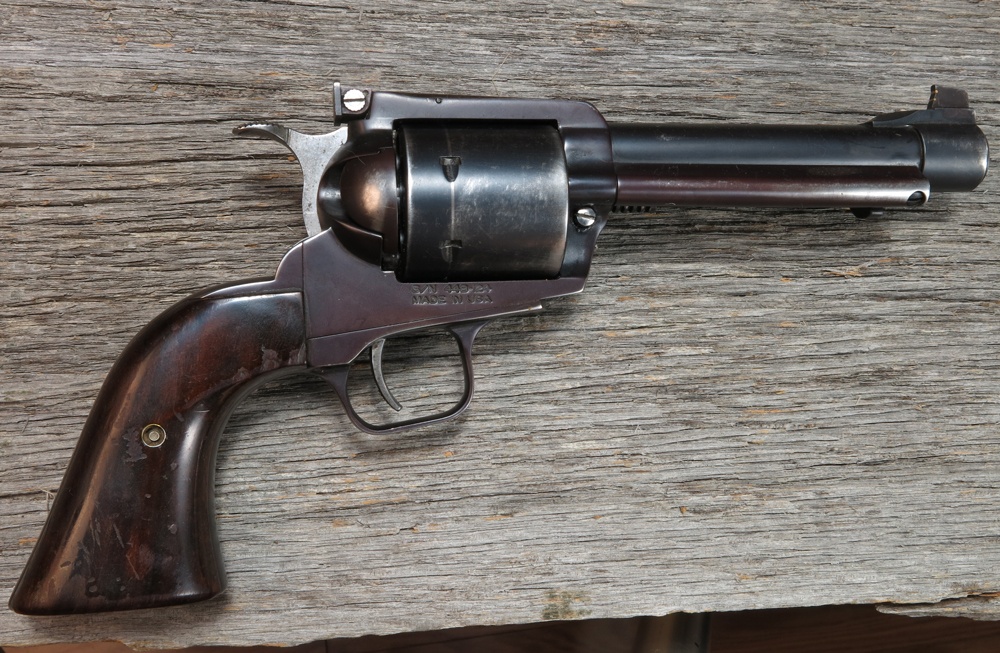
For testing, Uberti sent a Model 1872 Open Top revolver chambered in .38 Special, which is representative of a Richards/Mason conversion. It does not have need of a breech plate to fill the gap between the breech and the back of the cylinder, and a barrel representing one of new manufacture for the period is used. This gun is nevertheless a nearly accurate replica of a revolver that was used in the Old West.
Original revolvers of the time did not have a safety, but the replica 1872 does have one, of sorts. This is probably dictated by regulations regarding imports, since the gun was produced by Uberti in Italy. To engage the safety, the revolver needs to be unloaded and in the half-cocked position. Then a small screwdriver is used to partially turn a screw on the right side of the hammer, which causes a steel post to rotate out from the face of the hammer. The post prevents the firing pin, which is integral to the hammer, from striking the primer of a cartridge. It's not quick to engage or disengage, but in an age of run-away litigation, is a sad necessity.
When single-action revolvers were common, shooters knew how to carry them to prevent a discharge if they were dropped and the hammer was driven forward to strike the primer of a cartridge. It was simple. Carry the revolver with an empty chamber beneath the hammer. Yeah, the gun is a six-shooter, but it was safer to carry only five rounds if the gun wasn't going to be fired immediately after loading.
Accomplishing this is actually pretty simple. First, pull the hammer back to the half-cock position. This frees the cylinder to turn clockwise when viewed from the rear. Open the loading gate on the right side of the revolver and drop a cartridge into the exposed chamber. Rotate the cylinder clockwise, past the next empty chamber, to the second empty chamber. Then load a cartridge and continue rotating the cylinder clockwise putting a round into each of the next three chambers. Now there are five rounds in the cylinder. Close the loading gate while keeping the gun pointed in a safe direction.
Next, keeping the gun pointed in a safe direction, cock the hammer fully. This should rotate the cylinder one-sixth turn and lock it in place over the empty chamber. Carefully lower the hammer all the way by pulling the trigger and retarding the fall of the hammer with the thumb. The hammer should now be all the way forward on an empty chamber. Double check this by carefully checking to make sure the cylinder is locked in place and, again while the gun is pointed in a safe direction, looking at the rear of the cylinder to check that the chamber under the hammer is empty.
The test 1872 Open Top was nicely finished and well fitted. The 7.5-inch barrel as well as the cylinder, trigger guard, ejector, ejector rod housing, and grip frame were nicely polished and blued. The recoil shield, loading gate and hammer were attractively color case hardened, and the front blade sight appears to be made of brass. Stocks, or grip panels, were of dark-stained walnut with a gloss finish.
The un-fluted cylinder features depictions of naval scenes, which is true to the period. Markings include 1871 on the left side of the barrel and patent dates of 1871 and 1872, as well as “.38 Cal” on the left side of the frame. The hammer spur is checkered to help prevent the thumb from slipping when cocking the hammer, and the rear sight is nothing more than a bump at the rear of the barrel in which a shallow U notch has been cut. Sight alignment was to point of impact, an important factor in a gun where the sights are not adjustable.
Takedown for cleaning is simple but does require a screwdriver, hammer and drift. After making sure the gun is unloaded, the hammer should be half cocked. Then, the retention screw for the barrel wedge on the left side of the barrel should be turned about 1/4 turn so the flat allows the wedge to be removed by gently tapping it out from the right side. Next, the barrel assembly can be removed from the frame. That may require gently tapping with a soft hammer because the fit is tight, as it should be. Then the cylinder may be pulled forward and separated from the frame.
Shooting the 1872 with a variety of .38 Special loads proved to be pleasant. The gun was accurate, and recoil – due to the weight of the gun and relatively low velocity of .38 Special ammunition – was light. And, because the gun is single action and takes longer to reload than does a magazine-fed semi-automatic, shooting became a more leisurely activity. It also made one appreciate the challenges faced by a shooter in the 1870s that might have defended his life with a gun like this.
For more information, visit Uberti.com or contact Stoeger Industries at 800-264-4962.
PERFORMANCE UBERTI 1872 OPEN TOP
Load Velocity (fps) Average (in) Best (in.)
American Eagle 130 FMJ 876 .67 .64
Black Hills 148 HBWC 691 .70 .63
Hornady 110 Critical Defense 1,004 .72 .69
Bullet weight measured in grains, velocity in feet per second 15 feet from the muzzle by chronograph, and accuracy in inches for three five-shot groups at 7 yards.
Specifications:
Uberti 1872 Open Top Revolver Caliber: .38 Special Barrel Length: 7.5 in. Overall Length: 13 1/4 in. Weight: 44 oz. Stock/Grip: Walnut Sights: Fixed rear notch and front blade Action: Single action Finish: Blued Capacity: 6 Price: $569
This year, Ruger has made an interesting leap with its Gunsite Scout Rifle, marrying it to a one-off of another of Cooper’s ideas — the Thumper — by bringing it out in .450 Bushmaster.
Jeff Cooper was a whirlwind of firearms ideas. Some faded away with the years, others are running strong decades after they sprouted from the Colonel’s synapse.
Next to his notions on self-defense, perhaps one of the most enduring of his concepts has been the scout rifle. The aim of the utility firearm was to do a little bit of everything equally well, and since the early 1980s, gun enthusiasts and makers have proved Cooper’s idea sound. With a slew of home-brew iterations and a handful of manufactured models, the scout rifle has staked its place in shooters' hearts and the overall gun marketplace.
Ruger embraced the concept wholeheartedly with the introduction of the Gunsite Scout Rifle series a number of years ago. And since, it has expanded the line of rifles to encompass a wide variety of calibers and options — some coloring outside the lines of Cooper’s original definition of the rifle.
This year, the New Hampshire gunmaker has made an interesting leap with its Scout Rifle, marrying it to a one-off of another of Cooper’s ideas — the Thumper.
The Ruger Scout Rifle is now being offered in the behemoth .450 Bushmaster, a round that throws an ample slug of copper-jacketed lead down range. And while the round wasn’t invented by Cooper himself, its development was most definitely spurred by the Colonel’s Thumper — a large-bore infantry semi-automatic, meant to deliver more punch per trigger squeeze.
This is the second bolt-action rifle the company has released for the round in the last few months. Late in 2016, Ruger added the .450 Bushmaster to its American Rifle line, making it among the first major manufacturers to offer the caliber in a bolt-action platform.
In addition to shooters who have an innate desire to throw 250-grain projectiles downrange or at watermelons, chambering the round for the platform does have a practical side.
The .450 Bushmaster has become a popular hog-hunting round, delivering devastating terminal ballistics to every form of wild or feral porcine. Combined with the maneuverability and quick target acquisition characteristics of the scout rifle, Ruger may have coined a superior hog gun. On top of that, it should fit the bill for Michigan deer hunters and a few other states that have restrictions on the rifles.
The new Gunsite Scout rifle features an American walnut stock with checkered forend and grip. It has a soft rubber recoil pad, incorporating Ruger's spacer system that allows for length-of-pull adjustment.
It has a Picatinny rail mounted on the barrel for the addition of the scout rifle’s traditional long eye relief scope and allowing access to the receiver. It comes outfitted with an adjustable ghost ring rear aperture sight and protected front blade sight. And it boasts Ruger’s Precision Rifle Hybrid Muzzle Brake on its 16.1-inch barrel. Ruger has also kept the rifle at the weight specs Cooper laid out for the scout rifle, tipping the scales at 6.6 pounds.
The Ruger Gunsite Scout Rifle has a MSRP of $1,199.
.450 Bushmaster Scout Rifle Specs Stock: American Walnut Front Sight: Protected Blade Rear Sight: Adjustable Ghost Ring Capacity: 4+1 (detachable box magazine) Barrel Length: 16.1 in. Overall Length: 37 to 38.5 in. Finish: Matte Black Length of Pull: 12.75 to 14.25 in. Twist Rate: 1:16 in. Grooves: 6 MSRP: $1,199
Christensen Arms has introduced the A-Series aluminum-framed 1911s for 2017, some of the lightest and most affordable pistols in the company’s catalog.
Think Christensen Arms and shooters typically conjure up visions of ultra-light rifles.
The Utah company’s innovative use of carbon fiber in the construction of barrels, stocks and rifles has set them apart. But in the shadow of the gunmaker’s long guns is an equally impressive family of pistols.
Christensen Arms has applied its unique materials know-how to churn out a slew of inventive 1911s, always with a focus on their strength, lightness and aesthetics. Stainless steel, titanium, carbon fiber and even Damascus steel have been machined and formed to create the venerable semi-automatic pistol.
Christensen Arms A4.
The company added another material to the docket in 2017, introducing its first line of aluminum-framed handguns. In addition to being some of the lightest pistols in Christensen’s catalog, the 7+1 capacity .45 ACP and 9+1 9mm A-Series 1911s are also among the most affordable.
Before the introduction of the 4-inch barreled A4, 5-inch barreled A5 and threaded-barreled A5-TR, shooters would have to shell out nearly $3,000 to get into most of the company’s pistol models. Christensen has vastly expanded its handgun market, with each iteration of its aluminum series coming in under $2,000.
The A-Series frame is machined from 7075 aluminum, a zinc alloy commonly used for producing the upper and lower receivers of AR-15s. The high-strength aluminum keeps pistols whisper light, with the A5 tipping the scales at 2.2 pounds, the A5-TR at 2.4 pounds and A4 at 2 pounds. The compact pistol is actually the lightest in Christensen Arms’ catalog.
The stainless steel slides of the A-Series — available in black finish or polished steel — are newly designed and hand fit to their frames. The gun features a tunable match-grade trigger, and Christensen Arms isn’t shy about boasting about the pistol’s smoothness of operation and accuracy. The company guarantees a 5-shot, 2-inch group from 25 yards.
Christensen Arms A5-TR.
Christensen opted for rugged G10 grips, aggressively texturing them to facilitate a solid, positive purchase. The company has further ensured a stable grip on the pistols by checkering the front strap. And for a dash of a customized look, it has also outfitted the guns with a skeletonized trigger and hammer.
The A5-TR has a few extra accoutrements, including suppressor sights and a tactical rail below the barrel. The .45 ACP has a .578×28 thread, while the 9mm has a 1/2×28 thread.
All of the pistols are manufactured at Christensen Arms’ Gunnison, Utah facility, and each has a MSRP of $1,995.
Col. Jeff Cooper developed the Mozambique-Failure Drill for dealing with defensive shooting situations where a center mass shot won't do the job.
Sometimes shooting a bad guy in the chest just isn’t enough. Felons can be high on adrenalin or drugs to the point that they do not recognize or respond to pain. They could also be wearing body armor. Some years back, Col. Cooper developed what he called the “Mozambique Drill” for the purposes of dealing with this type of situation. Today, with the proliferation of zombies in our culture, it could be called the “zombie drill” or “zombie check,” because a head shot is the only way to kill a zombie. At least that’s what I’ve been told.
As the story goes, a Rhodesian named Mike Rousseau was serving as a mercenary in the Mozambican War of Independence. During a fight, he bumped into a guerrilla soldier armed with an AK-47. Rousseau immediately performed a double tap — two shots to the center of the torso. However, even with two new and bleeding nipples, the guerrilla was still coming at him, so Rousseau tried for the head. It kind of worked. The bullet hit the base of his attacker’s neck, severed the spinal cord, and stopped the fight.
Hearing this story, Cooper later incorporated this three-shot drill into his program of instruction as a way to end a fight that cannot be immediately stopped with bullets fired into the chest. Over the years, this drill has morphed into a variety of other drills and, if you put any two firearms instructors together, you’ll get a different opinion as to how it’s to be properly executed.
Ideally, a more practical application might be to fire two shots to the torso, take two steps back and to the side to keep your distance and, if your attacker is still attacking, attempt the head shot. However, here we are more concerned with your shooting than tactics, because the subtle nuances of the proper tactics can vary from situation to situation.
For simple evaluation purposes, position a target with a V1 and V2 zone 5 yards to your front. At the start signal, draw from concealment and fire two shots into the V1 zone and one shot into the V2 zone as fast as you can do so without missing either zone. If any of your three shots land outside the V zones, you have failed the drill. A par time for this drill should be four seconds. Most police officers cannot do it in less than five seconds without a miss. Anything less than three seconds is very good.
Flashlights and laser sights are excellent additions to any home defense firearm and strategy. Check out these great lasers and lights for home defense.
Bad things happen to good people. According to the Department of Justice, an average of 3.7 million household burglaries take place each year. More than a quarter of a million involve some sort of violent confrontation with the homeowner. Are you prepared? Owning a capable home defense firearm and knowing how to use it is a good start. You can’t protect your family if you don’t have the necessary tools. However, even the most competent gun owner can’t hit his target if he can’t see it. A high-quality light and a reliable, accurate laser sight can put the odds in your favor.
Editor's Note: This article is an excerpt from the March 2016 issue of Gun Digest the Magazine.
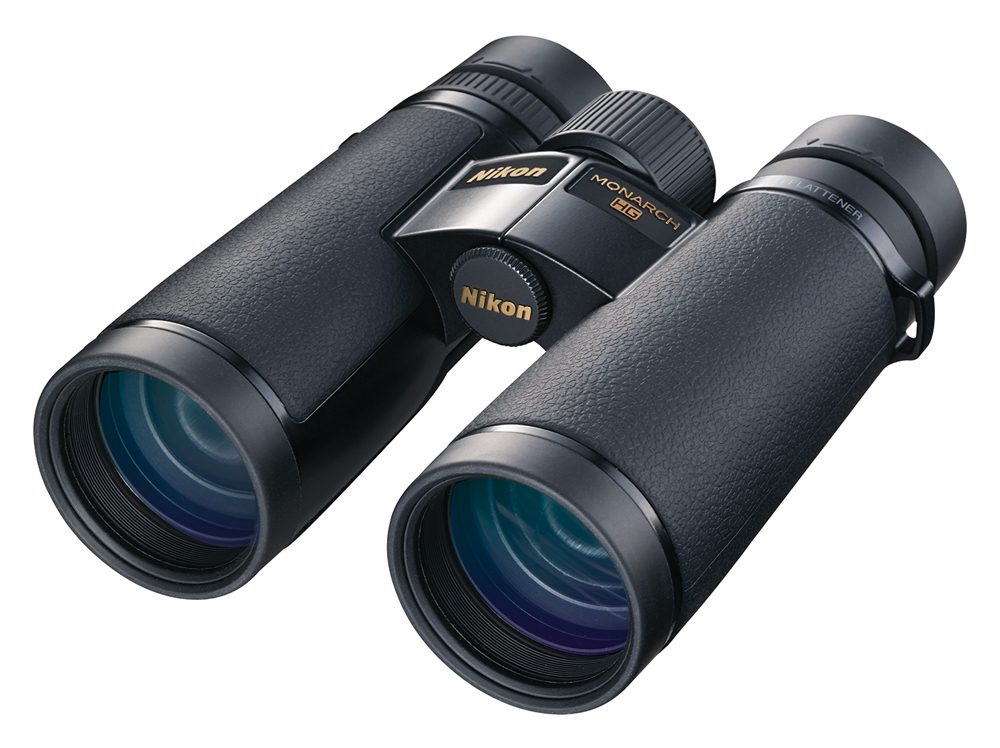
The new Meopta MeoPro 8×56 HD binoculars offer incredible low-light viewing performance and incorporate a host of other great features.
In his 1999 landmark book, “Optics for the Hunter,” John Barsness wrote, “Binoculars almost provide another dimension to our planet, and even the heavens.” Barsness also references Jeff Cooper’s anointing of the rifle as the queen of firearms and then goes on to call binoculars the “prince of the hunt.” I tend to agree with Cooper and Barsness but must offer that binoculars are not just for hunting.
Early on binoculars were just tools to allow both of your eyes to look at a magnified version of what they might gander at nakedly. With advancements in optics, we’re starting to see more specialized offerings. And, while the new roof-prism 8×56 MeoPro HD binoculars from Meopta might seem as though they’re just your average field glasses, they were built expressly for low-light performance.
According to Reinhard Seipp, General Manager and Chief Operating Officer of Meopta USA, “The MeoPro 8×56 HD is the perfect low-light binocular. Its large 56mm objective and 8x magnification create an exit pupil of 7mm, which is about the maximum pupil dilation of a normal human eye.” This large exit pupil floods the eye with light, allowing hunters to see fine detail in extremely dim conditions. This is important for hunters and shooters. You might need to assess an elk’s rack or you might be trying to see bullet holes in your target, just before or after sunset.
But these binoculars are not just about a large exit pupil. All MeoPro binoculars are assembled in the United States and utilize Fluoride HD objective lenses and MeoBright ion-assisted multi-coatings. The lightweight magnesium chassis is built to withstand rugged conditions, and the sculpted, shockproof, rubber-armored exterior is comfortable in hand. They’re also nitrogen purged and fully sealed for complete fog and waterproofness.
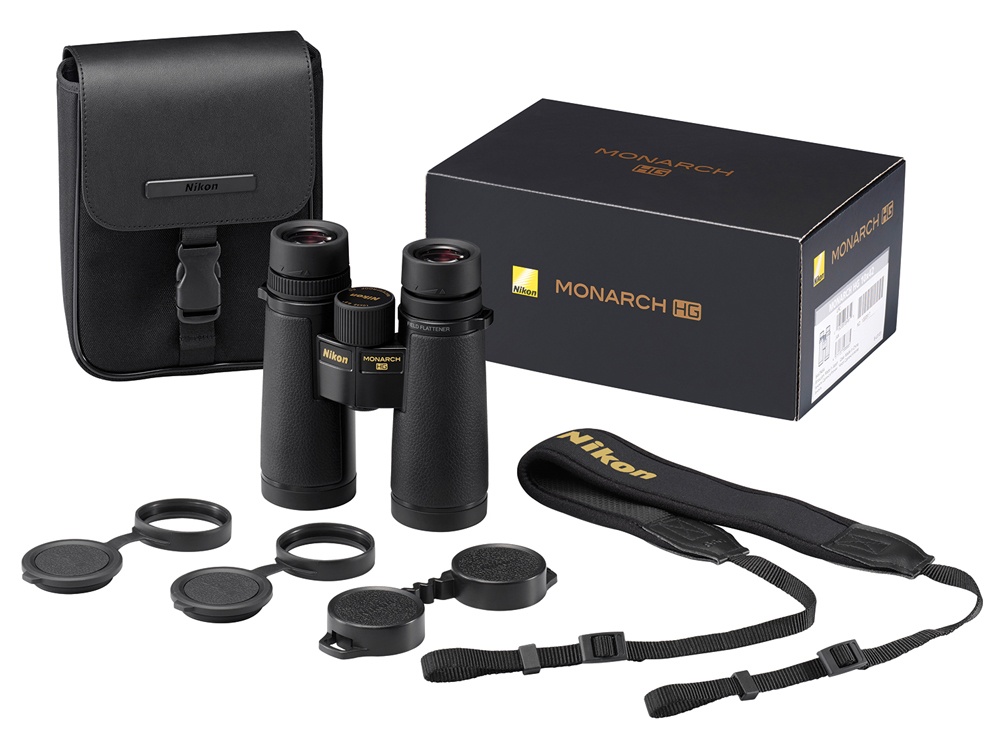
All external lenses are also treated with MeoShield. This is an abrasion-resistant coating, meeting military specifications. Twist-up eyecups feature four click-stop positions to accommodate users with or without eyeglasses and a right side ocular diopter control provides +/- 3 D adjustment for simple individual tuning. For their size, these binoculars are surprisingly light, and they have a capped tri-pod attachment on the front of the hinge. A soft case, strap and front and rear lens caps are included. Ingeniously, the strap and its quick disconnectors work for the binoculars or the carry case.
All you can really do when evaluating binoculars is look through them, toss them around, and get them wet. I subjected these field glasses to all that, but in the end, it generally comes down to a “take-my-word-for-it” evaluation. I really liked the way these glasses felt in my hands, and their low-light performance was astounding. I used them on several late evening whitetail hunts. Their brightness will easily fool you with regard to when the legal shooting hour has passed.
My eyes told me the MeoPro 8x56s were simply stunning, though I did notice minimal but inconsequential fuzziness in the extreme outer edge of the field of view. My only real complaint was with regard to the interpupillary distance – the separation between the left and right barrel. I have predator eyes – my pupils are only 55mm apart – and that was just outside the lower limit of adjustment with these binoculars. Admittedly, only 5 percent of the human population has eyes as close together as mine, so check before you buy.
Barsness also remarked in his book that most usually own two to four pair of not-so-good binoculars before stepping up and that it’s far cheaper to buy the best you can afford in the beginning. Considering the clarity and low-light performance of the Meopta 8×56 HDs, you’d be hard pressed to find a better place to start or end your binocular search.
With Apologies to Dusty Springfield, “In the cool of the evening when everything is gettin' kinda gloomy,” binoculars like these are what you want!
Specifications:
Meopta MeoPro 8×56 HD Magnification: 8x Objective Lens: 56mm Field of View: 6 degrees/314 ft. at 1,000 yards Eye Relief: 18.5mm Close Focus Distance: 7.2 ft. Exit Pupil: 7mm Twilight Factor: 21.2 Interpupillary Distance: 58-73mm Dioptric Correction: +/- 3 Height: 7.0 in. Width: 5.6 in. Depth: 2.6 in. Weight: 36.3 oz. MSRP: $1,034.99 Manufacturer: Meopta USA
The firearms industry has, at times in its history, been accused of being hidebound, stuck in the past and resistant to innovation, but there’s plenty of evidence that is no longer true.
As a case in point, consider the Spanish manufacturer Bergara, which found success over the past 10 years producing aftermarket replacement barrels and OEM barrels for rifle makers. Bergara’s approach was to wed an old technology—button rifling—to state-of-the-art machinery, robotics and exacting processes to mass-produce affordable, custom-quality barrels from the finest Spanish stainless steel. Bergara succeeded, in part, thanks to guidance from the late Ed Shilen, a legendary precision barrel-maker.
Building on that success, Bergara’s parent company, BPI Outdoors, launched a line of U.S.-built Bergara custom rifles in 2012, and the guns quickly established a solid reputation for accuracy. These rifles, as you might expect of most guns with the word “custom” attached to them, were not cheap. Recognizing the demand for more affordable high-quality rifles, the company responded last year with two new lines of production rifles, the Premier Series and the Performance Series, which brought prices more in line with high-end production guns.
One of the newest offerings to emerge from the Premier Series is the BPR17 LRP Elite, a chassis rifle chambered in .308 Win., 6.5 Creedmoor and, surprisingly, the 6mm Creedmoor, a wildcat.
Now, before you stodgy old hunters (like me) deride this new gun as just another heavy chassis rifle for snipers or the tacticool crowd, you may want to take a closer look. With a weight of 10.5-11 pounds, depending on caliber, the gun is heavier than most traditionally stocked bolt-action rifles, but that added weight is no hindrance in a deer blind. It can actually be advantageous when sniping prairie dogs at distance in wind, and you get the added advantages of bulletproof bedding and the ability to accessorize with optics, lights, lasers and suppressors. The LRP Elite has already found a home with several law enforcement agencies, and it’s showing up in PRS (Precision Rifle Series) matches.
Custom-Quality Barrels To understand Bergara rifles, you need to understand Bergara’s innovative approach to making barrels. This is the only component of the LRP Elite rifle that isn’t made or assembled in the U.S.
Our .308 Win. test rifle came with a 20-in., 416 Premium stainless steel, Cerakoted barrel. It began life as a straight bar of highly regarded Olarra stainless steel, which must demonstrate less than .004 in. of deviation before Bergara will use it for a barrel. It is straightened, if necessary, and a precise hole is drilled through the bar. Three separate honing spindles with diamond-tipped bits polish the interior surface to a mirror-like finish, removing tool marks and leaving only a very fine cross-hatch pattern.
“These honing marks are truly microscopic and are similar to, but much finer, than what you will find in a freshly honed engine cylinder,” said Ben Fleming of BPI Outdoors.
A carbide rifling button is then drawn through the barrel, at an appropriate twist rate per caliber, and the barrel is inspected to ensure groove diameter deviation of less than 2/10,000 (.0002) of an inch. Barrels are then stress relieved in a high-temperature heating process. Since much of the work is accomplished with advanced machinery (and one or two manufacturing secrets that Bergara won’t reveal), the company is able to offer custom-quality barrels at production-barrel prices.
Rifled barrels for the LRP Elite are shipped to a shop in Georgia, where final production and assembly of the rifle is done. This includes barrel profiling, chambering, threading and crowning. The No. 5 taper LRP Elite barrel, which I would call a medium-heavy profile, comes with a threaded muzzle (5/8×24) and a Dead Air Armament Key Lock Muzzle Brake. Whether a .308 rifle really needs a muzzle brake is open to debate, but this one does more than reduce perceived recoil. It serves as a mount for attaching Dead Air Armament Sandman-L and Sandman-S suppressors directly to the brake.
It’s worth noting that all work at the Georgia facility is overseen by a former production manager from the U.S. Marine Corps Precision Weapons Section.
Slick Action, Great Trigger The Georgia facility is the birthplace of the LRP Elite action. Bergara says it has a Remington 700 “footprint,” and one of the first things you’ll notice when you pick up this rifle and work the spiral-fluted bolt is the smoothness of the action. It is, in a word, slick. I found it easy to cycle the action using just the pinky finger of one hand.
The action is made of 4140 Chrome Moly steel and has a black Cerakote finish like all other exterior metal surfaces on the rifle. The bolt head, gas shield and other small parts are nitride-finished to increase hardness and wear resistance. The bolt body is made of 416 stainless steel and left unfinished as a nice contrast to the otherwise all-black, all-business countenance of the rifle.
The floating, two-lug bolt head is self-adjusting, which theoretically contributes to enhanced accuracy. Inside the bolt face, you’ll find a standard plunger ejector. The extractor is a sliding plate design, and is dovetailed into the face of a locking lug. The bolt handle is smooth and slightly oversized.
I was pleased to discover that the rifle is equipped with a Timney 517 flat-blade trigger. I haven’t counted lately, but I’d guess that half of my bolt-action rifles wear Timney triggers, so it’s safe to say I’m fond of them. This one comes with a two-position safety which does not lock the bolt down. The trigger’s pull weight is adjustable from 1½ to 4 pounds. The trigger on our test rifle broke cleanly and crisply at 3 pounds 2 ounces, with absolutely zero creep, and I left it at its factory setting to duplicate a buyer’s out-of-the-box experience.
The LRP Elite rifle comes standard with a 20 MOA base, manufactured by Talley, attached with 8×40 screws versus standard 6×48 screws.
No Bedding Required A Mega Orias chassis (a collaboration between Killer Innovations and Mega Arms) nestles the Remington 700-ish action into a solid V-block, and secures it using a patent-pending, self-adjusting recoil lug locking system. Tightening the bolt on the bottom of the chassis makes an expansion clamp expand against the recoil lug. The recoil lug, in turn, is pushed against a self-adjusting, half-round piece of steel that’s held in place with a magnet. This system automatically adjusts for any angularity difference between the recoil lug and the chassis, eliminating the need for traditional bedding materials. The system sounds more complicated than it is, but provides rock-solid bedding for the action.
“It is genius,” said Fleming.
The Orias chassis is machined from 7075-T651 billet aluminum and has a protective black Cerakote finish. It has a removable rear trunnion which is compatible with all AR-style buffer tubes and buttstocks. There are four hardened-steel, anti-rotational, nitride-coated QD inserts for attaching slings, and you’ll find 11 KeyMod attachment slots on either side of the forend and seven on the underside.
There’s also an ambidextrous magazine release consisting of twin paddles, with raised grooves, riding flush with the leading edge of the trigger guard and protruding to either side. It takes a bit of getting used to if you haven’t used this style of magazine release before, but operating it quickly becomes second nature. There’s plenty of room inside the trigger guard for a gloved trigger finger, and gloves won’t get in the way of using the magazine release.
The chassis comes with a rubberized pistol grip that will find favor with those who like finger grooves. It is also equipped with a Magpul PRS (Precision rifle/sniper) stock. I’ve used this stock to good effect before, most notably in a NRA long-range shooting school, while working over targets at 400-1,000 yards. The stock, which is adjustable for length of pull and comb height, provided a precise individual fit and optimal eye-to-scope alignment.
Range Results Happily, our test rifle arrived with a Nightforce NXS 5.5-22×56 scope mounted and zeroed at 100 yards, minimizing set-up time for testing. Unfortunately, I had to contend with spring weather in south-central Texas, which meant thunderstorms with windy days in between. As a result, all testing was done over two days when the wind gave me mild fits, with wind speed varying eight to 19 mph on both days. Talk about real-world conditions.
The Bergara handled it like a champ, turning in great groups despite the windy conditions and being fed only hunting, not match, ammunition. Half of the tested loads turned in average groups measuring an inch or less, while all six tested loads averaged well under an inch and a half.
Federal’s 165-grain Trophy Copper load and Hornady’s Custom Lite 125-grain SST load tied for best-group honors, with both loads producing single-best groups measuring 0.58 inches. For that matter, the rifle shot sub-MOA best groups with all but one of the tested rounds. With factory hunting ammo, under windy testing conditions, this was very good performance.
There was only modest velocity drop-off, ranging from 29 to 88 fps, from factory advertised velocities for five of the loads out of the rifle’s 20-inch barrel. The Federal Trophy Bonded Tip load actually zipped along 32 fps faster than advertised.
Functionally, the rifle did everything it is supposed to do. It fed from the detachable five-round magazine flawlessly. Extraction and ejection were normal. The trickiest part of operating the rifle was inserting the magazine while shooting the rifle from the bench. It takes a little practice to get the magazine started smoothly, and I would gently suggest that the chassis could benefit from a little beveling of the magazine well.
That’s just nit-picking on my part. Overall, it’s hard to find fault with the way the rifle is put together or how it performs. The main objection some may have is the price ($2,600), but it helps to remember that you’re essentially buying a custom-quality gun at a production-gun price. As I quickly discovered, the more you shoot the LRP Elite, the more it starts to look like a bargain.
Specifications:
Bergara Premier Series LRP Elite Type: Bolt action, pushfeed Caliber: .308 Win., as tested Barrel: 20 in., 416 stainless steel, 1:10 twist Weight: 10.5 lbs. Chassis: Mega Orias Stock: Magpul PRS Grip: Rubber finger groove Trigger: Timney 517 flat blade Magazine: Accuracy International 5-round Muzzle Device: Dead Air Armament Key Lock Muzzle Brake Price: $2,640 Manufacturer: Begara
In an effort to continue advancing the AR platform, Troy Industries has brought out several new accessories for customizing the AR in 2017.
Although it's true that Troy Industries manufactures a number of innovative firearms, including its line of Pump-Action Rifles (PARs) – pump-action operated versions of the classic AR-15 carbine — the company is also a well-known and highly respected player in the AR accessory game. It's been making rail systems, stocks, back-up sights, muzzle devices and other accessories for some time now.
So, it's no surprise that for 2017 the manufacturer has brought out several new accessories and upgrades for fans of the AR platform. Above, we take a brief look at these new accessory options from Troy Industries.
The new Springfield Armory EMP 4 provides fans of Browning’s classic design with a dedicated and upgraded 9mm 1911 well suited for carry.
As a writer and instructor, I’m often asked to suggest a quality concealed carry pistol. There are so many exceptionally good pistols and revolvers today that it’s more difficult to find a bad carry gun than a good one. Still, the concealed carry market is the hottest segment in the firearms industry, so manufacturers are constantly striving to upgrade offerings to make them more desirable. While modern polymer frame striker-fired pistols own the lion’s share of the market, there still are many who prefer the old school 1911-style pistols.
Adapted for military service 105 years ago, the 1911 is still a viable choice for self defense. It’s earned a reputation for ruggedness and reliability, and no one in their right mind would argue with over 100 years of success. Modern metallurgy and engineering have improved the already-proven design, and today’s 1911s are even better than the originals.
Springfield Armory was formed to manufacture the M1A rifle in 1974. A few years later it began producing the 1911 pistol in service grade. In 2001, the company introduced the highly successful XD line of pistols produced in Croatia, but it’s still one of the most recognizable 1911 producers. In 2001, Springfield introduced the Range Officer (RO), a 1911 that came from the factory with competition upgrades. With an excellent BoMar-style rear sight, an ambidextrous safety and extended grip safety, the Range Officer was a basic platform for the competitive shooter and saw considerable success.
The original 9mm 1911 was the Colt Commander, with a 4.25-inch barrel and an aluminum frame. It was more concealable and manageable for service and concealed carry. Recently, Springfield Armory introduced the 9mm EMP, reviewed in these pages. While the 9mm round was easily adapted to 1911s, the magazines always used either a spacer in the rear or a crimped area up front to keep the shorter 9mm round from floating around in standard 1911 magazines. The EMP series of pistols are redesigned in the grip area to better fit shorter 9mm and .40 S&W rounds, with the added bonus of a smaller and more compact grip.
The EMP 4 features a matte finished stainless steel slide and a 4-inch barrel.
At first glance, you don’t see the difference, but go from the standard size to the EMP grip, and it’s noticeable. Designed primarily as a self defense, concealable pistol, the EMP is definitely more concealable. While the grip is .125 inch shorter from front to back, it’s also .200 inch thinner than the standard 9mm Range Officer grip due to thinner grip panels. The result is a gun that’s much more comfortable for those with smaller hands. Also, the thumb and grip safeties are more smoothly contoured than the Range Officer. The original EMP was introduced at the 2016 SHOT Show with a 3-inch bull barrel and now, there’s a 4-inch version, the subject of this review. Weighing in at 31 ounces, the EMP 3 features a Novak-style rear sight with two white dots and a high-visibility front sight that comes with both red and green inserts. Both sights are drift adjustable for windage. While the slide is matte finished stainless steel, the frame is matte finished black aluminum alloy. There are cocking serrations on the rear of the slide, and in 9mm, racking the slide is easily accomplished. The hammer and trigger are skeletonized, and there’s no backlash adjustment on the trigger, a reasonable choice since it’s designed as a defensive pistol. The front strap and flat mainspring housing are nicely checkered, offering good grip without being uncomfortable. The beavertail grip safety has an enhanced bump at the bottom. Grip panels are checkered walnut with the familiar crossed cannons Springfield Armory logo. The safety is ambidextrous, and the 10-round magazines have a polymer base cap.
The EMP 4 uses a full-length one-piece guide rod that requires an L-shaped tool for disassembly. While disassembly is more complicated than most modern striker-fired pistols, it’s still easily accomplished. Trigger pull was a crisp 5.4 pounds with only a small amount of backlash, certainly reasonable on a defensive gun.
Shooting the EMP4 was pleasant, with mild recoil, good sights and an easily managed trigger. I experienced no malfunctions during the test, even with a light competition loading of three grains of TiteGroup and a 147-grain coated bullet. I also tested three different defensive loads, Remington 124-grain Golden Saber, 115-grain Winchester Silvertip, and Black Hills 124-grain 9mm+P. At 7 yards, I ran multiple magazines and kept almost everything in the ten ring of the B34G targets I use for training. Accuracy testing was done off sandbags at 25 yards with groups averaging a bit less than 3 inches and my best group at 1.6 inches with Winchester Silvertip 115s. I did find the EMP 4 shot a bit high for me with all loads tested, but most shooters tend to shoot lower than I do anyway.
During my weekly training sessions, I let several clients shoot the EMP and all were favorably impressed. Two were under the age of 16, and both remarked how easy the EMP is to shoot and operate. I think this is because of the smaller grip and light recoil spring.
Like many other Springfield Armory products, the EMP 4 comes in a hard plastic pistol case with a holster, magazine pouch, tools, sight inserts, a lock, and three magazines. Due to the changes in the grip frame, standard 9mm 1911 magazines won’t work. With an MSRP of $1,199, the EMP is a moderately priced, premium pistol. Compared to the recently tested XD Mod 2, it’s a bit short on magazine capacity yet noticeably slimmer. Probably the most impressive thing I can say about Springfield Armory relates to reliability. As a gun writer, I’ve done reviews on almost a dozen different Springfield Armory models, from competition guns to carry guns. Of all those guns tested, I’ve only experienced two malfunctions, and both were ammunition related.
We are blessed in the number of really good handguns that are currently available. We all have preferences, and the 1911 has a loyal following. Modern 9mm ammunition is much more effective than it was a couple of decades back, and hardly anyone considers it less than effective as a defensive round now. The ease of operation, low recoil, and low cost of practice ammunition have made the 9mm a favorite for personal defense. Springfield Armory has delivered a viable 9mm concealable 1911 that’s bound to find favor in the modern self defense market.
Specifications:
Springfield Armory EMP 4 Type: Semi-auto, single action Caliber: 9mm Luger Capacity: 10+1 Barrel Length: 4 in. Barrel Material: Stainless steel Twist Rate: 1:16 LH Overall Length: 7.5 in. Height: 5.5 in. Grip Material: Walnut Grip Design: Individual panels, checkered Sight: Two-dot Novak rear, high-visibility front, dovetailed Trigger Pull: 5.4 lbs. Weight: 31 oz. Price: $1,199 Manufacturer: Springfield Armory
Editor's Note: This article is an excerpt from the September 2016 issue of Gun Digest the Magazine.
Formulated to resist moisture and provide a hot, reliable ignition, 209 Muzzleloading Primers aim to add consistency to muzzleloaders.
Among the ranks of off-the-shelf ammo shooters, primers barely raise an eyebrow. As long as the metallic buttons of pressure-sensitive explosives are seated correctly, they’re not worth a second thought.
There are other realms in the world of firearms where primers are deadly serious business, perhaps none more than that of muzzleloaders. Given their exposure to more of the ignition-extinguishing elements than primers found in other firearm types, they can become the make-or-break element of the system.
Federal Premium Ammunition has taken this issue head on with the release of the 209 Muzzleloading Primer. The primers are designed to add a level of consistency to the classical-style firearms, making them even more reliable when the shooter heads afield.
Designed to work in conjunction with Federal’s B.O.R. Lock MZ bullets, the 209 Muzzleloading Primer is formulated to resist moisture and provide a hot, reliable ignition. The primers work with both granulated powder and pellets and help minimize crud ring fouling in the breech area. This last aspect not only makes the primers an ideal ignition mechanism but also one that aids in keeping a muzzleloader clean and easy to load.
Presently, Federal is offering 209 Muzzleloading Primers in 100-count packs with an MSRP of $8.95.
Leica has introduced commemorative, 25-year anniversary models of its Geovid and Rangemaster optics, and just like the originals, these new commemorative models still have the ability to absolutely wow their users.
For diehard sporting optics enthusiasts, 1992 marked a sea change. That year, for the first time, not only could a hunter spot his quarry at distance, he could also range how far the critter was for a potential shot all from one tool.
Things have never quite been the same since Leica married a precise laser rangefinder to its high-end optics. The company's Geovid rangefinding binoculars innovated how many hunters and shooters went afield, and the platform has only grown more useful over the years. Not only has the German manufacturer made the optics smaller and more rugged, but it has loaded them with incredible features, such as an onboard ballistics computer.
Leica is celebrating this company and industry milestone this year with the release of commemorative versions of the rangefinding binoculars and rangefinder. And like the original Geovid, these tools still have the ability to absolutely wow their users.
Edition 2017 Geovid HD-B
Geovid HD-B Edition 2017 Tracing its linage directly from the original Geovid, these rangefinding binoculars offer shooters crystal-clear images, precise ranging and a whole bunch more. Offered in 8x42mm and 10x42mm, the optics offer ample power for most shooting and hunting situations. And the generous objective lens and Leica’s proprietary HDC-Multicoating ensure the binoculars gobble up every scrap of light to deliver unparalleled images. The commemorative editions feature an attractive and tough green rubber armoring over its magnesium housing. The coating is attractive and adds a layer of protection to the optics and LoS ranging hardware, ensuring it can measure the distance out to 2,200 yards. Perhaps in an example of German over-engineering, the Geovid HD-B is also outfitted with a multi-functional ballistics computer. The system reliably delivers accurate real-time shooting data, while also allowing shooters to upload their own ballistic preferences via a microSD card. The 2017 model comes with an attractive and distinctive green carrying case, making certain nothing happens to this top-shelf optic. MSRP on the 8x42mm Geovid HD-B is $2,949, the 10x42mm is $2,999.
Rangemaster CRF 200-B Edition 2017
Rangemaster CRF 200-B Edition 2017 Precision shooting at distance has never been easier with Leica’s 2017 edition of its famed rangefinder. In fact, its features almost make it like cheating. In addition to gauging distances out 2,000 yards, the Rangemaster CRF 2000-B also dishes up a mind-boggling array of ballistic data. The device is able to measure the equivalent horizontal range up to 1,200 yards and provide inches of holdover, MIL and MOA corrections to one decimal point. This takes all the guesswork out of shot angles and is fed to the shooter in less than a blink of an eye — .3 seconds. The unit also measures important environmental shooting data, such as air pressure and temperature and incorporates them into its ballistic calculations. It also provides 7x magnification, delivering sharp, high contrast images. Perhaps most impressive of all, Leica has packed all of this digital wizardry into an incredibly compact unit. The commemorative edition has an attractive green rubber armor and comes with a green carrying case. The Rangemaster CRF 2000-B only tips the scales at 6.4 ounces with batteries. The high-end rangefinder has an MSRP of $799.
Mastering the Art of Long Range Shooting by Wayne van Zwoll is a complete guide for long distance shooting, and is perfect for the rifle enthusiast interested in hunting and competitive shooting. Dive into the history of snipers from the Civil War era to present, then explore how to choose the correct hardware for varying conditions. Learn what to expect from the right ammo and bullets for target, military and hunting rifles. Order Your Copy Now
Revamping the MMR Carbine based on user demands, Mossberg has introduced new rifles ready to tear up the X-ring straight out of the box.
Mossberg AR-15s built a bit of a reputation as a workingman’s black rifle.
Since its inception 6 years ago, the MMR (Mossberg Modern Rifle) line offered shooters a Spartan system at one heck of a price point. Given the bare-bones nature of the rifle — particularly its Mil-Spec trigger — it typically required a tweak or two to truly meet an individual shooter’s tastes. But with plenty of money left over, this was more than worth the effort, given the rifle's potential to produce more cloverleaves at the range than an Irish meadow.
Mossberg has taken the MMR line in a different direction for 2017. Revamping the rifle based on user demands, the Connecticut gunmaker has introduced a firearm ready to tear up the X-ring straight out of the box. This is especially true of the new MMR Tactical Vortex Red/Green Dot Combo.
Designed to have shooters hit the ground running, the package would be ideal for those interested in a home-defense rifle or playing with the idea of 3-Gun Competition. The combo includes Mossberg’s upgraded Tactical Optic-Ready rifle and a Vortex StrikeFire II optic.
The 30mm optic is 1x magnification, facilitating quick target acquisition and shooting with both eyes open. The cantilever mount positions the optic 40mm off the top rail to allow for the addition of backup iron sights. The unit only adds 7.2 ounces to the overall package, doing little to impede the agility of the rifle. Able to switch from red to green dot and 10 brightness levels, the StrikeFire II is as comfortable shooting in broad daylight as it is in low-light environments. Though, with a 4 MOA dot, the optic will produce its best results at close to close-medium range.
The 5.56x45mm/.223 Rem. rifle the optic is attached to is the evolved iteration of Mossberg's Tactical branch of the MMR line. And of the new features, the one that has the potential to turn the most heads is the new trigger — the JM Pro Drop-In Trigger.
The JM in the name stands for 3-Gun World Champion Jerry Miculek, who offered design points for the new MMR line’s enhanced trigger. The freshly engineered trigger does away with the creep of the old Mil-Spec trigger group, breaking crisp and clean at a scant 4 pounds.
The other major modification the MMR line has enjoyed is a slimmed down forend, making the free-floating 16-inch barreled rifle much easier to handle. The 13-inch handguard utilizes the M-LOK modular mounting system, opening the door for a host of accessory configurations. It has a fast-mounting, full-length Picatinny top rail.
Some other notable upgrades include the addition of a forward assist, ejection port dust cover and six-position stock that’s compatible with Mossberg’s FLEX System recoil pads. This last feature allows users to fine tune the length of pull with three thickness options.
The MMR Tactical is available as a stand-alone rifle with an MSRP $1,253. The Tactical Vortex Red/Green Dot Combo has an MSRP of $1,399. MMR Tactical Specs Caliber: 5.56mm NATO/.223 REM Capacity: 31 Barrel Type: w/ A2 Flash Suppressor Barrel Length: 16 inches Sight: None Twist: 1:8” LOP: 11-14.25 inches Barrel Finish: Phosphate/MilSpec Hardcoat Anodized Stock: 6- Position w/ Magpul MOE grip and trigger guard Weight: 7 pounds Length: 33 inches
StrikeFire II Red Dot Magnification: 1 x Objective Lens Diameter: 30 mm Eye Relief: Unlimited Adjustment Graduation: 1/2 MOA Travel per Rotation: 25 MOA Max Elevation Adjustment: 100 MOA Max Windage Adjustment: 100 MOA Parallax Setting: Parallax Free Length: 5.6 inches Weight: 7.2 ounces
Shooters have a long-standing love affair with accurate, affordable rimfire rifles. Here’s a closer look at 10 of our favorite models.
Like so many other kids, I started my shooting career behind a .22 rimfire rifle. Empty Pepsi cans doubled as targets, and with a little practice even walnuts and hickory nuts were fair game. Just after Halloween, as other kids were digging through piles of dime-store candy, I was busy setting up my annual “pumpkin safari,” a rimfire shooting course through the woods where overripe jack-o-lanterns and gourds were the quarry. Later, I hunted squirrels, rabbits, and woodchucks with rimfire rifles by day and, if one of the neighbors had a good hound at the time, raccoons at night.
Those early days carrying rimfire rifles were fun, but they also taught me lessons that would prove valuable later in my shooting career. I learned trigger control, sight alignment, proper stance, and—most importantly—gun safety, skills that would become the framework for hunting, competitive, and tactical shooting down the line. So I have a soft spot for rimfires, and maybe you do too. I went through a magnum phase, like I think all shooters do, when I only liked guns that kicked hard, shot flat, and cost a lot to shoot. That ended pretty quickly. I dabbled in competitive shooting and trained with AR rifles as well, but more and more I’m compelled to pull out those light-recoiling, fun-to-shoot rimfires from the safe when I’m headed for the range.
There have been many great rimfire rifles throughout history, but here’s a look at some of our favorite modern rimfires.
Champion's VisiColor line of targets has a few new additions that hunters and recreational shooters will definitely want to take a shot at.
Asking what’s the best caliber, bullet, load for taking deer, elk, bear or any other tasty critter — it's like a kid poking at a hornet’s nest. The query will spark passionate novel-length responses on shooting and hunting forums and near fistfights in certain barbershops and bars around the country.
Honestly, the question doesn’t amount to a hill of beans in most respects. Yes, there are certainly gun-and-ammo combinations that perform well in given circumstances. But what really counts is delivering a deadly and ethical shot on a game animal every time the trigger is pulled. And what determines precision and accuracy more than anything is practice.
Champion Trap & Targets has gone a long way in helping hunters of every stripe make certain they’re placing shots dead on an animal's vitals in the most recent expansion of its VisiColor Reactive Target line.
The line of instant feedback targets now features photo-realistic North American big game, including bear, antelope and white-tailed deer.
Built off images taken by well-know outdoor writer and photographer Brad Fenson with accurate outlines of each animal’s vital organs, the targets help hunters build a solid understanding of where they need their bullet to land. Perhaps best of all, Champion’s VisiColor system allows hunters to evaluate whether or not they’ve made a fatal shot the second after they’ve pulled the trigger.
Each vital zone shows a burst of color when struck , showing whether or not it would have downed the animal. And outfitted with two bullseyes integrated into the photo-realistic target, shooters can zero in before taking a crack at the big-game animal itself.
North American Big Game is one of four new additions to the VisiColor Line. Champion has also rounded out its reactive targets with two training patterns and a recreational series.
Shooters can test and hone their reaction time and target acquisition skills with the VisiColor Reflex targets. With eight different shapes in four colors, the challenging layout is perfect for calling out shots. VisiColor Training Silhouette targets feature multiple numbers, colors and shapes, again providing an ideal format for sharpening target acquisition skills, particularly for self-defense. The targets are sold separately and in a combo pack as well.
Finally, Champion has added the VisiColor Fun Games package, which includes 12 targets, comprised of three games — alien invaders, shooting pong and shrinking targets.
The MSRP VisiColor Big Game targets are $27.49, the Training Combo is $22.49, the Reflex is $20.95, the Silhouette is $21.95 and the Fun Games is $26.95. Each package comes with 12 targets.
The Gun Digest Shooter’s Guide to Handgun Marksmanship presents in-depth information on proper handgun skills in a user-friendly guide. This handgun shooting guide is a great addition for anyone looking to sharpen their target skills, as well as prepare for self-defense usage. Learn how to make the shot the right way with double-action and single-action triggering and drills that will take you from “plinker” to expert marksman. Order Your Copy Now
E.R. Shaw has jumped into the AR game, and the company’s ERS15 is a multi-purpose masterpiece.
The AR-15 platform is one of the most diverse and versatile of any design in firearms history. AR-style rifles are so popular because the design lends itself to customization. Not only are there a myriad of available grips, stocks, triggers, sights and other options that can be easily installed, completely different upper assemblies are available in everything from a pre-charged pneumatic .177-caliber pellet rifle to a single shot chambered for the mammoth .50 BMG cartridge.
It’s estimated that there are between five and 10 million AR-15-type rifles in the United States, and one website reports there are 386 makers, brands, and vendors of the AR-15. As of recent times, there are 387 because E.R. Shaw, a maker of rifle barrels for more than a hundred years, has now thrown its hat into the ring of AR-15 manufacturers. AR-15-type rifles are the Barbie Dolls of the gun world, with countless easy modifications available to match the owner’s desires. A friend recently received a package of parts containing almost everything to build a rifle except the upper and lower receivers. The leftover parts had been taken off the previous owner’s gun as he upgraded it. Doubtless, there are tons of similar parts in basements, garages and backrooms across the nation.
Do It Yourself Not Required While most AR-15 manufacturers sell stock rifles equipped with specific features and furniture, E.R. Shaw’s approach is to build the rifle to match the customer’s desires. It’s a method the company’s been using for years in its Mk. VII bolt-action rifle series in which customers can choose from calibers from .17 Fireball to .458 Winchester, along with dozens of combinations of stocks, receivers and barrel weights and lengths.
My test gun came with a 15-inch floating APF handguard with a full-length top picatinny rail and T-Mod rails. The 18-inch barrel had a 1:8-in. twist, was manufactured from 416 stainless steel and helical fluted and came with a standard flash suppressor, but the customer can specify between 1:7-, 1:8-, or 1:9-inch twist. The customer can also choose from nine different barrel combinations in lengths from 16 to 24 inches, with three fluting patterns and three barrel finishes combined with four receiver colors. There are four choices of handguards, from the MOE carbine length to the 15-inch APF, as my gun was supplied. The stock is a standard Magpul MOE in a color to match the receiver and handguard tube.

A Do-Everything Carbine As configured, the E.R. Shaw ERS15 is a general-purpose rifle, capable of performing a number of tasks well. While it isn’t an all out big-game hunting rifle, it’s certainly a capable rifle for taking hogs and deer-sized game. As a predator rifle, it’s well equipped. As a defensive carbine, the additional features like the improved handguard with T Mod capability for adding accessories is a plus, and the additional accuracy of a stainless match barrel is certainly no liability. While it isn’t a competition rifle, it certainly has adequate accuracy for NRA High Power if equipped with a suitable optical sight, and it would be fine as a carbine or three-gun rifle at club level matches. In effect, it exemplifies the versatility of AR-15 rifles, and the customization allowed with E.R. Shaw’s custom rifle program allows the buyer to spec out his own rifle for his needs rather than buy a rifle and end up with a shelf of discarded parts after the rifle is configured to the owner’s desires.


For testing the ERS15, I mounted a Nikon 3-12 power M223 scope for accuracy testing and added a Crimson Trace Linq light/laser for added versatility. So equipped, it’s capable of handling almost any imaginable situation from personal defense, to shooting hogs or predators in the dark, to service as a long-range varmint rifle at ranges out to 500 yards or more. I tested with Winchester 69-grain Match, 55-grain Tin Lead Free, and 55-grain FMJ, again, a broad range of ammunition that covers multiple applications.
Reliable and Versatile Accuracy In extensive shooting with all three loads, I experienced zero malfunctions and accuracy levels that allow the ERS15 to serve well in almost any application. Accuracy was on par for a stainless-barreled quality AR with groups with Winchester 69-grain Match averaging under MOA and 55-grain FMJ at just over two MOA. The trigger on my test gun broke at 5.4 pounds, not a competition trigger, but reasonable for a general-purpose AR. The single-stage trigger broke clean with no creep but some backlash. It did have the most audible reset click of any AR I can remember; the reset was as loud as the striker falling on an empty chamber. As a hunting and defensive trigger, it was far better than the average AR trigger, but those wishing to increase the long-range capability would be served by a trigger upgrade.
The 15-inch T-Mod forend tube worked well both on the Lead Sled and for offhand shooting. I particularly like the 15-inch length because for fast transitions the shooter’s hand should be well forward, and standard forend tubes don’t allow this without contacting the hot barrel or gas block. Repeatable off-the-bench sub-MOA accuracy is nothing to scoff at, and with the Winchester 69-grain match, all five of the test groups met this goal. Remarkably, the E.R. Shaw barrel managed to group bullet weights from 50 to 69 grains quite well. In one shooting session at a friend’s range, I tried some 75-grain handloads and they shot well also. The best part was the consistency of zero between the three different loads. Correction for any of the three loads would have been less than a half-minute.
Adding a Linq I equipped the test rifle with a Crimson Trace LiNQ laser/light system mounted to the T-Mod rail. It was a viable addition in keeping with the versatility of the E.R. Shaw ERS15. For defensive use, the addition of a laser to a carbine is an excellent idea since 70 percent of defensive situations occur in low-light conditions. Having a laser/light combination is even better because it allows certain identification. Of course, a light and laser also offer utility in predator and hog control applications as well.
The Crimson Trace LiNQ is innovative because it’s the first laser/light combination that offers wireless communication between the control switch and the light unit. I moved the LiNQ all the way forward on the forend to allow a forward grip without obstructing the unit. The 300 Lumens of light allow clear illumination of targets, and with the laser co-witnessed to the optical sight accurate heads-up shots are easily accomplished. Looking through the scope, the laser painted on the target looks like an illuminated reticle.
In Summary The E.R. Shaw ERS15 is not the best hunting AR, or the best competitive AR, or the best defensive carbine, but it serves admirably well at any of those applications. The concept of a custom build should be appreciated by those who don’t care to become an amateur gunsmith or wind up with a drawer full of unused components. Order it to suit your needs, and it will serve you well.
Specifications:
E.R. Shaw ERS15 Type: Semi-auto, direct-impingement gas Caliber: 5.56 NATO Barrel: 18-in., 416 stainless steel, helical fluted (many other options) Trigger: 5.4 lbs., single stage Handguard: 15-in., free-floating APF (other options available) Stock: Magpul MOE Muzzle Device: Standard flash hider Price: $756 and up ($1,043 as configured) Manufacturer: E.R. Shaw
Looking to go armed, but are stuck in the weeds as to what to arm yourself with? Here are 20 excellent concealed carry gun options that will keep you on the defensive.