
Home Blog Page 224

First Look: FN Military Collector Series M4

0

The new Military Collector Series M4 from FN America is a civilian-legal replica of the company's M4 produced for the military. Watch the video for more info.

Ahead of the 2016 SHOT Show, FN America revealed its Military Collector Series, a line of three semi-automatic, civilian-legal firearms designed to be as similar to their military counterparts as possible. One of these was the Collector Series M4, which was based off the M4 that FN was already manufacturing for the military.

The Collector Series M4 is designed to meet FN's rigid specifications and incorporates most of the same features as the military M4. The gun comes with a 16-inch button broach, chrome-lined barrel with a 1:7 twist and an A2-style compensator. Some other features include a flat-top hard-anodized aluminum receiver with a MIL-STD 1913 rail, a Knight's Armament M4RAS Adapter rail with rail adapter covers and an ambidextrous safety lever.

Pricing on the new Collector Series M4 is currently listed at $1,749. Full product specifications for the Collector Series M4 are available below.

Check out the video above for a behind-the-scenes look at the Collector Series M4 with FN 15 Product Manager JP Reconnu.

FN 15™ Military Collector M4

FN Military Collector Series M4
Type: Semi-automatic, direct-impingement gas
Caliber: 5.56mm NATO
Barrel Length: 16-in., button-broached, chrome-lined, alloy-steel w/ pinned and welded compensator
Twist Rate: 1:7-in. RH
Color/Finish: Matte black non-reflective
Sights: A2-style front (F height), Back up iron sight
Stock: Collapsible, six-position buttstock
Weight: 6.64 lbs.
Overall Length: 30.75-34 in.
Magazine: Aluminum, 30-round
Trigger: 4.0-7.75 lbs.
MSRP: $1,749

To learn more about FN America, LLC and FNH USA-branded products visit www.fnhusa.com

Traditions Firearms Now Shipping Crackshot Rifles

0

Crackshot-CR1-220070_Crackshot_BlackSyn

Traditions Firearms is now shipping its Crackshot single-shot, break-action rifles. Chambered in .22 or .17 HMR, these are perfect for beginners.

For as long as they have been around, single-shot, break-action style rifles have been a popular and effective tool for harvesting game, introducing new shooters to the sport and honing marksmanship. Single-shot rifles are simple, safe, and they teach shooters to value the importance of shot placement. Without additional rounds to fall back on, that first (and only) shot must count.

Despite the prevalence of repeating rifles of these days, single-shot rifles remain useful and are still favored by many shooters, whether they are newbies learning the fundamentals or veterans who prefer the challenge of taking game with a single, well-placed shot. To cater to these shooters, Traditions Firearms, which is known predominantly for its muzzleloaders and historical black powder and cartridge revolvers, has begun shipping a new line of single-shot, break-action rifles.

Chambered in either .22 LR or .17 HMR, the Traditions Firearms Crackshot rifles come with either a 16.5-inch blued barrel or the new 20-inch blued barrel. With a weight of just 4 pounds, these lightweight rimfire rifles are the perfect field companion for small-game hunters and shooters of any build or stature.

The rifles are engineered with a takedown feature for easy cleaning and storage in a backpack or other compartment. The rifle's sling stud can be removed and used as a tool for removing the forend and barrel, and no other tools are required.

The break-action single-shot rifle is already a relatively safe design, but Traditions has gone further by incorporating additional safety measures in the form of its Dual Safety System. This system includes a hammer block safety as well as a manual trigger block safety, which makes it one of the safest rifles available to shooters, especially those who are young and/or inexperienced. For children and small-framed shooters, the Crackshot line also includes a model specifically designed to fit the smaller dimensions of youth shooters.

The Traditions Firearms Crackshot also comes equipped with a one-piece base for mounting optics, and there are also models in the Crackshot line that come with a pre-mounted and boresighted 4×32 scope. The Crackshot is available in several different camo patterns and finishes, including the popular Muddy Girl pattern.

The new Crackshot rifles are available from $219 to $354, depending on the model.

Spetsnaz-Eye View of the AK

2
Marco Vorobiev works the charging handle of his AK-74.

Nobody knows the AK like Marco Vorobiev. The former Soviet solider has spent nearly his entire life behind the sights of the Kalashnikov and literally knows the rifle from the inside out. Gun Digest was lucky enough to draw upon Vorobiev’s wealth of first-hand experience with the iconic rifle for our most recent book — Gun Digest Shooter’s Guide to AKs. And we were equally as fortunate to recently chat with Vorobiev a bit about his intriguing background and his truly unique interaction with the historic rifle.

Gun Digest: Let’s start off with a bit of your background. You were a member of a Soviet Army Spetsnaz unit; some of our readers might not be familiar with the Spetsnaz, would you explain a bit about it and your role as a member?

Marco Vorobiev: What it is now is not what it was when I was a part of it. When I was part of the Spetsnaz it was a separate branch of the military, basically what would be called Special Forces. We conducted raids, sabotage and gathered intelligence, among other things. A role of a unit is different depending on its theater and its operational focus. For instance, in Syria now, there are units guiding airstrikes.

I served with the Soviet Spetsnaz in Afghanistan in the (19)80s. Our role was counteracting the insurgency. This mainly entailed disruptive activities against the insurgency by annihilating them or disrupting their supplies. We would interdict against convoes, hit Mujahedeen units on the march, assault strongholds and destroy weapons caches.

Originally, I served as a sniper for the first six months I was there. I was fire support, so I supported our main assaults, eliminated any kind of reinforcements and pockets of resistance. Some areas of an assault would have more manpower against them; I would outflank and pin them down until they could be annihilated. Once I was older, and my friends were up front with assault groups, I asked to be transferred to an assault group. The request was granted and the rest of the time I was in Afghanistan, 10 months, I was an assaulter.

Gun Digest: You were awarded the Order of the Red Star while serving in Afghanistan, would you care to share how you earned the honor?

Marco Vorobiev: I was doing the job. You definitely don’t go into combat thinking about winning medals. And I want to point out, I was not the only one who got awarded (in the battle). We were involved in heavy combat, pinned down and grossly outnumbered. We had to tie up the enemy until air support could annihilate them. I was injured in the fight and eventually had to be medevac’d out. My action got my award. I’m proud of the medal, but there were others who deserved the award.

Gun Digest: Turning to the topic of your latest book, the AK, when did you first encounter the rifle and what variant was it?

Marco Vorobiev: When (the Soviet military) drafts you, they want you to be ready and know what you’re going to fight with. So my first encounter with the AK was around age 12. In school, we did military and patriotic games — running, swimming, fire fighting, climbing walls. It was like a relay. One of the stations was assembling and disassembling the AK-47. That’s where they pulled my card. You have to remember, every school had an armory in the Soviet Union. It had examples of weapons that students would one day use. They were non-functional examples. But we also had .22 rifles to shoot for competition and physical education. And most schools, like mine, had a shooting range in the basement.

By age 14, I was familiar with the operation of the AK and its components. By high school, you begin preparatory military courses, to prepare you for your military service. For part of this, we took a field trip to the local military base, where we shot the AK. You were first given three rounds for single shots, then six for bursts. To get an A you had to let off three-round bursts. By the time you left school, you were a trained marksman.

ak-74Gun Digest: What was your initial impression of it?

Marco Vorobiev: By the time of my military service, normalcy. I knew half the world was armed with it, that it was good in war and reliable. You take it as a given. It’s sort of like, you go to the kitchen in the morning and have a bagel for breakfast — it’s just normal. And I couldn’t compare it to anything else, so it never occurred to me that there was another gun that could do this or that. Once I fired it and knew how to hit the targets, it was a normal state of being.

I did have a little gaff. When I was drafted I was given an AK-74, not an AKM (which I used in school). I saw the muzzle break on the (AK-74) and wondered, “Is that a silencer?” Once I fired it I couldn’t believe there was no recoil and it handled really well. I knew that was the gun for me.

The first or second time shooting it, I scored 27 out of 30 on the single shot section and also knocked down my targets at 200, 250 and 300 meters firing bursts. I didn’t know it, but the sergeant was behind me and saw my shooting. He ordered the warrant officer to get a SVD. He had me fire it — I can’t remember the distance — and I knocked down the targets he called out. I thought it was easy; with the scope, I thought I could spit and knock down the target. From there I went into sniper training; the SVD was my first issue rifle.

Gun Digest: Looking back at your early days behind the rifle, were there any particular aspects of the AK that were difficult to master?

Marco Vorobiev: When I first held the gun at age 12, and had my hands on the hunk of metal, I thought, “It’s heavy! How does someone run with this?” The marksman stuff, by the time I was in the military, I was already trained. You don’t have to be an engineer or a mechanic to understand the AK. It is a very simple weapon, very easy to understand. Here is the gas piston, here is the bolt carrier, the firing pin ignites the primer. The rifle was so simply presented to you growing up that a 12-year-old could understand it. Everything about the AK is second nature to me now.

Gun Digest: Having the intimate relationship with the Kalashnikov, what do you believe is its greatest advantage over other tactical rifles?

Marco Vorobiev: It’s a simple question, but there are many facets to the answer.

The greatest advantage, to me — and anyone can argue with me about it — is the layout of the AK’s components that there are only six possible malfunctions and one way to clear the rifle in all cases. It doesn’t matter the malfunction, you just disconnect the magazine, pull the charging handle a few times, put the magazine back in, chamber a round and it’s ready to operate.

Some say, “Yeah, but it’s not accurate.” I say, BS. The gun is not inaccurate, that comes down to the shooter. A M4, when you’re talking about 16-inch barrels — a carbine — an AK outshoots it. The gun is designed to strike at 0-1,300 meters a human-sized target. A M4, is out of range at 660 meters. If someone says it’s not accurate, I say, “No — you’re not accurate.”

In a trip to Russia a while back, we met a quick reaction team that just the previous day had been in Chechnya. One of the guys said, that while in Chechnya he’d entertain himself shooting wires off telephone polls. A rifle that can shoot wires is not inaccurate. The other thing is, both the M4 and AK were designed as fully automatic weapons, and that’s how they should be evaluated. When all things are equal, the AK, even in the accuracy department, holds its own.

The next facet to your questions, some say the AK is not modular enough, but a modular variation of any gun didn’t really come into play until 10-15 years ago. That’s when people started to put trinkets on their guns — scope, flashlight (what infantryman needs a flashlight on their gun?), IR designators. Guess what, the AK was modular before the M16 came around. In the '50s, the USSR issued rails for the rifle to mount night optics.

roundsGun Digest: Country of origin is always a hot topic when it comes to AKs. Would you be willing to share which countries you believe turn out the best Kalashnikovs?

Marco Vorobiev: Russia, of course, because any modern improvements have come from there since the Warsaw Pact dissolved. The countries that use to produce them now have to design to NATO specs.

The countries that used to produce them — Poland, Romania, East Germany — were under license from the USSR to produce them, on Soviet equipment and under Soviet supervision. Yugoslavia and China, by the time the AKM came around, had a rocky relationship with the USSR and had to do improvements on their own without guidance. Now they have a fruit salad. There’s a lot of variation in furniture, metallurgy and specifications from those nations.

After Russian made, I would say East German AKs. They had high quality manufacturing and were overseen by the USSR. Next, the Polish PMKM and the early Egyptian variations, because they were done on Soviet machinery and supervision. The Chinese AK — AK-47 or type 56 or Type 56S, because they used thicker material on the stamped receiver.

The Yugoslavians milled their receivers, I’m not a fan — they weigh too much. Romanian, their recent production rifles have questionable quality control. And of course, Bulgarian rifles, also built on Russian equipment and are super.

I wouldn’t pay $2000 for an AK. But any of them, if they sell for $200, I say it’s the greatest gun in the world for that price.

Gun Digest: Do you find that there is any performance difference between AKs with milled receivers compared to those with stamped?

Marco Vorobiev: I’ll take a stamped receiver everyday and twice on the weekend, purely on weight considerations. The performance between the two are the same. If the USSR would have had the stamping technology when they first produced the AK, they would have done it in a heartbeat. Anybody who says different is not a military man. A kilo of weight, when you’re going up hills or over rough terrain matters. You can carry more ammo with a lighter rifle and not be tired or weighted down. There’s no dead weight with a stamped receiver. An interesting note, in 1959 the Soviets upgraded the rifle and went to stamped receivers and also a new rear sight, which went from 800 meters on the old, up to 1000 meters on the new.

Gun Digest: For those in the market for an AK, what do they need to look for when evaluating the rifle?

Marco Vorobiev: If new, who is manufacturing, US or is it imported? Take Romanian and Serbian variations (for imports). Quality-wise, take the Serbian; more original, the Romanian. Price comparison then? If you’re looking to take a step up, then definitely get a Bulgarian.

If you’re going to buy US, there are two manufacturers — Century and IO Inc. If you’re looking for good quality and good value, IO — also, more original. There are many things to consider. If you take US manufactured, their trunnions are casting, the military variations are forgings. To ordinary guys, this is not a big difference — the guy who only shoots 200 round, no big deal. If you shoot full auto, 600 round or more, than there is going to be a big difference.

The new AKs have barrel lives of 15,000 rounds. The old rifles were 40,000. But at about 10,000 to 12,000 rounds the hardened chrome bore lining starts to crack. Look in the bore and see if it’s worn out. Look to see if the action is smooth and there are no hang ups. Many will hang; US-made rifles can have this problem.

Origin, overall condition, barrel type, these are factors you want to evaluate. And, more money, more quality — like all things in life.

akGun Digest: Are there any particular modifications you find useful or even necessary on a stock AK?

Marco Vorobiev: There are accessories that are universal for every gun and special operation guys. Then there are mission specific accessories.

Mission specific, you should be a like a woman in the closet when she is going out on a date or with her friends. She’s not going to wear a pants suit to a party in New Orleans. It should be the same with the AK. If you are going to engage from 0 to 200 meters, why do you need a full-powered scope or magnifier? If you are manning a checkpoint or assault, why would you need a designator?

There are some universal accessories that are worthwhile. I use to be disgusted with a front pistol grip, now I love it. But you have to have mechanical thinking with something such as that. A rocker mag could be a problem. I don’t have a problem with the length of pull, but some like to upgrade the stock. They complain the rifle is too stubby. I say put on your armor and a winter jacket and tell me how stubby it is. The other thing to have, accessories that would allow the addition of accessories, such as a rail.

Gun Digest: Finally, as a man who has handled his fair share of AKs, do you have a particular variant that you prefer?

Marco Vorobiev: It has to be the original, if I could only get my hands on an original AK-74 M. The recently released AK-12, which is not mass-produced, is as close to the perfect AK that anyone could want.

Gun Digest: Thank you for your time.

Marco Vorobiev: Thank you.

The Best Bullets for Self Defense

4

reloading value pack

Get Loaded

A valuable partnership for Gun Digest and American Gunsmithing Institute customers has arrived. The Reloading A-Z Value Pack is the first bundle of GD and AGI products, and offers the newest reloading resources at an incredible value. The Reloading A-Z DVD with Fred Zeglin is over 7 hours of explanation about reloading, but more than simple demonstration he explains why for all processes and directions. Get Yours Now


Cutting-Edge-Bullets-Personal-handgun-Defense

Self defense handgun ammunition is quite like a fire extinguisher: When you need it, you really need it, and you need it to work well. And furthermore, a discount fire extinguisher doesn’t quite cut the mustard. You need the bullet that will perform best in your handgun and possesses the qualities you can count on. We need a bullet that will neutralize a threat to life and limb; one that is accurate; one that will expand reliably and will penetrate enough to quell a very dangerous situation yet not over-penetrate and risk harming an unintended target. Not all handgun bullets can fit the bill, but I’ve found a few that will. Let’s take a look at them.

Federal-HST-ammunitionFederal Premium HST
Among the premium bullets, I feel the Federal HST reigns supreme. It is a jacketed hollowpoint that opens up into a deadly looking flower of expanded copper and lead. I had the privilege of visiting the Federal plant in Anoka, Minnesota, and we put many different bullets to the test, literally. We used blocks of raw ballistic gel, some gel covered in clothing and gel behind two pieces of sheet-rock and some clothing. The HST gave reliable expansion, even through the gypsum, and penetrated deep enough to take care of an attacker without sailing though walls and risking the possibility of wounding or killing a loved one. I have come to trust the HST bullet for its accuracy and for its terminal ballistics. Federal now offers the Micro HST line of ammo, which is loaded to best serve the subcompact handguns that are so popular today. It is available in .380 Auto, 9mm Luger, .40 Smith & Wesson and .45 ACP.

The-Hornady-XTPHornady XTP
Hornady XTP is one of the toughest cup-and-core handgun bullets I’ve ever used. It shoots very well in my revolvers—an S&W Model 36 in .38 Special and a Ruger Blackhawk in .45 Colt—and these bullets hit hard. The hollowpoint expands reliably upon impact, and the thick jacket and cannelure help to keep that bullet together. The XTP (eXtreme Terminal Performance) also makes a great hunting bullet, but for a good choice in some of the smaller calibers like .38 Special and .327 Federal it’s really hard to beat. That little snub-nose .38 of mine will print the 158-grain XTPs much better than I ever thought a gun with a 1 7/8-inch barrel would do. Even at low velocities, the XTP will give consistent expansion; on the opposite side of the coin, the XTP Mag. will withstand the highest impact velocities from the magnum handgun cartridges. Available in cartridges from .25 Auto through .500 Smith & Wesson.

Speer-Gold-DotSpeer Gold Dot Personal Protection
Not many people are talking about Speer bullets these days, what with all the new bullets available. However, new products don’t always mean that the older ones are bad. The Speer Gold Dot has an impeccable reputation, and with good reason. Law enforcement, hunters and the self-defense community have long understood that the Gold Dot Personal Protection is a fantastic bullet, and some of the modern updates have made an old classic even better. The jacket partially wraps around the meplat of the bullet, allowing for a bullet that is soft enough up front to expand at low impact velocities, yet tough enough to hold together at distances measured in feet. Like the HST, Speer has designed the Personal Protection Short Barrel version of the Gold Dot for use in subcompact automatics and short-barreled revolvers. That same Model 36 of mine likes these bullets as well, and I have and will carry them with all the confidence in the world. If law enforcement trusts this bullet, I take that as a very good endorsement, and my experiences with the Speer Gold Dot have shown that it lives up to the strong reputation it’s built. It is available in calibers from .25 up to .45, for both revolvers and automatics.

Federal-Guard-Dog-1Federal Premium Guard Dog
This is a very clever design, incorporating all the best features of a hollowpoint bullet but it feeds like a flat point bullet. Federal Guard Dog is, at its heart, a hollowpoint, but the hollowpoint is filled with a rubbery blue polymer and then the whole package is plated. This results in a bullet that gives consistent and reliable expansion but doesn’t over penetrate. It also adds up to a bullet that performs like a hollowpoint but is perfectly compliant for those states that won’t permit the use of hollowpoint ammunition, like New Jersey. In my testing of Guard Dog ammunition in the .45 ACP, it came very close to performing like the HST bullet from Federal with respect to the expanded diameter and its weight retention, as well as depth of penetration. We were using a Kimber 1911 clone, and the ammo was very accurate and fed like a dream. I think we put three boxes of ammo downrange and there were no malfunctions whatsoever. Throw the Guard Dog a bone; it’s a loyal and faithful companion.

Cutting-EdgeCutting Edge Bullets Personal Handgun Defense (PHD)
The Cutting Edge Handgun Raptor is one of the most radical designs I’ve seen in some time. They are an all-copper hollowpoint, and like so many other monometal bullets, they are light for caliber, which equals a higher velocity and lower pressure, while still maintaining a projectile the same length as the heavier lead core counterpart. Then there’s the terminal performance: The Handgun Raptor is designed with a skived hollowpoint, which breaks into four small blades upon impact. The blades cause massive trauma at the front end, while the remainder of the bullet stays at caliber dimension, for an unprecedented sectional density among expanded bullets, to deliver the necessary penetration. I’ve used the Cutting Edge PHD in 9mm Luger, .40 S&W and .45 ACP, and with the sole exception of one particularly finicky 9mm pistol, it has all fed reliably and given more-than-acceptable accuracy. I really appreciate the fact that the lighter projectile, and corresponding lesser recoil, allows the shooter to get back on target quicker between shots. If you’re not familiar with Cutting Edge Bullets, you really need to be. Available in 9mm Luger, .40 S&W, .45 ACP.

Find the ammunition that works best for you and your handgun, and carry confidently!

Editor's Note: This article is an excerpt from the March 2016 issue of Gun Digest the Magazine.

Photo Gallery: Real Gems from Morphy Auction’s Fine Gun Sale

0

[imagebrowser id= 462]

There is only one way to describe the firearms market as of late — red hot. Shooters and enthusiasts of every stripe have been snapping up every conceivable make and model of shotgun, handgun and rifle in recent years.

But it has not just been the newest and shiniest guns that have buyers cracking open their wallets and purses. Vintage firearms boasting a fine patina and historical significance have also been corning the market. One need not look further than Morphy Auctions for proof.

The Pennsylvania auction house had an impressive haul at its April 9-10 fine firearms sale. Morphy reported moving 1,500 lots in the two-day event, which propelled more than $1.8 million in sales. And it wasn’t just the company’s volume that raked in the dough, but also the desirability of the guns that crossed the block.

When the smoked cleared, the auction house had 19 lots that moved for $5,000-9,999, 11 for $10,000-19,999 and one topping $20,000. The belle of the ball turned out to be a firearm familiar to many sportsmen — a Browning Superposed Over/Under Shotgun. The 20-gauge achieved a price of $23,180 at the auction, its appeal driven by its rarity and mint-in-box condition.

Here is a look at that superb smoothbore and few of the other firearms that highlighted Morphy Auction’s sale.


GD-BlueBookVP-670x250

Ready for Combat: Colt Combat Unit Pistol

0

edit-round2-landeen_colt_gunsite-2764-edit2-1000Designed with input from former operators, the new Colt Combat Unit Pistol is purpose-built for hard use.

John Browning’s renowned 1911 has a rich and extensive history as a service pistol. Following its initial introduction, the M1911, and later 1911A1, served as the U.S. armed forces’ main service pistol in most military conflicts until 1985. Even after being retired from service broadly, it has remained in use with various special branches of the military to this day.

Combat Unit Pistol-edited-landeen_colt_gunsite-2698-667
With its forward picatinny rail, the Combat Unit Pistol is perfect for various tactical applications.

Although these days a 1911-style pistol is much more likely to be found in the hands of competitive and recreational shooters than in the hands of most soldiers, the 1911 has always been, and remains, a duty-oriented handgun. Just a few years back, the U.S. Marine Corps chose to adopt a version of Colt’s Rail Gun for combat use. It was designated the M45A1 and featured a Desert Tan cerakoted stainless steel receiver and slide— for this year, it will be replaced with a Decobond brown coating—and a 1913 Picatinny rail up front.

Now, in 2016, Colt is introducing another 1911 built duty-tough. Dubbed the Colt Combat Unit Pistol, this combat-inspired 1911 chambered in .45 ACP will be exclusively available from TALO Distributors. Developed with input from a range of world-renowned trainers, as well as Special Forces veterans Ken Hackathorn and Daryl Holland, the Colt Combat Unit Pistol comes packed with practical and useful features.

The most noticeable, initially, is the M1913 Mil Spec Picatinny rail found on Colt’s previous Rail Gun and M45A1. The rail offers ample space for lights, lasers and other accessories, which makes it perfect for a wide variety of tactical applications for law enforcement and/or military personnel. It also makes the pistol equally suitable for home defense scenarios.

Like the M45A1, the Combat Unit Pistol utilizes a stainless steel slide and frame, but instead of a cerakote or Decobond coating, it features a blackened stainless finish. The frame also includes 25 lines per inch (LPI) checkering on the frontstrap and backstrap for improved grip and control during firing.

landeen_colt_gunsite-2766-1000
The Combat Unit Pistol's thumb safety is accessible and easy to activate or deactivate.

In another attempt to enhance control and accuracy, especially during rapid shooting, Colt has added its Dual Spring Recoil System™ to the Combat Unit Pistol. This system helps mitigate felt recoil and also increases the longevity of recoil spring life. It is well known that some shooters have difficulty managing the .45 ACP’s recoil; the reduced recoil impulse with the Dual Spring system has the potential to aid some of those shooters, especially with follow-up accuracy.

For increased accuracy regardless of time of day, the Colt Combat Unit comes equipped with a Novak Tritium Night Sight up front and a wider-than-average, plain Novak Low Mount Carry rear sight. The combination of the highly visible front sight with the wide rear notch ensures quick and easy sight acquisition in all scenarios, which could be the difference between life and death on the battlefield, or in any violent encounter.

landeen_colt_gunsite-2770-667
The Combat Unit Pistol features a Novak Tritium front sight, and the rear is a Low Mount Carry notch sight.

The Colt Combat Unit Pistol comes with a 5-inch, polished stainless steel barrel and a 4.5- to 6-pound single-action trigger. The trigger offers a relatively smooth pull without creep and a crisp, clean break, resulting in very good accuracy.

There are also several ergonomic elements designed to make the Combat Unit feel quite comfortable in the hand. The pistol features an undercut trigger guard and an upswept beavertail grip safety that helps facilitate proper hand placement, and the firearm’s extended thumb safety is easy for right-handed shooters to engage and disengage. Additionally, black and gray scalloped G10 checkered grips provide a reliable grip surface without unnecessarily digging into the hands.

Overall, the Combat Unit Pistol is 8.5 inches in length, 5.5 inches in height and 1.25 inches in width. The Combat Unit has a magazine capacity of 8+1 rounds and weighs 40 ounces unloaded. It ships with two magazines.

The new Colt Combat Unit Pistol will be available for $1,499 from TALO Distributors.

First Look: Team Never Quit Ammo

0

The market for ammunition has been continuing to grow over the course of the past several years, with many relatively new manufacturers jumping in the mix. One of the newest is Team Never Quit, which has partnered with Snake River Shooting Products to develop a diverse line of quality ammunition for training, personal defense and hunting.

One of the prominent faces of Team Never Quit Ammo and former Navy SEAL and author of New York Times bestseller “Lone Survivor,” Marcus Luttrell was able to offer some information on the company's progression and its goals for Team Never Quit Ammo.

Check out the video above to learn more about the products and the story behind Team Never Quit Ammo.


Also Check Out:

ballistic-coverUnderstanding Ballistics
Tailor your ammunition choice to the task at hand and ensure you’re choosing the right bullet every time with Understanding Ballistics by Philip P. Massaro. Narrow down the vast array of ammunition options with detailed information and expert reviews of available bullets, and come to a better understanding of bullet technology and performance. Plus, learn about the physics of the bullet and its effects once it hits the intended target. Get Your Copy Now

Modifying Parent Cases to Achieve Desired Power Potential

0

power-potential-parent case
Three categories combine to describe what I call the cartridge’s power potential. Therefore, understanding which loads in a particular cartridge produce the maximum velocity, maximum energy and maximum power is the key to understanding Power Potential.

 The World's Greatest Reloading Book — Handloader's Digest
The World's Greatest Reloading Book — Handloader's Digest.

Understanding power potential is the fundamental first step to understanding and simplifying the world of cartridges. The next step is to understand how power potential is affected, as well as limited, when that same case (or parent case) is manipulated to propel projectiles that are either smaller in caliber and inherently lighter, or larger in caliber and inherently heavier.

A parent case is exactly what it sounds like; it is the original & unique case from which new cartridges are built. For example the .30-06 Springfield is one of the earliest mass-produced big game cartridges. The .30-06 Springfield is also the parent case for many popular hunting cartridges. A small sampling of these include the: .25-06 Remington, .270 Winchester, .280 Remington, .338-06, and .35 Whelen.

A given cartridge has a perceived range of capabilities (or perceived power potential). New cartridges can be built from the existing cartridge to accomplish a new set of capabilities. This is done by simply changing one or more of the case’s three main physical characteristics. These are: 1-the neck diameter, 2-the case length, and 3-the shoulder height & angle. A fourth could be body taper, but that is much less common than the first three.

Neck Diameter: Reducing the neck diameter allows the cartridge to fire a smaller caliber bullet. Enlarging the neck diameter allows it to fire a larger caliber bullet. Manipulating the neck diameter tends to either increase bullet velocity or increase overall power potential (*not both*).

Case Length: Lengthening a parent case increases its powder capacity and increases its overall power potential. Shortening a case provides a smaller powder charge. This reduces recoil and overall power potential. But this can also increase powder efficiency. Manipulating the length of the parent case usually occurs in the draw process (when mechanically forming the case from a piece of brass). New improved powders occasionally allow a new cartridge to use a smaller case capacity and maintain a similar power potential as an older established cartridge that has a noticeably larger case capacity.

Shoulder: Manipulating the shoulder height and its angle can change how the burning powder builds pressure in the cartridge. This manipulates how the bullet is propelled out the barrel. “Improved” shoulders can increase velocity, powder charge and overall power potential.

The power potential of a parent case is governed by the fact that it has a fixed maximum powder load. As discussed above, power potential can be utilized to maximize velocity by propelling a lighter projectile. Or this power potential can be utilized to maximize energy & momentum by propelling a heavier and/or larger caliber bullet.

Editor's Note: This article is an excerpt from Handloader's Digest 19th Edition.


American-Standard-Poster-300dpi-8in

Eye-Catching Reloading Resource

The American Standard Bullet Poster is full color and makes a big statement with its 36-inch wide by 24-inch tall footprint. Cartridges are life size. The poster includes all American Standardized Cartridges (Rifle, Handgun, and Shotgun), military surplus and a few bonus cartridges, too. There's no better way to present 165 unique rifle cartridges, 55 handgun cartridges, and 9 different shotgun gauges on your wall than with this bold poster. Get Yours Now

Legacy Introduces Youth Pointer Break-Action Shotgun

1

pointer-break-action-lead

Pointer’s new break-action shotgun is tailor-made to provided youths with a safe and effective smoothbore. It's lightweight and easy to learn.

The venerable single-shot, break-action shotgun has been the right of passage for many a young shooter and sportsman. As far as “first guns” go, the safe and steady scattergun is perhaps only overshadowed by the many variations of .22 rifles.

There are good reasons why break-actions are a popular choice for youths to hone their marksmanship and gun safety skills. The design of most is inherently safe, shotguns are versatile, and overall the firearms are manageable.

Legacy Sports International added this age-old style of shotgun to its catalog recently, introducing the Youth Pointer Break Action. And at first blush, the shotgun appears to have the right combination of features to make it a dandy firearm for new shooters.

Perhaps the most important asset of the new Pointer Break Action is its slew of safety features. The shotgun — available in 12-gauge, 20-gauge and .410 — is outfitted with a manual push-button safety, located above the trigger guard. It also has two passive safeties: a hammer safety and transfer-bar safety. Both aid in avoiding a negligent discharge if the firearm is dropped.

The break-action design itself also helps in ensuring the firearm is safely handled. In particular, the gun’s hammer must be manually actuated before it can be fired, and it can be carried with the action open. The latter feature is a real safety boost for those heading into the field for the first time, allowing them to securely carry the shotgun over rough terrain without worry.
pointer-break-action-2
At around 5 pounds, the Pointer Break-Action shouldn’t prove to be a burden when carried by young shooters. But, the heft of the firearm should be enough to mitigate its recoil. This is a plus, given many new to firearms can be head shy about a gun’s kick. The smoothbore has a 26-inch barrel and has a 3-inch chamber on the 12- and 20-gauge model, and a 2.5-inch chamber on the .410.

It comes outfitted with a durable black-synthetic stock and has a 13-inch length of pull, which should provide a comfortable fit for a vast majority of youths. The gun also has a brass bead front sight and a fixed modified choke.

The final feature of the Pointer Break-Action shotgun that should appeal to many is its affordability. With an MSRP of $188, the shotgun should be accessible to nearly anyone searching for a firearm to teach the next generation of shooters.

Magnum Research Adds Black Tiger Stripe Desert Eagle

0
Desert Eagle Black Tiger Stripe
The new Black Tiger Stripe finish is now available on Magnum Research Desert Eagles chambered in .50 AE and .44 Magnum.

Magnum Research has introduced black tiger stripe finish models of its classic Desert Eagle pistol. The new finish complements the company's other finish options, which includes blued, stainless, gold and chrome.

Customized finishes have become an increasingly common trend among gun owners, whether it be on modular ARs or tactical handguns. Many manufacturers have recognized this trend and are offering specialized finishes on their firearms straight from the factory.

One gun manufacturer catering to shooters preferring a more personal finish on their firearms is Magnum Research, maker of the well-known Desert Eagle pistol. The company has offered buyers a number of custom colors and finishes, including both Zebra stripe and Gold Tiger Stripe, on its Desert Eagles. New for 2016, Magnum Research is making the Desert Eagle available with a Black Tiger Stripe finish as well.

The new Black Tiger Stripe Desert Eagles will be available in both .50 Action Express (AE) and .44 Magnum chamberings. Like other Desert Eagles, these are gas-operated pistols with a capacity of 7 rounds in the .50 AE chambering and 8 rounds in the .44 Magnum configuration. Both handguns are 10.75 inches in length and feature a 6-inch barrel, and both incorporate an ergonomically designed grip specifically formed for two-handed shooting and a Weaver-style accessory rail for optics. The .50 AE version weighs approximately 4 pounds, 5.8 ounces, while the .44 Magnum model weighs around 4 pounds, 6.6 ounces.

“While there are many people that appreciate an unadorned pistol, there are still those that feel they need something more – something that complements their personality,” stated Frank Harris, VP of Sales of Marketing. “To address those fans who want something ‘flashier,’ we have introduced our handguns in multiple colors, polished gold or chrome and even animal prints. The Black Tiger Stripe Desert Eagle was first exhibited at the 2016 SHOT Show and already we anticipate it will be one of our more popular models.”

Currently, MSRP on the new Black Tiger Stripe Desert Eagles is listed at $1,922 for the .50 AE and $1,895 for the .44 Magnum. For more info on the new Desert Eagles or other Magnum Research products, visit the company's website.

Jerry Miculek Joins Aguila Ammunition Pro Staff

0

snapseed-24_FOne of the world's most famous and recognized shooters joins the Pro Staff Team at Aguila Ammunition.

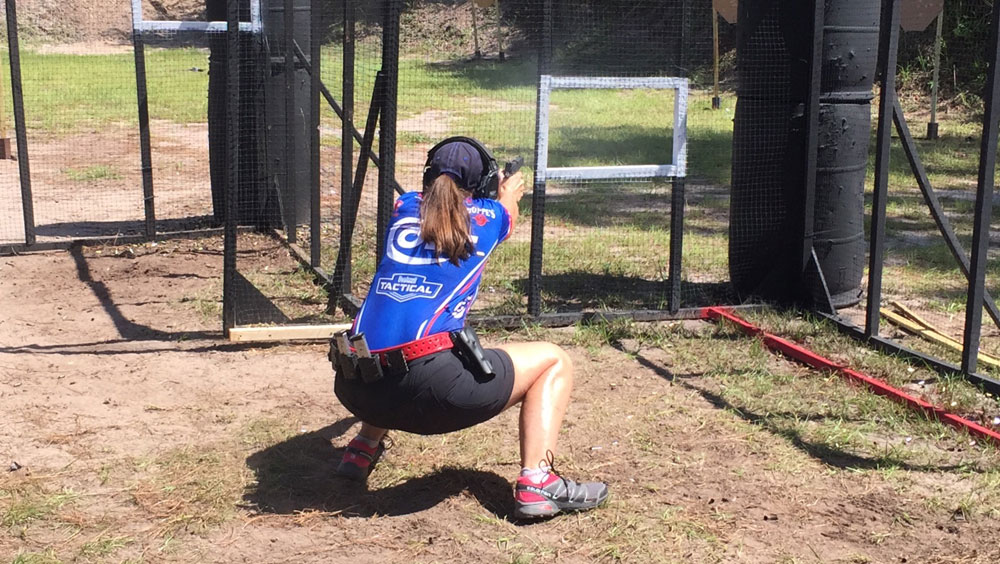
In the past few months, Aguila Ammunition, the Latin American ammo manufacturer known the world over for its .22-caliber ammunition, has been adding talent to its Pro Staff Team, with recent additions such as professional clay shooters Gary Fitzjarrell and David Miller. Now, the company has announced the addition of yet another Pro Staff Team member: Jerry Miculek.

Commonly known as the “Greatest Shooter of All Time,” Miculek is a 20-time world record holder and one of the most prolific and revered figures in the shooting industry. He is especially well-known for his abilities with a revolver and has earned an impressive number of titles over his shooting career, including USPSA National Revolver Champion, IDPA National Revolver Champion, IDPA World Revolver Champion, and Steel Challenge Revolver Champion. Without question, Miculek is one of the fastest and most versatile revolver shooters in the world.

Upon officially joining the Aguila Ammunition Pro Staff Team, Miculek will be representing Aguila's rimfire product line.
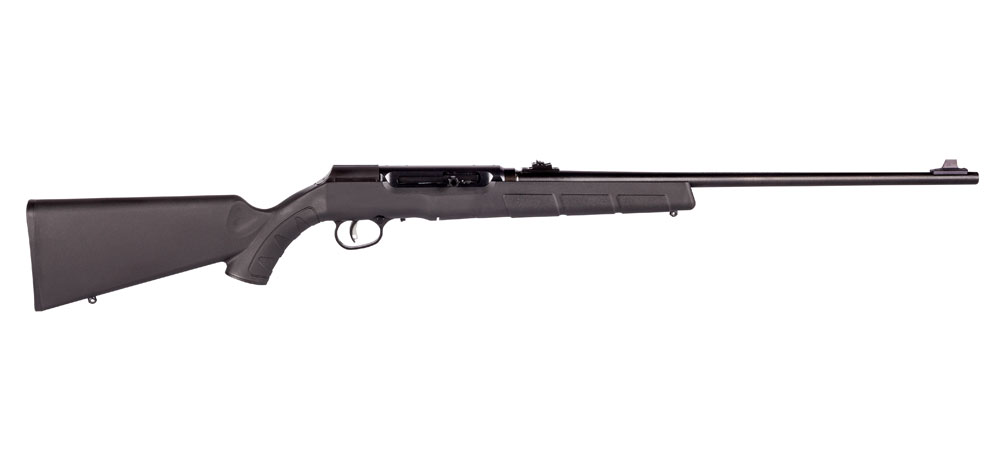
“Creating a pro-staff is one of our goals for this year, and we're ecstatic that we've already built an all-star shooting team,” states Kristi Drawe, Director of Marketing for Aguila. “Jerry is one of the most versatile, respected, well-known competition shooters in our industry. He is an inspiration and a role model for so many aspiring shooters and we are thrilled to have him representing the rimfire line of the Aguila brand.”

Miculek says, “Aguila rimfire ammunition offers the shooter 100% ignition, amazingly consistent accuracy, all with a clean burning propellant. With 27 different rimfire loads to choose from, there is no reason not to use Aguila. They really have a specialty round for everyone. It's simply the best ammo and I'm happy to represent a company with such high performing products. Get some!”
For more information on the products Aguila Ammunition offers, visit the company's website at AguilaAmmo.com.


Also Check Out:

ballistic-coverUnderstanding Ballistics
Tailor your ammunition choice to the task at hand and ensure you’re choosing the right bullet every time with Understanding Ballistics by Philip P. Massaro. Narrow down the vast array of ammunition options with detailed information and expert reviews of available bullets, and come to a better understanding of bullet technology and performance. Plus, learn about the physics of the bullet and its effects once it hits the intended target. Get Your Copy Now
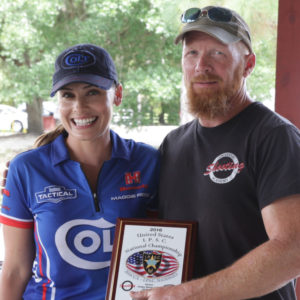
First Look: FN 15 Competition Rifle

0

The FN 15 Competition Rifle is tailor-made for the competitive shooter. Find out more about this great rifle in Gun Digest's exclusive first look video.

The popularity of 3-Gun competitions has only continued to grow in recent years, and plenty of manufacturers have begun to research, develop and release products specifically tailored for this type of competitive shooting. FN is one such company, and for 2016 the manufacturer is now offering a competition-inspired version of its classic FN 15 rifle.

The new FN 15 Competition is stacked with features that 3-Gun shooters have come to expect in their rifles. The gun has a hard-anodized blue receiver with both the upper and lower manufactured from 7075T651 billet aluminum, and an 18-inch chrome-lined, cold hammer forged barrel is free-floated inside a lightweight, 15-inch handguard with M-LOK attachment points, capitalizing on many competitive shooters' preference for an extended grip placement.

For improved ergonomics, the rifle sports Magpul's MOE-SL buttstock and MOE Grip and comes equipped with an ambidextrous bolt release. Performance-wise, the FN 15 Competition utilizes a Nickel-Boron coated bolt carrier assembly, a Surefire ProComp 556 Muzzle Brake, a low-profile steel gas block and a quality Timney trigger.

Pricing on the new FN 15 Competition rifle is currently listed at $2,249.

In the video above, FN 15 Product Manager JP Reconnu, provides Gun Digest with a firsthand look at the new FN 15 Competition. Watch the video to learn more about this exciting new rifle.

Stevens Introduces Model 320 12-Gauge Turkey Shotgun

0
nr16_ST_M320_TurkeyShotgun_lg
Designed with turkey hunting in mind, the new Stevens Model 320 12-gauge Turkey Shotgun is a great choice for hunters.

Gobblers beware. Stevens has added a new 12-gauge Turkey shotgun to its classic Model 320 line just in time for the season.

The Stevens Model 320 pump-action shotgun has always been known as a solid performer, and its palatable price has made it very affordable to a wide variety of shooters. Now, coinciding with the start of many states' spring turkey seasons, Stevens is releasing a new model specifically tailored for getting gobblers.

With shipments of the new model to dealers currently underway, the new Stevens Model 320 12-gauge Turkey Pump-Action Shotgun should be an excellent option for hunters.

The new turkey-specific model includes all the same great features that have made other Model 320 shotguns so popular, such as dual slide bars, a rotary bolt, a rugged synthetic stock and a five-round capacity. In addition to these standard features, the new gun also incorporates elements designed to give the turkey hunter an added edge, including Mossy Oak Obsession Camouflage; an extended full choke on a 22-inch, vent-rib barrel; a long, green fiber optic front sight; and a drilled and tapped receiver for mounting optics.

MSRP on the new Stevens Model 320 12-gauge Turkey Shotgun is currently listed at $280. For more information and technical specifications, visit SavageArms.com.

Know Your Cartridge: .357 Magnum

0

Introduced in 1935 by Smith & Wesson for its heavy-frame revolver, the .357 Magnum is a hard-hitting round.

357_magThe .357 Magnum chambering was introduced in 1935 by Smith & Wesson for its heavy-frame revolver. Ammunition was developed by Winchester, in cooperation with Smith & Wesson. Major Douglas B. Wesson (of S&W) and Philip B. Sharpe are credited with much of the final development work. The .357 Magnum is based on the .38 Special case lengthened about 1/10-inch, so it will not chamber in standard .38 Special revolvers. This was the most powerful handgun cartridge in the world until the .44 Magnum was introduced in 1955. Colt, Ruger, Smith & Wesson, and many others manufacture revolvers for this cartridge. This is probably the most popular high-velocity handgun cartridge in the United States for police, hunting, and target work. The .357 Magnum provides nearly double the velocity and more than three times the energy of standard .38 Special loads. It is noted for its flat trajectory, deep penetration, and great knockdown power. It is considered the best all-around handgun-hunting cartridge for small and medium game and, under proper conditions, for deer at short range. Nearly every major commercial ammunition manufacturer offers .357 Magnum ammunition.

Screen Shot 2016-04-11 at 4.59.39 PM

More on the Legendary .357 Magnum

This brief is an excerpt from Cartridges of the World 14th Edition.

Gallery: Top Performers at James D. Julia’s Firearms Auction

0

[imagebrowser id= 461]

There has been plenty of green in Fairfield, Maine this spring, but not just from the new foliage. Instead, the town has enjoyed the green of cold, hard cash from a recent sale by one of its auction houses. James D. Julia reported grossing approximately $15 million during its March 14-15 firearms auction. And it wasn’t just the company’s ample inventory that raked in the impressive hull. The auction house offered up some highly sought-after firearms with more than 300 lots realizing $10,000 or more and 20 lots bringing in $100,000 or more. But there was plenty to get firearms collectors to break out their wallets at the gun auction, including an impressive selection of Colts and Winchesters from some renowned collections. Here is a brief look at some of the more desirable sales made at the two-day sale, including the final bid for each shotgun, rifle and pistol.

Turnbull Offering Amazing Limited-Edition Winchester 1886 Rifles

0
Turnbull Limited Edition Engraved 1886.

Turnbull Manufacturing is releasing four exquisite Winchester 1886 rifles with incredible engraving.

What happened when one of America’s greatest gun designers teamed up with one of the country’s most historic manufacturers? The answer is simple — legends were born.

It’s hard to deny the late 19th Century partnership between John M. Browning and Winchester Repeating Arms was a golden age. The designer’s genius and the company’s manufacturing prowess delivered what are still considered some of the world’s most desirable firearms. And even the designs themselves have withstood the test of time with contemporary gun makers still dipping Browning’s well.

Case in point, Turnbull Manufacturing.

Turnbull #9 1886.
Turnbull #9 1886.

The New York-based custom gun maker has produced some striking specimens from the Browning-Winchester partnership over the years. But recently, the company’s master craftsmen might have outdone themselves.

Turnbull is releasing a set of four rifles based off the Winchester Model 1886 this year. And while each comes with a hefty price tag ($9,450 to $12,975), it doesn’t take much investigation to see why they demand such a premium. These rifles are truly functional works of art.

“These guns represent what happens when our engravers and designers are allowed to operate as artists on a steel canvas,” said Doug Turnbull, CEO of Turnbull Manufacturing. “Just like other artists, we will be hard pressed to let these leave, but proud to put them in the hands of their new owners. It is our hope that these become the guns that are passed down through generations in families.”

All four of the rifles — Turnbull #6, #9, #10 and Engaved 1886 —feature American black walnut stocks, 26-inch full octagon barrels and shotgun butt pads. And they each feature unique scroll patterns and game scenes from the Winchester Highly Finished Arms Catalog.

Turnbull #6 1886.
Turnbull #6 1886.

The #6 (.45-70 Govt.) has a standing buck on the left and bull moose on the right. The #9 (.45-70 Govt.) features a standing buck on the right and a running buck on the left. The #10 (.475 Turnbull) has a single scene on its left, a centerpiece of a bull elk bugling. And the Engraved 1886 (.475 Turnbull) features ornate scrollwork over the majority of the receiver. The company gives the option of charcoal blue or Turnbull’s signature case color as a finish to the receiver.

There is also a bit of a difference in stocks between the rifles. The #6 and #9 both have straight stock, while the #10 and Engraved 1886 each have pistol grips.

Certainly, there are only a select few who will take a crack at these Turnbull 1886 rifles. But from all appearances, whoever ends up with them will have some truly heirloom-quality firearms.

MUST READ ARTICLES