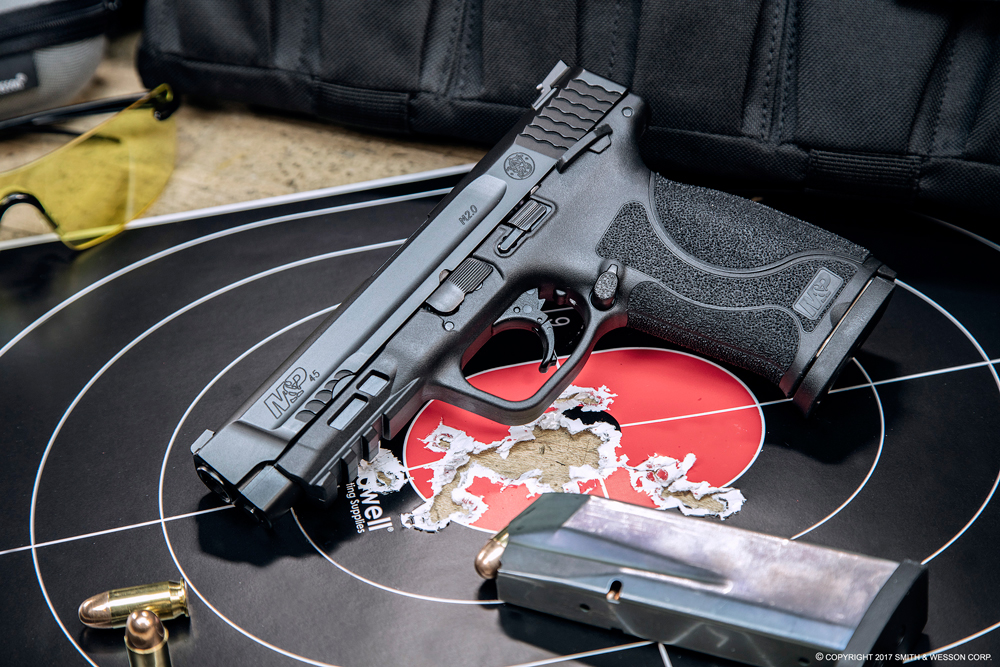
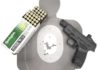
Smith & Wesson’s M&P45 M2.0 should generate plenty of interest, mating the newly designed pistol line with one of the most popular self-defense calibers — .45 ACP.
As it is every year, the firearms market is awash with brand-new gear and evolutions of tried-and-true standbys. One of the more interesting products unveiled for 2017 came in the latter category.
Smith & Wesson set out to refine and progress its highly popular semi-automatic striker-fired pistol line. The M&P M2.0 retained a number of the popular features of the original handgun but also heaped on a slew of new innovations meant to make the pistol all the more effective and user friendly.
So far, with the release of the M&P9 M2.0 and M&P40 M2.0, the Massachusetts gunmaker appears to have hit all the right keys with shooters. And now it will see if it can go three for three with the recent announcement it is shipping the .45 ACP variant of the pistol.
Since the .45 ACP is one of the most preferred self-defense calibers after the 9mm, this gun should generate plenty of interest. The M&P M2.0’s enhancements should pair nicely with the large-caliber round, given the company has been all about making the line more manageable.
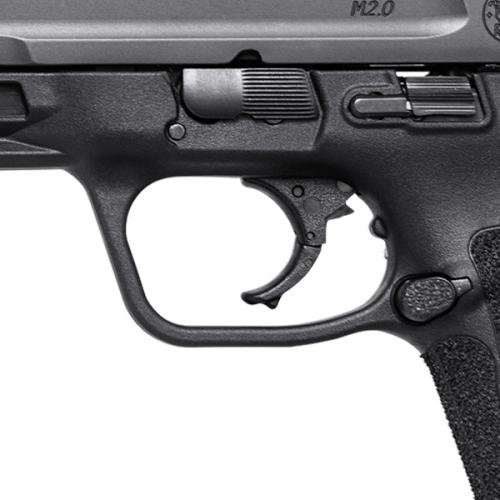
Smith & Wesson has vastly improved the line’s trigger, which was pretty good to start. It now comes with a lighter pull weight, a smoother pull and a cleaner break. It has modified the frame with a stainless steel chassis to provide more rigidness to the platform and reduce flex. On top of that, Smith & Wesson has further lowered the 4.6-inch-barreled pistol’s bore axis, keeping it more in line with a shooter’s arm and sending the recoil straight back. This desirable design point should pay dividends in the M&P45 M2.0, tempering the pistol’s muzzle flip, making it not only easier to shoot, but also faster on follow-up shots.
The company has redesigned the grips, retaining the 18-degree angle but incorporating a more aggressive texturing. This should make the 10+1 capacity M&P45 M2.0 more manageable, reducing any potential slipping during the shot with a firm, positive grip. And the company has ensured the grip fits any shooter’s hand with interchangeable small, medium, medium-large and large palm swell backstraps.
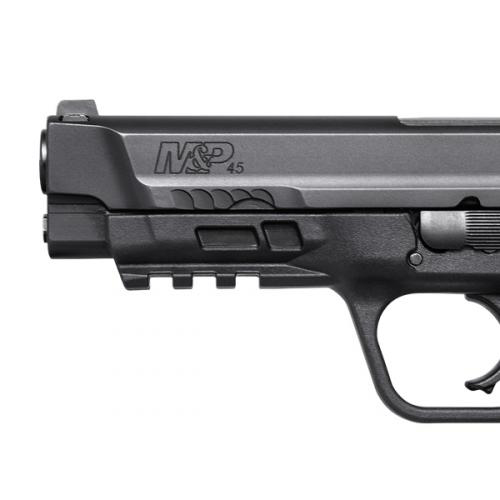
The Armornite-finished stainless steel slide, further coated with Cerakote, has had material removed near the muzzle to aid in keeping the M&P M2.0 at a manageable 27 ounces. And Smith & Wesson has integrated front cocking serrations in its trademark scallop pattern, giving shooters more real estate to work with in operating the slide.
The M&P45 M2.0 is engineered with both right- and left-handed shooters in mind. Smith & Wesson has kept the same slide release design as the M1.0; however, it has made it ambidextrous. The pistol comes with a reversible magazine release and is available with an optional ambidextrous thumb safety.
The M&P45 M2.0 is available in matte black or flat dark earth and has an MSRP of $599.
Specifications:
M&P45 M2.0 Caliber: .45 Auto Capacity: 10+1 Barrel Length: 4.6 in. Overall Length: 7.9 in. Front Sight: Steel – White Dot Rear Sight: Steel – White Two Dot Action: Striker Fire Grip: Polymer Weight: 27.0 oz. Barrel Material: Stainless Steel – Armornite Finish Slide Material: Stainless Steel – Armornite Finish Frame Material: Polymer MSRP: $599
Aguila Ammunition is making a name for itself as the choice of serious shooters. Find out how this ammo, born south of the border, is earning its stripes with the pros on competition circuits.
It’s a common misconception that all rimfire ammunition is equal. Nothing could be further from the truth.
Like all ammo, regardless of caliber, quality in engineering and manufacturing play incredibly consequential roles in a rimfire round’s performance. If it’s made right, it will shoot right. Perhaps few understand the importance of consistently performing ammunition like Pro Shooter John Nagel. The three-time USPSA and SCSA Grand Master actively searched for superior competition ammunition and found it hands down in Aguila.
In the above video, Nagel recounts how the Mexican manufacturer’s ammo rose to the top of his potential competition options. This included an extensive torture test of the ammo in which it performed beyond his expectations. He also delves into the minutia of what makes high-performing competition ammunition and why Aguila ticked off all the boxes for him.
Perhaps one of the more interesting aspects of Nagel’s discussion with Gun Digest Digital Editor Luke Hartle is exactly what type of Aguila Ammunition he shoots. Spoiler, it’s not special rounds specifically cooked up for him — it’s straight off Aguila’s assembly line.
Watch the video to get the inside scoop on Aguila Ammunition, John Nagel and competitive shooting ammo. Also check out more great gear reviews and shooting tips at Gun Digest’s YouTube page.
Ballistics Made Simple The Big Book of Ballistics simplifies and demystifies this daunting aspect of reloading and shooting in a practical, down-to-earth guide to the subject.From ignition in the cartridge to dynamics down the bore to the bullet blasting out a target, Phil Massaro unravels exactly what happens after the trigger is pulled. Get Your Copy Now
Handloading dangerous game ammo is not inherently different than loading for other game species, the stakes are just higher, which means reliability is crucial.
I’ve been told I’m crazy, near suicidal, for using handloaded ammunition on hunts for dangerous game. “You can’t rely on that stuff! You’re going to get killed.” Nonsense; nothing could be further from the truth. Just as you trust yourself to pull the trigger on any dangerous game animal, because you’ve honed your skills as a shooter, you must trust your skills as a reloader to produce dangerous game ammo that is as reliable, if not more reliable, than the factory stuff.
The author uses a Redding Reloading T7 turret press to load the .404 Jeffrey.
Not that you’d ever skimp on your reloading procedure, irrespective of intended purpose, dangerous game ammo requires a special level of detail. What we’re looking for here is utter reliability and uniformity, so the last thing you’ll be concerned with when the excrement hits the oscillator is your ammunition. I like to be ultra-critical of the condition of brass if I’m using once- or twice-fired, checking diligently for issues with the rim and/or cracks in the neck area. If you’re using new brass, and there’s no reason not to, I like to make sure all of it is trimmed to a uniform length, and that all the flash holes are touched up.
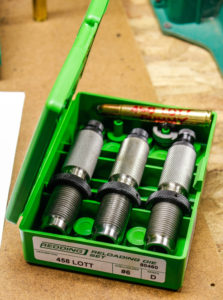
The loading procedure is really no different than any other ammunition, except that you may want to consider some of the field conditions on a dangerous game hunt. The very recoil of the big-bore rifles can pose an issue for the ammunition sitting in the magazine, or in the left barrel of a double. I like using the Redding seating dies, especially for the straight-walled cartridges like the .458 Winchester Magnum and .458 Lott, as the die contains a built-in crimp ring, to keep those bullets where you put them. I usually don’t crimp dangerous game cartridges that have a bottleneck, as even the .375 H&H and .416 Remington have plenty of neck tension, but there’s nothing wrong with using a crimp if you so choose.
The heat and/or cold of a dangerous game hunt can affect pressures generated by your ammunition, and we should do whatever we can to keep pressures and velocities as uniform as possible. Looking at older cartridges, like the .416 Rigby, you’ll see a voluminous case, designed to keep pressures as low as possible. The original propellant for the Rigby —and several other classic big-bore safari cartridges—was Cordite; one of the original problems with it was a definite sensitivity to temperature fluctuation.
With a big-bore rifle in hand, you may find yourself hunting in freezing temperatures glassing for grizzly, or on the tracks of elephant in 100˚F-plus heat. I like to use a powder that will minimize the effects of temperature extremes, like Hogdgon’s Extreme powders and the IMR Enduron line, both of which maintain consistent velocities and pressures across a wide range of temperatures. Within each of these product lines is a powder that will serve well in the large cases.
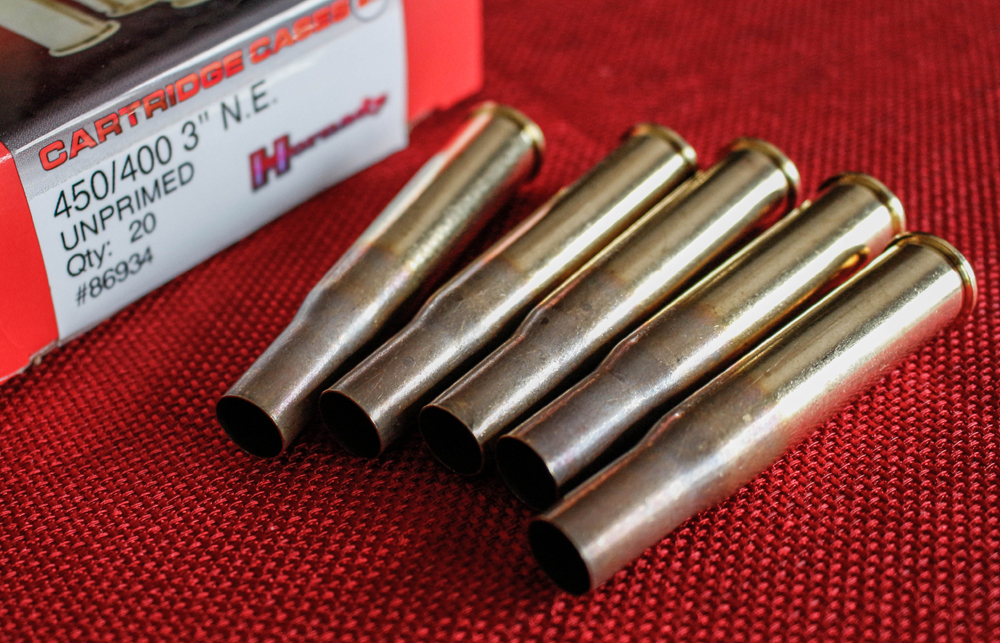
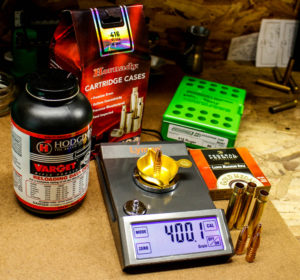
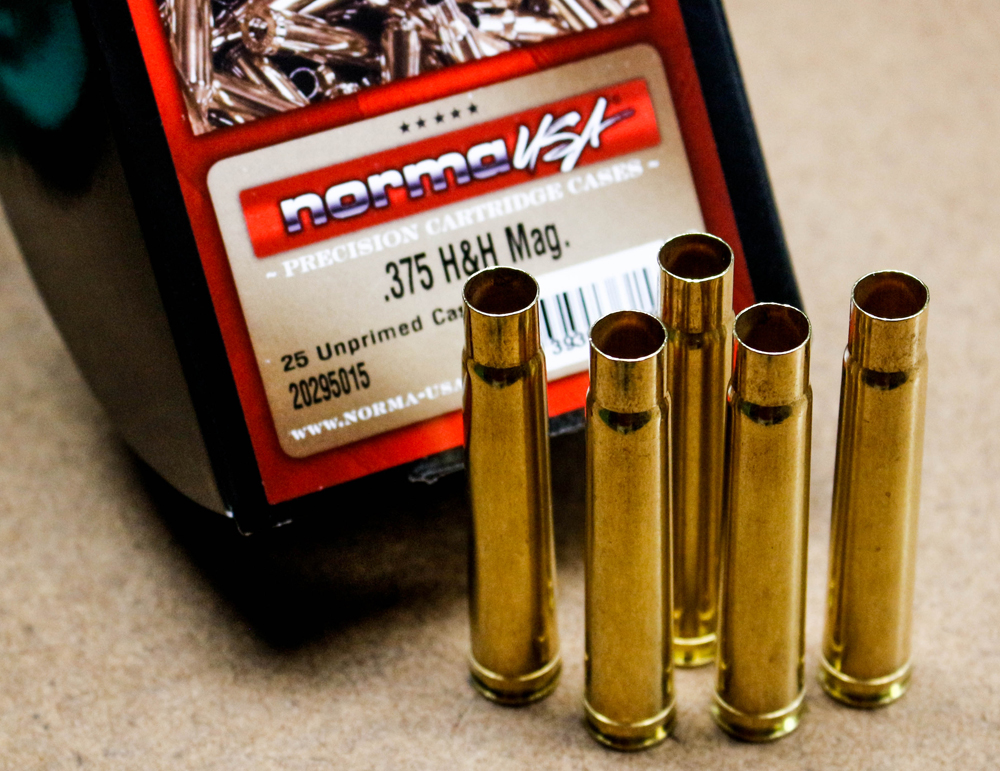
The .375 H&H is well-served by IMR4166, VARGET and H4350 — I prefer the highest load density — and the .450/400 3-in. NE worked very well with 400-grain Peregrine bullets over H4831SC. My .404 Jeffery also likes H4350, driving the 400-grain slugs to 2,275 fps, with groups hanging right around 1 MOA. These loads have been used in temperatures up to 110˚, with no extraction issues whatsoever. H322, one of Hodgdon’s Extreme spherical powders, has made loading the .458 Winchester Magnum much easier for me, having a 2 ½-inch case, which some feel compromises performance, especially with the heavier 500-grain bullets.
When my Dad took a .458 Win. to Tanzania, H322 and 500-grain A-Square Dead Tough bullets made a great combination, giving an even 2,150 fps on the chronograph, and more-than-acceptable accuracy. H4831 is the powder of choice for my 6.5-284 Norma and .300 Winchester Magnum, and it works very well in the huge cases of the .505 Gibbs Magnum and .500 Nitro Express.
Just like any factory ammunition I intend to take into a dangerous situation, I make sure all of the assembled cartridges I’m taking on safari will chamber and extract in the rifle I’m bringing, as a feeding problem in the heat of the moment is never a good thing. Make sure you actually practice chambering rounds, as this is the only surefire way to find out what you’re working with in a critical moment.
Using a Redding full-length resizing die will guarantee your ammo will feed like a dream. I do my best to adhere to the SAAMI specified C.O.L., so I know that the cartridges will function properly through the magazine. Rather than experiment with cartridge lengths longer than SAAMI-standard, I tinker up and down with the powder charge weight to obtain the accuracy I’m after.
The author likes to use Redding’s dies for straight-walled cartridges like the .458 Lott.
I’ve found with some of the big-bore cartridges like the .375, .416s and .404 that I prefer accuracy over the idea of wringing every last drop of velocity out of the case. I’ve seen the .375 H&H operate just as well at 2,400 fps as it does at 2,550 fps, and the .404, which made its reputation pushing a 400-grain bullet at 2,150 fps, can easily achieve 2,300 fps and superb accuracy with modern powders. But when it comes to the lineup of Nitro Express cartridges, most of which operate at a muzzle velocity of 2,050 to 2,150 fps, you really don’t want to dip much below those figures. It’ll take a bit more experimentation, especially if the rifle is a double, to achieve a balance of velocity and accuracy. That .458 Win. Mag. caught a bad rap because the original ammunition was running at 1,900 fps or so instead of the advertized 2,150 fps, and penetration suffered. Keep the velocities as close as possible to the factory levels to ensure good field performance from the Nitro Express cartridges.
If, like me, you enjoy the performance of the monometal bullets, you must realize that they will take up a bit more room in the case than their cup-and-core counterparts. Bearing surfaces change, as do pressure curves, so you’ll need to take a good look at the manufacturer’s load data to ensure you stay within safe limits, and that you maintain good velocities.
To touch upon the initial point — that it’s foolish to hunt dangerous game with handloads — I feel that my own ammunition has a level of attention that no factory can duplicate, and I’ve used my own stuff to take bears, Cape buffalo and elephant. Give it your best, as you would with your shooting skills, and you’ll have one more point of pride as a hunter.
Editor’s Note: This article is an excerpt from the April 2017 issue of Gun Digest the Magazine.
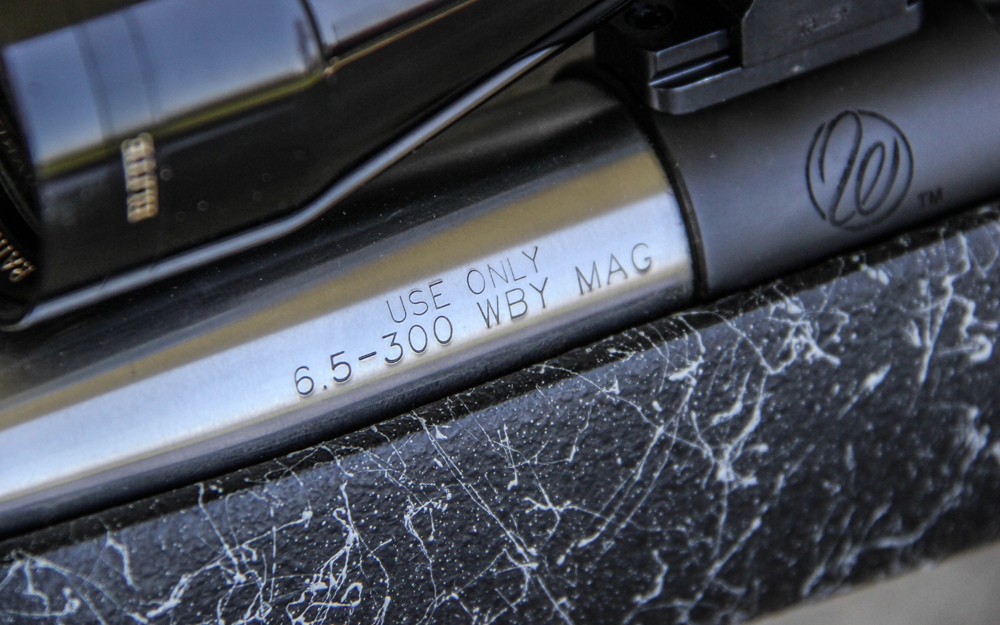
It’s been a while since Weatherby added a new cartridge to its stable, and its new thoroughbred, the 6.5-300 Weatherby Magnum, has horsepower to spare.
More than two decades ago, I sat down on a concrete bench at a rifle range in southern Ohio and touched off the very first centerfire round of my shooting career. That round was a .300 Weatherby Magnum; the rifle was a light sporter with a hard plastic butt plate that my grandfather owned. The memory of that first trigger break and the terrific roar and slap that followed will remain etched in my mind forever. As will the odd feeling of being snowed upon in July; the muzzle had been positioned just ahead of the foam gun case, and the blast sent the case’s foam innards high into the air. Very dramatic.
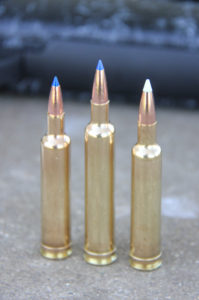
The 6.5-300 Weatherby Magnum is flanked by the .257 Weatherby Magnum (left) and the .270 Weatherby Magnum (right). The .257 and .270 Weatherbys are based on shortened .300 H&H Magnum cases, and the 6.5-300 is based on the full-sized .300 Weatherby Magnum. As such, it dwarfs its siblings.
Fast-forward to the present day, and you’ll find me at that same range on that same bench. Things have changed a bit; time has taught me to handle recoil better, and the 70 pounds I’ve packed on since the early ’90s have equipped me to deal with the punch of a powerful rifle. I’m shooting another Weatherby Magnum, this time through a Mark V rifle with a (thank goodness) soft recoil pad, and the cartridge itself is an offspring of the mighty .300 Weatherby that first ushered me into the world of centerfire shooting 20 years ago. This time the experience is far, far more enjoyable.
It had been 17 years since the team at Weatherby added a new magnum cartridge to their line, but that changed in 2015 with the announcement of the 6.5-300 Weatherby Magnum. The new round is based on the .300 Weatherby Magnum, which traces back to the .300 H&H Magnum. Roy Weatherby improved the H&H cartridge and gave his new .300 magnum the signature double-radius shoulder that became a trademark of the Weatherby brand. The 6.5-300 Weatherby Magnum, then, is simply a necked-down .300 Weatherby Magnum, and although wildcatters had played with the round for some time, it wasn’t officially part of the Weatherby lineup until last year.
Ten years ago it was proper to write that the 6.5 had never been a popular bullet choice for American hunters; the 6.5×55 Swede was popular in Europe, but it never became a standout stateside. In the late 1950s, Winchester introduced the .264 Win. Mag. (equivalent of the metric 6.5), but a lack of suitable slow-burning powders and a limited selection of tough 6.5mm bullets restricted the .264’s appeal. The .260 Remington had its followers and was a good cartridge, but to say the 6.5s were an American favorite was inaccurate.
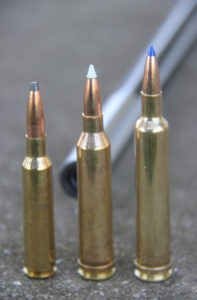
6.5×55 Swedish Mauser, .264 Winchester Magnum and 6.5-300 Weatherby Magnum. Once, the .264 Winchester pushed the envelope for maximum 6.5 speed, but today the 6.5-300 is the king of this cartridge class, and it beats the Winchester by a wide margin.
All this has changed in the last decade. The 6.5 Creedmoor and 6.5 Grendel renewed interest in the .264s. Long, heavy bullets with high BCs flew flat, penetrated deep, and recoil was minimal. By this time, powder development permitted more flexibility, and shooters became fascinated by these metrics. The .264 Win. Mag. saw an uptick in sales, and once-obscure rounds like the 6.5-.284 Norma, primarily relegated to long-range shooting applications, began seeing life as a hunting cartridge. Nosler decided to start loading its own headstamped ammo, and its first offering was the successful 26 Nosler, itself a screamer of a cartridge.
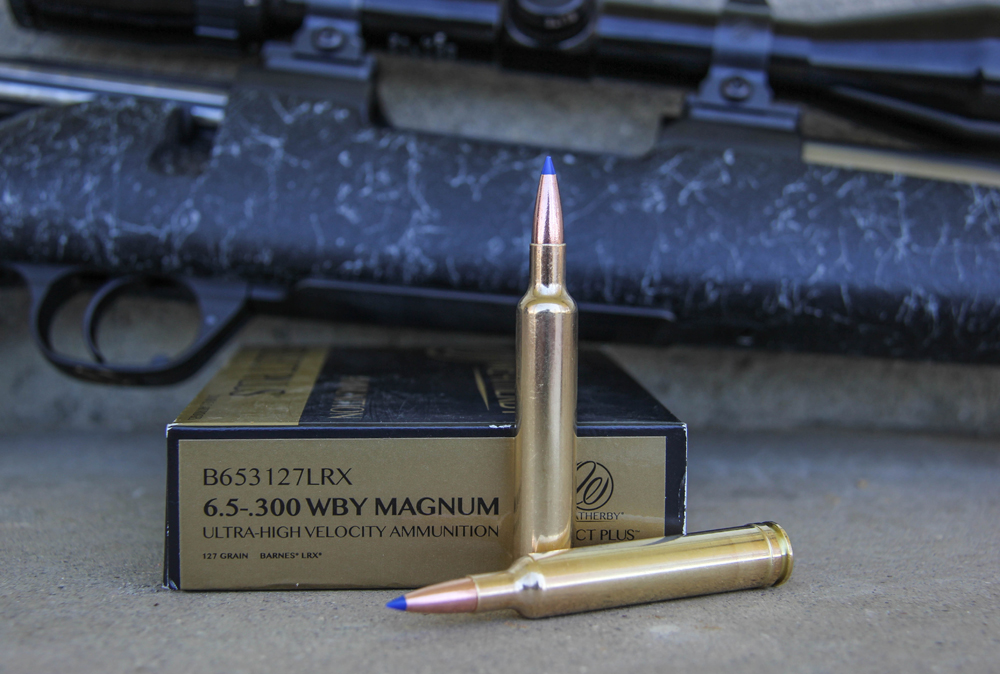
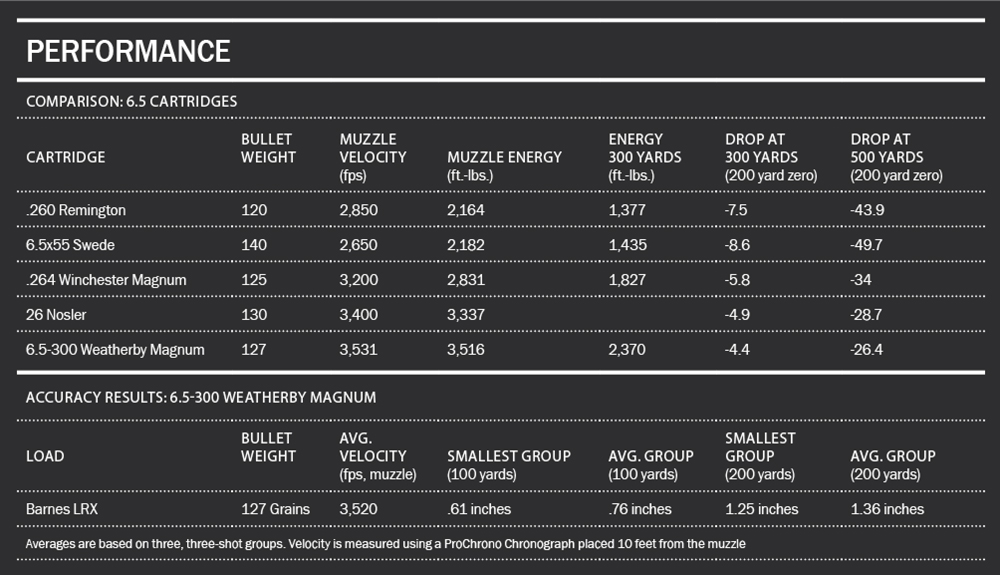
When Weatherby decided to enter the 6.5 market, the company immediately went for the top spot. The 6.5-300 Weatherby Magnum bested even the Nosler, with the initial load firing a 127-grain Barnes LRX bullet at 3,531 feet per second (fps) from the muzzle. That equates to better than 3,500 foot-pounds of energy at the muzzle. By comparison, the .260 Remington firing a 120-grain bullet at 2,890 fps produces around 2,225 foot-pounds of energy. The .270 Winchester with a 130-grain bullet at 3,060 fps generates just over 2,700 foot-pounds of punch. In terms of energy alone, the 6.5-300 Weatherby Magnum sits squarely between the .30-06 and .300 Winchester Magnums. At 400 yards, the Weatherby is still generating almost as much energy as the .260 Remington produces at the muzzle.
High velocity and long, heavy-for-caliber bullets equate to excellent downrange trajectory, too. The maximum point blank range of the 127-grain LRX is an astounding 345 yards for a 6-inch kill zone. On most game, with your rifle properly zeroed, you can hold in the center of the vitals and won’t need to adjust for holdover to almost 350 paces. For hunters who don’t want to dial their scope for range — and there are many in this category — flat-shooting cartridges like the 6.5-300 Weatherby Magnum are the answer. The maximum range for most hunters is about 350 yards, and a cartridge like the 6.5-300 takes the guesswork out of shooting.
Roy Weatherby pioneered fast cartridges, and there’s little doubt he’d be proud that his name is on the new 6.5-300. The new belted magnum from Paso Robles is the first new Weatherby design in almost 20 years.
“Since the early days at Weatherby, our family name has been synonymous with ballistic superiority,” said Adam Weatherby, executive vice president and COO of the brand. “The 6.5-300 Weatherby Magnum is proof that Weatherby continues to be the leader in high-velocity cartridges and reinforces our claim that nothing shoots flatter, hits harder or is more accurate. I was able to use the round on several big-game hunts last year and was more than pleased with its performance on shots ranging between 100-400 yards, where the drop was, practically speaking, non-existent. We know that our customers expect high velocity from us and so for Weatherby to introduce the fastest 6.5mm on the planet seemed only fitting.”
Adam Weatherby has probably taken more animals than anyone with the new 6.5-300, so he’s had plenty of chances to see how it performs afield. Last year Adam harvested a Dall sheep, mountain caribou and a bull elk with the rifle — all one shot kills — and Brenda Weatherby, Adam’s wife, dropped a six-point bull elk in Idaho on public land with — you guessed it — one round. The 6.5-300 is well equipped for almost any big game hunt. It would be ideal for long-range shooting on deer (think whitetails in the senderos, cross-canyon shots on muleys or Coues deer in the desert) and mountain sheep. Laser-beam accuracy makes it perfect for antelope, and even though a few critics might dismiss the cartridge as too small for elk, in the right hands and with the right bullet, it has proven effective.
A 1 ¼-inch group like this at 100 yards is perfectly acceptable for most hunting rifles. But this group was shot at 200 yards, which is very impressive.
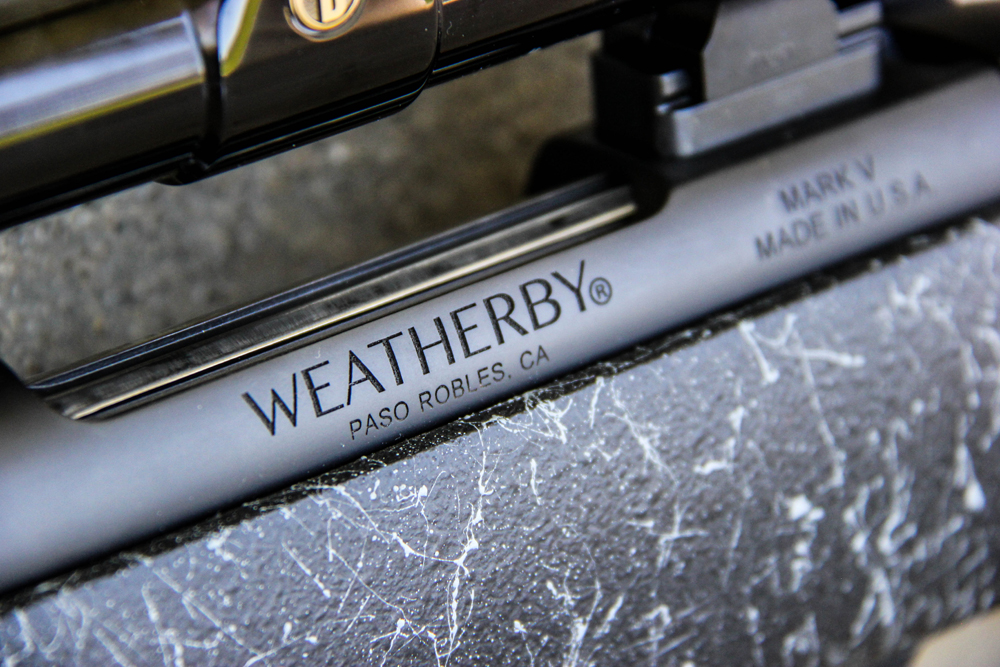
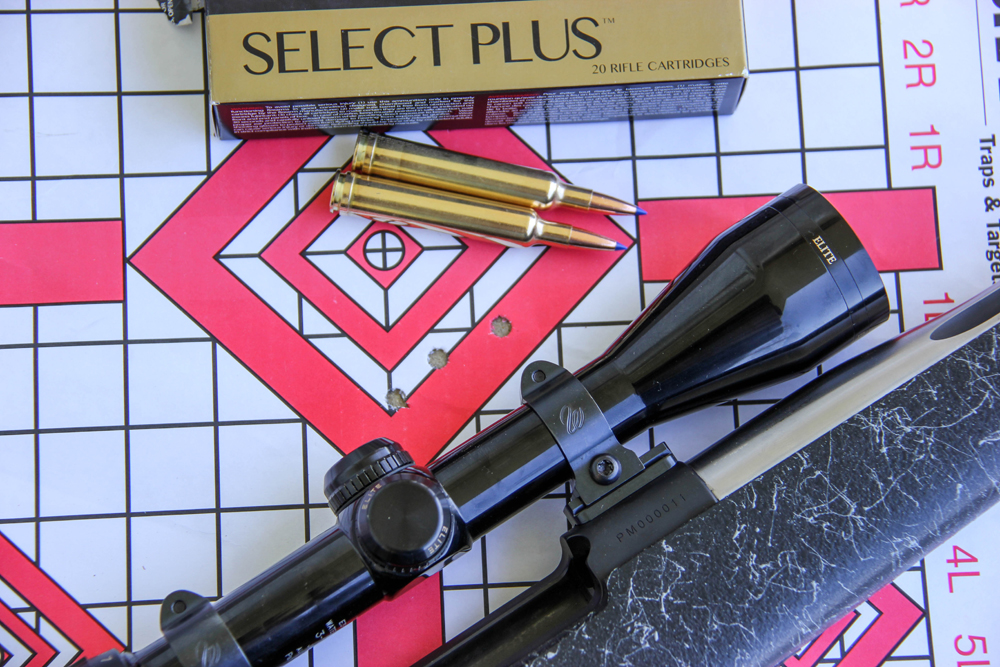
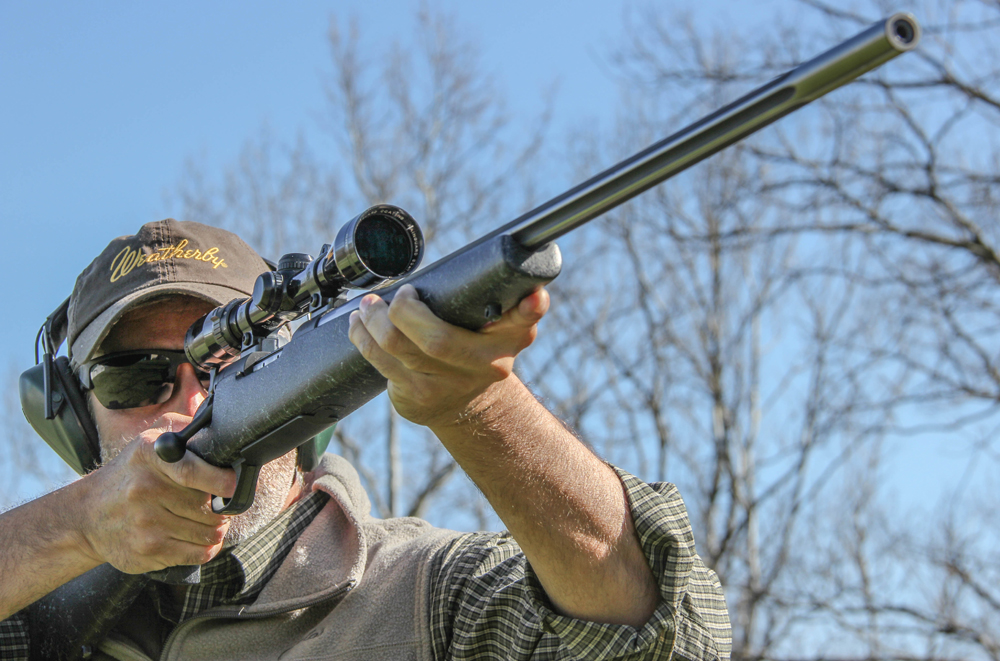
I had a chance to test Weatherby’s new Select Plus 6.5-300 ammo firing the 127-grain Barnes LRX bullets, the only load available at test time (a 130-grain Scirocco and 140-grain A-Frame are coming, too). I was promised 3,531 fps, and the average velocity over my chronograph was 3,520 — less than margin of error — so I’d say Weatherby lived up to its published figures. The rifle I tested was a Mark V Accumark, which comes with a hand-laid composite stock, No. 3 contour stainless fluted barrel and the famed Weatherby nine-lug push-feed action. It’s a sleek, solid rifle that is now backed by a sub-MOA accuracy guarantee.
Is the Mark V/6.5-300 combo capable of excellent accuracy? Judge for yourself. This 100-yard group was produced using 127-grain Barnes LRX bullets and measures just a shade over .6 inches wide. The average group in this test was just .76.
The test rifle managed to best that margin considerably; at 100 yards the smallest three-shot group was .61 inch wide, and the average was just .76 inch for three groups. Thoroughly satisfied with the 6.5-300 Accumark’s performance at 100 yards, I moved to the 200-yard bench. The three test groups at that range measured 1.25 inches, 1.34 inches and 1.49 inches for an average of 1.36 inches, between .6 and .7 MOA. That’s pretty outstanding for an off-the-shelf rifle with factory ammo. Recoil wasn’t punishing; the Mark V has an excellent stock and recoil pad, and with a weight of 8¾ pounds, the Accumark does an admirable job bridling the hyper-velocity 6.5-300. By my estimation, you can expect 7mm Rem. Mag. recoil, certainly less than the .300 magnums generate, but muzzle blast is heavy.
Currently, the 6.5-300 is available in the Mark V line of rifles, which aren’t inexpensive (the Accumark’s MSRP is $2,300). But the Mark V is an extensive line, and there are many options. The Mark V offers a level of build quality and pride of ownership that have been hallmarks of the rifle for over five decades. It’s one of the safest rifles you can buy, and Roy Weatherby painstakingly developed it to handle very hot, high-powered magnums. The new 6.5-300 is certainly powerful, and that cavernous case — with a capacity of roughly 100 grains of water — provides storage for a whole bunch of gunpowder. Like true thoroughbreds, the Weatherby Magnum cartridges thrive when pushed hard. If you think you can handload this cartridge down to modest velocities, you likely won’t be impressed with the results.
The 6.5-300 Weatherby needs to burn a lot of powder in that quest for 3,531 fps, and loaded ammo is listed at $95 a box. So you can make a reasonable argument against the cartridge in terms of sheer cost of ownership. But Aston Martin wouldn’t sell many cars if they had to justify them as the most frugal option, and James Bond could certainly have driven something more affordable if he simply wanted to get from point A to point B. Speed comes at a price, but the 6.5-300 offers a very flat-shooting, accurate, deadly option, and when coupled with a Mark V rifle and topped with a good scope, there are few animals short of the largest and most dangerous beasts for which this cartridge is not well-equipped, and long-range shooting is made simpler by that pancake-flat trajectory.
Roy Weatherby deserves credit for more than launching a string of fast cartridges that bear his name on their headstamps. He ushered in the Magnum Era, and if you thought that era passed into history, think again. Shooters and hunters still love fast loads, and Ed and Adam Weatherby haven’t forgotten that. The 6.5-300 faces stiff competition from other loads, specifically Nosler’s fast 26 that predates it by a couple years, but the Weatherby has muscled its way to the top of the 6.5 hill, and there are precious few things this cartridge won’t do.
The New Mark V The Mark V rifle, introduced in 1958, received a facelift last year. While the heart of the rifle — that nine-lug (six on non-magnums), fluted, vented, push-feed bolt — remains the same, there were some significant changes to the overall design. For starters, the wrist of the stock is slimmer and has a slight palm swell. This ensures a comfortable and secure grip on the rifle and is better for managing recoil. The forearm diameter has been trimmed down as well, and the overall feel of the rifle has been improved.
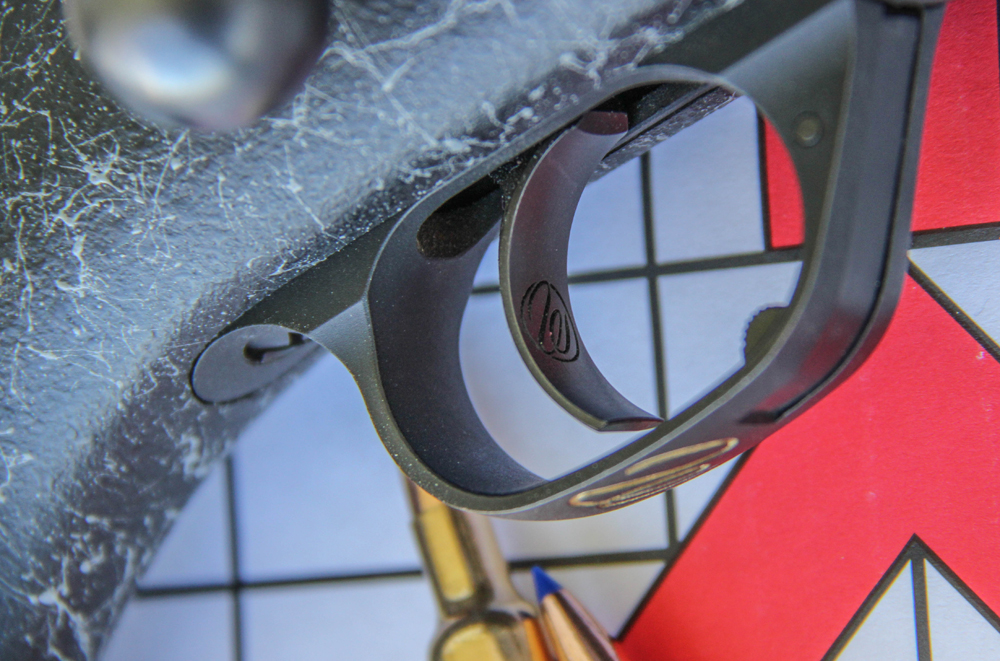
The most significant improvements are the addition of a hand-lapped barrel — which allows the brand to offer a sub-MOA accuracy guarantee across the line — and the addition of the new LXX trigger. The LXX has a wider face (wide enough, indeed, for the addition of a Flying W) and engagement surfaces that are precision ground and polished. The result is a crisp, clean, break. The trigger is adjustable down to 2.5 pounds, and that’s where the trigger on the rifle I tested was set. For more information visit Weatherby.com.
Editor’s Note: This article is an excerpt from the Summer 2016 issue of Gun Digest the Magazine.
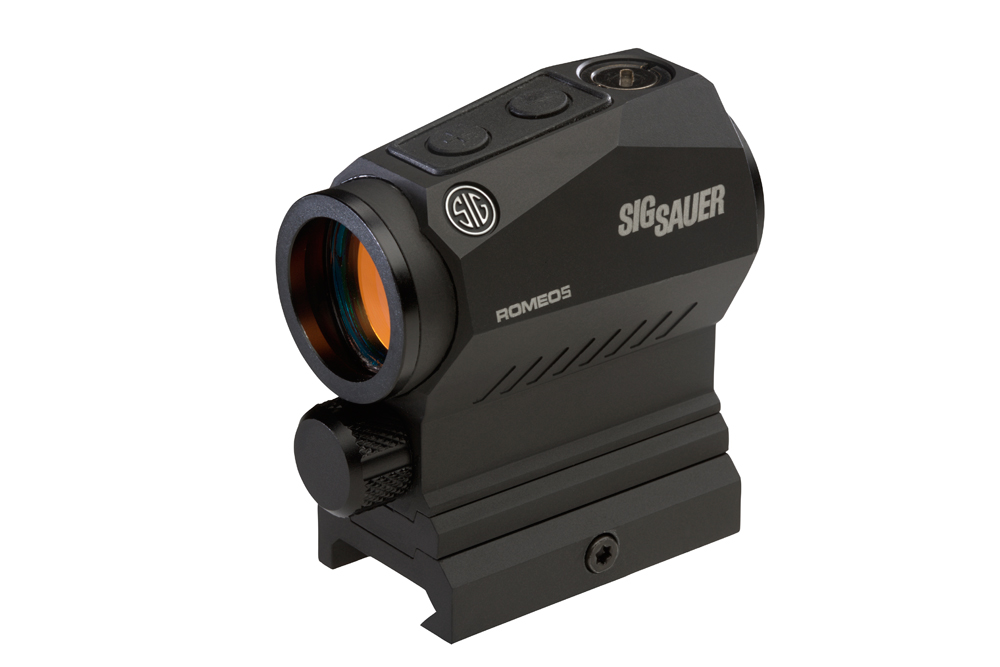
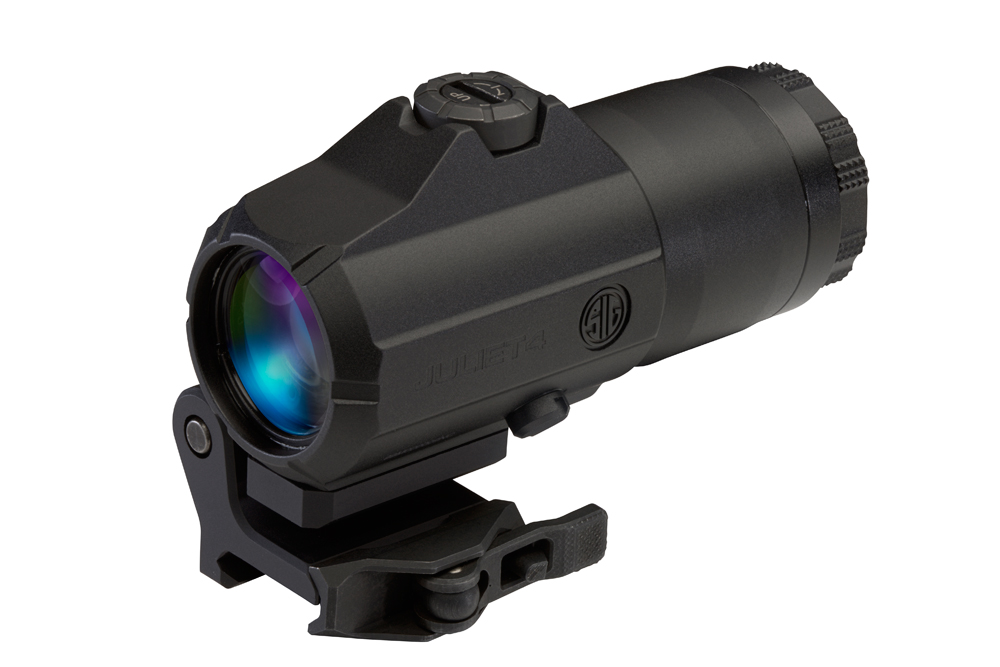
There were a few new additions to the SIG Sauer optics lineup at the recent 2017 NRA Annual Meetings & Exhibits: the ROMEO5X and ROMEO5XDR red dots and the JULIET4 magnifier.
The SIG Sauer optics line has been growing pretty steadily ever since it was first announced a few years back. At the recent 2017 NRA Annual Meetings & Exhibits, the manufacturer added a few more new offerings to the line — two red dot models, as well as a magnifier.
The new red dot additions include the ROMEO5X and ROMEO5XDR. Meanwhile, the new magnifier is the JULIET4, which offers 4x magnification for any and all red dots.
ROMEO5X and ROMEO5XDR The “X” in the new ROMEO5X and ROMEO5XDR stands for “extended” life, and that’s exactly what the user will get. Both of these new SIG Sauer optics utilize a single, common AAA battery for an increase in effective runtime. The previous ROMEO5 runs off a CR2032 battery.
The ROMEO5XDR offers an additional benefit in the form of a Dual Reticle (DR). The user is able to choose between a standard 2 MOA dot or a 65 MOA circle dot for even quicker target acquisition.
“The ROMEO5 has proven to be a very practical and popular red dot sight at an affordable price,” said Andy York, president of the SIG Sauer Electro-Optics division. “We are excited to expand the value further with both extended runtime and multiple reticle options for our AR customers.”
And, of course, both of these new models utilize the earlier ROMEO5’s sturdy, lightweight design and feature the same high-performance coatings and SIG’s MOTAC (Motion Activated Illumination) to enhance battery life.
Specifications:
SIG Sauer ROMEO5X (5XDR) Dot Size: 2 MOA; 2 MOA or 65 MOA Circle (5XDR) Magnification: 1x Clear Aperture: .787 in./20mm Illumination Settings: 8 day/2 NV Elevation Adjustment Range: +/- 40 MOA Minimum Windage Adjustment Range: +/- 40 MOA Minimum Weight: 5.1 oz./145 g (with riser mount and AAA Alkaline battery) Waterproofing: IPX-7 MSRP: $239.99 (ROMEO5X); $299.99 (ROMEO5XDR)
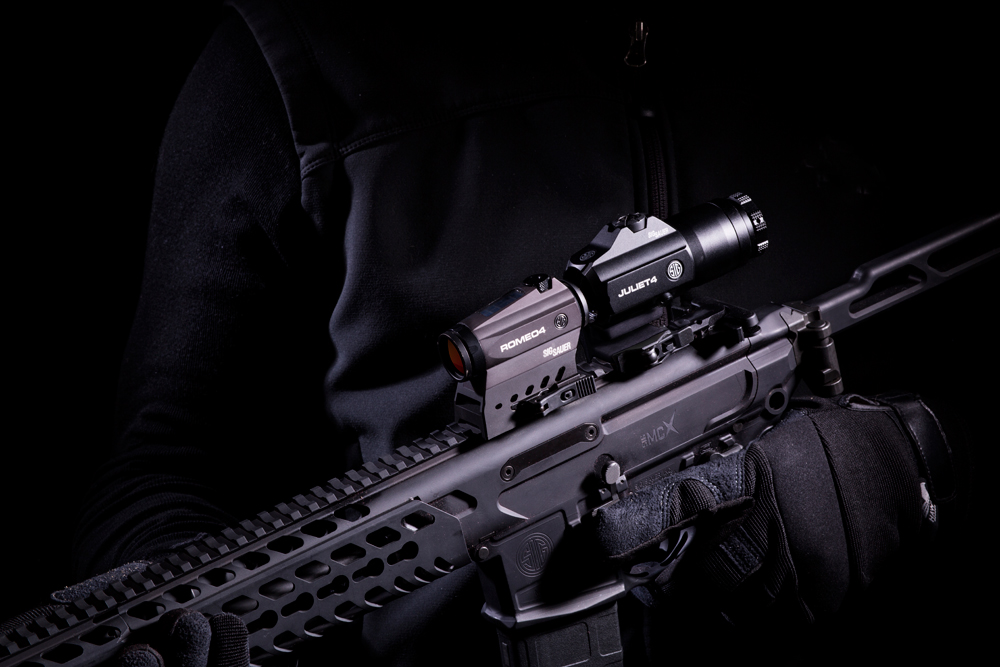
JULIET4 Magnifier The first magnifier in the SIG Sauer optics line, the JULIET4 quickly enhances the magnification of any standard red dot from 1x to 4x. This makes it a great option for any instances where a combination of close- and medium-range engagements may be present.
The new JULIET4 magnifier comes equipped with a PowerCam 90-degree mount system, which means the shooter can easily transition between magnified and non-magnified shooting. The optic also features a quick-detach mount with built-in recoil lugs. The result is a magnifier that’s both easy to remove and rock-steady while mounted.
In terms of durability, the JULIET4 utilizes an aircraft-grade CNC aluminum housing and incorporates front thread-in lens protectors and flip-back rear protectors to defend against the elements. The optic also comes with spacers for adjusting height.
Although the new JULIET4 4x magnifier is compatible with all red dots, it’s tailored for SIG’s own ROMEO red dots.
“The new JULIET4 Magnifier works with any and all red dot sights,” York said, “but it was designed as an integrated optical system when used in conjunction with SIG’s new ROMEO4 and ROMEO6 red dot sights with ballistic holdover reticles. This amazing new combo allows for fast, intuitive red dot target acquisition that transforms instantly into a 4X magnified riflescope with ballistic holds.”
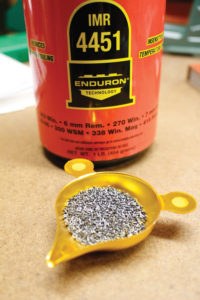
IMR4451 and 143-grain ELD-X bullets make a great hunting combo for the 6.5 Creedmoor.
Advancements in propellants have reduced their sensitivity to temperature fluctuations. But heat and cold still play a role in how much pressure powders produce when ignited.
If you’ve ever examined some of the classic African safari cartridges, you may have noticed they seem to be rather large in comparison to their actual powder charges. The .416 Rigby, for example, has a huge case, while modern powders have trouble using all that capacity. The reason? Cordite, which was the common propellant at the time Rigby designed the case, was extremely sensitive to pressure fluctuations brought on by a change in temperature. In order to be effective in the tropical heat of India and Africa, Rigby over-designed the case size, to keep the pressures low in the extreme heat, for reliable extraction in a dangerous game situation.
Our modern powders—even those developed by the time the Second World War came around—have made a drastic improvement over cordite, but many will still show an increase or decrease in pressure, and thereby velocity, when the temperature goes up or down. The old rule was to expect an adjustment of 2 fps per degree Fahrenheit, up or down from an ambient temperature of 68˚F, and my experiences had pretty much proved that to be true.
Before heading to Africa for a safari, I used to leave my ammunition and rifle in the summer sun for hours, and then test it for pressure signs. Hodgdon had long ago released its Extreme Powder line, including a couple of favorites like VARGET and H4831SC, which have fueled many great handloads, but the new IMR Enduron Powder line has shown to be equally efficient.
The original trio of Enduron powders.
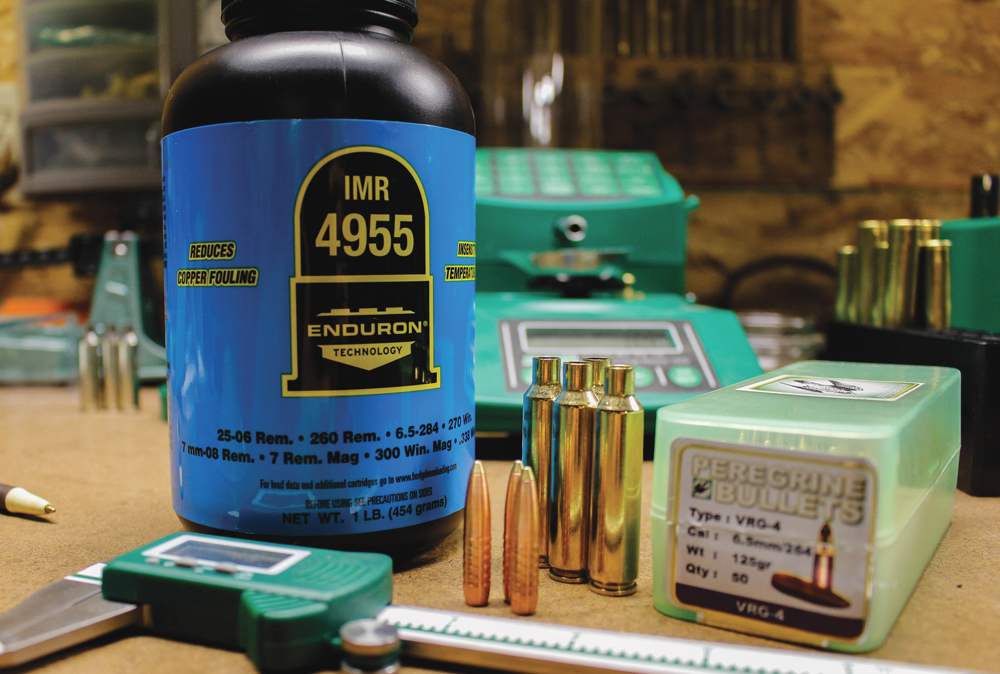
This new powder series mimics many of the classic IMR powders we’ve all known and loved, but the Enduron line has been engineered to be especially insensitive to temperature fluctuations. There are four of them, with new number designations: IMR 4166, IMR 4451, IMR 4955, and IMR 7977.
The fastest burning of the four, IMR 4166, will give a burn rate in the range of VARGET and IMR 4064; perfect for the .308 and .30-06 Springfield, yet working very well in the .22-250 and .375 H&H. If you’ve got a caliber that is fueled by the medium-burn rate powders, like H380 or IMR 4320, the new IMR 4166 may solve any temperature issues you’ve experienced. I had great results in my Legendary Arms Works .308 Winchester with this powder and 180-grain Speer Grand Slam bullets; they have been equally accurate and consistent, whether observing group size at the range in the August heat or chasing black bears behind a pack of dogs in the frozen Maine woods in November.
The IMR 4451 is along the lines of good old IMR 4350; I used this in my .300 Winchester with 150-grain Cutting Edge Raptors for my last safari, and even the 112F South African heat posed no issue for this powder. Accuracy remained consistent, and there were no pressure problems whatsoever. This powder will work perfectly in the medium-magnums, if you will, like the .338 Winchester Magnum, the .300 Winchester Short Magnum, as well as the .30-06 and its brood of raucous children, whether the hunt takes place in Nunavut or Namibia.
The author used IMR 4451 and Cutting Edge Raptor bullets on a .300 Win. Mag. load.
IMR 4955 is designed to mimic the popular IMR 4831, and it is a very versatile powder in cases like the .270 Winchester and .25-06 Remington, as well as the 6.5-284 Norma. I’ve also used it in the larger safari cases like the .404 Jeffery and .450/400 3-in. Nitro Express. IMR 4955 pushes a 125-grain Peregrine PlainsMaster bullet from the muzzle of a 6.5-284 Norma at an even 2,950 fps, with a deviation of less than 12 fps, into three-shot groups measuring right around ¾ MOA; this makes for a perfect deer and pronghorn load, in any weather condition. If you shoot a cartridge that can utilize powders in the IMR 4831 burn rate, perhaps you should give IMR 4955 a try.
IMR 7977 has a burn rate perfect for the large, long-range magnum cartridges. The 7mm Remington Magnum, the .300 Remington Ultra Magnum, the .30-378 Weatherby and .338 Lapua all are well served by this slow-burning powder. 7977 is similar to, though definitely not interchangeable with, IMR 7828, which is also perfect for those large cases. Large quantities of slow-burning powders are the key to high velocity, and IMR 7977 fits the bill perfectly.
These huge-cased cartridges show their value with the slowest burn rates available, relying on a long barrel and huge powder column to develop the high pressures and correlative velocities. IMR 7977 is a powder that will not only feed these huge cases, but also keep the velocities and pressures even in a wide variety of weather conditions; you definitely don’t want to experience over pressures when the powder charges approach or exceed 100 grains, and I really like IMR 7977 for this application. It will also work in the WSM and WSSM series of cartridges, which have, at least in my experiences, been a rather finicky lot.
Mirroring the performance of IMR 4350, IMR 4451 works well with many of the medium magnums.
In addition to showing excellent tolerances for temperature changes—in a 100-degree swing, the variation is often less than 15 fps—the new Enduron line also meters very well through a powder thrower or automated dispenser. Being an extruded stick powder, cut to a grain length optimized for the modern powder throwers, the Enduron line will work almost as well as a ball powder in today’s machines. My RCBS ChargeMaster 1500 will throw consistent charges with all four of the Enduron powders; unlike those powders with longer grain structures, the grain length of the Enduron line will give consistent metering.
Will the Enduron powders replace the other classic IMR powders? I don’t think so; those have given us all some great results. But, I will say this: Whenever I have a hunt coming up in a distant location where the environment is less than optimal, I find myself reaching for one of the Enduron powders.
I can also say the same thing for when I’m testing a new bullet; the results I’ve found with this quartet have been so inspiring that I’ve made four new friends. If you’re looking for something new to try, whether it’s a new cartridge or a different bullet for an old friend, look to the Enduron line; I bet you’ll appreciate the results.
Editor’s Note: This article is an excerpt from the December 2016 issue of Gun Digest the Magazine.
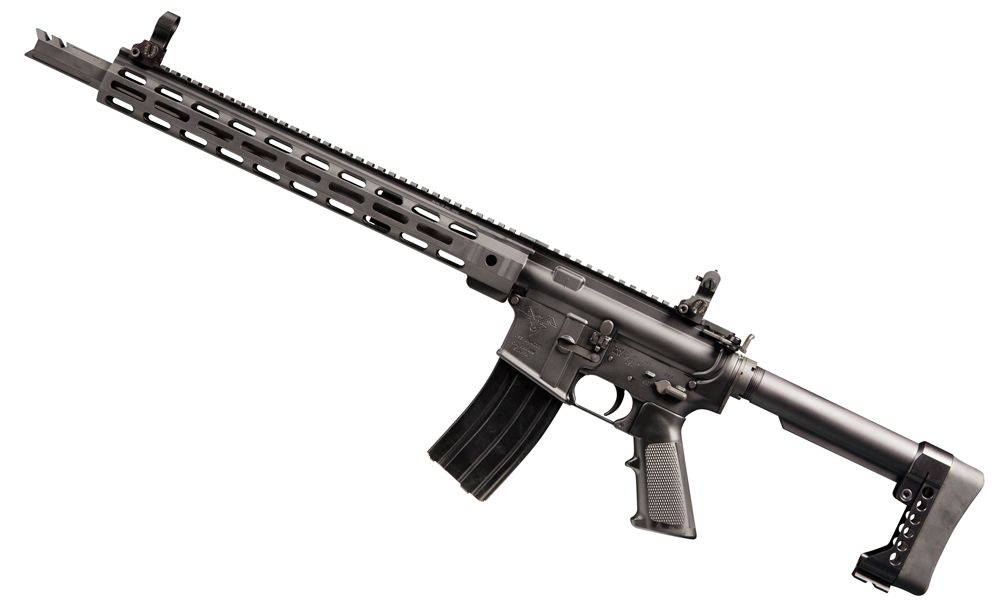
The new DoubleStar ARC 300 offers shooters the reliability and weight efficiency of the line, but in the eminently suppressible .300 Blackout.
The idea behind DoubleStar’s ARC (Always Ready Carbine) when it was released a while back was not only to create a reliable rifle, but one that put a premium on weight efficiency. The Kentucky-based company produced an AR-style rifle packed with the features shooters have come to expect. At the same time, the lightweight 5.56×45 NATO carbine was sized right to be a constant companion — whether in a patrol cruiser or afield.
The ARC appears to have struck the right cords in the black gun end of the firearms market, with DoubleStar expanding the line to include a model in .300 Blackout. Introduced at the April 27-30 NRA Annual Meetings and Exhibits in Atlanta, the DoubleStar ARC 300 promises the same top performance as its predecessor, but shooting the eminently suppressible round.
The move should excite more than fans of the can, though. Expanding the platform up to .30 caliber also opens up the ARC’s potential for hunting, particularly in the corners of the country where 5.56 is a no-no for deer. The .300 BLK has also proven itself a capable hog reaper, particularly in porcine-rich regions where, in a semi-automatic platform, it excels when multiple targets present themselves simultaneously. The 6.7-pound rifle uses forged 7075 T6 aluminum for its upper and lower receivers and is outfitted with forged internal fire control parts. It boasts a 16-inch barrel in a lightweight profile and is topped off with a Big Timber Muzzle Brake to reduce muzzle rise. With a ¾-inch counterbore, the brake threads over the barrel, sitting just outside of the handguard. The ARC 300 has a 15-inch Samson SX M-LOK Handguard with ample space for accessories. And it comes with Samson flip-up front and rear sights.
The direct-impingement rifle cuts down more weight with its Spartan Mortar Plate Buttstock. For shooters who require an adjustable buttstock, DoubleStar does include a collapsible DS4 stock. The DoubleStar ARC 300 is priced fairly competitively, with an MSRP of $1,370.99.
Specifications:
DoubleStar ARC 300 Caliber: .300 Blackout Weight: 6.7 pounds Operating System: Direct Gas Impingement Overall Length: 34.5 in. Barrel: 16 in., 416 stainless steel, free floating Twist Rate: 1:8 Sights/Gas Block: Low Profile Gas Block, Samson flip-up front and rear sights Muzzle Device: Big Timber Brake Handguard: Samson 15-in. SX M-LOK Handguard Upper Receiver: Forged aircraft-grade 7075 T6 Aluminum, Mil-Spec anodized Lower Receiver: Forged aircraft-grade 7075 T6 Aluminum, Mil-Spec anodized Charging Handle: Tac Latch Charging Handle Capacity: 30 rounds Buttstock: Mortar Plate Buttplate with 6-position commercial tube and additional DS-4 stock body Pistol Grip: A2 MSRP: $1,370.99
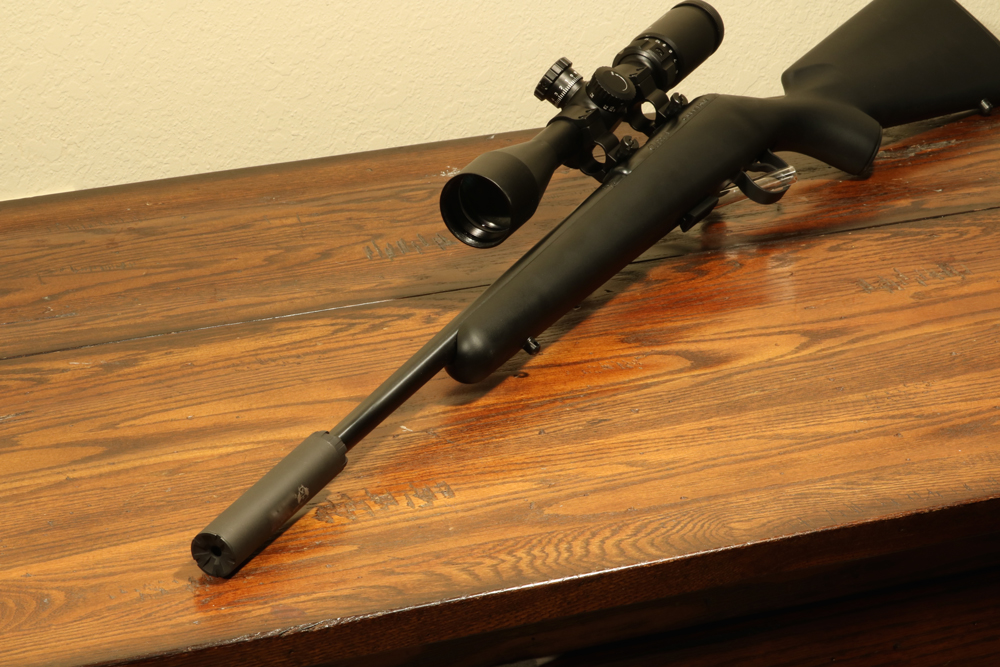
The CZ 455 with a SilencerCo Sparrow 22 suppressor and a Leatherwood Hi-Lux 4-16×44 scope.
The CZ 455 is an eminently flexible rimfire, giving shooters endless configuration options. On top of that, the bolt-action rifle offers what every marksman wants — dead-on accuracy.
Become an expert on one of the world’s most popular firearms companies and its guns with Gun Digest Book of CZ Firearms.
The CZ 455 is the rimfire bolt action of the CZ lineup. It uses an interchangeable barrel system allowing the user to switch from one chambering to another, as well as different barrel configurations. It also allows the action to be swapped from one style of stock to another. About a minute and a couple of tools (that CZ includes with the barrels) are all that’s required.
Additional barrel kits are available at the CZ webstore and range in price from $123 to $189. Stocks are available as well, and range in price from $115 to $220. The Full Stock is a little more and costs $300, and there’s a high-speed, low-drag Precision Trainer for $690. The majority of the stocks are in the $115 to $125 price range, though, so it isn’t one of those things where people are going to get gouged for over-priced accessories. This is something I’ve always appreciated about CZ — their accessories are all priced reasonably.
To change barrel configurations, first loosen the two barrel screws until the barrel can be removed, then install the new barrel, index on the screw holes and tighten the screws, then remove the magazine well and replace with the appropriate one.
The 455 uses a cold hammer-forged barrel that’s been free-floated and has the accuracy for which CZ is known.
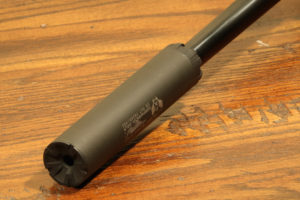
The model sent to me for testing was the 455 American Synthetic Suppressor-Ready .22LR. The barrel is free-float and is 16.5 inches long with a 1:16-inch rate of twist. The muzzle is threaded with 1/2×28 pitch. I was able to direct-thread my SilencerCo Sparrow on to it, but I prefer to use the SilencerCo adapter, for perfect length. With all that it takes to get a suppressor, I’d rather thread it on to something made specifically for it.
The quietest and most reliable .22 subsonic suppressor ammo that I have used is the CCI Suppressor 45-grain Hollow Point, which clocks in at 970 feet per second. Plus, it’s relatively clean compared to other subsonic .22 ammo I’ve shot (.22 ammo is notoriously dirty, and the suppressor catches most of that), or probably more accurately stated, it’s not unnecessarily dirty. With the Sparrow, CCI and 455, when I pulled the trigger, all I heard was the firing pin spring, then the firing pin hitting the primer, then the bullet hitting the paper down range. It’s pretty remarkable if you’ve never used a bolt-action .22 with suppressor. It’s half as loud as my son’s Red Rider BB gun, and quieter than an electric stapler.
The action is fully machined from bar stock. It’s S.O.L.I.D., whereas the receiver walls on other .22 bolt-action rifles are thin — around .13 inch — the receiver walls on the 455 are essentially the same thickness as the 527, which is chambered in .223. The side walls where it locks up measure .25 inch, which is about the same as the full size 550. My point being that this .22 is built like a centerfire bolt action. I have one bolt-action .17 HMR rimfire, and the receiver is so thin that when I push the bolt forward — which has a narrow circumference — it almost feels like I’m leveraging the bolt handle to the right, and this really makes it hard to get the round into the chamber. Especially when I really work the bolt fast. Not so with the 455.
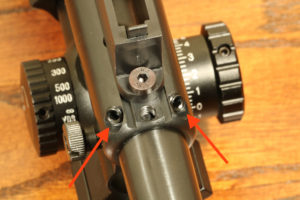
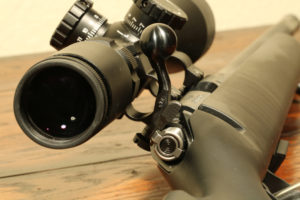
High scope mounts must be used to accommodate the high bolt throw.
It comes with one five-round detachable magazine. It’s a very flimsy plastic magazine, and if it were to fall out of the rifle and inadvertently get stepped on, it would be done. As far as I can tell, this is the only weak spot in the entire rifle. They’re not even that cheap, at $28 to $36 a pop, depending on caliber and number of rounds. There is a steel five-rounder available. The biggest benefit is that it is the same magazine used in the 512, so they can be swapped out.
Mine did not come with iron sights, though some models do, including the Full Stock, Lux, Ultra Lux, Trainer and Scout. It comes with a standard 11mm dovetail machined into the receiver.
To remove the bolt, pull the trigger and it slides out. Same thing to insert it back into the receiver; just pull the trigger. The bolt has two extractors for reliable extraction. Regardless of all else, the case is going to get extracted.
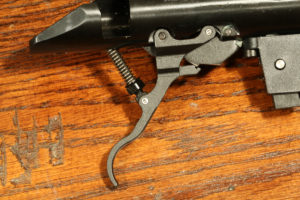
The trigger is adjustable for pull weight — from the factory, mine averaged 3 pounds and half an ounce. It gets repetitive writing about these CZ triggers, but it’s just such a great trigger. There’s no take-up, no creep, you just lightly squeeze and it breaks. It’s smooth, with a crisp break.
Equipped with this SilencerCo Sparrow 22, the 455 is so quiet you can only hear the firing pin spring, the firing pin hit the primer, and then the bullet hitting the paper downrange.
The synthetic stock is black and has a soft-touch finish, which I like. It’s comfortable to hold and gives good purchase. It has a high, flat, “American-style” comb that works best with a scope.
It has a two-position manual safety with fire to the rear. When on safe, the bolt cannot be opened. A cocking indicator shows whether or not it’s cocked.
What I like about the 455 is that CZ includes all of the features that they do for their centerfire rifles, including the adjustable trigger.
Varmint Precision Trainer Suppressor-Ready (.22 LR comes in two barrels; 24-inch heavy taper and 16.5-inch heavy), camouflage composite stock, threaded barrel (1/2×28)
Full Stock (.22 LR, .17 HMR, .22 WMR), Turkish walnut, full stock, Bavarian comb, 20.5-inch barrel
Training Rifle (.22 LR), Beechwood stock with Schnabel forend. 24.8-inch barrel, adjustable tangent rear sight
Not unexpectedly, the 455 has an excellent trigger.
The predecessor to the 455 is the model 452, which has been discontinued except for two models, the left-hand and Scout (youth). The model 452 transitioned to the 455 action in 2011, and the only one (other than the youth Scout) that continues to be made, albeit in limited numbers, is the left-hand model. The 452 barrels are threaded into the action, which is the traditional method, but it eliminates the ability to swap out barrels for different chamberings, as can be done with the 455.
The Scout is a compact youth rimfire rifle with a 12-inch length of pull. It comes with a single-round adapter installed to teach proper marksmanship, but it also accepts the .22 LR magazines for the 452 or 455. It comes blued with a basic Beechwood stock. It has open iron sights, with 11mm dovetails milled into the receiver for mounting a scope. It’s nice and light at 5.06 pounds, which is one to three pounds lighter than the other 452 or 455 models.
Exterior Ballistics is simply the portion of a bullet’s flight once it leaves the muzzle until it hits the target. It is important for shooters to understand the forces at play during this window, if they have their sights set on accuracy.
The primer has been struck, the powder burned, and the bullet acted upon in a most violent chain of events. Yes, our proud little metallic fledgling has left the nest! Into free air it is sent, rotating rapidly, on its course to an unknown destination. Immediately, a multitude of alien forces begin to act upon it as it rolls with the punches and reacts accordingly.
Obviously, not all bullets are built in the same fashion, and each of them react differently to the forces of their particular environment. Some are sleek and streamlined, like a fighter jet, designed for the utmost speed and efficiency, while others are built like a tank, square and strong, to breach the strongest defenses. As with mechanized implements on the battlefield, the two extremes in bullet design use completely different means to the same end, and have different applications.
Exterior ballistics deals with that portion of the bullet’s flight from the moment it leaves the muzzle until it impacts its target — whether that target is paper, steel or flesh. In a handgun, especially a defensive arm, the flight of the bullet is rather short, and the atmosphere and laws of physics have less opportunity to influence things.
In a high-powered rifle, these forces have plenty of time to show their effects. To be able to put that bullet precisely on target, you need to fully understand how the bullet will react to your environment at a wide variety of ranges. Entire lifetimes have been spent in pursuit of the accurate prediction of bullet trajectories. While the answers are out there, the science of ballistics is constantly evolving, and our ability to quantify and predict the values associated with the bullet’s path is improving all the time.
Exterior ballistics deals with that portion of the bullet’s flight from the moment it leaves the muzzle until it impacts its target.
There are scientific terms associated with exterior ballistics, and they can be confusing at times. The most prevalent term we’ll need to understand is ballistic coefficient, or BC as we’ll see it abbreviated, a term that describes the bullet’s ability to resist the effects of atmospheric drag and wind drift, as compared to the base models of bullet shapes as defined by the Commission d’Experience de Gavre.
That was where a series of tests were performed at the Aberdeen Proving Ground, Maryland, by the U.S. Army in the early 1880s, and the G1 bullet form (G in honor of Gavre) was adopted as the model for comparative purposes. Almost all of today’s bullets are labeled with a BC based on the G1 model, although there are newer and different models that better serve the shooter (we’ll get into detail about that later in this section).
The accuracy of a particular firearm is most often measured in the arc subtended by a minute of angle, abbreviated as MOA. One minute of angle is 1/60th of one degree on a circle, and is equal to 1.047 inches at 100 yards. For our general purposes, assume that figure as 1 inch. Thus, one MOA is 1 inch at 100 yards, 2 inches at 200 yards, 3 inches at 300 yards, and so forth.
A rifle that is said to shoot MOA will print a group of shots that measure no more than 1 inch of extreme spread at 100 yards. Since group size is measured in a function of a projecting cone, the further the distance the target is from the muzzle, the wider the arc subtended by that angle. For hunters facing shots inside of 400 yards, an MOA rifle should print a group measuring four inches at the 400-yard mark.
Wind drift is the effect of any crosswind during the bullet’s flight. It is a tricky proposition learning to ‘dope’ the wind, but it is necessary to hit distant targets in real world situations. Wind will certainly blow a bullet off its course in a horizontal direction, but in certain situations it will have a vertical effect as well. Wind drift is typically represented in inches, but I’ve seen it in MOA as well. I personally prefer inches, but the two are easily converted. MOA is an important value for precisely adjusting telescopic sights.
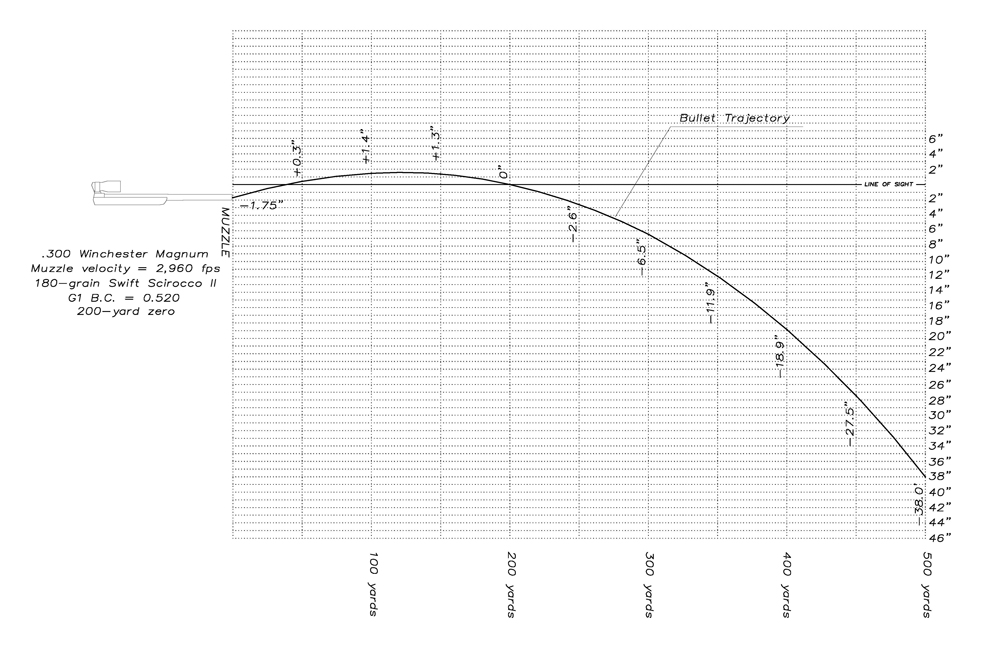
Bullet trajectory of a .300 Winchester Magnum over 500 yards.
Now, the trajectory of a bullet is based on more than one factor. Shortly after Sir Isaac Newton had his noodle rocked by that fateful piece of fruit (I’m thinking back to the wonderful Schoolhouse Rock cartoons of my youth), he did his best to explain the laws of gravity. The resultant accepted formulae state that, with the effects of atmospheric drag aside, all small bodies will fall to the earth at the same rate. This applies to projectiles as well. Whether fired at Mach III or simply dropped from your hand, the bullet falls to the ground in the same amount of time.
When a rifle is described as flat shooting, it is because it generates a higher than normal muzzle velocity, and the bullet is allowed to cover more ground before gravity pulls it earthward. The flattest shooting cartridges have the shortest time of flight (abbreviated TOF), so that the represented curve of the bullet path looks much flatter than the slower cartridges. Combine this gravitational effect with the effects of air drag, crosswind, and atmospheric conditions, and your projectile has much to overcome before it tears out the bullseye. You can now see why the science of ballistics is so in-depth.
There is a common misconception about trajectory that can be easily misconstrued from looking at the trajectory curves printed on the back of ammunition boxes. I’ve had many people argue until they were red in the face that a bullet rises once it leaves the muzzle, and starts to drop in a rainbow-like curve. That, dear reader, is simply not the truth, though it is necessary to adjust the way you use your firearms to have that be the end result.
If you were to hold any firearm so that the line of the bore were perfectly level (perpendicular to gravitational pull), your bullet would immediately start to drop below the line of the bore, essentially never striking a target exactly where the bore was aiming, irrespective of distance to the target. There would be some (perhaps minuscule) gravitational pull. Coupled with that idea, the manner in which you sight your firearms — whether with iron sights or telescopic sights — requires your visual plane be elevated at some distance above the bore line.
So, with those two factors involved, you must elevate the bore at a certain angle upward so that the bullet path and the visual plane will cross at two specific distances. The flight of the bullet must begin below the visual plane, then rise above it, and finally cross the visual plane once again after gravity and air drag have had their time to act. The distance at which the bullet crosses the visual plane for the second time is commonly referred to as ‘zero.’ A rifle zeroed for two-hundred yards means that the curve of the bullet path will leave the muzzle, cross the visual plane at 25 to 50 yards (strongly dependent on the type and velocity of cartridge you’re using), rise a small distance above the line of the visual plane, and meet the line of the visual plane at exactly 200 yards from the muzzle.
Without a thorough understanding of the different forces at play on a bullet once it leave the muzzle, the X-ring can remain elusive.
The farther the bullet gets from the muzzle, the more drastic the effects of the atmosphere and gravity become. That ballistic coefficient or BC figure — again, the comparison of the ability of your bullet to overcome air drag and wind drift with a particular model — is not a static figure; it changes over a range of velocities.
Often when the bullet manufacturer lists a BC figure for their bullet, it is in comparison with the G1 bullet model (a model that simply doesn’t best describe most of today’s bullets) as well as being an average of the changing BC over a variety of distances and velocities. While it serves as an approximation, there are better means of representing the highly specialized bullets of the modern era, the ones that truly require an accurate representation as they are used for long-distance work.
As a reminder, the sectional density, or SD, is a ratio of the bullet’s mass (weight) to its bore diameter. While we’ll be using this characteristic much more in the terminal ballistics section, for the purposes of external ballistics your bullet’s SD figure is an important part of deriving its form factor, in comparison to a G1 or G7 bullet model, and that in turn is used for the derivation of an accurate BC.
There are also the rotational effects of a bullet that need to be taken into account for true long-range accuracy. That same spin that the barrel’s rifling imparted on the bullet not only keeps it stable in flight, but causes an effect known as spin drift at extreme ranges. If you’re serious about long-range shooting, you’ll want to know how to calculate and adjust for it.
Federal Premium should get shooters fired up at the range and in the field with four new lines of ammunition.
As is expected, rifles, pistols and shotguns steal the spotlight at any firearms convention. The April 27-30, NRA Annual Meetings and Exhibits in Atlanta were no exception. But dotted among the latest and greatest guns was their cutting-edge fodder, boasting the newest twists to get the most ballistic potential out of projectiles. Federal Premium Ammunition was among the manufacturers unveiling its latest additions to its catalog at the meeting. And the Minnesota company should get shooters fired up for the range and the field with four new lines of ammunition.
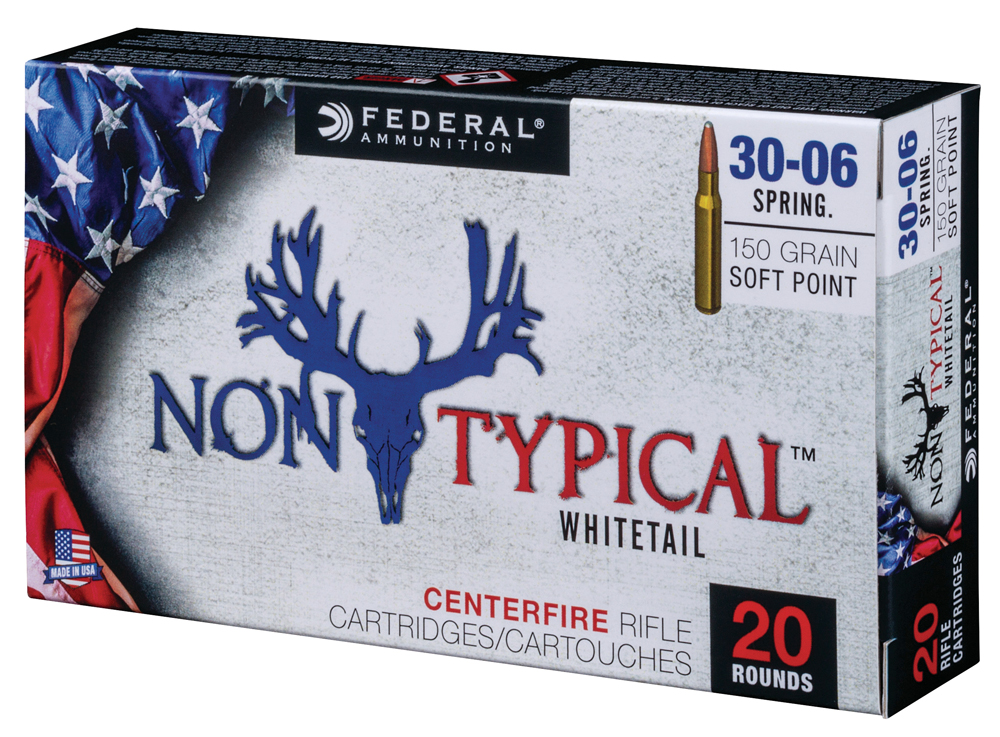
Federal Non-Typical The company has set its sights on diehard whitetail hunters with the introduction of Federal Non-Typical centerfire rifle ammunition. Specifically designed to pursue America’s favorite big-game animal, the ammunition has everything hunters need to tag-out. Topped with an optimized soft-point bullet with a concentric jacket, Non-Typical provides top-notch accuracy and devastating terminal ballistics. Available in seven of the most-used calibers for whitetails, the ammunition is outfitted with a Federal primer and built on the company’s precision-drawn brass.
.243 Win. 100-grain $21.95
.270 Win. 130-grain $21.95
.270 Win. 150-grain $21.95
.30-30 Win. 150-grain $19.95
.30-30 Win. 170-grain $19.95
.308 Win. 150-grain $21.95
.308 Win. 180-grain $21.95
.30-06 Spring. 150-grain $21.95
.30-06 Spring. 180-grain $21.95
7mm Rem. Mag. 150-grain $27.95
.300 Win. Mag. 150-grain $27.95
.300 Win. Mag. 180-grain $27.95
6.5 Creedmoor TBD-grain $21.95
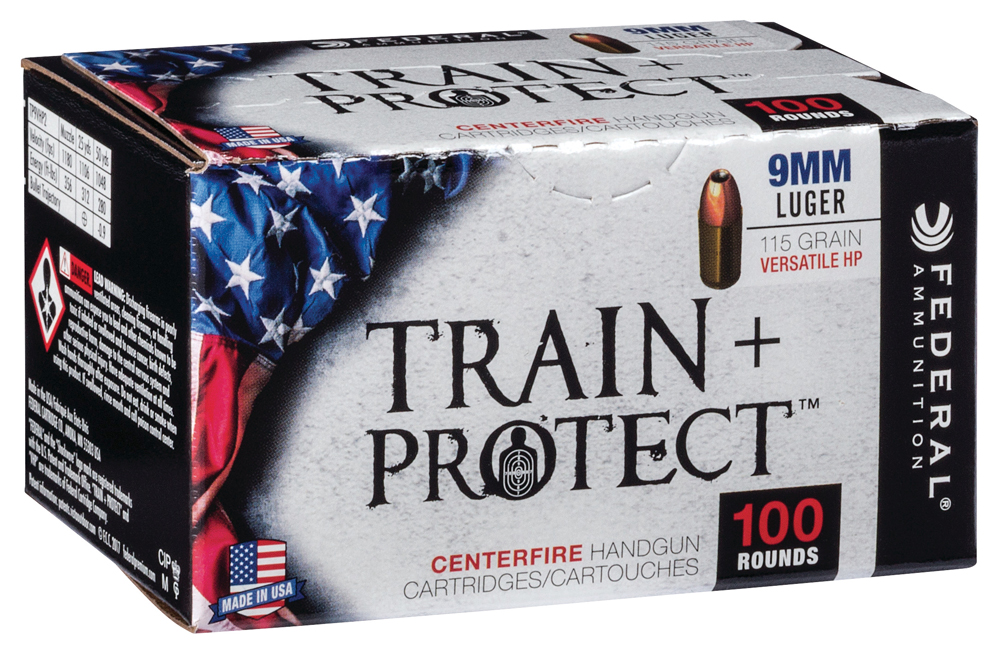
Federal Train + Protect Going armed means not only finding the ideal defensive ammunition but also putting in the range time so it can be delivered on target effectively. Federal’s Train + Protect marries both these facets of self-defense in one convenient package. Loaded with the company’s VHP (versatile hollowpoint) bullet, the ammunition is meant to deliver accuracy off the firing line and in the field. And the instant and reliable expansion on impact ensures that if ever called to use, Train + Protect will provide the stopping power required to defend yourself and your loved ones.
9mm 115-grain 50-count $30.95
.40 S&W 180-grain 50-count $35.95
.45 Auto 230-grain 50-count $35.95
9mm 115-grain 100-count $56.95
.40 S&W 180-grain 100-count $66.95
.45 Auto 230-grain 100-count $66.95
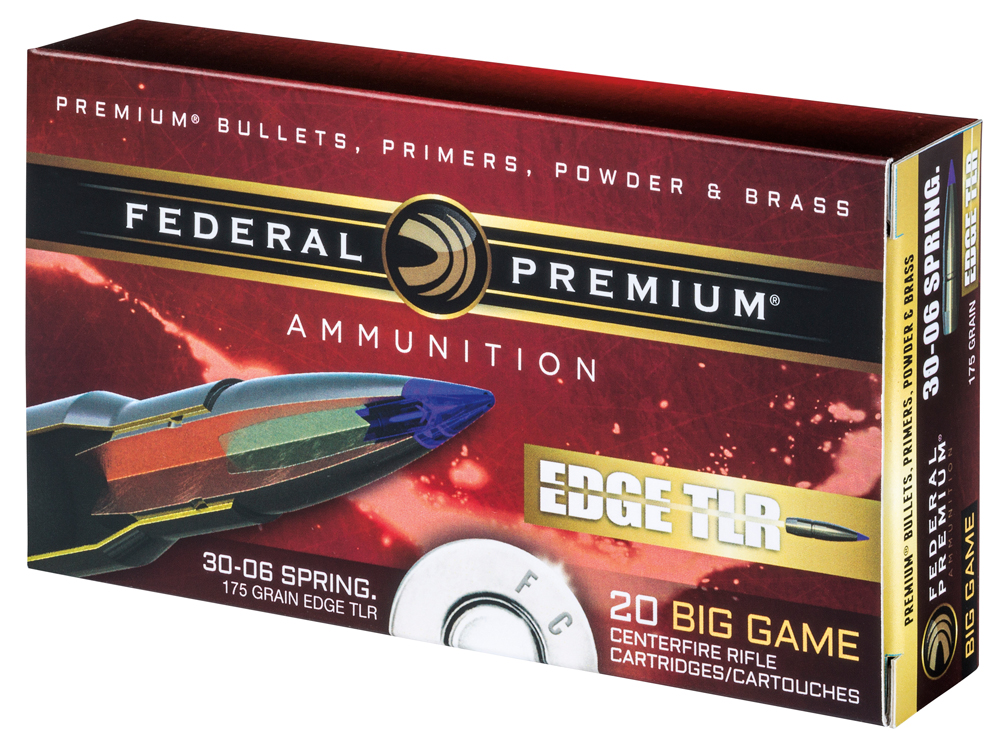
Federal Edge TLR Designed with long-range hunters in mind, Premium Edge TLR is engineered to provide accuracy and a massive wound channel no matter the distance. The Edge TLR bullets feature Federal’s Slipstream polymer tip, technology that ensures the projectiles reliably expand as they lose velocity. At closer ranges, the bullet’s copper shank and bonded lead core retain maximum weight, thus producing lethal penetration. The bullets offer some of the highest ballistic coefficients in Federal’s catalog, giving them incredible long-range performance. And their long sleek profiles are optimized with the company’s AccuChannel groove, a technology meant to further reduce drag.
.308 Win. 175-grain $47.95
.30-06 Spring. 175-grain $47.95
.300 Win. Mag. 200-grain $59.95
.300 Win. Short Mag. 200-grain $59.95
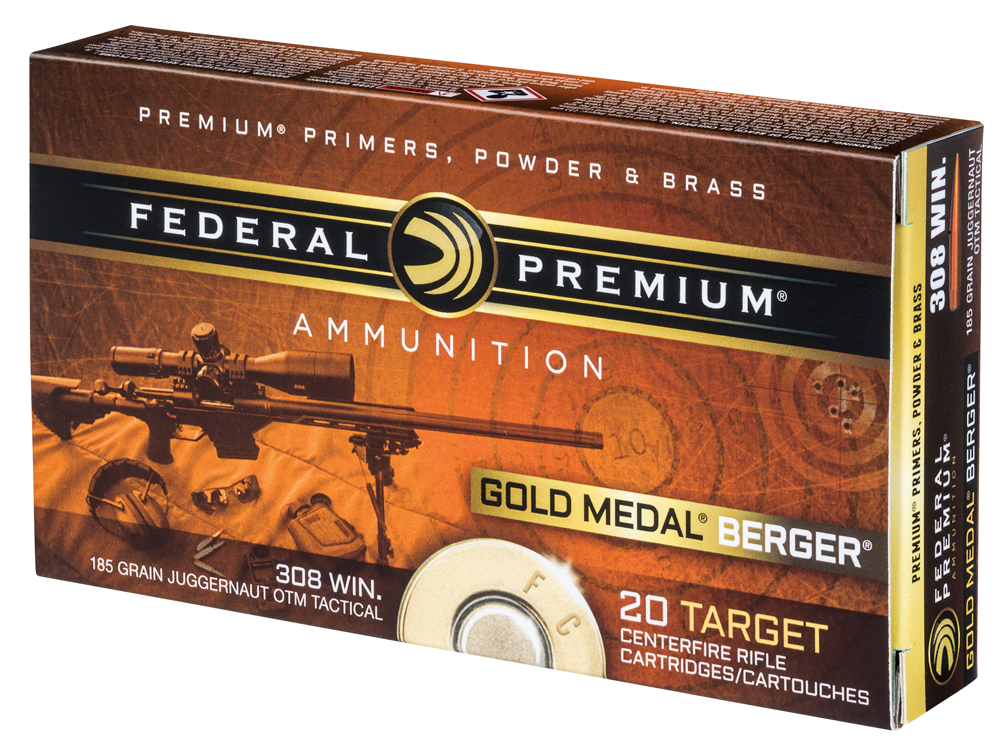
Federal Gold Medal Berger Berger’s Juggernaut OTM, Hybrid OTM or BT Target are among the most popular bullets at Precision Rifle Series events. And now the highly precise projectiles highlight Federal’s newest line of precision ammunition. Gold Medal Berger features advanced boat-tail bullets with a high ballistic coefficients, providing the flattest trajectories, the least wind drift and surgical accuracy. Loaded in some of today’s most popular long-range calibers, there are few other off-the-shelf options that offer the accuracy potential of Gold Medal Berger.
The new 28-gauge Benelli Ethos is a lightweight shotgun with power above its weight class, making it a great option for the serious upland hunter.
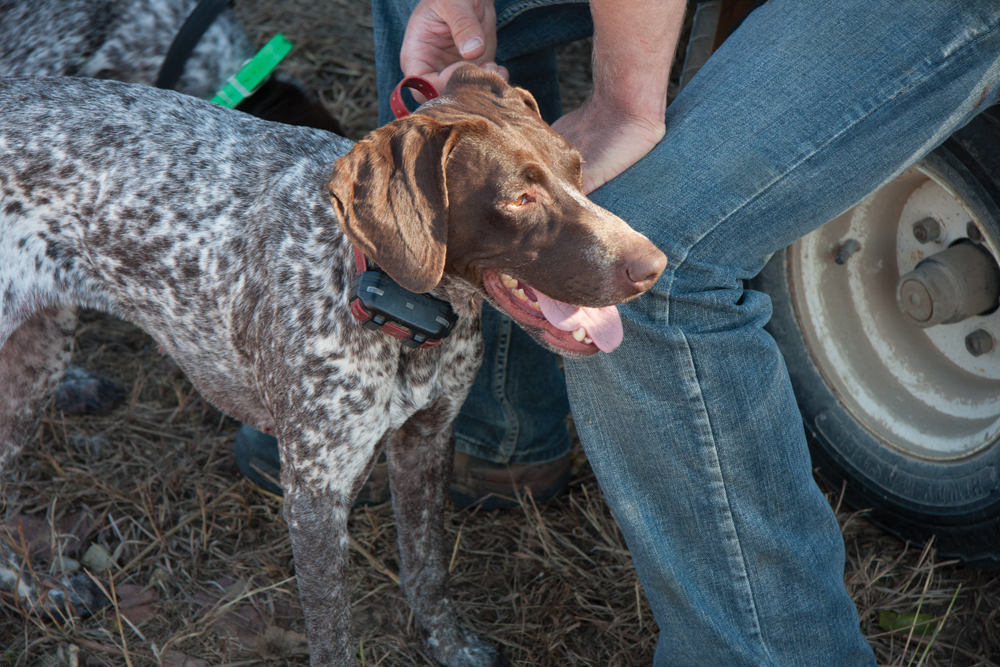
“Looks like they’re locked up again,” said Scott, our guide for the day, as he motioned forward with his head. Up ahead, Heidi, a veteran German Shorthaired Pointer (GSP), was rooted in place, clipped tail rigid in the air, front leg bent and nose straight as an arrow pointing at the edge of a tall grass patch, where yet another pheasant was surely hunkered down. Behind her was Fox, another GSP, also locked up and honoring Heidi’s point.
I was on the left side of the patch and the dogs when Scott motioned for me and another hunter to our right to move closer. After we approached, Scott had one of the Labs we were hunting with move in to flush the bird. It didn’t take much of the Lab’s lumbering antics for the bird to decide it was time to get out of Dodge.
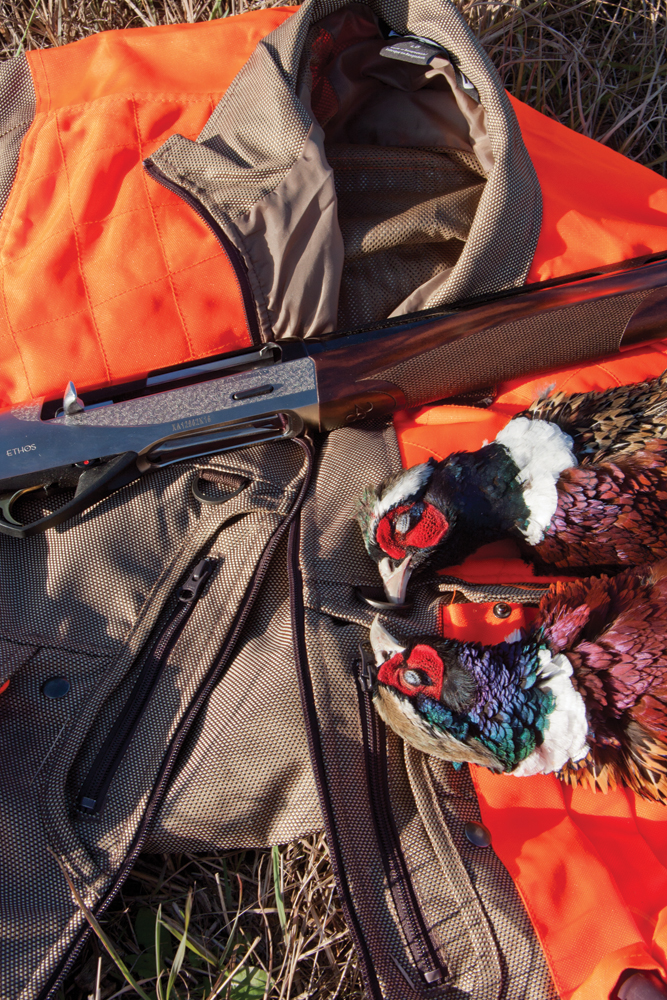
In a rush of commotion, the pheasant flushed from the grass and made a beeline to the left. It was the perfect shot opportunity for me, and I quickly shouldered my gun, drew down on the bird and shot, making sure to swing through. The bird (my third from this one pass) dropped immediately, shedding some feathers on its way down. A few short seconds later the dogs had retrieved it, and on we went.
This was a common occurrence over three days of hunting at Pheasant Bonanza in Tekamah, Nebraska, in late October with Benelli’s Ethos 28-gauge shotgun. In fact, it was so common that those three days of hunting may have spoiled me forever.
Smaller Goes Bigger
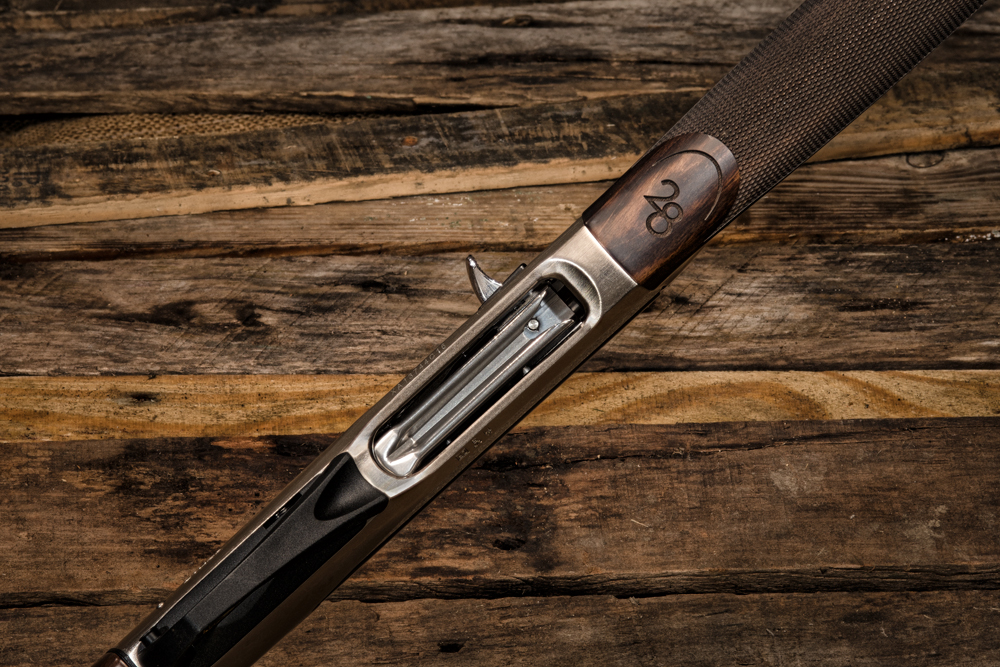
Debuting at the 2016 SHOT Show, the Ethos 28-gauge was an expansion of the manufacturer’s already popular Ethos shotgun line, which included 12- and 20-gauge models. The new gun brought the innovative—and stylish—Ethos design to an even lighter, 28-gauge platform.
Benelli’s decision to introduce a 28-gauge offering was an interesting one in and of itself. The 28-gauge shotgun is relatively rare in comparison to 12- and 20-gauges, which tend to see the bulk of field use, and ammo can sometimes be difficult to find. This can be especially true for suitable field loads. Target loads are often more available due to the 28-gauge’s frequent use in skeet shooting. What made this new 28-gauge Ethos even more intriguing, however, was Benelli’s choice to have the gun feature a 3-inch chamber instead of one of the typical 2¾-inch length.
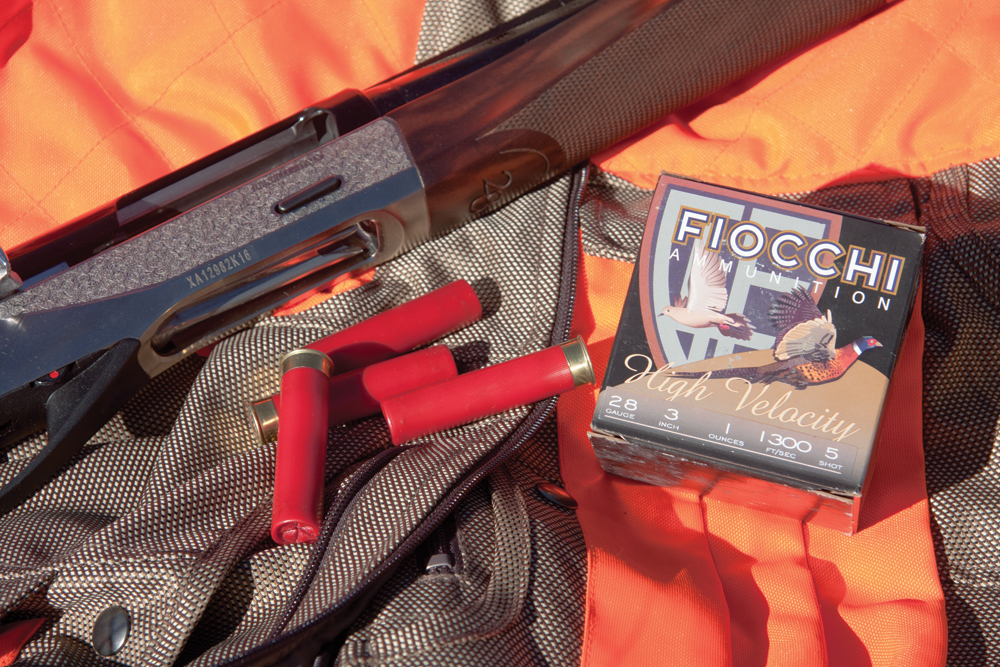
The concept seems to make sense. A bigger chamber translates to a bigger shell, which can equate to more shot, increased velocity, et cetera. The one caveat to this, of course, is that you have to have an ammo manufacturer that produces 3-inch 28-gauge shells, and at the time, none of the major manufacturers had been. That’s why Benelli worked with Fiocchi to develop some 3-inch high-velocity field loads. The Fiocchi loads we used on the hunt contained 1 ounce of No. 5 lead shot and were cruising along at 1,300 fps.
So does the extra quarter inch matter? I was initially skeptical before the hunt, but after having used these shells for three days and dropping a slew of birds with them—some at pretty fair distances—I have to say, I’m a believer. I saw other writers knock down pheasants at distances approaching 60 yards, and I myself dropped one at what I’d estimate as close to 50 yards. Truly impressive for a 28-gauge. But more on the new Fiocchi shells later.
New Size, Same Great Ethos
The Ethos 28-gauge is an incredibly lightweight, smooth-swinging game gun. Weighing just a touch more than 5 pounds, it’s a real treat to carry all day through the field. And, because it’s a 28-gauge, that lightness doesn’t punish you once it’s time to shoot. I actually think I brought down more birds than I could have with my standard Benelli M2 Field 12-gauge because my follow-up shots were more accurate due to the reduced recoil.
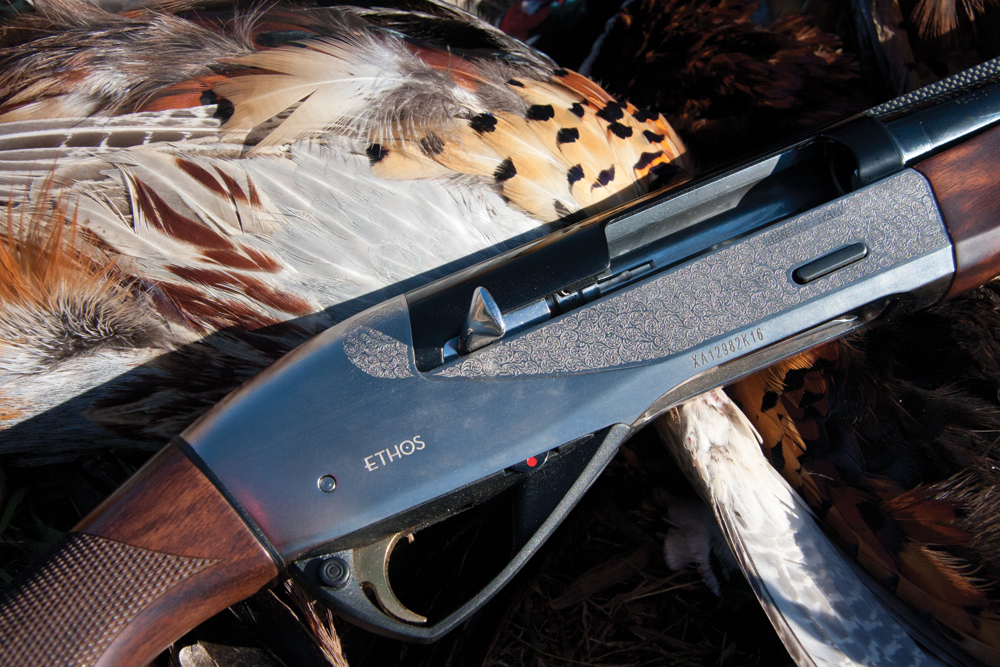
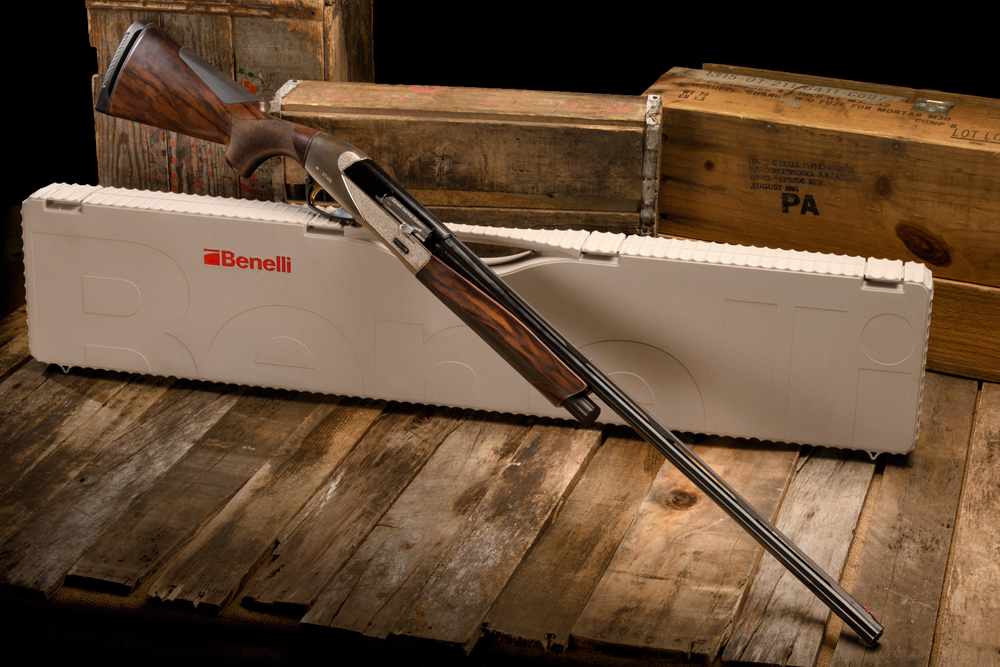
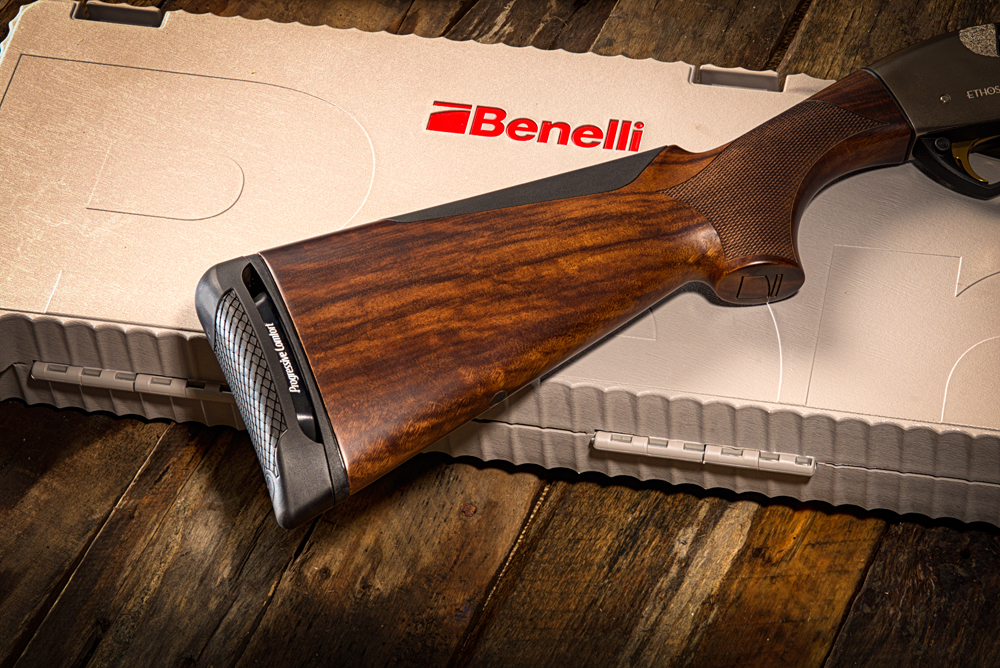
Benelli’s newest Ethos points and swings naturally, and like the previous models, it’s also a looker. The AA Grade satin walnut stock and forend and elegant, engraved nickel-plated receiver are certainly eye-catching. While this graceful design may keep avid waterfowl hunters from tossing the Ethos in their duck blind, the gun’s svelte feel and sophisticated appearance are perfectly suited for upland hunters. It was also a perfect complement to the classy upland gear provided by Banded for our hunt.
In addition to being incredibly stylish, much of the Ethos’ design is also highly functional. The gun utilizes the same great Progressive Comfort recoil reduction system found on previous Ethos models, which makes for easier follow-up shots.
It also features an enlarged bolt release, an outward-angled cartridge drop lever and an ergonomic trigger guard and safety for gloved users. Similarly, its Easy-Loading system uses a beveled loading port, redesigned carrier and a two-part carrier latch for simpler loading. One other nice feature that was brought to my attention on the hunt was the ability to quickly unload shells using a button inside the loading port. Previously, a shooter would’ve had to manually cycle and eject each shell through the ejection port.
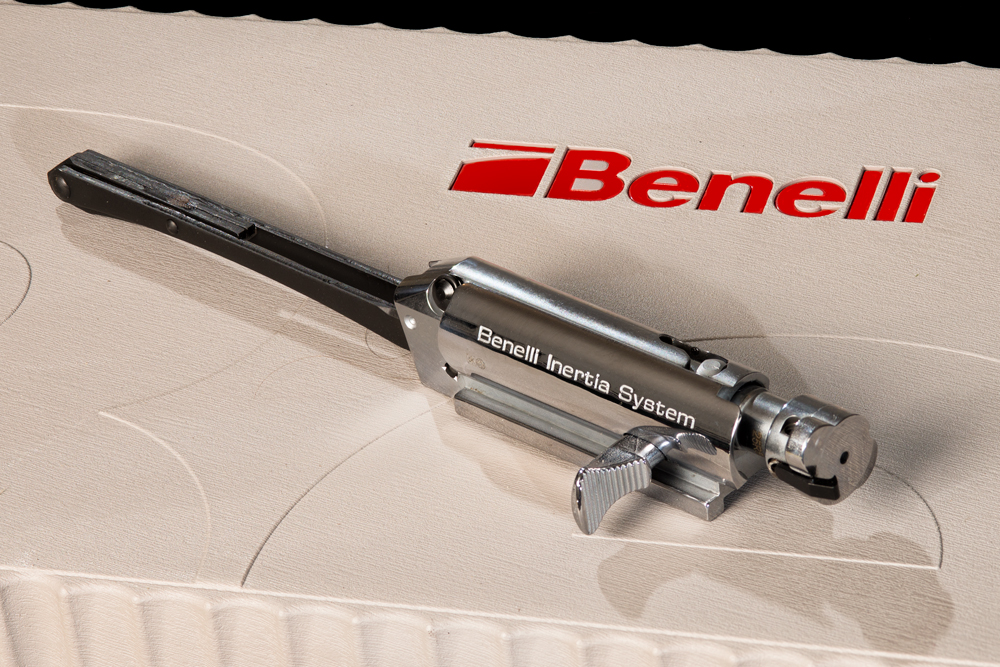
Of course, this new Ethos also incorporates Benelli’s dependable and clean Inertia Driven operating system. This design has proven itself as inherently reliable over the years, and it certainly did so again during the course of our hunt.
The Ethos uses the same Crio choke tubes found on other Benelli shotguns, which I’ve always found to be very good. It also comes equipped with three interchangeable fiber optic front sights for use in any lighting condition a shooter might face in the field.
Parting Shots
Benelli made a bold decision by bringing out a 28-gauge model of its Ethos shotgun, especially with a 3-inch chamber. The 28-gauge has typically occupied a sort of niche in the shotgun world, being more limited to target shooting and hunting smaller game birds while the larger gauges see the lion’s share of use. However, if what I experienced during the fabulous hunt at Pheasant Bonanza is any indication, the Ethos 28-gauge has a huge potential for success with upland hunters.
It can certainly hold its own against the 12-, 16- and 20-gauges in the pheasant fields when using those 3-inch Fiocchi high-velocity loads. During three days of hunting, I believe our group of six averaged around 100 birds or more each day, with all of them falling prey to the 28-gauge Ethos. So, in short, the gun definitely has what it takes to get the job done.
At $2,199, its price is a little steep for some hunters. However, for those looking for a lightweight 28-gauge field shotgun that looks incredible and can reliably bring down upland game, Benelli’s new Ethos is hard to beat.
Specifications:
Benelli Ethos 28 Type: Semi-auto, Inertia-Driven Gauge: 28 Ga. Chamber: 3 in. Receiver: Nickel plated engraved Stock: AA Grade satin walnut Buttstock: Progressive Comfort recoil reduction system Barrel: 26 in. Overall Length: 47 in. Length of Pull: 14 3/8 in. Weight: 5.3 lbs. Sights: Interchangeable fiber optic (red, yellow, green) MSRP: $2,199 Manufacturer: Benelli USA
Locked, Loaded, and Ready: Dive Into Shotgun Basics
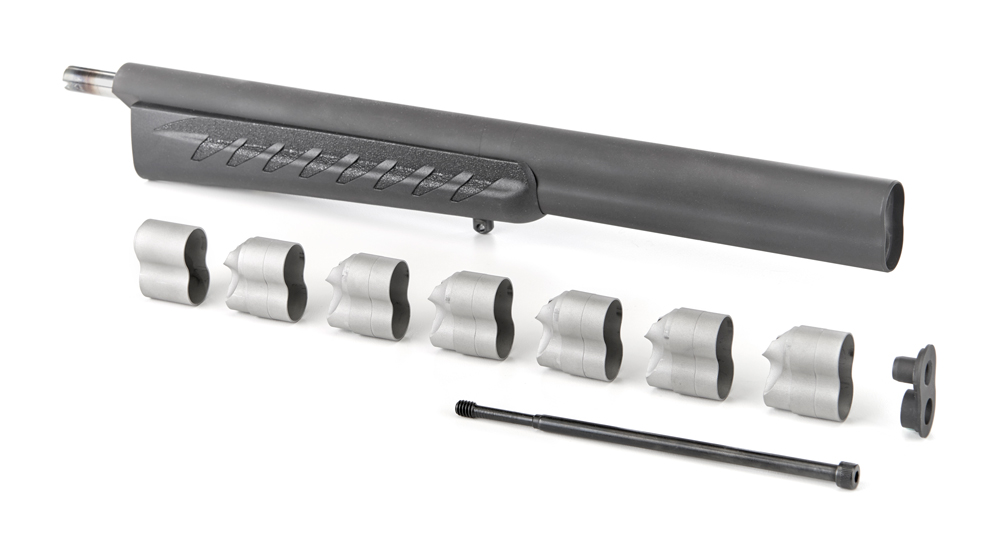
The six baffles are easily removed from the Silent-SR ISB, making maintenance a snap.
Ruger is offering 10/22 Takedown shooters an intriguing upgrade with its Silent-SR ISB. The integrally suppressed barrel not only offers excellent noise reduction but also a more balanced firearm.
Ruger is a bit of an oddity when it comes to aftermarket upgrades.
While much of the market has embraced the universal, spurred on by the huge demand of AR-style rifles, the New Hampshire gunmaker has consistently focused on providing proprietary options. It makes good business sense, bringing Ruger aficionados back to the source in their quest to piece together the perfect firearm. And much to the company’s credit, its seemingly ceaseless innovation gives its fans few reasons to stray.
Case in point, Ruger’s newest goody for its Takedown series of 10/22 rifles. The company is now offering what it’s dubbed the Silent-SR ISB, an integrally suppressed system that promises to deliver a more balanced shooting platform, not to mention a few other assets.
Unveiled Friday at the National Rifle Association meeting in Atlanta, the 16.12-inch suppressed barrel functions on any 10/22 Takedown or 22 Charger Takedown Pistol and is a follow-up to the company’s initial suppressor offering a year ago. But unlike its muzzle-mounted brethren, the integral suppressor system keeps the gun’s center of gravity closer to the receiver, thus making it a more maneuverable firearm.
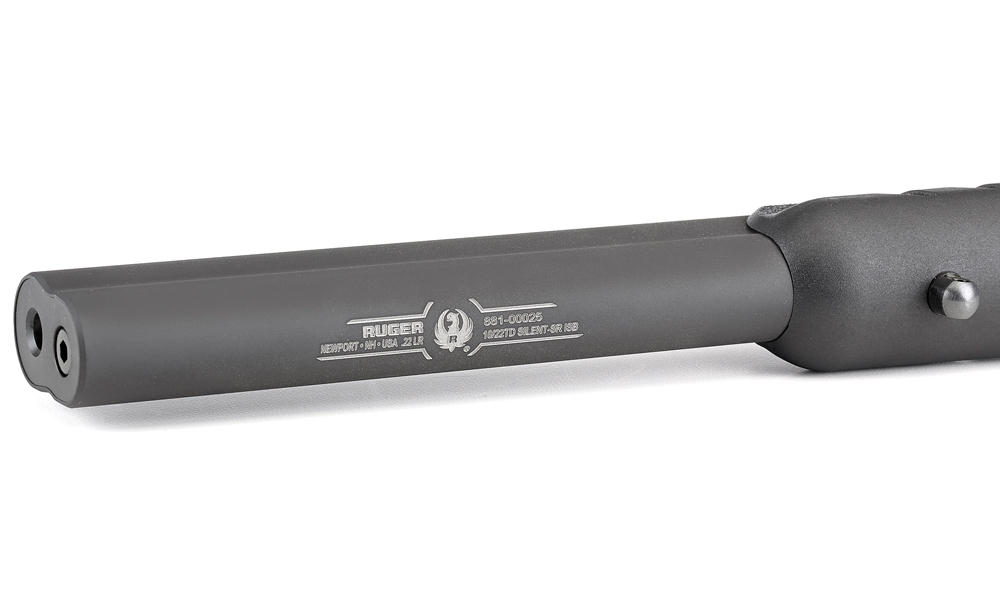
The sleeve of the Silent-SR ISB is serialized.
At the same tick, the Silent-SR ISB offers shooters excellent sound pressure level reduction, knocking the report of the rifle down to 113.2 dB when shooting standard velocity ammunition. To boot, the 2.6-pound barrel is engineered to facilitate a quick and simple cleaning procedure — a feature not often associated with integrally suppressed systems.
A single 5/32-inch hex screw retains the front cap, spacer and baffles in the sleeve and disassembles with an included wrench. The six 14-4 stainless steel baffles then intuitively reassemble in reverse order and completely seal the system, to keep fouling away from the serialized sleeve.
While not a functionality, the Silent-SR ISB also gives the 10/22 a unique look, like a black Cerakoted over/under shotgun.
As far as upgrades go, particularly for rimfires, the Silent-SR ISB is a bit on the spendy side. The system itself has an MSRP of $629, nearly $200 more than Ruger’s muzzle-mounted Silent-SR. On top of this, there is the usual NFA paperwork and $200 tax shooters will have to work into their budgets.
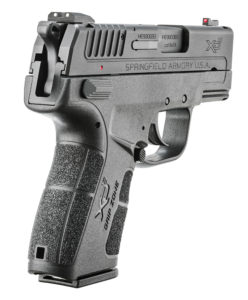
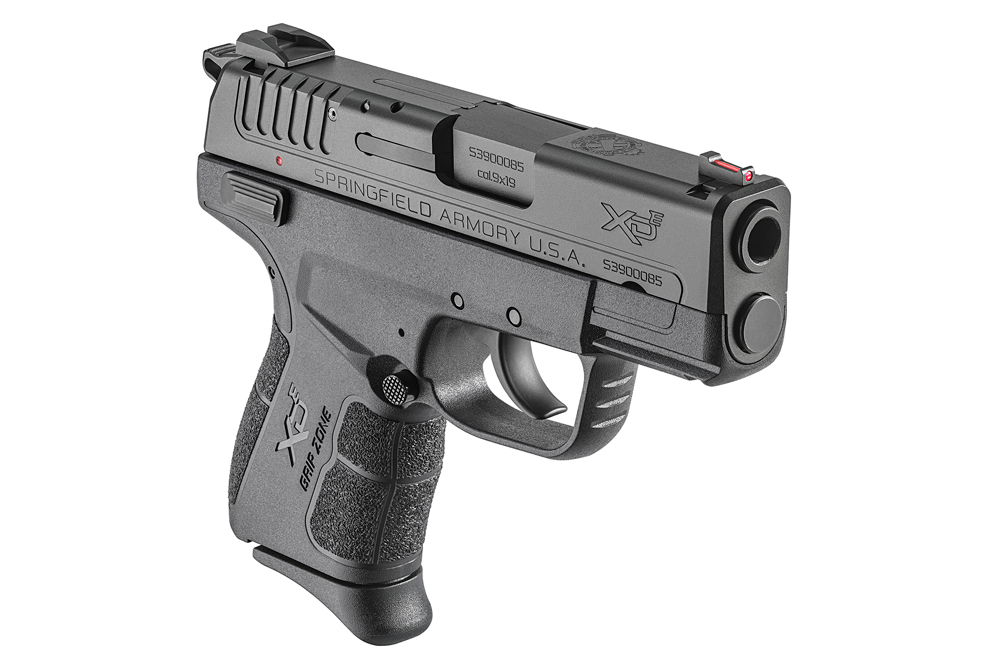
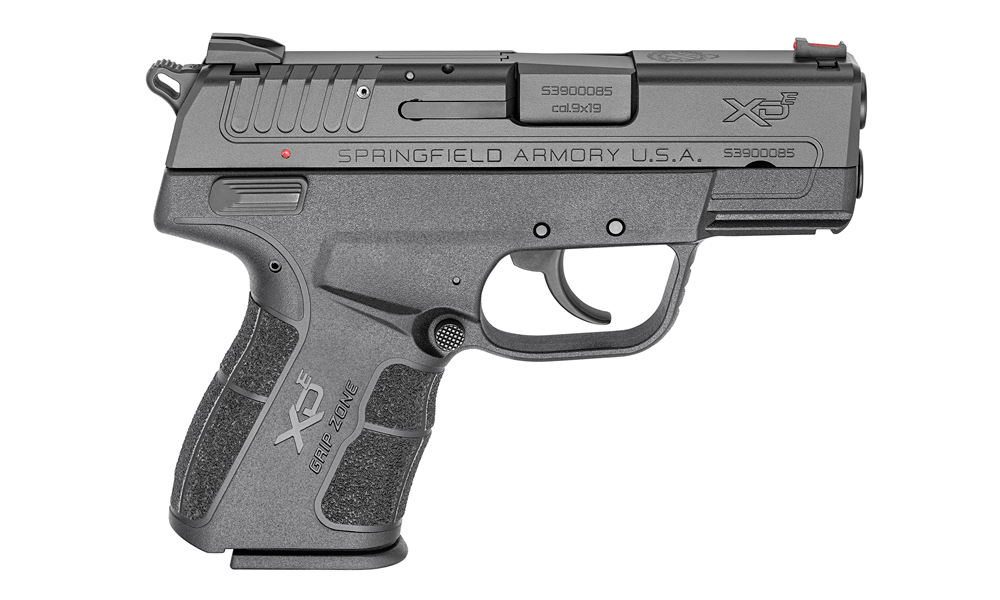
Springfield Armory has announced its new Springfield XD-E, the manufacturer’s first hammer-fired gun in the popular XD line.
Springfield Armory has continued to update and improve upon its respected XD series of pistols ever since the first XD was introduced back in 2002. The Illinois-based manufacturer has added several different lines over the years – the larger XD-M, the carry-oriented XD-S and, more recently, the XD Mod. 2 series. Now it has debuted the new Springfield XD-E, a 9mm single-stack pistol intended for the carry market, at the 2017 NRA Annual Meetings and Exhibits.
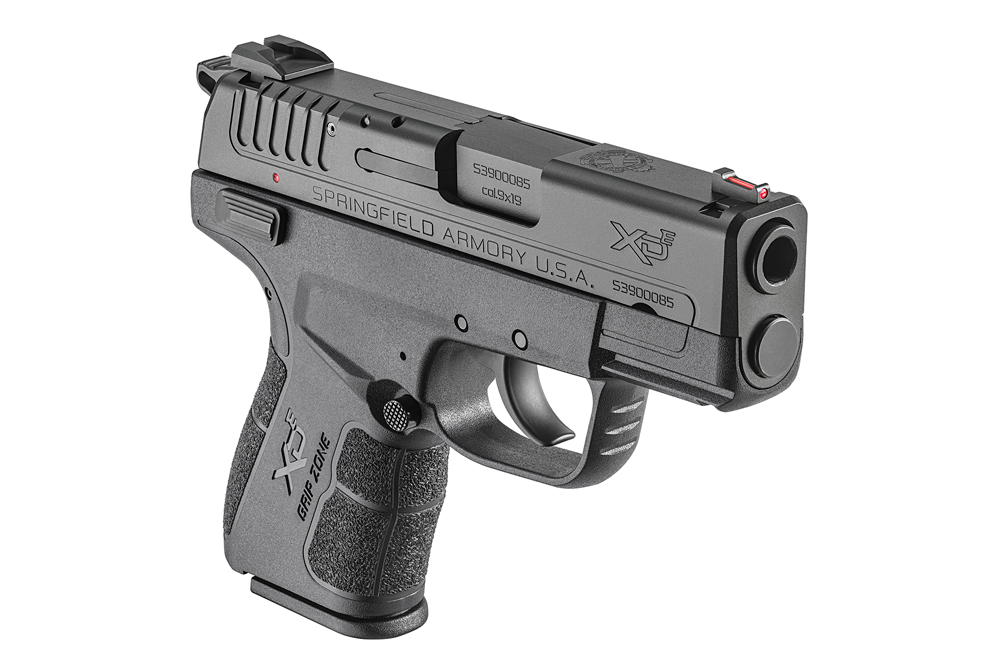
The new XD-E, while still a member of the XD family in name and appearance, is quite different from Springfield’s previous XD models. Most noticeably, it’s not a striker-fired gun, which can clearly be seen in the external hammer at the rear. The pistol, in fact, uses a double-action/single-action (DA/SA) trigger. At this time, pull weight is not listed.
Due to its external hammer, the gun is also able to use a slide that’s easier to rack, which the manufacturer has dubbed the L.E.S, or Low-Effort Slide. According to Springfield, the slide requires 27 percent less effort to manipulate, which will be welcome news to anyone who has difficulty pulling back the slide on standard striker-fired guns.
Another new feature, and one that has been absent on all previous XD pistols, is the addition of an ambidextrous, frame-mounted safety. This external safety also acts as a decocker, which affords the user quite a bit of choice when it comes to preferred carry condition. It can be carried cocked and locked with the safety on, or it can be toted as more of a traditional DA/SA pistol with the hammer down and with or without the external safety engaged.
The Springfield XD-E comes equipped with three different magazine options: an eight-round magazine with a flat base, an eight-round magazine with a Grip X-Tension for improved grip on the gun and a nine-round magazine with a Magazine X-Tension collar. The flat base eight-rounder offers improved concealability, while the nine-round mag essentially adds length to the frame for a better grip and an extra round. The eight-round magazine with Grip X-Tension is somewhat of a compromise between the two.
Springfield XD-E with Grip X-Tension eight-round magazine.
The new Springfield XD-E carries over the Mod. 2’s Grip-Zone, an ergonomic texturing concept that is comfortable but firm for secure purchase. Having shot one of the subcompact XD Mod. 2 pistols, I can say that it is nice blend of textures, and one that offers smooth surfaces where comfort is key and plenty of grip where needed.
Another familiar feature is the fiber optic front sight. The rear sight is a low-profile, combat-style design. And as with earlier XD models, this one uses a hammer-forged steel barrel with a Melonite finish; barrel length on the Springfield XD-E is 3.3 inches, perfectly suited for carry. It’s also pretty comparable in weight to some of Springfield’s other concealed carry pistols at 25 ounces.
The new Springfield XD-E will be available for $519. For more information, check out the specs below.
Specifications:
Springfield XD-E Type: Semi-auto, double action/single action (DA/SA) Caliber: 9mm Barrel: 3.3 in., hammer-forged, steel, Melonite finish Overall Length: 6.75 in. Height: 5 in. with flush magazine, 6 in. with Magazine X-Tension Width: 1 in. Weight: 25 oz. Frame: Black polymer, thumb safety with decocker functionality Slide: L.E.S. (Low-Effort Slide), forged steel, Melonite finish Capacity: 8 or 9 rounds MSRP: $519 Manufacturer: Springfield Armory
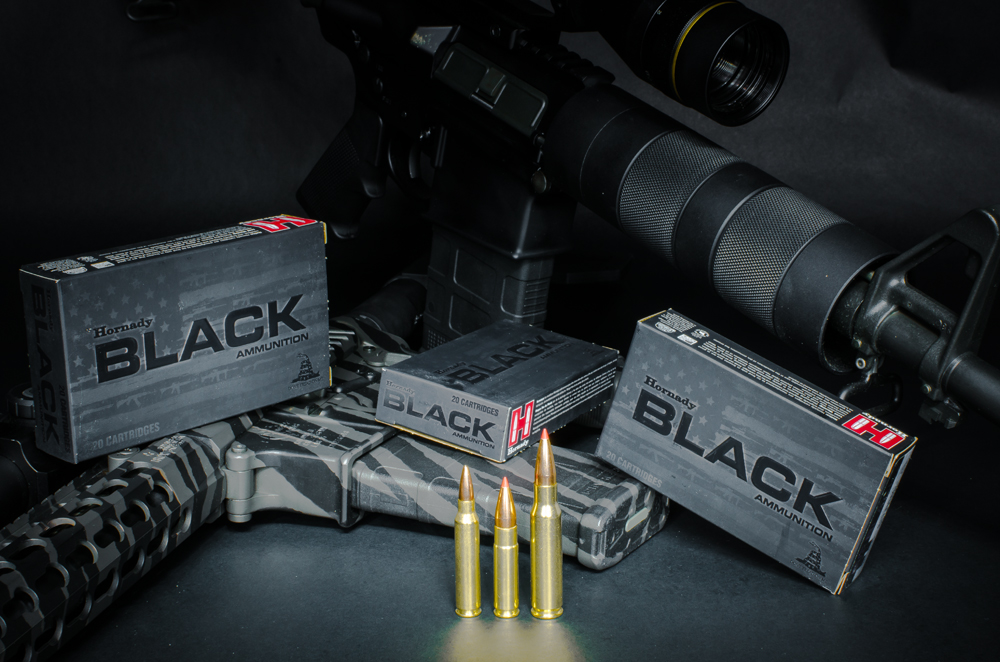
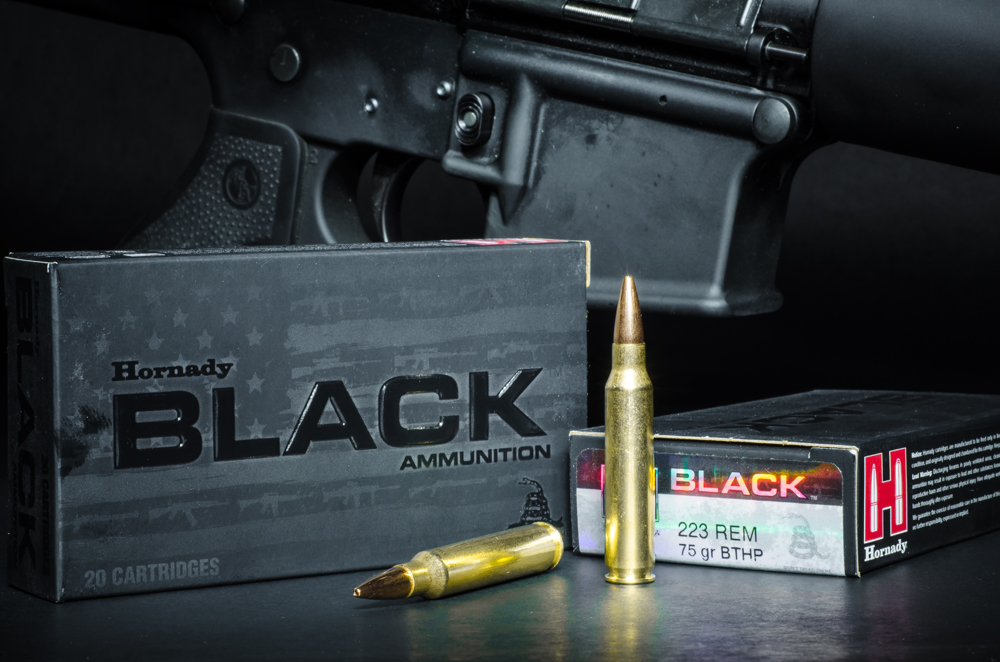
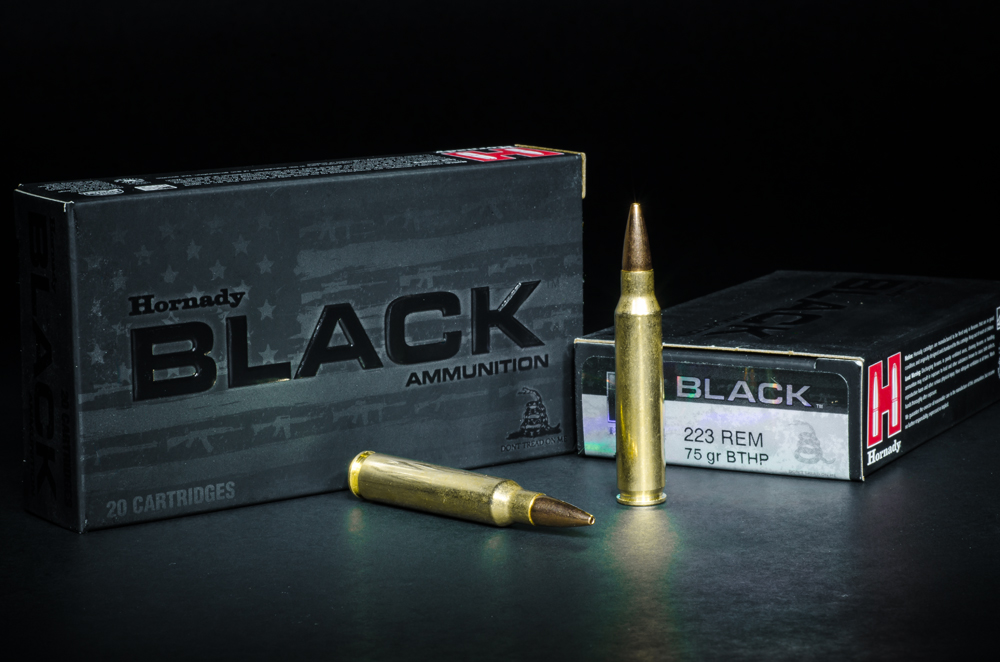
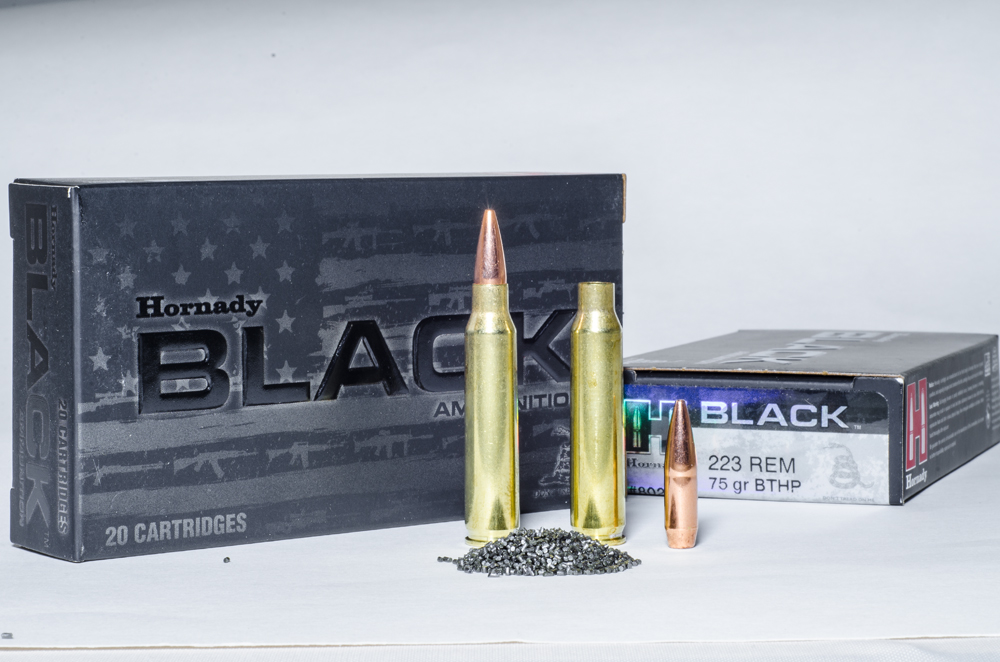
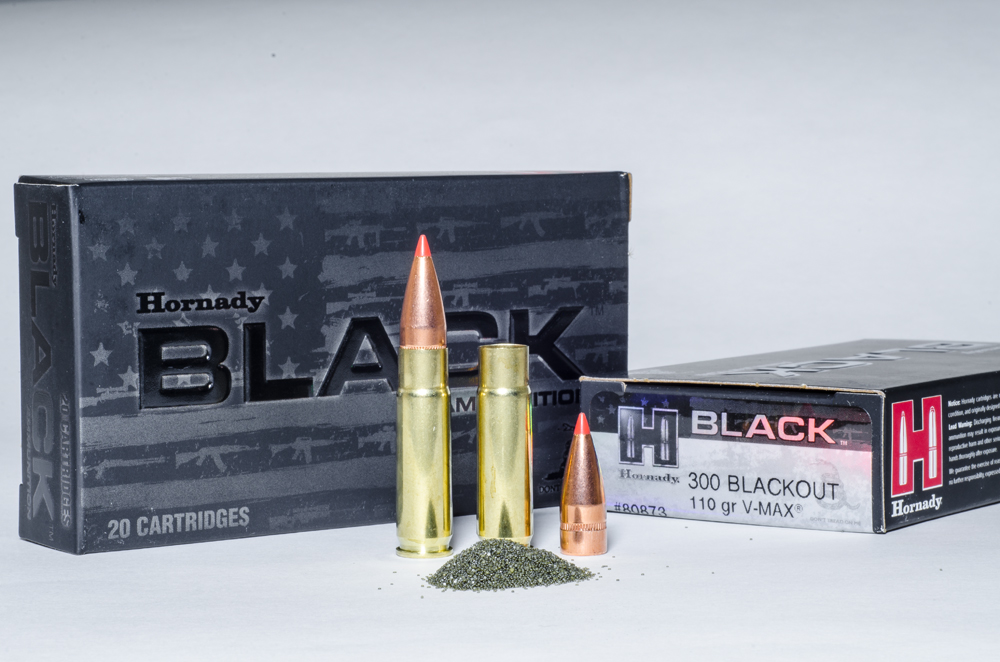
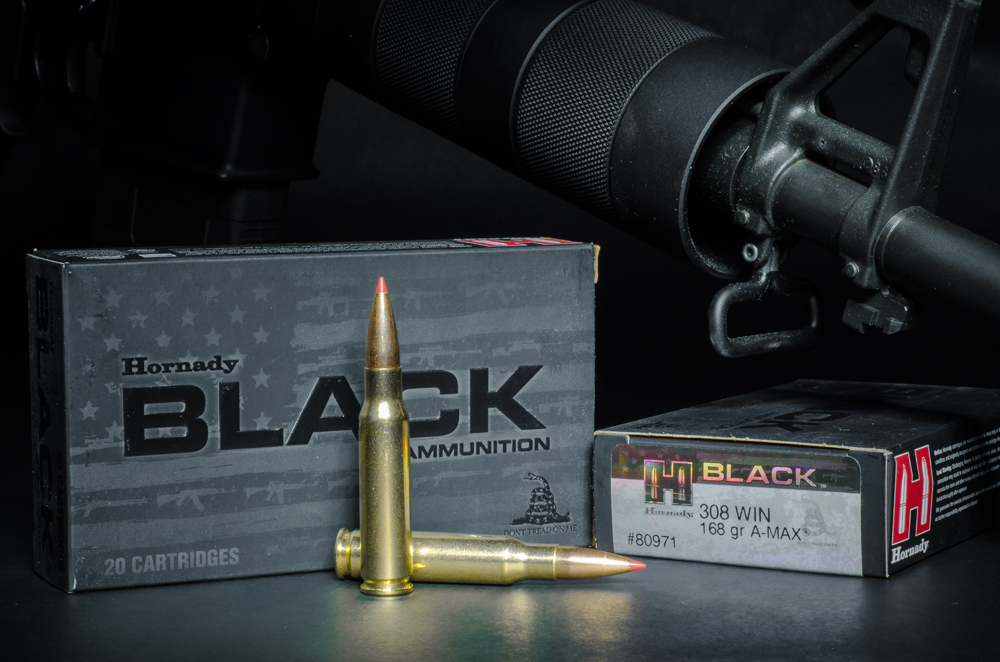
Hornady Black ammo is purposefully designed to feed and function properly in a variety of AR-style rifles, regardless of operating system or configuration.
Black rifles matter. In fact, the AR-15 is likely the most popular firearm in America today. According to research by the National Shooting Sports Foundation (NSSF), “30 percent of all Modern Sporting Rifle (MSR) owners purchased their first rifle in 2009 or 2010.” Those millions of new AR-15 owners are eager for more trigger time and need plenty of ammo to continue feeding their hungry rifles. Data from the NSSF also indicates that MSR owners consider accuracy and reliability to be the two most important things to consider when buying an AR-15.
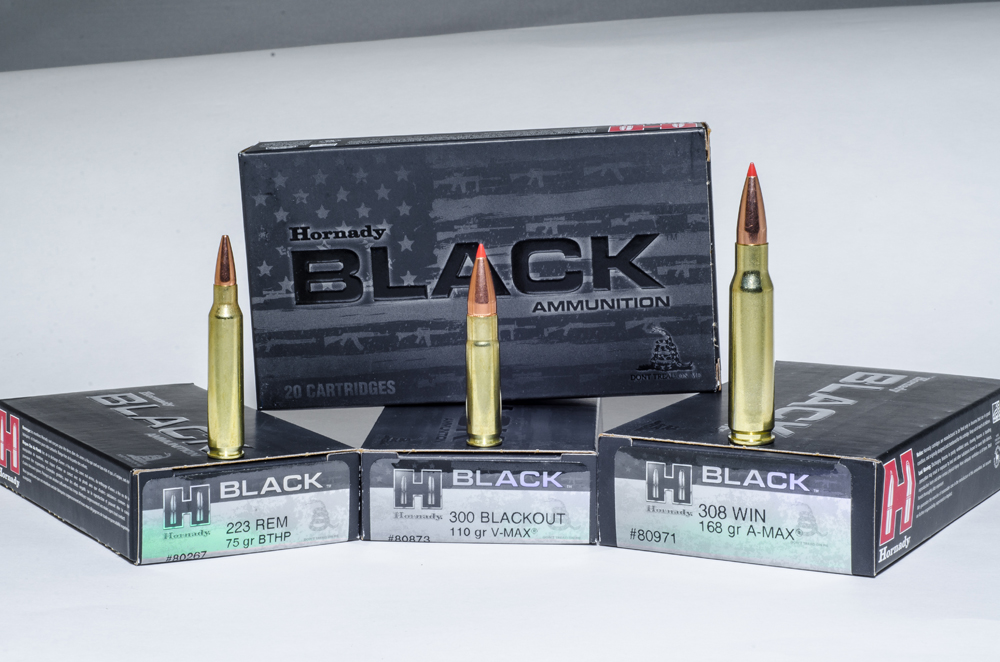
With its slogan, “Accurate. Deadly. Dependable.” Hornady manufacturing has been loading quality ammo for rifle owners since 1949. Considering the bonanza of AR-15 sales over the past decade, Hornady’s new Black line of ammunition suited specifically for Modern Sporting Rifles is a welcomed offering for those of us who enjoy maximizing the performance from our AR-15s. Introduced in late 2016, the entire Hornady Black ammunition lineup currently includes 14 loads spanning multiple caliber options from .223 Rem. to .308 Win., and even delves into the more exotic cartridges such as the 6.5 Grendel and .450 Bushmaster.
According to Hornady’s Marketing Director, Neil Davies, “We wanted to make sure we had a line of ammunition that is versatile enough to be fired in gas impingement guns, gas piston guns … from a variety of different configurations and barrel lengths; suppressed, unsuppressed, sonic, subsonic. “
Davies went on to say, “We put them all together in a line of ammunition that’s easily identified by the consumer. So when they go to the store, it’s easy for them to find the product that will work in their firearm.”
While some of the loads in the Black lineup are new, most of the Black ammo line includes existing loads that were scattered throughout other lines of Hornady ammunition that perform well through MSRs. For example, certain cartridges that were once labeled with Varmint Express, Custom or Match labels may be renamed under the Black lineup. In most instances where existing Hornady loads are re-branded under the Black name, the existing loads will be discontinued and replaced with the new Black label SKU.
So what does this matter to the consumer? Foremost, prices of most Hornady Black loads are less than the same loads under their original name. For example, the Hornady Custom .300 Blackout with 110-grain V-MAX bullet retails for $30.73 for a box of 20 rounds, while the same load under the Black line costs $28.33 for a box of 20. This is an all-around win for the consumer who gets the same great Hornady ammo more readily available and for a better price.
We chose a few popular loads from the Hornady Black lineup spanning .223 Rem., .300 Blackout and .308 Win. to see how they performed through ARs.
Hornady Black .223 Rem. 75-gr BTHP Match Featuring a boat-tail hollowpoint bullet with a ballistic coefficient of .395, this load is designed with extreme accuracy in mind. Whether you’re poking paper at 100 yards or challenging the maximum effective range of your AR-15, the 75-grain bullet really goes where you want it to go. During testing through a 20-inch White Oak Armament upper, I was able to fire a new lifetime personal best group of .331-inch at 100 yards with this load. That kind of accuracy really speaks for itself, especially because I am not a professional match shooter.
Quite simply, any shooter who wants to establish a measurable benchmark for their rifle’s abilities should run their accuracy tests with Hornady Black .223 Rem. 75-grain BTHP Match.
Hornady Black .223 Rem. 75-grain BTHP Avg. Group: .727 in. Best Group: .331 in. Avg. Velocity: 2,642 Std Dev: 8 fps Extreme spread: 18 fps Muzzle Energy: 1,162 ft.-lbs. Cartridge Overall Length: 2.24 in. Powder weight: 24 grains MSRP: $20/box of 20
PROS: Extremely accurate. CONS: Take care when loading into standard AR-15 magazines, as the overall length of this cartridge is almost too long to fit into a magazine.
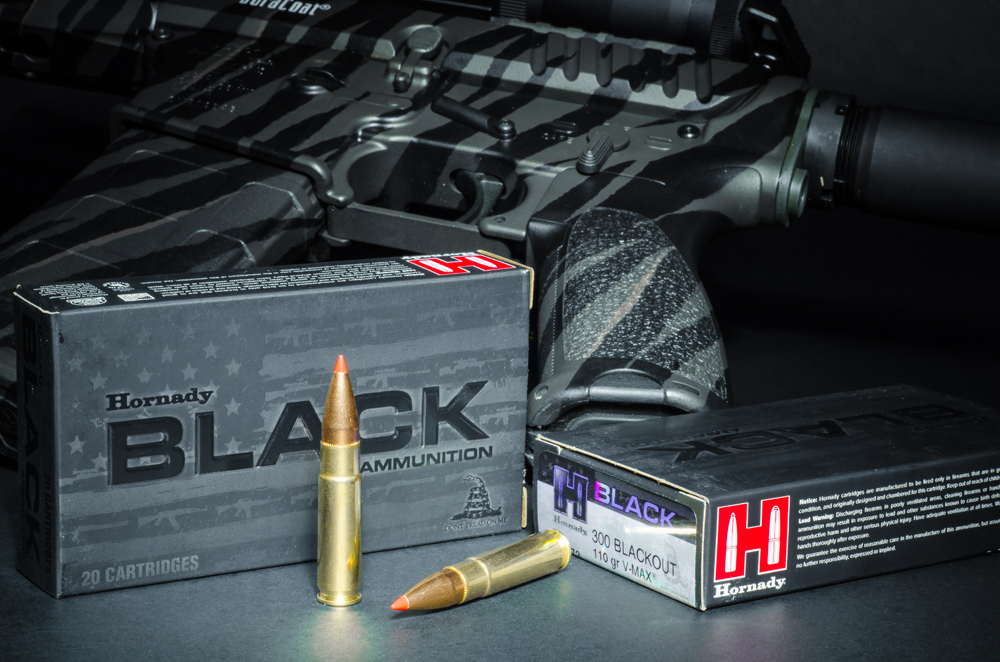
Hornady Black .300 Blackout 110-grain V-MAX Possibly one of the most versatile loads in the AR world, this cartridge boasts the all-purpose power to take on just about anything you want to accomplish. From target shooting to big game hunting and home defense, this supersonic .300 Blackout load is worth a serious look for anyone who needs a do-it-all cartridge.
During testing, the Hornady Black 110-grain Blackout loaded with a V-MAX bullet performed reliably through an AR pistol with a 10.5-inch Brownells barrel. Even when fired through a short barrel, this is a hot load that was able to produce almost 1,200 foot-pounds of energy at the muzzle. Although the tested accuracy averaged consistently sub-two-inch groups at 100 yards, I believe this ammo easily has the potential to shoot less than one-inch groups at 100 yards if the shooter uses an optic with greater magnification than the Leupold VX-6 used during testing. Nevertheless, this load really puts the Black in the Hornady Blackout lineup.
Hornady Black .300 Blackout 110-grain V-MAX Avg. Group: 1.63 in. Best Group: 1.32 in. Avg. Velocity: 2,212 Std Dev: 13 fps Extreme spread: 30 fps Muzzle Energy: 1,195 ft.-lbs. Cartridge Overall Length: 2.10 in. Powder weight: 18 grains MSRP: $28.33/box of 20
PROS: All-purpose tool for any application. CONS: You’ll want an adjustable gas block when fired through an SBR or AR pistol to tame some of the recoil.
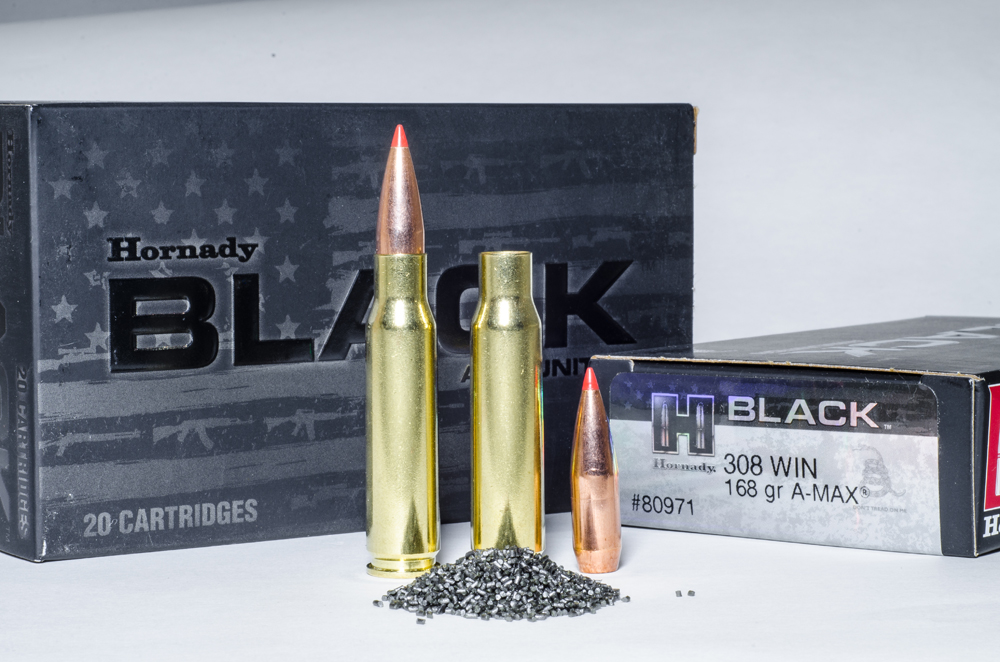
Hornady Black .308 Win. 168-grain A-MAX Hornady’s legendary A-MAX bullet gives the Black line of ammo a reliable big game hunting partner with the 168-grain .308 Winchester offering. The AR-10 certainly has a place in hunting camp when Hornady Black is involved, featuring an expanding bullet that has proven its abilities on game animals around the globe.
As tested through a 16-inch Del-Ton AR-10, the A-MAX bullet left the muzzle at almost 2,200 feet-per-second and punched sub-two-inch groups at 100 yards. Oftentimes, ammo reliability can be an issue with AR-10s that are finicky about ammo selection, but this was not the case considering no malfunctions occurred during testing of this load. Anyone who hunts with the AR-10 should be able to bring home the bacon with this load.
Hornady Black .308 Win. 168-grain A-MAX Avg. Group: 2.21 in. Best Group: 1.87 in. Avg. Velocity: 2,148 fps Std Dev: 20 fps Extreme spread: 35 fps Muzzle Energy: 1,721 ft.-lbs. Cartridge Overall Length: 2.80 in. Powder weight: 43 grains MSRP: $35/box of 20
PROS: Accurate, great for hunting, CONS: Due to price, not a good option for plinking/target shooting.
Conclusion While it is certainly pricier than your standard surplus range ammo, the level of quality craftsmanship in this ammunition lets the AR-15 push its stereotypical limitations. During testing, Hornady Black ammo achieved impressive performance that cannot be overlooked by anyone who owns an AR-15. Strategically targeted for AR-platform rifles, Hornady Black ammo certainly lives up to the two most important expectations defined by AR-15 owners to the NSSF: accuracy and reliability. Owners of America’s favorite rifle wanted a favorite flavor of ammo, and Hornady satisfied that craving with its new Black lineup of ammunition.
Parting shots While some of the loads in the lineup are cleverly disguised as “new,” Hornady Black ammo is a welcomed product that is already proving beneficial to consumers who want to pay less for the same high quality ammo.
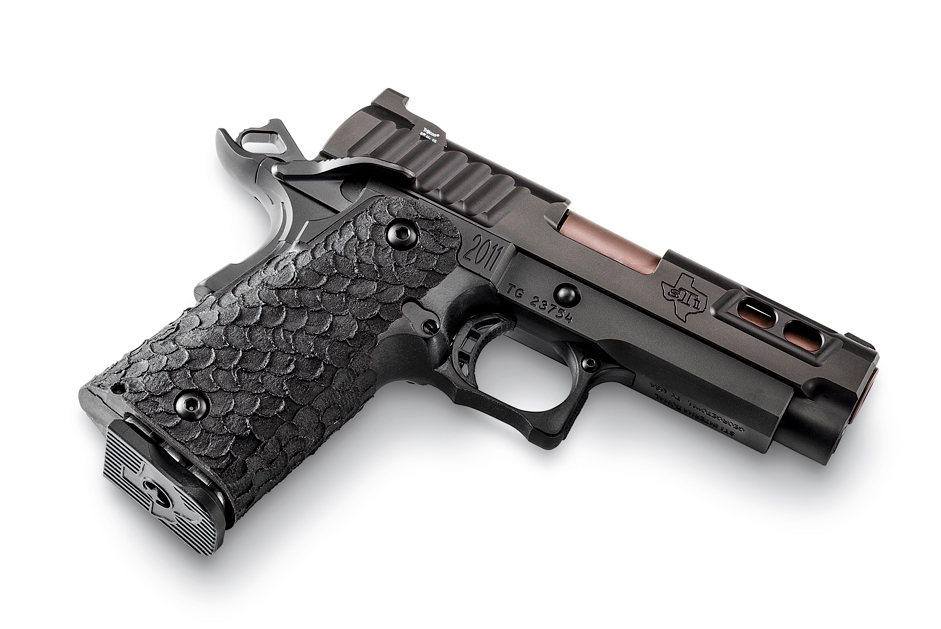
The DVC Carry moves a STI line of pistols better known for competition squarely into the realm of self-defense.
For the most part, STI’s DVC line of 2011 pistols have been engineered to gun for the gold at shooting competitions — steel, practical or otherwise. But the Texas company has gotten downright defensive with the performance handgun’s latest iteration.
The STI DVC Carry integrates all the gunmaker’s proven technology into a compact package purpose-built for the concealed carry market. And while it has plenty of features certain to capture the attention of shooters, there is one particular aspect of the 9mm that has the potential to get hearts fluttering: capacity.
As expected, STI gives the new DVC Carry some functional flair with a ported slide.
Being a 2011 means the pistol is a double stack, allotting nearly twice the capacity of traditional 1911s. In the case of the DVC Carry, it’s 15+1 (it also comes with an extended 17-round magazine). STI pioneered this design in the 1990s for competitive shooters, helping them save precious seconds by cutting down reloads. But it makes a logical transition to the defensive pistol end of the spectrum, giving shooters the time-tested 1911 function with modern-day capacity.
Being a double stack, the DVC Carry’s width is larger compared to traditional 1911s, but it is well in line with many of today’s most popular carry pistols. The dimension increase is all in the grip, which is 1.3-inches wide. Combined with its 3.9-inch barrel, it should be a snap to conceal. Although, like all double stacks, it could be bit of a bear for those with smaller hands to find a solid purchase.
Some of this will be overcome by the stippling on the DVC Carry’s grip — perhaps the most aggressive currently available on a production handgun. Produced by Extreme Shooters, the scale pattern polymer grips wrap 360 degrees around the frame and are designed to overcome any environment or biological (think sweat) factors to give a reliable, positive grip time and time again.
STI was weight-conscious in its design of the DVC Carry, keeping well in the ballpark of similar 9mm handguns — polymer or 1911. As is common in metal-framed concealed carry handguns, the company has opted for aluminum as the frame material, which has kept the pistol at 26 ounces unloaded. This should make it a viable everyday carry piece, one that won’t nag shooters by the end of the day.
Ample scale stippling on its wrap-around grips ensures a solid purchase on the DVC Carry.
The DVC Carry is configured to excel in low-light situations with a low-profile tritium front sight. As a nice — not to mention functional — addition STI has included a fixed ledge rear sight, allowing the pistol to be cocked with one hand.
The company has also given the handgun a touch of flair, finishing the frame and slide with a sharp black DLC coating and porting the front of the slide, allowing the copper-colored barrel to show through. The porting should also help in making the pistol more manageable on multi-shot strings, reducing muzzle flip.
As would be expected from a company that borders on semi-custom, the DVC Carry comes in on the pricier end of the concealed carry market. But for those searching for a single-action semi-automatic with peace-of-mind capacity, the pistol’s $2,999 MSRP might not be too great a hurdle.
Specifications:
STI DVC Carry Type: Semi-auto, single action Caliber: 9mm Barrel Length: 3.9 in. Weight: 26 oz. Finish: DLC Frame: Aluminum Front Sight: Low-Profile Tritium Rear Sight: Fixed Ledge MSRP: $2,999
Stock AK Triggers are not known for their crisp, clean breaks. But there is something that can be done about this with some simple modifications or upgrades.
The AK has…a very interesting trigger. For a rifleman accustomed to a “clean, crisp, 3-pound” trigger, the AK is not just odd, it can be maddening. First of all, there is nothing crisp about it. It has a lot of travel. Now, you can call this creep, or you can view it more like the double-action stroke of a revolver trigger.
It also is light for a rifle trigger, or so it seems, once you get the trigger moving. Just about the time you get used to the trigger moving…oops, it just went off. You do not “prep” an AK trigger. Once you decide to fire, you stroke through it, keeping the sights aligned. This is not an aspect of the AK that we covered in the first volume, as we were focused on building, not tuning. And, we were all building them to be as much like the originals as possible. The attitude was, “If Spetsnaz can deal with trigger slap, then the rest of us can, too.”
If you experience trigger slap, look on the underside of the disconnector. See where it is hitting, and remove metal there, and only there.
One annoying thing is that in some models, the trigger is prone to what is known as “trigger slap.” This happens when the hammer, being cocked by the bolt carrier, slams back down against the trigger, forcing it back against your trigger finger. It would be bad enough if it were simply slapping you. But since it occurs in the follow-through phase of the shot, your trigger finger is pressing hard on the trigger, holding it back.
One solution is to replace all the parts. And since you have to do that when building a parts kit (not that there’s a lot of that anymore) you simply replace them with parts that don’t slap. However, if you have an import and it slaps, you can do the same thing — replace the parts. Not because you have to be 922(r) compliant, but because you want to enjoy shooting.
Before we go swapping out parts, let’s look at why it happens, and how you can take care of it without buying new parts.
The AK has what is known as a two-stage trigger. The sear and disconnector hooks are built into the trigger. The sear hooks are a fixed feature of the trigger, while the disconnector is a hinged, spring-loaded part.
When you fire your AK, the hammer pivots back via the bolt carrier, and the dual hooks of the hammer slam down into the cam edge of the disconnector. The disconnector pivots out of the way, and then, powered by its spring, snaps back to catch onto the rear hook of the dual-hook hammer sear surfaces. When you release the trigger for the next shot, the trigger pivots, allowing the disconnector to pivot out of the way and release the hammer, in the process dropping it onto the trigger sear hooks.
The next step is when you fire. The trigger pivots under your finger, and the sear surfaces of the trigger pivot forward, eventually sliding off of the hammer sear surfaces, releasing the hammer. As the trigger pivots, it also brings the disconnector hook back into the pivot path of the hammer hooks on their return. (But in this part of the cycle they are underneath the hammer hooks and do not interfere with the firing press.)
The Century Arms RAK-1 is a replacement trigger that not only counts as three U.S.-made parts for compliance purposes, but greatly improves trigger pull.
Trigger slap happens when the disconnector, whacked by the hammer, pivots back out of the way. If there is not enough clearance inside the trigger trough, the back end of the disconnector slams into the trigger itself. Since the impact point of the disconnector trigger strike is behind the pivot point of the trigger, the impulse acts to cam the trigger forward. This happens at speed while you are holding the trigger down, so your finger takes the brunt of the impact as the trigger is slammed forward.
Ouch.
So, the solution, in theory, is to remove metal so the back end of the disconnector can’t contact the trigger when the disconnector is cammed back. This means taking all the trigger parts out of the receiver, looking for the contact point, and then filing or grinding that area clear.
This is simple to describe, but not always easy to do. First, the hardness of the metal can vary. You may find that a file slides right off. Or you may find that the parts are soft, and a brief touch up on the bench grinder wheel is all that is needed.
Avoid the temptation to address the problem by removing metal from the back of the trigger. Unless you have a milling machine, and can reach into the slot to take some metal out, you’re best just doing the work to the disconnector.
That’s what you do if you are going to work with the existing parts. Why modify the existing parts? If you happen to have a trigger set that produces an acceptable trigger pull, that’s reason enough. If you have a trigger pull that, aside from the trigger slap, is good or even exceptional, you would be an idiot to replace the parts with new ones. Unless you’re an inveterate experimenter, of course. So if it is good enough, leave well enough alone.
If not, you can always simply replace with a new trigger assembly, such as the RAK-1 from Century Arms, or one of the ALG Defense trigger kits.
There’s one other detail to keep track of — single versus double hook. Mechanically, the double hook uses the disconnector as a trigger stop. This means the disconnector catches the hammer and releases it, and is used as a trigger pull stop to bear against the trigger near the end of the trigger press. This sometimes can be felt as a stop, while at other times it cannot.
This design feature is stolen directly from Browning, and he used it to make the trigger pull cleaner. It was used to great advantage on the Garand, and was a great part of its success as a target rifle.
The single hook design does not use the disconnector as a stop, and depends on a very large sear overlap serving as the safety and trigger press control.
The history, design, implementation and incorporation of the double and single hook, over the decades and in various countries and models, could fill a book. Or at least, several chapters of an encyclopedia, and is not something we need to dive into here. Just keep in mind that some models will have a double-hook design, some a single hook, and replacement triggers usually are made to fit into either. Yes, that’s right, the double- and single-hook parts are meant to go into double- or single-specific receivers. So, if you happen to have a single-hook receiver, and double-hook parts, you’ll find they won’t fit without mods. That’s annoying, but the Soviets and Chicoms were not interested in making things easy for us. On the contrary, they simply wanted as many rifles as they could make.
ALG Defense makes a cracking good trigger set, as you would expect. It comes with all the springs and parts you need, plus a roll pin set for making sure the safety/selector functions properly with the new parts.
Century Arms RAK-1
The RAK-1 is a parts set from Century Arms that replaces all the internals of your AK. So, if you are building, they comprise three parts for 922(r) compliance. If not, you would be wise to replace all, rather than mess around trying to install one or two of them in a vain attempt to produce a better trigger pull. You’ll be better off with all three.
Century makes the parts out of a steel alloy, then heat treats them for a long service life and smooth engagement. They also made sure the disconnector was modified so it doesn’t create trigger slap. While they were at it, they modified the design so that, despite being a double-hook trigger, it will fit into receivers made for single-hook triggers.
As a bonus, Century includes a trigger sleeve, which serves as a slave pin. It’s handy because you can assemble the hammer, spring and trigger with the sleeve, and then slide everything into the receiver. Then, when you press the trigger pin across, it presses the sleeve out of the way, so you don’t have to have three hands and a stick to install all the parts.
The parts come with instructions, as if you need instructions to swap parts in an AK. But still, it is a good thing on their part.
The tail on the back end (to the right) of this disconnector is where you need to look if you have trigger slap.
ALG Defense
ALG Defense, while maintaining the critical dimensions of the AK trigger and hammer, took liberties with the parts’ cosmetics. The single hook, while shorter than your typical AK single hook, is machined to a crisper engagement, and the lines of the parts are more European or American than Russian. (It is hard to describe, but take a look and you’ll see.)
They use triple alloy steel, which means it is most likely a chrome-moly Vanadium steel. Whatever it is (and ALG Defense isn‘t saying), it is good, which is what we’d expect from the folks there. It comes with the needed disconnector spring, but you’ll either have to use the original hammer spring, or add an ALG Defense AK hammer spring to make things work.
One visible change to the trigger from ALG Defense is the shape of the bow. The original AK trigger has a sharp curve that hugs your trigger finger. The ALG trigger is a more open curve, providing a smaller contact pad, which aids in a cleaner trigger pull.
As an aid to fitting, ALG Defense includes a pair of roll pins, and have added a spot on the trigger to install one of them. This is to ensure your safety lever actually makes contact with the trigger when on Safe.
The AK has been built on five continents (as far as I know, no one made AKs in Australia, and there aren’t any in Antarctica) over the previous seven decades. The idea that they all have triggers that properly contact all safety levers is absurd. So, ALG made it easy, there’s a way to make the trigger and safety meet when and where they’re supposed to.
The ALG Defense trigger set comes with extensive instructions, the kind of explanatory overkill of which I heartily approve.
This article is from the Gun Digest Book of the AK & SKS, Volume 2.
Looking to go armed, but are stuck in the weeds as to what to arm yourself with? Here are 20 of the best concealed carry gun options that will keep you on the defensive.