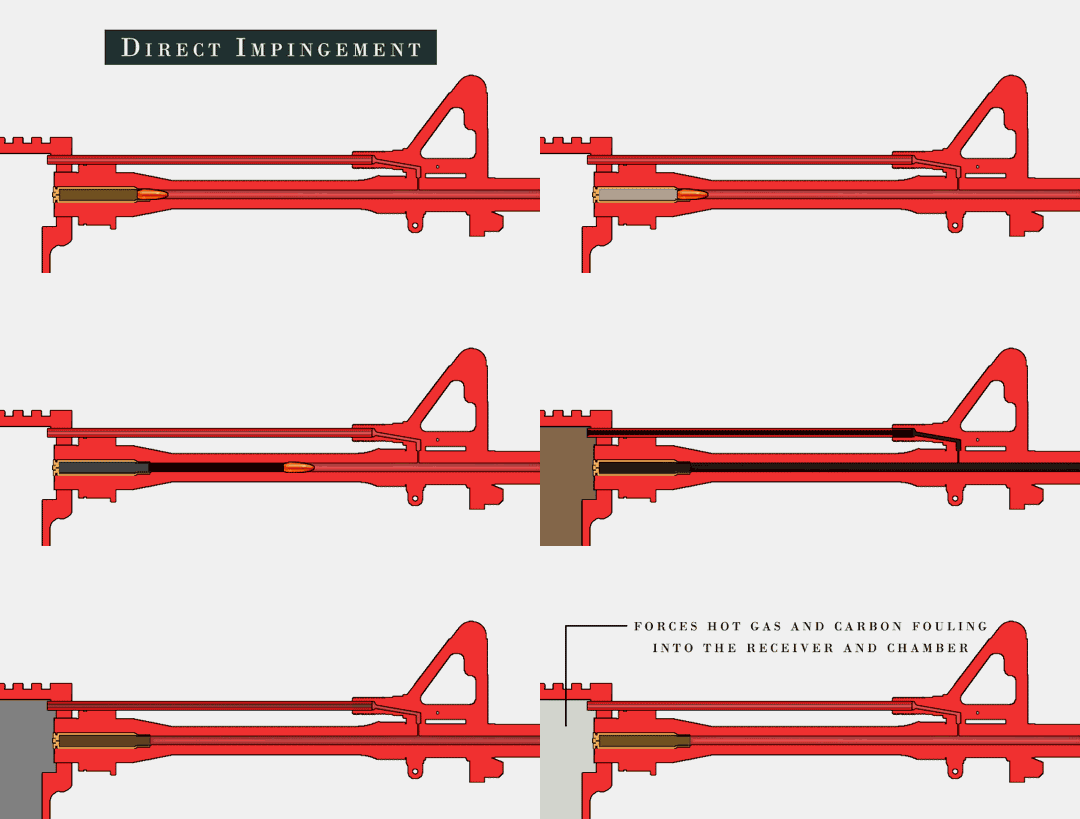
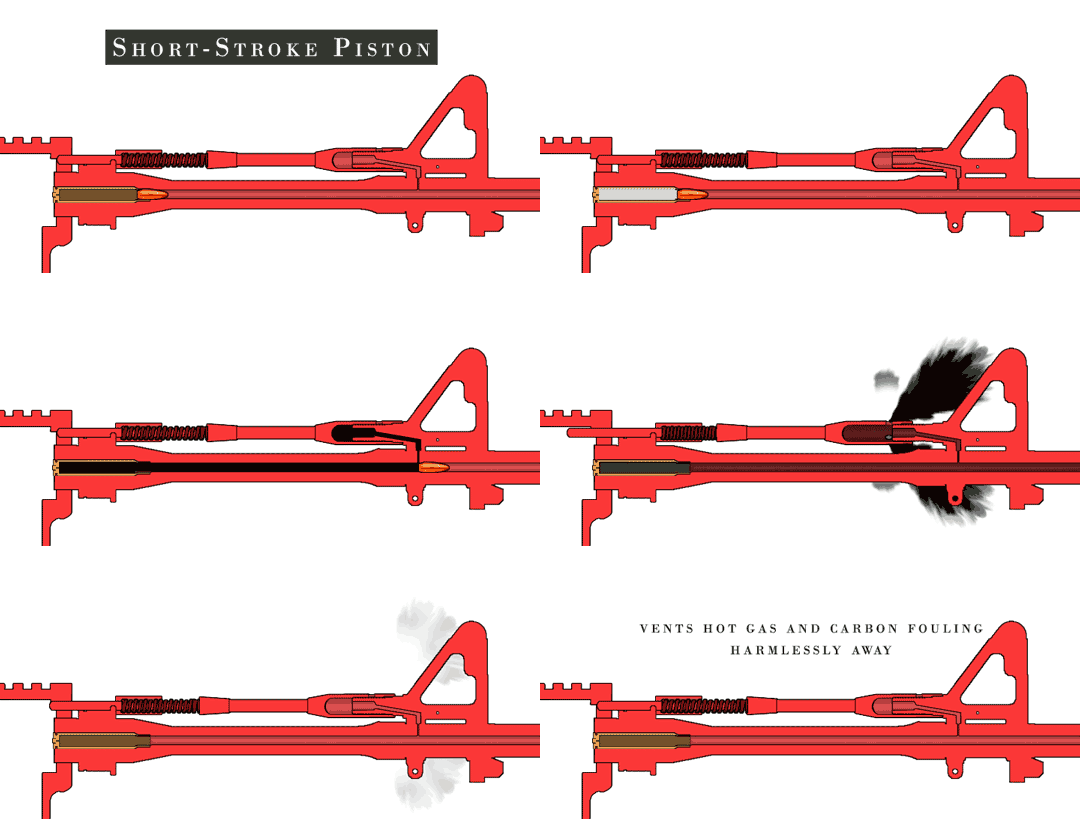
Curious how a majority of semi-automatic rifles go about their business? These animations will give you a solid idea about how a gas-operated rifle cycles.
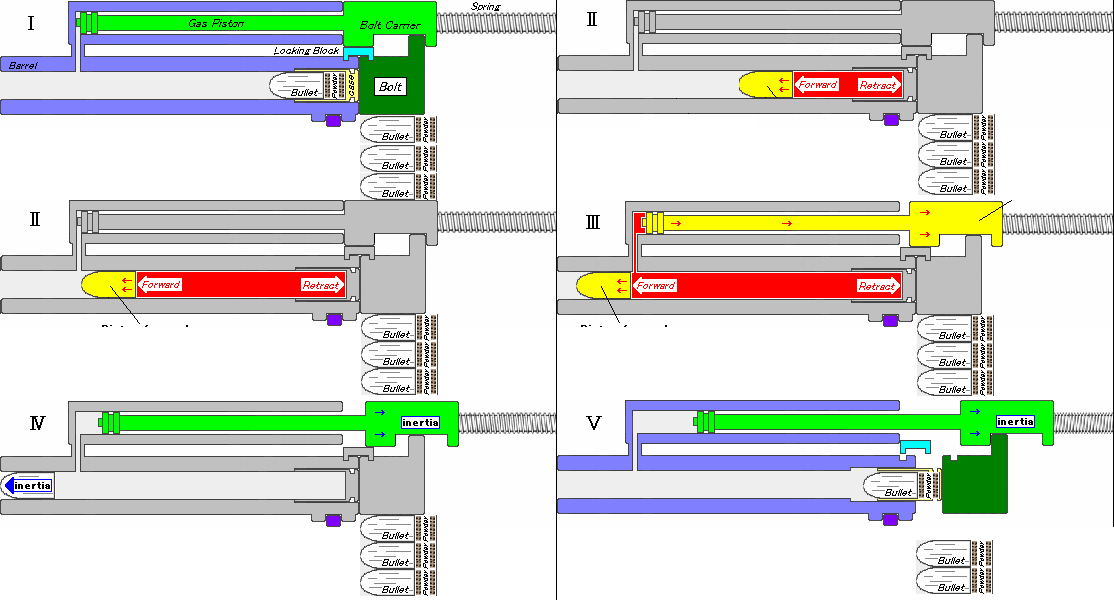
For some, how a gas-operated rifle cycles can be a mystery. But no matter if it’s direct impingement or piston driven, the principal is the same. Basically, some of the expanding gas from a fired round is diverted from the barrel and used to thrust the bolt assembly rearward, ejecting the spent cartridge and stripping a fresh round off the magazine into the chamber on the return.
Whether that energy goes straight to the bolt assembly or is transmitted to it via a piston all depends on what sort of system you happen to be running.
The below animations, while a bit basic, and missing a few parts of the operation, give a pretty solid idea of how direct impingement, short-stroke and long-stroke gas-operations go about their business.
Direct Impingement
The dominant operating system of AR-style rifles.
Short-Stroke Piston
The operating system found on the M1 Carbine and SCAR 17, also popular option on AR-style rifles.
Long-Stroke Piston
Best known as the operating system of two of the 20th Century’s most venerated battle rifles – the M1 Garand and AK-47.
Been hankering for something unwieldy, impractical and awesome, then Jerry Miculek has the pistol for you – the Arsenal AF2011 Dueller. Quite simply put, the handgun is a double-barreled 1911 or a Miculek dubs it in the above video, “The original doublestack.” The gun world is blessed the Italian company created the Dueller, if for no other reason than to watch two .45 ACP bullets race each other in slow motion, as in the video. The pistol (also available in .38 Super Auto) appears to be well manufactured and has some interesting aspects to it. One pointed out in the video is its triggers; the Dueller has two triggers – each capable of firing the pistol. As for it purpose, well it seem to throw a lot of lead down range – in Miculek’s case, 20 rounds in less than two seconds. That’s got to count for something, right? As for inside the waistband carry, well the jury is still out.
The 1911 Ultimate Collection gathers some of our best resources on one of the greatest pistols ever made. This six-resource treasury explores every angle of John Browning’s masterpiece, from history to shooting to maintenance and customization. You’ll turn back to wealth of information provided in these truly great books again and again. No serious fan of the pistol should be without the 1911 Ultimate Collection. Get Yours Now
Choosing a riflescope today has never been easier … or more difficult with so many options.
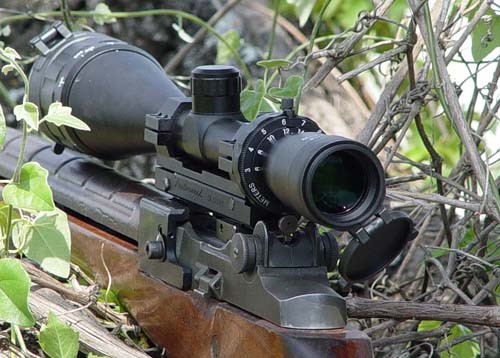
Scopes like this Weaver 2.5-10×50 are about 35 percent stronger than a 1-inch tube and have greater adjustment latitude, but are no “brighter” than a 1-inch scope of comparable quality.
In some ways today, matching a scope to a rifle is a no-brainer. I mean, all you need is a variable; you simply dial up an appropriate magnification for the job at hand. Simple.
And it’s even easier today because the zoom ratios on the newest generation of variable scopes can be as high as 1:6, meaning they can span magnification ranges of 1-6x, 2-12x, 3-18x and so on.
How can any hunting situation from varmints to big and even dangerous game not fall somewhere within those wide parameters?
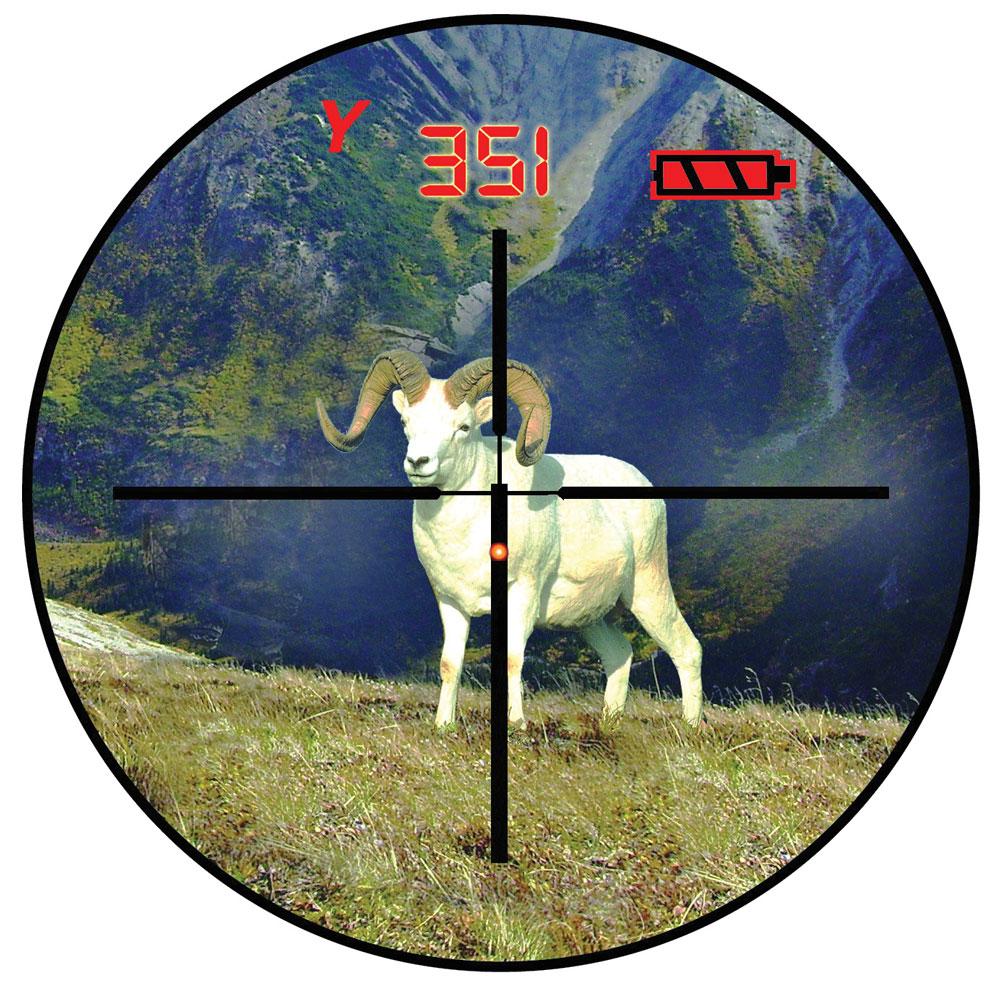
But then again, choosing the best match of scope to gun can be more frustrating than ever because there are so many features being offered today that didn’t exist a generation ago. We can now choose between 1-inch and 30mm body tubes; magnifying, non-magnifying and illuminated reticles; red dot sights; and ballistic compensating reticles calibrated to specific factory ammo or custom handload trajectories. There are even laser rangefinding scopes that compute distance to target and trajectory of the load being used, and then illuminate a spot on the bottom reticle arm indicating the proper hold point.
Rimfire Factors
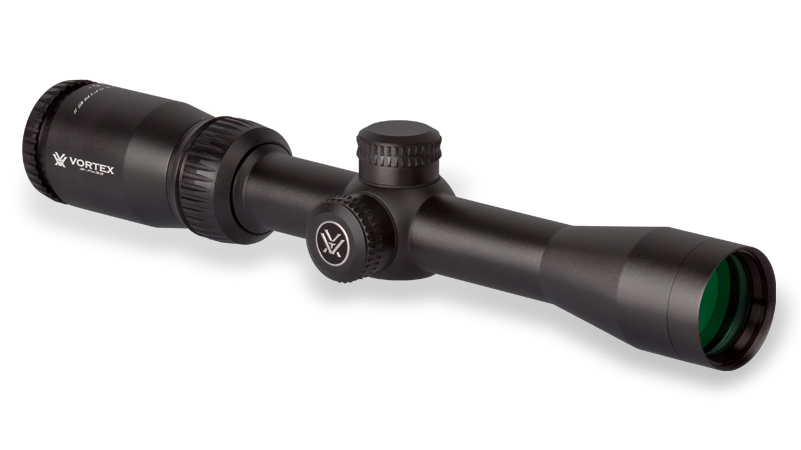
The Vortex Crossfire 2–7×32 Riflescope is an excellent rimfire choice, with ideal magnification range and affordable price point.
That said, let’s start with the .22 LR. For a cartridge that’s running out of steam at 75 yards, what kind of a scope do you need? At that range a little fixed 4x scope will bring your 75-yard target to where it’s essentially 19 yards away.
With the more potent rimfires like the .22 WMR, .17 HMR and the new .17 Win. Super Mag, which can reach out to 150 yards or so, a 6x magnification is adequate for virtually any suitable rimfire target.
With the .22 centerfires, it’s a whole different story. If you’re primarily a predator hunter calling in fox, coyotes, bobcats, etc., you definitely need a mid-range variable. Depending on the calling set-up, you might have a shot at a critter coming in from a long ways off. On the other hand, if you’re well concealed and surrounded by cover, meaning close-in shooting, you’ll want a scope that can be cranked down to 1.5-2x.
For a rifle that will be used exclusively for long-range varminting—woodchucks, prairie rats, marmots, etc.—a fixed 12x or a variable that can match that magnification is a good place to start. For eastern woodchucks and western marmots I’ve always found 12x to be a good choice, certainly enough for these fairly large varmints that can weight up to 12 pounds.
For prairie rats I prefer a little more magnification, but 15-16x is about all I want. Some experienced shooters may disagree, saying that 20, 24 even 30x is perfectly usable, but I find the advantages of such high magnification come at too high a cost in other areas. Remember, as the power goes up, the size of the exit pupil, field of view and depth of focus all goes down. This applies to all scopes.
With prairie rats, for example, your targets are initially spotted with a binocular, then you must find them in the scope. The smaller the exit pupil and field of view, the harder it is to find in the scope what you were just looking at with the bino. Also, the smaller the field of view, the less likely it is to see where errant shots went. A .22-250 doesn’t recoil much—and a .223 less so—but they recoil enough that you usually can’t see where your misses are going. With a 25x scope, for example, your field of view is only 3.9 feet at 100 yards, 11.7 feet at 300 yards. A rifle doesn’t have to move much to momentarily put the target out of the field of view at recoil. And because the exit pupil is only 1.6mm, reacquiring that little shaft of light with your eye takes time. The larger the field of view—like the 13.1 feet at 100 yards you get with a 12x scope—the more likely you are to see your misses.
Big Game Optic Considerations
Burris’ Eliminators represent the cutting edge of technology. They compute range and trajectory, then illuminate the point-of-impact out to 550 yards.
Choosing a scope for a game rifle is another matter entirely because there’s a lot more at stake. The more expensive and remote the hunt, the more critical overall quality and durability become in the type of optic you will use. For all-around nondangerous game, a typical mid-range variable can’t be beat. By “mid-range” I mean a scope that will go down to 2.5 or 3x, and up to 10 or 12x. Again, there will be those who disagree, but the way I see it, if a deer-size or larger animal isn’t big enough in a 12x scope, it’s too far away to be shooting!
If there is any distinction to be drawn concerning game riflescopes, it applies to dangerous game. For a rifle that will be used to hunt critters that bite back, the smallest, most compact low-range variables are the best choice. I’m talking short scopes with no objective bell. Most such scopes have a magnification range of 1.5-4.5x. Small, short, low-mounted scopes like these have little overhang beyond the support rings and are far less prone to being whacked out of zero by the careless handling that often occurs on safari when your guns are constantly being moved in and out of vehicles by trackers, skinners and camp staff. Keep in mind that 30mm body tubes are about 35 percent stronger than 1-inch tubes, but are not “brighter,” all other things being equal.
The fact that these scopes have a small objective lens doesn’t matter because when set at, say, 2x, the exit pupil diameter is a very large 10mm, which means that finding that shaft of light with your eye, upon shouldering the rifle, is instantaneous. And with a 10mm exit pupil, the scope is delivering all the light your eye can use, so you needn’t worry about less than optimum performance in low light. The same holds true even when set at 3x.
The popular Leatherwood ART M1000 scope features an ingenious “auto-ranging” feature that is tied to the power magnification ring.
As far as reticles, are concerned, it’s pretty much a matter of choice. Experienced hunters usually rely on simple “Kentuck windage,” and guess at the amount of hold-over or hold-into needed on long shots. Younger generation hunters who have grown up with ballistic compensating reticles and are actually more likely to make such shots tend to rely on those features. In other words, they do work, but old timers like me find it hard to make the transition.
Illuminated reticles are becoming increasingly popular and well worth considering. I can recall an incident in Alaska a few years ago when an illuminated reticle made a shot on a bear possible. It was so dark that without it I would have never attempted the shot; it was just so dark that a conventional reticle would not have been visible.
Advances in optics continue at a feverish pace, and I can only wonder what the future holds. The one thing I am sure of, though, is that with optics, you get nuthin’ for nuthin’. To gain performance in one area, you give up something in another. That’s always been the case, and that’s the way it will always be.
This article appeared in Modern Shooter Spring 2015.
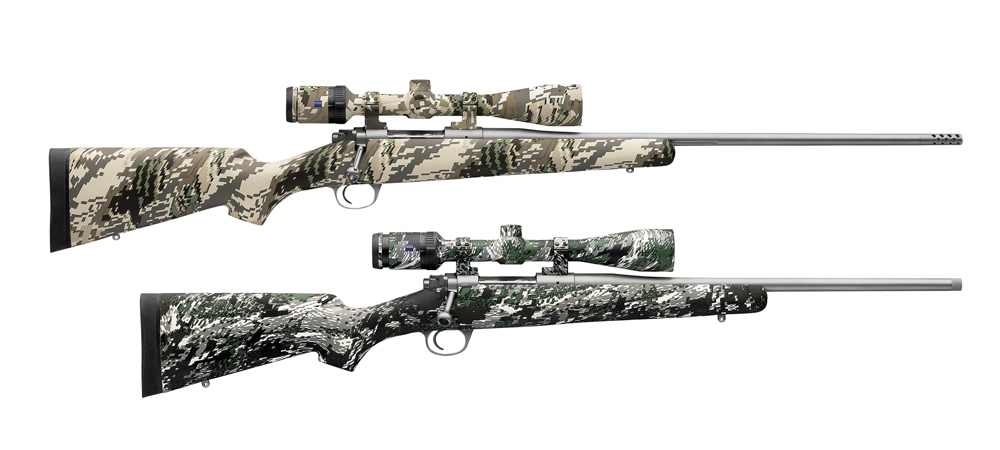
Kimber and Zeiss appear to be offering shooters plenty with their new scope-rifle package.
Kimber and Zeiss are aiming to get shooters on target quickly with their new partnership. The companies are offering package deals of Kimber rifles and Zeiss optics.
Buying a top-notch rifle is typically only half the task. Matching it up with an equally outstanding optic is usually a must to tackle most shooting situations.
A recent partnership, however, has made mating firearm and scope a bit easier. Carl Zeiss Sports Optics and Kimber Manufacturing are teaming up to provide shooters a fairly solid shooting system — particularly for hunters.
Zeiss has outfitted two models of its Conquest HD5 scopes to match up with the Optifade camouflage patterns found on Kimber’s popular Mountain Ascent and Adirondack rifles. The rifle-optic combination appears to be ideal for those who push deep into the backcountry, given the scopes’ power and the rifles’ lightweights.
Zeiss’ Conquest HD5 scopes are available in two powers, 2-10×42 and 3-15×42. The variable-power optics should provide more than enough magnification for nearly any conceivable shot a hunter is likely to make.
Aiding in keeping the system under wraps, the scopes come in two camouflage patterns specific to the rifles it will operate atop. The Mountain Ascent has the rocky light colored Open Country pattern, while the Adirondack comes in the darker and shadowy Elevated Forest configuration.
The rifles themselves are variations of Kimber’s 84 line and come decked out with a number of extras. Both the Mountain Ascent and Adirondack have match-grade chambers, stainless-steel barrels and adjustable triggers.
The most notable aspect, in both rifles’ cases, is the stock. The Mountain Ascent and Adirondack are each outfitted with Kevlar/carbon-fiber stocks, which is the key in each rifle’s featherweight. The rifles run from 4 pounds 13 ounces to 5 pounds 5 ounces, depending if it’s a medium or long action.
The Conquest HD5 scopes are available exclusively through Kimber’s store and can be purchased as a standalone item. Presently, the 2-10×42 runs $979.99, while the 3-15×42 is priced $1,199.99. At the time of writing, pricing was unavailable for rifle-scope packages.
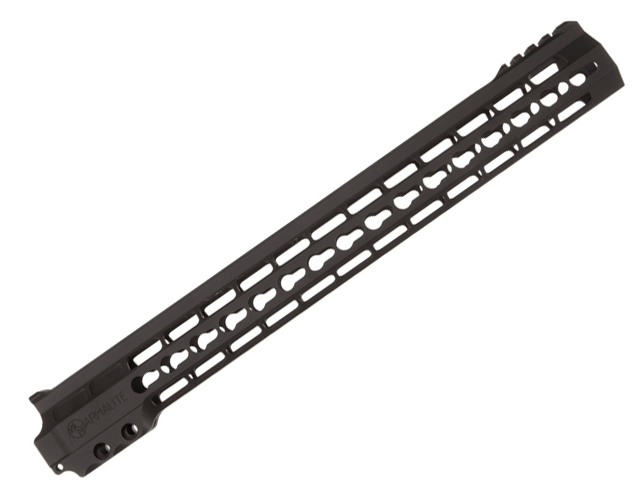
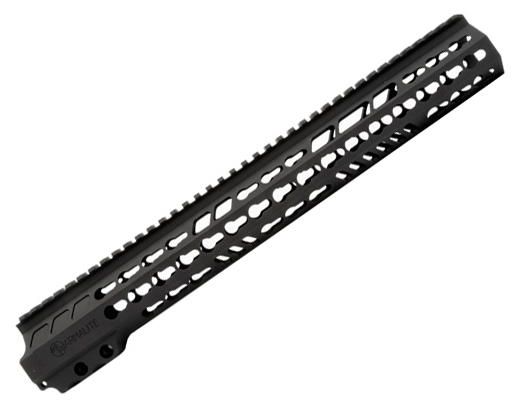
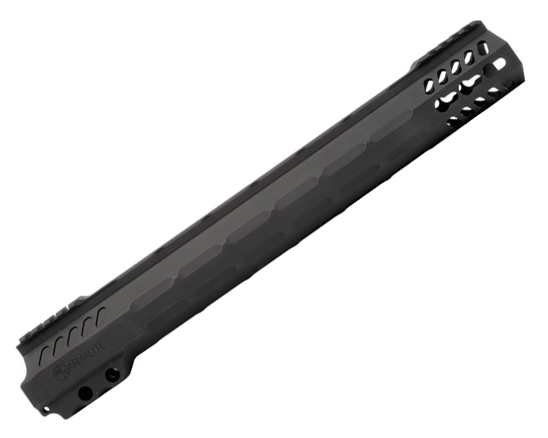
When it comes to AR builds and customization of the rifle there can be some parts that fly under the radar, but that doesn’t mean they are any less important. One such accessory that can be an afterthought to some is the handguard. This can be a mistake, given the style chosen can play an important role in how you operate and further accessorize your carbine. Armalite has expanded its line of high-end AR handguards this year, offering models that cover nearly every type of shooting of which both the AR-15 and AR-10 is called upon.
3-Gun Handguard As its name suggests, the 3-Gun Handguard is designed with competitive shooters in mind. The ultra-light model has a slim profile to facilitate a strong forward grip favored by many shooters. The free-floating handguard includes a 2-inch MIL-STD 1913 rail at the forward 12 o’clock position, perfect for mounting backup front sights and other accessories. The KeyMod system allows for the quick and solid addition of other accessories nearly anywhere on the guard’s 3, 6 or 9 o’clock positions. The system also doubles as flush cup sling attachment points. The handguard comes with a barrel nut and mounting hardware. The accessory is available in 12- and 15-inch models. MSRP: AR-15 $189; AR-10 $199.
Tactical Handguard If versatility is what you’re after on your AR, then the Tactical Handguard should be right down your alley. The guard features a full length MIL-STD 1913 rail on its 12 o’clock position and a KeyMod system on its 3, 6 and 9 o’clocks. This should provide almost infinite arrangement possibilities. At the same time, the inclusion of the KeyMod system gives the handguard a low profile and keeps it snag free in the field. The system also acts as attachment points for flush cup slings. The handguard comes with a barrel nut and mounting hardware. The AR-10 version is only available in 12-inch model, while the AR-15 version is available in both 12- and 15-inch lengths. MSRP: AR-15 $189; AR-10 199.
Versatile Sporting Rifle Handguard Each year the AR platform works its way deeper and deeper into the hunting side of firearms. Armalite gives shooters looking to bag their next prized what appears to be an excellent accessory to do so in the Versatile Sporting Rifle Handguard. The solid center of the handguard helps facilitate a solid rest no matter the shooting position. The guard features a MIL-STD 1913 rail at the forward and rear 12 o’clock, perfect for the addition of sights or scope. The handguard also has a KeyMod system at the forward 3, 6 and 9 o’clock positions so other accessories can quickly be tacked on. As a bonus, the low-profile system escapes snags so common to the field. The handguard is available in a 15-inch model and comes with a barrel nut and mounting tools. MSRP: AR-15 $189; AR-10 $199.
Side note: Armalite points out its AR-15 handguards are interchangeable with almost all other manufacturers. But its AR-10 versions are specifically designed for the company’s AR-10s. In turn, they these models may not fit other manufacturers firearms.
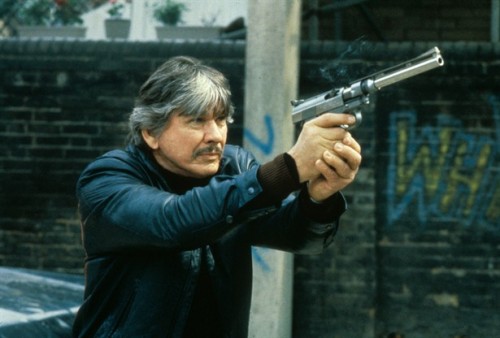
In the Death Wish 3 movie, actor Charles Bronson (as Paul Kersey) uses a Wildey .475 Mag. to defend his friend who is under assault by neighborhood punks. That’s the movies. In real life, using a powerful handgun such as this could be exploited by an anti-gun attorney to portray you in a negative light in court.
If a plaintiff’s lawyer was suing you because your dog bit his client, don’t you think he’d play up the fact that your pet was a pit bull instead of a miniature poodle? Why would anyone think it would be any different in a case involving the use of a gun?
The attacks on your choice of gun and ammo aren’t based on black letter law; there are no statutes or codes that say you can’t carry a gun whose manufacturer named it the Killer Kommando Special, or one with a very light trigger pull. Interestingly, the City of San Francisco, California, at this writing has an ordnance which bans hollow point bullets, and a State of New Jersey law prohibits the handful of concealed carry permit holders there from carrying hollow points, though they can have them at home and police are exempt.
The attacks come from trial tactics, not taught in law school or available on .gov websites. They’ll come from unscrupulous — or sometimes clueless — attorneys who are strongly motivated to paint you as bloodthirsty or negligent or both to a jury of lay people expressly selected by those lawyers during the voir dire process for their lack of knowledge about weapons and self-defense. Some of those attacks are easy for the knowledgeable defense team and defendant to defeat with logical explanations for the choice. And some are hard to win, making them battles best avoided by choosing different equipment beforehand.
Arguments We Can Win
“He chose an especially powerful gun and loaded it with extra-deadly hollow nosed dum-dum bullets, ladies and gentlemen of the jury. Bullets designed to rend and tear and cause cruel and unusual pain and suffering. And oh, how many bullets he had, enough to slaughter a dozen and a half people! What but murderous malice could have motivated him?”
That’s the kind of argument you can expect. A computer search will get you to the case of Arizona v. Harold Fish, in which a retired schoolteacher shot and killed a paranoid schizophrenic who violently attacked him in the desert. Look for the Dateline TV episode on the trial, in which some of the jurors who convicted him explain how they bought the prosecution’s argument that his use of a 10mm pistol and hollow point ammunition was indicia of malice. His conviction was later overturned on appeal over another issue. When Harold Fish died, he still owed half a million dollars in legal fees to the defense attorney who failed to defeat that argument.
Powerful firearms are defensible. I often carry .357s and .45s on my own time. When I had time to hunt, I used a .44 Magnum Smith & Wesson with 4-inch barrel, which doubled as a defense gun during deer season. I’ve carried a .45 more than anything else when on duty as a police officer. If asked why I carried “such a powerful gun” – and, yes, I’ve seen that argument come up with all those calibers – my answer would be that more powerful calibers have historically stopped gunfights faster, and the sooner a gunfight stops the fewer innocent people get hurt or killed.
The research of Dr. Glenn Meyer, a psychologist and professor from Texas who works a lot with mock juries to determine how various issues impact jurors, has done studies which determine that deadlier-seeming “assault guns” make jurors more hostile toward defendants who use them.
No surprise: the jury pool is the general public, and the general public for generations now has been bombarded with “assault weapon” propaganda by media and politicians. Does this mean that you should not use an AR15 for home defense? No, it means that you should be able to articulate that you used that light, easy-to-shoot rifle with its telescoping stock because your petite wife and your grandmother could handle it far more easily and confidently than almost anything else if they needed to shoot to save their lives and the lives of their family. It would be worth your time to explain that it’s the most popular sporting rifle in America right now, advertised in every hunting periodical on the magazine rack.
When in states where there are magazine capacity limits, I stay within the limit and simply carry more magazines. I often carry a 20-shot Springfield XD(m) 9mm, with a spare magazine. If asked why I chose to carry that many rounds, I would explain (as I already have in Federal court) that the latest study from NYPD showed that 3% of the time their officers needed more than 16 rounds, and the one from LAPD showed 5%.
Citizens arm themselves for protection from the same criminals the cops face. 3% and 5% don’t sound like a lot, until you ask yourself, “Would I want to be in a situation where there was a 3% or 5% chance that I need this thing to save my life, and NOT have it?” And of course, many more situations go beyond 10 rounds, or six.
The history of fighting armed criminals is that many of them can absorb multiple solid hits before ceasing hostility, sometimes from state of rage, sometimes because drugs or alcohol have anesthetized them against pain, and sometimes because they’re moving fast in the dark and taking effective cover while they shoot at innocent people. We have more bad guys wearing body armor than in the time of John Dillinger, and that can soak up a lot of ammo before the good guy shooting back realizes it’s time to change point of aim.
In the next part of this series, Ayoob defends the use of hollow point bullets and explains some of the common tactics and arguments used against them. Click here for Part II
For 2015, optics makers have rolled out a bevy of new and even higher-tech riflescopes, as well as reticle and adjustment options to their existing lines. Price points range from extremely affordable to the equivalent of multiple mortgage payments. Check out the 10 new firearm optics that are certain to get you on target.
Smaller, concealed carry handguns are in big demand at Portland Gun Store, according to manager Don Hanna.
“I sell more Sig P238’s than anything else,” he said. “SIG has come out with some awesome finishes, like gold and high polish colors that appeal to the ladies and the collectors, both of which continue to be a growing market.”
A newcomer in the small handgun market is also making the cash register sing: the Kimber Micro 380.
“We’re finally starting to get all the different Micro models in stock,” Hanna added. “The black and stainless models sell for $649. The CDP and others with night sights are $879. Consumers seem to be appreciating the higher quality models and willing to pay for them.”
Handguns Sales Making For a Profitable Bottom Line
The big seller recently at Blade, Barrel and Reel Outdoors, said owner Wade Adams, has been handguns from SCCY Industries of Daytona Beach, Florida, manufacturer of the CPX1 and CPX2 9mm semi-automatic pistols designed for concealed carry.
“We’ve sold just a ton of them,” he said. “Part of that is the price—they only have just the two models and we sell them for $310 and $325. Despite that lower price point, they are a really good-quality handgun and have an amazing lifetime warranty.”
Another popular handgun line here is the small bore Rough Rider, from Heritage Manufacturing, a series of revolvers with that Old West look and feel to them. Chambered in .22 LR and .22 Mag., the revolvers start at $175.
This article appeared in the Summer 2015 issue of Gun Digest the Magazine.
Many veer away from cooking up their own dangerous game loads for fear of producing a defective round. But handloaded ammo might be the right medicine for your next safari. Photo Massaro Media Group
Some shy away from producing dangerous game loads themselves, but this may be a mistake. Find out why you should load your own if heading on safari.
I’m just back from a fantastic African Safari, and thought we’d discuss some of the reloading points for Dangerous Game cartridges. I’ve had people tell me that I was crazy for using handloaded ammunition on a Dangerous Game hunt. I totally disagree with that statement; in fact, I believe the opposite to be true: dangerous game loads are among the most reliable.
Let’s be honest, factory ammunition is better than it ever has been. And, I think factory ammunition offers a wider variety of choices than ever. That said, there are times where cost or availability makes handloading the logical choice.
“I’d never use anything but the best factory ammo on safari; handloads just aren’t dependable.”
I say nonsense. When you’ve gained enough confidence as a handloader, the big bore ammo will make your reloading bench shine, first in cost reduction, then in performance.
The attention to detail that you can provide simply cannot be equaled by a machine, no matter how well it was designed. People ask the usual questions like “Well, what if you get a bad primer?” The primers come from the same factories that make the ammo, so I feel that’s a moot point. Load enough ammunition and you will get a bad primer (I’ve had very few), and I’ve experienced more failures-to-fire with factory stuff than I ever did with my own loads.
While the bullet choices are really good among today’s factory ammo, they can’t cover everything. An example: On this recent safari, I was using a Heym bolt-action .404 Jeffery, and I wanted to shoot the Woodleigh Hydrostatically Stabilized solids. Problem — no factory loads exist with this combination. Solution — I handloaded those funky Woodleigh bullets in to Norma .404 cases over 80.0 grains of Reloder-15, and, voila! 2,280 fps, MOA accuracy, and all performed well in Africa, even on elephant.
Depending on your choice of big bore caliber, factory ammunition can be very expensive. The popular .416 Rigby, which makes a very effective hunting round, comes at the average cost of $100-200 per box of 20. That can be a wallet breaker, especially if you need to try several different brands in order to find what your rifle likes.
Dangerous game loads will not only let you tailor the loads to the rifle, but do so at a third of the price. The cost savings can be put toward more practice with the big stick, so when the trophy of your dreams presents itself, there’s no worries. The more popular .375 H&H is a bit more affordable, but the larger and more obscure calibers are even more costly. The .470 NE can be as much as $17 per round!
The reloading technique for Dangerous Game cartridges is the same, with the exception of the crimp stage. If you’re shooting one of the ‘straight-walled’ cartridges, like the .458 Winchester Magnum, .458 Lott or .458 Express, you’ll definitely want a good roll crimp to keep those bullets in place under recoil.
The same can be said for any of the double rifle Nitro Express cartridges. Sometimes you’ll find that you shoot the right barrel much more than the left, and the cartridge in the left barrel can be exposed to multiple rounds of recoil, which may force the bullet out of the case were it not heavily crimped. This is especially true if you use the solid/soft bullet combination in your double.
Seating depth can be manipulated in handloads for safari, and sometimes a few thousandths can mean the difference between your bolt-action rifle feeding a particular bullet well or having feeding issues.
In addition to keeping rounds to tighter tolerances, constructing your own dangerous game loads can definitely save you some big bucks. Photo Massaro Media Group
You really don’t need to wring every last bit of velocity out of your big bore either. Handloaders are always chasing velocity, when compared to the advertised factory velocities, but often you’ll find the best accuracy a bit below those numbers.
My .404 shoots MOA with those 400-grain bullets at 2,280 fps, instead of the modern load of 2,350 fps, and I’m quite alright with that. The elephant wasn’t, though. Same can be said for the .375 H&H; it will still perform very well (some say better) if you drop the velocity by 100 – 150 fps. Don’t sweat the velocity loss from canister-grade powders.
Try dangerous game loads for your big bore, you’ll gain confidence as you see how well your ammunition performs. I’ve been on five safaris to Africa, and I’ve never pulled the trigger on factory ammunition while there. 14 species later, I’ve had no issues whatsoever.
Rock Island Auction Company is gearing up for its June 26-28 Regional Firearms Auction. As usual, the top seller of collectable firearms has quite a roster ready to cross the block. Highlights include some 400 Colts, 600 shotguns and 200 Spanish arms. Here’s a look at some the rare and unique firearms for sale at the Illinois auction house.
David Cosner — Cosner’s Gun and Knife Shop, Bedford, Indiana.
December 2014 was very good to Cosner’s Gun and Knife shop, an independent retailer in Bedford, Indiana, a town of about 14,000 people located midway between Evansville and Indianapolis.
According to owner David Cosner, the store actually had sales above what had been a record-setting December 2013. He credits those surprising sales to two buying groups: Hoosier deer hunters; and, self-defense buyers, especially females.
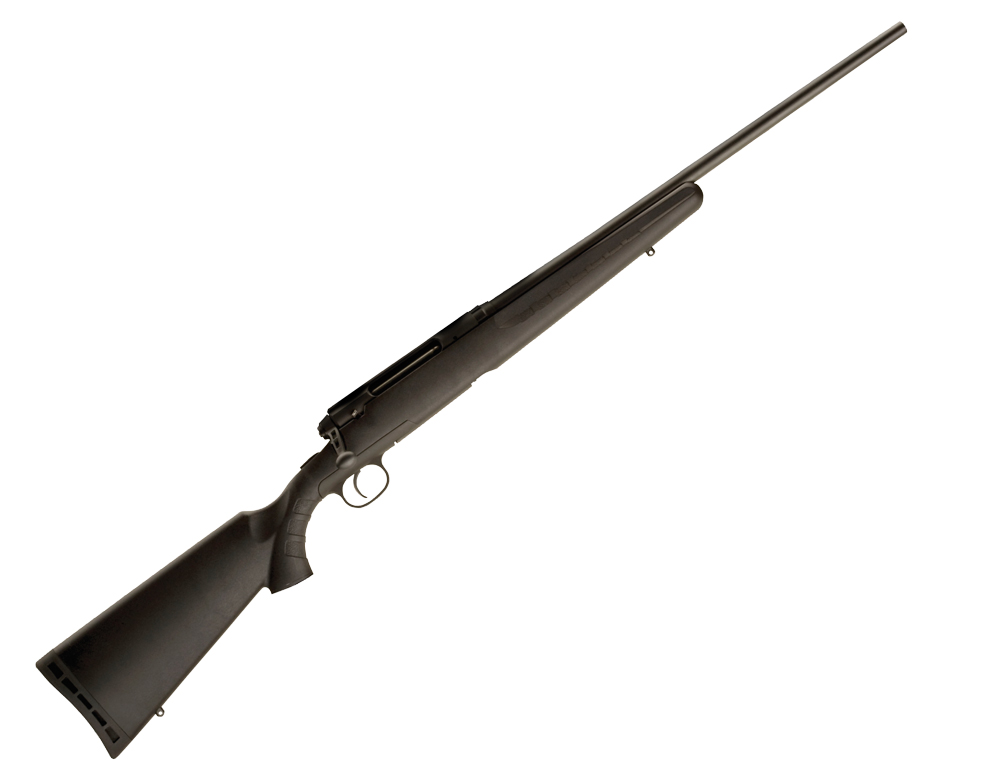
“Our long gun market really wasn’t the best through most of 2014,” Cosner explains. “But then in December, we started selling all kinds of the lower-priced bolt actions, like the Savage AXIS, especially in .243 Win. and .30-06.”
Cosner thinks that a proposal in the state legislature to allow high-powered centerfire rifles for deer hunting spurred these bolt gun purchases. Currently, Indiana deer hunters are limited by law to shotguns or firearms using the equivalent of centerfire handgun rounds.
Last December also saw a flurry of customers buying revolvers for self-defense, usually .38 caliber models with short barrels like the Smith & Wesson Bodyguard that Cosner’s offers for $539.
“The Bodyguard comes with a laser sight, which is a pretty good deal all by itself. Plus, a lot of the women who are looking for a self-defense handgun prefer the revolver because they are often a little easier to use than semi-autos.”
Cosner’s tries to have several hundred used firearms on hand, too, but Cosner notes it is getting harder to get good used guns.
“Used to be, when someone bought a new rifle or shotgun they’d trade in their old one. Now, when they want a new long gun, they just buy it and keep the old one, too. That’s good for our new guns sales—but it’s making it harder for us to keep a good inventory of second-hand firearms.”
Editor’s Note: This brief originally appeared in the Spring 2015 issue of Gun Digest the Magazine.
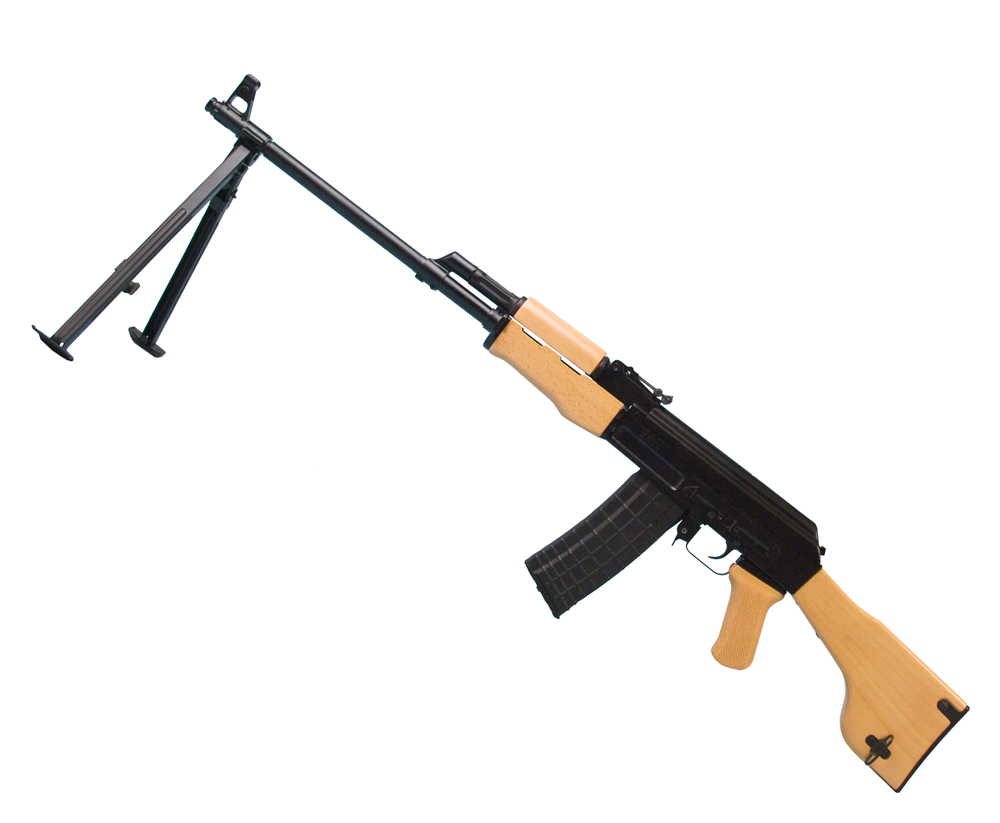
Arsenal has reintroduced the SA RPK-5 Series, chambered in 5.56×45 NATO.
Mikhail Kalashnikov will forever be synonymous with the AK-47, for obvious reasons.
The rifle is truly one of the triumphs of 20th-Century small arms design, marrying economical production with performance in the field. The ubiquitous AK, however, is not the only brainchild of the now deceased Russian Lieutenant General.
Kalashnikov had a number of firearm designs to his name and one is making its way back into one manufacturer’s roster. Arsenal recently announced the limited release of a RPK variants — the SA RPK-5 Series.
This variation of the RPK-74 has not been available for a number of years from the company. And is presently being produced in the Bulgarian/American gun maker’s Stateside operation.
The rifle has many of the original features found on the Soviet model, but there is one major historic break — its caliber. The rifle is chambered for 5.56×45 NATO, instead of its 5.45×39. As a side note, Arsenal has made 5.45 variants of the RPK, as well as 7.62×39 models. The larger caliber was what the rifle first fired when it was developed in the early 1960s.
Like the original, the SA RPK-5 series has a nearly identical operating system as an AK-47. The rifle cycles through the robust long-stroke piston operation, which has become renown for its ability to function in nearly any conditions.
Where the RPK differs from the AK, however, is its barrel length. The rifle was outfitted with a 23.2-inch barrel, meant to enhance its range, accuracy and rate of fire. Arsenal has kept the barrel dimensions the same as the Soviet iteration. However, at 40-inches in overall length, the SA RPK-5 is a hair smaller than the RPK-74.
The barrel has a 14mm muzzle thread, the most common found on AKs. This should open the options for those who shoot to customize their rifle with a preferred muzzle break or flash suppressor. Until then, the threads are protected with a factory installed muzzle nut.
The 10-pound SA RPK-5 has a number of other features, including: blond wood furniture, folding bi-pod, cleaning rod, scope rail and paddle-style butt stock. The rifle ships with one 30-round magazine, sling, oil bottle and cleaning kit.
Presently rifle is being sold at K-Var for $2,295.
Bergara is offering hunters an economical choice with the release of its B14 rifle.
Bergara is offering hunters an economical choice with the release of its B14 rifle. Like much of the B-14 line, the rifle has exceptional quality.
Bergara is a Spanish barrel maker that recently gained a Georgia drawl.
Not so long ago, the company expanded its operations to one of America’s hotbeds of firearms manufacturing. In the process, the company expanded its horizons to manufacturing complete rifles.
While much of gun maker’s early offerings have had a tactical flare, it has turned its eye more closely to hunters as of late. And it looks to have given them a fairly slick looking rifle that — if it lives up to previous offerings — should be right on target.
Perhaps best of all, the Bergara B14 doesn’t look to break the bank in offering a top-line rifle. The walnut stocked Timber version has a price tag of $950, while a synthetically stocked Hunter model is $825. This is well below the previous rifles the company has released, which run into the thousands of dollars.
Being a Bergara, however, it’s the rifle’s barrel that should end up stealing the show. The company’s multi-stage process of boring and rifling its chrom-moly barrels has been reported as leaving nary a tool mark, thus making them superbly accurate.
In particular, it is Bergara’s honing process and the utilization of diamond-tipped bits that create the bore’s mirror-like finish. The company then button rifles the barrels, keeping the deviation of the groove less than .0002”.
The B14 is being offered in five chamberings — .300 Winchester Magnum, .30-06, .270, .308 and 6.5 Creedmoor. This selection should cover nearly any game stalked in North America, not to mention an individual hunter’s preferences.
The rifle’s dimensions can vary slightly, depending on if the caliber requires a short or long action. The short action models have a 22-inch barrel length and measure 41.25-inches overall. Tack two inches on for long actions.
There is also around .45-pounds difference in the B14 weight depending on the action. Obviously, the long action is a hair heavier. The stock material also plays a hand in overall weight, but not as much as might be expected. The long-action Timber model tips the scales at 7.9 pounds, while synthetic Hunter version (with the same action) is 7.5 pounds.
This weight deferential translates over to the short action. And, it appears to give hunters a fairly manageable rifle, no matter what material they prefer for their stock.
Both stocks are bedded with integral pillars, free-floating the barrel and adding stability to the platform. This is yet another area where Bergara has turned an eye to the overall accuracy of the B14.
If the B14 rifle follows in its predecessors’ footsteps in its ability to deliver precise shots, it could turn out to provide a lot of bang for the buck.
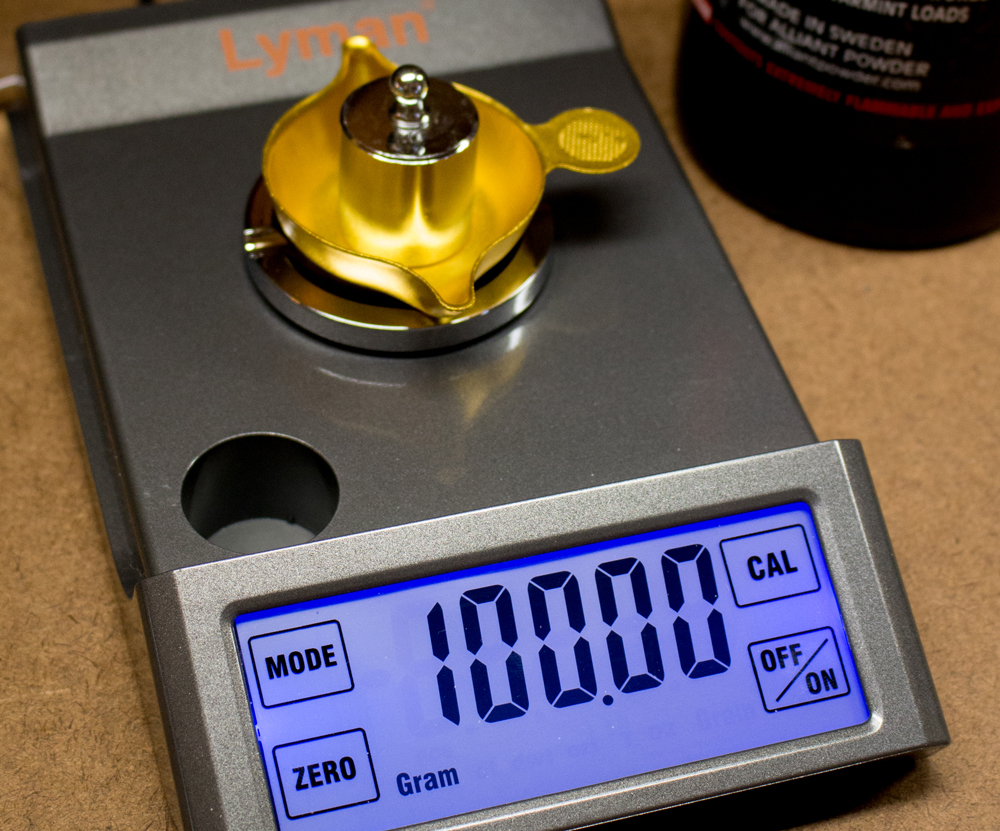
Ensuring your powder scale and thrower are accurate means keeping them on solid footing.
Feeling a little shaky about your powder measurements? It could be you’ve got some bad vibrations getting in the way. Here are some thoughts on how to keep your loads accurate and rock solid with a look at the powder scale.
We all have different types of reloading setups, ranging from a well-designed, clearly thought-out bench in a dedicated space to a press that is C-clamped to a metal desk in a rather impromptu manner. I’ll be totally honest, I’ve used both, and many types in between.
My early days as a reloader were spent with a complete lack of funds, minimal equipment, and I soaked up information like a sponge. While this taught some invaluable lessons, all learned the hard way, some of the more sophisticated gear and a better place to reload would’ve been a blessing beyond measure.
When I did get my own space, which eventually evolved into Massaro Ballistic Laboratories, I saved my pennies for some new gear, and began to embrace the world of digital scales, powder throwers and new-fangled presses.
During the course of learning to use the new tools, I found that both the digital scales and powder measures were very sensitive to vibration. The digital scales are especially touchy, not only to vibration but to air currents. In some of my ‘shakier’ environments (portable tables, etc), the digital scales, especially the early models, were all over the map.
It was a ton of work to keep them zeroed, let alone to get them to read the same measurement twice. Even the RCBS Chargemaster, which is an awesome machine, can give false readings and dispense errant powders charges when subject to vibrations.
I’ve had friends with shaky benches tell me that the Chargemaster wasn’t a good choice, but the fault lied with their reloading space, not the RCBS design. Even a balance beam scale can be affected if the floor boards are bouncing around.
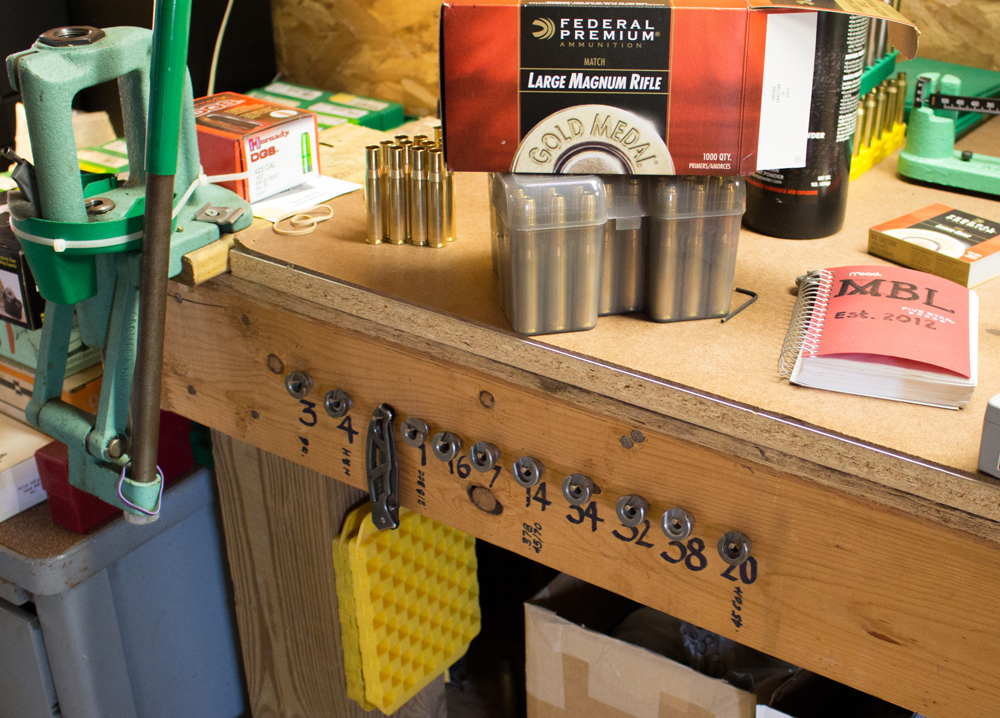
My own reloading bench is an overbuilt workbench, in my garage, with 6×6 posts for legs, well secured to the wall, and resting on a concrete floor. I could jump up and down on a pogo stick and it would be stable. Still, I don’t want the motion of the press to affect the powder charge being dispensed into the electronic scale, so I keep it on a separate table, just to be sure.
As hard as I’ve tried, I can’t get the Chargemaster to trip up; I check it with a good balance beam scale, but it remains wonderfully consistent, session after session.
Massaro Media Group” width=”300″ height=”215″> A good bench, solidly built, can be just the ticket to deaden any vibrations that might throw a power scale or thrower off. Photo Massaro Media Group
Powder throwers can be equally affected by vibrations. The mechanical powder measures of today are very precise, and there are models available that are designed to throw powder charges for the pistol calibers, up to and including the magnum rifle cases that burn 100 or more grains at a rip.
Most powder throwers work most accurately when operating in the middle third of their powder capacity, as the volumetric measurement will be most accurate. If the powder thrower is subject to vibration, the volume of powder being thrown will vary by some degree.
While I still weigh all of my powder charges on some sort of scale, I know benchrest shooters that do not weigh powder; they simply use a consistent volume of powder, and it works out very well.
Bottom line is, while trying to set up your reloading bench, do your best to avoid and major vibrations, whether it be by choosing a spot that is rock solid or building a bench that will help dampen vibrations and keep them to a minimum. I believe you’ll see an improvement in your final product.
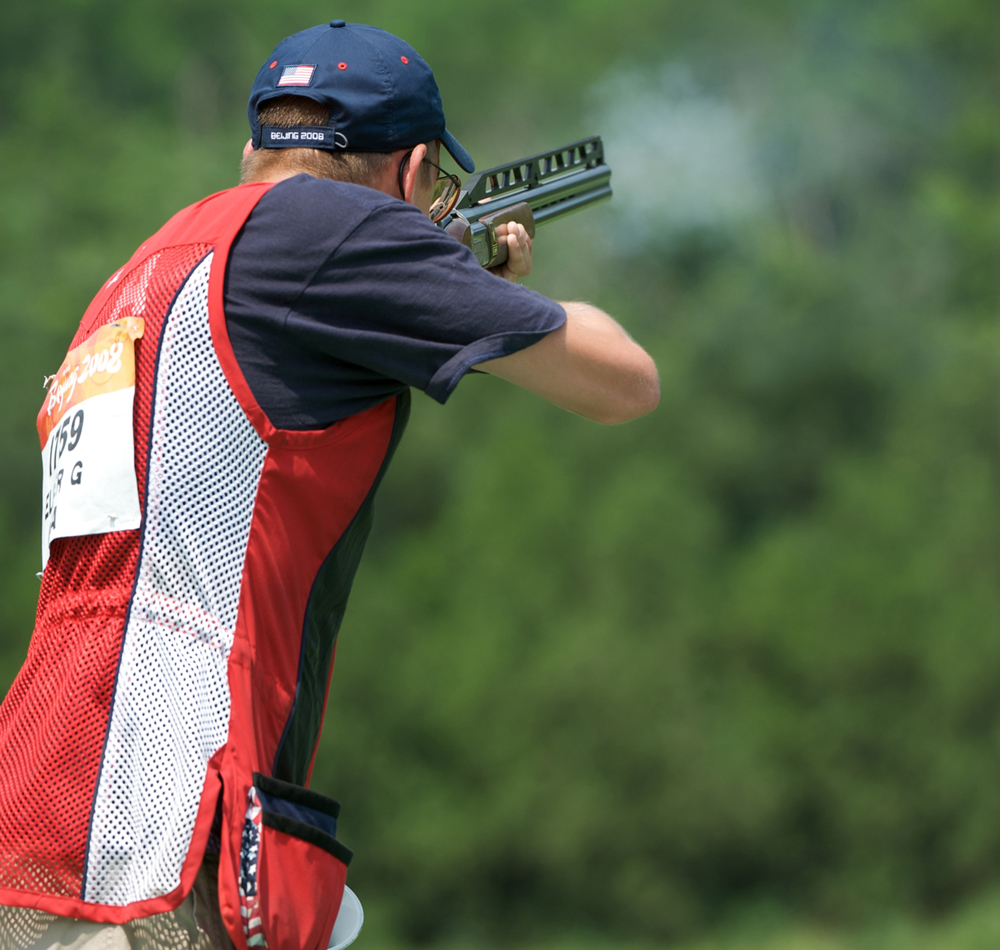
If your shotgun swing tends to occur with minimal, or no, body turn, it’s easy to practice the proper maneuver. Do it at home, practicing with an unloaded gun. In addition to learning to turn your entire body as you swing the shotgun, you’ll also be practicing a proper gun mount.
The tendency for so many is a dip maneuver. As the gun is mounted, the right hand gets too active in bringing the butt stock to the shoulder. When that happens the muzzle dips down away from the target’s flight path, whether the bird in question is flying straightaway, offers a quartering or a crossing shot. What you want is a smooth move to the bird, not just with your hands, but also with the ever-so-important muzzle.
How do you do that? The mistake so many make is that they start the butt stock to the shoulder first. This move almost guarantees that the muzzle will come down, probably away from the bird’s flight path. The additional negative here is this. As this shooter is getting the butt to the shoulder the muzzle isn’t moving yet. Thus the bird is getting further ahead of that muzzle.
What makes a lot more sense is to start the muzzle moving with the bird so that the pitch or feathered target doesn’t get that jump on you. Then bring the stock to the shoulder as you keep swinging and turning. You may still see some muzzle dip as the butt stock nears your shoulder. If this happens, try less gripping pressure with the right/pistol grip hand. Also, work on smoothness as you practice at home. If the muzzle dips down, slow down until you become more accustomed to this move and comfortable with it.
It’s a good idea to initially practice this move on an imaginary straightaway clay. Get the feel of having the muzzle move smoothly and unwaveringly to the top corner of your office or den wall. One company sells a special flashlight that you can insert in your practice gun’s muzzle. It has a tiny red beam. The slightest incorrect move to the imaginary bird can thus be seen easily via the light on the wall corner.
Once you’re comfortable with this smooth move to the straightaway target, it’s time to work on a crossing shot. Here you can use the seam where the wall meets the ceiling. Start the muzzle at the room’s corner, gun down. Start swinging along that wall/ceiling seam, blending in the gun mount while turning, hopefully from the ankles up. As the stock hits your shoulder and cheek, this is when you should be hitting the trigger in a real clay-shooting situation.
How often should you practice this gun mounting and body turning scenario? I don’t think any of us should ever stop. This practice should be done every day, at least several times a week, – and not only in the days or weeks leading up to an upcoming tournament.
Why? Because the proper gun mount and the proper turn in your swing hits at the very fundamentals of shotgun shooting. Watch any how-to video on shooting, golf or the stock market. What do the extremely successful pros go back to day in and day out? It’s the fundamentals. I recall watching a golf video years ago – done by Gary Player. He kept going back to his grip. To his caddy and other close golfing friends he would say something like, “Keep an eye on my grip. It has to be perfect. If you ever notice the slightest change in my grip, tell me right away.”
This article is an excerpt from Gun Digest Shooter’s Guide to Shotgun Games.
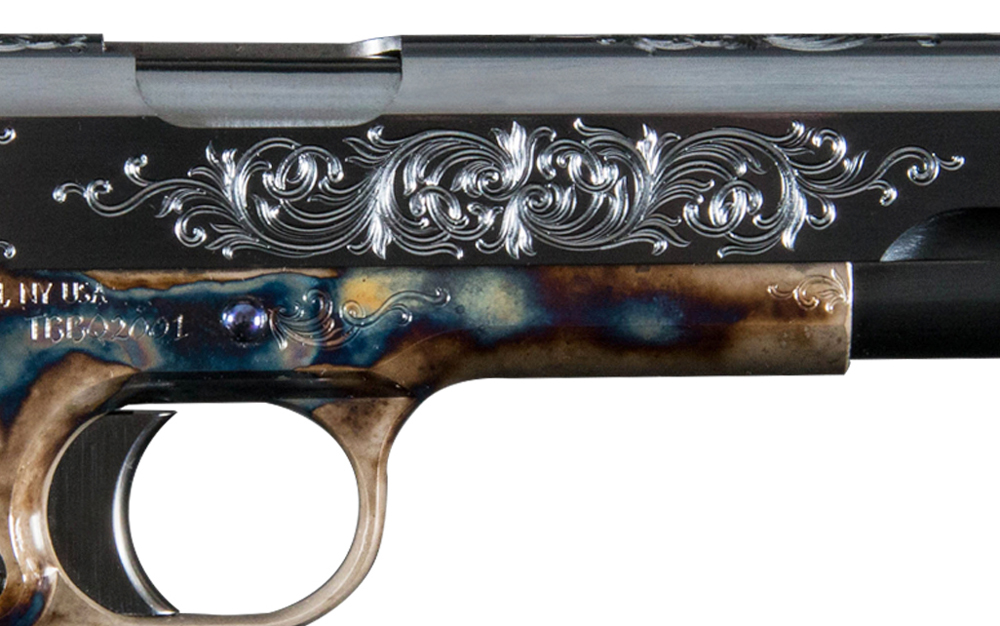
Turnbull BBQ Series presents shooters truly unique and beautiful options in high-end 1911s.
Whether it’s a gun restoration or an original firearm, there’s little arguing Turnbull Manufacturing’s artistic flare.
The New York company has a roster full of aesthetically pleasing work, from classic leaver-action Winchesters to color case-hardened AR-15s. And the custom gun maker continues to add to its lineup of unique and beautiful handguns and rifles.
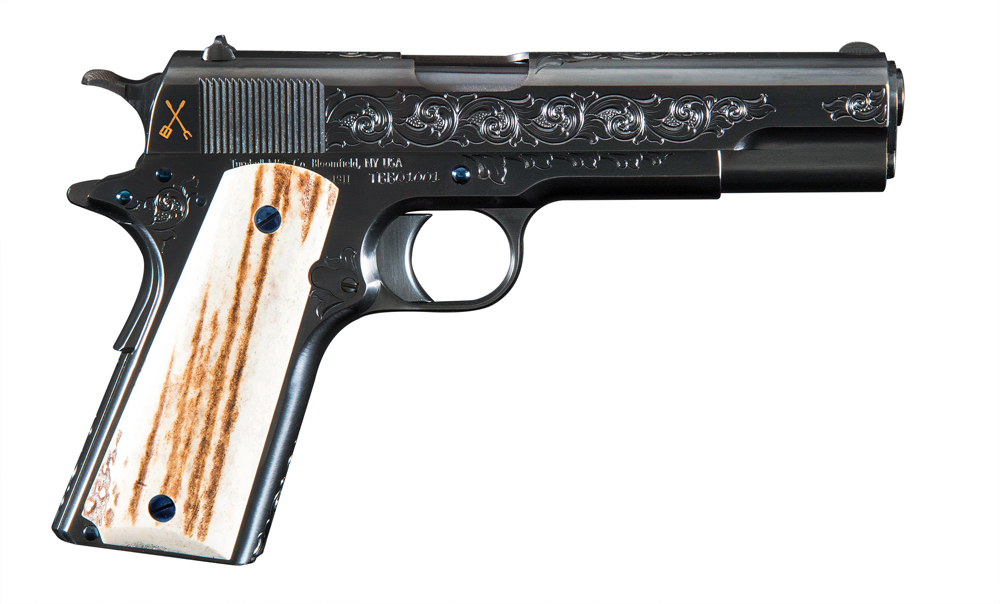
The Turnbull BBQ Series appears to offer some tasty extras, such as the line’s gold inlay fork and spatula insignia.
Most recently, Turnbull has added a line of 1911 pistols that is almost certain to get shooters drooling. Perhaps this is what the company’s higher ups had in mind when they named it the BBQ Series.
Turnbull’s newest line of 1911s appear like they are built to be collectors items right out of their hard case.
The collection is set up to have a number of custom features added, depending on the buyer’s preferences. But the four pistols (Government, Government Heritage, Commander and Commander Heritage) do have some common attributes.
The grips are one of the options that catch the eye almost from the get-go. Crafted from elk-horn, they give the pistols a raw and elegant look that breaks from many of other high-end 1911s on the market. And set against the nitrate-blue finish of the pistols’ slide, the grips boldly pops, no matter their inherent staining.
There is, however, plenty of meat to go with this bone. The .45 ACPs all have solid one-piece triggers and 24 karat gold inlay of a crossed fork and spatula — the BBQ Series insignia. From there, a number of options are available to help make the gun unique to its owner.
The most notable is the selection of hand engraving that comes standard with the pistols. Turnbull offers the choice of four classic patterns to adorn the slide and frame of the 1911s, including:
One of the big selling points of the Turnbull BBQ Series is the opportunity to choose from four hand engraving patterns, such as the Flare style above.
Scroll — Derived from classic American scroll engraving from the mid-19th Century.
Flare — Composed of deep, heavy cuts that meet to form bright sparkling patterns.
Grape — Flowing across the pistol are leaves, vines and grapes, a very classic gun engraving design.
Colt — Inherited from fine engraved Colt pistols, features Colt-style scrollwork, punch dot background and fancy boarders.
The standard modes of the Government and Commander pistols have charcoal blue frames. The Heritage models of these pistols feature color case hardened frames.
The Government models are outfitted with 5-inch barrels, feature World War I style sights with semi-circle notch and come with the choice of wide or short spur hammers. The Commander models have 4.25-inch barrels and are outfitted with speed hammers.
If you plan to sink your teeth into the Turnbull BBQ Series better have your wallet ready. The pistols start at $5,000.
The 1911 Ultimate Collection pays homage to perhaps the greatest handgun ever conceived. This authoritative six-reference collection delves into the finer points of John M. Browning’s brainchild — from customization to maintenance to history. This is a must-have collection for any serious 1911 aficionado or shooter. Get Yours Now
Looking to go armed, but are stuck in the weeds as to what to arm yourself with? Here are 20 of the best concealed carry gun options that will keep you on the defensive.

 Curious how a majority of semi-automatic rifles go about their business? These animations will give you a solid idea about how a gas-operated rifle cycles.