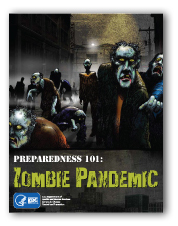
The reaction to this comic book was mixed. On the one hand, it’s reaching audiences that may not have otherwise considered preparedness seriously.
On the other, is it responsible for the CDC to blur the lines between fiction and reality in an age when there is so much misinformation on the Internet already?
The topic was examined in-depth last year in Living Ready‘s article, The CDC’s Zombie Survival Guide PDF Could Cost Real Lives. In a nutshell, it’s better to draw a clear line of distinction between reality and fiction when it comes to disaster preparedness. Just as Jaws stoked paranoia about sharks – one that actually impacted shark populations – the blurring of entertainment and reality can become a problem.
At Living Ready, zombies are treated as pure fiction. There’s no confusion between what is real and what isn’t. Even in the recent article, 5 Best Zombie Gear Items for the Apocalypse, there’s no mistaking reality for fiction.
Where the line tends to blur is with survival gear and information designed specifically for zombie preparedness. Zombie ammunition, zombie guns, zombie knives, zombie everything.
Should someone actually use those items on another person, the legal consequences would be severe.
Self-defense cases, even where a person is justified in using force, will examine every aspect of the situation. Zombie gear calls into question the mental faculties of the defendant. You can bet a prosecutor will exploit that for all its worth.
Don’t bother with zombie-themed survival gear. Stick with the perennial products that don’t hinge on fads. They’ll probably work better anyway.
It’s easy to think the entire family will be together when a disaster hits, but that’s not always the case. In most survival scenarios, logistics will be a challenge. Everyone, from big city dwellers to rural homesteaders, needs to figure out how to gather everyone in one spot.
That hinges on a family communications plan, but let’s take a look at a survival scenario that could actually happen. Living Ready posted this question to its Facebook page:
A natural disaster (like a flood or a fire) is only an hour from hitting your home. You decide to evacuate your family to safer territory, but one of the kids is at a friend’s house located more than an hour away. You know the friend’s family doesn’t practice preparedness and is in harm’s way. Do you evacuate the family you have with you knowing you’ll be completely safe from the disaster? Or do you risk driving through the disaster as it hits to pick up the kid at the friend’s house?
Basically, is it better to have a 100 percent chance of survival for most of your family, or a 50 percent chance of survival for all of your family? You could adjust that 50 percent to a different percentage if you wish, but the question is the essentially the same.
Your Responses to this Survival Scenario
The responses overwhelmingly endorsed splitting the family up, with one person going to collect the stray kid. That would require two vehicles and at least two drivers. Does this change your own family’s emergency plan?
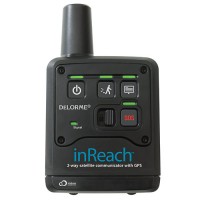
Most responses advocated splitting up and keeping in contact. If cell service goes down, as it often does during disasters, a two-way satellite communicator will be essential. Living Ready endorses the DeLorme inReach, available at the Living Ready Store.
“Realistically, the wife and son/daughter would evacuate to safety with a 2-way radio, and I would go after the kid with the other radio.” – Justin King
“No child of mine would be left behind. I would go get them, regardless of the cost.” – Karen Walker Grummer
“If you must, rescue the child, but don’t put the whole family in danger. Send as many of them on to safety as you can spare.” – Stephen Ledington
“Send the others to safety, and you are only risking yourself to rescue the kid.” – Laurie Blanchette
“Risk it all for my family.” – Janie Frieze
“I would go for the rescue of said kid BUT would also call and ask the people to meet me halfway with my child.” – Belinda Chedville Mason
“Number one, no way my child would be an hour away with someone that doesn’t understand preparedness. That said, I would send everyone else on and go retrieve them myself. But, who would sit there knowing disaster is an hour away? Even those not in sync with reality would see it coming.” – Chet Castor
“Depends on the topographical map between you and your missing kid and on weather or not those folks are willingly leaving or not.” – Nick Kearney
“My family’s plan is for mom and dad to go to our rally point while I move to extract my brother if he is unable to.” – Jesse VanderBie
“Easy. Split up. Send those I can to safety, and go get my child. No one gets left behind. Period.” – Jcharles Tower
“Split up, if there are two responsible adults or even one is an older teen. Send the family to safety while the adult goes after the remaining child. Keep in contact with each other via radio or text or what ever is available.” – Susan Anderson
New rules under the National Flood Insurance Program (NFIP) are requiring some residents and business to purchase expensive flood insurance policies. The thinking is that being in a high-risk flood plain is too dangerous to not carry specialized disaster insurance.
As covered in a previous article about flood insurance, the NFIP had to undergo extensive reform because of the volume of claims recently, most notably Superstorm Sandy. Increasing the pool of high-risk insurance holders could prevent the NFIP from going bankrupt.
But should this kind of disaster insurance be a requirement? And does it set a precedent for other disaster-prone areas? Areas frequented by earthquakes, wildfires, tornadoes, hurricanes and more could fall under the thumb of programs similar to the NFIP’s forced disaster insurance.
Living Ready asked readers on its Facebook page that very question:
Should all homeowners and businesses be required to purchase extra insurance if they are located in an area frequented by natural disasters?
Should Disaster Insurance be Mandatory?
“I don’t care if they decide to insure themselves or not, but if they don’t, they should not be able to make a claim on the taxpayers to make up for it.” – Matt Pierce
“They would have to cover the whole country if they did a regional thing. For specific threats, like living in a specific flood plain that floods often, or living on the side of a volcano, yes. Choosing to live in OK, thus you might get hit by a tornado? nope.” – Jane MomwithaPrep
“No one should have to carry any insurance that they don’t want, but they shouldn’t expect, or receive, a government bailout if a disaster strikes them.” – Paul Kendall
“If you insist on building on an unstable cliff, yes. If you live below sea level, yes. If your house is in the middle of tornado alley, yes. Otherwise, everyone has to help pick up the cost of money lost by insurance companies when the odds catch up. If you drive every day in Dallas your car insurance is more than if you drive in the countryside for the same reason.” – Steven White
“Where is it safe to live that no ‘Natural Disasters’ happen? Are we talking about only floods or Waves, Tornados, hurricanes, Fires, snow storms, earth quakes, Tsunami’s, pick your poison? I live on the Gulf Coast and if you have to rebuild you have to meet new codes! It’s not the same thing over and over!!” – Damon Stelly
“I live on Long Island IN Newyorkistan, all the insurance these people paid still hasn’t helped them a year after SuperStorm Sandy. Ask the people of Katrina if they got paid as well. All the monies supposedly paid went right into government coffers for emergency management. Disgusts me as firefighter/EMT.” – Davy Poggi
“Hmmmmm, mandatory insurance, with a bit of grease for Uncle Sam’s palm, you know, because what they mandate will be better than the junk you have now. Where have I heard this whole mandatory insurance bit before? It’s a total win for the government, and a lose for all of us.” – W Toney Nikolatsopoulos
“No, but neither should they receive ANY tax dollars to rebuild when their house gets blown away. You take your chances, and you deal with the consequences.” – Carrie Bartkowiak
What Do You Think About Mandatory Disaster Insurance?
Should disaster insurance be mandatory? Leave your comment below or go the Living Ready Facebook page to join the conversation.
The Bushnell PowerSync SolarWrap is making a lot of buzz in the outdoors and survival markets. The SolarWrap’s roll-out design comes in three versions: the mini, the 250 and the 400. This review will use the 400.
The 10.1-ounce SolarWrap 400 comes in a case that sports handles for straps and other carrying methods. It’s compact, less than the size of an average hammer.
The product also includes a cord with micro and standard USB ends, as well as an adapter for charging the SolarWrap from an outlet. Opening the case, the actual SolarWrap itself comes with USB attachments at either end that open with a flip. One is for mini USB. And one is for standard USB.
Bushnell PowerSync SolarWrap Review: Using the device
The SolarWrap must be turned on to work. Blinking lights indicate how much charge is in the internal battery.
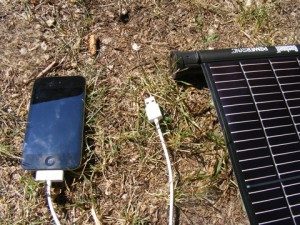
The SolarWrap rolls out to 29.25 inches. Once deployed, it can be positioned just about anywhere. From a tree. The hood of a car. A sidewalk. A post. Anywhere there is sunlight. Just be sure to have some kind of anchor so the roll doesn’t curl up, a problem flat solar panels don’t have.
Hooking up a device is simple. Just plug it into the USB port. Slip the device under the roll to protect it from the sun and you’re done. The SolarWrap charged this iPod in about an hour.
While in the sun, the SolarWrap simultaneously charges its internal battery. That’s an innovative feature. It means the SolarWrap’s battery can be used when the sun isn’t shining. The SolarWrap can also be charged using a wall outlet. Setting that up requires just a couple quick steps with the included adapter.
Bushnell PowerSync SolarWrap Review: Drawbacks
All of this adds up to a portable, versatile product that works great. Still, there were some drawbacks. The USB tabs kept popping open throughout the review of this product. This could cause those USB connections to become dirty. I hope Bushnell addresses this.
Update: Bushnell informed Living Ready the tabs are being addressed.
The included accessories don’t fit inside the carry case. It’d be nice if they did so they won’t become lost.
The rollout feature is slick, but I’m concerned that it may become torn. If that did happen, Paul Ahnold at Bushnell informs me that a break in one solar cell will not affect the rest. I can appreciate the foresight of that design element.
Bushnell PowerSync SolarWrap Review: Right for You?
So should you buy the Bushnell PowerSync SolarWrap? It depends on how much power you actually need. For charging phones and gadgets, it’s a winner.
For heavy uses, such as running lights at night or charging a car battery, you’re better off with a larger panel, like this Goal Zero Guardian.
Along those same lines, the SolarWrap may not stand up to exceptionally hard, rugged use. Go with something with a tough shell instead, like the Bushnell SolarBook or this Goal Zero Escape.
Still, sportsmen, hikers, campers, preppers, and even commuters will find a lot to appreciate in the Bushnell PowerSync SolarWrap.
Bushnell PowerSync SolarWrap Review: Pair It Up
Here’s a bonus tip from Living Ready.
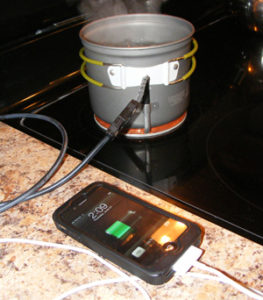
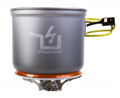
Pair any solar charging device with the PowerPot. The PowerPot uses heat and water to produce electricity.
Between solar and heat power generation, you’ll stay juiced in just about any scenario.
From rolling blackouts to hurricanes, floods to tornadoes, power can go out at a moment’s notice. If the grid fails, the PowerPot will keep you charging! The PowerPot thermoelectric generator converts any heat source directly into power that charges your USB handheld devices. Get Yours Now
Both dehydrated and freeze-dried emergency foods do significantly better in terms of shelf life and portability than food not processed these ways. But there are some significant differences.
Freeze-Dried Survival Food Lasts Longer
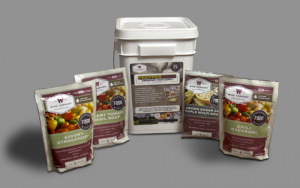
Taste the difference between dehydrated and freeze-dried survival food with this sampler pack from Wise. Click to get it from the Living Ready Store.
Dehydrating food will not extend the shelf life nearly as long as freeze-drying.
You can expect dehydrated food to store well for months rather than multiple years depending on how much moisture was removed. The more a food item is dried, the more brittle the texture becomes and the longer it can be stored.
Freeze-dried survival foods will have a longer shelf life, but keep in mind that storage conditions vary widely.
Why Does the Difference Matter?
This is important because over the last several years, some survival food companies have been using the two terms interchangeably. If they can’t explain how they make it, don’t buy it.
Rotate Emergency Food Supplies
Regular rotation is the key to proper survival food storage. Keep a record system detailing the age of all of your supplies.
Remember, temperature and moisture are two of the most common causes of spoilage in emergency food storage. Contamination, light and insects round out the list.
From rolling blackouts to hurricanes, floods to tornadoes, power can go out at a moment’s notice. If the grid fails, the PowerPot will keep you charging! The PowerPot thermoelectric generator converts any heat source directly into power that charges your USB handheld devices. Get Yours Now
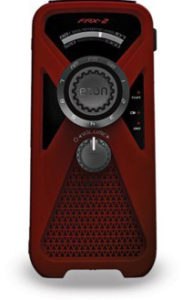
A staple of any mutual assistance group is a weather radio, such as this Eton American Red Cross FRX 2 Emergency Radio.
When it comes to considering new members the group will want to attempt to get a complete picture of the potential candidate. Of course if this is a “come as you are” situation you may need to make some judgment calls. When time is on your side, try to have a comfortable sit down interview/conversation in a comfortable, neutral location.
Here are some additional primer questions to ask of potential members after the pleasantries:
What are you looking for in a group?
Is there anything specific you are preparing for?
How many people would you want to bring into the group? Family, friends?
How is your preparedness going? Are you moving forward in collecting supplies? Skills?
How long do you think you might be able to survive with your current stores?
What kind of skills do you have and how long has it been since he or she actually tried to use them?
Do you have reliable transportation and time to participate?
Is there any concern or any disabilities that may become a problem in an active environment? What is the health of the candidate or family?
Has the candidate been in a group previously? Why did they leave?
While chatting with the candidate look for personality cues that may offer insight into his or her personality:
What is the person’s temperament? Do they seem overbearing or timid?
Do they have extremist views or views that contrast with the group’s stated goals?
Do they appear to truly be interested or are they just along for the ride (for example, a spouse dragged to the interview)?
Many people know that Living Ready takes a firm anti-zombie stance. As in, zombie preparedness is misguided and a waste of resources.
But then we saw this zombie First Aid kit infographic. We think it’s time to reconsider. After all, no one has ever proven zombies don’t exist.
Sure, government zombie prevention efforts have managed to keep the hordes at bay for now. You don’t see them anywhere, do you? But you never know how many zombie-free days we have left.
Happy April Fool’s Day. If you still have the itch to make a kit, check out this survival guide by John McCann. It’s full of kit ideas for a variety of non-zombie emergencies.
For a lot of city dwellers, a bugging out in a vehicle isn’t an option. Many urbanites don’t own cars in the first place. Those who do might find roads chronically congested and impassable by vehicle – and that’s before a disaster hits. The solution is a bug-out bike.
In Build the Perfect Bug-Out Bag: Your 72-Hour Disaster Survival Kit, author Creek Stewart explains the benefits of bug-out bikes for city folks. He writes:
Bicycles, for example, can be outfitted to carry a surprising amount of extra supplies in addition to BOB on your back. They are also not dependent on fuel, which will be in limited supply during any large-scale evacuation. [Bikes] also have excellent maneuverability through traffic jams and congested traffic.
The same could be said for motorbikes to a certain extent. But despite being fuel sippers, they’re still going to need to fill up at some point. The pedal power of a bug-out bike can function so long as the rider can.
That’s one rider, which is a major downside of bug-out bikes. Bringing someone else along on the handlebars only works in third grade. When it comes to bug-out bikes, everyone in the family unit should have their own set of wheels. Two- and three-person bikes make a degree of sense, but we at Living Ready have yet to give this tactic a full evaluation.
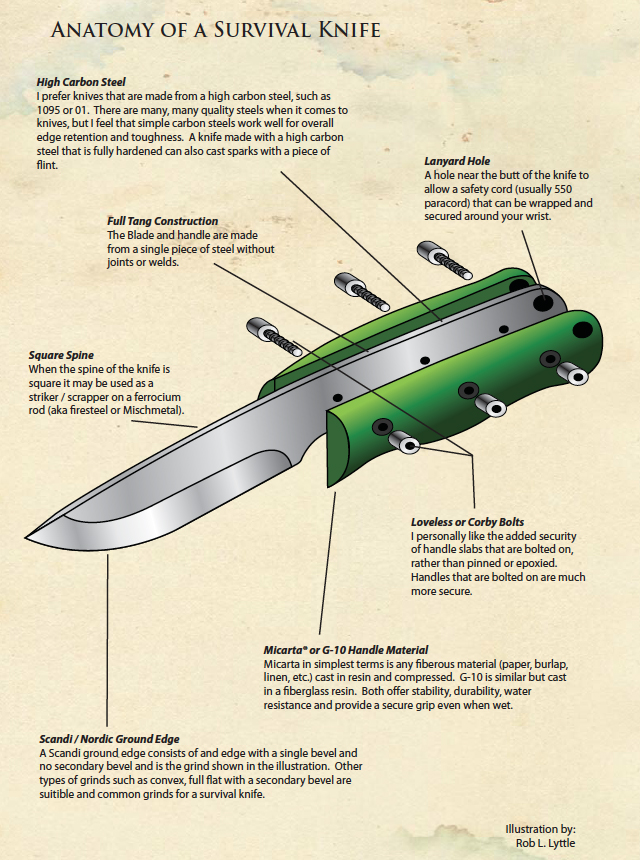
Click the image to see a larger illustration showing the features of a good survival knife.
Share This Survival Knife Illustration
Copy the code below to share this survival knife illustration on your website or blog.
<a href=”https://www.livingreadyonline.com/gear-advice/survival-knife” title=”Anatomy of a Survival Knife”><img src=”https://tinyurl.com/SurvivalKnifeAnatomy” alt=”Survival Knife Features”></a>
Anatomy of a Survival Knife
In his book, Stay Alive: Survival Skills You Need, author John D. McCann reviews the features that every survival knife worth its weight should contain. Many have debated the merits of survival knives, and these must-haves are sure to get a similar response. Be sure to leave your thoughts in the comments are below.
Here are the highlights from the survival knife illustration, as written by McCann.
Survival Knife Steel
I prefer knives that are made from a high carbon steel, such as 1095 or 01. There are many, many quality steels when it comes to knives, but I feel that simple carbon steels work well for overall edge retention and toughness. A knife made with a high carbonsteel that is fully hardened can also cast sparks with a piece of flint.
Survival Knife Tangs
The blade and handle are made from a single piece of steel without joints or welds.
Survival Knife Spines
When the spine of the knife is square it may be used as a striker / scrapper on a ferrocium rod (aka firesteel or Mischmetal).
Survival Knife Edges
A Scandi ground edge consists of and edge with a single bevel and no secondary bevel and is the grind shown in the illustration. Other types of grinds such as convex, full flat with a secondary bevel are suitable and common grinds for a survival knife.
(Living Ready says: Download this guide to survival knife grinds for free.)
Survival Knife Handles
Micarta in simplest terms is any fiberous material (paper, burlap, linen, etc.) cast in resin and compressed. G-10 is similar but cast in a fiberglass resin. Both offer stability, durability, water resistance and provide a secure grip even when wet.
Survival Knife Bolts
I personally like the added security of handle slabs that are bolted on, rather than pinned or epoxied. Handles that are bolted on are much more secure.
Survival Knife Lanyard Holes
A hole near the butt of the knife to allow a safety cord (usually 550 paracord) that can be wrapped and secured around your wrist.
Fukushima Gives Third of West Coast Babies Thyroid Problems? Not Even Close.
You may have seen reports that one-third of babies born along the West Coast have thyroid problems related to the Fukushima nuclear disaster in Japan. That is so, so wrong.
Internet rumors surrounding the study suggest taking potassium iodide to protect from radiation caused by the Fukushima disaster. However, the effects of that radiation have been blown way out of proportion.
The stories come from the misinterpretation of a new study from the nonprofit group Radiation and Public Health Project. Even worst case, the researchers found that nowhere near one-third of the newborns were hit with thyroid problems. Not even close.
According to the study, published in the Open Journal of Pediatrics, a total of 327 cases of congenital hypothyroidism at birth were documented in the “5 exposed states” between March 17 and December 30, 2011. The authors assume fetuses were exposed to increased radioactive iodine during this time since they found evidence that it was increased in the air from March 17 through April 30.
They compare births in this period to births in the same period in 2010, when there were 281 documented cases of thyroid problems. So 2011 had a 16 percent increase. Perhaps the one-third claim comes from the March 17 to June 30 period, when there were 122 cases in 2011 compared to 95 cases in 2010. That’s a 28 percent increase.
Drawing a Conclusion
I’m not sure how many live births there were in the five-state area during this time, but there were over 500,000 in California in 2011. So, let’s very conservatively assume there were 400,000 births during April 17 through December 30 in the five-state area. That means 0.08 percent (8 cases for every 10,000) of newborns have been hit with thyroid problems.
Even if all these increased cases of thyroid problems were directly related to Fukushima, that would be one extra baby per every 10,000 births who have hypothyroidism Or, put another way, at the most, 40 babies out of 400,000 may have been born with thyroid problems because of Fukushima.
Another thing to consider (and the authors allude to this) is this is an observational, cross-section study. It finds an increase in thyroid problems and an increase in radiation during a certain period of time and assumes one caused the other.
Although sometimes this kind of assumption turns out right, it doesn’t always. There have been all sorts of these types of studies associating increased coffee consumption with some disease, for example. When further, more sophisticated studies have been done, these original assumptions about disease have been proven wrong.
Other possibilities that could have accounted for an increase are that people of some races have a higher incidence of babies born with thyroid troubles than people of other races. Perhaps there was a higher percentage of those races born in 2011 compared to 2010.
Another possibility is that newer tests are more sensitive to diagnosing very slight hypothyroidism. Perhaps some of the increase was due to this.
Probably some of the mothers of the babies born during this time didn’t even live in the five-state area during pregnancy. And there are always all sorts of reasons we never even think of.
Will Taking Potassium Iodide Help Pregnant Women Protect Their Babies?
It is a known fact that pregnant women need more iodine, which is supplied in most prenatal vitamins. However, protecting your baby’s thyroid against radiation requires much more. The more you take the more risk there is for potential side effects. Remember that any supplement, no matter how natural, should be considered a medicine. Before starting one, ask your doctor if it’s safe.
Further Reading About Potassium Iodide and Radiation
Living Ready recommends these resources for learning more about radiation and potassium iodide. This supplement is often cited in the preparedness community as building protection from radiation. Some claims about its use are overblown.
FAQs About Potassium Iodide from the Food and Drug Administration
Health Risks of Taking Potassium Iodide
More Potassium Iodide FAQs from the U.S. Nuclear Regulatory Commission
How to Make Potassium Iodide in an Emergency, from the FDA
Stacy Harris explains how to make an earthen oven in this video from GameandGarden.com. As she explains in the video, making an earthen oven can take some work. But the final product is worth it every time.
One step not covered in the video is removing the sand from the interior of the earthen oven. This is what Harris told Living Ready in an e-mail:
As you let the mud dry a few days, you begin scooping out the sand from the entrance. Each day, you scoop out a little more until none is left. That gives it a chance to stay stable, but helps with the drying process.
More detailed instruction about how to make an earthen oven the Stacy Harris way can be found here and here.
One of the most common ways earthen ovens are used is baking bread. Harris mentioned that she’ll be making Italian rustic bread soon and posting about it on the website.
Also note that earthen ovens hold their heat. This is ideal for cooking food in the long-term during survival scenarios. Although they must remain stationary, earthen ovens are an efficient use of limited fuel sources.
Harris is Living Ready‘s expert for all things homesteading. Look for more from her here on LivingReadyOnline.com. She’s the author of several books about sustainable living for healthy families. Check out her website at GameandGarden.com and her Facebook page.
Being in a crowd during a terrorist attack presents its own set of problems.
The tragic events during the Boston Marathon on April 15 shocked the world and everyone here at Living Ready. Our thoughts and prayers continue to be with all those affected now and during the long road to recovery.
It highlighted why having a plan in place for what to do if you’re in a crowd when disaster strikes is important.
When disaster strikes at crowded event
Living Ready tapped disaster expert Paul Purcell, author of Disaster Prep 101 and someone who helped plan medical responses during a G-8 summit in 2004, to provide insights about what happened in Boston and what to do in crowds during a disaster.
Q: If it’s revealed this was a bombing, was the April 15 event a “typical” attack?
A: The primary device is tragic enough, but in many cases there is a secondary device. In this instance it seems as though the primary device was “double-primed,” or in shooting parlance, it was a double-tap.
In many cases there may be a secondary device set up to go off for the purpose of disrupting emergency response. Locations for these types of devices are chosen based on a guess where arriving responders would park and gather for a temporary Command Post.
Q: Should there be concerns about more explosions in Boston?
A: Though there may be a secondary device, there are very few organizations on the planet that have the resources to set numerous working bombs. So, chances are good that, in the case of something as massive as the Boston Marathon, most people there, mathematically speaking, will be safe from other devices.
However, people should keep their eyes open for odd unattended packages, suspicious behavior (i.e. someone skulking about trying to hide identity when others running for safety, etc.).
Q: What should a person do when inside a crowd that panics?
A: When in crowds, the worst thing is a stampede. Try to stay out of the main flow if possible, and be ready to sidestep into alleys, stores, etc. if need be.
Q: What are some things to consider when a city is on lockdown?
A: A city on lockdown is a major pain. Your best asset at this point is patience, and thinking ahead.
First thought: Get some water. Duck into a restaurant or store to get a bottle or two of water before they’re bought up by the crowd. Then pick a comfy spot to wait. Eventually, they’ll put mass transit to work as much as possible and get people out of the area. It’ll take a while, but that’s always emergency management’s game plan.
Q: Why are cell phone networks sometimes shut down in an emergency like this one?
A: With cell phones, many emergency management agencies will have trunk priority [Living Ready says: Think of trunks like channels] so they shut down civilian calls to allow them plenty of emergency response access.
One thing to try is texting and then multi-media messaging [i.e. sending a picture from your phone to another phone]. Those services use different trunks and you can sometimes get a message out. Also try a long-distance call which uses yet another trunk (which is one reason everyone should have an out-of-town emergency contact person).
The thing to do with multimedia is to take a picture of yourself or a picture of a handwritten note saying you’re okay and what you’ll do and/or where you’ll go.
Q: What should people do if their cell phones stop working?
A: You should ALWAYS have a set of “standing orders” or a set reaction plan that you will follow WHEN all communication goes down. Cell phones are great, but the foundation is standing orders.
Q: Although it doesn’t appear the Boston incident was one, are there special considerations if an attack is also biological?
A: One other consideration in bombings in crowds is that it may be a form of a “dirty” bomb, either with radioactive materials, biochem components, poisons (there was a container of cyanide in the truck bomb in WTC ’93), or simple irritants. So, in a situation like this, you should protect your breathing as much as possible with even simple methods like covering your mouth with your shirt, tie, or other tightly-woven cloth.
On the next page, don’t fall victim to panic.
Events such as the one in Boston underscore why it’s important to always be prepared. Disasters don’t take a holiday, be it Christmas in Alabama or Patriots Day in Boston. Unfortunately, those holidays are often the targets of terrorists looking to inflict the greatest psychological damage.
Don’t Let a Terrorist Damage Your Psychology
“Terror” refers to psychology by definition. True, a terrorist can and will try to hurt people physically. But the real effects are psychological. That’s why the targets are usually symbolic. Consider 9/11 and the Twin Towers, the 1996 Olympic bombings in Atlanta, the Murrah Federal Building in 1995 in Oklahoma City, the World Trade Center in 1993 and even the 1920 bombing on Wall Street in New York that killed 40 people.
Unlike physical attacks, would-be victims of psychological terror have a choice: Give in to panic or continue life as normal. Living Ready chose the latter. To do anything else is to allow the terrorist to have power over us.
That meant not posting information we couldn’t verify on social media. When we listed a hotline for family members in Boston, we included the source. Not everyone was as cautious, and rumors hit Twitter and Facebook that only increased the potential for panic.
That’s not a wise decision – and it was a decision. Unlike those physically injured, no one was forced to give in to fear and panic. Hopefully, Living Ready readers showed restraint and waited for the dust to settle – figuratively and literally.
On the next page, a Living Ready report from Boston on the resilience of the city.
Living Ready Staff Report from Boston
Meghan Shinn is editor of Living Ready sister pub, Horticulture. She’s behind much of the food growing content you see at Living Ready. Shinn is from the Boston area, and had the following to say about the resilience of the city:
Marathon Monday always disproves the stereotype of Bostonians as a bit gruff, or a bit snobby. This year, obviously, everyone got to see how helpful, capable and generous Boston folks can be. Yet even in years past, if you came here for the race, you’d find a welcoming spirit and a real camaraderie surrounding race day and its related events.
Marathon Monday is also Patriots Day, which is a Massachusetts holiday, so most schools are closed, government offices are closed, and so on. It’s the start of spring vacation week for the public schools.
The city just has a very fun, holiday feel, with tourists and locals alike milling about and enjoying the day, particularly if it’s at all warm, like it was yesterday. People who have to work despite the holiday might pop over to the finish line on their lunch hour to cheer a few random runners on. Several times when Horticulture had a larger Boston office a few of us did just that. There’s also a Red Sox home game every year, with a special early start.
When I was 9 or 10, my dad took me to see the Sox on Marathon Monday. I can’t remember anything about the game. I only recall the spring sunshine, the happy crowds of people and my dad holding my hand as we worked our way back to the T (subway station) after the game. I remember him congratulating some runners, all wrapped up in their free race-day ponchos.
When I think about it now, the memory feels so bittersweet. It seems like it was such a simpler time. I now have two daughters of my own, and I worry when we go out to special events. I worry even more about what the world will be like for them years from now.
What makes me feel better, and gives me some hope, are displays of caring and bravery such as we saw from the first responders and simple bystanders yesterday. I have to hang on to the idea that such spirit will always prevail, and I’m proud that it was so evident in my commonwealth yesterday.
A “threat map” details the hazards in your area. It helps choose evacuation routes and a rendezvous point.
The explosion at a fertilizer plant in Texas this week killed several people and injured many more. It brought to mind the “threat map” disaster expert Paul Purcell details in his book, Disaster Prep 101. (Look for a full review of the book soon.)
A threat map is something you create at home. It details potentially hazardous sites, like a fertilizer plant, should a disaster strike. Using readily available maps at places like Google Maps and Mapquest, the idea is to best assess where not to travel during an evacuation.
The following lists are from Disaster Prep 101. This is just a brief overview. The book contains a lot more detail on these subjects.
Maps to Gather to Create Your Threat Map
Street maps
Aerial photos of your workplace, children’s schools and your home
A city map
A county map
A state map
A national atlas
Start Making Your Threat Map
On each of the maps, mark the following things:
Potential targets of terrorist attacks
Prevailing wind directions – You’ll need this determine where to go if toxic chemicals are in the air. In the case of the fertilizer plant explosion, it would be a good idea to stay upwind.
From rolling blackouts to hurricanes, floods to tornadoes, power can go out at a moment’s notice. If the grid fails, the PowerPot will keep you charging! The PowerPot thermoelectric generator converts any heat source directly into power that charges your USB handheld devices. Get Yours Now
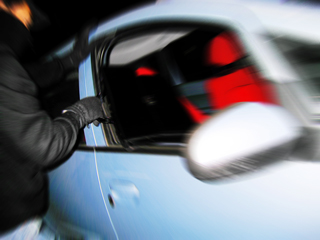
Because she was mentally PREPARED and SKILLED, the author’s mother walked away from what could have been a carjacking. Now that she is more AWARE of the threat, she adjusted her strategy and became better prepared should it happen again. (Image via sxc.hu)
My mom nearly became the victim of a carjacking this week.
After parking her vehicle on a city street, a man rushed up to the rear passenger door. He opened it and got in.
Her immediate reaction was to yell, “No” and “Get out” as loud and as mean as she could muster. It did the trick. The stranger left the vehicle and ran off.
Fortunately, she walked away from the incident with a story, not an injury and a police report. What this man’s intentions were will never be known. It’s better that way.
After talking with her about what happened, it became clear how this is the perfect example of the preparedness mindset. “Prepared, Skilled, Aware” is more than just a catchy tagline at Living Ready. It’s a way to be ready before, during and after an event.
Prepared for a Carjacking: She Had a Plan
Waiting until an event happens is the wrong time to develop a plan. There’s barely time to think. My mom’s incident didn’t last more than a few seconds.
So don’t think. Go into autopilot and execute the plan. In this case, my mom already knew what to do: Use her voice to bring as much attention to herself as possible.
Perhaps the menacing way she said “No” and “Get out” suggested she wasn’t going to tolerate this person’s presence. But my money is on this guy weighing the odds of getting away with a crime. The incident happened in a city with a lot of foot traffic. The odds were good someone would notice the confrontation.
This plan might seem overly simple. But consider how natural it is to freeze up. To allow terror to gel a person’s better judgement.
That didn’t happen because my mom was mentally prepared. She’s safe now. However simple, the plan worked.
On the next page: SKILLED and AWARE
Skilled for a Carjacking: an Appropriate Response
It’s one thing to have a plan. It’s another to execute it properly. In this case, her plan was to draw attention to herself. The way she executed it was with her voice.
In the time since the incident, some suggested that a firearm would’ve helped. I disagree.
Yes, using one would’ve drawn attention to herself. But any concealed carry advocate knows that this level of escalation needs an equivalent threat in order to be legal.
In this case, it’s not known whether the man had a weapon. His intentions weren’t explicit. He didn’t physically attack her.
To the layperson, that doesn’t matter. A stranger entering a vehicle is enough justification. But to a prosecutor considering a homicide case, these details make all the difference.
There are times and places for using lethal force. This wasn’t one of them.
Aware of Carjackings: Changing Settings on the Vehicle
The incident made my mom more aware of a security risk in her vehicle. After putting the vehicle into park, the doors automatically unlock. That’s what happened just as the man entered the vehicle.
Perhaps this stranger knew about these settings, saw an opportunity and went for it. It’s hard to say, but this could have been the case.
Changing the lock setting wasn’t hard. For those who frequent cities, it’s not the worst idea to do the same.
Conclusion: Never a Better Time to be Prepared, Skilled and Aware
It’s worth mentioning again how fast that entire incident happened. A few seconds. No time to think.
That’s why it’s so important to have a plan, know how to use it and to be able to analyze it after the fact. Prepared, skilled, aware. Before, during, after.
Things could have turned out much differently for my mom. Thankfully, they didn’t. I hope this story inspires you to follow her lead and be proactive about your preparedness.
Do you have a true carjacking story or other self-defense lessons? Post them in the comments below.
Recommended Book: Personal Defense for Women
This incident reminded me of the rich resource that is Personal Defense for Women: Practical Advice for Self-Protection by Gila Hayes. It’s an excellent source of information for women interested in concealed carry, self-defense or how to be better aware of threats.
Cleaning up old documents may not be on par with having 20 cords of seasoned hardwood or a bug-out bag ready to go. But good organization is simply smart.
Spring Cleaning Tips: Get Organized
Spring cleaning doesn’t necessarily mean getting the yard tidy, taking care of winter’s buildup in the house or working in the garage or shed to toss out accumulated junk.
Proper filing of necessary home documents and shredding or burning old ones sounds dull. But it’s a smart task that in today’s time of identity theft could prove to be a helpful chore. Cleaning up your home office or corner nook where papers have accumulated is worth the time, as is getting into the habit of properly discarding old documents.
Spring Cleaning Tips: Destroy Documents
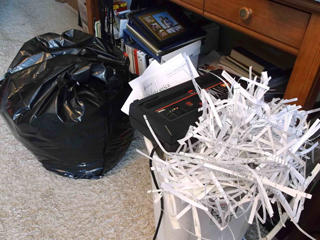
I took some time during a recent cleaning day around the house to shred a pile of documents. These included, to my amazement, some that were seven and eight years old. Many of the accounts were closed or had been transferred to newer ones, with new records and account numbers, but I was dismayed at my laziness in letting all these accumulate.
If you have a way to burn old documents, that would be my first recommendation. A fireplace, a patio chiminea, maybe a burn pile in your yard, and once they’re up in smoke they’re gone. If not, a stout paper shredder is a good idea to have and use. I’ve had one for more than a dozen years (and will be putting it to use more frequently).
Buy a shredder applicable to your needs. If you don’t need one with a bunch of bells and whistles, don’t buy one. Shop around. Look online for positive reviews, like in Consumer Reports. Study the models for durability and what kind of ability they have – paper, card stock paper, etc., and purchase locally at an office supply or retail store, or buy online.
Spring Cleaning Tips: Paperwork to Keep
With documents, some of them you need to keep and many can be discarded. Those to keep may include tax records or annual filings, pay stubs from the last couple of years for tax purposes and insurance statements if you’re filing a claim or are involved in a legal matter.
Home purchase or lease records, of course, as well as vehicle or other major purchases or leases. I’ve kept records about paying my speeding tickets (I’ve had a few) for at least three or four years, just in case something came up and I needed to prove I’d paid them. Everyone will have different ideas about what to keep and what can be tossed.
If you have a tax or financial advisor, check with them for their advice about keeping old records. They should be able to offer some advice about what kind of and how long to keep documents.
With our documents, I look for contract numbers, account numbers, bar codes, old bills that may have account or banking information — anything with a number or personal info. If I believe it has something that someone could somehow use to create problems for me, it goes through the shredder.
Spring Cleaning Tips: Preventing Identity Thieves
As for the necessary items — home mortgage, car purchases, land or other major purchases or leases, financial records — consider purchasing a safe or lockable filing cabinet. Make sure your spouse knows how to get to those records.
If you have a safety deposit box at the bank, consider making photocopies or digital copies to store there (or somewhere else you deem safe). I know some folks also will make videos of their home, inside and out, to have a record in case of fire or robbery. It’s easy to remember some of the big or sentimental things but all of the little things – books, other valuables, outdoors gear, cameras, etc. – all add up when you’re filing an insurance claim.
I’d rather have the peace of mind knowing the necessary documents we have are secure and anything else isn’t easily available for some slimebag who might try to fiddle with our finances.
How to clean a wild turkey. These are good skills to know even if the only turkeys you see are in a grocery store.
Many hunters prefer to fillet the breast meat and legs off their turkey, and why not? It’s clean, easy and saves freezer space.
First, remove the turkey’s beard, and then slice off its legs where the scaly skin meets feathers.
Using a sharp knife, slice into the gobbler’s skin at the point of its breast. Then, with your fingers, pull the skin away from the sides, top and bottom of the breast, exposing the meat.
Next, grab the turkey’s breast sponge, on the top edge of the breast meat, and use your knife to peel it off. Also, pull out the turkey’s crop while removing the sponge.
When the crop and breast sponge are out of the way, begin filleting the breast. Make an incision along the center of one side of the breast plate, and then gently cut the meat off the bone.
When you reach the upper portion of the breast meat, follow the wishbone with your knife up to the wing joint. Slice through the tendon that attaches the small, underlying “tender” portion of the breast, and then finish cutting off the breast.
After the breast is free, trim off excess fat or connective tissue. Then, remove the other side of the breast using the same process.
How to Clean a Wild Turkey: The Legs
Many hunters don’t take the legs from their turkeys, but that’s a mistake. The thighs and drumsticks provide great meat for stew, soup or gravy. To remove the legs, pull the skin down past the drumstick, and then pull the leg free, as if you are taking off a turtleneck.
Then, firmly grasp the top portion of the thigh between your thumb and forefinger, and quickly push the thigh bone upward, separating it from the body. Use your knife to cut through the tissue connecting the thigh to the torso.
How to Clean a Wild Turkey: Removing the Skin
Many folks like to save the entire bird but don’t want to pluck it. Skinning provides an easy option.
First, remove the beard and lower legs, and then cut off the wings, starting at the second wing joint from the body. You can also remove the tail if desired.
Then, gut the bird. Make an incision just below the gobbler’s breast bone. Work your hand into the bird’s chest cavity, grasp the viscera just above the heart, and pull out the innards.
Cut around the bird’s anal area and remove the intestines and other guts. Slip your fingers between the lungs and ribs, and gently pull out the lungs to the side, away from the spine. You might have to use a toothpick or paper toweling to further clean out the lung tissue.
Then, slice off the bird’s head close to the torso. Grab the skin atop the breast and slowly peel it off, working from top to bottom.
As you work the skin off the bird, make sure to remove the breast sponge and crop. You might have to use a knife to cut around the ends of the wings and drumsticks.
When you’ve removed the skin, thoroughly wash the bird inside and out, and remove excess skin, feathers and breast sponge tissue.
How to Clean a Wild Turkey: Plucking Feathers
This can be a chore, but if you like roasted turkey, it’s worth it. If you don’t pluck a turkey immediately after killing it, the skin tightens, and you’ll rip much of it off with the feathers.
However, you can remedy this by dunking the bird in a vat of scalding-hot water.
You can remove the wings, viscera and lower legs of the bird before or after plucking, but it’s probably easier to do so before.
If you want to save the beard, be sure to cut it off before dunking the bird.
After the water is ready, submerge the bird for a couple of minutes. Then, pluck it immediately.
Grab the feathers near their bases, and rip them upward. Take special care to remove all the small feathers under the wingbone and along the lower legs.
When the bird is clean, wash it thoroughly, cook it, and enjoy.
Looking to go armed, but are stuck in the weeds as to what to arm yourself with? Here are 20 of the best concealed carry gun options that will keep you on the defensive.