The new Black Tiger Stripe finish is now available on Magnum Research Desert Eagles chambered in .50 AE and .44 Magnum.
Magnum Research has introduced black tiger stripe finish models of its classic Desert Eagle pistol. The new finish complements the company’s other finish options, which includes blued, stainless, gold and chrome.
Customized finishes have become an increasingly common trend among gun owners, whether it be on modular ARs or tactical handguns. Many manufacturers have recognized this trend and are offering specialized finishes on their firearms straight from the factory.
One gun manufacturer catering to shooters preferring a more personal finish on their firearms is Magnum Research, maker of the well-known Desert Eagle pistol. The company has offered buyers a number of custom colors and finishes, including both Zebra stripe and Gold Tiger Stripe, on its Desert Eagles. New for 2016, Magnum Research is making the Desert Eagle available with a Black Tiger Stripe finish as well.
The new Black Tiger Stripe Desert Eagles will be available in both .50 Action Express (AE) and .44 Magnum chamberings. Like other Desert Eagles, these are gas-operated pistols with a capacity of 7 rounds in the .50 AE chambering and 8 rounds in the .44 Magnum configuration. Both handguns are 10.75 inches in length and feature a 6-inch barrel, and both incorporate an ergonomically designed grip specifically formed for two-handed shooting and a Weaver-style accessory rail for optics. The .50 AE version weighs approximately 4 pounds, 5.8 ounces, while the .44 Magnum model weighs around 4 pounds, 6.6 ounces.
“While there are many people that appreciate an unadorned pistol, there are still those that feel they need something more – something that complements their personality,” stated Frank Harris, VP of Sales of Marketing. “To address those fans who want something ‘flashier,’ we have introduced our handguns in multiple colors, polished gold or chrome and even animal prints. The Black Tiger Stripe Desert Eagle was first exhibited at the 2016 SHOT Show and already we anticipate it will be one of our more popular models.”
Currently, MSRP on the new Black Tiger Stripe Desert Eagles is listed at $1,922 for the .50 AE and $1,895 for the .44 Magnum. For more info on the new Desert Eagles or other Magnum Research products, visit the company’s website.
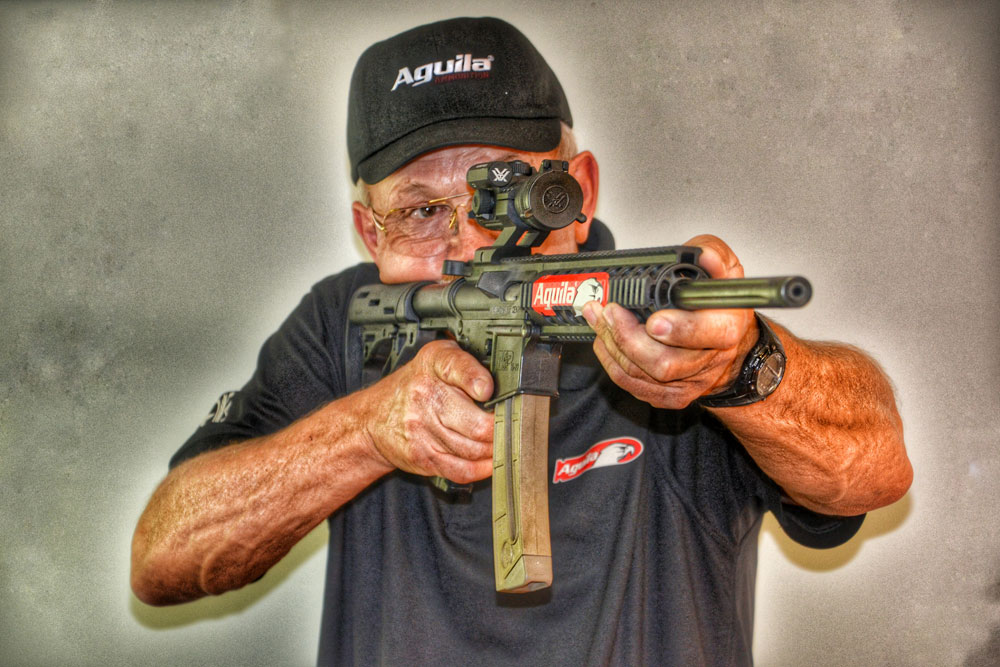
One of the world’s most famous and recognized shooters joins the Pro Staff Team at Aguila Ammunition.
In the past few months, Aguila Ammunition, the Latin American ammo manufacturer known the world over for its .22-caliber ammunition, has been adding talent to its Pro Staff Team, with recent additions such as professional clay shooters Gary Fitzjarrell and David Miller. Now, the company has announced the addition of yet another Pro Staff Team member: Jerry Miculek.
Commonly known as the “Greatest Shooter of All Time,” Miculek is a 20-time world record holder and one of the most prolific and revered figures in the shooting industry. He is especially well-known for his abilities with a revolver and has earned an impressive number of titles over his shooting career, including USPSA National Revolver Champion, IDPA National Revolver Champion, IDPA World Revolver Champion, and Steel Challenge Revolver Champion. Without question, Miculek is one of the fastest and most versatile revolver shooters in the world.
Upon officially joining the Aguila Ammunition Pro Staff Team, Miculek will be representing Aguila’s rimfire product line.
“Creating a pro-staff is one of our goals for this year, and we’re ecstatic that we’ve already built an all-star shooting team,” states Kristi Drawe, Director of Marketing for Aguila. “Jerry is one of the most versatile, respected, well-known competition shooters in our industry. He is an inspiration and a role model for so many aspiring shooters and we are thrilled to have him representing the rimfire line of the Aguila brand.”
Miculek says, “Aguila rimfire ammunition offers the shooter 100% ignition, amazingly consistent accuracy, all with a clean burning propellant. With 27 different rimfire loads to choose from, there is no reason not to use Aguila. They really have a specialty round for everyone. It’s simply the best ammo and I’m happy to represent a company with such high performing products. Get some!”
For more information on the products Aguila Ammunition offers, visit the company’s website at AguilaAmmo.com.
Also Check Out:
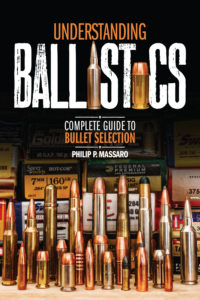
Understanding Ballistics Tailor your ammunition choice to the task at hand and ensure you’re choosing the right bullet every time with Understanding Ballisticsby Philip P. Massaro. Narrow down the vast array of ammunition options with detailed information and expert reviews of available bullets, and come to a better understanding of bullet technology and performance. Plus, learn about the physics of the bullet and its effects once it hits the intended target. Get Your Copy Now
The FN 15 Competition Rifle is tailor-made for the competitive shooter. Find out more about this great rifle in Gun Digest’s exclusive first look video.
The popularity of 3-Gun competitions has only continued to grow in recent years, and plenty of manufacturers have begun to research, develop and release products specifically tailored for this type of competitive shooting. FN is one such company, and for 2016 the manufacturer is now offering a competition-inspired version of its classic FN 15 rifle.
The new FN 15 Competition is stacked with features that 3-Gun shooters have come to expect in their rifles. The gun has a hard-anodized blue receiver with both the upper and lower manufactured from 7075T651 billet aluminum, and an 18-inch chrome-lined, cold hammer forged barrel is free-floated inside a lightweight, 15-inch handguard with M-LOK attachment points, capitalizing on many competitive shooters’ preference for an extended grip placement.
For improved ergonomics, the rifle sports Magpul’s MOE-SL buttstock and MOE Grip and comes equipped with an ambidextrous bolt release. Performance-wise, the FN 15 Competition utilizes a Nickel-Boron coated bolt carrier assembly, a Surefire ProComp 556 Muzzle Brake, a low-profile steel gas block and a quality Timney trigger.
Pricing on the new FN 15 Competition rifle is currently listed at $2,249.
In the video above, FN 15 Product Manager JP Reconnu, provides Gun Digest with a firsthand look at the new FN 15 Competition. Watch the video to learn more about this exciting new rifle.
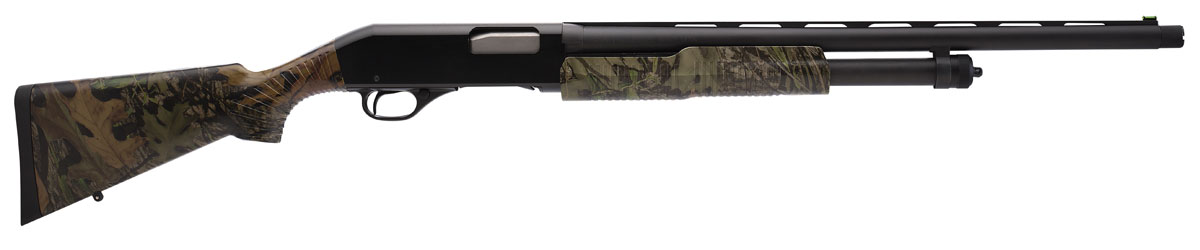
Designed with turkey hunting in mind, the new Stevens Model 320 12-gauge Turkey Shotgun is a great choice for hunters.
Gobblers beware. Stevens has added a new 12-gauge Turkey shotgun to its classic Model 320 line just in time for the season.
The Stevens Model 320 pump-action shotgun has always been known as a solid performer, and its palatable price has made it very affordable to a wide variety of shooters. Now, coinciding with the start of many states’ spring turkey seasons, Stevens is releasing a new model specifically tailored for getting gobblers.
With shipments of the new model to dealers currently underway, the new Stevens Model 320 12-gauge Turkey Pump-Action Shotgun should be an excellent option for hunters.
The new turkey-specific model includes all the same great features that have made other Model 320 shotguns so popular, such as dual slide bars, a rotary bolt, a rugged synthetic stock and a five-round capacity. In addition to these standard features, the new gun also incorporates elements designed to give the turkey hunter an added edge, including Mossy Oak Obsession Camouflage; an extended full choke on a 22-inch, vent-rib barrel; a long, green fiber optic front sight; and a drilled and tapped receiver for mounting optics.
MSRP on the new Stevens Model 320 12-gauge Turkey Shotgun is currently listed at $280. For more information and technical specifications, visit SavageArms.com.
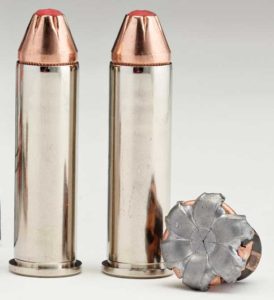
Introduced in 1935 by Smith & Wesson for its heavy-frame revolver, the .357 Magnum is a hard-hitting round.
The .357 Magnum chambering was introduced in 1935 by Smith & Wesson for its heavy-frame revolver. Ammunition was developed by Winchester, in cooperation with Smith & Wesson. Major Douglas B. Wesson (of S&W) and Philip B. Sharpe are credited with much of the final development work. The .357 Magnum is based on the .38 Special case lengthened about 1/10-inch, so it will not chamber in standard .38 Special revolvers. This was the most powerful handgun cartridge in the world until the .44 Magnum was introduced in 1955. Colt, Ruger, Smith & Wesson, and many others manufacture revolvers for this cartridge. This is probably the most popular high-velocity handgun cartridge in the United States for police, hunting, and target work. The .357 Magnum provides nearly double the velocity and more than three times the energy of standard .38 Special loads. It is noted for its flat trajectory, deep penetration, and great knockdown power. It is considered the best all-around handgun-hunting cartridge for small and medium game and, under proper conditions, for deer at short range. Nearly every major commercial ammunition manufacturer offers .357 Magnum ammunition.
There has been plenty of green in Fairfield, Maine this spring, but not just from the new foliage. Instead, the town has enjoyed the green of cold, hard cash from a recent sale by one of its auction houses. James D. Julia reported grossing approximately $15 million during its March 14-15 firearms auction. And it wasn’t just the company’s ample inventory that raked in the impressive hull. The auction house offered up some highly sought-after firearms with more than 300 lots realizing $10,000 or more and 20 lots bringing in $100,000 or more. But there was plenty to get firearms collectors to break out their wallets at the gun auction, including an impressive selection of Colts and Winchesters from some renowned collections. Here is a brief look at some of the more desirable sales made at the two-day sale, including the final bid for each shotgun, rifle and pistol.
Turnbull Manufacturing is releasing four exquisite Winchester 1886 rifles with incredible engraving.
What happened when one of America’s greatest gun designers teamed up with one of the country’s most historic manufacturers? The answer is simple — legends were born.
It’s hard to deny the late 19th Century partnership between John M. Browning and Winchester Repeating Arms was a golden age. The designer’s genius and the company’s manufacturing prowess delivered what are still considered some of the world’s most desirable firearms. And even the designs themselves have withstood the test of time with contemporary gun makers still dipping Browning’s well.
The New York-based custom gun maker has produced some striking specimens from the Browning-Winchester partnership over the years. But recently, the company’s master craftsmen might have outdone themselves.
Turnbull is releasing a set of four rifles based off the Winchester Model 1886 this year. And while each comes with a hefty price tag ($9,450 to $12,975), it doesn’t take much investigation to see why they demand such a premium. These rifles are truly functional works of art.
“These guns represent what happens when our engravers and designers are allowed to operate as artists on a steel canvas,” said Doug Turnbull, CEO of Turnbull Manufacturing. “Just like other artists, we will be hard pressed to let these leave, but proud to put them in the hands of their new owners. It is our hope that these become the guns that are passed down through generations in families.”
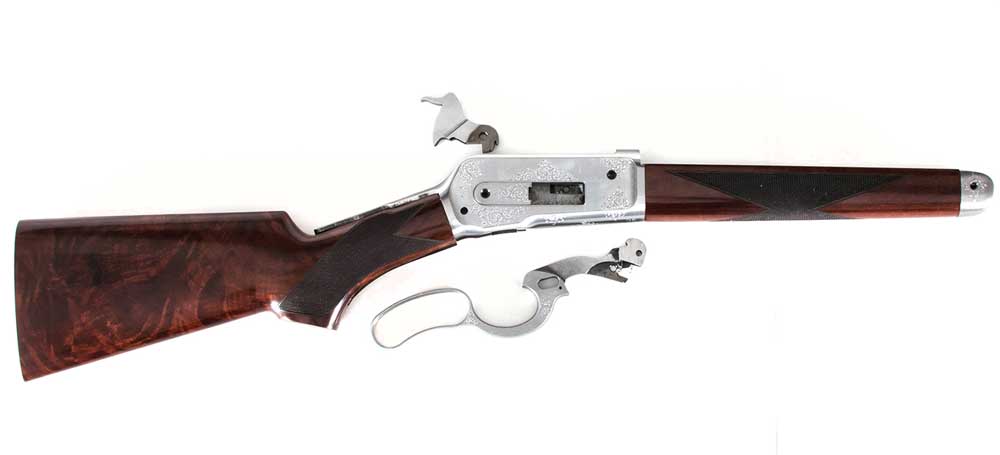
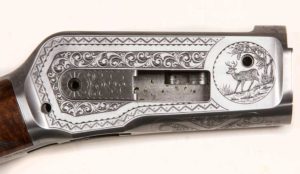
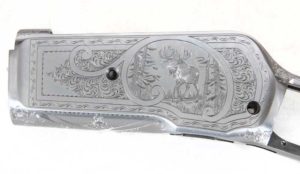
All four of the rifles — Turnbull #6, #9, #10 and Engaved 1886 —feature American black walnut stocks, 26-inch full octagon barrels and shotgun butt pads. And they each feature unique scroll patterns and game scenes from the Winchester Highly Finished Arms Catalog.
Turnbull #6 1886.
The #6 (.45-70 Govt.) has a standing buck on the left and bull moose on the right. The #9 (.45-70 Govt.) features a standing buck on the right and a running buck on the left. The #10 (.475 Turnbull) has a single scene on its left, a centerpiece of a bull elk bugling. And the Engraved 1886 (.475 Turnbull) features ornate scrollwork over the majority of the receiver. The company gives the option of charcoal blue or Turnbull’s signature case color as a finish to the receiver.
There is also a bit of a difference in stocks between the rifles. The #6 and #9 both have straight stock, while the #10 and Engraved 1886 each have pistol grips.
Certainly, there are only a select few who will take a crack at these Turnbull 1886 rifles. But from all appearances, whoever ends up with them will have some truly heirloom-quality firearms.
DoubleStar’s newest line of 1911s sounds wicked smart. But a shooter doesn’t need to be a genius to see what the Kentucky gun maker is aiming at with its PhD 1911.
In short, the pistol is tailored for concealed carry holsters and nightstands as a full-sized defensive option. In turn, DoubleStar’s PhD isn’t a doctor of philosophy, but meant for “Personal Home Defense”.
The company’s new defensive .45 ACP has a solid roster of features.
The 33-ounce gun has aggressive rear cocking serrations, making the slide easier to manipulate. It is outfitted with Express sights from XS, featuring a tritium front sight; this should aid in quick target acquisition, especially in low-light situations.
A nice touch that should aid in acquiring and keeping a solid sight picture is DoubleStar flat-topping the pistol and serrating the top strap. This little finishing touch goes a long way in reducing glare.
The PhD 1911 also features a number of ergonomic considerations that should make the pistol more manageable and comfortable to shoot. It has a rounded grip, giving shooters a more solid purchase on the gun. It is outfitted with a Wilson Combat high-ride beavertail grip safety, meaning the handgun’s bore axis should be more in line with a shooter’s arm — thus helping mitigate its recoil.
Surprisingly, one feature absent from the first in the new line is any sort of accessories rail. This has become a pretty standard feature in most firearms designed for defensive purposes.
Presently, the MSRP on the DoubleStar PhD 1911 is $1,364.06.
Ensure a well-rounded understanding of your right to self-defense with the Understanding Self-Defense Laws Collection. This authoritative five-reference collection draws upon the experience and knowledge of some of the country’s top self-defense and legal experts. Learn about your right to self-defense and the use of deadly force from the best. Don’t leave anything to chance. Get Your Collection Now
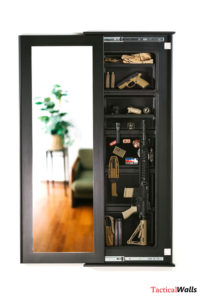
Tactical Walls has expanded its home firearms storage product line to include RFID locking models, making access quicker and easier than ever.
The new RFID models permit even greater security as well as quicker and easier accessibility in home defense scenarios.
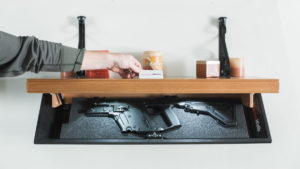
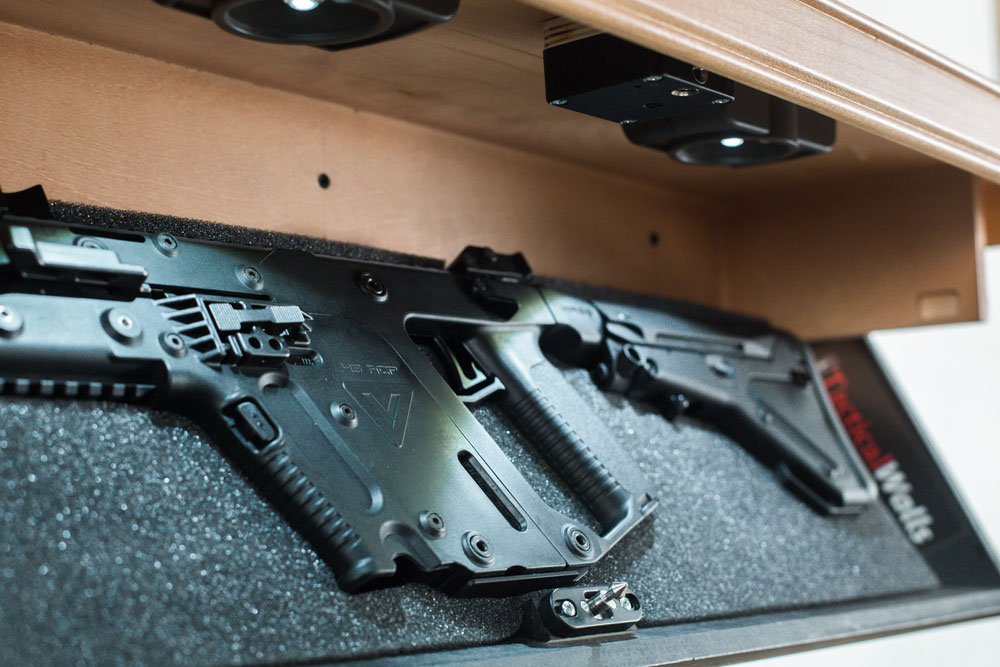
Well known for its “hidden in plain sight” philosophy of home firearms storage, Tactical Walls has become a serious innovator in the category of secure storage with products that look like normal pieces of home decor but actually securely house firearms and accessories. Now, the company has added RFID (Radio Frequency Identification) locking models to its lineup.
The RFID models will afford users even greater security as well as quicker and easier accessibility, a crucial element in any good home defense strategy. The RFID locking mechanism will be available as an optional alternative to Tactical Walls’ existing magnetic locking system on the following models:
1450M Bundle – MSRP’s range $630-760
1420M Bundle – MSRP’s range $500-660
825 Pistol Length Shelf (PLS) – MSRP’s range $435-495
812 Pistol Length Shelf (PLS) – MSRP’s range $219-349
A simple swipe of the preset RFID card opens the unit for easy access. A “Tattle Tale” feature alerts the user when the device is left open.Tactical Walls products really are “hidden in plain sight,” disguised as everyday home decor products like mirrors, shelves and much more.
Each unit will include two standard key cards and one programming card for matching the key to the proper unit; however, more RFID cards can also be ordered. One key card can be programmed to access multiple units for firearms staged throughout the home, and multiple cards can also be programmed to open a single device to provide access for additional family members. Once programmed, swiping the RFID card in front of the locking mechanism is all that’s needed to access firearms.
RFID models also come standard with a programmable “Tattle Tale” function that—when turned on—begins beeping if the device has been left open for a certain period of time. This feature, which can be disabled if preferred, alerts users and helps prevent unwanted access to firearms. In the event that the RFID locking mechanism’s battery does run out, the unit defaults to being unlocked but closed.
Tim Matter, founder of Tactical Walls, said, “The addition of the RFID locks to our line-up is a key step in the direction this company is going. We aim to be the leader in home firearms storage by offering a wide variety of options for firearms owners to safely store their guns out of sight. The new RFID models, combined with a growing selection of finish and trim options, give our customers a greater level of customization to how they want their Tactical Walls concealment system to look and function.”
Pricing on the new RFID models ranges from $219 to $760 depending on model and choice of trim and finish options.
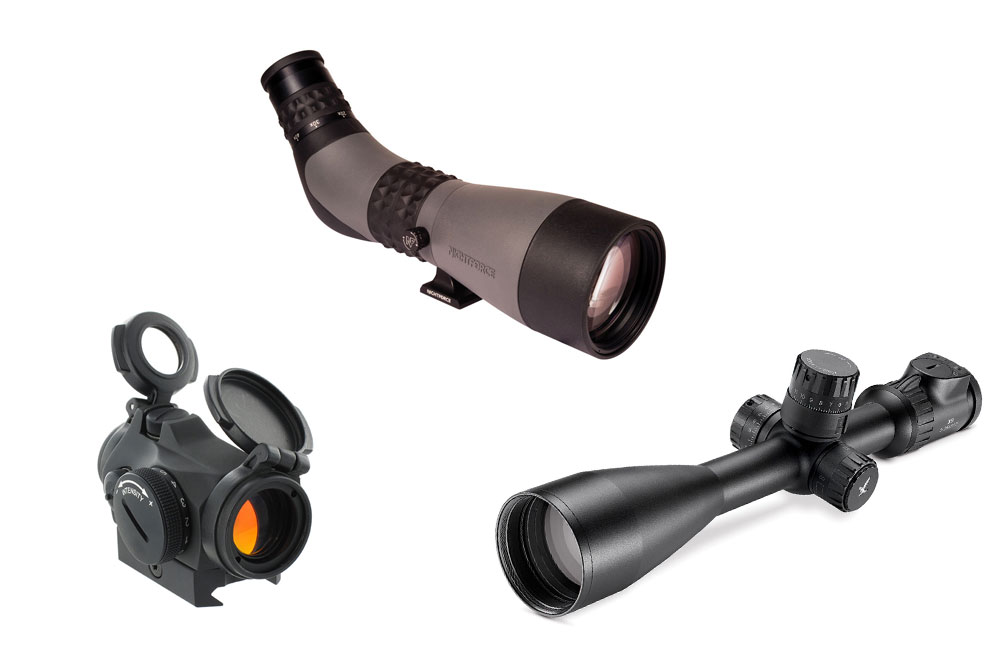
Manufacturers have produced a number of optics over the course of the past year. Here’s a look at our picks for the best optics of 2015.
What’s the difference between a good scope and a great one? That’s a question you don’t want to ask when the buck of a lifetime is staring at you from across the canyon. Quality glass—spotting scopes, binoculars, riflescopes and rangefinders—can mean the difference between a successful hunt or a bust, a win or loss at the range.
The good news? We made your job a little easier by taking a close look at the countless optics available today and whittling the choices to the best of the best. Yeah, they will probably set you back a pretty penny, but you know what they say: You get what you pay for. Besides, what quality piece of equipment isn’t expensive these days?
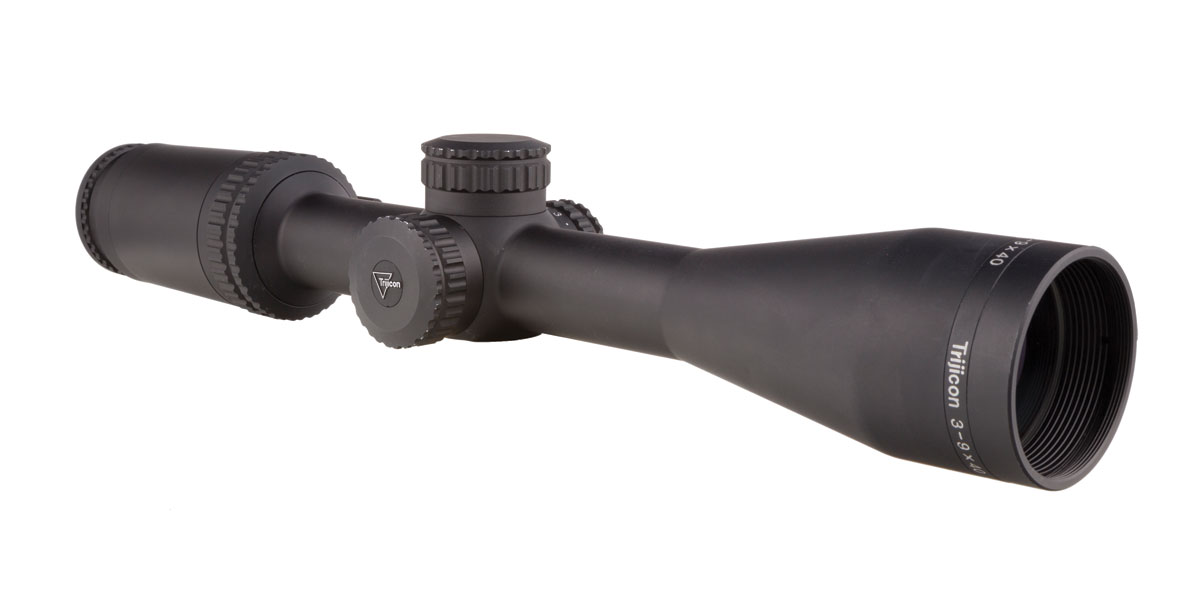
Trijicon AccuPower
Trijicon’s newest offering is a deviation from their battery-free, tritium-lighted reticle, but it’s a winner by its own right. The AccuPower’s illuminated reticle is powered by a lithium battery, which lasts at least 31 hours at the highest setting and includes 11 settings with an “off” feature between each setting. Lining up the bull’s eye in the lowest light is as easy as looking through the scope. The full multi-layer coated glass allows crisp edge-to-edge views and super-high light transmission. The second focal plane reticle gives long-range shooters a clear view of the smallest targets. Each scope is available in at least three reticle choices, and you can choose from 1-4×24, 2.5-10×56, 3-9×40 and 4-16×50. ($699; Trijicon.com)
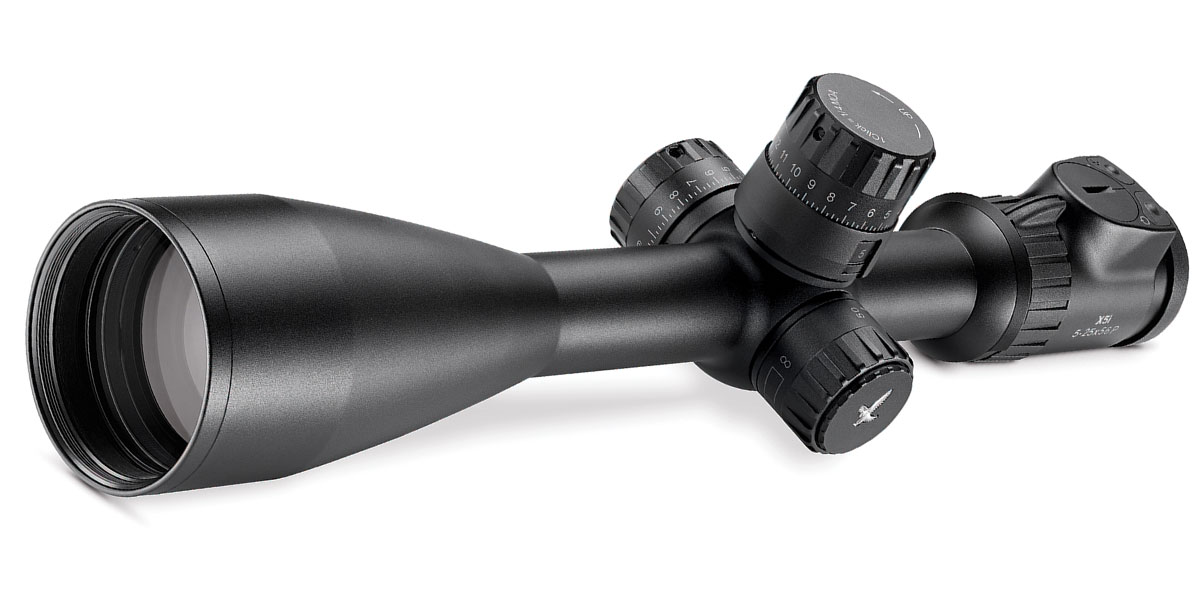
Swarovski X5
Swarovksi’s X5 long-range scope is the first true long-range scope from the Austrian company. It’s available in three versions: 3.5-18×50, 5-25×56 and 5-25×56, which offers 1/8 or 1/4 MOA impact point adjustment. All three are built with Swarovski’s high standards and highest quality materials. Like other Swarovski products, the X5 isn’t cheap, but it will be the last long-range scope you’ll ever buy. The wide field of view allows for rapid target acquisition, the fully multi-coated lenses offer maximum light transmission and clarity, and the high-contrast reticle gives you the ability to see the smallest details. All three models include a sub-zero feature that allows you to go below the sight-in distance for close targets, and all three offer three different reticles. The 5-25 has a max elevation MOA of 82 and a max windage MOA of 50. ($3,499; SwarovskiOptik.com)
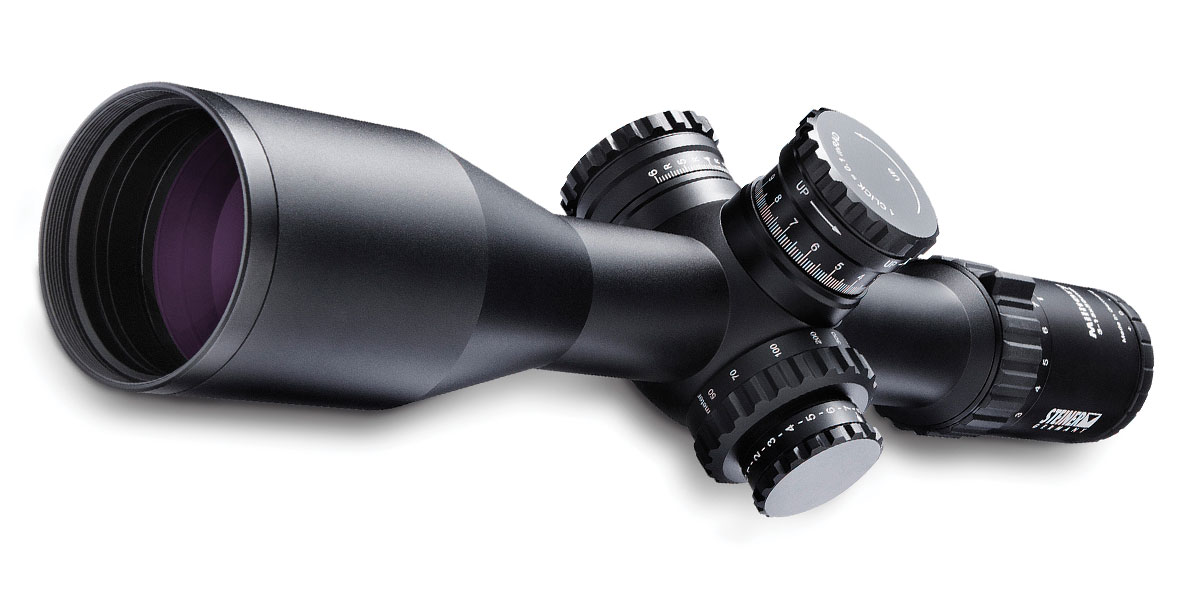
Steiner M5Xi 3-15×50 Military Optic
You don’t have to join the military to get the best equipment in the world. You’ll have to pay for it yourself, of course, but when your pride, your elk tag or your standing in the shooting competition is on the line, who wouldn’t want a scope used by our military’s top shooters? Steiner’s German-made M5Xi is perfect for competition shooters as well as hunters who stretch out their shots. An 11-stage illuminated G2B Mil-Dot or MSR reticle allows for precision shots in any light condition, and the patented DuoScale elevation knob lets you make fast adjustments in the field. The 34mm tube is waterproof and shockproof. The elevation range is 26 mils at 100 meters and the windage range is 6 mils at 100 meters. ($3,329.99; Steiner-Optics.com)
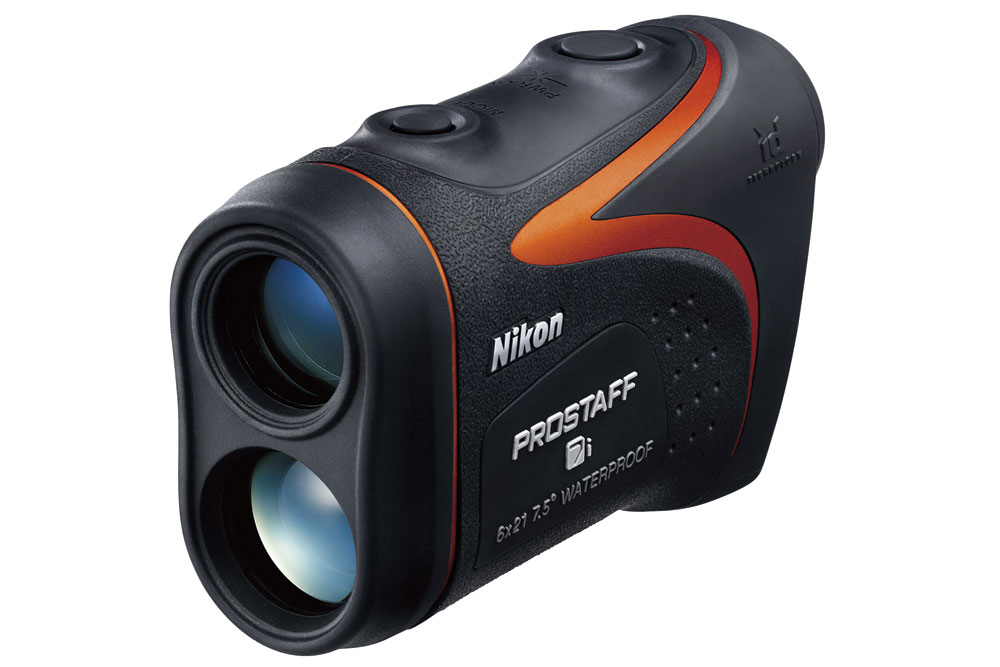
Nikon ProStaff 7i
Some of the best optics don’t require you to choose between new equipment and your kid’s college tuition. Nikon’s new Prostaff 7i rangefinder isn’t just perfect for budget-minded mothers and fathers, it’s faster, lighter, more accurate and just plain better than many of the other rangefinders available today. It takes just a half-second to accurately measure out to 1,300 yards. It’s small enough to carry anywhere and for any type of hunting. It weighs just 6.2 ounces, and the viewer has 6x magnification. Measured increments are .1 yards out to 1,000 yards and 1 yard from 1,000 to 1,300 yards. It’s waterproof and includes a target priority switch, allowing you to measure overlapping subjects, and it comes with a horizontal and actual distance display mode. ($299.95; NikonSportOptics.com)
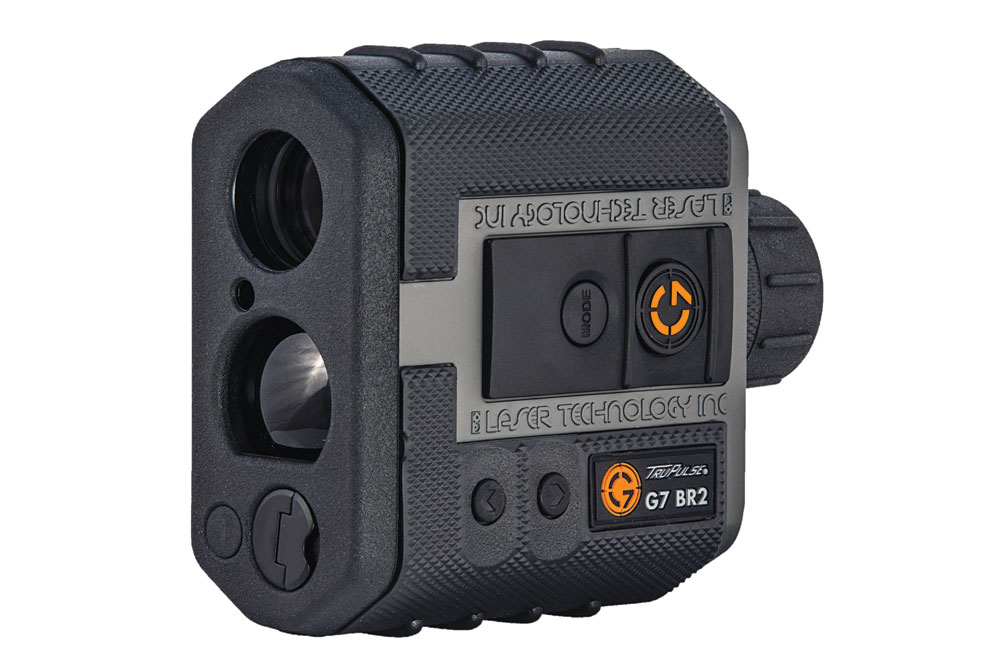
G7 BR2 Rangefinder
The G7 BR2 is packed with features that help all shooters and hunters make better shots, but hands down, it’s the best tool for long-range enthusiasts. It’s programmable for up to five cartridge combinations, and inputs include ballistic coefficient, sight height, muzzle velocity, altitude and temperature. Onboard sensors measure the incline angle, barometric pressure and altitude. Shoot-to range works with BDC and holdover reticles. With a functional range of 1,500 yards, a 7x magnification and a weight of just 14.3 ounces, you’ll carry this tool when you need to make every shot count. ($1,599; GSeven.com)
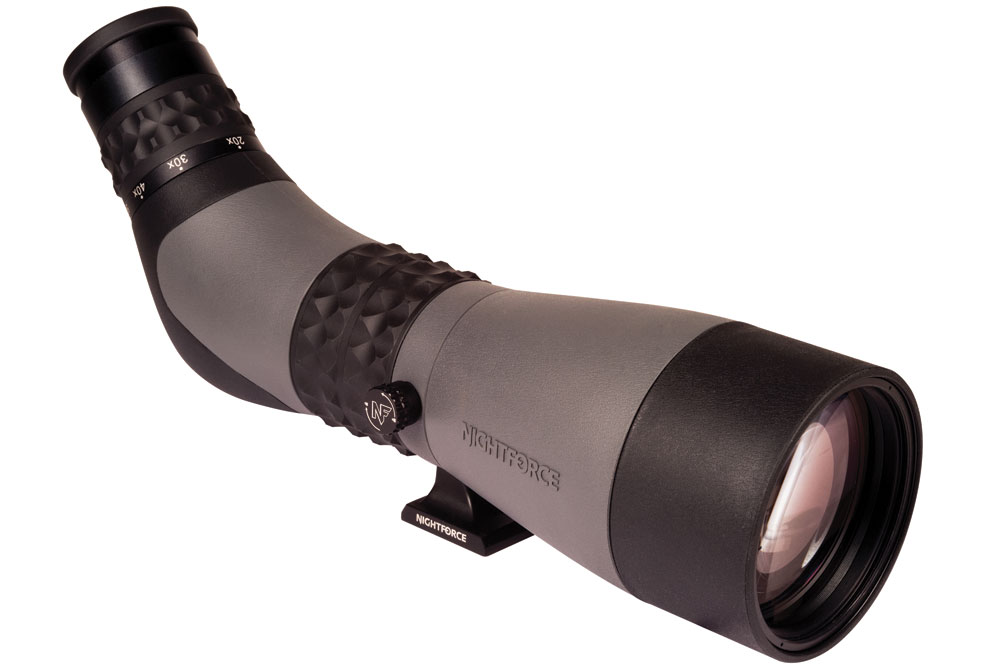
Nightforce TS80
Nightforce’s newest spotting scope, the TS-80 Hi-Def 20-60x, is a follow-up to its award-winning TS-82, the company’s first spotting scope model. The TS-80 is a winner, too. It’s not just fast and easy to use; it comes with all the features you need in a spotting scope. It’s built with fully multi-coated lenses and an internal prism design for maximum light transmission. It offers a bright, clear view at all distances. A large, knurled focus ring allows for fast target focus, and a magnesium alloy body gives you peace of mind every time you take the TS-80 out of its case. It weighs 68 ounces. ($1,595; Nightforceoptics.com)
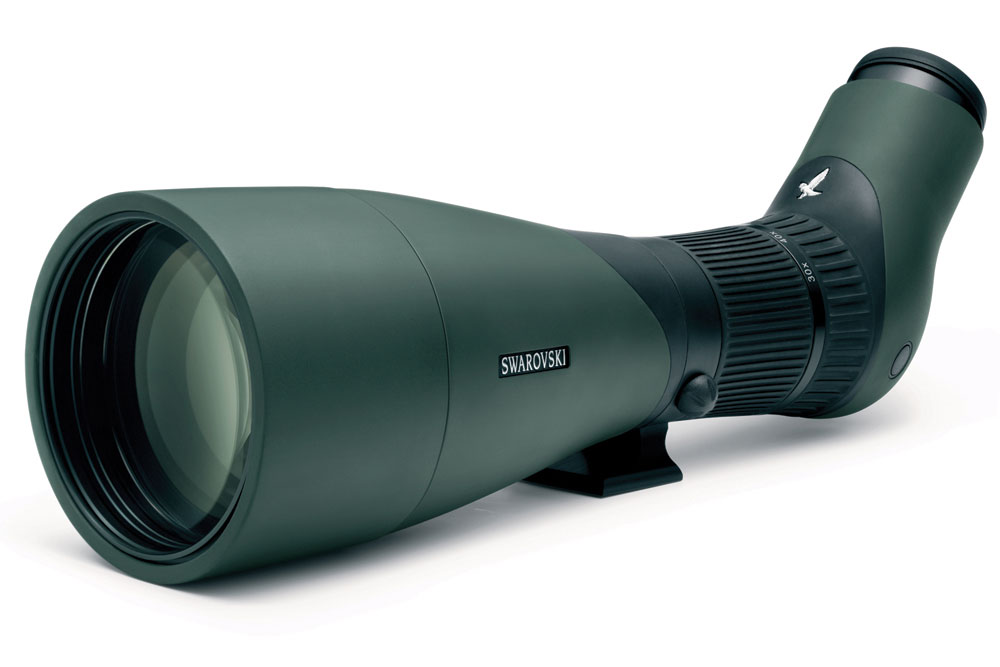
Swarovski ATX
Is it any wonder the name Swarovski shows up on “Best Of” lists everywhere? Pick up any of the company’s products, put your eyes to it and you’ll see why. Swarovski’s newest spotting scope, the ATX, is another first-class product. Built with the highest quality glass, the best materials and industry-leading standards, the ATX is right at home in the most rugged backcountry or on a perfectly manicured rifle range. The objective lens is available in either a straight or angled eyepiece to suit your style of glassing, and one-hand operation allows for easy and comfortable use. Available in 25-60×65, 30-70×95 and 25-60×85 and weighing just 55.9 ounces, you’ll see your target clearer and at longer distances than ever before. ($3,775; SwarovskiOptik.com)
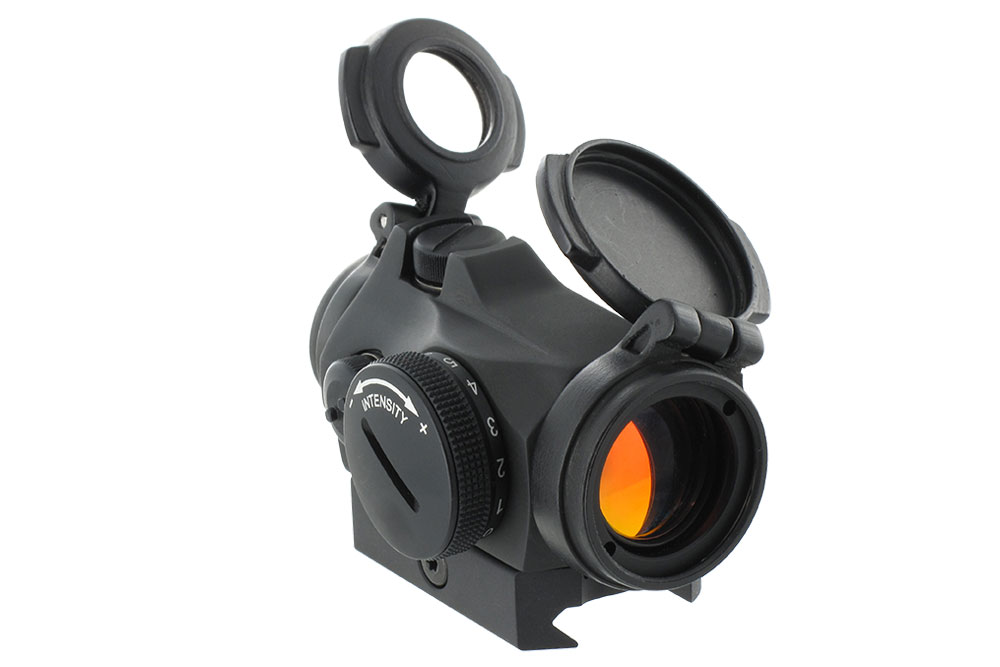
Aimpoint Micro T-2
“Micro” is certainly an appropriate name for Aimpoint’s new Micro T-2 sight. Weighing just 3.7 ounces (including the mount) and measuring just 2.7 inches long, it’s the ideal 1x, 2-MOA red dot sight for shooters of all stripes. It works on handguns, shotguns and rifles and even as a piggyback sight. An integral Picatinny-style base attaches to any rail. The T-2 has four night vision-compatible settings and eight daylight settings. If that’s not enough, the battery lasts up to 50,000 hours. The lenses allow maximum light transmission for fast and crystal-clear target acquisition. ($736; Aimpoint.com)
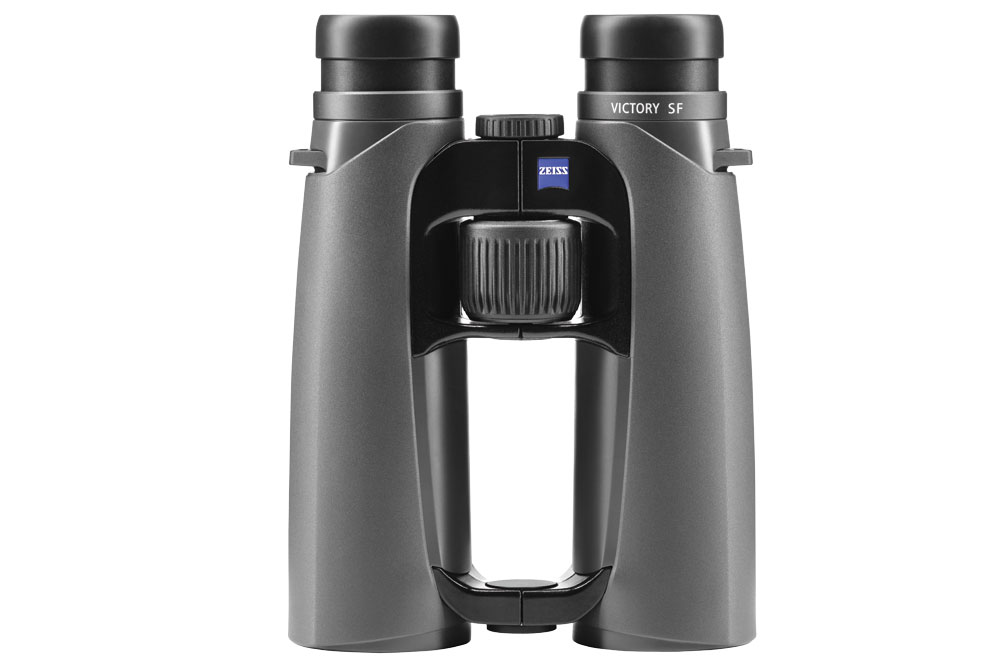
Zeiss Victory SF
Zeiss’ new Victory SF binoculars may cost more than your first car, but you’ll never have to buy another pair of binoculars again. Built with a seven-lens element eyepiece and a field flattener for sharp, bright images, the Victory SF binoculars are available in 8×42 and 10×42. They have some of the widest fields of view in the industry. Zeiss built them with a faster focusing wheel and a new design that fits in your hands better, feels better and reduces fatigue better than any pair of binoculars you’ve held before. They weigh just 27.5 ounces and are backed with a limited no-fault lifetime warranty. ($2,888.87; Zeiss.com)
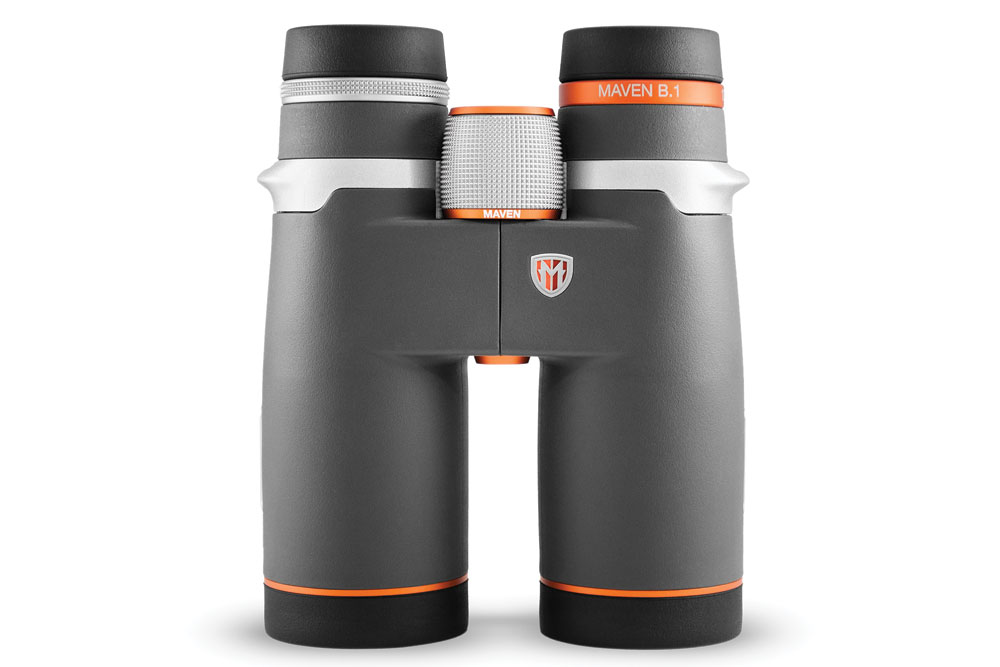
Maven B1 8×42
You may have never heard of Maven, but don’t let that fool you. The small Wyoming-based company only makes three binocular models, which means they can focus on quality and customer service. Their B1 weighs less than 30 ounces and is available in 8×42 and 10×42 models. The view is bright, crisp and crystal-clear from edge-to-edge. The glass allows nearly 92-percent light transmission. If quality craftsmanship isn’t enough, Maven allows you to build a custom pair with your favorite color combinations. Wrap it in your choice of two solid or five camo patterns and customize everything from the focus knob to the lens rings in eight color choices. What better way to personalize the binoculars you’ll carry around your neck every time you shoot or hunt? ($900; MavenBuilt.com)
Vortex Razor HD
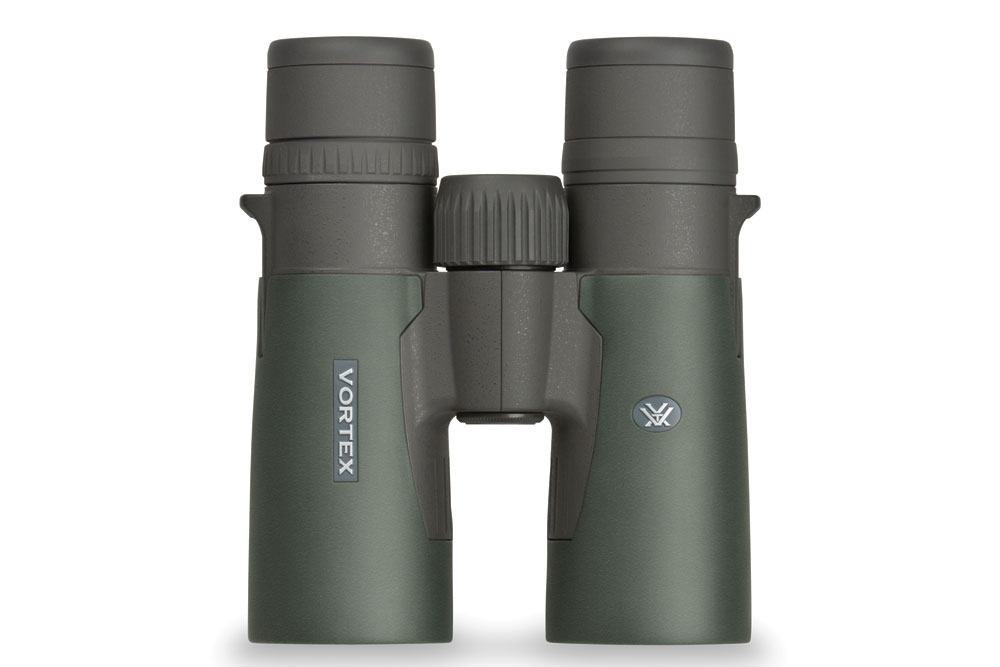
Vortex may not carry the name recognition of the better-known European companies, but their products are everything you could want in optics. The Razor HD binoculars are not only packed with features, they are light, sturdy and just plain easy to carry and use. Fully multi-coated glass allows maximum light transmission, and HD lens elements offer a clear, true sight picture. These roof prism binoculars weigh just 24.8 ounces and are available in 8×42, 10×42, 10×50 and 12×50. They are waterproof and fog proof and are coated with a durable rubber armor to protect them from all the abuse you can dish out. ($1,499; VortexOptics.com)
Swarovski 8×42 EL Range
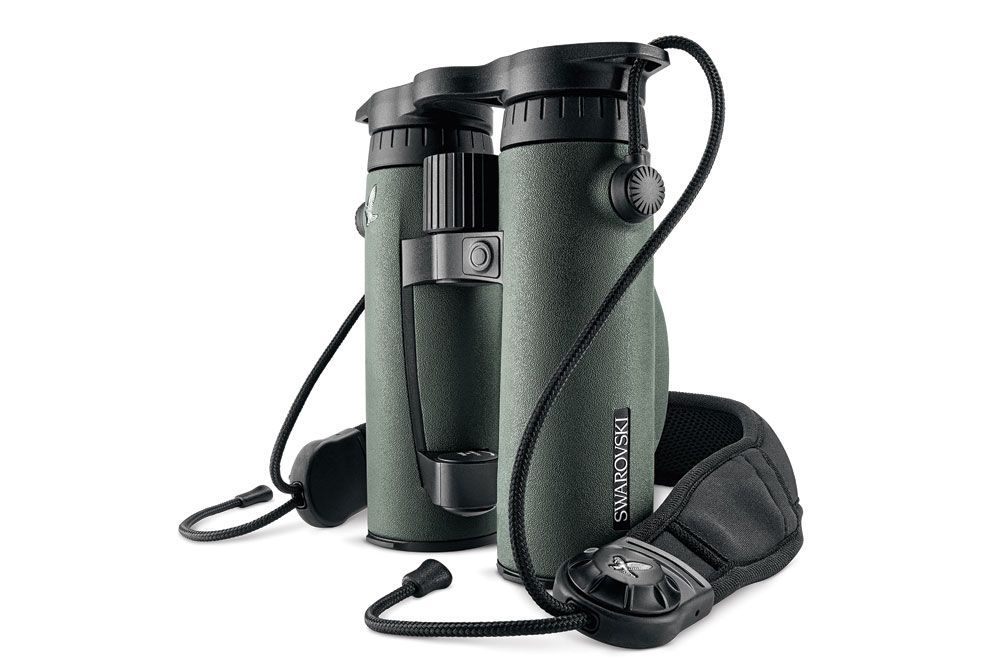
Tired of carrying a rangefinder and binoculars? Not only did Swarovski solve that dilemma, they solved it with the best available technology in a single product. Their new EL Range range-finding binoculars offer immediate ranging from 33 to 1,500 yards and include a scan mode to measure moving targets. The angle-adjustment display helps take the guesswork out of distances at various angles. Just point, click and shoot. They also include an auto-brightness option. Available in 8×42 and 10×42, the EL Range binoculars have a 411-foot field of view at 1,000 yards and offer 91 percent light transmission, thanks to Swarovski’s highest quality glass. They weigh just 31.6 ounces. ($3,577; SwarovskiOptik.com)
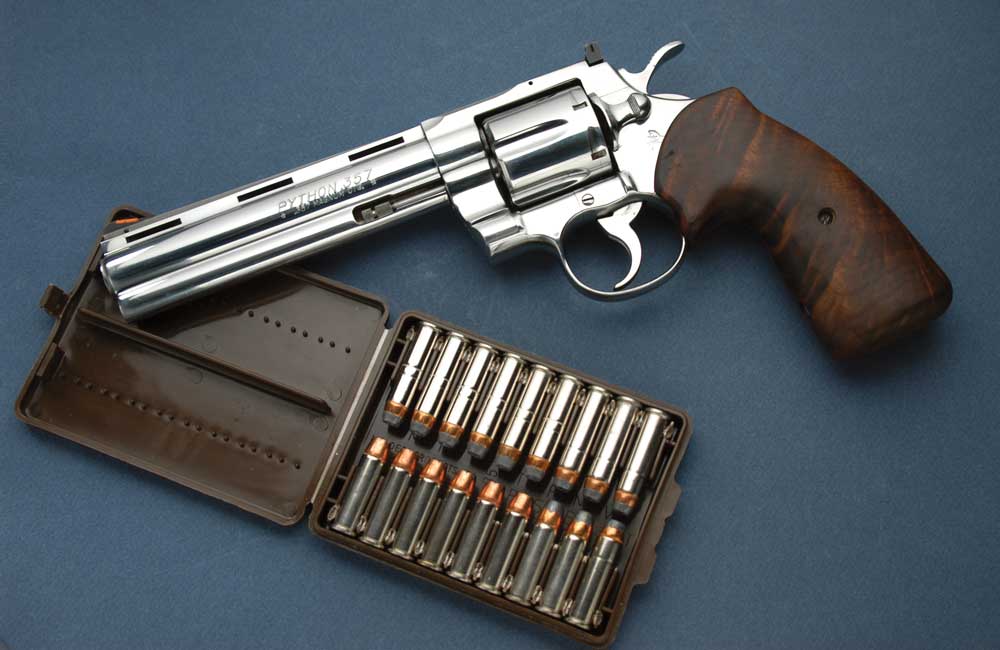
In 1955, Colt’s Firearms introduced what many believe to be the most elegant .357 Magnum revolver ever created—the Python. This example is an Ultimate Python in stainless steel and has the best features found with any Python.
Forty years ago, one handgun caliber dominated all others, regardless the intended application. It didn’t matter whether it was used by law enforcement, for self-defense, the relatively new sport of handgun hunting for whitetail deer, or for just plain fun and plinking—the most popular handgun at the time was a revolver chambered for the .357 Magnum.
The adoption by the United States military of the 9mm Beretta, in 1985, changed things dramatically for both revolver shooters and devotees of the beloved 1911 .45, as both law enforcement agencies and civilian consumers stampeded to a variety of semi-auto pistols in 9x19mm caliber. These guns held far more rounds in reserve than did the six-shot .357 Magnum or the 7+1 1911 .45, but, for a major part of the 20th century, the .357 Magnum held sway. Many experts feel that, even today, if the firearms world had not witnessed the tidal surge move to semi-autos during the 1980s, the .357 Magnum would still be the most popular handgun caliber out there.
Origins
The .357 Magnum cartridge was introduced, in 1935, by Smith & Wesson, but Winchester Ammunition worked directly with S&W to bring it to market. Major Douglas B. Wesson and Phil Sharp were responsible for much of the final developmental work, although it is noted in several historical records that both authorities consulted with Elmer Keith because of his experience in developing heavy bullet loads with higher than normal muzzle velocities for the .38-44 cartridge. The .38-44 had been an attempt to develop a more powerful cartridge than the standard police .38 Special. Smith & Wesson, prior to the introduction of the .357 Magnum, even made a heavy-frame revolver that was nominally a .38 Special revolver, but it was referred to as the “.38-44.”
At the time of its introduction, the .357 Magnum was, in fact, the most powerful handgun round in production. The original load chronographed 1,510 fps with a 158-grain bullet out of an 8¾-inch barrel. It certainly wasn’t the first attempt to create a powerful handgun cartridge. Other startups had come before it. The most notable was that by an Englishman, H. W. Gabbet-Fairfax, who’d developed, around 1900, a self-loading pistol employing a cartridge called the 9mm Mars. It had a reported muzzle velocity of 1,607 fps with a bullet weight of 156 grains. But the British military rejected it after trials, and neither the gun nor that cartridge ever achieved commercial success.
Smith & Wesson chambered its heaviest revolver frame (later known as the N-frame) for it. The revolver was a special order item introduced during the height of the Great Depression. Each revolver was registered with the factory and came with a certificate designating this registration. The Smith & Wesson “Registered Magnum” and its cartridge soon acquired a mystique that created a following among legendary lawmen (J. Edgar Hoover received Registration No. 1), military generals (one of General George S. Patton, Jr.’s famous ivory revolvers was Registered Magnum No. 506), and high-profile Hollywood movie actors (a Registered Magnum supposedly belonging to Clark Gable sold at a high-end gun auction in 2012).
Originally, Smith & Wesson felt the round should be fired through the 8¾-inch barrel, but because the early .357 Magnum Registered revolvers were all custom orders, they had been made with a wide variety of individual characteristics. These revolvers have been found with 23 different barrel lengths, as well as a number of non-cataloged sight and grip combinations.
.357 Advantages
On the left, a .357 Magnum handload employing the Keith 168-grain cast SWC. On the right, the round many believe is its equal, the factory .357 SIG round with a 125-grain bullet. The author feels the .357 SIG round is a good one with lightweight bullets, but lacks the case capacity to work well with heavier bullets.
The designation “.357” refers to the bore diameter, which is also the bore diameter of the less powerful and older .38 Special cartridge. The .38 Special was introduced in 1902, also by Smith & Wesson, to provide a .38-caliber handgun cartridge that was more powerful and effective than any of the previously seen .38-caliber rounds such as the .38 S&W, the .38 Short Colt, and the .38 Long Colt. The latter had served briefly as the standard service handgun round of the military services and was blamed, in large part, for its many failures to stop antagonists during the Spanish-American War and the insurrection in the Philippines.
The .38 Special was initially loaded with a 158-grain round-nose lead bullet and it had a muzzle velocity of 855 fps out of a standard service-length revolver barrel. While proving extremely popular with American law enforcement, the .38 Special also experienced criticisms for failures to stop armed bad guys, particularly during the more violent episodes of the 1930s. These criticisms are what lead to, first, the development of .38-44 rounds (.38-caliber loads meant for use in a .44-sized revolver frame), and then, ultimately, to the .357 Magnum.
Still, by the late 1940s and early 1950s, the .38 Special was the dominant handgun service round in American law enforcement. This popularity was due to its inherent accuracy and relatively easy recoil ,and, with its straight-walled case, it was an easy round for the recreational shooter to reload.
When the designers created the .357 Magnum, they took the existing .38 Special case and simply lengthened it by 1/10-inch, mostly to prevent chambering of this new, more powerful, far higher chamber pressured round from being loaded in the older, weaker guns of .38 Special design. The bullet diameter, naturally, is the same for both the .38 Special and the .357 Magnum. For training or practice purposes, this meant the .38 Special round could be safely loaded and fired in any cylinder chambered for the .357 Magnum; that was and is probably the greatest asset of any .357 Magnum handgun, its versatility across both rounds.
This article is from the book, Best of Gun Digest: Handguns & Handgun Shooting.
For many, the epicenter of precision ammunition is right around New York’s Finger Lakes. The pastoral setting of dairy farms and woodlands plays home to Redding Reloading, which for around 75 years has become one of the most trusted names in reloading.
The company has become renown for manufacturing instruments that have helped shooters downright murder the bull’s eye. And Redding isn’t sitting on its laurels in its pursuit to help produce precision ammo. The firm has introduced a passel of new tools in 2016 that should, by all rights, have the X ring shaking in its boots.
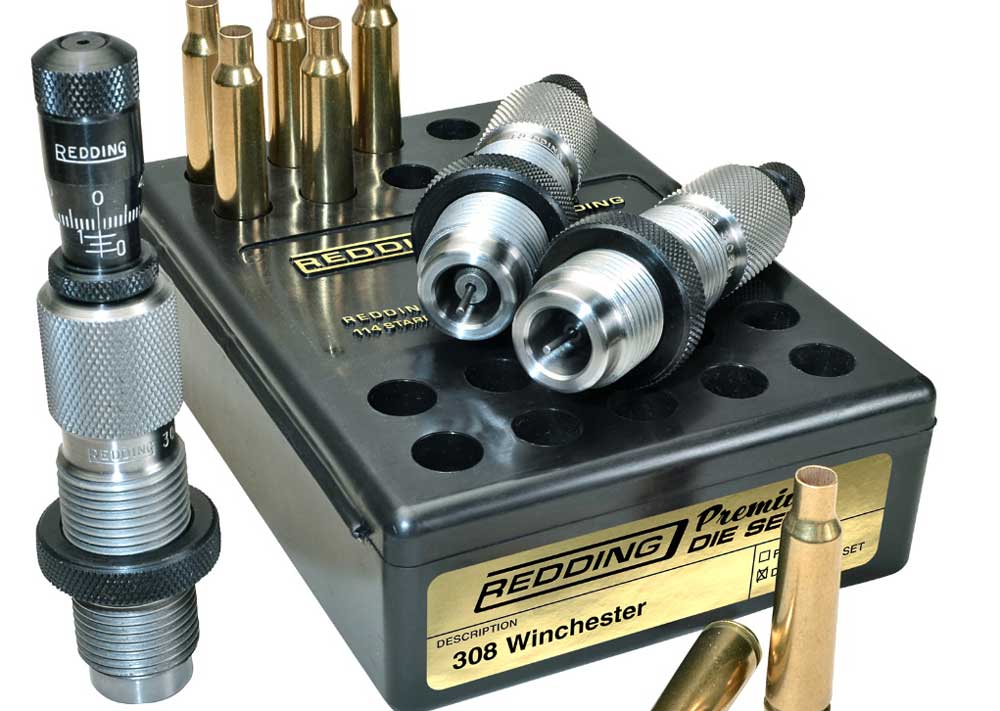
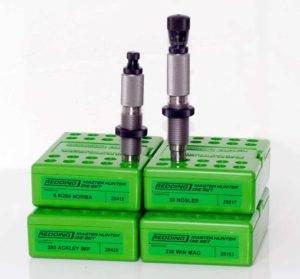
Four New Master Hunter Series Die Set An outgrowth of Redding’s National Match Series, the Master Hunter Series brings competitive shooting precision to the game field. And the relatively new line of dies has continued to grow with the company offering sets for four new rounds this year — 6.5mm/.284 Winchester, .280 Ackley Improved, 30 Nosler and .338 Winchester Magnum. The new additions to the two-die sets (full-length sizing die and seating die) open up a number of options for hunters pursuing medium to large game. And they offer unparalleled control over the reloading process. To that end, the seating die goes a long way in assuring a precisely loaded round as it is topped with a micrometer allowing for bullet seating in .001” increments. The MSRP on Master Hunter Die Sets is $211.25.
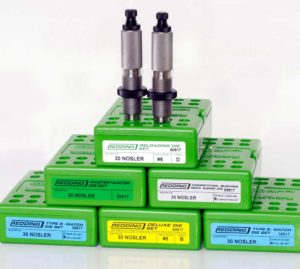
Multiple Die Sets for 30 Nosler The Master Hunter Series Dies isn’t the only Redding line to add the new Nolster proprietary round to its rosters. The company has introduced 30 new die sets for the freshly released 30 Nosler, encompassing all levels of reloading needs. These sets include: Standard Full-Length, Standard Neck-Sizing, Deluxe, Type-S, Type-S Match and Competition, in addition to Master Hunter. A sidenote: With the addition of the 30 Nosler to its catalog, Redding now offers dies for all of Nosler’s proprietary cartridges. The MSRP on the die sets run from $104.50 to $378.95.
Premium Die Set in 26 Nosler and .280 Ackley Improved Redding’s Premium Die Sets comes with all the bells and whistles that help ensure the production of uniform and precise ammo. Among the features is a carbide size button in the full-length sizing die and a micrometer on the seating die. The micrometer allows for bullet seating in .001” increments. Only a select few cartridges make the cut for the company’s Premium line, but it’s grown a tad bigger this year with the addition of the 26 Nosler and .280 Ackley Improved. The Premium series is available in two (full-length sizing die and seating die) and three (full-length sizing die, neck-sizing die and seating die) sets. The MSRP for the two-die set is $147.60, and on the three-die set it is $190.70.
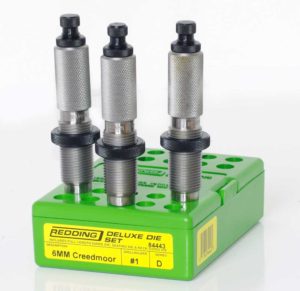
6mm Creedmoor Die Set The 6mm Creedmoor has been gaining more and more industry acceptance; factory brass and rifles are now available for the round. Redding is the latest to help tame this wildcat, introducing complete die sets for the long-range wonder. The company is offering both its Standard two die (full-length sizing die and seating die) and Deluxe three die sets (full-length sizing die, neck-sizing die and seating die) for the round. While the company has moved to standardize the 6mm Creedmoor in its offerings, Redding is still in the custom-die business. The manufacturer will produce dies for virtually any caliber, if provided a chamber reamer drawing or 5 fired cases from the firearm in question. The Standard Die Set for the 6mm Creedmoor has an MSRP of $153.70 and the Deluxe $242.85.
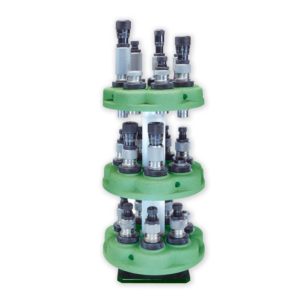
T-7 Turret Head Stacker Calibrating dies can be one of the most time-consuming, not to mention nerve-racking facets to reloading. Redding, for all intents and purposes, has all but dashed this exercise in patience with its new T-7 Turret Head Stacker. The system allows handloaders to store turret heads (up to three) from the company’s T-7 press, with fully adjusted die in place. In turn, set up for a reloading session is as easy as securing a new head onto the press. As an added benefit for such a tool-heavy pursuit as reloading, the stacker also aids in taming potential clutter on the reloading bench. The storage system’s present MSRP is $63.00.
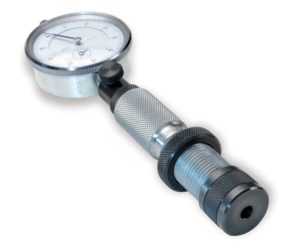
6.5 Creedmoor Instant Indicator Comparator Tool The 6.5 Creedmoor has proven its chops as an accurate and potent long-range round. And fans of the cartridge can expect to turn out even more uniform and exact ammo with Redding now offering its Instant Indicator Comparator Tool for the round. The handy instrument provides fast and precise data on shoulder position, headspace and bullet seating depth. Accurate to one one-thousandth of an inch, the comparator helps reloaders sort their cases and bullets for uniformity, as well as gives them the information they need to dial in their seating die exactly. Perhaps best of all, Redding has untethered handloaders from their press to get this data, now including its Range Adaptor with the comparator. The complete Instant Indicator Comparator Tool presently has an MSRP of $202.75. The Range Adapter can be purchased separately for $14.50.
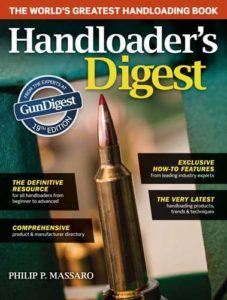
The publisher of the “World’s Greatest Gun Book” is proud to announce the return of the “World’s Greatest Reloading Book.” Handloader’s Digest is back and in its 19th edition is better than ever with more enlightening features, industry resources and eye-catching photos. Whether it’s information on this year’s new ammunition reloading equipment or an in-depth article on obscure wildcat cartridges, you’re certain to find what you’re looking for in this authoritative annual. Get Your Copy Now
STI’s genesis was in competition shooting. The Texas gun maker hasn’t strayed far from these roots, but it has occasionally branched out some over the years.
STI’s catalog is still brimming with a dizzying array of souped-up competition 1911s, ready to put rounds on targets and shave seconds off the clock. But, the company has also focused its manufacturing prowess on producing variations of the classic pistol design tailor-made for service and concealed carry holsters.
Each of STI’s focuses — competition and self-defense — is well represented in the company’s new offerings for 2016. And as always, no matter their intended purpose, the company’s new 1911s are some pretty dazzling examples of the timeless handgun.
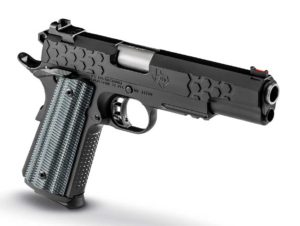
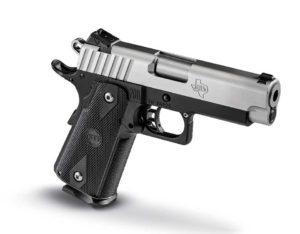
HEX Tactical Pistols STI touts its new line as being a jack-of-all-trades, perfect for home defense, competition and plinking. But the HEX Tactical line definitely has a tactical flare; one need not look further than the slide to see why. The HEX line features aggressive slide sculpting, with hexagonal cocking serrations both fore and aft. The feature is meant to offer a more positive grip, making the slide easier to manipulate, even with gloves. STI has further enhanced the effectiveness of the serrations by beveling the top of the slide, thus allowing a firmer grip. The pistol also features VZ grips and a Picatinny rail beneath the barrel, for the quick addition of an accessory. The new line is available in STI’s traditional single stack 1911 model and its double stack 2011 model. In both cases, 4- and 5-inch barrel models are available. All models feature rear ledge sights, fiber optic front, black Cerakote finish and a 4- to 5-pound trigger pull. The HEX line is available in 9mm and .45ACP. The MSRP on the HEX 2011 models is $2,599, and the 1911 is $2,099.
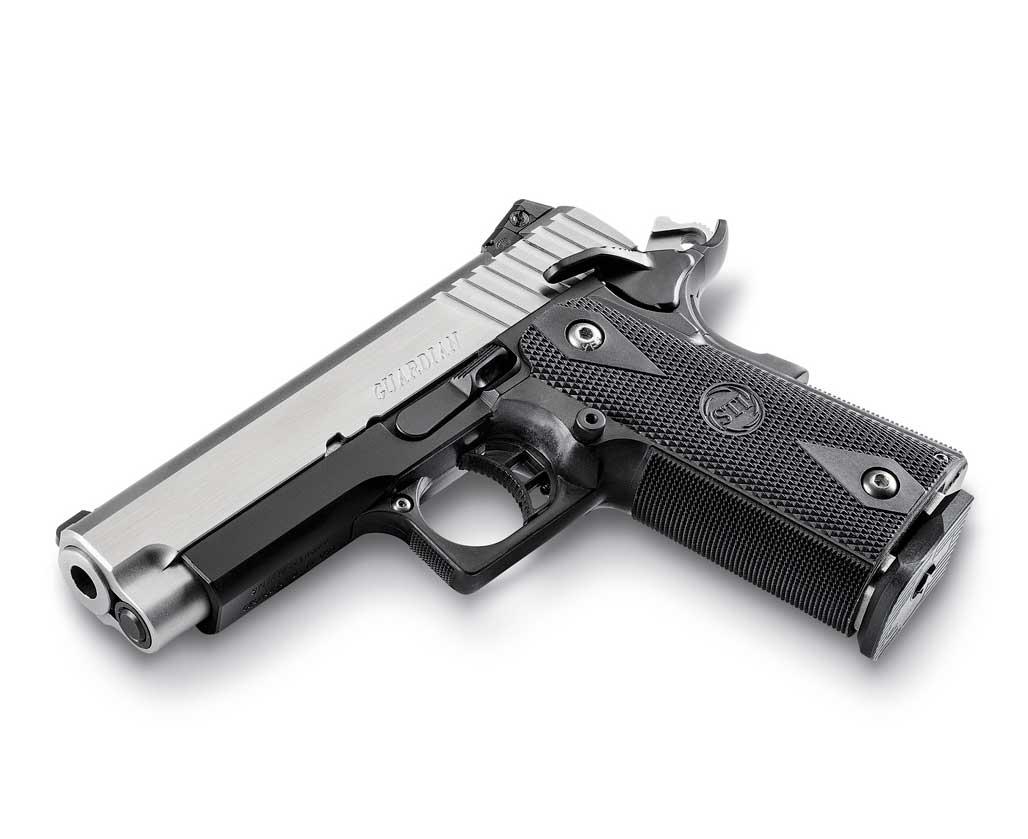
Guardian 2011 Pistol Some shy away from traditional 1911s as a concealed-carry option due to capacity constraints. STI should dash those concerns with the expansion of its popular, compact Guardian line. The gun maker has introduced a 2011 model of the pistol, giving shooters a double-stack choice of the 3.9-inch barreled handgun. The new 9mm doubles the original Guardian’s capacity with the 2011 able to hold 15+1 rounds. STI has kept the pistol a manageable carry option, lightening the gun’s weight (25 ounces unloaded) through the use of an aluminum frame. The Guardian 2011 features a two-dot rear sight and fiber-optic front, which should provide a clear sight picture that can be quickly acquired. STI has equipped it with its shorter VIP grip, which should make the Guardian more concealable, even under light cover. It also has a striking appearance. The gun is two-tone, with a stainless-steel slide and a black Cerakote frame and grips. Presently, the MSRP on the Guardian is $1,899.
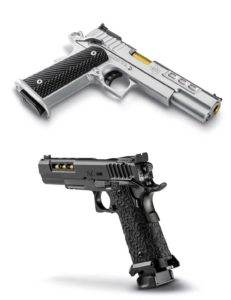
Two New DVC Competition Models Just like a Formula 1 race car, one glimpse at the STI’s DVC pistols and it’s pretty obvious what they were designed for: winning. The company has expanded its hot-rod line with two new purpose-build models: the DVC classic and DVC 3-Gun. As its name implies, the Classic is more of a traditional 1911, tailored for single-stack division competition. The pistol should be a manageable shooter, boasting a 5.4-inch barrel. The Classic also features fully adjustable rear sights and a fiber-optic front. It is available in 9mm, .40S&W and .45ACP and has a MSRP of $2,799. Similar to the other new DVC model, the 3-Gun doesn’t hide its intentions. The pistol has been outfitted with a 5.4-inch barrel, which should make it more controllable. But STI has attempted to mitigate the 3-Gun’s overall heft by building it on an aluminum frame and by porting the slide. The pistol features a tactical magwell, flared at the mouth to facilitate faster reloads. The pistol has a hand-stippled grip by Extreme Shooters of Arizona, which wraps around the entirety of the grip. And it has a fully adjustable rear sight and fiber optic front. The new 9mm has a MSRP of $2,999.
Mexico’s largest ammunition manufacturer, Aguila Ammunition, offers a wide selection of loads and some of the most innovative products available today.
Just south of the urban center of Mexico City, Mexico, lays Cuernavaca, the capital of the state of Morales. Prior to the arrival of Europeans in Central America, Aztec rulers made their home in Cuernavaca during the warm summer months, and the region is home to some of the most valuable and important artifacts of Aztec history in all of Mexico. Today, the city, with its towering cathedral, aquifers, abundant gardens and tropical climate is still a favorite vacation spot for residents of Mexico City seeking to escape the cramped metropolis.
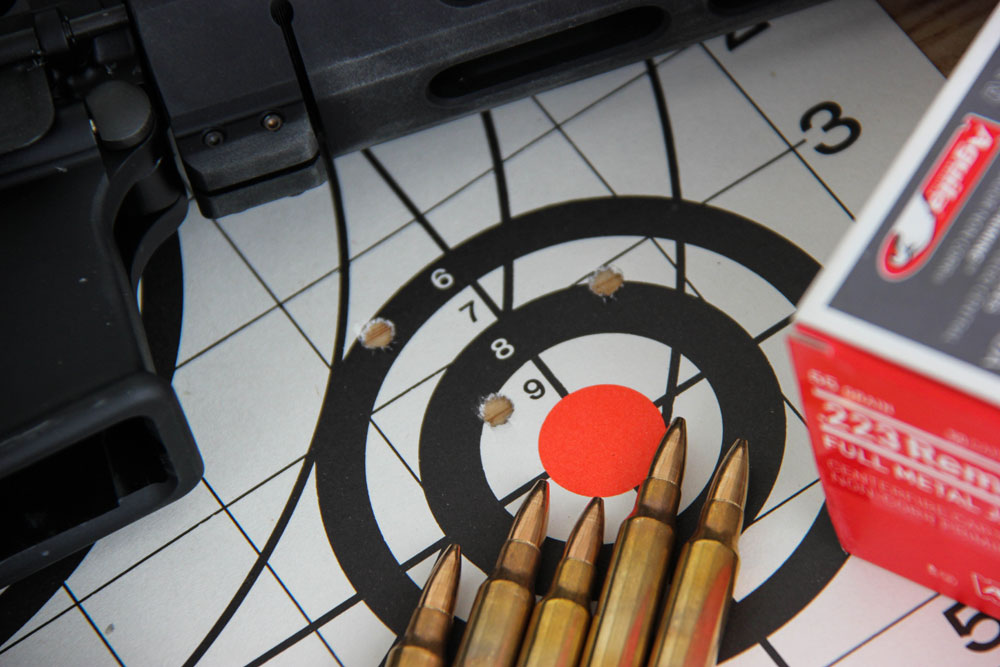
Aguila’s FMJ .223 loads are inexpensive, and accuracy is good. This group was fired from 100 yards using a Rock River Arms IRS Carbine and Trijicon MRO red dot optic.
Cuernavaca is also home to Mexico’s largest ammunition company, Aguila. And, as the brand has expanded into the U.S. market and started appearing more and more frequently on store shelves, there are a growing number of American shooters who are becoming fans of the brand. There is a general belief, though, that Aguila is a new company, and that’s not true. In fact, Aguila began producing ammunition in the 1960s in Cuernavaca, taking over operations at what had once been the Remington facility in town. When Remington pulled up stakes and moved out of Cuernavaca they left behind the goods needed to produce ammo, and that’s where Aquila stepped in. Today the brand has upgraded their facilities to utilize modern equipment and currently employs 1,200 people in the Cuernavaca facility.
One of the items that remained after Remington’s departure was a shot tower, and under Aguila’s supervision, production of shot resumed in Cuernavaca. Shot towers function by heating lead into a molten state and dropping the liquid lead through a copper sieve high in the tower. Surface tension causes the lead to form into a sphere, and the lead falls into a water bath at the bottom of the tower and cools. Sieves with holes of varying diameters produce different sized shot, and after the shot is cooled, it is checked for dimension and roundness. If a pellet is out-of-round or incorrectly sized, the lead can be re-melted and reformed. There are few operational shot towers in existence in the world, and the Aguila tower is the only one in Mexico.
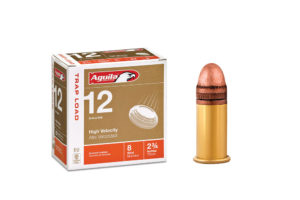
With a shot tower in place it’s little surprise that Aguila makes so much shotshell ammunition, and in fact, the company produces the bulk of the sporting, upland and big game shotgun ammunition in Mexico. But a growing number of American shooters, impressed with the price and quality of Aguila’s new competition and upland loads, have become converts to the brand. Aguila offers field loads in .410, 20, 16 and 12 gauge, and they also offer buckshot loads. For 16-gauge lovers, and there are a lot of them out there, Aguila has offered a means by which shooters could obtain hunting ammunition at a reasonable cost. The company also offers 12-gauge competition loads for trap, skeet and sporting clays as well.
Left: Aguila offers a wide selection of competition and field loads, and the brand offers one of the widest selections of 16-gauge ammo. Right: The high velocity short .22 from Aguila is another great option for hunting vermin or small game. It produces far less noise than a standard .22.
Rimfire and Centerfire Offerings It’s quite possible that your first experience with Aguila ammunition came during the recent drought of rimfire ammunition. When .22 cartridges became hard to find, shooters started looking for new options, and Aguila was perfectly poised to give shooters what they needed. In fact, Aguila is one of the world’s largest manufacturers of rimfire ammo and a good portion of that rimfire fodder makes its way into the United States. Cheap, affordable and surprisingly accurate rimfire ammo made Aguila a lot of friends north of the Rio Grande, and it seems those shooters have repaid the company by remaining loyal customers after the worst of the rimfire shortage had passed.
The aforementioned upgrades to the Cuernavaca facility have helped improve Aguila’s reputation among serious competition shooters, too. Modern Aguila rimfire ammo is clean burning and extremely uniform, and in accuracy tests with both handguns and rifles, I found that the company’s Match ammunition lived up to its billing, producing tight groups and very consistent velocities. But one of the hallmarks of the brand is its variety; Aguila offers inexpensive target loads, high-velocity .22 shorts and nickel-plated .22 loads for the smoothest operation and .22 hollow point loads perfect for pest control.
Aguila compliments its rimfire loads with an ever-expanding line of centerfire pistol and rifle cartridges. On the rifle side, the list is still fairly short—there’s a .30 carbine load and .223 and 7.62×51 offerings. The handgun lineup is much larger, though, with 27 different loads in everything from .25 Auto up to .45 Colt. There’s defensive ammunition, but there’s also a lineup of affordable target ammunition. And since most shooters fire several times as many target rounds as defensive loads each year, it’s nice to have another company offering affordable factory options.
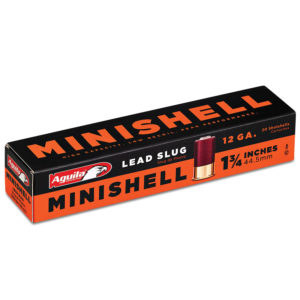
A box of 20 Minishells doesn’t look like your average box of 12 gauge shells, but they are handy and convenient and fit easily in a pack.
Aguila Exclusive Products There are a lot of ammunition manufacturers, but Aguila offers two products that set them apart from all of the competition. A few years ago, the company decided to do something radical to traditional shotgun shell design. Instead of playing with shot size, wad design, coatings and so forth, Aguila took the bold step of giving its shotgun shell a frontal lobotomy, whacking a full inch off the standard 2¾-inch shell. The result was a one-of-a-kind product known as the Minishell.
As you might imagine, shooters and gun writers took note. The Minishell was viewed alternatively as a gimmick or the most innovative product to hit the shotshell market in decades. But the Minishell did prove to have its place, and it has become Aguila’s flagship product. But is it functional?
Certainly. One of the primary drawbacks of shotguns is that recoil can be difficult to manage, especially for new shooters. The Minishell changed all of that thanks to its 1¾-inch length, 1¾-dram equivalent powder load and 5/8 ounce shot charge. These loads function in double guns just fine and produce far less recoil and muzzle blast than even the lightest 12-gauge target loads. The advantage? You can have low-recoil practice that is perfect for new and experienced shooters without having to switch to a smaller gauge gun. Additionally, the Minishell buckshot and slug loads offer defensive rounds that produce far less recoil and muzzle blast than typical 12-gauge loads.
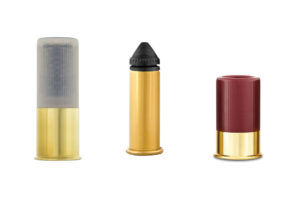
Left to right: Aguila’s Minishell stoked with lead shot, the Colibri powderless .22 cartridge, and the Minishell slug.
Another of Aguila’s most innovative products is the Colibri, the world’s only powderless .22 load. The Colibri looks much like a standard .22 LR round, but it has a smaller, lead 20-grain bullet. Inside, the Colibri lacks gunpowder, which means that the bullet is propelled strictly by the primer itself. It was primarily designed to operate in .22 revolvers, and the primary function is pest control. The Colibri produces very little noise, no recoil and packs enough power to kill rats and other vermin at close range. It’s also a quiet, recoiless training round for those who are new to shooting.
Once a relatively unknown brand to American shooters, Aguila is gaining a strong presence in the U.S. thanks to its low-cost, reliable ammunition and innovative products like the Colibri and Minishell. As ammunition costs rise and availability becomes limited, Aguila will serve a more important role for domestic shooters. Whether you’re looking for low-cost practice ammo, defensive loads or pest control rounds, Aguila has something for you.
The new FoxPro Inferno lives up to the company’s reputation as one of the best predator call makers around.
When it comes to predator calls, FoxPro is without a doubt a leader in the industry. It makes some pretty high-dollar electronic calls, too, but as the company’s latest introduction, the FoxPro Inferno, shows, it also makes a value-packed call for the budget-conscious hunter.
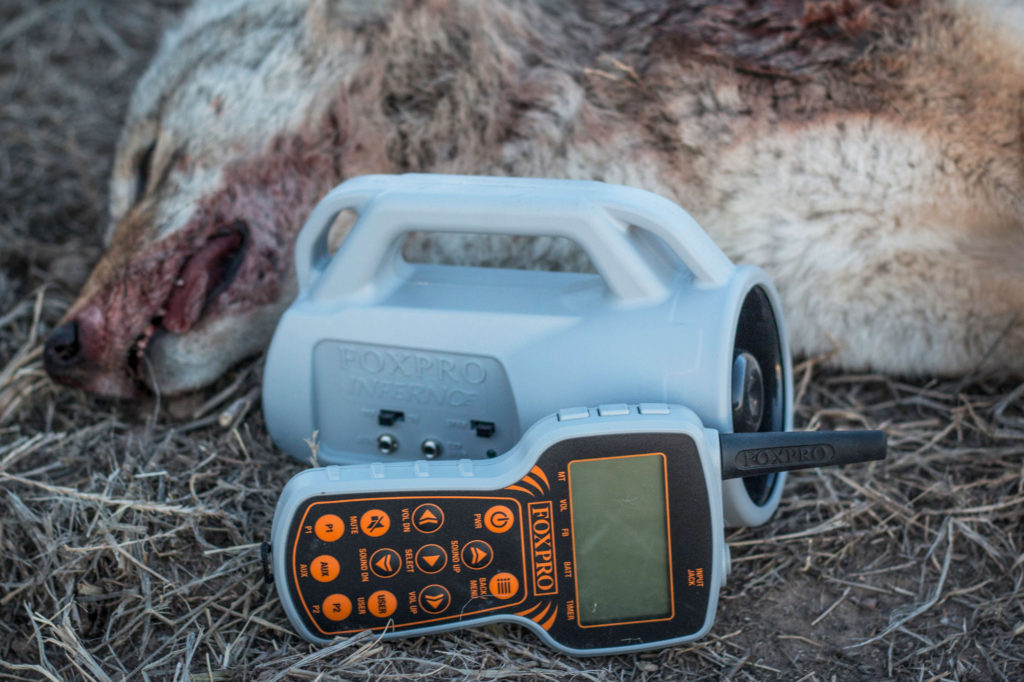
The Inferno sells for $199, is compact and lightweight, and ideal for walking into a set and maintaining your stealth. It’s also incredibly loud, featuring 20 volume settings and 75 preloaded sounds (it can hold up to 200), including a substantial menu of rabbit calls. The wireless remote and speaker run off AA batteries, and the speaker also has an additional jack or another auxiliary speaker.
Field Tested
I put the Inferno to the test during a recent trip to Eastern Colorado for a February coyote hunt. It’s an ideal place to test the range of the Inferno, as winds regularly reach 15-20 mph and the wide open spaces have a way of drowning out sound. On the second set of the day we found a long section of rolling hills surrounded by CRP to setup on, and I placed the call about 15 yards in front and to the right of my seated position. I cranked the jack in distress sound, and after about three minutes of continuous play I saw the first set of ears pop up over the horizon at 300 yards.
Locked onto the call and charging hard, that ‘yote was soon followed by a second. I pushed the safety forward on my Remington 700, did a little Kentucky windage adjustment, and squeezed off a round. Chambered in .243, that 75-grain Hornady V-MAX bullet tore two gaping holes in the dog, which was anchored in place. Unsure whether the action was yet over, I let the call play on. About two or three minutes later, another set of ears reappeared. Game on.
Later in the hunt we setup on a several-mile-long valley with side draws feeding it, playing coyote howls instead of relying on the distress variants. Even when winds reached 10-15 mph the call was effective, bringing in song dogs from 600 yards and beyond. Wary and probably educated about calls, most of the dogs would hold up at about 250-300 yards—one more reason to make use of the long-range capability and wind-bucking prowess of a cartridge like the .243.
In terms of battery life, we used the Inferno for three days with standard AA batteries and it didn’t fade out on us—in fact it never made it below a half charge. Conveniently, the remote has a battery indicator to let you know when it’s time to replace the old batteries. The call holds four batteries and the remote three, for a total of seven. I typically throw in lithium batteries for extra life, but even the standard alkaline batteries were more than sufficient.
The remote works exceptionally well and features large buttons that are easy to depress even with gloved hands. We tried it out to about 25-30 yards and had no issues; response time was nearly immediate. The Inferno comes with an auxiliary jack for additional speakers, mute button and 20 volume settings. When you play the jack-in-distress calls, for example, the call automatically alternates between louder and quieter calling, so you really just push play and let it roll. If you do want to adjust sound or volume while the sequence is playing, you can do so with the push of a button.
For an unbeatable price with premium sound quality, the American-made Inferno is a must-have for both the entry-level or hardcore predator hunter. It’s small enough to stash in your truck, yet powerful enough to reach out across open spaces to bring the dogs in.
Iowa has become the 42nd state to legalize suppressors. Civilians in the Hawkeye State are now free to own and use suppressors on their firearms.
Iowa shooters have received some good news, as a bill that legalizes civilian ownership and use of suppressors has been signed into law by Governor Terry Branstad. With this action, Iowa becomes the 42nd state to legalize suppressors. Branstad signed the bill at the new Brownells retail store in Grinnell, Iowa.
CEO Pete Brownell told KCCI reporters he was glad to support the bill.
“It’s going to help save the hearing of Iowans that are involved in firearms and shooting, and it’s going to create jobs in our state,” said Brownell.
Introduced by Rep. Matt Windschitl and Rep. Terry Baxter, the bill—House File 2279—passed the Senate Judiciary Committee on March 2, 2016, by a margin of 11-2. The bill moved through the House and the Senate easily, with margins of 78-21 and 46-4, respectively, and then proceeded on to Governor Branstad.
Iowa’s legalization of suppressors marks a great success after three years of efforts by the American Suppressor Association, the National Rifle Association and the Iowa Firearms Coalition to educate lawmakers on the benefits and realities of suppressors. The victory in Iowa also brings hope to the eight other states in which it is still illegal for civilians to own suppressors. In accordance with its “No State Left Behind” campaign, the American Suppressor Association will begin focusing more of its efforts on some of those states where suppressors are still illegal, such as California, Illinois, Massachusetts and New York, among others.
However, Iowa’s decision to legalize suppressor use is a definite victory for the American Suppressor Association, and, more importantly, for gun owners in the Hawkeye State.
“SilencerCo has been a strong supporter of the American Suppressor Association since its inception. We’re proud of the hard work they have put behind HF 2279 along with the help of the NRA and the Iowa Firearms Coalition. Because of the determination and educational push by these groups, Iowans can now enjoy the same rights as are held by law-abiding citizens in 41 other states,” said Joshua Waldron, CEO of SilencerCo.
The American Suppressor Association is also working toward the removal of suppressors from the list of NFA items with the introduction of the Hearing Protection Act, which would remove the requirement of a $200 tax stamp and the excessive wait times due to overly complicated processing requirements such as fingerprint cards, passport photos and Chief Law Enforcement Officer signatures. To find out more about the Hearing Protection Act, visit SilencerCo’s Hearing Protection Act page. To support the Hearing Protection Act, go to the American Suppressor Association website.
Patrick Sweeney pulls back the veil on these intriguing apparatuses in the Gun Digest Book of Suppressors. The well-respected gun writer and master gunsmith covers every base concerning suppressors in this practical reference, explaining how they function, their history and their uses. He also gives a number makes and models the once over, giving shooters an idea of the available options and market prices. He also touches upon the modifications your firearms require to get hushed up by a suppressor. Get Your Copy Now
Looking to go armed, but are stuck in the weeds as to what to arm yourself with? Here are 20 of the best concealed carry gun options that will keep you on the defensive.


 One of the world’s most famous and recognized shooters joins the Pro Staff Team at Aguila Ammunition.