Home Blog Page 12

New Guns And Gear May 2025

0

Looking for a new iron or piece of kit to enhance the one you already own? Check out these 7 new bits of guns and gear to grow your firearms wish list.

The New Guns And Gear:

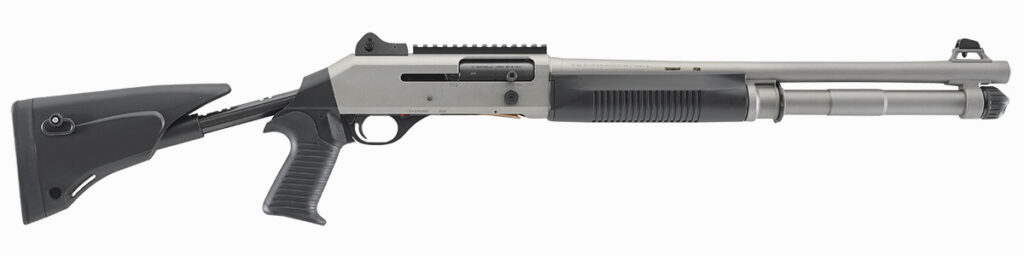
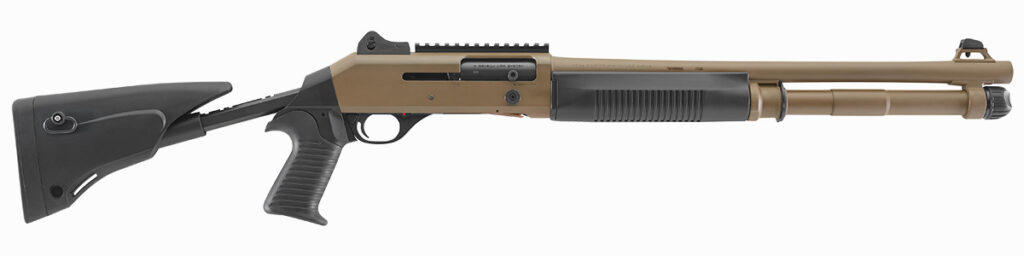
Stoeger P3000 Tactical Shotgun

Adsız tasarım – 1
Stoeger Industries expands its pump-action lineup with the new P3000 Tactical shotgun, designed for home defense and security. Chambered in 12-gauge, the P3000 Tactical handles both 2¾- and 3-inch shells, with a four-round magazine and an enlarged, beveled loading port for quick reloads. It features new hybrid polymer furniture blending a fixed stock and pistol grip, plus QD swivel studs and M-Lok slots for sling and accessory use. Optics-ready, the receiver sports a Picatinny rail and is cut for RMR and RMSc red-dot plates. Finished in OD Green Cerakote, the P3000 Tactical balances practicality, durability and affordability.
MSRP: $449


C&H ERD-2 Red-Dot Optic

C&H red dot
C&H Precision unveils the ERD-2, a rugged, enclosed-emitter 22mm red-dot sight built for shotguns, rifles and PCCs. Featuring a 3-MOA red dot, 50,000-hour battery life, and a front-facing sensor with auto-dimming technology, the ERD-2 adapts instantly to changing light conditions. Shooters can also manually select from 10 brightness levels, including two night-vision compatible settings. Its 7075 aluminum housing ensures durability, while waterproof construction allows submersion in up to 1 meter of water. The optic comes with a Picatinny-compatible pedestal mount and offers 45-MOA windage and elevation adjustments. Compact and dependable, the ERD-2 balances reliability and cutting-edge performance for any shooting environment.
MSRP: $280


New Federal 7mm Backcountry Loads

Federal backcountry
Featuring Peak Alloy cases that can withstand pressures up to 80,000 psi and send projectiles at a screaming 3,000 fps, Federal’s new 7mm Backcountry certainly has potential. Big-game hunters should be pleased to hear the company has announced two new loads for it: Fusion Tipped 175-grain and LRX 168-grain. The Fusion Tipped load features a streamlined polymer tip that should be devastating on game, and the bullet has a G1 BC of .575 and a muzzle velocity of 2,975 fps from a 20-inch barrel. The LRX load features an all-copper Barnes projectile with a G1 BC of .513. With a 20-inch barrel, this round achieves 3,000 fps at the muzzle.
MSRP: Fusion Tipped $63 ; LRX $82


Mec-Gar Glock Magazines

Mec-Gar glock
Mec-Gar may be the world’s number-one magazine manufacturer, and the company has finally added Glock mags to its catalog. The first two offerings are for the Glock 17 and the Glock 19, but both hold 18 rounds. By eliminating the plastic shell of factory Glock mags, Mec-Gar managed to squeeze an extra round in over the standard. The G17 mag is flush-fit while the G19 mag extends past the frame but has a baseplate to match the grip’s diameter. Best of all, despite having steel bodies, you don’t have to swap your factory polymer magazine catch to use them with your Glock 17 or 19 pistols.
MSRP: $29 each


Fiocchi Covert X Ammunition

fiocchi
Fiocchi USA introduces its new Covert X line, defensive ammunition engineered specifically for today’s micro and ultra-compact carry guns. Designed for peak reliability and performance, Covert X ammo features optimized propellants and jacketed hollow-point bullets to ensure consistent expansion and reduced muzzle flash—even from short barrels. Available in 9mm, .380 ACP, .45 ACP, .38 Spl.+P and .357 Mag., the line covers popular models like the Sig Sauer P365, Glock G43 and Springfield Hellcat. Each load is packaged in 20-round boxes or 200-round cases. With minimized flash signature and controlled expansion, Covert X is tailored for concealed carriers demanding top-tier defensive performance.
MSRP: Starting at $20, box of 20


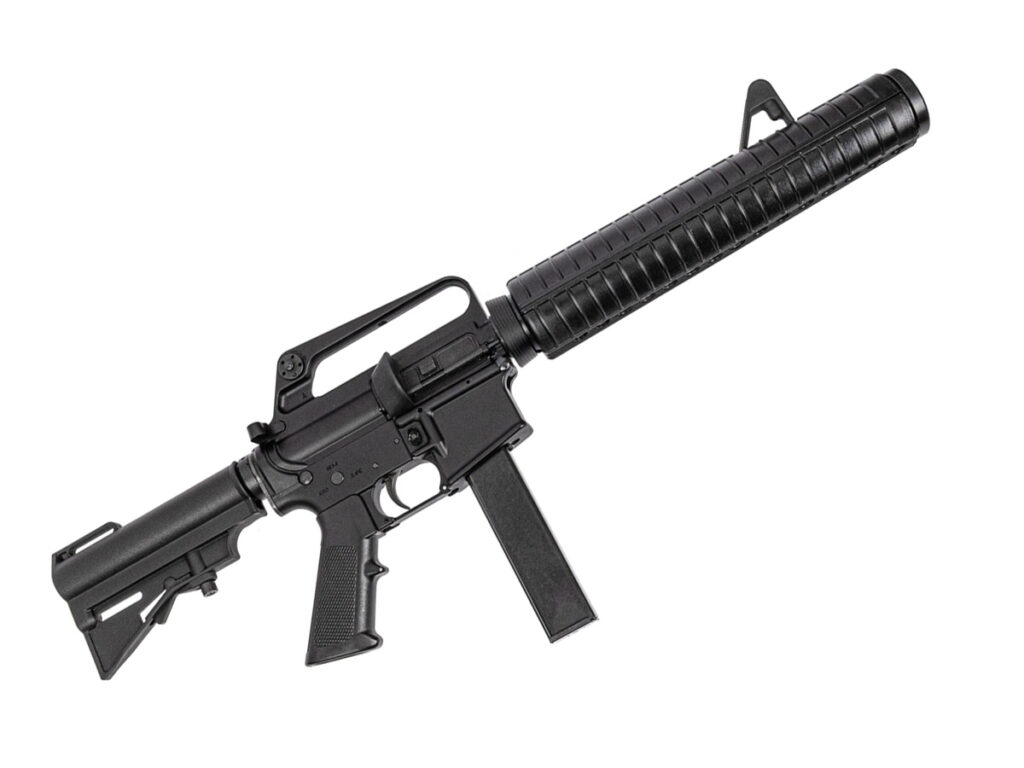
Springfield Armory Saint Victor 9mm Pistol

sprinfield 9mm ar
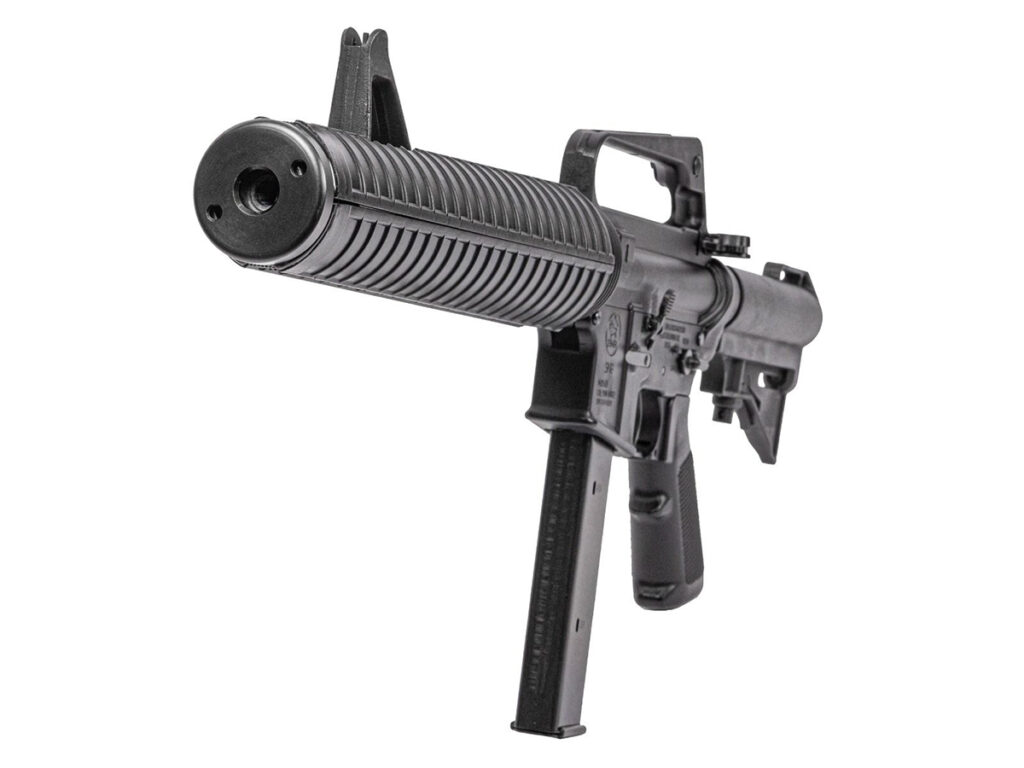
Springfield Armory expands its Saint Victor line with the new Saint Victor 9mm Pistol. This compact AR-pattern pistol features dedicated forged 7075 T6 aluminum upper and lower receivers, a 5.5-inch Melonite-coated barrel and a reliable direct blowback system. It feeds from a Colt-pattern 32-round magazine and includes premium components like a B5 Systems P-Grip, ambidextrous safety and SB Tactical SBA3 pistol brace. The free-floated handguard sports M-Lok slots, an included handstop and SA Muzzle Drum recessed under the rail. Designed for performance and durability, the Saint Victor 9mm pistol offers shooters a lightweight, capable addition to their firearm lineup.
MSRP: $1,099


Smith & Wesson M&P FPC in 10mm Auto

sw-mp-fpc-10mm-auto
Smith & Wesson has just added a 10mm Auto variant to its M&P FPC line of pistol-caliber carbines. Like the 9mm M&P FPC, this new version features a blowback action, an integrated recoil buffer system and a horizontal folding mechanism that brings its overall length from 30 to 16 inches. It feeds from 15-round M&P 2.0 magazines and has space to store an additional two mags in its stock. Other features of the 10mm M&P FPC include a Picatinny rail on top for optics, an M-Lok hand-guard for accessories and a 9/16-24 threaded muzzle for suppressors. It all ships with three magazines and a carrying case.
MSRP: $699

Editor's Note: This article originally appeared in the May 2025 issue of Gun Digest the Magazine.


Get More Guns And Gear:

One FN Centimeter: The FN 510 Tactical

0
Sponsored Content

When it comes to modern, feature-rich 10mm pistols, the FN 510 Tactical is hard to beat.

Sometimes, you need a lot of firepower. When it comes to full-size handguns today, that usually means 17+1 rounds of 9mm Luger. That’s pretty good, but it’s not enough for every situation. When the job calls for 10mm, and a lot of it, the FN 510 Tactical with its 22+1-round capacity is hard to beat.

FN 510 Tactical Specs:

  • Caliber: 10mm Auto
  • Capacity: 22+1 or 15+1
  • Sights: Tritium 3-dot night sights ; optics-ready slide
  • Barrel Length: 4.71 Inches
  • Overall Length: 8.3 Inches
  • Weight: 32 Ounces
  • MSRP: $1,139

FN 510 Tactical Features

Capacity and power are not the only aspects of the FN 510 Tactical that make it great for personal defense. If you don’t hit what you’re aiming at, all you’ve done is waste ammo. Thanks to the 510’s Low-profile Optics Mounting System, that won’t be a problem as long as you do your part.

The system allows for easy, quick installation of a wide variety of pistol red dots, as each gun ships with the necessary hardware to mount most common footprint patterns. And if you don’t want to use an optic, a slide cover plate with iron sight protector wings is included as well.

Fans of co-witnessing needn’t worry either, as not only does the rear sight stay put when an optic is installed, but they’re tall enough to co-witness with even some of the tallest red dots on the market. For any optics that aren’t tall enough to co-witness, FN also includes some polymer spacers in the box to remedy that. The cherry on top? The irons are tritium night sights.

FN 510 Tactical optic system

As mentioned, installation is incredibly easy. Instead of traditional optics plates, the 510 Tactical uses MRD plate inserts that allow for direct mounting to the slide. That means fewer screws and fewer failure points. Plus, the whole system is self-locking, meaning that no thread locker is required.

Hitting your mark is also made easy thanks to the pistol’s excellent ergonomics. Every aspect of the 510 Tactical’s grip angle, texture and interchangeable backstraps (two included) have been designed around taming 10mm’s recoil. Combined with the target-grade trigger, there may not be a more shootable 10mm handgun out there. Lefties can also rejoice, as both the magazine release and slide stop are fully ambidextrous. When it comes to making good hits, the cold hammer-forged, target-crowned barrel doesn’t hurt either.

Fn 510 Tactical ambi controls

If you want to dampen 10mm’s kick even further, you should turn your attention to the 510’s muzzle. Each pistol comes standard with a threaded barrel (.578”x28) so you can easily install a compensator or a suppressor.

FN 510 Tactical stripped

Of course, no gun would be truly tactical without a Picatinny rail, and the 510’s is big enough to mount any full-size light or laser.

Also get an inside look at the FN Reflex in 9mm

What’s The FN 510 Tactical Good For?

Their reasons may vary, but a lot of shooters love the power of 10mm. Some live or hunt in bear country, some just think it’s cool and others have seen too many videos of 9mm failing to stop a threat to trust their life to it. Whether your attackers are furry, two-legged or made of cardboard and imagination, 10mm will put big holes in all of them without discriminating. If you want to poke those holes accurately, and maybe even quietly, the FN 510 Tactical is the right tool for the job.

While the pistol comes with a flush-fit 15-round magazine along with the 22-round mag, unless you’re a very big boy, you wouldn’t dream of carrying this pistol concealed. Open-carry, however, is a different story, and for backwoods defense, this polymer-framed pistol holds a lot of peace of mind in a relatively light package. It’s still heavy, of course, but even with a fully loaded extended magazine the package weighs a bit less than most .44 Magnum 6-shooters.

FN 510 Tactical

When it comes to home defense, thankfully size doesn’t matter in the nightstand, and a 510 Tactical fully decked out with an extended mag, red dot, suppressor and light would be an excellent retort to any bump in the night. It offers capacity, power, accuracy and the ability to be easily outfitted with smart home-defense accessories. What more could you want?

Why The FN 510 Tactical?

There’s an old saying about boots and money that boils down to “it’s worth spending more for quality that lasts.” With an MSRP of $1,139, the FN 510 Tactical is not cheap, but if you’re looking to buy the only home or woods defense pistol that you’ll ever need, that’s quite the deal.

A lot of shooters only look at budget options when shopping for a new type of gun before ultimately spending even more down the line to replace it with something better. Further, when it comes to guns, minute aspects of features like the optics mounting system can make or break a setup when trying to accessorize it.

FN 510 Tactical stamp

With the 510 Tactical, those aren’t things you’ll have to worry about. From the get-go, you’ll have an extremely versatile handgun that packs a much bigger punch than what most people trust to defend themselves with. Don’t be intimidated by 10mm’s kick either, as the 510 softens its blow enough that most individuals who shoot one should find it extremely manageable. More than manageable, in fact, when running the right compensator or suppressor.  

Now, all you need to do is choose whether you want your 510 Tactical in FDE or black.

For more information, visit fnamerica.com.


More On FN Guns:

How To Test & Evaluate Defensive Pistols

0

How do you know if you can trust your handgun with your life? Here we discuss some methods for testing and evaluating defensive pistols.

I’m often asked how I evaluate new pistols sent to me for review. The short answer is that I have a standard protocol I use. It starts with a familiarization of the pistol and any new to me, or new to that model, features it might have. Then, I typically run about 50 to 100 rounds of FMJ ammo through the pistol to check for reliability and for additional familiarization.

If a pistol fails this segment due to reliability issues, I simply send it back.

If the pistol makes it through those first 50 or 100 rounds, I begin precision testing. I’ll select three to five factory range and carry loads, and then I’ll generally shoot three to five, five-shot groups from a rest at 10 yards, while also chronographing each shot fired. I have a standard here, too. If I cannot cover all those groups with a snuff can—2.5 inches in diameter—I’ll also send the pistol back.

how to test pistol target
The author with the precision test target he fired at Wilson Combat that passed the precision standard.

Also, during precision testing, I’m looking to see how reliable the pistol is with the varied munitions I’m testing in it.

The final segment of my testing protocol involves subjecting the pistol to various shooting drills for which I have lots of data obtained with other pistols I’ve reviewed. This allows me to compare the pistol’s—and my—performance with similar pistols I’ve tested. It also gives me a chance to work with the pistol from the holster and in a self-defense context.
Often, if possible, I’ll let others of varying experience levels shoot the pistol and consider their opinions. Generally, a complete pistol test involves about 500 to 600 rounds, unless I really enjoy shooting it, in which case I might shoot twice that much.
The Austin Effect

Recently, I spent a week at Wilson Combat, touring the manufacturing facility and interviewing and interacting with the engineers, gun builders and testing crew. Wilson Combat thoroughly tests every gun they build before it leaves the factory. Austin Crawford heads up the testing department and not only is he a good shot, but he and his team are also intimately familiar with all Wilson Combat firearms. This allows them to effectively diagnose any issues they might encounter. I spent the day with Austin learning their testing process, and I think you might find it interesting because they’ve developed a protocol that’s proven to ensure only pistols that work make it out the door.
wilson crawford austin crawford
Austin Crawford at Wilson Combat explains their test fire procedure to the author.

When a gun arrives in the testing department, a member of the test crew familiarizes themselves with it. Granted, Wilson Combat has a limited number of base models, but there are accessories and options like reflex sights.

Next, the test firer tapes the sides of the slide, top of the slide and the mouth of the magazine well to prevent any damage to the finish that could occur during testing. Then, the pistol is taken to the test range with all the magazines that ship with it, and they’re included in the test. As for ammunition, Wilson Combat has selected loads for function
testing and for precision testing in each cartridge they chamber pistols for.

However, if you order a custom pistol, you can specify what loads you want it tested with.

The first test a pistol must pass is a magazine dump. Then, they further check the pistol for reliability by firing five magazines—using the magazines that ship with the pistol—loaded with only three rounds. Then, another five magazines are fully loaded, but only the top three rounds are fired from each. Finally, and only with 9mm pistols, they’ll fire a full magazine filled with light-recoiling PMC 115-grain FMJ ammunition, one-handed, with a semi-limp wrist.

how to test pistol range
Among other tests, Wilson Combat likes to confirm reliability with the first and last three rounds in the magazine. It’s where they’ve identified reliability issues to commonly occur.

Over his nearly 50 years of building quality custom handguns, Bill Wilson has learned that, if a malfunction is likely to occur, it’ll generally appear during this test. If one—just one—stoppage occurs, the pistol goes back for fixing.

Next, the test team targets the pistol. With every pistol Wilson Combat offers, depending on the model, they guarantee sub 1.0- or 1.5-inch precision at 25 yards. To establish this, they fire three shots from the pistol, from a sandbag rest, at 15 yards. The test shooter pulls the target and brings it back to his bench, where he has two aluminum discs proportionally sized for group measurement at 25 yards. If the disc will not fully cover the group, just like with a reliability issue, the pistol goes back to the builder. Of course, the shooter is allowed some leeway if they feel they pulled a shot.

how to test pistol shooting
The author conducting the Wilson Combat testing procedure on a pistol they built for him to review.

Also, they regulate the sights to the point of impact as part of this process.

Wilson Combat had just put a SFX9 pistol together for me to review, and while I was in the test bay, Austin ran it through the full protocol to include zeroing. After he finished, I ran the pistol through the protocol, too. It performed just fine for me, and my test target passed the precision test.

However, for me, the pistol hit about 3 inches low. We found my sight picture and hold was slightly different—lower—than Austin’s.

After the testing was complete, Austin and I cleaned the pistol and boxed it up with the test target, just as they do with every other firearm they sell. The only difference was that the pistol they will ship to me will also contain my test target. When I pick the pistol up at my dealer, I will—just as I do with every other pistol I test—begin my own testing protocol. Why? Not all tests are designed to evaluate the same things.

wilson combat pistol
The reality of any handgun is that if you shoot it enough, with enough different loads, a malfunction will one day occur. But some testing with the loads you plan to use can provide some confidence.

The You Effect

The point of all this is to illustrate there are several ways to test a pistol. Based on your experience, you might do it differently, but two things are for certain. The first is that when you get a new pistol from Wilson Combat, you can rest assured it passed a reliability, zero, and precision test, before it left the factory. The other thing is that before you trust a Wilson Combat or any pistol for personal protection, you need to test and verify those things with your carry ammo. Never leave that up to a manufacturer or a gun writer.

Editor's Note: This article originally appeared in the June 2025 issue of Gun Digest the Magazine.


More Knowledge For The Armed Citizen:

First Look: Vortex Defender Green Dot Sights

0

Vortex has just added green dot options for its Defender series of pistol optics.

The Vortex Defender red dot series has been out for a couple of years now and currently features three different model sizes—the Defender-CCW, the Defender-ST and the Defender-XL. Now, Vortex is adding a green dot variant of each to its catalog.

Vortex Defender Green Dot Sights

There isn’t much more to be said about the new Defender optics that we didn’t cover when discussing the red dot versions, as they’re identical besides the color of their 3-MOA reticles. Like their predecessors, the Defender Micro Green Dot sights feature large viewing windows, SHOCKSHIELD polymer inserts for added protection and a 10-minute auto-shutoff to save battery life.

Vortex Defender-XL Green Dot race gun 2011

The Defender-CCW Micro Green Dot uses a Shield RMSc footprint and has an MSRP of $350, the Defender-ST Micro Green Dot uses a DeltaPoint Pro footprint and has an MSRP of $450 and the Defender-XL Micro Green Dot also uses a DeltaPoint Pro footprint but has an MSRP of $600.

For more information, visit vortexoptics.com.


More On Pistol Red Dot Sights:

  • The Red Dot Advantage
  • The Best Optics For CCW
  • The Aimpoint ACRO P-2
  • The Trijicon RMR
  • The Swampfox Liberator II
  • First Look: Taurus 58 .380 ACP Pistol

    0

    Taurus has just brought back the Model 58, a lightweight .380 ACP pistol with a 15-round capacity.

    .380 ACP has been experiencing a bit of a renaissance recently, and Taurus has responded by bringing back the once-discontinued Model 58. Featuring some minor modernizations and improvements, the compact .380 carry-sized pistol now boasts a larger magazine capacity, an aluminum frame and an ambidextrous safety/decocker that allows for cocked and locked carry.

    Taurus 58 black 380

    The Taurus 58 features a 4-inch barrel, a DA/SA trigger and a 15-round magazine (two are included). Because the Model 58 is essentially a scaled-down version of the Taurus 92, the 58 will accept aftermarket Model 92 grips. This also means that despite being a relatively svelte and compact pistol, you still get a full-size grip to help shoot it. Other features include its drift adjustable rear sight (front sight is fixed) and choice between a black or stainless steel finish.

    Taurus 58 stainless

    Taurus said this about the new pistol:

    The Taurus 58 brings together smart design, modern materials, and high capacity to offer an ideal option for EDC (Everyday Carry) and range use alike. This new addition to the Taurus lineup reflects the company’s ongoing dedication to innovation, safety, and delivering firearms tailored to real-world needs.

    MSRP for the Taurus 58 is $605 regardless of finish color and they’re available now.

    For more information visit taurususa.com.


    More Concealed Carry Pistols:

    Are Competition Triggers For Self-Defense A Good Idea?

    1

    When it comes to the guns you use to defend yourself, is it smart to modify them with competition triggers?

    Before we get to making mockery of those who insist on “the best trigger possible” in a firearm to be used for defense, we need to lay out the parameters of just what it is we’re talking about.

    In truth, most triggers are good enough. Most, even those that are deemed “beyond hope” by the cognoscenti will actually do the job when required. But “good enough” is a small comfort. And this is, after all, America … where we have choices.

    You just want to be careful what you choose.

    You will search for a long time to find someone more dismissive of the Glock trigger than myself. Not to pick on them in particular (oh heck, why not?), but a spongy, gritty, 6-pounds-plus trigger isn’t ideal for good marksmanship. And that’s the best, out-of-the-box trigger that they tout. Some places, like the NYPD, had even crappier triggers foisted upon them. (If you’ve never tested the trigger pull of an NYPD 1 or NYPD 2, consider yourself lucky.) The temptation to improve such a trigger pull can be great, and in a lot of instances it can be a good thing.

    But, like so much in life, it’s easy to go too far.

    Competition Triggers For Self-Defense pull gauge
    Really? Five pounds? This is an utterly box-stock G22 that was my choice after going through the armorer’s course. It hasn’t even had all that much ammo through it, and it never came close to 5 pounds, ever.

    Two examples come to mind: pro shooters on the USPSA/IPSC circuit and law enforcement. People will read about, or hear about, the top shooters using trigger pulls in the 2 pounds or less region.

    “Oh, that’s what it takes to shoot fast? Then, sign me up for some of that.”

    Actually, no. If you want to shoot fast, you can manage very quick shooting while using a regular trigger pull in the 3½-pound level, or even a 4-pound trigger. As long as it’s clean and crisp, you’ll be able to shoot as quickly as you need to in a defensive situation. So why do the Grandmasters use such light triggers? Because they’re trying to beat other Grandmasters, that’s why. (I know it sounds obvious, but there it is.)

    The Real World Application

    If you find yourself in need of shooting in a defensive situation, you have to use both good marksmanship and good tactical awareness. It’s entirely possible to shoot too quickly in a defensive situation. The tactical awareness needed in a match consists solely of, “Is the target the correct color? Have I engaged it already?”

    For a defensive situation, you’re not going to need “splits” at the 0.15-second level, which is the working space of the GMs you read about. It’s more like a half-second, and you don’t need a 2-pound trigger for that.

    So, what if you do have a trigger that light on your sidearm? Well, the chances of stress, cold weather, gloves, or just being jostled while handling your sidearm greatly increase the chances of an accidental or unintentional discharge. Simply holstering can be problematic, if something like a jacket hem or a drawstring gets in the path of the trigger as you are finishing the shove home.

    The old adage that “every bullet has a lawyer attached” is one you have to keep in mind. On the range, an accidental discharge/unintended discharge (AD/UD) will get you DQ’d from a match. It might even be cause for your gun club membership to be looked into. Out in public, an AD/UD could be a lot more serious. You will have your CPL looked at. You might find civil action being brought, from the damage your bullet created or even the emotional harm experienced by bystanders.

    Back in the old days, when it was mostly (or only) law enforcement officers who were packing, an AD/UD was cause for their embarrassment and not much else. The department might or might not have taken some disciplinary action, but that was it. These days, even LE gets put on notice for an accidental or unintended discharge.

    And the rest of us? It could be bad.

    The Other Side Of The Coin

    But shouldn’t a bad trigger pull be improved if it can be? You bet. There are rational arguments to be made for a better trigger pull, such as improving accuracy and allowing for better decision-making.

    I’m not saying that improving your trigger pull is always a bad thing. Just keep it reasonable. Taking a really ugly 6-plus-pound trigger pull and bringing it down to a clean four will seem like a huge improvement. And it is.

    Now, if you want to make the legal side of this a better proposition for you, engage in a bit of planning. Peruse the manufacturer’s spec sheets for a pistol similar to yours. (So, you have a Glock, that means pretty much any maker of a striker-fired pistol then.) Find a competitor’s spec sheet that lists their pistol as having a 4-pound trigger pull. Now take your Glock and an aftermarket trigger to a pistolsmith and work the details out. You want it in writing that the task was to “match the other maker’s trigger pull.” (You could just trade guns over the counter at the gun store and get that 4-pound pull, but that would be too easy.)

    holstered pistol
    Glocks aren’t the only pistols that can have a mismatch with rifles as far as trigger pull is concerned. There are pistols that do better, so search one out or have your Glock built to match.

    If you then use that pistol in a defensive situation, and the question comes up as to the trigger pull, you’re now on record as simply matching the factory-spec trigger pull of the competitor’s model—nothing untoward about that. Of course, the pistolsmith will have to be onboard with this, no fair blindsiding them when the question comes up.

    Law Enforcement Is Different

    The law enforcement aspect mentioned isn’t so much an LE departmental thing as it is LE equipment. The problem here is one of trigger disparity. In Patrol Rifle classes, we’d run into officers who were issued Glocks with unaltered factory triggers (as required by, or issued by, the department), but the officers, when they were authorized to do so, had purchased an AR-15 for duty work. (And good on them for having done so.)

    competition triggers ar-15
    In factory trim, a mil-spec trigger in an AR-15 can be close enough to a factory Glock that you are all set. But if you should upgrade your AR-15 (this is just a small selection of triggers available), then you‘d better look to improve your Glock—or other pistol. The two should match or come close.

    In many instances, that AR-15 came with a match trigger. They now had two firearm tools at their disposal, one with a 3-pound trigger and the other with a 6-pound trigger. Despite giving them a heads-up, there would be unintentional discharges from the trigger-pull disparity. Why?

    Having spent years up to that point training with Glocks (a lot of departments were late in allowing/issuing AR-15s), the officers had fired many qualification courses with the long and heavy factory pistol trigger. Then, arriving for the Patrol Rifle class, they’d have a short-travel trigger with maybe as much as 3.5 pounds of pressure required. So, when firing their AR-15, just about the time they would have taken up most of the slack and trigger weight on their Glocks, their AR-15 would discharge.

    Often, this was near the target, but not at the point they planned on striking. Sometimes it was on the range floor, into the dirt or gravel below the target frame. It wasn’t easy learning to switch from one to the other. Transition drills were almost a comedy of errors. Officers who had now become accustomed to the AR trigger when switching to their Glock, short-pressed the Glock trigger, subconsciously expecting it to go off at 3.5 pounds. (Nope, it’s never going to do that.)

    Had they just opted for the mil-spec trigger pull on an AR-15, they would have been all set. The USGI specs for an M16/M4 are close enough to the actual specs on a Glock that the two are in sync when box-stock. It’s when they changed one of them that created the disparity.

    The Value Of Uniformity

    I’ll admit, the temptation to improve is great. And, in some instances, it’s never been easier. It used to be difficult to improve the AR-15: Now you have no lack of “packet” triggers you can just drop in, delivering whatever trigger pull you desire. The 1911 can now gain that with the Nighthawk drop-in trigger pack. But Nighthawk knows how to build a pistol for defense, and the trigger weight it provides? About 3¾ to 4 pounds. Sound familiar? An online search for improved Glock triggers will produce a tsunami of pages. So, keep your trigger pull weight search within proper limits.

    And if you’re going to depend on an array of firearms for defense, it would be a good idea to have them all with trigger pulls in a reasonable closeness to each other in pull length and weight. Here, I can point to myself as either a bad example, or an exemplar, depending on how you want to approach it. For a long time, I carried a 1911 with a match-grade (well, match-grade back in the 1980s) trigger pull of just under 4 pounds. My backup? One or another double-action revolver. They represent a combo more disparate than the Glock/AR-15 example I just gave.

    ar-15 shooting
    With a matched set—a pistol and rifle with closely matched triggers—transitioning from one to the other is not a potential headache.

    However, I was shooting three, four, or five times a week in different types of competition, and used both 1911s and revolvers in those competitions. You’ve heard of the theory that it takes 10,000 hours of some kind of activity or practice in order to excel at it? I’m not going to say I’m some kind of genius or grandmaster shooter, but I passed the 10,000 of activity level back before Bill Clinton got in trouble with his intern.

    But it took a lot of work, and that’s not something a whole lot of people have the time for or the willingness to invest in.

    What To Do, Then?

    Simple: If the trigger pull on the pistol you have selected for defense is truly atrocious, you have two choices—change to something with a better trigger or have your trigger pull improved. But don’t seek to make your trigger pull like that of the pro shooters, the sponsored shooters who you might read about in match results. They work hard to get accustomed to those light triggers and use them for match work.

    And if you’re going to depend on a battery of firearms, then you’ve got some planning ahead of you. Figure out the one with the worst trigger. See how much it can be improved, and if it can be brought into the “reasonable” region. Then, have the rest of them tuned to match the one that was the worst, so ideally they all match. If they can’t be made to match, then keep those trigger pulls reasonably close, and life will be good. At least as far as managing triggers is concerned.

    Editor's Note: This article originally appeared in the June 2025 issue of Gun Digest the Magazine.


    More Knowledge For The Armed Citizen:

    Canik SFx Rival-S Review: Ready For Competition And EDC

    0

    We hit the range to test out the Canik SFx Rival-S, a 9mm pistol that comes both competition- and carry-ready out of the box.

    How would you like to get a competition-ready pistol that was good to go right out of the box? And while you’re at it, one that’s suitable for everyday carry as well? That describes the Canik SFx Rival-S to a T. Before we dive into the full details, the “S” is not the stainless but the shiny version of the two options. Yes, chrome, not stainless, and you can get the SFx Rival-S in all-black as well.

    The Canik SFx Rival-S uses the same trigger design as found on the Walther line of pistols, and it’s a good one. That’s why it has been tearing up the competition circuit for some time now. Well, all of them have, but the SFx Rival-S is the culmination of years of input from Nils Jonasson. If you aren’t tuned into the USPSA/IPSC competition scene you might not recognize his name, but he’s won USPSA Nationals, IPSC Championships, the Steel Challenge and a lot more. Basically, Jonasson knows how to win shooting competitions, and he worked with Canik to put that knowledge into their pistols.

    Canik SFx Rival-S Specs:
    Type: Striker-fired semi-automatic
    Caliber: 9mm
    Capacity: 18+1 rounds
    Barrel: 5 inches
    OAL: 8.1 inches
    Weight: 43 ounces
    Finish: Chromed steel or black
    Grips: Synthetic
    Sights: Fixed front and adjustable rear
    Trigger: 3 pounds, 7 ounces
    MSRP: $950 (chrome), $900 (Dark Side)
    Website: CanikUSA.com

    canik rival extras magwells
    The SFx Rival-S comes with a lot of items that are extras for other pistols. The extra-wide mag funnel makes reloads faster. You can go bigger but try this one first.

    The triggers on Canik pistols are always good and always have been. The SFx Rival-S takes that up a notch, and it also installs one of the trigger-pull upgrades that shooters of late have been swapping into their pistols: a flat-faced trigger. The SFx Rival-S uses a machined aluminum central safety bar as the trigger face, and the trigger releases the striker when the trigger face is 90 degrees to the axis of the bore. For the left-handed shooters, the SFx Rival-S has an ambi slide release and a reversible magazine button.

    On top, the slide is aggressively grooved for cocking serrations. Fore and aft, top and sides, there are lots of places to gain a purchase. There are iron sights, with the front being a fiber optic holding blade, and the rear is part of the cover plate for an optics mount. The plate holds the rear sight, so when the plate comes off, so does the sight, but competition shooters who are using a red dot are not anticipating the need for iron sights. (Maybe they should, but that’s another detail not for here.)

    The slide is also slotted to reduce weight a bit, to keep the slide weight for the 5-inch barrel from making a sluggishly cycling pistol. Nope, not the SFx Rival-S—nothing sluggish here. To keep it cycling quickly, the barrel is fluted so it can’t even build up gunk there to slow it down.

    canik rival stripped
    Disassembly is easy. It is described in the owner’s manual, and this is all you need to clean it properly.

    The frame has an accessory rail under the dust cover, and the front is checkered. The sides and backstrap are given an aggressive pebbly texture, all with the aim of keeping the SFx Rival-S from slipping in your hand. The trigger guard is large enough that even with gloves on you can get your trigger finger in there without a problem, and it’s also a kinda-sorta 1980s retro detail as well. The trigger guard is squared off, with the front face of it checkered as well. If you shoot with the index finger of your support hand up on the trigger guard, the SFx Rival-S is going to give you every chance for that to work out as promised.

    For a lot of pistols these days, the purchase of the pistol is just the beginning. Then, there are the extras you have to have for competition or daily carry. Not so with the SFx Rival-S. First, it comes in a lockable carry case that’s big enough to hold all the gear. There’s the SFx Rival-S in the case, obviously. Then, there are the pair of 18-round magazines. There are two extra aluminum base pads for the magazines, in case you want to swap for something bigger. And there’s a magazine loader, because loading 18 rounds gets to be work and making it easier makes shooting more fun. There’s a magwell funnel that you can bolt on, which in competition can shave a few tenths off of your time—always a good thing. If you plan on using the SFx Rival-S for daily carry, leave the funnel off and go with the low-profile magazine base pads for easier concealment.

    sfx-s rival taylor freelance mag extensions
    If you feel the need for more, Taylor Freelance can add capacity to your Canik magazines.

    If two magazines aren’t enough (for daily carry, that’s probably fine, but for competition …), you can hop on over to the Canik website and order more (State law permitting, of course). The SFx Rival-S uses the full-length Canik magazines, so don’t go looking longingly at the shorter ones for easier concealment. The frame length allows just the 18-round magazines. If you feel the need for more (or the competition rules permit it), you can get more than 18 rounds in a magazine. Just go to Taylor Freelance and figure out which magazine extension basepad you want to use and in which material or color. The array for the Canik line is extensive, and your credit card might just whimper a bit as you look.

    For competition or carry, there is a holster included as well. This is right-handed; lefties will have to source a holster on their own. (Hey, there’s only so much even Canik can do, OK?)

    Canik SFx Rival-S holster
    The Rival-S comes with a holster, so you’re ready for daily carry or competition.

    If you’re going to be shooting just with iron sights, there’s a spare fiber optic in the case, for when yours breaks (the fiber optic, not the sight). And if you want to change colors, the fiber-optic size is easy to find and replace, and you can order and install (it’s an easy thing to do) the color of your choice. For those who are going to mount a red-dot optic, the SFx Rival-S comes with a set of plates to envy. And not just one, but the Dark Side (the all-black version) comes with five optic plates, and the chrome comes with four of them. Installation is the same as it is with any other red-dot optic: Unbolt the cover plate, select the adapter for your particular brand or model of sight, degrease the surfaces and bolt the plate and sight on. Let it cure. Then, at the next range session, zero and have fun.

    The storage case is a two-level affair once you open it up. On top is the pistol, the two magazines and the backstraps. And underneath is all the rest of the goodies. Oh, and the small plastic pistol that you’ll see in the upper level? That holds the small parts, the magazine button extensions, screws and a couple of the correct-sized Torx drivers. The top level also has an extra slot for that third magazine you’re going to buy for your SFx Rival-S. The two slots for spare magazines are even already punched out for magazine extensions being on the magazines. Clever, that.

    canik gun case
    There are two levels of the lockable case; this is the lower level with holster and tools.

    The backstraps on the SFx Rival-S are removable, and the pistol comes with three backstraps. Swap them back and forth until you find the one that you like the best. Or you can take the one that fits the worst for you and then modify it by bonding on epoxy, JB Weld or whatever, and shaping it until it fits your hand like a glove (competition rules permitting, of course).

    And that swappable magazine release? Well, there’s even more to that.

    There are three magazine release extensions you can use to make the mag release even taller. If you have small hands or short thumbs, reaching the button can be a bit of work. Put in the extension that works for you and have fun. One thing I’d like to point out if you are going to use the Canik SFx Rival-S for competition is table starts. This is where the pistol is lying on the table and you have to pick it up to commence shooting. If you install the tallest magazine button extension, you’ll want to check to see that it doesn’t bear on the table when lying there. Otherwise (as so many competitors found out in the early days when we were figuring this stuff out), when you grab it to pick it up, you inadvertently release the magazine. One shot and clank as the mag falls out.

    Then, there’s a lock, the owner’s manual, a tool and disassembly punch kit, and a cleaning kit. Basically, all you need to get started is ammo. Well, there’s one thing missing that it took me some time to notice: no spare mag pouch. However, that’s a minor oversight, and since you’re in a gun shop buying the SFx Rival-S anyway, you can easily add a mag pouch to the purchase, along with the ammo you plan to shoot.

    On The Range With The Canik SFx Rival-S

    Shooting the Canik SFx Rival-S was a joy. The clean trigger made breaking each shot easy; the weight kept it from being sharp in recoil, even with zippy ammo, and the hand-filling grip never slipped in my hands while shooting. Granted, it wasn’t warm enough to make me sweat (the weather was in the mid-40s that day at the club), but as aggressive as the frontstrap checkering is, I would not anticipate slipping … even in the middle of summer.

    Canik SFx Rival-S shooting
    The recoil is soft, as you’d expect from an all-steel full-sized 9mm pistol.

    You might ask why a competition pistol that will most likely be equipped with a red-dot optic has a 5-inch barrel. This is one of those esoteric details of competition that either fascinates or bores you. You see, you have to meet a certain power factor in competition, which is measured by the bullet weight by its velocity.

    So, let’s take a 124-grain bullet at 1,050 fps. That gives us a 130.2 PF, enough to qualify as Minor in all the various competitions, with a bit of wiggle room to spare. However, the PF measured is not the PF you feel, because you experience the weight of the powder charger jetting out of the muzzle just like a rocket nozzle. Let’s take the lower figure of powder pressure and call it 4,000 fps. (Yes, the gases jet out that fast—more in some loads.)

    Canik SFx Rival-S Chronograph and Accuracy Data

    AmmoBullet Weight (grains)Velocity (fps)ESSDAccuracy (Average)Accuracy (Best)
    Black Hills Honey Badger1001,2993413.72.1”1.7”
    Hornady Critical Duty1351,062197.32”1.6”
    CCI Gold Dot JHP1471,0092611.72”1.7”
    Sig Match Elite JHP1479263512.91.9”1.6”
    Michigan Ammo FMJ1479275721.42.2”1.8”
    Accuracy results were to be averages of three, five-shot groups at 25 yards off a Champion shooting rest. Velocities are averages of 10 shots measured on a Labradar chronograph set to read 15 feet from the muzzle.

    A quick check of load data shows that a common powder in the correct range requires 4.2 grains of powder. So that adds 16.8 PF to your felt recoil. But if you use a 4-inch barrel instead of 5, you need more powder to make the 130.2 PF we had before. So, we need to bump up to 4.6 grains, and that’s another 18.4 PF. If you think that the top shooters don’t fuss over the 1.6PF on every shot, you are mistaken. That’s why 5 inches.

    The height, weight and length of the SFx Rival-S make it kosher for all the practical shooting types (last I checked—these things can change), and at the MSRP listed, it is a smoking bargain—even if you don’t compete.

    Pros:

    • Great shooter thanks to nice trigger and weight that mitigates recoil
    • Versatile, ready for competition or EDC
    • Comes with a lot of extra accessories

    Cons:

    • A bit heavy and bulky for a carry gun

    Canik SFx Rival-S Deals

    Palmetto State Armory$900Gun Price Check
    Battlehawk Armory$900Gun Price Check

    Editor's Note: This article originally appeared in the June 2025 issue of Gun Digest the Magazine.


    More Handgun Reviews:

    Barnes Launches New Harvest Collection

    0

    Barnes has just announced the Harvest Collection, featuring 9 different calibers loaded with Sierra Tipped GameKing bullets.

    Combining Barne’s reputation for terminal performance and Sierra's reputation for exceptionally accurate bullets is the new Barnes Harvest Collection. Featuring 9 different caliber offerings all topped off with Sierra Tipped GameKing bullets, the Harvest Collection was designed to give hunters an incredibly precise and potent ammo option for whitetail and thin-skinned game. To top it off, Barnes has priced the collection to be competitive with similar loads on the market.

    Barnes Harvest Collection

    The full lineup of calibers in the Harvest Collection includes .223 Remington, .243 Winchester, 6.5 Creedmoor, .270 Winchester, .30-06 Springfield and .308 Winchester for a price of $39.99 per box, and 6.5 PRC, 7mm Remington Magnum and .300 Winchester Magnum for a price of $44.99 per box. Loaded with temperature-stable propellant and featuring doppler-verified ballistic coefficients, the Barnes Harvest collection is optimized to deliver match-grade accuracy with devastating terminal performance within 500 yards on thin-skinned game.

    The Harvest Collection is a first for Barnes since it features another manufacturer’s projectile, but of all the hunting bullets out there the Sierra TGK is one of the best. The bullets feature an open pocket design with a green polymer tip that delivers instant expansion, an optimal jacket wall thickness for controlling weight retention and expansion and a boat tail design for improved stability and accuracy. If you’re looking to take game this season with any of the calibers it’s offered in, the Barnes Harvest Collection won’t have a problem helping you fill your freezer.

    More information visit barnesbullets.com.


    More On Rifle Ammo:

    Concierge Cans: How Silencer Central Drops Cans at Your Door

    0

    We take a look at how Silencer Central manages to deliver suppressors purchased online straight to your doorstep.

    Silencer Central has spent the last several years making substantial waves in the suppressor community. We hate to use corporate catchphrases like disrupting the market or changing the game to describe anything. 

    But we’re hard pressed to find a better way to capture the impact of their business model. Perhaps the most frustrating part of purchasing a suppressor (besides having to receive BATFE “permission” in the first place) is the purgatory known as “NFA jail” — wherein your purchased suppressor sits in the safe at your local FFL/SOT, unable to be used, during the always-longer-than-advertised wait time, while the BATFE processes your tax stamp application. 

    If you have friends behind the counter at said FFL and/or they have an attached range, you may be able to photograph, test-mount, or shoot your suppressor during aptly nicknamed canjugal visits. Rinse and repeat until such day that your paperwork clears and your suppressor is free to go — at which point you must drive back to your FFL and pick it up. In many cases, you’ll probably wind up paying the dealer a storage fee as well.

    silencer central delivery flux raider

    Bad news up front: Silencer Central cannot make the BATFE move any faster on processing times. But what they can do, which is plenty special in its own right, is have your suppressor shipped directly to your doorstep when the process is complete. Let me say that again:

    Shipped. In the mail.

    Directly to your house.

    We were wary of the truth behind this claim until we went through the process ourselves to receive a Banish 30 Gold suppressor from them. Even after, sure enough, we opened our front door to see a box on our welcome mat with can, paperwork, and accessories all inside, the question lingered: How is that legal?

    We sat down with Brandon Maddox, owner of Silencer Central, to go down the rabbit hole on how this unique method of transfer is possible and not felonious. Turns out the answer is right there in black and white. 

    Literally, actually, in Federal statues that permit a non-over-the-counter (NOTC) transfer of FFL or NFA items to their owner, only if no background check is required at time of transfer to receive the item. 

    There was even, at one point, a separate Form 4473 for NOTC transfers. Since that form is long out of print, the BATFE has granted Silencer Central a business variance to complete NOTC transfers with the standard 4473.

    silencer central delivery flux raider 2

    How do you receive a firearm or suppressor without a face-to-face transfer and NICS check? We know of two situations that currently meet this requirement. First, there are currently 16 states which do not require their CCW permit holders to undergo a NICS check at time-of-transfer for firearms purchases. Since most people go to a gun store in person to purchase a firearm, a face-to-face transfer usually occurs anyway, albeit without a NICS check. 

    The second is NFA transfers. Since the BATFE is certifying, through grant of the tax stamp, that a background check has already been completed for the purchase of that item, there’s no NICS check required at time of transfer. 

    This unique and highly specific dynamic is the legal mechanism that allows Silencer Central to do what they do. But there’s another layer to this onion. Interstate transfers of firearms or NFA items must begin and end with an FFL. 

    In order to remain in compliance with this requirement, Silencer Central maintains a stand-alone brick-and-mortar FFL/SOT in every state where suppressors are legal. This isn’t a single FFL with multiple satellite locations, but a network of individual FFLs owned by one business entity: Silencer Central. 

    silencer central delivery flux raider 1

    When you begin the purchase and Form 4 application process with them, your paperwork is initiated and housed by the Silencer Central FFL in your state of residence. When that application is approved, your suppressor is transferred from their headquarters in Sioux Falls, South Dakota, to their FFL in your state. 

    That checks the box for a proper interstate transfer. From there, the in-state FFL does not need to complete a NICS check, since BATFE already did one to process your Form 4 — meaning the dealer in your state boxes up your can, slaps on a shipping label, and away it goes direct to your doorstep. 

    With a selection of cans suitable for almost any rifle in your rack, we strongly recommend you check them out, and let them deliver some peace and quiet, and peace of mind, direct to your doorstep.

    Editor's Note: This article originally appeared in the 2025 suppressor special issue of Gun Digest the Magazine.


    More On Suppressors:

    Mossberg 990 Aftershock Review: Shock To The System

    6

    Mossberg takes its compact smoothbore semi-auto.

    Since its debut in 2017, Mossberg’s short-barreled, bird’s-head grip smoothbores have sparked plenty of debate. Are they range toys? True defensive tools? Does it even matter? Because a 14-inch scattergun with serious firepower is just plain cool.  

    Now, Mossberg is cranking the Shock series—what the ATF classifies as “Firearms”—up to 11 with the latest evolution: the 990 Aftershock. This time, it’s built on the company’s battle-hardened 940 semi-automatic platform making it faster, harder-hitting and a lot more fun.  

    Wrists, beware—the 990 Aftershock is here to test your mettle. But let’s be real: a little extra wear and tear might be worth the sheer firepower packed into this compact beast. 

    990 Aftershock Specs

    Aftershock 1

    Gauge: 12 
    Overall Length: 27.125″ 
    Barrel Length: 14.75″ 
    Weight: 6.04 lbs. 
    Capacity: 5+1 
    Choke: Cylinder 
    MSRP: $1,120 

    Pros

    • Proven Semi-Auto Reliability
    • Enhanced Ergonomics & Controls
    • Versatile Aiming Setup

    Cons

    • Demanding to Control
    • No Direct Optic Mount

    The Long Road to the Aftershock 

    Mossberg nickel-boron coated the piston ring of the 990, ensuring it’s corrosion resistant as well as self-lubricating.
    Mossberg nickel-boron coated the piston ring of the 990, ensuring it’s corrosion resistant as well as self-lubricating.

    I got my hands on a 14.25-inch barreled Aftershock for testing ahead of its 2025 NRA Convention debut. But this wasn’t my first rodeo with the platform.  

    Back in 2022, a group of gun writers—myself included—were invited to Gunsite Academy in Arizona to test an early prototype. Those early Aftershocks felt like pre-production models—functional but unrefined. Mossberg took its time perfecting the design, ensuring that the final product wasn’t just another novelty but a legitimate defensive option.  

    The result? A more polished, user-friendly version of the original concept, albeit as “user-friendly” as a bird’s-head 12-gauge can be. 

    990 Action: The Game Changer 

    One of the best things about the 990 is the oversized port, beveled and sporting an elongated elevator. In short, it easy to feed.
    One of the best things about the 990 is the oversized port, beveled and sporting an elongated elevator. In short, it's easy to feed.

    The real reason to get excited about the Aftershock? Its action. This isn’t just another semi-auto—it’s powered by Mossberg’s proven 940 gas system.  

    When Mossberg introduced the 940 series, it changed the game for the company’s semi-autos, which had previously struggled to gain traction. By extensively testing the 940 with high-volume shooters and refining its gas system, Mossberg created a shotgun that eats everything from light target loads to heavy magnums without a hiccup.  

    That same reliability is now packed into the 990 Aftershock, making it not only a blast to shoot but also surprisingly controllable. Unlike its pump-action predecessor—the 590 Shockwave, which is often fired from the hip—the 990 Aftershock is manageable enough to be fired at eye level with confidence. 

    Aftershock Grip: Taming the Beast 

    The Aftershock’s bird’s-head grip includes a rubberized saddle that improves your handle on the gun, while not proving over aggressive.
    The Aftershock’s bird’s-head grip includes a rubberized saddle that improves your handle on the gun, while not proving over aggressive.

    What sets the Shock series apart is its signature injection-molded bird’s-head grip. Unlike traditional pistol grips, which direct recoil straight back into your wrist (and possibly your face), the bird’s-head design angles recoil downward, making it far more manageable.  

    Mossberg wisely opted for a smooth grip surface with a rubber insert on the backstrap for extra friction, ensuring a secure hold without shredding your hands under recoil. Up front, the fore-end features a textured grip and a strap for added control—borrowed from Mossberg’s pump-action models. 

    While the strap aids in stabilizing the gun, I personally would have preferred a hand stop instead, as it would feel more natural and solid in a semi-auto platform. 

    Aftershock Controls: Built for Defense 

    Mossberg nailed the controls on the Aftershock, carrying over the battle-tested layout from the 940 Tactical. The oversized charging handle, bolt release and tang safety are all designed for quick and easy manipulation under stress. But the real standout feature is the loading system.  

    Mossberg widened the loading port, elongated the elevator, smoothed out the magazine follower, and removed any sharp edges on the port that might snag your thumb—making reloads lightning fast. Truth be told, I wish every shell-fed firearm had a loading gate this slick. 

    Upgraded Aiming System 

    Even if you go without an optic, the gun’s fiber-optic pipping for the bead is plenty visible and all you need in close quarters.
    Even if you go without an optic, the gun’s fiber-optic piping for the bead is plenty visible and all you need in close quarters.

    Early Aftershock prototypes were equipped with a simple brass bead sight—not ideal for a defensive firearm. Thankfully, Mossberg upgraded the commercial version with a fiber-optic bead for improved visibility.  

    Even better, the receiver is drilled and tapped, allowing shooters to mount a rail and optic. While I appreciate the flexibility, I would have preferred a direct optic cut, like the 940 Tactical’s RMSc footprint, for a more secure mounting solution. Given the Aftershock’s high-recoil, bump-prone nature, a milled optic mount would be a sturdier option. 

    At the Range with the Aftershock 

    Given the gas-operated 990 reduced recoil, the non-NFA firearm can be shot at eye level with out worry of catching the grip in the face.
    Given the gas-operated 990's reduced recoil, the non-NFA firearm can be shot at eye level with out worry of catching the grip in the face.

    Between my time at Gunsite and my personal testing, I’ve put hundreds of rounds through the Aftershock, and it’s left a lasting impression—though not without some reservations. 

    First, let’s address the obvious: the Aftershock is undeniably badass. In a sea of cookie-cutter ARs and polymer handguns, this smoothbore stands out. And with its proven 940 gas system, it runs like a dream. I fed it everything from light target loads to 3-inch slugs, and it cycled flawlessly, save for two minor malfunctions within the first 20 rounds—a break-in issue that quickly resolved itself. 

    In terms of accuracy, the Aftershock delivers where it counts—close in.  

    The Aftershock isn’t a long-range firearm, but at close range delivers its payload fairly accurately. At 10 yards it landed 9 out of 9 Hornady Critical Defense 00 buckshot on target, with 8 in center mass. At 5 yards—the head shot—is devastating.

    At 10 yards, Hornady Critical Defense 00 buckshot put nine out of nine pellets on target, with eight landing in center mass. Move beyond this range and the pattern loosens and hits don’t land where you want them. 

    As a sidenote, shooting slugs at Gunsite the Aftershock could technically hit a target at 100 yards—but it was far from a tack driver. At this distance and payload, hits were counted as anything that landed on the 18-inch by 30-inch target—including outside the silhouette. 

    Still, it’s impressive for a 14.25-inch barrel with a cylinder bore choke. For home defense, this precision is more than sufficient. 

    The Learning Curve 

    Mossberg outfits the 990 with the same strap found on the 590 Shockwave, giving shooters a firm handle on the gun.
    Mossberg outfits the 990 with the same strap found on the 590 Shockwave, giving shooters a firm handle on the gun.

    That said, shooting the Aftershock from an aimed position requires some practice. The compact beast requires a push-pull technique: push forward with your support hand while pulling back with your strong hand to maintain control.  

    I found the technique effective but takes getting used to. I would wager many shooters would find it infeasible or unappealing—it is hard on the wrists. Good news is Mossberg does offer the short stack with a Crimson Trace Lasersaddle, so aimed hip shots are possible with the gun.  

    My two-cents on the matter, if the Aftershock is your defensive iron of choice it’s well worth the $200 investment to Form 4 the gun and make it into a Short Barrel Shotgun by adding a stock.

    Final Thoughts 

    The trigger on the 990 is solid and nearly impossible to outrun.
    The trigger on the 990 is solid and nearly impossible to outrun.

    The Mossberg 990 Aftershock is a niche firearm, but that’s part of its appeal. It’s compact, powerful, and fun as hell to shoot.  

    Is it the best home-defense option out there? That depends.  

    If you’re willing to put in the time to master it, the Aftershock is a formidable gun. But if you want something more traditional and accurate, Mossberg’s full-sized 940 Tactical might be a better fit.  

    Either way, the 990 Aftershock is a testament to Mossberg’s innovation, proving that even in an age of ARs and striker-fired handguns, there’s still room for something different. And let’s be honest—sometimes, different is just plain awesome. 


    Essential Reads on Shotguns

    3D Printed Suppressors: All The Cans That’s Fit To Print

    0

    It’s often said that seismic levels of innovation in the firearms space are rare. Certainly, companies and individuals come up with great new ideas all the time. But sea changes that affect an entire segment of the industry don’t happen very often. The advent of using additive manufacturing—the fancy name for 3D printing—to produce suppressors is one of those key industry-wide developments.

    Types Of Manufacturing

    Suppressors are devices that are made of metal with specially designed geometry designed to trap, redirect, cool and slow down the gases from a gunshot, thus reducing the sound signature of a firearm, among other things.

    The traditional method to manufacture devices like silencers is by machining them. Think of it like Michelangelo sculpting the statue of David—starting from a solid block of stone, he painstakingly chiseled away chips of marble to reveal the masterpiece within. CNC (computer numerical control) machines are programmed to take a block of material, such as stainless steel, and use tooling to remove material from it until you’re left with the desired component. You can then weld and screw them together into the final product. Since you’re removing material to create the desired result, this is called subtractive manufacturing.

    On the other hand, additive manufacturing works in the opposite manner. Think of building up something from LEGOs, where you combine small elements to create a larger composition—like that rocket ship or race car that you made out of LEGOs when you were a kid. DMLS (direct metal laser sintering) machines use high-powered lasers to selectively fuse layers of metal powder into the desired final product. They’re controlled by sophisticated software, forming the end product out of the powder, layer by layer. Thus, you start from nothing and keep adding material until you have the final product, hence the term additive manufacturing.

    3d printed suppressor cutaway CGS
    A cutaway rendering of the CGS Hyperion QD 762. Note the annular cavity at the perimeter that acts as a bore evacuator.

    The key advantage of this process is that it makes it possible to create precise, highly complex geometries that would otherwise be either impossible or excessively expensive to achieve with traditional manufacturing.

    banish speed k suppressor silencer central
    The Speed K’s 3D-printed finned blast chamber is designed to disperse energy as quickly as possible.

    In preparing this article, we interviewed executives at Dead Air, Huxwrx, Primary Weapon Systems, Radical Defense, Silencer Central and SureFire to gather the latest insights and perspectives from those in the thick of it.

    Characteristics of Suppressors

    To understand why the capabilities of additive manufacturing make such a big difference in enhancing the performance of suppressors, let’s discuss some key characteristics and design goals of suppressors.

    First, they’re intended to reduce the sound signature of a gun as much as possible, to mitigate permanent hearing damage to the shooter and others nearby. Not only is this a health and safety concern, but it also makes shooting much more pleasant, especially for new or sensitive shooters. Once you try hunting with a silencer, you’ll never want to go back. For society, there’s less noise pollution in the community. And for those in harm’s way, it makes it easier to communicate and harder for opposing forces to locate the operator.

    Second, flash reduction is also desirable, helping to protect your vision especially in low light and under night vision. Warfighters can also minimize their visible footprint during engagements.

    modern silencer shooting
    Modern silencers strike an ever-better balance between sound mitigation, back pressure, flash reduction and other key characteristics.

    Ideally, suppressors would have minimal impact on the functioning of the host weapon, so that it operates the same (or better) with the suppressor attached than without it. For instance, it’s better to avoid affecting bolt speeds and requiring adjustable gas systems; nor do you want to pull away too much gas and induce malfunctions. For full-auto platforms, it’s best not to change cyclic rates and accelerate wear on parts. When it comes to impacts downrange, the less zero shift the better and every time the silencer is removed and reattached it should return to the same zero.

    Back pressure deserves its own mention, though it technically falls under the previous category. This is a very hot topic these days, as folks have realized the negative effects of back pressure from suppressors over the years. Not only is the toxicity of increased gases coming back to the shooter a major health concern, back pressure also increases wear and fouling, thus decreasing reliability. Lowering back pressure in modern silencer designs is a key priority for many companies and a common ask from end users, agencies and militaries.

    suppressor back pressure test chamber

    Then, there’s fundamental characteristics like durability, concentricity, physical dimensions and weight.

    Juggling multiple parameters almost always involves trade-offs and compromises, as nothing comes for free. Making a change to optimize one factor will typically affect others. And everything needs to balanced against the cost to manufacture the product, as it needs to be priced appropriately for its target market with enough margin for the manufacturer.

    A perfect example of those trade-offs is Silencer Central’s Speed K suppressor, which is offered in two variants: a very lightweight, non-full-auto-rated model printed from titanium and a hard use, heavier, full-auto-rated model made of Inconel. The end user can decide for themselves which mix of characteristics best fits their needs.

    banish speed k suppressor

    Benefits of Additive Manufacturing

    Additive manufacturing is so valuable because it enables the complicated geometries that can achieve good performance across the key metrics described above, especially low back pressure. Randy Stumph, COO of Huxwrx, explained that the company had been attempting to implement various ideas for low back pressure designs for years but were unable to achieve the desired performance until they tapped into the capabilities of 3D printing. “We had a geometry problem to solve. You can print things that can’t be or aren’t practical to machine.”

    It also enables rapid prototyping, as you can quickly and easily go from model to print.

    3d printed suppressor silencer central 9k
    The diminutive Silencer Central Banish 9K is 3D printed from titanium and weighs just 2.7 ounces, so no piston is required.

    By definition, it’s more efficient in raw materials consumption, as you only use what you need with not that much waste. This is in contrast with subtractive manufacturing where you can mill away a ton of material, perhaps 80 percent of a billet. That swarf goes straight in the trash, whereas excess metal powder from printing can be processed and a good portion recycled. Printing isn’t totally efficient, as you’ll need to remove support structures and do other post-processing.

    There are also materials like Inconel and Haynes 282, prized for hard-use applications, that are very difficult to machine but can be printed like any other powder.

    Printing is extremely consistent and repeatable, creating extremely straight final products—this is great given the importance of concentricity with silencers. Machining is capable of even tighter tolerances, but it’s demanding to do it consistently.

    silencer central banish 9k 3d printed suppressor

    Additionally, you can continually make incremental improvements from one production run to the next if desired, since the printer just works off the file you program it with. With typical high-volume production by machining, it can be harder to make refinements to products along the way when you’ve already premade large batches of components for assembly.

    Limitations and Concerns

    There are some limitations and concerns related to 3D printing.

    If you think about how printers put down layer after layer, from the build plate upward, this imposes some limitations on geometry such as angles and overhangs. Additionally, all of the powder needs to be evacuated from the end product, so you can’t have designs that block excess powder from getting out. All of the companies we talked to said that you just need to be cognizant of these limitations and can effectively design around them.

    Surface finish is also rougher; besides the cosmetic difference, it can provide enhanced grip, heat dissipation, and shapes and textures that would be impractical to achieve traditionally.

    Certain operations are still best done traditionally, such as machining threads and producing muzzle devices and adapters.

    Diligent production processes and quality control are critical to ensure consistent and proper grain structure, porosity and so forth, as well as to avoid and/or detect bad layers. Many companies offer hard-use models that are 100-percent printed suppressors and heartily stand behind their durability and reliability for mission-critical use. Anyone familiar with SureFire’s product philosophy shouldn’t be surprised that they still have an outer Inconel tube wrapped around the new RC3’s mix of printed and machined innards that’s also welded to the front and back, acting as a fail-safe. Barry Dueck, their VP of suppressors and weapons, said, “As a military product, if you’re downrange on a mission, even if something happens to break, it’ll still all hold together.”

    surefire rc3 suppressor ar15
    The hard-use SureFire RC3 mixes traditional and additive manufacturing methods.

    As you’d expect, the cost to manufacture printed suppressors is higher than their machined counterparts.

    Vertical Integration vs. Outsourcing

    Accordingly, 3D printing machines are also extremely expensive. Not only do you need to invest in the machine itself, easily $1 million and more, you need a big footprint around it in your facility; infrastructure, hazmat and support systems; argon gas; staff; learning and knowledge; and the list goes on. It’s a huge capital expenditure and commitment to do your own printing, though the payoff is capturing that extra expertise and margin. It’s no surprise that not many companies have vertically integrated in this manner. Mike Pappas at Dead Air doesn’t get too worked up over it—“Nobody’s smelting their own ore. Many manufacturers use production partners.” Dead Air’s newest Lazarus 6 is printed with ultra-durable Haynes 282.

    Silencer Central sells and ships products from a wide range of brands direct to consumers, but they’ve also stood up their own product line. After initially outsourcing product development, they’ve now brought engineering in-house. Lukas VanLaecken, director of engineering, described how extremely carefully they screened and selected manufacturing partners. “It’s not just the equipment but the workforce that are important, and we’ve found partners to work closely with who are experts.” Everyone we talked to stressed the importance of being very thorough and diligent in assessing potential production partners. Dueck recounted sending the exact same sample file to several print houses and receiving prints back with different dimensions.

    The software systems driving these machines are critical, and print houses learn their intricacies and how to coax the desired results, so working together closely during the design process is important.

    pws 3d printed suppressor
    The Primary Weapon Systems BDE suppressor is 3D-printed titanium with modular removable baffles.

    Primary Weapon Systems, on the other hand, felt a strategic imperative to own their machine and build that manufacturing capability in-house. COO Jason Curns explained, “It was a huge learning curve and so much to set up. It could go wrong in a lot of ways. That was about three years ago, and it’s already paid off. Buy once, cry once. We’re looking at buying another machine, a quad laser.” Their machine runs 24/7, cranking out nothing but PWS suppressors.

    Huxwrx is synonymous at this point with their flow-through, printed silencers, but they don’t own any printers. With the volume they do, they’ve settled in the middle ground, essentially leasing dedicated manufacturing capability. They’ve contracted with key preferred manufacturing partners to have machines dedicated solely to Huxwrx production, sort of a hybrid form of vertical integration.

    suppressed m249 belt fed machinegun
    Radical Defense’s 556-GPS suppressor is specifically designed for belt-fed machine guns. It’s printed with Haynes 282 superalloy.

    Radical Defense is an interesting case study. They initially bought a printer to work on prototyping machine gun suppressors, after tiring of paying high fees to other companies for help. After some time working with it, learning a lot of lessons, and starting to help others in the industry with their prototyping projects, Radical decided to pursue the OEM opportunity, helping other manufacturers design and print their suppressors. Five years ago, Radical Defense broke off from the original firearms business, and now over 80 percent of their revenues come from OEM customers. Less than 20 percent comes from Radical’s own suppressor line, which is primarily driven by military and law enforcement requirements both domestically and abroad.

    speed k 3d printed suppressor m249 belt fed
    Rocking and rolling with a Silencer Central Speed K printed from inconel on an FN M249.

    Ross Aguirre, VP of business development, and Nick Kostin, director of testing and evaluation, talked about the tremendous growth they’ve experienced. “We have seven quad-laser machines and will be growing to nine or 10 by the end of the year. They’re all running 24/7. Our OEMs keep us so busy, we often run out of inventory of our own products.”

    With so much production capacity, they can also do prototyping exercises where they print a bunch of variations of a design to test and optimize it.

    Looking to the Future

    Just like the broader technology market, 3D printing is evolving and changing very quickly. Software is improving even quicker, adding additional capability and nuance, such as detecting spots where an abnormality like a bulge will be created and automatically compensating for it. Even with the same machines, many significant improvements have and will come purely from software upgrades.

    Higher throughput will be greatly welcomed because there’s a whole lot of waiting involved in 3D printing, and shorter print times will boost production and reduce unit costs. Radical expects continuing progress on optimizing run times, laser paths and so on. Pricing for printers will likely decrease over time too, also pushing costs down.

    This isn’t the death knell of traditionally machined suppressors, though. Especially if silencers are deregulated at some point, demand for low-cost options will likely increase, and machined suppressors will probably fill that segment. It would likely be a huge boom for the whole industry too, and companies won’t be able to print cans fast enough.

    surefire suppressor computer model
    SureFire used computational fluid dynamics modeling and simulation extensively throughout the RC3’s development process.

    Engineers are constantly learning more about flow and geometry, and what capabilities can be pushed further for better performance. Computational fluid dynamics modeling systems keep getting better. There could be more optimization of materials for specific applications too.

    There’s so much to be excited about in the coming years, as additive manufacturing continues to unlock better performance across all of the key parameters for suppressors.

    Editor's Note: This article originally appeared in the 2025 suppressor special issue of Gun Digest the Magazine.


    More On Suppressors:

    First Look: Vortex Pro Rifle Clamp Tripod Mount

    0

    A quick look at Vortex’s Pro Rifle Clamp Tripod Mount, a simple piece of kit that will help steady you in the field.

    There are a few different methods for mounting a rifle to a tripod, but many of them require specialized components or tools in order to mate the two. Sometimes, simpler is better, and the new Vortex Pro Rifle Clamp Tripod Mount looks like it’s a simple yet solid option for hunters and shooters looking to get steady in the field.

    Vortex Pro Rifle Clamp Tripod Mount

    The Pro Rifle Clamp can be attached to any tripod that’s compatible with either Arca-Swiss or 3/8″-16 mounts, and its soft durometer rubber jaws are adjustable enough (1.3 to 3.2 inches) to accommodate most rifle, shotgun and crossbow handguards. The soft rubber jaws provide a secure hold on the weapon without marring it, and they absorb some recoil too. Also, thanks to its magnesium construction, the mount only weighs 14.4 ounces. This will help keep tripod setups lighter for hunters who need to carry their gear far afield.

    Vortex Pro Rifle Clamp Tripod Mounted

    The Vortex Pro Rifle Clamp Tripod Mount has an MSRP of $224.99 and it’s available now.

    For more information, visit vortexoptics.com.


    More On Shooting Supports:

    The .270 Rifle Buyer’s Guide

    2

    Looking for a .270 rifle? Here we go over what makes for the best .270 Winchester rifles and a few top models to consider.

    There was a time when choosing a good .270 rifle was simple. You either got a Remington 700, a Winchester Model 70 or had one made custom by someone who knew what they were doing. Whichever route you went, your rifle was guaranteed to be solid.

    RIAC-Pre-64-Winchester-Model-70-270-Winchester
    A pre-64 Winchester Model 70 in .270 Winchester. Photo: Rock Island Auction Company.

    Today, while the .270 rifle shopper is spoiled lousy for choice, he can also be easily led astray by models that don’t suit his intended purpose.

    How I Chose The Best .270 Rifles

    I'm a big fan of .270 Winchester, and resultantly, I've spent a good amount of time behind a variety of different .270 rifles. Like any other caliber of rifle, some are better than others, and some are simply better suited for certain tasks than others. Drawing from my experience with several of the different models on the market, I've narrowed my list of top .270 rifles down to these options based on their accuracy, triggers, ergonomics, prices and general features.

    Top .270 Winchester Rifle Options

    Specs Comparison Of The Top .270 Winchester Rifles

    ModelActionCapacityBbl Length (inches)Overall LengthBbl TwistThreaded MuzzleWeight (pounds)Stock MaterialMSRP
    CA Ridgeline FFTBolt4+12041.51:105/8×245.3Carbon fiber$2,050
    Savage 110 Trail HunterBolt4+12243.251:105/8×248.2Rubber$640
    Winchester Model 70 FeatherweightBolt5+12242.751:10No7Wood$1,370
    Remington 7600Pump4+12242.61:10No7.5WoodN/A
    Howa 1500 Carbon StalkerBolt4+12240.51:101/2×286.4Carbon fiber-wrapped$970
    Savage 111 Lady HunterBolt4+12040.751:10No6.5Wood$1,050

    Best Overall: Christensen Arms Ridgeline FFT 

    CA Ridgeline FFT 2

    Christensen Arms Ridgeline FFT Specs:

    Action: Bolt
    Capacity: 4+1
    Barrel Length: 20 inches
    Overall Length: 41.5 inches
    Barrel Twist: 1:10
    Threaded Muzzle: 5/8×24
    Weight: 5.3 pounds
    Stock Material: Carbon fiber
    MSRP: Starts at $2,050
    Website: christensenarms.com

    PROS:

    • Super lightweight
    • Incredibly accurate
    • Comes with brake & threaded barrel

    CONS:

    • Very expensive

    Christensen Arms makes some of the best modern hunting rifles money can buy. Ultra-light, ultra-precise and exquisitely crafted for the utmost performance in the field. 

    The stock is a carbon fiber sporter stock with steel bedding pillars. It has a Remington 700-based action, a TriggerTech trigger and Christensen Arms' carbon fiber-wrapped 20-inch barrel which has a 1:10 twist. Christensen also hand-laps the barrel and installs a side-baffle muzzle brake, which is removable. 

    It's available in multiple colors and camo patterns. The rifle weighs in at 5.3 pounds and comes with Christensen Arms' Sub-MOA guarantee. There are few .270 rifles as light, as accurate or as up-to-date. 

    You'll pay for the privilege, as Christensen Arms rifles don’t come cheap, but if you wanted a lightweight, state-of-the-art rifle, I'd argue that it has no peer. 

    Christensen Arms Ridgeline FFT Deals

    Sportsman's Warehouse$2,100PngItem_4588935
    Euro Optic$2,800PngItem_4588935

    Best Budget Model: Savage 110 Trail Hunter

    savage 110 trail hunter

    Savage 110 Trail Hunter Specs:

    Action: Bolt
    Capacity: 4+1
    Barrel Length: 22 inches
    Overall Length: 43.25 inches
    Barrel Twist: 1:10
    Threaded Muzzle: 5/8×24
    Weight: 8.2 pounds
    Stock Material: Rubber
    MSRP: $640
    Website: savagearms.com

    PROS:

    • Affordable
    • Comfortable, durable stock
    • Threaded barrel

    CONS:

    • Heavy

    If bang for your buck is a concern, the Savage 110 Trail Hunter is nigh-on unbeatable. It may not be the fanciest .270 rifle on the list, but it can absolutely get the job done without breaking the bank.

    The rifle has a 22-inch barrel with a 1:10 twist, an OD green Hogue Overmolded rubber stock and a Tungsten Cerakote finish. I also appreciate that despite being a budget rifle, the 110 Trail Hunter comes suppressor-ready with a 5/8×24 threaded muzzle. Other nice features include its 3-position tang safety, its 2-piece Weaver-style scope bases and, of course, an AccuTrigger.

    Magazine capacity is 4+1 in a flush-mount detachable box, and the gun weighs in at 8.2 pounds. You'd be hard-pressed to find more value for the money, and the only additional thing you'll need to get out in the field is a scope.

    Savage 110 Trail Hunter Deals

    Bud's Gun Shop$543PngItem_4588935

    Best Classic Model: Winchester Model 70 Featherweight

    Winchester-Model-70-Featherweight

    Winchester Model 70 Featherweight Specs:

    Action: Bolt
    Capacity: 5+1
    Barrel Length: 22 inches
    Overall Length: 42.75 inches
    Barrel Twist: 1:10
    Threaded Muzzle: No
    Weight: 7 pounds
    Stock Material: Wood
    MSRP: $1,370
    Website: winchesterguns.com

    PROS:

    • Classic aesthetics
    • Very Accurate
    • Famous Mauser-derived controlled-round-feed action

    CONS:

    • Expensive
    • Wood stock isn't most durable material
    • Barrel not threaded

    If you prefer classic hunting rifles, there are few better than The Winchester Model 70 Featherweight. Jack O'Connor made this gun in this caliber famous over half a century ago, but I'd argue that today's Model 70 Featherweight makes a compelling case for itself on its own. 

    You get a walnut stock and a 22-inch blued barrel and receiver with a 1:10 twist rate. The stock has fleur-de-lis checkering (a homage to O'Connor's rifles, which were thusly engraved) and comes with Winchester's MOA adjustable trigger. It has the same Mauser-derived controlled-round-feed action as the vaunted pre-64 guns. Capacity is 5+1 rounds in an internal box magazine. 

    The new-production rifles are every bit the equal in accuracy, reliability and quality (if not superior) to the much-ballyhooed pre-64 guns.

    Winchester Model 70 Featherweight Deals

    Sportsman's Warehouse$1,170PngItem_4588935

    Fastest Model: Remington 7600

    Remington-7600-270-Rifle

    Remington 7600 Specs:

    Action: Pump
    Capacity: 4+1
    Barrel Length: 22 inches
    Overall Length: 42.6 inches
    Barrel Twist: 1:10
    Threaded Muzzle: No
    Weight: 7.5 pounds
    Stock Material: Wood
    MSRP: N/A
    Website: remarms.com

    PROS:

    • Much faster than a bolt-action
    • Points naturally

    CONS:

    • Only available second-hand
    • Wood stock isn't most durable material
    • Barrel not threaded

    The Remington 7600 is an oddity, a pump-action rifle partially based on Remington's shotguns. Never a favorite of western hunters, but it was beloved in the upper Midwest and the Northeast. Oddly enough, it even had a cult following in Australia as well. If you wanted a .270 rifle for timber hunting, look no further. 

    The 7600 has a 22-inch barrel with a 1:10 twist, and it weighs in at 7.5 pounds. The standard box magazine holds 4 rounds, but aftermarket 10-round box mags are available too. Irons come on the rifle, but the receiver is tapped to mount whatever you'd like, even a red dot if you don't care about being traditional (fun fact, the first electronic red dot was the Aimpoint Electronic, and it was designed for hunting).

    What's so great about this oddball rifle? It's based on a shotgun, so the gun mounts the shoulder wickedly fast and with the sights aligned. If you needed to make a fast shot, there are few rifles that get on target as quickly, which is part of what endeared them to so many people. The only catch, this model was discontinued in 2020, so you'll have to find one of the second-hand market.

    Best Lightweight Model: Howa 1500 Carbon Stalker

    Howa-Carbon-Stalker-270-Rifle

    Specs:

    Action: Bolt
    Capacity: 4+1
    Barrel Length: 22 inches
    Overall Length: 40.5 inches
    Barrel Twist: 1:10
    Threaded Muzzle: 1/2×28
    Weight: 6.4 pounds
    Stock Material: Carbon fiber-wrapped
    MSRP: $970
    Website: howausa.com

    PROS:

    • Lightweight
    • Rugged carbon fiber-wrapped stock
    • Threaded barrel

    CONS:

    • Trigger is a bit heavy

    The Howa 1500 Carbon Stalker is a lightweight rifle that's perfect for backcountry hunts. The carbon fiber-wrapped stock brings weight down to 6.4 pounds before optic and ammunition. It's offered in black carbon fiber or a Kryptek camo pattern. 

    The action is Howa's 1500 bolt-action, a rugged and accurate platform that's excellent for the intended purpose. It's fed by a 4-round magazine and has a 22-inch barrel with a 1:10 twist rate and a threaded muzzle in case you want to mount a suppressor. 

    It's a near state-of-the-art hunting rifle, and it’s close to 1-pound lighter than most other bolt-action rifles. I was already a big fan of the Howa 1500, and dropping the weight with a carbon fiber-wrapped only makes it better.

    Howa 1500 Carbon Stalker Deals

    Grab A Gun$1,138PngItem_4588935

    Best For Women: Savage 111 Lady Hunter

    savage lady hunter 270 rifle

    Specs:

    Action: Bolt
    Capacity: 4+1
    Barrel Length: 20 inches
    Overall Length: 40.75 inches
    Barrel Twist: 1:10
    Threaded Muzzle: No
    Weight: 6.5 pounds
    Stock Material: Wood
    MSRP: $1,050
    Website: savagearms.com

    PROS:

    • Classic aesthetics
      Lightweight and nimble

    CONS:

    • Wood stock isn't most durable material
    • Barrel not threaded

    There are almost no compact rifles chambered in .270 Winchester, but one of the few that qualifies is the Savage 111 Lady Hunter. It has a 20-inch barrel with a 1:10 twist, and a slightly shorter length of pull (12.5 inches) compared to most rifles, which are usually 13.5 inches. 

    The stock is made of oiled brown walnut and is sporter-style with a Monte Calo cheekpiece. The action is Savage's vaunted 110 action, with a detachable box magazine that holds 4 rounds. Like most of Savage’s rifles, it features the AccuTrigger system. 

    This light rifle may have been designed with female shooters in mind, and it is an excellent choice for them, but don't shy away from it just because you're not a lady. Despite the Savage 111's classic wood aesthetics, it's incredibly light at only 6.5 pounds, and the shorter length of pull will make it faster in handling. This would make for an excellent backcountry hunting rifle regardless of what sex you are.

    Savage 111 Lady Hunter Deals

    Sportsman's Warehouse$950PngItem_4588935

    What To Look For In A .270 Rifle

    All rifles of any caliber should be accurate and reliable, otherwise, they aren't the good kind of interesting. The good news is reliable and accurate bolt-action rifles can be had for a song. Today's budget rifles are often better than the top-tier factory rifles of even 20 years ago. 

    Here's what you should consider. 

    Stocks, stock materials and weight are a good things to pay attention to. .270 Winchester is one of the dominant hunting calibers for people who hunt game in open country and lugging a 9-pound rifle and scope around isn’t very pleasant.

    Synthetics are lighter than wood, after all! You may also want to eschew blued guns if you live in an area that gets a lot of precipitation. Many shooters also find the factory length of pull to be too long on modern factory rifle stocks, so features like adjustability can be important as well.

    If you're going to carry this rifle for any length of time or distance afield, bear those things in mind. 

    As far as action types, there are very few rifles chambered for .270 Winchester that are not bolt-action rifles. 

    There are only three non-bolt action rifles made in this caliber by a major manufacturer. Browning's BAR and BLR (semi-auto and lever-action, respectively) and the Remington 7600 pump-action. If bolt-action guns are not your cup of tea, your .270 rifle options are limited. 

    Browning-BLR-1
    A Browning BLR.

    Almost no factory rifles are offered with a twist rate other than 1:10. If you intend to get a rifle for the light varmint bullets or heavy long-range bullets, such as Berger's Extreme Outer Limits bullet, you'll likely need to find a custom barrel maker.   

    As for barrel length, there aren't many compact rifles offered in this caliber. Classically, 22 to 24 inches was the sweet spot. Any shorter than 20 inches, and you're just converting powder to noise and getting kicked harder than you would by a 7mm-08 or .243. You might as well not bother. 

    Then you have the sighting. 

    Whether you want to use a Picatinny rail or traditional scope mount mostly comes down to personal preference. Some guns will have factory-standard iron sights, and some will not. Having them or not is, again, a personal preference, but having a backup or a close-range sighting method to go with an optic is never a bad idea. 

    Howa-Carbon-Stalker-Optic

    After determining how exactly you plan on using a .270 rifle, you can begin narrowing down features. After deciding on your preferred stock material, barrel length, optics mounting style and anything else, the final consideration is your budget. Rifles in this caliber can vary greatly in price, so regardless of how deep your pockets are there should be a model out there that’s perfect for your needs and means.

    .270 Winchester Rifle FAQ

    What is a .270 Winchester rifle good for?

    A .270 Winchester rifle is most ideally suited for hunting medium-sized game such as deer. It offers a flat trajectory, making longer range shots easier, and it doesn't have too much recoil for the amount of power it provides. The cartridge is available with a wide variety of different projectiles as well, helping to make it even better suited for specific tasks.

    Does .270 Winchester have a lot of kick?

    Generally speaking, no, most shooters find .270 Winchester very tolerable in terms of recoil. However, the weight of the rifle effects this as well. Most common .270 rifles will weigh 7 to 8 pounds and result in manageable levels of kick. With very lightweight rifles, some shooters may find that it does have too much kick for their liking.

    What's the effective range of a .270 rifle?

    While .270 Winchester can reach out much farther with plenty of accuracy and power, for most shooters, it's a good idea to not try and harvest game with a .270 Winchester rifle beyond 400 yards.


    More On Hunting Rifles:

    Aero Precision Lahar 30L Review: Supersized Performance

    0

    Aero’s largest suppressor to date—the Lahar 30L—does a number on a long-range rig.

    It’s more than about keeping quiet.

    Sure, sound suppression is the main selling point of suppressors—heck, it’s there in the name. Yet there’s more to the high-tech tubes than simply protecting your hearing and among the most beneficial, shooting performance.

    This attracted me to the Papa Bear offering from Aero Precision’s almost newly minted Lahar line of suppressors. Supersized, built as tough as old boots and—in the world of suppressor—light on the pocketbook, the Lahar 30L has everything to make it a dandy addition to a precision rig. But does the can take a tack driver to new levels?

    Lahar 30L Specs

    Length: 7.7″
    Diameter: 1.58″
    Weight: 19.9oz
    Material: 17-4 Stainless Steel
    Thread: 5/8-24
    Endcap: HUB
    Finish: Black Cerakote
    MSRP: $799

    Pros

    • Outstanding Sound Suppression
    • Notable Recoil Reduction
    • Versatile Mounting

    Cons

    • Size and Weight
    • Not Ideal for All Builds

    Lahar 30 Suppressors

    The 30L’s large stainless steel blast chamber—along with its overall large internal volume—offers ample space for muzzle gases to expand and slow down, thus giving the can excellent attributes.
    The 30L’s large Inconel blast baffle—along with its overall large internal volume—offers ample space for muzzle gases to expand and slow down, thus giving the can excellent attributes.

    Like an old friend, Aero has been there for shooters over the years offering up dialed-in, yet affordable, AR components. It was only recently—in 2023 to be exact—the company took advantage of the sizzling suppressor market and began making the muzzle devices—the Lahar series.

    At present, the line of 30-caliber suppressors is comprised of three suppressors, essentially identical except for baffle count and length:

    • Lahar 30K:  4 baffles, 5.1” in length, 12.9oz. weight
    • Lahar 30: 6 Baffles, 5.9” in length, 15.4oz. weight
    • Lahar 30L: 9 baffles, 7.7” in length, 19.9oz. weight

    What the line brings to the table is a rock-solid design, fully-auto rated and tested to put up with more abuse than you or I could dole out. This starts with Lahar’s baffle design, with an Inconel blast baffle and stainless-steel secondary baffles. Stainless steel provides the ruggedness the suppressor requires at the muzzle end, while the Inconel (nickel-chromium alloy) gives the can excellent thermal and corrosion-resistance qualities.

    The front cap is removable, a nice touch when it comes to cleaning the suppressor.
    The front cap is removable, a nice touch when it comes to cleaning the suppressor.

    Next, the Lahar design is tubeless (welded), with the dual benefit of lightening up its overall weight while creating a larger internal volume—thus making it better at its job. There’s debate on whether welded suppressors are as robust as their tubed counterparts, valid especially when joining two materials as in the case of the Lahar. Aero understood this problem and invested a good deal of sweat equity to get it correct and use a laser joining system able to withstand U.S. Special Operations testing.

    One final point on the design, Aero made the line somewhat user-serviceable, not always the case with tubeless suppressors. The company opted for removable front and end caps, allowing some access to the stack and making cleaning a world easier.

    A quick note on the end cap, it’s threaded 13⁄8×24, or “HUB”, in turn, it is compatible with a number of muzzle devices on the market making QD compatibility painless. If you like to keep things simple, it comes installed with a 5⁄8×24 direct-thread end-cap.

    At the Range With The Lahar 30L

    The can is long—7.7 inches, thus it excels on firearms generally shot from a supported position
    The can is long—7.7 inches, thus it excels on firearms generally shot from a supported position

    I opted to mount the Lahar 30L on a Stag Pursuit Bolt-Action in 6.5 Creedmoor. While the 30L is suitable for any rifle, depending on usage, it's particularly suited this rifle given its 20-inch barrel and precision bent. Additionally, a slightly smaller caliber than the can’s upper limit also helped put Aero’s factotum design approach to the test.

    Overall, I walked away impressed with what the can brought to the table, particularly in the Lahar 30L’s accuracy enhancement potential. With handloads, the Stag is typically a .75-inch rifle at 100 yards—if I do my part. With the suppressor on the muzzle, it trimmed the groups down to an average of .68-inches through 50 rounds. Much of this is thanks to its impressive ability to mute the gun’s recoil to roughly what I gauge as a souped-up .22—something like a .22-250 Remington or .223 Remington.

    Sound suppression was also top-notch, but I was expecting this. We torture-tested a load of cans at CANCON Carolina and the Lahar 30 came out the quietest at the muzzle quieting a 5.56 NATO down to 141.9 dB. The larger 30L did the same number on the 6.5 Creedmoor, the proof in the pudding being hearing shots hit the target—paper and plywood—at 200 yards. Impressive in my book.

    The end cap is threaded 13⁄8x24, or “HUB”, in turn, it is compatible with a number of muzzle devices on the market making QD compatibility painless.
    The end cap is threaded 13⁄8×24, or “HUB”, in turn, it is compatible with a number of muzzle devices on the market making QD compatibility painless.

    One last positive on the Lahar 30L worth mentioning, it blew heat off like a champ.  I ran the can fairly hard on a hot day, getting it hot enough that I couldn’t handle it bear-handed. But on average, a 3-minute rest was all the suppressor required to come back down to manageable temperatures.

    The only chink I found in the Lahar 30L’s armor is its size. Given it has a substantial amount of stainless steel in its construction and is 7.7 inches long, this is of little surprise. In the case of the front-heavy Pursuit, it moved the rifle’s fulcrum well forward. This isn’t an issue on this particular iron, given I shot supported—bipod or shooting bags—the entire day. However, for rifles shot offhand, particularly those meant to remain nimble, this might not be a shooter’s first choice.

    So, where does the 30L fit in?

    In my opinion, a precision rig would benefit greatly from the big-dog suppressor—be it aimed at casual, competitive or varmint long range. The can makes a substantial difference in felt recoil, takes a spell to throw up a heat mirage and reduces shooting fatigue. Thus, if support concerns aren’t an issue the Lahar 30L does its job and well.

    Parting Shot

    Aero didn’t just scale up a suppressor—they refined it. The Lahar 30L tames recoil, tones down the report, and tightens groups, all without breaking the bank. It’s big, sure, but for a supported precision rig, it’s a beast worth threading on. For those chasing hits at distance and consistency in every trigger pull, this can isn’t just a nice-to-have—it’s a smart move.

    More On Suppressors:

    First Look: Springfield Armory Kuna

    1

    Springfield Armory has just announced the Kuna, a roller-delayed 9mm pistol made by HS Produkt of Croatia.

    The MP5 is great, but it’s getting pretty old. For parties interested in roller-delayed 9mm PDWs but want something a bit more modern, they now have the Springfield Armory/HS Produkt Kuna to consider.

    Featuring a 6-inch cold hammer forged barrel, the Kuna is sold as a pistol either with or without a Strike Industries folding brace. The brace attaches via Picatinny rail on the rear of the receiver so you can install whatever brace model you desire, or stock if you choose to SBR it. Like the MP5, the Kuna uses a roller-delayed operating system. The smooth, low-recoil shooting experience that roller-delay provides is one of the big reasons why the MP5 was and is so loved, so odds are the Kuna will be a great shooter too.

    Springfield Armory Kuna

    Other features of the Kuna include a 1/2×28 threaded barrel (comes with multi-port brake installed), a monolithic aluminum upper with integral M-LOK slots and a flat-faced trigger. The charging handle is folding, non-reciprocating and reversible, and the controls are ambidextrous and similar to an AR-15’s. The grip is also AR-15 pattern and can be swapped. As for iron sights, the Kuna ships with a set of adjustable flip-up hybrid sights. When folded down they’re similar to handgun notch sights, and when flipped up they’re more precise aperture sights.

    Springfield Armory Kuna 9mm

    The Kuna uses proprietary 30-round magazines that are made out of a translucent polymer and have a round count molded into both sides. They have metal feed lips and Springfield is selling them for $25 a pop.

    Steve Kramer, Vice President of Marketing for Springfield Armory, said this about the new 9mm:

    The performance of the Kuna speaks for itself … With its roller-delayed operating system and ruggedly durable design, the Kuna represents the new benchmark of capability.

    The Springfield Armory Kuna is available now and has an MSRP of $999 without a brace and $1,149 with a brace included.

    For more information, visit springfield-armory.com.


    More On PCCs:

    CANCON Arizona 2025 Recap: One Hot Weekend!

    0

    CANCON Arizona 2025 is wrapped up! A weekend of fun, sun, and a whole lot of CANS! Here is just a small smattering of what was there this year. Missed it? Join us in South Carolina in November or back in Arizona in 2026!

    If you want to see all of CANCON in action, take a look at our RECAP video!

    We know what you're thinking; yes, these shirts are for sale, but we've sold out! More coming soon…

    BELT-FED ALLEY

    Belt-fed alley was a huge success! Did you take a turn on the Minigun or M240?

    VIP BAG

    Arizona 2025 was our best VIP bag EVER!

    PROs Vs. JOES

    Pros Vs. Joes was back again with even more Joes going home with some awesome prizes!

    BASE CAMP

    Something totally new for CANCON Arizona 2025 was the OFFGRID BASECAMP!

    A unique hub for outdoor enthusiasts, survivalists, and adventure seekers alike. At OFFGRID Basecamp, you'll discover skill sessions taught by seasoned professionals. These quick, focused lessons cover essential topics like fire-starting, navigation, emergency first-aid, and more

    CONGRESS COMES TO CANCON

    We were honored to host Congressman Abe Hamadeh at CANCON Arizona last week. While at CANCON, Congressman Hamadeh, a former U.S. Army Reserve Intelligence Officer, learned firsthand about the health and safety value of suppressors and reiterated his pledge to support our Second Amendment rights.

    “The muzzle may be quiet, but the message is loud: liberty belongs to the people, not the ATF,” stated Congressman Hamadeh. “For too long convoluted policies and misguided definitions have caused confusion and concern, putting targets on gun owners in attempts to weaken our Second Amendment rights. Enough is enough. I for one, know that we can never do enough to protect our coveted God-given rights, but we must try.”

    RONIN WOMEN

    We were excited to welcome RONIN WOMEN to CANCON 2025!

    “Partnering with Ronin Arms, a leader in integrally suppressed platforms, Ronin Women eliminates common barriers to learning. By reducing noise and recoil, we create a training environment where
    women can focus on fundamentals without unnecessary distractions. Without the overwhelming sensory overload, shooters aren’t flinching or hesitating—they’re building precision, confidence, and control.”

    LOTS OF SUPPRESSORS AND SMILES

    Thor Targets took one monster of a beating this weekend, but they didn't break! Thousands of people shooting tens of thousands of rounds is an impressive test.

    BIG THANK YOU TO OUR SPONSORS

    MUST READ ARTICLES