If you are a firearms enthusiast and have access to the internet you’ve probably heard of the “Radically Invasive Projectile” by now. It’s almost been impossible to have missed G2 Research’s marketing push for its R.I.P. ammunition, which has involved some pretty bold claims. To add to the mystique of the 9mm round are videos (such as the one above) of it smashing through cinder blocks and drywall before explosively expanding in ballistic gel.
The question is does R.I.P. ammo live up to G2’s claim that it’s “The Last Round You’ll Ever Need”? The guys over at ShootingTheBull.net ran the round through some tests, posted some video of the rigamarole on YouTube and did a write up at TheTruthAboutGuns.com. ShootingTheBull.net’s final conclusion about R.P.I. — not junk, but certainly not a showstopper either. Watch the tests below and tell us what you think about the results in comments.
Gun Digestthe Magazine is the source for firearms news, pricing and guns for sale. With a subscription to Gun Digest the Magazine, readers benefit from in-depth editorial expert advice, show reviews, how-to instructions and Second Amendment issues.
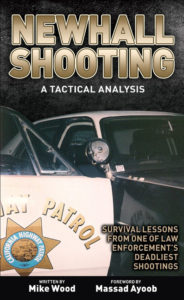
Cincinnati, Ohio (February 3, 2014) – More than 40 years ago, the shooting of four California Highway Patrolmen in Newhall, Calif. dramatically altered the landscape of police training, tactics and equipment. Newhall Shooting: A Tactical Analysis delves into the lessons learned from the incident and questions why many have not been integrated into today’s American law enforcement training.
Authored by Mike Wood, the son of a 30-year California Highway Patrol officer, Newhall Shooting is the most comprehensively researched and documented account of the incident to date. This in-depth study of the 1970 Newhall shooting that left four officers dead offers detailed analysis of the tactics and procedures used by both officers and criminals in the fight, along with diagrams, never-before-seen images of the crime scene and evidence that has never been previously released or discussed.
Wood’s thoroughly researched account will open readers’ eyes to the shooting that stunned the entire American law enforcement community and encouraged vital reforms in training, tactics and equipment. Newhall Shooting includes an examination of CHP training prior to the gunfight, and how a deficient training program can lead to unrecoverable errors in a violent encounter. Armed citizens and law enforcement officers alike will learn valuable lessons about how physiological changes affect gunfight performance. Additionally, Wood challenges the notion that these lessons and vital changes have been fully incorporated into American law enforcement training and shares his perspective on ways to improve modern self-defense training.
Newhall Shooting: A Tactical Analysis by Mike Wood, Gun Digest Books ISBN-13: 978-1-4402-4099-7 ∙ Price: $27.99 ∙ Paperback: 6 x 9
About the Author Mike Wood is an Air Force pilot with over 550 combat hours in Operations Enduring Freedom and Iraqi Freedom, and the son of a 30 year California Highway Patrolman. He is a graduate of multiple government and commercial firearms training programs (including the Federal Law Enforcement Training Center, the Lethal Force Institute and the Massad Ayoob Group), and a lifelong student of self defense.
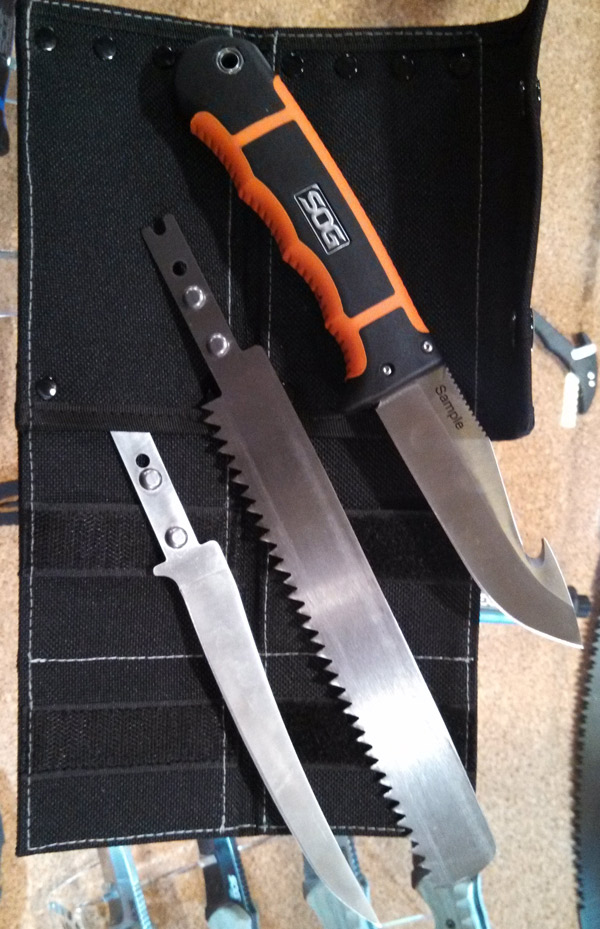
SOG Exchange KnifeSOG’s new Exchange Knife is really three offerings in one. The interchangeable system features a clip-point blade with gut hook, a double-toothed saw and a fillet knife. A unique locking system holds each mid-grade stainless steel blade firmly in an injection-molded handle. (MSRP: $87; www.sogknives.com)
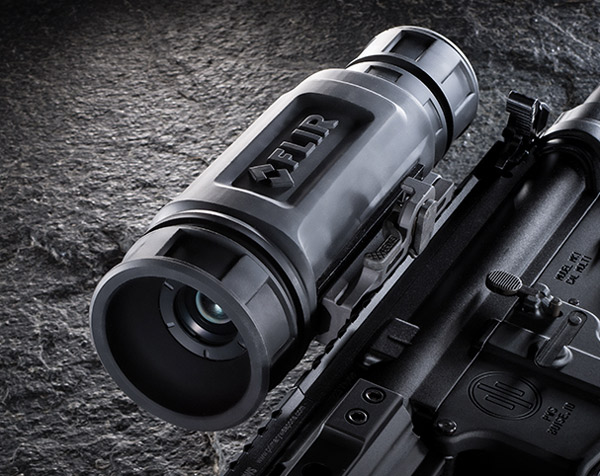
FLIR ThermoSight R-SeriesNight vision technology has taken off in recent years with several manufacturers getting in on the game. The result has been night vision systems that have increasingly been light on the pocketbook. Thermal-detecting optics have always been better option, allowing better game detection, even on the darkest nights. But the price on such units has been astronomical. Now, FLIR has come out with a top-of-the-line thermal scope for the consumer market that, price-wise, falls in line with traditional high-end night vision technology. The FLIR ThermoSight R-Series features a compact design, simple one-handed four-button operation, up to 16X magnification (depending upon the model), three reticle settings and six different detection palettes. (MSRP: $3,500-$9,000; www.flir.com)
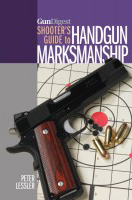
Lessler has an expansive background in shooting, competing in a number of disciplines and tutored by some of best in the field. It was on the latter topic a post at the artoftherifleblog.com caught my attention.
The post was a wide-ranging interview with Lessler on how he honed his marksmanship skills. It is worth a full read. But it was where Lessler discussed his experience learning from Col. Jeff Cooper at Gunsite Academy I became particularly enthralled. As someone born too late to have learned from Col. Cooper personally, I am always fascinated to get a new perspective on the philosopher of the gun.
As would be expected, Lessler’s experience with Cooper boils down to practical marksmanship, geared for the field. And for those who have yet to read some of Cooper’s very worthwhile books, it gives a good glimpse of what one of modern shooting’s most influential instructors aimed to get out of his students:
The theme of the Colonel’s General Rifle class was: A first-round hit on the lethal zone of a big game animal, from a field expedient position, at unknown distance, under time pressure. There is your target, hit it NOW! No shooting bench, no shooting sticks, no laser rangefinder, but a speed-loop sling (back then, the Ching of course), and your speed into a good, appropriate, workable position. Taking your marksmanship skills and techniques and applying them in a practical hunting field situation, where seconds count. No fiddling around. This was something of an eye-opener for me, having been used to the formal and stylized bullseye courses. This non-specialized, practical form of field shooting has become my favorite style.
The Colonel was not a man to brook fools and nonsense, and was mainly interested in the pursuit of excellence. No fluff in that class, no excuses for falling on your face! Know your rifle, its ammo, sights, and trajectory, know how to judge range to 300 yards with your eye, know how to use a loop sling, know how to get a steady position quick, plus know how to properly fire an accurate shot in minimal time. The Colonel was a stern taskmaster, and of course there was nothing frivolous in the course. It was here that I learned the rifle bounce and rifle ten drills. Everything was geared to efficient, real-world, practical success.
We finished the class with two drills: a paper target drill of five 25 yard 1.5 second snapshots to the head of an IPSC target and five more at 50 yards to the body A-zone; and a man-against-man round-robin shoot-off on steel targets at about 65 and 170 yards. Hit your two targets before the other guy hits his. If you are beaten twice, you’re out of it. A fun adrenaline-pumper – how well can you do with “buck fever?”. I managed to come in second on the shoot-off, and was the only student to clean the paper target. It hangs on the wall of my reloading room with the Colonel’s signature on it. Coincidentally, next to another signed one with .45 holes in it from his General Pistol 250 class.
I managed to earn the “Expert” rated certificate here, one of four handed out in this class of about 24 shooters. All in all very worthwhile.
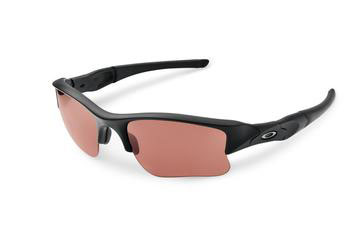
Oakley PrizmEyewear expert Oakley has come out with new shooting glasses that make targets pop from the background. Available in three styles (Ballistic M Frame, Flak Jacket XLJ and Radar Range), the Standard Issue division (military and government) of the company is responsible for the new Prizm glasses. The glasses incorporate the company’s latest technology to reduce eye fatigue and help marksmen focus on the target. They do so by utilizing dyes that when coated on the lens heighten or reduce the wavelengths of the color spectrum. The system makes a particular spectrum of color pop under certain light conditions, thus giving shooters a clear view of their shot. The new Prizm glasses feature the highest optical-grade polycarbonate lens for clarity, as well as the company’s customary impact and ballistic-fragmentation requirements for safety. (MSRP: $150-$263; www.oakleysi.com)
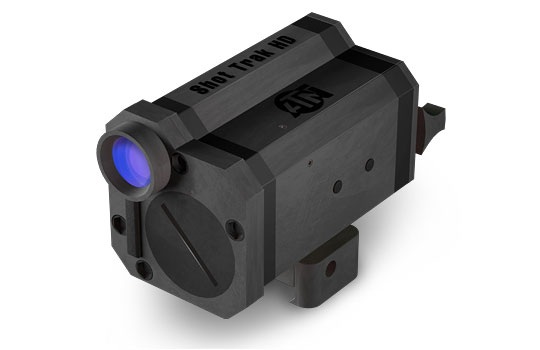
ATN Shot Trak HDFinally, a no-frills, easy to mount high-definition video camera built specifically for shooters. The ATN Shot Trak HD attaches to a standard weaver mount for a quick and easy addition to rifles, shotguns, handguns or bows. The unit weighs a paltry 4.8 ounces and has two features other action cameras lack: 5X magnification (so you can actually see your target beyond 10 yards) and a optional red-laser sight (complete with windage and elevation adjustments). The micro SD slot can accommodate memory cards up to 32 gigabytes for recording in full high-definition at 30 frames per second. The battery lasts two hours on video record and 20 hours for laser-only operational time. Compared to other units on the market, the price is right, too. (MSRP: $150; www.atncorp.com)
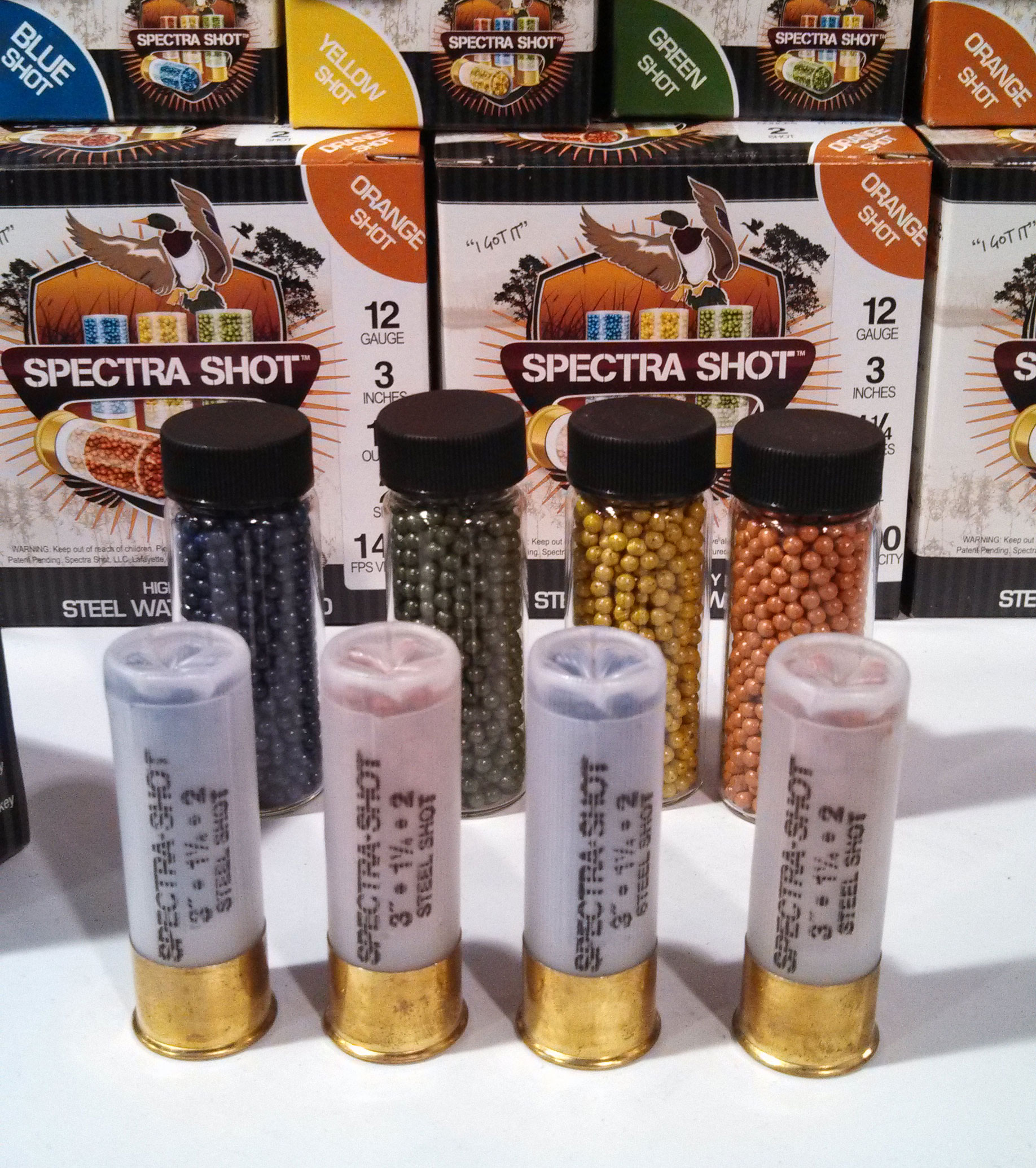
Spectra Shot Shotgun ShellsIf you’ve ever shared a duck blind with someone who claims to hit every bird they pull the trigger on, you’ll appreciate Spectra Shot’s new shotgun shells. The shells feature steel pellets covered in a proprietary coating, colored to allow shooters to definitively identify who hit the bird upon cleaning. Waterfowlers can choose between yellow, orange, blue and green pellets. Three-inch shells with 1-1/4 ounce loads produce a 1,400 fps velocity. They’re available in 2 and 4 shot, with the company working on a BB load. Spectra Shot also manufacturers lead skeet loads that makes it easier for the shooter to pick up the shot string (and thereby make corrections). The lead shot come in yellow, orange, blue or pink loads in 7-1/2 shot. The 1-ounce loads in 2-3/4-inch shells produce 1,200 fps velocity. ($23-$24 per box of 25; www.spectrashot.net)
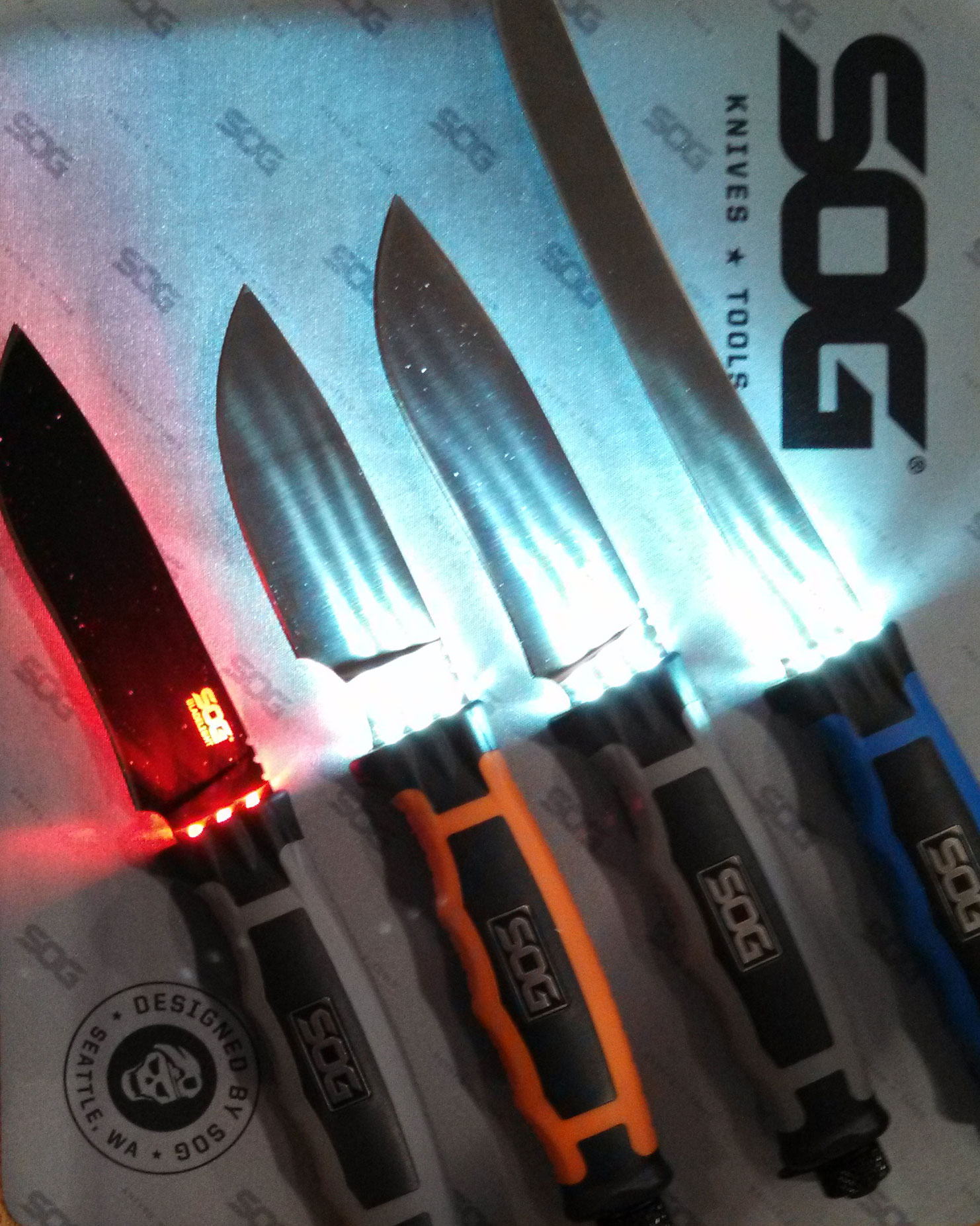
SOG BladeLightThe new SOG BladeLight series features six LED bulbs in the injection-molded handle of five mid-grade stainless steel blades. The series comes in 5.7-inch fixed-blade, a 4.5-inch camp knife, a 3.8-inch hunting knife, a 6 or 7.5-inch fillet knife or a 4.5-inch tactical blade. One AAA battery gives a run time from 138 minutes of use to 282 minutes. (MSRP: $92 to $115; www.sogknives.com)
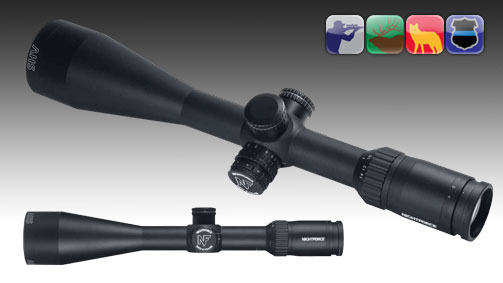
Nightforce SHVFor precision shooters and discriminating hunters after quality optics at a lower price, the new Nightforce SHV (Shooter, Hunter, Varminter) answers your wishes. The new 4-14x56mm variable scope isn’t cheap – that’s just not how Nightforce does things. But compared to the company’s other high-end offerings it is much more affordable. By limiting some options, offering simpler controls, and using a less complex manufacturing process than used to produce their combat-appropriate scopes, Nightforce created a scope that retails for hundreds less than the rest of its catalog. A 30mm tube houses the glass, which allows enough light transmission for dawn and dusk shooting. The optic has crisp .25 Minute of Angle click adjustments on windage and elevation knobs. There are two reticles to choose from, including an illuminated version. And the SHV weighs in at a maximum of 28.5 ounces, making precision more affordable. (MSRP: $995-$1,195; www.nightforceoptics.com)
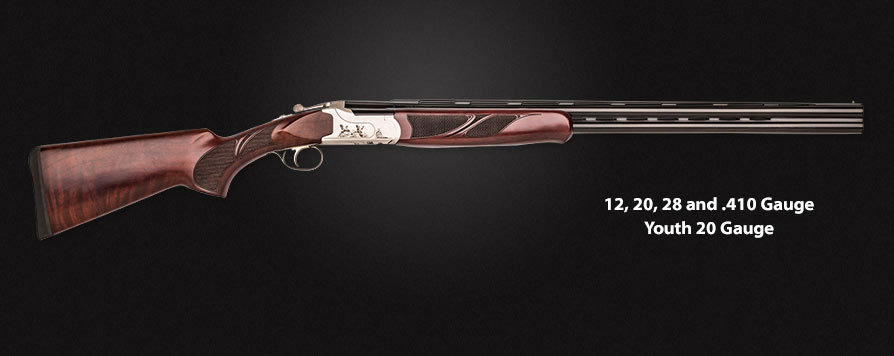
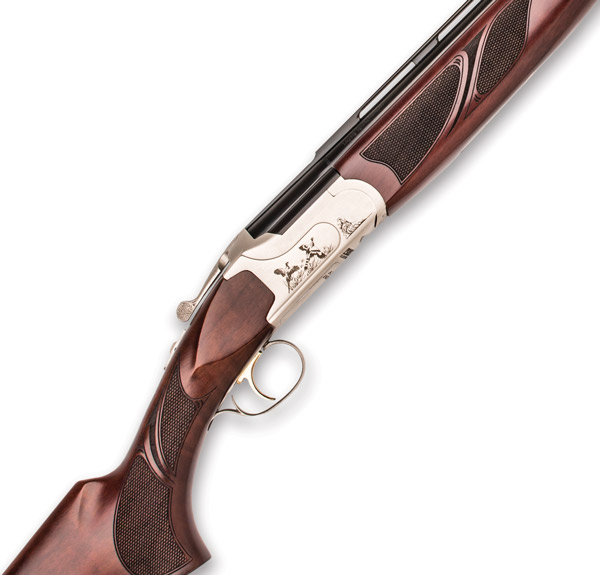
New for 2014 from Legacy Sports International is its Pointer Shotguns line, an over/under sporting series in four gauges – 12, 20, 28 and .410.
The 12 gauge is chambered for 2.75- and 3-inch shells and features a shell ejector. The other gauges are outfitted with shell extractors.
A Pointer Shotgun’s beautifully engraved receiver.
All models come with five interchangeable chokes (except the .410), raised ventilated ribs and brass bead sights.
In all gauges, the barrels are made of high-carbon steel and include chrome moly bores. The barrel length options are 26 or 28 inches.
High-quality Turkish walnut stocks come standard on the Pointer, as does a single selective trigger and auto-reset safety. Also available, a 20-gauge youth model. (MSRP: $660; legacysports.com)
Reloading .22-caliber centerfire cartridges requires precision, but the attention to detail pays off in the field. Accurately loaded rounds can make your next varmint hunt — whether squirrel, woodchuck or coyote — a blast.
The term varmint cartridge to me has always meant those centerfire rounds of the .22-inch diameter. Starting with the Hornet and going up in power, the .223/.224 diameter can be the perfect match of power and accuracy for putting a four-legged pest in its place.
I have generally started my .22 centerfire loading with a 50-grain bullet (the Hornet and Bee the exceptions). In some calibers a bullet weight change of only 2 or 3 grains can be the difference between dime- and quarter-sized groups. The key to the varmint cartridge is matching the bullet weight to the velocity. When the target is only a couple of inches wide, it’s important to pay attention to the little things as they can make a big difference.
For our purposes, we will divide .22 centerfire rounds into two categories on either side of the 3,200 fps barrier. Those under this figure, and this is not meant to be an all-inclusive list, such as the Hornet, the .222 and .223, the Bee and the variations on this case volume, can be delightful performers with negligible recoil and little report.
The Hornet can be somewhat fussy in my experience. There may be only a very narrow window of load/bullet weight that will perform in a certain rifle, but if that load and bullet are found this caliber can quickly become a shooter’s favorite.
Light Loads
In one particular Winchester Model 43 I had just about given up until I hit upon the 40-grain Speer and 12.5 grains of Lil’ Gun powder, a last-ditch attempt to get decent groups. I was not disappointed, and the chronograph showed an average velocity of 2,770 fps for 10 shots. No other load would shoot within an inch at 100 yards in this gun.
I have always been a .218 Bee fan and believe this little cartridge should be much more popular than it is today. For squirrel, head shots late in the season when the range can be long, a properly scoped Bee is unbeatable. For the lever guns, of course, the flat-point bullet is the choice and there is none better than the old Hornady 40-grain Jet if your gun will shoot them, but the Bee has the best performance in the single-shot or bolt-action rifle.
I seriously considered barreling my low-wall for the Bee before I settled on the .38/.357 and to this day still have a pang of regret over the decision. In the Martini I owned I used the 46-grain Speer jacketed flat point and a case packed with 15 grains of IMR 4198 for 2,700 fps, a maximum and compressed load. My two best shots with it took a fox squirrel and a grouse, back to back, within about 15 seconds of each other, the grouse at 50 yards and the squirrel at nearly 100. It’s a great cartridge.
When working with the lightweight loads necessary for the under-3,200 fps crowd, make sure your powder scale is right on the money. We’re talking about adjustments of tenths of a grain and yes, tenths can make a big difference in pressure and accuracy in little cases. Go slow, test your loads and watch for signs of pressure, always good advice but especially with the little guys.
Of the .222 and .223, there are no other calibers that are easier to load. Truly, if you are a rifle shooter, you need one of these in your collection, and it doesn’t matter which one, both are delightful.
Hotter Rounds
For the hot .22 centerfire rounds, the standard has been the .22-250 since it was in wildcat form. All other .22 centerfire calibers today are judged against it. This statement may cause some raised eyebrows among the Swift followers, but the truth is the 250 buried the Swift when it was introduced in factory form. The Swift is a marvelous performance round but velocity isn’t everything.
In an ugly and cheap 788 Remington chambered for .22-250, I worked up to the maximum load of 34 grains of BL-C(2) under the 52-grain Hornady for 3,700 fps that delivered groundhog-eyeball-sized groups, yet from a load so mild in pressure I thought I was shooting a .222.
In the Swift I was shooting at the time, a tang-safety Ruger 77, the only groups under an inch I could get were much hotter with this bullet weight. When I switched to the heavier 60-grain Hornady, the Swift delivered groups under one inch only at .22-250 velocity. In my limited experience, I’ll stick with the 250.
Many years ago a friend introduced me to the .219 Donaldson Wasp, a cartridge he had chambered into a custom barrel for his Ruger No. 1 single shot. He formed his cases from .30-30 brass and loaded 50-grain Hornady soft points over 27 grains of IMR 3031 powder.
Over an ancient Ohler chronograph that load turned up 3,500 fps, and I saw this fellow kill countless groundhogs out to 400 yards with it. He said he had read about the cartridge in one of his father’s magazines when he was a kid and had always wanted one; the delight on his face when he was shooting it is something I will always remember. He did not care a bit that the Swift was faster or the 250 easier to load, he kept the enjoyment of shooting as his first priority. Regardless of your choice in the varmint cartridge field, that might be something to keep in mind.
Top Powder Choices
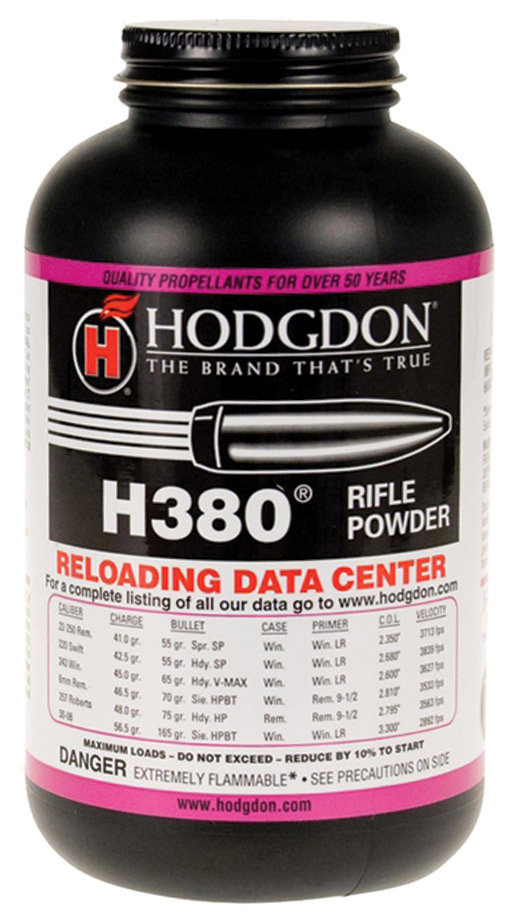
Hodgdon H380 Rifle Powder
For .22 centerfire cartridges try these powders. For the small cases like the Hornet and the Bee, try H4198 and Lil’ Gun, both worth the money for experimentation. IMR 4198 is good also, albeit a bit dirty.
For the .222 and .223, H322 or H335 are the gold standards. I have had good luck with BL-C(2) and the 50-grain bullet in the .223.
For the .22-250, H380 is a great place to start. The old Hodgdon load of 38 grains of H380 and the 52-grain Hornaday hollow point should be printed on every .22-250 rifle sold. The most accurate Swift rifle I ever saw was digesting H380 and 50-grain Hornady bullets. Do not overlook Varget in either caliber.
As with all load data, work up carefully and never exceed maximum loads. Pay attention to tenths of grains with these cartridges; little changes can mean big differences in group size.
This article originally appeared in the March 25, 2013 edition of Gun Digest the Magazine.
The Les Baer Police Special is designed to include every important feature a police officer wants, but none of the stuff he doesn’t and is an ideal home defense option.
The model that was tested exhibited no “receiver wiggle,” and locked up tight as a bank vault. When asked how he achieved such a tight mating of parts, Baer said, “We took our own prints and started eliminating the tolerances between parts.”
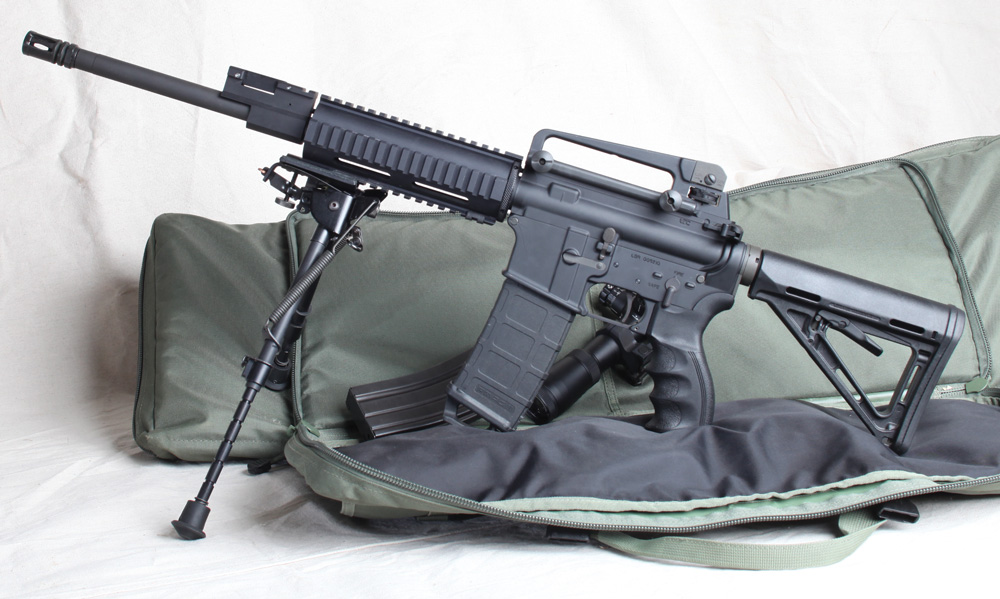
Les Baer Custom’s Police Special Carbine chambered in .223 Remington was such a success that the renowned rifle and pistol builder quickly followed up with additional AR models in new calibers.
“The Police Special is a 16-inch AR that was designed to include every important feature a police officer wants but none of the stuff he doesn’t,” Baer said. “I knew there was a need for a high performance rifle that could serve as either a patrol carbine or a high-energy tactical rifle.”
Most recently, Les Baer Custom added a few additional high-demand LE features, including a new LBC National Match carrier, a new collapsible stock and pistol grip package and an LBC flip-up front sight. And, the Police Special is now available in three high performance calibers instead of just one.
It’s loaded with businesslike features, and it’s intentionally devoid of the accessories that distract from its intended purpose.
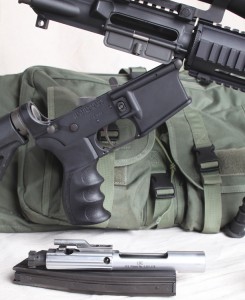
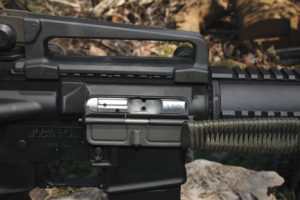
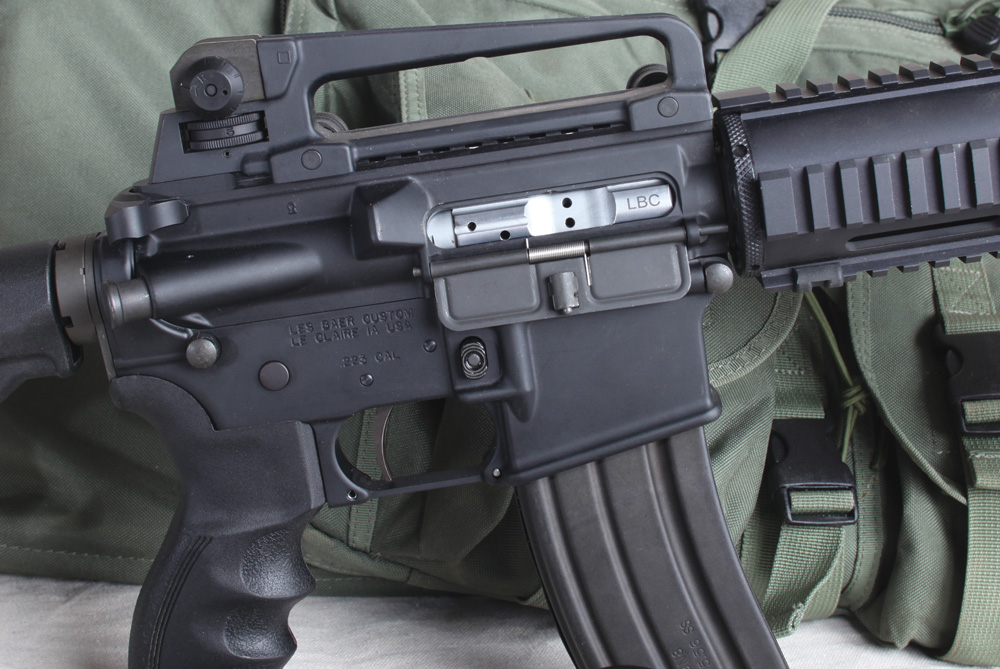
Some of the features included in the newest version of the Police Special are such things as the LBC forged and machined upper and lower receiver, and a chromed LBC National Match bolt carrier.
One of my favorite features is the removable carry handle, which of course incorporates a rear sight. It can be quickly removed to expose an M1913 “Picatinny” flattop rail.
At the heart of this rifle are a precision bolt and extractor, and a 16-inch precision button-rifled steel barrel with a 1:8 twist to stabilize heavier .224 bullets.
Its six-position ATI collapsible stock has an adjustable cheek piece, and the grip is ATI as well. The steel parts are bead blast blued, and the aluminum parts are anodized. Two 30-round magazines were included in the setup tested.
At the muzzle, you’ll find a run-of-the-mill A2 style flash hider, but that’s where “standard” stops and the customization in manufacturing starts. This rifle features an LBC National Match chromed carrier.
“We have the patent on our carrier,” Baer said. “After the upper receiver is hard anodized it gets hand fitted. The little groves in the carrier keeps it centered in the receiver bore.”
One of the benefits of a Les Baer gun is the break-in process. Before it is shipped, every button-rifled gun is fired 60 to 80 times. After every five shots, the barrel is cleaned with Bortech solvent. That’s repeated eight to 10 times.
“On our single-point-cut barrels we average 120 rounds for a break-in,” Baer said. “It takes a lot longer to break them in. The break-in process seasons the barrel. You can tell a lot of difference on the long-term life of the barrel. If you don’t break it in they don’t group as tight, and after a thousand rounds, that’s where you see a difference. The barrels shoot tighter groups for a lot longer. It’s a time-consuming process, and it takes all day to break in just eight guns.”
All of this precision work wouldn’t perform to the standard of a guaranteed sub-MOA gun if it had a mil-spec trigger, so Baer added a single-stage Timney Match trigger group.
“All of our other guns have two-stage triggers, but nobody wants a two-stage in a patrol rifle,” Baer said. This trigger breaks at a clean four pounds.
The Les Baer Police Special is an accurate rig capable of firing sub-MOA groups with four of ten factory loads used in the test.
Police Special at the Range
To run this rifle through its paces, I tested 10 different factory loads. The course of fire was five 5-shot groups at 100 yards.
Throughout the day temperatures ranged from the mid-60s to the low 80s, with winds from the north gusting up to 16 mph creating a cross wind. Near the end of the five-hour shooting session, the winds shifted to out of the west from the target to the shooting position and it rained for 30 minutes.
Changing atmospheric conditions didn’t seem to have nearly as big an impact on group size as did heat mirage coming off the barrel.
When the mirage got excessive, the weapon was cooled for a few minutes. Firing for groups was conducted with a Trijicon 5x-20x variable optic. Velocity data was recorded with a Shooting Chrony chronograph.
While testing, I found that switching loads caused the first five shots to print larger groups. When I discussed this with the veteran gunmaker, he echoed the same findings.
“For some reason, until a load fouls the barrel it doesn’t shoot as tight,” Baer said. “I don’t know if it’s the change in bullet jacket material or change in powder, but it makes a difference. I shoot four or five shots off target with a new load before I fire a couple of five-shot groups and it shoots much tighter.”
After accuracy testing for all loads I swapped scopes to a Trijicon 4x ACOG, and an additional 10 rounds were fired with each load to measure velocities.
I fired an additional 150 rounds off-hand at steel targets at varying ranges. More than 500 rounds were sent down-range during this evaluation with only two stoppages, which was the fault of a worn out surplus 30-round magazine.
Ten factory loads were tested in the Patrol Carbine. Ammunition from Black Hills, Summit Ammunition, Federal, Hornady, Winchester and Silver State Armory was included. The top performer was Hornady’s 55-grain TAP load that produced a five-shot group at 100 yards and measured 0.515 inch. Loaded with the right ammunition, this rifle is sub-MOA capable with ease.
Les Baer Police Special Carbine Caliber: .223 Remington Action Type: Semi-auto, gas impingement Receiver: Anodized, blue steel Barrel: 1:8 twist, 16.25”, button rifled Magazine: 2 30-shot magazines Trigger: Timney Match trigger group Sights: M1913 Picatinny rail, removable carry handle rear sight, LBC flip-up front sight Stock: Six-position, M4 style adjustable stock Weight: 7 lbs., 9 oz. Overall Length: 37 inches with ATI stock extended Accessories: N/A SRP: $1,690 Website: lesbaer.com
The SHOT Show has enough goodies to make any firearms fan’s heart go aflutter. Truly it is difficult to pick favorites from the event that is wall to wall with every shape and size of gun. Really, the only thing the whirlwind of 1911s, ARs and shotguns seems like it’s good for is engorging wish lists to asinine proportions. With that said, I’ve attempted to winnow the the slew of new guns from SHOT 2014 down to a few that really caught my eye. Not saying they’re the best, by any means, only that they look plenty interesting to pull the trigger on.
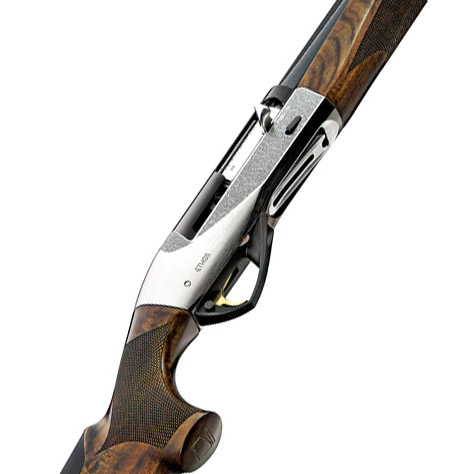
Benelli Ethos
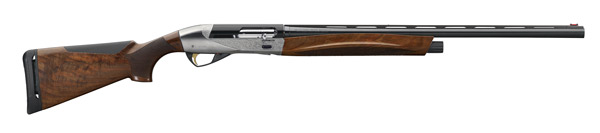
My father passed pheasant hunting and trap shooting down to me. In turn, down deep, I am a shotgun guy. Benelli’s newest model is a shotgun guy’s shotgun. Not only is the Ethos elegantly stocked with high-grade European Walnut and has the option for an engraved nickel-plated receiver. It is also a precision piece of machinery. Benelli’s inertia-driven system is absolutely one of the smoothest in the world of semi-automatic shotguns. This is the type of smoothbore a father would be proud to pass down to their child. MSRP: $1,999. www.benelliusa.com
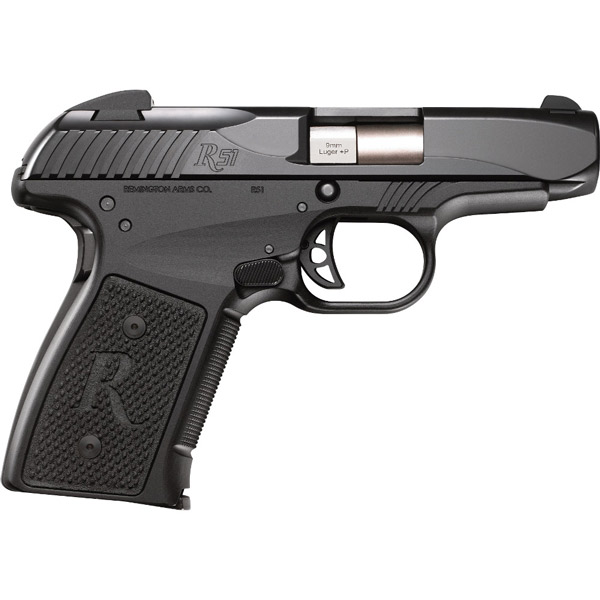
Remington R51
I have to jump on the bandwagon on this one; Remington’s newest addition to its vast catalog appears to have a lot going for it. The R51 is chambered in America’s favorite pistol round – 9mm. It is tested for +P ammunition, giving it plenty of personal-protection punch. It is a slender .96 inches wide and a petite 22 ounces, giving few excuses not to carry it on daily basis. Finally, it is an all-metal handgun with a MSRP of $389! To top it all off, incorporating Pedersen’s action into the pistol should make it appealing to gun geeks of every stripe. MSRP: $389. www.remington.com
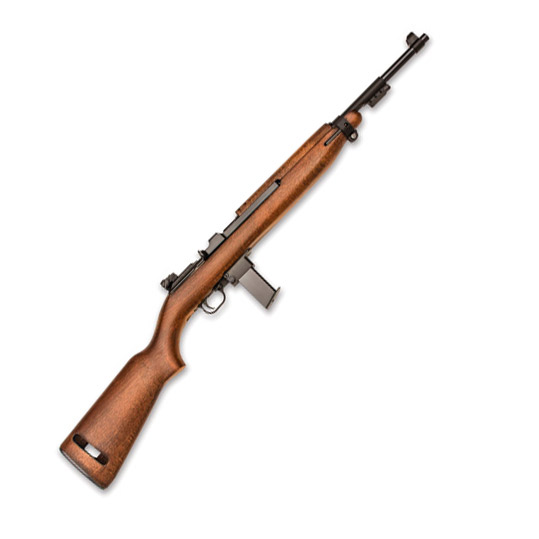
Citadel Arms M-1 9mm
The first version of Citadel’s M-1 – a .22 LR – received mixed reviews, which made me tentative about adding it to this list. What made me throw caution to the wind with the new model? The rifle is chambered in 9mm. The round is cheap, available and did I mention cheap? And it seems to be the perfect marriage with the M-1 platform. If the bugs are worked out from the earlier generation of Citadel’s M-1 than the rifle has a lot of potential. The gun seems like it would be as fun plinking pop cans as it would be mist-ifying ground squirrels. MSRP: Synthetic Stock $539, Wood Stock $642. www.legacysports.com
Looking to go armed, but are stuck in the weeds as to what to arm yourself with? Here are 20 of the best concealed carry gun options that will keep you on the defensive.

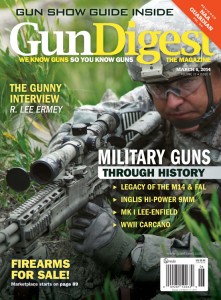 Inside This Issue: