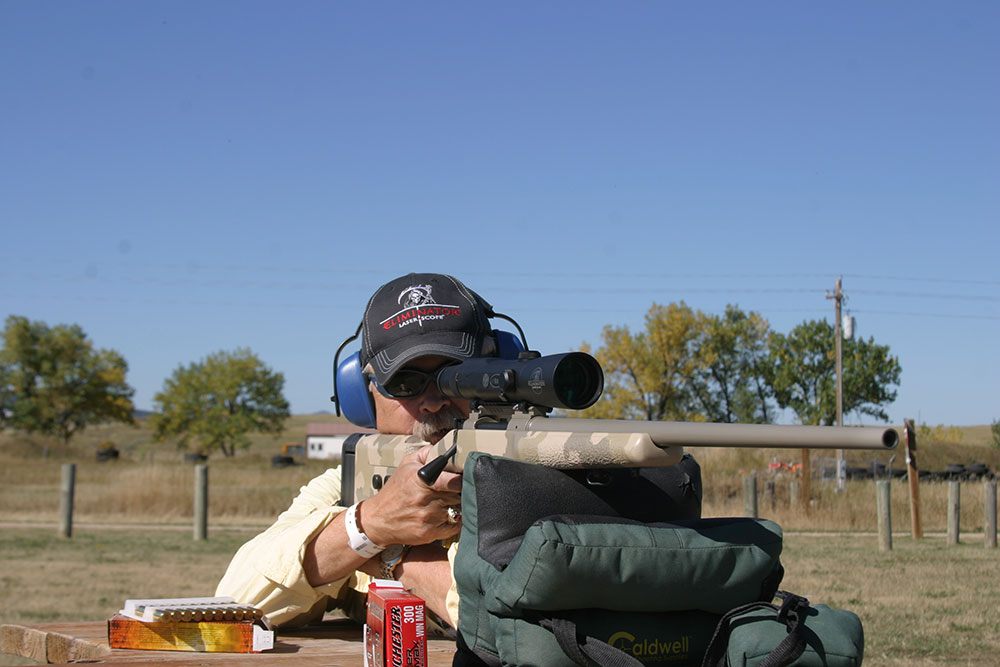
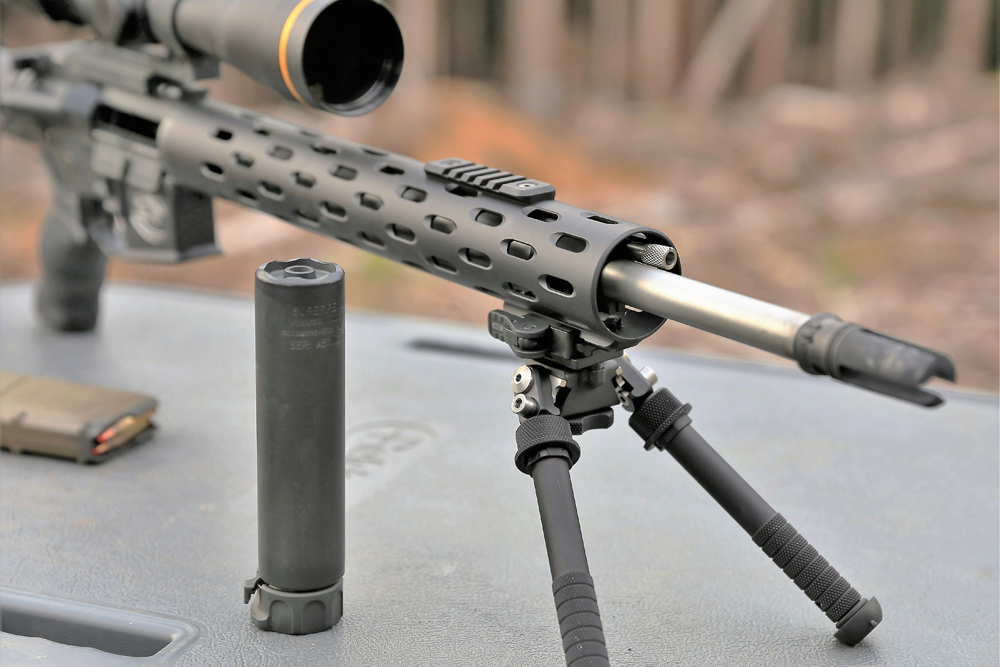
The second-generation model of Surefire’s SOCOM 556 RC suppressor adds to the design while reducing the overall cost.
“If it ain’t broke, don’t fix it.”
Or so the old saying goes. One might wonder, then, why Surefire updated the SOCOM RC to the RC-2. The advancements of competitors may have been one motivator, but increases in technology and experience at Surefire were likely strong factors as well. When The Silencer Shop offered to send me the RC-2 to evaluate, I jumped at the chance. Back in 2013 I used a Surefire RC suppressor in a 3-gun match with good success. The RC had a solid quick-detach (QD) mechanism that attached to the Surefire muzzle brake installed at the factory on my Colt Competition CRP-18. The original RC was quiet, accurate, and performed well. It was marketed as the SOCOM556 RC, indicating it had been awarded a SOCOM contract for use with the Mk18 and M4.
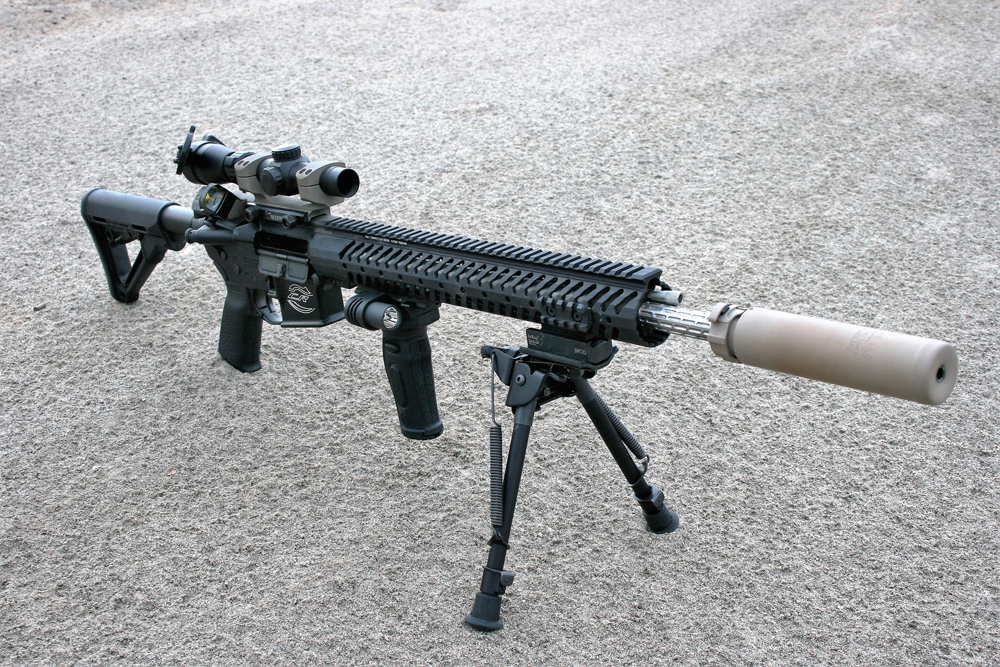
The original Surefire RC, shown here in Dark Earth Cerakote, was a quiet, accurate suppressor capable of withstanding significant abuse. The new Surefire RC-2 improves on this design in several areas.
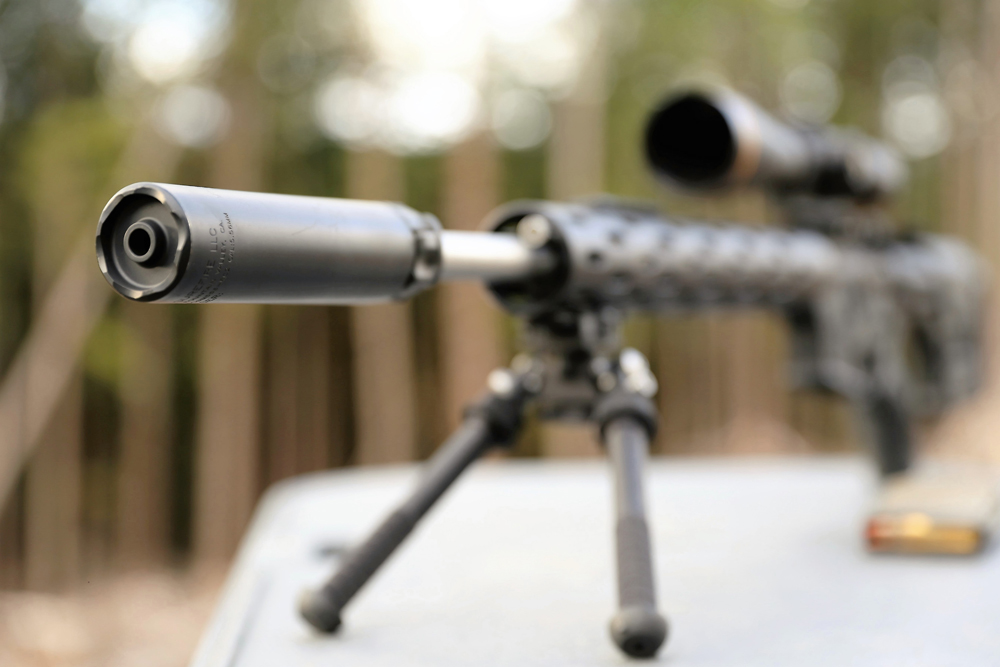
The Surefire SOCOM RC-2 has improved on the original design in several areas. Back pressure, a source of excess gas in the face, was reduced in the redesign. Less back pressure also reduces the cyclic rate of the action, which is of importance to those shooting full auto suppressed. Most civilian users don’t really need a dampened cyclic rate, but having less gas pressure in the action to deal with is a welcome improvement. Durability was improved with the addition of a blast shield in the rear of the suppressor.
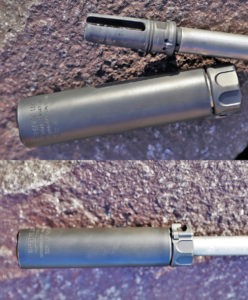
The QD mechanism was upgraded in the RC-2 to provide a more solid lock up by using tapered bearing surfaces. This is something several manufacturers have moved to in the past few years. It seems nobody likes a wobbly suppressor. A less obvious improvement in the RC-2 QD system is that now the index tab is in a low carbon build up area. This makes the suppressor easier to remove after extended shooting sessions. As a seasoned suppressor shooter, I can attest to the utility of this design change. QD suppressors exist that are anything but quick-detach after a few hundred rounds, and there is nothing more irritating than having to take a pipe wrench to a “quick-detach” suppressor.
Point of impact (POI) shift when going from suppressed to unsuppressed varies by brand and model of suppressor, sometimes significantly. The Surefire RC had minimal POI shift in this regard, and the RC-2 retains this feature. The test unit used in this evaluation shifted POI down a little less than an inch at 100 yards when going from unsuppressed to suppressed fire. This shift was consistently repeatable. While many of us simply shoot suppressed almost all the time, this feature is desirable for some users.
One of the most noticeable differences between the Surefire RC and the RC-2 is the price. The RC-2 is cheaper! With MSRPs of $1,395 and $1,095, respectively, the $300 reduction is a welcome change. Made in the USA, the Surefire SOCOM 556 RC-2 is a solid addition to any collection.
Specifications:
Surefire SOCOM 556 RC-2 Caliber: 5.56 NATO Full Auto Rated: Yest Attachment: Brake Mount Weight: 17 oz. Length: 6.2 in. Diameter: 1.5 in. Sound Level: Not stated Finish: Cerakote Materials: High temperature alloys and stainless steel MSRP: $1,095 Manufacturer: Surefire
Editor’s Note: This article is an excerpt from the November 2016 issue of Gun Digest the Magazine.
Over the course of a shooting or hunting career our views and beliefs change, and perhaps the most polar shift over the past 20 years for me has been my reliance on binoculars. When I was in my teens hunting squirrels and deer in Ohio, I never owned a pair of binos; it was a struggle to afford shotgun shells and .22 ammo, and I couldn’t see the value of investing in optics that I considered, at least at that time, a luxury and not a necessity. But I slowly began to appreciate good binoculars and started considering them an essential tool for hunting, shooting and scouting. Today I have no less than four pair of binoculars and I use them almost daily for everything from bird watching to scouting whitetails. There are binos in my hunting packs, in my shooting bag, in my home and in my truck, and I have carried them around the world. I’ve used binos to glass game in south Texas, Montana, Namibia and elsewhere, and almost weekly I help someone else center a rifle at the range by calling shots with my binoculars. I’ve changed my mind. Binos are, in fact, a necessity.
Today there are binoculars to fit every budget and every hunting or shooting situation, from larger, heavier binos that are perfect for serious long-range work on the bench to light, compact binoculars that can be carried to the world’s highest summits. Here’s a look at the best new options for 2016.
Editor’s Note: This article is an excerpt from the October 2016 issue of Gun Digest the Magazine.
Get the most recent advances in guns and gear to extend your range for hunting, informal target shooting, and formal competition. Discover new tools for long-range shooters both in the field and on the firing range, with coverage of new developments from advances in military applied combat theory. Learn more
Ruger has been one of the most well known, and well respected, manufacturers of revolvers for a while now. The company has a history of producing rugged, reliable and high-performing wheel guns, and as a result it has a wide array of double- and single-action offerings.
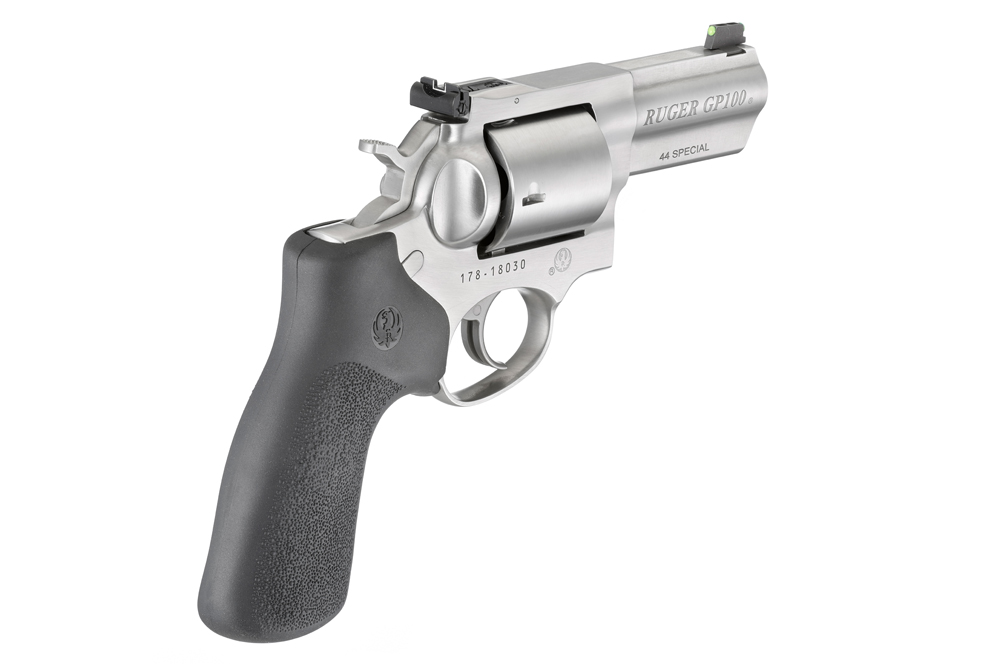
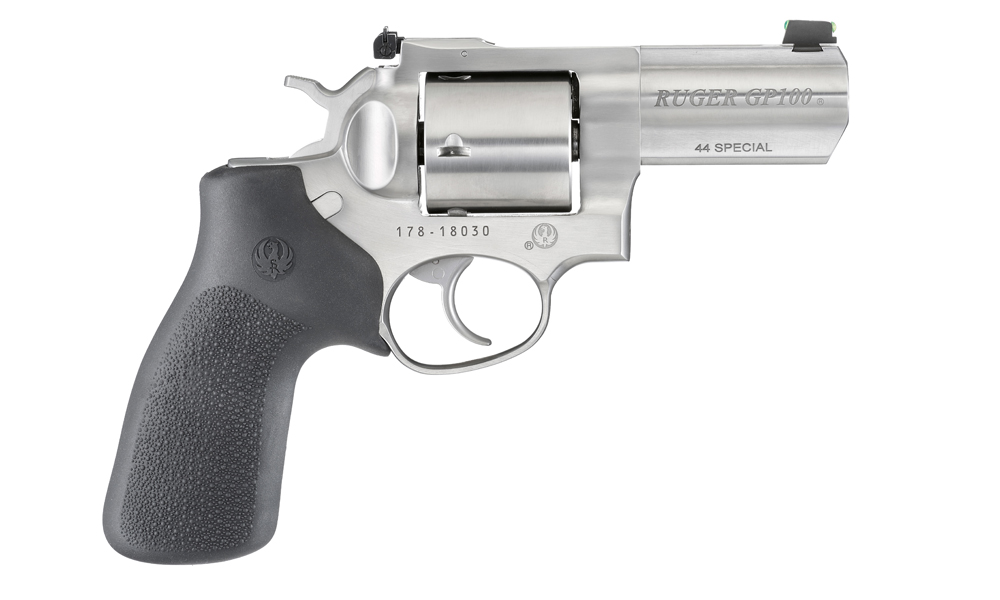
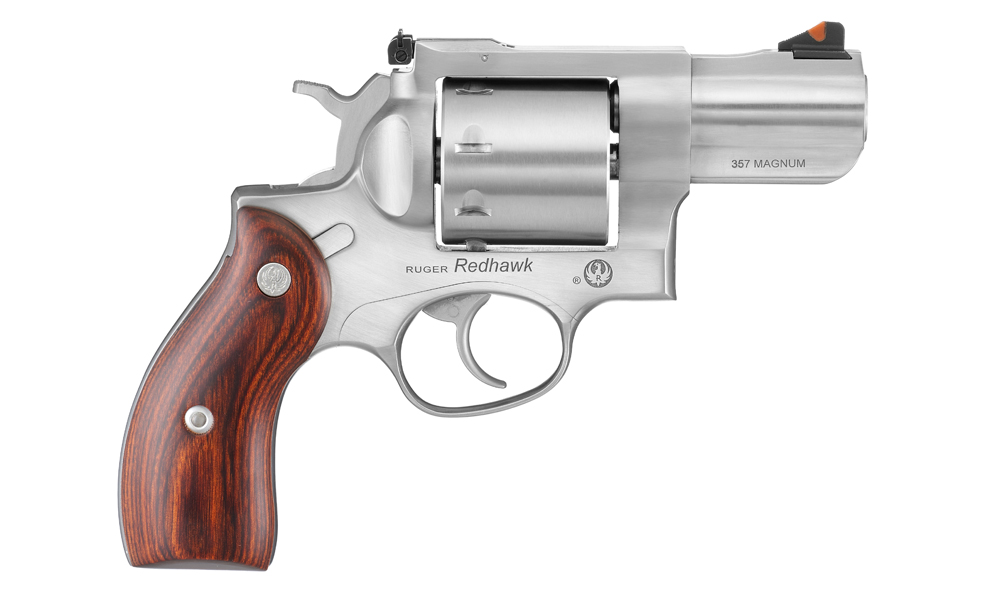
Two of Ruger’s double-action revolver families – the GP100 and Redhawk lines – are going to have a couple new additions for the upcoming year. Ruger has announced that it is expanding these two families with a new GP100 chambered in .44 Special and a new Redhawk chambered in .357 Magnum. The new GP100 will have a five-round cylinder, while the Redhawk will hold eight rounds of .357 Magnum.
The new, big-bore GP100 is an all-stainless steel design that features a three-inch, full-shrouded barrel. It utilizes a smooth Hogue Monogrip without finger grooves, which attaches to Ruger’s proprietary grip frame. According to Ruger’s website, it’s the only GP100 model chambered above the classic .357 Magnum.
The newest stainless steel Redhawk revolver pairs a 2.75-inch barrel with Altamont round butt, hardwood grips to create a compact yet highly shootable package. The un-fluted cylinder features a recessed ejector that allows shooters to easily reload the revolver with moon clips, and the gun ships with three full moon clips, with additional clips and speed loaders being available online at ShopRuger.com. Previous Redhawk revolvers have been chambered in calibers above .40, so the scaled down Redhawk in .357 Magnum should be a real hit.
Both of these new revolvers feature windage- and elevation-adjustable rear sights. The new GP100 utilizes a green fiber optic dot set inside a black square post front sight. Meanwhile, the new Redhawk uses a red ramp front sight, which can be easily replaced with other front sight blades available from Ruger.
The new GP100 in .44 Special is available for $829, while the Redhawk in .357 Magnum is available for $1079. For more information on these two new Ruger double-action revolvers, check out the full specifications for each below, or visit the Ruger website.
Specifications:
Ruger GP100 Type: Double-action revolver Caliber: .44 Special Barrel: 3 in., stainless steel Overall Length: 8.5 in. Weight: 36 oz. Grips: Hogue Monogrip Front Sight: Green fiber optic set in black square Rear Sight: Adjustable, windage and elevation Finish: Stainless Capacity: 5 rounds Price: $829 Manufacturer: Ruger
Ruger Redhawk Type: Double-action revolver Caliber: .357 Magnum Barrel: 2.75 in. Overall Length: 8.25 in. Weight: 44 oz. Grips: Hardwood Front Sight: Red ramp Rear Sight: Adjustable, windage and elevation Finish: Stainless Capacity: 8 rounds Price: $1079 Manufacturer: Ruger
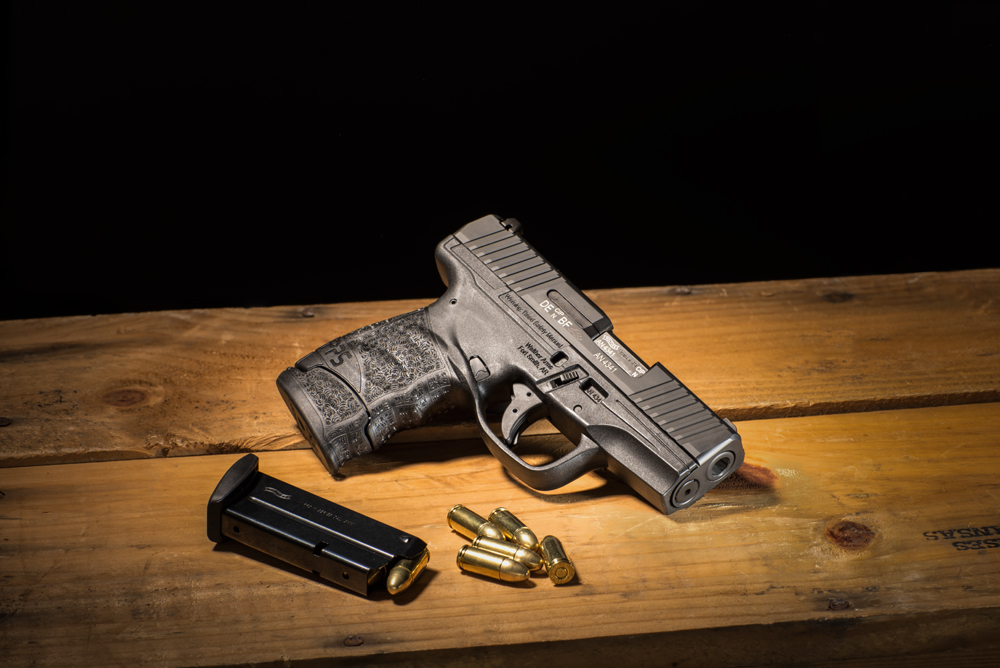
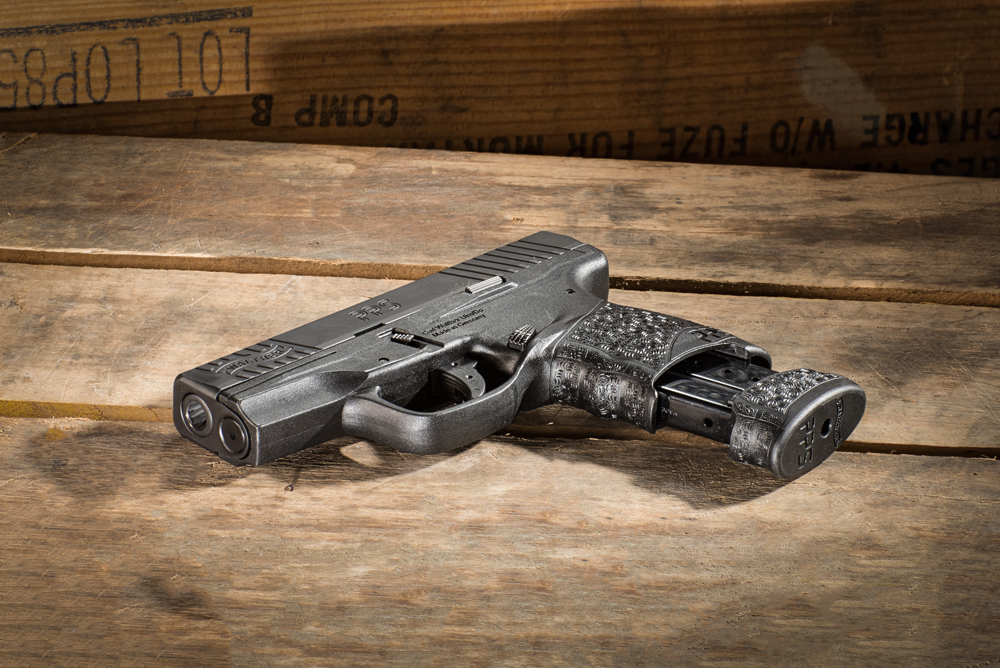
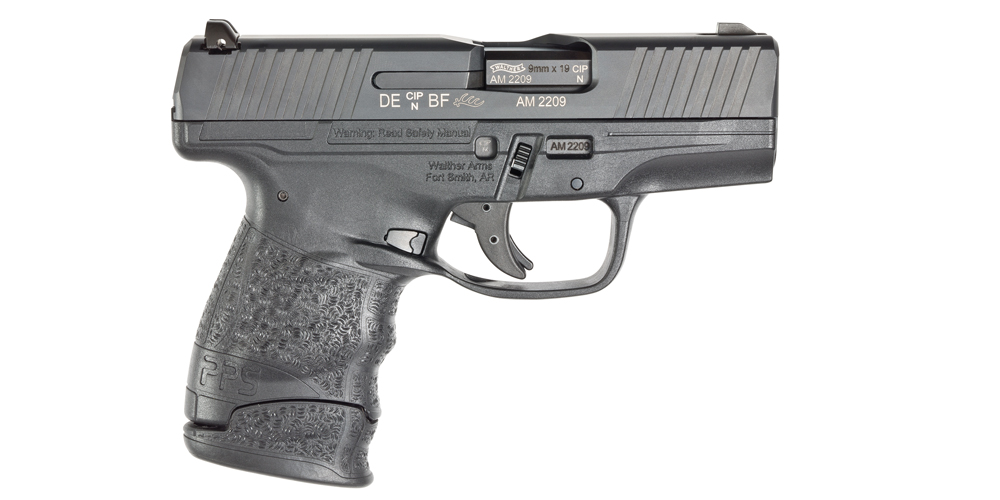
Evolution is inevitable. The way we have defended ourselves over the past 3, 10 or even 100 years has changed tremendously. Better ammunition, pistol designs and manufacturing methods have given concealed carry holders a wider range of options. Engineers at Walther are always looking for ways to produce a better pistol—more accurate, lightweight, user-friendly and affordable. In fact, the company has always been on the cutting edge of modern pistol design, and the new PPS M2 is a perfect example of Walther’s dedication to refinement in a concealed carry pistol.
Some might say that the Walther PPS M2 is “new and improved.” I hate this expression because it infers that what came before was “old and lousy,” and in no way is that the case with the Walther PPS Classic. The PPS Classic is a refined, reliable and accurate personal defense or backup pistol. Thin and flat with flush-fit and extended magazine options and modular back straps that offer a custom fit for most hands, the PPS Classic proved itself to be an excellent single-stack pistol chambered in either 9mm or .40 S&W. Yes, the PPS M2 is new, but it’s not just the Classic re-skinned with aesthetic changes. This is a new pistol inside and out.
The PPS M2 incorporates the ergonomic Walther grip, similar to the style found on the PPQ, with a texture that ensures a shooter has a good purchase on the pistol. It also provides a slight palm swell and shallow finger grooves to give the pistol a big-gun feel without giving it big-gun bulk. The polymer frame features a ridge for the trigger finger and thumb of either a right- or left-handed shooter that channels them toward the trigger during the draw. The grip is smooth and comfortable with your trigger finger extended in the ready position along the frame.
The polymer frame omits the modular back straps and accessory rail of the PPS Classic. I question the need for an accessory rail on sub and compact carry guns anyway. I prefer no rail as it’s less bulky and will allow for easier re-holstering. The result is a smoother nose to the PPS M2 with radiused leading edges to aid holstering.
If the grip design is a new direction for the PPS series, so too is the magazine release. The M2 uses a thumb-operated magazine release. If there was a feature on the PPS Classic that some had difficulty warming to, it was the ambidextrous paddle-style magazine release built into the rear of the trigger guard. We Americans like our magazine release to be operated by our thumb, and Walther has obliged.
The checkered button is flush with the edge of the finger channel and easy to operate. In fact, the PPS M2 spits out empty magazines like they were a bad taste in its mouth. Fast and consistent. Something to note: The Classic and M2 variants of the PPS do not share magazines. Because the M2 uses a thumb-operated magazine release, Walther engineers were able to make an under cut at the rear of the trigger guard. This permits shooters to have a slightly higher grip on the pistol to better manage recoil and muzzle flip.
Walther also placed front and rear slide-cocking serrations on the PPS M2. Some subcompact 9mm pistol slides are notoriously difficult to manipulate due to the small size of the pistol and the weight of the recoil spring. Add an oily gun or sweaty hands to the equation and the situation is only worsened. The large, coarse serrations on the PPS M2 make this pistol very easy to operate.
The steel fixed three-dot sights are big and bold with three large white dots. The sights can also easily be removed to upgrade to night sights or to change the front to a different height, depending on your needs. The slide rides on steel inserts in the polymer frame. On the right side of the frame, the steel guide is one piece and nearly three-quarters the length of the frame; the left is broken into two sections to accommodate the slide stop lever. That extended steel guide insert no doubt helps accuracy, as does the solid guide rod and dual recoil springs. The dual recoil springs also help mitigate felt recoil.
The short, 3.18-inch barrel features polygonal rifling. Compared to conventional rifled barrels of the same length using the same ammo, the PPS M2 eked out a bit more velocity. Looking at my range data, it looks like about 10 feet per second (fps) extra. Not wildly more, but an edge. A small cutout on the top side of the barrel acts as a loaded chamber viewing port.
I spoke with Everett Deger at Walther Arms about the changes to the PPS. He pointed to the trigger on the M2, which is a new design.
The PPS Classic used a modular backstrap that allowed users to change the size of the grip back straps as well as disable the pistol when the back strap was removed.
“The new PPS M2 simplifies the trigger and aids in what would be considered a tangibly feeling, smoother trigger, although it isn’t necessarily lighter than the previous PPS,” Deger said.
When I asked about the fate of the PPS Classic, Deger said the model will continue to be supported under Walther’s Lifetime Warranty; however, the model will officially be discontinued in the summer of 2016 to make way for the new M2.
The trigger is wide and serrated on the edges, giving it the feel of a full-size pistol trigger. It is a lot like the Walther PPQ trigger, but they are different. The factory states the trigger pull of the M2 is 6.1 pounds; using my Lyman digital trigger pull gauge I averaged 5.9 pounds. The pull is smooth with a bit of take up. As you continue the trigger press, you’ll notice the cocking indicator starts to protrude from the rear of the slide. The rest of the press is clean at the trigger break. Reset is also fairly short, allowing a user to get off a faster follow-up shot if required.
Magazines for the PPS M2 come in three sizes: a six-round flush-fit, a seven-round extended and an eight-round extended with finger rest. The flush-fit magazine keeps the footprint of the M2 compact and extremely manageable for concealed carry. My sample shipped with the six- and seven-round magazines. I preferred to shoot the pistol with the extended seven-round magazine because I could keep my entire, average-size hand on the grip for maximum control. Using the flush-fit six-round magazine, I needed to curl my little finger under the floor plate.
After my initial range testing, I didn’t waste any time and started carrying the PPS M2 concealed in a Blade Tech IWB Klipt Ambi holster I had on hand. The new Walther fitted the Blade Tech fine after I tweaked the retention screw. Carrying the PPS M2 in appendix carry proved to be comfortable with easy access to the pistol. I use my framed diploma as a target when doing dry-fire practice draws, and if that had been live fire, the holes would have been a seal of approval.
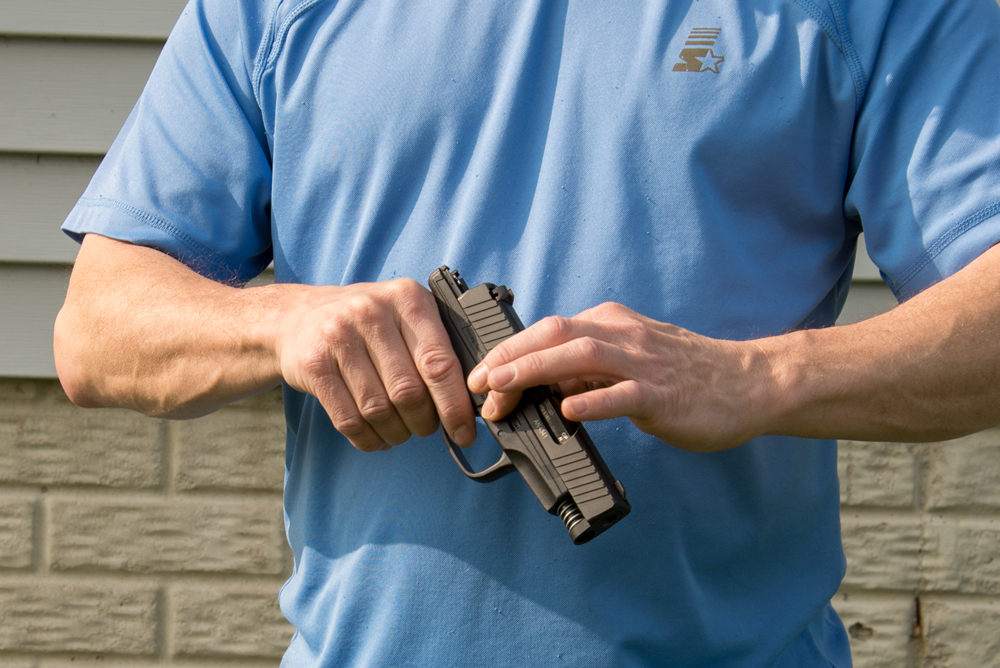
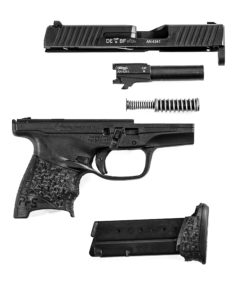
Fieldstripping is simple. Pull down on the takedown lever and the slide will move forward; from there it can be removed from the frame. You don’t need particularly muscular fingers to remove the recoil spring and guide rod assembly, either.
I conducted accuracy testing using a rest at 15 yards. I also fired at 25 yards and 5 yards. The PPS Classic has a great reputation as a reliable pistol, so I assembled four types of 9mm ammo in a variety of bullet weights. (Note: The manual advises against using +P ammo in the M2). A .40 S&W caliber is slated for mid 2016. Winchester Defend and Train ammo is paired ammo: the Train using a 147-grain FMJ bullet and the Defend a 147-grain JHP. Both are loaded to a similar velocity so your training and defense rounds will perform similarly. I also used Aguila 115-grain FMJ bullets and Hornady American Gunner with 115-grain XTP bullets.
I could cover my first three-round group with the Aguila ammo using the flush-fit magazine with my thumb. Reloading with the fuller grip of the seven-round extended magazine allowed me to get surgical. The Aguila five-shot group at 15 yards was nearly one ragged hole. No matter what I fed the PPS M2, I was getting groups that averaged less than 2 inches. When I did my part, the PPS M2 rewarded me with stellar five-shot groups. I liked the trigger press a lot. Up close in rapid-fire drills, the M2 was easy to control. At 25 yards, my groups opened up, which I expected. Yet I found the M2 had excellent accuracy. There was not even a hint of a malfunction with the M2. It chewed up the 9mm ammo and spat it out even when I tried confusing it by firing with a limp wrist. The enlarged ejection port ensured empties were tossed aside without incident. As this excellent new gun attests, evolution is most typically a good thing in the firearms industry.
Picking the appropriate long-range cartridge is an important part of putting together the right setup for long-range shooting.
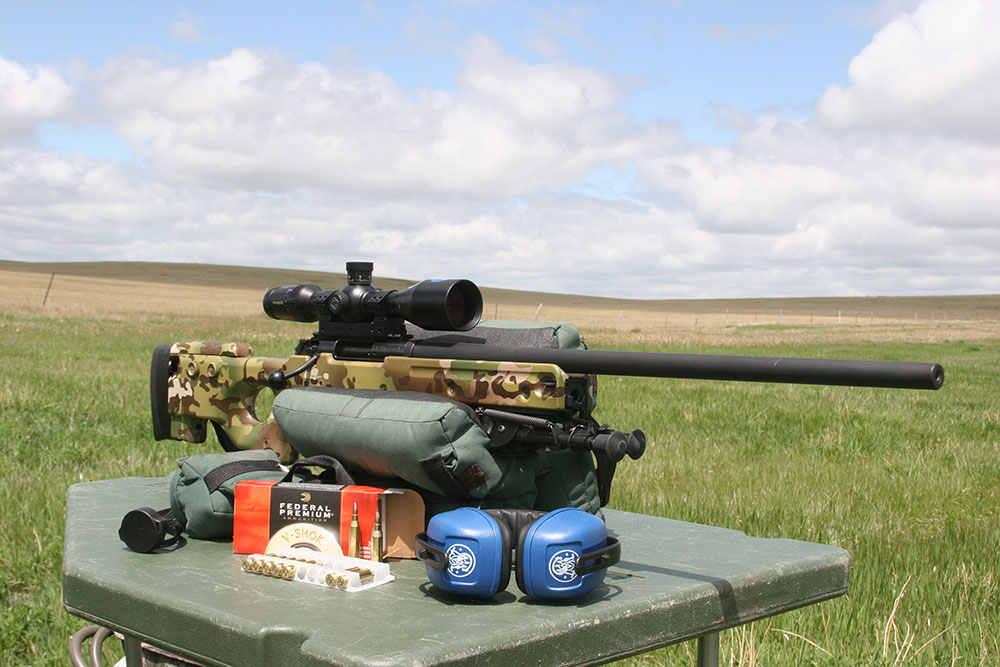
Let’s cover some basics of selecting an appropriate long-range cartridge here. Between the old and proven standbys and the hot new kids on the block, today’s long-range shooter has nearly as many cartridges to choose from as they do guns. Not all are created equal; some really only shine in a limited range of applications. Too, some cartridges are best left on the dealer’s shelf.
Assuming you have decided on a rifle model designed for long-range shooting, the next step is selecting a cartridge for that new shooting stick. Here there are some things that need to be addressed in making that decision.
First off, looking at a list of possible cartridges, you will see huge differences between them. This includes recoil levels, price per round, basic working range applications, and even specific rifle types.
Second, you’re not likely to find factory rifles chambered in some of the exotics. Buying a 6mm-284 over the counter or one in 7.82 Warbird is highly unlikely. Such rounds are mostly proprietary propositions, and that means custom rifles.
Understand that the first rule in selecting a cartridge for long-range shooting is that more power and powder are required to get the job done.
That means the big cartridges, such as the .300 Winchester Magnum or the 6mm-284 that is, of late, so popular, will push more bullet further with less drop at longer ranges. Take the .300 Winchester Magnum, for example.
This .338 Winchester-based cartridge uses a .30-caliber bullet and is, without question, the most popular super long-range .30-caliber of all time. Army snipers like it, as do law enforcement units needing a tool that effectively punches out to tough targets. For the long-range sport shooter, the .300 Winchester Magnum is also king, because it can send heavy Very Low Drag (VLD) bullets to 1,000 yards against warm targets and still accurately hit the vitals.
At the same time that you need more powder and bullet to shoot effectively at distance, you don’t want to overdo the recoil (nor overestimate your tolerance level for it). Shoot too much cartridge and you won’t shoot well—at all. Using the same .300 Winchester Magnum as an example, a sensitive shooter can quickly develop a flinch.
Another thing to take into consideration is that big, high-power, long-range rifle shooting almost always requires a spotter at your side while you’re shooting. Recoil levels are so high that the target becomes a blurred-out image upon cartridge ignition. (Well, unless the target is so far away that the rifle and scope have time to settle down prior to the bullet’s impact. Believe me, that won’t happen very often, if ever.) Do you have a partner you can work with regularly? If not, you’re going to spend a lot of time walking or driving back and froth from bench to berm.
What you need to do is select a maximum distance that works best in terms of a cartridge choice and generated recoil levels, then go to work learning everything you can about the performance of that given cartridge.
Still too much to sort through? Try this. As long as I have been shooting long-range targets, I’ve tended to like cartridges like the .243 Winchester, .243 WSSM (Winchester Super Short Magnum), the never-to-be-discarded .25-06 Remington (the best of the wildcats to go commercial), and the workhorse .308 Winchester. Learn any one of these cartridges well and you will do some serious damage to some very long-range targets.
They will send bullets to long ranges and do so without the massive recoil that can cause shooter fatigue. If you must have more, on the high-recoil and -energy end of things, I do shoot the 7mm Remington Magnum in a Ruger No. 1, as well as a .50 BMG upon occasion, but with far less frequency than other rifle/cartridge choices—the reasons should be obvious.
The final rule about cartridge choice is to stay within your means. By moving to some exotic caliber in a full custom rifle, you’re going to have to pay a good deal more per round (and that after the high cost of the rifle), sent downrange in every case. You can shoot a whole lot more .22-250 or .25-06 than you can 6mm-284 or even a .300 Winchester Magnum for a given amount of money.
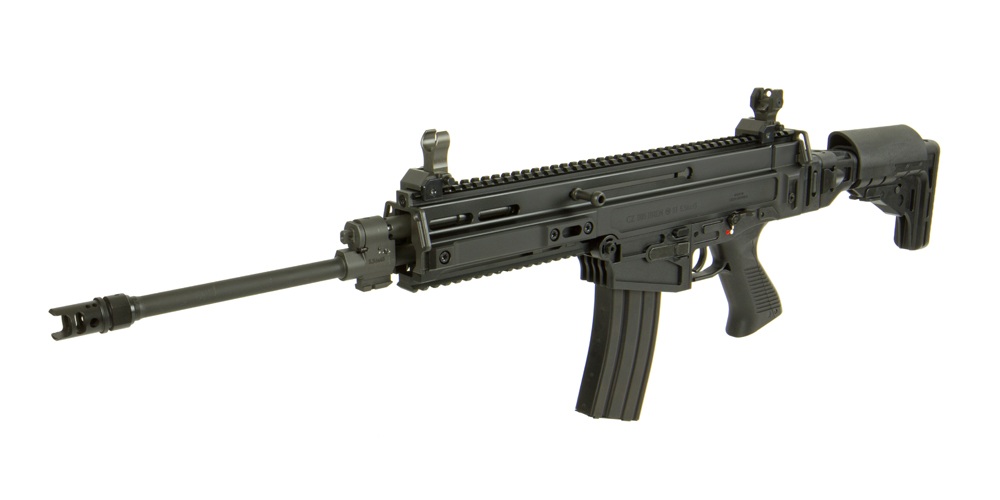
The Czech military’s excellent piston-operated 805 Bren is now available to U.S. shooters in a semi-auto version, and it doesn’t disappoint.
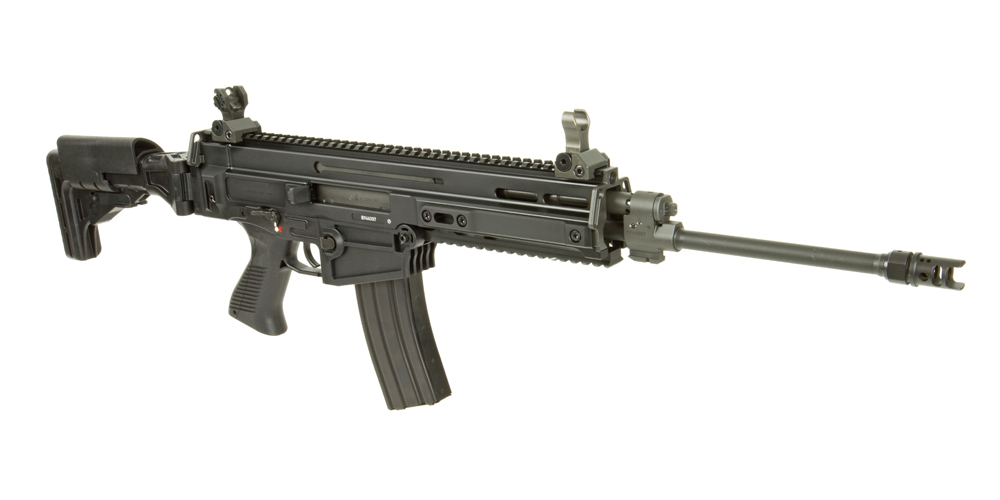
The Czechs have been making some very high quality firearms for many years, and that tradition continues with the CZ 805 Bren S1 Carbine. It’s a lightweight, semi-automatic with a 16.2-inch barrel chambered in 5.56x45mm, the standard NATO cartridge.
Many people familiar with firearms mistake it for the FN SCAR 16S. There are similarities and differences, some considered significant and some of no consequence, depending on preference. A few are addressed here, but let’s first discuss the name, which has been applied to a few different firearms.
The use of the word “Bren” in naming guns traces back to the mid-1930s when the British were in search of a reliable light machine gun. Several designs were submitted for testing, one being the Czech ZB vz. 26 made in the Czech city of Brno. Tests revealed the gun as better than the other entries, but it needed modifications to make it suitable for use by the British. After a number of changes, the military adopted the improved gun.
Agreements were made with the Czechs for it to be produced at the Royal Small Arms Factory at Enfield Lock, which led to the name Bren—a combination of BRno and ENfield. At least one expert has described the Bren as “the finest magazine fed light machine gun ever put into service by anyone at any time.” Given this, it is no wonder that the Czechs have continued to use the Bren moniker for current production models.
Features
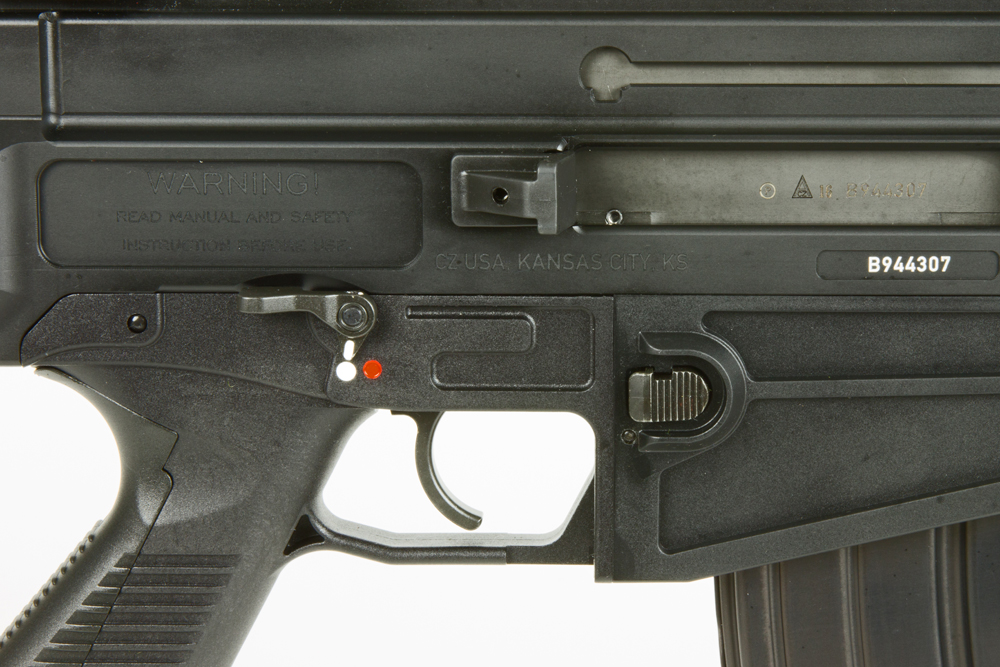
The original select-fire 805 Bren is a standard arm of the Czech military, but it’s now available in the U.S. in a semi-automatic version. Made in the city of Brno by Ceska Zbrojovka, it is imported into the U.S. by CZ U.S.A. located in Kansas City, Kansas.
On the front end of the lightweight barrel is an effective muzzle brake that, while loud, does an admirable job of reducing felt recoil and muzzle rise. Admittedly, the 5.56 NATO round is pretty tame and isn’t known for heavy recoil, but the brake does make follow-up shots a bit faster.
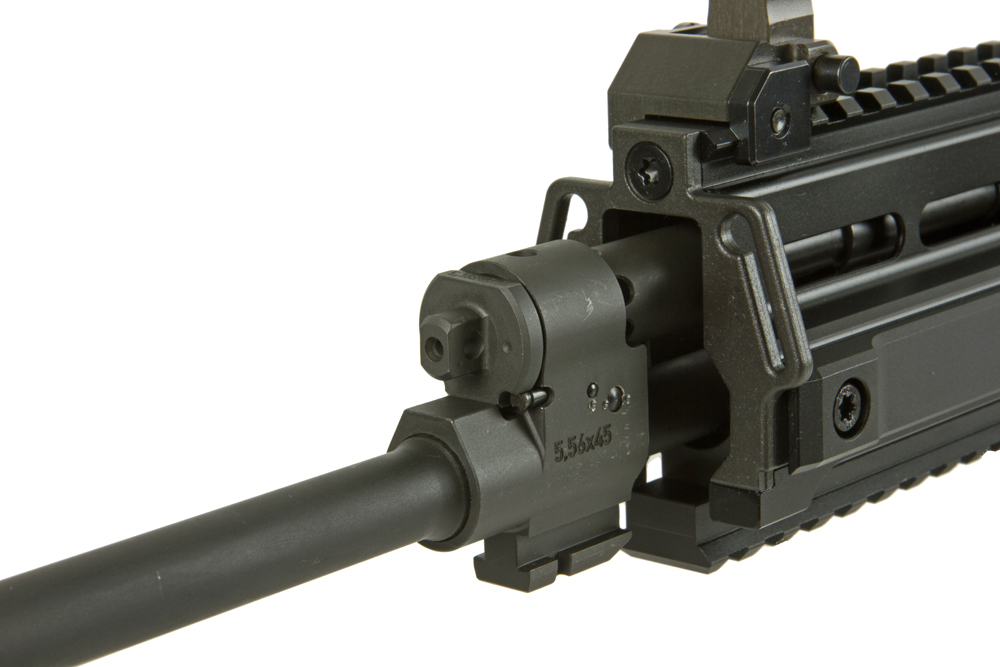
The gas piston action also helps reduce felt recoil. There are two settings, one for normal operation and the other for adverse conditions when the gun is extremely dirty and more gas is needed to operate the action. A spring-loaded detent must be pressed to rotate the gas valve setting or to remove the gas piston assembly for cleaning. Beneath the gas block is a bayonet lug, something the SCAR 16S lacks.
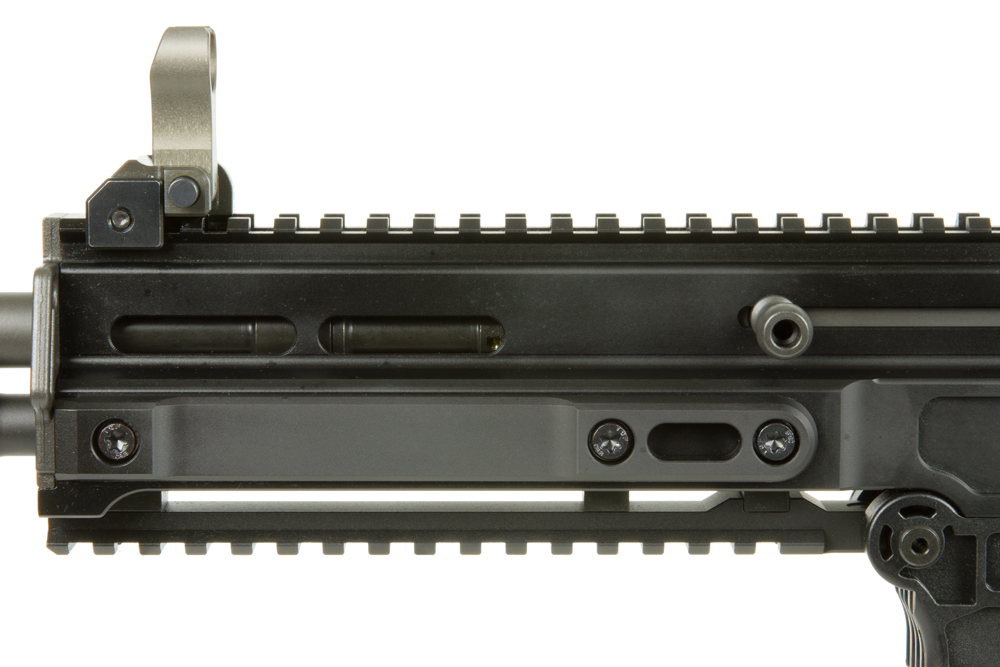
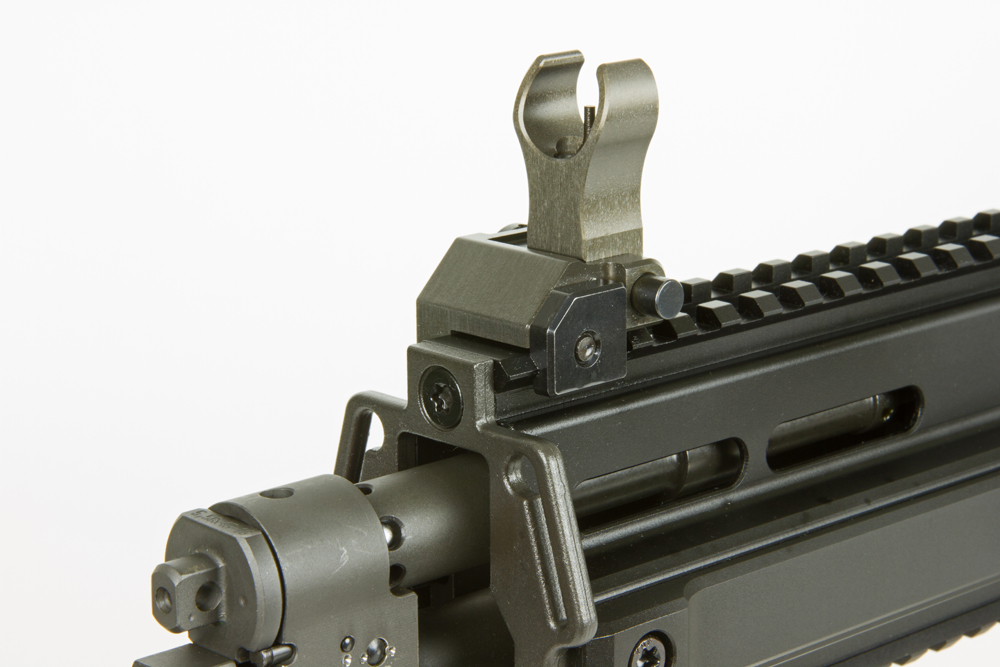
The aluminum upper receiver has a Picatinny accessory rail running from the front of the handguard to the rear on which flip-up front and rear iron sights are mounted. Both are alloy, not polymer, with the rear having a large and small aperture. It is adjustable for windage, whereas the front is an elevation-adjustable post surrounded by protective wings.
Another Picatinny rail is located on the bottom of the upper and runs from the front of the magazine well to the front of the handguard. There are no rails on the sides like there are on the SCAR.
The charging handle can be easily installed on the left or right, while the magazine latch and safety selector are ambidextrous, making the 805 right- or left-hand friendly. Although the bolt is held back after the last round is fired, the bolt latch is located only on the left side of the receiver. To release the bolt to return to battery, the charging handle must be retracted and released. The SCAR’s bolt can be released the same way, but also by pressing the bolt catch toggle on the left side. The charging handle reciprocates when the gun is fired.
Controls
Those shooters with small- to medium-size hands will find the reach to be longer than on an AR or the SCAR. Some may have difficulty reaching the controls without altering their grip. For an even longer reach, the grip backstrap can be replaced with a larger one available from the manufacturer.
The two-stage military trigger broke at just less than 5 pounds after a short take-up and just a small bit of creep. It’s not a bad trigger for a stock unit. And the gun is designed to accept standard AR-15 style magazines. It is supplied with two, and the magazine well is beveled for faster reloads.
The 805 has a polymer buttstock that can be folded to the right by pressing a button and can be adjusted for length. A non-slip rubber buttpad is installed, and the cheek piece on the comb can be moved from one side to the other.
Take Down
Field stripping for cleaning purposes is simple and requires no special tools. First, after making certain the gun is unloaded, the charging handle is retracted and allowed to go forward. The safety is engaged, and then the front takedown pin is removed. This allows the lower receiver to be moved slightly forward and pulled down, separating it from the rest of the gun.
Next, the rear takedown pin is removed and then, while pressing the takedown button at the rear of the upper receiver, the buttstock assembly slides down and away from the upper. This allows the recoil spring assembly to be withdrawn from the rear of the upper. Then the bolt carrier assembly is pulled to the rear using the charging handle and when the charging handle is aligned with the cutout in the receiver, it is withdrawn which allows the bolt carrier to be removed from the back.
The gas piston assembly is removed by rotating the valve 180 degrees while pressing a spring-loaded detent with a pointed object. The assembly can then be pulled forward and separated from the upper. The gas valve and piston are then easily pulled apart. Those familiar with the SCAR 16S may wonder why disassembly stops here and the bolt and firing pin are not removed from the bolt carrier. To do so requires a punch to drive retaining pins, something that is not easily done in the field and is probably best left to a gunsmith or armorer.
On the Line
The gun proved to be plenty accurate for a gun designed for self-defense, target practice, hunting or fun. Groups averaged around 2 inches at 100 yards, much better than the military standard for the M4 carbine. The best group was delivered by Black Hills 75-grain Match Hollow Point ammunition.
This gun has a lot of features for shooters interested in something other than an AR-15. And with an MSRP of $1,999 compared to the SCAR 16S MSRP of $2,995, the CZ 805 Bren S1 Carbine will appeal to many. For more information, contact CZ-USA, 800-955-4486, CZ-USA.com.
Specifications:
CZ 805 Bren S1 Carbine Type: Semi-auto, short-stroke gas piston Caliber: 5.56×45 NATO Barrel: 16.2 in., 1:7 twist Overall Length: 39 in. Weight: 8.02 lbs. Stock: Polymer Sights: Windage and elevation adjustable, flip up Finish: Black anodized Capacity: 30+1 rounds Price: $1,999
Editor’s Note: This article is an excerpt from the Fall 2016 issue of Gun Digest the Magazine.
Serious competitive trap, skeet and sporting clays shooters can be pretty selective in terms of the shells they use for competition. They demand a lot from their shotshells, and one of the brands that has found tremendous success with competitive shooters over the years is Federal Premium’s Gold Medal line.
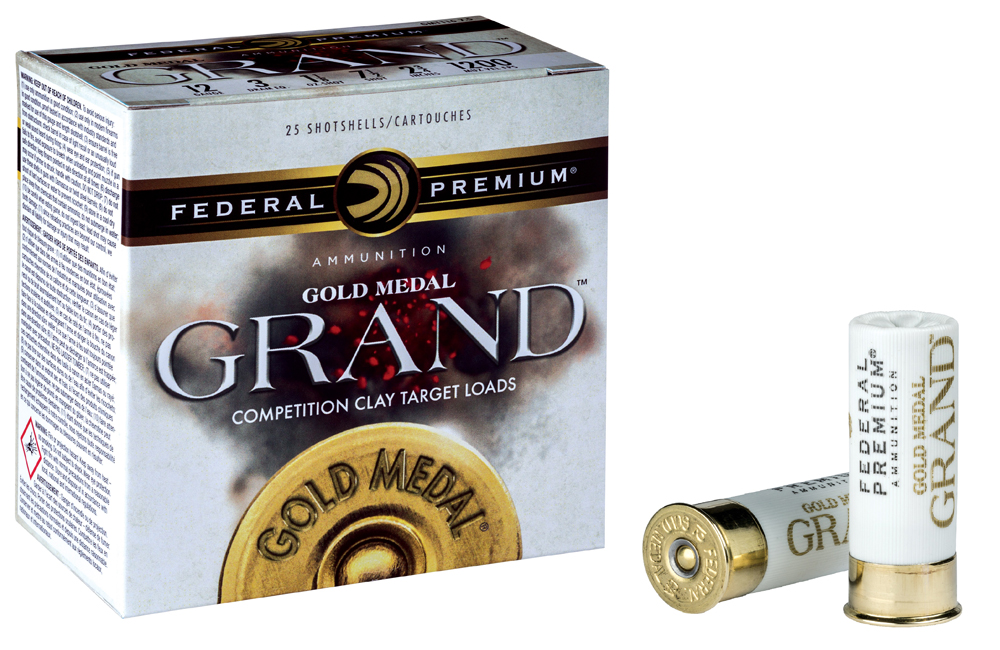
However, Federal Premium has recently announced that it will be rolling out a new offering in the Gold Medal line for 2017: Gold Medal Grand. The new Federal Premium Gold Medal Grand shotshells represent an improvement on the already-great standards set with the Gold Medal line. According to Federal, these new shells offer less felt recoil, more reliable ignition, improved shot hardness and an easier reloading process, while still providing the same great performance shooters have come to expect from Gold Medal shells.
New Federal Premium Gold Medal Grand shells will be available in 10 different loads. Each Gold Medal Grand shotshell features Federal’s two-piece wad with SoftCell technology to decrease felt recoil, as well as provide more uniform patterns than single-piece wad designs. And the integral base wad in each shell helps make reloading easier for those who prefer to do so.
The new shells also incorporate a rigid PrimerLock head for increased primer sensitivity to ensure reliable ignition, even in the event of a lighter-than-normal hit. The lead shot in the new Gold Medal Grand shotshells is also engineered for the perfect blend of hardness and density, resulting in even patterns and maximum downrange power.
The brand new Federal Premium Gold Medal Grand shotshells will be available for $10.95 per box. Shipments of the new shells should be going out to dealers in January.
Earlier this fall Ruger unveiled its brand new Mark IV rimfire pistol, which featured a new, simple, one-button takedown system for quick and easy field stripping. The American manufacturer brought out three models at the time: a Blued Target model, a Stainless Target model and a longer-barreled Hunter model.
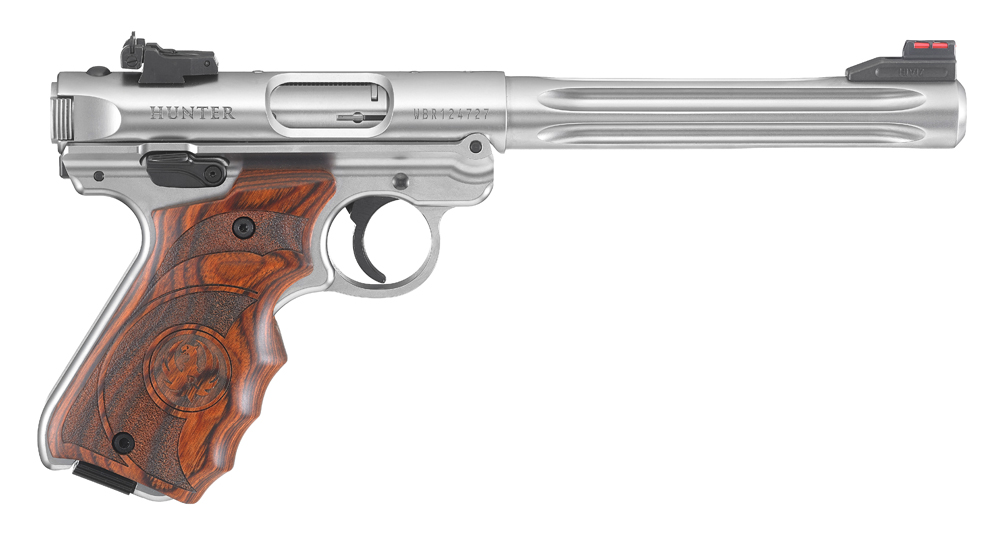
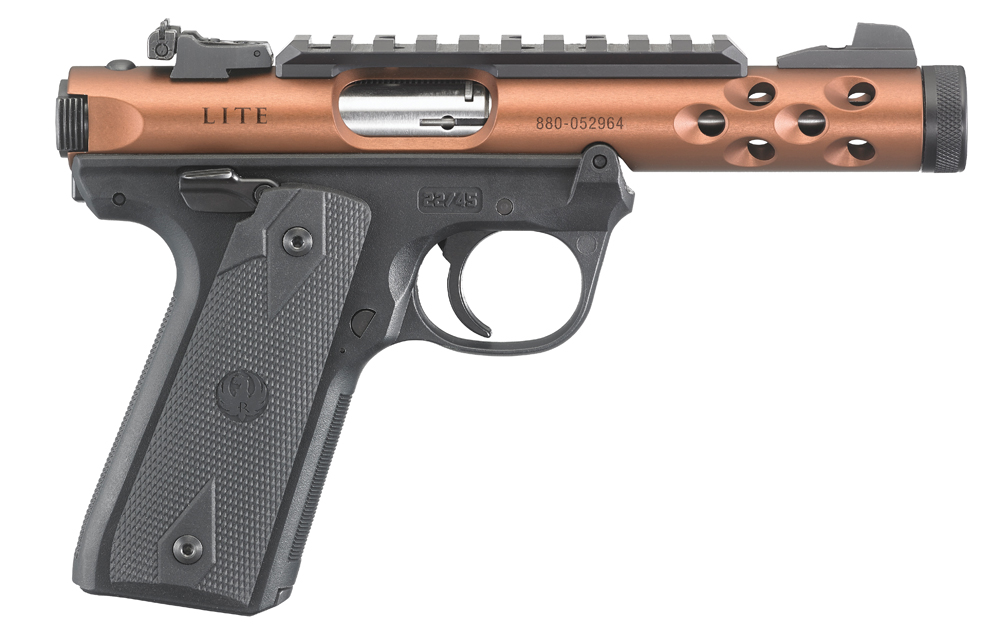
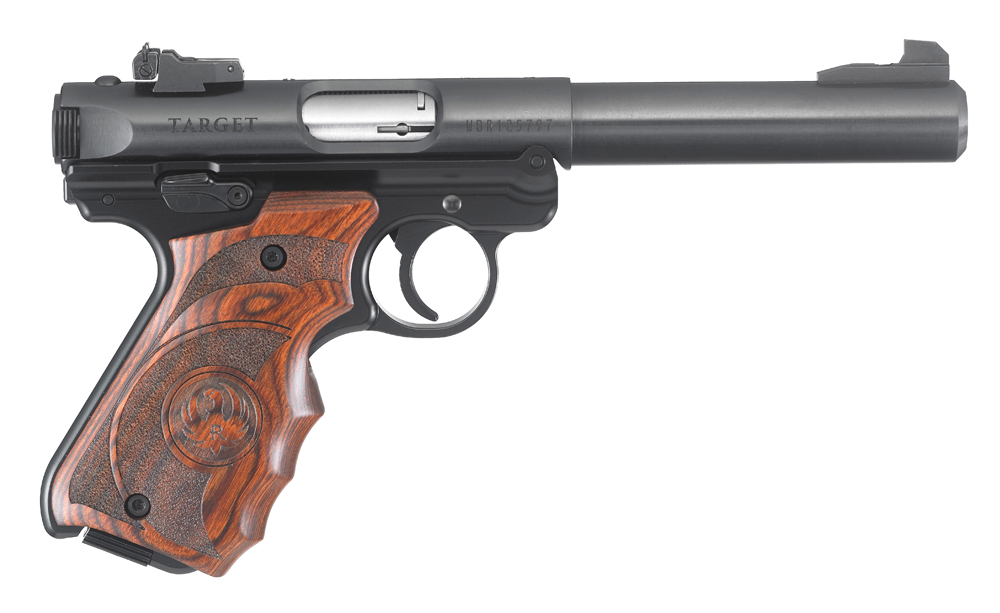
Now, ahead of the new year Ruger has announced it is expanding its Mark IV family with three new models. The company has introduced a bronze anodized Mark IV 22/45 Lite model and Mark IV Hunter and Target models featuring wrap-around target-style grips.
As with the earlier models introduced, these new additions share a similar appearance to the previous Mark III, while incorporating the new easy takedown feature. A recessed button in the rear of the frame permits the upper receiver to be tilted up and off the grip frame without any tools. After that, the bolt simply slides out of the receiver and the barrel can then be cleaned.
The new Mark IV 22/45 Lite model pairs a lightweight, precision-molded polymer grip frame with an upper receiver manufactured from aircraft-grade aluminum. The receiver has an attractive anodized bronze finish and features pattern-drilled vents. The CNC-machined aluminum receiver incorporates a 4.4-inch stainless steel barrel with 1/2″-28 threads held in place with a tension nut. The gun also incorporates adjustable target sights, a Picatinny rail for mounting optics, and replaceable Hogue black rubber grip panels. Because of its lightweight construction, the gun weighs only 25 ounces, making it a perfect rimfire pistol for almost any shooter.
Features on the Mark IV Hunter include a 6.88-inch fluted stainless steel barrel, a HIVIZ fiber optic front sight, and new smoothly contoured wood laminate target grips. Meanwhile, the new Mark IV Target model incorporates a satin blued alloy steel bull barrel, adjustable rear target sight, and the same type of wood wrap-around grips.
All of the different models feature the same excellent, one-piece barreled receiver and internal cylindrical bolt construction. This design permits permanent sight-to-barrel alignment and improved accuracy potential over traditional moving-slide designs. The new guns ship with two 10-round magazines; the new Mark IVs are designed to accept older Mark III magazines, but the Mark IV 22/45 Lite features a new magazine that ensures drop-free performance.
The new Ruger Mark IV models range in price from $559 to $799. For more information, check out the full specifications on each model below or visit the Ruger website.
Specifications:
Ruger Mark IV 22/45 Lite Type: Semi-auto Caliber: .22 LR Barrel: 4.4 in., stainless steel Overall Length: 8.4 in. Height: 5.5 in. Width: 1.22 in. Weight: 25 oz. Grip Frame: Polymer Grips: Checkered 1911-style Finish: Bronze anodized Sights: Rear adjustable Capacity: 10 rounds Price: $559 Manufacturer: Ruger
Ruger Mark IV Target Type: Semi-auto Caliber: .22 LR Barrel: 5.5 in., blued alloy steel Overall Length: 9.75 in. Height: 5.5 in. Width: 1.46 in. Weight: 35.8 oz. Grip Frame: Aluminum Grips: Target laminate Finish: Blued Sights: Rear adjustable Capacity: 10 rounds Price: $569 Manufacturer: Ruger
Ruger Mark IV Hunter Type: Semi-auto Caliber: .22 LR Barrel: 6.88 in., stainless steel, fluted bull Overall Length: 11.12 in. Height: 5.5 in. Width: 1.46 in. Weight: 44.2 oz. Grip Frame: Stainless steel Grips: Target laminate Finish: Satin stainless Sights: Rear adjustable Capacity: 10 rounds Price: $799 Manufacturer: Ruger
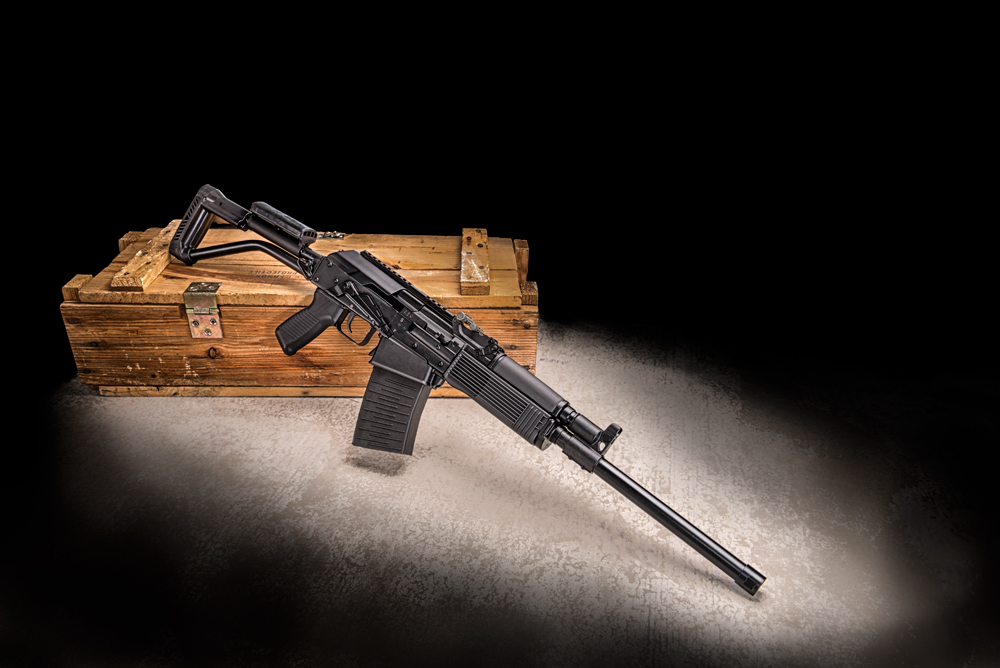
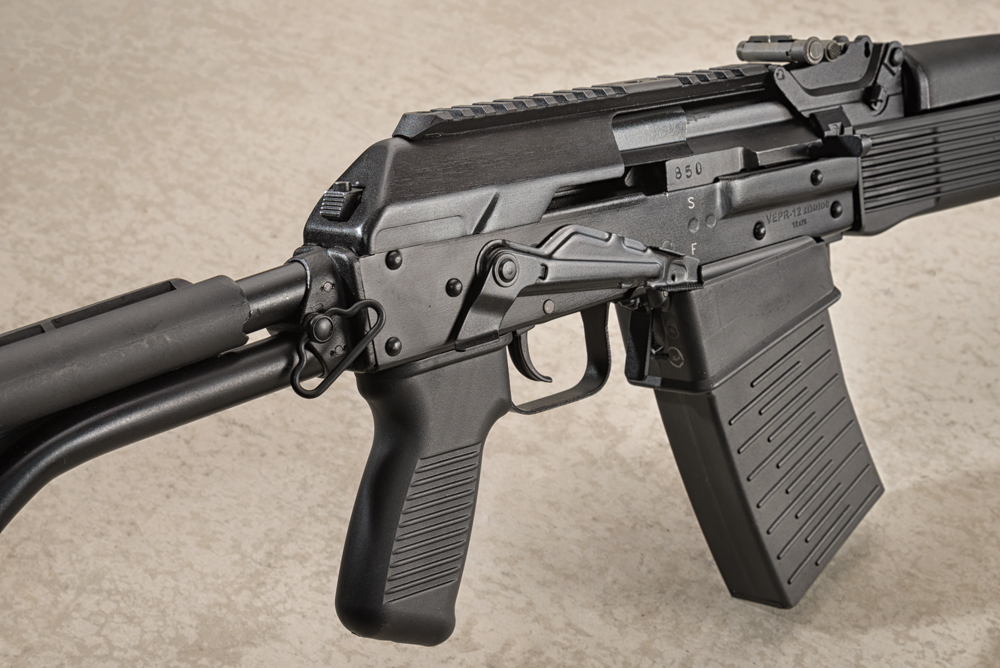
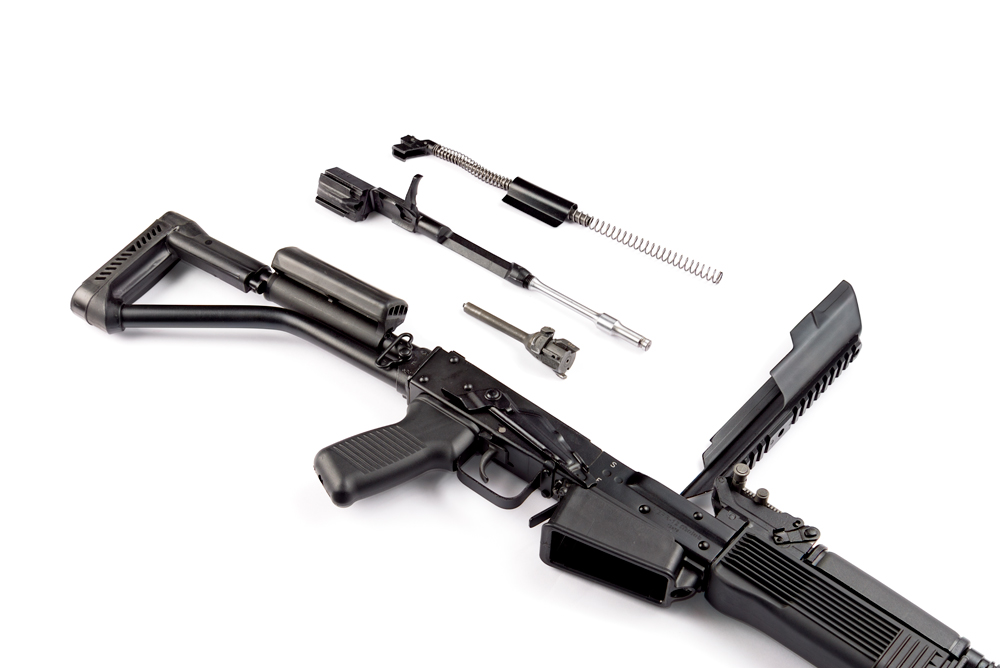
The Molot Vepr 12 is a rugged beast of an autoloader that’s ready for almost any task. Photo by Jeff Jones.
The Molot Vepr 12 shotgun is a rugged beast that’s ready for almost any task it might come across.
The Vepr 12 manufactured at the Molot Oruzhie factory in Russia is a semi-automatic, box-fed magazine, 12-gauge shotgun that will rip, snort and tear through targets like a beast. There is nothing subtle about the Vepr 12. It was designed for self-defense, hunting, 3-Gun competitions, and any situation where you need to shoot and reload a 12-gauge shotgun fast. In this sense the Vepr speaks in volumes.
As of February of 2016 the FIME Group in Las Vegas has a long-term, exclusive agreement with Molot. But not so fast. Russian-imported semi-automatic shotguns in the U.S. are as rare as Cuban-made cigars. “FIME imports the Vepr 12 shotguns, then to pass 922r compliance,” said Harry Pakhanyan of the FIME Group, “some Russian components are replaced with U.S. parts to make it compliant.” That is why you can get a fully functional folding stock in lieu of a welded open, fixed stock like in the past. The Vepr shotgun is based on the RPK weapon design, which is a lightweight machine gun with similar characters as the AK-47. Basically, the RPK and Vepr are AKs on steroids with beefed up trunnion blocks and receivers. “The Vepr is one of the toughest and most rigid systems in use with militaries around the world, and the Vepr 12 for the U.S. commercial market is no different,” adds Pakhanyan.
The Vepr 12 shares a similar safety as the AK. Photo by Jeff Jones
In a country where tube-fed semi-automatic shotguns are the norm, the Vepr 12 brings a new shotgun experience that translates into faster reloads, fast shooting, and compact firepower. The Vepr is equipped with a polymer box magazine about the size of an old VHS videotape. It is easy to load, durable—yes, I dropped the loaded magazine on cement with no issues—and unlike an AK, there is no need to rock-and-lock the magazine home. Just insert it like an AR magazine. An AK paddle-type magazine release dumps the empty magazine. The magazine well on the Vepr is polymer, so the polymer-to-polymer contact between the magazine and magwell is slick.
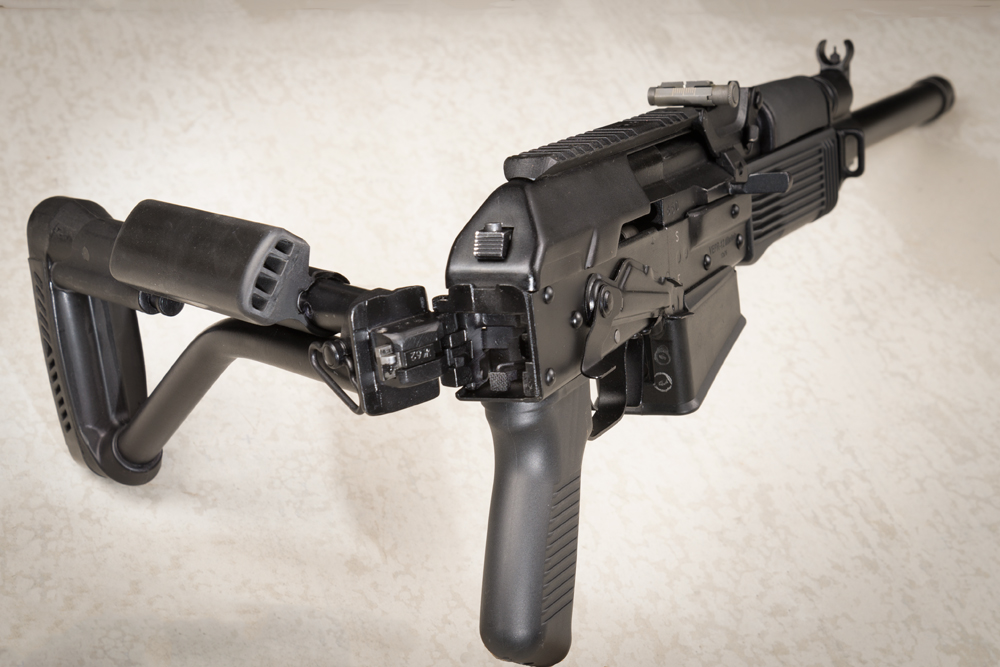
The Vepr 12 uses a very nice folding stock. Photo by Jeff Jones.
One of the more outstanding features on the Vepr is the left-side folding tubular buttstock. It locks in place extended and when folded is rock-solid. No wiggle. No rattle. A small textured button on the side of the receiver allows a user to fold the stock and another small textured button on the rear of the receiver allows you to extend the stock. A small padded cheek piece can be adjusted for left- or right-handed shooters and the rubber recoil pad make this beast a please to shoot. A second is the spring-hinged top cover with an integrated Picatinny rail, which allows a user to mount a red dot optic. That excited the turkey hunter in me. A third feature, and one that separates the Vepr from an AK-47, is the bolt-hold-open feature which can be engaged via a manual button forward of the trigger guard or on the last round fired. A small button on the right side and rear of the trigger sends the bolt forward.
The finish on the Vepr is typical Natasha and Boris style: imported military-grade matte black that is all business and well executed. The handguard is a ribbed polymer that protects the user from heat from extensive shooting and offers a sure grip shooting bare handed or gloved. The pistol grip is ribbed rubber so any transmitted recoil through it is nil, and it allows a user to really grip the Vepr in rapid fire. Don’t get me wrong, stoke this beast with slugs and 3-inch turkey loads and you will feel the jolt; not so much pain, but pleasure. I ran through a few boxes of slugs just because I liked the way it shot and grouped and was not beaten down by excessive recoil. The Vepr 12 shotgun is a hefty piece of machinery. Weighing 9.5 pounds does help reduce felt recoil from high-velocity 12-gauge loads. When shouldering the Vepr, the ergonomics also help reduce recoil.
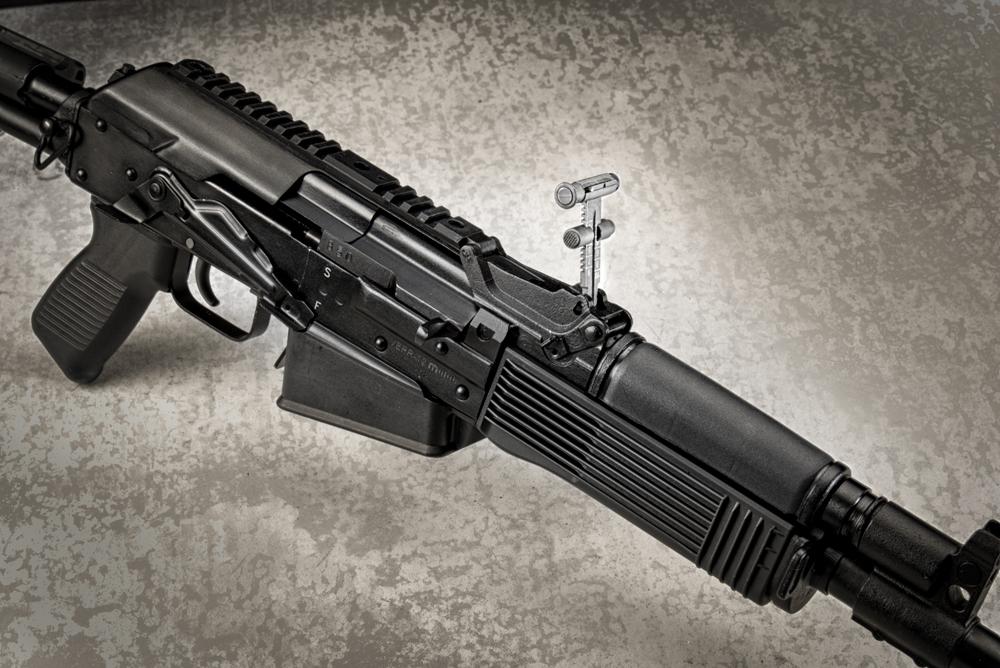
The Vepr 12 has AK-style sights; however, it also has a top rail if you want to mount a red dot or similar optic. Photo by Jeff Jones.
The 19-inch barrel is threaded and bored cylinder. Sights consist of an elevation-adjustable front sight and windage-adjustable rear. The trigger pull measured 9.1 pounds, but I was still able to group slugs so at least two out of three holes touched at 25 yards. The Vepr is also equipped with an ambidextrous safety lever, which works similar to an AK-47 safety selector.
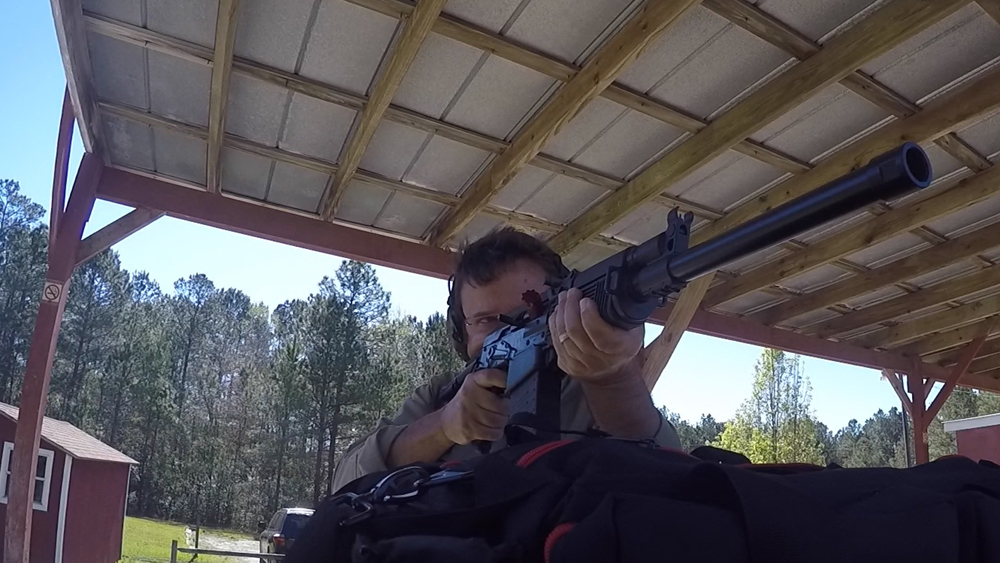
I amassed a mixed lot of 2-3/4-inch 12-gauge ammo from tactical buckshot and slugs to light game and turkey loads. I also tried a few very light 12-gauge reloads just to see if the action would cycle and it didn’t, which was not a surprise since these types of loads choke most gas-operated semi-autos. The Vepr ran effortlessly and perfectly with all factory ammo I fed it, even Remington 1-ounce game loads with #6 shot. I used this load to shoot the Vepr from the hip with the stock folded at clay pigeons resting on a dirt berm at 25 yards. Clays smoked in the dirt. It was a lot of fun. Using tactical defense loads, the Vepr landed the payload center of mass, belching out empty shells through the massive ejection port. It chewed through everything.
Shooting the Vepr 12. Author photo.
At 25 yards Hornady Defense 00-Buck gave me the tightest pattern at 7 inches, and the Winchester load was 11 inches. Those are fight-stopping patterns. The turkey hunter in me even tried Winchester High Velocity turkey loads. I wasn’t expecting much with the cylinder bore choke and received a 25-inch pattern at 25 yards with #5 shot. More than likely a dead turkey. I cut my teeth hunting whitetails shooting slugs through bird guns, so I am a bit immune to the recoil. Three-shot groups at 25 yards averaged 3.5 inches. I suspect with a red dot optic that group would noticeably shrink. The Vepr was pleasantly accurate with slugs. Meat in the freezer.
Vepr 12 disassembly. Photo by Jeff Jones.
In operation, the Vepr feels a lot like an AK with the long stroke piston working the action. It comes up to your shoulder naturally and with the padded cheek piece gives you a nice cheek weld with tolerable recoil. It was fast on target with precise follow-ups. I would think a suitable muzzle brake would help reduce muzzle rise when shooting for speed. Magazine reloads were as easy as AR reloads, and because the bolt release is located near the trigger for a right-handed shooter, it was much faster to load than a traditional tube magazine shotgun. The bolt carrier operated smoothly.
Think Russian, think Molot Vepr 12, when pondering the need for a semi-automatic shotgun. This beast satisfies the shooter in all of us. For more information, visit fimegroup.com or call 702-215-3600.
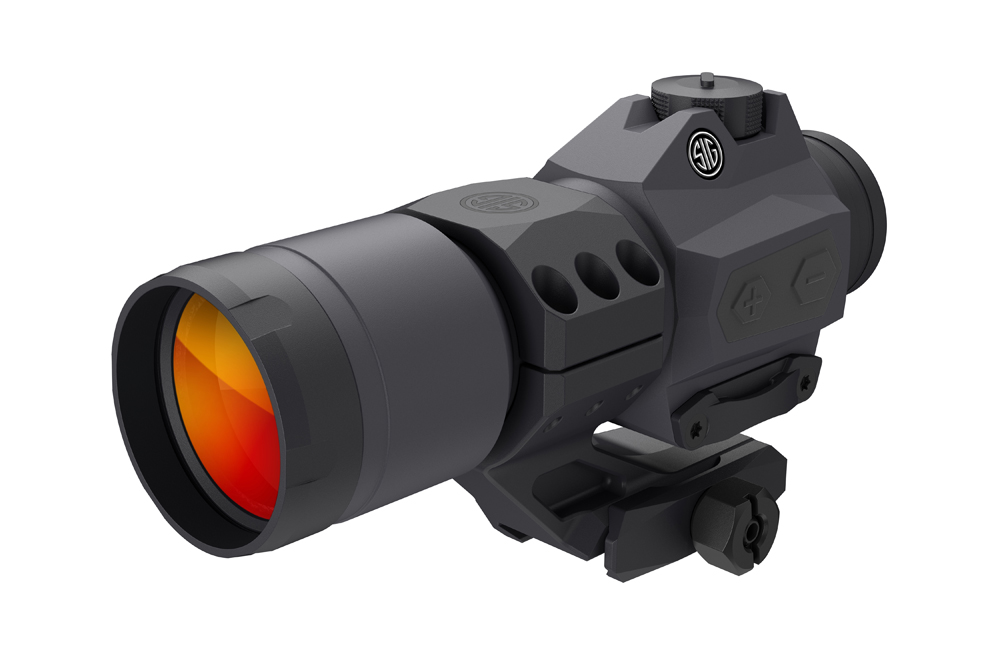
The new SIG Sauer ROMEO6 is a full-size 30mm red dot optic with a robust, waterproof and fog-proof design that’s ready for any tactical application.
SIG Sauer’s electro-optics divisions has been fairly busy in its short few years in the industry, and this year looks like it will be no exception. The optics manufacturer has recently announced several new products, including a brand new full-size red dot sight.
Unlike a couple of its previous red dots, which are relatively low profile, the new SIG Sauer ROMEO6 red dot features a full-size 30mm tube design. The ROMEO6 appears well suited for a host of tactical applications as well as general range use, and it will be available in two different models: the ROMEO6T and ROMEO6H.
Both models of the new SIG Sauer ROMEO6 are available in either a Ballistic Circle Dot or Circle Plex quad reticle. Each offers crystal-clear viewing in a range of lighting conditions for rapid target acquisition in close-up engagements.
In addition, each reticle style on the SIG Sauer ROMEO6 allows the user to toggle between four different selectable reticle options. With the Ballistic Circle Dot reticle, users can pick between a 2 MOA dot, a 2 MOA dot with ballistic holds, a 2 MOA/65 MOA Circle Dot or a 2 MOA/65 MOA Circle Dot with ballistic holds. These ballistic holdover points subtend for the 5.56 NATO and 7.62x51mm NATO cartridges. Meanwhile, the Circle Plex quad reticle offers similar aiming options, but the 2 MOA dot is swapped for a 1 MOA central aiming feature in a plex-type reticle for more precise mid- to long-range shooting, especially when paired with SIG’s upcoming JULIET4 4x magnifier.
The ROMEO6H is more like the base model in the new ROMEO6 series, with the ROMEO6T offering additional features such as a solar panel with two super capcitors that offer up to 9 hours of battery-free life if the traditional battery runs dead. The ROMEO6T is also built to 810G Mil Spec, featuring a durable 7075 aluminum housing for hard use. It is waterproof to IPX8 standards, while the ROMEO6H is waterproof to IPX7 standards. Both are fog-proof and utilize a rugged 1.53-inch mounting system.
As with many red dots on the market, the new SIG Sauer ROMEO6 line offers true unlimited eye relief, meaning the shooter can acquire the correct aiming point no matter where the eye is positioned behind the sight. Also similar to many of SIG’s prior electro-optics products, the ROMEO6 comes equipped with the manufacturer’s MOTAC (Motion-Activated Illumination), so the battery isn’t wasted when the device is not in use. It simply powers up when motioned is sensed, and turns off after a period of inactivity.
Both of the new ROMEO6 red dots utilize ultra-efficient red LEDs for daylight visibility with extended runtime, as well as Mil Spec objective coating to limit downrange light leakage. And of course, both are backed by SIG’s excellent fully transferable unlimited lifetime guarantee.
The new SIG Sauer ROMEO6H and ROMEO6T are available for $539.99 and $719.99, respectively. For more information on the new ROMEO6, visit the SIG Sauer website.
Back in early November of 2015, during Colt’s first Media Day event at the legendary Gunsite Academy in Paulden, Arizona, Colt introduced its new Competition Pistol – and several other new products – to a small number of gun writers and editors. The event was an excellent showcasing of Colt’s upcoming new products for 2016, particularly after some of the hardships the company had recently gone through, and the Competition 1911 was one of the major highlights of the event. I was lucky enough to be among that group, and I was able to shoot the new pistol long before it was officially introduced ahead of the 2016 SHOT Show.
I remember being fairly impressed with the Competition pistol (in both 9mm and .45 ACP) and thinking that Colt was onto something with it. Apparently, Colt and the shooting public agreed because the U.S. manufacturer announced in early November of this year that it would be bringing out stainless steel versions of the classic Competition pistol. This was, of course, in addition to the company’s announcement a few days prior that it would also be offering the Competition 1911 in .38 Super. In short, buyers – and the folks at Colt – liked the Competition pistol well enough that the manufacturer decided to expand its lineup, adding both .38 Super and stainless steel models.
Not long after Colt’s announcement about the stainless steel models, I was back at Gunsite again for Colt’s 2016 Media Day to learn about the company’s upcoming new products for 2017, as well as recent introductions such as the stainless Competition pistol that had already been announced. Naturally, I got a chance to see and shoot the new stainless models and, as with the original Competition pistol, I came away just as impressed.
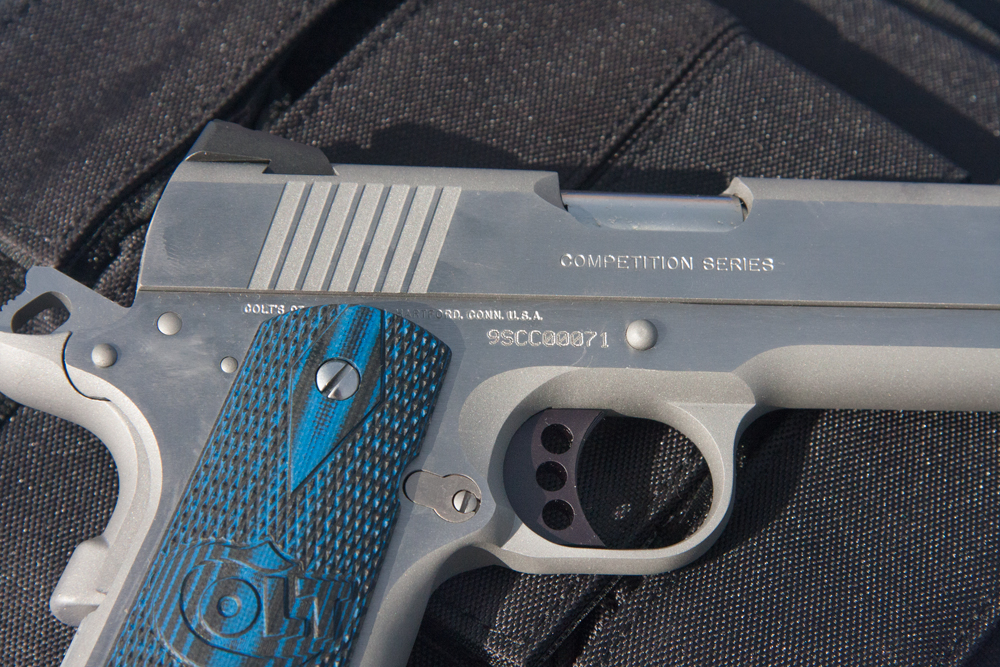
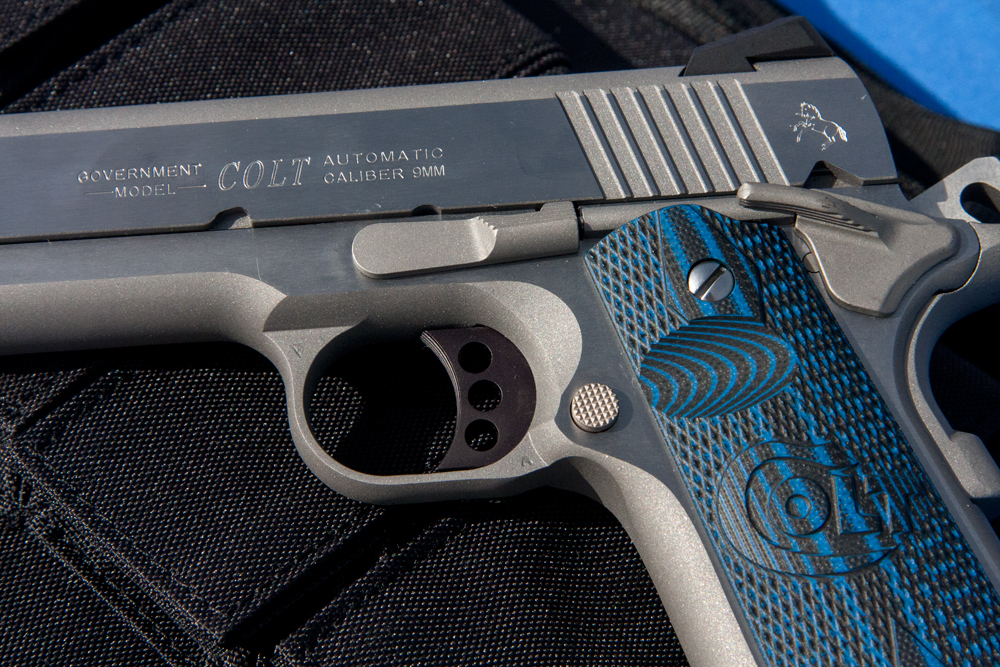
Like its predecessor, the new Colt Competition Stainless pistol is built to be a rugged racer, perfect for the competitive circuit or for simply honing your skills at the range. Because of this, across all models the Competition comes equipped with great features such as Colt’s Dual Recoil Spring System, a National Match barrel, Novak adjustable fiber optic sights and a three-hole aluminum 4.5- to 6-pound trigger.
The Dual Recoil Spring System is something I experienced for the first time at Colt’s 2015 Media Day, and it has become a standard feature on most, if not all, of Colt’s newer handguns. This system is designed to reduce the shooter’s felt recoil while also extending recoil spring life and thereby delaying the inevitable replacement. Shooting can be a subjective experience that is often not the same for everyone, but I can say that, for me, there’s a noticeable difference in recoil with Colt’s Dual Recoil Spring System, and I find I’m able to shoot accurately at a faster pace. And after hearing other writers and editors discussing the system at both Media Day events, I don’t think I’m alone in that feeling.
The impact of the National Match barrel, Novak adjustable sights and three-hole aluminum trigger is also pretty easy to see, as the new Colt Competition Stainless pistol seems every bit as accurate as its predecessor. Whether chambered in .45 ACP or 9mm, I had no trouble hitting the steel targets Colt had set up about 15 to 20 yards downrange with the new Competition Stainless. This likely would’ve been the case with a Competition pistol chambered in .38 Super as well; however, one was not available for testing during the event.
Like the earlier pistol, the Competition Stainless features custom blue checkered and scalloped G10 grips, an upswept Beavertail grip safety and an undercut trigger guard. This allows for more secure positioning in the user’s hand, and the checkered G10 grips are textured enough to prevent slipping without gnawing at your hands.
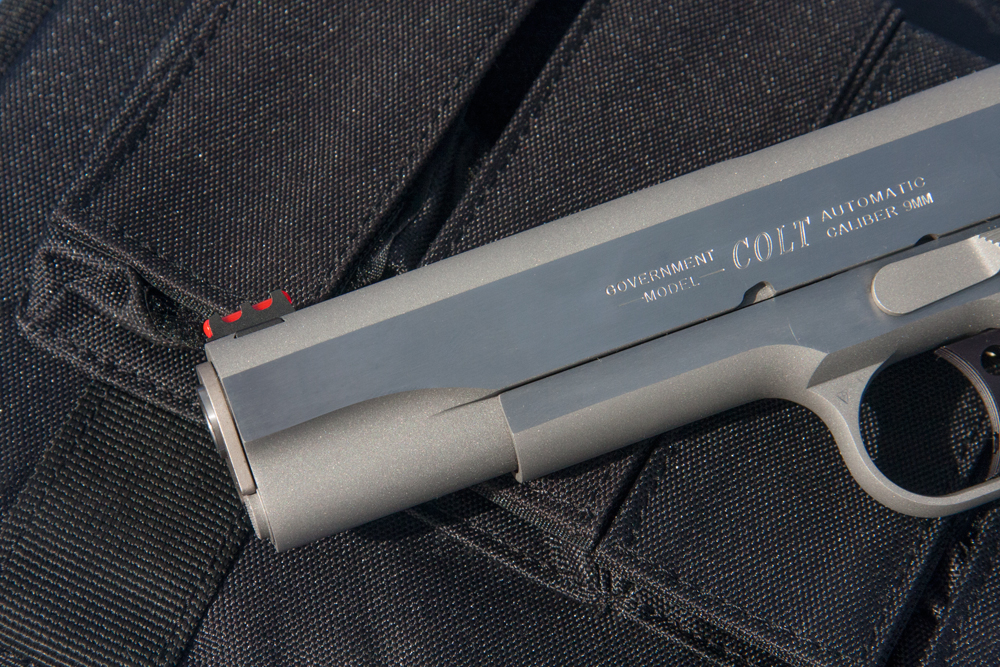
Obviously, the main difference between these new models and the original Competition pistol is of course the stainless steel slide and frame finish. The new Colt Competition Stainless has a brushed stainless finish that is both visually appealing and corrosion resistant, and at only $100 more than the MSRP on the standard models, it’s not an outrageous upgrade for those who want it.
Another, slightly more subtle, difference from the original Colt Competition pistol I shot at the first Media Day event is that instead of a blue fiber optic front sight, Colt has moved to a red fiber optic. I actually liked the blue fiber optic when I first shot the gun back in 2015; however, there were a number of other shooters at the time who noted that standard colors, such as red or green, would offer greater visibility, particularly in lower light. Colt obviously listened to some of that feedback and made the change.
In terms of dimensions, weight and capacity, the new Colt Competition Stainless versions are identical to previous models. Weight across all models is consistent at 36 ounces, as is overall length at 8.5 inches. Capacity is eight plus one in .45 ACP and nine plus one in 9mm and .38 Super.
The new stainless steel Colt Competition pistols are available now and range in price from $1,049 to $1,099, with the .38 Super model fetching the highest price. For more information on these new Colt Competition Stainless models, check out the specifications below or visit the Colt website.
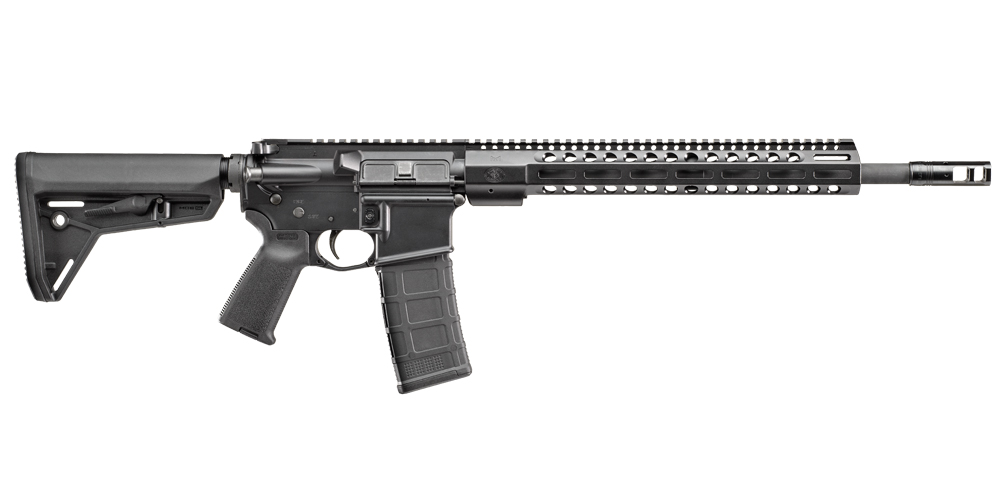
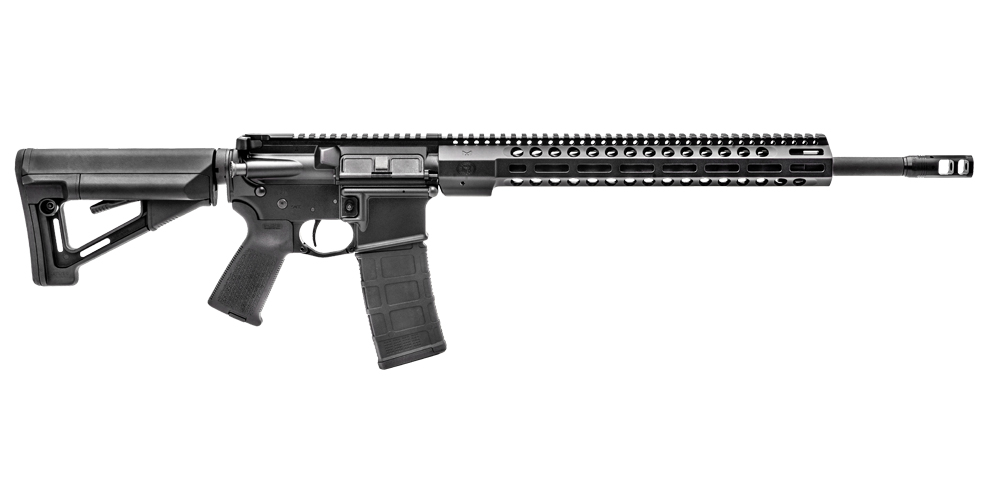
FN has upgraded and updated its FN 15 rifle line with three new models featuring an improved handguard with M-LOK attachment points.
The FN name has been closely associated with ARs for some time now. The world-renown manufacturer produces a host of AR-type rifles for the commercial market in the U.S., and it makes plenty of black rifles for military forces as well. This past year, FN celebrated that heritage of military production with the company’s Military Collector Series, which featured semi-auto replicas of the military M4, M16 and M249 SAW.
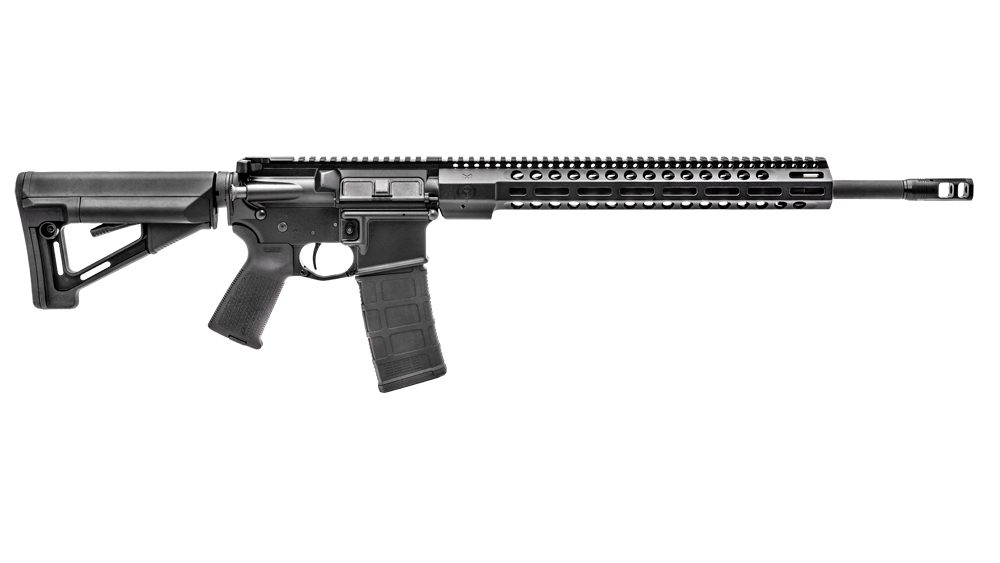
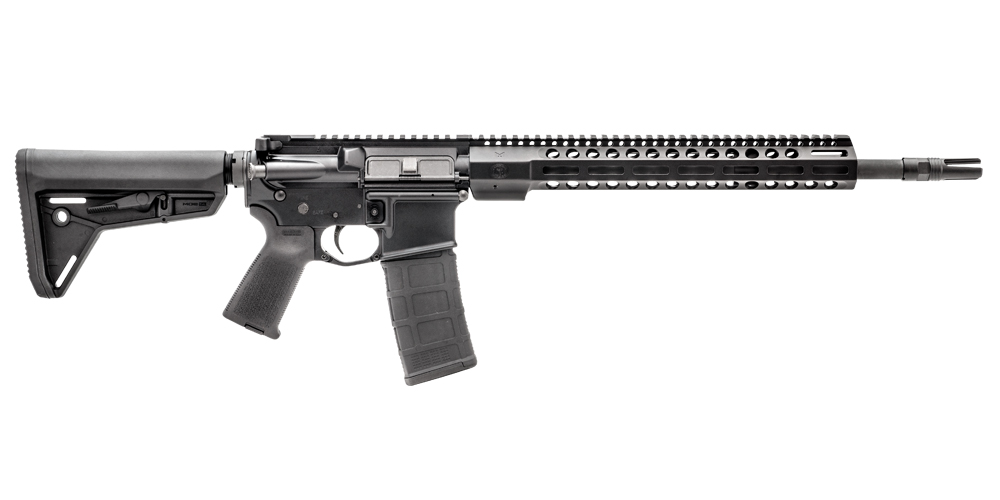
This year, FN has improved on its solid foothold with the AR platform by updating its FN 15 carbine line with three new and upgraded models. The three new FN 15 II rifles – which include the FN 15 Tactical Carbine II, the FN 15 Tactical 300 BLK Carbine II and the FN 15 DMR II – have been updated with a newer, more modern, proprietary FN handguard. The new handguard features M-LOK attachments points for mounting aftermarket accessories such as lights, lasers, fore-grips and hand stops. The new carbines also utilize an enhanced Mil-Spec lower receiver, and they no longer have Magpul MBUS sights as standard.
Apart from the new proprietary FN handguard with M-LOK technology, these new FN 15 II carbines are very much like their predecessors. They all feature hard anodized receivers and a free-floated, chrome-lined cold hammer-forged barrel.
Pricing on the three new FN 15 II models varies from $1,599 to $1,999, depending on the model. For more information on these three new rifles check out the specifications below or visit the FN America website.
Specifications:
FN 15 Tactical Carbine II Type: Semi-auto, direct gas impingement Caliber: 5.56 NATO Barrel: 16-in., match grade, cold hammer-forged, chrome-lined, free-floated Twist: 1:7 Overall Length: 33.7-37 in. Weight: 6.7 lbs. (empty) Gas System: Mid length Muzzle Device: Three-pronged flash hider Trigger: FN Combat trigger Stock: Magpul MOE SL Grip: Magpul MOE Handguard: FN proprietary, with M-LOK Capacity: 30 rounds Price: $1,599 Manufacturer: FN
FN 15 Tactical .300 BLK II Type: Semi-auto, direct gas impingement Caliber: .300 BLK Barrel: 16-in., match grade, cold hammer-forged, chrome-lined, free-floated Twist: 1:7 Overall Length: 33.7-37 in. Weight: 6.9 lbs. (empty) Gas System: Carbine length Muzzle Device: Surefire ProComp 762 muzzle brake Stock: Magpul MOE SL Grip: Magpul MOE Handguard: FN proprietary, with M-LOK Capacity: 30 rounds Price: $1,599 Manufacturer: FN
FN 15 DMR II Type: Semi-auto, direct gas impingement Caliber: 5.56 NATO Barrel: 18-in., chrome-lined, cold hammer-forged, free-floated Twist: 1:7 Overall Length: 35-38 in. Weight: 7 lbs. Muzzle Device: Surefire ProComp 556 muzzle brake Trigger: Timney competition trigger Stock: Magpul STR Grip: Magpul MOE Handguard: FN proprietary, with M-LOK Capacity: 30 rounds Price: $1,999 Manufacturer: FN
Savage Arms is a well-known maker of quality rimfire rifles, a reputation it has continued to grow in the past few years with the introduction of its various semi-automatic A-Series rifles such as the A17 and A22 Magnum.
Now, the company is expanding its rimfire lineup even more by bringing out a whole new bolt-action rimfire rifle line. The new Savage B-Series rifle line features 12 brand new models, with caliber options including .22 LR, .22 WMR and .17 HMR.
The new B17, B22 and B22 Magnum bolt-action rimfire rifles that make up the Savage B-Series are available in a wide array of configurations, including Sporter Barrel, Heavy Barrel, Heavy Threaded (suppressor-ready) Barrel and Heavy Stainless Barrel. All of these new rifles incorporate a new, ergonomically designed modern stock that features a higher comb and a tang-mounted safety, as well as a target-style, more vertical pistol grip that allows the shooter to hold the rifle in a more comfortable, natural position without straining the wrist.
The rifles in the new Savage B-Series also utilize the manufacturer’s excellent AccuTrigger and a 21-inch button-rifled barrel for outstanding accuracy. As with the popular A-Series rifles, the new B-Series guns use Savage’s 10-round rotary magazine, which has proven quite reliable. All B-Series rifles are also drilled and tapped for scopes.
The new Savage B-Series rifles are shipping to dealers now and MSRP will range from $281 to $413, depending on the model. For more information on the B-Series rifles, visit the Savage Arms website.
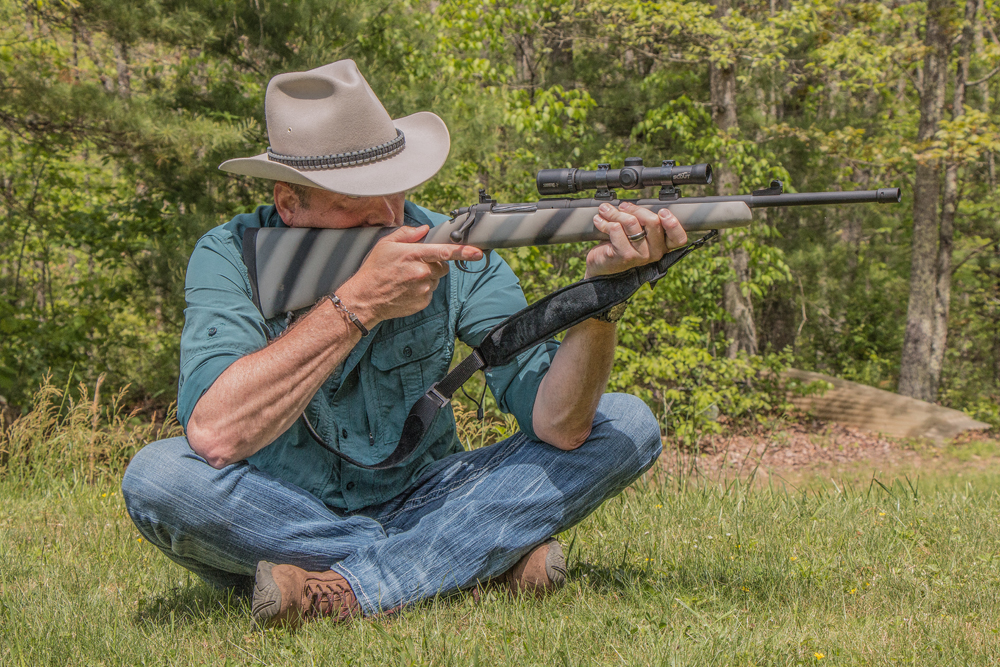
The first successful extended eye relief optical rifle sight was probably the German World War II-era 1.5 power ZF41. The long eye relief allowed it to be mounted to the rear sight base of K98 Mauser rifles, leaving easy access to the action for faster loading and circumventing an independent mounting system on the receiver. Few noticed this sight, but about 20 years later, Jeff Cooper mounted a Leupold M8 2x pistol scope to the ventilated rib of a Remington model 600 carbine. This became the foundation for Cooper’s Scout Rifle concept and as they say, the rest is history.
The forward mounted, low-magnification riflescope (Scout Scope) permits both-eyes-open shooting, obscures less of the landscape, prevents the scope from whacking you in the head during recoil, and it makes a rifle easier to carry at its balance point. Easier bolt manipulation and action access are other advantages. Over the years, hunters have besmirched the “scout scope,” but the military and law enforcement have fully embraced a similar idea with the modern red dot sight.
We’re seeing a resurgence of the Scout Rifle, partially due to the success of the Ruger Gunsite Scout Rifle and partially due to the rise of the prepper nation. Shooters are looking for that one-rifle answer. As Cooper intended, Scout Rifles offer general-purpose utility, and those looking to scope one today have a lot more options than were available to Cooper in ‘66. I’ve worked with most of the scout scopes available; here are a few things to consider before you buy.
[imagebrowser id=475]
This article is an excerpt from the August 2016 issue of Gun Digest the Magazine.
Champion Traps and Targets has been producing a wide variety of reactive targets for some time now. These have included a range of molded DuraSeal, breakable VisiChalk, clay pigeons, VisiColor paper, and small metal spinners for rimfire guns.
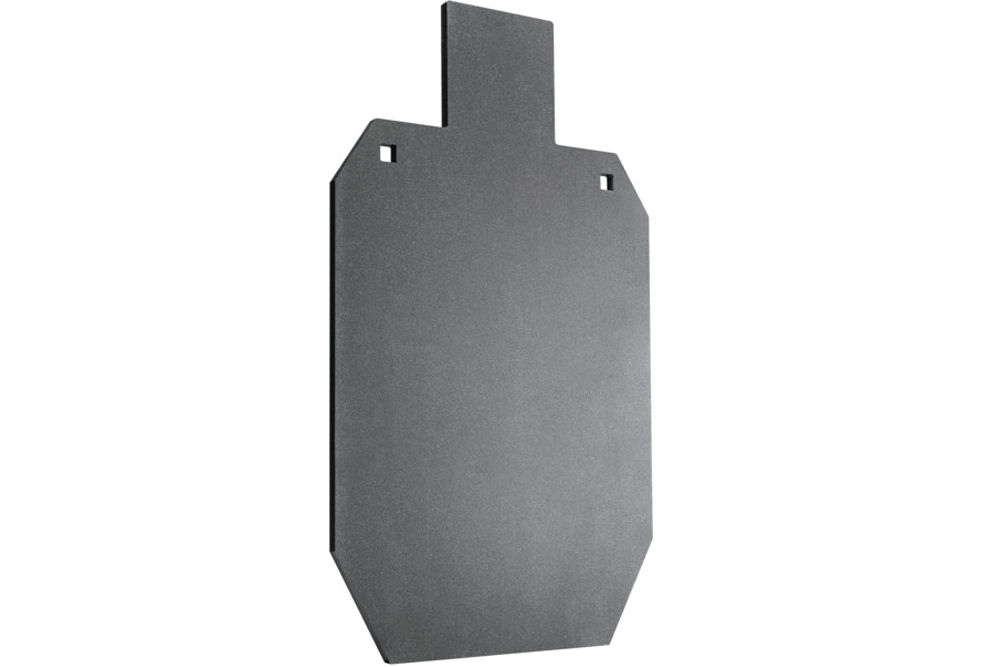
However, what the manufacturer has not produced – until now – is larger steel targets rated for use with centerfire calibers. That has changed with Champion’s recent introduction of its new Center Mass AR500 Steel Targets.
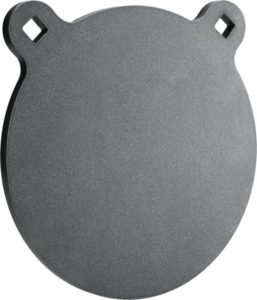
Designed for years of reliable usage, the new Champion Target Center Mass AR500 Steel Targets feature a premium rolled and hardened AR500 steel construction. Targets are available in either 1/4-inch thickness or 3/8-inch thickness. The 1/4-inch thick steel targets are rated for centerfire handgun calibers, while the 3/8-inch thick targets are approved for centerfire rifle calibers. Of course, as with all steel targets, these still need to placed at the appropriate distances given the calibers used.
The Center Mass targets are precision laser-cut and feature square holes for mounting with 1/2-inch carriage bolts. All of the targets are 100-percent made in the U.S.
The new Champion Target Center Mass AR500 Steel Targets come in three different shapes and sizes. Two gong options are available: 4-inch and 8-inch. There are also 4- or 8-inch square options, as well as 66-percent and full-size IPSC silhouette-style targets. All of this is to say that shooters will have plenty of steel target options to choose from when they head out for an enjoyable trip to the range.
“Interactivity is the name of the game when it comes to the range today,” said Eliza Graves, Brand Manager for Champion. “Shooters want to have fun and improve their skills with immediate feedback. Hearing is believing with Champion Center Mass Steel Targets.”
The new Center Mass Targets range in price from $14.95 for the 3/8-inch thick 4-inch gong and square up to $189.95 for the full-size, 3/8-inch thick IPSC target. For more information, visit the Champion Traps and Targets website.
Get the most recent advances in guns and gear to extend your range for hunting, informal target shooting, and formal competition. Discover new tools for long-range shooters both in the field and on the firing range, with coverage of new developments from advances in military applied combat theory. Learn more
Most gun owners today are quite familiar with the Remington Arms Company and its diverse line of firearms. Designs such as the Model 700 bolt-action rifle and the Model 870 pump-action shotgun have deservedly afforded this great manufacturer a lasting and expansive legacy.
However, Remington has been around way longer than that. The U.S. manufacturer has a long and fascinating history dating back 200 years to its founding in Ilion, New York, by Eliphalet Remington. And while Remington has opened factories in other parts of the country, one of the most recent being in Hunstville, Alabama, the company still produces firearms at the original Ilion location.
This year marked the company’s bicentennial, and with that great milestone, the company is looking back over its history and its heritage. Although the manufacturer has certainly evolved over the years, much of the family-oriented culture at Remington Arms has remained.
Check out the video above to learn more about the history of this classic American firearms manufacturer.
Looking to go armed, but are stuck in the weeds as to what to arm yourself with? Here are 20 of the best concealed carry gun options that will keep you on the defensive.

 The second-generation model of Surefire’s SOCOM 556 RC suppressor adds to the design while reducing the overall cost.