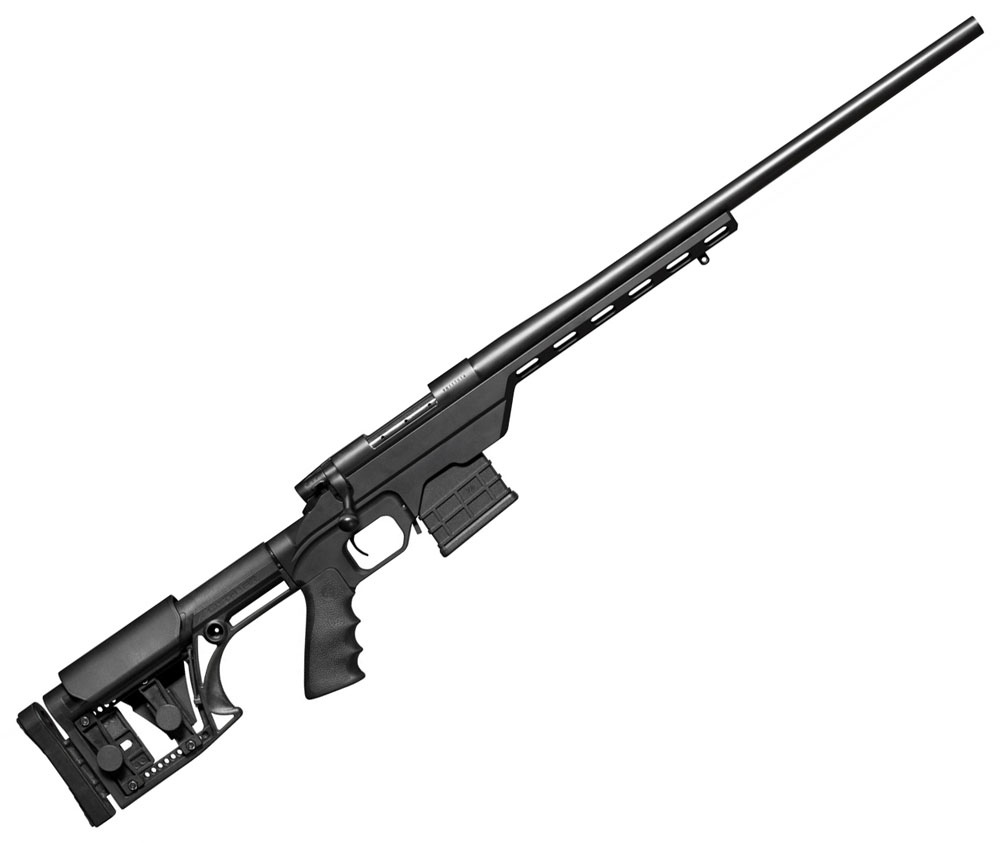
Weatherby is taking aim at the precision rifle market with its new Vanguard Modular Chassis Rifle.
When it comes to rifle design, Weatherby has stuck to the tried and true.
From the Monte Carlo stocks to the blocky butt ends of the bolt, the California manufacturer’s firearms boast classic lines and features. But recently, the winds of change swept over one of the company’s lines, blowing it squarely into the contemporary.
Weatherby is diving into the tactical world head first with the introduction last month of the Vanguard Modular Chassis Rifle. And it doesn’t take much perusing to discover that the new bolt-action is a marked break from past iterations of the rifle.
In particular, the new Vanguard variation is outfitted with MDT’s versatile and lightweight LSS Chassis, a platform that has plenty of potential to enhance the rifle. Not only does the 6061 aluminum chassis provide a ridge platform for the barrel and action, it also has a number of adjustable features that can be used to tailor the rifle to the shooter.
Along these lines, the chassis’ Luth-AR Modular Buttstock might be the most weighty feature, since it allows both the length of pull and comb height to be fine tuned. The latter feature is particularly important, giving shooters the ability to ensure a tight cheekweld, thus consistent eye-to-optic alignment.
The Vanguard Modular Chassis Rifle has a number of other features that should help shooters get on target as well, including a Hogue Overmolded pistol grip and two-stage adjustable match trigger.
The new rifle – initially being offered in .223 Rem and .308 Win – also offers versatility, along with its accuracy. The forend of the Vanguard has hole spacing for Magpul MOE L5 (11 slot) and L3 (7 slot) accessory rails. In addition to this, it also boasts a stud where a bipod and/or a sling can quickly be attached.
The Vanguard Modular Chassis Rifle has an overall length of 41 ¼-42 ¼ inches in length and tips the scales at 8 ¾ pounds. The rifle accepts MDT-compatible magazines and is sold with a 10-round magazine.
Presently, Weatherby has a $1,449 MSRP on the Vanguard Modular Chassis Rifle. While the gun’s price tag is a bit hefty, it is reasonable in the world of precision rifles.
Located 50 miles from Washington, D.C., in Southern Maryland, Chesapeake firearms auctions are heavily influenced by the local hunting scene. As Robert Kyle, house firearms specialist, explains, “Because the region prohibits the use of rifles for deer hunting, sportsmen must use shotguns with slugs or black powder arms for deer. Shotguns are strong in this region because they can be used for both deer and waterfowl. Goose and duck hunting is a long-time Chesapeake Bay tradition and a good side-by-side or over-and-under always attracts bidders.”
At recent auctions for example, Chesapeake sold a J.P. Saur drilling, 16-gauge made in 1901, for $1,210, a Browning Citori Lightning 12-gauge, for $1,265 and a Ruger Red Label 20-gauge O/U at $880.
New and used handguns have remained steady and strong sellers due to their home protection use. However, strict gun control laws enacted here in October 2013 made buying them more expensive. New state handgun laws now require first-time handgun buyers to get finger printed, take a handgun qualification class and pay a registration fee. These charges can add $250 to a new handgunner’s first purchase.
Still, the auction house recently sold a Ruger Blackhawk New Model .357 for $440 and an AMT Automag II .22 stainless steel at $632, as well as a slew of handguns that went for under $200.
Prices for antique guns can meet blue book value, depending on the piece and who’s bidding. “In general, though, our clientele prefers guns that shoot and they can use. So reproduction antique guns that function always attract attention.”
Recent examples: Navy Arms M-1851 dragoon, $155; Colt Walker reproduction, $192.50; Cimarron M-1873 Winchester, 38-40, $550; Navy Arms Charleville musket, $440; CVA M-1860 Colt in box, $130; and Lyman M-1851 Navy, $121.
Editor’s Note: This brief originally appeared in the October 2015 issue of Gun Digest the Magazine.
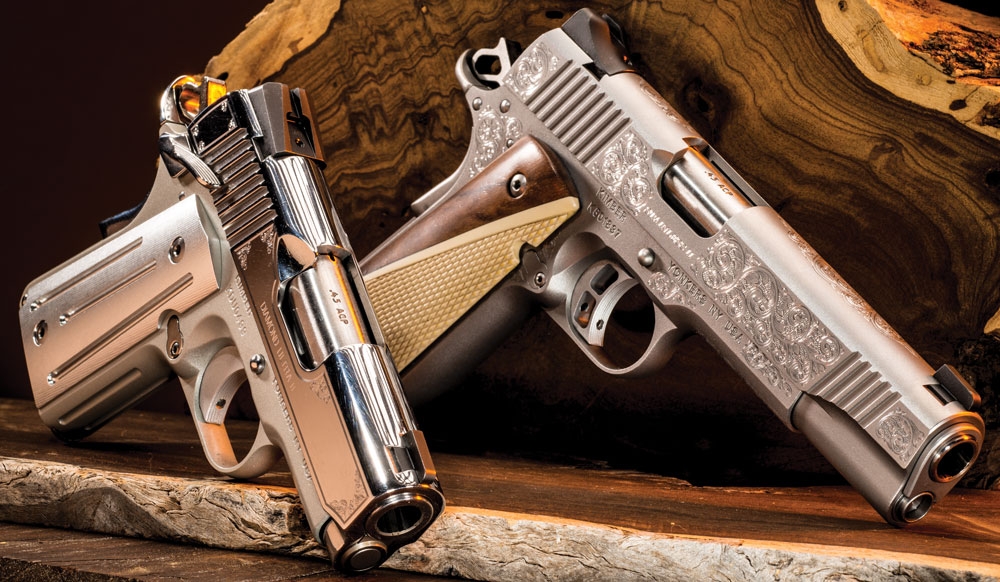
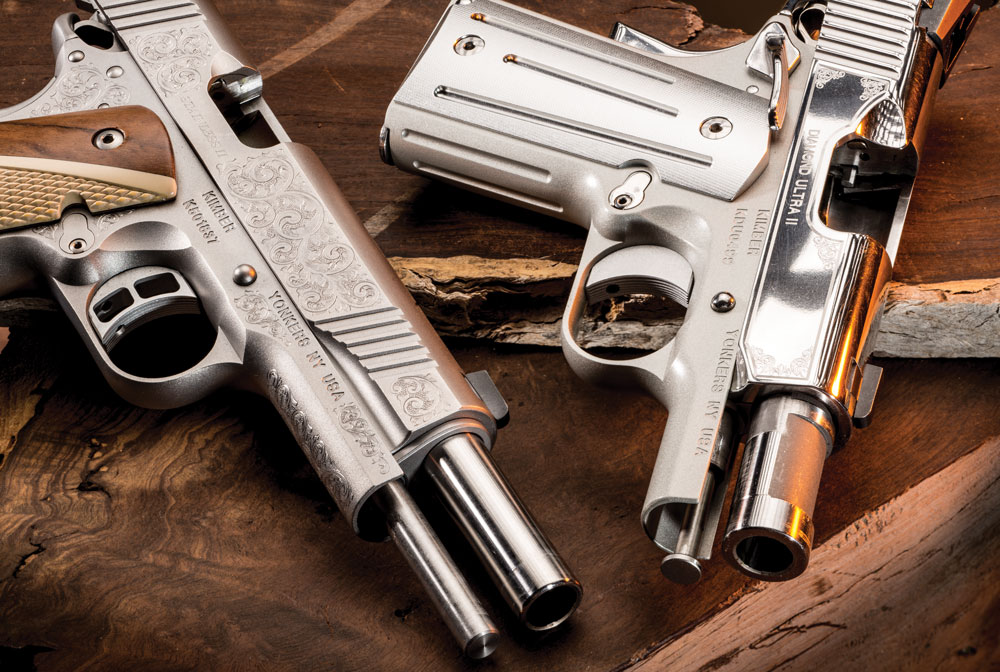
Both the Stainless II (Classic) and Diamond Ultra II are stylish pistols with plenty to offer in terms of performance. Photos by Alex Landeen
Part of Kimber’s 2015 Summer Collection, the Diamond Ultra II and Stainless II Classic Engraved Edition are sleek, sophisticated and shoot with nail-driving accuracy.
The Stainless II is very elegant with its satin silver frame and scroll engraving.
When the editor asked me to do this review, I had no idea which Kimber pistols I’d be shooting. When The Gun Shop, my FFL, called me to come and pick up the guns, Gary said, “I have a couple of barbeque guns for you.” Until recently, I had no idea of the concept of the barbeque gun. According to the Urban Dictionary, a barbeque gun is: “An old term from the Southwest that refers to a gun that is not worn daily. These were functional guns (heavily modified for better accuracy/reliability/etc.) that might have some custom engraving, polishing, or custom grips. They were normally worn in tooled leather holsters as opposed to daily wear holsters—which were plain.” The human equivalent is a James Bond version of a handgun, capable of generating serious mayhem, but fitting into the most sophisticated setting with ease and grace.
The current most popular basis for the barbeque gun is the ubiquitous 1911. In earlier days, Colt Pythons and Smith and Wesson Combat Magnums were popular for this kind of adornment, but now the 1911 rules. This is only logical since the 1911 in .45 ACP is both powerful and reliable, and the techniques for making it extremely accurate while maintaining reliability have been around for years. Due to its storied history, the 1911 has a certain level of grace, and the classic design offers ample opportunity for adornment.
For Kimber America, it was a logical jump to begin making visually enhanced 1911s because they’re the largest manufacturer of 1911s in the world, and they have a loyal following of discriminating owners. Kimber also has a reputation for reliable and accurate guns.
Whether there was an intentional decision at Kimber or the company just decided to dress things up a bit isn’t known, but it’s a perfect fit. The whole idea of the barbeque gun is that it not only be visually enhanced; it must also be a seriously accurate gun, capable of performance well beyond a standard off-the-shelf handgun. Traditionally, this class of gun has been a custom gun built by a well-known 1911 tuner, but a few manufacturers are breaking into the category.
When I opened the cases and saw the Diamond Ultra II and Stainless II Classic Engraved Edition, I instantly understood the concept of the barbeque gun. Both guns have been introduced this summer and are part of Kimber’s 2015 Summer Collection. The Diamond Ultra II is a concealed carry, 3-inch barreled, officer’s grip gun. As is normal for 3-inch 1911s, it uses the bushing-less barrel system and a full-length guide rod. The frame is aluminum for reduced weight and has a satin silver finish. There are ball-milled grooves in the front strap and straight mainspring housing.
The slide, grip safety, hammer, magazine release, ambidextrous thumb safety and slide release are high-polish stainless steel. The polish is so high my original thought was it was chrome. There’s border engraving on the slide with scroll corners, similar to the engraving on older classic American shotguns. The grip panels are ball-milled aluminum with flush-fit hollow head screws. Sights are Tactical Wedge night sights. The solid match-grade trigger comes from the factory at 4.9 pounds on my test gun, about right for a defensive handgun. It broke crisp and clean and has adjustable backlash.
Shooting the Diamond Ultra reminds you that 25-ounce 1911s with high-potency defensive loads generate recoil. The recoil isn’t as uncomfortable as a lightweight .357 revolver, but it does deflect the gun upwards regardless of how tightly you hold it. I shot it with Lake City Match hardball, Black Hills 230-grain FMJ as well as Remington Golden Saber 185-grain hollow points. As an additional function test, I used some low-powered reloads with Blue Boy coated 200-grain bullets. Operation was flawless and accuracy was good. I would have preferred grips with a more aggressive texture; the ball-milled aluminum grips were just not rough enough for me to keep the gun as anchored in my hands as I would have liked.
The sights were spot on as shipped, and it was easy to keep rapid shots in the A zone of a USPSA target at 10 yards. Repeat shots were a bit slower, but running the 8-inch plates within the standard time was certainly doable from the low-ready firing position. My only other complaint was that the polishing that provided the super-high-sheen finish must have rounded the slide serrations a bit, and 3-inch 1911s are already noticeably stiff when racking the slide. The Diamond Ultra isn’t a ladies gun, unless the lady has a very strong grip.
The Stainless II Classic Engraved Edition is a full-sized 1911 with a satin silver slide and frame. The slide has both front and rear serrations, and the flat sides and the top are scroll engraved in an open vine scroll pattern. The frame is engraved forward of the slide release, around the magazine release, on the flat mainspring housing and on the right side opposite the safety. The engraving is much more attractive than the roll-stamped engraving I’ve seen on a lot of shotguns. I know it isn’t hand engraved; the engraving cost would surpass the price of the gun, but it’s very close in appearance and sparkles in the light, contrasting the flat finish of the frame and slide. It’s very attractive.
There’s a beavertail grip safety but no enhanced bottom bump for thin hands. Sights are fixed, low profile with no dots. The skeletonized trigger on my test gun broke crisp and clean at 4.0 pounds and is backlash adjustable. The gun also features two-toned smooth walnut grips with Ivory Micarta checkered inlays, which represent one of of the most striking features on the Stainless II.
Shooting the Stainless II Classic is like spending time with an old friend. The trigger is good; the sights are easy to see and are the traditional plain black sights I prefer. The checkering on the Ivory Micarta inserts provides a good purchase, and the 38-ounce weight tames things down to normal levels. Accuracy was spot on with my first shot at 10 yards, taking out the A in the A zone of the target. Recovery is fast with the added weight going a long way to reconcile the recoil issue, and the longer and more textured grip provides a solid purchase. This isn’t a target or race gun, but it’s way beyond the average for 1911s and as tough and reliable as a King Ranch diesel pickup truck to boot.
While I’ll admit I’ve never attended a Southwest barbeque that involved barbeque guns, I suspect such a soiree might also include a little friendly shooting competition. My favorite version of this is nail driving, and the Stainless II Classic could certainly perform the task. My adopted son, Chris Cerino, drove nails with a Colt Police Positive in the first Top Shot series, and he inspired me to get into nail driving and fly shooting.
When a fly lights on a target in my classes, I stop the proceedings to demonstrate deliberate shooting accuracy by shooting the fly. I can get the fly almost all the time at 5 yards, and have a good average at 10. I can easily imagine a nail driving competition at a good-old-boy western barbeque, and the Stainless II Classic would be a great gun for the task.
The .45 ACP round is the perfect caliber for nail driving because it drastically improves your chances over a smaller footprint 9mm or the .38 Chris used. My 10-yard group confirms this with nine shots in a ragged hole and probably five or more that would have pounded a twenty-penny nail through the board.
Bench rest testing of the two guns revealed the accuracy of the Stainless II Classic exceeded the accuracy of the Diamond Ultra, as would be expected. Off the bench at 25 yards, the Classic managed a couple of five-shot groups under 2 inches, doing best with Black Hills full metal jacket 230s. The best single group was with Remington Golden Saber at just less than 1.5 inches center to center.
These two handguns are both excellent examples of barbeque guns, but the author ultimately preferred the larger Stainless II to the Diamond Ultra II. Photo by Alex Landeen
Bench testing the Diamond Ultra was a bit tougher because of its small size and considerable recoil. I really felt I didn’t do it justice, but it still performed with more than adequate accuracy for a defense gun. My very best group was a bit less than 3 inches, but this is excellent accuracy for a small, concealed carry .45.
I admit, I’ve never owned a barbeque gun, and I don’t frequent many high-class events. If I did, I certainly wouldn’t feel out of place with either of the two Kimbers tested. I like the Stainless II Classic best, and it would certainly be my choice if there were a nail-driving competition as part of the festivities.
Kimber Diamond Ultra II Caliber .45 ACP Type Semi-auto Barrel 3-in., stainless steel Overall Length 6.8 in. Slide Stainless steel, cut scroll engraving and border Frame Aluminum, Officer Weight 25 oz. (unloaded) Trigger High-polished, match-grade 4.0 to 5.0 lbs. Sights Tactical Wedge night sights, fixed Finish Satin silver (frame); high-polished (slide) Magazine Capacity 7 MSRP $1,652 Manufacturer KimberAmerica.com
Kimber Stainless II (Classic Engraved Edition) Caliber .45 ACP Type Semi-auto Barrel 5-in., steel match grade Overall Length 8.7 in. Slide Stainless steel, full-coverage vine and leaf engraving Frame Stainless Steel, full-coverage vine and leaf engraving Weight 38 oz. (unloaded) Trigger Premium aluminum, match grade 4.0 to 5.0 lbs. Sights Fixed, low profile Finish Satin silver Magazine Capacity 7 MSRP $1,905 Manufacturer KimberAmerica.com
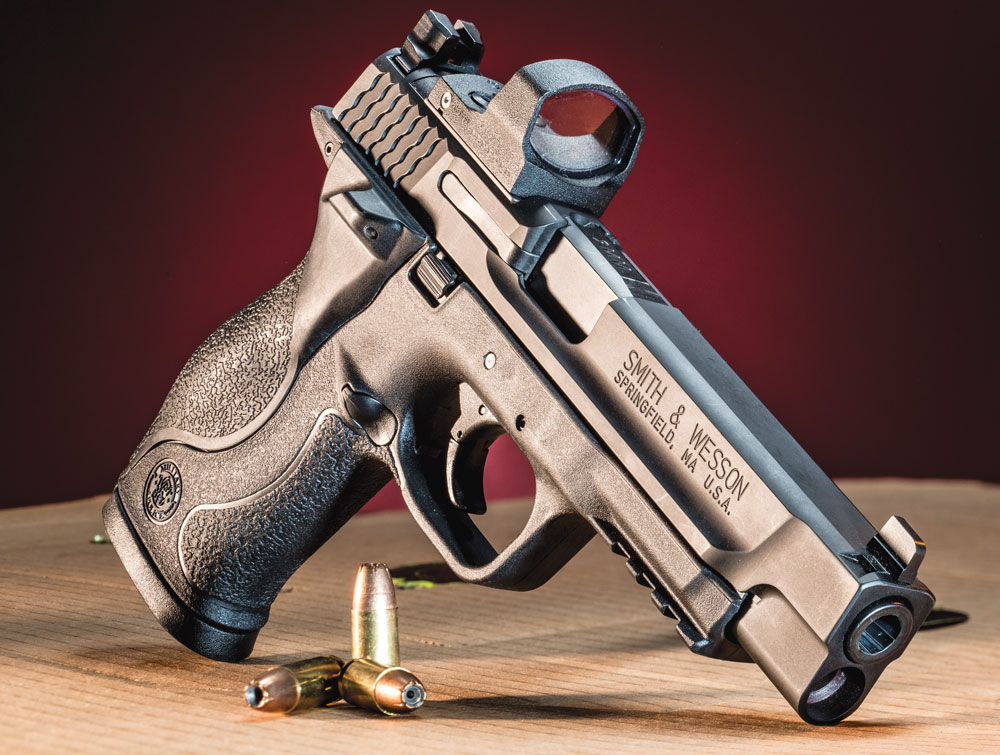
Last year, Smith & Wesson added an integral mounting system for optical reflex sights and designated the guns as C.O.R.E models, the acronym indicating Competition Optics Ready Equipment. Dick Jones reviews the Smith & Wesson M&P Pro C.O.R.E..
The M&P Pro C.O.R.E. takes the proven striker-fired pistol and adds modern optics to the platform.
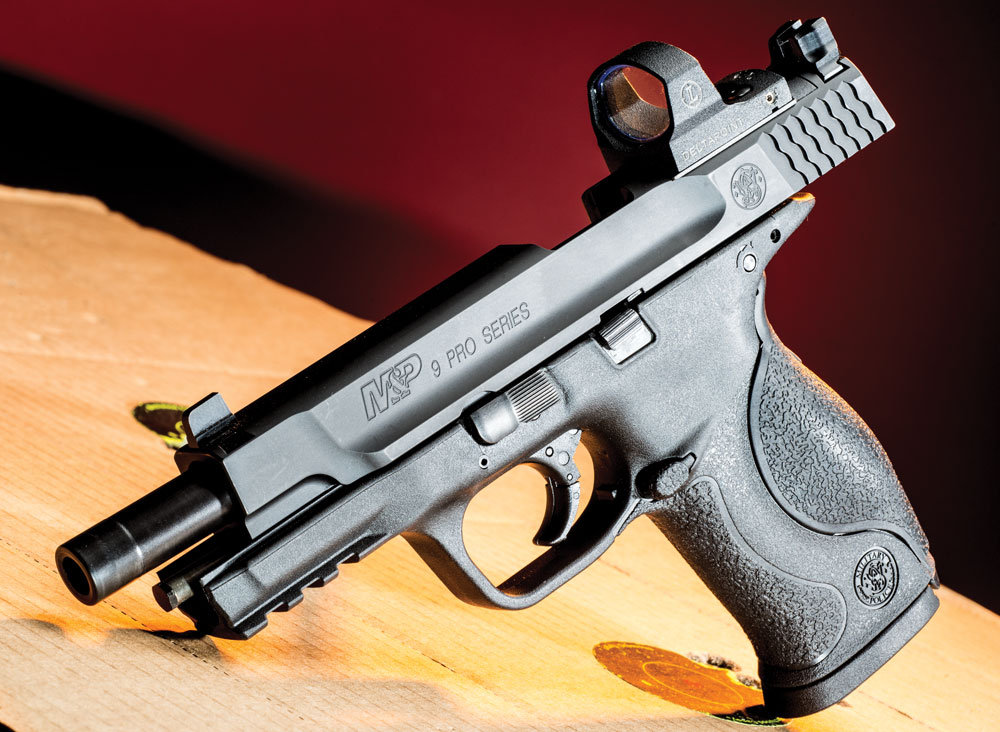
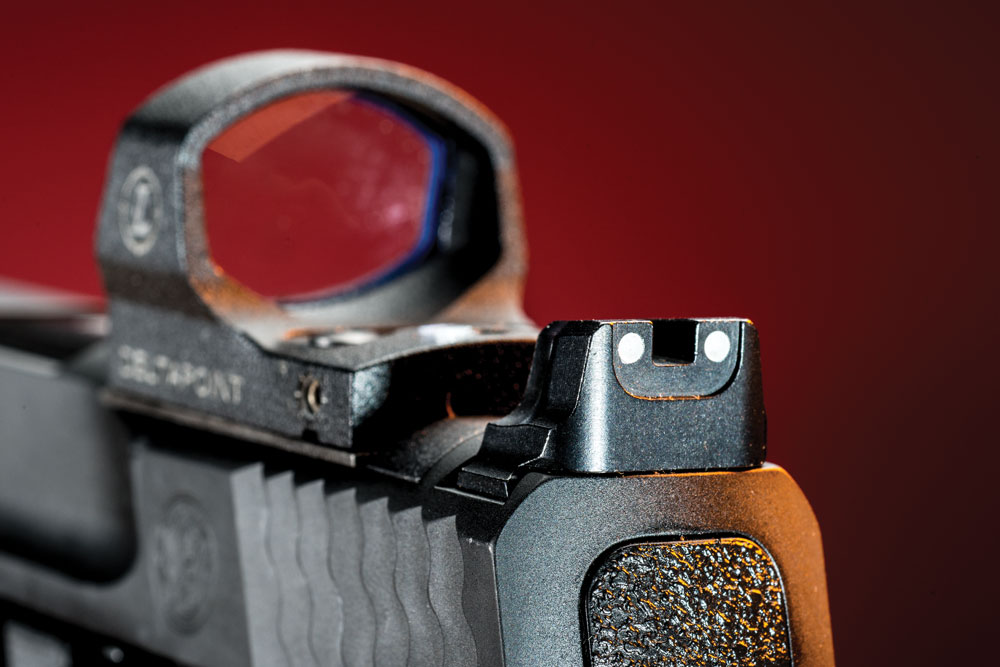
The C.O.R.E. comes with five bases and screws for mounting six different optical reflex sights. There are mounting bases for the JPoint, Doctor, C-More, STS, InSight MRDS and the Leupold Delta Point, the sight I chose for the test. The three-dot iron sights supplied on the C.O.R.E. are extra high and allow co-witnessing with the reflex sight. Of course, there’s also a lower rail for mounting a laser or light or a combination thereof.
What makes this work so well is that the top of the slide is milled down, allowing the sight to sit lower over the bore. This makes the gun more compact and reduces the offset of the sighting plane. The closer the sight is to the target, the less difference there is in zero at different distances.
Obviously, it also greatly simplifies the process of mounting a reflex sight because the mounting location is already prepared to that specific sight. All that’s required is to remove the plate that comes on the gun, choose the appropriate mounting adapter and screws and mount the sight. The iron sights can be removed then or left in place as a co-witness system in the event the reflex sight fails or the batteries are used up.
The C.O.R.E features a rail for lasers and flashlights, as well as a set of three-dot iron sights.
As delivered, there’s a cover plate over the mounting area, and it’s hardly noticeable. What are noticeable are the high co-witness sights. They are almost twice as high as normal sights, and I found them to work really well when using the gun as it comes in the box. They are slide windage adjustable at the rear, but there’s no provision for elevation corrections.
This is a gun primarily designed for optics, so adjustment is of little importance when the C.O.R.E. is used as designed. I did notice an issue with the Leupold Delta Point I chose in that the Delta Point or the rear sight had to be removed before unlocking and locking the elevation and windage adjustments.
Shooting the C.O.R.E. without an optic installed isn’t a lot different from the standard M&P. There are three different grip inserts to get a better fit; I have always liked the way the M&P feels in my hand and only swapped out to test the Radetec Round Count system, but more about that later.
If, for some reason, your optic fails, you can easily fall back on the iron sights
For some reason, the M&P series of pistols seem to shoot flatter than most of the polymer-framed striker-fired guns I’ve tested, and I’ve tested about all of them at this point. The bore axis is low, but I think it’s more about shape than geometry. The slide provides an excellent gripping surface at the rear with parallel vertical sides and a scalloped pattern that’s easy to grip without being abrasive.
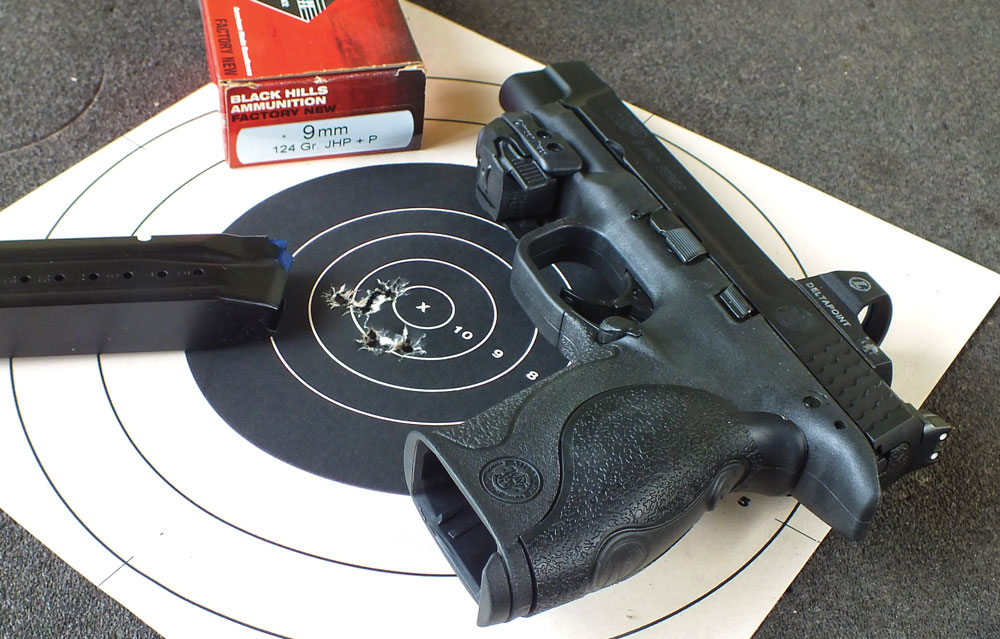
S&W C.O.R.E. standing target: Many will find the addition of a reflex sight improves their scores.
I’ve heard some complaints about the hinged trigger system on the M&P guns, but it doesn’t bother me at all. I shot one of the .22 rimfire versions quite a bit before I put much time on a centerfire gun and I’ve never noticed a problem.
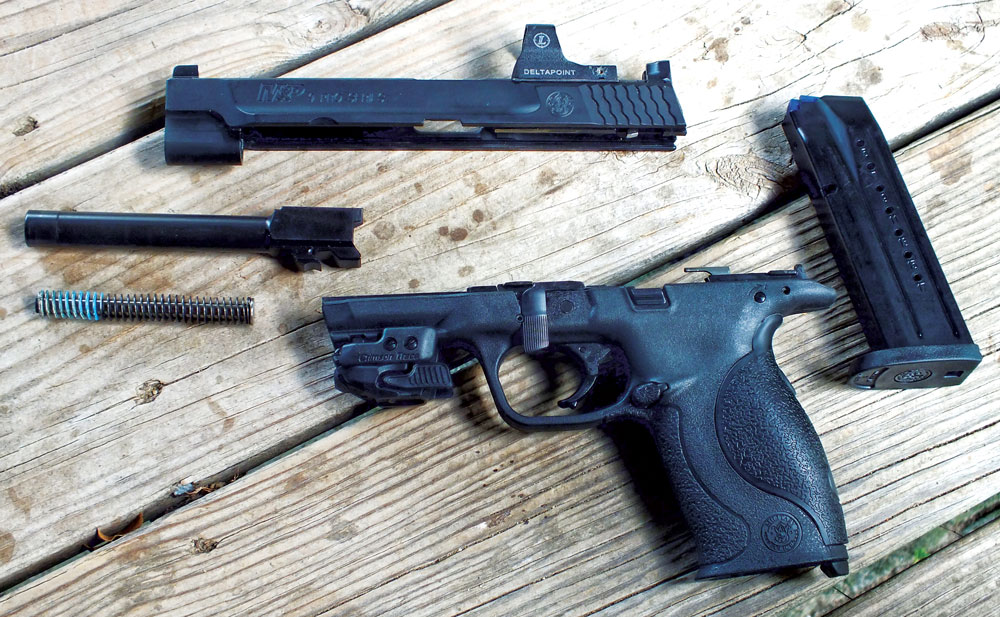
The trigger on my test gun broke right at 6 pounds after a reasonable first stage and with a normal amount of backlash for a striker-fired gun. The trigger was good for a service gun, but most serious competitors replace the stock system. Controls are well placed; the slide release is ambidextrous, and the magazine release is reversible. Fieldstripping is easy and self-explanatory if you have experience with striker-fired pistols.
Accuracy was good. I used Winchester 115-grain full metal jacket and Black Hills 124-grain +P hollow points. Both shot groups better than my capabilities at around 2 inches at 25 yards off a bench rest. I experienced zero malfunctions with either brand or with my 124-grain coated Blue Boy Bullet reloads. The Delta Point system I chose worked very well for precision shooting because the pyramid reticle allowed a precise hold.
Disassembly and reassembly is as simple as putting new batteries in the TV remote.
Smith & Wesson C.O.R.E Caliber 9mm Luger Capacity 17 + 1 Magazines Two black nitride with witness holes Barrel 5 inch Sights Dovetailed 3-dot system, raised for co-witness functionality Frame Polymer Slide Stainless Steel Length 8.5 inches Height 5.625 inches Weight 26 ounces Options N/A MSRP $769.00 Website smith-wesson.com
Get an overview of bullets for reloading, including a look at Nosler’s line of projectiles, which entail the full gamut of design and construction type.
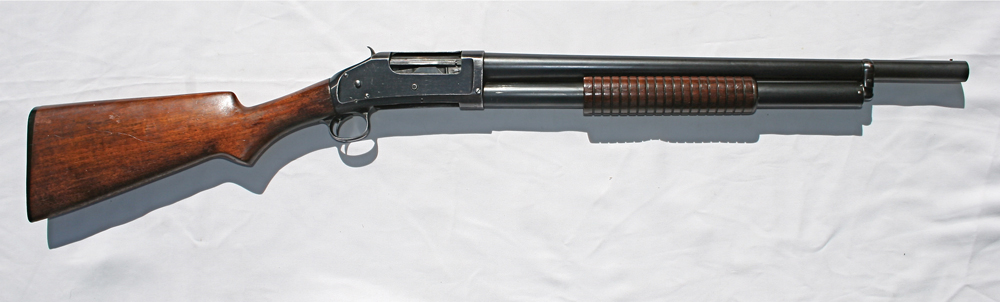
When it comes to iconic collectable smoothbores, few hold a candle to the Winchester Model 97 Riot Gun.
Whether brandished by Lee Marvin in The Professionals or wielded by William Holden in The Wild Bunch, the Winchester Model 97 Riot Gun is the bad boy of smoothbores.
Paradoxically, it was also a favorite of early 20th century law enforcement agencies, including the Texas Rangers, the Los Angeles Police Department, Alcatraz prison guards, and the Union Pacific Railroad, to name just a few of the authenticated guns I have examined over the years. In fact, a rather pristine Model 97 Riot Gun that I have in my collection was purchased by the Pasadena Police Department in 1924, during the heyday of the “Roarin’ ’20s.” It is nothing short of fascinating that, with all these historical links, one wouldn’t want to own one.
Because of its rugged yet fast-shooting action, the Model 97 Riot Gun is a favorite among Cowboy Action Shooters, and yet, due to those very attributes—its short, easy-to-swing 20-inch barrel, an Improved Cylinder open choke that makes it hard to miss in tight quarters, and an exposed hammer for easy cocking in times of stress—it’s perfect for home-defense, as well. Still, it is hardly surprising that, in its standard 30-inch barreled configuration, the 12-gauge version of John Browning’s pump design was one of the most popular sporting shotguns in America around the turn of the last century. In more modern times, I remember rabbit hunting with a friend of a friend, many years ago, who was using his granddad’s old Model 97 riot gun as a brush clearing device with the first couple of shots, thereby exposing any cottontail stupid enough to still remain in the vicinity.
The Model 97 was rugged and fast-shooting, making it a favorite of numerous law-enforcement agencies.
The Model 1897 was a much-needed evolution of Browning’s Model 1893, a weaker gun that was designed for blackpowder and, consequently, was plagued by fouling problems and a resultant poor reputation. It was one of Browning’s least successful inventions, bad enough to the point that, after approximately 31,000 guns had been sold, Winchester offered dealers a trade of any unsold Model 93 for a brand new Model 97. Fortunately, by the time Browning’s improved 1897 slide-action came on the scene, not only was it mechanically more proficient, but, by then, smokeless powder was in vogue and the new firearm’s metallurgy was ready for it.
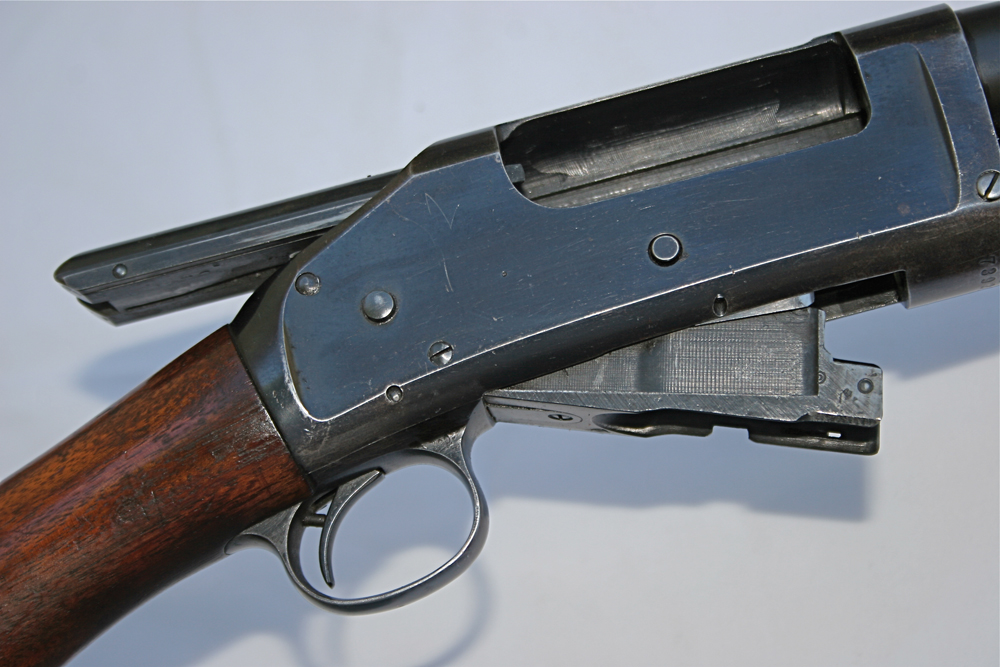
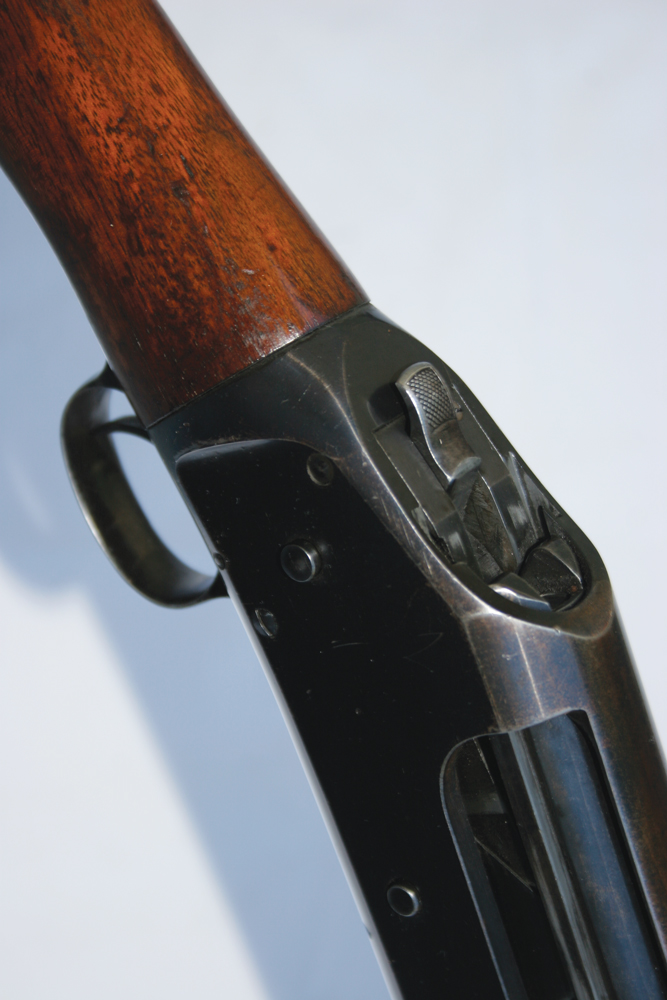
With its solid-topped receiver and side ejection, the Model 1897 was a marked improvement over the Model 1893. In fact, the Model 97 stayed in the line until 1957, with 1,024,700 guns made. Initially chambered for the new 2¾-inch smokeless 12-gauge shells, the Winchester 97, like its 1893 predecessor, featured a tubular magazine that held five rounds. A forward movement of the automatic slide lock—usually recoil was enough—freed the pump handle for fast cycling of the action. First offered as a solid-frame model with a 30-inch barrel, a number of variations were eventually cataloged, including Field, Trap, and Pigeon Grades. However, the most dramatic of the Model 97’s configurations was the Riot Gun, which featured a 20-inch Cylinder-choked barrel. By 1898, a takedown version was also being produced. A note of warning: Riot Guns are so popular that many standard-length barrels have been cut down over the years, so, if buying the gun as an original or for investment, be sure the choke is marked CYL (Cylinder), the only authentic choke on a Riot Gun.
Collectors will notice that many Model 97s show wear, given many saw action on battle fields or were carried often by law enforcement.
Another fascinating variation of the Model 97 Riot Gun is the Model 97 Trench Gun, which was given a military countenance via a distinctive, ventilated “heat shield.” Normally in a hunting situation, a sporting arm such as the standard Model 97 isn’t fired enough to become too hot to hold—in a wartime firefight, that 20-inch tube can become sizzling. To prevent scorched hands, a perforated steel heat shield was affixed to the barrel, along with a bayonet lug. This lug was meant for the standard military M-1917 bayonet, but the bayonet’s 16½-inch blade interfered with the otherwise excellent balance of the Trench Gun and was cumbersome in close quarters, especially during the trench warfare of WWI. The bayonet looked menacing when affixed to the Trench Gun, but it hampered movement and, obviously, was only useful in last-ditch operations. The sling swivels that were often fitted onto the Trench Gun, on the other hand, were much more practical. Early WWI guns were unmarked, but a “U.S.” and Army ordnance “flaming bomb” stamped on the receiver completed the identity for WWII guns that were called back into service.
Military loads often consisted of 00 buckshot, and an extra round in the chamber gave the Trench Gun a formidable capacity of six fast shots (in fact, sporting versions of the Model 97 were often advertised has having “six shots” even though their magazines only held five shells). Plus, the lack of a detent or trigger disconnect on the Model 97 meant a soldier could keep the trigger of his Trench Gun depressed and fire as fast as he could work the slide. The Trench Gun became so effective that it was soon nicknamed the “Trench Sweeper,” and soldiers who had been skilled trap and skeet shooters in civilian life often used their Model 97s to blast enemy hand grenades in mid-air before they landed. So devastating were these smoothbores that Germany tried unsuccessfully to get them outlawed from The Great War, declaring that “Every prisoner found to have in his possession such guns or ammunition belonging thereto forfeits his life.” Naturally, our troops continued to use their Trench Guns to blast their way to victory. And even though Trench Gun production was halted in 1945, this sawed-off shotgun continued to see action throughout Vietnam and the Gulf War.
Of course, the standard Model 97, including Riot Guns, remained in production for slightly more than a decade after that. When encountered today, most Trench Guns are quite worn, showing hard battlefield use, while the Riot Guns used by various police departments are usually in better shape, having spent much of their time in station gun racks and patrol cars. Whichever way, whether in civilian, law enforcement, or military dress, the Winchester Model 97 Trench and Riot Guns played important roles in keeping America not only safe, but free, which more than qualifies them to be included on my bucket list.
This article is an excerpt from 50 Famous Firearms You’ve Got to Own.
Learn More About Legendary Winchester
9 Greatest Winchester Rifles And Shotguns Ever Made
Our editorial staff has put together an excellent gift guide to help shooters get everything they want and need this holiday season.
Making a list and checking it twice? Don’t fret. If coming up with a gift list is as traumatic as a trip to the dentist, you’re in luck. The Gun Digest staff has done the homework for you. We dug through our catalog to find the perfect gift for you or your favorite shooting buddies.
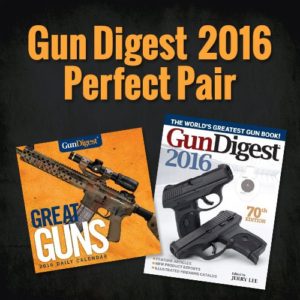
This excellent bundle combines the Gun Digest 2016 annual book with the 2016 Daily Calendar, resulting in something any gun owner can read and enjoy all year long. The new edition of the Gun Digest 2016 contains feature articles written by some of today’s most prolific gun writers, test-fire gun reviews, secrets to successfully collecting guns and a showcase of the newest products from top firearms manufactures. The Gun Digest Great Guns 2016 Daily Calendar features a stunning photograph of a different firearm every day of the year along with its name and a few facts about it. Best of all, you save 51 percent off the retail price ($50.98) when you buy the pair for one low special price. ($24.99)
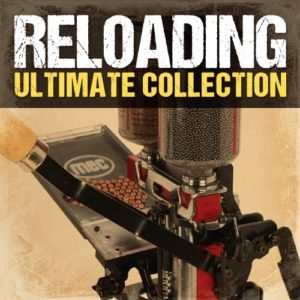
Interest in reloading ammunition continues to rise, and the perfect gift for new, aspiring or even experienced reloaders is the Reloading Ultimate Collection. In The ABCs of Reloading, readers can discover the steps and techniques for safely creating handloads, find out which equipment they’ll need to complete the reloading process, explore Gun Digest articles on reloading, and much more. The Handbook of Reloading Basics provides step-by-step, best reloading practices for both metallic cartridges and shotshells and establishes the basics for ensuring safety while reloading. The collection ($128.94 at regular retail) includes four paperback books and two downloads in all. ($59.99)
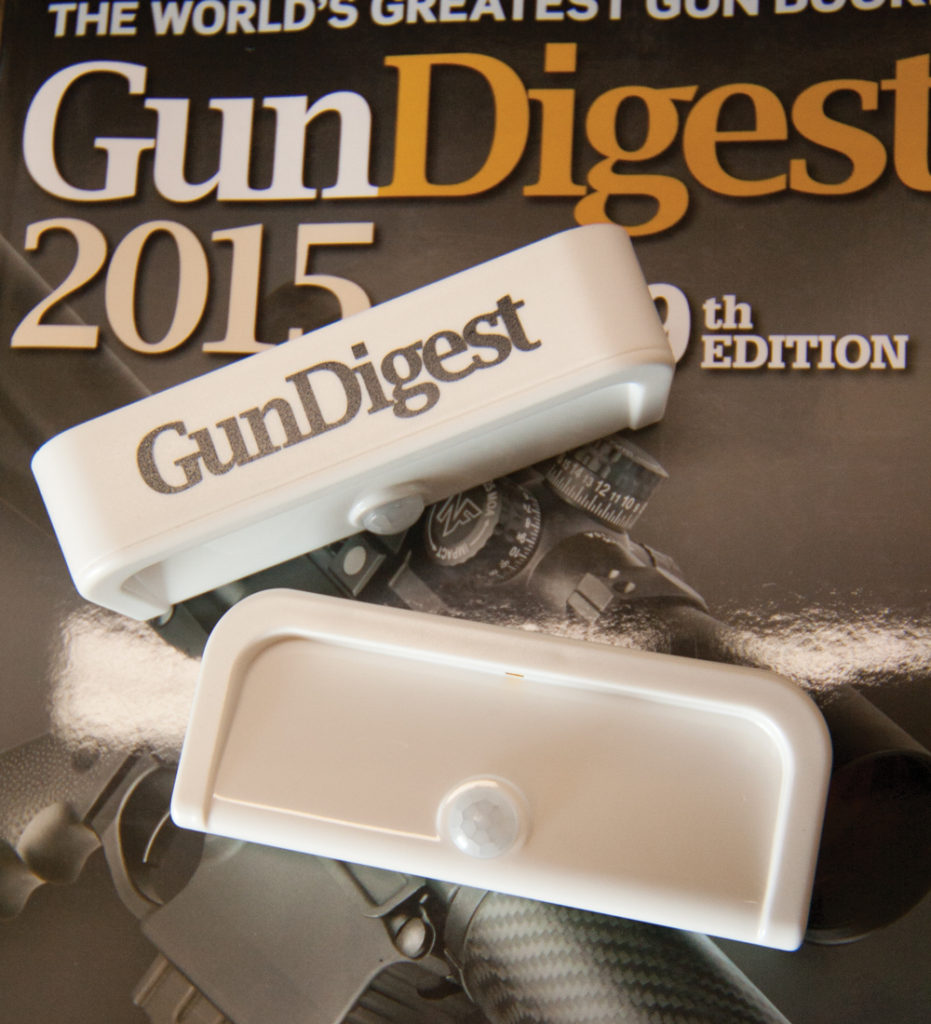
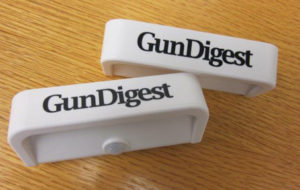
There are two ways to light up the interior of a gun safe: Wrap your guns with Christmas lights and run an unsightly extension cord … or with a pair of these custom Gun Digest branded Mr. Beams lights. These are motion-activated, super easy to install, light up the interior of a gun safe and shut off automatically. There isn’t a gun owner out there who won’t find a use for these handy lights. Normally $24.99, these are available at 20 percent off from the Gun Digest Store. And as another bonus, they fit snugly into any stocking! ($19.99)
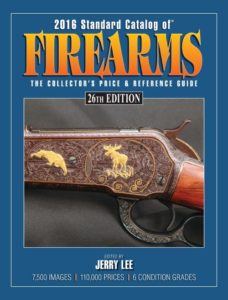
Gun enthusiasts are always in the process of buying or selling guns. Or daydreaming about what they’ll buy next. The 2016 Standard Catalog of Firearms is an excellent resource for both these things, containing values and conditions, with more than 7,500 photos, of over 110,00 models of firearms. Every edition is updated with the newest entries from today’s manufacturers, plus the latest values from a wide range of experts, editors and auction houses for virtually every gun made or sold in America since the early 1800s. It’s simply the must-have guide to commercial firearms, past and present and is available at 32 percent off its retail price ($43.99) at the Gun Digest Store. ($29.99)
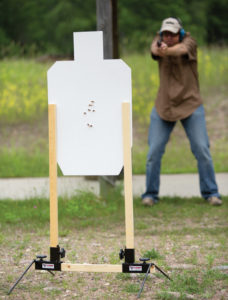
What shooter doesn’t need more target stands? The P3 Ultimate from CTK Precision is one of the most versatile and stable platforms available, making this a can’t-miss gift idea.
Its versatile design allows shooters to attach a target of almost any size with the included target clips. Set up the target stand virtually anywhere. The width is easily adjustable; the angled legs allow for a stable four-point stance on uneven terrain, and the entire stand assembles and disassembles in mere seconds! ($60)
The Gun Digest staff designed these targets in conjunction with EZ2C for the ultimate range solution. No more squinting or running back and forth to see your shots, wasting precious time.
The fluorescent red against ample white space depicts shots clearly, making rifle sight-in or handgun practice a breeze. Available in pads of 25 targets, they’re a good, practical gift for any shooter. ($7.29)
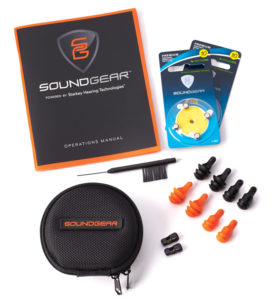
This tiny electronic hearing aid protects against gunshots, yet doesn’t cancel out surrounding noises. The net effect: You actually shoot better because your natural sense of balance isn’t thrown off by that “muffled” feeling you get with a bulky headset clamped onto your head. The SoundGear Platinum Recreational Instant Fit ITC makes shooters more effective in the hunting field and protects them from damaging noise. Give the gift of hearing and better shooting this holiday. Regularly $399, these are available for 25 percent off from the Gun Digest Store—an excellent deal. ($299.99)
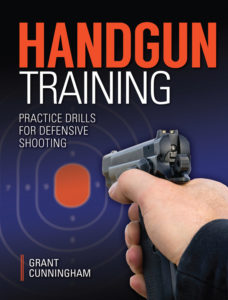
Getting the most out of one’s time at the range is what you’ll get with Grant Cunningham’s new book, Handgun Training – Practice Drills for Defensive Shooting. Sure, it’d be nice to have Grant show on Christmas morning and spend the day with you and your family at the range, but this book might just be the next best thing. For concealed carry practitioners and anyone concerned with home defense, this book will hone you in on what you should practice and why. This is a great, and important, gift, and it’s available at 30 percent off its standard retail price of $19.99. ($13.99)
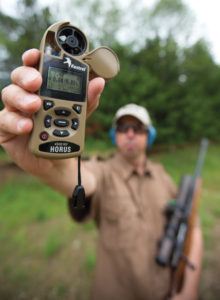
The Kestrel 4500 Weather Meter needs no introduction, as any long-range rifle shooter would do back-flips to unwrap one of these slick outfits on the big morning. This all-in-one device allows the user to not only measure a variety of factors, but also customize several targets for location, distance, direction, declination, speed and winds. Plus, it permits the shooter to create, store and choose from multiple weapon/round profiles, providing a truly customizable shooting experience. An excellent stocking stuffer, it’s the gift that keeps on giving—shot after distant shot. Normally $619 at retail pricing, it is available at 5 percent off from the Gun Digest Store. ($589)
Hot off the presses is this fascinating look at laws governing knives. Nationally known knife rights attorney Evan F. Nappen explains, in easy-to-understand terms, everything you need to know about the knife laws where you live. He covers what knives are legal to own and carry in each state, and what knives aren’t. Plus, learn all about switchblades, ballistic, gravity and other knife types; what to do if you’re arrested, and what not to do; your rights as a knife owner; and tips to avoid legal problems. If someone you know carries concealed for self-defense, get them this book. Regularly $24.99, it’s available now for $7 off its typical price. ($17.99)
Don’t put off enrollment in concealed carry classes and self-defense training. The time to do it is right now.
After a recent move to Colorado, I procrastinated for several weeks before enrolling in a local concealed carry course. Like anything else that involves interacting with and forking over money to state or federal governments—whether that’s the DMV, county clerk or DNR equivalent—I’m usually less than enthusiastic about the ordeal.
What finally got me off the schnide was, a bit unexpectedly, my wife. “If our Second Amendment right is the responsibility you say it is,” she graciously reminded me, “then we’ve got to take that seriously. I signed us up for a concealed carry class this Saturday.” Well, how do you like them apples? She’d done her own independent research on state laws, found a certified class and signed us up. This is from the woman who, until recently, had never fired a gun in her life.
We turned the class and following afternoon into a date. We went out for lunch and talked at length about training, firearm selection and practical solutions for everyday carry. Finally, I asked her where her interest in firearms and self defense had come from. “You know,” she said, with a smile, “I do read your magazine. It’s not that I was ever against concealed carry, I was just never exposed to it. I didn’t know anything about guns, so I was afraid of them.”
In most places in America, we have a tremendous right and responsibility to self defense. But it means we have to take advantage of the opportunity, make the most of state laws and take ownership for our training. Sign up for a carry course, fill out the paperwork, and get the training you need to be a well informed, well trained and armed citizen.
Our concealed carry section on this website is filled with expert advice and reviews on the best guns and gear to help you effectively defend yourself. There’s never been a better time to build your skill, add to your gun collection or sign up for a training course near you.
Here are 12 things to focus on perfecting while training handgun drills at the range.
A shooting response to a lethal threat is a complex series of observations and reactions. There are a number of skills involved in a successful response, and luckily for us, our innate abilities developed over millennia help us tremendously. Learning to use a specific tool like a firearm, however, is not an innate or “instinctive” skill — it’s something we learn to do in concert with what we already know and do.
So, what are the kinds of things you need to train and practice? In no particular order, here are just a few of the things you might need to be able to do quickly and efficiently:
Get a proper grasp on the gun
Bring the gun from the holster to the target
Decide if and when you need to shoot, and when you need to stop shooting
Retrieve the pistol from a storage device
Use the gun in concert with illumination of some type
Reload the gun when it runs out of ammunition
Clear a malfunction
Recognize the level of precision to which you need to shoot
Deliver that level of precision on target
Deal with more than one attacker
Shoot rapid, multiple rounds to an appropriate level of precision
Shoot one-handed
Of course there’s a lot more, but this should give you an idea of what this concept of “task-oriented” training means: practicing those things that are actually needed in a defensive shooting.
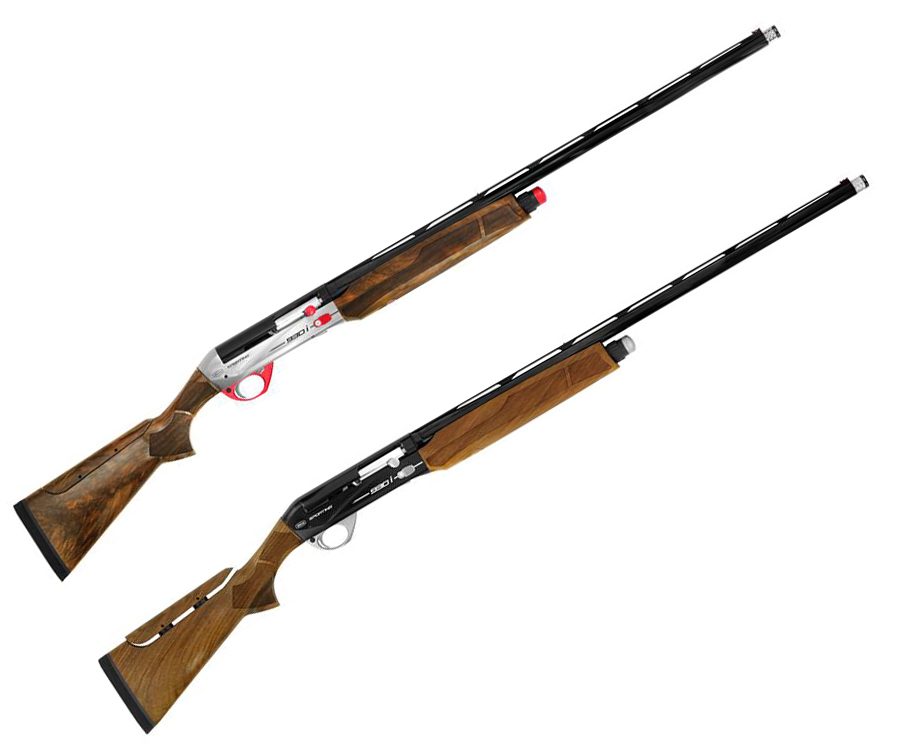
The Breda 930i Sporting offers clay shooters a slew of features that should help them break more blue rock.
The Breda 930i Sporting offers clay shooters a slew of features that should help them break more blue rock.
Breda is one of those brands that has lived on the periphery of the American shotgun world.
The Italian manufacturer has made a couple runs at this side of the pond, but for one reason or another has just missed taking hold. In turn, if the zippy and generally well-balanced smoothbores caught your attention, you were relegated to beating the bushes in used guns listings, for the most part.
Breda, however, has not given up on becoming a favorite of Yankee clay and wing shooters. Breda USA was freshly launched earlier this year with a full line of shotguns that have the potential to turn some heads.
Along these lines, and among the models the company itself is highly touting, is its new Breda 930i Sporting. The semi-automatic is engineered to pulverize blue-rock en mass, while catching as many eyes as possible in the meantime.
To the former attribute, perhaps among the shotgun’s greatest assets is its adjustable comb. Once more common on custom guns, this feature is becoming a usual addition on many smoothbores destined for the trap and skeet ranges. There is good reason for this, given tailoring where a cheek welds to the stock means a quicker point.
The shotgun should also be quick to the shoulder, boasting an in-stock weighting system that allows fine-tuning the 930i’s balance. And once on target, the new Breda should prove quick on the break with its featherweight trigger pull — 3.9 pounds.
A bit unique to a shotgun designed specifically for clays is the 930i’s operating system. The shotgun utilizes an inertia operation to cycle rounds, somewhat of an oddity when it comes to competitive guns.
This is in part due to the typically more pronounced felt recoil the lighter system produces, which has the potential to wear on a shooter. But there are benefits to an inertia gun, such as it being a lighter and faster handling firearm, not to mention generally requiring less lubrication.
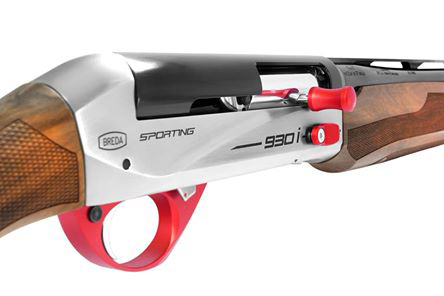
The Breda 930i Sporting is outfitted with an inertia operating system and has an option for a two-tone receiver.
The new Breda 930i Sporting also has form to go along with its function. To this end, perhaps the most distinctive is the two-tone finish option for the receiver. The stainless steel and matte black finishes are truly unique and tend to give the gun’s classic lines a modern look.
A few other of the 930i’s features include:
Choice between 28- and 30-inch barrels
Three extended competition chokes
Back-bored to .739 inches for improved patterns
High-visibility, low-profile, fiber-optic front sight
10 to 8mm tapered sporting rib
The Breda 930i Sporting looks to have about everything a clay shooter could desire, but it will run them a bit of coin. Presently, the company lists the shotgun’s MSRP at $2,599.
Watch the violent and amazing process Ruger’s barrels go through in the cold hammer forge.
What makes a rifle a rifle? Simple, its rifling. Not to be flippant, but quite literally the spiral grooves running the length of the bore are the defining features of the firearm. And dang important ones at that. Perhaps few things so drastically affected (positively) firearm performance than the 16th-Century innovation.
Nowadays, given modern manufacturing processes, there are many ways to outfit a barrel with rifling. The above video showcases perhaps the most dramatic method — the cold hammer forge. Produced by Ruger, the clips shows the company’s massive hammer forge in action and glory, not to mention some other steps in the process of producing a rifle barrel. In this method, the rifling is pounded into the bore through the use of the hammers and a carbide mandrill, which has a negative of the rifling pattern.
Interestingly, the barrel stock is actually over bored before hitting the forge in anticipation of its diameter shrinking with each blow of a hammer. What happens to the inside of the barrel, however, isn’t the only enthralling aspect of the process. Equally intriguing, the barrel comes close to its final dimensions — length and diameter — with its trip through the powerful and violent machine.
Firearms play a big role in daily life in Atwood, Kansas, located in the very rural northwest corner of the state. And when it comes to rifles, the wide open spaces of the Sunflower State are just made for the newest batch of long-range centerfires.
“In rifles, we are seeing a turn toward the latest, greatest, turbo-charged .264 round,” says Jim Engel, store manager for the Great Outdoors Gun Shop. “We’ve been selling some rifles in .26 Nosler and several in 6.5×284 and 6.5 Creedmoor. There are more folks getting into shooting long range right now, for hunting and targets.”
He continues, “If we could get the new Ruger Precision Rifle, we would sell the heck out of them. But we still have not received one through our normal distributor channels, and they have been out over a month.”
Lever-actions from Henry Rifles are always strong sellers here, too, while, for shotguns, Benelli is number one, followed by the various Remington models.
A recent change in Kansas law allowed “Constitutional Carry”, and with that change came many sales of smaller handguns, especially the Ruger LC9s, the Sig 938, the Sig 238 and the Smith and Wesson 642 series of handguns.
“For the bigger handguns, 1911s are the best sellers,” Engel notes. “We sell quite a few Springfield Armory, Kimber, Smith and Wesson guns. The higher priced 1911s like the Smith Performance Center guns are doing good, for just over $1,500.”
The Internet is affecting business here, but not necessarily in a good way.
“We are seeing a jump in gun transfers from the major online retailers that are undercutting our prices significantly,” says Engel. “It’s hard to compete with online when the price my customer is getting it for is well below what I can buy from a distributor. We are trying to be very competitive, but we can’t just give it away and make nothing.”
Editor’s Note: This brief originally appeared in the October 2015 issue of Gun Digest the Magazine.
Philip Massaro breaks down the three main types of smokeless powder for reloading, with a discussion on the practical uses of each. In addition, he unveils some new powder technologies that are less sensitive to temperature and burn cleaner in your firearm.
What is the difference between a large rifle primer and a magnum large rifle primer? Can you use magnum primers in standard cartridges and vice versa? These are among the topics discussed in Episode 4 of Gun Digest’s Reloading Series with Philip Massaro.
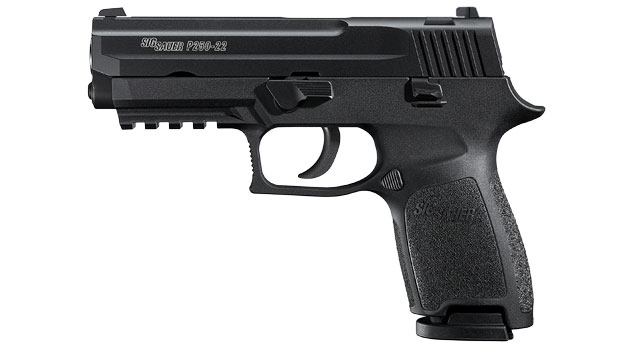
SIG Sauer has expanded the P250 line with the P250-22, a rimfire variant of the popular modular pistol system.
When it comes to personal-defense handguns, those chambered for rimfire cartridges have found a place.
No, no, these light recoiling firearms aren’t meant to be primary arms. Heck, they aren’t even backup guns, by any stretch of the imagination. Instead, models chambered for the venerable and ubiquitous .22 LR are training tools — dang good ones at that.
In short, handgun fundamentals can be drilled on the cheap with the generally economical round. And this is a feature many gun companies have caught onto, offering .22 variations of their most popular centerfire pistols.
Count SIG Sauer among them, with the international gun company expanding its pistol selection with a rimfire option. But it being SIG, there is a definite twist to what they are offering in this new handgun.
Modularity has been the catchword as of late for the American-German-Swiss manufacture. And the P250-22 continues in this vein.
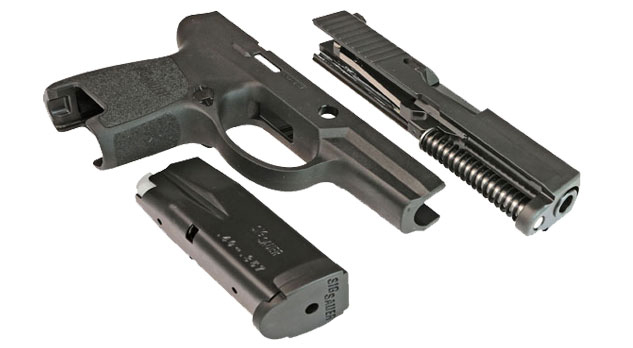
Like the rest of the P250 line, the new .22 model has a serialized fire control group, that is easily removed and placed in a different frame. This ingenious piece of engineering — unveiled by SIG in 2014 — creates a staggering amount of versatility in the line of hammer-fired pistols. The P250 can go from a full-sized pistol to a compact or sub-compact in a matter of seconds. And it can jump between calibers — 9mm, .40 S&W, .357SIG and now .22 — in the blink of an eye.
Like the other pistols in the line, the new P250-22 is extremely versatile with the ability to jump between frame sizes and calibers.
The latest addition to the P250 lineup is intriguing on a number of levels.
First off, there is the training aspect. A shooter gets all the benefits of learning the ins and outs of their defensive pistol, while saving money by running .22 ammo through it. But, as the company itself points out, the new rimfire variant of its flexible pistol design is also ideal for new shooters.
“This allows newer shooters to work up to the more powerful cartridges, (and it) is a great tool for introducing youth to the shooting sports,” John Brasseur, SIG’s director of product development said.
One more point, one not to be discounted, is the P250-22 looks to make a heck of a plinker to boot. At 21.2 ounces in its compact configuration, the pistol has heft to drill bull’s eyes all day when chewing through .22 cartridges.
Raye Gunter—Emerald Valley Armory, Cresswell, Ore.
When it comes to customer demand, one Beaver State retailer continues to enjoy robust sales of defensive handguns.
“We are selling lots of concealed carry-oriented handguns like the new Glock 43 in 9mm, the Springfield XDS in both 9mm and .45 ACP, and the S&W Shield in 9mm,” said Raye Gunter, owner of Emerald Valley Armory. “The pocket .380s have cooled a bit as of late.”
Supplies of ammunition are good, though Gunter says .22 rimfire is still a hard find. Best sellers in rifle ammo include PMC and Federal in 5.56mm, and Tula for its 7.62x39mm offerings.
“The 300 Blackout round continues to gain in popularity,” Gunter notes. Top sellers in this caliber are from Remington, Hornady and Armscor.
“In optics,” he adds, “we are moving a lot of optics in the $200 to $350 price range. These include the Redfield CounterStrike, the Burris AR-332, as well as offerings from Lucid, Konus and Bushnell.”
A Class III dealer, Emerald Valley has experienced a tremendous increase in the number of suppressors sold. Top suppressors here: the SilencerCo Warlock II, the Pilot and Element II by Advanced Armament Corporation and the GemTechG5.
Editor’s Note: This brief originally appeared in the October 2015 issue of Gun Digest the Magazine.
Looking to go armed, but are stuck in the weeds as to what to arm yourself with? Here are 20 of the best concealed carry gun options that will keep you on the defensive.