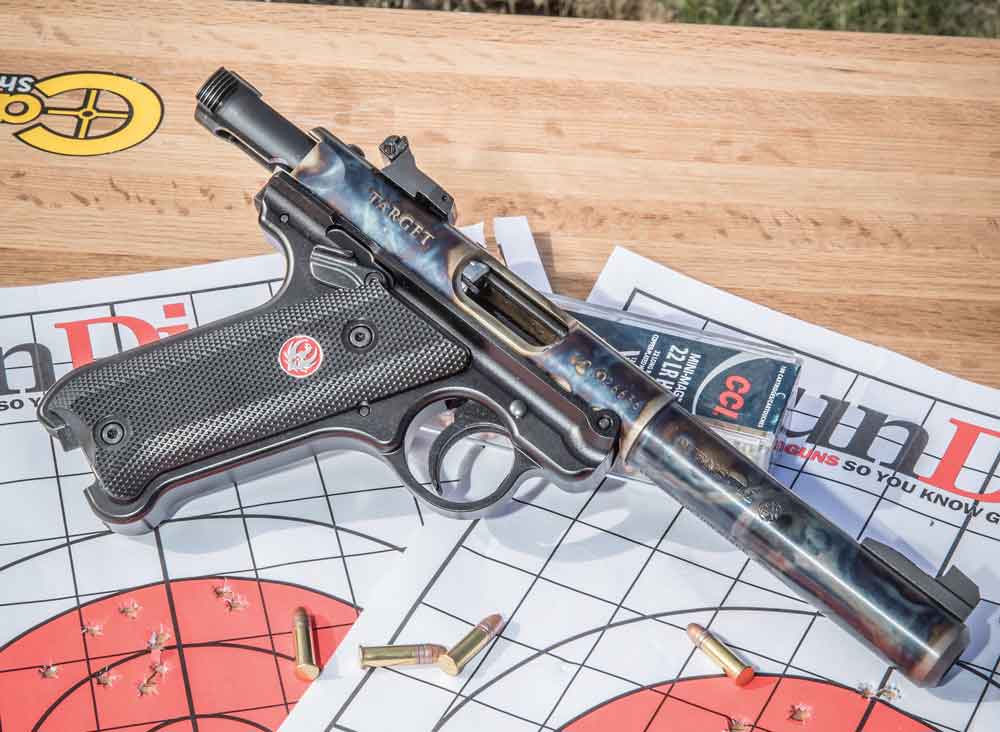
The Turnbull Ruger Mark IV leaves a unique mark on the iconic rimfire pistol.
The Turnbull Ruger Mark IV marries the iconic rimfire handgun design with a truly recognizable firearms finish to create an instant classic.
As custom as the Turnbull Ruger Mark IV looks, it’s actually pretty easy on the pocketbook — only $30 more than the MSRP Ruger lists its Target model.
Outside of Turnbull’s aesthetic touches, the Ruger Mark IV is identical to the Target model and comes with all the usual accoutrements.
For shooters searching for a unique firearm that performs as good as it looks, and doesn’t break the bank, the Turnbull Ruger Mark IV nails the bullseye.
The legacy that Bill Ruger left behind at Sturm, Ruger, & Co., Inc., has had an incredible amount to do with his Ruger Standard pistol, which was originally introduced in 1949 and has seen several updates that endure to this day. Designed by Ruger himself, chambered in .22 Long Rifle and based off the WWII-era Japanese Nambu pistol, the Standard has gone through several iterations, first as the Mark I, II, and III, and most recently as the Mark IV. Nothing qualifies as a classic firearm like a design that’s endured over a span of almost 70 years and continues to be one of the most popular firearms ever made.
But what happens when you take a legendary brand like Ruger, with the latest version of perhaps its most quintessential firearm, and pair it with one of the most recognizable gun restoration and finishing companies around? You get the Turnbull Ruger Mark IV, a pistol that joins two iconic looks for a finished product that is sure to turn heads at the art gallery or the shooting range.
Make Your Mark Although Doug Turnbull’s New York-based Restoration & Manufacturing Co. does a full scale of restoration and finishing of firearms, it is best known and most easily recognizable for its color casehardening. Not surprisingly, that’s what sets the Turnbull Mark IV off from a standard Ruger-issued firearm, and boy does it make a difference. While Ruger offers several models of the newly released Mark IV, the Turnbull edition plays off the Target pistol and is, of course, chambered in .22 LR.
One of the biggest questions I’ve gotten so far about the pistol on the Gun Digest Facebook page is how much more expensive it must be than a standard Ruger Mark IV. After all, for a pistol that sexy, most people assume there would be a hefty price tag to match. Interestingly enough, the Turnbull version comes in at $595, just $30 more than the MSRP listed on Ruger’s website for the Target model.
Features
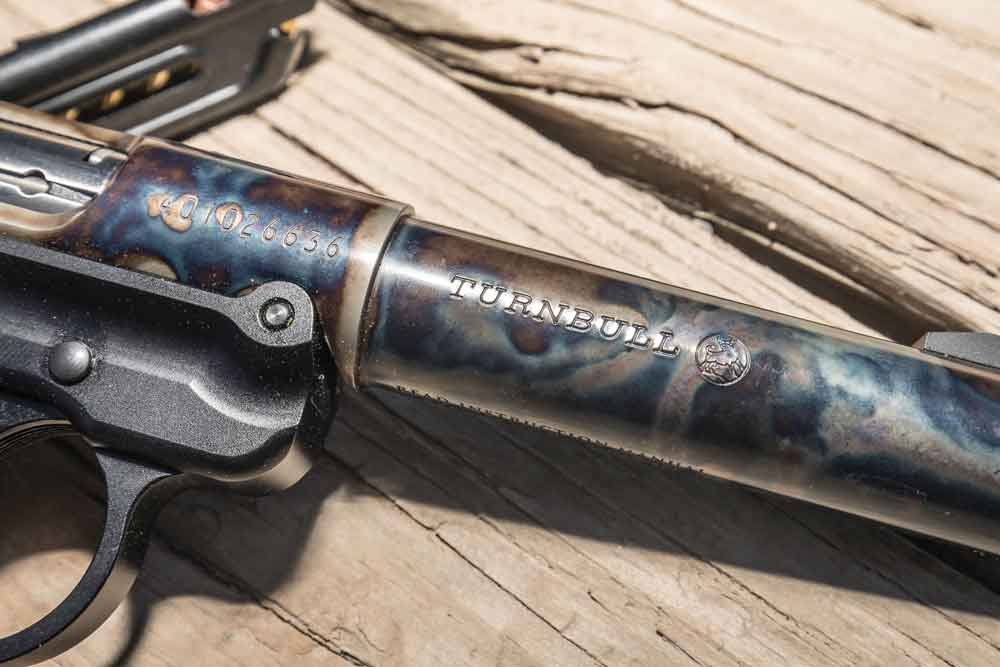
Along with the color casehardening, the Turnbull Mark IV also features a Turnbull engraving on the right-hand side of the barrel, while maintaining all the standard Ruger engravings. Outside of the casehardening and the engravings, all other features are identical to the Mark IV Target model.
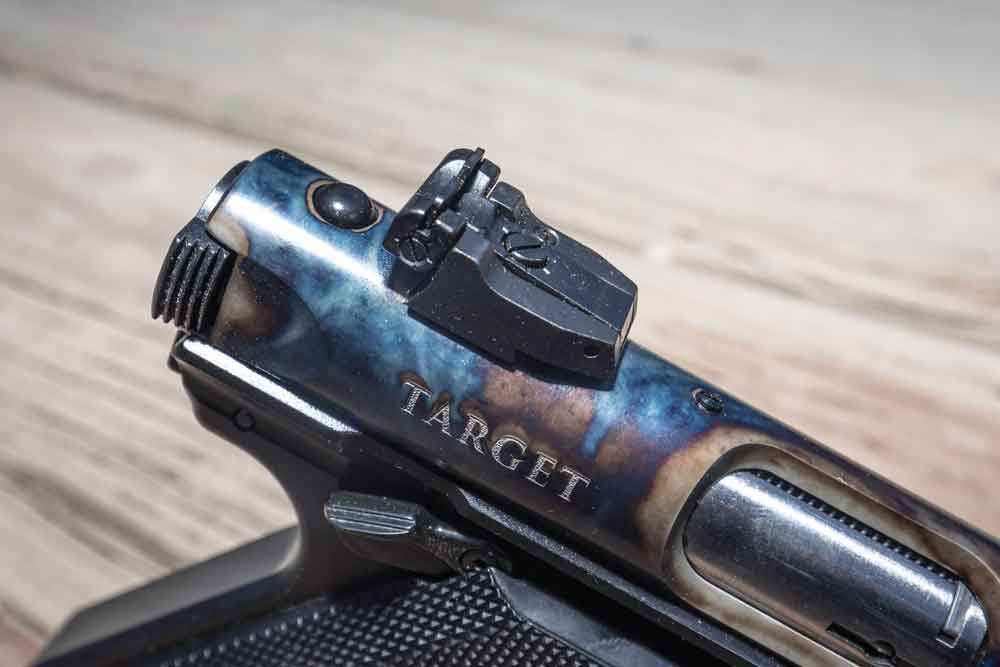
The Mark IV comes with two 10-round magazines and features a bull barrel that measures 5.5 inches in length. The barrel has a 1:16-inch twist and an overall length of 9.75 inches. Total weight of the pistol is right around 36 ounces (unloaded), while height measures 5.5 inches and width is 1.2 inches. The Mark IV features an adjustable rear sight, checkered synthetic grip and fixed front sight.
In terms of controls, the Mark IV is designed with an ambidextrous, manual thumb safety, contoured side ejection port and rear bolt operation. Ruger also gives you the option of converting the safety to left side only. The bolt features grooved bolt ears that are easy to grasp, gloves or not, and a left-side magazine release. The pistol will not fire without the magazine, and the mag drops free when released. The frame is a one-piece, CNC-machined, aluminum design, with alloy steel barrel and receiver. Conveniently, the receiver is drilled and tapped for a Weaver-style rail, perfect for optics mounting.
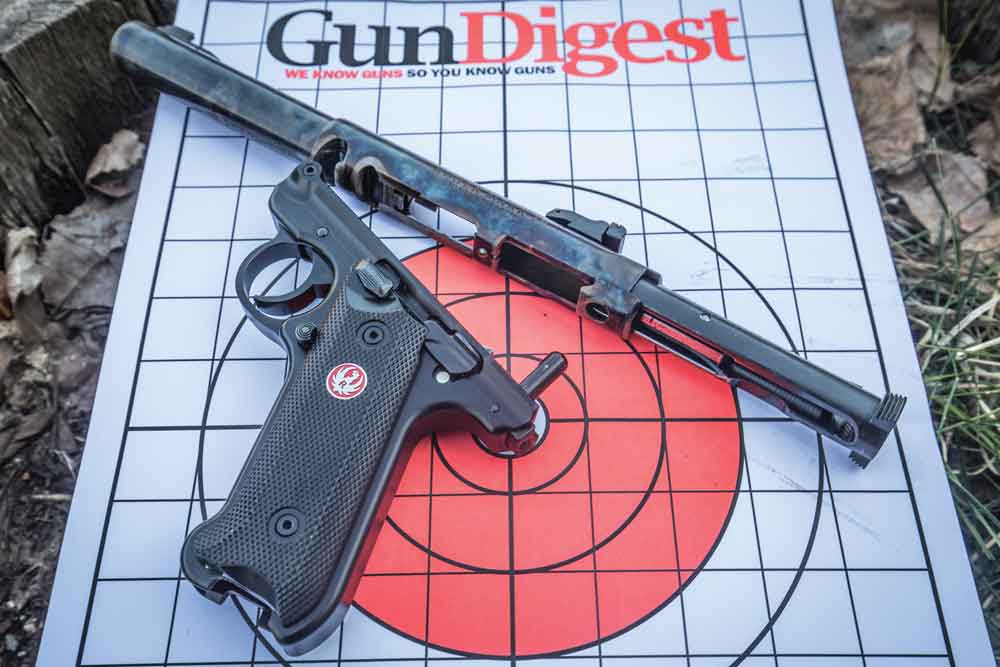
The huge change from the Mark III to the Mark IV is the ease of disassembly for cleaning and maintenance. With the Mark III, introduced in the early 2000s, disassembly seemingly required an entire gunsmithing toolkit, which made field stripping a nightmare. Ruger listened to its customers, however, and the Mark IV now features an incredibly easy push button takedown procedure. The takedown button is located at the rear of the grip frame, just below the bolt. To disassemble, simply lock the bolt back, flip the safety up, and push the takedown button. The rear of the receiver will release, and as you push the barrel/receiver forward it disconnects at the front of the grip frame. The bolt slides out. It’s really that simple; no tools required.
While it seems like a relatively minor upgrade for some folks, those of us who burn through countless rounds at the target range know how important the takedown and cleaning process is. I’ve hated certain vehicles I’ve owned simply because the oil was a nightmare to change — similar issue with cleaning the older Mark pistols. Now that Ruger’s simplified the takedown and maintenance process, there are going to be a lot of happy campers in the .22 pistol world.
Accuracy and Function At the range, the Mark IV did not disappoint. Sure, it’s a head-turner, but it’s also a tack-driving workhorse. I fired 100 rounds as quickly as I could reload two 10-round magazines, utilizing CCI’s 36-grain, copper-plated .22 LR Hollow Points, and had exactly zero feeding or function issues. As it’s always been — and hence the longstanding popularity of the design — the Mark IV is exceptionally well built, functions flawlessly, and delivers pin-point accuracy.
For testing, I shot from 20-yards at the Caldwell B.R. Pivot bench from sandbags, with average five-shot groups coming in between 1.5-2 inches. I also shot two 20-round groups in as rapid succession as I could muster while maintaining accuracy, and all but a pair of holes hit within a 5-inch circle. The trigger is decent, with an audible reset. Overall, the Mark IV is extremely fun to shoot, produces little recoil (making it great for teaching new shooters proper pistol mechanics), and is highly accurate.
Parting Shots It’s hard to imagine a more winning combination of companies than Turnbull and Ruger. At one level, you could say Turnbull’s take on the Mark IV is merely cosmetic, and in a sense that’s true. But it’s such a riveting, eye-catching makeover that it drastically turns a mass-produced pistol into a standout work of art. From the gun store to the range, and Instagram to Facebook, the Turnbull Ruger Mark IV has had folks drooling over keyboards and glass counters, and rightly so.
Not only does the Mark IV function well and produce stellar accuracy, it’s now got a simple takedown procedure thanks to a friendly little button at the rear of the gun. It’s optics ready, and it features Turnbull’s iconic color casehardened look. The pistol gives shooters the rare opportunity to own a relatively inexpensive handgun with a custom look and feel. Definitely worth the price of admission.
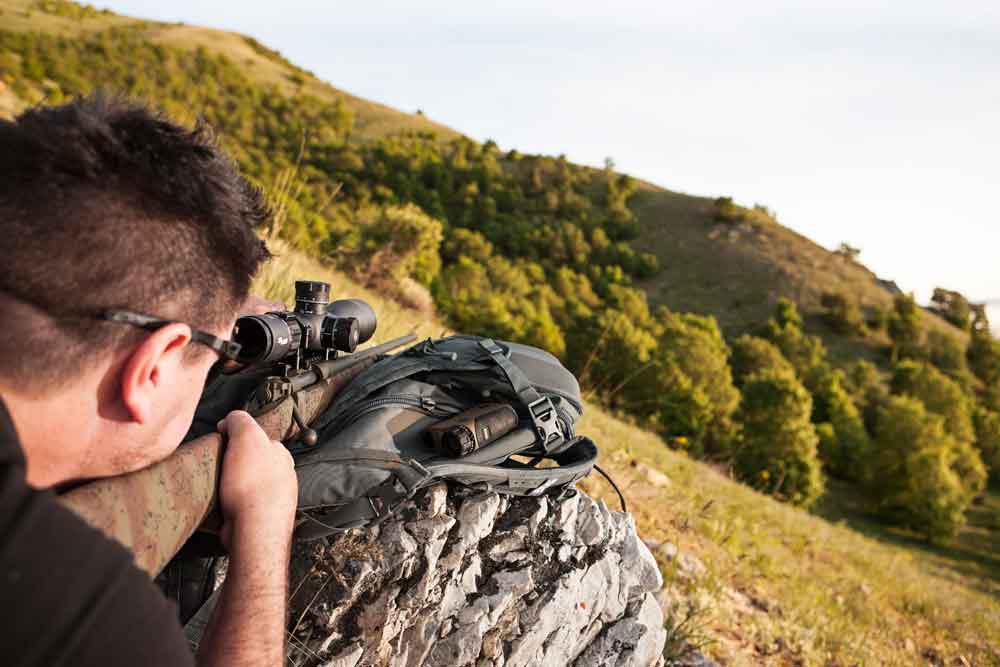
SIG Electro-Optics’ LevelPlex sets new standards in long-range riflescopes.
What makes SIG Sauer’s LevelPlex digital anti-cant system a game changer?
LevelPlex is an integrated leveling system designed to eliminate the cant to improve accuracy, particularly at long range.
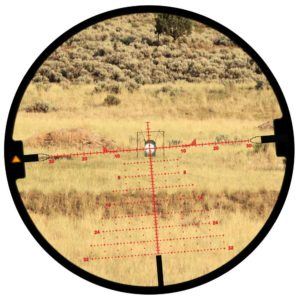
The system features two indicators, one on either side of the reticle. These indicators come in the form of yellow arrows, which describe the direction the scope needs to be adjusted to remove the cant.
It is six times more accurate than a typical bubble level with a +/- 0.5-degree of accuracy, with a user-selectable option of +/- 1-degree of sensitivity.
Take a minute to think about the cell phone you were holding to your head a decade ago. Did it have a hinge? How about a telescoping antennae? Heck, did it even have a screen?
And now look at the cell phone sitting on your desk, hanging on your hip or resting in your pocket as you read this. Things have definitely changed in the world of cell phones due to technological advancements and consumer demands.
But let’s bring this back to the gun world. Are things really so different here? Think back to the setup you were shooting a decade ago — competition, long-range, hunting, long gun, handgun — the platform doesn’t much matter. Does it look anything like the setup you’re shooting today? The odds are good that it doesn’t, and if it does, you might be missing out.
With this being the new technology column inside the Gun Digest long-range issue, it’s fitting to dive a bit deeper here and examine the recent technological advancements in a long-range setup. These days, half-MOA groups from rifles that are also capable of delivering consistent hits well past 1,000 yards are not exceptional … they’re expected. And shooters who, a decade ago, considered 600 yards to be long range now test the limits of their setups on 1-mile targets. In the words of Tracy Lawrence, “The only thing that stays the same is that everything changes.” Everything.
So what’s changed? Man has not evolved so dramatically during the past 10 years that new hand/eye coordination techniques have allowed us to suddenly ring steel at previously unreachable distances. We have, however, discovered new manufacturing techniques for building rifles, new tweaks for enhancing the ballistic coefficient of ammunition and improved components for optics that allow us to see farther and aim more precisely than top shooters of a decade ago ever imagined.
In today’s long-range shooting world, there is no keystone. A setup is only as good as the weakest link in the chain, and with thanks given again to the technological advancements in rifles, optics and ammunition, it’s become much easier to make sure the weakest link in your setup is you — and that’s a very good thing.
“Looking” Into The Future Even the best long-distance rifles out there, those capable of shooting a group measuring a fraction of MOA, are all but worthless without a riflescope of equal — or superior — quality. That’s not the rifle’s shortcoming; it’s the shooter’s … we simply can’t see without them.
So what measures quality in a long-distance riflescope? Superior glass with state-of-the-art technology is obvious, and so are meticulously machined components for precise and accurate windage and elevation adjustment. And given the wide range of people who have recently taken to long-range shooting, a handful of reticle options should also be available. Of course, a rugged design is also necessary to withstand the hard and active use of a modern gunner.
But in my opinion, all those are standard, must-have qualities to establish a baseline. It’s 2017, and anything short of exceptional will not keep pace with the rapidly changing and growing world of long-range shooting and long-range hunting.
A short time ago, SIG’s Electro-Optics division unveiled its LevelPlex technology, which is nothing more than an integrated leveling system designed to eliminate the cant from a long-range shooting setup. I say “nothing more” because the system is amazingly simple to operate even though the technology is refining industry standards.
Think about this: Even with today’s ultra-high-end riflescopes, the reticle is very unlikely to sit perfectly plumb with the turrets. I’ve heard varying statistics, but most sources put the reticle off plumb from the turrets anywhere from 0.1-5 degrees. Think about that — 5 degrees! Even at half that deviance, you’ll miss your target by as much as 2 feet at 1,000 yards for simply assuming that the reticle sits plumb with the scope’s turrets that you used to level the scope to your rifle.
The takeaway here is to remember that accuracy depends on having your reticle plumb to your rifle, not the turrets plumb to the rifle. This same principle also applies to shooter-introduced cant on a riflescope that’s already been mounted plumb to the rifle: A perfectly mounted riflescope is futile if the shooter cants the rifle upon firing. You’ll likely never notice a 3-degree cant at 300 yards, but you can bet the farm that the repercussion will be measured in feet — not inches — as you close in on 1,000 yards.
Here’s how LevelPlex works: When you look through the riflescope, two indicators will be present, one on either side of the reticle. These indicators come in the form of yellow arrows. So, if your rifle is canted to the right, the right “up” arrow/indicator will illuminate, instructing you to raise that side back to level, at which point the illuminator will turn off. Same goes for left cant. It’s literally that simple.
According to SIG, the LevelPlex anti-cant system is 6 times more accurate than a typical bubble level with a +/- 0.5-degree of accuracy, with a user-selectable option of +/- 1-degree of sensitivity. At present, the technology comes in SIG’s Tango6 line, available in 5-30x56mm, 4-24x50mm and 3-18x44mm models with four reticle options — though it’s likely a safe assumption that this technology will spread like wildfire through other SIG riflescopes, including the “tactical hunting” Whiskey5 line.
While LevelPlex is the coolest and arguably most technologically advanced piece of the Tango6 riflescope, SIG has incorporated a pile of other sweet features, including a free SIG Ballistic Turret (SBT) Dial that’s custom-engraved to match your unique ballistics and environmental conditions — and a fully transferrable lifetime guarantee.
Here’s the hitch: Depending upon model specifics, the SIG Electro-Optics Tango6 with LevelPlex will hit you in the pocketbook at a tune of $1,700-$3,200. Now, that said, let me remind you that there’s nothing else on the market like this and, when playing the 1,000-yard game, nothing comes cheap — or easy.
Editor’s Note: This “Modern Gunnery” column is an excerpt from the June 2017 issue of Gun Digest the Magazine.
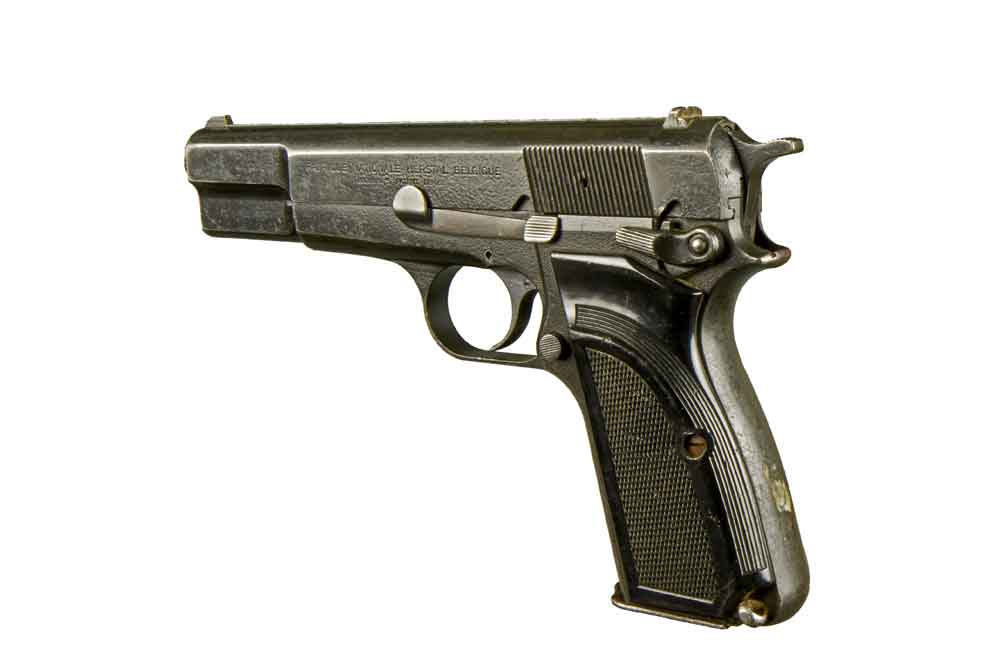
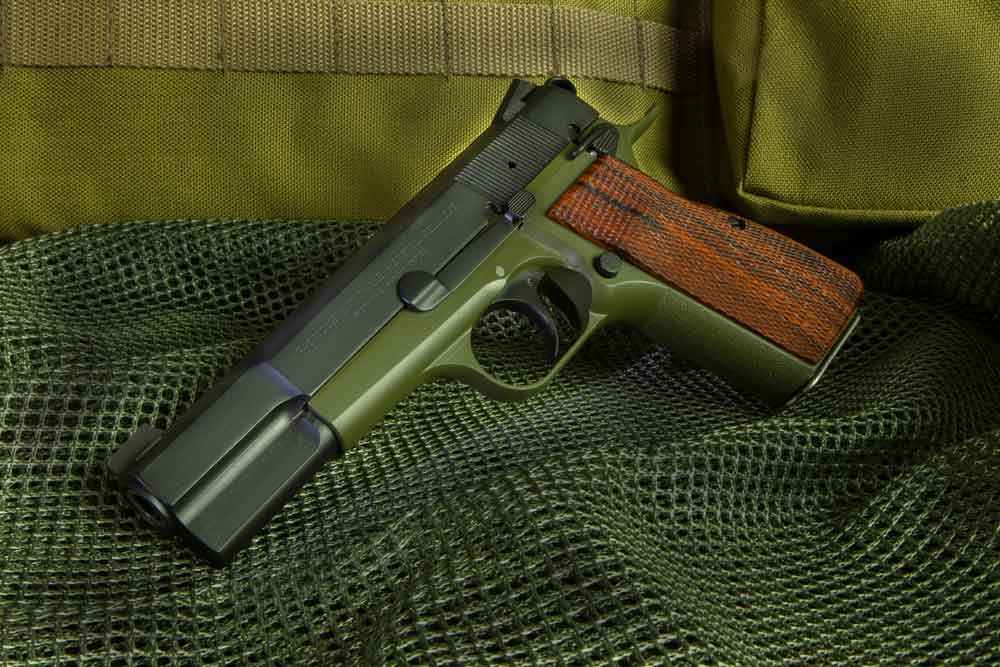
ROBAR Guns helps to revive and revitalize a standard surplus Browning Hi Power, and the result is a beautiful, functional pistol.
Some classic or historical firearms of value probably shouldn’t be customized, but if you do want to go that route with a standard surplus Browning Hi Power, here are some options:
Upgrading the sights, stippling the front strap, installing an extended safety and adding quality grip panels are a few basic ways to improve the gun.
More in-depth customizations can include extending the beavertail and enhancing the trigger.
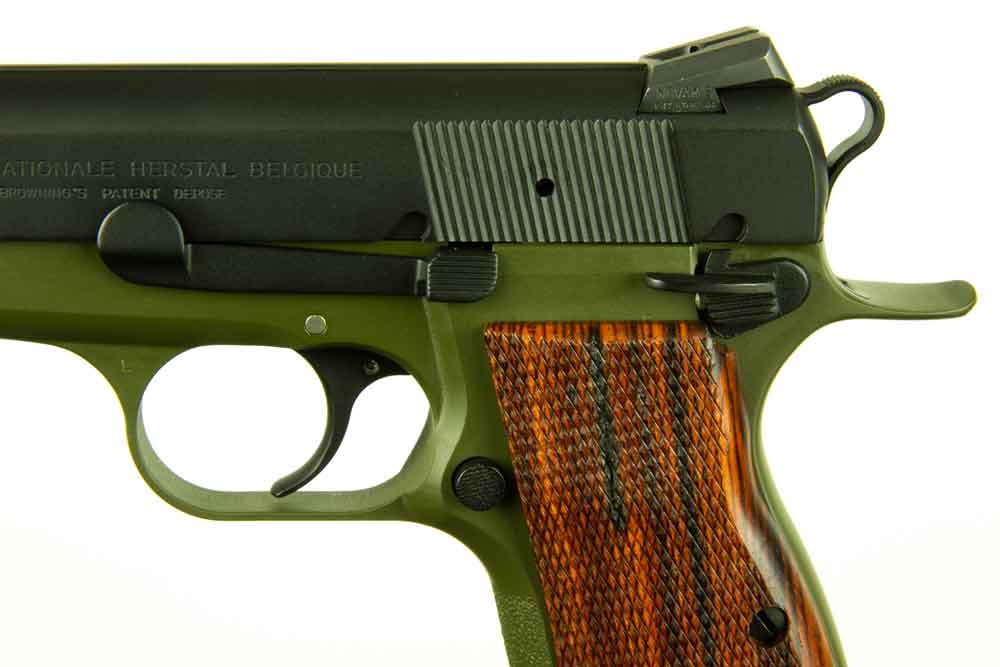
With the help of ROBAR Guns, you can also have them apply a variety of durable and lubricating finishes — Teflon, Roguard and NP3 finishes were applied to parts of this gun.
How many times has the following statement been made? “I wish this gun could talk. Think of the stories it could tell.” There’s a mystique about a well-used, old gun that spurs the imagination. Where was this gun during its service? Who carried it? Has it been fired in combat? Those are just some of the questions such a gun evokes.
While some wish to keep a vintage gun in its aged condition, others want more. So some firearms with a history, however obscure the history may be, are reworked to bring them back to even better condition than when they left the factory. Doing such work on a gun with a verifiable connection to a particular historical event or famous person is probably not a wise choice, but taking a run-of-the-mill old firearm, resurrecting it and turning it into a work of beauty is sometimes a worthwhile pursuit.
The Browning-designed Hi-Power, or High Power, was adopted as a military sidearm by Belgium in 1935. Originally built by Farbrique Nationale (FN) and eventually called the Grande Puissance (High Power), it was also manufactured in the U.S. by Browning Arms Company.
To avoid confusion with Browning’s High-Power rifle, Browning called its pistol the Hi Power. So technically, a gun made by FN is a High Power and one made by Browning Arms Company is a Hi Power. Because most readers are used to the name Hi Power, that will be used here.
In continuous production somewhere in the world since 1935, it has been adopted for use by military and police units around the globe. And as older Hi-Powers are replaced, they often find their way into the U.S. surplus market, like the one featured here that was purchased from AIM Surplus (AIMSurplus.com).
It is a Mark II version, and according to the serial number decoder found on the Browning website (Browning.com), it was originally built in Belgium by FN in 1985. AIM Surplus’ price was $430. Not bad for a functioning handgun made by FN.
The Before In full working condition when received, it had obviously led a rough life as evidenced by scratches and gouges on the surface. The trigger broke at about 6 pounds after a bit of creep, followed by some overtravel. It was not a really bad trigger, but the shooter needed to concentrate carefully on the press to obtain good results. Groups at 25 yards from a rest averaged from just less than 5 inches to a little more than 9 inches. The gun was reliable and adequate, with no malfunctions encountered in testing.
But the gun could be improved, so it was taken to ROBAR (ROBARGuns.com), a specialty gunsmithing company located in Phoenix, Ariz. Among other areas of expertise, ROBAR can take a well-used Hi Power and make it into a like-new gun that’s a better shooter than when it left the factory. ROBAR’s Hi Power specialist is gunsmith Jodi Gritus.
Despite the rough appearance of the gun when turned over to ROBAR, Gritus displayed no hesitation in taking on the task of turning the vintage Hi Power into a gun its owner would be proud to display and that could be used in confidence for self defense.
Upgrading A Classic Sights on the Mk II Hi Power are less than optimal, so a set of three-dot LoMount Carry tritium night sights were obtained from Novak (NovakSights.com). These are superb sights that have become an industry standard but required ROBAR to cut dovetails into the slide in order to install them.
To give the gun a truly custom look, other features were added. Hi Powers have a small beavertail, allowing the hammer spur to bite some shooters, so ROBAR extended the beavertail, shaping it to accommodate the custom Cylinder & Slide Type 2 hammer with its skeletonized spur. Despite welding additional metal to the frame and then shaping by hand, the frame appears to have left the factory with the extended beavertail.
Another unique custom feature is the lanyard ring. Lanyards served a valuable purpose years ago, and kept a dropped gun from disappearing. They lost favor for a period but have seen a comeback. Many original Hi Powers had a lanyard ring, and the ring on the surplus gun featured here was misshapen and of little value. But ROBAR designed a new one that fits sleekly into the heel of the gun.
ROBAR lightly stippled the frontstrap to provide a more secure gripping surface. Light stippling was chosen because heavy stippling can abrade the hand, especially during extended training sessions where the gun is drawn and holstered repeatedly.
Light stippling on the frontstrap provides just enough friction for a solid grip without drawing blood. Nicely checkered Cocobolo panels were installed and also improve the grip. And the beautiful grain compliments the gun’s two-tone finish.
ROBAR is well known for metal finishes; its sister company, Coating Technologies, Inc., specializes in that field and is located in the same building. Three finishes were applied to the Hi Power.
The frame was coated with OD Green Poly-T2, which is a modified epoxy coating that is embedded with polytetrafluoroethylene (PTFE) — commonly known by the trademarked name of Teflon. Available in different colors, Poly-T2 provides both lubricity and corrosion resistance, being able to withstand over 1,000 hours of salt spray.
The slide was finished with black Roguard, a tough molybdenum-disulfide based polymer finish that also provides lubricity and is corrosion resistant. It is very thin, about .0005 inch, so it does not significantly change the dimensions of gun parts. Like the Poly-T2, it has a lifetime warranty.
Internal parts and the magazine were finished with NP3, an electroless nickel finish, which is very hard, corrosion resistant and is embedded with small particles of PTFE to provide lubricity. NP3 is so slick that most residue from shooting wipes off with a soft cloth. Incidentally, NP3 is used on critical parts of the International Space Station. Even the outside of the new, match-grade Bar-Sto barrel was finished with NP3.
ROBAR also performed a trigger job, removed the bothersome magazine disconnector, polished and installed a new sear and installed a Cylinder & Slide trigger pull reduction spring kit. Those new parts and the NP3 finish resulted in a much better trigger pull. Although the pull weight is only a little less than the original, the creep has disappeared and the break is very crisp.
A Cylinder & Slide extended strong side safety replaced the old stock safety, making activation much easier and more positive. Dings and dents acquired over the years were removed, and the feed ramp and breach face were polished to improve feeding.
The After Range testing was done using two holsters available off-the-shelf from Comp-Tac (Comp-Tac.com) and Blade-Tech (Blade-Tech.com), into which the customized Hi-Power fit despite the installation of the larger Novak sights. The customized gun now displays much better handling characteristics, and accuracy off the bench has improved dramatically — from the previously mentioned 5 to 9 inches to about 3 to 4 inches.
The price for customization depends on the parts and features ordered, but retail for the test gun, including the cost of the original surplus gun, was just under $3,000. Sure, a new Hi Power will cost less, and not everyone can afford the custom touches, but for others, the end result is worth it. And the gun is impressive.
For more information, contact ROBAR Companies, 623-581-2648, ROBARGuns.com.
This article is an excerpt from the Summer 2017 issue of Gun Digest the Magazine.
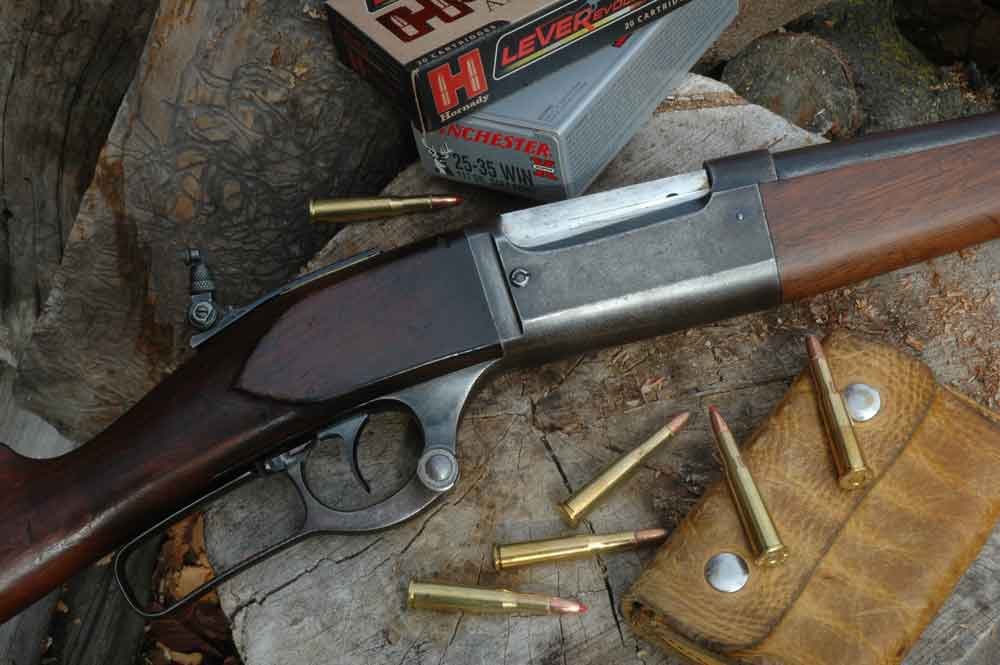
A design truly ahead of its time, the Savage Model 99 is deadly on deer, and it can command quite a bit of value on the open market.
What made the Savage Model 99 an innovative design, and why is it collectable today?
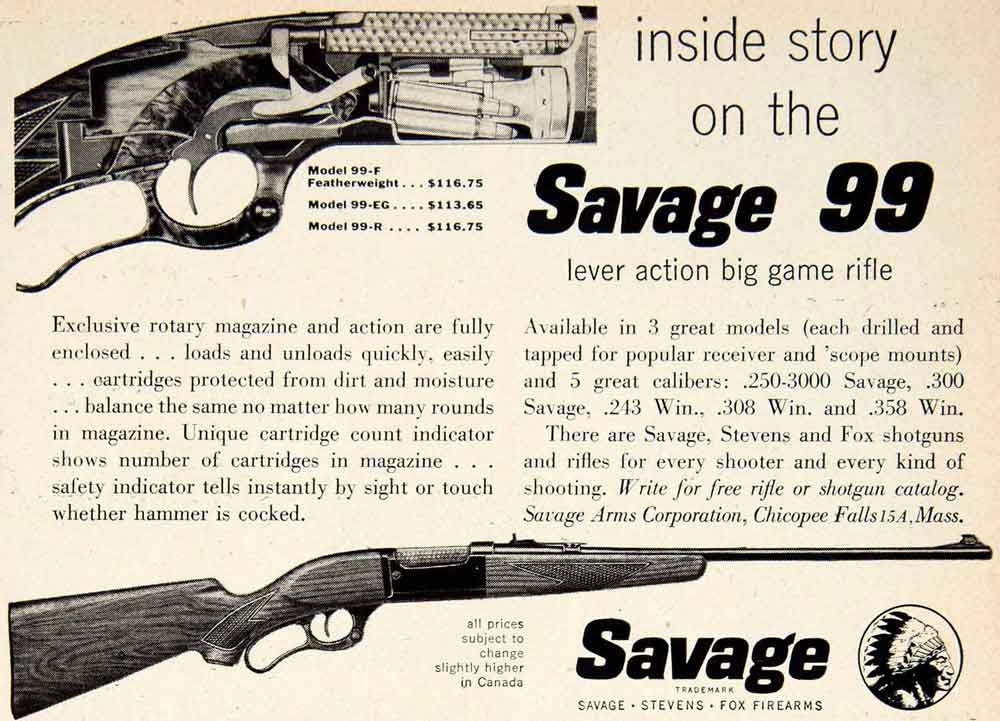
Like Savage’s Model 1895, which preceded it, the Savage Model 99 was a hammerless lever-action rifle.
It used a rotary magazine, which circumvented the issue of using cartridges with pointed bullets in a tubular-fed lever gun.
Over its lifetime, the Model 99 was available in a wide array of calibers (including more modern ones), but the two most popular were the .250 Savage and the .300 Savage.
Rifles chambered in some of the more obscure calibers are quite valuable in the collector’s market, with the .22 High Power commanding the highest values.
The sleek and streamlined Savage Model 1895 looked like something out of the future when it appeared in the last decade of the 19th century. It was the first firearm produced by the Savage Repeating Arms Company, and its slim, flat, hammerless design was in sharp contrast to the popular, visible-hammer models available from Winchester and Marlin since the 1860s. The rounded profile let shooters know that something new in hunting rifles had arrived.
The 1895 was unique in many respects. Its internal rotary magazine was the first of its type and was designed for cartridges with pointed bullets, unlike the tubular-fed Winchesters and Marlins that were limited to round-nose bullets.
The Savage was also the first lever action with a coil mainspring, an improvement over the leaf springs on other brands. One of its advantages was a faster lock time.
Another interesting feature was a hole in the top of the bolt that showed the status of the firing pin. A “C” was visible if the rifle was cocked, and an “F” indicated that the round had been fired. This opening apparently led to cleaning problems and was eliminated on the later Model 1899.
Photo courtesy of Wayne Van Zwoll.
Humble Beginnings Arthur William Savage was just 30 years old when he received a patent for his first rifle in 1887. It was a lever action with a small Martini-type lever meant to be operated with the shooter’s little finger. In 1892, a prototype of what was known as the Savage No. 1 with a 29-inch barrel and full-length stock was submitted to the Ordnance Trials for the military market.
When the Krag-Jorgensen bolt action was chosen to be the U.S. Service Rifle, Savage went back to the drawing board and made a few changes to the rifle to make it more suitable for the civilian market. He received a patent in 1893 for this new design and then went on to develop a new cartridge, the .303 Savage with ballistics similar to the .30 WCF/.30-30 Winchester.
At the time, Savage was a prominent citizen of Utica, New York, and was Superintendent of the Utica Belt Line Railroad. He put together a group of investors and founded the Savage Repeating Arms Company in 1894.
Get Even More Savage:
How The Savage A17 Revolutionized The .17 HMR Rifle
Savage Model 10 GRS Rifle Goes The Distance … Then Some
The following year, the Model 1895 rifle went into production. Barrel lengths of 20, 26 or 30 inches were offered, either in round or half octagon/half round design and chambered only in .303 Savage.
Only about 6,000 Model 1895s were made in its short 4-year life span, making it a rare and popular model among Savage collectors. Exact production numbers apparently do not exist. Some published sources say more than 8,000 were manufactured.
The first Model 1895s were manufactured by the Marlin company, which also made the original tooling for the rifle. Savage was a new company and didn’t have the tooling or manpower to produce the guns, and Arthur Savage contracted with Marlin to make the 1895. These rifles are marked with “JM” for John Marlin on the barrel under the fore-end.
Once again, Savage production files are sketchy. Some sources indicate that all 1895s were made by Marlin while others say it was only the first 5,000.
Arriving at the Model 99 The action and several other features were modified in 1899, and the Model 1899 was born. These included a cartridge indicator visible through a hole in the left side of the receiver to show remaining rounds. A cocking indicator consisting of a small bar on top of the bolt was added and replaced a few years later with a small pin that protruded through a hole atop the receiver.
The original safety was located near the rear of the trigger and locked the lever and the trigger. In 1960, Savage placed a two-position thumb safety atop the rear of the receiver. Throughout its almost 100-year run, there were several iron sight variations.
The Model 1895s were chambered for only one round, the .303 Savage. With the Savage Model 99, the .30-30 was added, plus several other Winchester calibers like the .25-35, .32-40 and .38-55. Later models were made in .22 Savage High Power (1912), and then the two most popular Model 99 chamberings for many years, the .250-3000 (1915) and .300 Savage (1920).
This was about the time the official name of the model had become the Model 99.
In the 1950s, more modern calibers were offered like the .243 Win., .308 Win., .358 Win. and .284 Winchester. It would also become available in 7mm-08 Remington and .375 Win.
The Savage Model 99 became one of the most popular deer rifles in America, in part because of the excellent .250-3000 and .300 Savage cartridges that it introduced. As the first factory round to break the 3,000 feet-per-second (fps) velocity barrier, the .250-3000 received a lot of attention from outdoor writers. There were a few rather exaggerated claims about the killing power of high-velocity bullets on big game, but it was ideally suited for deer. The recoil was less than most other deer rifles of the day, and that made the fast little .250 a popular choice with many hunters for that reason.
When the .243 and 6mm Remington came along in the 1950s, the .250 Savage — as its name had officially become — lost some of its sizzle, as did the similar .257 Roberts. But the .250 still has a place in the heart of many who know that for most deer hunting, it is all the gun you will ever need.
The .30 caliber has long been an all-American favorite, and the .300 Savage fit neatly into the list of the .30s. It created a nice little niche between the .30-30 and .30-06, a position it held for more than 30 years, until the .308 Winchester came along in the ‘50s.
To this day, like its little .250 brother, the .300 Savage remains an excellent cartridge for deer-size game at reasonable ranges. Some hunters believe the larger and heavier .300 bullet is a bit better in the brush than the lighter and faster .250, but that’s always been difficult to prove.
Valuable Collector Models More than 25 variants of the Model 1899/99 were manufactured over its 98-year life span. Some of the more interesting are these:
Combination Cased Set .300 Savage/.410 Shotgun – Made from 1922 to 1934, the interchangeable shotgun barrel could only be used as a single shot because the rotary magazine was not designed for shotshells. Estimated value today, very good to excellent condition: $2,000 to $4,000.
Model 99K – The highest grade 99 with engraved receiver and high-grade walnut stock. President Franklin Roosevelt presented one of these in the 1940s to the Shah of Iran Mohammad Reza Pahlavi, a renowned big-game hunter. Estimated value: $2,500 to $3,000.
Model 1899-D Military Musket – Made from 1899 to 1915, including several hundred for the Canadian Home Guard during World War I. In .303 Savage with a 28- or 30-inch barrel with two barrel bands and a full-length military stock. Estimated value: $5,000 to $6,000.
Model 99-H Carbine – Made in .250 Savage, .300 Savage, .303 and .30-30 from 1923 to 1940 with a curved, carbine-style buttplate. Later models had a barrel band on the fore-end and a ramp front sight. Estimated value: $800 to $1,200.
Many other variants were produced in the period from the 1960s to the 1990s and can be found on the used gun market in the $400 to $800 price range, not collector’s items but solid, serviceable hunting rifles.
The rarest calibers are the .22 Hi Power, .25-35, .32-40, .38-55, .284 Win. and .375 Win. Expect to pay a premium for these, up to 100 percent for the .22 High Power.
The last Savage Model 99 came off the assembly line 20 years ago, in 1997. Why Savage didn’t keep it going for another couple of years is anyone’s guess, but it probably had something to do with the cost of production. As a fan of the rifle, I remember looking forward to seeing a 100th Anniversary edition, but it was never to be.
Editor’s Note: This “Collector’s Corner” column is an excerpt from the August 2017 issue of Gun Digest the Magazine.
Hunting season is creeping up, so there’s no better time to start considering what you’ll feed your trusty deer rifle. Federal Premium has four solid new choices for this year, each perfect for putting meat on the table and trophies on the wall.
Federal Premium has you covered if you’re on the hunt for a new deer round:
Fans of .30-caliber magnums have a few new choices when it comes to monometal bullets with the extension of the Federal Premium Power-Shok line. The company recently added its first rounds topped with full copper-alloy projectiles for the .300 Win. Mag., and .300 WSM. And those looking to tackle nearly any game in North America — and most of the world for that matter — should be pleased with the offerings.
Both rounds boast 180-grain hollow point bullets and deliver the goods for hunters looking to really reach out. Both leave the muzzle at right about 2,960 fps and deliver a crushing 1,500 ft-lbs of energy 400 yards out. The bullets themselves are designed for controlled expansion, delivering deep penetration and devastating wound channels. The rounds are loaded in Federal’s brass and feature the company’s Catalyst high-performance primers, ensuring efficient ignition of all the propellant in the large cases.
The MSRP of the rounds fall in line with a majority of monometal offerings available today — $45.95 for 20 rounds of .300 WSM and $39.95 for the .300 Win. Mag.
6.5 Creedmoor Trophy Copper
The 6.5 Creedmoor has really come into its own over the past several years. This is as true in the hunting field as it is in the category of long-range target shooting. The excellent ballistic coefficients of most of the 6.5 bullets alone speak volumes to the long-range potential and inherent accuracy of the cartridge. And Federal Premium has introduced what looks to be a solid option for those on the stalk in areas with lead-ammo restrictions or looking for a round with the potential for deep penetration.
The 6.5 Creedmoor Trophy Copper round puts a 120-grain monometal projectile tailor-made to produce the most devastating wound channels possible, even at the most distant ranges, at a hunter’s disposal. Helping the bullet to this end is a polymer-tipped cavity, designed to reliably expand the bullet once it reaches its target.
On top of that, and common to monometal bullets in general, the bullet retains 99 percent of its weight, even on the deepest penetration. The bullet also features grooved shanks, ensuring the best possible accuracy over a wide spectrum of firearms.
The new 6.5 Creedmoor Trophy Copper round presently has a MSRP of $47.95 on a box of 20 cartridges.
6.5 Grendel Fusion MSR
Once purely a round favored by target shooters, hunters have come to embrace what the 6.5 Grendel brings to the table. Harnessing the superior ballistics of 6.5 bullets and slapping them in cartridges that excel in ARs has been a boon for those who get the opportunity to take long shots at whitetails.
Federal Premium has given Grendel hunters more fodder to consider with the recent expansion of its Fusion MSR line. Topped with a 120-grain projectile and tailored for peak performance in 16-inch-barreled black rifles, the new round looks ready to put meat on the table this hunting season.
The soft-point bullets leave the muzzle at an impressive 2,600 fps and hit like a freight train, dumping nearly 600 ft-lbs of energy into a target 500 yards out. And hunters have the peace of mind that the bullet will perform, even at range, with the meaty, copper jackets skived at the tip to ensure complete expansion and deadly wound channels. On top of that, the jackets are molecularly fused to the soft lead cores, ensuring the bullets retain a maximum amount of weight deep into a target.
Presently, the MSRP on a box of 20 6.5 Grendel 120-grain Fusion MSR is $29.95.
The Springfield Armory RO Elite Series takes what works under the hood of the original Range Officers and makes it better with a number of notable upgrades.
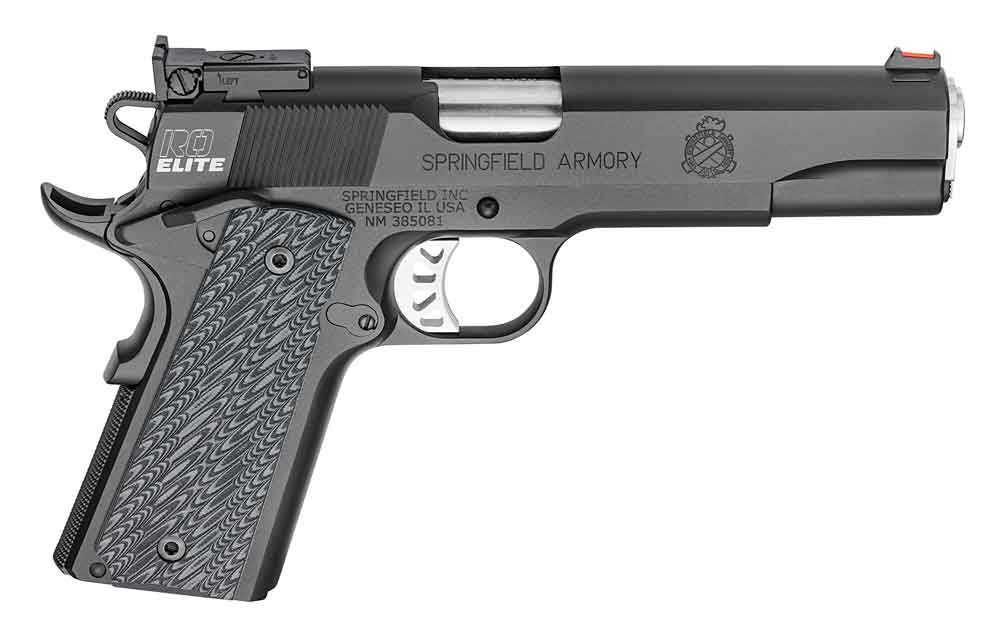
Springfield Armory’s new RO Elite Series offers the same tried-and-true functionality of the the original Range Officers but with a number of enhancements.
The Black-T treatment is the most noticeable upgrade, with the self-lubricating finish offering superior corrosion resistance.
This is the same treatment found on the 1911s Springfield Armory built for the FBI’s regional SWAT and Hostage Rescue Teams.
The RO Elite Series pistols are outfitted with Gen 2 triggers, but few details are out yet about this newly designed system.
Springfield Armory’s Range Officer Series of 1911 pistols has earned a pretty solid reputation over the years. An up-to-date take on the age-old design, it has offered shooters an attractive handgun with clean lines that, more importantly, performs dang-near flawlessly. From its rock-solid forged steel frame to its eye-catching Cocobolo wood grips, the Range Officer and its iterations can handle any shooting chore flung at it and look good in the process.
Honestly, there aren’t many nits to pick off the Range Officer variations and few ways they could really be pepped up from their present state. But Springfield has found a way.
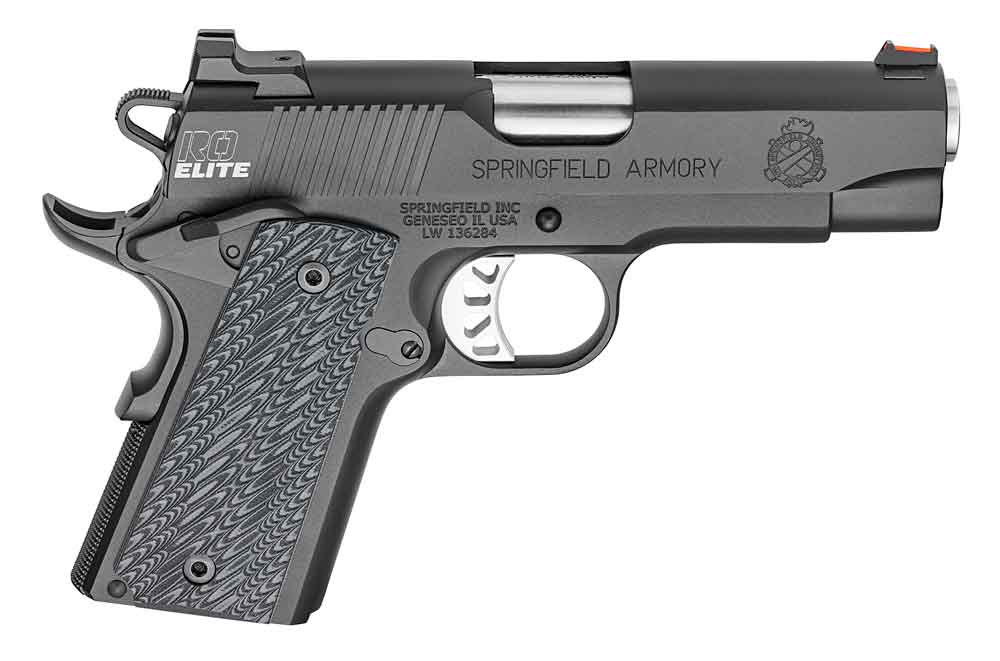
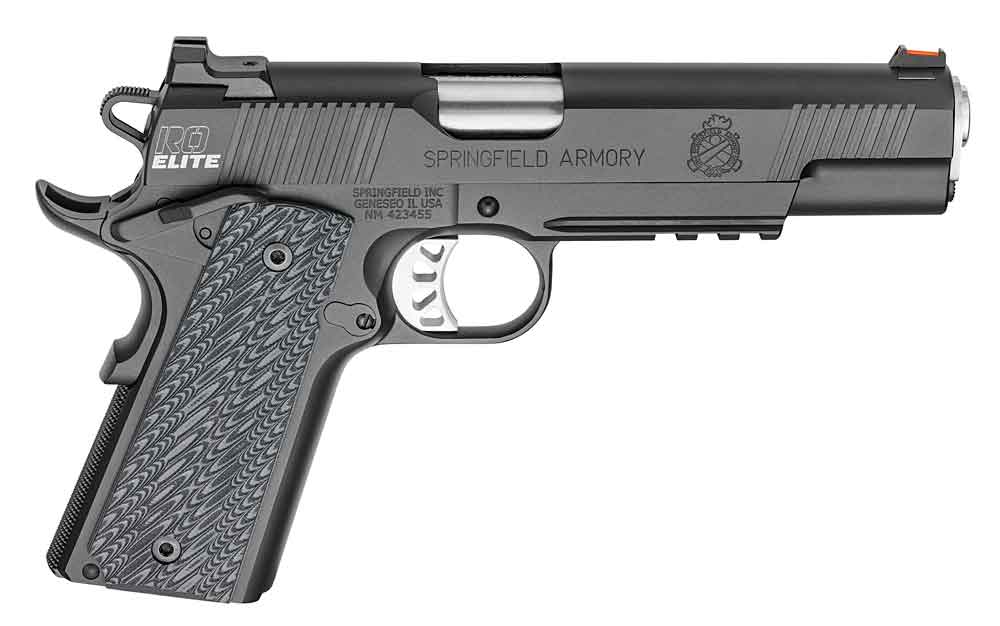
RO Elite Series Target Model
The company recently released the RO Elite Series, which retains all the under-the-hood features that count on the pistol, while tacking on some notable and welcome upgrades that should make it a true gem.
The most noticeable improvement to the RO Elite Series is the 1911’s striking jet-back finish. While Black-T treatment certainly has aesthetic appeal, it is most definitely a functional upgrade. The treatment is self-lubricating and offers superior corrosion resistance to most other options on the market. To boot, it is the same treatment found on the 1911s Springfield Armory built for the FBI’s regional SWAT and Hostage Rescue Teams.
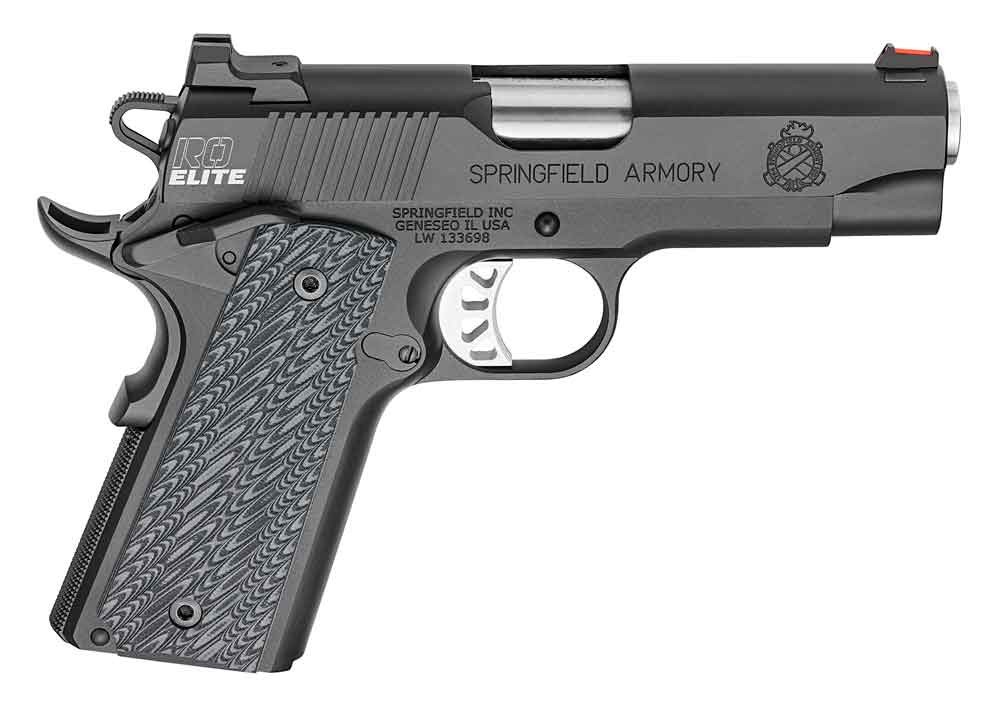
RO Elite Series Compact Model
It is further set off with the addition of black, thin-line G-10 grips — specific to the RO Elite Series — which give the pistols an overall ominous appearance. At the same tick, the slim grips make the handguns less bulky for concealed carry, while still promoting a strong purchase in the hand.
As far as operation goes, the major upgrade to the RO Elite Series is the newly designed Gen 2 trigger. Though, there is a bit of a shroud of mystery to this aspect of the pistol because the company has released few specifics on what it brings to the table. At time of writing, the pull weight was not even listed. Hopefully, more details will be available in the near future.
RO Elite Series Operator Model
Like the other Range Officer iterations, the RO Elite is outfitted with an ambidextrous thumb safety, fiber optic front sight and white-dot rear, and high-carbon steel slide. And the RO Elite is being offered in four models: Compact, Champion, Operator and Target.
Both the Compact and Champion have 4-inch barrels, but vary in capacity. Each has a flat wire recoil spring that utilizes a full-length guide rod. The Operator and Target have 5-inch barrels, but the Operator is outfitted with an integral rail under the barrel. Like all of Springfield’s full-sized 1911s, the pistols have a traditional GI-style guide rod. All models are available in 9mm or .45 ACP.
RO Elite Series Champion Model
Presently, the MSRPs of the RO Elite Series pistols aren’t far off Springfield’s original Range Officer counterparts — $125 more. Depending on model, they run from $1,030 for the Compact and Champion to $1,145 for the Operator. That doesn’t look to be too bad for a 1911 that’s set up to perform as wicked as it looks.
Paired with Aguila’s Minishell, the new Mossberg 590 Shockwave is taking the personal defense world by storm.
What makes the Mossberg 590 Shockwave so exciting?
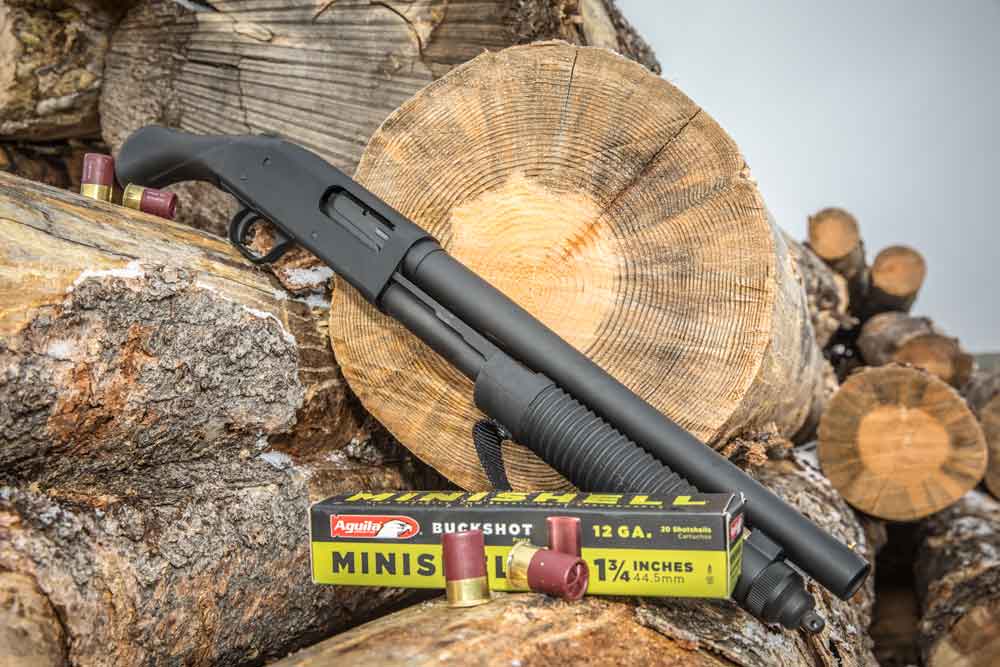
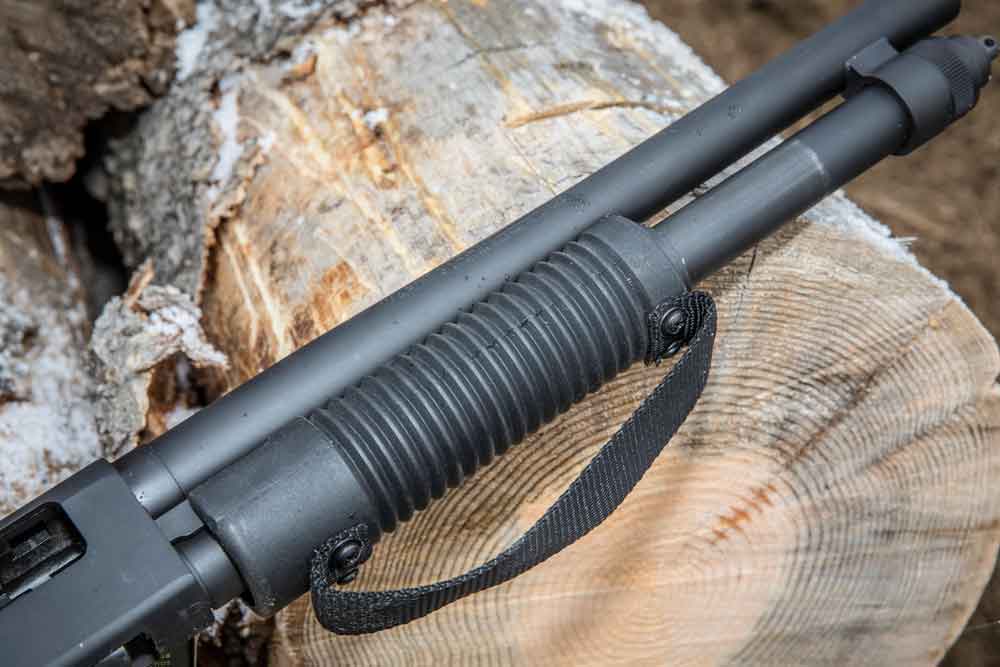
It has a 14-inch barrel but avoids NFA classification by being factory produced with a pistol grip instead of a stock and because it’s just above 26 inches in overall length.
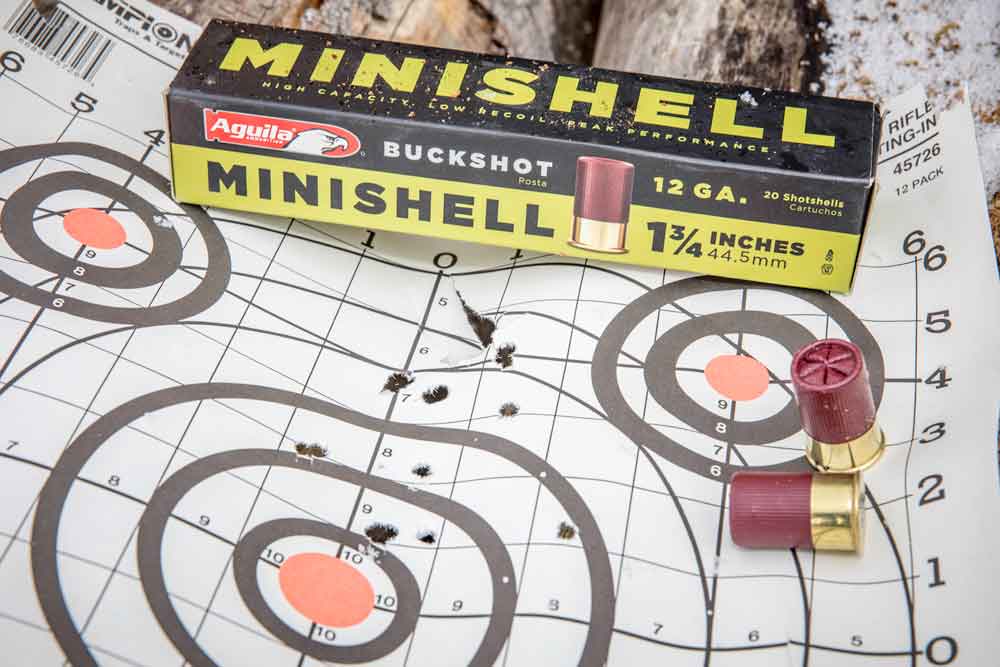
With the addition of an OpSol Mini-Clip, a rubber adapter, the gun reliably feeds Aguila’s Minishells.
At its heart, it’s still Mossberg’s utterly reliable 590 pump action, just in a much more compact package.
The name of the game is not only to be the best, but also to be first. Mossberg can check both items off its list for 2017, having introduced its Mossberg 590 Shockwave into the marketplace as really the first of its mass-produced kind: a super compact shotgun, perfect for personal or home defense, that features a 14-inch barrel but conveniently avoids classification as a National Firearms Act (NFA) firearm.
Since its introduction at the 2017 SHOT Show, the Mossberg 590 Shockwave has taken the gun industry by storm, and other manufacturers like Remington — which introduced its own Model 870 TAC-14 at the NRA Show in April — have been forced to follow suit. When Gun Digest editors first shared news of the new Shockwave on our Facebook page, the hum of online chatter immediately went through the roof, signaling the widespread popularity and rapid cult following the compact shotgun was to receive.
And all for good reason. The beauty of the 590 Shockwave is its simplicity: As the name implies, it’s built around the legendary and ultra-reliable 590 platform and features a 14-inch barrel with Shockwave Technologies Raptor grip, giving it an overall length of 26.32 inches.
How does it avoid classification as an NFA-governed item? According to the BATFE, an NFA shotgun would be classified as one having a barrel less than 18 inches in length, or an overall length less than 26 inches. For such NFA items — which include short-barreled rifles (SBR), machine guns and suppressors — there is of course the $200 tax stamp and a mountain of bureaucratic red tape tall enough to warrant the interest of serious alpinists.
Because the Shockwave is fitted with a pistol grip at the factory instead of a shoulder stock, however, it is considered a Pistol Grip Only (PGO) firearm, and as long as the overall length remains greater than 26 inches the barrel can be shorter than 18 inches (hence the 26.32 inches of overall length provided by the Shockwave Raptor grip). Per Mossberg’s website, this means the buying age is 21 years and state laws still apply, so do your research.
I first got my hands on the 590 Shockwave at the SHOT Show 2017 range day, and my first thought was that it’d be a perfect fit for Aguila’s Minishell. The problem with the Minishell, as I’ve discovered with previous reviews of the pint-sized load, is that it doesn’t function well in pump or semi-auto shotguns — because of its length, the shell has a tendency to flip over in the action, creating an obvious functionality problem.
I’ve also used it in sporting clays competition in Mexico with a Benelli over/under shotgun, though, and in that capacity it is phenomenal for its ability to minimize recoil, something that’d obviously come in handy with a small-sized firearm like the Shockwave. If only, I had postulated at the time, there was an adapter that would fit a receiver and keep the shell from tumbling.
Mossberg really did think of everything on this project, which is why the Shockwave is compatible with an OpSol Mini-Clip, a rubber adapter that turns your 590 into a Minishell-loving machine. The rubber block ($15 on Amazon) presses into the rear underside of the loading port and is angled to function as a feed ramp for the Minishell.
For review, I rapid-fired 40 rounds of 1¾-inch Minishell buckshot loads without a single failure to feed. Not only did the Minishell function flawlessly, the recoil difference between it and the 2¾-in. shells I also fired through it was astounding.
After six shots with the full-size loads, my left hand, placed inside the nylon forend strap, screamed for a cease-fire. There’s no way I would have shot 40 times with full loads — it’s simply that uncomfortable to shoot, and all the more reason, in my opinion, that this particular platform works precisely because of the pairing with Aguila’s Minishell.
Shotgun Features
The Shockwave is, at its core, a 590 Mossberg pump action, so all controls and features are the same except for the barrel length and Shockwave Raptor grip. The shotgun, which has been tested and proven true by military and law enforcement personnel, features dual extractors, positive steel-to-steel lockup, twin action bars, and an anti-jam elevator for smooth, reliable operation. The 590 also features a top-mounted safety for ambidextrous functionality.
A strapped forend helps keep your forward hand from clearing the muzzle, while sling studs are attached to the magazine tube and grip. The Raptor grip is designed to minimize felt recoil, though for my money the greatest aid to recoil mitigation is the Minishell.
In terms of capacity, the Shockwave holds eight plus one of the Minishell, five plus one in 2¾-inch shells, and four plus one if you’re brave enough to shoot 3-inch loads, in which case a good pair of shooting gloves would be highly advisable. The Shockwave also comes with a rugged, black case and carries an MSRP of an unbeatable $450.
Range Ready
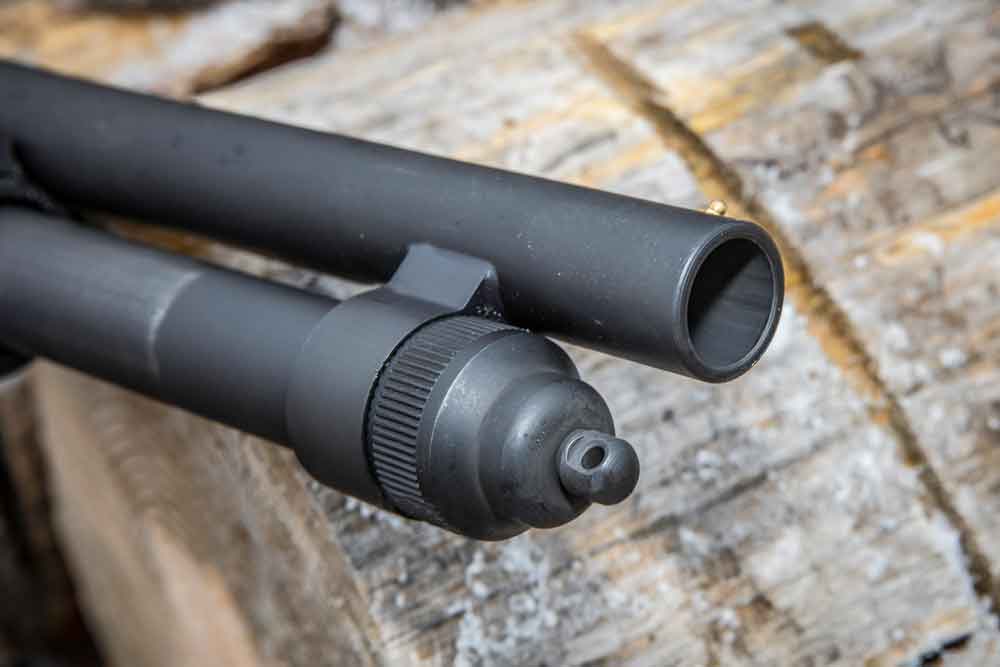
While it does obviously lack a typical stock for shouldering the shotgun, it’s a common myth that you can’t raise a pistol-grip shotgun like the Shockwave to eye level and use your sights. After all, there’s a front brass-bead sight for a reason. Even with 2¾-inch loads and the increased recoil, the shotgun is not going to hit you in the face (unless you seriously and intentionally noodle arm the thing for the sake of a viral YouTube video).
That said, with just a little bit of practice you can make hip shooting an effective tool in your defensive shotgun craft, especially at close range. The general tendency is to shoot high, so training with a steel target will help you lower your aim. Once you shoot a few rounds it’s easy to get the hang of it.
As I said earlier, the Minishell is the perfect pairing for the Shockwave. Without it, I’d probably opt for a different defensive shotgun option or forend, but with the 1¾-inch buckshot I’m simply in personal defense heaven. At standard defensive ranges, the buckshot loads are absolutely lethal, making the Shockwave the ideal bedside or truck companion. As it so happens, the Shockwave and Minishell are also lethal on kamikaze ground squirrels, albeit completely overkill.
The 1¾-inch buckshot Minishell grouped admirably at 10 and 15 yards, as did the 2¾-inch sporting loads, both excellent products from Aguila. I had exactly zero functionality issues with either load, and the OpSol Mini-Clip worked 100 percent as well as advertised.
Parting Shots
As far as I’m concerned, the 590 Shockwave from Mossberg, when paired with the Aguila Minishell and OpSol Mini-Clip, is an absolute home run. Not only does it make for an extremely compact, lethal personal defense shotgun, it can also be had without going the death-by-paperwork route of a typical NFA governed item. Now that I’ve reviewed it, I can’t imagine a better bed- or truck-side companion. Or, for that matter, a better price.
This article is an excerpt from the Summer 2017 issue of Gun Digest the Magazine.
Shooting an AK, or any gun for that matter, is only fun if you hit your targets. And to hit intended targets, one must know how to properly sight in the AK.
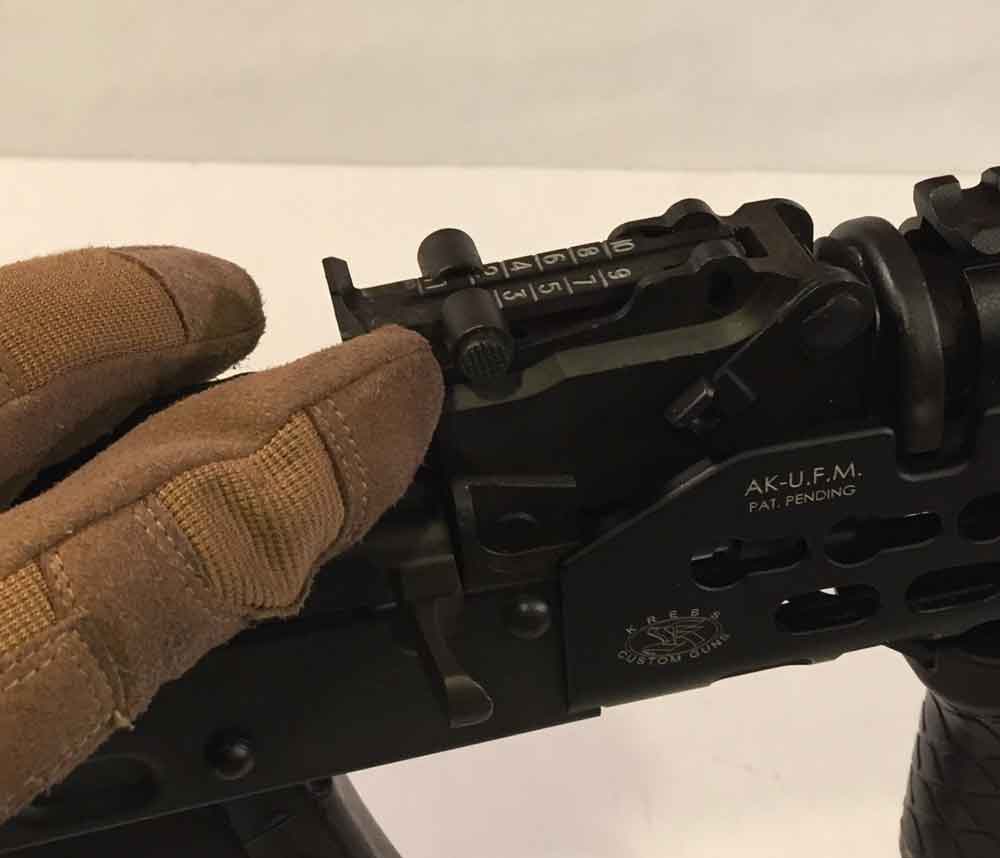
The AK’s aiming system has an adjustable front sight and a fixed rear that has a provision for range adjustment.
The rear sight ranging system consists of a spring-loaded cylinder that slides on a sight leaf and can be positioned on pre-set marks representing 100-meter adjustments.
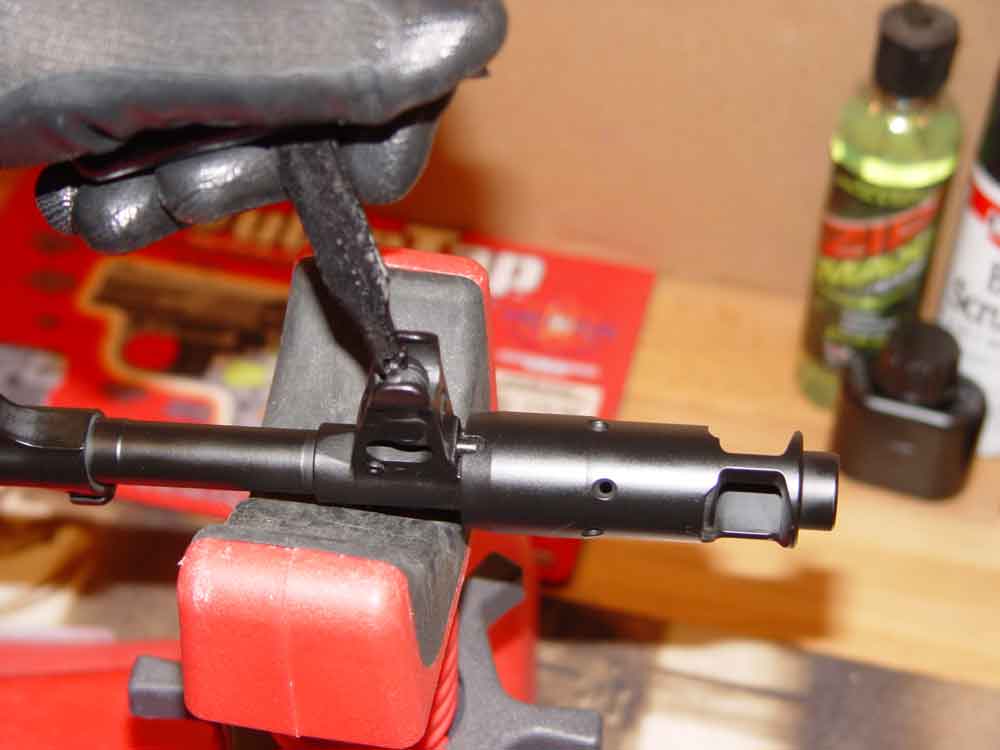
All sighting-in procedures are performed on the front sight only with a sight adjustment tool.
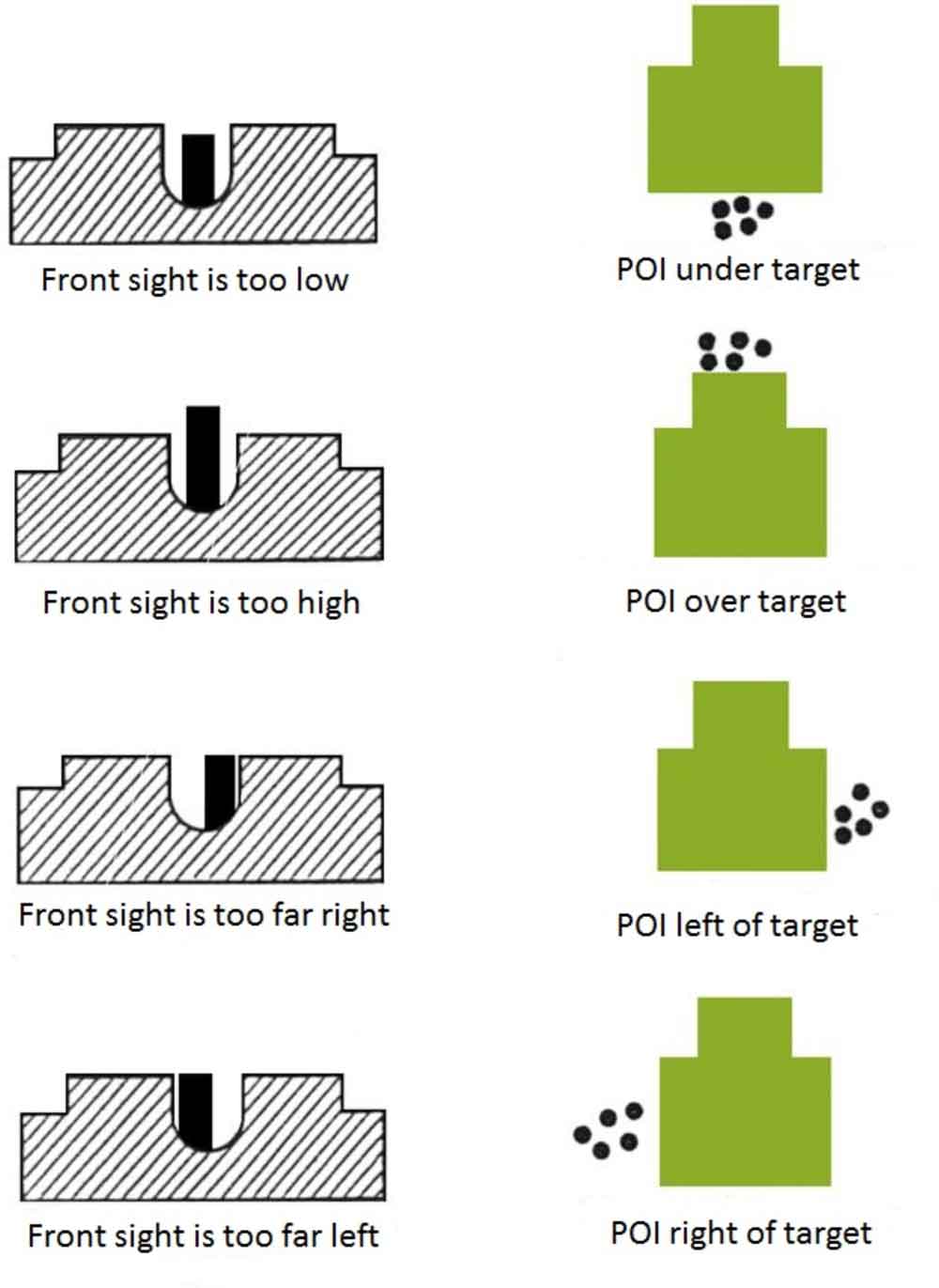
Elevation is adjusted by screwing the front post in or out; windage is adjusted by shifting the cylinder in which the sight post is screwed.
Elevation is adjusted first, moving the post up for a POI that is high and down for POI that is low.
The AK aiming system contains an adjustable front sight and a non-adjustable rear sight that has a provision for range adjustment. If one takes a look at the front sight of an AK, it appears like a straightforward post sight with protective hood. The post is screwed into the cylinder that is pressed into the front sight block. Both the threads on the sight post and the cylinder will come into play a bit later.
The rear AK sight is a conventional “U” slot type and made out of a solid piece of steel. It is hinged on the rear sight block of the rifle and has gradations representing 100-meter range adjustments. A spring-loaded cylinder slides on the rear sight leaf and can be positioned at any of the pre-set marks, elevating the sight to adjust for the desired range.
For example, if the target is set at 400 meters, the rear sight cylinder is moved to the position marked “4.” There is also a setting marked “П” or “P” for some of the European AK models or “D” for some Chinese. This represents the “Permanent” or “Battle” setting that falls somewhere between 300-400 meters, which is considered to be an average engagement range.
To aim an AK rifle one simply shoulders it and sights the aiming eye over the top of the gun. The shooter can close or squint the other eye. Most advanced shooters keep both eyes open during firing. In the case of novice shooters, the idle eye should be taken out of action by closing it or squinting.
Using a small and smooth movement with cheek firmly resting on the gun’s stock and the stock itself firmly pressed into the shooter’s shoulder, the front and rear sight have to be positioned in such a way that the front sight post is even with the rear sight’s upper edge and is centered in the middle of the “U” slot.
All that’s left to do is position the aligned sights over a clearly visible target. The proper way to aim with the AK is to position the sights or point of aim (POA) at the lower edge of the 12-inch round target set at 100 meters. This should produce hits or point of impact (POI) at the center of target. If the deviation between POA and POI is more then 6 inches vertically, i.e., it is less or more than 6 inches or any distance away from the vertical centerline, the AK rifle needs to be sighted in.
All of the sighting-in procedures are performed on the front sight only. Elevation or vertical adjustment is done by screwing the front post in or out using a sight adjustment tool provided in the gun’s tool kit.
The windage, or horizontal adjustment, is done by shifting the cylinder into which the front sight post is screwed. Note that all of the front sight adjustments for the purpose of sighting in a rifle are done in the direction of deviations. i.e., if the gun shoots low, the front sight needs to be lowered or screwed in, and it needs to be raised or unscrewed if the POI is high.
It is the same with the windage adjustments. If all of the hits impact too far left, the post must be moved left to bring POI to the center. The sighting of the AK can be done without any special tool except those provided with the gun.
First, the elevation is adjusted by installing a target at the 100-meter range and moving the rear sight elevation adjustment cylinder to the setting “1.” After a series of shots, the vertical POI deviation from POA is established. If it is outside of prescribed parameters, the adjustment is made by screwing in or lowering the front sight post for low impacts, and unscrewing or lifting the post for high impacts.
All the adjustments should be made in very small increments and remembering the geometrical progression effect. Each time the adjustment is made, it has to be verified by a series of shots to check the proper adjustment.
With elevation set, it is now time to adjust the windage, or make horizontal corrections. This is achieved by moving a cylinder side-to-side, depending on the desired result. The cylinder is press-fitted into the front sight block and does move freely. There are special AK front sight adjustment tools that can be purchased relatively cheaply.
However the front sight windage adjustment can be done in the field using a spent casing as a ramrod and heavy object (rock, piece of wood) as a hammer.
For that, the rifle is laid on a flat and hard surface in such a way that the tip of the muzzle and hood of the front sight are resting on the surface. With the bottom (primer side) of the spent casing placed on the side of the adjustment cylinder, the casing is tapped with a hammer (rock or wood) until the cylinder moves.
All of the windage adjustments should be done in very small increments. After each adjustment, the accuracy of the rifle should be checked. Most AK rifles have scale markings in the front side (muzzle side) of the front sight block and windage cylinder. The front sight block is marked with centerline and the cylinder with a series of vertical lines. After the sighting is complete, the position of the cylinder markings in relation to the block centerline is noted and should be memorized.
Now the AK rifle is ready for regular operation as described in its Military Training Manual.
This article is an excerpt from the Gun Digest Shooter’s Guide to AKs.
The .223 Remington is a highly versatile cartridge that can be loaded to meet the shooter’s exact needs, but there are certain considerations to keep in mind.
What are some important things to know when reloading the .223 Remington?
If you’re shooting an AR or a semi-auto rifle, consider using small base resizing dies to shrink fired brass back to specs and reduce the chances of a jam.
If you’re shooting a bolt gun, neck sizing ammunition can help wring more accuracy from your gun.
.223 Rem. and 5.56 NATO cases are not interchangeable. Make sure to keep pressure levels safe. This applies to using heavier bullets in .223 Rem. cases as well.
Match your rifle’s twist rate to the appropriate bullet weight. Heavier bullets won’t stabilize in barrels with slow twist rates. Also, pair your bullet choice to the task at hand, whether it be varmint or big-game hunting, target shooting or long-range shooting.
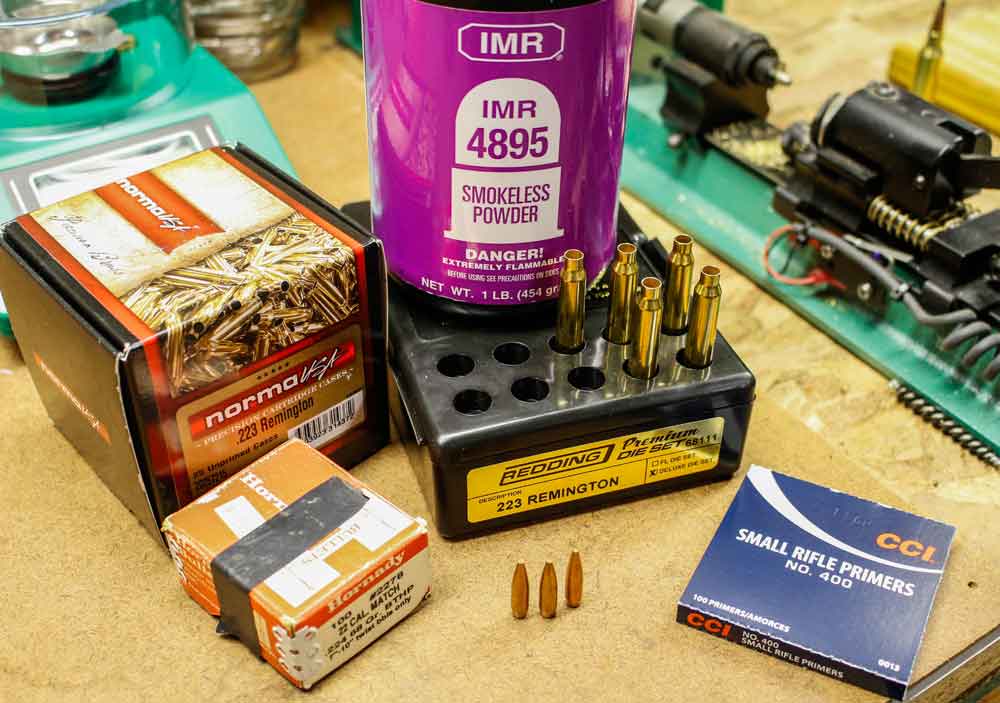
We are all fully familiar with just what a useful cartridge the .223 Remington is; whether you enjoy varmint and predator hunting, or just have a good time target shooting with an MSR, the .223 fits the bill. For a handloader, the .223 Remington can prove to be extremely versatile, especially if your rifle has one of the faster twist rates, like 1:8-inch or 1:9-inch, so you can take full advantage of the heavier .224-inch caliber bullets.
Depending on your rifle, you might want to take a couple different approaches to your reloading technique. Loading for the ARs — and any autoloader for that matter — might warrant the use of small base resizing dies, to shrink any fired brass back to specs, all the way to the base of the cartridge, for proper feeding. If you don’t get a good resize with a standard sizing die, the resulting jams can be a nightmare.
If you’ve chosen a bolt gun, you might want to take advantage of the neck-sizing die for the best concentricity and accuracy potential. I’ve seen neck-sized ammunition shrink group sizes by half or better in some instances, and if you want to wring every last bit of accuracy potential out of your bolt gun, this technique might work well for you.
Keeping Cases In Mind But, before we get ahead of ourselves, let’s look at the cases themselves. One of the obvious allures of the .223 Remington is the fact that it’s been a military cartridge for nigh on half a century, and with that comes the availability of surplus military ammo and cases.
That military ammunition (5.56 NATO) generally comes with cases that are thicker than the sporting variety, and because the outside dimensions of the case can’t change, the inner dimensions — read as combustion chamber — is smaller. That will increase pressure, sometimes to a dangerous level, so you absolutely need to sort your cases prior to any load development.
Both sporting and military cases can be used, but with different powder charges. What I do, to take advantage of both types of cases, is to use my military brass for a different powder/bullet combination, so it won’t get confused with other loads.
Bullet Options The .223 has a rather wide selection of bullets to choose from, so depending on your application, there will be a bullet for your needs. Bullet weights run between 30 and 90 grains, so there’s not only a bunch of flexibility here, but also multiple powders to fuel all those different bullets.
Twist rate is also going to play a big part in the equation. If you have a rifle with one of the slower twist rates — the 1:12-inch twist, like the .22-250s use — you’ll be limited to the 55-grain bullets, maybe a 60-grain bullet, but anything heavier than that probably won’t stabilize.
Varmint Hunting For the varmint crowd — we’ll use prairie dogs and woodchucks for an example — lighter bullets work perfectly, permitting high velocities, and as long as ranges aren’t crazy, they’re manageable in windy conditions. The 40-grain Nosler Ballistic Tip Varmint can reach over 3,500 fps to truly generate the red mist. I like Hodgdon H322, H335 and VARGET for bullets of this weight.
If you prefer a heavier bullet, say 50 grains, the same powders will suffice, but you’ll see a moderate velocity reduction, with speeds right around 3,200-3,300 fps. But, the increase in ballistic coefficient figures will make distant shots much easier on a windy day.
The classic 55-grain pills are a good all-around choice for any hunting — they offer a balance of downrange trajectory and wind deflection values — and will give excellent accuracy. Hands down, I’ve had the best results in both bolt guns and autoloaders when using H335 with 52-, 53- and 55-grain bullets. Add a match-grade primer (I like Federal’s GM205M small rifle primer), and you’re looking at some very serious accuracy. My dad’s Savage rifle, with a healthy bull barrel, will put Sierra’s 52-grain MatchKings into tiny little groups when seated above a proper load of H335.
Long-Range Shooting If you like to play the long-range game, I’d recommend using the longest bullets with the best ballistic coefficient possible. The 68-, 77- and 80-grain match bullets have some impressive figures, as well as performance, just so long as your rate of twist can stabilize the longer projectiles.
With the increased length of these bullets, case capacity can be compromised, so I like to look to the ball powders; and this is another reason I’ve relied on H335. However, Hodgdon’s new CFE223, optimized for the .223 Remington cartridge and including the Copper Fouling Eraser, is another solid choice for heavier bullets. Norma 203B, normally reserved for bigger cases, can also be a wonderful choice for heavier bullets like the Hornady 68-grain Match and its ilk, as can IMR 4895.
Hunting The longer bullets, designed with terminal performance in mind, can also be used for optimal hunting performance on big game with the .223, though you’ll want the higher sectional density figures as well, to ensure penetration.
The 62-grain and 75-grain Swift Scirocco II, with a good, thick jacket and boat tail, and a polymer tip to initiate expansion, makes a good choice for a hunting bullet. The 70-grain Hornady GMX, a sweet monometal spitzer bullet, will fit the bill perfectly as well, as there is no jacket or core to separate. All of these will take up room in the case, much like the longer match bullets, so keep an eye on load density, so as not to break the grain structure by over-compressing the powder charge.
Parting Thoughts Although it’s important with all cartridges, I firmly believe the .223 Remington is a cartridge with which pressures can quickly rise to unsafe levels. I strongly suggest, and it applies even more to the heavier bullets, that you use the data for the particular bullet, from the bullet manufacturer, as the conformation and construction of the bullet can have a dramatic effect on pressure levels and powder charges.
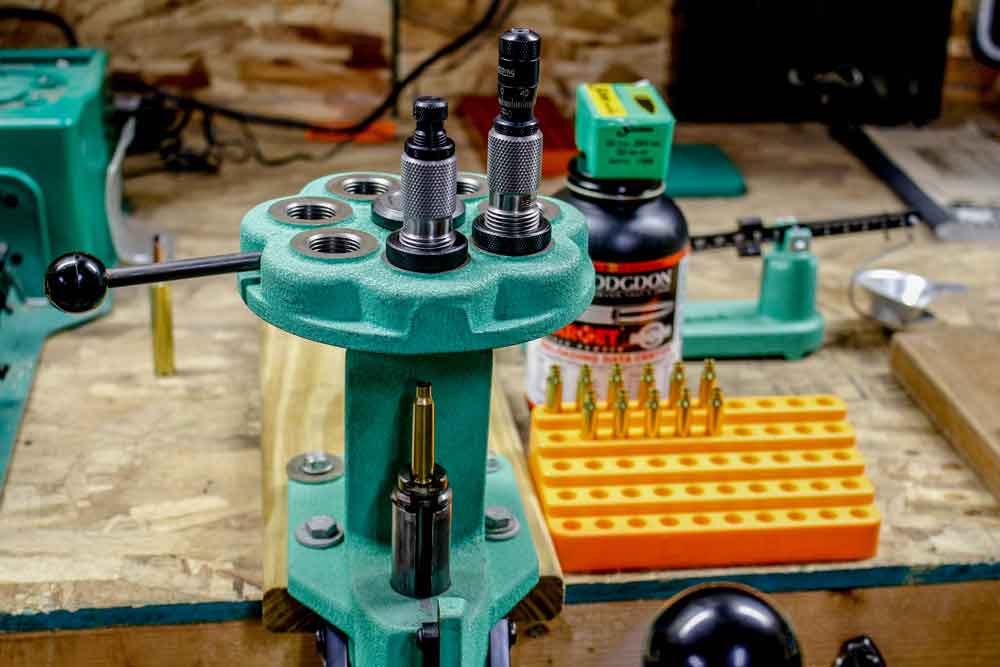
If you’re loading for one of the autoloaders, look to Redding’s bushing die to keep the proper amount of neck tension on your ammunition; this will avoid the tendency of having bullets pull out of the case slightly during the loading process. I don’t really like a roll crimp for the .223 Remington, as there is enough neck tension to keep things in place for the bolt guns.
The .223 is one heck of a versatile cartridge when equipped with a barrel with the proper twist rate. While I have often said I feel it’s a bit light for a deer rifle, and that there are many better choices, I certainly wouldn’t stay home if it were the only rifle available to me.
It is, most definitely, a top-notch coyote rifle, and, if the small-bore target game is your thing, it can be extremely accurate. Grab a good set of reloading dies, a rifle you believe in and some components for experimentation, and you’ll have countless hours of enjoyment with very little recoil.
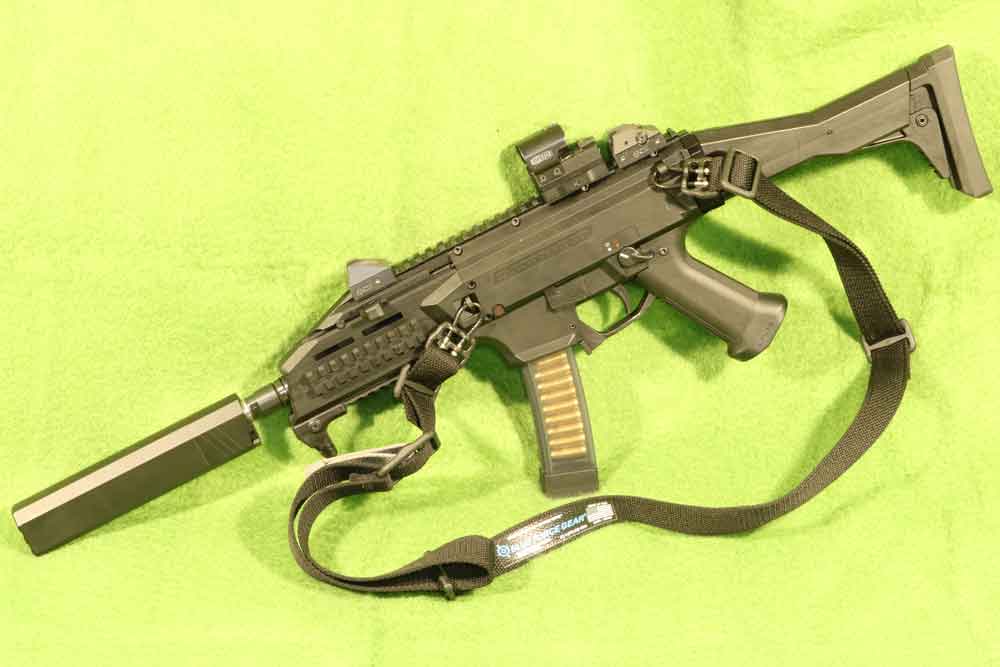
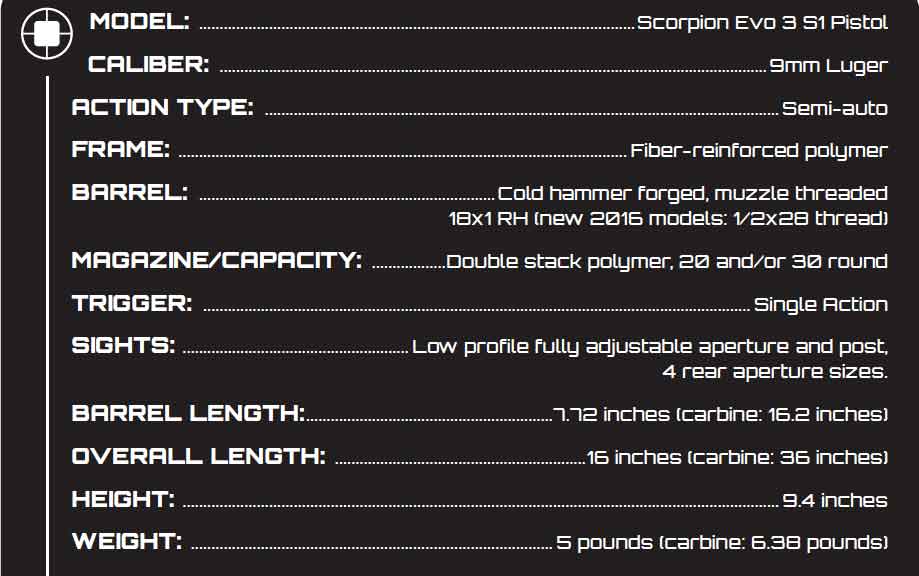
Not only is the CZ Scorpion Evo 3 a blast to shoot, it is also a highly functional weapon — particularly with a buttstock.
As a pistol, the CZ Scorpion is a bit unwieldy, but slap on a buttstock and it becomes a highly useful firearm.
Opting for such a configuration, however, takes forethought, given it transforms the Scorpion Evo into a NFA-regulated short-barreled rifle.
The size and firepower a stocked Evo brings to the table makes it more powerful than a pistol and more convenient than a carbine.
There are a number of sling-mounting options for the Scorpion Evo, allowing users to adjust their carry method to the application.
The controls of the Evo are brilliantly executed and designed for easy manipulation, even with gloves on.
An important design point concerning controls is the non-reciprocating cocking handle, which opens real estate to grip this small gun.
The Scorpion Evo is outfitted with heavy-duty removable sights, complete with adjustable rear aperture.
The one complaint on the controls is the ambidextrous safety lever, which has the tendency to rub the trigger finger.
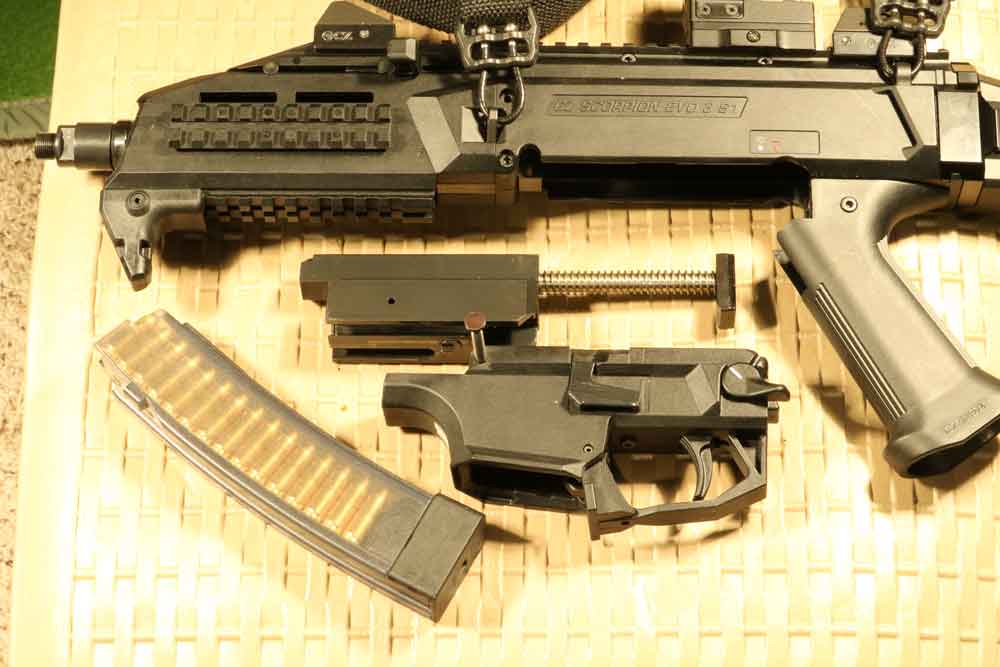
Disassembly/re-assembly of the Scorpion Evo 3 is a breeze and only takes a matter of minutes.
I’m a very utilitarian person — I don’t own a lot of frivolous stuff that doesn’t have a purpose. I don’t own a lot of fancy stuff, either. That is, with the exception of three things: I like a nice watch, I like fine leather, and of course…guns. But guns are the only thing I own that I’ll keep around just for the sake of keeping them around, even if one has no utility. Even my watch and leather items need to have a use.
Previously, when I’ve fired the semi-automatic versions of submachine guns (SMG), I felt that they fit into this category — fun gun that doesn’t really have utility. And honestly, they weren’t even that fun to shoot. In fact, of the two that I had fired, both were quite painful to shoot. They both had terrible trigger slap, and after a few magazines, my trigger finger throbbed.
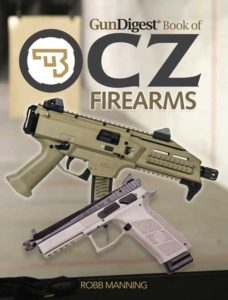
Become an expert on one of the world’s most popular firearms companies and its guns with Gun Digest Book of CZ Firearms.
When I first laid eyes on the Scorpion Evo 3 S1, I erroneously thought that it would fit into this category — fun gun, no utility. I was correct about it being fun — it is by far the most fun gun that I’ve fired that isn’t belt-fed and/or full auto. It’s worth the price just for the amount of pure shooting enjoyment it provides. But, as far as a utilitarian firearm, in pistol form it’s pretty limited. It would make a good truck gun, or even a good home defense gun. Being in pistol form, though, it’s awkward to aim. It’s a little big to fire accurately one-handed, so the support arm has to be fully extended with the elbow straight, which leaves the primary arm bent. Not that’s there’s much recoil, but the minimal amount that it does have must be absorbed by the support arm. The whole thing is just awkward, and it’s not how it was intended to be used when it was designed. Mounting a laser on it does help, as does a nice, tight sling. A lot of users got some improvement by mounting an arm brace onto it, but even that isn’t a perfect solution.
A stock, though, turns it into a far more useful firearm. Not only that, as fun as the Scorpion pistol is, it doubles the fun of shooting it. Unfortunately, you can’t just put a stock on it, because that turns it into an SBR, subject to NFA regulation. But if you’re willing to go through the NFA process, a stock allows you to make well-aimed shots, and it also gives you complete control of the weapon for rapid follow-up shots. Suddenly you have a great gun for carrying in your ATV or truck as you’re driving about, and it also makes for a great home defense gun.
You get the best of both worlds: It’s compact for ease of transport, but open up the stock and you can get carbine-like accuracy. True, it’s not as compact as a handgun, yet if you can swing the extra size, it has increased muzzle velocity and is easier to aim and control. And yes, it can be fired with the stock folded.
There are other companies out there making handgun-caliber carbines, but they just don’t suit my needs as well as this one does. Many of them don’t have folding stocks, so they’re not any more compact than a rifle carbine. If you’re going to carry a firearm the size of a rifle carbine, might as well carry a rifle carbine — with the vast improvement in terminal ballistics, range and accuracy.
SMGs and their semi-automatic versions fall into two basic designs: those that are fed by magazine through the grip, similar to a handgun, like an Uzi; and those that are fed by magazine through a magazine well located in front of the trigger guard, similar to a semi-automatic rifle, like the Scorpion and the Heckler & Koch MP5 before it.
The Scorpion Evo 3 gives you a couple of sling-mounting options. On the left hand side to the rear of the receiver is a slot through which a 1-inch sling can be fed, which makes for a single-point option. Any number of third-party sling mounts that fit onto the accessory rail can also be mounted as a second point when using that configuration. There’s rail at the twelve, three, six and nine o’clock positions to do this. Another option is the four sling swivels located on the right and left sides for ambidextrous use. The rear swivels are polymer molded with the receiver located just under the accessory rail, and the front ones are metal, just in front of the magazine well, halfway up the receiver. I’ve seen metal key rings used in these swivels for clipping a sling, but my preferred method is the “Uber Loop” Quick Wire Loop from Blue Force Gear. It makes for an even more versatile attachment point, and the nylon-coated stainless steel wires and nylon body are quieter than metal key rings.
There’s a lot I really like about the Scorpion Evo 3, and the first thing is that I’m approaching 1,000 rounds and it hasn’t come close to a malfunction. It has cycled perfectly each time, regardless of suppressed or unsuppressed, ammo make, bullet weight, bullet type, bullet construction, +P, standard, or subsonic.
Second, I love the controls — other than the ambidextrous safety lever, which I’ll get to under dislikes. Everything else is brilliantly executed. It’s designed for use with gloves, so the controls are large, but they aren’t obtrusive. Not to sound all new-agey, but the weapon and controls meld nicely together and have a nice flow. An oversized paddle-style ambidextrous magazine release straddles the trigger guard to the front. It’s large, but completely out of the way unless you need it. The texture is not aggressive, but very effective — the graduated lines are reminiscent of the seating found at the Roman Coliseum. The bolt stop is located just above and in front of the trigger. It’s also oversized, yet it stays out of your way unless you need it. It has the same contoured steps as the mag release.
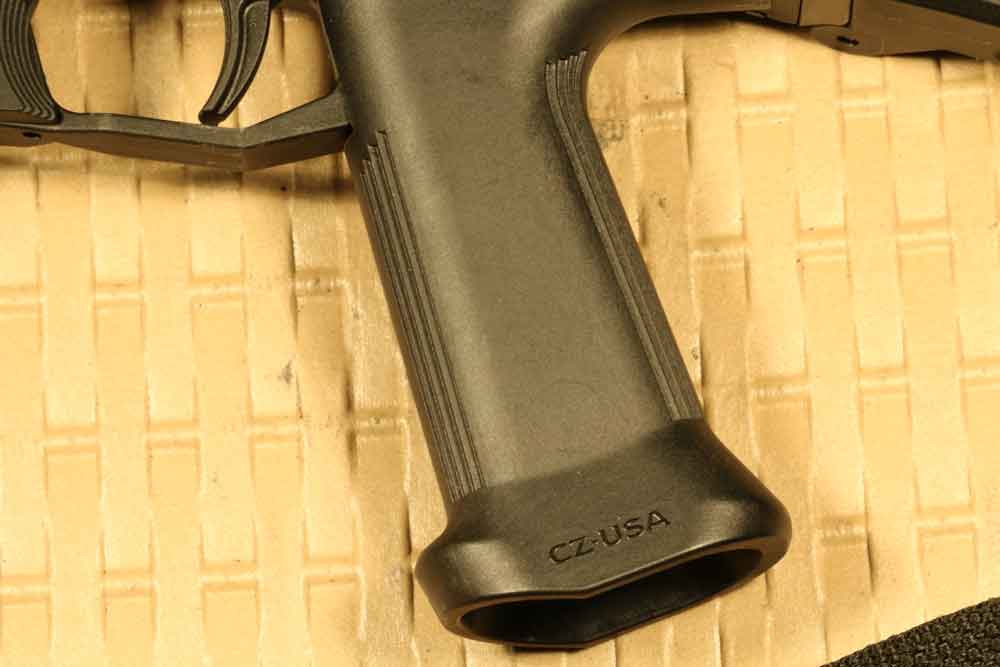
The pistol grip is smooth with no texturing on the sides, only the front and back straps have the same graduated step texture as the controls. It’s designed to be shouldered, not fired like a pistol, so texturing wasn’t as necessary in its original form. Fired like a pistol the lack of texture isn’t that big of a deal, with or without gloves. The bottom of the grip is a little bulbous. It looks like the blown-out magazine wells found on race handguns, except here it serves to keep your hand in position, not to insert magazines.
As for controls, I also like that the cocking handle is non-reciprocating. That’s important for a gun this small, since there’s not a lot of real estate to put the hand anyway. Having to worry about a reciprocating charging handle slamming into the digits would be a distraction, and probably lead to a lot of user-induced malfunctions. I dislike reciprocating charging handles. Before top rails were widely adopted (and mostly mandatory for today’s firearms) to mount optics, it wasn’t uncommon for SMGs to have a top-mounted reciprocating charging handle. Back then, it didn’t matter.
Today, those designs pretty much exclude the mounting of any type of optic, unless you buy a special mount. But, if you mount it on the side, you run the risk of the thumb-busting I just mentioned. Usually, it doesn’t occur while operating the firearm in its intended SOP; the thumb busting occurs during moments of use outside that box — such as when using a benchrest to sight it in.
The removable sights are of metal construction and are heavy duty. As far as I can tell, the only thing made of polymer on the sights is the adjustable rear aperture sight peep, which is actually four peeps on a rotary that allow you to choose the size aperture that you want. The front sight is a post-style sight that is adjustable for windage. These are the same sights that come standard on the 805 Bren S1 Pistol.
There’s only one thing I don’t like about the Scorpion Evo 3, and CZ fixed it right away. The ambidextrous safety’s right-side lever rubs really bad on the first joint of the shooting finger. It doesn’t take long for it to be painful to shoot. Fortunately, they offer a safety delete that gets rid of the left-hand (right side) safety lever. According to CZ-USA, there are three reasons for the safety lever issue. First, since the Scorpion Evo was developed and designed primarily for military/law enforcement agencies, it was made to shoot on full automatic. On full auto, the safety lever is pointing forward, so it wouldn’t rub on the trigger finger. It’s only an issue when it’s on semi-automatic, so it’s mostly an issue for us civilians, and wasn’t really discovered until it hit the U.S. market. Second, it was designed to be an SBR, with a stock, and when firing with a stock most of the pressure is on the shoulder, not on the hand (as is the case with the pistol version), so the finger doesn’t rub on the selector switch. Third, it was designed for tactical users who almost always have on gloves, particularly in the cool/cold Czech Republic.
Disassembly is a real chore, and I say that facetiously. It’s one of the easiest firearms to disassemble that I’ve come across, even more so than firearms famous for being easy to disassemble.
First, remove the magazine, clear it, then physically and visually inspect the chamber to make sure that it is clear. Pull the cocking handle to the rear, and lock the bolt open, pushing the cocking handle up. This is different from most firearms, where you keep the bolt in the closed position to disassemble. Push the disassembly pin all the way through; don’t worry, it’s captured so you won’t lose it.
Grasp the trigger case assembly and pull down, then forward to remove. Carefully place your thumb (you don’t want the heavy bolt to slam closed on you) on the front of the bolt, and push slightly rearward, then ease it forward slowly until you can pull it down and then out of the receiver. The bolt and recoil spring will come out as one unit.
That is as far as it needs to be disassembled for maintenance. Three part assemblies, none of them small, none of them easily lost in the field.
To reassemble, insert the bolt/recoil spring assembly buffer into position at the rear of the receiver, and using your thumb, push rearward and down until it is in position, then ease it slowly forward until the cocking handle engages with it. If the bolt assembly isn’t fully seated, the cocking handle won’t engage with it — you need to push the bolt farther to the rear and push downward.
Once engaged, remove your thumb and pull the cocking handle to the rear and lock the bolt open. Insert the rear of the trigger case assembly (the back of the trigger guard) into its slot, rotate the front of the trigger case assembly into position, and press the disassembly pin into place. Do a function check and it’s assembled.
When they fill a certain role, and do it well, military weapons can have long lifespans. How long can be astonishing. There are rifles, pistols and shotguns from around the world that have taken the battlefield for decades now, proving the latest isn’t always the greatest. But today, we’re going to focus on some true long-in-the-tooth warriors that have served for going on, or better than, a century. So without further ado, here are 4 Historic Bolt-Action Service Rifles That Still See Action.
The Mosin-Nagant is the undisputed champion of service rifle longevity. Consider this, it was adopted as the primary service rifle of the Russian Empire the same year the first game of basketball was played — 1891. And, astoundingly, the five-round bolt-action rifle, fed off stripper clips, is still on the active roster of some countries’ militaries today. China, North Korea and Russia all continue to employ variations of the 7.62x54mm rifle, albeit in diminished capacities, typically in the rear echelons and in reservist roles.
What has kept it relevant all these years is its simplicity, reliability and ability to pitch lead fairly accurately 500 yards and on out. The rifle didn’t start out as elegantly austere; however, after combining aspects of Russian Army officer Sergi Ivanovich Mosin and Belgian arms designer Léon Nagan’s original submissions, a robust and dependable rifle was born.
The Mosin-Nagant has earned its battle stripes, including action in both World Wars. It is now more commonly found at your local shooting range, a popular choice of firearms buffs with a yen for affordable history and those who just can’t get enough shoulder abuse.
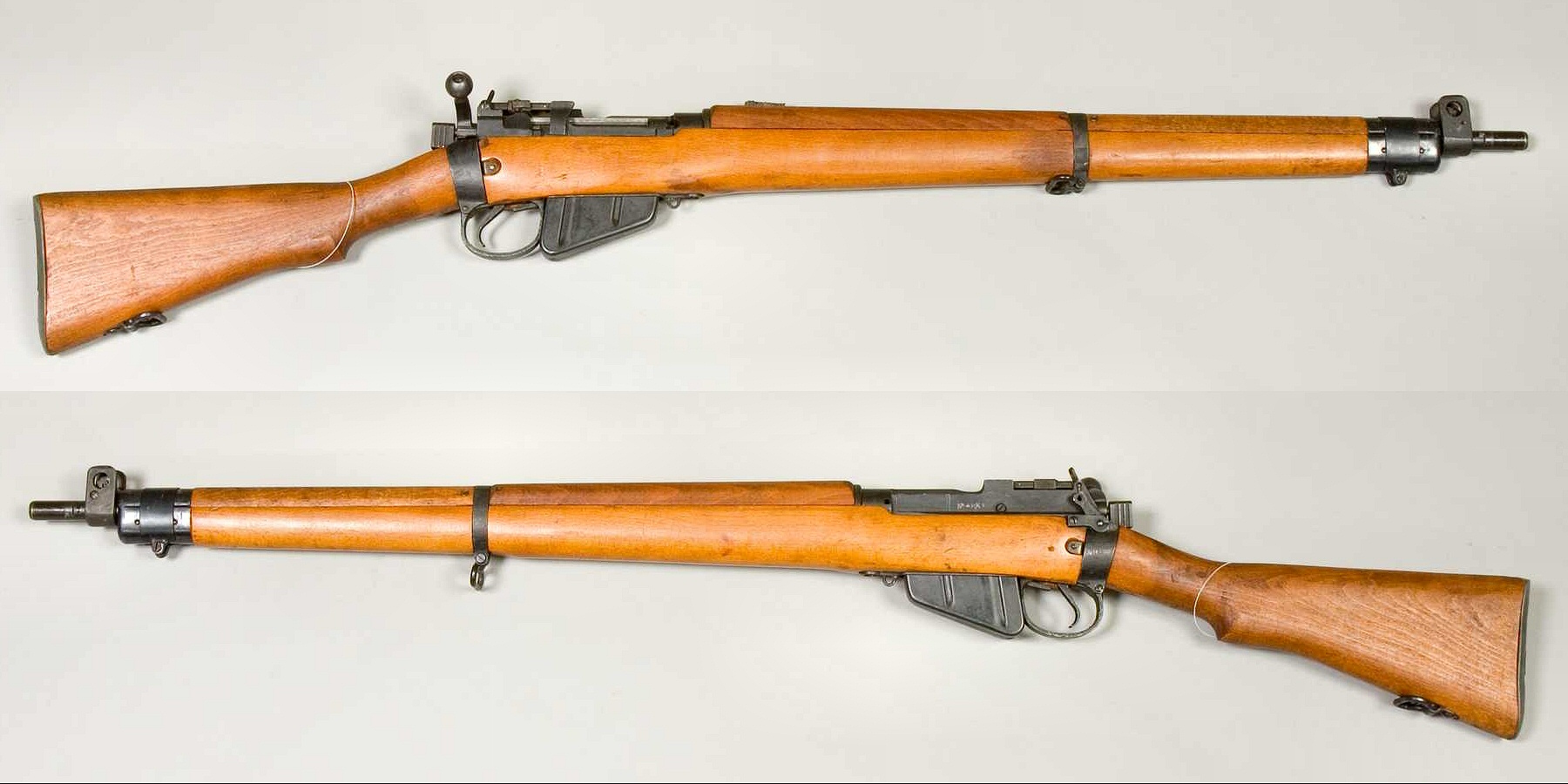
Lee-Enfield
Really, the Lee-Enfield isn’t seeing that much military use any longer. The Canadian Rangers recently phasing out the rough-and-ready No. 4 MK 2, due to lack of replacement parts, somewhat marks an end of an era. But there is a smattering of the British Empire’s slogger in a number of Commonwealths’ reserve units. And it is still heavily utilized by police forces in Pakistan and Bangladesh.
Its endurance since adoption in 1895 is due to it perhaps being among the best bolt-action service rifles ever produced. With 10-rounds of .303 British at his beck and call, “Tommy” had more firepower at his disposal than any other soldier armed with a bolt action he’d likely face. And it was as adept at sending a high volume of fire at an enemy in a “beaten zone” as it was with precision work. The redesign of the British black powder .303, the Lee-Metford, had a smooth and short bolt throw, aided by rear-position locking lugs, making the rifle lightning fast to operate.
Luckily, there are plenty of Lee-Enfields to be had, particularly of the SMLE variety. And there is nothing quite as stirring as sending rounds down range from the regal “three-oh-three.”
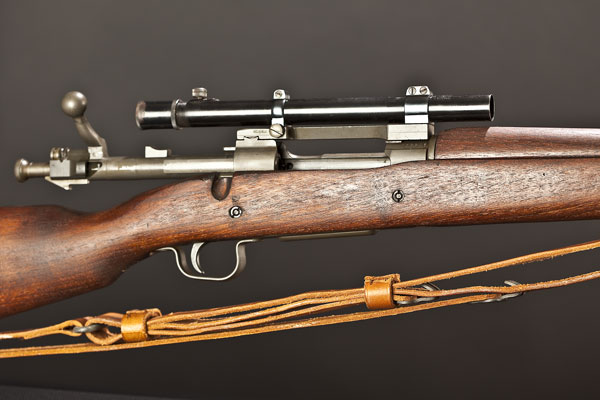
M1903 Springfield
The glory of the battlefield has long past the venerable M1903, with it last seeing action as a sniper rifle in Vietnam. But the U.S. Military just can’t quit this warhorse. The U.S. Army Drill team can still be found snapping to attention with bayonet-tipped Springfields. The five-round rifle’s superior balance makes it ideal for the precision movements that go into the team’s drills.
While ceremonial now, the M1903 was a tenacious service rifle. The Springfield was the U.S. Military’s primary service rifle in World War I, and proved to be a reliable and accurate weapon. Aiding the rifle on the latter facet was the .30-06 Springfield round it shot, which was more than adequate for long-range work. Its accuracy is what kept the M1903 relevant all the way through the late 20th century, even after it was supplanted by more advanced weapons systems. Decked out with a scope, the Springfield and its many variants were deadly sniper rifles in the hands of a trained marksman. Even today, one of these battle-worn beauties makes a fine match rifle, still able to find the X-ring with ease.
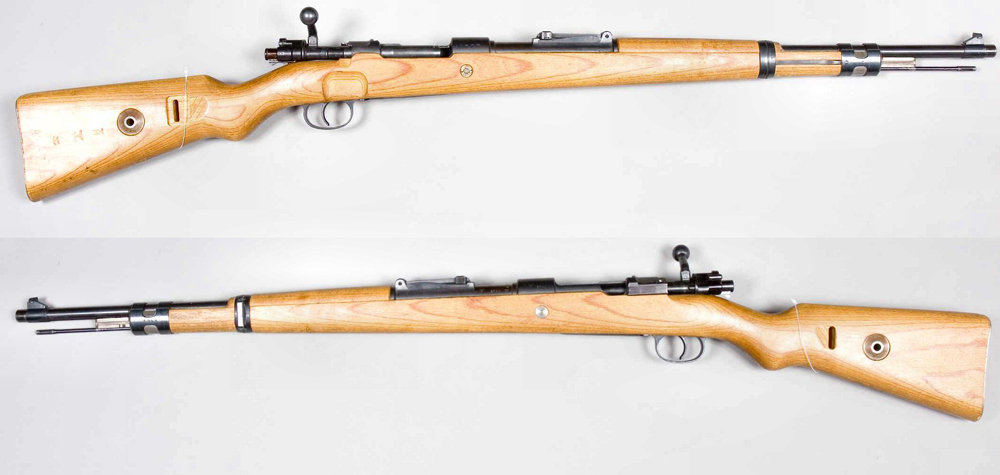
Karabiner 98k
Like the Springfield, the K98k is more of a ceremonial arm today. The German Bundeswehr’s precision drill unit, the Wachbataillon, prizes the rifle for much the same reasons the U.S. Army uses the M1903 — its balance. But unlike the Springfield, the Karabiner 98k has seen plenty of modern-day action, such as in the Yugoslav Wars in the 1990s. And it can still be found in some small countries’ arsenals.
The 7.92x57mm (or 8mm Mauser) rifle was adopted by German forces in the dark days of 1935 and served as its primary service rifle throughout World War II. The K98k was a shorter and lighter firearm than the service rifles that preceded it, making it ideal for maneuver tactics that were dominating warfare of the time. It weighed in at around 8 pounds, scant for the day.
Like many of the classics on this list, reliability was one of the five-round Karabiner 98k‘s primary assets. But as many rifle aficionados know, there is something else highly desirable about K98ks — their actions. They’re rock solid. With two forward locking lugs, the rifle could fire high-pressured rounds safely and repeatedly. Another feature, highly prized, was the oversized claw extractor, which ensured jams were a rarity. Even today, these actions are sought after and likely to be found on slicked-out sporter versions that were fabricated from liberated arms after the war.
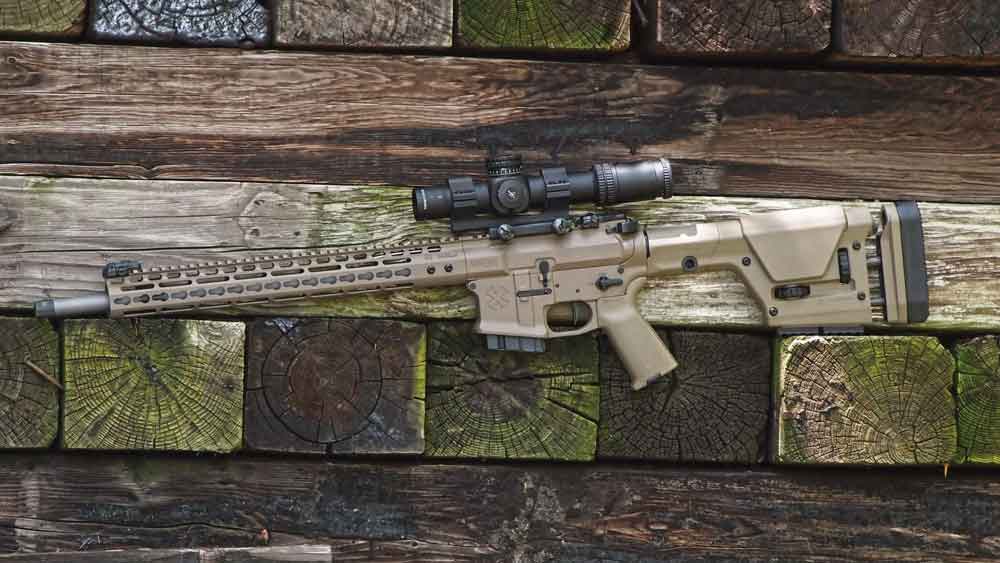
Paired with the 22 Nosler, the Nosler/Noveske Varmageddon is a rifle designed to precisely knock the stuffing out of any varmint unlucky enough to end up in its crosshairs.
What the Nosler/Noveske Varmageddon in 22 Nosler Brings to the Table
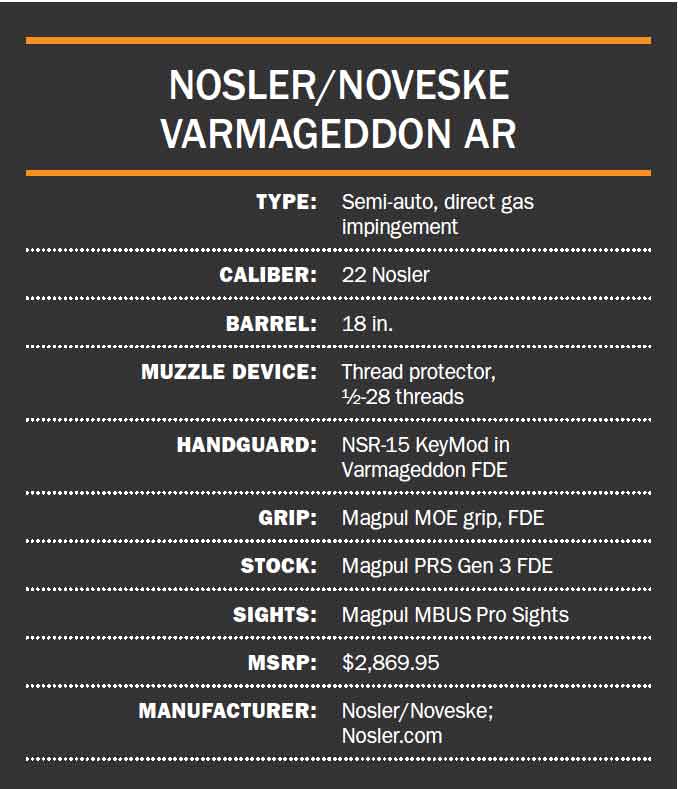
Chambered in the powerful 22 Nosler, the Nosler/Noveske Varmageddon brings break-neck velocities to the AR platform.
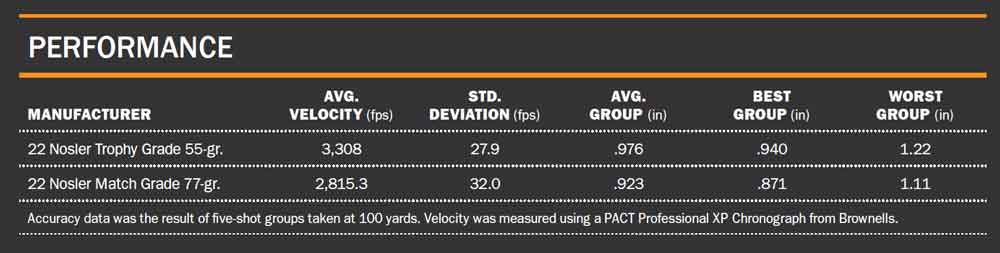
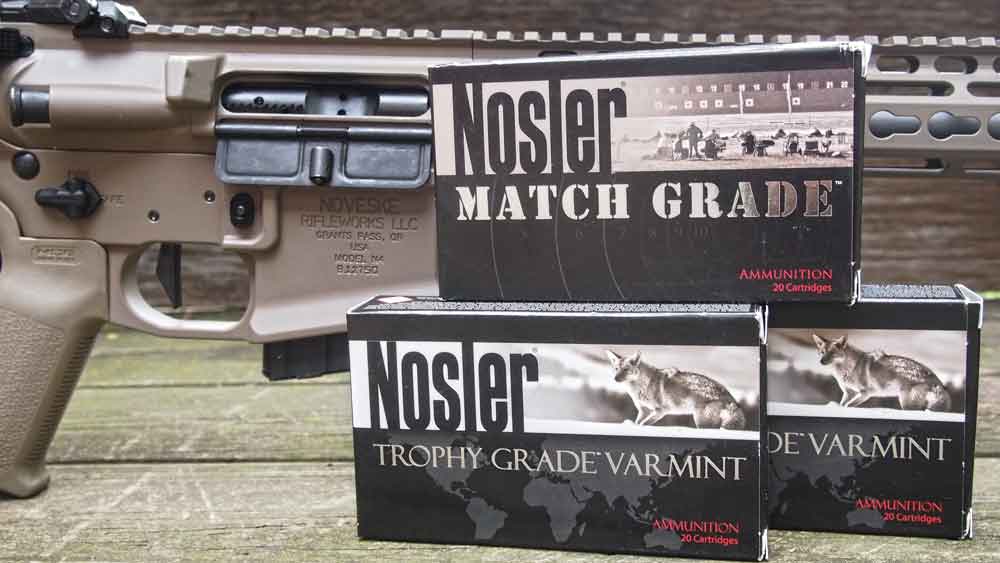
Upon testing, the Varmageddon lived up to its billing, pushing 55-grain projectiles better than 3,000 fps on average.
The rifle and ammunition were a match made in heaven when it came to accuracy, repeatedly printing sub-MOA groups at 100 yards.
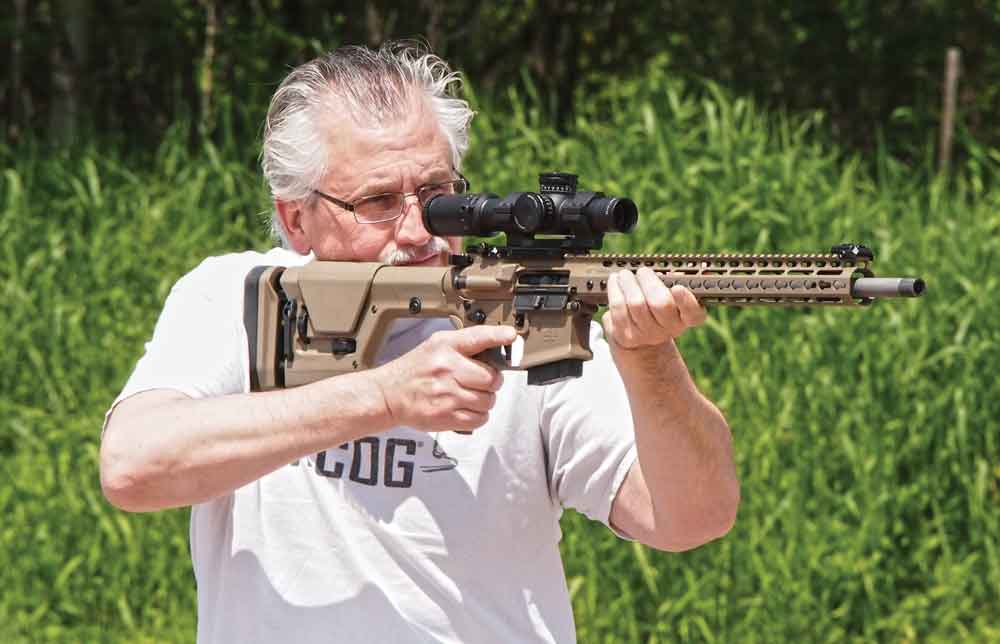
The Varmageddon is built to excel at precise work, boasting a crisp-breaking Geissele SD-E Trigger and highly adaptable Magpul PRS stock.
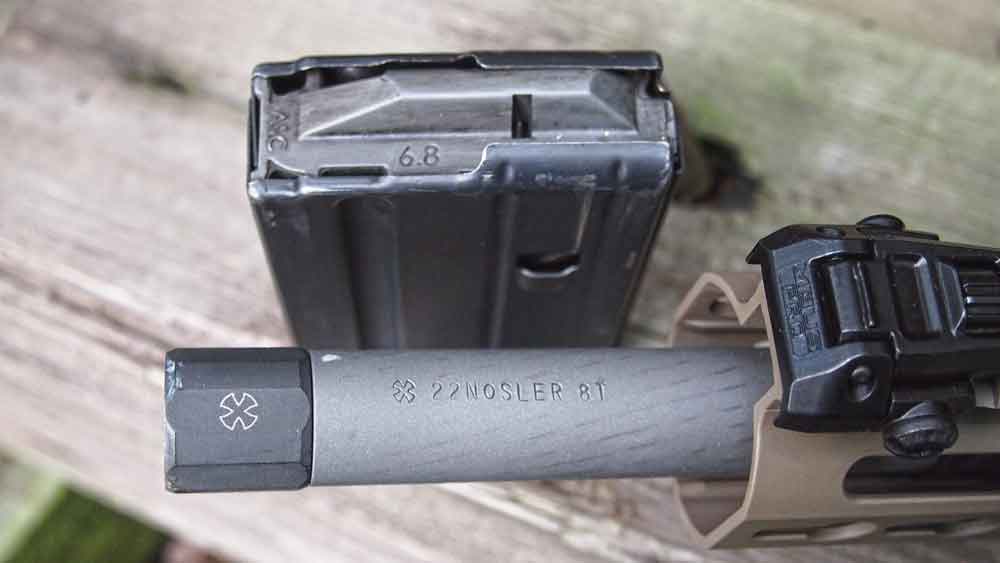
While comparable to a lengthened and necked down 6.8 SPC, the proprietary 22 Nosler is a breed of its own.
Tempting as it might be, the 22 Nosler is not compatible with the AR’s presently chambered 5.56 NATO/.223 Rem.
Already a dynamite choice for varmints and predators, given the choice of heftier projectiles, the Varmageddon in 22 Nosler could be a medium-game option.
At the 2017 SHOT Show, the shooting sports industry’s largest trade show, Nosler introduced its newest round, the 22 Nosler. Nosler claimed this new round was the fastest, most powerful .22-caliber centerfire round available that would reliably feed and function in the AR — capable of pushing a 55-grain Nosler Trophy Grade bullet at 3,350 feet per second (fps) from an AR-15 fitted with an 18-inch barrel, and a 77-grain Match Grade competition bullet at 2,950 fps. At nearly 300 fps faster than a standard .223 Remington/ 5.56 NATO, the 22 Nosler delivered 30-percent more energy than either round.
A few months later, Noveske Rifleworks, of Grants Pass, Ore., and working in conjunction with Nosler, debuted a new version of its Varmageddon AR rifle, offering it in, yes, 22 Nosler.
A new round and a new rifle. It was a combination begging to be tried out, and that’s exactly what I did recently, matching a new-in-the-box Varmageddon with both the 55-grain and 77-grain versions of the 22 Nosler ammunition. I topped the rig with another relative newcomer to the shooting sports, a Trijicon AccuPower 1-8×28 scope.
Results? Impressive. As advertised, the new 22 Nosler is an FPS screamer. It’s also very accurate. At the same time, the 22 Nosler Varmageddon rifle is a pleasure to shoot, has a fine trigger and feels great on the shoulder.
Range Time At my local outdoor shooting range, I zeroed the Varmageddon at 50 yards using the 55-grain Trophy Grade round, shooting from a sandbag rest. Then, I took on targets at 100 yards. Right from the start, I was very impressed with the accuracy achieved from this scope/rifle/round combination.
With the 55-grain round, my best three-shot group was .433 inch, my best four-shot group was .623 inch, and my best five-shot cluster came in at .940 inch. The 77-grain Match Grade load did fine, too, with groups of .681 and .609 inch for three- and four-shot groups, respectively. And I actually punched six shots into a 1.00-inch group!
That .681-inch three-shot group, by the way, was done with my very last three shots. At that point, the rifle had seen over 200 rounds through it, and, even with a cool-down period midway through, the barrel was hot enough to blister the skin. And it was still shooting sub-MOA!
Then, I chronographed both rounds using my PACT Professional XP Chronograph from Brownells. Firing 10 rounds of each, the 55-grain Trophy Grade locked in at an average of 3,308.2 fps, and the 77-grain Match Grade averaged 2,815.3 fps. That put the 55-grain load within 48 fps of Nosler’s stated velocity, and within 135 fps of the velocity for the 77-grain bullet.
One Sweet Shooter Working with Nosler, Noveske introduced its first Varmageddon rifles several years ago, chambering them in the most popular varmint cartridges, including .223. The Noveske Varmageddon in 22 Nosler makes the above-cited accuracy easier to achiever than a lot of similar AR’s, and it all starts with the trigger. The two-stage Geissele. SD-E Trigger is extremely smooth, with a 2.2-pound first stage, followed by a 1.11-pound pull to actually fire the rifle. It resets quickly, too.
The Varmageddon’s Magpul furniture is comfortable and looks good, too. The PRS stock is easy to adjust for length of pull, cant and comb-height. It even sports two short picatinny mounting points along the bottom read edge of the butt for use of a monopod. The MOE Grip provides a hand-filling, tactile feel, with a built-in storage compartment.
The ambidextrous safety is easily operated with one thumb, and the magazine release ejects the magazine with authority. The Noveske Super Bad Ass Charging Handle is also one of the easiest and most functional charging handles I have ever used, and it greatly decreases the chances of short stroking the handle and creating a feeding malfunction.
The only problem I can see with the Varmageddon is its weight. All by itself, the rifle tips the scales at 10 pounds. Add a scope, mounting hardware and ammunition, and you are probably at 11.5 pounds. For a bench shooter taking on a field of prairie dogs, that weight is no big deal. Yet for the varmint or predator hunter who does a good deal of hiking in search of prey, 11 or 12 pounds can be a real load. He or she will want to invest in a solid two-point sling and a good set of shooting sticks before taking the Varmageddon afield.
A Whole New Animal The magazines for the 22 Nosler are actually standard 6.8 Remington SPC magazines. So, does that mean the 22 Nosler is a reconfigured 6.8 SPC round?
Not so, said Mason Payer, Nosler’s marketing manager.
“Really, there is no parent cartridge,” said Payer. “The 22 Nosler is its own animal. The closest design which could be claimed is a 6.8 Rem. SPC that has been lengthened, necked down to .22 caliber, given a 30-degree shoulder and had the rim rebated to 0.378 inches. Or, you could say it is a .30-30 Winchester that has been shortened, necked down to .22 caliber, given a 30-degree shoulder and had the rim rebated to 0.378 inches.”
He added, “In the end, it’s easier to say it is what it is: a new cartridge!”
The Varmageddon is the first complete rifle available in 22 Nosler, but it certainly won’t be the last. Payer noted that at least 10 rifle makers are currently working on complete rifles chambered in 22 Nosler, and even more gun makers are producing 22 Nosler uppers.
I suspect some rifle makers are currently designing — if not actually manufacturing — 22 Nosler bolt actions, too. While the 55-grain ballistic tip bullet leaves an 18-inch AR barrel at an extremely fast 3,300 fps, the same round in a 24-inch barrel rockets out at an amazing 3,500 fps. Similarly, the 77-grain target round is rated at 3,100 fps with that 24-inch barrel, an increase of a good 200 fps from the 18-inch barrel.
For those shooters who love speed — and there are many, many of us — harnessing that 3,500 fps will be very attractive, and a bolt action will likely be the way to go.
Making the Transition If you already own an AR-15 in .223 Rem./5.56 NATO, you might be tempted to tinker with your rig to make 22 Nosler work. But do not try this! As Payer stressed, you can’t simply open up a .223 Remington chamber to fit 22 Nosler specifications. The shoulder of the 22 Nosler was set back to a slightly shorter dimension than the .223 Remington to prevent the .223 Rem. from being accidentally chambered in a 22 Nosler.
“Because of this, in order to convert a .223 Remington AR-15 barrel to 22 Nosler, you would need to remove the barrel extension, set the barrel back one turn, re-chamber the barrel to 22 Nosler, and then reinstall the barrel extension while keeping the gas port precisely at the 12 o’clock vertical position,” Payer said. “Realistically, this would require the services of a qualified gunsmith.”
It’s much safer and cheaper to simply invest in a 22 Nosler upper, swap out that upper with your existing AR-15 and then buy a few 6.8 SPC magazines.
Currently, the only ammo choices are the 55-grain Trophy and the 77-grain Match rounds, both of which are made by Nosler. The company also will be introducing other 22 Nosler ammo options in 2017. Expect other manufacturers to begin offering their own versions of the ammunition, too.
For reloaders, Nosler offers 22 Nosler brass and bullets. Reloading information can be found at 22Nosler.com.
Parting Shots Whether or not the 22 Nosler is going to set the AR World on fire is unknown. But a very fast round that can reach out at long distance, and is damned accurate, will certainly find a home with many shooters.
The 22 Nosler would seem to have potential hunting applications for medium-sized game, too. Nosler currently manufactures a 90-grain Ballistic Tip Hunting Bullet in 6mm. If Nosler took its 77-grain load and reconfigured the bullet into a Ballistic Hunting Tip? Hunters would have a round quite capable of taking down deer-sized game, opening up the 22 Nosler to even more shooters.
As with all aspects of shooting, particularly at long range, learning to properly read the wind requires practice and familiarity with the basics.
How can you use natural environmental elements to help read the wind and make adjustments?
Mirage, which refers to the way light rays are bent due to the heat difference of the ground and the air, can be used, if they’re moving, to help illustrate wind direction and intensity.
Grass, leaves, tree branches and other flora are good indicators of wind speed and direction.
If you’re hunting in a foreign environment, use a windmeter to measure values and their effects on flora; then, you can estimate wind values at range based on the amount of movement of that particular plant.
Canyons can prove particularly challenging, especially if compound winds are present. Make sure you understand how canyon walls affect wind currents.
No matter what you’re shooting, you need to know how to read the wind. It’s certainly not an easy prospect, especially as the distances get long.
Yes, a Kestrel weather meter or similar tool will accurately indicate both the wind speed and direction in relation to the target. This is definitely good information, but it is only a part of the puzzle.
There will invariably be shooting situations where the wind at the target is completely different from the wind at your location. Couple that with variations in terrain, elevation and weather conditions, and you’ve got quite a chore on your hands.
Understanding how to read the wind is no easy task. I recently had the honor of spending quite a bit of time beside Doug “Dog” Pritchard, an ex-Navy Seal who is not only one helluva shot, but also an expert at calling wind.
I got to play the role of both shooter and spotter with him, as I wanted to concentrate on learning to call wind for other shooters as much as shoot the long distances available at the FTW Ranch. It didn’t take long for me to figure out what Pritchard was basing his calls on, and why.
We’d look through the spotting scopes, observing several key indicators and comparing them to the wind directions and values we were feeling at our location. Pritchard explained how he unravels the mystery, using little clues presented by nature, as well as knowledge of terrain and how winds behave in canyons and valleys.
I can’t imagine a more difficult set of scenarios than those presented at the FTW Ranch. Tim Fallon & Company have handpicked some incredible shooting challenges that present steep angles, long distances and impossible wind conditions. Some of these targets combine all three factors — to an extreme degree — and really test the skill set of any experienced shooter.
The Barksdale area of Texas is canyon country, and the daily temperature differentials cause the winds to swirl, gust, calm down and pick back up in a matter of minutes. We had to use every available piece of evidence to determine correct calls.
We’d look for blowing grass, fluttering leaves; hell, we’d even use the butterflies to find out what was going on. Mirage, if present, was a definite help, as was the flight pattern of buzzards and other birds riding the winds and thermals.
Using Mirage Mirage is a phenomenon in which light rays are bent due to the heat difference of the ground and the air; if you’ve ever seen the heat shimmer on hot asphalt, you’ve seen mirage. You can use those bent light rays and the direction they’re moving (if at all) to help with wind observations.
Looking through your spotting scope, if you see the lines of mirage “boiling” or running vertically, you can assume a zero- to 3-mph wind value. If running at 45 degrees or so, you can assume a 3- to 5-mph wind value. If it looks as if it’s running horizontally, but slightly broken up, your wind value will be 5 to 8 mph, and if it’s running horizontally in a straight, consistent manner, you’ve got 8 mph and up, and will be able to determine the factor with other methods.
Mirage is most visible on a bright, sunny day. At FTW, when we had trouble picking up mirage, we’d use the spotting scope to focus on a point closer to the target, and like magic, the mirage would appear. Even so, it is useful only under certain conditions, so you need other clues to help make the correct wind call.
Natural Clues Grass is always helpful, as it is easily moved by the slightest winds. A 3-mph wind will move the grass, and a 5-mph wind will move grass significantly.
Leaves are another aid that can save the day. If you’re hunting in an area like Texas, where much of the vegetation holds its leaves year-round, you have many good indicators, but what if you’re hunting the Tioga, or the wide-open crop fields of the northern U.S.? Odds are there will always be something to gauge the wind velocity, even if it’s the remnants of last autumn’s leaves or the top of one of the stunted evergreens that grow at higher latitudes.
If you’re a traveling hunter, and you’re in a new environment where the foliage and vegetation seem foreign, a handheld weather station will come in very handy. If you watch the wind’s effects on the new flora, and measure that value with your wind meter, it will give you a much better idea of what the values will be while you are hunting. Cedar trees are a great indicator, as the tops act like a wind flag, and if you know what the wind speed is for certain movements, you’ll more than likely be right.
Putting It Into Use If you’ve got some trees with full leaves, you can quickly ascertain wind direction — even in light winds — by determining if there is movement on one side of the tree or the other. Pritchard and I were discussing, well, debating — OK, we were nearly arguing — about a particular shot and what the wind values should be. I had (I thought) followed all the proper procedures, and made a call of “no wind,” and had instructed the shooter to hold the left edge of the 6-inch plate, to give the proper adjustment for spin drift at that distance.
“Nope, have him go right at it. You’ve got some right-to-left down there; it’ll compensate for the spin drift.”
I looked again, and again, and it wasn’t there. I saw a butterfly float by, just as happy as could be, about half way to the target, and I couldn’t pick up any mirage, so I didn’t know what he was getting at.
“Where are you seeing wind, Dog? I got nuthin’.”
“See that live oak, about 15 yards left of and above the plate? Watch those leaves just on the right edge; they’re blowing ever so slightly at the top. Because of the bullet arc (the target was 700 yards out), that slight right-to-left wind will cancel the spin drift.”
Dammit, I didn’t see it, and in my effort to shine in front of the Professor, I didn’t think to look at the top of the tree, in order to compensate for the entire trajectory arc of the bullet. The shooter held for the center of the plate, and I watched the paint splatter one-inch to the left of center.
Professor Dog had given a clinic, and I learned my lesson. My wind call would’ve pushed that bullet off the left side of the plate.
Conflicting Wind Currents Calling wind into or across a valley can pose a different set of problems. If hunting or shooting in canyon country, the wind can behave much like water. You might see signs of wind on top of the hills, and though it may appear dead calm at the bottom of the valley, there might be wind acting much like a waterfall — rushing over one edge and creating an eddy of moving air along the wall of the canyon.
I learned this hard lesson at the ranch when we were set up on a range that predominately worked perpendicular to the bottom of the valley, but had two targets running roughly parallel to the valley wall. The most difficult shot was an 18-inch plate at 585 yards, along that wall.
Where that plate was placed, the wall of the canyon got steeper than where we were shooting. The winds were just everywhere, if that makes any sense.
Looking from our shooting position, it was clear the winds were hard, right to left, coming into the canyon, but I saw the slight left to right just in front of the target. It was a compound wind, definitely two different scenarios on the way to the target.
I was shooting for this exercise, but Pritchard insisted that I call my own wind. I looked and studied the scene, studied and looked some more, and decided the predominant right-to-left wind would take precedence. I adjusted my hold into that right wind and touched one off.
In proud fashion, Pritchard announced a miss, two feet off the plate’s right edge. The wind was curling like water at the bottom of the valley, and rolling left to right.
Once it was explained, I shot the plate with no issue, but had that been a game animal, I’d have either completely missed it or — worse yet — wounded it.
These ideas, and other visual clues in the hunting fields, are what the SAAM course at the FTW is all about. Other shooting situations there, especially on the longer shooting ranges, employed a multitude of flags to indicate both wind direction and intensity. It’s quite easy to understand what a great aid this is to any shooter, especially when you’ve got a good dope card or Kestrel unit at your side.
Working Out The Basics My good buddy Donnie Thorne served our country in the U.S. Marine Corps, as a machine gunner in Viet Nam. During basic training, he shot “Expert” and attained the highest score in his platoon. I asked him to recall what he could about his training — it’s funny how Marines never seem to forget that training — and he answered my inquiries as if he’d returned from basic two weeks ago.
“We were trained with the M14 rifle in 7.62 NATO, but spent days, literally days, with an empty rifle, practicing the proper sighting technique on a 55-gallon drum, with small black dots painted on it,” Thorne recalled. “Sight alignment, in various positions from kneeling to sitting to standing to prone, was demonstrated and taught for hours on end. We’d mark targets for other recruits, and then return to sight practice. I only got to fire live ammunition the day before qualification. We were allotted 50 rounds, to the best of my recollection, for practice. On qualification day, we shot targets at 200, 300 and 500 yards. I shot 228 out of a possible 250, earning the title of Expert, even landing 50 out of 50 at the 500-yard target.
“For wind compensation,” he continued, “we were taught to dial a certain amount on the windage adjustment of the rear peep sight, and the range flags would indicate both direction of wind and its speed, based on the distance out from the flag pole. Obviously, the stronger the wind, the farther from the pole it will blow the flag, and we would adjust our wind hold based on the flag values. Our instruction booklet would give us the values, and the correlating rifle sight adjustments.
“It’s funny, learning trigger control and reading the wind in the Corps definitely helped me as a hunter; it also had a direct influence on my passion for single-shot rifles. I love a good target-style .22 Long Rifle, with a peep sight and a long sighting radius, as well as big-game rifles like the Ruger No. 1. Having just one shot, and the patience and precision to make it count, are things I attribute to the Marine Corps. I love the improvements in modern riflescopes and bullets, but at 66, I’m not much of gadget guy. I prefer relying on my training and practice, and if it’s too far, I like to get closer.”
Personally, I used to avoid shooting my rifles on really windy days, as the group size would start to fall apart. These days, I actually prefer to shoot in the wind, once the rifle and the load are proven, to better hone my wind calling skills.
I like to observe how the trees and grass are moving, measure those values with my Kestrel, and make mental notes to keep myself sharp. If you practice enough, it becomes second nature, and while there are difficult situations like I’ve described earlier, the more wind calling you do, the smaller the amount of error will become.
But, just as it is with all shooting, calling the wind will require constant mental exercise; you can’t do it once or twice a year and remain proficient. Wind is a predictable effect, assuming the values are known and things are constant. Making correct adjustments to overcome those effects — that’s the key to successful shooting.
As temperatures climb in the late spring and reach a peak in the dog days of summer, many dress down to meet the occasion. T-shirts and shorts start to replace long pants and jackets as the predominant articles of clothing. And those who carry concealed might opt for summer carry guns that are lighter, smaller and less likely to print with their new warm-weather wardrobe.
There are a number of great pistols and revolvers that are well suited, or can be adapted, to fill this role. But the best are those that are dependable, small enough in size and weight to be easily and comfortably concealed in light clothing, and shootable enough to get the job done if called upon in a fight.
The options presented below don’t represent a comprehensive list of all the great summertime carry guns available. However, most of them are tried-and-true designs that will serve the shooter admirably. The majority weigh less than 20 ounces — with some coming in quite a bit less — and most are about 6 inches in length or less. And, all of these come in at under $800 for their base model.
Without further ado, here are 13 of the top summer carry guns available to shooters right now.
Photo by Alex Landeen.
1. Ruger LCP II Ruger’s original LCP has proved itself highly capable as a pocket, or micro .380 ACP pistol for carry. In its nearly decade-long existence, it’s become one of the most popular pistols in that category due to its reliability, compact design and affordability, with its incredible $259 MSRP.
These days, while the original LCP still certainly remains a serviceable option, Ruger has upgraded the platform with some beneficial changes in the form of the new LCP II. Probably the two most critical upgrades are the improvements made to the trigger and the addition of a last-round-hold-open function on the LCP II’s slide.
Obviously, the triggers on double-action pocket .380s designed for carry are not known for being overly impressive, but Ruger was able to improve upon the LCP’s trigger quite markedly in this new version. The trigger pull is substantially smoother, being fairly light and crisp, as well as quicker on the reset — and it incorporates a bladed trigger safety.
The last-round hold-open feature is of course important to many shooters, as it is a visual indicator of an empty mag; plus, it aids in slide manipulation. Other features, such as the grip, ergonomics and sights, are also upgraded, and the end price is still a highly affordable $349. And with dimensions of 5.17 inches in length, .75 inch in width and 3.71 inches in height, and a weight of just 10.6 ounces, you could hardly do better than the LCP II in terms of a micro .380.
2. Smith & Wesson M&P Bodyguard 380 A fairly compelling argument could be made for including the M&P Shield on this list. On basic configurations, the Shield’s weight hovers right around 20 ounces; the gun is a touch over 6 inches in overall length, has a standard capacity of 7+1, can be found at some pretty affordable prices and has established itself as a dependable carry piece.
That said, if you want something a little more compact for summer wear, the M&P Bodyguard 380 is an excellent option. Like the Shield, the Bodyguard is priced affordably, with an MSRP of $379. Street prices can be even less.
You go from 9mm down to .380 ACP, which means it’s less potent, but you do shave off almost 8 ounces of weight and about an inch in length. The double-action-only trigger isn’t as good as the Shield’s striker-fired trigger, and the sights are probably a slight step down as well, from white dot to stainless steel adjustable. However, the trade off for increased concealability and comfort might be worth it to some.
3. SIG Sauer P938 The P938 has been around for several years now, and its predecessor, the P238, has been around a couple years longer. The original P238 is a scaled down version of the 1911 chambered in .380 ACP.
The P938 is, of course, a slightly beefed up version of the P238 in 9mm. As such, it’s a touch longer and heavier (.4 inch and .8 ounce, respectively), but certainly nothing too dramatic.
Like the earlier P238, it has a fairly crisp 7.5-pound single-action trigger pull and similar 1911-style controls and safety. Both are available with SIGLITE night sights, a major plus for those who carry, as most defensive shootings occur in low light. And both fall into SIG’s micro-compact frame size category, meaning either is suitable in a pocket pistol role.
However, when the dimensional differences are so small, and since we live in a world where bigger is better and more is always better than less, it’s hard not to argue for the 9mm P938. One of the downsides to both these guns is that the price for either is something many will struggle with: The P238 starts at $679, while the P938 begins at $760. This is more than many pay for their compact or subcompact daily carry gun, and it’s a higher starting point than any of the other models on this list, so they might be hard to justify for some as summer carry guns.
A less expensive option from SIG is the subcompact P290RS ($492); though, it does have a slightly longer, and heavier, double-action trigger pull at about 9 pounds, and it weighs just a touch more. As a side note on the P238 and P938, SIG recently introduced “We The People” versions of both guns, which feature a beautiful distressed finish and commemorative patriotic engravings.
4. Glock 43 A lot of people who know a good deal about concealed carry handguns have referred to the Glock 19 as a perfect, or nearly perfect, gun for carry. It’s big enough to shoot well pretty easily, yet small enough to conceal with the right holster and clothing choice. It’s got Glock’s standard and fairly decent 5.5-pound trigger, and is loaded with 15 rounds of 9mm boom. And, it’s a Glock, which means it’s pretty much guaranteed to be reliable. This is, of course, why the G19 has been and continues to be one of the most popular handguns on the market.
But in truth, for some, and especially during warm, summer weather, it’s just not quite as light and concealable as you’d like it to be. The Glock 43 is, without question, both of those things.
Fully loaded, the G43 weighs a bit more than 22 ounces. It’s 6.26 inches in length, 4.25 inches in height and just a touch over 1 inch in width. Now, to get these figures, you do sacrifice quite a lot in terms of round count — 15 down to six — but if it’s a decision between carrying a smaller, lower-capacity gun and not carrying anything, it’s really no decision at all.
When the G43 officially launched in 2015, there was a ton of hype surrounding the new 9mm single-stack pistol. It, of course, followed on the heels of Glock’s even lighter G42 in .380 ACP, which, although nice, wasn’t what shooters had wanted for years (incidentally, the G42 is also a great option for a summertime carry gun).
The G43 hasn’t had the same amount of time to establish itself as the G19 has had, but I think many would say that the hype given the 43, while immense, probably isn’t undeserved. It’s a very shootable gun, conceals easily and offers Glock’s proven reliability. And if you’re one of those people who thinks six rounds isn’t enough to get the job done, there’s always Glock’s 26 (AKA the “Baby Glock”), which weighs about 4 ounces more but does offer a 10-round standard capacity.
5. Colt Mustang One of the older handgun designs to make this list so far, the Colt Mustang (essentially a scaled down 1911 in .380 ACP), in various forms, has been around since 1983. Throughout the ‘80s several improvements and additional models were introduced, and in the early- to mid-90s, two other models were added.
Then, in the late ‘90s, the Mustang was discontinued. This was done, according to some sources, in order for Colt to shift more focus to military sales.
Regardless, given the boom in the civilian concealed carry market within the past decade or so, Colt decided to reintroduce the Mustang back in 2011. When it was first introduced in 1983, the .380 ACP Mustang weighed 21.75 ounces and lacked a safety. The two Mustangs Colt currently lists in its catalog today range in weight from 11.5 to 12.5 ounces, and both feature a thumb safety, with the Mustang Lite’s being ambidextrous.
Today’s Mustangs offer a 6+1 capacity and are designed to be a bit more durable than their predecessors. Both models have an overall length of 5.5 inches, a height of 3.9 inches and a width of 1.06 inches. Given these dimensions and their scant weight, these two modern-day Mustangs are highly concealable and easy to carry comfortably.
The front sight on the Pocketlite model is a fixed blade, whereas it is dovetailed on the Lite. Rear sights are dovetailed on both models.
Despite its relatively miniscule size, the Mustang remains fairly shootable. Much of this can be attributed to the frame design, as well as a relatively crisp, single-action trigger pull between 4.5 and 6 pounds.
6. Ruger LCR/LCRx The LCR, or Lightweight Compact Revolver, line has been pretty successful for Ruger ever since its introduction in 2009. At the time, it was something of a groundbreaking new release.
It was billed as the first-ever production revolver to feature a polymer grip frame. The little wheelgun also featured some of the most aggressive cylinder fluting on any revolver of the time, which, like the polymer grip frame, helped to reduce weight. The LCR weighed in at a scant 13.5 ounces, making it one of the lightest production revolvers at the time.
Initially introduced in just two models, today it is available in a host of different models and calibers, including versions with external hammers (designated the LCRx). Chamberings today include the original .38 Special +P as well as the .22 LR, .22 WMR, 9mm, .357 Magnum and the relatively new .327 Federal Magnum.
With the exception, perhaps, of the .22 LR and .22 WMR, all of these calibers are adequate for personal defense. Felt recoil might become an issue at the higher end of this gun’s caliber range (.327 Federal and .357 Magnum) given its light weight, but with adrenaline pumping through your body during a close-range defensive encounter, that might be less noticeable. Luckily, both those chamberings offer lighter-recoiling options for training purposes (.32 S&W, .32 S&W Long and .32 H&R Magnum for the .327 Federal and .38 Special for the .357 Magnum) if you desire.
With an overall length on most models of 6.50 inches and a weight of just 13.5 ounces on the lightest models — add about 4 ounces for .357 Magnum or .327 Federal — Ruger LCRs are perfect summer carry guns, particularly if you prefer revolvers.
7. Kahr CM9 Kahr Arms might not have the brand name recognition of, say, SIG Sauer or Glock, and it might not produce flashy, sexy-looking designs, but the company has quietly been producing solid, reliable handguns ever since its founding in 1995. One of these perfectly suited for carry is the CM9.
Falling within Kahr’s “Value” series, the CM9 is a Browning-style locked-breech pistol that features a 3-inch, conventionally rifled barrel (as opposed to the match-grade polygonal-rifled barrel of the “Premium” PM9), a textured polymer grip, a black polymer frame, a matte stainless slide and drift-adjustable white dot sights. It utilizes a six-round, flush-floorplate magazine and comes equipped with a pretty solid double-action-only (DAO) trigger.
The CM9 weighs just 14 ounces unloaded. It is 5.42 inches in overall length, 4 inches in height and less than an inch in width. All of that adds up to one very concealable 9mm pistol, even in the dog days of summer. And with an MSRP of just $460, you won’t have to break the bank for this concealed carry piece, which comes with a lot of features and quality for the price. If you’re looking for something even more concealable and are willing to step down to a .380, Kahr’s CW380 is another option.
8. Kimber Micro/Micro 9 Founded as Kimber of Oregon in 1979, the manufacturer was initially known for its rifle production. However, after some troubles and eventual ownership changes, the company — now headquartered in Yonkers, New York — came to be well known as a producer of fine, high-quality 1911-style pistols.
While much of Kimber’s catalog is devoted to full-size 1911s, the manufacturer does offer two lines of highly concealable Micro pistols chambered in either .380 ACP or 9mm. Like the previously discussed Colt Mustang and SIG P938 and P238, these guns are scaled down versions of the 1911.
Both Micro and Micro 9 pistols feature a crisp, single-action trigger with a factory setting of around 7 pounds and share a similar 1911-style thumb safety, slide release and magazine release. Other standard features across both lines include a lowered and flared ejection port, a beveled magazine well and steel sights mounted in machined dovetails. Both the Micro (.380 ACP) and Micro 9 (9mm) pistols sport six-round magazine capacities.
The Micro weighs 13.4 ounces empty, has an overall length of 5.6 inches, a height of 4 inches and a width of 1.08 inches. The slightly larger Micro 9 weighs 15.6 ounces empty, is 6.1 inches in overall length, is 4.07 inches in height and is 1.66 inches in width. The Micro starts at $527, while the Micro 9 starts at $654.
Both are a little more than some are willing to pay for a summer carry gun, but they offer some pretty good features and come from a respected maker of 1911s. And their dimensions make them well adapted for carry in all conditions.
9. Smith & Wesson Model 642 This little J-Frame revolver has been a big seller for Smith & Wesson for years. Its lineage traces back to the “Centennial” family of S&W revolvers, which came out in 1952.
These days, there are several currently produced Model 642 revolvers available to buyers in S&W’s catalog. All are prized for their relatively light weight, concealability, ease of use, reliability and .38 Special + P chambering.
In these times of widespread semi-auto pistols of all shapes, sizes and colors, it might seem hard to believe that small wheelguns like this J-Frame have hung around, but they remain one of S&W’s most popular items. And this is so for good reason.
Revolvers are almost foolproof in their operation, and with their generally long, double-action trigger pulls, they’re typically quite safe. For those lacking grip strength, they’re incredibly easy to load and unload, which is not always the case for semi-autos. And because many — like the 642 — feature an enclosed hammer, they won’t snag on clothing.
The basic Model 642 has an overall length of 6.3 inches and a weight of 14.4 ounces, making it well suited for carry. It’s also palatable, price-wise, starting at just $469. Although I’ve selected the Model 642 specifically, many of S&W’s other J-Frame revolvers are similarly worthy choices.
10. Kel-Tec P3AT This little pocket pistol gem dropped on the scene in 2003, and it made a pretty decent splash on arrival. With an astonishing weight of just 8.3 ounces unloaded, at the time of its release, this gun was (and might remain) the lightest production .380 ACP pistol in the world. Its impact can be seen in the number of micro .380s produced in its wake, including Ruger’s own LCP, which does, at least in external appearance, share many characteristics.
Designed based off Kel-Tec’s earlier P-32 — another micro, but chambered in .32 ACP — the P3AT is a locked-breech pistol, unlike many other similarly sized pistols, which are straight blowback. This allowed the engineers at Kel-Tec to use a lighter slide, permitting even more weight reduction.
The gun is 5.2 inches in overall length, 3.5 inches in height and .77 inch in width. And despite these diminutive dimensions, it still manages to pack in six rounds of .380 ACP. That’s quite a bit of bang in a teeny, tiny package.
The little P3AT might not be much to look at, but it does offer pretty unprecedented firepower for the weight. A number of features had to be omitted to achieve this, which is why the gun doesn’t include a slide stop or a safety (aside from its long, double-action-only trigger pull) and has no slide-hold-open feature after the last shot. The magazine release is also very small; on the plus side, that means it’s a little more difficult to accidentally activate in the course of carry.
The sights on the P3AT could be better. They’re basically a simple fixed notch rear and fixed front blade. However, on a gun with a 2.7-inch barrel, you’re probably not expecting competition-grade accuracy.
The gun’s MSRP is listed at $338.18; however, you can likely pick one of these up for markedly less. Over the past decade plus, the P3AT has garnered a pretty decent reputation for what it is and its capabilities in that role. It’s generally been fairly reliable, shootable enough to get the job done at close range and utterly concealable.
Photo by Alex Landeen.
11. Springfield XD-S This might be one of the more controversial additions to this list just on the point of weight alone. Up until now, every other inclusion has had an empty weight below 20 ounces. Across all models in this Springfield line, weight with an empty magazine is above 20 ounces.
Despite this, the XD-S remains a good choice for summer because it is still fairly easy to conceal. With a length of 6.3 inches, a height of 4.4 inches and a width of .9 inch, it actually compares pretty favorably with several of the previous inclusions. And you get an easy-to-shoot CCW that’s available in some beefier defensive calibers such as .40 S&W or .45 ACP.
Sights on the XD-S are quite good. The front is a fiber optic, and the dovetail rear sight is steel. The fiber optic up front is a great focal point that naturally draws the eye, and the clean, striker-fired trigger of the XD-S makes it easier to put rounds on target than many of the double-action guns on this list. And with MSRPs starting right at $500, your wallet can rest easy.
12. Bersa Thunder 380 CC First produced by the Argentina-based Bersa, S.A. back in 1995, the Thunder 380 has been a capable .380 ACP pistol for carry and personal defense for the past two decades and change. Eagle Imports, Inc. is the exclusive importer of Bersa handguns in the U.S., and today’s crop of Bersa Thunder 380s offer even more versatility than the original design.
One of the newer models perfectly suited as a summer concealed carry gun is the Thunder 380 CC (Concealed Carry), which is itself available in several different models. The nice thing about any of the CC models is that they are lighter than the standard Thunder 380, coming in at 16.4 ounces instead of the usual 20 ounces or so.
Most people, even just by looking at it, can see the visual similarities between the Thunder 380 and Walther’s classic PPK pistol. The nice thing about Bersa’s gun is that it generally sells for much less than the Walther PPK, something you’re sure to appreciate if you’re on a budget. This is especially true if you’re just looking for summer carry guns.
The Thunder 380 CC has a capacity of 8+1, and the gun has an overall length of 6 inches, a height of 4.6 inches and a width of 1 inch on the dot. The sights, which consist of a simple fixed notch rear and fixed front blade, could be better, but all in all, the Thunder 380 CC is a great choice for its relatively easy concealment, decent shootability and proven reliability.
Photo by Jeff Jones.
13. Walther Arms PPS M2 Released in 2016, the PPS M2 is an upgrade to Walther’s earlier PPS, which debuted publicly in 2007. A few changes were made on the PPS M2, but probably the two most notable were the addition of a new, ergonomic grip similar to that found on the Walther PPQ line of pistols and the use of a more traditional thumb-activated magazine release instead of the European-styled ambidextrous paddle release on the PPS.
Dimensionally, however, the guns remain almost identical. Both have an overall length of 6.3 inches, a height of 4.4 inches and a width of 1 inch. The new M2 version is about 4/10ths of an ounce lighter, but that’s pretty negligible.
The PPS M2 uses three-dot metal sights and has a 6.1-pound trigger pull with a minimal amount of travel and a short, distinctive reset. Chambered in 9mm, the PPS M2 offers a capacity of six or seven rounds.
At 21.1 ounces empty, like the XD-S, it’s one of the heavier guns on this list, but it too remains highly concealable. If you’re looking for something a bit lighter and are willing to slide down to .380 ACP, Walther’s PK380 at 18 ounces empty is another quality German option. With a difference of about 3 ounces, though, I’d be hard pressed not to go the 9mm route with the PPS M2.
The PPK is another option, and I feel obligated to mention it here because it’s a model that has influenced handgun design a great deal, particularly as it relates to .380 ACP and other small, micro-style pistols. I didn’t include it on this list because it is a little heavy in comparison to some of the other .380s mentioned at 22.1 ounces empty. It’s also a bit more expensive than some of the other .380 models. It appears in some respects with the inclusion of the Bersa Thunder 380, and again here as a sort of honorable mention.
Parting Shots So, that’s it. Those are 13 of the best summer carry guns currently available to shooters, along with a few alternatives thrown in for good measure.
This is by no means THE comprehensive list of the absolute best summer carry guns. Many other options exist out there that are still plenty serviceable. If you think there’s been an important omission or if your favorite is missing, feel free to sound off in the comments.
The 9mm Luger has always been a widely used cartridge ever since its introduction in 1902, and it remains highly popular among American shooters.
Why is the 9mm America’s most popular handgun caliber?
The 9mm’s popularity has sky rocketed, offering shooters a high-powered round that is still manageable.
Married to the most popular military sidearm in the world, the Browning Hi-Power, the acceptance of the versatile German cartridge soon spread.
More recently, the 9mm has become a popular concealed carry caliber, due to even new shooters being able to master the most important factor to defensive shooting in pistols chambered for it — shot placement.
Affordability, wide selection of guns and solid ballistics all continue to make the 9mm the most shot round in the country.
While there may be better cartridges for some situations, none have the winning combination of power, accuracy and economy exhibited by the 9mm Luger. When handgun and ammunition sales are rung up, shooters vote with their hard-earned dollars, and after all these years, the Nine wins the popularity contest.
It remains much more popular than the .40 and the .45. The .40 S&W is a compromise caliber but doesn’t seem to have won many converts outside of police work, and that position has been seriously eroded. The .40’s snappy recoil in compact handguns is one reason for its loss in popularity. Another is that the 9mm is practically as effective as the .40 given the new breed of highly developed 9mm ammunition.
The 9mm is a high-powered handgun cartridge — there is no doubt about that, but it isn’t a cartridge that demands a burly he-man to control it. Slightly built shooters and female shooters have no problem with the 9mm when proper technique is applied. The caliber is so popular that it is being offered in handguns that once were bastions of the .45. Ruger’s introduction of the SR1911 9mm has been met with great applause and expectation. This handgun is easy to shoot well and accurate. An aluminum-frame 1911 is easy to carry all day and the lightweight Ruger 9mm doesn’t kick much compared to the lightweight .45. Yet, with modern loads, the 9mm has real authority. Even the .38 Super has lost a portion of its limited popularity with the improvement of the 9mm Luger.
The 9mm has come a long way since its introduction as a German service cartridge in 1902. The German Luger was used extensively in World War I, and the first submachine guns were chambered for the 9mm Luger cartridge.
Introduced in 1935, the Browning Hi-Power went on to become the single most popular service pistol in the world. The armed forces of over 100 nations acquired the Browning, all in 9mm Luger chambering. After World War II the allies had excellent 9mm SMGs in the form of the Sten and Sterling, and others were developed. The 9mm Luger became the 9mm NATO cartridge in due course.
Along the way there have been certain milestone handguns that made the popularity of the 9mm handgun inevitable. The ascendency of the Browning Hi-Power handgun is one milestone. Another is the adoption of the 9mm Luger cartridge by Poland for use in their Radom pistol. This is to the best of my knowledge the first instance of the adoption of the service cartridge of an enemy nation based purely on performance. The Walther P38 was a highly influential 9mm handgun. The allies were so impressed with the P38 that eventually the United States adopted a highly modified P38 pistol in the form of the Beretta 92. Today, the Beretta A3 variant is the current service pistol, and by all indications will continue to serve well into the next decade. (Editor’s Note: Following the results of the Army’s Modular Handgun System (MHS) competition this year, it looks like SIG’s P320 will be the next service handgun)
It is also a good cartridge for concealed-carry handguns. It is controllable in a handgun of 21 ounces or more. In compact pistols such as the Glock 19, the cartridge is downright docile. A steel-frame pistol such as the Browning Hi-Power or CZ 75 offers brilliantly fast recovery from recoil. The 9mm is easily controlled in the larger pistols and never becomes a bear even in subcompacts.
Even shooters who later will move on to heavier calibers should begin with the 9mm Luger cartridge. I have seen a number of students come to my shooting classes with a handgun that recoils too much. A new student will likely become discouraged or develop a flinch that is difficult to train away. The single most important component of combat marksmanship is shot placement. The typical beginning shooter is well served with the 9mm. If you insist on a larger caliber you should learn to use a full-size-frame handgun if you choose the .45, or a Glock 22-size if you choose the .40 caliber. If the pistol is too heavy, you will not carry it — and if it kicks too much you will not practice with it.
There are several more reasons why the 9mm remains so popular.
Economy It isn’t unusual to see special deals on the price of 9mm Luger ammunition. Full-metal-jacket (FMJ) loads are commonly available at good prices. Just check the ammo section of Cheaper Than Dirt!, Midsouth Shooters Supply, Brownells or Cabela’s for bargains. Sale prices for 9mm FMJ is often half the price of comparable .40- and .45-caliber loads. Even premium defensive ammo is less than the larger calibers. On average, my recent searches indicate that ammunition can be found in 500-round quantities for the average price of 350 rounds of comparable .45 ACP cartridges. This means more practice. Yet, it is the larger caliber that demands more practice ammunition to master! Use the logic ladder.
The Guns Some of the finest handguns in the world are chambered in 9mm Luger caliber. These include the SIG P226, Beretta 92, HK VP9 and the Glock 19. They are famously reliable and accurate. Even inexpensive pistols such as the Canik T 100 will get the job done, simply with a little less style. In compact carry guns, the Smith and Wesson Shield, Glock 26 and Springfield XD are excellent choices. This year has seen the introduction of the Ruger SR1911, the Honor Defense Honor Guard and the Arex Rex Zero, all of which exhibit excellent quality.
Ballistics This is the big question. Despite some pretty strange statements and non-standard science, the 9mm cannot produce a wound equal to the .45 ACP, given similar bullet technology. The .40 S&W and the .357 Magnum give superior results in testing. But then the 9mm can be enough with the proper load, and that is the bottom line. A loading with good quality control and cartridge integrity is the first choice. Every maker doesn’t have the same quality control, primer seal and case mouth seal, and especially bullet technology. The loading must maintain the balance of expansion and penetration. This means adequate penetration must not be compromised. This means 12 inches of water or gelatin. (Law enforcement, with the need to penetrate barriers and vehicles, needs more penetration.) It has enough energy to maintain high-velocity penetration and expansion.
No, the 9mm isn’t my choice for defense against a pack of feral dogs or a bear, but for most personal defense situations, the 9mm has the necessary power with proper loads to get the job done. And the best loads mean a lot! The 9mm FMJ loads we use for practice are poor defensive loads, but then few of us deploy a FMJ load if we have a choice. Good control, accuracy and a good balance of expansion and penetration work. As an example, Hornady recently introduced a 124-grain XTP +P load in the American Gunner line. This loading is affordable and offers excellent performance from my personal testing. Also, Winchester offers the PDX in 124-grain +P that offers excellent wound ballistics.
If you prefer not to use a +P loading, there are a number of standard loads that offer good performance. Black Hills Ammunition offers the EXP (Extra Power) loading that is as fast as possible in 9mm without going into +P territory. Performance is excellent. The SIG Sauer Elite 124-grain V Crown is also a good, fast load not +P rated. The Hornady Critical Defense 115 grain is another solid choice. Winchester’s Silvertip has been around for decades, although the newest version is considerably improved over the original. These loads all offer good performance, are readily available and exhibit excellent quality control. Federal’s 124-grain HST is another good choice. Federal recently introduced a low-recoil 150-grain HST specifically for use in compact 9mm handguns. Performance is interesting. While recoil is low, expansion is good.
The 9mm’s future? It is more popular than ever and is an excellent choice for personal defense — given a reliable handgun and intelligent ammunition choice.
We take it for granted that higher capacity pistols are the most logical choice for concealed carry, but are they really the best option for the majority of armed citizens?
Do you really need a higher capacity pistol for concealed carry?
For armed citizens, slim and light concealed carry pieces make more sense than carrying a full-sized, high-capacity handgun.
Smaller semi-automatics can be more difficult to truly master, given they are inherently more difficult to control shot to shot.
Women need to take into consideration how prepared they are to correct common malfunctions of semi-automatic pistols.
Revolvers clear away many of the technical hurdles of concealed carry firearms, but at the expense of capacity.
Overall, the revolver’s capacity is sufficient for the majority of self-defense situations and is an easy-to-carry and operate handgun.
Unlike police, civilians never intentionally move toward an assailant. In most cases, by the time deadly force becomes an unwanted option, the civilian has retreated. Civilians very rarely confront multiple assailants, and most of our encounters are at less than 3 yards, with 2.3 being the average number of shots fired. Our defensive firearm requirements are completely different from the needs of a sworn police officer, whose job is to intervene against criminal activity rather than simply defend against it. So why do so many citizens choose to arm themselves with higher capacity handguns that are more suited to police work than to their daily lives and requirements for personal defense?
Those of us who make the commitment to be capable of defending ourselves, rather than relying on society and hoping for the best, almost always choose a handgun as our primary choice. This is because carrying a handgun makes more sense than toting a tactical shotgun or carbine.
We know this choice is a compromise. A shotgun or rifle is almost always more effective in a fight than a handgun. We choose the handgun because we balance the threat against the convenience. Police carry handguns rather than shotguns or carbines for the same reasons.
Since our needs are different than the needs of sworn officers, doesn’t it make sense for civilians to arm themselves with firearms that match their needs rather than the needs of police officers?
In our shooting classes, we advocate our students choose firearms more in line with their lifestyles and the possible situations they might face. We don’t advocate carrying large-capacity, full-sized firearms, unless the person is exposed to a very high risk. We recommend our students choose a firearm that will interfere less with their daily lives, but is still up to the potential threats they may face.
In recent years, there have been several excellent choices in slim, concealable semi-auto carry guns. Guns like the S&W Shield and Springfield XDs offer a smaller and less burdensome choice.
They come in the same calibers as their larger, double-stack, service counterparts, with a reduction of about half the magazine capacity. They’re reliable, and have similar triggers and sights as their larger counterparts. They’re harder to shoot well, but far easier to conceal and more comfortable to carry.
But for many of our female students, operating the slide of the compact semi-autos is a difficult task. In a situation where a malfunction occurs, it would be a daunting task for them to get the gun cleared and running again during a life threatening situation.
Modern semi-autos are very reliable, but they do malfunction for various reasons, and under pressure individuals without extensive training can have trouble getting the gun going again. Let’s face it: Most civilians train very little. Having said that, these guns are very good and offer a viable option with power, concealability, and capability for a fast reload.
The smaller subcompacts are probably the smallest compromise of size and power. For women and others with weak hands, their small size can make them even more difficult to operate.
The standard chambering of .380 is generally considered borderline, but when concealability is the primary issue, they’re very good. Again, they generally have a capacity of six or seven shots and can be quickly reloaded.
Our number one choice — and the gun both my wife and I carry — is a compact five-shot revolver.
The modern five-shot, compact revolver is lightweight, sometimes weighing less than a loaded spare magazine for a full-size gun. Guns that are unobtrusive are more likely to be with you, and guns that carry like a boat anchor are more likely to be left at home.
A .25 ACP in your hand is more effective than a .44 magnum at home. Small guns are much easier to conceal than big ones, and the five-shot revolver is only slightly harder to conceal than the subcompact .380s.
The modern compact revolver is quite accurate out to 10 yards, 3 yards beyond the distance considered critical when facing an assailant who doesn’t have a gun. Remember, the average self-defense shooting confrontation occurs at less than 3 yards. Adding a laser sighting device aids in accuracy, and 70 percent of all defensive shooting situations happen in low-light conditions.
While there are more powerful firearms available, modern defensive ammunition in .38 Special +P and .357 Magnum are viable stoppers. Compact revolvers are among the most reliable repeating firearms in history, and if a round doesn’t fire, you simply pull the trigger again.
I doubt there are many who read this who have more experience in daily carry of a firearm than Chris Cerino. You may know Chris from Top Shot, or from Gun Talk and Guns and Gear on TV.
Chris has spent his entire adult life as a sworn officer, park ranger, police officer, and Federal Air Marshal and Air Marshal Trainer. Chris’ life has been spent carrying a gun and assessing threats.
He’s spent the last 12 years of his life teaching other law officers, military, and civilians how to shoot. His everyday carry gun is a S&W 642 five-shot .38 Special revolver.
In writing this, there’s no doubt there are many who’ll scoff and say five or six shots from a small mid-caliber revolver or semi-automatic is hardly sufficient to stop a determined assailant, and that only a large-caliber, large-capacity semi-auto is a reliable defense firearm. Few of those would argue a shotgun wouldn’t do a better job than the handgun, but of course it isn’t convenient to carry a shotgun everywhere.
Police officers, whose lives are on the line every day, are willing to compromise and carry a double-stack full-sized semi-auto instead of a shotgun or carbine. Doesn’t it make sense for an ordinary citizen who lives a peaceful life to compromise down to a smaller, less obtrusive gun with less magazine capacity?
Looking to go armed, but are stuck in the weeds as to what to arm yourself with? Here are 20 of the best concealed carry gun options that will keep you on the defensive.