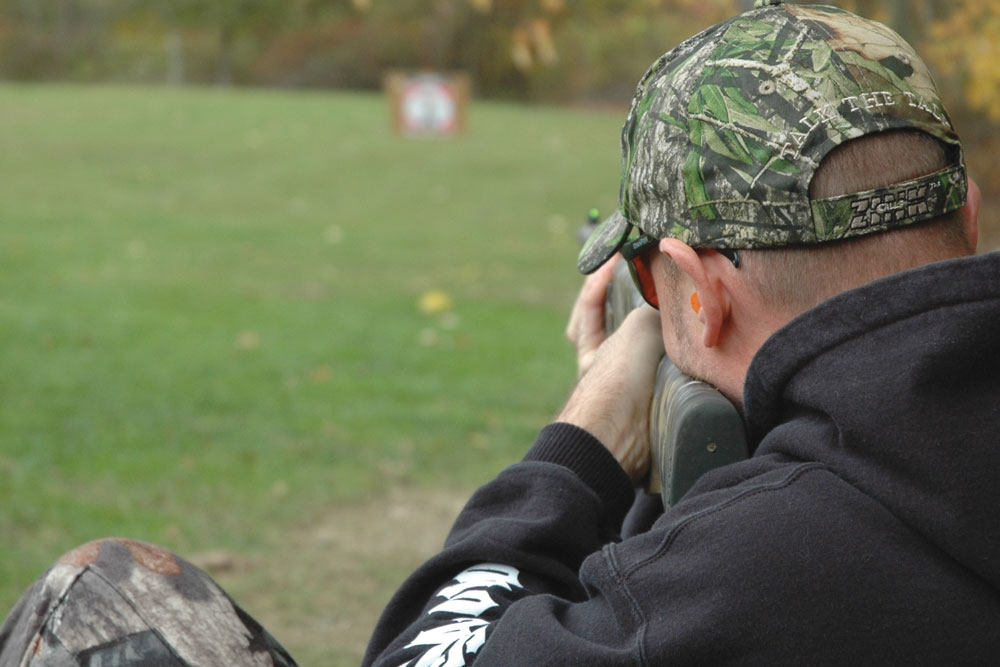
This versatile red dot sight allows hunters to adjust to any conditions, no matter what turkey season throws at them.
Anybody who hunts turkeys understands the venture is far from shooting fish in a barrel.
The jittery nature of the bird alone is enough to send most hunters home empty handed. But even if old Tom is kind enough to let his guard down to come into shooting range, then there is the whole issue of making one of the dicer shots in hunting.
A turkey’s noggin, after all, is about the same size as a baseball. In the heat of battle it doesn’t take much to miss.
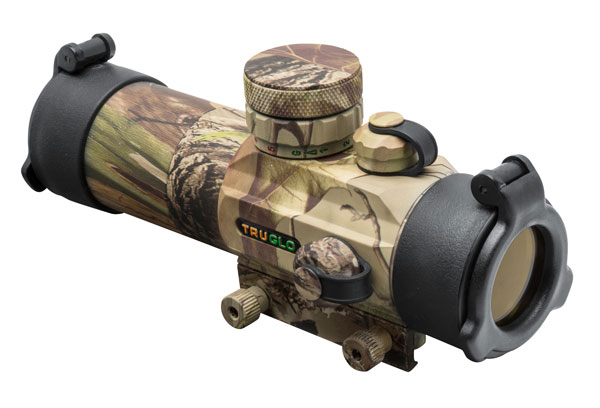
TRUGLO aims to tip the scales when it comes to staying on target during turkey season with its newest red dot sight.
The Triton Gobble Stopper is based on the Texas manufacturer’s tactical Triton optics and incorporates many of its features. Perhaps the most striking is its multi-colored reticle.
The optic can cycle through green and red reticles and also comes outfitted with a brightness control. These are important features, taking environmental factors out of play when drawing a bead and making the shot.
The 3 MOA dot on the circle-dot pattern is perfect for turkey hunting. The circle equals 24 inches at 30 yards, allowing the precise delivery of the bulk of shot on target.
The optic is the usual 1x and has a 30mm objective lens, making it a practical choice for low and full light. It comes with a sunshade to eliminate glare, for those birds that might come in during the midday sun. The guts of the sight are housed in a CNC-machined aluminum tube that has been tested to remain true even on the hardest-kicking shotguns.
The optic is fully adjustable for elevation and windage and a 3v 2032 battery powers it. It is also outfitted with extra battery storage, so hunters never have to worry about running out of juice at the moment of truth. And the sight has a weaver-style mount, making it a simple-to-add accessory to any turkey gun.
Similar to most TRUGLO products, the Gobble Stopper comes at a decent price. Most online retailers have it listed in the $80 to $100 range.
Don’t make the mistake of thinking the thrifty price equates to poor merchandise. TRUGLO has won many fans – especially its Triton series – as a cost-effective optic that delivers. That could spell trouble for long beards strutting around this season.
Smith & Wesson Shield semi-auto handguns, in 9mm and .40 caliber, are very much in demand here with concealed carry and self-defense customers, and sell for $449.
The Sig P238 and P938 are strong movers, too.
“We sell the Sigs as fast as we get them in,” Center Target Sports owner Ed Santos said. The P238 commands $535, the P938 $689.
For accessories, Center Target Sports has seen a great interest in low-powered optics. The AimPoint PRO and T1 Micro red dot sights are very popular, especially with AR shooters, who are always happy to gobble up quality tactical optics.
The only real items that customers are shying away from, Santos said, are long guns and handguns chambered in .22 rimfire. For the fans of the rimfire, there is a fairly obvious reason behind the customers’ aversion to the caliber.
“The lack of rimfire ammo is to blame for that, in our opinion,” he said
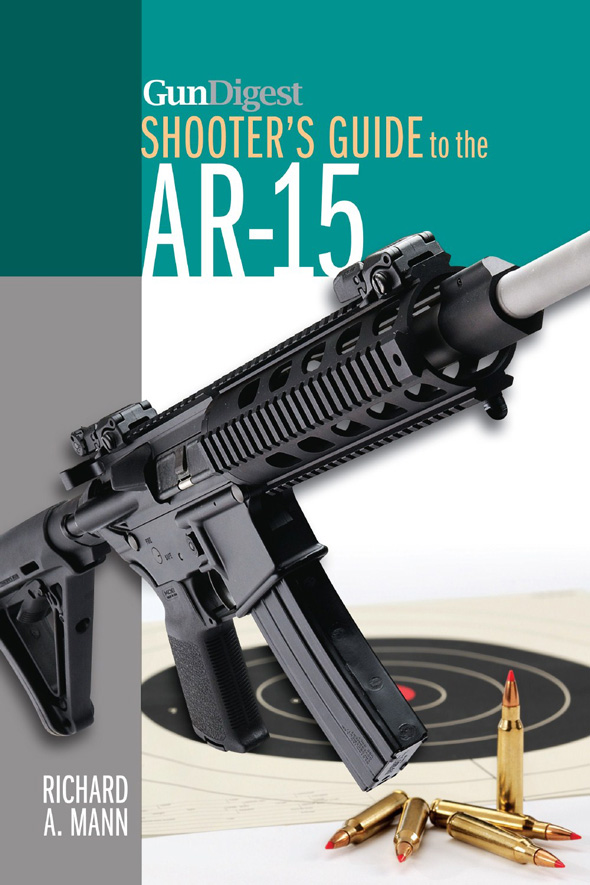
Cincinnati, Ohio (April 2, 2014) – Gun Digest Shooter’s Guide to the AR-15, authored by firearms expert and noted author Richard A. Mann, cuts through the clutter and offers readers a user-friendly look at today’s most popular modern sporting rifle.
This latest entry in Gun Digest Books’ Shooter’s Guide series helps AR-15 owners understand and appreciate the complexity of this versatile firearm.
Supported by hundreds of photos, Mann delivers an explanation of the AR platform, shares the wide range of AR-15 applications available, offers tips on accuracy and ammunition, and much more. Novices and experienced shooters alike will all find something to learn in Mann’s Gun Digest Shooter’s Guide to the AR-15.
About Gun Digest Gun Digest is the world’s foremost authority on guns in print and online. In addition to Gun Digest the Magazine, the brand’s portfolio includes the Gun Digest Books line, Standard Catalog of Firearms, the GunDigest.com online community, and ecommerce specialty store, www.gundigeststore.com. For more information, visit gundigest.com, the Gun Digest Facebook page, www.facebook.com/gundigest, or follow on Twitter @gundigest. Gun Digest is an imprint of Gun Digest Media.
Kris W. Jacob — Bullseye USA, Inc., stores in Castro Valley and Marin, Calif., and Gardnerville, Nev.
At Bullseye’s three retail locations, women have made up 51 percent of the new customer base, noted company president Kris Jacob this past December. And they have made up over half the students in the various firearms classes this FFL offers.
For most of these women shooters, personal defense has been the focus, and at the Nevada store Ruger LCP’s and Smith & Wesson Shields have been very popular.
Not so at Bullseye’s two California locations, as neither of these models is on the California list of “approved handguns,” and therefore can’t be sold in the state.
Here, self-defense oriented customers have tended to buy full-sized Glock 17 and 19’s, as well as Smith & Wesson M&P’s.
Waterfowl and upland hunters at the California stores are especially interested in the Beretta A400 semi-automatic shotgun, not in the least put off by a price tag of between $1,700 and $1,900. “They’re even trading in their old shotguns to be able to get the Beretta,” Jacob said.
It doesn’t matter if you holster a striker-fire polymer or a good old single-action 1911, there are skills that translate over the entire spectrum of semi-automatic pistols and are musts to learn. Tiger McKee goes over a good cross section of these important pistol manipulations in this video.
The founder of the Shootrite Firearms Academy in Alabama touches on the finer points of loading, reloading and dealing with malfunctions with a semi-auto. The pistol training might seem basic, but these skills are among the most vital for those who shoot and carry this style of firearm.
These are fundamentals everybody should aim at mastering and plan on working into their regular pistol training regime. The great thing is everything McKee covers can be done away from the shooting range. Though, it would be advisable to invest in some snap caps if you plan on going over these at home, just to add an extra layer of safety.
Whether you are a newbie building your skill sets or a veteran looking for a refresher, this video has some solid information. Either way, you’d better get ready to keep up. McKee is on rapid fire in this video, packing a lot of training into 3-minutes.
Before you take a trip across state lines, heed this key advice on concealed carry reciprocity before you encounter the police.
Reader “allendavis58” asked about concealed carry reciprocity. (“Reciprocity” refers to certain states that may recognize the concealed carry permits issued by other states.)
Here’s some practical advice from my perspective as a retired cop.
Imagine yourself getting “made” [Someone notices your concealed gun. – Editor] in a state that is not the one that issued your permit. The cops are called. The officer asks you for your CCW permit and says, “I don’t know if this is valid here.”
“But they told me it was when I got it,” you say. “And I checked it on the Internet.”
Most cops couldn’t care less about what is legal in your state of residence. And you need to presume that many cops will not know if your out-of-state permit is valid in their jurisdiction. Do not expect that they have some magic “list” in their patrol car for a ready reference.
Getting a definitive answer on the validity of your permit may take only minutes or it may take a lot longer. Whether you are detained until that is reconciled or let go with an admonition would probably be considered within the realm of “officer discretion” in most areas.
But there is one important thing you can do to make it easier for cops where you travel to send you on your way with a handshake and a smile: Get a citation that documents the reciprocity agreement between your home state and the state in which you’re traveling.
A reciprocity agreement is going to be documented somewhere. It may be in state criminal law or in your state’s Department of Justice rules and regulations.
When you get your permit, be firm that you need a “citation” that documents the reciprocity in the state you will be traveling through.
If you already have your permit, get back in touch with your instructor and ask them to help you find the necessary citations. If the vendor that issues your permit claims multi-state validity as a sales point, the burden of proof is on them to provide citations. Confirm this before you take the class.
Now imagine you are back in the situation described above. If any question exists about reciprocity you tell the officer, “The citation for reciprocity in (state) is DOJ policy 162-(a) 12.” This gives the officer something easy to check and may—I say again “may”—get you a smile and a “No worries, buddy” send off without even doing the check.
We always need to remember that the most important law is the law of necessity. You do what you gotta do.
Just be sure you get a citation for each non-resident state you plan to travel in, even if you have to pay an attorney to research it for you.
Chambered for NAA’s proprietary bottleneck cartridges, these souped-up pocket pistols can be upgraded with a variety of custom features.
North American Arms (NAA) has been providing some of the smallest concealed-carry firearms available since 1971. Their .22 Short, .22 Long Rifle and .22 Magnum Mini revolvers are some of the few handguns available that can be rightfully described as tiny. In 1997, the company expanded their line-up to include a series of stainless steel semi-autos.
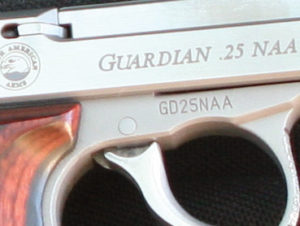
Dubbed the Guardian, this pocket pistol is of a fixed barrel, direct-blowback operated design based on the Seecamp .32 ACP. The first version was the Seecamp-sized small-frame .32 ACP. As the popularity of the pistol grew, North American Arms developed a slightly larger version of the platform designed to fire .380 ACP.
Bottling the Pocket Rocket
The Guardians’ rudimentary standard sights (left) can be upgraded with Gutter Snipe, Novak or XS night sight systems. Author Photo
Recognizing that one of the primary limitations of pocket pistols is the small cartridges they employ, NAA teamed up with Corbon Ammunition to develop and standardize two bottleneck pistol cartridges in order to enhance the Guardians’ stopping power.
For the smaller .32 ACP-sized frames, they produced the .25 NAA that was inspired by the 25/32 JBW wildcat cartridge originally conceived by gun writer J.B. Wood. The cartridge consists of a standard .32 ACP case necked down to hold a .251-caliber slug.
\In other words, the bullet of a .25 ACP is launched by the powder charge of a .32 ACP. The result is a significant boost in velocity. Corbon’s .25 NAA 50-grain full-metal jacket loads leave the Guardian barrel with an average speed of 1,050 fps generating 122 foot-pounds of energy, while the 35-grain jacketed hollow points travel at around 1,200 fps, also with 122 foot-pounds of energy.
Using the same bottleneck approach, the .32 NAA cartridge was developed for the larger Guardian frame.
A standard .380 ACP cartridge case was necked down to hold a .32-caliber bullet. Corbon’s 71-grain full-metal jacket load yields around 1,000 fps and 158 foot-pounds of energy and the 60-grain jacketed hollow point round runs at 1,200 fps with 192 foot-pounds of energy.
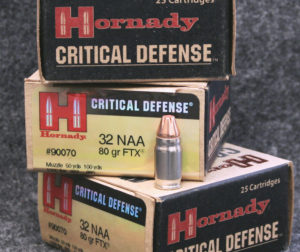
Recently, Hornady introduced a new .32 NAA load topped with an 80-grain FTX bullet, which flies at an average of 1,000 fps with 178 foot-pounds of energy. Although the NAA bottleneck cartridges will not outperform larger cartridges, such as the 9mm, they do exceed the power levels of many standard .32 ACP and .380 ACP loads.
NAA Guardian Features
The Guardian .25 NAA and .32 NAA pistols feature an all-stainless-steel construction assembled with excellent fit and finish. All of the components are constructed of 17-4 ph stainless steel using various methods.
The slide is machined from a 17-4 ph billet, the frame is investment cast and all of the small parts (hammer, trigger, magazine release) are produced using Metal-Injected Molding (MIM). The only polymer to be found on these pistols is in the black pebble-textured grip panels and the magazine base plates.
Hornady knew they could develop a top-notch round for the little pistol, so they have started shipping a .32 NAA round loaded with an 80-grain FTX bullet that travels at 1,000 fps and produces 178 foot-pounds of energy. Testing this new load in the Guardian showed it to be reliable and accurate.
The all-steel construction does make the Guardian a little heavier than some of their competitors, but the guns are exceptionally reliable, sturdy and resistant to the corrosive conditions commonly found with pocket carry.
Standard Guardians arrive from the factory with fixed sights and two six-round stainless steel magazines, one with a flat base plate and the other with a finger extension.
The exposed hammer of the double-action-only firing mechanism provides second-strike capability in case of a hard primer. The external safety system is the same as that found on a double-action revolver. In other words, there are no levers, switches or buttons to fuss with, just the long and heavy 10-pound stroke of the double-action-only trigger.
But there’s no reason to stick with an out-of-the-box Guardian if you have something else in mind. The company provides their customers with a variety of pistol upgrades through their in-house custom shop. New guns can be built from scratch with the features you want or existing pistols can be sent back to the factory for most of the alterations they offer.
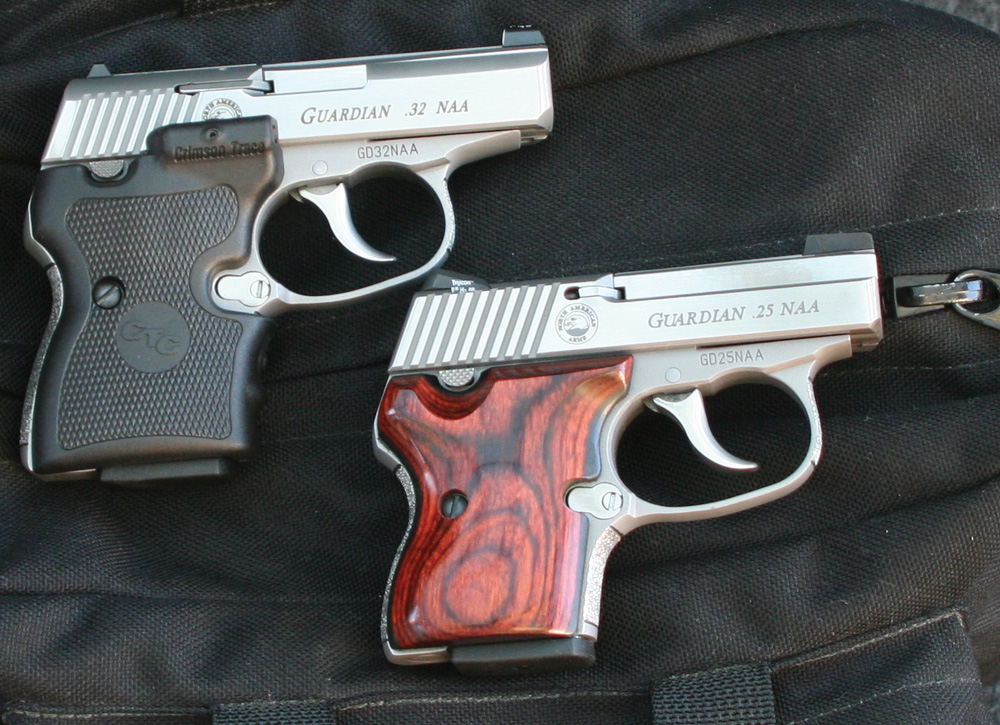
The .25 NAA provided for this review was topped with an excellent set of 3-Dot Novak night sights, and the polymer grip panels were traded out for a set of smooth Hogue Coco Bolo grip panels. The grip frame of this pistol is quite short, with only enough room for a one-finger grip, so the .55-inch-thick wood grips can make the diminutive pistol easier to hold.
The .32 NAA factory sights were replaced by an easy to see XS Big Dot sight set featuring a .16-diameter white epoxy dot front sight with a tritium night sight insert. The grips were replaced with a Crimson Trace LG-441 laser grip, which arrives pre-sighted out to 50 feet.
The grip frames of both test pistols were enhanced with random-pattern stippling applied to the front strap, back strap and the front of the rounded trigger guard.
And because these pistols were ordered from the factory, North American Arms surprised us by adding one of their most popular custom features, namely custom serial numbers. By following a few simple company guidelines, information like nicknames, badge numbers or important dates can all be serialized into the gun. This can make a pistol that is gift for a loved one (or for yourself) truly a one-of-a-kind item.
At The Range
Mastering the Guardian bottleneck cartridge pistols will require the same kind of practice and patience needed to learn the operations of any souped-up pocket pistol.
Small semi-autos with an abbreviated grip frame and a reduced sight radius always require practice. If you are used to shooting double-action revolvers, the long, smooth, 10-pound pull of the double-action-only trigger will feel familiar and will be relatively easy to learn. If you’re a fan of light or single-action triggers, or if you’re new to shooting handguns, then the trigger work will require more practice.
The Guardians tested in this story were made especially for this review with custom Gun Digest serial numbers. Custom serial numbers make these guns a true one-of-a-kind gift.
The .25 NAA produced a relatively mild level of felt recoil, especially for having a short, one-finger grip. On the other hand, the .32 NAA’s recoil was on par with an Airweight J-Frame .38 Special loaded with defense-grade ammunition. In other words, it had plenty of pep but it was not painful to work with.
The Guardians are intended for close-range defensive applications and so formal accuracy testing consisted of firing five five-shot groups from a bench rest into targets set at 7 yards. Pistols of this size are not generally expected to produce tight groups.
However, the Guardians demonstrated top-notch accuracy for up-close and personal protection. The .25 NAA produced group averages between 1.51 to 1.77 inches, while the .32 NAA kept its groups hovering between 1.53 to 1.71 inches in size. Off the bench, it was easy to keep all shots center of mass at 7 yards during defensive drills. Both pistols functioned flawlessly with all of the loads tested.
Why Choose a Guardian?
With so many makes, models and caliber options in pocket pistols to choose from these days, why do the North American Arms Guardian pistols in .25 NAA and .32 NAA warrant consideration?
The Guardians have a proven design with a track record for durability. The all-stainless-steel construction of the pistols can hold up to the rigors of daily carry.
Some pocket rockets demonstrate a tendency to jam, so it’s important to know the pistol and caliber combination that’s in place as a last line of defense is going to work when called upon. Lastly, the bottleneck Guardians feed reliably and generate a significant boost in stopping power when compared to the other cartridges in their size class.
During load development, the Loki Weapons System Patrol Rifle in 300 BLK was fitted with a Leupold Mark 4 6.5-20x ER/T variable to wring out its sub-MOA capabilities.
The 300 AAC Blackout has both military and law enforcement applications and a growing legion of civilian fans to boot.
The Smith & Wesson Model M&P15 – 300 Whisper also chambers .300 BLK.
Advanced Armament Corp. (AAC) and Remington developed the 300 Blackout System to launch .30-caliber projectiles from the AR platform without reduction in magazine capacity, while maintaining compatibility with the AR-15’s standard bolt.
Remington received Sporting Arms and Ammunition Manufacturers Institute (SAAMI) acceptance of the new cartridge in June 2010. AAC officially designated it as the 300 AAC Blackout, or the 300 BLK. The metric designation is 7.62x35mm.
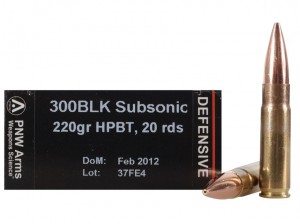
With subsonic cartridges, the 300 BLK produces a low sound signature when suppressed, and the development of 100- to 150-grain full-speed ammunition matches the ballistics of the 7.62x39mm AK. When fired from a 9-inch barrel, the 300 BLK produces more muzzle energy than a 5.56mm M855 round fired from a 16-inch rifle barrel.
The first priority of the 300 BLK was to utilize the existing inventory of 5.56mm NATO magazines while retaining their full capacity. Next, AAC wanted to create the optimal platform for sound and flash suppressed fire.
Another objective was to create compatible supersonic ammo that matches 7.62x39mm ballistics. The 300 BLK also provides the ability to penetrate barriers with high-mass projectiles. Providing all of these capabilities in a lightweight, durable, low recoiling package was what it took to meet the project’s objectives.
A standard M4 bolt is used for the new cartridge, and it matches or exceeds M4 endurance and durability. Compared with 5.56, a 7.62×39 or a 6.8 SPC, the BLK has reduced muzzle flash and “gasses” the shooter less.
When fired from a 9-inch barrel, the 300 BLK produces more devastating terminal effect than a 5.56, and on par with the 7.62×39 or 6.8 SPC.
Increasing Rate Of Fire
Installing a suppressor on a weapon typically increases the rate of fire. When comparing a suppressed to a non-suppressed 10-inch barreled 300 BLK AR to a 10-inch 5.56mm AR, the 300 BLK is a winner.
The average rate of fire for a 5.56 increases 34 percent, from an average rate of fire of 737 rounds per minute (RPM) to 985 RPM when suppressed. A supersonic load in the 300 BLK increases 18 percent, from 821 RPM to 970 RPM. Firing subsonic 300 BLK loads only upped the rate of fire 5 percent, from 746 RPM to 780 RPM.
Additional testing by AAC revealed that the 300 BLK has a point-of-impact shift with and without a suppressor of 1.3 MOA at 100 meters supersonic, and 2.4 MOA subsonic. On the endurance side of the equation, the mean number of rounds between stoppage was 738 rounds for the 5.56, and 640 rounds for the 300 BLK. Barrel life for a 5.56mm is typically about 9,000 rounds, whereas the 300 BLK has passed 30,000 rounds and continues to climb.
When comparing a 9-inch 300 BLK M4 PDW to an MP5-SD3, it really excels. The MP-5 weighs 7.9 pounds, and the 300 BLK PDW weighs 7 pounds when configured with a CTR stock, an H2 buffer and an AAC 762 SDN-6 suppressor with no magazine or sights. The compact length for the MP5 is 26.4 inches, and 31.7 inches with stock extended.
An M4 with stock collapsed and no supressor measures 25.75 inches, and 34.25 inches with a CTR stock extended and suppressor attached. Firepower is where the 300 BLK really excels. The MP-5 fires a 115-grain bullet at 900 fps, whereas the 300 BLK PDW firing a 220-grain bullet at 1,000 fps produces 129 percent more energy at the muzzle and even more down range.
“When people want to shoot suppressed, the MP5-SD3 has become obsolete because it can’t shoot through barriers; from armor, to wall board or windshields,” said Robert Silvers, director of research and development at AAC. “That’s why H&K came out with the MP-7A1, but you can’t make that gun quiet. You can keep an M-4 Blackout quiet, and it penetrates well. And, it makes a good home defense weapon, too. It has more energy than an M4 with a 16-inch barrel, and for people who want to hunt with their AR, it satisfies that, too. The Blackout is extremely versatile and can handle bullets from 110 grains to 240 grains.”
Shooting the 300 BLK
The basic difference between the 300 BLK chamber and the .300 Whisper or .300 Fireball is the length of the throat. The 300 BLK is slightly longer. One of the quirks of the .300 Whisper is the variation in brass thickness among the many makes of 5.56mm ammunition. The 300 BLK’s longer throat mitigates the issue.
When I asked Silvers about the longer throat in the 300 BLK, he said, “The people that don’t like the longer throat seem to always bring that up. We get good results from a test barrel. We shot 10 five-round groups that came in under .85-inch.”
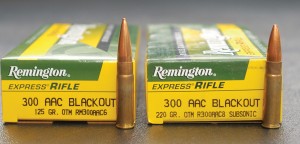
The 300 BLK is a short-range round. When it is zeroed at 100 yards, the 300 BLK, loaded with a sub-sonic 220-grain Sierra Match King, drops nearly three feet when it passes the 200-yard mark. The same zero with a 125-grain Nosler Ballistic Tip bullet traveling at 2,200 fps will drop approximately 7.3 inches at 200 yards.
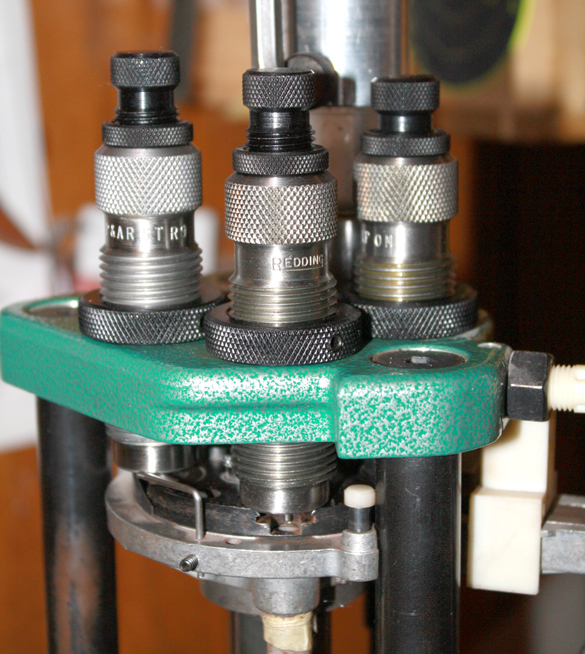
Since Remington hadn’t shipped any 300 BLK ammo prior to my initial testing, I spent some time forming Lake City mil-surp brass with a Redding 300/221 Fireball trim die. I scrounged some .221 Remington Fireball brass, too, for reforming. When I ran across Brad’s Warehouse (bradswarehouse.com) as a source for 300 BLK cases, I jumped on 1,000.
Just as this article was about wrapped up, AAC shipped me an excellent supply of primed Remington 300 BLK cases, too.
My initial loads were educated guesses to determine velocities. Serious accuracy loading would come later. Cases were primed with CCI 400, Federal Small Rifle Benchrest or Winchester Small Rifle primers. I loaded H110, Accurate 1680 or Reloader No. 7 powder for initial testing. An AAC .30-caliber Cyclone suppressor was used for all testing.
Testing AR Platforms
To learn more about the 300 BLK, I tested three AR platforms. I got in touch with AAC and received one of the first barrels available, along with a low-profile carbine-length gas block and gas tube. To build a complete upper receiver suitable for testing, I had Anderson Manufacturing, from Hebron, Ky., mate the AAC barrel with one of their quality upper receivers and hand guards.
AAC’s 300 Blackout AR-15 barrels are 4159 chrome-molybdenum vanadium steel with a 1:8 twist. They utilize a standard M4 barrel extension, and have a high-reliability self-loading specific chamber. The chamber dimensions are slightly larger than found on bolt guns to increase reliability.
Their barrels are treated with proprietary nitride surface treatment on the barrel and extension assembly to give up to a 60 percent longer barrel life than chrome plating the barrel. The treatment improves corrosion resistance, reduces friction and improves accuracy issues, like hard chroming the barrel and creating coating thickness variations. The muzzle is threaded 5/8 24 TPI and comes with a thread protector.
At the range, I attached the AAC/Anderson Manufacturing upper to a Bushmaster lower fitted with an AR Gold trigger, and was ready to send rounds down range. Using a Leupold 6.5-20x Mark 4 scope, I shot several five-shot subsonic 100-yard groups.
The average for 12 groups fired was a hair under 2 inches, with two groups measuring sub MOA. Hornady’s 208-grain AMax, Sierra’s 210- and 220-grain Match Kings all shoot well in subsonic loads.
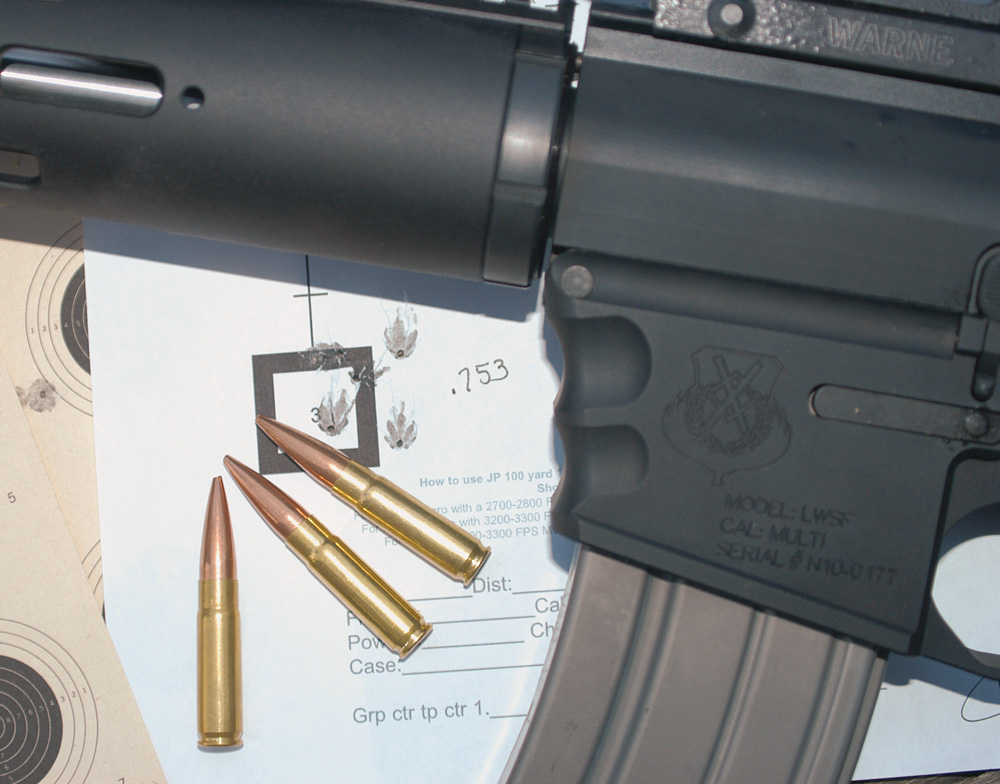
Another carbine tested was a Loki Weapons System Patrol Rifle. In short, this rig is comprised of Loki’s billet upper and lower, an Ergo F93 Pro adjustable stock and Loki’s forend and adjustable gas block set at the carbine position on a 16-inch Satern barrel.
I fired a hodge-podge of reloads trying to find the performers, just as I had done with other rigs. I even tried two Corbon .300 Whisper factory loads. No matter what I threw at it, this rig performed well.
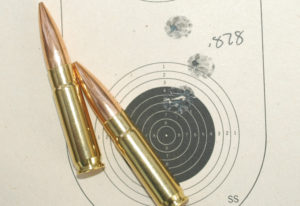
The average of all five-shot groups measured 1.7 MOA. I shot one .753-inch group with a 220-grain Sierra Match King on top of 10.8 grains of A1680. Corbon’s 220-grain SMK subsonic load also shot a .783-inch group. Corbon’s 125-grain .300 Whisper load averaged less than MOA, with the smallest .811-inch.
Today, Hornady has joined the .300 BLK fray with their .300 Whisper loads. These function well in weapons marked 300 BLK or .300 Whisper.
Although I’ve always enjoyed shooting the .300 Whisper, or the .300 Fireball, the new 300 BLK designation is sure to shine some new light on this interesting cartridge. It’s certainly has attracted significant consumer acceptance.
If there is one complaint that tops all others when it comes to inside the waistband holsters it’s comfort.
Anybody who conceal carries is certain to have that drawer or cabinet filled with that type of holster, ones that poked them in the side, never broke in correctly or just didn’t feel right. But a new kid on the block believes it’s found the trick in providing comfort and performance when it comes to IWB carry.
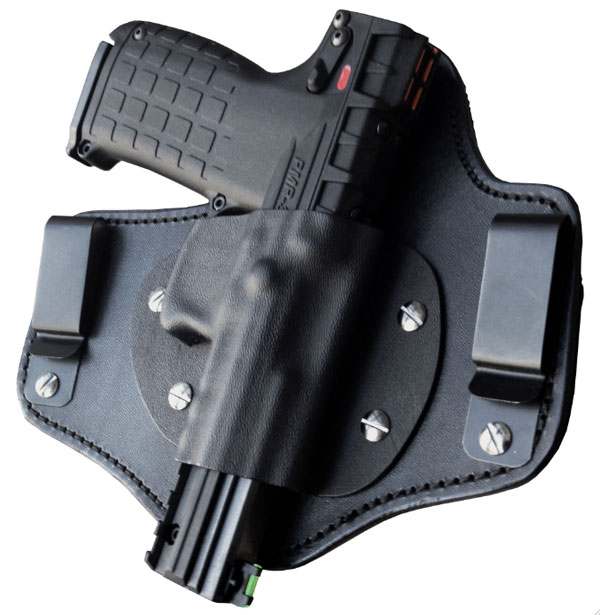
At first glance, Kinetic Concealment appears to offer just another hybrid holster. But at closer inspection, the Tennessee-based company has added a material into the mix that could rub wearers the right way – neoprene.
The holster is backed with the synthetic rubber, which is then covered with a sheet of nylon fabric. The idea is to provide a softer intermediary between the body and the holster, instead of exposing the wearer to they typically stiff, coarse leather backing.
The company points out the neoprene can be used in conjunction with an undershirt, but also can be carried comfortably against the skin. This certainly has the potential to open up wardrobe options, especially in the more hot and humid corners of the country.
The company also touts neoprene’s ability to provide better protection for the gun. The rubber creates a barrier between the wearer and their sidearm, instead of allowing to baste on a long day of carrying.
The rest of the holster is made of materials familiar to most people who carry – leather and Kydex. These have been the staples of hybrid holsters for some time, but Kinetic Concealment has incorporated some features with these old standbys that are certain to catch the eye.
Instead of riveting the Kydex holster to the leather backing, it is screwed into place and has the option to be raised and lowered. As Kinetic Concealment puts it, the Kydex can be set at a “high-ride” or “low-ride” in relation to the waistband. The added benefit to screwing in the Kydex is it also allows for a certain amount of tension adjustment.
Like the neoprene, this feature appears to give greater wardrobe options, helping the holster adapt to clothing. Add in that it has adjustable belt loops that can be set to three different cants, the holster seems like it aim for versatility as much as it does comfort.
The system uses Chicago-style screws, which lie relatively flush and look to cause little wear on clothing. The company offers the holster in both left- and right-hand models. And it comes in fits for almost every major semi-automatic handgun on the market.
Kinetic Concealment’s IWB holster is near the high end of hybrid market, retailing for $76.95 on its website. But if the holster’s comfort and versatility work as advertised it could save money in the long run, not to mention drawer space.
For the past seven years, the online database has given those who cap their own cartridges the chance to research potential loads using the entire arsenal of the powder manufacturer’s products. It’s hard to imagine how Hodgdon could improve on the RDC, but it has.
The Kansas-based company upgraded the database recently, giving it a clean new look and making it more compatible with tablets. But Hodgdon has done more than tweaked the fonts and colors of its online database. The company has made it more user friendly.
The handiest upgrade is how data is presented. Once the different load variables are selected, the data is laid out in easy-to-manage drop-down menus, cataloged by bullet weight. This knocks down a lot of the clutter of the old version, which — with a large amount of data — had all the charm of an actuarial table.
The RDC has also kept current with all of Hodgdon’s products. For instance, data on the company’s brand spanking new Copper Fouling Eraser line of propellents is already available. And given the database’s history, expect the company to stay up on such pertinent information.
Diehard users of the RDC will be happy to find many of the little tricks they used to research loads and powders still viable. One of the slickest is choosing a type of powder, then discovering its compatible calibers. A propellent ubiquitous in a gun collection can save a ton of time, given more than one caliber can be loaded in a session without having to swap out powder from the hopper.
The RDC is far from just a tool identify Hodgdon products, it also provides the all data needed to build a cartridge. The database gives such vitals as minimum and maximum charges, velocity, chamber pressure, case overall length, trim length, among other data for rifle, shotgun and handgun loads. And the RDC’s tips and tricks section is also worth a look; new and seasoned handloaders are certain to find its wealth of information useful.
The RDC has its limitations, the first is it obviously only deals with Hodgdon products. If you don’t fill your hopper with Hodgdon, IMR or Winchester powders the database might be superfluous. And while there is a wide spectrum of bullet makes and styles represented, by no means is the catalog exhaustive. Honestly, though, what reloading manual could ever cover every base?
Hodgdon’s RDC is as good as it gets when it comes to free reloading tools. And with its recent update, the online database has gotten a little better.
TriStar Arms has had great success with its Raptor ATAC personal defense shotgun. Now the company has taken aim at the sporting world, offering the 12 gauge in a turkey hunting model.
Depending on who you talk to, Turkish-made shotguns are either the bane of all scatterguns lovers’ existence or are solid-performing firearms at a great price.
Overall, TriStar Arms’ Raptor ATAC seems to have earned the latter reputation. The Turkish-made semi-automatic personal protection shotgun has been around for a couple years now and has won its share of kudos from value-minded shooters.
It should come as no surprise that TirStar has aimed to build off the gun’s success. The Kansas City, Mo., importer has introduced the tactical shotgun to the sporting world with a model tweaked for turkey season.
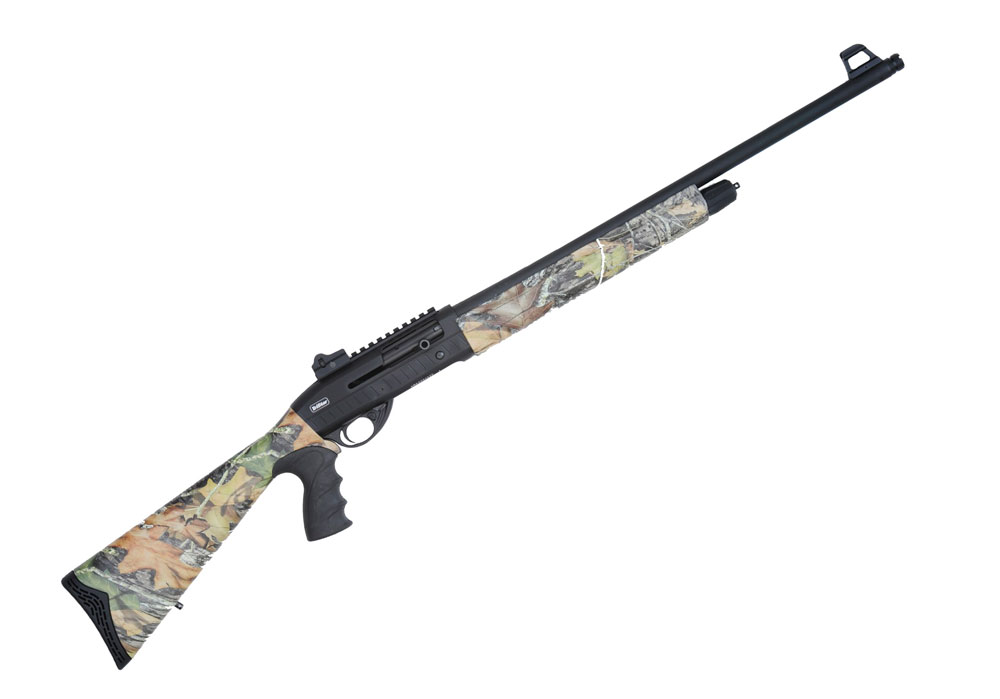
The Raptor ATAC Turkey shotgun is built around the same receiver as its defensive cousin, but it has a number of features meant to make it easier to bag a long beard.
The 12-guage shotgun is patterned in Mossy Oak Break Up camouflage on its stock and foregrip, to keep it stealthy around the jittery birds. It features a 24-inch barrel and chambers five 3-inch shells extending its reach to make the long shot. And it has a removable choke that is fitted with Beretta Mobile threads and comes with one extended turkey choke tube.
The gun comes with all the standard features of the Raptor line, including Picatinny rail for the easily addition of the optic of your choice. But the shotgun is ready to shoot out of the box, outfitted with a ghost ring sight. The chamber and barrel are also chrome lined, prolonging the firearm’s lifespan and making it easier to clean. The MSRP on the Raptor ATAC Turkey Shotgun is $489.
To be certain, the Raptor might not be the first choice for seasoned turkey hunters, whose tastes might run more towards legacy guns that will be handed down to the next generation. But for someone looking to see if they have the taste for the sport, the relatively inexpensive gun appears to be an option.
The question of what a cartridge’s name means is not as clear today as it was back in the good ‘ol days.
Wild Bill Shakespeare tells us that a rose by any other name would smell as sweet. Meaning, I guess, that the names of things aren’t as important as their essence.
Ha! Try telling that to cartridge manufacturers. Quantum physics is a game of Candyland compared to figuring out our American “system” of cartridge names. It wasn’t always so bad. Before the era of self-contained metallic cartridges, life was sunny and shooters hadn’t a care in the world.
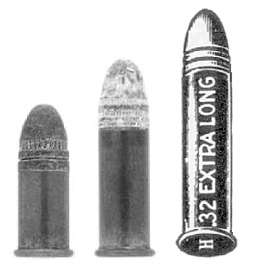
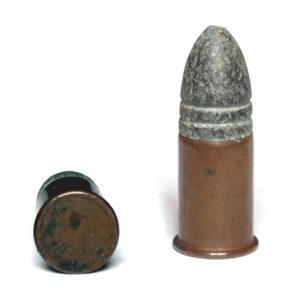
From left to right, the .32 Short, .32 Long and .32 Extra Long. The .32 Extra Short (not shown), for example, was a .32-caliber cartridge that was, well, pretty damn short. The .32 Extra Long (right) was pretty damn long. The .32 Long (middle) was just kinda average.
After all, if you knew the approximate caliber of your rifle, all you had to do was to dump a palmful of blackpowder down the bore, stuff in a spit-patched ball or conical bullet, cap ‘er up, and let fly. Life was simpler then. The sky was crusted o’er with bluebirds. Dan’l Boone wore a big toothy smile, and injuns grinned and waved as he shot them.
Things were almost as straightforward when the combustible paper cartridge briefly superseded loose powder and shot during the Civil War. Used in guns such as the Sharps carbines and infantry rifles, the combustible cartridge was nothing more than a powder-stuffed paper tube tied to a bullet.
These paper rounds looked like scaled-down Dutch Masters panatelas and smelled almost as good when they burned. You distinguished one from another pretty much by pointing your finger and saying “this one” or “that one.” But they worked just fine, though they sometimes got wet, fell apart, or obstinately failed to combust.
But the paper cartridge was obsolete before it even got started. Years earlier, in the 1840’s, some anonymous European tinkerer had stuffed a .22 round ball into a percussion cap, and voila! the metallic cartridge was born. It was a monumental technological step forward, but before long the waters had become hopelessly muddy, especially in regard to distinguishing one cartridge from another. The only way to do that was with a name, and therein lay the rub.
Many of the earliest metallic rimfire cartridges, all of them by necessity blackpowder, bore honorific names indicating the inventor of the rifle for which they were chambered. These names were always informative but rarely memorable, to wit: .44 Henry Flat, .56 Spencer, .58 Miller. If you carried a Miller rifle, you needed a Miller cartridge, and that was that. You were safe as long as you could read a cartridge box.
Other early rimfires bore bland dimensional names that gave you a rough idea of their relative length and hence power: .32 Extra Short, .32 Short, .32 Long, .32 Long Rifle, .32 Extra Long. Some of these latter cartridges might have reached a length of several feet had the supply of adjectives held out. What these early names lacked in romance they made up for in meaning.
The .32 Extra Short, for example, was a .32-caliber cartridge that was, well, pretty damn short. The .32 Extra Long was pretty damn long. The .32 Long was just kinda average.
But such simple nomenclatural logic started falling apart in the mid-1860’s when bottlenecked cartridges were invented. Because many of the early lever-action repeaters were restricted to fairly short cartridges, the only ways to cram more powder behind a bullet were to blow out the case shoulder or squeeze down the case neck, both of which also improved headspacing and feeding.
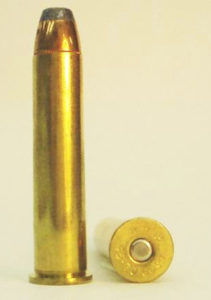
The 56-56 Spencer. The first number referred to the caliber of the original straight case; the second to that of the necked-down derivative case. Or something like that. Photo by Hmaag.
Thus when Christopher M. Spencer necked down his original straight-cased .56 Spencer rimfire to .46, he thought it proper to call the new smallbore round the .56-.46 Spencer, combining both its names in the hyphenated style so common nowadays in chic yuppy marriages. The first number referred to the caliber of the original straight case; the second to that of the necked-down derivative case.
So far, so good. But Spencer soon realized that folks might confuse the .56-46 with his original .56, so he took to calling the earlier round the .56-.56 Spencer. This retroactive christening may have enlightened some shooters, but it left others looking in vain for a bottleneck that wasn’t there. To alleviate some of the mess he had created, Spencer helpfully referred to the .56-.46 cartridge as both the “#46” and the “46/100” in his catalogues. Good old #46.
Realizing that his supply of numerals was virtually inexhaustible, Kit Spencer fell victim to a mad frenzy of bottlenecking. Before the end of the decade, you could buy a Spencer rifle (the gun you “loaded on Sunday and shot all week”) in .56-.56 Spencer, .56-.52 Spencer, .56-.50 Spencer, or .56-.46 Spencer. And those were just the fifty-sixes! Within a few years, Spencer’s bottleneck fever had spread to a promising upstart, former shirt manufacturer Oliver Winchester, d/b/a Winchester Repeating Arms, Co.
Ever the innovator, Ollie Winchester modified B. Tyler Henry’s .44 Henry Flat rimfire into a centerfire in 1873, crimped on a tiny bottleneck, and gave the world the .44-40 Winchester (aka .44 WCF). He was just getting warmed up.
Flinging his cravat to the floor and hollering, “Don’t stop me, boys!” Winchester then bottlenecked the already-bottlenecked .44-40 even further, which resulted in the .38-40 Winchester (aka .38 WCF). Now shooters had to digest a new nomenclatural pattern quite unlike Spencer’s, one in which the first number (e.g., .44 or .38) referred to caliber and the second (e.g., 40) to the cartridge’s black powder charge expressed in grains.
Over the years, Winchester and his minions begat a brood of hyphenated cartridges (.40-65, .40-72, etc., etc., etc.) that still leaves us scratching our heads today. The last known outbreak of bottleneck fever ravaged New Haven, Connecticut, in 1882, leaving the .32-20 WCF and .25-20 WCF in its wake.
The .45-70-405 Government cartridge of 1873 combined a 405-gr. .45-caliber lead bullet with 70 grains of black powder.
Confusing as they sometimes were, at least the old blackpowder cartridge designations meant something. They had to. Back in those days, you couldn’t just saddle up Ol’ Bo and gallop over the ridge to the nearest Wal-Mart when your rifle ran dry.
You had to handload your ammunition, pilgrim, and you better know how to do it. Many of the old blackpowder cartridge designations were really just cheat-sheets that told you how to put together a given load. The .45-70-405 Government cartridge of 1873, for example, combined a 405-gr. .45-caliber lead bullet with 70 grains of black powder.
The .45-90-405 was a longer version of the Government with an extra 20 grains of blackpowder. The massive .50-140-3-1/4 Sharps of 1880 threw together a .50-caliber bullet, a whopping 140 grains of blackpowder, and a 3-1/4”-long brass case. I assume you hired someone to fire it for you.
Things got a little gray in 1895 when the first American smokeless cartridges, the .30-30 and .25-35 WCF, hit the stores. Judging by name alone, you might think that these were old-formula blackpowder cartridges like the .44-40 and .38-40, but not so. The “-30” and “-35” represented the grain weight of the cartridges’ smokeless powder charges.
Not that the industry actually encouraged anyone to go out and reload the new smokeless cartridges. William T. Lyman, in his Ideal Handbook, implied that the new-fangled powder was only a little less touchy than nitroglycerin. Everybody was ignorant about the new “whitepowder,” as it was called in those early days, and cartridge manufacturers had nightmares about Farmer Brown over in Zanesville topping off a .30-30 case with Dupont smokeless shotgun powder and blowing his durn fool head clean off.
Anyway, the smallbore, fast-twist .30-30 and .25-35 rifles became hopelessly clogged with fouling if blackpowder was used in them, so Winchester hit on a happy idea that no doubt tickled Bill Lyman: the .32 Winchester Special of 1895. The .32 WS was a smokeless cartridge meant to be reloaded with blackpowder. It’s still a good deer cartridge, especially (as Frank Barnes says) “for those who don’t believe that smokeless powder is here to stay.”
In those waning days of the 19th century, two commandments governed the firearms industry:
I)Thou shalt not underbid a government contract. II)Thou shalt not put a competitor’s name on thine own product.
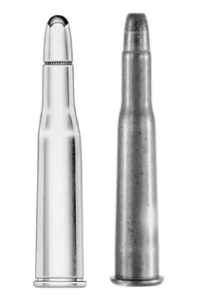
When the .25-35 Winchester of 1895 (left) appeared to be enjoying healthy sales, Marlin jumped into the fray with their own version, the .25-36 Marlin (right). (That “-36” was supposed to fool everybody.)
For this last reason, every successful new cartridge was viciously knocked-off by the competition, usually in slightly modified form to avoid charges of plagiarism.
For example, when the .25-35 Winchester of 1895 appeared to be enjoying healthy sales, Marlin jumped into the fray with their own version, the .25-36 Marlin. (That “-36” was supposed to fool everybody.) The Marlin round’s case dimensions differed enough from the Winchester’s that the two were not interchangeable, as some oafish shooters discovered when their rifles wouldn’t feed or eject properly.
Remington, which didn’t offer a lever-action design, had to sulk in its corner until 1906, when they introduced a rimless version of the .25-35 in their famous Model 8 autoloading rifle. The new Remington cartridge, called (surprise!) the .25-35 Remington—later the plain old .25 Remington–was one of three Remington rimless clones of well-established Winchester rimmed rounds, the other two being the .30-30 and .32 Remington. A fourth chambering, the .35 Remington, appears to have been original.
Sometimes fin-de-siecle smokeless cartridges were named to avoid confusion with existing blackpowder cartridges. We’ve seen that the .32 Winchester Special really was special, in a dumb kind of way, but ever wonder what’s so special about the .38 Special?
Today, it doesn’t seem very remarkable at all, but when it was introduced in 1898 it seemed, well, special when compared to the shorter, slower .38 S&W blackpowder round introduced in 1871. (To make matters worse, the .38 S&W itself later became known as both the .380 and the .38/200. Take your pick.)
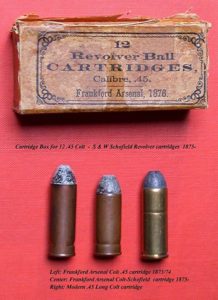
Similarly, the .45 Colt cartridge of 1873 used to be called the .45 Long Colt, at least in non-military circles. The “Long” distinguished it from its “short” counterpart, the .45 Schofield, which was chambered in the huge S&W Army Model top-break revolver designed in part by Major George W. Schofield.
Later, the “Long” seemed a conversational necessity to avoid confusion with the shorter, smokeless .45 ACP, first chambered in a subdued form in the 1905 Colt Automatic Pistol, and the .45 Auto Rim, chambered in the no-nonsense 1917 Smith & Wesson and Colt army revolvers.
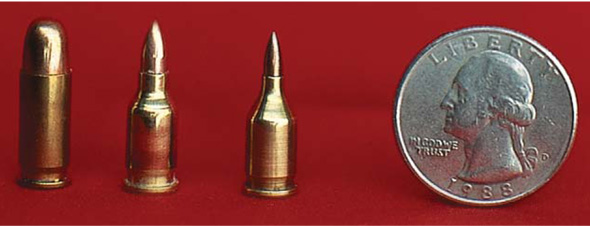
Wildcat cartridges have some of the niftiest names. Take Bill Eichelberger’s 10-caliber or 14-caliber wildcats, for example. Shown next to a factory 25 ACP case are the 10 Eichelberger Dart, and its bigger brother, the 14 Eichelberger Dart. The little brother can send a 10-caliber, 7.2-grain bullet to over 3000 fps; the larger sibling pushes a 14-caliber, 10-grain projectile to almost 3000 fps. Photo courtesy Cartridges of the World, 11th Edition.
Flowing through this verbal muck was the curious convention that the term ”.45 Colt” always referred to a cartridge while “Colt .45” always referred to a gun. But which gun? The Colt 1873 Single Action Army, the Colt 1878 Double Action Revolver, the Colt 1917 Army revolver, or the Colt 1905 or 1911 automatic pistols?
The term ”.45 Colt” always referred to a cartridge while “Colt .45” always referred to a gun. But which gun? The Colt 1873 Single Action Army, the Colt 1878 Double Action Revolver, the Colt 1917 Army revolver, or the Colt 1905 or 1911 automatic pistols? Photo by Hmaag.
Such ambiguity could have caused endless confusion in the trenches of No Man’s Land: “Quick! The Hun’s coming over the top, private! Toss me that Colt .45! No, not that one—that one! No, not that one! That one! No, that one! Now throw me that box of .45 Colt. No, not that one–that one! No! Not that one, you idiot!—whoops!” It’s a wonder we’re not all speaking German, nicht wahr?
After the end of the first War to End All Wars, talented tinkerers began wildcatting existing rounds into cartridges offering superior performance or greater efficiency. With forgivable vanity, these ballistic cowboys often stamped their own names on their latest creations.
Today everyone has heard of the competent .25-06 Remington, but who remembers that it first saw the light of day in 1920 as the .25 Niedner, named after its inventor, A.O. “Pop” Niedner of Dowagiac, Michigan?
Possibly to compete with the wildcatters, the major ammunition manufacturers toyed for an all-too-brief period in the ‘30’s with jazzy, art-deco names for their latest creations: .22 Hornet, .220 Swift, .219 Zipper, .218 Bee. The last great cartridge name of this sort was the .221 Remington Fireball (1967), chambered in the Remington XP-100 bolt-action pistol. None of these stylishly-named cartridges set any sales records, however, and manufacturers have since reverted to humdrum proprietary names such as the .416 Remington and .450 Marlin. Yawn.
Savage seems to have been something of an iconoclast when it came to naming new cartridges. One of the very few manufacturers to break the Second Commandment when it chambered its Model 1899 lever-action in .30-30 Winchester, Savage had a knack for giving its proprietary cartridges rather sexy names.
In addition to the High Power and the Imp, Savage was responsible for the .250-3000 Savage. This was not a .25-caliber case crammed with 3000 grains of powder (oh, don’t be silly) but an excellent .25 that blasted an 87-grain bullet out the spout at the unprecedented velocity of 3000 feet per second. Later, when velocity dropped below 3000 fps with a 100-grain bullet, Savage emasculated the name into the plain old .250 Savage.
Of course, if one name doesn’t work out, you can always try another. Case in point: the .244 /6mm Remington. When Remington introduced the .244 in 1956 to counter the .243 Winchester, they assumed that its primary use would be as a varmint cartridge in their slow-rifled Model 740 semi-auto rifle. Winchester, on the other hand, marketed the .243 as a combination varmint/medium game cartridge and rifled their guns with a slower 1:12 twist to stabilize the .243’s longer deer and antelope bullets. Voting with their wallets, the shooting public favored the .243 ten-to-one over the .244.
Calling time-out and going into a quick huddle, Remington decided to re-rifle the 740 for the more forgiving 1:12 twist. By that time, however, the .244 had gathered considerable unwanted PR baggage, so Remington decided to change the name of the cartridge to the 6mm Remington. The rest, as they say, is history.
Remington must have felt a bit of deja-vu in regard to their excellent .280 Remington. Twenty years after its 1959 introduction, Remington’s marketeers decided to capitalize on the 7mm craze by relabeling the .280 the 7mm Remington Express.
The .218 Bee — a jazzy, 1930s art-deco name if ever there was one.
The wisdom of this strategy was no doubt incontrovertibly proved in reams of corporate memos and white papers. When sales of the Express began to smell bad, Remington wiped the egg from its face, did a few months’ penance, and reintroduced the Express as—ta da!—the .280 Remington. Which just goes to show that, as Emerson said, it’s funny how things work out sometimes.
Even the most dull-witted shooter, among whose ranks I occasionally number, realizes that a cartridge’s given caliber designation needn’t bear any relation to the actual diameter of its bullet.
The .357 Magnum is just a long .38 Special, which is pretty much a 9mm, which is actually a .356-caliber, which dimension is also applied—now, keep up with me here—to the .356 Winchester rifle cartridge, which uses the same size bullet as the .358 Winchester, the .35 Remington, the .350 Remington Magnum, and the .35 Whelen. But don’t you dare confuse any of these thirty-fives with the .351 Winchester Self-Loader, which was, surprisingly, actually a .351-caliber. Somebody in New Haven must have got himself fired for that one.
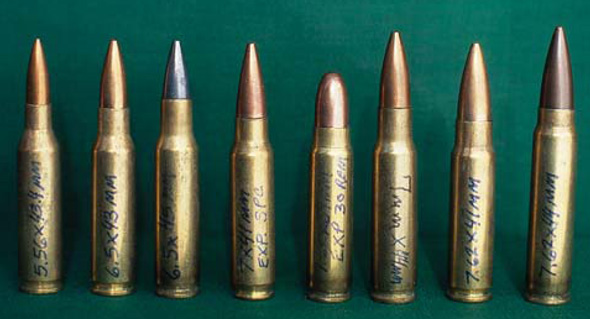
The .308 Winchester is considered a .30-caliber, as are the .30-30, the .300 Winchester Magnum, the .300 H&H, the .300 Weatherby Magnum, the .300 Savage, the .30 Carbine, the .30-40 Krag, the .30 Remington, the .30 Mauser, the .30 Luger—but also the .303 Savage, the .307 Winchester, the 7.5 French MAS (how did that get in there?), and of course the .32 ACP, which is also known as the 7.65–not to be confused with the 7.62, which is just another name for the .308 Winchester, which is where we started in the first place. If this makes sense, you may have a career in the ammunition industry.
Lately, in the pre-dawn hours when every paranoid fantasy seems not only plausible but imminent, I’ve been waking up in a clammy sweat, fresh from nightmares about hideous wildcats. The .50-140-3-1/4/.38-40 Sharps-Winchester. The .45-.45-.45/.38/.32 Colt & Wesson. The .58/.25 Henry Miller Gallager Spencer Sharps Winchester. The 7.65/7.62/7.5-.458 Necked-Up Magnum.
I’d chalk it up to indigestion if it weren’t so close to the truth.
In this Taurus CTG29 review, the author found the carbine to be both fun and ideal for home defense.
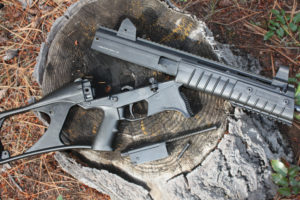
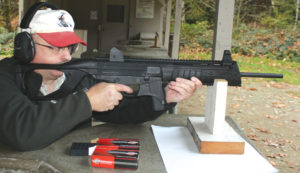
Chambered in both 9mm and .40 S&W, the newly released Taurus CTG29 carbine is a combination of rugged synthetics and alloy steel that seems tough enough for all kinds of endeavors, from tactical competitions to plinking and home defense.
The Taurus CTG29 carbine is chambered for the 9mm and the .40 S&W cartridges, and is a combination of alloy steel and synthetic that should be right at home in tough climates. Easy to field strip, the CTG29 comes apart pretty much like an AR-type rifle.
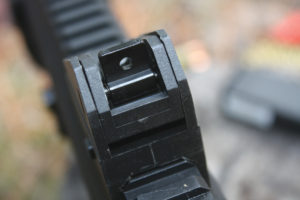
Hitting the scale at 6.6 pounds empty, this new semi-automatic carbine has a full-length Picatinny-type rail on top with detachable front and rear high-profile sights, ambidextrous safety switch, a pair of 10-round detachable magazines, 16-inch barrel and synthetic skeleton stock. The rear sight is adjustable for windage and elevation, and features both peep and square notch with white outline apertures.
The carbine also comes with a sling and rugged hard carrying case with interior foam padding, plus a hefty cable lock for security. You will also find a cable cleaning tool with brush and slotted patch jag.
The case has four latches and may be locked for travel.
The CTG29 features a straight blowback-operated system and fires from a closed bolt position. The cocking handle is on the left side of the gun ahead of the main receiver, above the barrel when it arrives, but it is reversible to allow charging with the right hand instead. As a right-handed shooter, I just left it where it was.
There is also a molded rail at the bottom of the forend handguard, which is designed for mounting additional rails on either right or left side. I have never seen the need for tricking out an urban carbine with all kinds of accessories. They add weight to the firearm and it is not clear what other tactical advantage that they provide.
Rear sight is adjustable for windage and elevation, and features both a square notch and peep apertures.
One might fit a laser on one side and a flashlight on the other for work in the dark or subdued light, of course, because a lot of shooters utilize those things.
Because of the weight of this carbine, recoil is negligible to non-existent. I fired a fair amount of ammunition through one of two test rifles, and frankly, I cannot recall noticing any recoil at all. It’s probably comparable to a .22 Long Rifle semi-auto, though certainly louder.
One thing I noticed after several rapid-fire drills was that the breech and muzzle smoked pretty well. That may be a result of different propellants in the ammunition I used.
Out to 100 Yards
Because the 9mm and .40 S&W are capable of longer-range effectiveness, it would not be out of the realm of good sense to shoot at a target out to 100 yards, and since mounting a scope is possible with the new Taurus, it will not be surprising to see someone do this.
Disassembly is accomplished by sliding out (from right to left) the rear-retaining pin that holds the top end of the receiver to the bottom. The top pivots forward as on an AR platform, and the bolt assembly is withdrawn at the rear.
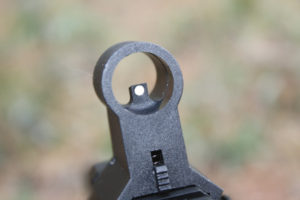
Front sight is a simple post with white dot protected by a synthetic ring.
My test gun was chambered for the 9mm round, and the gun went along with me on an early October big game scouting trek in central Washington’s Cascades. It rode around on some pretty bumpy roads and ate a lot of dust, and that didn’t seem to bother it.
My judgment is that this carbine would be a good fit for someone in need of a tough little gun to have in an emergency, and since ammunition supplies are beginning to loosen up a bit, keeping the CTG29 running should not be a problem. It will be even less a problem for anyone who reloads.
For home defense in both rural and urban settings, one could do worse than a carbine that fires either the 9mm or .40 S&W cartridge. There is a variety of ammunition available in either caliber, and my guess is that it will all cycle, as I ran this gun with both hardball and hollow-point 9mm rounds. I’d also suggest that the longer carbine barrel should get the most out of either pistol cartridge.
Ergonomically, this is a well-designed firearm, with a textured grip surface on the front end of the extended magazine well that allows for a non-slip handhold. That didn’t impress me as much as the ample magazine release, which is a rather large toggle confined in its own little space behind the magazine well. Positioned this way, it should be nearly impossible for the magazine to be accidentally released.
Shooting the Taurus CTG29.
The buttplate is grooved to help prevent slippage on the shoulder, and it is pretty tough. Overall length of the G2 is 36 inches, and one thing I quickly learned about it is that the sight radius can be changed a bit from its factory-set 12.6 inches. I ran the rear sight back to 15 inches by simply pressing upward on the keepers on both sides of the rear sight housing and working it back along the rail.
Tight Groupings
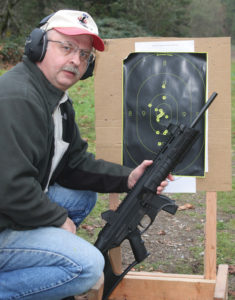
At 25 yards, I was able to pull in a couple of pretty tight groups using nothing but the factory sights. No doubt with a scope on this gun, one would be shooting one-holers all day long at twice that range, and probably not bad out to 100.
Out on the trail, I opened up on a pumpkin at 50 yards with a couple of rounds fired off hand and popped that orange blob both times.
One thing I noticed was that the double-stack magazines get pretty stiff to load as you top them off with the ninth and tenth rounds. That’s why it might be a good idea to invest in a magazine loading tool.
Before anyone thinks these are merely pistol magazines, guess again. They appear to be proprietary to the carbine. They are tough, made from steel with bright yellow followers and flat base plates, and may be disassembled for cleaning.
For predator control, the 9mm or .40 S&W both pack a punch, and that goes for predators of the two-legged variety as well as coyotes and other varmints. Because of its short overall length, this carbine will swing well in tight spots, fit in any truck or SUV, and ride along virtually anywhere a firearm might be needed.
The author plugged this Birchwood Casey target using factory sights.
The owner’s manual includes a complete schematic and parts list so the home gunsmith can tinker with this Taurus. If you have the chance to fire one of these guns before buying, take it for a test run. You just might be surprised.
Solid preparation helps ensure success during turkey season.
Because the main tool of turkey hunting is a shotgun, some hunters get the false impression that it produces a large pattern of shot, making it easy to hit a target. So, they tend to skip shooting practice. But with fine-tuned barrels and high-tech shotshells designed to take down gobblers beyond 40 yards, that way of thinking is far from reality.
Be Sure Your Gun Will Deliver
The first task is to ensure that your shotgun setup produces the best shot pattern possible. Whether you prefer a 12- or 20-gauge, or a 3½-inch or 2¾-inch shotshell, the golden rule for choosing a turkey shotgun is to select a gun that you’re confident in and comfortable shooting.
A Helpful Sight
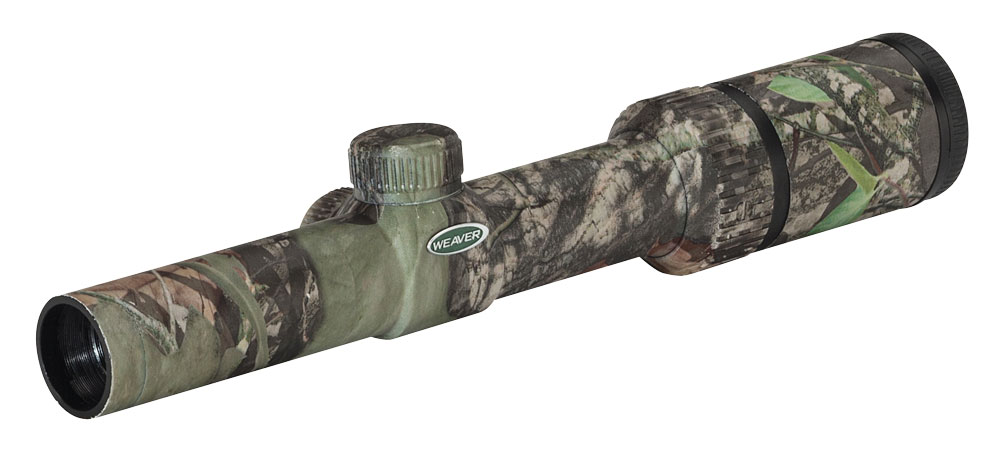
Weaver Kaspa VZT Turkey Scope.
Tight patterns delivered by constrictive turkey chokes mean you’re trying to hit a baseball-sized head with a basketball-sized swarm of small pellets at long distances. An upgrade in shotgun sights will improve your success rate. There are many turkey-specific sight systems available. Rifle-style peep sights and electronic red-dot-type sights are popular choices among turkey hunters. A magnified scope with a turkey-specific reticle might be the best option because it lets you fine-tune your shot pattern. Using the scope’s elevation and windage turrets, you can move the gun’s point of impact so the densest part of the pattern is at the point of aim.
Advanced Ammo
Vary your shot sizes and brands from several distances, and stick with the one that gives you the most consistent pattern. That said, it’s next to impossible to get good long-range patterns out of inexpensive lead loads. Products that incorporate advanced technology and high-grade shot produce the best results. For example, Federal Premium Heavyweight turkey loads feature the innovative FliteControl wad, which helps ensure tight patterns downrange. This is coupled with Heavyweight pellets, made of an ultra-dense tungsten alloy that is 15 percent heavier than lead to provide greater downrange velocity and knockdown power.
A Tight Choke
Typically, too much choke constriction causes the pellets to become deformed and inaccurate. Too little choke can throw your pattern too wide, leaving little density in the kill zone. You might find something that delivers better results. In general, more open choke constrictions are better suited for larger pellets, such as No. 4s. The tighter chokes in the .640- to .655-inch range are designed for smaller shot, such as size No. 7. Don’t be afraid to keep experimenting with various choke and shot size combinations.
The National Wild Turkey Federation, among others, suggests the ideal pattern for turkey hunting is 100 pellets in a 10-inch circle at 40 yards. Note that it’s also important for this pattern to be spread out consistently. Large gaps within that 10-inch circle could cause a miss.
Don’t just spend time shooting off a bench.
Practice in Realistic Scenarios
Ditch the shooting rest and make your practice sessions as realistic as possible. Step away from the shooting bench, and practice while sitting on the ground with a solid backstop behind you, just like you’re sitting up against a tree during a real hunt. You should have at least one practice session wearing your hunting clothes and vest. If you plan on using specialized accessories, such as a monopod or a padded shooting rest that attaches to your knee, you need to practice using those, too.
Practice Your Shot Repetitively
To become proficient at other shotgun sports — such as trap, skeet and sporting clays — athletes take thousands of practice shots before competing. Turkey hunters can benefit from repetition, too. Master the physical acts of flipping the safety, accurately placing your aim, steadying your shot, taking a deep breath and properly squeezing the trigger.
For repetitive shooting practice grab a box of clay targets and less expensive target ammunition. Standard clay targets are roughly the same size as a gobbler’s head, about 4 inches in diameter. For a greater challenge, choose mini-sized clays that are about 2 inches in diameter. The simple way to set up stationary clay targets intended for turkey training is to sharpen the ends of several 2-foot sticks, shove them in the ground and hang the targets from them. Try putting some brush or other obstacles in front of some of the targets to make for more realistic hunting scenarios.
Train and Condition
Turkey hunting is a physical activity that you should train for just like other athletic sports. You should train and condition yourself to be in good physical condition before hunting season, because to make a good shot, you need strength and endurance. During shooting practice at the range, pack your favorite mouth call. Sound off a long, loud calling sequence until you’re huffing and puffing, and then take aim at a distant target and squeeze off a shot. Run a few short sprints in the parking lot, knock off a dozen pushups, or jump rope for a few minutes until your heart is pounding and you’re breathing hard, and then immediately sit down and practice your shot.
Whether it’s a day at the range or an afternoon plinking tin cans, Americans love to shoot.
That isn’t news, especially for anybody taking the time to read this post. What might come as bit of surprise, however, is what sort of money American’s shell out to thumb off a few rounds each year. According to a new report by the National Shooting Sports Foundation, it’s no small potatoes.
When just the retail aspects of target shooting are calculated – guns, ammo, range time, etc. — it turns out Americans spend some $9.9 billion annually – more than the NFL’s yearly revenue. That’s pretty impressive, but it is dwarfed by the sport’s overall scope in the economy. If the total amount of spending that occurs in the economy as a result of target shooters’ spending is taken into account — what is known as the multiplier effect — the numbers become somewhat mind boggling:
As target shooters’ dollars exchanged hands, $23 billion in economic activity was created, producing $3.5 billion in sorely needed state and federal tax revenues.
The report estimates target shooting supported 185,402 jobs across the United States in 2011. When hunting is included the monetary and employment impacts of gun sports go through the roof:
Collectively, these two industries generate $110 billion in economic output and support 866,339 jobs. That’s more jobs than the combined employees of IBM and McDonald’s.
Target shooting is a strong economic driver in America.
Some other notable points from the report:
The average target shooter spends 22 days in the field or at the range.
Nebraska target shooters spent the most time thumbing rounds off with 38 days of participation each. Arizona and Oregon spend the second and third most time shooting, 36 and 35 days respectively.
Californian shooters spent the most, shelling out $843 million annually. The next two biggest spending states are Texas ($812 million) and Pennsylvania ($483 million).
The average spent per shooter each year is $406; the top three categories for spending are firearms ($194), ammunition ($58) and range fees ($35).
When it comes to target shooting, rifles and handguns are roughly tied as the most popular firearm.
LaserMax set to give a year’s supply of ammo.Those familiar with LaserMax know what the company brings to the table — some of the shooting world’s most innovative laser sights. But the company might soon be known for something else — ammo.
No, LaserMax is not expanding its reach into the shooting world by manufacturing ammunition. But in celebration of its 25th anniversary, the New York-based company aims to give nearly a factory-worth of ammo to some lucky shooter.
LaserMax’s will award the winner of its Spring Ammo Sweepstakes a year’s supply of ammo, which is a prize any gun owner can get excited about, given its short supply as of late. But the company has more reasons than the tight market in selecting ammunition as the award. LaserMax sees keeping shooters shooting as emphasizing the importance of training in maintaining the skill at arms.
“There is simply no substitute for getting adequate trigger time,” LaserMax spokesperson Celia Crane said. “The high prices and limited availability of ammunition has created a barrier to live fire training, which is crucial for the development and maintenance of a shooter’s firearm proficiency.”
LaserMax manufacturers a number of different styles of laser sights for handguns and rifles, including rail-mounted, and guide rod and frame mounted models. The company also has a full line of accessories that work in conjunction with firearms outfitted with laser sights.
LaserMax’s Spring Ammo Sweepstakes ends June 20 and a winner will be chosen at random. For more information on the sweepstakes, please visit LaserMax.com or the company’s Facebook page.
Looking to go armed, but are stuck in the weeds as to what to arm yourself with? Here are 20 of the best concealed carry gun options that will keep you on the defensive.