Home Blog Page 257

Magnum Research .22 Rifles Now Dressed in a New Stock

0
Magnum Research has unveiled a new black walnut stock on its .22 rifles.

Magnum Research .22 rifles now have a classy new look with the addition of black walnut stocks. In addition, the stock has some interesting ergonomic features.

Magnum Research is best known for its heavy-hitting selection of pistols. But the Minnesota-based manufacturer has a lighter side.

The subsidiary of Kahr Arms also has made a name for itself as a top-notch maker of rimfire rifles. And recently, it has given one of its more popular models a fairly classy makeover.

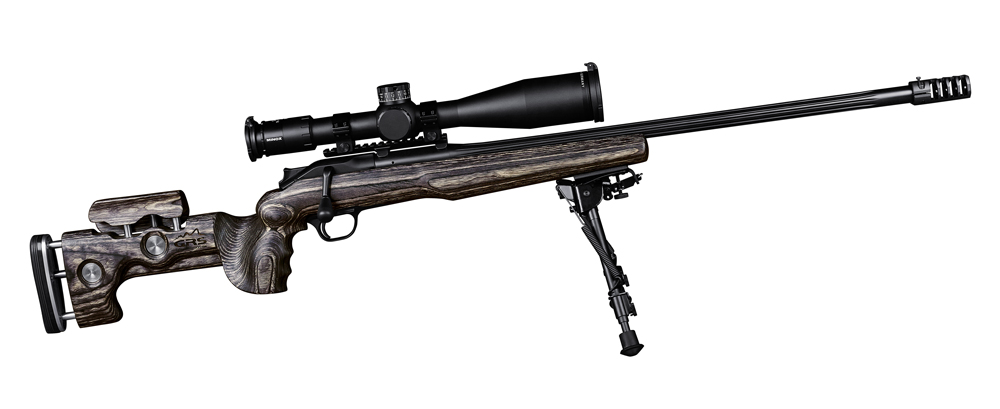
The company’s Magnum Lite .22LR and .22WMR now wear a stick of striking black walnut. The rich, dark wood looks to bring out the every curve and angle of the stock’s unique design.

Switching the thumbhole stock to hardwood, however, was not purely a matter of aesthetics. There is function in what Magnum Research calls its Barracuda American Black Walnut stock, as well.

The new material gives the gun a lighter overall weight than when it was purely stocked with laminate; it tips the scales at less than 5 pounds in both chamberings. The lack of heft should make the light-kicking rifle an ideal choice to tote into the field.

Another factor keeping the new rifle trim is Magnum Research outfitting it with its patented graphite bull barrel. This material also is meant to give the firearm greater accuracy by creating a stiffer barrel. Another advantage, the company touts is it will also dissipate heat 43-percent faster than steel.

The rifle features a Bentz target chamber designed specifically for semi-automatics, full floating barrel for maximum accuracy, CNC-machined receiver from 6061-T6 aircraft aluminum forging with an integral Weaver-type rail for optics, and a black anodized finish.

The Long Rifle variation has a 17-inch barrel length and an overall length of 19 inches. The Winchester Magnum model has a 19-inch barrel and an overall length of 37.5 inches. Both have Ruger 10/22 trigger groups and utilize 10/22 rotary magazines. MSRP for the .22LR is $824.00 and the .22WMR is $941.00.

Market Trends: Hoosiers Snap Up CCW Training, Handguns

2

CCW TrainingDon PerkinsBareArms Firearms & Accessories, Noblesville, Ind.,

Located on the north side of metropolitan Indianapolis, BareArms Firearms & Accessories’ customer base is heavily focused on the first-time, novice gun owner interested in personal protection and home defense.

As such, firearms training is a large part of the business here, including concealed carry certification. And with certification often comes a handgun purchase.

“Right now, our number one carry handguns are the Ruger LC9 and LCP,” owner Don Perkins said. “Customers really like the new trigger and the way the LC9’s feel in their hands.” The LC9 sells for $399.

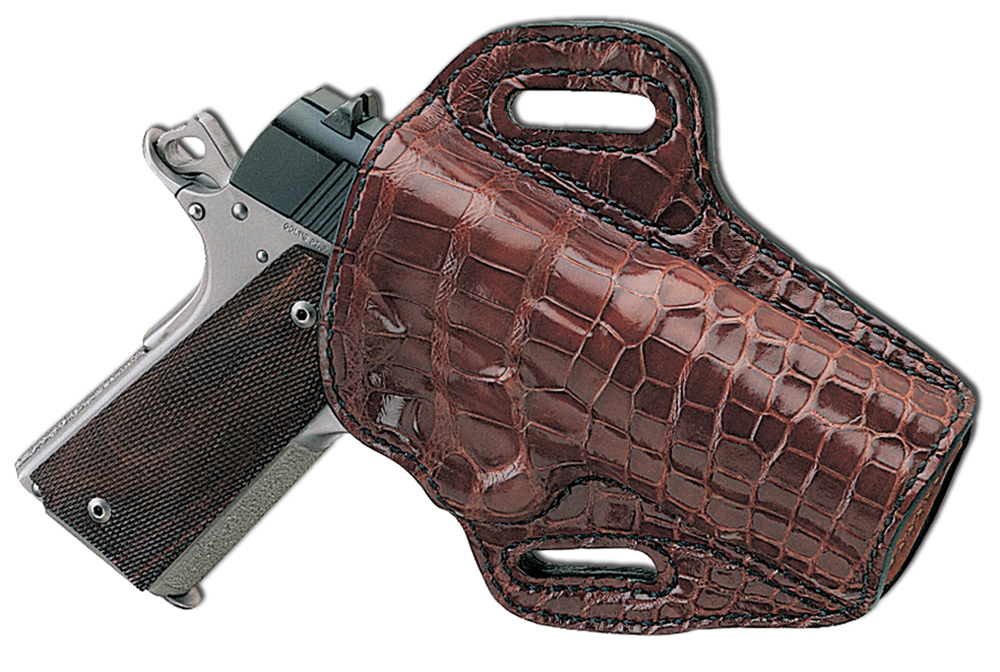
Concealed carry holsters are big sellers here, too, especially the Versa Carry closely followed by the Blackhawk Inside-the-Pants model. For external carry, the Blackhawk Serpa Level 2 is tops, at $46.95.

Indiana deer hunters can use centerfire rifles, but they must be chambered in what is essentially a handgun round of .35 caliber or larger.

“For the deer hunters, we move a good number of Henry and Rossi lever actions in .357 Mag., .44 Mag. and .45 Long Colt. For the handgun hunters, the Super Blackhawk in .44 Mag. is by far number one. They are built so well, and they last forever.”

Editor's Note: This brief originally appeared in the Spring 2015 issue of Gun Digest the Magazine.


snagmag-ad

Spare Ammo Always Within Reach

If you concealed carry you must carry spare ammunition — it’s a necessity. The Snagmag Concealed Magazine Holster makes this a snap. When in a pocket it appears to be little more than a clip knife, but in a moment’s notice produces a fresh magazine. Get Yours Now

Caldwell Releases AK-47 Mag Charger

0
AK-47 Mag Charger
https://gundigest.com/wp-admin/post.php?post=213981&action=edithttps://gundigest.com/wp-admin/post.php?post=213981&action=edit Keeping hungry AK-47's well fed.

If there is one shortcoming to semiautomatic rifles, it’s loading magazines. It only takes a wink of an eye to empty one, but a perturbing long stint to re-juice it.

Caldwell, however, has made this process a much shorter ordeal with its Mag Charger. The company introduced the handy gizmo a little more than a year ago for AR-15-style rifles, and now it has turned its attention to another popular semi-auto.

The subsidiary of Missouri-based Battenfeld Technologies recently introduced the AK-47 Mag Charger, giving owners of the iconic firearm what appears to be a quick and easy way to get an empty magazine back in action.

The device is designed to process 50-round batches from the ammo box into magazines. And it appears to be a snap to operate.

The tips of the bullets are simply aligned with the holes in the Mag Charger, and then dumped in. The rounds are automatically indexed into rows of five, which are then quickly pushed into a magazine each time the loading plunger is depressed.

If the unit lives up to Caldwell's billing, it could be a marvelous time saver. In a press release, the company states it can dispense a full 50 rounds in less than 15 seconds, this includes changing out a magazine.

There is some reason to believe the new accessory should perform, given the accolades the earlier iteration earned. Caldwell’s original AR-15 Mag Charger was well receive when it was introduced, earning the NRA’s Golden Bull’s Eye for Accessory of the Year.

As a nice touch, the company has made the device compatible with any AK magazine, no matter the material it’s made from or its capacity. AK-47 Mag Charger is made of a durable polycarbonate plastic that it designed to take a beating. Presently the MSRP of the device is $99.99.


Recommended Gear and Resources

S.T.R.I.K.E. AK/M4 Double Mag Pouch (Holds 4)

S.T.R.I.K.E. AK/M4 Double Mag Pouch (Holds 4)

The Gun Digest Book of the AK & SKS

Make Ready with Jim Fuller: AK Armorer's Bench

Sig Sauer Releases New Supersonic .300 Blackout Ammo

0

300 Blackout
Sig Sauer is perhaps best known for its firearms, but the company is working its tail off to make a name for itself in another sector.

In recent years, the European/American company has expanded its operations into ammunition manufacturing. First it introduced premium self-defense handgun ammunition, then this past year it moved into rifle rounds.

Sig continued in this direction this past month introducing its second rifle cartridge. And while it is for the same firearm as the first, the round is a logical addition to the company’s catalog.

Sig’s newest offering is a supersonic 300 Blackout round that plays a perfect compliment to the subsonic load it kicked the line off with. And much like the more suppressor-friendly round, the company looks to have turned an eye toward performance.

Like its subsonic counterpart, the 300 Blackout Supersonic Elite Performance Ammunition is topped with a Sierra Matchking bullet. However, Sig has opted for a lighter 125-grain projectile for the round.

The new 300 BLK ammo achieves solid ballistics with Sig listing the round’s muzzle velocity at 2,200 fps. And with the Matchking’s superior ballistic characteristics, the bullet loses less than 200 fps over the course of 100 yards.

Sig originally ventured into rifle ammunition around the 2015 SHOT Show introducing a 220-grain subsonic 300 BLK round. This coincided with the company also expanding into silencer production.

Reloading Ammo: Cartridge Primers and Pressure Differences

1
More than just igniting the propellant, cartridge primers' heat can also play a role in the pressure generated internally upoen ignition.

Don’t assume that all cartridge primers are the same. The way each is formulated means their performance can vary from manufacturer to manufacturer.

In the drought of the past two years, where reloading supplies have been limited, if not completely unavailable, we have been forced to make do with what we can obtain. We can save our cases, and cast our bullets, but cartridge primers and powder must be made to very specific formula.

Powder burn rates and charge weights are easily identifiable from our reloading manuals, but primers remain a bit of a mystery. Yes, it’s pretty easy to figure out that a large rifle magnum primer will burn a bit hotter than a large rifle primer, and the same correlation will apply to the other styles of primers, but what about between the different brands of the same class of primer?

This can be a tricky thing, as there is no easy way to measure primer heat, and no definitive listing of primer burn temperatures. However, in my experiments with different loadings, I can absolutely tell you that there is a difference in cartridge primer performance.

Using the large rifle primers as the example, mainly because that’s where I’ve found the largest discrepancies, switching primer brands in a particular load that is on the cusp of showing high pressure can easily push it over the edge.

Within the large rifle primers, I’ve found the Winchester WLR and Federal 210 to be the hottest, and the Remington 9 ½ to deliver the least heat, with the CCI200 somewhere in between. The generally accepted difference is heat is 6 percent, up and down from the middle ground CCI200, although that is subject to actual scientific data, which I’ve never seen.

Pistol cartridge primers are much less volatile, unless we’re talking about the big hunting cartridges, like the .454 Casull, .460 S&W and .500 S&W; I’d treat them with the same mindset as the rifle primers. However, it always pays to be safe and observe the rules I’m going to outline herein.

When the reloading components had all but dried up, loaders were grabbing anything they could get their hands on (myself included) and sometimes the primers that were available weren’t the brand I had used to develop an older load.

I remember the good folks at Beecroft’s Shooters Supply having to ‘ration’ primers, only selling as many primers to a customer to launch the amount of projectiles they purchased, in an effort to keep everyone shooting. Things being what they were, I had no choice but to use what I could get, but found some interesting results.

All that my pal Dave had available at Beecroft’s were Federal 210 primers, and I was loading for my .308 Winchester, for which I had usually used Remington 9 ½ primers. The idea of different primer heat niggled at my mind, so I (wisely, in retrospect) backed the powder charge down 1.5 grains, and headed to the range.

When switching to different cartridge primers for an existing load it is always wise to play it safe until you understand their properties.

The hotter Federal primer gave the same velocity as the Remington, but with 1.5-grains less powder, indicating that the hotter spark is equal to an increase in pressure. This could be potentially dangerous if one were to simply swap out primers without considering the pressure increases; it would be the same principle as using a case with thicker walls.

Now that the market is starting to loosen up and components are becoming more readily available, do your best to find and store an ample supply of the primer that you’ve developed your pet load, and stick with that choice.

If the situation dictates that you must switch primers, play it safe and work up to your previous load slowly, reducing the powder charge to begin with, and slowly increase it, watching for pressure signs along the way.

Smith & Wesson Introduces M&P22 Compact Suppressor Ready Model

0
Smith & Wesson’s M&P22 Compact Suppressor Ready model is ready to quiet down plinkers.

Suppressors have made a ton of headway in the shooting world in recent years.

To be sure, most of this has been due to the changing legislative landscape with more and more states legalizing the noise-reducing devices. But there has also been a push by firearms manufacturers, who have turned out more and more models that are compatible with the accessory.

Smith & Wesson is one of those companies that has given suppressors the nod and has continued to expand its offerings. Recently, the Massachusetts gun maker introduced one of its most popular plinkers in a variation that allows the easy addition of a suppressor — the M&P22 Compact Suppressor Ready model, which could prove to be popular with many shooters.

What has the potential to make the new pistol popular is its chambering — .22 LR. The round is by far the most popular (when there is ammo to be had) across the country, whether for target shooting or taking small game.

The rimfire round’s esteem, however, is only part of the reason why the M&P22 Compact Suppressor Ready model could find a place in many shooters’ hearts. The cartridge it shoots is also eminently suppressible, thus making the potential of long shooting sessions more enjoyable and less damaging to hearing.

The new pistol is nearly identical to the original M&P22, except for its supplemental thread adapter. The handgun is designed to accept most 1/2×28 threaded suppressors presently available on the market.

Like earlier iterations of the pistol, the new suppressor ready model is polymer-framed and hammer fired. And it has decent capacity — 10+1 — particularly for a compact.

The pistol weighs in at a nimble 15.3 ounces, which should keep it wieldy with a suppressor hanging off the muzzle. The pistols dimensions are also very manageable, measuring in at 7.25 inches in length and 1.48 inches in width.

M&P22 Compact Suppressor Ready model comes outfitted with a Picatinny Rail under its muzzle for the easy addition of an accessory. And it features fully adjustable rear sights that can be tuned for windage and elevation.

The pistols features an ambidextrous manual safety, a reversible magazine release and a magazine safety. Presently, the MSRP on the suppressor ready model is $409.

Market Trends: Upscale Gun Safes Hot in OKC

0

Browning Gun SafeMiles HallH&H Shooting Sports, Oklahoma City, Okla.

H&H Shooting Sports has been selling a significant number of gun safes for over a year, but of late, co-owner Miles Hall said, the market has shifted to more upscale safes.

“What I call the ‘grey garage safe,’ the one you stick in the corner of your garage? They still sell pretty well. But what we’re seeing is more and more people opting for the nicer-looking safes that they can show off in their homes,” Hall said.

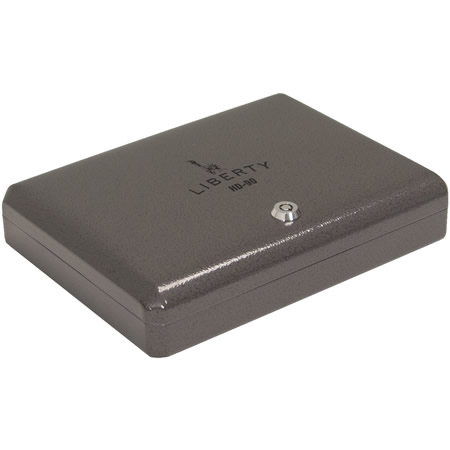
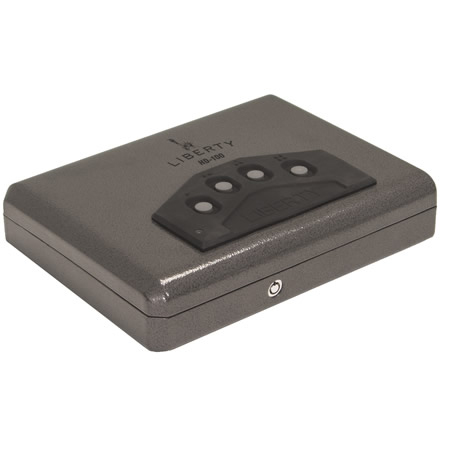
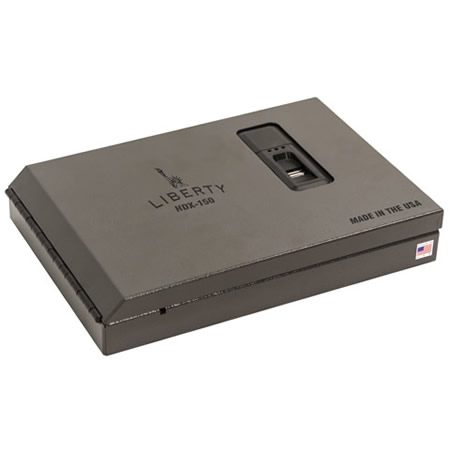
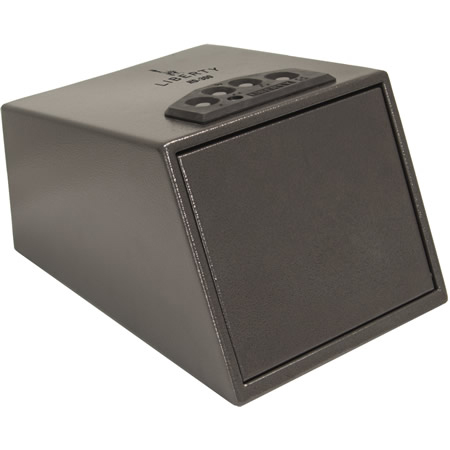
Liberty and Browning safes are the best sellers in this line, most of them going for just under $3,000, though Hall has sold quite a few of the $4,000 models, too.

Ammunition is moving well, but inventories are still below demand. Hall notes that his store has many .22 LR AR-style rifles it can’t seem to move at any price because rimfire ammo is still so hard to get locally.

“If I could get a million rounds of .22 LR,” Hall reports, “I’d be a very happy man — for about four weeks. We’d sell a lot of rimfire rifles and handguns, along with all the ammunition, and then I’d want another million rounds. The demand is certainly there, but the supply still isn’t close.”

A trend Hall’s been noticing: a good number of people relatively new to the shooting sports looking over his hunting-style bolt-action rifles.

“They’re not buying many of them yet, but they are asking questions of my gun counter people and are being shown various models. They are definitely taking a close look. We’re hoping they become actual buyers as the year goes on.”


Recommended Gear and Resources

Gun Safe Dehumidifier

Gun Safe Dehumidifier

Gun Safe Lights (Set of 2)

Gun Digest Guide to Maintaining & Accessorizing Firearms

Video: Behemoth .458 SOCOM in Action

0

The .458 SOCOM is one of the largest rounds fired from the AR-15 platform. Watch this beast in action.

Brevity might be the soul of wit, but summing up a cartridge in a few words is a pretty tall task.

As anyone who’s been around firearms can tell you, every round has many facets and characteristics that a book-worth of verbs and nouns can be spilled over. Frank C. Barnes, however, comes pretty close to accomplishing this feat in Cartridges of the World, 14th Edition in talking about the .458 SOCOM.

As the author puts it, “The .458 SOCOM hurls big chunks of metal at substantial velocity…” That pretty much captures the heart and soul of one of the largest rounds used in conjunction with the AR-15 platform.

If you need further convincing of the cartridge's prowess, just check out the above video from YouTube mad genius Taofledermaus. He gives a quick rundown of the .458 SOCOM, and then shows it action, best of all in extreme slow motion. There is some nice camera work where the projectile can actually be seen cutting its way through the air.

While the size of the bullet the .458 SOCOM throws down range is impressive — 250 to 600 grains — it is not the most remarkable aspect to the round. Its particularly striking quality is that it can be fired from an unaltered AR-15 lower receiver. No need to change the buffer springs, bolt assembly or anything else.

Texas-based manufacturer Teppo Jutsu LLC., developed the .458 SOCOM and released it in 2001. The company was motivated to develop the cartridge by unofficial discussions with a senior member of U.S Special Operations member in the wake of the bloody 1993 battle in Mogadishu, Somalia.

In particular, Teppo Jutsu was attempting to address complaints the 5.56 NATO round used in the conflict had insufficient stopping power, requiring multiple rounds to incapacitate a belligerent.

Given the SOCOM can deliver a couple thousand foot pounds on a target, there is little arguing the company has delivered a round capable of stopping an aggressor in his tracks. But, retailing at around 10-times the cost of a 5.56 round, it does damage to something else — the shooter's budget.

Trijicon Introduces AccuPower LED Riflescope Series

0
The Trijicon AccuPower LED Riflescope Series turns to battery power to light up its reticles.

The ability of Trijicon‘s optics to gather light from the environment and put it to good use is perhaps one of the best known aspects of the company's high-end aiming solutions.

The Michigan manufacturer has been at the cutting edge of the use of fiber optics and tritium to illuminate the recitals of its optics. In turn, shooters have gotten to reap the benefits of lightweight, dependable and versatile options for drawing a bead.

However, the innovative company has proven it is not wed to convention, even if it is its own unconventional take on how an optic should operate. That has been proven with Trijicon's recent jaunt into battery-powered optics, a path the company has continued down.

Trijicon recently released its third line of battery-powered aiming solutions, a move that should send hunters' and long-range enthusiasts' hearts soaring. The AccuPower LED Riflescope Series offers shooters of every stripe an illuminated-reticle option with the magnification to knock the whisker off a gnat; however they come in at a bit more affordable price point than the company's fiber optics/tritium options.

The new scopes have a price range between $699 to $999 on Trijicon's website, this is more in line with a majority of high-end scopes presently available. The company's battery-free models' prices pretty much pick up at the high end of the new riflescopes leave off.

All of the units are powered off a single CR2031 lithium battery, which should keep the scopes lightweight. And the scopes themselves milk the most out of their button-sized power sources. Trijicon lists 31-plus hours of battery life for each of the optics with the reticle running at full brightness.

Trijicon’s AccuPower LED Riflescope Series appear to be the ticket for mid- to long-range work.

Given the units all have 11 brightness settings, with handy off setting between each one, it's fair to believe shooters can expect to run into the plus end on battery life, if they tinker with it enough.

The sensitivity of the settings should allow the units to adapt to any lightning situation. Shooters can further tailor the optics to their needs with two reticle color choices — red or green.

Trijicon gives shooters four reticle styles to choose from on the 1-4×24 model and three on the 2.5-10×56, 3-9×40 and 4-16×50 models. Of the styles, three are ranging reticles, however, the scopes are second focal plane, which will make using the MOA, MIL-Dots or bullet-drop compensator a little more challenging.

Though, being second focal plane has its advantages if the scopes are put to a long-range application, given the reticles themselves remain thin at higher magnifications.


Recommended Resources

Mastering the Art of Long-Range Shooting

Mastering the Art of Long Range Shooting

Old Gunsights and Rifle Scopes eBook

The Ultimate Sniper

Pull! Gallery of 12 New 2015 Shotguns
0

From smooth-running semi-autos to a new double barrel, these 2015 shotguns have you covered from the clays course to the hunting fields.

[imagebrowser id=451]

This photo gallery is an excerpt from the April 2015 issue of Gun Digest the Magazine. Click here to download the issue.


Also Check Out:

Shotgun Games BundleShotgun Games Bundle

Discover the tricks of the trade of clay breaking, and learn more about the tool used to take down those clay pigeons with the Shotgun Games Bundle. Make the most out of your shotgun and discover how to leverage it for an advantage while competing.

Includes:

Gun Digest Shooter's Guide to Shotgun Games (PAPERBACK)
Gun Digest Shooter’s Guide to Shotguns (EBOOK)
Gun Digest Guide to Modern Shotgunning (EBOOK)

Learn more

Market Trends: Solid Prices for Collectible Rimfire Guns

0

Smith & Wesson K22 Pre 17. Photo Steve Z
John SlagleKIKO Auction, Canton, Ohio

A nationwide lack of rimfire ammunition has definitely hurt sales of rimfire guns at retail establishments, but it doesn’t seem to have affected the collectibles market.

Case in point: At three auctions this past fall, KIKO Auctioneers saw rising interest and some higher than average prices being paid for collectible rimfire firearms.

Firearms auctioneer John Slagle notes that KIKO sold seven Smith & Wesson K 22 Revolvers for between $800 and $1,300 apiece, a Colt Diamondback in .22 LR for $1,900, a Colt Peacekeeper in .22 LR for $775 and a Smith & Wesson model 53-2, .22 Mag. revolver for $1,550.

Additionally, five High Standard semi-automatic pistols went for between $500 and $775 each. Rimfire rifles did well, too, like the Winchester model 99, .22-caliber rifle that KIKO’s sold for $1,900.

Apparently the “Snake Gun” craze is not over. The Snake Guns—those Colt revolvers with reptile names like Python and Boa—started rising in value about two years ago and are still on the upswing.

Slagle recently auctioned off a Colt Python .357 for $3,500—a revolver that would have commanded about $1,200 a couple years back—and he gets inquires all the time from collectors interested in acquiring more of these high-quality revolvers.

TacStar Releases New Stōn Camo on Tactical 10/22 Stocks

0
TacStar’s new Stōn Camo adaptive tactical stock isn’t just meant to help shooters blend in, but also help improve their accuracy.

TacStar's new Stōn Camo stocks give shooters a solid option to blend in with their surroundings.

When it comes to customization, there a few firearms that hold a candle to the AR-15. But Ruger’s 10/22 gives America’s most popular rifle a run for its money.

The august rimfire rifle can be born again to tackle nearly any chore demanded of it — from precision plinker to trusty hunting partner. And recently, TacStar has introduced an upgrade for the .22 LR that should help it do its job better, especially if its task has a tactical flare.

The subsidiary of Connecticut manufacturer Lyman has expanded its adaptive tactical stock selection with a slew of new camouflage patterns. The Stōn Camo comes in nearly every color and configuration to blend into any terrain.

The camouflage features variable depth in its pattern and the inclusion of elements naturally found in the environments they'll operate. This combination of features alone appears to give the rimfire a leg up. There are, however, other aspects to the Stōn Camo stocks that should get shooters on target.

For those with a takedown model of Ruger’s 10/22, there Stōn Camo adaptive tactical stock options for you.

Perhaps one of the most useful is the M4 type buttstock, a feature that allows the length of pull to be adjusted. This is definitely a nice touch for larger-framed shooters who often times find the 10/22 runs on the small side.

The stock has a pistol grip, allotting more control over the rifle. But this feature also is designed to help execute precision shots, with the addition of TacStar's adjustable monopod. Used in conjunction with a bipod, this adjustable accessory helps the 10/22 achieve near perfect three-point stability on any surface.

The Stōn Camo stock also allows for the quick addition of accessories, outfitted with a Picatinny rail on the forend. This feature is reversible and can be turned over to so that it matches the rest of the stock when the rail is not needed.

The stock has a removable barrel insert that allows it to fit a standard barrel or it can be removed to accommodate a .92-inch bull barrel.

TacStar’s Stōn Camo stocks come in four patterns: Coyote, Moss, Cobalt and Lava. The tactical stock for a standard 10/22 has an MSRP of $169.95, while the takdown model runs $189.95.

Get a Chronograph for Reloading

0
The more precision shooters strive for — whether with rifle or pistol — the more important a chronograph becomes to their reloading projects.

The more you reload ammunition, the more you need a chronograph. Find out why you should get a chronograph for reloading and what features to look for.

We handloaders, especially those of us who play the benchrest rifle game, strive for the utmost in accuracy. We weigh our bullets, cases, and powder charges, hem and haw over ¾ vs. ½ MOA accuracy. Yet, you’d be shocked to find out how many of us don’t own or use a chronograph for reloading.

“Well, the book says I’m going blah-blah fps, and that’s got to be close enough…”

You know you’ve heard it before. Knowing your rifle’s actual muzzle velocity is paramount; not just an approximation, but the exact number. All the accuracy in the world won’t help you when you don’t know the proper amount of holdover, because you’re basing the trajectory curve on false information.

Even worse, I’ve seen those who have gone to the trouble of purchasing a ballistic reticle riflescope, which is calibrated for bullet drop at certain distances, and complain that they don’t hit where they are supposed to hit. And some of the gun games require a minimum energy/velocity combination, to make ‘major’, and the only way to be sure that you’re in compliance is to chrony your loads.

All of this can easily be alleviated with the purchase of a good chronograph. They come in many shapes and sizes, and in a wide variety of price ranges.

The first one I owned was a Competition Electronics ProChrono Digital, and it served me well for years, handily measuring the velocities of rifle and pistol alike. That is, until, Dr. Mike McNulty and I tried to chronograph a .505 Gibbs, and fried the electronics from the report. Ooops.

I replaced it with an Oehler Model 35P, an amazing machine that gives you a cash register-like printout of the string of shots, with an averaged velocity, along with high and low shots and standard deviation, printed out nicely so you can keep an exact record of your rifle or pistol velocity.

Here’s how they work: there are a pair (or a trio) of electronic sensors, directly below the skyscreens, which diffuse the light. These sensors are very touchy, and measure the time difference, right down to a gnat’s whisker, that it takes the bullet to cross each sensor. That time, divided by the distance between the sensors, gives us the speed in feet per second.

My ProChrono Digital had two screens, about 18 inches or so apart, but the Oehler 35P (which I refer to as “The Cadillac” of chronys), has three screens. It is about four feet long and measures the time difference between screens one and two, and the difference between screens one and three, to give a better average, and minimize the false readings.

Nowadays there is little reason not to own a chronograph for reloading. There is a make and model to fit every budget and every need.

When using a scope reticle with a drop-compensated set of crosshairs to aid in hitting distant targets, it is extremely important to be sure that the trajectory of your rifle will coincide with the calibration of the reticle. They are designed to operate with certain bullets, at certain velocities.

While no system is perfect, a quick glance at a trajectory chart for the bullet you’ve chosen, at the speed you’ve measured, will allow you to interpolate the slight differences between the actual trajectory and holdover, and the trajectory to which the reticle is calibrated.

A quick example of some life-saving chrono observations. My 6.5-284 Norma gave velocities very close to those advertised in the reloading manual when using flat based bullets, but with boat tails the velocities were 150 fps lower than called for. I’d have missed, or worse, wounded a game animal at longer distances had I not put the ammunition through my chronograph.

You’ll end up using your chrono more often than you’ll think, do some homework and find one within your budget; they’re a great tool.

Handgun Review: New Ithaca 1911

2

The Ithaca 1911s.

Ithaca Gun Company will probably always be known for their slide-action Model 37 shotgun, but also world-class are the Ithaca 1911s.

Ithaca's Carry 1911.

Although the new Ithaca 1911s share much of their DNA with the guns that the company produced in the 1940s, the differences in the manufacturing process are tremendous. The Upper Sandusky facility, which was converted from a roller rink into a gun company, is home to some of the most modern machining tools available. With the equipment in place and the ability to make several different components on a single machine, Ithaca was poised to build pistols in-house.

Ithaca’s sleek new 1911 begins life as a single block of steel , and from that block of steel, the frame and slide are cut using wire electrical discharge machining, a process wherein metal is cut using discharges from two electrodes in a dielectric liquid bath. If it sounds complex that’s because it is, but the resulting parts have tight tolerances.

Rows of modern CNC machines at the Ohio factory allow Ithaca to create virtually all of the small parts for the guns like hammers, firing pins and triggers in house, so production of almost all of the parts for each custom 1911 happens under one roof. Quality control allows tolerances to be kept within five-millionths of an inch, which is just one of the reasons that the Ithaca 1911s are so smooth and so accurate.

Another facet of producing a target-quality 1911 is to match it to a superb barrel, and Ithaca’s are among the best currently available. The machining process is something of a trade secret, but the barrels are machined in the factory and are sent out to have the rifling electrochemically cut into the bore, creating a smooth, virtually burr-free bore for accurate shooting.

One of the final steps in the process happens in a small room in the center of the factory. Bryan Stoops, head of manufacturing for the 1911 handgun, and his team spend the day testing new customer guns for fit and function. It’s meticulous work, and very time consuming, but Stoops and the rest of his crew hand finish each gun, lapping, stoning or filing where necessary, until the last rough edge is removed and the gun fits tight and runs smooth.

Trigger Time with Ithaca

The fit and finish on the Ithaca 1911 is extremely good and the gun, with any of the optional features, shoots as well as it looks. Ithaca Photo

I had a chance to test one of Bryan’s guns recently, a custom Ithaca 1911 with black grips and a nitride protective finish. Since Ithaca builds custom guns, there are many different options and styles, but the gun that Bryan gave me to try out had a smooth black finish on the metalwork and black Hogue grips.

These guns are available with either BoMar-style adjustable target sights or Novak adjustable combat sights, though there are other options available as well if the customer chooses.

The model I tested had combat style rear sights with a Trijicon front sight, an ideal combo for rapid target acquisition in most lighting conditions. It also had a skeletonized tool steel trigger and skeletonized hammer, a lowered and flared ejection port, hand-fit match-grade stainless steel barrel bushing and an extended beavertail-style grip safety.

The front strap was heavily textured for a sure grip, and the rear of the slide was serrated. The metalwork was smooth and simple, with “Ithaca Gun Company Upper Sandusky, Ohio” on the left side of the slide and “M1911A1” on the right side. When you have a gun this nice it doesn’t need dressing up, and the Ithaca I tested looked darn good in basic black.

Virtually every clone of the 5-inch 1911 shares the same profile, but closer inspection reveals the true nature of any .45. The fit and finish of the Ithaca 1911 is extremely good, and everything on this gun is smooth. When you pull the slide back there is no unevenness or roughness, a testament to the job Bryan and his team do during the finishing stages of production. There are go gaps or machining marks, and everything fits tightly.

On the range, the Ithaca performed extremely well, keeping groups under 2 inches during the test firing process using Federal Premium’s Personal Defense HST jacketed hollowpoint rounds. Everything about the Ithaca feels tight, solid and smooth, and the result of all that hand work is a pistol that shoots extremely well and runs flawlessly. Throughout the test, there were no feeding or function issues.

The Ithaca Hard Chrome 1911.

The trigger pull was light and clean, and one of the nice things about purchasing a custom pistol is that the client gets to choose the type of sights that are mounted on the gun. I found the setup on the test gun to be excellent; the black combat rear is effective and works for concealed carry (you won’t hang these sights on clothing when you draw). The Trijicon front sight, which is dovetailed into the receiver, offers a clear sight picture in low light.

This is a very versatile sight setup, and if I were ordering an Ithaca 1911 tomorrow, I’d choose the same irons. The heavily textured front strap is easy to hold onto, and the Hogue grips worked well, though you can also choose your own grips when you order the gun if you prefer something a little different.

No matter how the gun is dressed, this is one of the best shooting 1911s you can buy, and even though the price of purchasing a custom gun may seem a bit high to many shooters (the custom 1911 from Ithaca, depending on your list of options, will run you around $2,000), but the quality of the workmanship and the resulting accuracy make this a bargain in the world of custom 1911s.

It’s been an interesting decade for the Ithaca brand. Less than 10 years ago the company was bankrupt and closing its doors, but with new owners and a new, modern factory it seems that Ithaca has righted the ship. The brand may always be best known for producing high-quality, durable pump shotguns, but the new 1911 is certainly a gun that will only expand on that legacy.

This is an excerpt from the full article that appeared in the April 2015 issue of Gun Digest the Magazine.

Heckler & Koch Introduces Made-For-Carry P30SK

0
Heckler & Koch has introduced a new hammer-fired subcompact, the P30SK.

Utter polymer frame and one thing is almost certain to come to mind — striker fired.

There is an obvious reason for this inevitable cognitive leap. The material and firing system have become as pervasive in pistol design as hollow promises are at political rallies.

The features, while dominating the landscape, aren’t attached at the hip. A shooter need not look further than Heckler & Koch to find examples of where the two part ways — for the most part.

The German manufacturer has swum against the current with polymer-framed, hammer-fired pistols overwhelmingly ruling its catalog's pages. It is a formula Heckler & Koch doesn’t appear set to abandon anytime soon.

The company continued to expand its roster of handguns with these design features with the addition of the P30SK. The 9mm is the third in the P30 series — introduced in 2006 — and is an attempt to provide a more concealable pistol in the line.

The new subcompact has the same width as the older iterations of the pistol, but is shorter in overall length and has a lower profile.

Perhaps the most pronounced tale of the tape is the near inch H&K has shaved off the height of the P30SK compared to the P30 (the Mama-Bear model) making it less likely to print when concealed. The pistol is also nearly 3-ounces lighter than the P30, tipping the scales at 23.99 ounces.

Like earlier variations, the P30SK offers shooters a number of intriguing features to match their shooting preferences. One of the more unique to Heckler & Koch is the ability to choose the trigger mechanism — double-action only or double-action/single-action.

The DA/SA model has been reported as having an 11.5-pound pull in double-action that then reduces to 4.5 pounds in single action. The double-action only, what the company calls its “Law Enforcement Modification,” has a snappy 5.4-pound pull each time the trigger is depressed.

Like the rest of the P30 line, Heckler & Koch’s new P30SK comes with the choice of two trigger mechanisms — double-action only or double-action/single-action.

The two trigger variants also have different hammer configurations. The DAO model is bobbed hammer, while the DA/SA has a spur.

The DA/SA model is available with or without an ambidextrous manual safety, but in either case it comes outfitted with a serrated decocking lever at the rear of the frame.

Like the rest of the line, the P30SK has changeable backstraps and grip panels allowing shooters the ability to modify the pistol to their hand size. The handgun also features ambidextrous controls, including dual slide and magazine release levers.

The pistol follows the rest of the line with an automatic hammer safety and firing-pin safety. And it is outfitted with a Picatinny rail for the easy addition of accessories.

The gun has an MSRP of $719.

Kahr Arms Set to Release Gen2 Premium Series Pistols

0
With streamlined looks and a slew of upgrades, Kahr Arms’ Gen2 Premium Series Pistols has the potential to turn some heads.

The engineers at Kahr Arms have been busy this past year. And recently, the fruits of their labors were on full display.

The Massachusetts-based gun maker introduced its Gen2 Premium Series Pistols at the NRA Convention earlier this month. And the space-aged design looks to have some rather interesting aspects to it.

Kahr appears to have smoothed out all the usual sharp edges found on semi-automatic pistols. This has given the handgun a particularly striking for end with its slide well rounded and the front of the frame cut at an angle.

The streamlining of the striker-fired pistols might be worth more than just adding some glitz to Kahr's Premium line. It appears these modifications have the potential to make the Gen2s smoother on the draw and re-holster. Of course, some handling of one of the pistols would be needed to confirm these suspicions.

The company promises more than smooth lines with the Gen2 Series. Kahr is also crowing about the tighter manufacturing tolerances the pistols are being held to, promising it will live up to the “Premium” moniker.

For those who dig on options when hunting for a new firearm, the Gen2s are a wonderland. The line has a slew of upgrades and features from previous iterations, including:

  • 30-percent shorter trigger stroke than present Premium models
  • Integrated trigger safety
  • Picatinny rail for the addition of a laser or light
  • Forward cocking serrations on the 5- and 6-inch barrel models for easier slide manipulation
  • 6-inch compensated barrel model
  • Leupold Deltapoint Red Dot mount (5-inch barrel models)
  • Leupold Deltapoint Red Dot optic included (6-inch barrel models)
  • TRUGLO TFX Tritium/Fiber-Optic Day/Night sights standard on 3.5- and 4-inch barrel models
  • Safe-Cam striker-fired action
  • Double recoil spring system to aid in reducing felt recoil
  • Redesigned grip and magazine base for a more streamlined look
  • Slide machined from high-quality stainless steel
  • Ergonomic single stack grip frame
  • Ships with 3 magazines and a lockable, hard, polymer case

Kahr will offer 12 models of the Gen2 Premium Series Pistols in three calibers — 9mm, .40 Smith & Wesson and .45 ACP. The 9mm and .45 models will be available in July and August 2015, while the .40 is set for release in December. The MSRP on the new series ranges from $976 to $1,668, depending on model.

MUST READ ARTICLES