The ABCs of Rifle Shooting by David Watson teaches you how to hone your skills to achieve the achieve the best results in the game fields of rifle range. Learn more
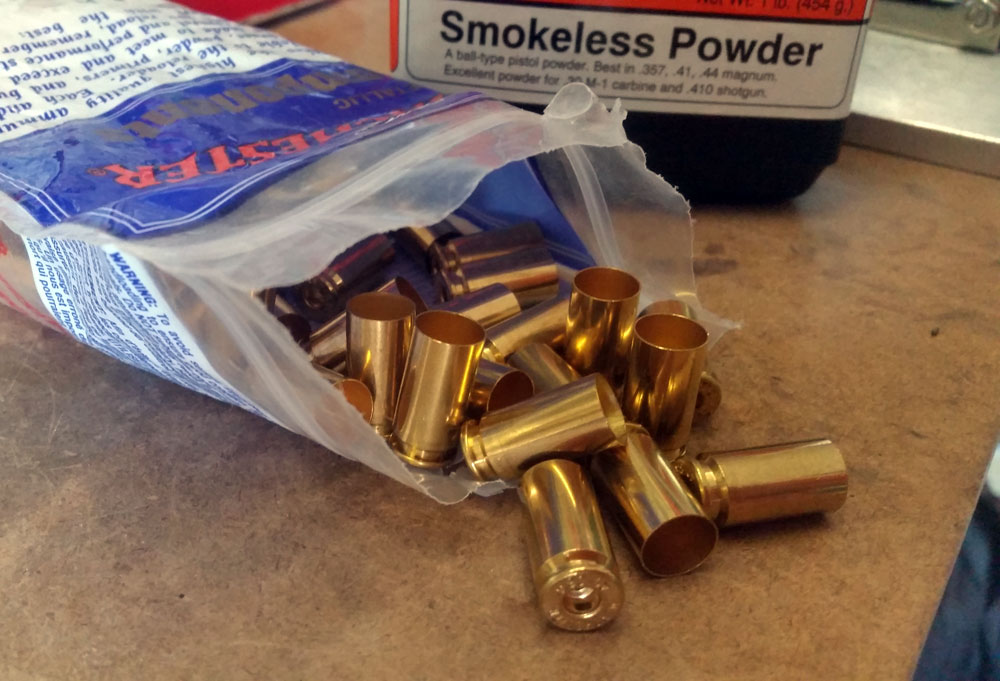
Been thinking about using reloaded handgun ammo as your concealed carry choice? It’s not as cut-and-dried as you might think.
Reader Question:
I’ve been thinking about reloading carry ammo for my personal defense gun, but I’ve read a lot on forums that it’s a big no-no. I reload for hunting and matches to get the best performance, so why not do the same for the ammo I bet my life on? —Bill McDonald, Powell, Wyo.
Gun Digest Responds:
Thanks for writing in, Bill. This really is a hot topic among lay shooters and personal defense experts alike. The reason for so much of the debate is that there’s not a simple, black-and-white answer. Most notably, perhaps, Massad Ayoob has argued in Deadly Force: Understanding Your Right to Self Defense that reloading for self defense is a serious mistake. Ayoob argues that standard forensic testing after a shooting relies on powder residue from factory loads, and since handloads throw off this data, it could potentially allow prosecuting attorneys to vilify defensive shooters. Another concern, according to Ayoob, is that attorneys could somehow prove malicious intent by the mere act of reloading, as if it were some kind of premeditated form of bloodlust. As an expert witness and authority on legal matters relating to self defense, Ayoob’s argument has serious weight. For that reason, many folks opt for factory ammo when it comes to their carry gun.
On the flip side, many reloaders are more comfortable defending themselves with ammunition that’s been personally inspected and loaded to their level of personal satisfaction. They carry confident with ammo they’ve honed to perfection. Like you said, Bill, if reloading gives you the best all around load, why not go that route? At least that’s one side of the argument. As always, it’s paramount that you do your homework, know the laws in your state and make a decision that’s best for you and your loved ones.—Eds.
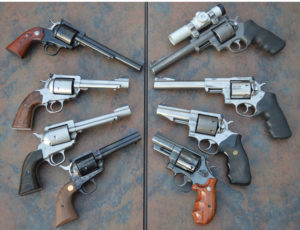
Ruger’s excellent Bisley Hunter in .44 Magnum is a dedicated hunting revolver, offering excellent accuracy and reliability. Do you think you need more?
The .44 Magnum is one hard-hitting round, but there’s a time when serious handgun hunters turn toward more powerful calibers.
The .44 Magnum is a serious handgun round and the second revolver cartridge to bear the name “Magnum” on its head stamp. The .44 Remington Magnum made the scene in 1956, while Ruger and Smith & Wesson vied for the distinction of being the first to hit the market with the new high-powered cartridge with the introduction of the Ruger Super Blackhawk and the S&W Model 29. Smith & Wesson was first to market and, ironically, it was a little-known manufacturer, Great Western Arms Co., that also beat Ruger to market with a .44 Mag.
The .44s hit the shelves at gun shops nationwide, and the world hasn’t been the same since. But the big shot in the arm for the .44 Mag. from a standpoint of popularity was the 1971 film “Dirty Harry,” starring Clint Eastwood, the tough San Francisco detective who carried a Model 29 in a shoulder holster.
Actual diameter for the .44 Mag. is .429-inches, but it’s hard to imagine how popular a “.429 Magnum” would have been comparatively. This really is the quintessential big-bore round and what I consider a threshold cartridge, meaning that it is the upper limit for all but the most hardened handgunners and still needs to be approached with caution by true neophytes.
The .44 Mag. put handgun hunting on the map as a feasible endeavor, and it remained at the top position of power until 1983 when it fell victim to the game of one-upmanship with the release of Dick Casull’s wonder cartridge, the .454 Casull. It was a move the powers that be at Smith & Wesson never forgot—S&W returned the favor a couple of decades later when it released its .500 S&W Magnum. We are a consumer society after all, and it doesn’t take much to convince us we need something bigger, better, faster or more powerful.
The .44 Magnum is popular for many reasons, including the fact that a wide range of factory ammunition is available for many different applications.
Still considered the classic big-bore revolver cartridge, the .44 Mag. to this day enjoys a strong following among big bore revolver lovers. There is no big-bore round that can claim the variety of available ammunition on the market with loads from mild to wild. If you do not reload, this is the cartridge for you; every possible load is available commercially, for virtually any and every application imaginable. The .44 Magnum is the gold standard by which all big revolver cartridges are measured.
So when do you actually need something bigger? The answer isn’t so simple, but I’ll say it anyway: never, actually. Before you proclaim me a blasphemer, let me qualify my statement with this: The .44 Rem. Mag., properly loaded (this caveat applies to any and every cartridge), can, will and has unequivocally taken virtually every game animal that walks the face of this planet. Here’s where I weasel my way out: In my experience, however, there are better choices for really large game, and they begin at .45 and go up from there. Will the .44 Mag. work on really big game? Yes. Are there better choices? Yes.
The .44 Mag. is a great deer cartridge, and while it will comfortably take much larger game, I prefer moving up in diameter when the game weight goes up. Bigger is better, as long as the shooter is capable of competently shooting the bigger calibers. With the move up comes a sizable increase in recoil. That said, the larger calibers do not need to be firewalled to be effective as a step up from the terminal performance offered by the .44 Mag. I can’t argue with larger diameter and heavier bullets.
Revolvers will never be able to boast the high velocity figures of even the mildest rifle cartridges, so they must rely on bullet diameter, weight and the nose profile of the bullet. For thin-skinned game I like expanding bullets, but at the subdued velocities of handguns, reliable expansion is elusive. And again, when starting out over .40 caliber, there really is no need for expansion.
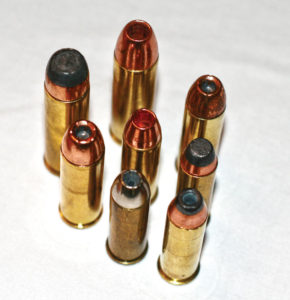
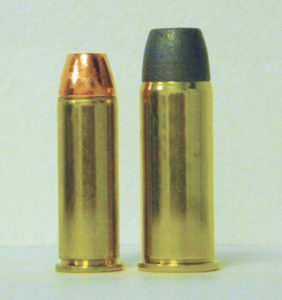
The .44 Remington Magnum (left) is literally dwarfed by the .500 Linebaugh. The .500 Linebaugh offers a considerable step up in terminal performance, as well as recoil, which may not be to your liking.
Instead, I prefer flat-nosed bullets (with a properly sized meplat) designed to penetrate deeply, particularly on larger game where penetration is your best friend. By default these bullets will make a large hole as they are starting out at a large diameter (relatively speaking). In my experience, two holes are better than one, since two holes tend to bleed more, so I really put a premium on penetration.
The first step north of the .44 Mag. is with the various .45 caliber rounds. The .45s come in a number of flavors, starting with the old warhorse and former black powder cartridge, the .45 Colt. Before you start thinking about the anemic cowboy action loads that are available for this chambering, consider that the .45 Colt in a decisively stronger Ruger revolver can be loaded considerably hotter. This isn’t your granddad’s .45. Most .45 Colt ammo that is available commercially is held to a SAAMI max pressure of 14,000 psi because there are many older revolvers (think Single Action Army) out there that cannot withstand much higher pressures.
Next up is the .454 Casull, a potent, 65,000 psi (SAAMI maximum pressure) brute of a round. The .460 S&W Mag. eclipses both of the lesser .45s with a full 1.8-inch case capable of pretty impressive velocities. The price paid for choosing the .460 is the platform necessarily big enough to house the big cartridge.
The .480 Ruger and its big brother, the .475 Linebaugh, are up next. The .475 Linebaugh, available in Magnum Research’s BFR revolver and Freedom Arms’ Model 83, is a serious cartridge for serious handgun hunters. Loaded to spec, the recoil is fierce, but the .475 is a very capable big-game getter. The smaller .480 Ruger (1.28-inch case length versus the .475’s 1.4-inch case) is the “Goldilocks cartridge” if there ever was one—just right. Loaded up, it will nip at the heals of the .475 Linebaugh, but it doesn’t need to be run that hard to work decisively on big game. It will throw heavy bullets at moderate velocities without beating the tar out of the shooter. The .480 is one of my favorites and has accounted for piles of game.
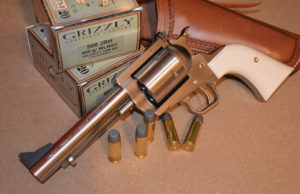
The half-inchers are next. These are very serious hunting cartridges. First up is the .500 JRH, the brainchild of gunsmith Jack Huntington (Jrhadvancedgunsmithing.com), essentially a cut-down .500 S&W (from 1.6 to 1.4 inches), offered in Magnum Research’s BFR (from their Precision Center). A ballistic twin to the .500 JRH is available from Freedom Arms called the .500 Wyoming Express (WE). The .500 Linebaugh (actual .511 diameter), while not available in a production revolver, enjoys quite a bit of popularity with handgun hunters and is a custom proposition only. Commercial ammunition is available from a number of sources.
The .50 calibers are in a class by themselves. Magnum Research’s Precision Center can build you a revolver in .500 JRH that offers first class terminal performance.
The big dog on the block is the .500 S&W Mag. Like its stable mate, the .460 S&W, the size necessitates a large platform to contain the big, raucous cartridge. All of these are capable of truly debilitating recoil if loaded up to spec. However, as I mentioned before, none of these cartridges needs to be loaded hot to offer a sizable increase in terminal performance over the .44 Mag.
If you are recoil sensitive, the .44 Mag. may be your limit, but the .45 Colt can be loaded to similar levels of recoil and makes a bigger hole. It is also capable of propelling heavier bullets than the .44. This is something to consider, but the .480 Ruger just might be the most logical choice in that it offers a considerable step up from the .44 Mag. terminally without earth-shattering recoil levels.
So when do you really need more than the .44 Mag? That is up to you and your abilities. You need to be honest with yourself and determine how much abuse you are willing and able to withstand. I know it may sound like I am sensationalizing recoil, but in all seriousness, very few people can shoot the .44 Mag. well.
These big revolvers require a lot of practice to master and are frankly not for everyone. If the .44 Mag. is your limit, there is no reason to fret. If you can handle it, and you intend to hunt large game, by all means step up. You will be well served. While the ubiquitous .44 Mag. is fully capable of most tasks asked of it, moving up in diameter is a good idea when elk, moose or pachyderm are on the menu. Ultimately, only you can determine if you really need more.
This article appeared in the June 2015 issue of Gun Digest the Magazine.
In business for a half century now, the Dam Road Gun Shop has a wide and varied client base, from hunters and target shooters, to a growing cadre of concealed carry permit holders. Shooters in that later group, says store owner Mike Palenske, are buying up the Ruger LCR, especially those in .38 Spl. and .22 Mag.
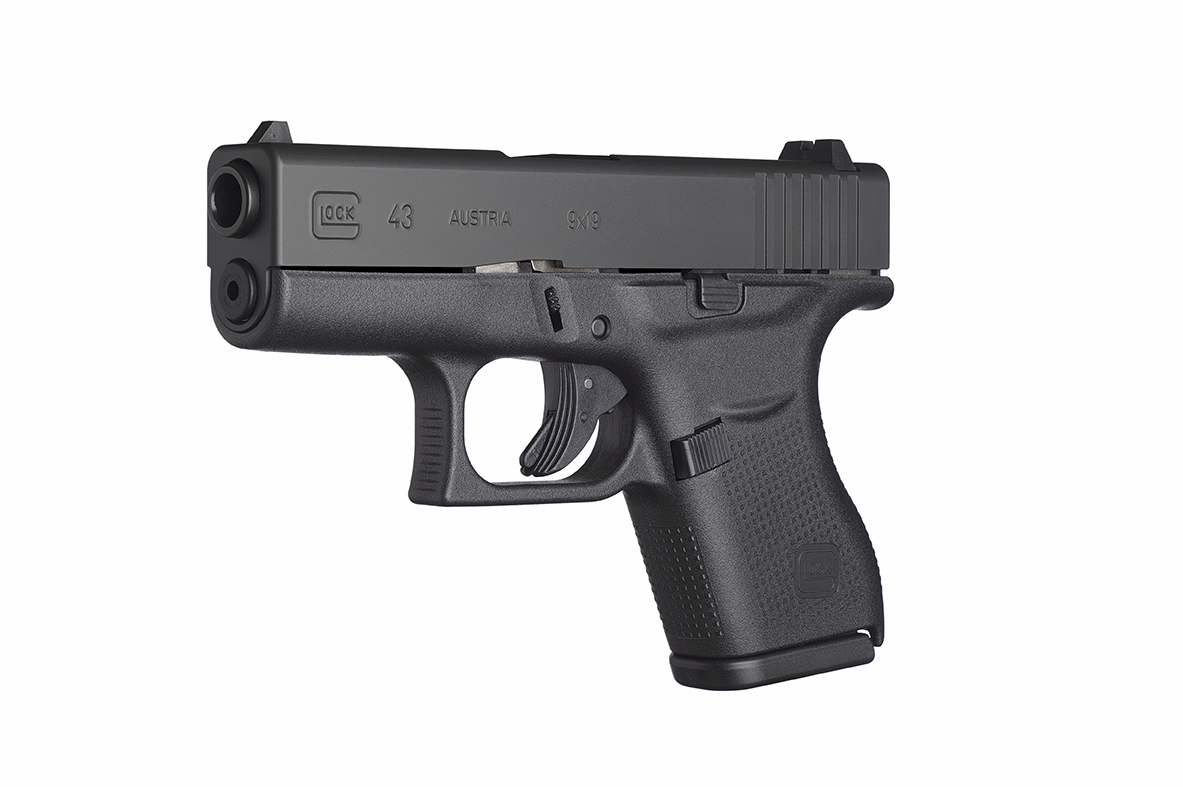
The new single-stack Glock 43, in 9mm, is moving briskly, too, at $495.
“As soon as they come in they are sold,” Palenske said. “We have a waiting list of at least 15 people who want one, so when the pistols comes in, we make some phone calls—Glock’s are gone!”
Dam Road sees a good deal of interest in tactical bolt actions chambered in .308 Win, including various heavy-barreled models in the Remington 700 line. Another good selling bolt action here is the CZ 527 chambered in 7.62x39mm. The rifle comes with a good quality walnut stock and a scope, for $695.
“The ammo for that rifle is still fairly inexpensive, and there’s a lot of it around, making that rifle an even better value for our customers,” Polanski said.
As the many financial problems of Colt Manufacturing have begun circulating in the gun world, Palenske says the prices of Colt 1911 pistols have surged, in some cases doubling. Recently, Polanski sold two of Colt’s commemorative Marine Corps Bi-Centennial 1911’s for $1,995 each, and thinks he could sell many more if he could get them in store.
Editor’s Note: This brief originally appeared in the July 2015 issue of Gun Digest the Magazine.
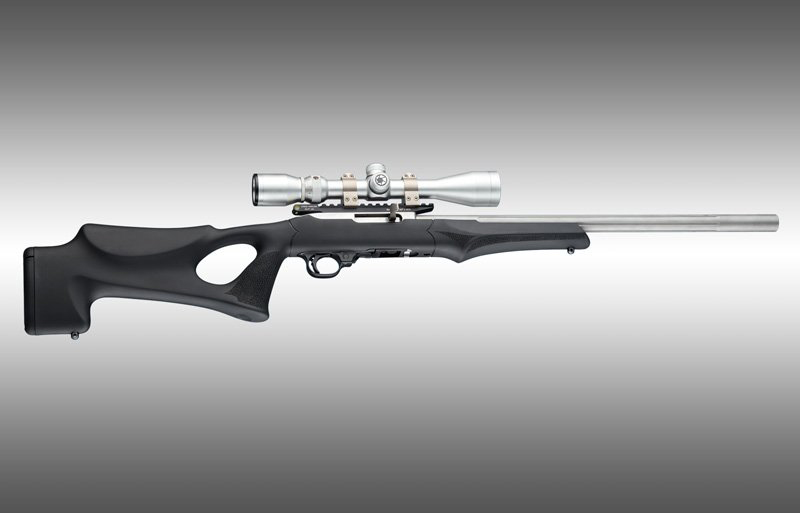
Imagine your Ruger 10/22 decked out with Hogue’s new OverMolded Tactical Thumbhole stock.
Hogue has a new stock for one of America’s most iconic rimfire rifles. And it looks like it’s ready to get shooters knocking out the X ring. Imagine your Ruger 10/22 decked out with a Hogue OverMolded Tactical Thumbhole stock. Improved ergonomics and looks that inspire confidence.
Talk about configurable firearms and one type typically springs to mind — the AR.
The carbine’s modular design has attracted its fair share of shooters with a yen for customization. The venerable semiautomatic, however, is far from the only firearm engineered to be quickly and easily modified.
The Ruger 10/22 also has chops when it comes to the ease of alteration. And there is a slew of goodies available to really get the iconic rimfire rocking — from match triggers to threaded barrels ready for suppression.
Recently, Hogue tackled another aspect of the 10/22 and has come up with an upgrade that should send precision plinkers’ collective hearts soaring. That is because the Nevada manufacturer’s newest OverMolded rifle stock looks to have everything to get shooters on target.
Like its name suggests, the Tactical Thumbhole 10/22 stock has a primary defining attribute — its thumbhole. The feature is just the ticket to get a more solid handle on the rifle, along with making it more functional in the field.
The OverMolded Tactical Thumbhole stock’s pistol grip has been angled to give shooters a more natural hold, thus wielding more control over the rifle. It also allows for the buttstock to be firmly nestled into the shoulder, in turn adding more stability to a shot and permitting longer holds on a target.
The forend has also been crafted to aid with accuracy with a wider and curvaceous design. These features are meant to enhance the rifle’s stability when used in conjunction with a bipod or on a rest.
The buttstock has a raised comb, allowing for a firm cheek weld when the rifle is shouldered. This should step up a shooter’s ability to acquire targets posthaste, not to mention accommodate a slew of different scopes and optics.
The OverMolded Tactical Thumbhole stock is mainly designed for heavy-barreled (.92-inch diameter) 10/22s. The stock, however, can accommodate standard contour barrels. The stock is available in six colors: black, OD green, flat dark earth, Ghillie green, Ghillie earth or purple. The stock is also available for the 10/22 takedown model.
The black model has an MSRP around $110, while the colored models are available for around $130.
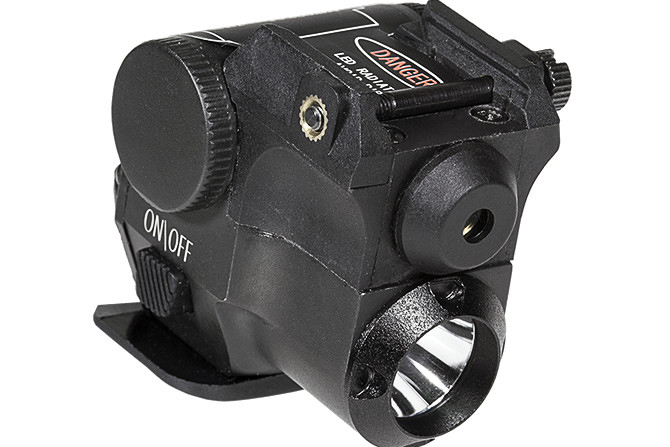
Firefield’s new laser light combo that looks to light up carry pistols. Photo Firefield
An advancement—a quite unheralded one at that—over the past decade or so is the size of firearm accessories.
Each year shooters are able to slap on lights, sights or what have you that are more compact and easier to manipulate than ever. Really, you don’t have to reach too far back in firearms history to discover how much more convenient accessories have become.
One of Firefield’s newest aiming solutions is a perfect example of these advancements. The Texas-based company’s Compact Pistol Laser Light Combo adds next to nothing to a firearm in the size and weight department; yet it gives shooters what appears to be a ton of functionality.
Concerning its dimensions, the unit measures in at 1.9×1.5×1.8 inches. As for weight, the laser light combo tips the scales at 2.6 ounces. Overall, that’s not a ton to tack onto a carry piece.
The unit is outfitted with a 180 lumen LED flashlight that has a range easily outstripping the practical function of nearly any pistol on which it will be attached. As far as the sight, the accessory has a 5MW green laser, which is visible at 50 yards in daylight and is fully adjustable for both windage and elevation.
The company opting for a green laser should make the sight a solid performer in low light. There are many who note the color is more visible in a dusky environment.
The Firefield Compact Pistol Laser Light Combo is designed to accommodate both right- and left-handed shooters. Facilitating this is an ambidextrous digital switch that controls both of the device’s functions. The laser-light combo is powered off one 3V CR2 battery, which has respectable life in the unit. The battery will juice up the laser for 9 hours of continual use, the light for 2 hours, and both function simultaneously for 1.5 hours.
The unit has a black composite body that is rated IPX4, which means it will remain functional, even if it is splashed with water. And it is compatible with Weaver-style mounts.
The Firefield Compact Pistol Laser Light Combo also appears to be a fairly affordable accessory. Presently, the company has it listed for $119.99 on its website.
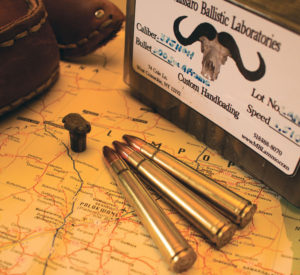
Everything that the .30-06 Springfield has been to the North American continent, the .375 H&H is and will continue to be for the African continent. Author Photo
The .375 H&H Magnum is by far one of the most versatile cartridges ever developed.
Today’s bullets make the venerable .375 better than it has ever been. Some great bullet options range from 250-300 grains and are available from Federal, Swift, Barnes and others. Author photo.
“We’re all out of cover, Phil. You either take him from here or pass. How well do you know that rifle?”
The half-mile leopard crawl, which resulted in bloody knees and elbows, had come to its end. I looked through the binoculars at the herd of eland, and I could clearly see the biggest of three bulls at the right side of the herd. I was lying prone among the cactus and thorns, leaning my shoulder against a rock-hard termite mound that dotted the plain of the Orange Free State of South Africa. The eland were easy enough to see; the problem was the expanse of wide-open ground between us.
“I’d put them at 400, no?”
“Unfortunately, I agree.”
The rifle couldn’t have been rested any steadier. The forend of the Winchester Model 70 was nestled in an impromptu bundle formed from my safari jacket, and when I settled into the rifle, I was wedged against the termite mound. I turned the scope all the way up, adjusted the hold for drop at 400 yards and gave another adjustment for wind. When the smooth squeeze of the trigger turned into that familiar, violent explosion, it wasn’t long before I heard the sweet sound of bullet hitting bone. The eland took the 300-grain Swift A-Frame right on the point of the shoulder, and with one coup de grace, he was in the salt. That Model 70 was chambered in .375 H&H Magnum, a safari classic.
The .375 Holland & Holland Belted Magnum was released in 1912, and it was classified as a “medium bore,” whereas with the bullets and powders of today, I’d lean toward calling it a “big bore.” The initial loadings used a 235-grain bullet at 2,800 fps, a 270-grain bullet at 2,650 fps and a 300-grain bullet at 2,500 fps. While the velocities haven’t changed radically, the bullet weights and construction sure have.
The .375 H&H made quite the reputation early on, and with good reason. The lighter 235-grain bullets made a good long-range choice, especially for lighter game, and as optics in the early part of 20th century weren’t popular, that load shot plenty flat enough for any hunter. The 235s didn’t have the best sectional density, but they worked fine for the smaller antelope and deer species. The early cup-and-core 270-grain bullets handled the larger antelope—like eland, kudu and sable—without destroying too much meat.
The beauty of the .375 H&H, especially in the huge, mixed bag safaris, was that the 300-grain softpoints and solids would just as handily dispatch lion and buffalo as they would the enormous elephant. The penetration of these bullets was unparalleled, and while they lacked the energy figures and the frontal diameter of the big .450s, they were much easier for the visiting sportsman to shoot effectively. The flexibility of the loads made a great choice for the one-gun world traveler. Alaska’s biggest bears are easily handled by the .375 H&H, as was (in the day) the giant gaur of India and even the tiger.
Several of the more prominent hunters have embraced the .375 H&H as their preferred tool—Harry Manners and Wally Johnson come quickly to mind, and Finn Aagaard came to rely on a Winchester 70 in .375 during his days in Kenya. In my own experience, PH Terry Calavrias guided me in the Selous Reserve of Tanzania, and he too carried a Winchester 70 in .375 H&H, without a worry in the world.
Why? What makes it such a logical choice, when there are so many cartridges that have come and gone in the last 103 years? Surely there are better cartridges available, right?
Well, that’s a rather subjective question, but I feel comfortable saying this: Everything that the .30-06 Springfield has been to the North American continent, the .375 H&H is and will continue to be for the African continent. Let’s take a closer look at the ballistic performance and benefits of the most famous African cartridge.
The .375 was one of the first cases to wear what would become the hallmark of magnum cases: that little belt of brass. Many people believe that the belt enhances the strength of case, but that isn’t its purpose. Holland & Holland designed that belted case to give positive headspacing in a case that had a very small shoulder (as the rimmed cases do), without the feeding problems associated with rimmed cartridges in a bolt-action rifle magazine. With a case that headspaces off the belt at the rear, the shoulder angle is virtually inconsequential, so the .375 H&H is designed to feed very smoothly—an invaluable asset when pursuing dangerous game.
The 300-grain, .375-inch diameter bullet has an SD of .305, making it a sound choice for dangerous game work (an SD figure of .300 or higher is generally accepted as a good weight for the largest mammals). The .375 pushes these bullets to 2,500-2,600 fps, depending on your rifle and the ammunition manufacturer, but that velocity gives a fantastic balance of deep penetration, as well as that shooter-friendly recoil level that the .375 H&H is famous for.
The ability to place a bullet in the right spot is invaluable, and many PHs prefer a client that shoots a .375 H&H to one who is uncomfortable with a .416 or .458 caliber rifle. My wife, Suzie, at 5 foot 3 inches, shoots her .375 H&H very well, and has no problem hunting with her Winchester.
Today’s bullets make the venerable cartridge better than it has ever been. If the cup-and-core bullets of the early 20th century helped the .375 gain that reputation, the bonded-core and mono-metal bullets of today will guarantee that it sees another century of duty.
There are some “middle ground” 250-grain bullets, like the Sierra Game King boat-tail spitzer, and the 260-grain Nosler AccuBond, as well as some heavyweight choices like the 350-grain Barnes TSX and a pair of Woodleigh softpoint and solid bullets in 350 grains.
In 300-grain choices, the North Fork bonded semi-spitzer will ruin a buffalo’s day, and the North Fork 300-grain flat point will cleanly handle any elephant walking today. The 300-grain Nosler Partition and its bonded-core cousin, the Swift A-Frame, make a good choice for an all-around load in the H&H case. The .375 H&H comes in a rifle that is affordable when compared to the double rifles, and most manufacturers have chambered for it at one time or another.
I’ve used the .375 H&H to take smaller antelope in Africa, like the steenbok, springbok and impala, as well as warthog and eland. I’ve also used it to take a huge-bodied bison on the Great Plains and for caribou in the Tioga of Quebec. It makes a great choice for bear of any color or species. I can honestly say that I’ve never lost an animal that I pointed my .375 H&H at, and I’m not done hunting with it by any stretch of the imagination.
This article appeared in the June 2015 issue of Gun Digest the Magazine.
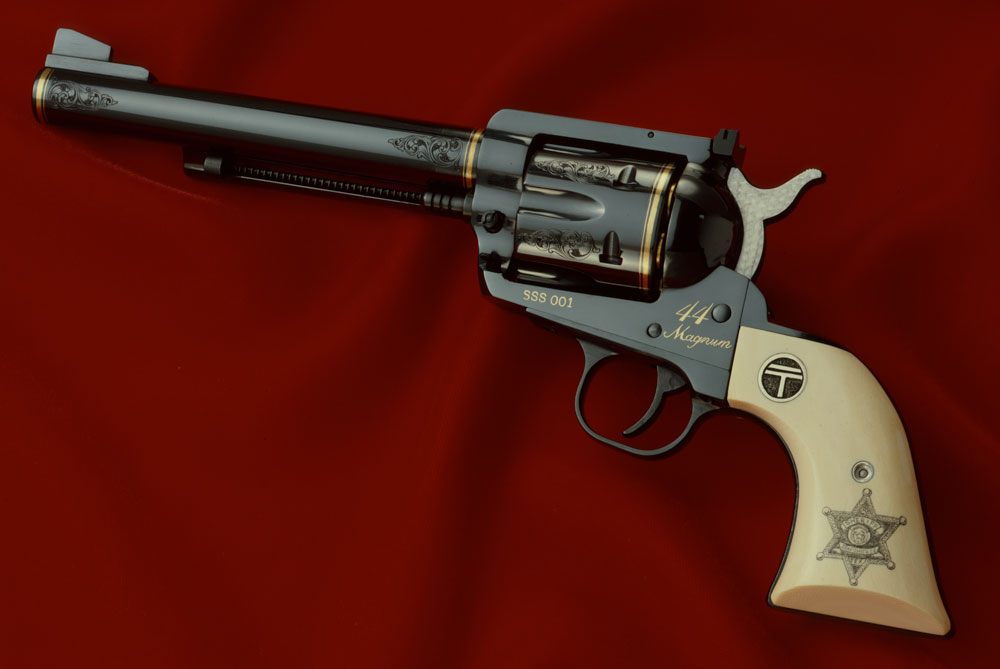
Bill Ruger designed the Skeeter Skelton Special pair of sixguns to commemorate Skeeter’s career as one of the country’s most highly respected gun writers.
From sixguns to bolt-guns, you can’t go wrong by starting a Ruger collection. Here are some tips for getting started.
I have enjoyed collecting guns and specifically Rugers for many years. During that time I have learned several good lessons. Some of those have been quite costly, but those are the ones that really stick in your mind never to repeat again. I think of it as paying for my education.
I have listed some general pointers for the beginning collector to consider that I think will help in building a good quality collection. They are certainly not all inclusive but hopefully will be of some help.
There is nothing wrong with accumulating guns—all types of guns. We have all been there. Myself, I love guns, period! If that is what you enjoy, that is fine, but if you want to become a true collector of a certain gun or guns, I believe it requires focus. In Ruger collecting, it does not matter what you decide to collect or how you approach it, but I suggest you have a plan.
The Initial Plan
An example of a plan would be that you decide you want to collect one example of each major type of the Ruger early autos and old model revolvers. Your plan would lay out and list what that would include: Standard Autos and Target models, Red Eagle and Black Eagle grips, different barrel lengths. Next: the Single-six Revolvers, flat loading gates and round loading gates, black rubber and walnut grips, different barrel lengths. Then the Blackhawk .357 Revolvers, etc. If you have limited funds, figure that into your plan. You do not want to mortgage the farm, or at least not all of it! Then you go about your search. Try not to sway too much. Instill discipline in yourself, and try to stay on your plan. This is usually very hard for us gun lovers.
Plan Two
Once you have fulfilled the above or are nearly there, you need to decide what is next. How do you expand? For example, you may decide that you really like a particular series of gun, let’s say the Single-Sixes. You want to expand that particular part of your collection and really get into the different variations of these guns. You should then focus on that area. First, find out all you can about the Single-Sixes—read, read, read! Ask fellow collectors, look at gun displays at gun shows, if available, etc. Then list all the guns that would make up a complete collection of the different variations of those guns. An example is that there are four major variations of the flat loading gate or “flatgate” guns. Then begin the hunt. Again, you may have limited funds, so figure that into your plan.
Books, Magazine Articles
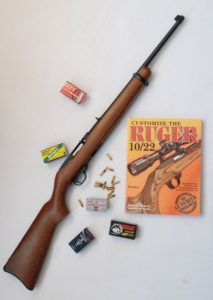
The Ruger 10/22 autoloader has become the benchmark against which other rimfire semiautomatic rifles are compared.
You just cannot read too much about the guns you decide to collect! Most of the authors are true collectors themselves and are sharing their many hours of hands-on research, knowledge, and experience. Use this to your advantage. There are several good books on Ruger collecting. While some are out of print, they can still be found, and their cost will pay for themselves many times over.
Listen and Learn
Try to get to know fellow collectors who are interested in Rugers and especially the same type of Rugers that you are. You will find most of them willing and even eager to share their knowledge and experience. Be humble, ask questions, do not be embarrassed, everyone has to learn. At the same time do not be a “pest.” Remember, you cannot learn everything from them overnight, so use good judgment and taste when having discussions with them. Recall also that much of your knowledge needs to be hands-on experience. I have many collector friends who have taught me so much, and they are still teaching me today.
Join a Collector’s Association
This is a good way to meet people with the same common interests. You learn contacts and often find some good guns for your collection. The Ruger Collectors’ Association and Red Eagle News Exchange are two good Ruger information sources.
The Ruger Collectors’ Association is the oldest organization for the Ruger collector or enthusiast. Membership includes the Association’s sporadically produced newsletter and invitation to members-only events. For more information (or to apply for a $30.00 annual membership), write to: Ruger Collectors’ Association, Inc., P.O. Box 240, Greens Farms, CT 06436, or go online to www.rugercollectorsassociation.com.
The Red Eagle News Exchange is a quarterly publication filled with new information, updates, and articles about collecting Ruger firearms and memorabilia. This is an excellent resource for the Ruger collector or enthusiast, and the wealth of information sent to new subscribers as a free gift with a $25.00 paid annual subscription is alone well worth the money. Highly recommended. For more information or to subscribe, write Red Eagle News Exchange (Chad Hiddleson – Editor), 1945 Clover Avenue, Perry, IA 50220, or call (515) 465-2057. Or go to the Ruger Forum online: www.rugerforum.com.
Display Your Guns
The Ruger Collectors Association has two major annual theme shows. Many gun show promoters all over the country have “display tables” available at reduced table rates. I suggest you show your guns off. You do not have to wait until you have the perfect collection. You may meet someone from the general public that sees your display and happens to have a real good gun for your collection. You do not always get them, but it has happened more than once for me.
Sources
I have found some of the best sources for good collectible guns to be gun shows, local newspaper, gun publications, estate sales and actions. The Internet adds another broad dimension. Fellow collections are a valuable source to obtain leads for those special guns.
Now for some additional pointers about the guns themselves.
Condition
I really believe that you are better in the long run to spend more money up front to obtain top-condition guns for your collection than the less expensive junker stuff. In future trading or selling this will pay off immensely. Of course, that is not to say that in order to fill a particular rare open slot in an almost complete collection that I would not buy a lesser condition, very hard to find gun and then try to upgrade.
Originality
I am a purist when it comes to the guns for my collection. Factory original is a must—I have found that non-original guns normally do not enhance your collection. This is where your study and reading really pays off. You will know what is original and what is not.
Guns, Guns, Guns
Nothing helps you determine the originality and spot rare variations like looking at and handling actual guns. The more the better. The more you examine, the more familiar you become with what a “right” gun is and what it should look like.
Examination
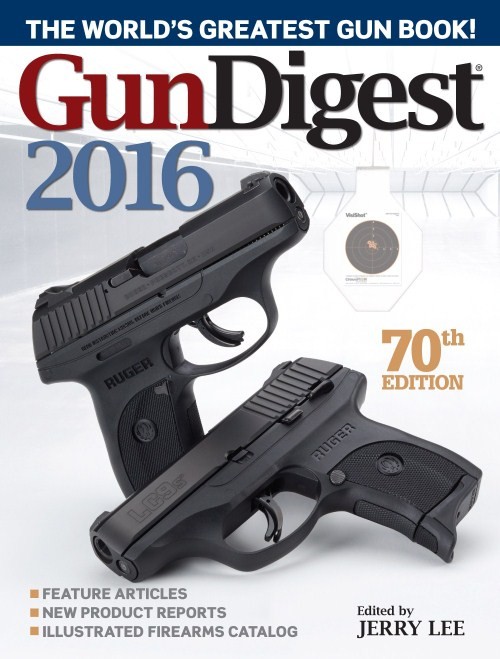
Rugers have appeared on the covers of many editions of the Gun Digest annual, including the 2016 edition.
Take your time when examining a gun that will go into your collection. Look at it very closely, study every feature. Sometimes this is one of the hardest things to do—excitement over finding that rare gun takes over and blinds you to true condition and problems you should have noticed before you get it home. Everyone will experience this no matter how hard you try. Do not dismay; you are paying for your education. Learn from these mistakes.
Checklist
One way that I try to ensure I give the gun a thorough examination before purchase is to have my mental check list ready. Examples are:
Has the gun been refinished? Look for signs of blue in previous rust pits, sharp edges buffed away, lettering not sharp, waves from excess buffing, etc. Look at the color of the bluing. Scratches, scuffs, dings—notice them !
Screw heads buggered—has the gun been messed with?
Are the grips right? Are the medallions right for the period of the gun? Is the grip finish correct?
Is the Barrel length correct? Is the barrel address correct for the period of manufacture of the gun, front sight correct, rear sight correct? Is the ejector rod button correct, ejector rod housing aluminum or steel – which is correct?
Safety kit installed in old model guns? If so, are the original parts with the gun? Old model guns without the original parts lose a considerable part of their collector appeal and value.
Boxes. The original box and paper work add desirability and value to any gun, especially a collectible gun. Always ask if the box is with the gun. Sometimes the box may be “under the table” or not visible with the gun. Unless you ask, it may not be furnished with the gun. Older Ruger boxes often bring a good price—some of the rare ones a hefty price—so it is added gravy for the seller if you overlook the box; he will sell it to another collector.
Box Configuration. Again, this is where your study and observation will pay off. Is the box right for the gun? Is the instruction manual included, and is it correct? Warranty card right? Ruger boxes and shipping cartons, if applicable, are numbered to the original gun. Lead pencils and grease pencils were used to number the older boxes on the ends and sides of the boxes before computerized end labels on the later “new models.”
Buyer Beware. On the rare and especially more expensive guns always inquire about the existence of a validating “factory letter.” There are unscrupulous dealers and individuals who will tell you anything to make a sale. Again, this is where your study and education can really pay off. You can spot what is not right about a particular gun. Be wary but not so cautious that you never take that chance to get a rare gun. Sometimes you have to listen to your gut and just jump in or you will miss a good gun.
Unscrupulous Dealers and Individuals. Again, where there is money to be made, there are cheats and crooks—just a way of life! Look for dealers and individuals with good reputations. Keep your ears open regarding others who got “burned or ripped off.” There are many good deals to be found, but as my wise old grandma used to say, “Sonny boy, if it looks too good to be true, it usually ain’t true”!
This article first appeared on the website www.gunblast.com and is reprinted with permission.
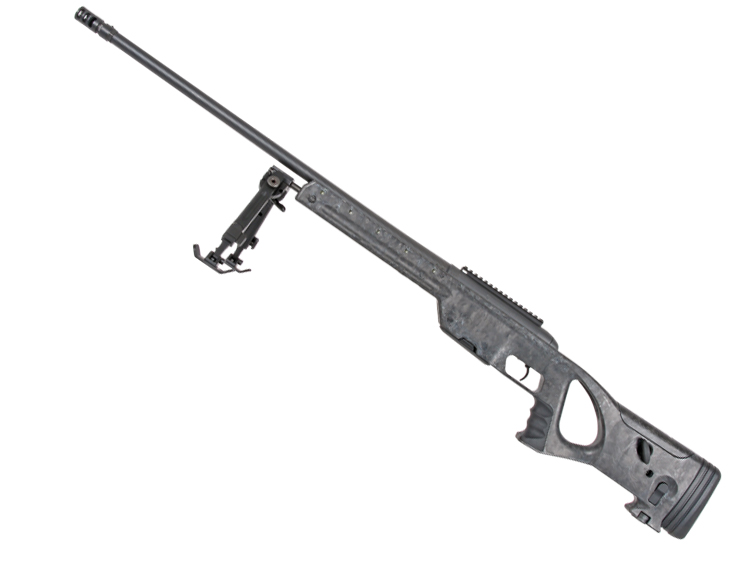
A year after its release, the Steyr SSG Carbon is finally available in the U.S.
Gun makers have been pulling every shape, size and design of precision rifle out of the woodworks as of late. Steyr is one of the most recent.
Technically, the Austrian manufacturer’s SSG Carbon has been around for a while, released at the 2014 SHOT Show. But it only lately has become available on the U.S. market, due to the rifle’s demand among the globe’s law enforcement agencies.
According to Steyr, it took 16 months just to fulfill its initial volley of orders for its new .308 Winchester. Given the SSG Carbon’s features, it is understandable why the rifle caught the eye of so many professional marksmen.
Along these lines, maybe the most impressive aspect of the bolt-action is the ruggedness Steyr has engineered into it. This is especially true for one massive feature of the rifle — its stock.
The benefits of carbon-fiber as a stock material hasn’t been a secret for sometime now. The rigidness of the material and its ability to resist environmental fluctuations makes it ideal for use in a stock. At the same tick, conventional woven carbon fiber can be brittle, particularly if stuck from the side.
Steyr used a different technique to form the SSG’s stock, turning to chipped-carbon Sheet Molding Compound. The process takes carbon flakes and combines them thermally with a binder, creating a material that has a tension net superior to steel, but at a fraction of its weight. In addition to its strength and rigidity, Steyr also touts SMC stock’s ability to reduce the rifle’s recoil.
The stock also has a number of features built into it that are certain to win points with long-distance shooters, including: multiple sling mounting points, adjustable cheek piece and butt plate, rubber-wrapped pistol grip, heavy bipod and integrated rear elevation pod.
Steyr is offering the SSG Carbon with both a 20- and 22.4-inch barrels, each cut with a 1:10-inch right hand twist. And it has a 10-round double-stack detachable polymer magazine. The rifle weighs in at a hair over 11 pounds and has an overall length of 43.4 inches.
Presently, the MSRP on the Steyr SSG Carbon is $3,695
Steyr SSG Carbon Specs Caliber: .308 Winchester Capacity: Polymer double-stack detachable box/10 rounds Action material: 25CrMo4 steel Barrel: 20- and 22.4-inch cold-hammer-forged heavy barrel Rifling: 4 Grooves, 1:10 RH Twist Sights: 20-MOA Picatinny rail Safety: 3+1 Position Safety Pull weight: 3 pounds, 8 ounces (user adjustable) Stock material/type: SMC carbon fiber Length of pull: 14.25 inches min. (0.33-inch inserts available) Drop at comb: +0.85 to -0.9 inches vertical adjustment Comb adjustments: 0.5 inches longitudinal; 0.133 inch lateral (rotationally adjustable) Drop at heel: +1.07 to -3.8 inches vertical adjustment Recoil pad: Elastomer; 0.8-inch thick Pistol grip: Polymer with interchangeable rubber inserts Weight (empty): 11 pounds, 2 ounces Overall length: 43.4 inches Included accessories: Owner’s manual, Versa-pod or HD bipod, continuously adjustable rear-elevation pod, one detachable box magazine, hard travel case, sling swivels
The Winchester Model 1873 lives on with the company adding a new sporter to its line.
Of all American guns few are as iconic as the Winchester Model 1873. The lever-action rifle, after all, was the “Gun that won the west.”
The carbine’s heyday as a military firearm and a tool for taming the American frontier might be over, but the demand for the historic rifle is as brisk as ever. So brisk, in fact, Winchester recently expanded its line of 73s.
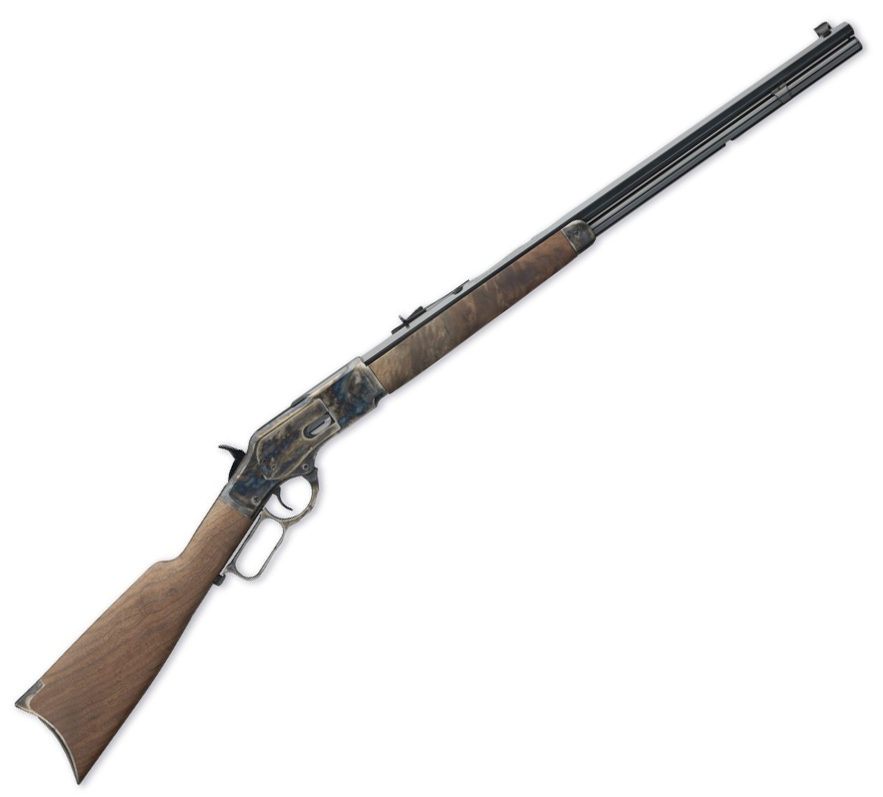
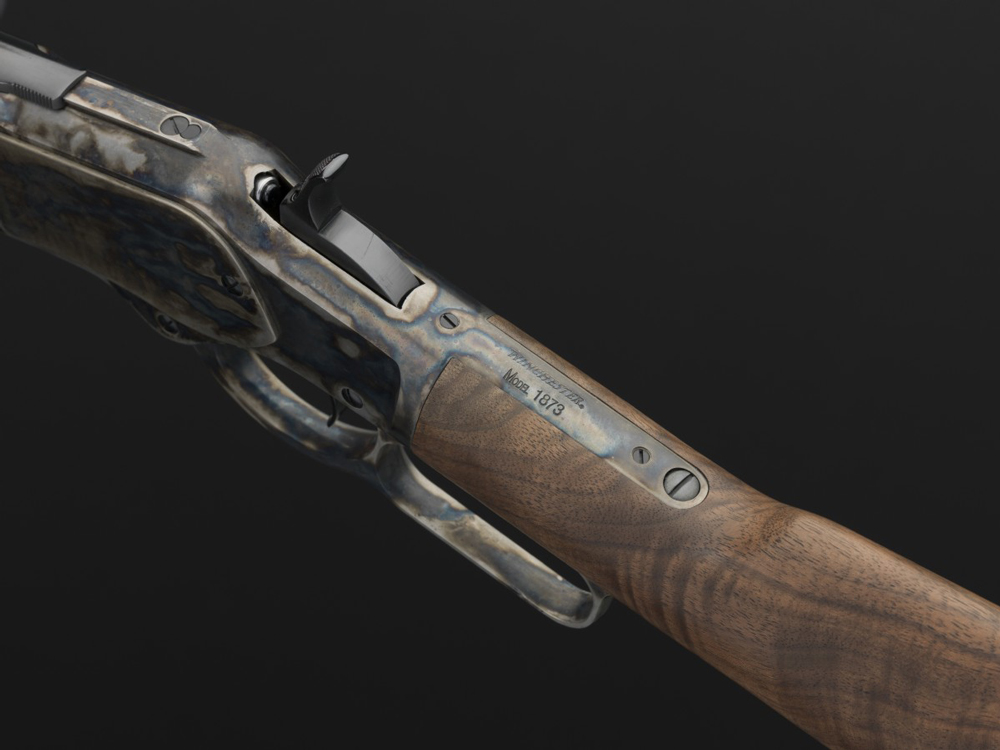
The company is now offering a Model 1873 Sporter, color case hardened, with an octagon barrel. The Japanese-made rifle looks to have all the makings of a top-notch and functional addition to almost any enthusiast’s collection.
The octagon barrel is one of the more intriguing aspects of the new addition. While it is a throwback, it is not necessary one that makes the new 1873 more historic, given the original sporters came with the option of round or octagonal barrels. There was also a half-octagonal option on the original, as well.
Like the earliest examples of this style of 73, the barrel measures in at 24-inches. Practically speaking, this should make for a very maneuverable rifle and should help the rounds it’s chambered for — .357 Magnum/.38 Spc., and 44-40 Win. — live up to their ballistic potential.
The new Winchester Model 1873 Sporter is color case hardened, which gives the rifle a timeless look.
The rifle comes with the choice of a grade I or II walnut stock with a stain oil finish and cut to the original Model 1873’s pattern. This includes the rifle’s straight grip, which even today gives the firearm a pretty dynamic profile.
The rich grain of the wood sets off the color-case hardened receiver and crescent buttplate, along with the blued barrel.
The rifle is outfitted with a semi-buckhorn rear sight and a Marble Arms gold bead front sight. The rear tang is also drilled and tapped for the quick addition of a tang-mounted rear sight.
Presently, the Winchester Model 1873 Sporter has an MSRP of $1,739.
Haenel-Mannlicher, circa 1909, fitted with a Lyman Model 36 receiver sight and Lawrence sling. The sight appears to have been fitted at the factory, but it is impossible to say for certain.
In the years before 1914 one could find, tucked away in a corner of the Sears, Roebuck catalog, a listing for a bolt-action sporting rifle from Germany. Variously listed as a Mannlicher, or a Haenel-Mannlicher, or sometimes just a C.G. Haenel (pronounced HY-nul), these rifles were the first steps in a trend that became a deluge: Bolt-action sporting rifles based on military actions.
Generally now known as Haenel-Mannlichers, these German bolt-action rifles were not cheap. In the 1902 Sears catalog, the price was $24.50. By comparison, a Winchester Model 95 listed at only $17.50. What made the German import worth 50 percent more than this state-of-the-art lever rifle? And why, when Model 95s are prized by collectors, are Haenel-Mannlichers all but forgotten except for a few devotees of early custom rifles?
There are two answers to that question, and relative quality has nothing to do with it. They are both finely made rifles, and some of the Haenels especially so.
For most gun collectors, the era of sporting bolt rifles began with the Mauser 98.
Everything good and modern occurred after that, they believe, and nothing much before. But such was not the case. In the frenzy of rifle development in Europe between the arrival of smokeless powder in 1886 and the ultimate Mauser in 1898, several good military bolt rifles made their debut. For sporting purposes, the most significant by far was the German Commission rifle of 1888.
For military collectors, the Gewehr ’88 is almost a cult object, and while it has been widely written about, it is also widely misunderstood. It is sometimes described as a Mauser with Mannlicher features, and sometimes the reverse. In reality, however, the Commission rifle was neither Mauser nor Mannlicher, but that rarest of creatures: A mechanical device designed by committee that was highly successful.
Its stint as the official infantry rifle of the German Army was short-lived – only 10 years – but it went on to a successful career in every corner of the globe as both military rifle and, in its converted form, a hunting rifle. So good was the Commission action that Steyr, in Austria, which manufactured the ’88 under contract for Berlin, modified it into a hunting rifle. The result was the famous Mannlicher-Schönauer Model 1903, a design that set the standard for quality hunting rifles for the next 70 years.
Steyr was not the only company to appreciate the virtues of the Commission rifle. C.G. Haenel, a prominent German gunmaking company in Suhl, also made Commission rifles under contract. Founded by Carl Gottlieb Haenel in 1840, C.G. Haenel & Co. quickly became a force in German gunmaking and, like most German firms, produced sporting weapons when it was not filling military contracts.
Haenel’s civilian rifles on the Commission action followed the German hunting rifle style that existed since the advent of centerfire cartridges. Most had half-octagon barrels with full or partial matted ribs, matted receiver ring, folding leaf sights, schnabel fore-ends and elegant turned-down bolt handles. There was usually a stock-bolt in the fore-end, and sometimes they were fitted with receiver sights. Most had double-set triggers. While the majority were chambered for the standard military 8×57 cartridge (usually the original .318” bullet, rather than the later .323”) they were also offered in pure hunting cartridges like the 9×57.
The conversion to a Mauser-style box magazine with hinged floorplate is one of the most beautifully executed floorplate-release mechanisms ever made – far superior to almost any modern rifle, including some ultra-high-dollar custom rifles. It is crisp, positive and unfailing. This rifle also has an excellent double-set trigger.
The first importer of Haenel-Mannlichers was Oscar Hesse of New Jersey, who began bringing them into the U.S. in 1894. There was a strong connection between German shooting clubs in the U.S., German immigrant gunmakers and the German companies, so more and more importers got into the act, and each, it seemed, stipulated little changes to the overall design. As a result, the number of minor variations seems endless.
This brings us back to the two major reasons there is only minor collector interest in these rifles. The first, of course, is the lack of a famous name such as Winchester. The second is the impossibility of classifying rifles by model and year. Model classification and certifiable originality are the backbone of gun collecting, and with Haenel-Mannlichers and other civilian rifles based on the Commission action, this is almost impossible. There were too many importers at this end, too many small gunmakers at the other end, and far too many variations in between.
For the modern rifle lover though, Haenels in their many guises offer an opportunity to own a rifle of stellar quality for not much money. The materials, workmanship and finishing are comparable to fine, modern, custom rifles. On the negative side, they are chambered for cartridges like the 8×57 and 9×57 that by today’s standards are relatively low velocity and suitable only for short-range hunting.
Collecting Haenel-Mannlichers may never make you any money, but it can lead into exploration of a fascinating byway in the history of the sporting rifle. You will find early Mannlichers from Steyr as well as German and Austrian custom makers, and you will find custom-ordered takedown rifles and modified Gewehr ’88s.
There was life before the Mauser 98 and the evidence lies — as with so much of American life — in the pages of the old Sears, Roebuck wish book.
This article appeared in the 2016 Gun Digest annual.
There is plenty of lore surrounding the Mozambique Drill. That’s to be expected with anything that includes both Col. Jeff Cooper and African mercenaries. But, overall, the drill itself is much simpler than its colorful past suggests.
Simply put, the defensive pistol drill involves placing two shots to the chest and one to the head. The above video by Gun Digest author Richard Mann elucidates some of the finer points of the drill, including timing and precision aspects.
If this isn’t a drill that you don’t already do, it definitely should be worked into your routine. As explained in the video, there are some important skills sharpened in this simple bit of practice. And best of all, it can be executed nearly anywhere you go shooting, be it an indoor or outdoor range.
These electronic ear plugs for shooting don’t just provide protection against hearing loss, they make shooting much more enjoyable.
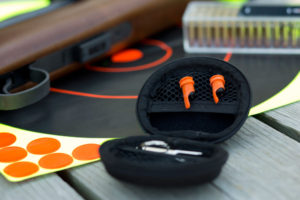
The SoundGear ear plugs for shooting come in a handy carrying case, with extra batteries and in-the-canal inserts.
The danger that even a one-time exposure to excessive noise could result in permanent hearing damage is undeniable. According to The National Institute on Deafness and Other Communication Disorders (NIDCD) any noise level at or above 85 decibels (dB)—such as the outside hum of traffic on a local road—could cause noise-induced hearing loss (NIHL) if exposure times are great enough. The noise levels produced when a firearm is discharged, then, are certainly capable of causing damage to hearing and need to be protected against.
According to one source, a gun blast, the quietest of which (on an unsuppressed firearm) might clock in at 134 dB or so for a .22—or up to over 165 dB for a .44 magnum, or even greater depending upon environmental variables such as inside vs. outside or distance away from the shot—can pulverize the delicate machinery of the inner ear like a slug fired through water balloons.
Most shooters are keen to this danger and take precautions at the range by using foam ear plugs or shooting ear muffs of some kind. I had personally never given the topic much thought beyond that myself—that is, until an opportunity came along to try out some Platinum Recreational Instant Fit ITC noise-canceling electronic ear plugs from SoundGear.
First impression: Three-hundred bucks for a pair of ear plugs? Who in their right mind would spend that much on those? I wondered.
Actually, it turns out that many of the world’s top shooters already invest mighty sums of money in custom fit ear plugs—some costing as much as a couple thousand buckeroos. By comparison, the SoundGear plugs are a real steal. But would they work as advertised?
Range Test of the ITC Ear Plugs
We loaded up the guns and headed to the range, with the SoundGear units in hand. After installing the Size 10 batteries and slipping the little buggers snugly into my ears, I realized very quickly how superior they were to standard ear muffs. It was an eye-opening experience, to say the least.
That’s because the units—which permit normal noise level sounds to enter, while keeping dangerous-level noises at bay—make it feel like you’re not wearing any protection at all. In fact, they even amplify sounds somewhat, up to 8x enhancement according to SoundGear.
Most amazingly, they eliminate that muffled, congested, stuffy-head feeling you get with a big pair of ear muffs affixed to your head. I felt free of that weird sensation so typical when shooting with foam earplugs and muffs where it seems like your equilibrium is “off” and the walls are closing in.
I cannot overstate how impressed I was by this unexpected benefit. Being free of the odd sense of having your hearing cut off, everything was simply more natural feeling. It was actually more enjoyable to shoot!
As an added benefit, it sure was a lot cooler shooting in the afternoon summer sun using the ITC plugs as opposed to hot ear muffs, which don’t exactly breathe very well.
Noise Reduction Results
The ITC or “In The Canal” Recreational plugs engage at the 93 dB level, and cut noise by up to 25 dB—while the Industrial version slashes noise at about the 80 dB level. That means either unit kicks in to suppress noise well below the 140 dB level of the average gun shot.
Its digital sound reproduction enhances environmental sounds—making it possible for me to hear with what can only be described as super spy hearing clarity.
As far as reducing the noise when you shoot, lacking any acoustic measurement tools, we couldn’t scientifically verify the amount of noise reduction but I can say it was substantial and that they work quite well. When you let loose with a string of shots they just seem to “shut off” the sound. The Bang, Bang, Bang! becomes a Clurp, Clurp, Clurp! when you’re done shooting and then they turn back on.
The plugs come in a compact little carrying case that saves space in your range bag. It includes four orange and four black silicone sleeves, a cleaning brush, two packs of batteries and the two digital hearing devices that get inserted into the sleeves. One tip: remove the batteries after each use or they’ll keep drawing down and you’ll have to replace batteries on your next trip.
Conclusion
This tiny electronic hearing aid protects against noise-induced hearing damage from gun shots, yet doesn’t cancel out the surrounding environment. The net effect: I actually shot better because my natural sense of balance wasn’t thrown off by that “muffled” feeling you get with a bulky headset clamped onto your head. It makes me more effective in the hunting field, and I have more fun. I started off thinking this was all about hearing protection. But hearing is believing. What it’s really about is shooting enjoyment. That it protects my hearing while doing that is just icing on the cake.
The Bren Ten shot to be the U.S. Military’s side arm. The best it mustered was becoming pop-culture trivia.
To that end, the most notoriety the 10mm pistol achieved was becoming Sonny Crockett’s gun in the 1980’s T.V. show Miami Vice. But what exactly was the hitch in the handgun’s giddyap relegating it to the ashbin of history?
First and foremost, the company that built the gun — Dornaus & Dixon Enterprises Inc. — was hamstrung by fulfillment problems. But as the above video by Larry Vickers shows, the Bren Ten also has some design flaws that made the pistol less than desirable.
One of troubled points was the gun’s cross-bolt safety. The featured was engineered with safety in mind, as a way to ensure no negligent discharge when decocking the pistol. But it had a nasty habit of engaging — unbeknownst to the operator — when the slide was racked. This, for obvious reasons, is not a desirable trait on a self-defense gun.
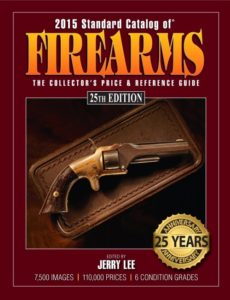
These troubles led to less than 1,500 Bren Tens being produced. This scarcity, however, does increase the value of the pistol with the Standard Catalog of Firearms listing certain models at $2,800.
Be sure to watch the entire video. Not only is it chocked full of great history on the Bren Ten, it also has some spectacular slow-motion footage of the pistol lobbing 10mm rounds down range.
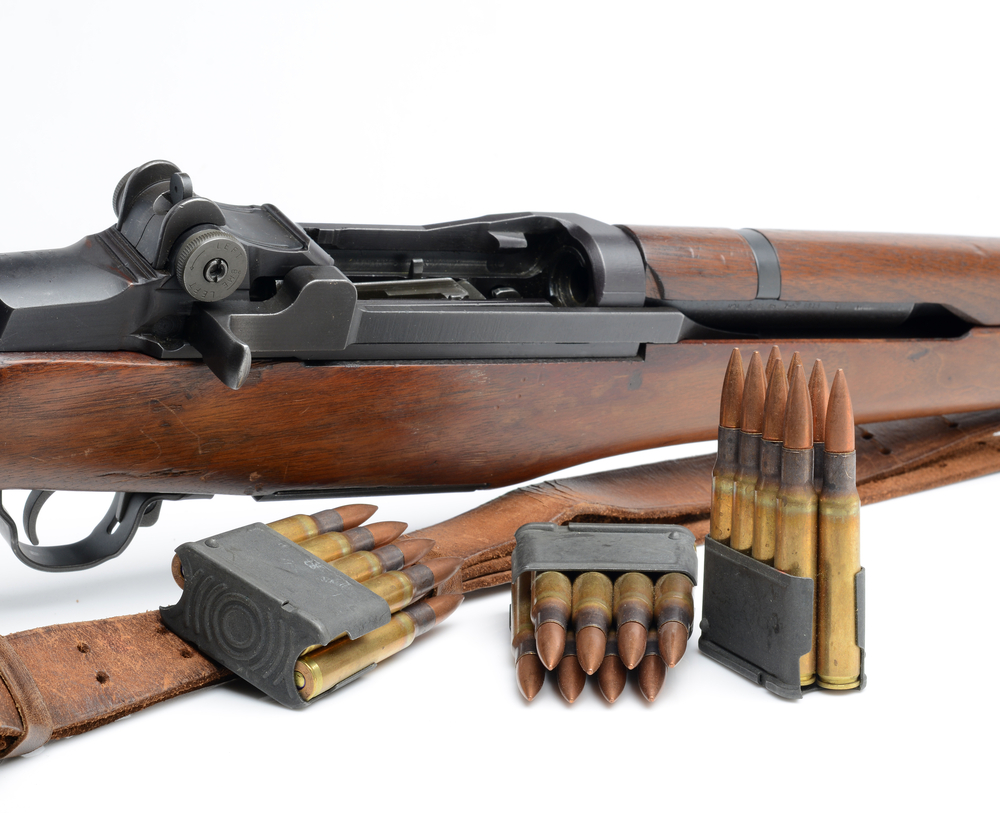
With a dwindling supply of M1 rifles of all models, the market for this iconic American battle rifle is heating up fast at GunRunner Online Auctions.
“Some of the hottest items this year for Gunrunner Auctions are U.S. M1 Carbine Paratroopers,” says GunRunner owner Scott Weber. “We obtained a splendid specimen –99 percent original finish–from an estate. It sat in a closet for 70 years! This beauty brought $4,000 with paperwork.”
Good M1’s with clean bores and matched wood go for over $1,000. An all-original World War II M1 Garand with a nice 1940’s bore and excellent condition can bring over $2,000.
Generally, Weber notes, older collectors are buying up the M1’s. Though lately, he adds, a surprising number of younger buyers have entered the market, especially for lower-grade M1’s.
“I think they want what their grandfathers fought with in the Big One or they are seeing the M1’s on the Big Screen and want one to hang over the mantel.”
But collectors, he warns, need to be careful as M1’s are also “one of the most faked of all World War II collectibles,” Weber says. “Reproduction stocks, false stamps, fake rivets and it’s impossible to determine one by serial number alone.”
Do you research, lean on expert advice and use an experienced auction house, Weber advises.
This brief is from the July 2015 issue of Gun Digest the Magazine.
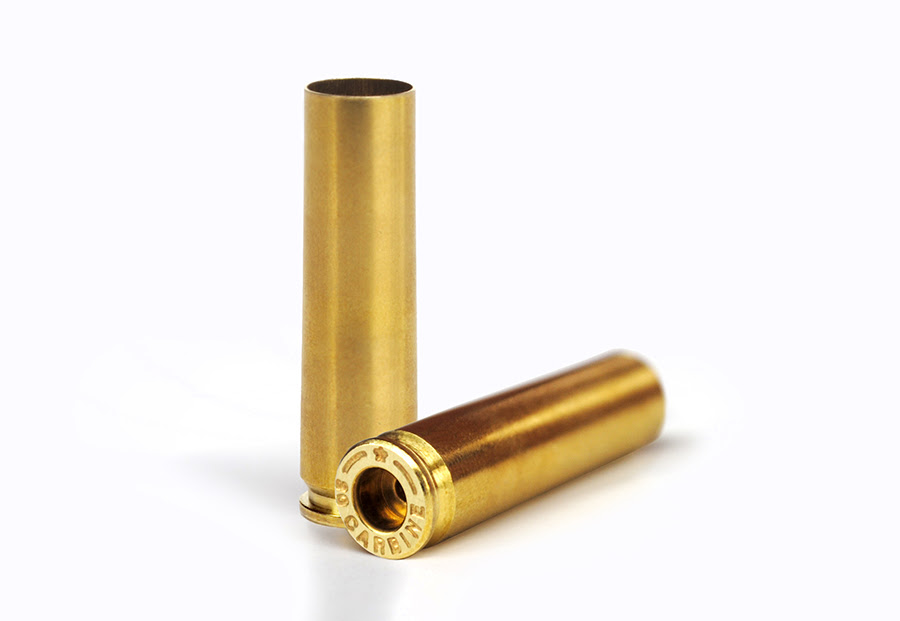
Starline Brass serves the cutting edge shooter, no doubt. But the manufacturer has also always had a yen for the traditional. Just take a gander at the cases the Missouri company produces for old black-powder guns, if you need further proof.
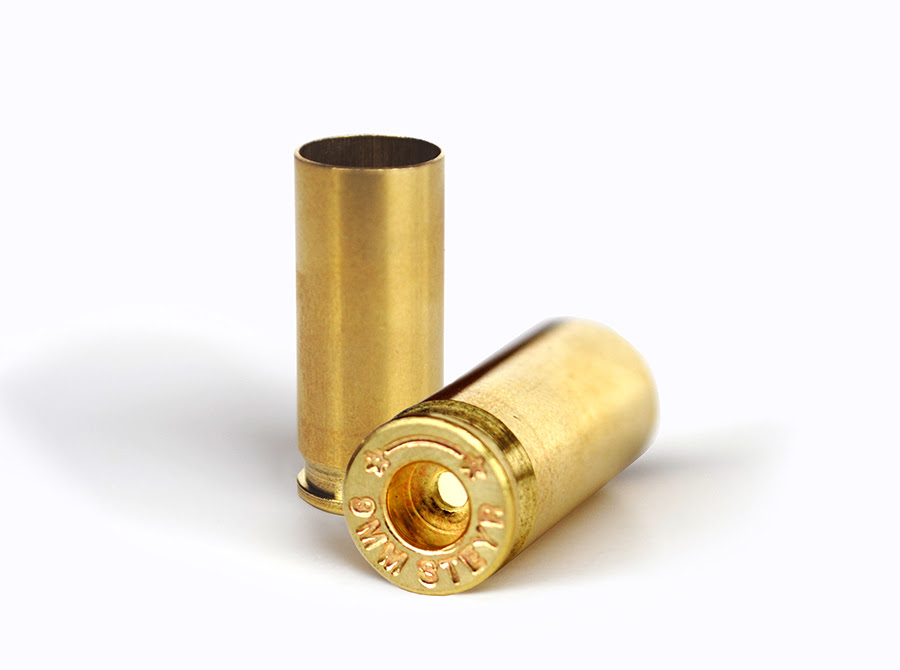
Starline, however, has walked the line between mainstream and obscure with the latest additions to its catalog. While a .30 Carbine and 9mm Steyr might not be in every gun safe, both are not way out in right field, either.
The .30 Carbine is perhaps best known as the ammunition for the M1 Carbine. The dandy light rifle saw plenty of action with American forces, adopted in World War II and serving up to the Vietnam War. More recently, the round has been born again as a handgun cartridge in Ruger’s Blackhawk revolvers.
Those who have the venerable M1912 can rejoice, Starline Brass is now offering 9mm Steyr cases.
The 9mm Steyr had some success in the early 20th Century, most notably as ammunition for the Steyr M1912. The pistol was the Austria-Hungarian Empire’s and then Austria’s military service side arm, serving from 1912 until 1945. The 9mm Steyr also pulled duty as a submachine gun round, feeding MP34.
Starline’s brass is 70-percent copper and 30-precent zinc, which is vertically drawn to keep wall thickness consistent. The company anneals its cases between each draw to ensure its malleability and inspects each case between each step of the manufacturing process.
Presently, the MSRP for the .30 Carbine brass is $122 for a box of 500 and $226 for a box of 1,000. For the 9mm Steyr a box of 500 runs $97 and a box of 100 $170.
Looking to go armed, but are stuck in the weeds as to what to arm yourself with? Here are 20 of the best concealed carry gun options that will keep you on the defensive.