Home Blog Page 314

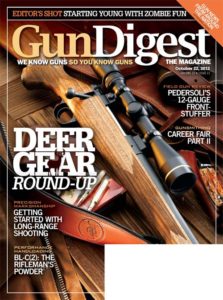
5 Reasons to Read Gun Digest Magazine

0

5 Reasons to Read Gun Digest Magazine...

Doug Howlett, Editor-in-Chief of Gun Digest the Magazine.

A note from Doug Howlett, Editor-in-Chief of Gun Digest the Magazine…

As firearms enthusiasts, each of us has a primary reason that brings us to the shooting table. For many it's self-defense. For others it's competition or to simply have fun. For a lot of souls for whom I am grateful—our nation's soldiers and law enforcement officers—it's professional. For millions of sportsmen, including myself, it's primarily hunting. Certainly, to hunt, has been my main impetus for being a firearms owner, but I have to confess, over the years, while my passion for the chase has not waned, my desire to shoot and write about and share information on a variety of guns with applications far beyond hunting has exploded. And It's been a glorious personal evolution, one that has opened my eyes and mind to so many incredible experiences and brought me in contact with some super talented and fascinating people.

What truly excites me, however, is the opportunity to interact with the readers of Gun Digest the Magazine and the visitors to gundigest.com, for in today's media world, each of us can play a part. This is certainly true in the shooting media, where the experiences and knowledge of many enthusiasts out there can sometimes rival that of a number of experts. Even if it doesn't, a particular experience can be shared with others to help all of us become better, safer shooters.

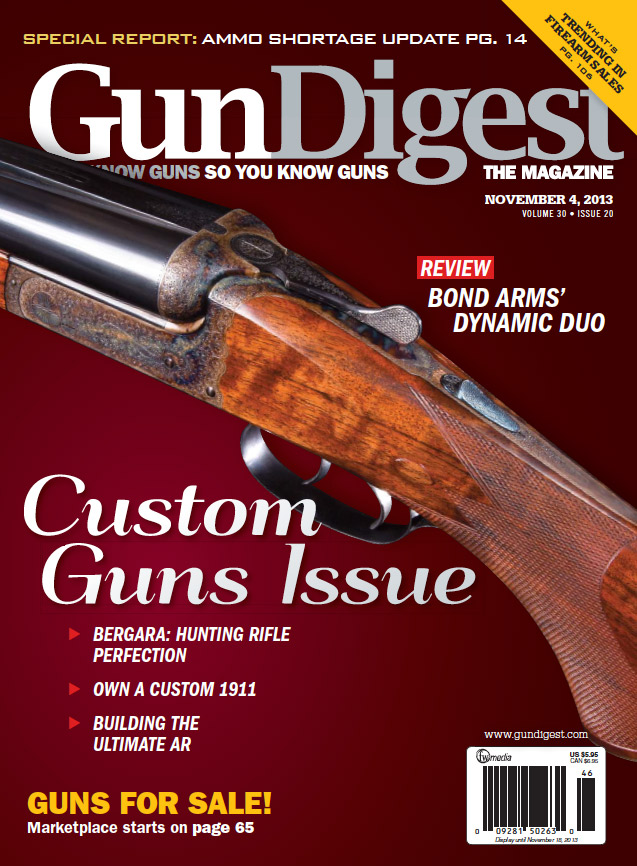
5 Reasons to Love the Newly Designed Gun Digest the Magazine

Have you checked out the new look for Gun Digest the Magazine that was rolled out in early 2013? Here are five reasons you should:

1. We've gone glossy and now look like a real magazine, not just some give-away tabloid at the local Quick Mart advertising happy hour specials and offering coupons to the local water park.

2. We've upped the coverage on hardware by providing more reviews on the latest guns, as well as spotlighting a broader range of shooting products and accessories. Our most recent issue hitting mailboxes this week focuses on tactical rifles with reviews on Del-Ton's DTI Evolution AR-15 style rifle, one that I personally got to shoot and am trying to get permission from the wife to buy (only if she gets to shoot it she says) and the ArmaLite AR-30A1 , one long-range tack-driving son of a gun. Issues in the coming months will feature coverage that will focus on shotguns, semi-auto handguns, hunting rifles and more. More gear coverage means you're more informed of what's available to make your shooting time more fun and productive.

3. We've got mad skills. Or at least our writers do and they want to share them with you. A number of Gun Digest contributors are firearms trainers and experts and they are happy to share that expertise with you. Want to learn to shoot better, read Gun Digest.

4. The pages are also filled with more great coverage and profiles on interesting shooters and experts, cool places to shoot, gun show event listings and even classifieds listing guns, accessories and other items for sale make Gun Digest one of the most unique and full-service firearms publications on the newsstand-or even better, arriving right in your mailbox. Tired of getting nothing but bills in your mailbox? Subscribe to Gun Digest and get that instead. We put out a new issue darn near every other week!

5. We don't just want you to read Gun Digest, we want you to be a part of it, too. Got a gun you've shot recently that you liked (or didn't)? Tell us what you thought and why. Same goes for ammo, gear, shooting ranges you've visited, you name it. Some of the best ways to learn more about shooting is from fellow shooters and Gun Digest welcomes your advice and insight in its pages. Doug-Sig


P.S. – Check out the offer below on a digital subscription to the magazine and let us know what else you want to see. Your comments could be highlighted on our website or even in the magazine. We'd love to hear from you. Again, we can be reached at [email protected].

Gun Digest
TRY
A DIGITAL SUBSCRIPTION
for just $29.98!
SUBSCRIBE NOW!

Gun Digest
WHY GO DIGITAL?
Get your issues faster! When you order a digital subscription, you'll get Gun Digest earlier than anyone else! Subscribe today, and you'll get a PDF of each issue delivered directly to your email inbox 24 times a
year, offering fully searchable text, live links to tools and websites, go-anywhere convenience and earlier delivery than the print version.Plus, at only $29.98, you'll save a whopping 77% off
the newsstand price. Order now and get a great deal, added convenience—and you'll save a few trees in the process.
SUBSCRIBE
NOW!

Top 10 Tools for Centerfire Rifle Disassembly

1

Tools and tips for rifle disassembly

In his introduction to the new Gun Digest Book of Centerfire Rifles Assembly/Disassembly, gunsmith Kevin Muramatsu outlines his general tips for preparing to take apart a rifle. They are:

  • Make sure the gun is completely unloaded
  • Always wear safety glasses
  • Use a big, flat, well-lit space for the disassembly work
  • Have the factory user manual available for your gun
  • In addition to having a copy of the Gun Digest Book of Centerfire Rifles Assembly/Disassembly, get a copy of the Gun Digest Book of Exploded Gun Drawings.

You'll also want good tools. Here are Muramatsu's top 10 recommendations for general centerfire rifle disassembly.

Instrument screwdrivers for gunsmithing and rifle disassembly.1. Instrument Screwdrivers

The tiniest of these fine German instrument screwdrivers from Brownells is too small for most gun work, but you’ll see the rest of them used frequently throughout the book. There are many tight places where these will come in handy.

2. Standard Screwdrivers

Standard Screwdrivers for Home Gun RepairWhen a larger screwdriver is needed, this set from Brownells covers a wide range of blade sizes and also has Phillips- and Allen-type inserts. The tips are held in place by a strong magnet, yet are easily changed. These tips are very hard. With enough force you might manage to break one, but they’ll never bend.

Bent Sharpnosed Pliers for Home Gun Repair3. Bent Sharpnosed Pliers

You should have at least one good pair of bent sharpnosed pliers. These, from Brownells, have a box joint and smooth inner faces to help prevent marring.

4. Parallel Jaw Pliers

Parrallel Jaw Pliers for Home Gun RepairFor heavier gripping, these Bernard parallel-jaw pliers from Brownells have smooth-faced jaw-pieces of unhardened steel to prevent marring of parts.

Soft hammer for rifle disassembly5. Gunsmiths' Hammer

For situations where a non-marring rap is needed, this hammer from Brownells is ideal. It is shown with nylon faces on the head, but other faces of plastic and brass are also available. All are easily replaceable.

6. Metal Gunsmithing Hammers

Centerfire-Rifle-Tools-6For drifting out pins, these small all-metal hammers from B-Square are the best I’ve seen. Two sizes (weights) are available and they’re well worth the modest cost.
Metal gunsmithing hammers for rifle disassembly

7. Sharpnosed Forceps

For situations where reach and accessibility are beyond the capabilities of sharpnosed pliers, a pair of large sharp-nosed forceps (tweezers) will be invaluable.

8. Nylon Drift Punch

Nylon drift punch for centerfire rifle assembly and disassembly. One of the most-used tools is this nylon tipped drift punch, shown with an optional brass tip in place on the handle. It has a steel pin inside the nylon tip for strength. From Brownells, and absolutely essential.
Gunsmithing tools: Drift Punch Set

9. Drift Punch Set

A good set of drift punches will prevent a lot of marred pins. These, from Brownells, are made by Mayhew. The tapered punches at the right are for starting pins, the others for pushing them through. Two sizes are available-4 inches or 6 inches.

10. Roll Pin Punches

Roll pin punchesThese punches by Mayhew are designed specifically for roll pins and have a projection at the center of the tip to fit the hollow center of a roll pin, driving it out without deformation of the ends. From Brownells.

AR-15 Review: SIG 516 Patrol Rifle

1
The Sig 516 Patrol Rifle comes in a standard black model, but is also available in Flat Dark Earth (FDE) and a black/Olive Drab (OD) Green version. Beyond the colors, each model boasts many of the same features.

The Sig Sauer Difference

The Sig Sauer 516 Patrol Rifle is not intended necessarily for military or law enforcement use, but can be if the inside is changed.; it’s a semi-auto, yet it is extremely accurate; and it will dust coyotes. The 516 is not just another AR. It has some really cool improvements over the typical AR-style rifle. One of the most notable improvements is it’s gas piston operated. Conventional AR rifles channel gas down a tube to the bolt—specifically to the carrier shoe, which is attached to the bolt carrier. This is where the gas stops, expending its energy to the spring-loaded carrier pushing it backward into the stock. This, along with the blowback action of the cartridge, extracts the spent case.

Raise Your Sig Sauer IQ

This system has and still performs extremely well, but the gasses transferred to the bolt area carry dirt and fouling along with it, which can be left on the bolt carrier. This fouling needs to be removed during routine maintenance in order to ensure continued smooth operation. The gas piston system, however, and this has been around for years, keeps the gas up front on the gas block part of the rifle. The energy is then transferred to the bolt carrier via a solid rod that runs along the same path the gas tube ran. This keeps the fouling in the gas piston chamber, which means it doesn’t have to be cleaned as often. It still needs maintenance periodically though. I have shot about 600 rounds through the 516, and there is not a speck of fouling around the bolt or carrier area.

The gas-piston Sig 516 Patrol AR is one sweet shooter.

The rifle comes with MagPul’s adjustable stock and pistol grip, which is a nice addition to an AR.  The adjustability makes it fit a variety of different sized shooters and makes storing the firearm when not in use a little easier. It also comes with a four-rail forearm for attaching a white light or whatever tool for the purpose intended. The carbine barrel is topped off with a flash hider.

The rifle has a more robust lower than your granddaddy’s AR with heavy squared off lines like the area that houses the front pivot detent spring and area around the bolt release/lock. Also there is a left side magazine release making this function ambidextrous. Inside the frame is thicker with quite a bit more metal on the sides and back area for improved durability.

Have you ever been aggravated with your AR when the upper and lower start to wear a little making for a less than tight fit? Companies have come up with expandable pins for the rear upper as well as the little red rubber Accu Wedge, which all help in this area. Sig had a better idea: they put a spring-loaded adjustable detent in the lower right under the rear locking pin tab that keeps constant spring tension on the upper. As the unit wears, it can be adjusted to keep the tension as it should. The end result is no more rattling upper and lowers.

Explore Related SIG Sauer Articles:

Shooting the Sig 516

The rifle comes with flip-up adjustable iron sights, but Sig’s semi-mini red dot sight—a nice light sight for fast action shooting—can also be had. I topped this one with a Leupold Mark 4 MRT scope, a 1.5×5 illuminated reticle scope that can be used in close quarters, as well as handle long shots all in one sight. I was planning to use the gun for 3-Gun competition and the MRT helps with those close and long-range rifle shots in the same stage. Guess what? It will be a light and quick handling rifle for dusting coyotes in the fall and winter, too.

I’ve been shooting the full floated carbine at longer range targets and found it to be accurate out to 400 yards. Shooting at an 8- and 10-inch gong, one homemade and one of MGM Target’s flash gongs, if I do my job, the rifle does its. I have used several different types of ammo in the rifle, and it seems to digest it all well. I started out with Federal 55-grain FMJ, shot some Silver Bear 62-grain HPBT and had great luck with American Eagle 62-grain FMJ. It seemed to like the heavier bullet. I kind of do, too.

The rifle is quick to work around obstacles like barricades and windows making it a nice 3-Gun choice, and of course it would make a great close combat or home defense weapon. The shorter carbine barrel is better for retention during searches and working barricade stages and still accurate enough for the long shots.

This article appeared in the March 11, 2013 issue of Gun Digest the Magazine.


Raise Your Sig Sauer IQ:

Laser Sights for Concealed Carry: Accessory or Necessity?

0
How much difference can a laser grip make on the S&W J-Frame revolver? This itty-bitty group was fired at 25 yards using the laser as a sight. There are some folks who can do this with the factory sights on a J-Frame, but you probably have enough fingers to count all of them.

In 1994, Crimson Trace started offering a laser conversion for Glock handguns. It designed this laser to address all the things its inventor’s didn’t like about the handgun lasers currently available, namely it needed to have holster compatibility, had to be absent exposed wires, and had to include precision adjustments. It also needed to be reliable and, well, not ugly, and with minimal bulk. By working with the available space inside the Glock’s frame, Crimson Trace created a laser that mounted to the vertical portion of the trigger guard, with all the wires and the batteries internally housed.

It was, literally, an ingenious creation. This conversion got people’s attention. No longer did a handgun-mounted laser have to turn a handgun into the hunchback of Notre Dame. You simply sent your Glock to Crimson Trace, and one week later the company returned it with the integral laser conversion. Cost? $595. Now, almost 20 years later, there are still about 1,400 of these Crimson Trace-converted Glocks in use and Crimson Trace still services those units.

About a year after the first Crimson Trace Glock laser introduction, the company introduced the laser grip. At that time, most handguns had grip panels, and it was the obvious choice for aftermarket laser attachment, particularly on steel-framed handguns. The first laser grips were for the Beretta 92, the 1911, and the Ruger Mark II. Cost? $395.

A Sound Concept Ready for Primetime

Modern laser grips, like the Crimson Trace Master Series, are available in configurations other than rubber. Now, if you like wood grips, you can have them with a laser.

In 1997, things changed with Crimson Trace’s introduction of the laser grip for the S&W J-Frame revolver. The J-Frame was (and is) a very popular handgun for personal protection, because of its small size. For the same reason, and for its reliability, it was also a popular backup gun for police officers. I carried a J-Frame on my ankle for about half my police career. As popular as it was, most found it hard to shoot with any precision. This was because of its almost non-existent sights and the gun’s short sight radius. But now, all of a sudden, with the Crimson Trace laser grip, shooters and old gun writers found they could actually hit stuff with a J-Frame—out as far as 100 yards!

The J-Frame laser grip quickly became a top seller for Crimson Trace, and it finally gave gun writers the confirmation they needed to finally start talking positively about handgun-mounted lasers. The rest, as they say, is history. Lasers for handguns have, today, become the hottest selling aftermarket accessory, and there is hardly a handgun for which you cannot purchase a laser.

Crimson Trace, however, is not leading the handgun laser market because of the quality of their products—don’t get me wrong, the company does offer high-quality stuff—but, more importantly, due to the instinctive/instant activation their products offer. With a Crimson Trace laser grip or Laser Guard, all you have to do to activate the laser is grip the handgun normally. A button, either integral to the grip or extending on an arm from the front of the trigger guard (in the case of the Laser Guard) causes the laser to come on. You don’t have to think about activating the laser, you just need to grip the handgun.

Buy a Crimson Trace Laser sight now and get a free copy of Handgun Training for Personal Protection.Editor's Note: There's never been a better time to get a laser sight than right now. Buy the Crimson Trace Rail Master now for just $129.99 and get Handgun Training for Personal Defense—a 240-page training book on concealed carry, lights and lasers—FREE!

4 Tactical Light Techniques for Concealed Carry

1

Tactical lights for concealed carry.

In his new book, Handgun Training for Personal Protection, firearms trainer Richard Mann admits that acquiring a good tactical light was one of the first investments he made after becoming a police officer.

It's easy to see why. Good flashlights are a game changer for concealed carry or armed duty and should be a part of your everyday carry kit (EDC). Today's tactical lights are powerful enough to provide total illumination of an area, your target and your handgun's sights. They can virtually blind an attacker momentarily, providing a split-second advantage.

But what is the best flashlight technique to use while deploying your handgun for self-defense? That depends on the situation. Here are Richard Mann's 4 techniques to know and practice.

Handgun Training - the FBI Technique
With the FBI Technique, the light is held away from and in front of your body. This is a good thing. However, when shooting with this technique, you only have one hand on the gun.

The FBI Technique

Thinking bad guys might shoot at your light because they think that’s where you are, the FBI developed this technique to protect its agents from incoming bullets directed at the light. With the FBI technique, you hold the flashlight away from your body, out to the side and up in your non-shooting hand as you search for and engage targets. This is a tactically sound method for searching, but once you start shooting, your muzzle blast will give away the center of your location. This sort of negates the need to hold the flashlight away from your body and negatively impacts your ability to shoot accurately because you are shooting with one hand. Also, by having an arm extended away from your body, you unbalance your shooting platform.

The neck index method should probably be your default flashlight position once you decide to draw your handgun, since it mimics placing your support hand at center body. It is easy to transition to other flashlight shooting positions from this one.
The neck index method should probably be your default flashlight position once you decide to draw your handgun, since it mimics placing your support hand at center body.

Neck Index

The neck index technique lets you transition from looking to shooting. Let’s say you are using the FBI technique to search and see a threat. You can pull the light to the neck index method as you start weapon presentation. If you need to shoot fast, you can shoot with one hand while using the neck index technique. If time allows, you can transition to one of the two-handed flashlight techniques. With the light indexed at your neck, it’s similar to your support hand being at the center of your body as it’s supposed to be during normal weapon presentation.  Pull your non-shooting hand, which holds the flashlight, up to your chin with the bright end orientated toward the threat. If you have hard-to-see sights on your handgun, this method will help illuminate the sights. But, it will also illuminate some of you. Regardless, it lets you get a lot of lumens directed toward the bad guy fast.

The Harries Technique.

The Harries Technique

With the Harries technique, you lock your wrists or the backsides of your hands together. To employ, slip your non-shooting hand, which is holding the flashlight, under your shooting arm and then lower the elbow of your non-shooting hand by rotating your non-shooting arm at the shoulder. This applies pressure against the backside of your shooting hand and makes for a relatively stable shooting platform. The downside is assuming the position in a hurry. It takes some time to prefect this position without muzzling your support hand as you present the weapon. Ideally, you should fully present the weapon to the target with your strong hand. Then slip your support hand with the flashlight under your shooting arm. You could start by assuming the neck index position with the flashlight illuminating the threat. After the handgun has been pointed towards the threat, then transition to the Harries Technique.

The Surefire flashlight technique allows for the more stable two handed grip but takes practice to master.

Surefire Technique

To perform the Surefire technique, you’ll need a small-bodied flashlight with an activation button on the end of the tailpiece and, ideally, a rubber grommet positioned just a few inches forward from the end of the light.  Hold the flashlight like a syringe, between the index and the middle finger of your shooting hand with the activation switch placed against your palm. Grip the handgun as when using a normal two-handed grip, but only using the bottom two fingers of your non-shooting hand as part of that grip. Your index finger, middle finger, and thumb are used to hold and orientate the light. To activate the light, squeeze it like a syringe pushing the activation button with your palm. The trick is learning to orientate the light with the handgun. Most commonly, shooters tend to point the light toward the ground. This is not all that bad. Generally there will be enough light reflected off the ground or ambient light from the beam to light up the target.

The Gun Digest Interview: Getting Competitive with Julie Goloski Golob

0

Gun Digest Interview with competitive shooter Julie Goloski-Golob

In the world of competitive shooting there are few people—men or women—who can match what Julie Goloski Golob has accomplished in the last two decades. Though she’s just 35, Golob has already won more than 120 championship titles in seven different action shooting disciplines. Her wins include 13 Ladies National Champion titles with the U.S. Practical Shooting Association (USPSA), three times NRA Bianchi Cup Ladies Open Champion and two Ladies Division International Revolver Championship wins. She’s an avid hunter who currently serves as captain of Team Smith & Wesson and is a member of Team Benelli 3-Gun. She’s also a wife and mother of one, with another child due soon. You got it—Golob is one busy young woman.

Over the course of a year, what does your calendar look like?
I shoot between 10 and 15 matches a year. Plus, I attend a number of special events and do some seminars and speaking engagements. If I’m asked to do television, that goes in there somewhere. When I’m preparing for a match, I’m at the range every day working on some skill set to make me better. I like to hunt, too, and I’m a pro-staffer for Prios Hunting Apparel.

Plus, you’re a mother and wife, a writer and a businesswoman?
It’s a big challenge. And it’s hard being away from home so much. Another difficult part is juggling all the opportunities. I’m asked to do a lot of speaking gigs and special events, things I’d love to do. But they conflict with a match or I just don’t have the time. Or, you’re going to, but you get the call and a child’s at home sick. If I was single, I could literally be on the road every day of the year.

So your main job is Captain of Team Smith & Wesson. What does that entail?
First and foremost, it’s to train for and compete in shooting matches, and to be a spokesperson for Smith & Wesson, at competitions and other events. I do some television and shooting demonstrations to promote the company, too. It’s a very broad job description.

How did you become a shooter?
My father was (and still is) a hunter and a competitive shooter. I basically grew up as “Daddy’s Girl,” and followed him around whenever he was at the shooting range. We used to work some of our range’s shooting events together as a father-daughter team. So, really, I grew up around it. By the time I was 14, I was big enough, and experienced enough, that I started competing in local matches.

What was your first firearm?
It was a Remington 870, 20-gauge. That's what I shot my first deer with growing up. Dad’s still got it at home.

You went from high school right to the U.S. Army Marksmanship Unit (USAMU)?
I was competing through high school, a lot of run-and-gun kind of matches and events. I went to my first national championship match in 1994, the USPSA Nationals in Barry, Ill., and the Army recruited me there. I joined right out of high school in 1995, and was assigned to the USAMU. They were expanding the Army Action Shooting program at the time, and they were looking for women to be a part of it. There weren’t a lot of young female shooters at the time, so I think I kind of stood out.

What did your eight years with the USAMU do for you?
Oh, my goodness, that’s the foundation I rely on today, all the things I learned at USAMU! When you’re a member of the USAMU, your “job” is to compete and win. And you have such tremendous resources there to help you compete. Some years, I shot 50,000 to 60,000 rounds practicing. There’s a lot of discipline there, too. Resources plus guidance. In some cases, forced guidance!

Was it always your plan to be a professional shooter?
Not really. Being around shooting growing up, and getting to know professionals like Rob Leatham and Doug Koenig, I guess it was always in the back of my mind. Like, Wouldn’t that be cool? But it wasn’t a plan.

How did you end up on Team Smith & Wesson?
After I got out of the Army, I worked for the Glock Shooting Sports Foundation for a few years, in an administrative position. But I was still shooting competitively. I went to the Smith & Wesson IDPA (International Defensive Pistol Association) Indoor National Championship in 2006. There, I had a chance to shoot the M&P handgun, and I was pretty impressed with it.

A lot of the top people from Smith & Wesson were there, too, and we started talking. By the end of the event, they made me one of those offers I just could not refuse. It’s pretty much my dream job. I get to represent a great company, shoot some of the top firearms in the world, and work with some of the best people I know. And I get paid for it!

Any advice for a young person who wants a career as a pro shooter?
What you have to have is a dream and goals and be willing to work hard. If you really want it, you can make a career out of the shooting sports. You can be a part of this great industry. It’s going to take some work and a willingness to stick it out when things get hard. But you can make it happen. But in today’s society, with this focus on instant gratification, instant everything; hard work and the need for it is probably the hardest thing for kids to understand.

The Second Amendment has been under attack of late. Your thoughts?
I don’t speak for anyone but myself on this issue. But as a professional shooter, I think it’s absolutely essential that my fellow shooters and I be responsible role models as gun owners and people who use guns. There are so many negatives out there in the media about the Second Amendment, guns and gun owners. We have to focus on the positives. The shooters I know, professionals or others, are amazingly kind and generous people. And the shooting sports have very positive influences on peoples’ lives. That message needs to get out as much as possible. I think that people like myself, who work in this industry, have a responsibility to promote these positives, and to give them a face and a voice.

This article appeared in the May 6, 2013 issue of Gun Digest the Magazine.


Complete Guide to 3-Gun CompetitionWant to learn more about competitions? Check out the  Complete Guide to 3-Gun Competition.

The Gun Digest Interview: Jonathan Owen

0

Gun Digest interview with Jonathan Owen of SHWAT.

A native Texan, Jonathan Owen and his brother Stephen launched Special Hog Weapons and Tactics, SHWAT, last year as a website-based media outlet. Calling itself, “The Center of Gravity for Tactical Hog Hunting,” SHWAT.com publishes blogs, photos and videos on hog hunting, tactical firearms and gear. Since its inception in January 2011, SHWAT’s Internet presence has grown appreciably. An entrepreneur from Abilene, Owen, 43, runs a business that builds and administers websites many of them for companies in the shooting industry.

So what exactly is SHWAT? An organization, a club, a web publication?

I see it as a gathering place, a network. We’re not selling hog hunts or guide services. The goal is to provide a meeting place for hog hunters and manufacturers, for guides and bloggers and writers, all of it to help people have a quality tactical hog hunting experience.

So what’s a “tactical” versus just a plain old hog hunt?

It starts with the tactics you’re going to use. You can play sniper and take out a pig at three-quarters of a mile with a .50-caliber rifle. Or you can get real close and start magazine dumping on ’em. Any way you can use your tactical skills on pigs, we consider that tactical hog hunting.
Often, it’s about a black rifle, too, lots of ammo, stealth and stalking and some fast shooting. It could also employ night vision and thermal imaging equipment and even suppressors.

Why are AR-style rifles such a big part of tac hog hunting?

The popularity of the AR is enormous. As people have become more educated about firearms, they’ve been buying more and more tactical rifles. And they’ve discovered that it’s more fun to shoot more times, and a semi-auto AR is just the ticket. Another thing that makes the AR so special is your ability to customize it, almost any way you want, for any shooting situation. That makes it the perfect rifle for tactical hog hunting.

How did you get the idea for SHWAT?

I was hog hunting with a friend on his family’s land several years ago. He was using a bolt action, I had an AR, and we got into pigs and it was just a lot of fun, shooting fast and furious. My enthusiasm for it took off. I did more AR hog hunts, and I was talking a lot of smack to friends and family about being a “tactical hog hunter.” So for Christmas [2009], my brother Stephen gave me the first SHWAT tee shirt, with the SHWAT logo he created. I saw that logo and I thought to myself, This is too cool not to have value to other people.

How did it go from a tee-shirt to a web-based business?

We brainstormed a lot, and because I’m in the website business, Stephen and I started talking about an on-line magazine that would bring together the tactical world and the hunting world. Really, I see SHWAT as the natural outgrowth of this huge interest in AR rifles. Plus, we have 4 million to 5 million wild, feral hogs across the country. They’re a massive problem here in Texas and many other places. Farmers and landowners want them gone because of all the damage they do. In most states, hog hunting’s open all season, with no bag limits. AR’s, wild hogs, tactical hunting, it just all fits together.

What was your first firearm?

A Savage Model 72, single shot .22. I still have it—and use it!

Your favorite rifle today?

Tough question. Currently, it’s probably my Accurate Armory LE light carbine.

What’s been the hardest part or parts in trying to provide focus for this growing hog hunting community?

The hours are tough. I have two businesses and a family. Occasionally, SHWAT takes half a day during a week. No big deal. But most weeks, it’s anywhere from 30 to 50 hours—on top of everything else. We had zero financial resources to start. Whenever we got any extra money, we reinvested it back into SHWAT. So we’ve been pretty much working for free. But, all in all, it’s been a lot of fun…from here on in, it should only get better!

This interview appeared in the February 11, 2013 issue of Gun Digest the Magazine.


Recommended Tactical Rifle Resources
Gun Digest Book of the Tactical RifleGun Digest Book of The Tactical Rifle

Gun Digest Buyer's Guide to Tactical Rifles

Own the Night: Selection and Use of Tactical Lights and Laser Sights

Gun Digest the Magazine, June 17, 2013

0

Gun Digest the Magazine is the source for firearms news, pricing and guns for sale. With a subscription to Gun Digest the Magazine, readers benefit from in-depth editorial expert advice, show reviews, how-to instructions and Second Amendment issues.

Inside This IssueGun Digest the Magazine, June 17, 2013

  • 3-Gun Competition!
  • Cowboy Action Shooting
  • Winchester TrAAcker loads
  • Gun Review: CZ-Czechmate
  • Guns for Sale and More!

Click here to start a subscription to Gun Digest.

Did you receive a suspicious subscription offer? A bogus company is sending out Gun Digest the Magazine subscription scams.


Gun Digest the Magazine Digital Back IssuesRecommended: Looking for digital back-issues of Gun Digest the Magazine? Click here

– Instant Downloads
– PDF format
– More great gun reviews and articles!

The Gun Digest Interview: Steve Sanetti

0

Steve Sanetti, NSSF

It’s the largest trade organization in the shooting sports industry. The National Shooting Sports Foundation (NSSF) is a 7,000-members strong group and includes manufacturers and retailers, shooting ranges, conservation groups, gun clubs and most everything in between. As such, it’s no surprise that the biggest event in the firearms and hunting industries are the NSSF-organized Shooting, Hunting and Outdoor Trade Show, the SHOT Show, a four-day extravaganza of all things shooting held in Las Vegas each January. Since 2008, NSSF’s president and CEO has been Steve Sanetti, 63, a self-described “gun nut” who loves shooting and hunting, Sanetti recently talked with GD about NSSF, the SHOT Show and the future of our shooting sports.

GD: So, just how big will the 2013 SHOT Show be?

Sanetti: We estimate it will be about the same size as last year—and last year was an all-time record. So, in the neighborhood of 20,000 exhibitors, 1,200 booths, 35,000 attendees and 2,500 members of the media. We’re at 625,000 square feet, which is the largest show the Las Vegas Sands Hotel puts on. Currently, the SHOT Show is the 13th largest trade show in North America of any kind.

GD: Any improvements or changes at SHOT?

Sanetti: The Sands Hotel has really worked with us to improve SHOT. There are more escalators [than last year], so it will be easier than ever to get between levels, the lighting’s better, the food choices are better and we’ve been able to widen the aisles. We’ve also made a concerted effort to bring more European buyers to SHOT. It’s a different market, but it’s a significant market and one we can’t afford to ignore.

GD: Let’s talk NSSF. If I’m not currently a member, why should I consider becoming one?

Sanetti: We are the trade association for the firearms, ammunition and related accessories industries. If you look at our website (www.nssf.org), you’ll see we have literally hundreds of programs to promote and protect the shooting sports.

GD: Such as…?

Sanetti: The First Shots program, which encourages people to try the shooting sports. Our research shows that, within 12 months, about 40 percent of First Shots attendees actually return to the range or the store that held the event. Families Afield has been a huge success, too. We partnered with the U.S. Sportsman’s Alliance and the National Wild Turkey Federation to introduce people to hunting without first having to go through a hunter education course. In a Families Afield state, as long as they are hunting with a qualified mentor, a young person—or grandpa, for that matter—can try a hunt. If they like it and want to do more? Then they take the appropriate hunter education or safety course. With Families Afield, tens of thousands of people have tried out hunting and returned to hunt again.

GD: NSSF is very involved in the political process, too, right?

Sanetti: Absolutely. Our clout rests on that fact that, when we go to The Hill, Congress knows we represent the shooting sports industry. That gives NSSF considerable influence, in and out of Washington.

GD: On a personal note, what are your favorite types of shooting and hunting?

Sanetti: Informal target shooting with my family. We go into the woods behind our cabin in New Hampshire and shoot—it’s a lot of fun, and great family time. Deer hunting is my favorite hunting.

GD: Do you have a favorite firearm?

Sanetti: Probably my Ruger Standard [.22 LR] Pistol. But one of my best memories is of a Springfield 1903A3 rifle I sporterized when I was 16. Dad and I bought it at a pawn shop for $19.95! I handloaded my own ammo, too, took it deer hunting and got my first deer that year. Dad was there. I was very proud, but very moved by the whole experience, too.

GD: What did you do before coming to the NSSF?

Sanetti: I worked for Sturm Ruger for 28 years, the last five as President and CEO. I took a job right out of the Army, defending Ruger in product liability lawsuits. That was in the 1970’s. Bill Ruger came up to me in the early 1980’s and said, “A lot of people are saying we need to give you a job, and I think we should, too. One day, I believe you’ll be president of this company.” I took the job—but I never really thought I’d really be president of Ruger.

GD: What do you hope your legacy will be as President of NSSF?

Sanetti: NSSF headed up a Shooting Sports Summit several years ago, and the goal that came out of it was we as an industry were going to increase participation in the shooting sports by 20 percent by the end of 2014. I thought it was a pretty large goal—workable, but one that was going to take much work. Well, Americans are buying firearms like never before, and there’s a huge interest in shooting. We certainly didn’t do all of that. But, with the programs and initiatives we had in place—like First Shots and Families Afield—and the many new efforts we are making to promote the shooting sports? I think we’ve got a darned good chance of hitting that 20 percent mark. I’m thrilled to be a part of that, and to work with such a great staff at NSSF.

This interview appeared in the January 28, 2013 issue of Gun Digest the Magazine.

Expert Tips on Buying a Revolver for Concealed Carry

0

So you’re shopping for a new carry gun, and you’ve decided that it needs to be a revolver? Good for you. The revolver definitely has a lot to offer, even in this heyday of compact autoloading pistols, but there are still many things to consider before making your purchase. Following are the key considerations you will want to think about.

How Will It Be Carried?

How you plan to carry the gun has a huge impact on your range of choices. For instance, if you plan to carry it in a pocket, you’re obviously not going to want a full-size 4-inch revolver.

Pick the gun for the most restrictive carry method you’ll be using. If you’re going to carry it in an ankle holster as a back-up during the week, but as your primary gun in a tuckable appendix holster on weekends, pick the one that works on the ankle. You can always carry a small, light revolver on your belt, but the opposite is not true for a similarly sized steel model.

If you’re going to wear this gun in an ankle holster, you’ll find that it will get very dirty quite quickly. The Smith & Wesson Centennial series guns, like the 442 and 642, don’t have exposed hammers, nor the opening in the frame through which the hammer protrudes. As a result they’re better sealed against dirt and lint. That’s not to say that they’re impervious to filth getting inside them, just that they’re more resistant to getting fouled than their exposed hammer brethren.

Don’t forget about corrosion resistance either. If your carry method is a pocket holster you’re likely to discover that the pocket is a surprisingly humid place — particularly in the summer months. A gun with any amount of carbon steel (like the barrel and cylinder of the Smith & Wesson 442) will rust pretty quickly, as I can personally attest. For pocket carry, an all alloy or alloy/stainless steel alternative, like the S&W 642, is a better choice. Nothing, mind you, is corrosion proof, but stainless steel is far more resistant than any kind of carbon steel.

The new polymer revolvers, like the Ruger LCR, may prove to be among the most corrosion-resistant revolvers yet made for concealed carry.

How Much Recoil Can You Stand?

You can’t fight city hall and you can’t fight the laws of physics, either. Regardless of the caliber you’ve picked, a small light gun will have more perceived recoil than a larger, heavier gun. Once you’ve narrowed your choices into the size and caliber range that makes the most sense for your use, you’ll often have the choice between an ultra-lightweight model (polymer or alloy) and a heavier, all-steel model.

Naturally the lighter models, while easier to carry in places like pockets and ankle holsters, have a higher level of recoil than their heavier counterparts. There is no free lunch; to get the nice weight, you’ll have to put up with more pain — and the pain can be severe!

I’m no stranger to recoil, but even I find the kick of an ultra-lightweight gun, loaded with a good +P defensive load, to be more than I really want to handle. I’ve even shot one with full-house .357 Magnum rounds. You’ll notice I said “one,” and I say that because my reaction was immediate: “Never Again!”

Remember that recoil affects not just your comfort, but also your ability to deliver additional shots to your target. One round of any caliber is unlikely to stop someone cold in his or her tracks, so you have to plan to shoot more than that. Each additional round from a light but high-recoiling gun will be slower to shoot than from the same sized gun made of heavier material, because you have farther to bring the gun back on target. The lightweight guns are certainly comfortable to carry, but they will impact your ability to deliver the rapid, multiple, combat-accurate hits that actually stop bad guys.

Gun Digest the Magazine June 3, 2013

0

Gun Digest the Magazine is the source for firearms news, pricing and guns for sale. With a subscription to Gun Digest the Magazine, readers benefit from in-depth editorial expert advice, show reviews, how-to instructions and Second Amendment issues.

Gun Digest the Magazine June 3, 2013.

Inside This Issue

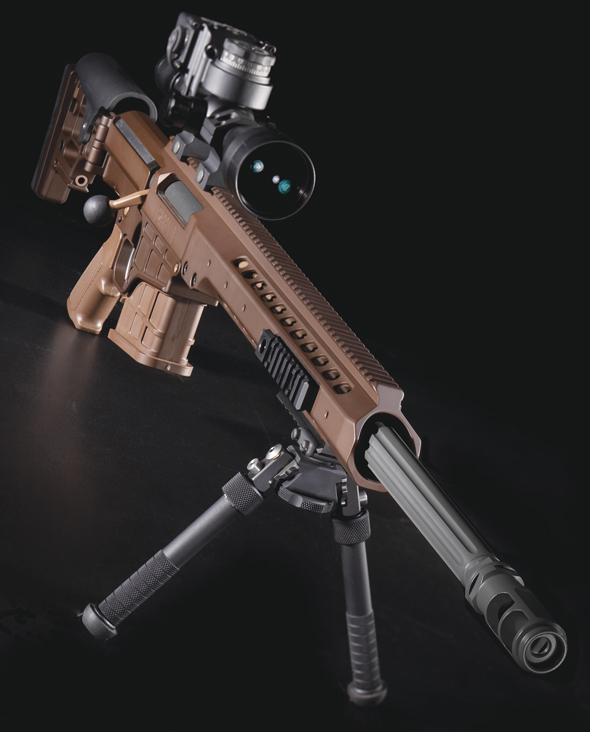
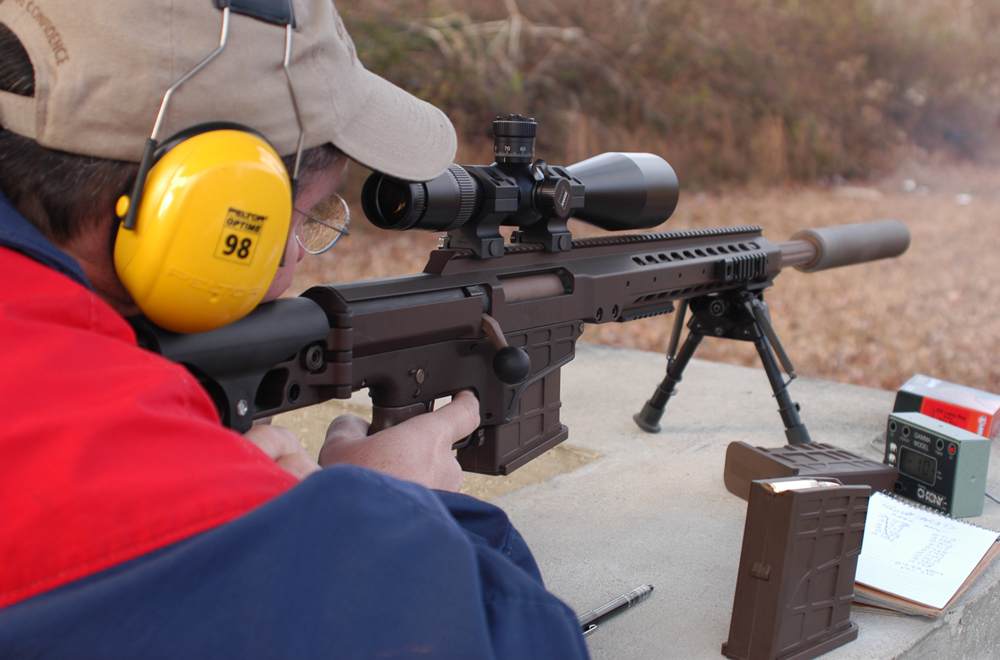
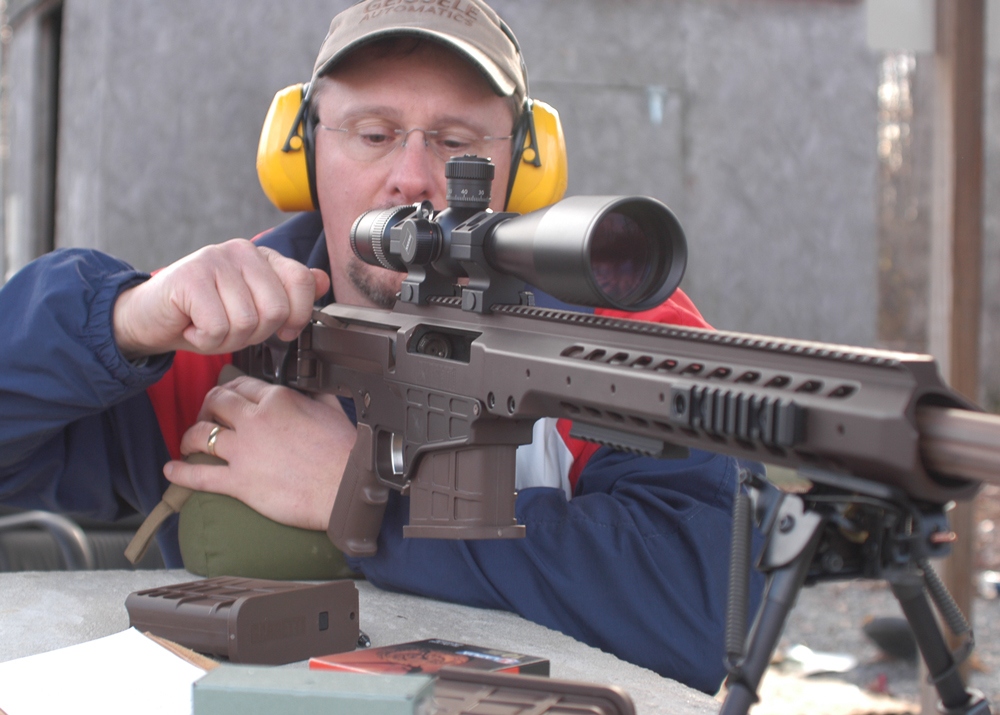
  • Gun Review: Barrett MRAD
  • Gun Review: Smith & Wesson M&P Shield
  • Sniper Skills for Hunters
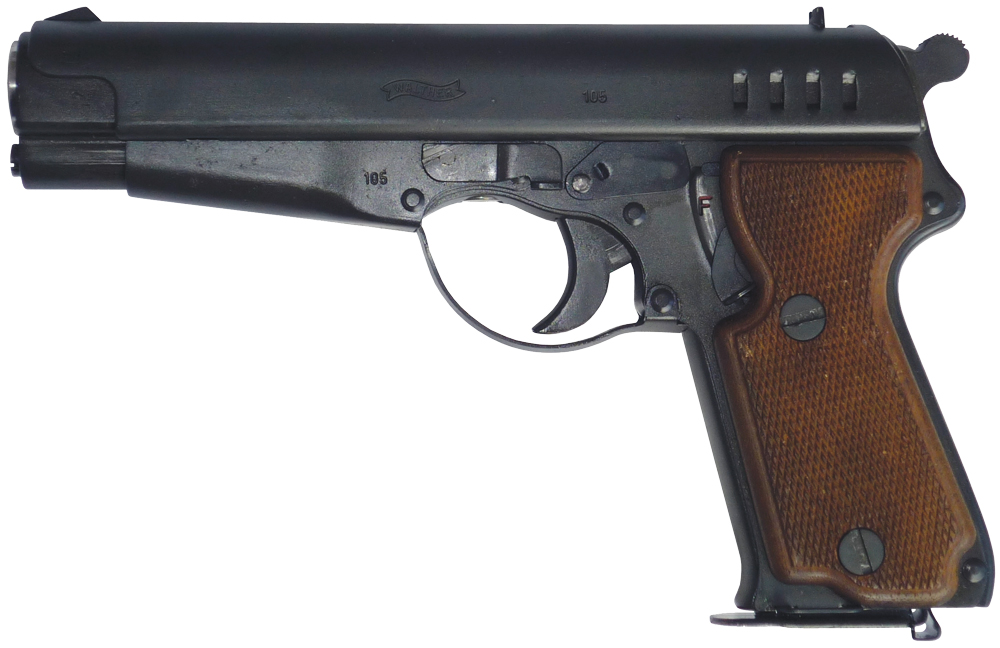
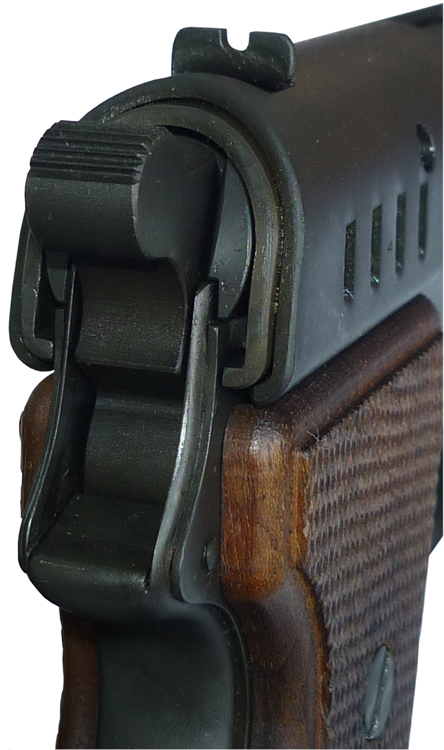
  • Walther WWII Volkspistole
  • Guns for Sale and More!

Click here to start a subscription to Gun Digest.

Did you receive a suspicious subscription offer? A bogus company is sending out Gun Digest the Magazine subscription scams.


Gun Digest the Magazine Digital Back IssuesRecommended: Looking for digital back-issues of Gun Digest the Magazine? Click here

– Instant Downloads
– PDF format
– More great gun reviews and articles!

Gun Digest the Magazine May 20, 2013

0

Gun Digest the Magazine is the source for firearms news, pricing and guns for sale. With a subscription to Gun Digest the Magazine, readers benefit from in-depth editorial expert advice, show reviews, how-to instructions and Second Amendment issues.

Gun Digest the Magazine, May 20, 2013Inside This Issue

  • Gun Review: Remington Versa Max Sportsman
  • Handgun Review: Springfield Armory XD-S
  • Alexander Arms .17 HMR Reviewed
  • New Rangefinders
  • Guns for Sale and More!

Click here to start a subscription to Gun Digest.

Did you receive a suspicious subscription offer? A bogus company is sending out Gun Digest the Magazine subscription scams.


Gun Digest the Magazine Digital Back IssuesRecommended: Looking for digital back-issues of Gun Digest the Magazine? Click here

– Instant Downloads
– PDF format
– More great gun reviews and articles!

The Gun Digest Interview: Mike Stock

0

Gun Digest interview with Mike Stock, ammo engineer.

In 1999, Mike Stock — then a college student studying to become a mechanical engineer — got an internship at the Winchester Ammunition plant in East Alton, Ill., and he’s been a part of the Winchester family ever since. A life-long hunter and shooter, Stock, 34, is Centerfire Product Manager for the ammunition giant, doing what he calls his dream job. A native of Southern Illinois, Stock actually grew up just 40 miles from Winchester’s East Alton facility, where he works today. Once he graduated with a Master’s Degree in mechanical engineering from the University of Missouri-Rolla, Stock worked in the new product design department for Winchester Ammunition, and then did a stint selling ammunition to law enforcement agencies. For the last two years, he’s been Centerfire Product Manager.

What exactly does a Centerfire Product Manager do?
A product manager is really the conduit for information between the sales team and manufacturing. The sales guys are out selling and talking to retailers and customers, and we filter that back to manufacturing.

So your job is to help create new ammunition?
That’s the “glamour” part of the job, if there is a glamour part. We’re in charge of helping to create new products, what they’re going to be and what they’ll look like, and, once they are out, how to position them in the market. We’re also involved with issues like, “When do we switch over from making one type of ammunition to another?” Winchester Ammunition has over 600 different products, and we can’t make all of them at the same time. To go from one ammo to another, it’s not like you just grab some different brass and bullets, and go. You have to change over machines and the whole manufacturing process. It can be very complicated.

What’s the tough part of your job?
The best part is the tough part: coming up with new, cool products every year. There’s never a shortage of ideas. But taking those ideas and making them a reality? If you didn’t have to worry about money and costs and production times, you could make all sorts of new things all the time. But we don’t live in that world. It can be really stressful trying to make your ideas work out.

How long does it take to go from an idea for a new load to actually having it ready for consumers?
It really depends. Take the .17 Winchester Super Magnum (WSM), our new rimfire. When I started working for Winchester fulltime in 2003, we were talking about that round already. I did some early work loading prototype rimfire casings for the .17—and I wasn’t the first guy to do that! So the .17 WSM essentially has had a 10-year life cycle, and we just now announced it to the world in January. With our Razorback XT hog ammo we were able to react a lot faster and get it to market much quicker. With Razorback, we went from drawing board to store shelves in 12 months.

On a more personal note, how did you become interested in hunting and shooting?
My dad was a hunter. Dad was a businessman, too, and he worked a lot of hours. There were only two times a year he took off from work: for the family vacation in the summer and for deer hunting with his buddies in the fall. So I knew, from a very early age, that hunting was a really cool thing to do. And I’ve been doing it ever since.

What was your first gun?
It was a J.C Higgins Model 20 12 gauge, at a nifty 10.5 pounds! Actually, I still have it. I occasionally deer hunt with it, just for fun.

How important to you are hunting and shooting?
I’ve been hunting and shooting since I was a kid, and I know for fact that’s why I am in this industry today. I love my job. I get a kick out of it every day. As a guy who loves to hunt and shoot, it really is my dream come true to have this job and to work here.

And, for 2013, you expanded the Razorback line to include 12 gauge shotgun slugs and 00 Buckshot, plus .44 Remington Magnum handgun loads.
The early response was so positive on the Razorback, we knew we had to follow up on it and soon. Really, this quick response is a testament to the great people we have working here at Winchester Ammunition, people who recognized an opportunity and reacted so quickly. The manufacturing people here really outdid themselves with all the work they did on the new Razorback loads.

Why did Winchester develop and introduce your new Varmint X loads?
The number of predator hunters have doubled in the last decade. That’s a lot of new hunters and shooters. But I’ve stood in the ammo aisles at retailers myself, looked around and thought, “Wow! There’s a lot of different ammunition out there — which one should a guy use for varmints and predators?” So we built the Varmint X loads to answer that very question. They have polymer tips for maximum and fast expansion, and we made it all the right calibers—204 Ruger, 22-250 Rem, 223Rem, and 243Win—and made it very, very accurate.

Varmint and predator hunting also skews to a younger demographic, and we feel these younger hunters are very important to the industry and the future of hunting. So we wanted to give them a round made specifically for what they were doing.

This interview appeared in the April 22, 2013 issue of Gun Digest the Magazine.


Looking for More Ammo and Reloading Information?

W0932ReloadingHandgunnersReloading for Handgunners

Cartridges of the World, A Complete and Illustrated Reference for Over 1,500 Cartridges

The ABC's of Reloading, The Definitive Guide for Novice to Expert, 9th Edition


The Gun Digest Interview: Joe Wanenmacher

0
Joe Wanenmacher (left) with NRA Executive VP Wayne Lapierre (right).

The Tulsa Arms Show is held twice a year and boasts more than 4,150 tables of guns—new, old and downright ancient—as well as shooting accessories, ammo, private firearms collections, wildlife and western art and even scrimshaw and decorative items. Laid end to end there is more than 6 miles of guns and exhibits. The show, to be held this year April 6-7 and again Nov. 9-10, has been around since 1955, and since 1968, the man behind its organization has been Tulsa resident and retired petroleum consultant Joe Wanenmacher, 78. The show brings in so much money and business to the local area, in 2009, the mayor of Tulsa made Feb. 5, Joe Wanenmacher Day—the honor made perhaps more impressive coming from a Democratic mayor who served on New York City Mayor Michael Bloomberg’s Mayors Against Illegal Guns council. We caught up with Joe to get his thoughts on what it takes to build and run such an event and how it feels to have anti-gunner crosshairs placed squarely on gun shows around the country.

What first got you interested in firearms?
My dad was always a hunter and took me out at a young age and introduced me to firearms. Around Tulsa they had strip-mining pits, and as youngsters we would save up all of our bottles and jars and would put them in the water in bottom of these pits and shoot them. It was a great way to learn to shoot because you could see where your shots were hitting when you missed.

What was your first gun?
My first gun was a Mossberg .22. I liked it, but have seen a lot better guns since then.

Being around so many different firearms, do you have any favorites?
I’ve always been interested in guns. I would like to own them all, but I realized long ago that you can’t. I own a lot of different firearms, but my big interest now is in antique arms.

What is the coolest one you own?
The coolest gun I have is one maybe considered one of the first machine guns ever made. It was made in 1590. It’s a wheel lock; it has two wheel locks on it and shoots 16 shots. It shoots elliptical bullets that have a hole through them and works on a Roman Candle theory: You start the first one and it keeps on going until all of them are shot. That gun will soon be on display at the National Firearms Museum in Fairfax, Va. It’s quite an honor to be asked to display it there.

How did you come to organize the Tulsa Arms Show?
The show started in 1955 as a club project for the Indian Territory Gun Collectors Association in Tulsa, Okla. I moved to the area in 1961 and joined the organization a couple years later. I was the world’s worst member. I never attended meetings, because I was more interested in shooting than meeting. When the secretary/treasurer left the group in 1968, since I was still among the newest and most gullible members, they elected me. That officer was in charge of organizing the show.

Was it as big then as it is now?
The first show I did we had 117 tables. Me and one other member were the only ones to show up and put them all out. After that, I decided this needed to be run more like a business. From 1955 to 1968, it never made it a profit, and it took me two years to turn it around and grow it into a 400-table show. Today, we more than 4,150 tables.

What makes this gun show so unique?
This isn’t just a local gun show. We have vendors and exhibitors from all across the country. It draws 83 percent of people outside Tulsa, and we’re now seeing third generation shooters coming to the show, which is really special.

Background checks at gun shows are a hot topic in the news today. What impact might background checks have on shows such as yours?
Right now, the laws are not being enforced to prevent purchases with the background checks that are in place. Any additional legislation will not prevent gun-related crimes. A universal background check on the surface sounds good, but there are many reasons why we should not have these checks. Most obvious is most people would not do it and it would make criminals out of many otherwise law-abiding citizens…it would ultimately lead to registration and that leads to confiscation. Every country that has started with registration has led to confiscation. Just look at Mexico where criminals have the guns, but very few regular citizens have them…Less firearms does not mean less crime, it means more crime.

This interview appeared in the April 8, 2013 issue of Gun Digest the Magazine.


Recommended Resources for Gun Collectors:

Gun value in the standard catalog of firearms.2013 Standard Catalog of Firearms, 23rd Edition

Standard Catalog of Military Firearms 6th Edition

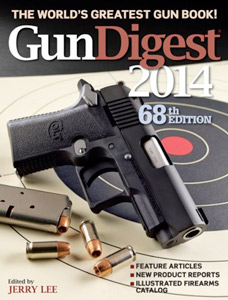
Gun Digest 2013, 67th Edition

Sign up for the FREE Gun Digest eNewsletter »

The Gun Digest Interview: Jordan King

0

Jordan King of King's Arsenal.

Jordan King is a busy guy. A husband and father, King, 27, is a full-time diesel mechanic who just happens to also run a full-time gun manufacturing business, King’s Arsenal. The custom gun making operation in Abilene, Texas, specializes in AR-style rifles. What started out as a hobby working on his own guns has turned into a business, a vocation and a passion for King. Along the way, he’s learned a few things about gun making, regulations and just how the national political climate can help and harm someone in this industry. Gun Digest caught up with King recently—as he was literally driving between jobs, no less—and got the scoop on what it’s like to be a “new guy” in the rifle making business, and going head-to-head with industry big boys like Smith & Wesson.

How did you get introduced to firearms?
I grew up around guns and hunting and fishing—all that good stuff. Got my first gun when I was about 12 years old, a Browning lever action in .223 with a top-of-the-line Simmons Whitetail scope on it, and I hunted with that rifle for a long time.

Still have that rifle?
I do. It doesn’t fit me anymore, but I imagine my son, Stone, will get it and use it one day.

How did you go from a hunter and shooter to someone who actually makes firearms?
About six years ago, I bought an AR at a gun show, a Bushmaster XM15, and took it out and shot it. There wasn’t anything wrong with it. But it just didn’t shoot like I wanted it to shoot. So I took it apart and started tinkering. Anything I could upgrade, I did. Friends saw my rifle and started asking me to help them with theirs. I started doing work on upper receivers on the side. That was when I found out about billeted receivers [receivers milled from a solid block of metal], and I never went back to forged receivers. In 2011, we got our FFL [federal firearms license], and started doing complete ARs and bolt actions as King’s Arsenal.

Jordan King of King's Arsenal.What’s the most popular rifle and calibers you make and sell?
Our Crown 15, which is our AR15 model. The .300 Blackout is probably the most popular caliber right now, and lots of people come to us for the 6.5 Grendel.

Who are your main customers?
We get a lot of hunters buying our rifles and a lot of ranchers out here in Texas. Good number of 3-Gun shooters, too. And we’re selling our guns all over the country, not just Texas.

What’s your advertising and marketing plan look like?
We haven’t been able to afford much advertising. It’s pretty much word of mouth. People hear about us and find our website (https://kingsarsenal.com/), and we’re on Facebook, too. Facebook’s helped a lot. We have achieved more than 9,000 Likes in just a year.

So business is good?
Bigtime. Because of all this talk about gun control, everybody’s worried, and we’ve sold a whole bunch of rifles recently, and taken orders for a lot more. That’s put our name out there a lot, so we’re getting more interest and more orders all the time. We’re able to do all the work we have now. If we take on your rifle, we will get it done as soon as we can. But I may have to hire some more people pretty soon.

Sounds like it’s time to expand.
With all these new orders and sales, I’d like to take the profits and put it right back into King’s Arsenal and grow. I want to open a store-front operation here in Abilene. Right now, we’ve got a smaller shop, kind of crowded, with tools lying everywhere. But we haven’t expanded because of all this possible anti-gun legislation. It’s just too big a liability hanging out there for me to throw a bunch of money into upgrading. Not until all this settles down. But it does kind of make me mad. We’re so new and we’re in this great place to really take off, and the federal government might shut us right down [with an AR ban].

Is it hard competing with the Bushmasters and Smith & Wessons of the gun world?
They make the same kind of rifles we do. But I think we’re in an entirely different market, and we don’t really compete with each other. We’re making all our guns custom, each one is put together one at a time, no assembly line. So I don’t really see us competing with each other.

What’s been the hardest part of being in this business for you?
Once we got our FFL, we had to learn all the regulations and other stuff that goes along with having one. For a while there, it was pretty hard to get used to all the ATF [Bureau of Alcohol, Tobacco, Firearms and Explosives] paperwork you had to do anytime you made a rifle. When we first got the FFL, we figured, well, we’d make two or three rifles a year, no big deal on the paperwork. But we’re doing a lot more than two or three rifles now! Lots of paper, and you have to learn how to do it right or you can get in some bigtime trouble!

This article appeared in the March 25, 2013 issue of Gun Digest the Magazine.


Recommended Tactical Rifle Resources
Gun Digest Book of the Tactical RifleGun Digest Book of The Tactical Rifle

Gun Digest Buyer's Guide to Tactical Rifles

Own the Night: Selection and Use of Tactical Lights and Laser Sights

Targets for Shooting Long Range

0
I like a large board on which to hang paper targets. The larger 1000 yard targets are ideal because their large area allows you to see hits that are off the mark. This is essential when checking zeros at longer range. The F-Class center is a little smaller than the 1000-yard target and I use it to practice for those shoots.

There are no special targets that will make us better shooters. To be better shooters we need to use targets for shooting a lot and regularly. Here are some good targets for long-range shooting.

Shooting at a variety of targets and scenarios is more like training. Practice makes us better shots; training wins matches and prepares us for difficult situations. Getting your own targets for shooting is the key.

Not all of us have the luxury to have a shooting range nearby let alone a long-range facility. With a little engineering and help from some target makers, any safe stretch of BLM or other public ground can become our fun house and give us the training we need in between matches and practice shoots.

My formal 1000-yard range is 120 miles one way from my house. I cannot always make it out for practice sessions although I go as much as I can. These days one has to save travel money for the matches so I practice close by the house with the help of some prefab targets.

For getting on paper I use a target board. The rifle has to be printed on paper to see what it is really doing. Mostly it is for shooting groups and sighting in rifles at 100 yards. It is big enough though, I can shoot at further ranges and show hits on the paper while fine-tuning my ballistic charts. This paper target helps me get some of my elevations set and also I can check variances in different climates.

The paper target backstop is made from some scrap plywood and 2×6 lumber that fit into a metal upright stand.

It breaks down quickly and fits in the back of the truck for easy set up in the field. I can staple any target on it and since I shoot F-Class competition I use a replacement center for along-range paper target. For closer groups that I want to record for later reference I use a Benchrest type target that can be put into a ring binder. These are made out of a heavy grade plastic-coated paper and hold up well in a binder. These record the actual group and any other info on weather and the load that was used.

MGM Targets make a great long range reactive target they call the Flash Target. It is a 10 strike area and that equals one minute at 1000 yards. It is a challenging target and the plastic cards can be seen moving at long distances.

Shooting the paper target is doable out to around 400 or 500 yards without a vehicle to get back and fourth to score the targets. I can usually use the exercise but I don’t always have the time to walk back and forth to 1000-yard targets. Sometimes I will put the ATV in the back of the truck and set up a portable shooting bench like the one Caldwell offers for longer range shooting.

For just getting the elevation I will many times use the Caldwell Tack Driver Shooting Bag right on the hood of the truck (Idaho Shooting Bench) and drive back and forth to the target. It is faster than moving the shooting table to different ranges. The Caldwell bags off the hood are not as comfortable as a bench and a front rest, but for portability in shooting different long ranges in the field they work great.

One way I deal with the walk back and forth on the longer range stuff is to use reactive targets. Once the rifle is zeroed on paper and various elevation adjustments recorded I can practice on reactive targets placed in different positions. In the field being able to shoot targets at 1000 yards and see the hit is good practice and can be done without a couple of range buddies in the pit or running back and forth to see the score.

I was surprised at how inexpensive steel targets from MGM Targets are. Considering they last forever with a lifetime guarantee and include the shipping, a backwoods rifleman can get plenty of long-range practice in the field without going back and forth.

Two of my favorite reactive targets are tannerite and plastic cubes. The tannerite is a binary exploding target and adds some fun to the shooting. These cubes and spheres from Just Shoot Me Products can be spread out on a hillside or hung in the sagebrush for hard-to-spot reactive targets. They will jump when hit and roll to a different position to be engaged again.

I like the attitude at MGM Targets (Mike Gibson Manufacturing). They dare you to tear up these targets. That’s confidence in their quality. I simply haven‘t been able to shoot these things apart. The strike plates are hard steel and the welds are neat and strong.

They use hardened bolts instead of welding to hold the targets on to the stands so the hardness won’t be compromised from welding heat. About all the bullet does to them is knock the paint off.They come in white, but in winter black shows up better against snow.

For longer range practice the Flash Target is a great choice. It has a 10-inch target area and with larger caliber bullets hits can be seen without a spotter past 600 yards. The smaller calibers don’t move it much further out.

There are two plastic squares on the swivel bar; one is white and one florescent orange. The movement of the target is easily seen when the plastic squares move. The hanging gong swivels on a bar of stainless steel and has a zirk fitting to keep it lubricated. This target breaks down and will fit in a car trunk. It goes up in seconds.

Another great shorter range target is one of their poppers. These targets have 5 inch strike areas and reset themselves via spring action. Neither of these targets makes a gong sound when hit but there is a noticeable thwack. I have several different locations scouted that give me practice in different conditions.

Don’t forget to put up some flags to help dope the wind. It is good to have a spotter to help with the corrections. MGM makes such a variety of targets for the competitive shooter the best thing to do is check out their website. www.mgmtargets.com

There are a variety of other reactive targets that will give the precision marksman some good practice and some fun. Try golf balls, eggs, and balloons. The nice thing about balloons is you can make them different sizes. The challenging thing about them is when the wind is blowing windage isn’t the only problem.

 Companies like Just Shoot Me make plastic targets that are reactive and come in cubes, circles, and shapes like ground squirrels that can be placed on hillsides and engaged. They jump indicating a hit and can be shot again in a different location. They are extremely durable and allow the bullet to pass and then they close back up. A box of these will last a long time and give many hours of practice in one sitting.

These smaller targets are great for sighting in and recording groups. I like the notebook style benchrest targets that are made out of a plastic-type paper. They are weather resistant and can be kept in a ring binder. The actual group is right there to compare with others along with the entire climate and load info.

One of the most fun targets to engage at long range are exploding targets. They are small 2×2 square targets that can be bought in a kit and report when hit like an M-80. The active ingredient in these is a binary explosive material called tannerite. Binary means it is two inert chemicals that have to be mixed together to become active. They can only be set off by a high-power rifle bullet strike and are extremely stable even after mixed.

Exploding targets add a lot of fun to the marksman’s training but read all the directions and warnings before using and make sure it is being used within the legalities of your locale.

All my target missions are “leave no trace“. I pick up all brass, target debris, as much lead as I can find (it melts back down into cowboy bullets), even the 22 brass. The only thing left behind where I target practice is the depressions in the ground from bullet strikes.

Caldwell: (573) 445-9200
www.battenfeldtechnologies.com

Eberlestock: (877) 866-3047
www.eberlestock.com

Lenny Magill: (800) 942-8273
gunvideo.com

This article appeared in the February 14, 2011 issue of Gun Digest the Magazine.

MUST READ ARTICLES