[imagebrowser id=361]
This photo gallery is an excerpt from Big-Bore Revolvers.
[imagebrowser id=361]
This photo gallery is an excerpt from Big-Bore Revolvers.
In JKD, one does not accumulate but eliminate. It is not daily increase but daily decrease. The height of cultivation always runs to simplicity.
The height of cultivation is really nothing special. It is merely simplicity; the ability to express the utmost with the minimum. It is the halfway cultivation that leads to ornamentation. Jeet Kune-Do is basically a sophisticated fighting style stripped to its essentials. – Bruce Lee
Those words, from Bruce Lee’s iconic text The Tao of Jeet Kune Do, could just as easily describe the new Shootrite Katana tactical rifle, designed by veteran firearms instructor Tiger McKee. The Katana rifle, like its namesake, the iconic sword of the Japanese Samurai, is meant to be a weapon of lethal simplicity, a kind of path that leads beyond gadgetry and clutter and back to the essence of the fighting rifle.
“I saw the trend that all the manufacturers were following,” McKee says, “Building heavier and more complicated rifles. I wanted just the opposite, a fighting rifle that was true to Eugene Stoner’s original vision for the AR platform – a simple-to-operate, lightweight rifle – but updated with bomb-proof modern components for reliability.”
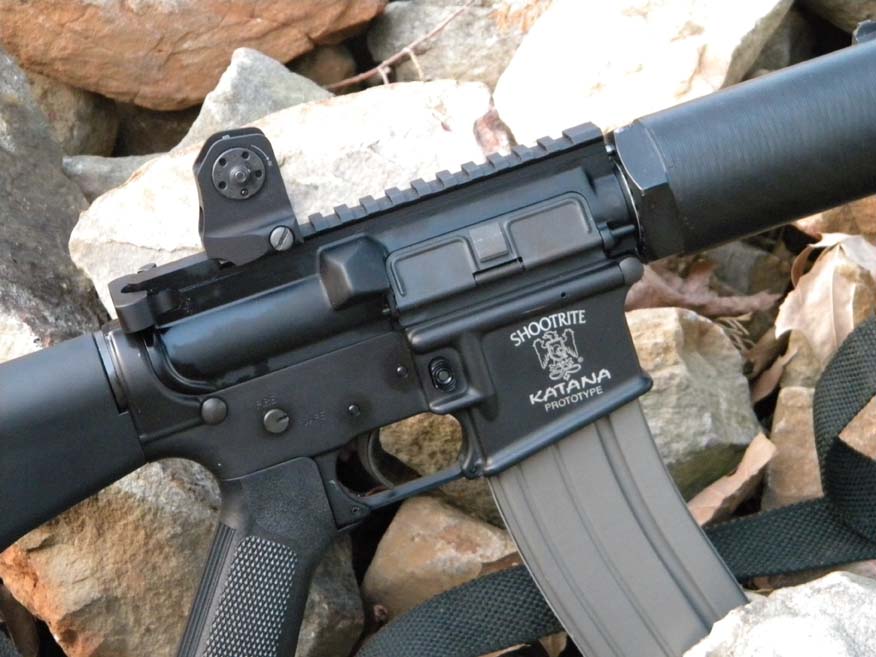
But the market trend toward complex rifles meant that such a rifle was unavailable, McKee said. “So I decided to build it myself.”
Gone from consideration were the heavy barrels, thick-railed handguards, vertical foregrips and tactical slings of the new-wave ARs. Folding sights and complicated lighting systems were out. In was a thin 16-inch barrel, a standard 1-in-9 twist, and no change to the round; it’s good old 5.56.
“The lightweight barrel is short enough to maneuver in tight quarters, quick and easy to handle during conflict, and it is plenty accurate. More accurate than you are going to be able to shoot it under actual field conditions,” McKee explains.
He added a carbon fiber handguard, a simple one-piece unit with the barrel nut permanently attached. A rail section at eleven o’clock (for the right handed shooter) allows for the attachment of a light.
“That eleven o’clock position is the best for rolling out from behind cover and for clearing both left- and right-hand corners,” McKee said.
One of the first things you notice looking at the rifle is the flat-top upper receiver, ready for mounting the optics of your choice, and the absence of any external forward assist.
McKee quotes Stoner, the genius behind the original AR-15, “When you get a cartridge that won’t seat in a rifle, and you deliberately drive it in, usually you are buying yourself more trouble.”
The simple concave cutout behind the exposed part of the bolt carrier provides the same assist function, but without the leverage of an external assist. That is leverage that will force a bad cartridge into your rifle and put you out of business. Simply put: if the bolt won’t seat a cartridge with the pressure of a finger in the cutout, that cartridge needs to be cycled out of the rifle, not jammed into it.
In the same vein of pragmatism, the rifle comes with a fixed front sight and removable, A1 drum style rear – although the drum can be adjusted for windage, there is no elevation adjustment, because almost no one will adjust elevation in a firefight.
The sights can be left on as back-up for a red-dot system, (supplied by the buyer) or used as the primary sighting system.
Among the “bombproof” modern components installed on the Katana tactical rifle is a mil-spec bolt assembly with an MPI bolt – the firing pin is held in with a solid retaining pin rather than the flimsier split cotter found in other AR bolts. Extractor and ejector springs are chrome silicon alloy for durability, trueness, and corrosion resistance.
In his years of almost daily experience as a firearms instructor, McKee says he has witnessed innumerable instances of bent and twisted charging handles on ARs, and he vowed to find one for the Katana that would stand up to whatever the operator could dish out.
“A bent charging handle is one malfunction that will really put you out of commission,” he explains. “When a charging handle twists, it locks up the bolt carrier, and you are done.” To solve that problem, the Katana is equipped with Bravo Company’s new Gunfighter charging handle. “It’s a top-quality part, in a crucial function.”

The lower receiver on the Katana sticks tightly to the basics, mil-spec components and trigger, with nothing fancied up to go wrong in the heat and dust of reality.
“I see these 3-pound triggers, these aftermarket adjustable triggers assemblies, and they are just inappropriate for a fighting rifle,” McKee says, “You see them sold as “match triggers,” or “competition triggers” and they are fine for that function. But you are introducing variables that can lock up or break, and what might be just a hassle on the range will mean something entirely different in the field.”
The standard trigger assemblies have proven reliability, an acceptable and crisp pull, and most important, a positive trigger reset that the operator can feel in his trigger finger, an attribute that McKee calls “essential” in a fighting rifle.
When the Katana tactical rifle is in production, buyers will be able to choose between a standard A1 stock (5/8” shorter than the A2, and a better fit for most shooters) and a Magpul CTR adjustable, which has a 6-position buffer tube.
On the A1 stock, the rear sling mount is installed on the side of the stock, which lets the rifle hang flat against your body, a very small adjustment that completely changes how the rifle carries, and dramatically shortens the time it takes to go from a carry to a ready position.
The first Katana was a rifle that McKee put together for his own use, but the concept has taken on a life of its own.
“As my students became familiar with the one I made for myself, they were asking me how they could get one. I started out just building the uppers for them, but the idea kind of ran off on me. Demand outstripped my ability to build them, or keep up with it, on my own.”
Luckily, McKee knew where to turn. He approached his friend Will Hayden of Red Jacket Firearms, in Baton Rouge, Louisiana. At first, Hayden was reluctant. “We got our fame working on AKs,” Hayden says, in his south Louisiana drawl, “and we didn’t see any reason to focus on anything else. But when I saw Tiger’s design, I recognized a kindred spirit. The more I looked at what he was doing, the more I wanted to be a part of it.”
Like McKee, Hayden believes that the highest form of a fighting rifle is the simplest, most reliable version, and that the farther you get from that, the more the tail begins to wag the dog, in the case of a fighting rifle, dangerously so.
“It’s funny, isn’t it, how going back to what works can seem so revolutionary?” said Hayden. One of the assets of the Katana, Hayden explains, is the match-grade barrel. “It’s a not a chrome-lined barrel, which is inherently more accurate. We knew we didn’t need the chrome. This isn’t ‘Nam, and we’re shooting mostly good ol’ American ammo, and we even get a chance to clean our guns once in awhile, so you don’t need it.”
But the Katana is first a fighting rifle, so the barrel is trued not to .223 specs, but to actual 5.56, an important distinction. “It’s big difference,” Hayden said. “And nobody who knows that difference will go out the door with a .223 barrel.
The .223 is too tight for military spec ammo, and using it will get you into trouble eventually. What we are producing is a fighting rifle that stays with match-grade specs. We want our customers to be able to win a competition with their fighting rifle, if that’s what they want to do with it. Basically, it’s a competition gun that has not lost sight of what you are training for. That pretty much sums it up.”
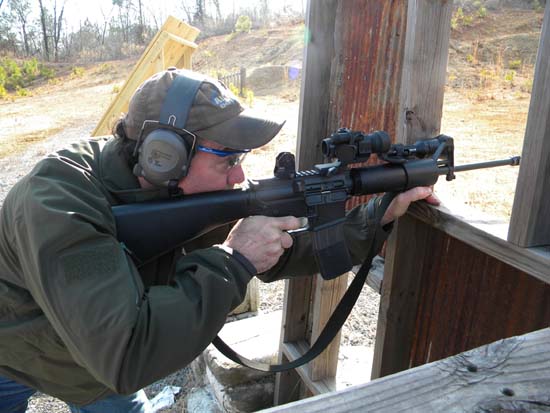
On a cold Alabama morning we took the Katana out on the Shootrite range to put it through its paces. The first thing that was obvious was what a difference it made to have the sling mount on the side of the stock. The rifle hangs so flat to your body that it is almost a part of you.
Going through doors, turning, crouching, the rifle stays close and ready-to-hand. Raising the Katana for dry fire practice, the 16-inch barrel and overall lightness of the rifle is immediately apparent. As McKee has become suspicious of ever-heavier fighting rifles, I’ve become suspicious of ever lighter sporting and varmint shooting rifles.
I may be a cave man, but some of the lightest modern rifles feel to me like shouldering and pointing an aluminum yardstick. I can’t find the balance point, and I’d rather carry an extra pound than shoot a rifle that feels wrong against my shoulder. But the Katana rises and steadies like a fine dueling pistol. Wearing a heavy jacket, the shorter A1 stock places my cheekweld exactly against the comb of the stock, my eye dead-on through the sights.
Starting offhand at 25 to 30 yards, I’m able to shoot a very respectable 2 ½-inch group. McKee doesn’t keep a bench and sandbags on the range. His belief is that the current obsession with hyper-accuracy among American shooters is taking away from the real need for practical rifle shooting skills.
“You want a rifle that will shoot better than you can shoot it, and that’s it,” he says.
Running malfunction and reload drills is effortless with the lightness of the rifle. So is clasping the rifle tight to my chest in the transition-to-pistol exercises. My favorite varmint and plinking rifle is an AR-15 I bought in 1995, a 20-inch barreled Colt Sporter, H-Bar, with no bells or whistles. I love the gun. But compared to the Katana, my old reliable handles like 39 inches of hickory 2×8.
The stripped down nature of the Katana is especially apparent during the fast-paced work from the Wall, a series of structures, doorways, stacks of tires, concrete block walls, and various other object that simulate the situations of urban engagements.
Doing the limbo with a rifle has never been easier for me, and, working from 60 and more yards, it was a real pleasure to keep banging the steel targets with ease, practicing every firing position and using the cover, enjoying the mobility. Recoil is negligible, muzzle-blast very acceptable.
Although it was far from mastery on my part, I had the feeling that, with the Katana and an unlimited amount of time and ammo, I could almost see mastery from where I was lying, prone, firing away.
In a two-hour session, working from 10 feet on paper targets to a little over 100 yards on steel, I fell in love with the little rifle.
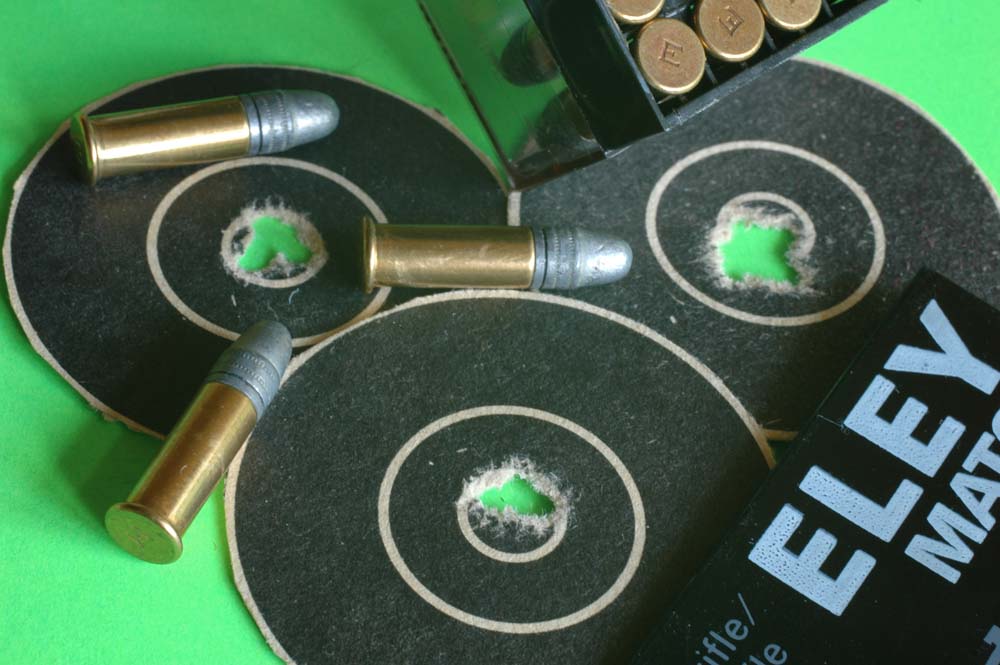
One shot does not a marksman make. Neither does it demonstrate accuracy. A single hole, in an animal or a paper target, shows only that you fired the rifle. It takes more to achieve true marksmanship.
During the iron-sight stage of a smallbore match years ago, I settled into prone and accidentally brushed the trigger. Dismayed, I hardly dared peek into the spotting scope. The best I could hope was that the bullet had missed the paper, leaving no evidence a shot had been fired. A hole in any of the 10 record targets, or between them, would affect my score.
Squinting into the glass, I was astounded to see a hole in the center of the target I was to shoot. A pinwheel. That shot had nothing to do with my marksmanship or the accuracy of the rifle or ammunition.
In its purest form, accuracy is a measure of consistency.
Standards of accuracy can change over time, as they vary with conditions and shooting gear. Marksmen obsessed with accuracy have developed games and equipment that re-define the term. The first official benchrest match, held in Johnstown, New York in 1947, drew international interest. Special rifles and loads, and better optics, have since enabled shooters to print tiny groups.
In the UK not long ago, a sharp-eyed shooter drilled a .135-inch five-shot group at 100 yards and a 6.908 group at 1,000 yards under trying conditions. The world’s record 1,000-yard group measures inside 2 inches, well under a quarter minute of angle.
Hunting rifles and ammunition have improved a great deal since I started shooting. When you could buy one at retail for $89.50, we considered the 94 Winchester a 3-minute rifle.
Now, with Hornady LeverEvolution ammo, the best .30-30 lever guns punch 1-minute groups. When it appeared, the M-16 rifle couldn’t match the accuracy of the M-14 or the Garand. Now, after many refinements, a tuned AR-15 shoots about as well as competitive bolt-actions.
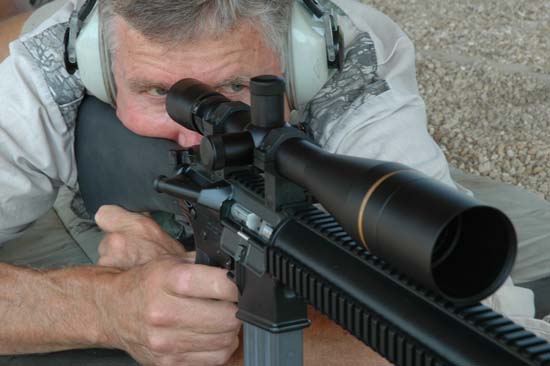
Recently, I fired a Les Baer AR with Federal ammunition launching 77-grain Sierra MatchKings. Sub-minute groups came easily, and one three-shot cluster measured less than half an inch at 200 yards.
In my youth, hunters marveled at rifles that shot into a nickel at 100 yards, but they didn’t despair if the groups were bigger. Many marksmen still relied on iron sights, and big game was shot close. These days, interest in tactical rifles, rangefinding devices, high-power scopes and long-range shooting has nudged the accuracy bar ever upward. While smart hunters get as close as possible for shots at game, long-distance hits on paper targets and steel are confidence-builders.

Accuracy at distance makes you more successful in competition and afield. When you can hit far away, the close shots seem easier.
To that end, manufacturers of rifles, barrels, scopes and ammunition have poured many thousands of dollars into new products. Darrell Holland (hwww.hollandguns.com), who runs a shooting school in southern Oregon and builds super-accurate rifles, has designed a unique scope reticle for long shots. A series of ballistics cards from Holland help you quickly assess effects of range, wind and shot angle for your favorite load.
In the same way, the fellows at Greybull Precision (greybullprecision.com) manufacture scope dials for specific loads and fit them to Leupold scopes with cleverly designed reticles. I’ve used Greybull scopes to 780 yards, banging minute-of-angle groups on steel with center holds. A Marlin lever-action printed six first-round hits inside a 10-inch circle from 100 to 600 yards, with center aim. All I did between shots was adjust the Greybull dial for distance. Matching of scope dials to specific bullet arcs has since become a service of most scope-makers.
Ballistics software from Sierra, Nikon and other sources has not only fueled interest in long-range shooting but given riflemen tools to do it. Knowing where to aim or how to adjust the sight at distance is a first step to hitting consistently.
Marksmanship comes next. Holding the rifle still and executing the shot properly is a skill independent of equipment. It is also the pivotal factor in the pursuit of accuracy.
Technical Rifleman Digital Download
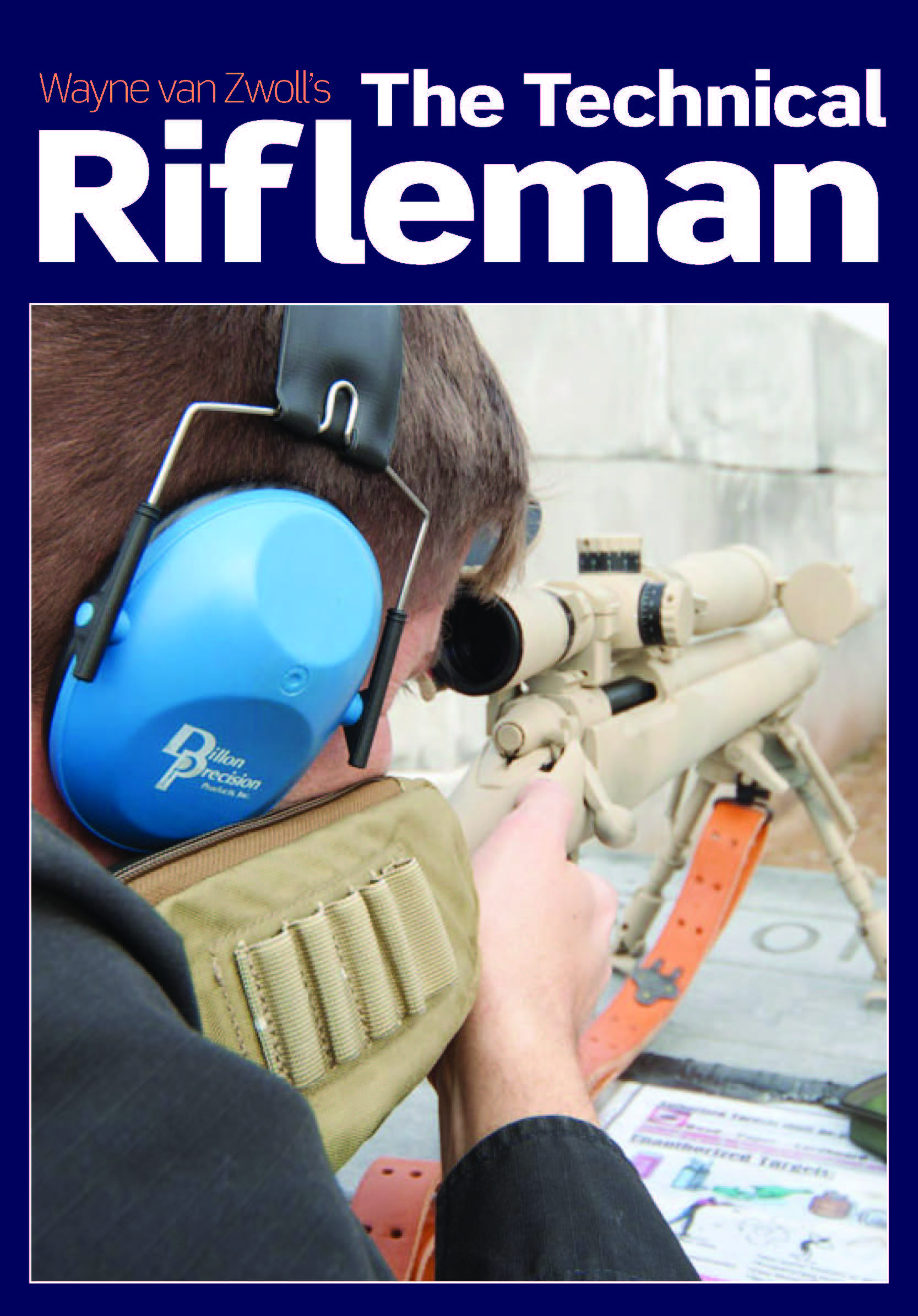 Did you enjoy this blog post? Now is your chance to own Wayne van Zwoll’s entire article series — The Technical Rifleman. The entertaining and informative blog ran for a year on GunDigest.com, but was a lifetime in the making. The articles tap into the renown gun writer’s limitless knowledge of rifles and shooting, covering a wide range of topics, from picking the right rifle scope to figuring out a gun’s recoil. The Technical Rifleman is certain to round out any rifle enthusiast’s library. Pick up yours today!
 Buy the Kindle version of The Technical Rifleman here!
[imagebrowser id=321]
 This free PDF download from the World Health Organization (WHO) details common medicines and their uses. It’s not something to play doctor with (leave that to the professionals), but it should provide an overview of popular drugs should access to medical advice be limited.
We at Gun Digest are not doctors, but there are plenty at WHO. We trust that this information is accurate to the extent that we trust WHO. Depending on how much value you put into that organization’s views, this should be of benefit to you. Here’s the source site.
Click here to download the WHO Model List of Essential Medicines, print it off and keep it in a secure place.
P.S. Here’s another download just for children’s medicine.
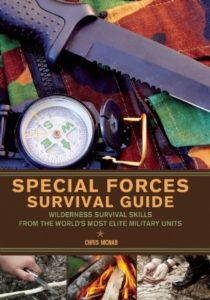
Key Points
• Built on a carabiner platform
• Portable when attached to gear
• Versatile: Adjustable wrench jaw opens to 1/2″
• Winner: Blade Magazine 2007 Best Buy Of The Year®
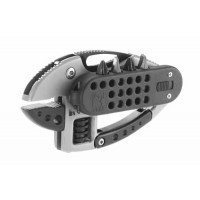 There are plenty of multi-tools out there. The temptation is to focus on the number or kinds of features. There’s plenty of value in that, but the platform those things sit on matters just as much.
Enter the patented Guppie, part of Columbia River Knife & Tool’s innovative I.D. Works line of tools. Despite its “cute” appearance, designers Launce Barber and Tom Stokes created a hard-working carabiner tool with dozens of uses perfect for survival situations.
Much of that versatility comes from the adjustable wrench jaw. It opens to 1/2″, making it ideal for all kinds of light repair and assembly jobs. That’s helped by its carabiner gate, which makes the Guppie easy to carry on a belt loop, D-ring, pack or rope. Keep in mind, though, it is not a weight-bearing carabiner.
Another highlight is the high-carbon, stainless steel 2″ blade. It sports a Razor-Sharp edge, and can be opened or closed with one hand.
On the Guppie‘s left side is a removable bit carrier. It doubles as a high-intensity LED light with two strong magnets to hold it securely.
Outside of survival situations, the Guppie makes a great little money clip, too, for those who like to keep a thin wallet.
One more trick: The Guppie carabiner detent will open bottle caps and metal jar lids. (Note: Magnets may harm electronic media.)
Overall, there’s a lot to like in this tool. No wonder it won the Blade Magazine 2007 Best Buy Of The Year® award. Click here to order a CRKT Guppie at a great discount from GunDigestStore.com.
The Weather Channel video above shows recent solar storms on the surface of the Sun. According to this article, such storms will only increase into 2013. This could spell disaster for power grids across the planet.
What are the odds? Pretty good, astronomically speaking:
Some U.S. experts estimate as much as a 7 percent chance of a superstorm in the next decade, which seems a slight risk, but the effects would be so wide-ranging — akin to a major meteorite strike — that it has drawn official concern.
Although the likelihood of this kind of geomagnetic storm, like a big hit from a space rock, is extremely low, its impact would be great. By comparison, the probability of a large meteorite hitting Earth is at some fraction of 1 percent.
If recent events are any indication, such an outage could take nations weeks, months or even years to repair. Power failure disrupted 600 million in India. The northeast United States went into a blackout following severe Earth-bound storms. The damage from these events are still being assessed. One can only imagine what havoc a planet-wide would cause.
While there’s nothing anyone can do to prevent a major solar storm, there is plenty for preppers. Start here with 30 Items for a Home Survival Kit. Then up your preparedness with the Stay Alive book for advanced survival information.
by Pat McHugh
 Summer is the perfect time to build a winter car survival kit. Don’t wait until cold weather hits. Put it together now while there’s still plenty of time to gather materials.
Here are items every winter car survival kit should contain. It’s not exhaustive, but it should get you thinking about the things you’ll need if stranded.
Booster cables. These could be for you, but also so you can help others.
A collapsible snow shovel. Good to have in case you have to dig yourself out.
Extra flashlight. Check the batteries often. Batteries lose power quicker in cold climates. You might also consider snap light sticks, or a flashlight with some manual power source (hand crank or shake).
Road flares. If possible, also use a road hazard reflective triangle. These will help warn other vehicles if yours is stranded on a roadside at night. Remember, flares can be hazardous. Use caution and follow the appropriate safety warnings.
Fuel line de-icer.
Door lock de-icer.
Windshield-wiper fluid.
Extra antifreeze.
Extra clothing. These would include pants, gloves, an older pair of boots and a hooded sweatshirt.
Blankets.
Wool socks.
Extra turn signal bulbs.
Basic tools.
Non-perishable, high-energy food. Candy bars containing nuts are a good choice. Keep these in a mouse-proof container.
Cell phone charger. Either for your cell phone battery or a device that can charge your phone independently.
Tin can. Like a coffee can. This can be used for melting snow into water. Don’t count on bottled water being liquid during an emergency.
Lighter or waterproof matches. Always a good idea.
Knife. This is the tool with a million uses. Keep it handy.
Tip: Put clothing and blankets in vacuum sealable bags. This will save space in the trunk.
 For even more survival kit ideas for emergency situations, check out Build the Perfect Survival Kit. It’s available at a great discount from GunDigestStore.com.
Click here for survival kit tips.
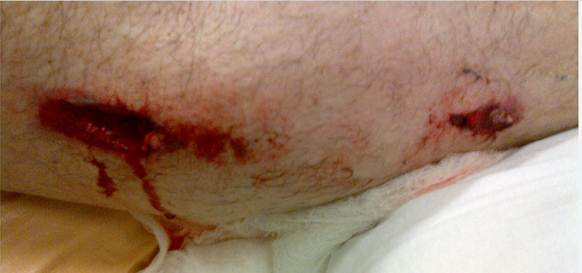
The two key elements of concealed carry are, of course, “concealed” and “carry”. To effectively carry you need a holster. To effectively conceal you need cover garment. When those two get tangled up you can get holes in your body where holes should not be. Nobody wants that. Here is an abridged version of a report sent out to alert Law Enforcement Officers of a potential for disaster posed by the most innocuous of items… the draw cord on your pull-over cover garment. I am taking pains to insure all references to where and to whom this happened are removed.
In June 2012, a group of LEOs was participating in firearms training at the range with the department’s issued pistol and ammunition. The officer was using a .40 S&W caliber SIG P229 DAK. The ammunition was department-issued Federal Premium 180-grain HST. The holster utilized was a right-handed Blackhawk Serpa CQC concealment paddle-style. The officer was wearing a light-weight wet weather jacket due to rainy conditions on that day.
After having fired several rounds during the course of fire, the officer was in the process of holstering when the pistol discharged through the open portion of the bottom of the holster. The round entered the outside of the right upper calf and exited the outside of the lower calf and was stopped by the ground (grass/dirt surface). The round did not strike any bone or the ankle or foot. There was not excessive bleeding and it was later found that there was no serious nerve damage. The officer is expected to make a full recovery.
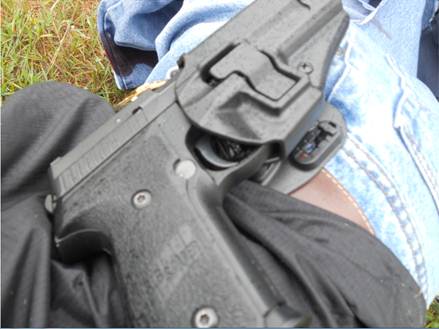
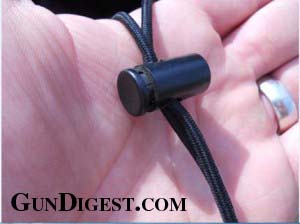
Once first aid was rendered and EMT’s had arrived at the scene, an examination of the pistol in the holster revealed that the trigger was depressed to the rear of the trigger guard (see photograph). A plastic cylinder-shaped draw cord adjuster attached to the wet weather jacket the officer was wearing was lodged against the front of the trigger. The plastic draw cord adjuster had become caught inside of the trigger guard during the holstering of the pistol.
It should be noted that this type of draw cord adjuster is the type commonly found on many jackets. The one that became lodged was for the side/waist adjustment cord.
Just a reminder to trainers and shooters. We train to keep our eyes up on threat when holstering. When holstering with this type of clothing and using the support hand to clear the holster, ensure that the support hand doesn’t get covered by the muzzle. Keep the support hand and clothing well above the top of the holster and bring the pistol in below them.
This situation could have ended much worse. I was at a range where a shooter did much the same thing while trying to holster his Glock with his finger inside the trigger guard. Massad Ayoob tells a story of shooter getting off two rounds in such fashion because he didn’t realize the “cause and effect” and once the first round went off he really wanted to get that pistol safely into the holster, so he pushed down again!
This is no laughing matter. Learn to holster carefully. As cops, we holster with our eyes on the threat in order to transition to
handcuffing or some other activity. You civilian CCW holders should not holster until you are certain the scene is safe. That usually means when police arrive. At that point you may be directed (loudly) to place your gun on the ground while police sort out the situation. Do so without hesitation because responding officers don’t know who is the bad guy when they arrive at a “shots fired” call.
So, when you are buying a holster and a cover garment look for the little things that can hang up and possibly cause an unsafe situation. You will be glad you did.
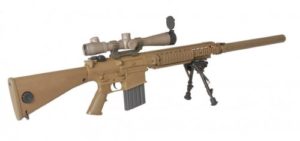
According to Military Times, “The US Army’s PM Soldier Weapons has put out a sources sought request over on FedBiz [Federal Business Opportunities, a government agency] looking for sources to manufacture a complete weapon system or reconfigure some or all of the existing 7.62 x 51mm M110 Semi-Automatic Sniper System (SASS) currently available in the Army’s inventory.”
The Army has put out specifications for a shorter, lighter rifle than the current SASS. According to the bid document, the Army was “looking to build or convert 125 rifles per month with a capability to ramp up to 325 rifles per month.”
“Reading between the lines, 325 rifles a month is more than they’d need to outfit scout/sniper teams. At that rate, figuring a multi-year contract, that’s enough to outfit the DMRs [Designated Marksman Rifle units] Army wide. The logical conclusion is that the Army is looking to replace the venerable M14’s latest configuration [called the Enhanced Battle Rifle or EBR] with something more familiar to the current grunt that’s smaller, lighter and more easily maintained than the EBR.”
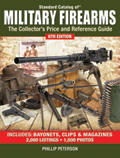
The fascinating histories behind military firearms is explored in the Standard Catalog of Military Firearms book. Its rich information includes reference and pricing information for a wealth of military guns.
Click here to order Standard Catalog of Military Firearms for 40% off retail.
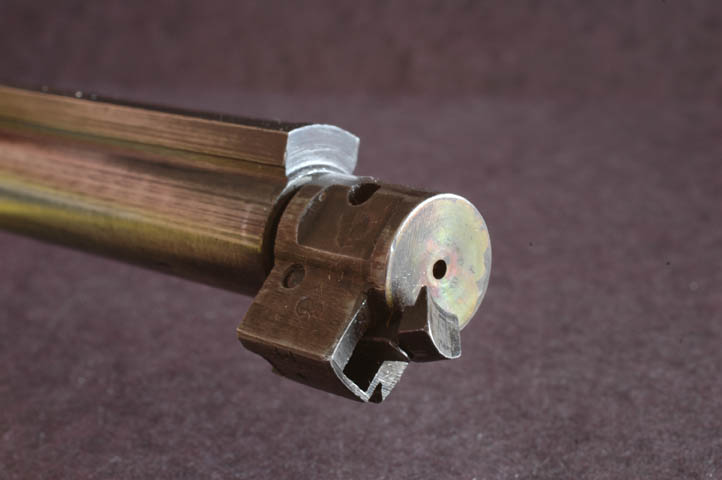
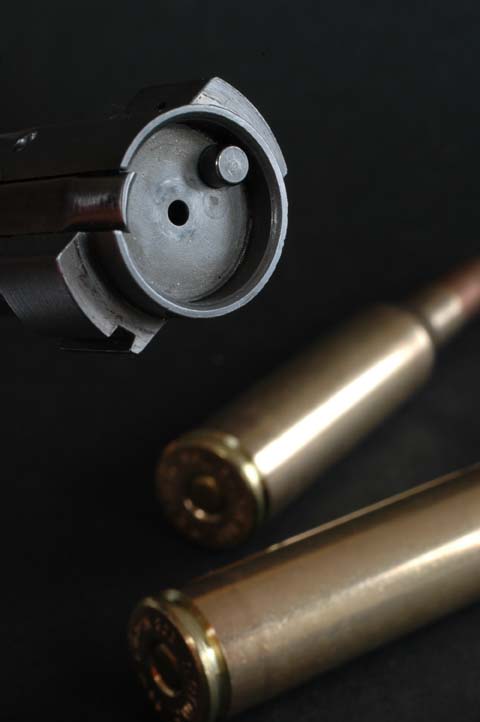
Headspace, measured from the bolt face to the cartridge stop in the chamber, is set during barrel chambering and installation.
The barrel nut on Savage 110 rifles is a clever way to make headspacing easier and cheaper. British SMLE rifles have replaceable bolt heads that varied slightly in length, for a quick field fix of improper headspace.
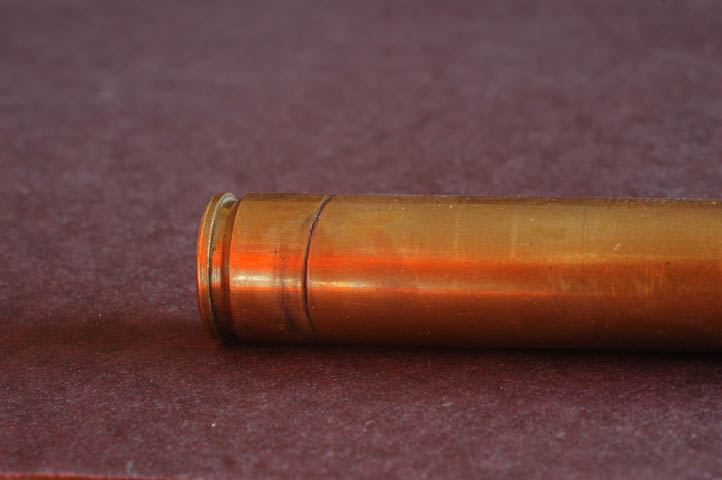
But as a handloader, you control effective headspace, because in sizing cases, you determine the relationship of cartridge to chamber. Even when the barrel is properly reamed and expertly installed, errors in case preparation and loading can introduce headspace problems.
Once I was sizing cases for a wildcat 6mm cartridge, the .240 Hawk. I set the die to full-length size, to ensure the cartridges would easily fit the chamber. My first shot blew gas from all crevices of the stout Remington 700 action.
The case showed a circumferential crack forward of the belt. Because the loads were not stiff, and because the bolt lift did not indicate high pressure, I fired another round. Same result. I compared sized cases with the fired cases. The sized .240 hulls were shorter by nearly .1 inch.
So I unscrewed the sizing die until it hung 1/8 inch shy of contacting the shell-holder. The first case sized at that setting wouldn’t chamber. Lowering the die incrementally and trying the case at each setting, I finally closed the bolt.
At this point, the die and shell-holder were .1 inch apart. Unlike most commercial dies, this one reduced case length excessively when flush with the shell-holder. It made the case .1 shorter than the chamber.
When I fired those first rounds, the striker drove the case forward .1 inch, and the rear of the case backed up .1 inch against the bolt, pulling the brass apart just ahead of the web.
Full-length sizing compresses a cartridge case; firing stretches it. Think about what happens after repeated bending of the tab on a soda can. To prolong case life, neck-size only, so the brass moves little upon firing.
Because a cooling hull shrinks after firing (otherwise it wouldn’t easily extract), there’s no need to further reduce its dimensions unless you plan to use the ammunition in another rifle that has a slightly smaller chamber.
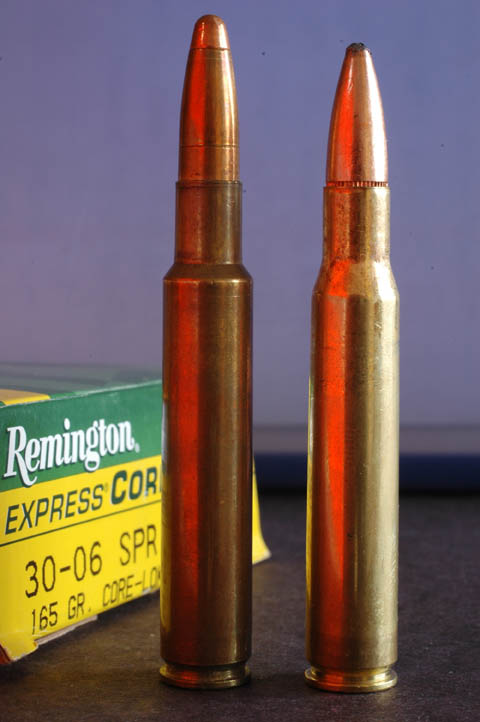
The only other reason to full-length size (or to use small-base dies that squeeze cases down even further) is to feed autoloading or lever- or slide-action rifles with little camming power. Some hunters full-length size the cases they’ll use on a hunt, to ensure easy chambering.
Neck sizing is a particularly good practice with belted cases, because chambers for these hulls are often cut generously up front. The critical dimension, after all, is the distance from bolt face to belt face – .220 to .224, “go” to “no go.” If you full-length-size belted magnums, you may be shortening the head-to-shoulder span considerably each time—which means the case stretches a lot at each firing. Eventually (sometimes soon), you’ll notice a white ring forming around the case just ahead of the belt.
If you insert a straightened paper clip with a small “L” bend at the end and feel around the inside of the case, you may detect a slight indentation forward of the web. The white ring signals a thinning of the case there and the case will separate if you keep full-length sizing the case.
Rechambering rifles to Improved, or sharp-shouldered, cartridges should not change headspace measurement. The reduced body taper and steeper shoulder angle provide greater case capacity, but the datum point on an altered shoulder should remain the original distance from the bolt face.
That’s why you can fire factory ammunition in an Improved chamber safely. True wildcats that require case forming in dies must sometimes be given a false shoulder to serve as the chamber stop before firing full-power loads.
Headspace is a length measurement. It has nothing to do with diameter. After long use, reamers cut slightly smaller chambers than when new. New reamers or those used aggressively can bore oversize chambers. Headspace can change over time. With each firing of your centerfire rifle, some compression of the locking lugs and lug seats occurs.
The elasticity of the steel keeps headspace essentially the same. But many firings with heavy loads can drain that elasticity and cause a permanent increase in headspace.
A rifle with hard lugs and soft seats and generous headspace can eventually develop so much headspace that a field gauge can be chambered. At this point the rifle is unsafe.

Since 1944, Gun Digest has been considered “The World’s Greatest Gun Book.” That’s because it’s full of gun information.
The new 2013 edition stays true to the tradition of excellence in firearms literature and gun information. It features in-depth articles about antique guns, testfire gun reviews on the latest guns, gun collecting secrets and roundups of what’s new from leading manufacturers. Its gun information is unrivaled by any other book!
“This is a solid chunk of book, with lots of great illustrations and tons of good information. I bought it as a present for a friend and am very happy with it.” – Bob Lovely, Amazon reviewer
“Gun Digest was — and is — the 900-pound gorilla of firearms annuals. It didn’t matter if you were a handgunner, trap-shooter, historian, hunter, collector or even a rotten little kid from Indiana — Gun Digest always had something for you…In what other annual could you find articles by Elmer Keith, Jack O’Connor, Maj. George Nonte, Warren Page, Lucian Cary and dozens of other towering figures in shooting literature? No wonder Gun Digest had a world-wide following. In fact, it’d be surprising if it didn’t.” – Dan Shideler, editor of Gun Digest 2012
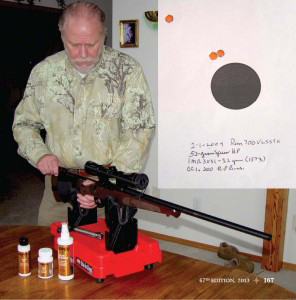 Before you order a copy, click here to read a preview article from Gun Digest 2013 about cleaning rifles. In it, Tom Tabor tackles one of the 10 shooting myths he exposes in his Gun Digest 2013 feature.
Hint: A dirty barrel is sometimes better than a clean one. It’s revealing gun information like this that’s made this series such a hit.
Join the millions of firearm enthusiasts who count themselves as Gun Digest fans. Whether you’re into hunting firearms, competition firearms, concealed carry firearms, tactical firearms, military firearms or just need reliable gun information, you’ll find something to love in Gun Digest 2013.
Click here to order Gun Digest 2013 from GunDigestStore.com for the best price.
In all of history, which firearm left the biggest footprint? Anywhere, any time, any situation. It’s your call. Leave your comment below.
It’s no secret that I’m a fan of the bolt-action rifles made by GA Precision — especially the company’s military reproductions like the M40A1 and M24. Even so, the company’s take on the AR-10 style precision rifle, the GAP-10, is well worth a closer look.
Admittedly, I’m forever taken with bolt action rifles. But after watching this video, it’s hard to miss the fact that precision rifle makers have so perfected their craft that these days one can quite literally have his cake and eat it too.
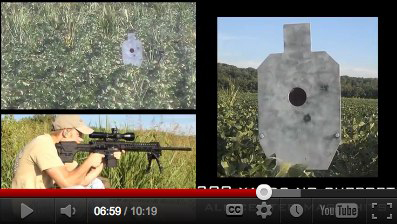 Long gone are the days when you faced the proverbial fork in the road, forced to choose between fast shots and surgical accuracy. Today you can have both.
Of course, GA Precision didn’t get to the finish line first on the idea (though they seem to be working against the grain of companies placing priority on modularity versus sheer accuracy, starting with the barrel and building the gun around it).
Indeed, the Les Baer Ultimate .308, Armalite Semi-Auto Sniper System (SASS) and Colt LE901-16S are all proven performers in the super-accurate AR-style .308 rifle category.
However, it is notable that the GAP-10 is available with an array of custom options: Shortened mags for prone position shooting, factory-applied Cerakote colors like tan or Flat Dark Earth (FDE), Mag-Pul PRS buttstock and a variety of muzzle breaks and barrel lengths.
GAP-10 Specs
Learn more about the GA Precision GAP-10.
When 600 million people lose power, who should be responsible for being prepared to get through it: Individuals or government? That question is being asked as India experiences the most widespread blackout in history.
As the video report above shows, a power grid failure in the northern part of the country caused a blackout affecting a population equal to North and Central America. By comparison, the video notes that the most disruptive blackout in United States history affected 55 million people in 2003.
The difference between the two events isn’t as much a matter of population as it is economy. The average GDP per capita in the U.S. is roughly $48,000, according to the CIA World Fact Book. In India, it’s closer to $3,800.
Despite India’s population being four times that of the U.S., it consumes 600.6 billion kWh of electricity per year. That figure is 3.741 trillion kWh in the U.S.
This means people in India had fewer resources to set aside for blackouts, yet didn’t lose as much on the personal level when the power went out. It was the large, socialized pieces of infrastructure that took it on the nose. As the video showed, scores of people were stranded waiting for public transportation, their only option for travel.
The opposite happened in the most recent blackout in the U.S. (read about it here). The power outage affected a fewer number of people, but they had much more to lose at the personal level. Individuals generally relied on their own energy consumption to get through the day.
The power went out in both cases, yet there is a major difference. In India, individuals lacked the resources to set aside for emergencies. In the U.S., the average person had much more to put in reserve. This begs the question about where the responsibility of preparedness falls. Is it the individual or is it government?
For example, is it up to individuals to store potable water for emergencies or is government responsible? Should individuals in India, where rolling brownouts are common, anticipate these events and prepare for them? Should people in the U.S., where wealth allows for individual preparedness, still expect an effective government response to disasters?
It’s this author’s view that there is only the illusion of a middle ground when it comes to blackout preparedness. Large-scale electricity production is a socialized function heavily regulated by government. Private companies sanctioned to perform this work are not beholden to individuals, only to the governments that approved their monopolistic existence. That would seem to place the burden of blackout preparedness on government.
However, government disaster relief services only go so far. Literally. Help has to be shipped in from other places. That’s going to take time. It could be hours, days or weeks. The response to Hurricane Katrina is one example.
The same is true of any place in the world. Yes, there will be governments preparing for disaster. No, it won’t be a perfect response. Don’t be lulled into a false sense of security.
The reality is individuals are responsible for their well-being, and need to be prepared to the furthest extent they’re able. True, people in developing countries, such as India, are at a disadvantage when it comes to preparedness. But the core principles of survival are as true today as they were thousands of years ago.
In the end, no one is going to help you but yourself.
When Federal Emergency Management Agency (FEMA) trucks roll into town to offer relief, no one will hand you a pack and say, “Here’s the survival kit I made just for you.” It’s up to individuals to be prepared by building their own survival kits. Learn how in Build Your Own Survival Kit.
Click here to order Build Your Own Survival Kit for 34% off retail.

Editor’s Note: The author offers some great tips for selecting a survival shotgun in this article. Keep in mind you’re not likely to find a literal “survival shotgun” for sale. Survival shotguns are sporting or tactical firearms purposed for preparedness.
The shotgun has some marvelous advantages for the person who is preparing for civil unrest. Most of you don’t remember this, but the short barrel versions used to be known as a “riot shotguns” back in the day when it was still okay to shoot lead, rather than rubber, pellets at people causing mass property destruction and injury to others. The shotgun may have fallen into third place status for law enforcement use, but it certainly has a lot of use left as a survival gun.
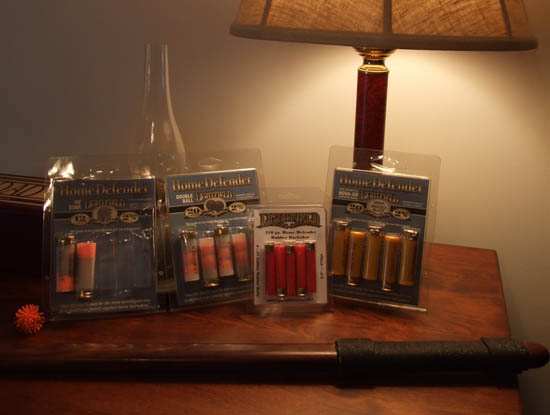
1. Survival shotguns are useful for mid-range and CQB (Close Quarter Battle) defense of one’s home from about 25 yards in to what I call “eye gouging distance.” The close range power of a 20- or 12- gauge shot shell cannot be denied.
2. Survival shotguns are versatile. They can be located with 00 buckshot for defense against large angry mobs or large angry animals, or with hunting loads for taking small game in an emergency.
3. The appearance of survival shotguns are worth noting. They are large bore, and the sound of a pump action being operated has always been intimidating to the bad guys.
4. Ammunition is universally available. There are an extreme variety of loads: buckshot, birdshot, rifled slugs, sabot slugs, duplex loads, signal flare rounds, rubber pellets and projectile-free stun rounds. There are also low-recoil rounds for those shy to buckshot and slug offerings.
5. In its pump action format, which I prefer, it is extremely reliable, and takes little maintenance under normal conditions to operate.
6. A quality, survival-ready shotgun is priced far lower than nearly any brand new AR.
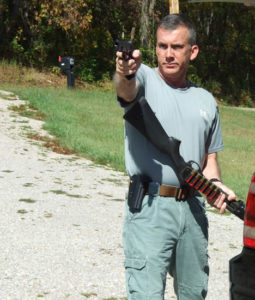
1. Survival shotguns have limited effective range with a shot or slug. Sabot rounds will indeed be more effective farther out, but they require a rifled barrel to reach their accuracy potential, which in turn, inhibits the patterning of shot rounds. Buckshot runs out of serious steam at around 40 yards, and the accuracy potential of rifled slugs runs out around 100 yards.
2. Magazine capacity is generally limited, unless you attach some huge competition magazine system, which destroys some of the portability of the weapon. I would stick with an 8-round magazine at most. Practice your loading and reloading technique. Also practice drills where you transition from an empty shotgun to a high-capacity pistol until you can get your shotgun reloaded.
I favor pumps over semi-autos. There are some great tactical autoloading shotguns out there. Benelli is among the very best in recoil or gas operated-styles (I particularly like the recoil operated M2 Tactical), but they are pricey and a bit more complicated in operation. That is why police agencies never went to semi-auto duty shotguns en-masse, and limited their issue to specialized units like SWAT.
Here are my top 3 picks for survival shotguns:
1. The Ithaca Model 37 Defense Gun, either the 4 or 8-shot model with the walnut stock. Anyone notice that wood is actually natural camouflage? These are real Ithacas (not foreign-made knock-offs) manufactured in Upper Sandusky, Ohio, on CNC machinery with hand craftsmanship at a reasonable price. The Model 37 was the favorite of the LAPD and NYPD, to name a few. It is fast-pointing, has only one entry point for shells. This minimizes penetration of dirt.
2. The Mossberg 590 A1 with M4 collapsible stock is rock solid. It sports mil-spec reliability with fixed rifle-style sights and ambidextrous tang-mounted safety. Too many shotguns have way too long a pull for most individuals, especially with the way my shoulders are these days. I like being able to keep the stock short and tucked in tight. It’s a classic survival shotgun.
3. The Remington 887 Nitro Mag Tactical is the very best in pump shotguns from Remington. A pump action for the 21st Century, its Armor Lokt protective polymer finish makes it nearly impervious to the elements or being knocked about. It was a standout when I tested it for my book, Gun Digest Book of the Tactical Shotgun.

I have a simple explanation as to why I approve whole-heartedly of the zombie gun phenomena sweeping the industry. Are you ready for it? Here it comes: Zombies are fun. Fun gets and keeps people interested. Fun sells guns.
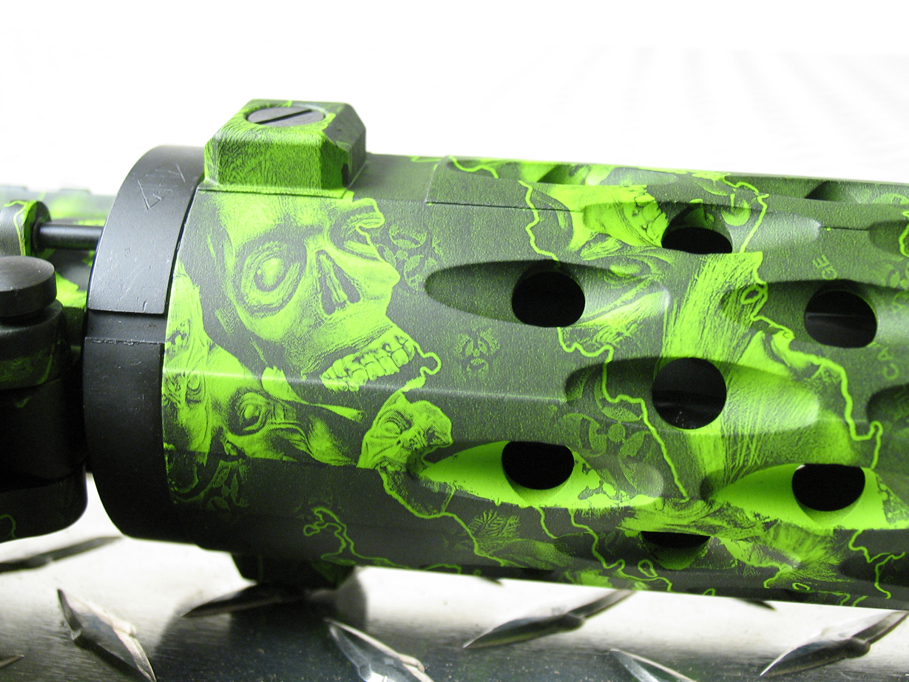
Anyone that is really, and I mean seriously, worried about a zombie apocalypse should seek professional help. There are plenty of other real threats out there to fear. But the whole zombie thing, from shooting matches that feature zombie themes, to zombie ammo and accessories, to flashy zombie guns are all just plain fun.
And if it gets people shooting and keeps them shooting I’m all for it.
So, what got me going on this today and not last month when MTM came out with the zombie box or a couple months before when Hornaday came out with zombie ammo or even a couple years ago with the zombie shoots up in St. Cloud, MN?
I don’t know. I saw the new Zombie Annihilator from Yankee Hill and the promise that it will, “…make the undead roll over in their graves… for the last time.”
I love Yankee Hill stuff and it created a top-notch zombie-killing machine.

Features include their own upper and lower receivers, mid-length Todd Jarett Competition Series handguard, an adjustable carbine buttstock and a 30-round magazine all coated with Proveil’s© Reaper-Z hydrographic finish.
The rifle is topped with limited-edition bio-hazard engraved QDS sights. The muzzle is finished with the new Annihilator Flash Hider that eliminates over 99 percent of muzzle flash and adds a new dimension of cool to the end of any firearm because if you look closely at this monster, you will agree you don’t want the business end of that stuck in your forehead.
All these extra features would normally make for a very expensive custom rifle, but suggested retail price of the Zombie Annihilator is $1,550.
So yes, I like the zombie craze. Keep it going. Tell us here at Gun Digest what you like best of all the zombie stuff out there. Have some fun with it. Remember, a lot of what we do is “recreational” shooting.
If you need more information on the Zombie Annihilator, please visit www.YHM.net.
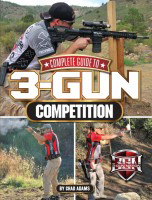
Until the undead rise from their graves, your zombie guns are best put to use in competitions. The new Complete Guide to 3-Gun Competition is the place to start. You’ll learn why this sport is growing fast and how to get involved.
Click here to check out the Complete Guide to 3-Gun Competition and save 36% off retail.