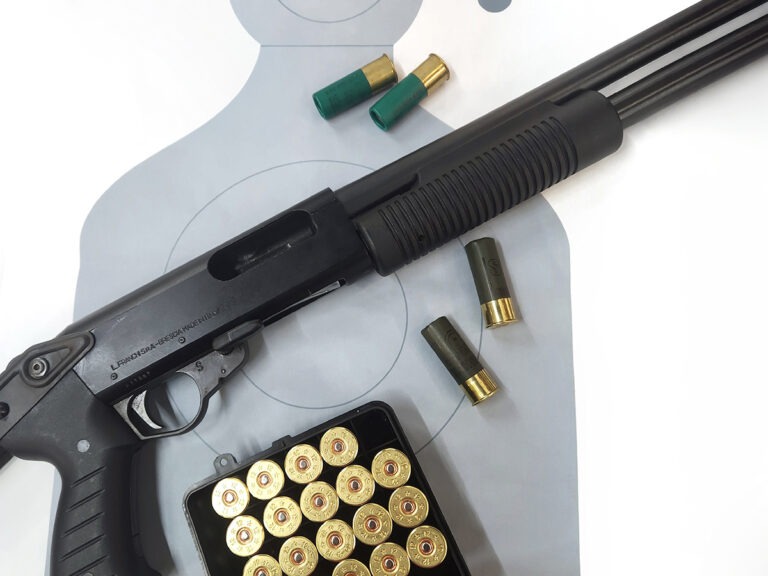
There’s not always time to use sights when it comes to self-defense. Here we look at how instinctive shooting can massively improve your defensive shotgun skills.
For years now, I have been saying that anyone wanting to up their tactical shotgun game should be training in clay sports, such as skeet, trap and sporting clays. However, unfortunately, a lot of tactical shotgun courses have people training on static targets … but shotguns excel at hitting moving targets and are perfect for learning instinctive shooting.
Instinctive shooting teaches a shooter to break free from sights and optics. That’s right: Say goodbye to red-dots, ghost rings and rifle sights.
Many might find not using sights hard to believe, but ask yourself this: If a clay shooter can hit a target 4 inches in diameter moving upward of 42 miles an hour at more than 37 yards away, how hard would it be to hit a man-sized target?
If instinctive shooting made you faster and allowed you to be more aware of your surroundings, would it not be worth trying? First, let’s look at how to learn instinctive shooting. Then, let’s look at the benefits and, lastly, some of the drawbacks.
What Is Instinctive Shooting?
Instinctive shooting is the process of getting your firearm to shoot where you are looking. The two main drivers behind this are muscle memory and focus. To get your shotgun to shoot where you’re looking, you must first master the process. Through extensive practicing, you will build the muscle memory needed to start down the path of instinctive shooting.
Learning to Shoot Instinctively
There are three main areas we must master to become proficient instinctive shooters, each of which are about building the basic foundations of a set of muscle memories for shooting. Once we have mastered these three areas, they will combine seamlessly into our instinctive shooting routine.
Our three foundational skills: gun mount, stance and vision control (awareness).
1. Where Is Your Gun?
If you want your gun to shoot where you are looking, you must know where your gun is pointing. To master this, a consistent gun mount is key, meaning your gun must be in the same place every time. You should be so accustomed to your gun that you can feel almost down to a fraction of an inch whether it’s mounted correctly.
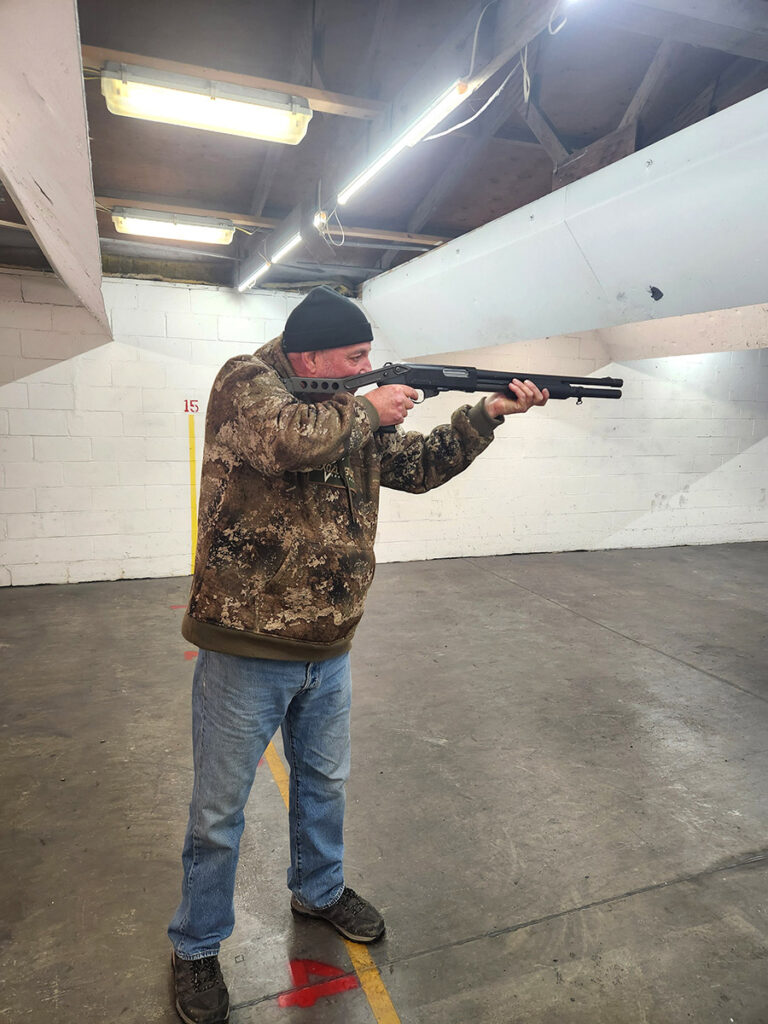
I can’t tell you the number of times I have shouldered my shotgun, felt it was off and decided to shoot at a flying target anyway, only to miss the target. Keep in mind that I’m shooting at a much smaller target than a person. On larger targets, you can still hit with a bit of variance based on how you mount the shotgun, but don’t get too crazy. Here is where shooting clay sports helps, because that discipline isn’t about putting the gun up and emptying it—clays are about multiple stations and mounting the shotgun multiple times, which helps create that muscle memory.
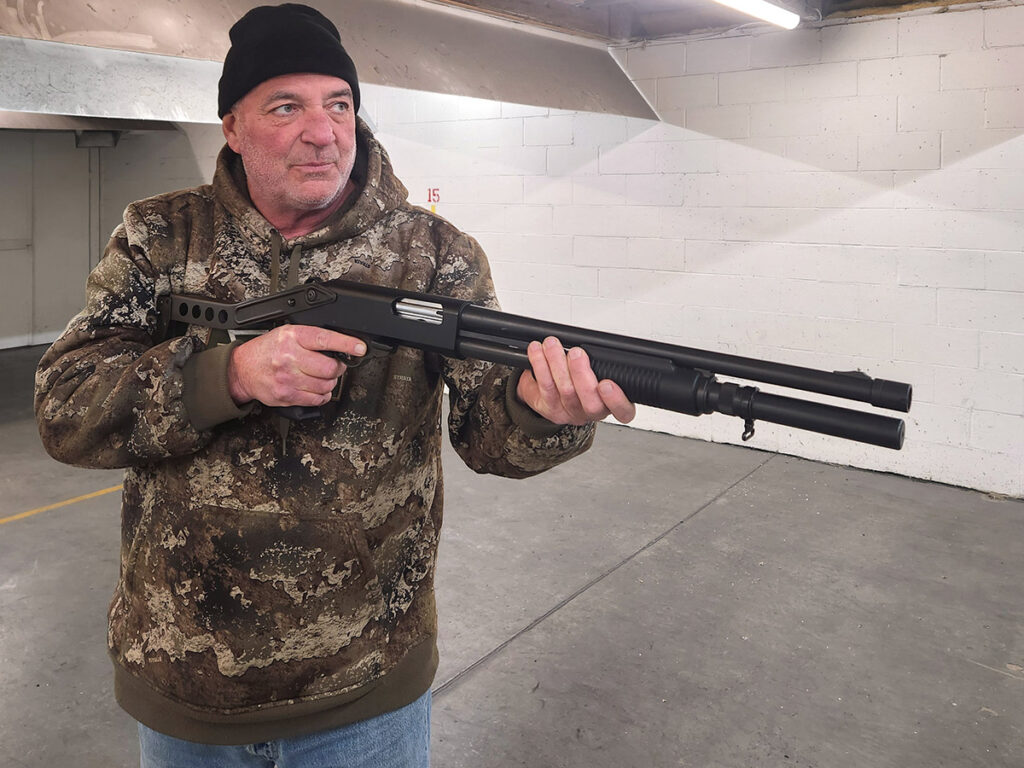
Also, shooting flying targets makes repetition less monotonous. To speed up the progress, you can just practice at home by putting the gun up and pointing at a Post-it on the wall. A good training technique is the rule of 21 times, for 21 days, to start.
2. Proper Stance
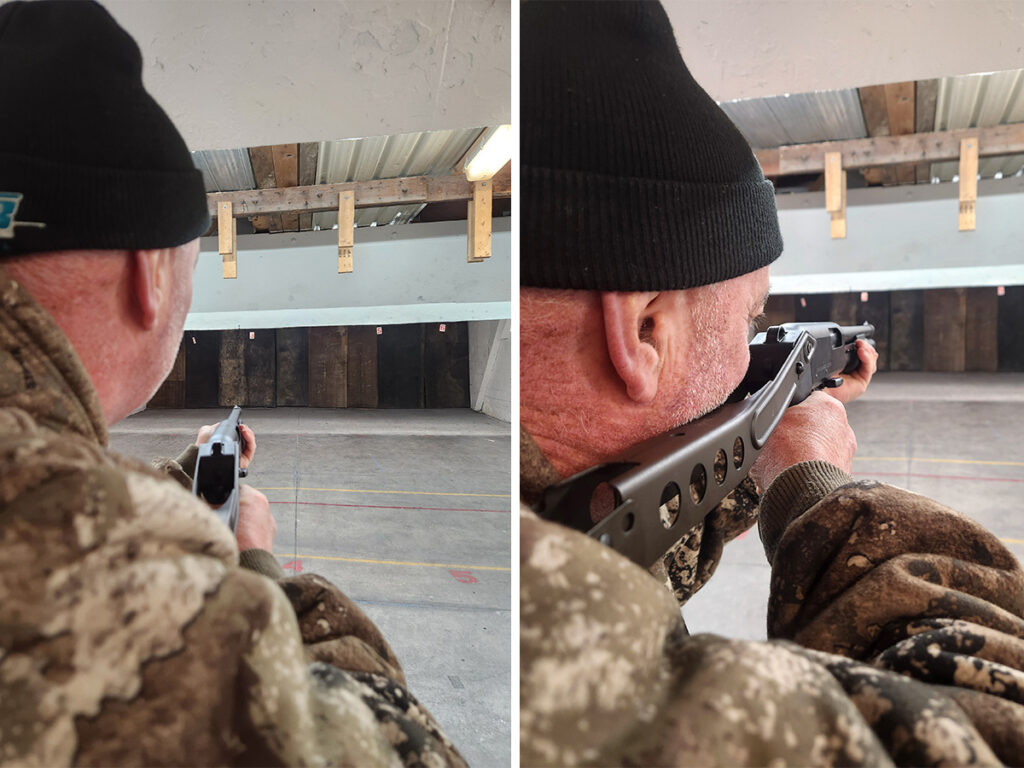
Our second foundational skill is stance. Imagine making your body and gun into a tank’s turret. At the point your gun is mounted, you have four points of contact and full control of the muzzle. Yet, what good would a turret be if it could not move freely?
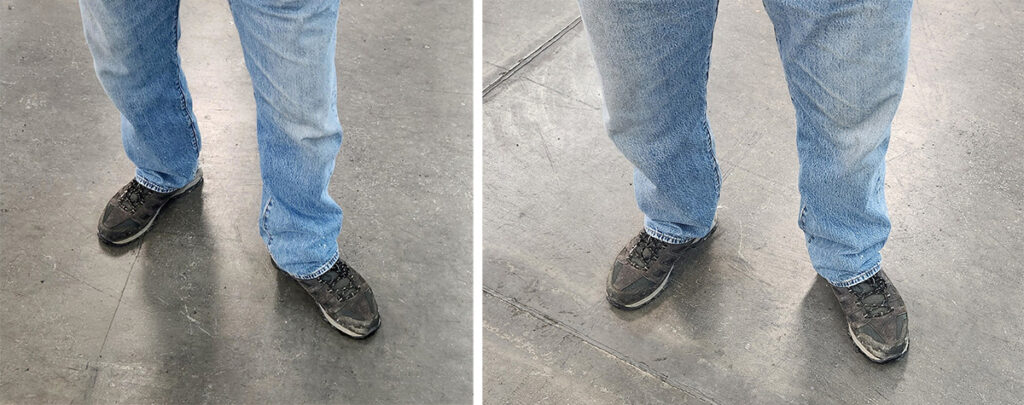
Each person has a bit of variation on how they stand, but the goals are always the same: You want to stand in a way that you’re stable and well balanced, and at the same time your core has enough mobility so that you can pivot to acquire targets. A smooth-moving core creates greater accuracy. You should never be throwing your arms, as it will break your mounting position.
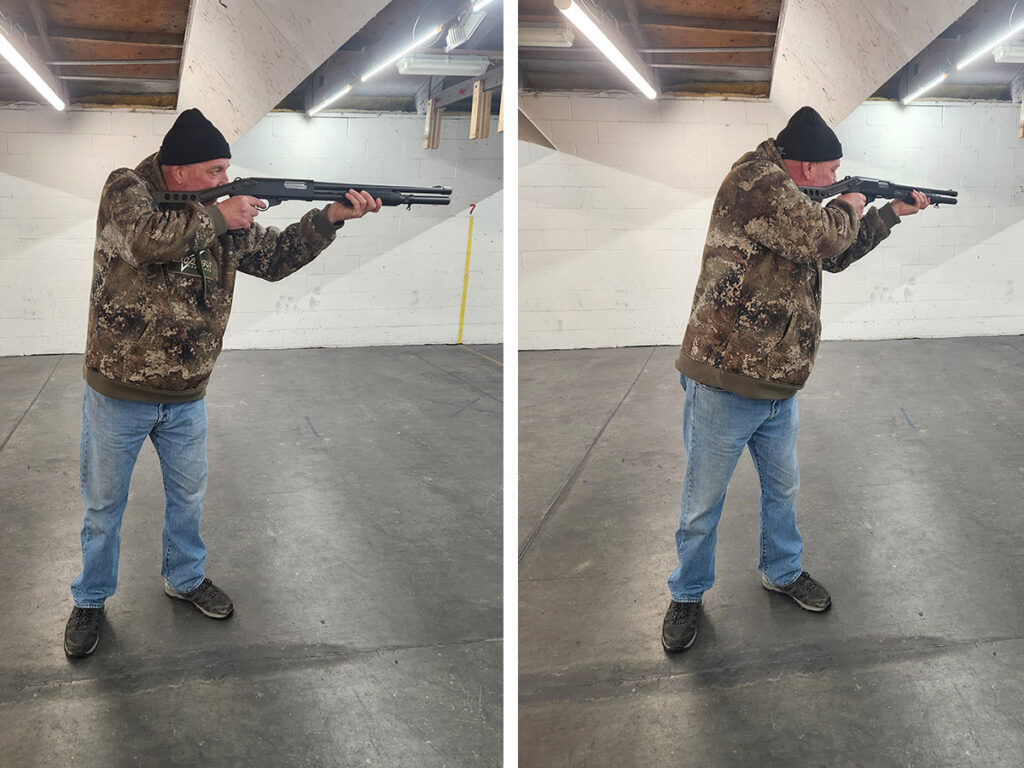
Practice these together, mount and stance, by mounting the gun and moving it horizontally and vertically. Taking the time to practice at home will reinforce your live-fire sessions and speed up mastering the shotgun.
Remember: You want to move using your core and your legs, not your arms.
3. Where Your Eyes Are Looking
The goal of instinctive shooting is to get the gun to shoot where your eyes are looking. Part of that is acquiring the target with your eyes.
Often, when shooters use sights/optics on a firearm they will get tunnel vision. By using a technique called “soft focus,” you can prevent getting tunnel vision. Soft focus allows you to survey a large area by simply using your eyes, which uses the techniques of not using a detailed focus and instead using a wide focused peripheral gaze.
Once a potential target is detected, you switch to an intense detail focus and assess the target: Is the target a threat or not a threat? All the while, you are merging your muscle memory to mount your shotgun to the point your eyes are looking.
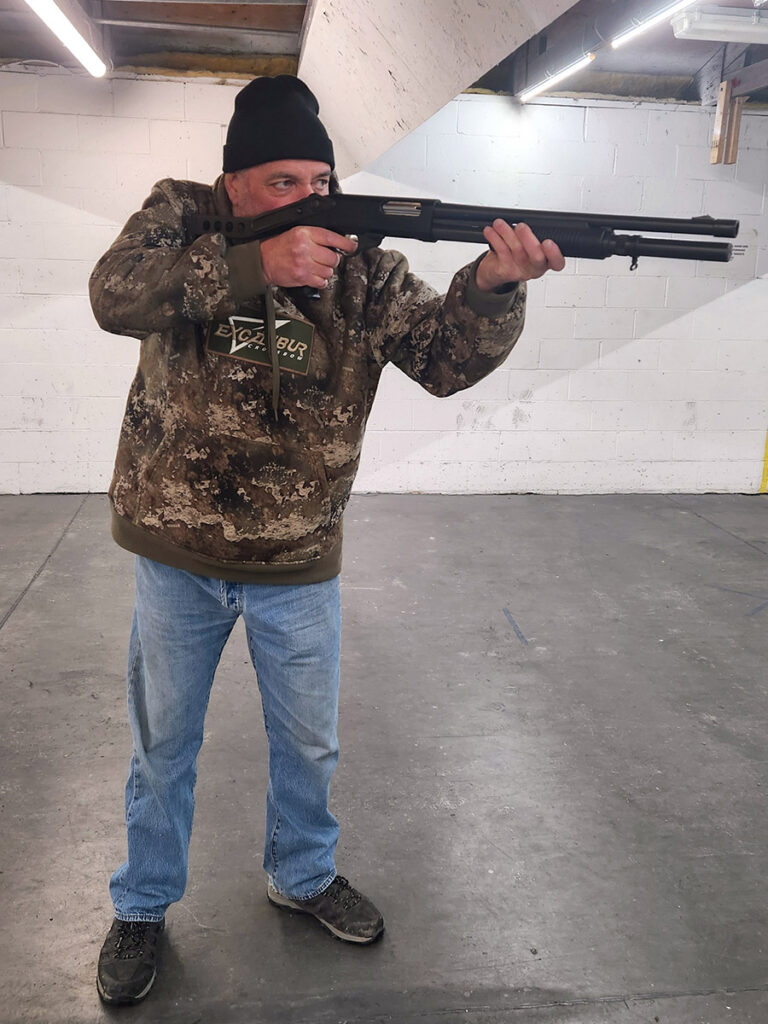
Said another way, you do not look down the sights: The barrel will always be in your peripheral vision, but don’t use it to aim, which is called the sight picture. As you build repetition with that sight picture by shooting clays, every time you hit a clay you should replay the hit in your mind, getting used to what the picture looked like.
Due to the size of the target and speeds, it will take a bit. Once you start hitting them, larger and slower targets will seem like child’s play.
After you have these three foundational skills down, you just need to practice while coordinating them together until they become second nature.
The Art of the Gun Down
Imagine increasing your field of vision with the goal of a faster reaction time. If you need to take in a greater field of vision, gun down is a tool to keep in your arsenal.
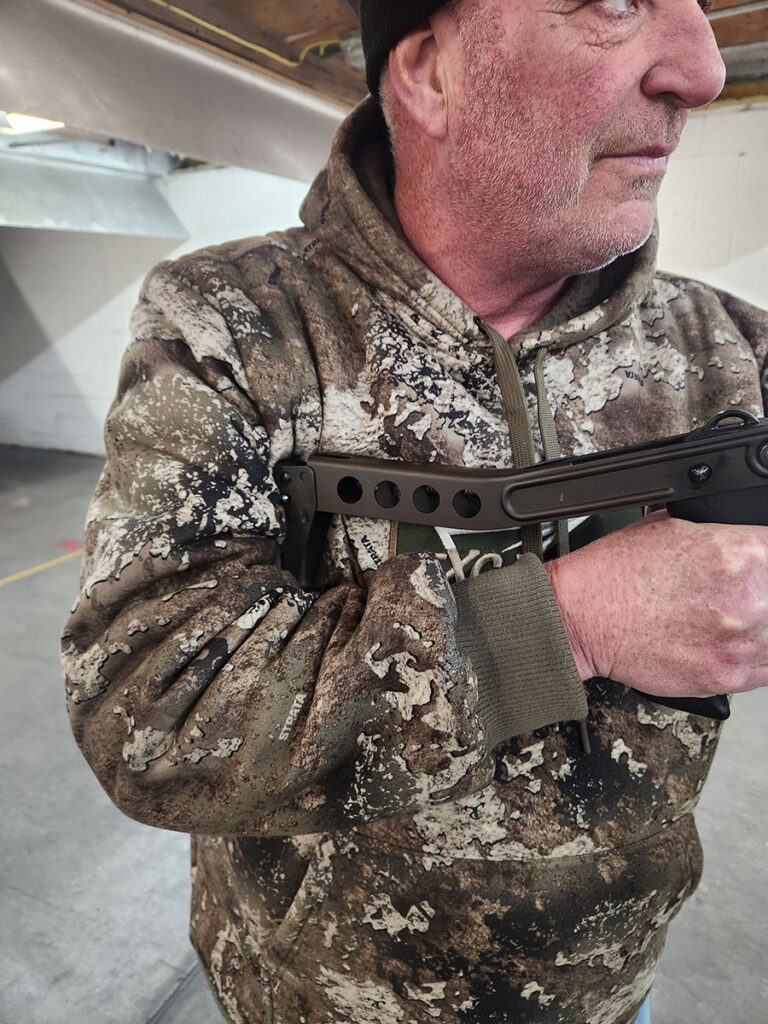
Gun down is simply starting from a low position, with the butt of your shotgun no lower than the side of your chest. With the shotgun down, you can now move your head freely while using a soft focus to look for threats, which will avoid tunnel vision.
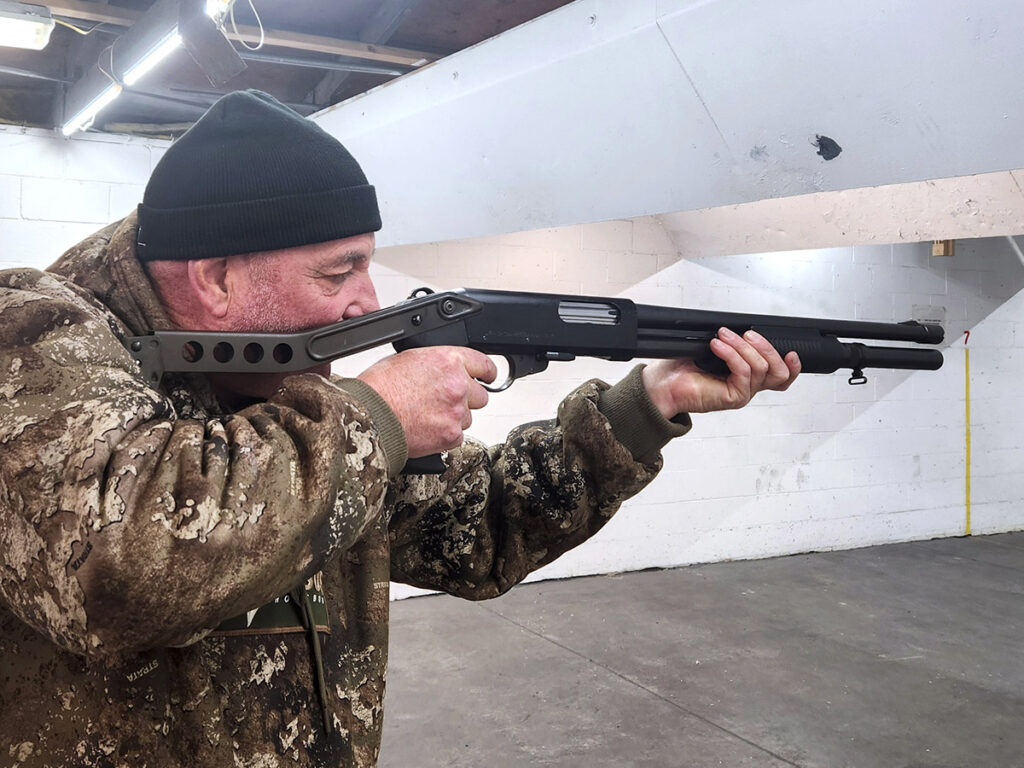
If a threat is spotted, transition to focusing on the threat. Muscle memory will take over, and you will mount the gun while focusing on the threat. As your eyes focus on the threat, your gun will come up to its established mounting point. Once you get a solid cheek weld, you will be on target. If you need to engage multiple targets, you can simply move your core to bring them into your sight picture.
Benefits of Foundational Skills
The first benefit is faster target acquisition. If you have mastered the basics, your muscle memory will be established, and your reflexes can take over. Moving instinctively is not only fast, but it can remove the conscious reactions to distractions and fear. Your body is on autopilot; therefore, your actions will come effortlessly, leaving little space for distraction.
The same can apply to fear. With instinctive shooting, you have set a series of actions into motion that can be hard to stop (one of the downsides I will go into). So, even in the confusion of gun fire, you will fall back on this training, and your muscle memory will take over.
As I have referred to before, static targets don’t prepare you for a variety of target scenarios. Clay targets present you with unpredictable target presentations. The angle, speed and range of the target can change. You learn to quickly adapt to these changes, which I believe better parallels actual defensive situations.
Practice Makes Perfect
Clay sporting rounds can offer anywhere from 25 to 100 shots. In trap or skeet, a round consists of 25 targets. And no one says you must shoot just one round, either. When I shoot trap to build my endurance for competition, I shoot no less than four rounds, which is 100 targets. If I catch a hot streak, I will end up shooting until I miss a target.
In sporting clays, you can shoot 50 or a hundred targets. By practicing these sports, you’re going to become much more familiar with your firearm. The best sport out of the three to learn loading cycling and dealing with any malfunction is sporting clays. Sporting clays presents two different targets at each station. Each set can be shot calling for one after another or in true pairs, meaning one call starts the pair sequence forcing to shoot both targets without a break between.
You need not be a hunter to reap the benefits and skills gained from this type of practice.
The Cons of Instinctive Shooting
Instinctive shooting can be so embedded in your shooting routine that you have to remember to slow yourself down. You know the old saying, “If the only tool you have is a hammer, you tend to see every problem as a nail?” The saying is not an exact match for this problem, but if your body is tuned to instinctive shooting, you have to be careful that everything doesn’t become a target.
Sometimes, people don’t realize how powerful instinctive shooting is. You can respond to stimulus before you even realize it. Sure, everyone wants to be the fastest gun in the West, but we must also be moral and responsible for our actions. That is why instinctive shooting is only part of your arsenal of shooting tools.
Shooters Can’t Live on Instinctive Shooting Alone
If you want to improve your tactical shooting, you need to practice tactical shooting. Instinctive shooting, as I have said, is only one part of it. Keep doing tactical drills. Practice shooting from around cover and in different body positions. Clays don’t give you the experience of moving with a gun at the ready.
Techniques like pieing around corners or entering a room still need to be practiced. Most importantly, use your tactical shotgun as much as possible. Every shotgun fits differently. Every shotgun can shoot to a different point of aim … even if they are the same model. Tactical shotguns are more flat shooting, whereas shotguns made for certain clay sports can shoot high. Different ammo patterns differently out of each gun.
Practice with your gun.
The Flow
Many people in sports refer to flow as “the zone.” In psychology, it’s called “the flow.” The term the flow was first used by a psychologist named Mihaly Csikszentmihalyi. Flow is what takes over when instinctive shooting takes place. Many misunderstand the flow as the state you must be in. To be in a state of flow for long periods of time is difficult. For this discipline, the flow is a state that you are looking to enter for that brief moment during which you are actually shooting at a target.
The flow is the culmination of your subconscious brain being trained in shooting so well it pushes your conscious mind aside and says, “I got this.” Some might understand it using the example of drawing your pistol from the holster. If you consciously think about it, you might fumble or struggle with the action. If you have practiced your draw enough, you will be able to draw the pistol from your holster and shoot fast and accurately on muscle memory alone. You don’t have to walk around all day being in a state of flow—just at the moment you need it.
The Rule Of 21
The rule of 21 is what I follow to get a good start of committing something to muscle memory. Doing something 21 times each day for 21 days will commit that action to muscle memory. Here’s how:
For the first week, mount your shotgun; if it’s off, make a correction. Practice mounting 21 times. For the second week, you mount your shotgun 21 times; each time you put it up correctly you get to count it. When you make a mistake, don’t count it; instead, repeat that time. During the third week, if you make a mistake you have to start counting to 21 all over again.
So, let’s say you have successfully put your gun up 18 times and on your 19th attempt you screw up. Well, you’re now back to zero. Do this and you will have this action committed to memory when your shotgun is in the right place. We can still make mistakes, but running this drill will cut down the frequency.
Practice Attire
As a reminder, clothing matters. I shoot year-round. At times, there have been snow squalls and down-pouring rain. As the seasons change, so does my clothing. In the wintertime, I get used to shooting with thick layers on. In the summer, I am down to a T-shirt. Believe it or not, my shooting takes a hit each season change until I am used to the clothing. Therefore, practice shooting or at least mounting your shotgun in all seasons so you get used to the feel. We don’t have the ability to choose when and under what conditions trouble finds us, but we can prepare ourselves to adapt.
Editor’s Note: This article originally appeared in the April 2026 issue of Gun Digest the Magazine.
More On Shooting Skills
- Video: Target Transition Training With The Dot Drill
- The Shot Timer And Defensive Handgun Training
- Gun Digest’s 10 Best Shooting Drills And Firearms Training Posts
- MantisX: Simple And Effective Training
- Video: Is A Full-Sized Pistol The Best Training Option?

Next Step: Get your FREE Printable Target Pack
Enhance your shooting precision with our 62 MOA Targets, perfect for rifles and handguns. Crafted in collaboration with Storm Tactical for accuracy and versatility.
Subscribe to the Gun Digest email newsletter and get your downloadable target pack sent straight to your inbox. Stay updated with the latest firearms info in the industry.