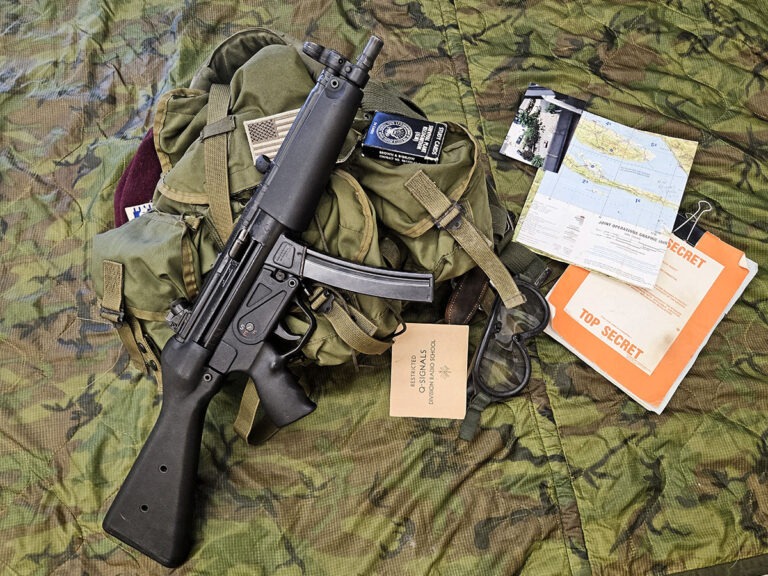
The H&K MP5 is a 60-year veteran subgun that just won’t retire.
Since 1966, the HK MP5 submachine gun and its 90-plus configurations have continued to evolve, accommodating any add-on technology or accessory packages used by more than 65 nations. This world-renowned peacemaker has resolved countless crises and terrorist incidents and remains on duty globally to this day. Though a regulated Class-3 firearm in the United States, the MP5’s popularity led to a crop of legal-to-own versions from both Heckler & Koch and one of its former licensed clients.
Four years after the Second World War, the Federal Republic of Germany, or Bundesrepublik, remained dependent upon the occupying Western Allied powers for its security. Unlike the obstreperous policies of the Soviets in the Eastern zone, West Germany complied with the terms of the May 1945 unconditional surrender, including the prohibition on rearmament, as stipulated by the Allied Forces Western Europe. On March 14, 1951, a newly established but lightly armed Bundesgrenschutz, or federal border police, was organized, limited to 10,000 members, to assist in guarding its borders against communist-controlled East Germany. Temporarily, the U.S. M-1 rifle was issued to the new West German border guard force.
In 1950, former Mauser Werke engineer Ludwig Vorgrimmler relocated to Spain, supporting the Centro de Estudios Tecnicos de Materiales Especiales (Center for Technical Studies of Special Materials), or CETME, in the design of a new infantry arm. Among Vorgrimmler’s earliest projects was the LV-50, the prototype of a closed-breech roller-delayed blowback rifle. The new rifle, which became the M53 CETME, was chambered for a proprietary 7.92×40 cartridge. When the new West German national defense force, the Bundeswehr, was formed in November 1955, it expressed interest in an improved version of the CETME Model 2. Still, it sought to have it chambered for the more powerful 7.62x51mm NATO cartridge. Following a long, drawn-out series of negotiations that go beyond the scope of this topic, Heckler & Koch in Oberndorf incorporated refinements to the CETME design, including a stamped-steel handguard, wood or two types of buttstocks, a polymer trigger pack, and a drum aperture rear sight. The West Germans preferred having the rifle built in Germany; hence, the Bundeswehr adopted the 7.62x51mm NATO-caliber, selective-fire G3 in 1959. Both HK and the defense firm Rheinmetall in Düsseldorf were assigned the task. However, the latter ceded manufacturing rights of the G3 in 1969. In 1977, West Germany’s government relinquished its production and sales rights to Heckler & Koch.
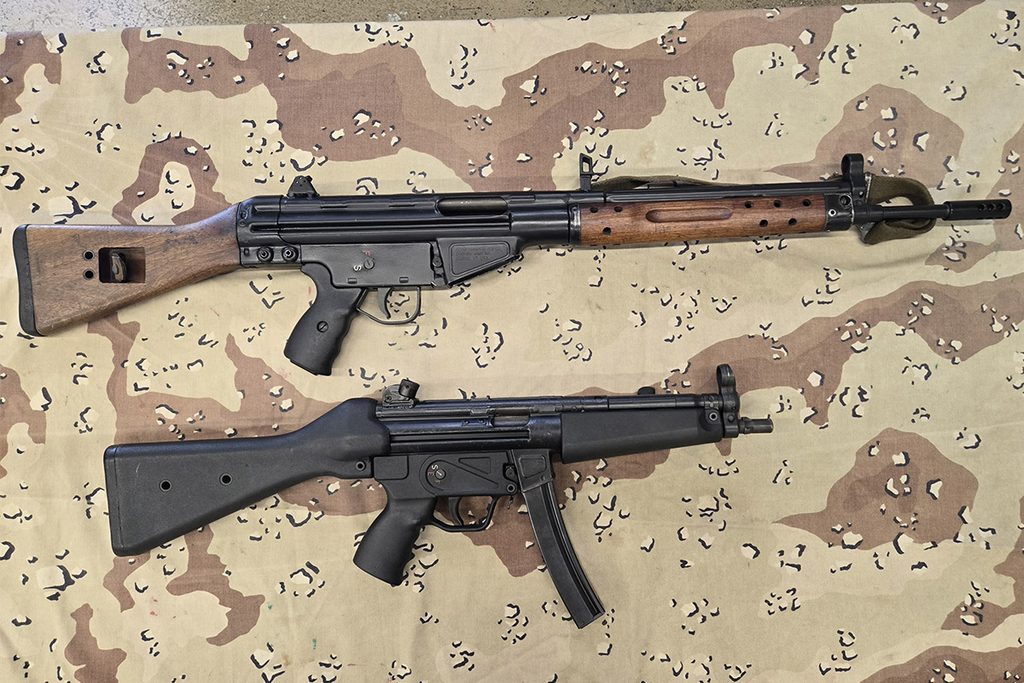
From 1964 to 1966, four HK engineers, Helmut Baureuter, Manfred Guhring, T. Moller, and Georg Seidl, were on the precipice of introducing the greatest influence spawned from Germany’s well-received postwar infantry rifle. By 1969, eight international armies had adopted the G3, but within a decade, its famous offspring added 60 more countries to the list.
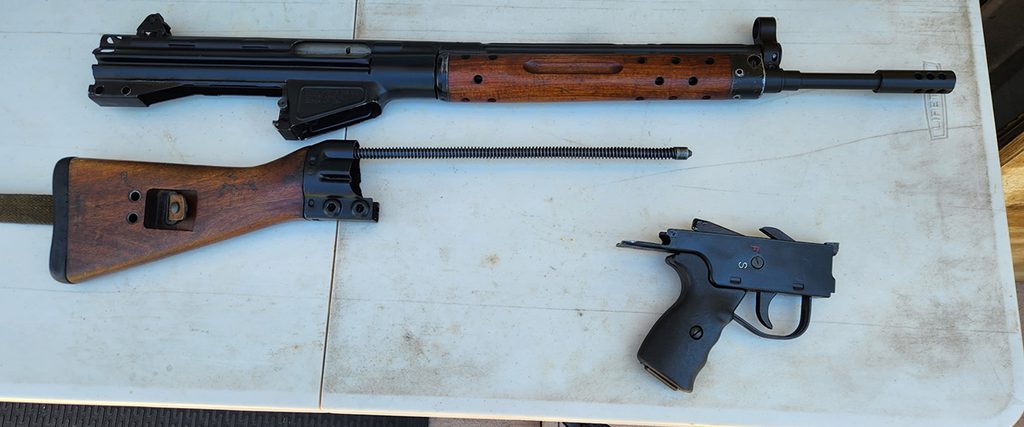
The culmination of a highly perfected research and development program resulted in a scaled-down variant of the G3, coined during experimentation the Heckler & Koch 64, a numerical designator under the HK nomenclature system. Unbeknownst to all, an iconic legend was in the making. This fourth-generation design was eventually christened the MP5. Originally stockless, the MP5A1 had a retractable stock; the A2 had a fixed stock. Both had barrel lengths of 8.8 inches, shortened over time, given their future compact variants. This roller-locked, closed-bolt, delayed-blowback submachine gun with a fluted chamber and a welded and stamped steel upper frame was well thought out.
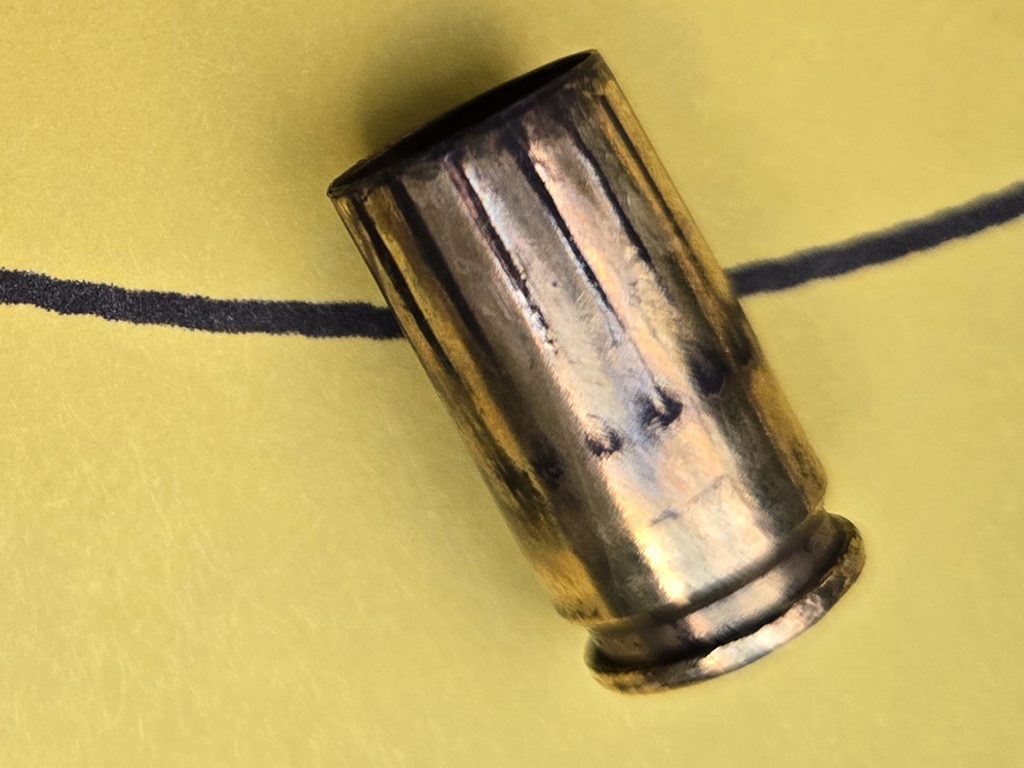
With a unique, lightweight polymer trigger pack, it was first introduced as the select-fire Heckler & Koch submachine gun, operationally identical to its G3 predecessor. West Germany’s GSG-9 special forces group and the Bundesgrenzschutz lost no time in adopting the versatile new weapon. Early MP5s used a 25- or 30-shot straight-box magazine, modified to a slightly curved configuration in 1977.
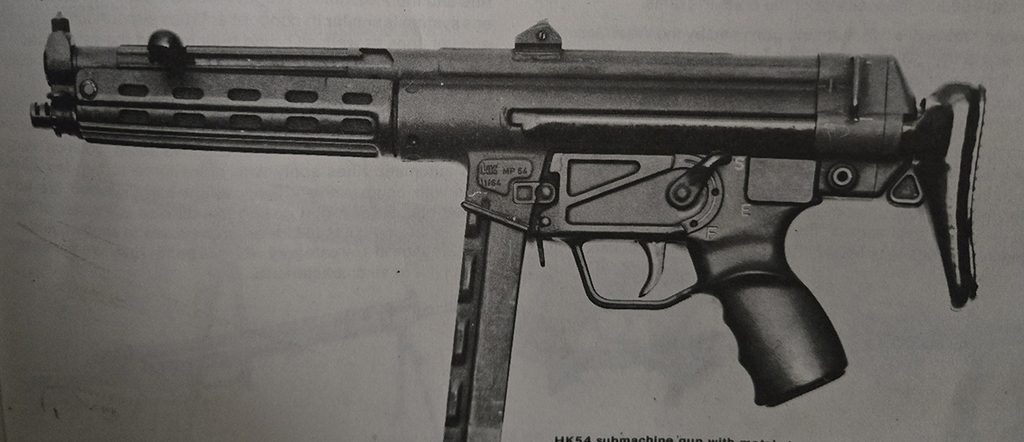
By the 1980s, HK’s MP5 had become the gold standard for West German police and security agencies. A host of suffixes followed “MP5,” which determines specific variants. These can confuse the unfamiliar. Cosmetically, the MP5’s multitude of features per gun drew immediate attention, earning it the famed sobriquet “The world’s most efficient submachine gun.” In concept, it wasn’t intended to replace standard-issue 7.62×51 NATO or the 5.56mm infantry arms. But sleek cosmetics, ease of handling, and reliability conferred an inescapable “cool factor,” elegantly nicknamed the “Mercedes-Benz of submachine-guns.” Currently over the sexagenarian mark, few special-purpose weapons during and after the Cold War have received as many facelifts, add-on technologies, and upgrades as the MP5. The modularity of this arm has been said to match or even exceed the AR-15, while seldom straying from its basic platform.

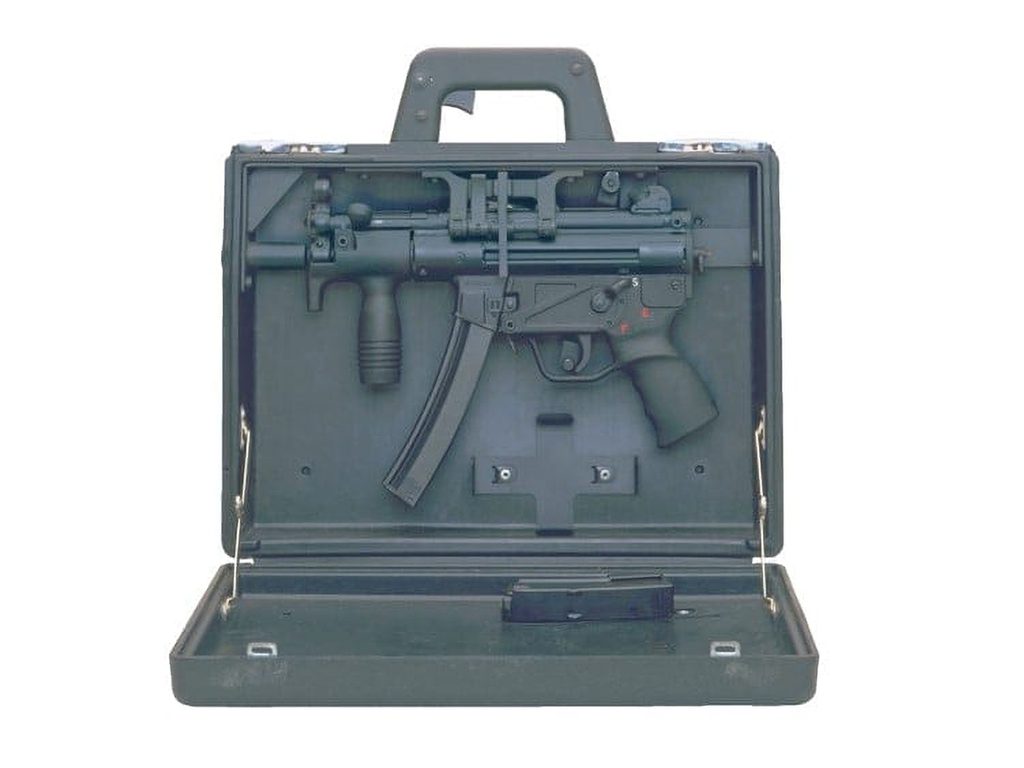
A natural “transformer,” its trigger pack is the nucleus, which is easily removable from the upper assembly via two or three pins. This effortless takedown feature made it one of the few weapon systems of the time boasting such dexterity. A good example, straight out of a spy movie, is the compact MP5K (K for Kurz, or “Short”) variant with its 5.8-inch barrel. The size was ideal for high-level dignitary protection when fitted internally to the special Hofbauer attaché case. Upon emptying the magazine, the user released the latches, removed the arm from the case, reloaded it, and continued the mission. The MP5’s four basic components are the pistol-gripped trigger pack, handguard, optical devices, and the stock. A suppressor, if required, could be fitted to the three-lug barrel mount.
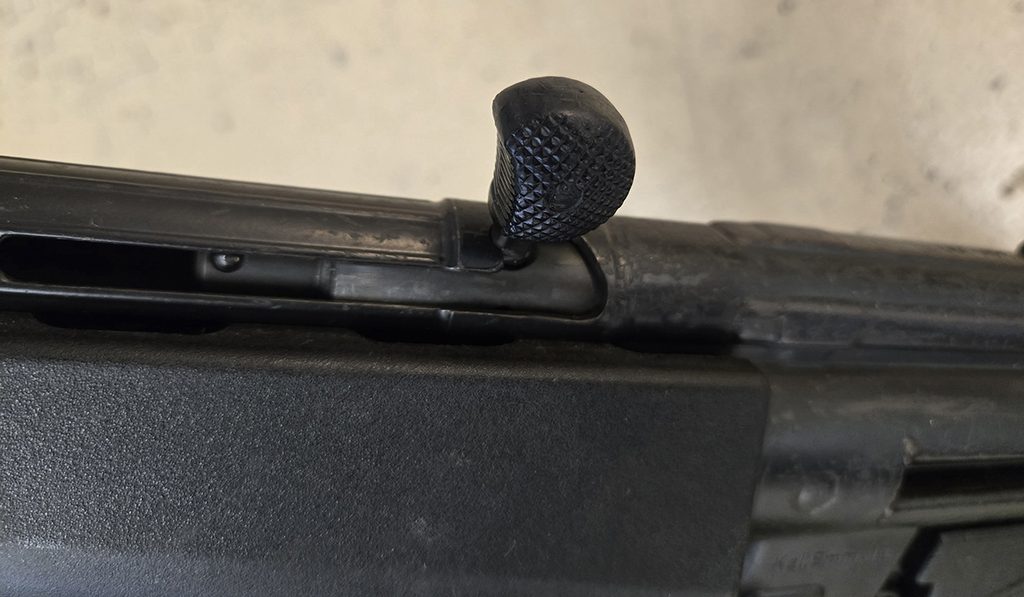
The non-reciprocating charging knob attached to the inner cocking sleeve on the upper left of the barrel is offset 45 degrees. Remaining stationary during firing, it serves solely to open the action or chamber a round with a brisk release from the palm, affectionately coined the “HK slap.” Depending on bolt size, the 9mm round’s rate of fire ranges from 800 to 900 rounds per minute. The original trigger pack was marked SEF (Sicher, Einzelfeuer), Feuerstoss, Safe, Semi, and Full Automatic. Eventually phased out, its replacement featured various red-highlighted “numbered bullet” logos marked on the selector. For example, 0-1-3-5 indicates Safe, Semi, Three-Shot, and Full-Auto burst. The U.S. Navy eventually adopted the MP5N with Safe, Semi-Automatic, Two-Shot, and Full-Auto burst. By the 1990s, countless options were on the table.
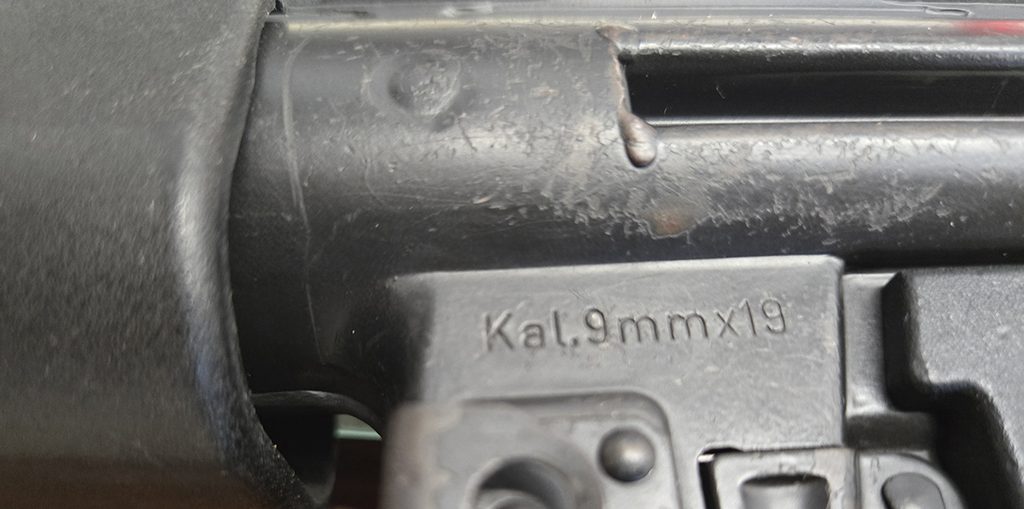
Presently, the primary cartridge for the MP5 remains the 9mm Parabellum. Once available in 40 S&W, it is currently offered in a 22 Long Rifle version. Simply put, it’s one of those weapon systems that could be made to order, but often at a high cost. Among the countries licensed by HK to build the MP5 were Greece, Turkey, the United Kingdom, Pakistan, and others. Some, such as China and Sudan, produced pirated, unlicensed variants.
As learned in World War II, submachine guns were indispensable for high-volume fire during close-in or urban situations. Most earlier subguns fired from open bolts. Compared to closed bolt guns, all have their limitations. Accuracy-wise, the MP5’s roller-locked closed bolt has only the disturbance of a light, internal hammer when squeezing off, allowing a higher degree of accuracy. Such automatic weapons provide a controllable sight picture, with even multiple short bursts. The open-bolt submachine gun’s greatest disadvantage is that the heavy slamming effect provides a quicker ignition time. The downside is that extended periods of automatic fire can quickly heat barrels. Locked to the rear, the empty chamber of open-bolt guns allows for cooling durations. Long periods of firing with loaded chambers of automatic weapons, such as the M-16, the AK, and MP5 submachine guns, especially in hot climates, can lead to spontaneous “cook-offs” when chambers reach high temperatures. Arms designers eventually remedied this by introducing the two- or three-shot burst selector sear, which, in the hands of the experienced, is a truly indispensable feature for automatic-fire discipline.
Throughout the 1980s, 1990s, and into the 2000s, technology advanced rapidly, with new upgrades added to the HK MP5 that seemed to fit like a glove. Advanced optics, suppressors, and LED flashlights were designed for almost any military or law enforcement situation. Following the Vietnam War, world geopolitics drastically changed; it was a time when HK’s MP5 began taking center stage in a new era of global special operations.
Its first real test in a world chock full of radical political upheaval began on October 13, 1977, with the hijacking of Lufthansa Flight 181 from the island of Mallorca to Frankfurt, West Germany. Some 86 passengers and a crew of five were held hostage in a five-day ordeal with tension-filled stops in six countries. Four hijackers demanded a $15 million-dollar ransom and the release of two Palestinian terrorists jailed in Turkey, plus ten Red Army faction members held in West Germany. The final destination for the Boeing 737-200 was Mogadishu, Somalia, and unfortunately, there, the pilot was executed. The West German special GSG 9 unit tracked this situation, finalizing a rescue plan in the early morning hours on October 18, just past 0200, on an unlit airport tarmac. Around thirty GSG-9 commandos, several armed with HK MP5A1 submachine guns and other weapons, entered the aircraft’s mid-section and forward doors, burst in, yelling to passengers to take cover. Three hijackers were killed, and one was wounded. The tense mission created a reputation for the MP5, leading many free world special operations units to rethink their tactical needs for such a weapons system. Such planning arrived sooner than anticipated.
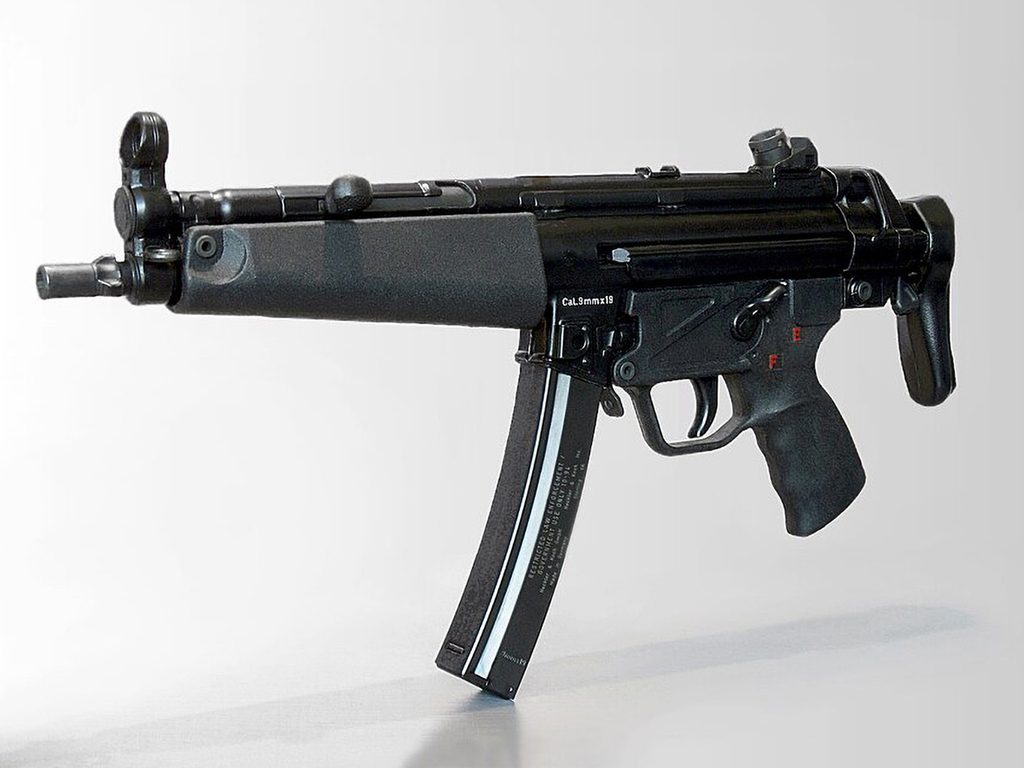
In late April and early May 1980, the Heckler & Koch MP5 again captured the spotlight of the world during the British SAS (Special Air Service) assault on the Iranian embassy in London. Six members of an Iranian separatist group commandeered the facility located in the South Kensington area. Coded “Operation Nimrod” by the SAS, this daring assault occurred concurrently while the 52 American hostages were held in Tehran. Footage showing the 22nd SAS commandos breaching the embassy reveals different versions of the MP5: one with an early but heavy Maglite, and others with folding or fixed stocks. Following six days of negotiations leading nowhere, the murder of one of the 21 hostages saw PM Margaret Thatcher ordering the SAS to do whatever it took. The commandos immediately went into full offensive mode. The group stealthily ascended to the embassy roof, then rappelled down the structure, inserting through windows, doors, and a skylight. The 17-minute operation concluded with MP5s carefully aimed and a grenade blast killing 5 of the 6 terrorists, with one SAS commando wounded.
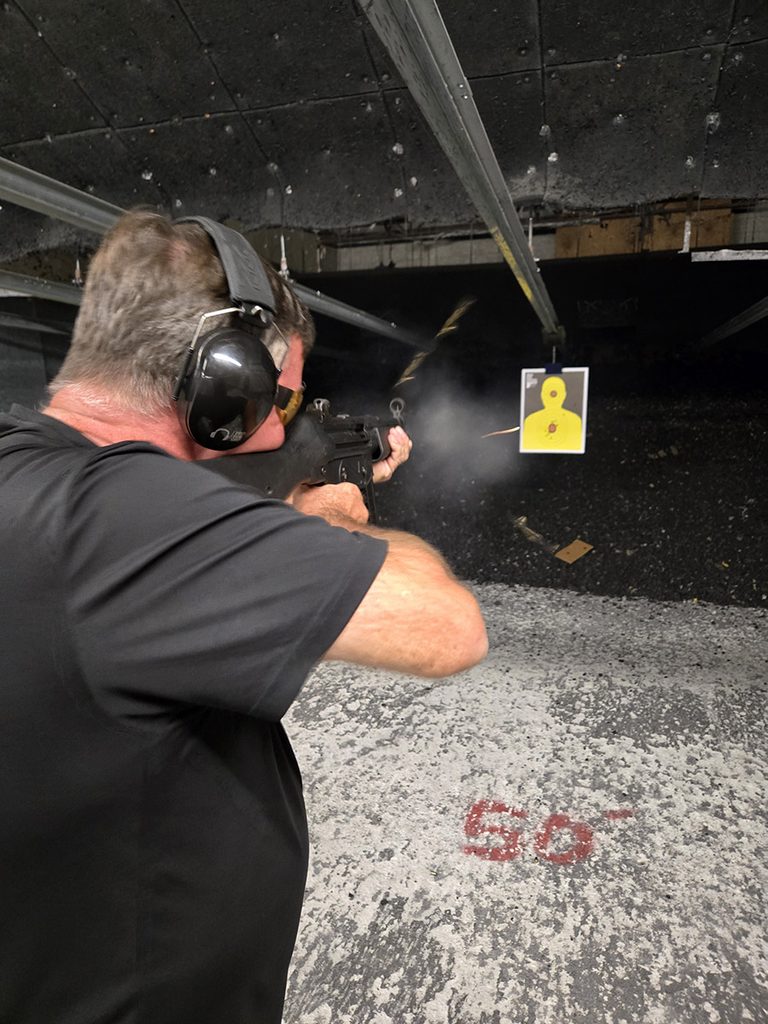
Following the above two tactical operations, the rest is history. Interestingly, the MP5’s iron sights are pre-set at the factory for full-metal-jacketed 123-grain 9×19 ammunition and zeroed at 27.3 yards (25 meters). Various apertures on the rear sight drum are set for precise shot placement. The smallest are intended for the tightest shot group possible without a scope, during close-quartered hostage operations, as on aircraft, to prevent collateral damage or hits on nearby victims.
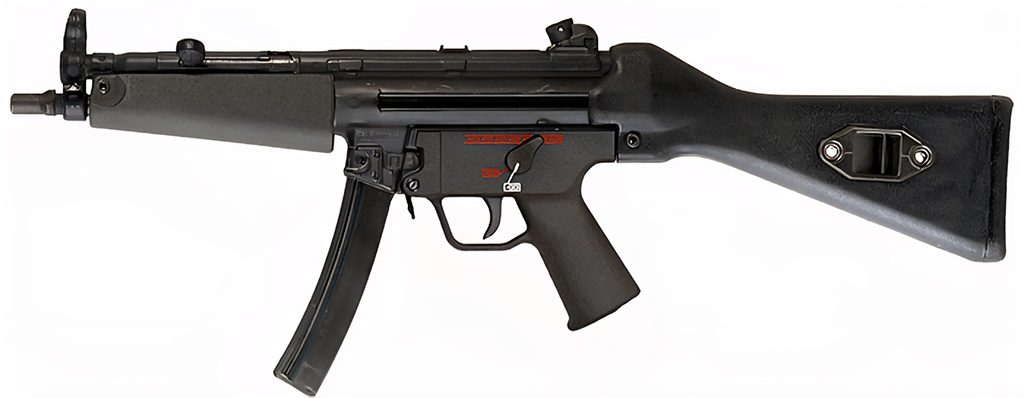
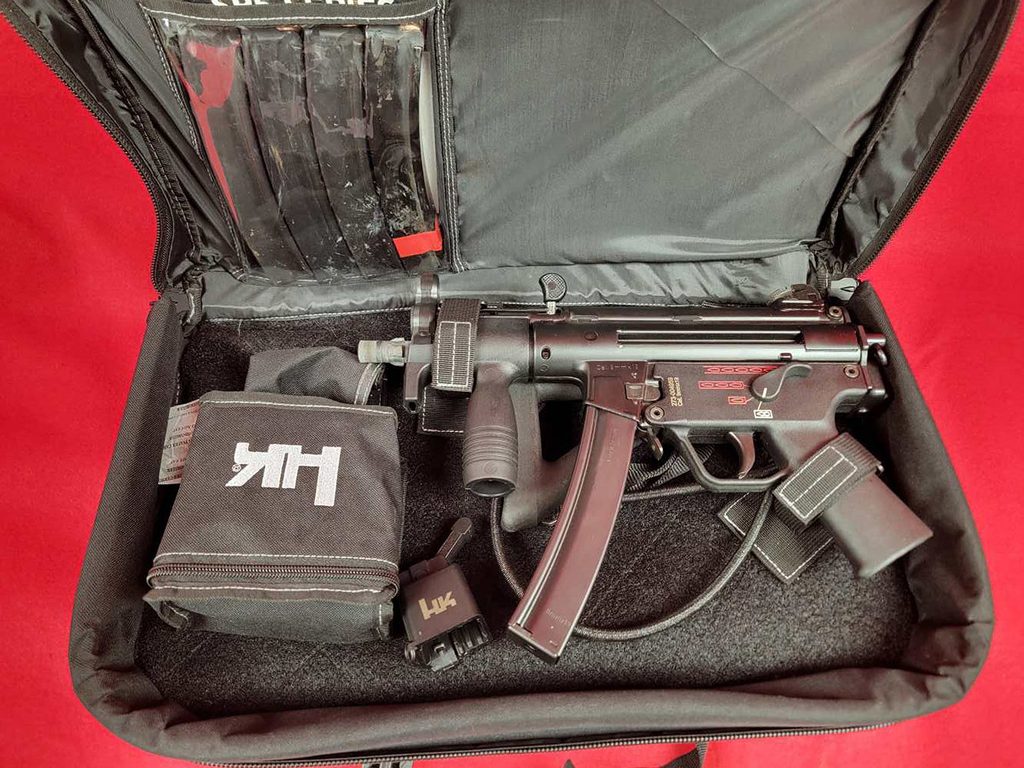
The MP5 is a once-in-a-millennium piece of engineering, adapted to fit nearly any tactical situation. As with all firearms manufacturers, Heckler & Koch kept abreast of field recommendations and continually upgraded the MP5 in response to user requests worldwide. Originally equipped with an 8.9-inch barrel, by 2025, there were nearly 10 variations with this barrel length, some with folding stocks and a collage of fire control combinations. The MP5 base platform’s modularity certainly allows for almost any configuration. Thus far, at least six versions of the shortened “Compact Model,” MP5Ks with 4.5- or 5.8-inch barrels, have been introduced, first in 1976. The MP5KPDW is basically an MP5K with a side-folder stock. At 4.5 pounds, depending on accessories, and under 13 inches, some were fitted to a small, non-functional, shadowed suitcase, appearing as inconspicuously as possible.
If this wasn’t enough to satisfy needs, HK offered eight different types of the MP5SD, featuring a ported barrel complete with a special integral suppressor that allows the use of ultra-sonic 9×19 ammunition, which can bleed gases on ignition, keeping velocity down and eliminating the need for sub-sonic cartridges. That version was indispensable when only standard 9×19 ammo was available, and the utmost stealth, with fully integrated sound suppression, was required. Early examples used an aluminum sleeve with a metallic mesh lining and conventional stack baffles. Over time, the MP5DN2 was introduced and adopted by the U.S. Navy, replacing the aluminum tube with a stainless steel assembly manufactured by Knights Armament Company. They were also adaptable to the three-point lug for quick insertion and removal. The Navy MP5KA4 with SEF trigger pack provided a similar arrangement and is still in use with the U.S. Navy on an as-needed basis.
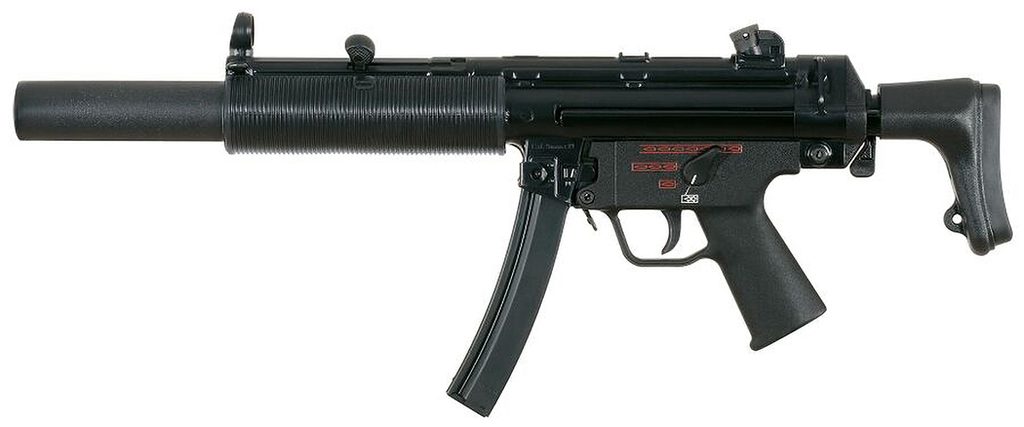
It was, however, Hollywood’s influence that made HK’s MP5 submachine gun an immortal star of the cinema world’s choreographed, high-octane gunfights.
MP5s on the Big Screen
As per usual, when the film industry supplies a movie’s lead protagonist with weapons, established with a preeminent, testosterone-charged reputation, target audiences won’t miss a trick. Case in point: the Dirty Harry franchise influenced the Model 29 Smith & Wesson 44 Magnum, something proven overnight. Again, the British media’s televising the Iranian embassy siege instantaneously aroused the screenwriter’s imagination. The MP5 frenzy became the latest attribute of supercharged movie guns. Hollywood armorers wasted no time incorporating modified HK 94 semi-automatic rifles, reconfigured to MP5 specs. The result was a new breed of non-stop, full-auto macho-driven firepower! As noted, the “HK Slap,” with its lightning-like whack of the bolt knob, started the action. The term’s origin is obscure, but it has become a self-descriptive buzzword from video gamers to modern-day shooters.
From the 1980s into the 21st Century, a chain reaction of nonstop supercop and spy films, frequently starring the MP5, ascended. Ironically, this was contemporaneous with real-world scenarios of the day, as the indomitable presence of the MP5 was commonplace on TV screens during the evening news.
Entertainment-wise, films such as Die Hard, Predator, The Matrix, and countless full-auto flicks left the MP5’s indelible mark on movie audiences. Gun buffs fell in love with this cosmetically enticing German subgun. The downside was that they were nearly impossible to obtain because they were regulated under NFA guidelines. Realistically, the “HK Club” was limited to the well-heeled, Class-3 shooter or collector requiring a $200 tax stamp and a mountain of paperwork. Since the May 19, 1986, Firearms Owners Protection Act, the MP5 has been frozen in all variants, with limited numbers of transferable guns, leading to a significant price increase. All pre-86 MP5s today sell for between $40,000 and $75,000.

In 1983, civilian semi-automatic versions of the MP5 became a reality. Heckler & Koch introduced its 9mm Parabellum HK94 with a legal barrel length of 16.5 inches, with a fixed or retractable stock, and “0-1” (safe and semi) selector group. Interestingly, the movie guns were actually HK 94s converted to look like MP5s. A second, improved version, the SG 1, was introduced in 1985 by HK; however, poor sales saw very few imported. In 1989, HK introduced another semi-automatic version, the SP 89. This example, classified as a pistol, was identical to the short pistol size MP5K. With the shorter action, modified handguard, and extended barrel shroud, it differed from the full-automatic version. Unfortunately, all three guns were no longer imported following the passage of the 1994 Assault Weapons Ban. Now very scarce, few owners are willing to part with them. The SP 89 is especially desirable, often fetching $4,000 to $6,000.
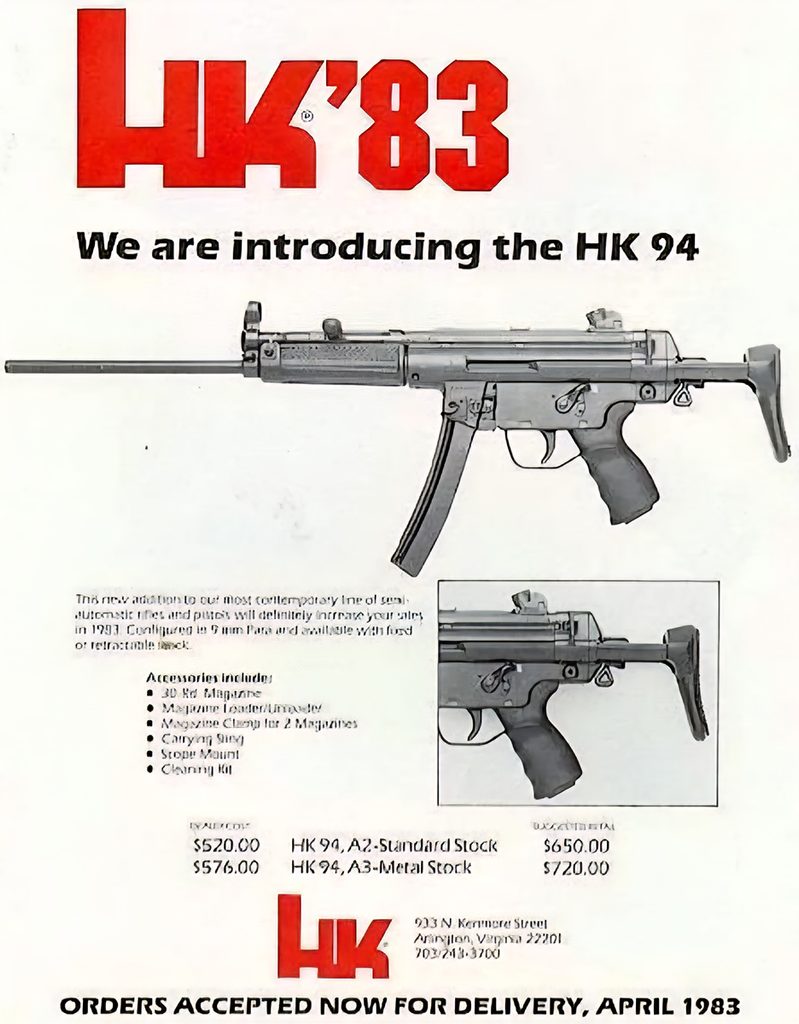
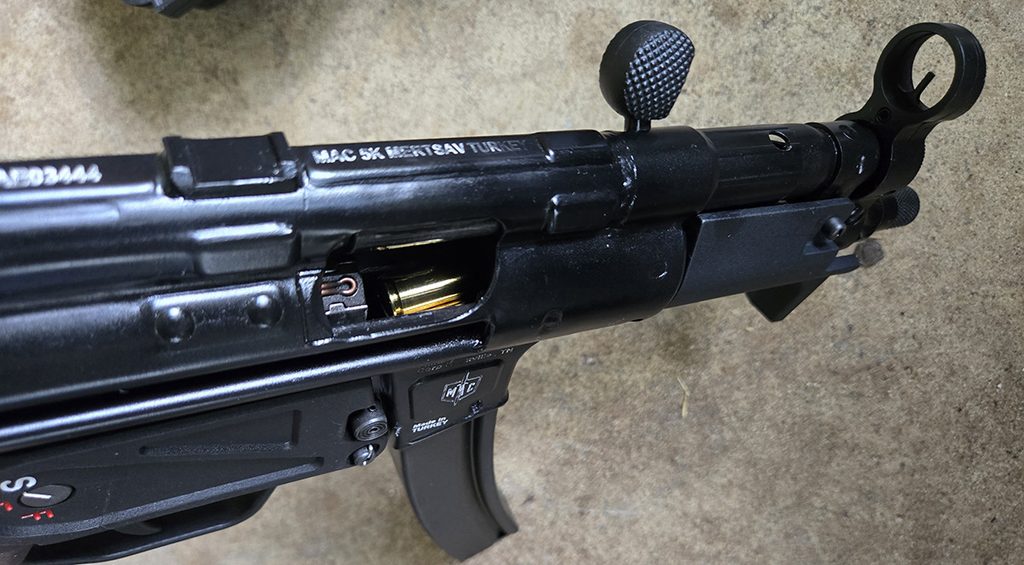
In 2019, Heckler & Koch re-entered the semi-automatic market following its 25-year hiatus. The MP5’s legacy sparked a surge in popularity, with clones entering the market, justifying the move. HK introduced the SP5, and the SP5k was fitted to a hard case with two 30-round 9mm magazines. Both featured a step-down at the front of the trigger pack to prevent swapping it out with a select-fire upper. The selector has only the “0-1,” or safe and semi-auto, setting. Again, a prevalent reason HK reintroduced civilian versions of the MP5 was that at least two firms had been offering semi-automatic copies of the MP5, among them Century Arms. However, the latest, genuine clones of the MP5 are produced in Turkey and appeared in 2024. Military Armament Corporation, or MAC, was resurrected by SDS Arms, which introduced its own MP5 and MP5K and coined the MAC 5 and MAC 5K as proprietary names.
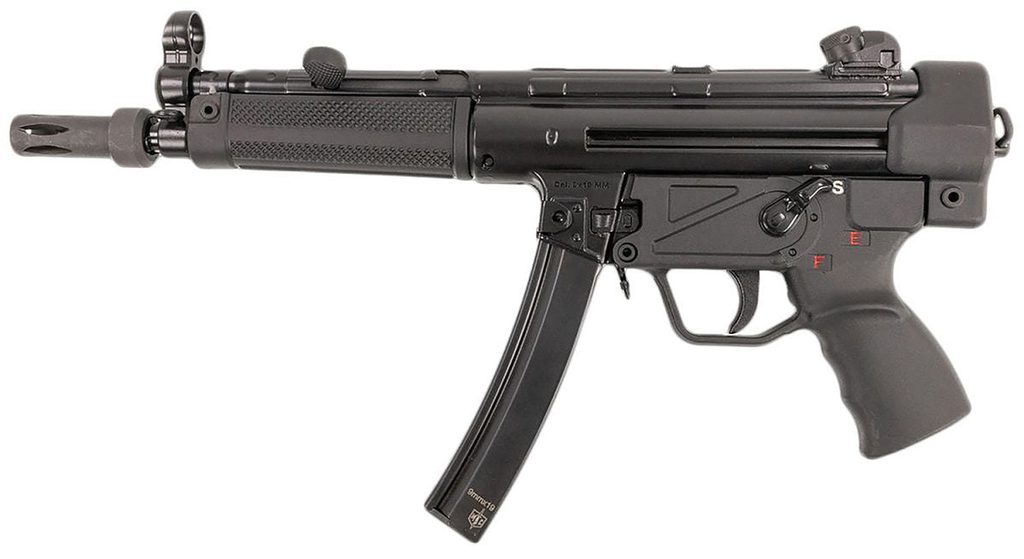
Unveiled at the 2024 SHOT Show, the SDS MAC 5 and MAC 5K are classified as semi-automatic pistols. This duo is the stockless versions of the MP5 and MP5K, with 8.9- and 5.8-inch barrels, respectively. Both are adaptable to SB Tactical’s folding wrist brace. Supplied with a slender handguard, the MAC 5 closely resembles the basic cosmetics of the MP5 A1 or A2 (depending on whether an A1 telescoping folder or an A2 fixed stock is used to SBR it). The workmanship of the duo is homogeneous with HK’s level of fit and finish. The SDS MAC 5 is finished in a nicely blued/phosphate gray.

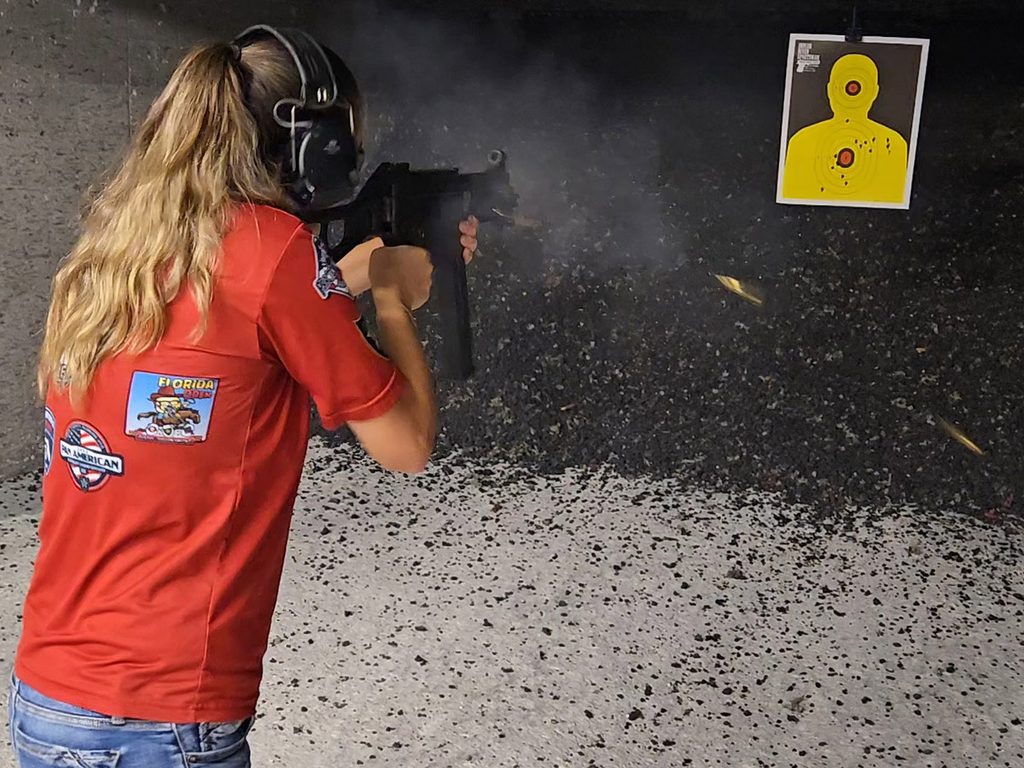
My test gun, the highly compact MAC 5K, weighs in at 4.5 lbs empty, and proved to be a real crowd pleaser. Opting for Scorpion and S&B 115-grain FMJ 9mm Luger fodder, 1,400 rounds were run through it, performing flawlessly in wet, humid weather. For comparison, SDS parts were interchanged with an original 1977 HK MP5; aside from the full-auto sear assembly, all parts matched it nearly perfectly. The SDS MAC 5 and 5K are made at Mertsav Armament Company on refurbished 1980s Heckler & Koch-licensed tooling. All was made possible through MKE, a defense corporation that produces Turkey’s current military ordnance, with Mertsav being a subcontractor. The Turkish arms industry’s quality control has come a long way. The new SDS MAC offering requires a break-in period of 400-600 rounds, regular cleaning, and generous lubrication. The result brings this new, off-the-shelf gun up to original spec, and nearly all HK!
The UMP: A Near MP5 Replacement
By the mid-1990s, the HK MP5 remained the go-to submachine gun worldwide. Heckler & Koch had nevertheless planned to replace it with a less expensive arm, consisting of a frame made almost entirely of polymer. In 1999, HK presented its Universale Maschinen Pistole (UMP).
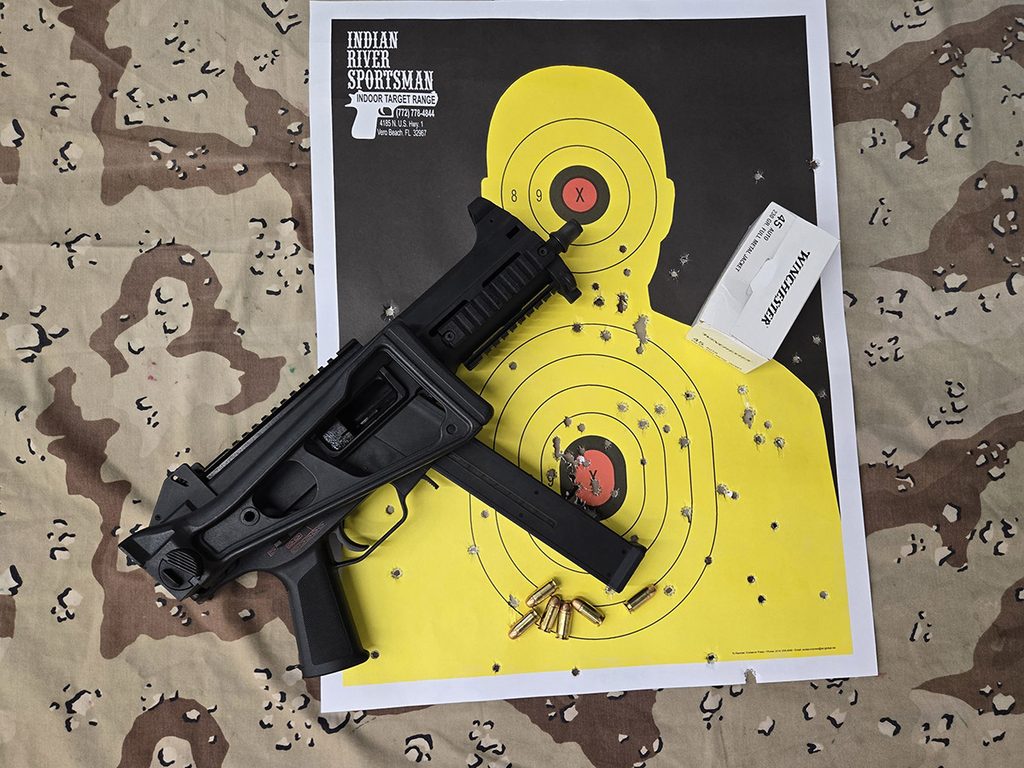
Heckler & Koch felt it had snagged a well-planned, cost-effective replacement for the pricier roller-delayed blowback MP5. The Universal Machine Pistol is a straight blowback arm with several unique traits. Primarily, it allows changing calibers from 9mm Luger to 40 S&W and 45 ACP by simply swapping out the bolt, barrel, and magazine—clever in concept, with the heaviest version in 45 ACP tipping the scales at 5.8 lbs. The bolt is not much heavier than the MP5’s. It differs in that it contains a sealed, powdered tungsten plug, which, in principle, shifts its weight forward and back as a bounce mechanism, so to speak. The concept provides an inertia effect, keeping the bolt in battery due to the lightweight of the polymer frame. Purchased by 18 countries versus the nearly 70 international users of the MP5, the UMP, with its folding stock, quick caliber change options, and Picatinny rails for add-ons, failed to replace its predecessor. In short, it was just bad timing. Notwithstanding, the UMP sold well, but entirely replacing the long-established MP5 didn’t go as planned. Still in production, the UMP is available only in 9mm. The 45 ACP version, used by our FBI’s Hostage Rescue Team (HRT), is still retained by several U.S. law enforcement agencies. Few American shooters have seen it in the wild, as Class-3 aficionados cannot own it because its production year falls in the post-1986 period.
By now, the reader may be curious about manufacturing totals. Unfortunately, Heckler & Koch’s output numbers for the MP5 and UMP are confidential business matters, proprietary to HK and not publicly available. However, it was learned that specific documentation indicates 485,000-plus MP5s were registered in the U.S. in 2012.
The upside is, Heckler & Koch’s current semi-automatic MP5 imports—the SP5, and SP5K, including those renamed by SDS as the MAC 5 and 5K and built in Turkey on earlier licensed, and refurbished HK tooling—are enjoying an unprecedented comeback with this latest selection of semi-automatic versions on the U.S. market. Again, it’s pretty obvious they won’t be retiring anytime soon.
A Breakdown of the 21 Basic MP5 Variations 1966-2019
HK MP5 1966 Original-Production Models with SEF, and Later Variable Fire Selection Systems
SEF= S-Safe-E-Semi Automatic-F-Full Automatic
0=Safe-1=Semi-Automatic-2=Two Shot Full Auto Burst-3-Three Shot Burst-5-Fully Auto Burst et al.
Base MP5
MP5A1 Also an original version with a collapsible stock and SEF
HK MP5A2 SEF and fixed stock
HK MP5 NA2 Model with 5-1-0
HK MP5A3 SEF trigger pack and collapsible stock
HK MP5A4 Model with 5-3-1-0 and fixed stock
HK MP5 A5 5-3-1-0 with collapsible stock
HK MP5 MLI mid-life improvement with rail interface system and optional RAL 8000 color scheme
Compact Models
HK 56K SEF no Stock
HK MP5KN 5-1-0 no stock
HKMP5KA1 SEF no stock low-profile iron sights
MP5 KA4 5-3-1-0 no stock
HK MP5KA5 5-3-1-0 Low-profile iron sights, no stock
HK MP5KPDW folding stock 5-1-0 trigger pack
HK Suppressed Versions
HK MP5SD from 1974 with SEF trigger pack, fixed stock
HK MP5SD1 5-1-0 trigger no Stock
HK MP5 SD2 5-1-0 fixed stock
HK MP5 SD3 5-1-0 collapsible stock
HK MP5SD4 5-3-1-0 trigger GP no stock
HKMP5SD5 5-3-1-0 fixed stock
HK MP5SD6 Model with 5-3-1-0 collapsible stock
Deepest appreciation to Heckler & Koch, GmbH Customer Service, Columbus, Georgia. A Special Thanks to Jahred Gamez, Digital Marketing Manager, SDS/Military Armament Corporation, Knoxville, Tennessee; McKenzie Christopher, Indian River Sportsman, Vero Beach, Florida; and Jude Steele, Rifle Range Manager, Flagler County Gun and Archery Club, Bunnell, Florida.
Bibliography
- Vickers Guide: Heckler & Koch, Volume 2, 2015
- Gangarosa, Gene, Heckler & Koch, Armorers of the Free World, 2003, Stoeger Publishing Co.
- Ezell C., Edward, Small Arms of the World, 12th Edition, 1990, Galahad Books
Editor’s Note: This article is an excerpt from the Gun Digest 2027, 81st Edition annual book.
More MP5 Stuff
- The Best MP5 Clone Buyer’s Guide
- AS Designs Super Safety MP5 Lower Review
- MKE AP5SD Review
- Timney HK MP5 Trigger
- Midwest Industries MP5 Night Vision Optic Claw Mount
Next Step: Get your FREE Printable Target Pack
Enhance your shooting precision with our 62 MOA Targets, perfect for rifles and handguns. Crafted in collaboration with Storm Tactical for accuracy and versatility.
Subscribe to the Gun Digest email newsletter and get your downloadable target pack sent straight to your inbox. Stay updated with the latest firearms info in the industry.