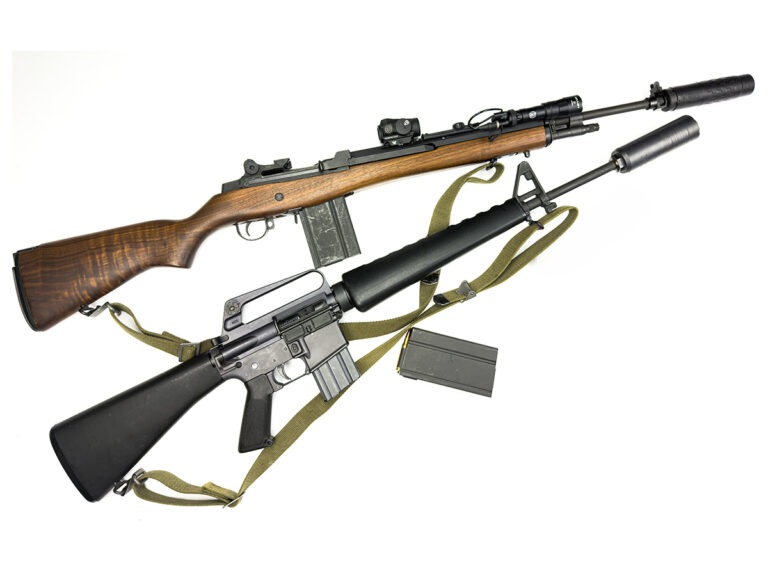
We take a look back on some suppressor history and discuss considerations when using them on classic guns today.
Suppressors, as we understand and know them, aren’t new. In fact, they date back to roughly 1892 in Europe as a means for keeping the noise down while slaughtering livestock. For reference, this is the same year Ellis Island became the center of mass migration and Sherlock Holmes was published. If that seems like a long time ago, that’s because it was.
Early suppressors had many proponents, including Theodore Roosevelt, and they gained traction in military circles when adapted to the M1903 rifle. But history wasn’t kind to cans and as a result of an extremely effective smear campaign, they fell from favor and never achieved commonplace use. Instead, due to their relative rarity, they became a feature of fiction and popular culture where they remained for generations, often to ill ends. Today, we look at the mindset that made suppressors a subject of scrutiny and adapting the historical arms that missed out on them.
The Moral Case Against Suppressors
Anyone who spends time around suppressors knows that they are not all that the legends have built them up as. In fact, around 99 percent of their use in Hollywood and in general fiction writing is wrong. Handguns, in particular, are victims of this misinformation. Most suppressed handguns are still quite loud. Even if using a wet suppressor, they do get louder and louder with each shot—and let’s not mention the mess it makes. Rimfire rifles and pistols do get a bit of a pass here, as they can get to be movie silent, but lack the “pew” we hear on screen.
A large reason why this misrepresentation not only happened but endured is that, much like the general public, filmmakers didn’t spend time around these fairly rare products and instead took to their imaginations to create the sound effect of a suppressed gunshot. Now, modern audiences are a bit more nuanced as cans have become more common, but for the widespread public, the classic “pew pew pew” of suppressed fire is what they expect.
Looking into the deep well that is human history, we often create situations that others find unpleasant and therefore wrong or cowardly. Love and war, both being institutions of battle, bloodshed and consequence, have spawned the notion of fair play, and this nature of man has led us to place morals upon activities that truly have no rules. If you really think about it, the notions of fair play, fair chase and the idea of fairness in general are an open acknowledgment of the idea that we must face rivals on equal footing to achieve an outcome that God acknowledges as right or correct. Sneaking around is considered widely verboten, and of course murderers sneak around. A murderer would benefit from a suppressor. This is literally the logic used to place them on the NFA to begin with, and it worked. The government went so far as to try to pin murders on suppressors, but they never had to win at trial. The court of public opinion was enough to create a villain where there was none.
Moreover, this line of thinking crossed into hunting as well. Suppressors were widely considered unsportsmanlike by many hunters. The moral and political case against suppressors is rooted in the notion that it is an unfair advantage as it, on fictional principle, denies one party the “right” to be faced in open declaration with the noise of gunfire. The same line of thinking extends to opposing night vision, thermals and body armor. The incapable will always cry foul. The fact that hunters have guns to begin with is a huge advantage, but the old guard seems to believe that we all must also have hearing damage as well.
This type of thinking has taken hold across the board. You see it today with the general hate and anger toward drone operators. In the previous generations, it was the booby traps of Charlie, Allied air power, the Garand rifle, sniper rifles in the trenches, the Mauser in the hands of the Cubans and Boers, the Henry repeater, American rifled guns in the revolution and so on and so forth back to Richard the Lionheart being killed by a single crossbow bolt fired by a lowly peasant.
This all seems like a lot of words to make a point, but in gun culture we seldom take the time to see what our opposition is thinking and instead justify things by merit of our founding documents and their holy validity to enshrine our rights as individuals. To us, suppressors are helpful things that make it easier to embody the American ideals of individualism and all that marksmanship entails to us, but to the opposition these are cowardly instruments that we would only use to conceal our true, malicious intent in their minds. The fundamental difference is that we aren’t the good guys in this political narrative, and they feel unprepared to deal with the idea that they will need to rewrite their virtues to match our national reality.
Hushing History
Now that my philosophy lecture is finished, let’s have some fun and talk about some alternative history. There is a whole world that can be imagined if the original NFA never happened, but perhaps it would be a bit more interesting to take what we have and go back a bit to adapt them to our current world.
As of this writing, the tides have just changed. On the 9th of October, the ATF effectively gutted most of their rules for suppressors and short barreled rifles and shotguns. The era of the tax stamp was already waning, and a large blow to what remained was just dealt.
In this era of unprecedented, reclaimed rights, a lot of people are going to want to play around with suppressing and shortening many of our historical weapons. The unfortunate part of all this is that there is not a lot of information about many of these things, and the industry at large has little infrastructure to support these ideas outside total custom work. In a bit of a strange situation, there has only been a small handful of commonly suppressed historical rifles that saw regular use, among this narrow selection are the M14 and M16. The shocking lack of suppressed historical rifles is the result of the political and moral topics discussed in my earlier rant; we never had a chance to develop dedicated systems until very recently.
Suppressing Bolt Actions
Historical bolt actions can, in fact, be suppressed, and many are easy to do. I’d like to see 1:1 replica suppressors hit the market that are full recreations of original models like the 1910 Maxim, so the host guns can be kept in their original state. The other option for a modern shooter wanting to put a can on their M1903A3 would be to have the muzzle threaded and go from there. This is the most simple and direct option and is largely possible for most rifles. I have a custom M1903A4 the CMP built for me and sometimes I want to use that extra real estate on the muzzle to mount a can just to see what it can do when tamed a bit.
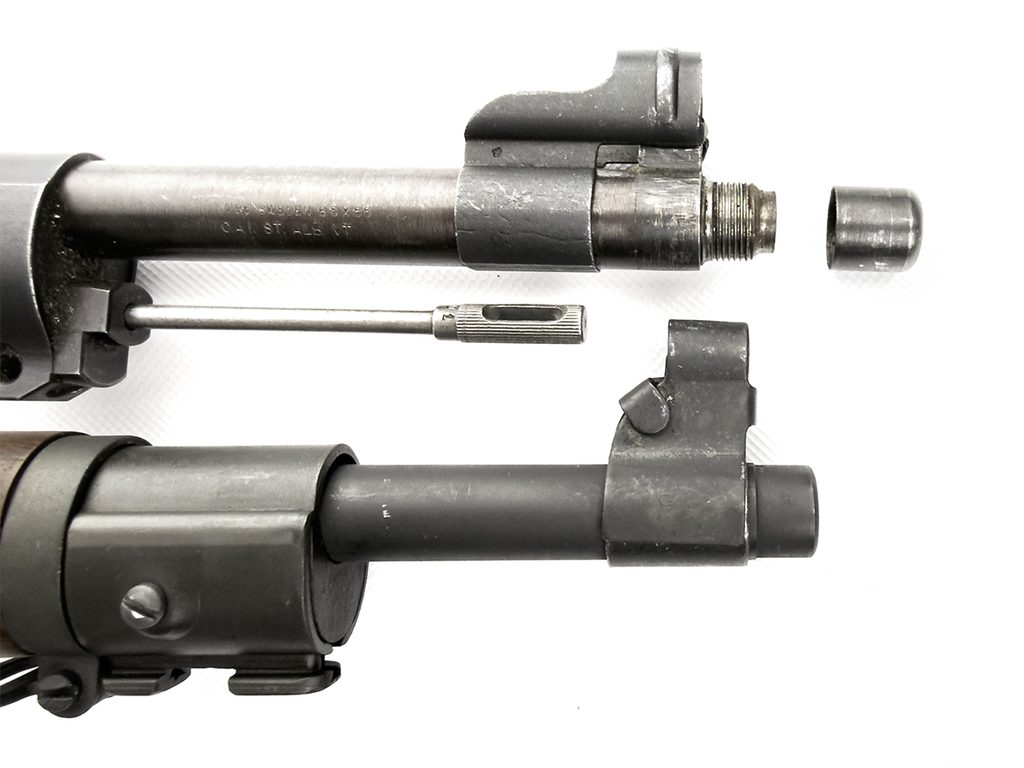
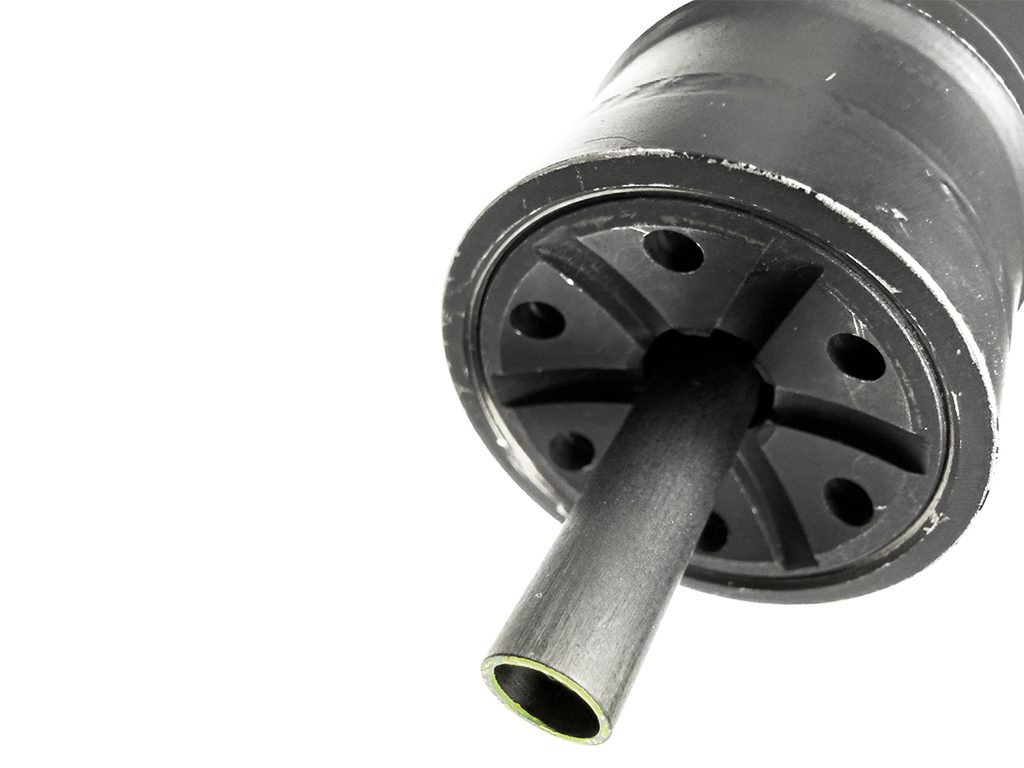
It should be noted that many historical rifles did come threaded, such as the Swedish Mauser. You can, in fact, get suppressor adapters for this muzzle thread, but you will want to make sure you use an alignment tool to avoid baffle strikes. I personally use alignment tools from Accuracy Solutions as pictured. These carbon-fiber rods have saved more than one suppressor on many ends.
Suppressing The M14
The M14 has a long historical reputation in this country and for good reason. There are about as many opinions on it as there have been guns produced. Some love it, some hate it, but all have to admit it has been there when we needed it. The M14 has the distinction of being one of the most publicly suppressed rifles; its upgrade history has largely been the result of desperation. The M14 has been adapted, bastardized and glorified in its lifetime, and suppressing it has been one of those things that has extended its appeal and controversy.
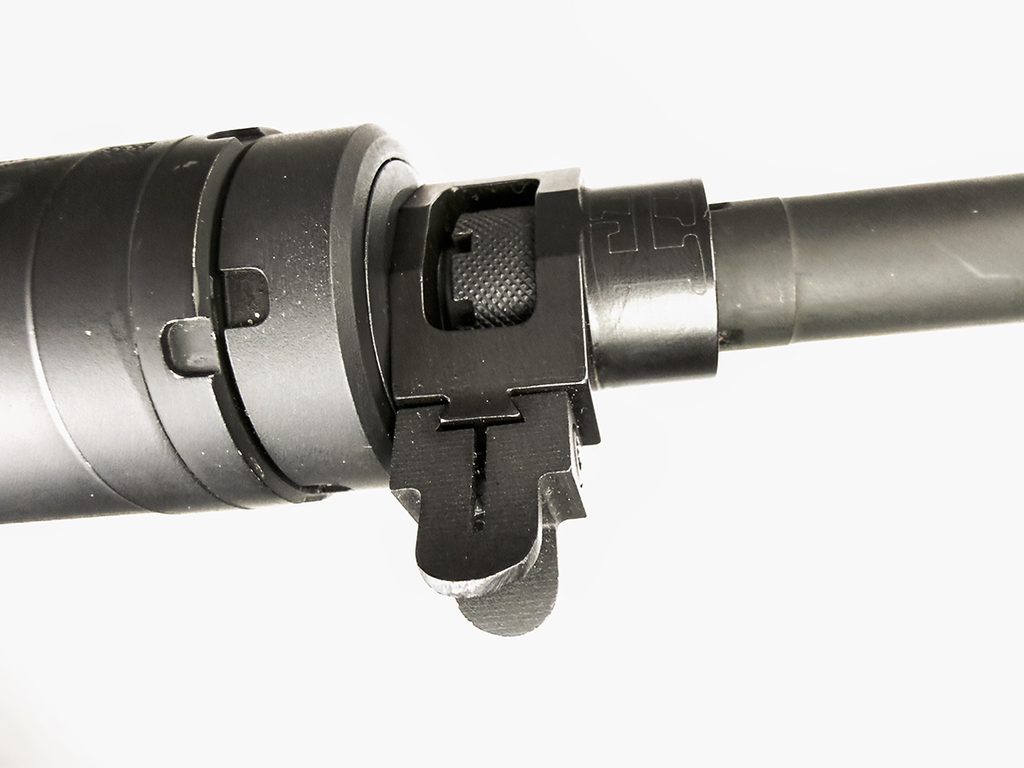
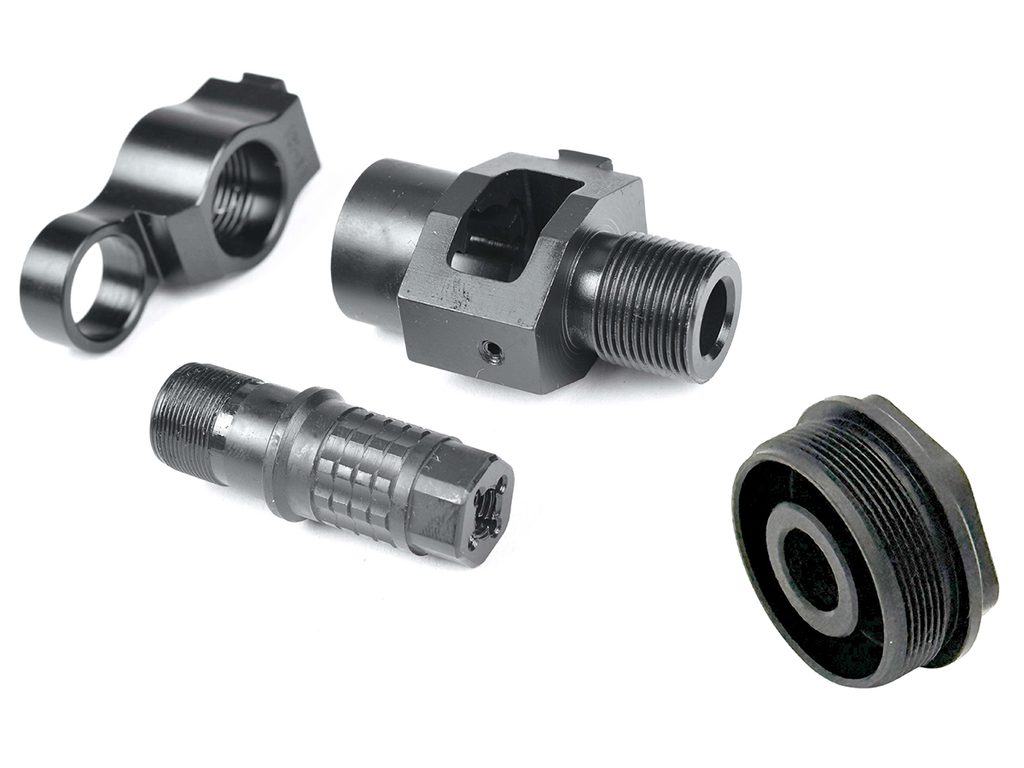
The M14 has a tricky situation in that it was really not designed for being suppressed, but was designed for reliability, and this means it is a gassy gun. If you thought your suppressed AR gave you gas in the eye, wait until you try a suppressed M14. That said, you only need a couple parts to accomplish this task, that being an adapter of your choice and an adjustable gas plug, both available now from Fulton Armory.
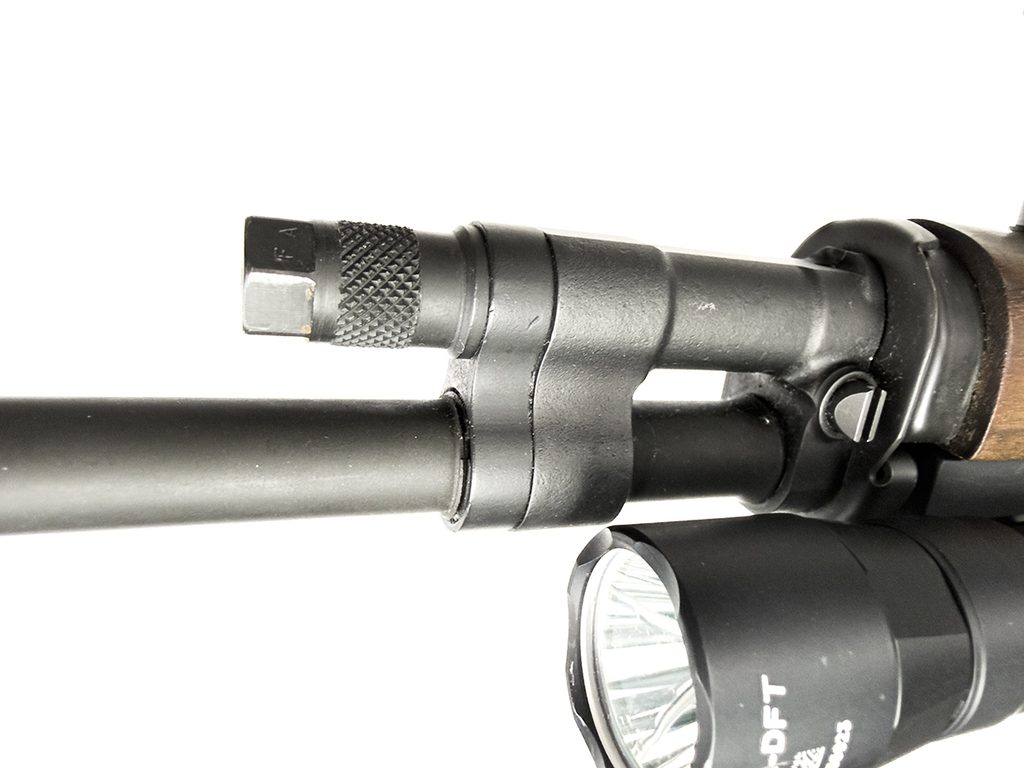
I use the Fulton direct thread adapter and adjustable plug on my own Fulton M14 rifle. This is again a situation that you will want to use an Accuracy Solutions alignment rod.
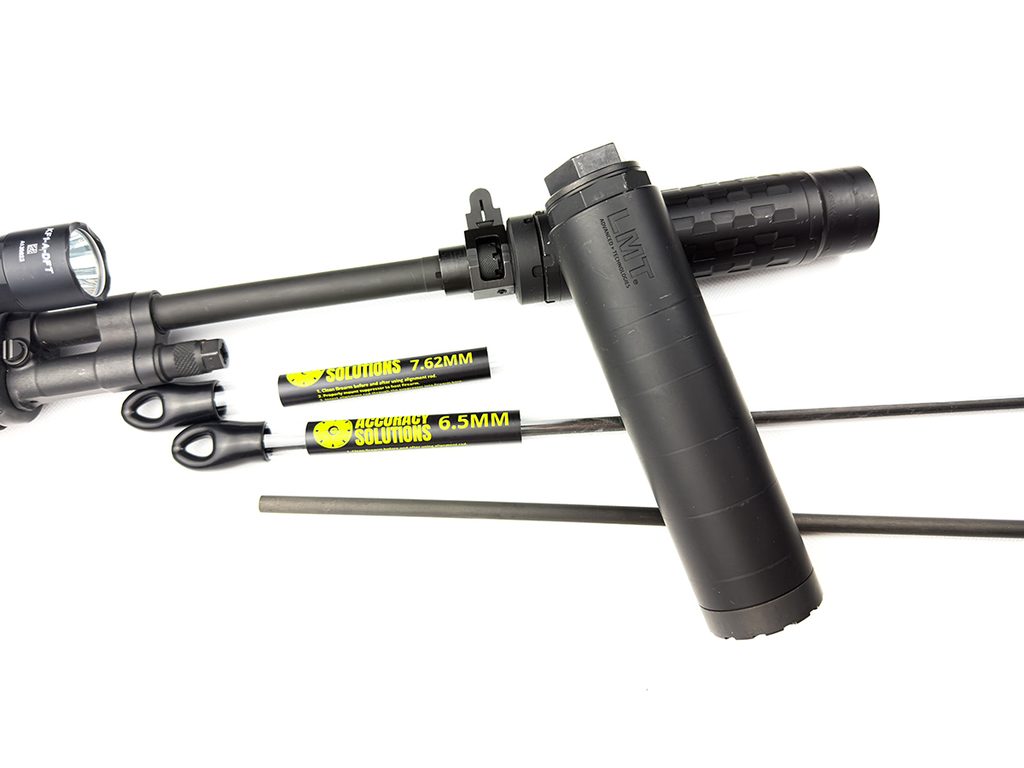
While the Fulton parts are great, the fact that you’re attaching a threaded part to a barrel that is also threaded and then threading on a suppressor puts too much faith in the sum of the parts. Don’t assume that every M14 variant is safe; you might get baffled strikes if you’re not careful. Fulton is releasing a host of new M14 adapters as I write this, including a very cool HUB mount. I use a .45 bore suppressor like the Hybrid 46M with a 30-caliber endcap on my own build. Better to replace a cap than a can …
Suppressing The M16A1
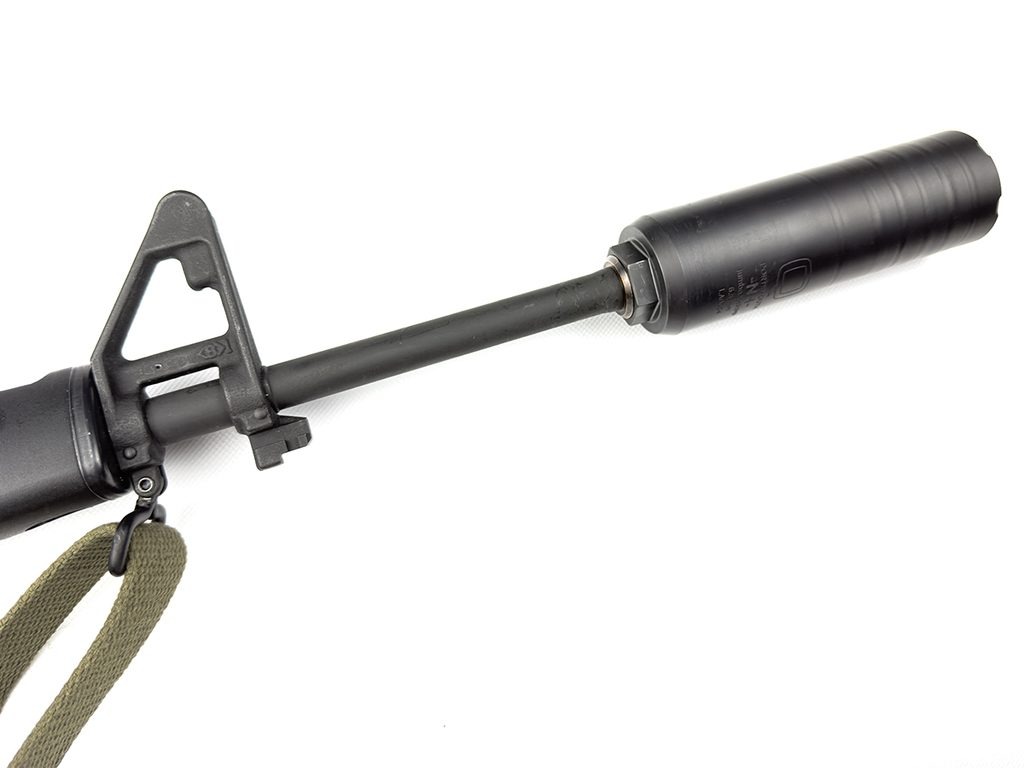
There are, of course, historical examples of suppressed M16A1 rifles, but today we have a plethora of common AR parts and threaded muzzles galore. This is a short section because this is already effectively a solved problem on the commercial market. 1/2-28-inch threads are exceedingly common, and there are a ton of incredible 5.56 suppressors. But, for the sake of this article, I wanted to look at the best setup for a 20-inch pencil barrel and iron sights, and I settled on the Q Jumbo Shrimp—weird name, I know. The short length and wide body of this can allow the unfettered use of iron sights, and it keeps frontal weight to a minimum while offering hearing-safe performance. Out of the various cans I tested on this Brownells M16A1 build, it gave me the best and smoothest cycling for the long gas system and full-length buffer assembly. The rifle is a true all-day shooter.
Suppressing The M1 Carbine
The next two of these rifles are a mixed bag. Despite being two of the most popularly requested guns for me to look at suppressing, these are probably best left in their original configurations.
Let’s look at the venerable M1 Carbine first. I called my pal Rich Hall at Fulton Armory, the leader in making these historical guns match-accurate and super-reliable. Hall walked me through some of the issues. It should be noted that Fulton does sell threaded-muzzle M1 carbines but there are some caveats.
Their M1 Carbine has a 9/16-inch thread on the muzzle. This wall thickness works with the lower pressure of the 30 carbine but won’t be sufficient for other 30-cal rifles. The barrel wall thickness doesn’t allow a shoulder, so locating the muzzle device requires a jam nut unless you have a muzzle-bottoming adapter. These are pretty skinny barrels, and the lack of shoulder is a big deal. The rifle does run quite well suppressed but is gassy according to Hall. You really need to use a high flow suppressor, or it will be a lot of gas in the face. It should be noted that Fulton is playing around with an adjustable gas system for the carbine, but as of this writing there isn’t much other information. The future will likely hold some good options for the old girl here, but as of today suppressing it is a risky custom job.
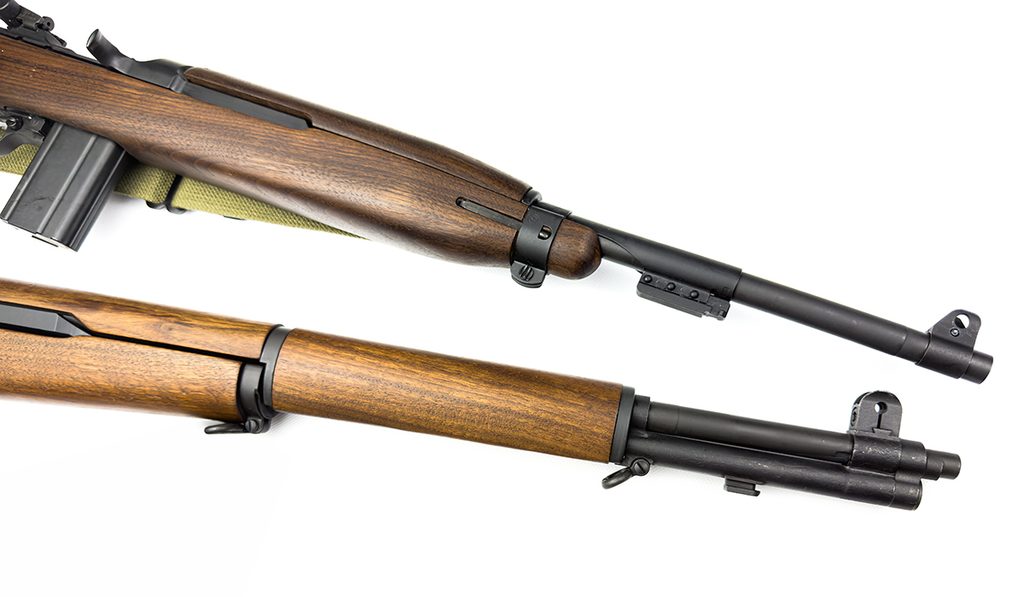
M1 Garand
Right off the bat, suppressing the Garand is iffy at best. Getting bore alignment on the Garand is difficult, especially when stacking external components on the barrel. The gas cylinder lock screw and bore alignment is choppy, and it isn’t quite as simple as threading the barrel. Vintage barrel threads (yes, the M1 is threaded under gas assembly) aren’t a great base for fitting an adapter. It’s in theory possible to thread the muzzle, generally barrels need a thicker stock to thread, the Garand muzzle is very thin. The barrel itself is under 5/8 inch in diameter, so common threads for 30-cal won’t work. The gas cylinder lock support needs to be removed in the case of direct threading. The suppressor can’t protrude past the face of the block, so real estate is limited. This would also block access to the gas plug. In theory, it is possible to stack threaded adapters up to common 5/8-24-inch thread, but this is generally not a good idea. Wall thickness on the barrel itself after threads creates a weak point with the suppressor or adapter installed.
The entire gas system would need to be redesigned if a thicker barrel OD were used. Overall, Hall tells me suppressing the Garand isn’t a great idea but can be done with great effort. If there was an easy solution it would have been done, where we are now shows it to be cost prohibitive and lacking true effectiveness. I would personally love to see some future products address this, but as of the late months of 2026, the Garand is just how John left her with us.
Editor’s Note: This article originally appeared in the December 2026 issue of Gun Digest the Magazine.
More On Suppressors

Next Step: Get your FREE Printable Target Pack
Enhance your shooting precision with our 62 MOA Targets, perfect for rifles and handguns. Crafted in collaboration with Storm Tactical for accuracy and versatility.
Subscribe to the Gun Digest email newsletter and get your downloadable target pack sent straight to your inbox. Stay updated with the latest firearms info in the industry.