Don’t count on your cell phone to work during a disaster. Cellular telephone systems are based on a centralized network, making them susceptible to failure any time traffic exceeds “normal” levels, common during any widespread emergency.
Editor's Note: This is the second of a 3-part series looking at two-way emergency radio for disaster preparedness. Click here to read part 2.
On the afternoon of Sunday, May 22, 2011, the residents of Joplin, Missouri, learned to distrust their cell phones. What convinced them were the hellish winds from a maximum-strength EF5 tornado that reached down from the heavens like a giant vacuum cleaner of death. It touched down just east of the Kansas state line and blazed a 22-mile path of death and destruction through the town — sucking, ripping and tearing the city’s structures into mangled toothpicks and violently ending the lives of 158 people.
The monster mile-wide twister caused catastrophic damage in the neighborhood of $2.2 billion. And it knocked out cell phone communications for days. When the storm passed, 1,300 people were missing. The Show Me State learned a tough lesson that day: Don’t rely on cell phones. While they’re a great modern convenience, they’re also the first to fail when high winds crush cell phone towers like pop cans.
Today’s small amateur radios are incredibly advanced. This Yaesu VX-6R is a dual-band transceiver that operates in the 70 cm (440 mhz) and 2m (144 mhz) bands FM. It also receives international shortwave AM transmissions and NOAA weather radio. When the cell phones stop working, this thing keeps going.
It wasn’t the first time. New York City, the morning of September 11, 2001. Terrorists strike the World Trade Center. New Yorkers — and virtually everyone else in America — rush to their cell phones. They called to report smoke and fire. They called to request medical help. They called to check in on loved ones. And many just called because they needed to talk to someone, anyone who would listen, about the horrific scenes they saw on TV. It didn’t matter why they called, as much as the fact that everyone called at the same time. The phone system locked up. There was too much data flooding the network and not enough bandwidth. While some infrastructure damage could be blamed for the failure — several cell towers and connecting land lines were indeed destroyed — the real reason the networks failed was simply because they were overloaded.
“I walked from downtown to Lincoln Center (about 4.5 miles) before I was able to hail a cab with four strangers,” said Andrea Mancuso as reported by CBS News (Post 9/11: Can We Count on Cell Networks? September 7, 2011). Mancuso was working just north of the Trade Center. She was lucky; her phone worked. “Everyone was upset, and no one had a cell phone signal except me. I passed my phone around like a hot potato all the way to Harlem. Everyone including the cab driver graciously and tearfully called their families.”
Since that day, cell phone networks have been tested and retested and they routinely fail when consumption demands exceed normal levels. Industry representatives claim providers are installing additional towers and built-in network redundancy to handle the volume spike during crises. But Telecomm Analyst Gerard Hallaren paints a different picture. In the CBS News story he revealed that networks are only designed to handle 20 to 40 percent of traffic, which includes phone calls and data modes such as wireless Internet and text messaging.
In the end, it may be business realities — as opposed to technical or infrastructure limitations — keeping cell networks lean and mean, susceptible to failure during extraordinary events. “It's just economic insanity for any carrier to try to solve the congestion problem,” Hallaren said. “It's cost-prohibitive to build a network that could serve 330 million at the same time. A service like that would cost hundreds of dollars a month, and people are not willing to pay that much for cell phone service.”
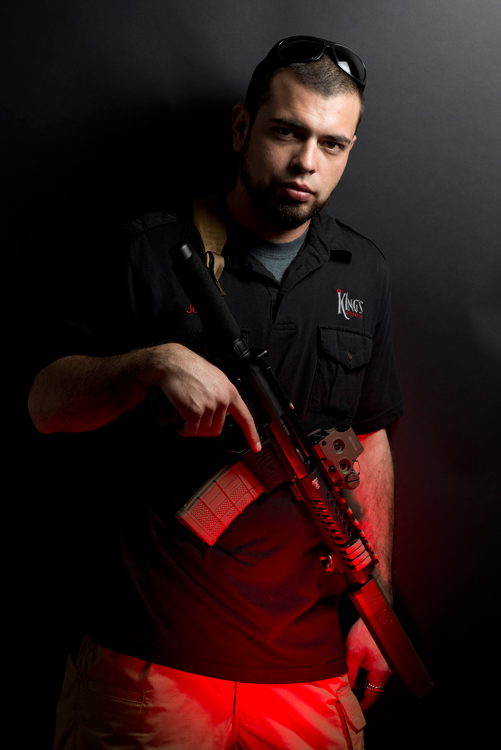
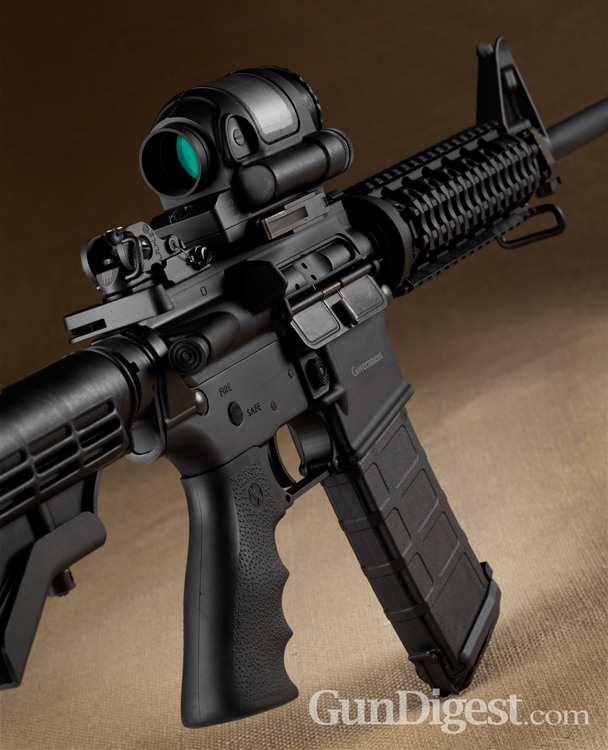
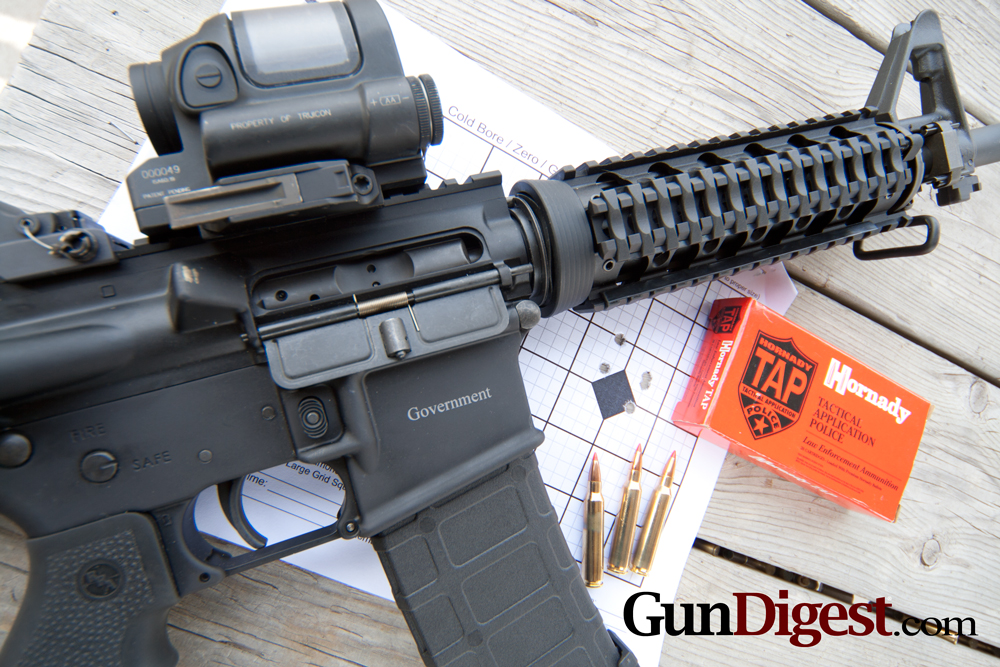
AR-15 piston systems do not make gas go away. They merely vent it in different locations. Here, the gas is venting directly behind the front sight, as it is meant to.
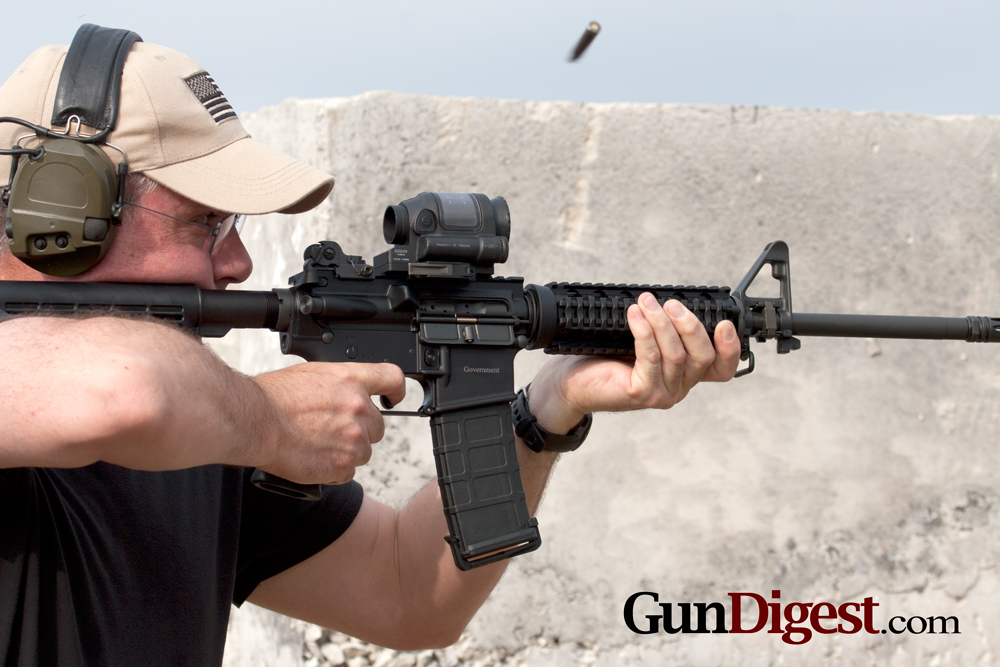
Direct impingement vs gas piston, which gets the most out of your AR-15?
The big drawback to the Direct Impingement (DI) system is the gas blown back into the receiver. It does, however, have several manifest advantages, advantages you should not discard simply because all your buddies say you should.
First of all, it is light. All the system needs is a hollow tube leading from the gas port back to the receiver. Unless you make your AR-15 piston system out ofunobtainium, it isn’t going to be that light, not ever. When you are laden with a whole lot of gear, lighter becomes very attractive.
Also, the hollow tube does not press on or bind the barrel, and so the barrel is essentially free-floated. If you use a free-float hand guard, secured to the receiver at the barrel nut (and to the barrel not at all), the barrel is free-floated, and you can thus wring all the potential accuracy out of it that it has.
With a good barrel, an AR can be as accurate as a lovingly-blueprinted bolt gun.
The AR-15 piston system removes all those advantages. First, it adds weight. Granted, some systems not so much, but they all add something.
Second, part of the weight is a more secure (and often heavier) gizmo bolted on the barrel up front. That weight makes the barrel harmonics of firing a different thing than the DI system. You see, every time you fire, your barrel gets hit as if by hammer. It vibrates. Accuracy is the bullet leaving the muzzle at the same point in the barrel harmonics on each shot. If the barrel harmonics vary, so will accuracy.
The AR-15 piston system, working in or on the barrel block the new system requires, adds mass and potentially vibration, and also can potentially bind the barrel as the barrel heats. (Binding depends on how securely the AR-15 piston system is held by the barrel/receiver geometry.) A superb barrel will have few or no stress lines in it. A bad barrel can have many.
The stresses can be from the original steel bar, or be added in the machining or straightening process. As the barrel heats up, the stress lines “unkink” and the barrel points differently. It also changes the harmonics, and thus, potentially, accuracy. (A brief aside: hammer-forged barrels have the stress lines pounded out of them, and cryogenically-treated barrels have the stress lines relaxed.) If the AR-15 piston is a firmly-held object between block/barrel and receiver, it can lever the receiver as the barrel heats up and unkinks.
The extra AR-15 piston parts can hold heat. Also, as the barrel expands as it heats, the piston parts heat up at a different rate, and add another potential binding or pressing on the barrel.
The piston itself can also influence accuracy. When the M1 Garand was the king of the target range, everyone knew that if the op rod got bent, accuracy went all to hell. Bending op rods usually happened when someone used the wrong powder, one outside the burning rate range the Garand would accept, and the rod was over-worked. But once bent, it was “goodbye accuracy” and the situation could be restored only with a new, correctly-dimensioned op rod.
When the M14 became the target king, it did so only after armorers figured out that the barrel could not be free-floated and had to be pre-stressed. The USAMTU match specs call for welding the gas system and front plate together, and using that as a lever to pull the barrel down as it is locked in the stock. The barrel starts out pre-loaded downwards, dampening the harmonics. If the bedding goes, the pre-load changes, and accuracy goes kerflooey. However, no need to replace parts there. “Simply” re-bedding will do. However, every time the action was removed from the bedded stock, the bedding suffered a bit. Match shooters using the M14 became adept at cleaning their rifles without removing them from the stock.
The AR can be free-floated, even with a piston system, but the piston has to neutrally influence the barrel, or your accuracy, zero or both will change as the barrel heats up. With the DI system, not so much – nay, hardly at all, especially with a good barrel in it.
And, on top of all that, the AR-15 piston system brings with it another problem: tilt. (Actually, two, but I’ll detail that in a bit.) When the DI system pressurizes the carrier, it basically pushes the carrier rearward axially. That is, the direction and location of the thrust is on, and in line with, the center of the carrier itself. Enter the AR-15 piston system, which taps or pushes on the carrier up where the gas key used to be. The carrier tries to tilt in the upper and is restrained from doing so only by the buffer tube.
The buffer tube, being made of aluminum, is not at all happy with the steel carrier slamming down and gouging it. Now, the gouging isn’t all that bad, at least not what I’ve seen of it. And not all (even the early ones) AR-15 piston systems tilt or gouge. Me, if I really felt the need to use a piston system, and found that it gouged the buffer tube, I’d perform a simple calculation: will the buffer tube last as long as the barrel? If it did/would, I’d simply view the cost of a replacement buffer tube as part of the cost of a new barrel, and not sweat it.
If the tube wouldn’t, then a barrel replacement becomes a 2X or 3Xbuffer tube cost. At the moment, a plain old USGI-dimension, six-position carbine buffer tube costs $25. A good barrel (there isn’t much point in buying a cheap barrel) starts at about $200,and that is for a steel tube lacking sight, gas block (you’re going to take off the one for your AR-15 piston system, right?), nut and such.
So, as long as it doesn’t cause a functioning problem, replacing the buffer tube is a fraction of the total cost to replace as hot-out barrel.
Oh, and the second problem with an AR-15 piston system? Cost. If you use a replacement kit, you’ll be replacing the existing carrier with a piston-compatible carrier. If you buy a full-up rifle/carbine, you’ll be paying an extra for the design and fabrication costs of the new parts. Either way, your new piston-equipped rifle is going to cost a bit more than a plain old DI-running one.
So, should you go AR-15 piston or not? That depends. One group who benefits greatly from a piston system is those who own suppressors. The delayed gas flow (that’s how a suppressor works: it delays the gas flow out the muzzle, to reduce noise) means more gas and gunk blown back into the receiver on a DI rifle. Depending on minor variables in each rifle, running with a “can” can mean a gun that looks like a 4th of July charcoal grill after a few magazines, or simply a more-difficult cleaning job after a day of shooting. An AR-15 piston system on a rifle with a suppressor (especially a piston system with an adjustable flow valve) can make shooting with a “can” a pleasant time.
Another group that finds favor with piston systems are those with SBRs. The short-barreled rifle crowd often finds that a short-barrel DI system is just too touchy, or in order to be reliable, has to run too violently. Let’s take a look at the math involved.
Our bullet screams past the gas port, and thus allows gas to flow into the system. The bullet continues onward, and the system remains sealed until the bullet leaves the muzzle. How long is that? The time period is called the “gas dwell time,” by the way. Well, on a twenty-inch rifle, we have a 55-grain FMJ bullet leaving the muzzle at some 3200 fps. That means that the distance from the gas port to the muzzle, some 6.5 inches, produces 0.00017seconds of sealed-bore gas dwell time. (Those who know their mathematics realize that it is not simple arithmetic, but a calculus application, but I’m fine with rounding the numbers for this demonstration.) So, .17 milliseconds of time, which is less than the duration of a typical camera flash at its peak.
On a CAR with a 16-inch barrel, that dwell time is .24milliseconds, an improvement, but from there it goes backwards. TheM4, with its 14.5-inch barrel, gives us .19 milliseconds, and an 11.5-inch SBR produces a miniscule .11-millisecond dwell time. To ensure that the short-barreled rifle works, you have to open the port to get more of the gas working for you.
AR-15 piston systems are much less touchy. You see, you can hammer the system with as much gas as you need, and use a built-in gas bleed, or a self-limiting piston, to control over-driving it. Use a piston system and the SBR becomes a far less touchy creature, working with a wider array of ammunition, bullet weights and loads, and doing so with greater reliability.

So, those of you with SBRs may find a piston system advantageous. The rest of us? Not so much.
Finally, cost. Part of the cost of an AR-15 piston system is the piston system itself and the R&D that went into developing it, as well as the tooling costs to fabricate the piston parts. However, a fondness for the good old days clouds the issue. There are still a number of shooters who remember fondly the $600 AR they bought “back when [fill in the blank].” Inflation aside, let’s look at the“$600 AR” they bought. It probably had plain plastic handguards, maybe the A2/M4 type, maybe not. They certainly weren’t railed, free-float hand guards. The stock was an A1, an A2, or an old-style CAR stock. Not one that holds batteries or offers a solid cheek weld.
The sights were either A1 or A2, no flattop, and no place to mount a scope except in the carry handle. Which sucked. And the barrel? Maybe it was a 1:12 twist “pencil” barrel, and maybe it was something heavier. But wasn’t the premium tube we now expect, in this age of the sub-MOA AR. In fact, it wasn’t a rifle many of today’s shooters would pay $600 for, and that is with less-valuable inflated dollars. Adjusted for inflation, that 1986 AR you paid $600 for would run you $1,186.54 in Obama dollars.
So, before you go grumbling about “how expensive ARs have gotten, “consider what it takes to upgrade the $600/$1187 AR with a new stock, railed hand guard, better barrel and flat-top upper. All of a sudden, an “expensive” AR doesn’t seem so bad, does it? Throw in an AR-15 piston system and they are almost reasonable.
So, go to a piston if you want. Stick with a direct impingement if you want. Add all the features you want or don’t want, but don’t grumble about the cost. For what we get today, the AR has never been a better deal.
As the Washington Times reported, “The Obama administration is making it easier for bureaucrats to take away guns without offering the accused any realistic due process. In a final rule published [recently], the Justice Department granted the Bureau of Alcohol, Tobacco, Firearms and Explosives (ATF) authority to ‘seize and administratively forfeit property involved in controlled-substance abuses.'”
That may sound like property being seized from a convicted drug dealer. It's not. This gun confiscation and forfeiture (meaning, ATF can sell off the property after gun confiscations) occurs when ATF claims a crime has been ommitted in a case involving “controlled-substances.”
“That means government can grab firearms and other property from someone who has never been convicted or even charged with any crime.”
It is then up to the owner to prove that his or her property wasn't used in the commission of a drug crime.
“Law enforcement agencies love civil forfeiture because it's extremely lucrative,” the Times contended. “The Department of Justice's Assets Forfeiture Fund had $2.8 billion in booty in 2011, according to a January audit. Seizing guns from purported criminals is nothing new; Justice destroyed or kept 11,355 guns last year, returning just 396 to innocent owners. The new ATF rule undoubtedly is designed to ramp up the gun-grabbing because, as the rule justification claims, ‘The nexus between drug trafficking and firearm violence is well established.'”
Essentially, ATF now has an increased “profit motive” to initiate gun confiscations during its investigations. Of course, “Nowhere is there any recognition of the burden placed on innocent citizens stripped of their property or of the erosion of their civil liberties.”
Learn More About Gun Laws and Gun Rights from Massad Ayoob
All gun owners should be concerned about news like this, doubly so for those who practice concealed carry. They live those laws every day. Learn more about them in the second edition of Massad Ayoob's Gun Digest Book of Concealed Carry book.
Items you must have in a bug-out bag packing list fall into these categories: water, shelter, fire, food and tools.
The bug-out bag; lots of people are talking about it. But what do you really need on that bug-out bag packing list?
I’ll start this off by saying without hesitation that I can’t answer that question for you. Any survival kit is a personal thing for your individual circumstances. If I were to rattle off a list of must-haves on my bug-out bag packing list here in central Wisconsin, it would likely contain items you don’t need where you live.
So, without dictating an exhaustive bug-out bag packing list, I can at least make recommendations to cover the basics: water, food, shelter, fire and tools. Start building your bag-out bag packing list with those elements in mind. When disaster strikes you should be able to hang on until help arrives.
It is important to note that the bug-out bag packing list in this article is not being set up for long-term survival. This is a bag that should provide a good three or four days off the grid, such as following a storm or other natural disaster. Something like this would be your “stay put and wait for help” bag.
First You Need a Bag
Before you can even start on a bug-out bag packing list, you need the bag. The new Alpha Ops Pack from Fieldline Tactical is sturdy and versatile, with plenty of room for all the stuff mentioned in this bug-out bag packing list and more. The Alpha Ops pack is also covered with MOLLE straps to help you organize even more stuff if you want to.
Two features of the bag are really helpful: it is hydration compatible and there is an area between the two main pocket to stuff items you want to get at or put away quickly. The pack did not come with a hydration bladder, but will accept most any bladder on the market. Get a bladder and insert it. You can fill it with clean water if you have time or you can fill it on the trail.
Bug-Out Bag Packing List Item #1: Water
Talking about the hydration bladder leads us right to the water component of the bug-out bag packing list. The Katadyn Vario filter will clean up to 500 gallons of water at about 2 liters per minute. It has a “longer life” mode to extend cartridge life in dirty or challenging water conditions. A carbon core also helps keep water fresh.
This will give you plenty of safe drinking water. Read the instructions. Get clean water. The filter costs about $95, but it’s money well spent. Water purification tablets might make water safe, but it still tastes bad. I prefer the filter.
Bug-Out Bag Packing List Item #2: Food
This is really personal. I look for things that are high-energy, easy to store and tasty. So, I go with trail mix, dehydrated fruit and chewy granola bars for a couple reasons: they are light, portable and provide adequate nutrition and valuable calories for survival.
If you want to throw in a military MRE, fine. The pack is big enough to hold it. Other stuff has pros and cons. Ramen noodles are light, but you need a cook pot. Canned food is easy, but heavy. You make the call. The belly you are satisfying is your own.
Remember to include all the utensils you will need to prepare your meal including can openers and cookware. For me, I can live for three days on granola and dried fruit and I don’t have to cook anything.
Bug-Out Bag Packing List Item #3: Shelter
Most people don’t think of this, but clothing is shelter. Adjust your bug-out bag packing list to climate and expected needs.
There is one cheap, readily available item that will really help in a pinch: an army-surplus rain poncho. I found mine for $5 at a gun show. Typical prices range from $15 to $25 depending on where you buy.
This item is a raincoat, ground cloth, makeshift sleeping bag, or if you get two of them and snap them together you can create a makeshift tent. Get the military-surplus version with the grommets, snaps and interior tie-downs. Civilian models likely cut corners and won’t hold up to abuse. The poncho rolls up very small and weighs very little.
Bug-Out Bag Packing List Item #4: Fire
If you are trying to stay hidden, get a bunch of the big chemical hand warmers for warmth with no flame. If you are trying to stay alive and be found, build a fire.
My bug-out bag packing list contains military surplus trioxane fuel bars, a pocket fire starter, matches in a waterproof container and the world’s greatest tinder: dryer lint. Fire building is a skill that requires practice. The trioxane will help, but you also need to know how to gather dry fuel and arrange it properly to get your fire started.
Bug-Out Bag Packing List Item #5: Tools
Those are the basics, but you may also need some tools for survival. That usually includes some sort of knife.
In this case, I grabbed two knives. The Uzi Field Commander Tactical Fixed Blade Knife (Model ZF0036B) is big, but light. The knife is 12 inches long with a 6 ¾-inch blade and the handle is wrapped with parachute cord, in case you need extra. This knife is big enough to cut, chop and dig and the pouch on the sheath can hold a sharpening stone or more parachute cord.
For a folding knife I grabbed the Ontario XM-15. This is a solid, heavy-duty knife. It almost feels a little think in the hand, but it works and is tough as nails.
I’m also looking for a multi-tool, but again, that is a personal decision. What components you want for your multi-tool is up to you.
Further Bug-Out Bag Packing List Considerations
I’ve rounded out my bug-out bag packing list with a first-aid kit and some Fresh Bath wipes, and a P-38 can opener. But I guess the entire bag is stocked, just in case.
Conclusion
This exercise is simply a means to get you thinking about a bug-out bag packing list. The contents will change if you live in south Florida or the Pacific Northwest, but if you start with the basics of water, food, shelter, fire and tools you should make it.
The reality is most of us will never use a knife for a weapon. That's mentality you need to take with this Spyderco Tenacious review.
A knife is a tool and as such it needs to be tough and functional to complete the tasks we expect of it. The Spyderco Tenacious is a mid-sized knife meaning it is easy to carry and works well for most jobs, from cutting rope to breaking down boxes.
It has a black G-10 laminate handle that is both light and tough. Internally skeletonized steel liners make thing rigid and strong without adding a bunch of weight. The leaf-shaped blade is flat-ground from 8Cr13Mov stainless for great performance.
More specs:
* Oversized Spyderco round hole
* Textured spine jimping for slip-proof confidence
* A Walker Linerlock (with jimped liner)
* A four-way pocket clip lets you set your carry and draw preference: Tip-up/tip-down left-hand/right-hand.
* Screw together construction
* Blade = 3.375″
This is one knife you’ll want to carry with you every day.
Your Turn: Write a Spyderco Tenacious Review
Click here to order the Spyderco Tenacious from GunDigestStore.com at a great price. Then leave your own Spyderco Tenacious review in the comments below. Do you agree that it's a versatile knife for everyday carry? What would you change?
Dry-firing your big game rifle from hunting positions hones shooting fundamentals.
Practice. It’s the way to get good at just about anything. Gun drills can even help you get good at doing the wrong thing.
Lones Wigger, the most decorated Olympic rifleman ever, once told me he practiced gun drills up to four hours a day for the U.S. Army Marksmanship Training Unit.
An understudy rifle trains you gently. The .22 rimfire may be the world’s most useful round.
“More importantly, I practiced the right things. Every shot must be well executed. If you’re too tired of shooting to shoot well, it’s time to quit. A sloppy shot is practice for more sloppy shots,” he said.
You’ve seen people blaze away as if success depended on a high count of empty hulls. AR-15s and autoloading pistols encourage careless shooting – though they’re not responsible for it.
Another accomplished Olympian, Gary Anderson, dry-fired his .22 rifle so much, he reportedly peened the chamber lip to the point a cartridge wouldn’t enter.
“Launching a bullet is a small part of the shooting routine,” he told me. “Most of the important stuff happens first. Where the bullet goes depends on what you do before it’s free of the rifle, or even out of the case. You can become a very good shooter without hearing a bang.”
Position, breathing and trigger squeeze – even follow-through – can all be done in gun drills as easily with an empty rifle as with live ammunition. You learn to call shots better dry firing because there’s no recoil to disrupt the sight picture when the striker falls. You see clearly errors in shooting form. Action cycling and recoil recovery beg real shooting; but they’re easier to learn than the foundations of a shot.
Recoil can prevent you from mastering good shooting form. And if you fire only from the bench in your gun drills, you’ll get a false measure of your ability to shoot from unsupported positions. Your finger will become conditioned to make one steady press, when in the field you may have to interrupt the pull as your target suddenly moves, or wind or your pulse bounces the rifle.
Gifted shooter Annie Oakley built her reputation with .22 rifles. She shot often, but not from a bench.
Just holding a rifle can help you hit. As a young competitor, I watched television and studied for school exams while strapped into a sitting position with my match rifle. Its weight (13 pounds) stretched and strengthened the muscles and ligaments supporting it.
Reading is another way to improve your shooting without ammo or gun drills. I’ve written several books on rifles, optics and ballistics, hoping some shooters will tire of watching reality television and pick them up.
Other tomes, some of which tutored me in the shooting sports, have a wealth of information little tapped by shooters who spend many times their cost for new guns, optics and ammo. Handloading manuals from Nosler, Hornady, Barnes and Speer, Vihtavouri, Hodgdon and the like give you reams of data and juicy information on bullet travel. Use ‘em.
If you depend on gun drills alone to perfect your marksmanship, you’ll likely be disappointed. No rifleman who must earn a living doing something else can spend enough trigger time learning that way. Even if you lean on an understudy .22 rifle to reduce ammo cost and shoot where centerfires talk too loud or reach too far, you’re still constrained.
Jack O’Connor wrote of dry-firing every day at a black brick on his neighbor’s chimney. For iron sights, I’ve used a black thumbtack on the living room wall.
Dry firing and reading about rifles can make you an expert without making you flinch during a gun drill. The bang is truly an afterthought.
Learn More About Gun Drills for Long-Range Shooting
Apply the author's tips about gun drills to the information in the Gun Digest Book of Long-Range Shooting. That starts with reading, reading, reading. Then hit the range with a new perspective on gun drills and long-range shooting.
The photo gallery above features some of the best revolvers in the world. They're just a taste of what you can expect inBig-Bore Revolvers.
The Best Revolvers, Big-Bore Style
The best revolvers of the big-bore persuasion appear in Big-Bore Revolvers, by Max Prasac.
Big-Bore Revolvers, by Max Prasac, is one of the best revolver books on the market. It's a one-stop revolver resource for novices to veterans and everyone in between. With in-depth coverage of the best revolver calibers and their effectiveness, terminal ballistics and a detailed look at today's best revolver platforms, this is the most comprehensive book ever published on revolvers.
Why is This the Best Revolver Book?
“What do you want to know about big-bore revolvers? Calibers, loads, how to shoot them, carry options–everything is here in Prasac's book, plus outstanding anecdotes and fabulous photography. Whether you are an old hand with these big guns or a newbie who needs a primer, this book is a valuable reference that deserves a spot in your library.” – J. Scott Olmsted, American Hunter, Amazon review
“If you like big-bore revolvers – the title says it all and you definitely want a copy of this book. I believe it will someday be referred to as a classic work.” – Gary Smith, Handgun Hunter, Amazon review
“Beyond it's technical value, it is a great source of entertainment. Thrilling accounts of hunting with big bore revolvers are second only to the fantastic photos of both beautiful firearms and the trophies they harvest.” – Brandon Gleason, Amazon reviewer
Read an Excerpt: Terminal Ballistics
This hole in the ribcage of a bull elk was produced by a 180-grain TSX from a .300 Win Mag. Impact velocity was estimated to be 2,600 fps at the range it was shot, which calculates out to approximately 2,700 ft-lbs of muzzle energy.
The following is excerpted from Big-Bore Revolvers. The author, Max Prasac, addresses the concept of terminal ballistics.
The fact that I am referring to energy as a myth flies in the face of conventional wisdom. After all, ammo boxes are stamped with energy figures, and ammunition retail websites offer ballistic comparisons between cartridges, with muzzle energy as the comparative figure. Gun magazine articles talk endlessly about the energy of hunting cartridges, and books about hunting are filled with references to energy as a determinant of effectiveness. Energy has been utilized to rate the lethality of cartridges/loads for some time now. But what is energy? Is it definable? Is it measurable?
Ask any proponent of energy to define how it enables a bullet to kill game, and he will respond in vague terms. Really press him, and he will accuse you of having a poor understanding of terminal ballistics. Yet, even many game laws call for muzzle energy minimums for specified game. Seems like everyone is in on the sham! The terms “energy,” “energy dump,” “kinetic energy,” “muzzle energy,” et al, are tossed around with utter, complete, and unfounded confidence by their proponents—until forced to explain.
This hole, same bull elk, and also an exit hole in the ribcage, was produced by a 440-grain wide, flat-nosed hardcast bullet in .500 JRH, loaded by Buffalo Bore at an advertised 950 fps at the muzzle. The muzzle energy is calculated to be approximately 888 ft-lbs. Muzzle energy, as a determinant of lethality, is an exercise in futility.
A number of African big-game hunters I have been in contact with and who have killed numerous elephants in their days often cite that a minimum safe (effective) cartridge for hunting elephant must have a 400-grain bullet and 5,000 ft-lbs of muzzle energy. I have not killed an elephant with a revolver (nor with a rifle), so I defer to those with this experience. Now, in their significant experience hunting elephant, their summations have held true, as most of the cartridges utilized on elephant have met this minimum requirement. And, in the cases where they have not met this arbitrary minimum, it has been noted that the cartridges in question have not worked very well.
So, having said that, what if I shoot an elephant with a frontal brain shot with a revolver in .475 Linebaugh loaded with a 420-grain bullet at 1,300 fps, and I have enough penetration to reach the brain and dispatch the elephant? Clearly, this load does not meet my colleagues’ minimum requirement in one of the two criteria. Yet, surely my cartridge is adequate despite the “inadequate” muzzle energy. By the way, a 420-grain bullet at 1,300 fps “generates,” or rather calculates out to, a whopping 1,576 ft-lbs. Supposedly it’s not enough, even though it kills the animal door mouse dead.
Where to Get Big-Bore Revolvers, the Best Revolver Book
Click the cover to get the best revolver book at the best price.
The best price for the best revolver book, Big-Bore Revolvers, is at GunDigestStore.com. You're guaranteed to save big on the cover price. Plus, this best revolver book qualifies for FREE SHIPPING on orders of more than $49.
By the time you're finished with Big-Bore Revolvers, you'll be itching to hit the field for some handgun hunting. Have you ever hunted with a revolver? Why or why not? Leave a comment below.
This schematic for a .327 Federal Magnum cartridge is just one of 1,500 featured in Cartridges of the World, 13th Edition. In addition to being a resource for cartridge drawings, the book is the perfect reloading manual and wildcatting guide.
Cartridges of the World: A Reloading Manual, A Wildcatting Guide
Now at 16 editions, Cartridges of the World continues to offer reloading data for ammunition from across the planet. The rich, in-depth information makes for an essential reloading manual. It's also the perfect reference for anyone interested in wildcatting their cartridges. With reloading data for more than 1,500 cartridges, Cartridges of the World is the world-wide standard all other reloading manuals are compared against.
Cartridges included in this must-have book include:
* Commercial ammunition * Proprietary cartridges * Wildcats * Military ammunition * Shotshells * Rimfires * Current and obsolete
* More than 50 new factory manufactured and wildcat cartridge listings, complete with illustrations * Updated reloading data and reloading recipes * Essays by three of the industry's leading writers with critical “state of the union” information on SAAMI (Sporting Arms and Ammunition Manufacturers' Institute), wildcatting and AR-15 ammunition
What Do People Say About the Cartridges of the World Series?
“I had read more than one incredible review about this book, so I grabbed a copy to see for myself. Excellent texts, detailing every aspect of the cartridges and hundreds of drawings and photos. A perfect book for the gun nut, reloader, or for a reference reader. You won't be disappointed!” – Richard A. Thomas, Jr., Amazon reviewer
“This book goes into such great depths when it comes to rifle, shotgun, and handgun cartridges. It contains virtually all of the information one would need to select a new caliber for purchase. It is a great place to start as it contains detailed ballistics and loading data for just about every cartridge ever made. This is the second edition of this book that I have now purchased. I recommend it wholeheartedly.” – Pat V. Bocchino, Amazon reviewer
“Updated and timely….I use this reference often in firearms business to help customers decide on purchases for specific hunting and target applications….it's the best !!!!” – Kenrick F. Crabtree, Amazon reviewer
Read an Excerpt: All About the .44 Colt
Historical Notes: The .44 Colt is yet another blackpowder cartridge of importance, primarily because it was once used by the U.S. Army. It was introduced about 1871 and used by the Army from then until 1873. It was used in the metallic cartridge conversion of the Colt 1860 percussion revolver, and it could also be fired in the Remington Model 1875 .44 Army revolver. Commercial ammunition was loaded in both blackpowder and smokeless powder types, up to about 1940.
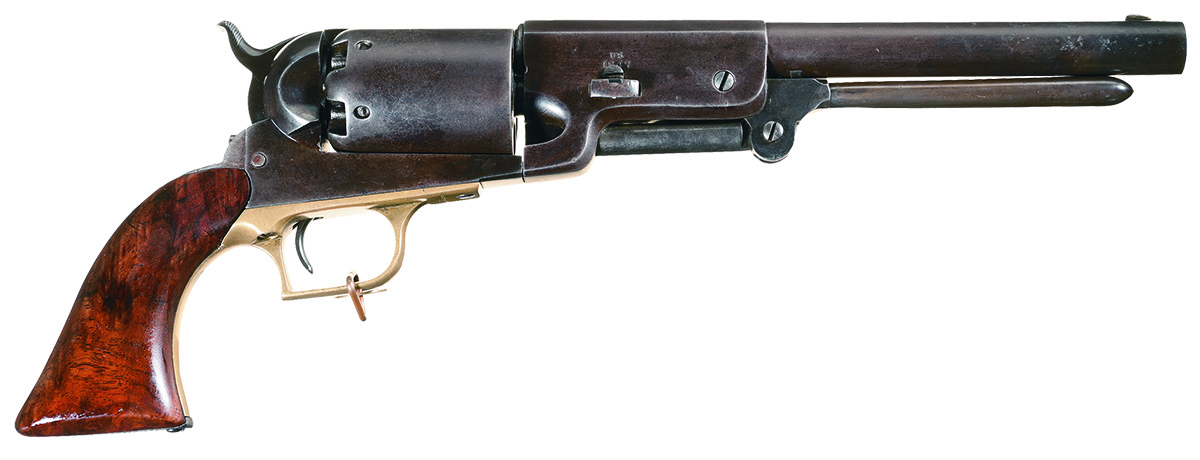
General Comments: The .44 Colt uses an outside-lubricated bullet. It is similar to the .44 S&W American, but has a longer case of slightly larger diameter. Early ammunition used the inside Benet cup and Martin folded-type primers. Ammunition has become a collector’s item, and revolvers for this cartridge are very seldom encountered. Ballistically it is about the same as the .44 S&W American.
What is the average Joe supposed to do with a military survival manual? They're written for the men and women of the armed forces. Regular folks in North America don't need to know how to hang glide off a mountain top or make a booby trap. They need a practical survival manual for getting through power outages, natural disasters, mishaps in the outdoors and shortages.
That's what sets Stay Alive! Survival Skills You Need apart from other survival manuals. It's a survival guide for everyday people anticipating typical disaster scenarios. These topics are covered in this essential survival manual:
* Must-have items of a survival kit * Selecting essential tools: knives, saw, shovel * Techniques for starting and maintaining a fire * Creating or seeking smart shelters * Collecting water in the wild * Navigation in nature * Finding food and preparing it safely in the wild
As the video above shows, author John D. McCann is a “practice what you preach” kind of author. He spends a lot of time in the field, testing and tweaking his techniques. If they didn't work, he didn't put them in this survival manual.
McCann's strategy seems to be working. Interest in his insights remains high. He is also the author of Build the Perfect Survival Kit, which is the perfect complement to Stay Alive!.
What are People Saying About this Survival Manual?
“It is written so that everyone, from novice to experienced survivalist, can learn from it.” – Ellis M. Delahoy, Amazon reviewer
“John McCann writes this book in a very understandable way. He makes what he is teaching you seem like you already knew it. You just hadn't thought about it that way. It makes his lessons memorable. I have never written a book review before, but this book deserved it.” – Molon Labe, Amazon reviewer
“I like all of the color photos and every chapter is very complete in its content.” – Francisco Loaiza, Amazon reviewer
A Quick Survival Tip from the Author
McCann's survival manual is full of great tips. This one is from the Fire & Light chapter:
“I have been carrying a small pencil sharpener in my fire kit for years. It is my tinder maker. It works really well on small sticks found laying around. It is even effective when wood is wet, as you can scrape off the wet outside, then make plenty of shavings from the nice dry wood inside.”
From rolling blackouts to hurricanes, floods to tornadoes, power can go out at a moment's notice. If the grid fails, the PowerPot will keep you charging! The PowerPot thermoelectric generator converts any heat source directly into power that charges your USB handheld devices. Get Yours Now
If you are involved in a deadly force self-defense incident and can get to a phone CALL THE POLICE! Don't call your neighbors, your parents, your husband or your wife. Call the police.
Recently a 92-year-old Kentucky man used a .22 rifle to successfully defended his home from three intruders. His story of self-defense is not really about concealed carry, it is more about home defense. But there is an important element down near the bottom of which everyone needs to be aware.
The homeowner did two things wrong: After the incident he called his neighbors instead of calling the police and when police arrived and told him to put up his hands he told police, “I'm not putting my hands up.” He survived, but the situation could have been a disaster.
First off, if you are involved in a deadly force self-defense incident and can get to a phone CALL THE POLICE! Don't call your neighbors, your parents, your husband or your wife. Call the police and say clearly, “I have been attacked and I shot at the person who attacked me.” Then stay on the line and wait for instructions. Keep talking to that dispatcher until you see the officers arrive. Give your location, a description of what you are wearing and just to be clear, repeat, “I am the victim. Tell responding officers the victim is wearing…. and is waiting for them at…”
You don't have to say anything that will incriminate yourself, but you do want to clearly identify yourself so responding officers don't mistake you for a bad guy and shoot you.
Here's the deal, police officers responding to a “shots fired” call are on high alert and any reader who thinks cops should just “calm down” have never rolled up on such a call and begun walking toward the danger. At the same time, if you don't give ample information, police will arrive looking for “someone with a gun.” Remember, you have a gun. So when police arrive at the scene of a shooting, the first thing they are going to do is secure the scene. That means you will be ordered (perhaps loudly) to put your gun down. Do it. If the police tell you to raise your hands, raise them. You will likely get handcuffed. Deal with it. Realize that responding officers don't know who you are. They do know someone has been shot. They are looking for a person with a gun and they don't want to get shot. So they will take control of the gun and scene. Once that happens calmly explain your side of the story.
You have to remember a person holding a gun is an imminent threat, before any questioning or explanations can begin, police officers will and must remove that threat. If you are holding a gun and refuse to put it down, you may get shot. And the officer would be justified in doing so based on the totality of circumstances and the information that officer had at the time. So, in the unlikely event that you are involved in a shooting, please do what the officers tell you as they secure the scene.
The editors at Gun Digest regret to hear the sad news of the death of Robert Hillberg. He passed away on August 12, 2012. Over his many years of designing firearms, everything from machineguns to sporting pistols, shotguns and rifles, when asked of all his accomplishments, what he is most proud of; Bob replied “The Whitney pistol.” History will surely remember Robert L. Hillberg as one of the foremost firearms designers of the 20th century.
Portrait of Robert Hillberg courtesy of Don Findley
ROBERT L. HILLBERG: PROFILE OF A FIREARMS DESIGNER
by Don Findley
You may remember Robert L. Hillberg as the man who designed and manufactured the Whitney Wolverine 22 pistol in the mid-1950s. The Whitney's space-age profile “grabbed” the attention of firearms enthusiasts everywhere. Unless you are employed in the firearms industry and are actually involved in the production of firearms, you may never have heard of Robert L. Hillberg at all. Bob is one of the men who design and test the guns, working in the background, and often leaving others to receive the accolades for their achievements. Bob Hillberg is far from a one-dimensional gun designer and his career in the firearms industry spans over 60 years.
Bob was born in Anamosa, Iowa on August 27, 1917. As a young boy he accompanied his father, an avid outdoorsman, on hunting trips in Minnesota and South Dakota. Starting at a young age, he was interested in anything mechanical, especially guns. His first gun was a 12-gauge Browning Auto Five shotgun. He was intrigued by the number of mechanical events that had to occur in a semi-automatic firearm to fire, extract, eject, reload, re-cock and be ready to fire the next round in a split second. Bob was not formally trained in firearms design. His engineering skills were “picked up” from odd jobs, after school and summers, in machine shops. He read everything available on firearms. He did, however, attend the University of Minnesota.
Hillberg became an avid firearms collector. After several years of collecting guns and studying their design, he designed a 357 Magnum submachine gun in 1937, and built a working prototype at the U.S. Naval Air Base, Wold Chamberlin Field, where he was a reserve member of Squadron VN11 RD-9.
Hillberg took his prototype to Colt Firearms in Hartford, Connecticut in 1938 and demonstrated his gun, hoping to sell the design. Colt wasn't interested in the submachine gun, but they were interested in Bob and offered Hillberg a job, which he accepted. This was his first employment in the firearms industry. While at Colt, he worked in engineering, assembly, inspection and manufacturing. Hillberg also designed a short action for their revolver and developed a ⅞-scale 22 version of Colt's Frontier Single Action that went into production years later.
In 1940 Hillberg accepted employment at Pratt & Whitney Aircraft, located in East Hartford, Connecticut and worked in the engineering department where he was involved with the design of engine components and experimental engine installations in test aircraft. While at Pratt & Whitney he began the development of a 30-caliber carbine, as well as a 20mm aircraft cannon
Hillberg moved to Burlington, Vermont in 1942 to take a position with the Ordnance Division of Bell Aircraft, where he worked as project engineer. He worked on numerous other projects including the B-17 turret, bomb racks and rocket releases. During his stay at Bell, Bob designed a 20mm continuous belt-fed mechanism for submarines and anti-aircraft. The 30-caliber carbine, started at Pratt & Whitney, was activated and prototypes were built at Bell. The design was completed late in the U.S. carbine competition, which was won by Winchester. Hillberg's carbine was radical in concept, in that it did not employ a moving breech block. The barrel moved forward with each shot. The rifle fed automatically, loading on the rearward stroke of the barrel. Since the magazine was located forward of the standing breech face, the cartridges fed forward in the magazine. This required a special crimp between the bullet and the cartridge case. The advantage in this unorthodox design was the rifle was two inches shorter than a conventional rifle with the same length barrel. It met the 5-pound criteria for carbines and was tested successfully at Bell and then sent to Canada for evaluation. World War II ended just as the carbine was finalized, and it never entered production.
After the war, 1947, Bob accepted a job with Republic Aviation, Armament Division, in Farmingdale, Long Island, NY. He worked on the F-84 gun deck and later was appointed F-91 armament unit leader and also worked in the “secret room” as an armament consultant for advanced fighter aircraft. He designed the gun mounts and feed systems for the F-84, as well as rocket systems and bomb racks for the F-84. While at Republic, Hillberg designed a series of semi-automatic weapons.
With each move Hillberg gained experience and knowledge. By 1951 he had left the aircraft industry and returned to designing firearms. He took a job with High Standard Manufacturing Company in 1951. After a few months, he accepted the position as head of research and development. Hillberg had gained a great deal of knowledge in the use of high strength aluminum alloy while working in the aircraft industry, and applied this expertise to firearms design. Hillberg should be given a great deal of credit for the commercial use of aluminum in firearms production. With Bob as head of R&D, High Standard was one of the first firearms manufacturers to make use of aluminum. High Standard's inventory included a complete line of sporting arms, shotguns, rifles and handguns.
High Standard was also involved in the manufacture of military weapons. Hillberg designed the T-152 tank machinegun for the Springfield Armory and the Detroit Tank Arsenal. This gun was later put into production as the M-37. He also designed the 9mm T-3 double-action pistol, a 22 semi-auto sporting rifle and the world's first commercial gas-operated semi-auto shotgun, originally called the Model 60. This shotgun was marketed by High Standard and was a huge commercial success.
Hillberg had an idea for a 22 sporting pistol, an all-new design that could be manufactured at a low cost without sacrificing quality, a pistol he believed could compete in a market dominated by Colt, High Standard and, more recently, Ruger. While at High Standard, he became acquainted with Howard “Howie” Johnson of the Bellmore Johnson Tool Company of Hamden, Connecticut. Bob was convinced, by his good friend (Johnson) to retire from High Standard and develop and manufacture the new pistol on his own.
Subsequently, Hillberg left High Standard and co-founded Whitney Firearms, Inc., of North Haven, Connecticut in 1954. Howard Johnson was president, Robert Hillberg, vice president and chief engineer. Employees included the top machinists and gunsmiths in the business and the two partners had high hopes for the new company.
After the 22 pistol was established as the company cornerstone, other models were to be introduced. Whitney Firearms had the necessary motivation and the right people in place — the possibilities seemed unlimited. After almost two years of designing and testing, production began in 1956. The new pistol, with its space-age profile, was called the Whitney Wolverine; “Tomorrow's Pistol Today.” Ten thousand pistols were produced and shipped the first year.
Whitney Firearms, Inc. was set up to design and produce firearms, and needed distribution and marketing savvy. A deal was struck with J. L. Galef, a firearms broker from New York, to market the guns. That exclusive marketing contract ultimately led to the demise and closing of Whitney Firearms in May of 1957.
From mid-1957 to 1980 Hillberg was employed as Chief Engineer for Bellmore Johnson Tool Company. From his office, located in Cheshire, Connecticut, he ran a firearm consultant and design service. Customers included about every major firearms company in the U.S., plus several Pentagon agencies (confidential firearms projects). His designs while at Bellmore Johnson ranged from shotguns — both combat and sporting — to rifles and handguns.
Hillberg designed double-action revolvers for Browning and Winchester. His work on the Winchester Liberator, Colt Defender and the Model J brought the combat shotgun to a new level of refinement. The Liberator was a four-barrel repeating combat shotgun with the firepower of a semi-automatic without the mechanical complexity.
The Defender is a 20-gauge 3-inch Magnum combat shotgun designed to appeal to law enforcement agencies. The Defender featured eight selective-fire 12-inch independent barrels — all arranged in a circular cluster around a hollow axis — and an investment cast aluminum alloy receiver. Two machinegun-type grips are employed to control and fire the gun, from the shoulder or the hip. During independent testing conducted by a police expert at Colt Firearms' request, the expert's post-evaluation report stated, in part: “In no instance did the gun fail to function, to be absolutely correct, the gun could not be made to malfunction.”
The Model J is a box-fed pump-action shotgun with an ejection port on both sides. A switch determines from which direction the spent shells are ejected for left or right-handed shooters. One of the first shotguns equipped with a folding stock, the Model J was tested in Vietnam by the U.S. military.
From 1980 to the present Hillberg has served as an independent expert witness — for both plaintiff and defendant — in court cases relating to firearms, with special interest in cases that involve design, testing, safety and prior art. Also, he is a retired deputy sheriff and a member of the following police organizations: New England Association of Chiefs of Police; International Association of Chiefs of Police; American Law Enforcement Officers Association; New Haven County Sheriff's Association National Sheriff's Association and the Connecticut Chiefs of Police Association (firearms committee).
Robert Hillberg has been granted over 36 patents — foreign and domestic — pertaining to firearms. The American National Standard, an industry performance standard established to provide the firearms designer and manufacturer with recommendations for test procedures to evaluate new designs as defined under the Federal Gun Control Act of 1968, lists Hillberg as an “independent expert.”
If you seek a career in the firearms industry, find a copy of the June 1966 American Rifleman magazine, and refer to page 95. You may take some advice from that article offered by a man who has “been there and done that.”Highlights from that article titled “Gun Designers,” by Robert L. Hillberg: “The golden era of firearms design was at the turn of the century. Men like von Mannlicher, Paul Mauser, Andreas Schwarzlose, John Browning, and others pioneered the art so thoroughly that virtually nothing new in basic firearms design has been developed since. The heritage of every modern design, both military and commercial, can be traced back to the creative genius of a small group of designers some 60 years ago.” The article concludes “Today's firearms industry needs top technical help in all other phases. If giving the public a better gun for the same money or the same gun for less money is your destiny, the gun industry will welcome you with open arms. If being a part of a team to produce this gun or to merchandise it is your aim, there is a place for you in the industry. If your burning ambition is to design a new gun and get rich & forget it.”
Over his many years of designing firearms, everything from machineguns to sporting pistols, shotguns and rifles, when asked of all his accomplishments, what he is most proud of Bob replied “The Whitney pistol.” History will surely remember Robert L. Hillberg as one of the foremost firearms designers of the 20th century.
The next time you reach for that favorite deer rifle or old reliable shotgun, or perhaps the 22 pistol your dad left you, take a minute to remember the people who designed and perfected those cherished pieces; the men and women who labor behind the scenes to guarantee a dependable and reliable product, a product that will withstand the test of time and man. Every great firearms design, from the early matchlock to today's newest military assault weapon, began with one man's idea.
Wanted: A modern polar bear gun for the Canadian military. (Image via sxc.hu)
According to the Canadian Press, the Canadian army is on the hunt for a new polar bear gun.
It's “on the lookout for an ‘anti-predator weapon' with which to equip both Arctic Rangers and regular-force units whenever they operate on their own in the North. In the meantime, it has issued First World War-vintage Lee-Enfield rifles to units based in southern Canada for use whenever those northern-response companies are dispatched to the Arctic.”
The predator in question? Polar bears. Which means polar bear guns.
“The roughly 4,700 Rangers-sprinkled in 178 communities across the North are the backbone of the military's presence in the region. They conduct patrols across the vast tundra and are equipped with Lee-Enfields, bolt-action, magazine-fed rifles that were standard issue during the first half of the 20th century.”
The army has been running out of spare parts for the Enfields, making their issue unreliable as polar bear guns. It has been trying to purchase new rifles for several years, but has yet to come across replacements for these polar bear guns. The Enfields, though, do have one advantage that future polar bear guns will need to match.
“The fact they don't freeze up or jam in the Arctic is part of [the Enfield's] charm, so the army made the decision last year to equip regular-force units conducting operations in the North with Lee-Enfields until replacement weapons arrive, possibly next year.”
What do you think would make for a good polar bear gun? Leave a comment below.
I count myself among the legions of knife enthusiasts who are fans of Ken Onion. His pieces are part of my EDC (everyday carry) rotation. I followed his career in the pages of BLADE Magazine. We even shook hands at the 2012 Blade Show this past June.
The design is perfect for hunting or outdoors work, but I wouldn't recommend beating these collectibles up. A genuine (i.e. not laser printed) Onion autograph on a CRKT Foresight will add a ton of value to your knife collection. You'll get your $99.99 back and then some.
Other than the form-function balances Onion finds, I like the accessibility of his knives. Not everyone is willing to plunk down a mortgage payment for a custom blade from a well-known knifemaker.
Onion must appreciate this, because he partners with knife companies to make his custom designs available to the average Joe. The Foresight is only the latest from an Onion-CRKT partnership full of wins. The official 2012 Blade Show knife was a CRKT Ripple crafted by Onion. As with his other designs, the Ripple started as a custom creation that became even more popular through a partnership.
The Kahr P45 has a stainless steel 6-round magazine with a thick polymer base pad.
Gun Digest reviews the Kahr P45 pistol and discovers it's perfect as a concealed carry handgun. Read this Kahr P45 review to find out why.
Chambered for the potent .45 ACP, the Kahr P45 and its variations, the PT45 and CW45, are very good striker-fired handguns. The Kahr P45 has a polymer frame that is textured all around the grip for a firm hold that grips well even in the damp Pacific Northwest, where my co-worker Thomas McKiddie makes his home. He has a Kahr P45 and he raves about it.
Despite having fired a fair number of Kahr semi-automatic pistols over the years, I have never owned one. This is no reflection on my high opinion of these pistols. After all, if I owned every neat pistol I’ve ever shot, there wouldn’t be enough room in my house for me.
This Kahr P45, owned by the author's friend, rides in a rugged IWB holster, virtually invisible.
Kahr P45: Built for Concealed Carry
Carried in a Shooting Systems rugged nylon holster, the Kahr P45 tucks away under his vest or sweater and is completely undetectable. With six rounds of JHP ammunition in the magazine and another round up the spout, this is a pistol that anybody could develop a serious affection for. Toss in a couple of spare magazines and a good holster, and you’ve got an emergency survival system that is ready to go.
To fit his larger hand, McKiddie added a Pachmayr Grip Glove to the pistol, and when I wrapped my palm around it, the gun felt fine. On the previous day, I sampled a PT45 just down the street from our office at a gun shop, and even without the added band, this pistol frame felt fine. Kahr .45-caliber pistols are very manageable, and I have yet to see one that doesn’t put bullets where they are aimed, provided you do your part.
The Kahr P45 Just Keeps Going and Going
If one wants to test the service life of a Kahr pistol, the best thing to do is visit the local indoor gun range where Kahr pistols are available to rent. In terms of a torture test, nothing else comes close to day after day of use by a variety of shooters. Some may shoot slow and deliberate, others might just empty a magazine to see how fast they can shoot. Under those conditions, magazines fail and pistols fail. I have seen Kahr pistols with thousands of rounds through them, and they keep on shooting. That’s a pretty good track record.
Kahr P45 Specs
The Kahr P45's polymer frame is steel reinforced and the rail-to-rail fit seems very snug. Slightly smaller than my Colt Commander, and noticeably lighter, the Kahr P45 has a 3.54-inch barrel that features polygonal rifling with a 1:16.38-inch right-hand twist. The OAL is 6.07 inches, and it has a locking breech and Browning-style recoil lug.
That polygonal rifling certainly contributes to the Kahr P45's accuracy. Of course, Kahr is not the only manufacturer to use this kind of rifling. It’s what made the H&K P7 a winner and it certainly delivers in Glock pistols.
Kahr’s pistol has a passive striker block, and there is no magazine disconnect, so the user, as with any pistol, must be sure to clear the chamber after pulling the magazine. This is common practice to insure there will not be a negligent discharge.
Easily field-stripped for cleaning, the Kahr P45 is a study in simplicity. It was designed by gun people for gun people.
Fitted with drift-adjustable, white bar-dot combat sights, the Kahr P45 is slightly over an inch wide at its widest point, and it weighs 18.5 ounces. The empty stainless steel magazine weighs two ounces—a comfortable weight for a carry piece. Having packed heavier guns for eight to nine hours at a time, had someone handed me a lightweight like the Kahr P45, I’d have been a happy camper.
Kahr P45 Popularity
Kahr pistols have gotten increasingly popular over the years for being compact and lightweight, as well as accurate. Because the Kahr P45 takes a single stack magazine, the grip frame can be narrowed (which accounts for McKiddie’s addition of the Pachmayr Grip Glove). They’re also a bit more affordable than some of the competition, and with a stainless steel slide and barrel, this half-polymer handgun is virtually impervious to changing weather conditions.
With more than 6.2 million Americans legally carrying concealed in all but one state, the demand for good pistols that have plenty of stopping power without the weight of an anchor is steadily increasing. Kahr is certainly helping to answer the demand, having started off with pistols in .380 ACP and 9mm, building a very good reputation along the way.
Now with models in .40 S&W and .45 ACP, Kahr has all the bases covered rather well, and the P45 is right at the top of that heap. It sends a big bullet with lots of frontal mass downrange at a threat-stopping velocity. If that doesn’t take care of business, I don’t know what will.
Dynamic Research Technologies hunting bullets are designed to disintegrate. This 79-grain tungsten bullet has turned to dust in gelatin.
Percentage of retained weight may appear the reigning measure of expanding bullet performance in game, but the last deer I’ve shot fell to thin-jacketed hunting bullets of ordinary construction. And in Missouri, Dynamic Research Technologies (DRT) is making big game hunting bullets designed to, well, disintegrate into tiny particles.
“We’ve found they kill better than deep-driving softpoints,” says Dustin Worrell, who runs DRT. “In fact, we’ve used them on nilgai.”
Though costly “controlled expansion” bullets nab headlines, traditional designs like this are still deadly.
Hunting the big, tenacious Indian antelope in Texas, the DRT crew clobbered 11 with 79-grain spitzers from their .223s. Locals, who recommend heavy bullets from .30 magnums, were astonished.
The DRT hunting bullets that put those nilgai on the skids had tungsten cores, Worrell concedes.
He said, “But the tungsten is sintered. It doesn’t stay in one piece. It turns to dust during penetration, just like bullets we make with cores of copper and tin alloys. The tungsten adds weight to bullets of ordinary dimensions. Its particles are heavier too, so drive a bit deeper. But we don’t expect exits. By the time a DRT bullet gets halfway through vitals, it’s pretty much the consistency of powder!”
Such bullets date to the 1990s, when Harold Beal explored frangible metal cores at the Oak Ridge National Laboratory. His goal: deadlier .45 ACP service ammunition.
In 2005, John and Dustin developed machinery to make hunting bullets using Beal’s patents under license. Dustin and company have focused recently on muzzle-loading bullets, which they test on deer on their Missouri whitetail ranch.
His records show deer don’t run as far when struck with DRT hunting bullets as when hit with polymer-tipped hollowpoints. The 170-grain 45-caliber DRT fits an ordinary sabot. A thin (.030) tin cap tops the sintered core at the base of a big nose cavity. Accuracy from a rifle I benched averaged an impressive 2 minutes of angle.
Norma’s new Kalahari loads use lead-free bullets designed for quick upset on plains game, deer.
We joined a hunting party headed to the woods with T/C muzzleloading rifles. In three days, we took nine deer with the DRT hunting bullets. I killed a “management buck” and a doe. Hit in the forward ribs, the buck dashed about 30 yards and piled up, dead in mid-stride. The doe lasted a couple of jumps.
“These bullets needn’t plow through the lungs, or even reach them,” said Dustin, as he autopsied a deer on the meat-pole one evening. “We’ve killed deer with .223 bullets that didn’t enter the chest. That burst of energy as the bullet disintegrates imparts shock that ruptures blood vessels in the liver and other vital organs.”
The high velocity of the lightweight .45 DRT bullet no doubt heightens that effect. Have thin-jacketed lead-core bullets of traditional design been too quickly abandoned for hunting bullets that weigh almost as much expended as at the muzzle? Could be.
One of the deadliest deer hunting bullets I’ve ever used is the 165-grain 30-caliber Sierra hollowpoint. It opens violently, but blasts through scapulas.
In elk, it’s better slipped through the ribs than driven to the point of the shoulder. Ditto for softnose classics like Winchester’s Power Point – an overlooked bullet that’s been around since I started hunting 45 years ago. I’ve taken elk with it, handily.
The same goes for Remington’s Core-Lokt. And Hornady and Speer softpoints that get less press than so-called “controlled expansion” bullets.
Explosive 170-grain DRT (left) and deep-driving 265-grain Swift A-Frame .45s each have advocates – and applications.
Honestly, all bullets are designed to expand predictably – that is, in a controlled manner. With materials and engineering, hunting bullet makers manipulate upset. Penetration comes at the expense of wound channel diameter and fast energy release.
Some hunters like exit wounds; I prefer hunting bullets than drives through vitals but balls up just under the off-side hide. For heavy game, I favor softpoints with the moxie to splinter the near shoulder but carry on through the lungs.
I don’t care much how hunting bullets look when I pluck them from an animal, because I’ll not use them again. I do care about the damage inside. Weight retention seems to me over-rated.
The famous Nosler Partition typically loses 40 percent of its weight as the nose breaks apart in tough going. But that shattered nose shreds the vitals as the bullet’s protected heel drives on, commonly exiting.
As the DRT people have found, violence between the ribs is the lethal agent.
Kudos to the Pinehurst Village Council in North Carolina for fixing a mistake it made over a month ago when it banned concealed carry from in public parks and on Village greenway trails.
At a recent meeting, councilors voted to repeal the original concealed carry ban ordinance and to allow the practice in these public places.
“The council is not afraid to say it made a mistake,” Mayor Nancy Fiorillo told The Pilot.
Admittedly, the council had a little help in realizing its mistake. Once the original regulation was made known, many residents voiced their opposition to the concealed carry ban.
“Our inboxes have been flooded,” Fiorillo said.
“Prior to the discussion with the public [on the recent vote], each council member said they erred when voting for the ordinance on July 24,” The Pilot reported.
“It is one of the few votes I wish I had back because it punishes citizens,” council member Mark Parson said.
“I wish I had thought about it and done a little better homework,” fellow council member Doug Lapins said. “I don't see where this (ordinance) does a thing for us as a village.”
Pinehurst resident Rich Foster pointed out there were, “areas on the greenway trails that are isolated and where someone might be accosted by ‘thugs,' and would be much safer if they were allowed to carry a concealed weapon.”
The Gun Digest Buyer's Guide to Concealed Carry Handguns is the perfect starting point for people ready to take responsibility for their security. Use its in-depth information to select an appropriate concealed carry pistol or revolver for any situation.
Looking to go armed, but are stuck in the weeds as to what to arm yourself with? Here are 20 excellent concealed carry gun options that will keep you on the defensive.