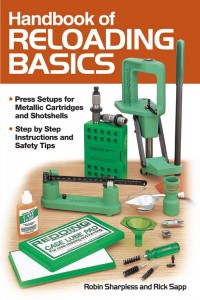
Cincinnati, Ohio (May 14, 2014) – Take the guesswork out of reloading ammunition by checking out Handbook of Reloading Basics, which is now available online at gundigeststore.com and in stores this month.
Handbook of Reloading Basics is a must-have whether you’re a hobbyist, serious shooter or just want to save money on ammunition by creating your own. Part One covers rifle and pistol ammunition reloading and Part Two covers shotshell reloading. Get started in handloading by following this guide to identify and purchase the basic tools needed while learning the importance of safely handling powders, primers and lead shot.
The book takes you through single stage and progressive reloading processes, methods for handloading straight-walled and metallic cases, shotshell reloading, and caring for metallic cases and shotshells. By book’s end, everyone from competitive marksmen to self-defense practitioners and hobby shooters will recognize the benefits of reloading.
Get in on the benefits of creating your own ammunition by picking up Handbook of Reloading Basics at gundigeststore.com, Amazon.com, Barnes & Noble or other major booksellers.
Handbook of Reloading Basics by Robin Sharpless and Rick Sapp, Gun Digest Books ISBN-13: 978-1-4402-4132-1 ∙ Price: $19.99 ∙ Paperback: 6 x 9 ∙ 250 Pages
About Gun Digest Gun Digest is the world’s foremost authority on guns in print and online. In addition to Gun Digest the Magazine, the brand’s portfolio includes the Gun Digest Books line, Standard Catalog of Firearms, the GunDigest.com online community, and ecommerce specialty store, www.gundigeststore.com. For more information, visit gundigest.com, the Gun Digest Facebook page, www.facebook.com/gundigest, or follow on Twitter @gundigest. Gun Digest is an imprint of Gun Digest Media.
Media Contact: Alicia Capetillo, [email protected] 513.531.2690 ext. 11339
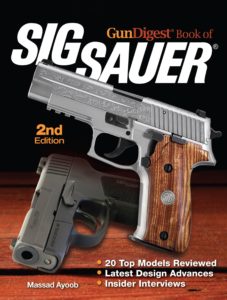
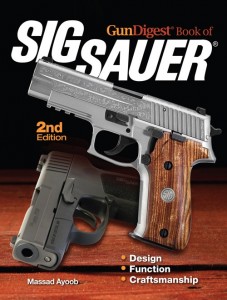
Cincinnati, Ohio (May 27, 2014) – Renowned firearms expert Massad Ayoob explores the ins and outs of the design and operation of various SIG-Sauer pistols in the Gun Digest Book of SIG-Sauer, 2nd Edition, the latest offering from Gun Digest Books. The book is available to purchase online and in stores now.
Gun Digest Book of SIG-Sauer dedicates whole chapters to the most popular models in the SIG-Sauer line-up, a format that allows Ayoob to discuss each pistol’s unique attributes in depth, as well as relevant information about various calibers, quirks throughout the model’s history, magazine and ammunition options, model variations, price, ergonomics, accuracy and much more. This second edition includes new chapters for the most popular new models and any significant changes to existing models. Readers will also enjoy a breakdown of SIG-Sauer developments over the past ten years, highlighting notable features and improvements to the line.
A subsequent chapter on shooting SIGs delivers the same diligent attention to detail. Ayoob covers everything from grasp and stance, to alternative positions and advanced techniques. Loading and unloading, operating and manipulating the slide, emergency techniques, tactical reloads, holstering the pistol safely, proper maintenance, customization options and much more are all discussed. Firearms enthusiasts will find a chapter comparing the performance of SIG-Sauer to other firearms especially beneficial.
Become a SIG-Sauer expert by purchasing the book at gundigeststore.com, Amazon.com or at other major booksellers.
About the Author Massad Ayoob has published thousands of articles and authored more than a dozen books on firearms, self-defense and related topics. He founded the Lethal Force Institute in 1981 and served as its director until 2009. He now trains through Massad Ayoob Group.
About Gun Digest Gun Digest is the world’s foremost authority on guns in print and online. In addition to Gun Digest the Magazine, the brand’s portfolio includes the Gun Digest Books line, Standard Catalog of Firearms, the GunDigest.com online community, and ecommerce specialty store, www.gundigeststore.com. For more information, visit gundigest.com, the Gun Digest Facebook page, www.facebook.com/gundigest, or follow on Twitter @gundigest. Gun Digest is an imprint of Gun Digest Media.
Media Contact: Alicia Capetillo, [email protected] 513.531.2690 ext. 11339
Some concealed carry holsters tend to work better for women than others. Here are some guidelines to use for holster alternatives.
If you’re an armed woman with a concealed carry permit you’ve declared your independence from fear. However, holster considerations may be different for you because of the delights of physiology.
The gentle arc from hip to waist is more profound on many women making the top of the gun or holster “bite” when using an inside-the-waistband (IWB) holster. While many women prefer a tailored look and thin belts, belt carry is prone to “print” or wobble.
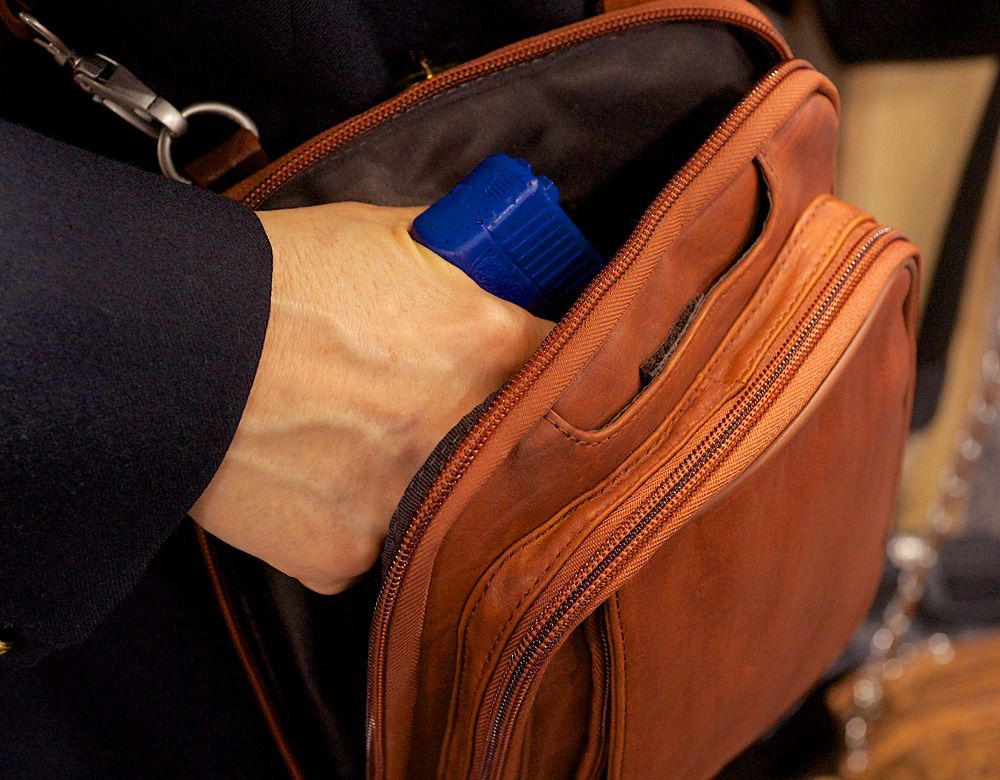
This drives many to purse carry. That’s fine if you understand the benefits and risks. Purse snatches are common on city streets but that’s not the only danger. A handgun should never be carried in a purse mingled with other contents because of the risk of objects getting inside the trigger guard and creating an accidental discharge, or fouling the action and jamming the gun.
Many vendors offer excellent concealment purses with dedicated pockets for the gun. Get a revolver with an enclosed hammer for this application because, if the circumstance demands, it can actually be shot through the walls of the purse.
Another option suitable for casual wear is a fanny pack. Although this is a slower option than belt carry, if you keep good defensive space it provides excellent security and is quite comfortable when worn on the strong side just in front of the hip bone. Small revolvers and semi-autos fit easily into belt packs.
The expensive black leather or ballistic nylon ones are guy swag. Colorful nylon offerings from the discount stores work just fine. You can buy several in different colors and match them to your outfits. One tip if you go this route: Tie a three inch loop of cord or yarn through the zipper that opens the pistol pocket so you have something easy to grab.
Editor’s Note: Got a question for Joseph Terry about concealed carry not covered here? Log in and post your question in the comments below.
Editor’s Note: Concealed Carry for Women, a new book by Gila Hayes, is now available. It takes a comprehensive approach for women who have decided to carry a concealed handgun for self-defense.Click Here to Get Your Copy
Photo courtesy Massaro Media Group and JNJphotographics
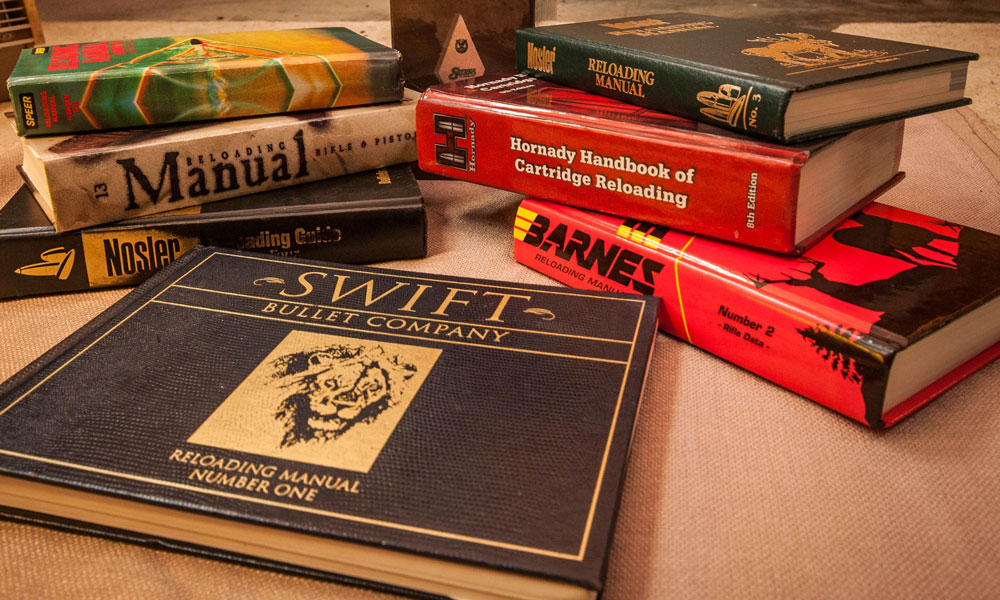
The reloading manual, be it in hardcopy or digital form, is a must-have for every reloader. These precious volumes contain the dimensional data and powder charges for each of the different calibers, for the wide variety of bullets available. They offer test data, from both conventional handguns and rifles or from a universal receiver, which has been proven to be safe in laboratory situations.
Most of the bullets manufacturers, along with the powder manufacturers, have their own reloading manual, and you will probably end up owning more than one. I keep all that I can find, for several different reasons.
One, not all bullets are created equally. As an example, let us use the very popular 180-grain .308-inch diameter bullet. The loads provided by a particular manual may have been tested for a 180 grain spitzer, and proved to be safe with a certain powder charge, but if you were to use that same load with a boat tail spitzer, or a mono-metal bullet that is longer for the same weight, problems can arise.
Two, not all reloading manuals test each bullet with all of the suitable powders for that cartridge. In this current environment of component unavailability, we as reloaders are sometimes forced to use those powders that are available to us, rather than those we would like to use. Downloading several bullet and powder companies’ data, and purchasing several different reloading manuals will help you to cover all the bases.
Old reloading manuals are also valuable. The chemical formula for each powder can’t change, or all prior data would be worthless. Now, as new cartridges are introduced the manuals need to be updated to include them, but for the cartridges that have been with us for decades there is often a small treasure trove of data from yesteryear.
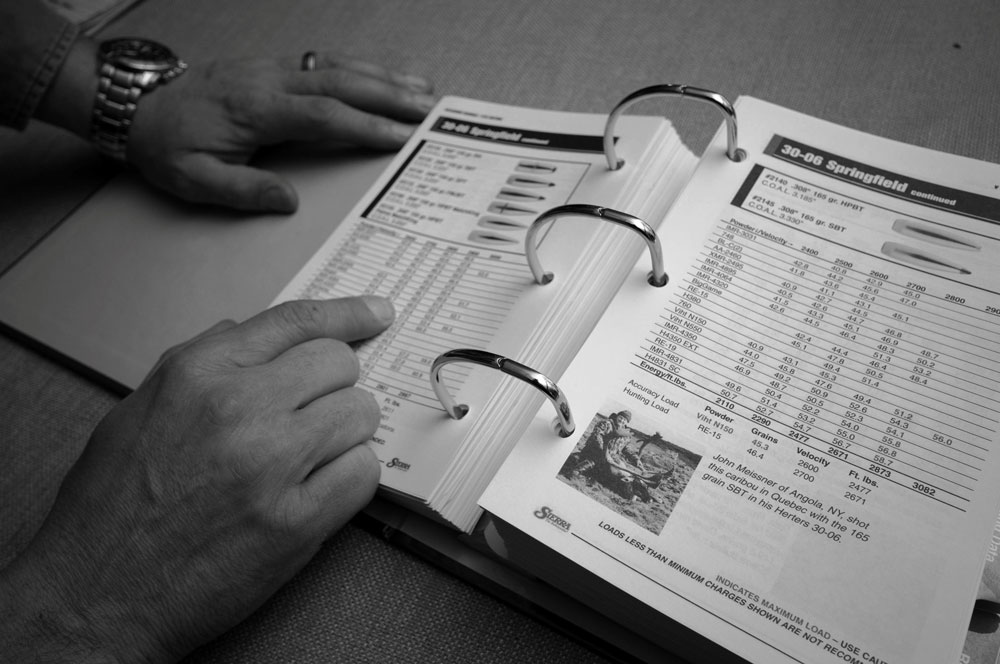
I have managed to collect manuals from the 1950s, 60s, 70s and so on. Several years back, I was looking to develop a load for my .300 Winchester Magnum using 220 grain round nosed bullets and IMR 4064, as I had quite a bit of it on hand. Searching through some old manuals I found what I was looking for in my Dad’s early 70s Sierra manual. You see, they didn’t have as many powders to test in that era, and as IMR 4064 isn’t quite what makes the .300 Winchester shine, the newer manuals had stopped testing with it.
I wanted a velocity similar to the .30-06, to use in my native New York’s Catskill and Adirondack mountains, and that manual gave me what I needed: 220 grain bullets at 2,425fps, delivering minute-of-angle accuracy at 100 yards, and deer and bear alike have fallen to that load. I’d never have found it had I not saved manuals.
It is also a good idea to have several manuals on hand for a cross reference. We are all human, and typographical errors can happen. When developing a new load for myself or a customer, I check several manuals to verify that the powder range is at least similar, and no errors have occurred in printing.
Photo courtesy Massaro Media Group and JNJphotographics
Lastly, reloading manuals are cool! I really enjoy reading the cartridge histories, as written by some very authoritative persons. Some will give good insight to the way a cartridge behaves, some offer loading tips for the cartridge at hand, and my favorites include the hunting stories of the author.
Scour the Internet, search the manufacturers websites for good data, buy some manuals and start your own reference library for all your loading needs!
More From Philip Massaro:
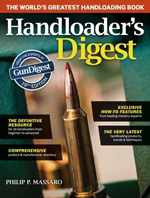
Handloader’s Digest 19th Edition By Philip Massaro The publisher of the “World’s Greatest Gun Book” is proud to announce the return of “World’s Greatest Reloading Book.” Whether it’s information on this year’s new ammunition reloading equipment or an in-depth article on obscure wildcat cartridges, you’re certain to find what you’re looking for in this authoritative annual. Get it here
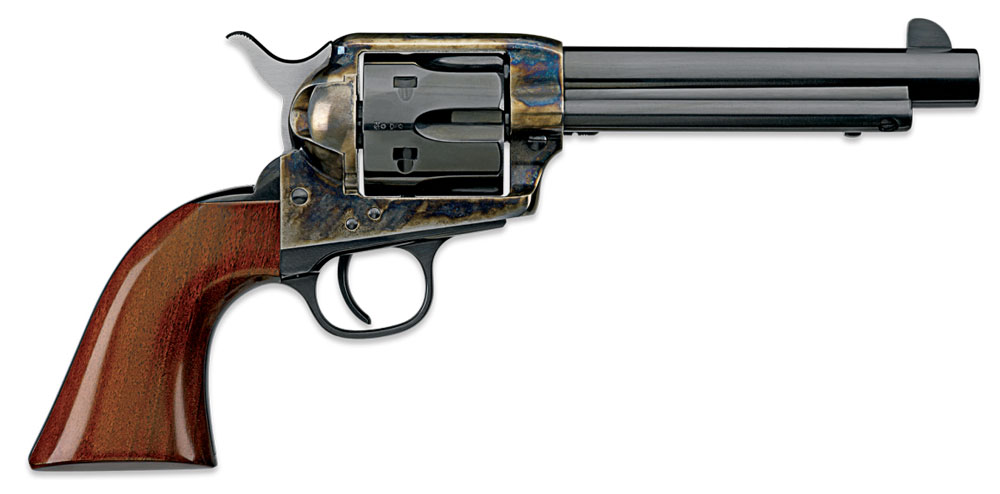
Uberti has added two new calibers to its Horseman single-action revolver line.
After nearly 150 years of swinging off every bad hombre’s hip, the Colt Single-Action Army revolver remains among the most recognizable firearms in the world.
There is good reason for this.
Partly it is a testament to Hollywood, who has shipped America’s Wild West and all its law and bad men to every corner of the globe. But there are other factors that have propelled the humble wheelgun to icon status.
Simply put, the sixgun is reliable as an old paint hoss, tough as boot leather and as potent as rattlesnake venom. And, thankfully, these assets are still readily available in brand new single-action revolvers patterned off the old Colt’s original design.
Uberti has, perhaps, one of the most extensive catalogs of revolvers based off the Colt SAA. And it is a catalog that continues to grow like mesquite.
Recently, the Italian company announced the expansion of its Horseman series of revolvers to include two new calibers, each with three new barrel lengths.
The Colt 1873 replica originally came chambered in .45 Colt and .357 Magnum. But shooters can now buy the revolver in a .44 Magnum and .22LR models. Each comes with the option of 4 ¾-inch, 5 ½-inch or 7 ½-inch barrels.
The gun cut the same figure as the 1873, boasting walnut grips and blued finish. It is case hardened and comes outfitted with a blade front sight. But the 2.3-pound revolver has kept up with the times with some practical modern tweaks.
Perhaps, the most notable modification Uberti has made is the addition of a transfer-bar safety system. Simply put, the system is a piece of steel that goes between the hammer and firing pin when not being fired to prevent a negligent discharge.
The lack of such a safety back in the Wild West led many gunslingers to load their sixguns with only five rounds. The hammer on an empty cylinder was a precaution that helped keep a simple fumble of the gun from turning into a fatal incident.
While not as long or heavy as its double-action cousins, Uberti has tightened up the Horseman’s trigger more than the average single-action. The result is a smooth pull and a crisp break, all facilitated by a wider than normal trigger.
Uberti offers much more affordable versions of SAA than many on the market. The Horseman’s MSRP is $559. And with improved manufacturing, the company’s firearms have won some new fans in recent years.
Of course, the Horseman has some stiff competition with Colt still manufacturing single-actions and Ruger having built a dedicated following for its wares – just to name a few. But the company has obviously stumbled on to something, given it does not appear to riding off into the sunset anytime soon.
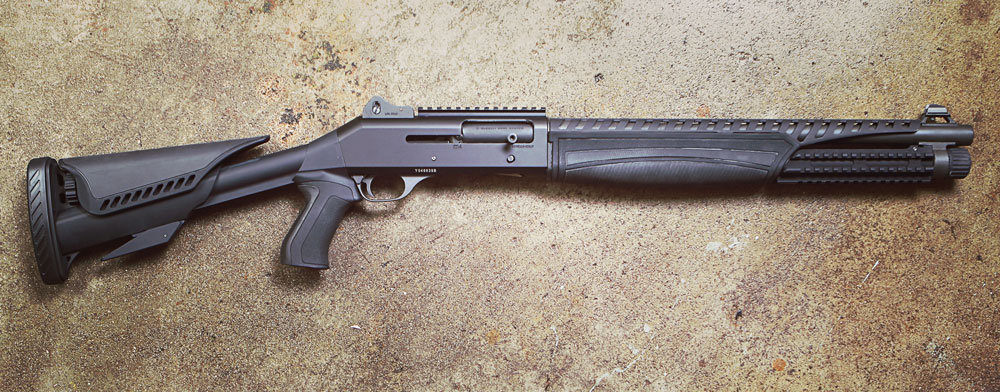
Benelli M4 tactical shotgun outfitted with ATI furniture.
When ATI engineers sought to dress up Benelli’s proven M4 tactical shotgun, they made a great defensive gun even better.
ATI Inspiration
When ATI unveiled their vision for the popular Benelli M4 tactical shotgun earlier this year, it drew the attention and awe of virtually all who saw it. This was now one truly wicked bad looking gun.
I mean regardless of whether you are a professional operator or a suddenly awakened homeowner responding to an unexpected threat, when confronting danger, you not only want a piece that can deliver efficient and accurate stopping power, but it doesn’t hurt if you look the part of someone who is capable of handling the situation as well.
This shotgun is truly an intimidator. But it is also built for peak tactical performance, outfitted as it is by a specialized collection of ATI furniture.
The ATI Difference
So what exactly makes this M4 incarnation different from when it simply rolls out of Benelli’s warehouse? Let’s start at the rear of the gun and work toward the business end.
ATI started with their Six-Position Adjustable Raven Shotgun Stock, which boasts a network of technology built into this one part of the gun. The Raven stock is fully adjustable to six different lengths for a perfect length-of-pull fit for any shooter. Completely collapsed, it also makes toting or storing the gun easier, particularly when trying to pack it in a vehicle or boat or haul it through thick cover.
Mounted to the rear of the stock is the Scorpion Razorback Recoil Pad, which greatly reduced felt recoil from the heavy slug loads I was shooting and greatly aids comfort. By limiting the felt recoil, it also aids in rapid follow-up target acquisition. The recoil pad is designed to remain flexible even in extremely cold temperatures and is not affected by cleaners or solvents.
In addition to adjustments for length-of-pull, the Infinity Adjustable Soft-Touch Cheekrest also allows for dialed height adjustments on the polymer stock, allowing for easy sighting if using the front-fixed post/rear ghost ring sight combination or needing to raise your line of sight a bit by going with rail-mounted red dot or laser sight.
ATI’s additions makes the Benelli M4 eminently adjustable.
The internal components of the cheekrest are made of Military Type III anodized, 6061 T6 aluminum for durability, while the stock attaches to the receiver easily via a precision CNC-machined receiver mount with a pivoting sling loop for left or right side sling attachment along the receiver.
Aiding in the rear grip of the ATI/Benelli M4 is a paired Scorpion Recoil Grip, which wraps the extended pistol grip with a soft, Sure-Grip texture that improves the shooter’s hold on the gun and aids comfort for extended aim times.
Moving toward the front of the shotgun is ATI’s polymer over-molded forend, designed with an ergonomic palm swell toward the bottom for improved hand comfort and better dissipation of recoil forces. The forend boasts the same soft-touch, non-slip texturing found on the Scorpion Recoil Grip and six-position stock.
ATI’s package calls for replacing the magazine tube with theirs, which is made of the same Type III Anodized aluminum as the internal components of the stock and holds five shotgun shells in addition to the one loaded in the chamber. The magazine follower is also anodized aluminum.
Rounding out the look of the shotgun is top receiver-mounted rail and a front-mounted magazine tri-rail with a heavy knurled magazine cap with a fitting for the front end of a sling. The barrel is also shrouded with a heat shield that adds to the rugged look of the gun more so than adds any real benefit unless you plan on smoking a lot of rounds out of the shotgun at a given time.
Punching Targets
Shooting both Winchester and Federal slugs, as well as Winchester No. 4 though an open choke, I tried the gun on targets set at several different distances.
With the slugs, I wanted to see how they would do out to a typical range of 40 yards. Shooting down a smoothbore barrel, it’s important not to use rifled, sabot slugs, but rather go with Foster-type designs made to fill the internal dimensions of the barrel.
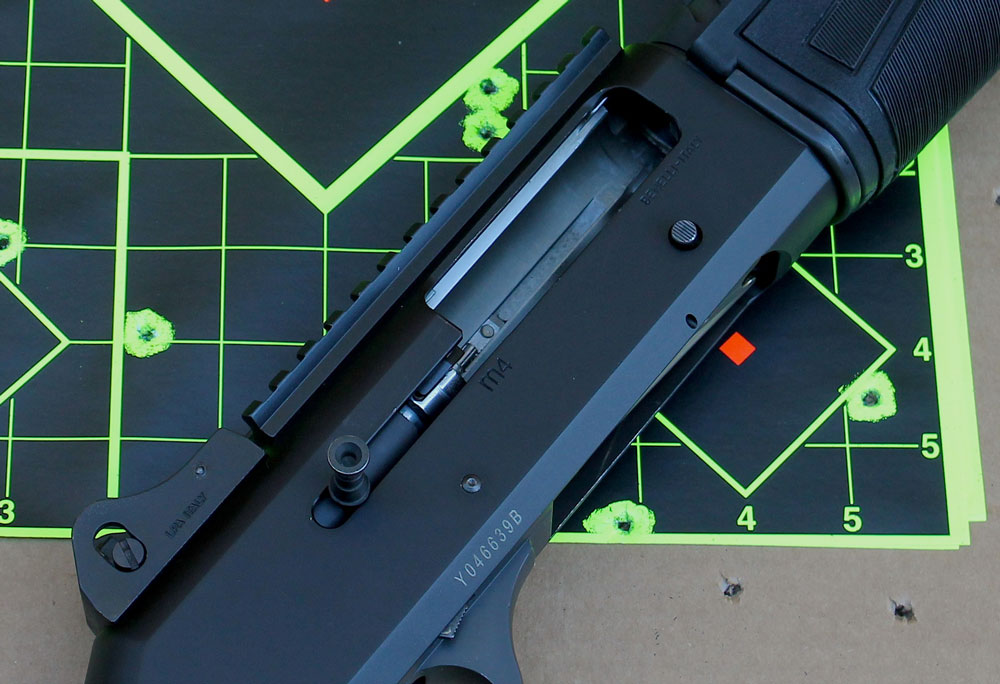
With just the open sights, I was able to deliver groups inside 3 to 3 ½ inches shooting from a seated position on the ground or balancing off my knee. (It was a shotgun, so I wasn’t overly worried about benchrest accuracy here, since one would be unlikely if I had to shoot at an approaching threat—animal, mineral or otherwise.)
ATI’s additions to the Benelli M4 keeps it on target shooting slugs or shot.
Shooting No. 4 buck at 40 yards, the choke threw a deadly spread, and at 10 yards—a more likely defensive range—a grapefruit-sized pattern, complete with a hole from the wad, decimated the target.
The open sights worked fine and are adjustable, but I found even with the cheekrest dialed down, I had to really plant my head against the stock. Cranking it up a bit and mounting a compact Aimpoint or TruGlo red dot sight, or even a dialed-in laser sight would be my preference.
The total package added a bit more weight to the gun, a difference between 7.8 pounds as a stock M4 verses 10.4 pounds in the Raven version. This added weight likely won’t be much of a concern for mere defensive shooting and may even aid in reducing recoil, but for lengthy totes it can become noticeable.
It’s also important to note that ATI does not sell the M4 Raven itself. You need to already own one or if interested, buy a Benelli M4 at your local gun shop. They retail for approximately $1,800. The Raven Kit including the stock, forend, magazine and magazine follower retails for $375 from ATI’s website while the rails, sight and heat shield are extra options that you can choose to include.
It’s not a cheap option, but for the person looking for what may well be the ultimate tactically inspired defensive shotgun today, it may well be worth the price.
Gun Digestthe Magazine is the source for firearms news, pricing and guns for sale. With a subscription to Gun Digest the Magazine, readers benefit from in-depth editorial expert advice, show reviews, how-to instructions and Second Amendment issues.
Gun Digestthe Magazine is the source for firearms news, pricing and guns for sale. With a subscription to Gun Digest the Magazine, readers benefit from in-depth editorial expert advice, show reviews, how-to instructions and Second Amendment issues.
When it comes to the AR platform, typically there have been a couple ways to improve the rate of fire.
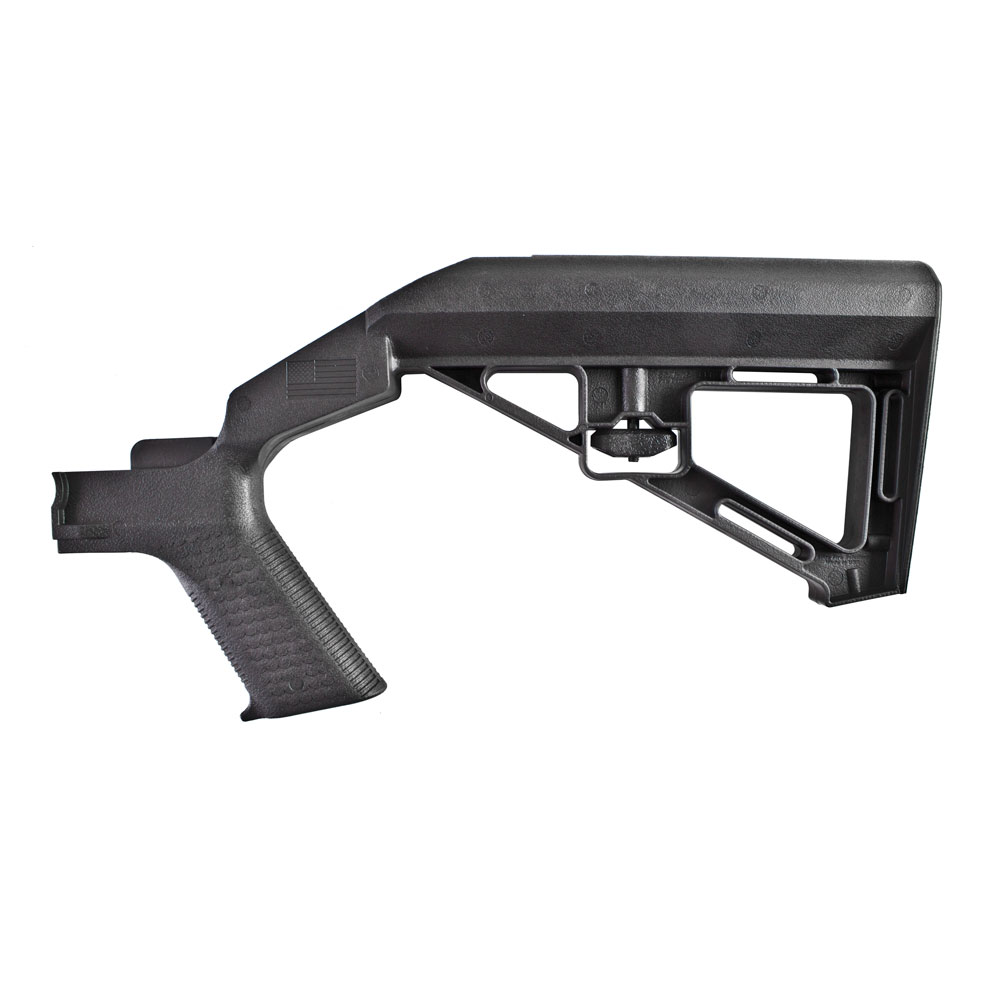
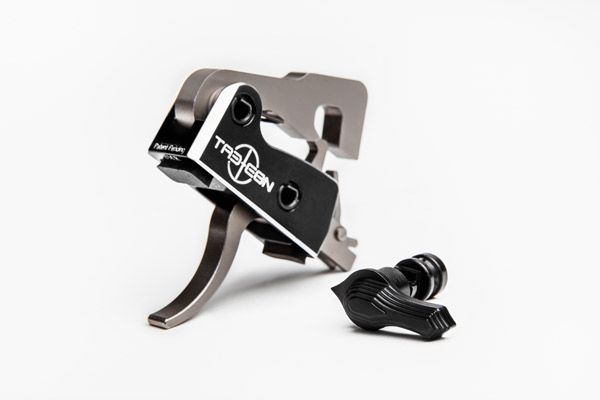
The bump stock has been one of the more enduring methods, dating back a couple decades now. More recently, advancements in fire control have aftermarket triggers an option in upping an AR’s cycle rate.
With a little experimentation, the guys at Tactical Existence have found yet another way to pick up an AR’s pace. Their stroke of genius? Simply marrying the two aforementioned AR upgrades, then letting the brass fly.
Slide Fire SBS stock
The above video shows the results when an AR is outfitted with a Slide Fire Stock and Tac-Con 3MR Trigger. Really, the only thing that appears like it could slow the system down is ammunition prices.
It’s difficult to say if the combination of components achieves the same rate of fire as the AR’s select-fire cousin. Even if it doesn’t hit the 700-950 round rate of the M16, the tweaks certainly do get the rifle chewing through ammo at a jowl-shaking rate.
Of course, as the Tactical Existence guys point out, the practicality of mating these upgrades is debatable. They might make an AR blistering fast, but most likely at a cost – accuracy. Bump-fire systems earn points for the volume of fire they create, but have usually won little praise for producing a precision instrument.
The combination of these upgrades might not be the best for tactical applications, but they sure do appear to be a heck of a lot of fun. But it’s the type of fun a shooter would really have to squirrel away their nickels and dimes to enjoy.
Tac-Con 3MR Trigger
The upgrades themselves come with hefty price tags. The Tac-Con Trigger is listed at $495.00 on the company’s website, the stock $299.95 at Slide-Fire’s site. Then there is the issue of ammo, which could bite the pocketbook fairly quickly. Even if the accessories had an AR cycling at the low end of an M16, it would only take minutes to burn hundreds of dollars of ammo.
For those who can afford it, the upgrades seem like they’d be a hoot. And would still be cheaper than, and involves less hoops to jump through, than owning a select fire rifle.
When it comes to gunlether, there’s been no busier corner of the world than Amityville, N.Y. The town is home of DeSantis, who – as of late – has been in overdrive in expanding its lines of holsters.
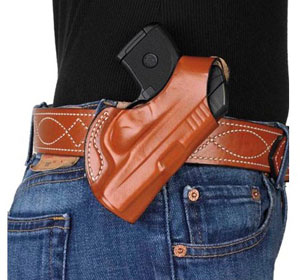
Much of what has prompted the company’s product expansion is the introduction of a number of popular polymer pistols. But the company has also continued to added holsters for a number of existing handguns. Below is a rundown of what’s new for DeSantis.
The Dual Carry II The holster features our Tuck-able 360-degree ‘C’ clip for unlimited positing adjustment in the IWB. It is made of soft non-molded leather with thumb break and integral belt loop for OWB carry. An optional J clip is available at extra cost. It is now available for Ruger SR9C/SR40C, Ruger LC9 and Springfield XDs 9mm/.45. Retail price is $32.99.
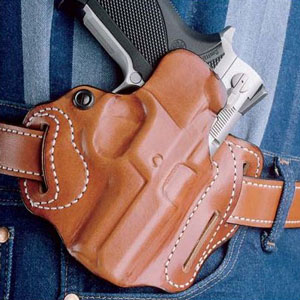
Speed Scabbard Holster is now available for the Smith & Wesson Shield and is designed to meet the needs of those who prefer a holster without a thumb break while still providing firearm retention. Belt slots are 1 ¾-inch wide. Retail price is $72.99.
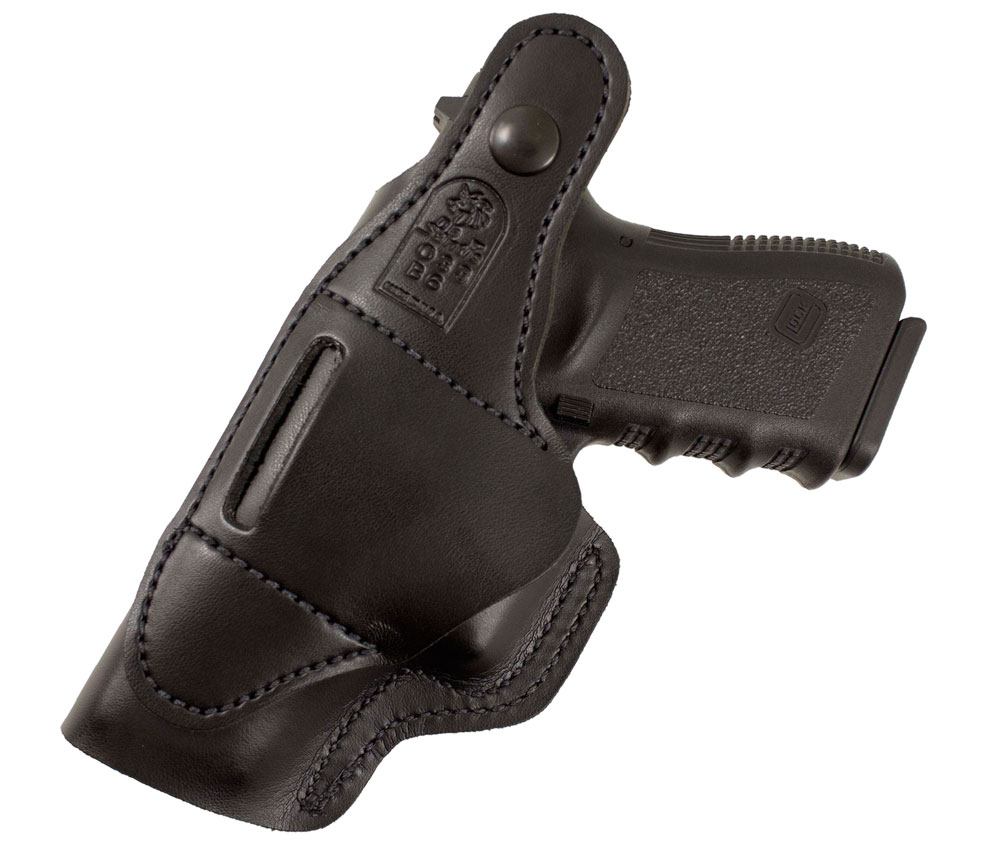
Companion II The holster is now available for Glock 19, 26, 27, 23, 32, 33, Smith & Wesson 59-44, 59-46 and Smith & Wesson J 332, 340, 342, 432PD, 442, 640-1, 642 2- and 2 1/4-inch. The tuckable 360-degree C-Clip makes it adjustable for cant and height. It can also be worn OWB with its 1 ¾-inch belt slots. Optional J-Clips are available. Retail price is $50.99.
Model Expansions for the Smith & Wesson Bodyguard
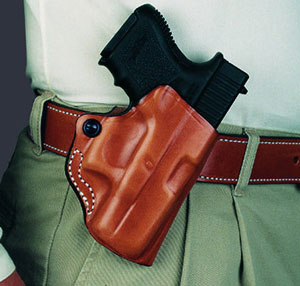
Mini Scabbard The holster has been reduced to the barest of essentials, yet offers a secure grip on the handgun thanks to exact molding and adjustable tension device. It will accommodate belts up to 1 1/2-inches wide. Retail price is $59.99
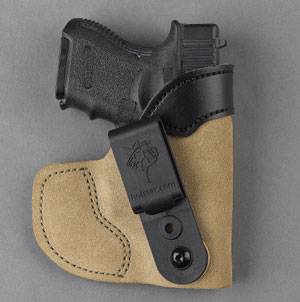
Pocket-Tuk This dual-purpose pocket and tuckable IWB holster features Tuckable 360-degree C-Clip making it both tuckable and adjustable for cant and height. The reinforced mouth aids in re-holstering, and the suede construction helps keep it all in place. Retail price is $25.99.
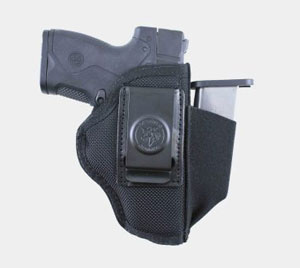
Pro Stealth Made of heavily padded 1050D black senior Ballistic nylon and lined with slick pack cloth, the holster comes with a 1 ¾-inch powder coated black spring clip. The clip may be removed and inserted on opposite side for left hand carry. A spare magazine pouch is standard for auto loader models. Retail price is $38.99.
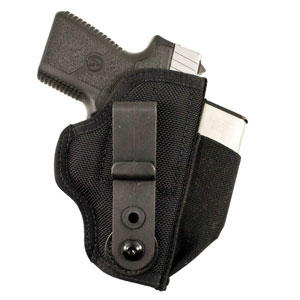
Tuck-This II Built from heavily padded 1050D black senior Ballistic nylon and lined with slick pack cloth. The tuckable 3600TM clip can swing from cross draw to FBI-strong side carry, and even the small of the back. Retail price is $39.99.
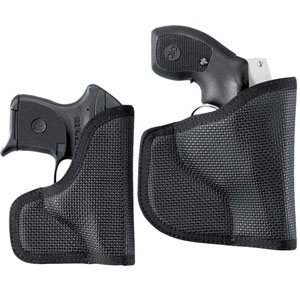
Nemesis The pocket holster’s inside is made of a slick pack cloth for a low friction draw, and the core is just the right amount of foam to break up the outline of the gun along. It is reinforced with added polymer in the right places. Retail price is $24.99.
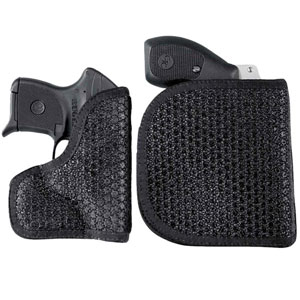
Superfly Pocket The holster comes with a removable, reversible outer flap to even further disguise the firearm. The inside is made of slick pack cloth for a low friction draw and is reinforced with added polymer in the right places. Retail price is $38.99.
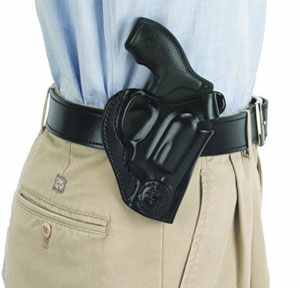
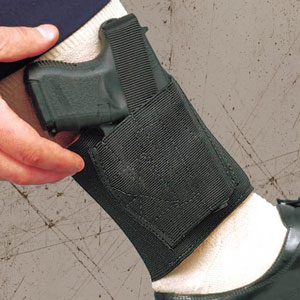
Apache Ankle Rig A 5-inch wide elasticized leg band largely eliminates the unwanted rocking motion commonly associated with ankle holsters. All semi-auto models feature an adjustable hook/loop thumb break. Optional C14 ankle support strap is available. Retail price is $54.99.
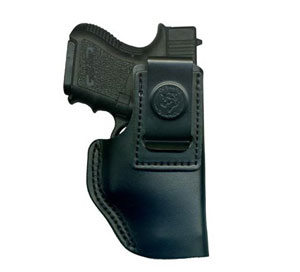
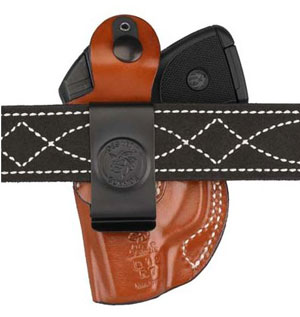
Insider The Insider contains design features to minimize bulk. It is made with a heavy-duty spring steel clip positioned high for deep cover. The leather is soft and un-molded. Retail price is $27.99.
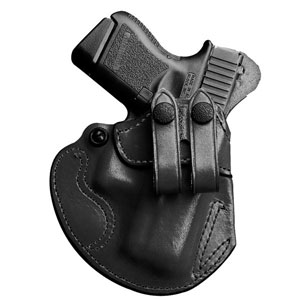
Cozy Partner Features a tension device and precise molding for handgun retention. A memory band retains the holster’s shape for easy one handed re-holstering. 1 ¾-inch split belt loop is standard. Must be worn with a belt. Retail price is $75.99.
Maverick Holster features detailed molding along with a sturdy steel spring clip for easy on and off. This holster will accommodate belts up to 1 3/4″ wide and is available in premium black or tan saddle leather. Retail price is $50.99.
Quick Snap Holster features a one way snap on belt loop for easy on and off, and precise molding. It will accommodate belts up to 1 ½-inch wide. The Quick Snap is available in premium black or tan saddle leather. Retail price is $50.99.
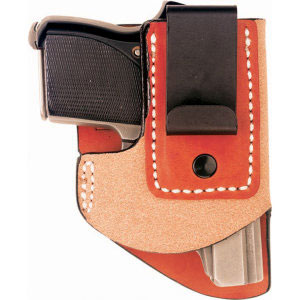
Pop-Up Holster is built from premium saddle leather with rough side out design and features a tough powder coated “J” clip. The pistol rides low and out of sight. The draw is accomplished by pushing up at the muzzle end. Must be worn with a belt. Retail price is $46.99.
It’s no secret that the Mil-Spec AR trigger is terrible. It has everything a good trigger does not have, like take-up, creep, over-travel, and inconsistency.
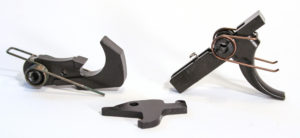
Because of this, a number of manufacturers offer aftermarket triggers for the AR-15 and the AR-10. (As a side note, triggers for the AR-10 and AR-15 are different and are, therefore, not interchangeable.) I could recommend most any of these triggers, but, more importantly, let me explain to you what a good trigger actually is.
Mil Spec AR triggers are notorious for being terrible. If you make only one upgrade to your AR, replace the Mil Spec trigger.
When we are born, we enter a life of buttons and switches, those many things that must be pulled, pushed, or flipped in order for us to get what we want. From a metaphorical standpoint, we push these buttons and pull these strings of life in many ways. From turning on the radio in our car to the subtle looks we give our significant others, we are flipping switches.
It is no different when we shoot. To make our rifles fire, we must pull the trigger. However, when compared to the other buttons we physically manipulate, pulling a trigger is more akin to that wink you give to get a kiss. Pulling a trigger is a much more subtle exercise than jabbing at a light switch or poking the TV remote. When you pull a trigger you have—hopefully—ended your hunt, stopped a threat, or hit dead center of your target. Pulling a trigger might be one of the ultimate exercises in hand/eye coordination.
What we simply cannot do is shoot a rifle with precision, if it has a bad trigger. The really sad thing is that most shooters do not know what a good trigger really is—and just because a rifle is expensive doesn’t mean it has a good trigger. I test dozens of ARs every year and have done so for a long time. The percentage of those rifles that come with a good trigger is less than 10.
A trigger is a moving mechanism, and there are several terms used to describe how it moves. It’s important to understand both the movement and the terms, so you can evaluate a trigger and better understand how to pull one. Following are the common terms used to describe trigger function. Let’s define each separately and examine how their function can negatively or positively impact your shooting.
Take-Up
Take-up describes the initial movement of a trigger before resistance is met. There are two types of triggers, single-stage and two-stage. Both can have take-up, but, with a two-stage trigger, you’ll feel some resistance, which can be as much as half the overall pull weight, during take-up. Take-up with a single-stage trigger is generally very light and is completed over an infinitesimal distance. In other words, a good single-stage trigger has no take-up; you put your finger on it, apply pressure, and the rifle goes bang.
Pull Weight
Pull weight describes the amount of pressure that must be applied to a trigger to release the sear. Pull weight can vary a great deal, and shooters often argue about what an ideal pull weight should be. Here again we are talking about feel, so opinions are subjective.
A good place to start is with a pull weight that is no more than half the weight of the rifle itself. The reason for this should be obvious. If you have pressure to the trigger that equals or exceeds the rifle’s weight, how are you supposed to keep your sights on target without moving the rifle?
Creep
Creep describes the movement of a trigger after take-up but prior to sear release. Creep is very common in factory triggers. Know that you can have a trigger with very minimal creep and still shoot with precision as long as the creep is smooth and consistent. It is in experiencing trigger creep that you will often feel roughness and inconsistency. This is due to the wide tolerances found in the mass-produced and inexpensive parts that make up many factory trigger mechanisms.
Over-Travel
The importance of over-travel is probably the most misunderstood aspect of a trigger. Over-travel relates to the movement of the trigger after the sear has been released. Very few triggers have no over-travel, but a good trigger will have very little or an almost imperceivable amount.
Why is over-travel so important? As hard as it may seem to believe—considering that bullets leave rifle barrels sometimes in excess of 3,000 fps—the movement of your finger on the trigger after the sear has been released can move the rifle before the bullet exists the barrel. The flight time of most bullets through a rifle barrel is between 1.0 and 1.5 milliseconds.
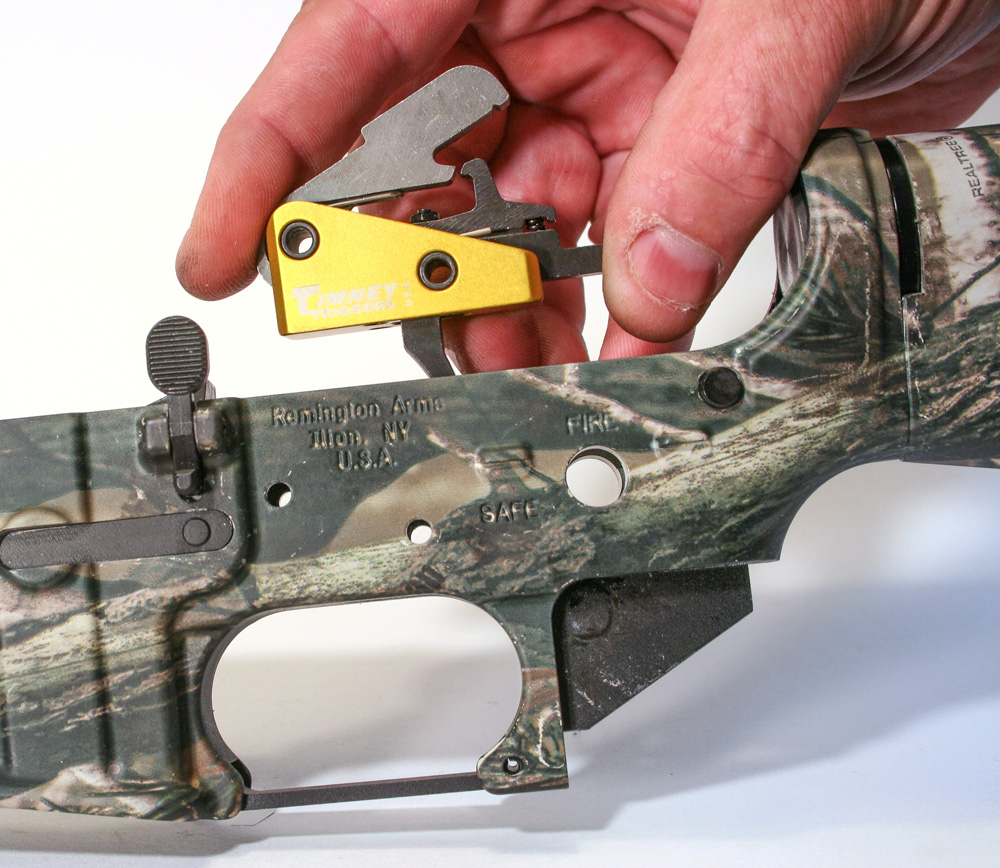
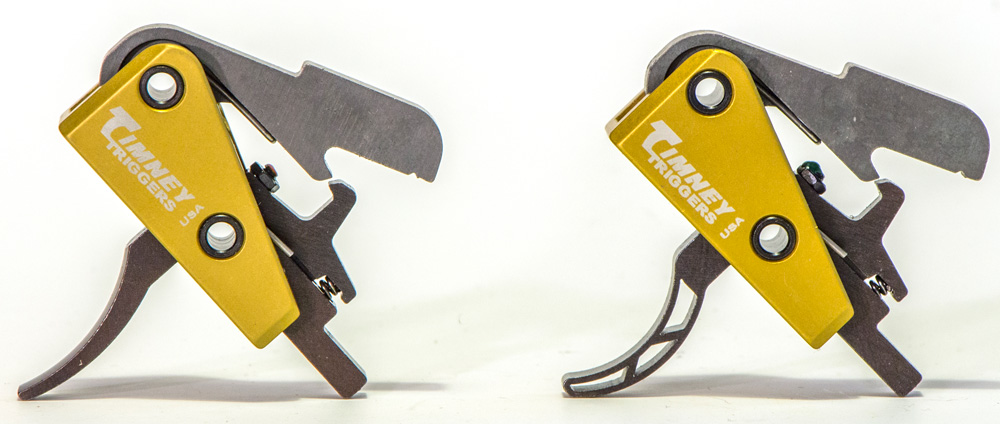
Aftermarket AR triggers like those from Timney are relatively easy to install. The complete process can be finished in about 15 minutes.
The “lock time,” the time between sear release and primer ignition, can be five times that long. Any movement to the rifle prior to the bullet exiting the barrel will affect your point of impact and excessive over-travel will cause this movement. Due to the higher force imparted on the trigger when it stops, a heavy pull weight will exaggerate the effects of over-travel. In essence, what you’re doing when you pull a trigger with excessive over-travel is inducing movement to your launch platform. It’s kind of like you’re trying to throw a curve ball.
Consistency
Consistency is probably the most important aspect of any trigger, regardless its pull weight, creep, take-up, or over-travel. This consistency is why companies like Timney Triggers are in business.
Replacement Triggers
Now, with some understanding of what a good trigger should feel like, you can start experimenting with triggers to see which ones pull in a manner that pleases you and will lead to good shooting. Triggers are relatively easy to install on an AR, and most installations can be accomplished in about 15 minutes.
Photo courtesy Massaro Media Group and JNJphotographics
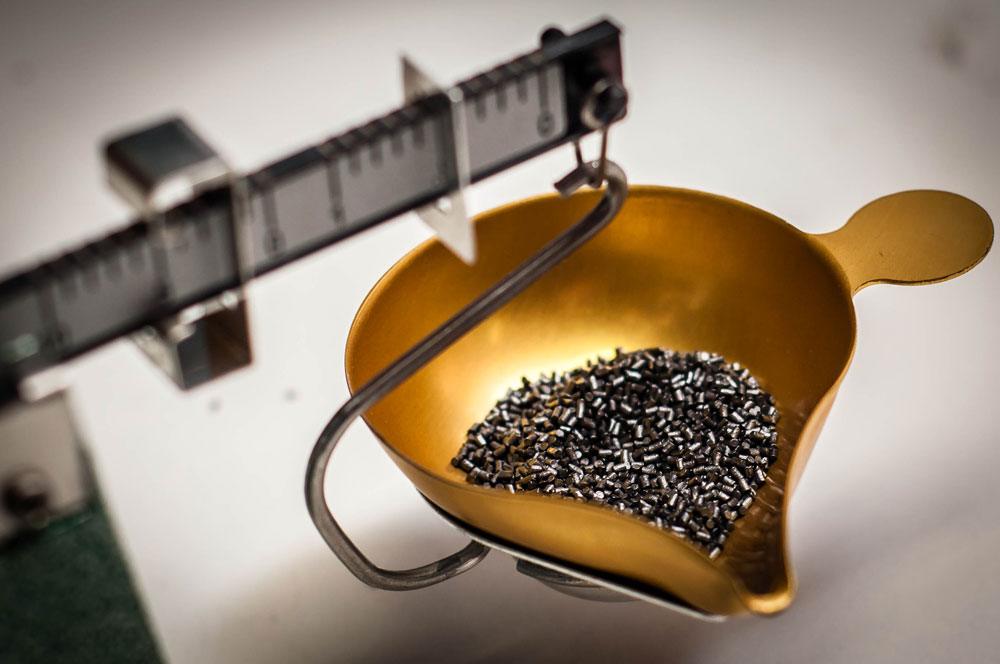
As a reloader, the proper gunpowder for the cartridge you’re loading is an important choice. It can make or break the accuracy of the load or obtain (or not obtain) the velocity at which you are aiming.
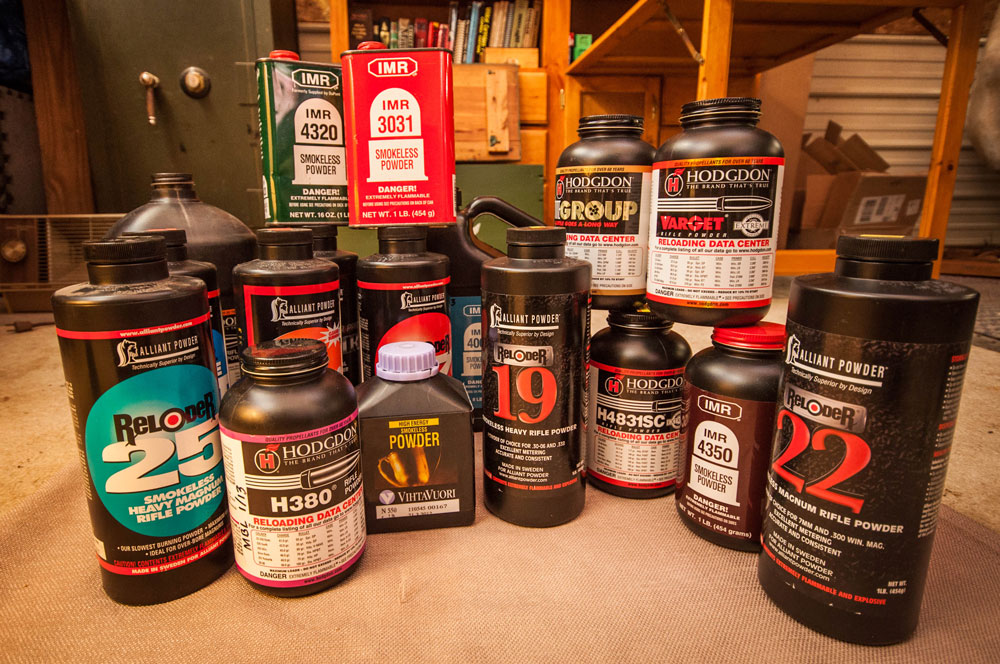
Researching the various properties of the canister grade powders available to us handloaders is very important, and much of this data is available in the myriad of reloading manuals that are published or available on powder companies’ websites. Having a pretty good handle on burn rates of smokeless powder will also help you make an informed decision. Hodgdon Powders has a great burn-rate chart on their website, which I refer to often.
Certain powders go hand in hand with some cartridges; the .45 Colt and Unique, the .308 Winchester and IMR 4064, the .22-250 Remington and H380. However, some powders just aren’t available during this ammunition and component crunch, and I hope that situation reverses itself soon. We reloaders must make do with what we’ve got. Understanding powder behavior, and the burn rate chart, can help you find a suitable replacement powder.
Pistol cartridges tend to be more forgiving than do rifle cartridges. There are many powders that can be used to obtain similar results in your pistol cartridge, with a minimum of effort. I like to pick a powder that is rather universal, like the aforementioned Unique, or maybe Bullseye or TiteGroup. They work in all of the handguns I shoot, and they give me the flexibility I like.
Rifle cartridges, and rifles as well, tend to be a bit more finicky. The high pressures that they generate, and the high velocities they attain, tend to magnify differences in powder behavior. Some, like the .308 Winchester, the .30-06 Springfield, and the .270 Winchester tend to work well with a multitude of powders. The magnum cases usually require the slowest burning powders to achieve the screaming velocities they’re famous for. The varmint calibers tend to be particular also, but when you find that magic recipe, you’ve got it.
Photo courtesy Massaro Media Group and JNJphotographics
Depending on the lineup of rifles you’ve chosen to fill your gun rack, you can choose a powder that can work well with a bunch of different calibers. To illustrate, my own personal battery includes (but is not limited to) a .22-250 Remington, .308 Winchester, .300 Winchester Magnum and a .416 Remington. For all of these cartridges, with their different volumes, velocities, and payloads, I have found an accurate load using IMR 4064. Some powders may have worked better, but in a pinch I know I can make IMR 4064 work for each of them. Now that’s not to say that 4064 is the only powder that will behave that way; it could just have easily been Hodgdon’s VARGET or another powder with a similar burn rate.
Read up on the cartridges you want to load, look at a bunch of reloading manuals and you’ll find that there are several powders that work well with your choice. There’s nothing wrong with having several loads for your favorite pistol or rifle, in the event that your favorite is temporarily unavailable. Keep diligent notes and records of your load development, and you’ll never be stuck without ammunition.
Enjoy the improved accuracy of hand-tuned ammunition, and gather the necessary information needed to get started with the reloading process. You’ll benefit from this reloading guide if:
You want to learn how to reload rifle and pistol ammo
You need to know the necessary tools required for reloading
You’d like to learn the benefits of reloading ammo
Arizona Shooters World has two stores, each with an indoor shooting range.
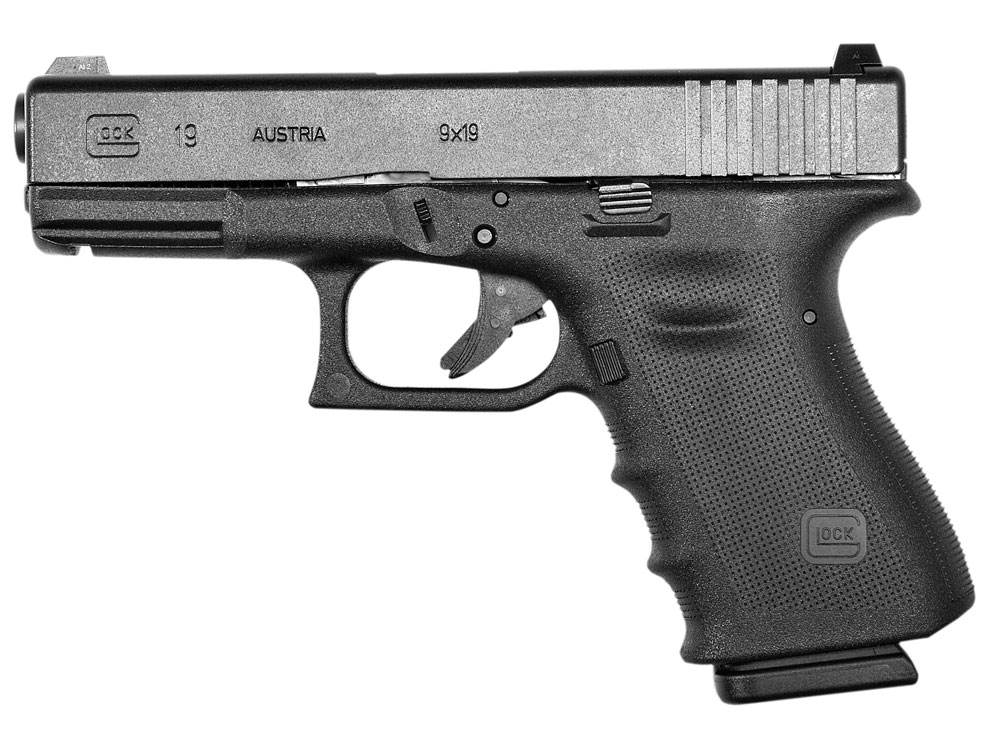
In recent months, customers have taken one particular firearm on test drives and then home. It seems Shooters World just keeps moving Glock 19 out the door.
“The Glock 19 is by far our best seller,” gun department manager and buyer Don Langworthy said. “They outsell all other guns by a two-to-one margin.”
A Glock 19 Gen 3 sells for $499. But the popular handgun is not the only product of which the store has seen an uptick in sales.
Holsters and related accessories are also in high demand, especially the Galco line. Leather, though, no longer dominates the market.
When it comes to holsters, half sold at Shooters World are crafted from man-made materials like Kydex.
Away from handguns, tactical merchandise has been hot.
The store reports moving a ton of Magpul magazines, handguards, grips and stocks for AR-style rifles.
For those who have aimed to spend a bit more tactical optics have topped the list. The most popular has been the Trijicon ACOG.
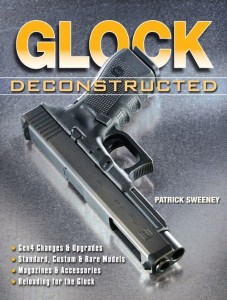
Glock Deconstructed is the ultimate guide for anyone wanting to gather knowledge about any topic related to the popular Glock pistol. You will also find an interesting exploration of the growing Glock aftermarket industry, as well as a review of Gen4 improvements.
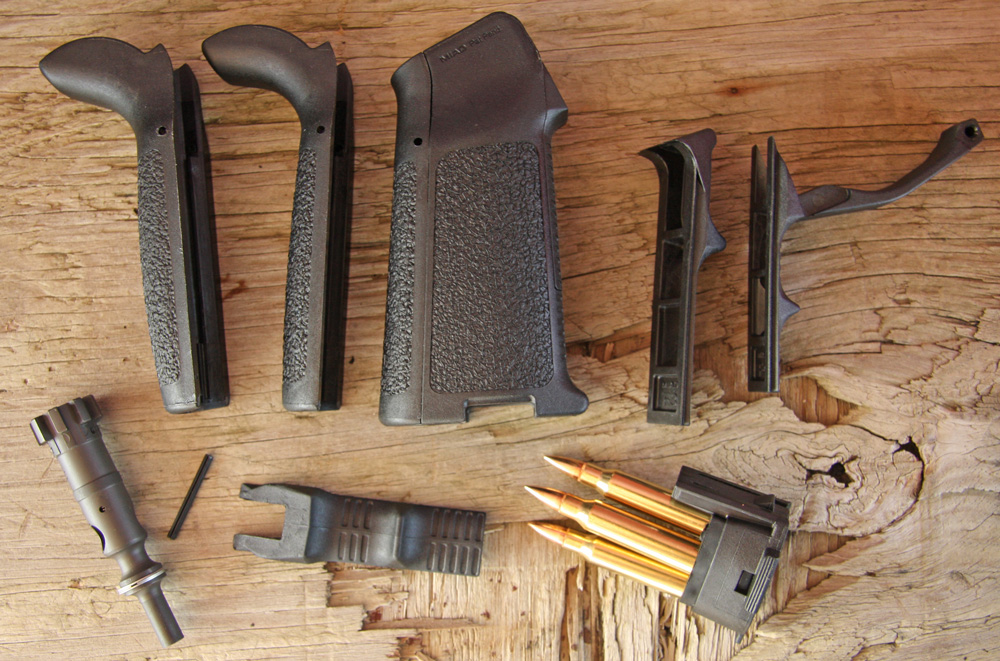
Pistol grips used to just be pistol grips. Now you can adjust them for size, angle and storage capacity.
What are the best AR-15 parts to have as backup in case something breaks? Here are Patrick Sweeney’s top picks to keep your AR running.
Breaks and Losses
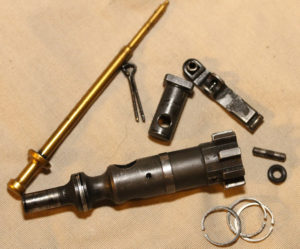
The spares you might be able to use in an emergency, or without extensive tools. A complete bolt, extra extractor, pin and o ring. Firing pin, cotter pin, gas rings.
The spare parts you can use are those that might break (even if the odds are remote) and those that you might lose, in cleaning, disassembly or other maintenance.
If you are cleaning your AR and have the bolt stripped, whatever you drop you will probably never see again. Well, if you are cleaning it in a bare concrete room maybe you’ll find it. But in grass, sand, dirt, water, weeds, etc. it will be gone, whatever it is/was. So we plan not just for breakage, but droppage as well.
Extractor
Extractors are not so expensive that you can’t afford a spare. A spare for each one, perhaps stored in the pistol grip. And while you’re at it, don’t be cheap. Your spare extractor should already be equipped with spring, internal buffer and D-Fender or O ring. “Hey, if my extractor breaks, I’ll just strip the spring and such out of the old one.” Uh-huh. And if you have dropped it? Have the new one fully equipped.
As extra insurance, I’d put a spare extractor pin in the kit, maybe two. (Hey, if you drop one, you’ll drop another, right?)
Firing Pin
They hardly ever break, but again, they aren’t expensive and they don’t take up much room,. Besides, you can always use the spare firing pin as a disassembly assistance tool. Oh, and the firing pin should have its own cotter pin, too, or maybe two.
Gas Rings
They are small, light, cheap, and easy to bend or lose. So you should have three spares. Why three? As I said, they are small, light, cheap and easy to bend.
Spare Bolt
The current tacti-cool fashion is to have a spare bolt someplace, typically inside the pistol grip. In the past I really wasn’t a fan of this. A bolt, fitted with rings, ejector, extractor, tested to your barrel, and stuffed in the pistol grip, costs you from $75 to $150. And in the past, bolts were not a problem.
Well, we’ve been seeing enough broken bolts lately that having a spare bolt, ready to go, seems like a lot better idea than it did back then.
If it is going to do you any good, it has to be right there, so the Magpul pistol grip designed to store a bolt is a must-have.
The bolt must be headspaced to that rifle (and if you have more than one rifle, make absolutely sure the spare stays with the tested rifle), fully-assembled and test-fired.
Batteries
If you have anything that runs on batteries, and you don’t have spare batteries, it will die and you will be out of luck.
If anything on your rifle is battery-driven, and you depend on it for more than entertainment, spare batteries are essential. Sealed, so rain, snow or a spill into water won’t short them out.
Tools
A toolkit to go with the spares is good. In it, have a screwdriver to fit the pistol grip screw (or one of those horrid allen wrenches to fit), something to push the takedown pins if your rifle is a tight fit, and either a broken case extractor, a cleaning rod or, better, both.
A compact cleaning system like the Real Avid or the Otis, with a broken case extractor tossed in, will do the job. Remember, this is the emergency kit, not the maintenance kit.
The rest of the tools are in your gunsmithing gear kit, or maintenance kit, not on your belt or in your bug-out/fighting bag.
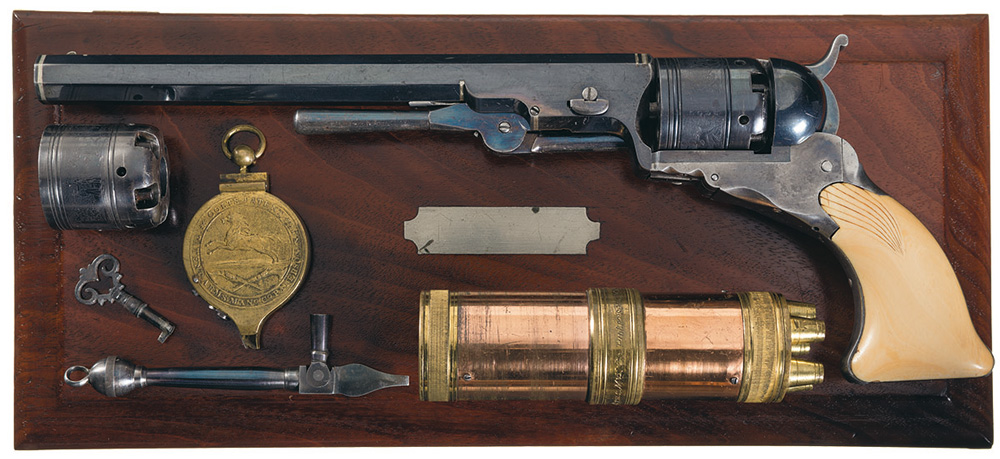
The star of the show from lot 1147, a magnificent cased and silver banded Colt No. 5 Texas Paterson with shell carved ivory grips and accessories, lived up to its lofty expectations and brought $805,000. Photo Courtesy Rock Island Auction Company.
Big crowds and intense bidding battles made for an action-filled weekend at Rock Island Auction Company’s latest event, which surpassed $14.7 million in sales.
The mood was electric and the imminent sale of numerous items well known to the collector community kept the energy high all weekend long at the May 2-4 Premiere Firearms Auction held May 2-4, at the Rock Island Auction Company. More than a dozen fierce bidding battles broke out during the 3-day event.
This Winchester Model 1890 rifle, deluxe, casehardened, and factory engraved realized an impressive $80,500. Photo courtesy Rock Island Auction Company.
Some items were expected to be contested, like the highly desirable Winchester Model 1890 rifles. One deluxe, casehardened and factory engraved example of the beloved boys’ rifle realized an impressive $80,500 and yet another similar specimen in near mint condition commanded a staggering $46,000.
The star of the show may have been a magnificent cased and silver banded Colt No. 5 Texas Paterson with shell carved ivory grips and accessories, which more than lived up to its lofty expectations and brought $805,000.
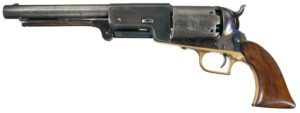
This Colt Civilian Walker brought $546,250. Photo Courtesy Rock Island Auction Company.
Its counterpart, the iconic Colt Civilian Walker, had collectors shouting bids before the auctioneer could even finish describing this remarkable item! It rang the bell at $546,250.
The “Holland Triplets,” three consecutively serial numbered Holland & Holland Royal double barreled Express Rifles, stayed together as a set and sold to a very discerning collector for $310,500.
An elaborately ornate exhibition quality Le Page double barrel percussion shotgun was a show favorite for many collectors who had the chance to see it at gun shows across the country. It was once given as an international gift between presidents, but at auction it drew a princely sum of $253,000.
Two of the biggest names in early American firearms were combined when a Henry rifle owned by Samuel Colt crossed the auction block. Gun collectors’ shared love of history and high condition was on full display as the one-of-a-kind rifle found a new home for $184,000.
Speaking of high condition, collectors took strong notice of the fabulous and documented special order 1885 Winchester with gold inlays, panel scenes, and relief carved stock performed by Master Engraver J. Ulrich. This impressive and prestigious piece, featured in several prominent books on the subject of Winchester engraving, would achieve $149,500 on the final day of the auction.
This sale may have also given strength to the position that 1911 pistols are an up and coming hot genre in the firearms collecting and investing fields.
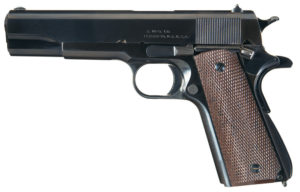
Any auction would be pleased to offer one of the “Holy Grail” of 1911 collectors, the Singer, but RIAC had two of the coveted handguns that sold for $40,250 and $25,875. There was also one of the scare M1911 pistols made by North American Arms that blew past its estimate on its way to sell for $34,500.
This Singer 1911 sold for $40,250. Photo courtesy Rock Island Auction Company.
Even predecessors of the 1911 performed better than their estimates. A scarce, three digit serial number, Colt Model 1900 Sight Safety was taken home for $37,375 and a gorgeous U.S. Army contract Colt Model 1902 pistol with its documents and accessories more than doubled its high estimate to bring $34,500.
Other guns that exceeded estimate prices came from several genres such as the Civil War Sharps Model 1859 Berdan’s Sharpshooter rifle, estimated to bring between $9,500 – $13,000, that knocked down a realized price of $31,625.
Colts were also no exception, like the nickel plated, pearl gripped, factory documented and engraved Single Action Army which was estimated for $18,000 – $27,500, but sold for $37,375. Or the superb condition, nickel plated Colt Banker’s Special 22 double action that was predicted to bring between $2,250-$3,500, but one lucky collector finally won for $12,650.
With the buzzing auction and preview halls, lengthy bidding wars, excited RIAC phone bidders, last second bids, legendary firearms, items selling well into six figures, plus a very engaged crowd, this was easily one of the most entertaining auctions that RIAC has held in recent memory.
Their next sale is the July 11, 12, & 13 Regional Firearms Auction. All spots in that sale have already been filled, but they are still accepting consignments for their September and December 2014 Premiere Auctions. For more information on consigning with Rock Island Auction Company, please call 1-800-238-8022 or send an email to [email protected].
It’s hard to deny that, over recent years, size has mattered when it comes to handguns.
With concealed carry becoming more commonplace over the past two decades smaller pistols and revolvers have ruled the roost. But lately, there have been a number of manufacturers who have swam against the tide.
One of the newest companies subscribing to the philosophy bigger isn’t half bad is perhaps not the one many would expect. Diamondback, after all, is probably best known for its pocket pistols. The Florida gunmaker, however, has taken a decided turn from its roots with the introduction of the DB FS Nine.
The 9mm, striker fired, full-sized polymer pistol is by far the largest handgun in Diamondback’s catalog. The pistol is 7.8 inches long, 5.6 inches high, 1 inch in width, it has a 4.75-inch barrel and has an unloaded weight of 21.5 ounces.
While the FS’s size is the most dominant feature of the gun, it has plenty of other facets that have the potential to turn heads. Perhaps the most noticeable is the FS Nine’ grip. Right off the bat, it appears spindly compared with the rest of the gun. That is because it is more slender, an effort by Diamondback to make a more ergonomic double-stack pistol.
Along with its slender diameter, the grip also curves to match the hand and is designed to facilitate a high grip on the pistol. The hand naturally situates itself to a tight fit under the beavertail, allowing the shooter to take full command of the handgun.
Form has not come at the expense of function with the handgun. The FS Nine boasts the capacity shooters expect out of a full-sized pistol, holding 15+1 rounds and the handgun comes standard with one 15-round magazine.
Similar to many striker-fired pistols, the FS Nine has only one manual safety – a blade safety on the trigger. The pistol also has a passive safety, a firing pin block to prevent a negligent discharge if the firearm is dropped.
The gun has a cocking indicator at the rear of the slide, similar to the one found on Springfield Armory’s XD pistol. The indicator protrudes when cocked, facilitating visual and tactile confirmation of the gun’s status.
The FS Nine is outfitted with Ameriglo 3-dot sights, which gives the gun plenty of aftermarket potential. Ameriglo is creating a subcategory for the handgun, in turn any sights the company produces for Glock will be available for the FS Nine.
The gun has a Picatinny rail under the muzzle for the addition of a flashlight or other accessories. And it boasts aggressive cocking serrations at the front and rear of the slide.
Like many new additions to the handgun market, Diamondback has gone with one of the most popular calibers. But for those who need a bit more zip than a 9mm, the company will introduce a 40 S&W version later in the year.
The FS Nine has plenty to get shooters excited, but its biggest selling point might not be any of its built-in features. Instead it might be the gun’s price. With an MSRP of $483.34, its affordability is more than enough to temp shooters to make a little more space in their gun safes – even if they have plenty of polymers already.
Looking to go armed, but are stuck in the weeds as to what to arm yourself with? Here are 20 of the best concealed carry gun options that will keep you on the defensive.

 Cincinnati, Ohio (May 14, 2014) – Take the guesswork out of reloading ammunition by checking out Handbook of Reloading Basics, which is now available online at gundigeststore.com and in stores this month.