Home Blog Page 251

Survival Shelter Plans: It Starts With Your Gut

0

To get started with making survival shelter plans, follow your gut instincts about what is needed. Plus: A free download on how to make survival shelters.

Survival Shelter Plans: Listen to Your Gut
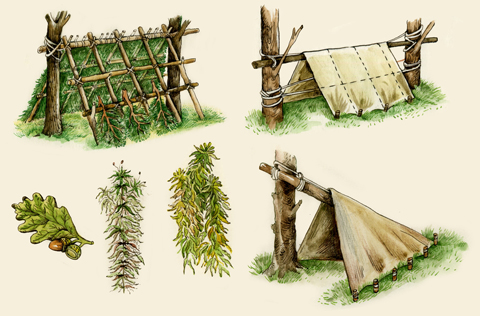
Survival-Shelter-PlansSurvival shelter plans, just like every other piece of preparation, starts with listening to that strong voice of common sense that developed through all of our experiences.

Each of us has a pretty firm understanding of “hot.” Many of us know a pretty good thing or two about “cold.” Simply living is enough to give most people some sense of the dangers at hand as it pertains to emergency shelter needs.

Problems most often grow from minor and manageable to severe and dangerous when people, for whatever reason, decide to ignore that “gut feeling” that something just isn’t right.

You should always take advantage of what the body has to say and with full urgency when it comes to emergency shelters. The clock is already ticking toward that three-hour mark when the gut feeling starts talking to the mind.

Those beyond the home or any adequate cool or warmth can’t afford to waste a minute. Try to imagine the growing stress and the racing thoughts that would come should troubles grow from bad to worse when there’s limited time and no adequate relief in sight.

Survival Shelter Plans: Start with the 3-Hour Basics

Survival shelter plans might begin outside of any concerns of disaster. It should be thought of from the perspective of basic survival.

Those heading off from home should think ahead toward the possibility of an emergency and have some provisions to warm up or cool off along with them. Always think, “three hours.”

Ideas and the flexibility to improvise could, in some cases, make up for what you are lacking in gear.

Survival Shelter Plans: An Example for Bug-Out Shelters

My bug-out bag was very intentionally designed to recognize survival shelter’s critical place in the rule of threes.

Several survival shelter contingencies are kept in a pouch on the outside of the pack. In the event of an emergency, I wouldn’t have to root through the entire bug-out bag to locate those items of most immediate need.

My bug-out bag includes several ways to start a fire at close reach. There’s a poncho I could grab quickly if the clouds decided to open up and make life that much tougher.

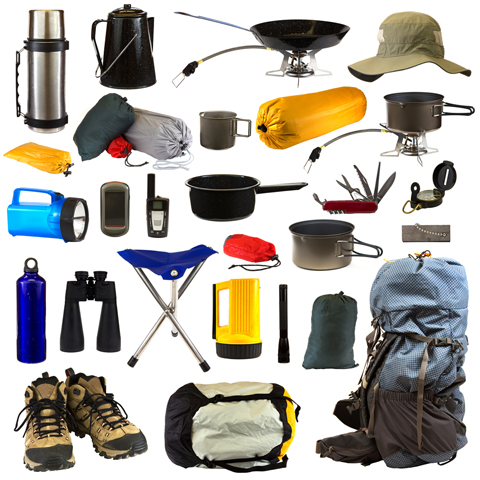
The contents of the bag include a change of warm, dry clothing. There’s a tarp tucked inside and I have a small tent to provide some refuge from any potentially troublesome elements, whether it’s cold winds, rain or the hot sun.

A bug-out bag goes a long way toward making life easier, but of course, that’s assuming you thought your plan through and dutifully grabbed your gear before venturing out.

Survival Shelter Plans: Tap Your Inner Child

Those who become caught in the elements without an assortment of supplies might have to revert to some childhood creativity. All of us growing up had the imagination to build all kinds of different forts and in many different ways.
3 Tips for Choosing a Portable Solar Panel

0

Video by GoalZero

Tips for Choosing a Portable Solar Panel

Few pieces of techie survival gear pack the cool factor punch of portable solar panels. But before you fall under the spell of any portable solar generator, there are some things to keep in mind.

Portable Solar Panels: How Much Energy Do You Need?

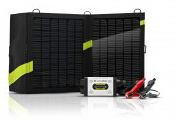
The Goal Zero Guardian is perfect for charging car batteries.

Remember that prepper rule of thumb that says too much is never enough? It’s still a good rule, but it does not apply nearly as much with portable solar panels. Overkill means you’ll be wasting money and space.

For example, this GoalZero Guardian 12V Solar Recharging Kit will juice a car battery. At $200, that’s too much if all you’re only looking to keep your $100 cell phone charged.

A better option for small gadgets would be the Goal Zero Switch 8 Recharging Kit. It offers a smaller panel and a sleek, rechargeable battery to take anywhere. That’s it in the video above.

Aim for the Goldilocks zone. Not too much. Not too little. Then go ahead and buy multiples of that particular model.

Portable Solar Panels: How Much Abuse Will You Put it Through?

The Goal Zero Escape comes with a tough outer shell.

“This is cool” or “this is good” isn’t enough of a qualifier when it comes to portable solar panels. “It didn’t fall apart when it fell out of my truck and got mauled by a bear” is better. If it can’t stand up to conditions, it’s not worth your money.

This is another Goldilocks scenario. There are portable solar panels with reinforced shells, such as this Goal Zero Escape, that can take a beating and then some.

However, if your portable solar panel never leaves the backyard, all that armor is just going to cost you extra. Go with something more efficient for your dollar, like the Goal Zero Nomad.


Portable Solar Panels: Is it Easy to Use?

Goal Zero Nomad
At $80, the Goal Zero Nomad is simple and economical.

Simplicity equals versatility with all survival gear, and that’s especially true with portable solar panels. If you can’t tell how to use it without opening the box, it’s probably not worth the time.

On that note, check to see if the portable solar panel comes with the adapters you need (USB, cigarette lighter) before you buy it. It can be a big headache to mess around with scores of cords, plugs and wires just to get you the point of actually using the portable solar panel.

Don’t forget that those adapters and cords need to be on-hand. If they don’t fit in the carrying case for the portable solar panel, chances are they could wind up lost.


Portable Solar Panels: What Do You Think?

What sorts of portable solar panels have you used? What did you think? Leave a comment below.


Arm Yourself With Knowledge

u5083

SAS Survival Handbook

Coleman 4D XPS LED Duo Lantern

Special Forces Survival Guide

Emergency Preparedness Checklist: Everyday Carry Gear

0

What is Everyday Carry Gear?

What kinds of everyday carry gear would be on your emergency preparedness checklist?

Everyday carry, or EDC, gear is what we take with us every day, just in case.

For some, everyday carry gear is just a cell phone and a credit card. For me, I carry a simple grouping of tools that over the years have evolved into this emergency preparedness checklist.

The evolution started a long time ago with a pocket knife and grew into a refined collection that can help me solve most simple problems that crop up during my typical day. Depending on what my immediate plans are, I might add to this everyday carry gear with a small hatchet, a bigger knife or a bigger gun.

This emergency preparedness checklist contains enough to stop a fight, not what I would take to war.

Emergency Preparedness Checklist: Everyday Carry Gear

Here’s my emergency preparedness checklist of everyday carry gear:

  • Larger knife with a lock and at least a 3.5-inch blade that can be opened with one hand
  • Pocketknife (small slip joint or traditional jack knife)
  • Pocket tool carried in a pouch on my belt
  • Small single-cell CR123A flashlight
  • Small pocket compass
  • Pen and pad of waterproof paper
  • Paracord survival bracelet
  • Belt (nylon web riggers type with steel buckle)
  • Cash
  • Sunglasses
  • Small wind-proof lighter
  • Watch
  • Handgun

5 Features To Look For In A Survival Knife

0

Features-of-the-Best-Survival-Knife

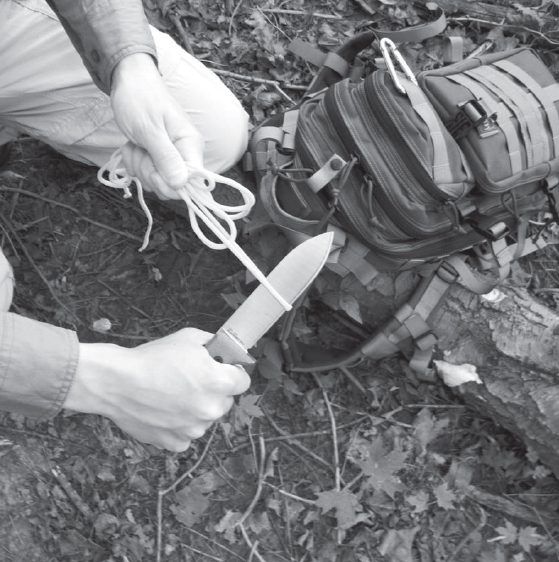
Your survival knife is without question one of the top three most important items in your bug-out bag. An ignition device and a metal container are the other top two.

For many, choosing a survival knife is a very personal decision. With thousands of knives in the marketplace, the choices can be somewhat overwhelming. But remember that the best survival knife is the one that meets your individual needs.

Don’t be fooled by what you see in the movies. The fancy knives seen in survival movies are more for prop collectors than for real survivalists. You don’t know how much you need a good, sharp cutting tool in a survival situation until you don’t have one.

I learned this firsthand on a three-day survival trip in which I was not able to bring a modern knife. I will never take my knife for granted again.

Best Survival Knife: What it Should Do

By design, a survival knife should be fairly simple. It should be about function not “flash.” Below is a short list of tasks a survival knife should be able to assist you with:

  • Cutting
  • Hunting
  • Dressing game
  • Hammering shelter anchors
  • Digging
  • Self-defense
  • Splitting/chopping
  • Making fire
  • Carving
  • Signal mirror (if blade is polished steel)
  • Building shelter
  • Food preparation

Best Survival Knife Features: Fixed Blade

The best survival knife in my opinion should have a fixed blade – not a folding or lockback style.

True, folding knives can be more convenient to carry, but strength is compromised at the folding joint. If the knife breaks during rigorous use, you are SOL.

If you really like folding knives, carry one as a backup, but not as your primary survival knife. I carry a Spyderco Native locking folder as my everyday carry knife and it will be my bug-out bag backup knife as well.

Best Survival Knife Features: Full Tang

The phrase “full tang” means the metal knife blade and handle are made from one solid piece of metal. The metal handle is then sandwiched with knife scales to form a grip.

The alternative to a full tang is a rat tail tang. A rat tail tang is much smaller and narrow.

A full tang blade is much more robust and stable. It can withstand incredible abuse from demanding tasks, such as splitting wood (often called “batoning” in the survival community).

Best Survival Knife Features: Sharp

Your survival knife should be razor sharp. It should shave the hair off your forearm. If it doesn’t, buy a whet stone and hone the blade until it does.

You should take pride in your knife’s razor edge. A dull knife is more difficult and cumbersome to use effectively. It requires more effort and pressure to perform tasks, which leads to erratic carving and cutting.

A sharp knife is actually safer to use and is a more precise cutting tool that requires less energy and time as compared to using a dull knife.

Best Survival Knife Features: Size Does Matter

As a rough estimate, the overall length of your knife should be in between 7″ and 11″. A knife that is much larger that 11″ isn’t practical for delicate and detailed tasks.

However, a knife smaller than 7″ is less capable of performing tasks that require a larger blade, especially demanding jobs.

Best Survival Knife Features: Pointed Blade/Single Edge

Your knife needs to have a pointed blade tip. The point comes in handy for all kinds of chores.

I broke the point off of my favorite survival knife and it drastically impacted the knife’s effectiveness as a useful tool. I eventually had to replace it.

Also, the knife blade should not be double-sided. Choose a single-edged blade only. You won’t have a need for two sharp edges. The flat back ridge of a knife blade can actually serve several functions.

Below are some of the most common:

  • Striking a fire steel
  • Used as a stabilizing platform for thumb or hand
  • Pounding surface while splitting or “batoning” wood

What’s the Best Survival Knife for You?

Those are just a few of the features that I think make for the best survival knife. What about you? Leave a comment below and share the survival knives you’ve used.


Disaster Preparedness: Are There More Looters Now or Then?

0
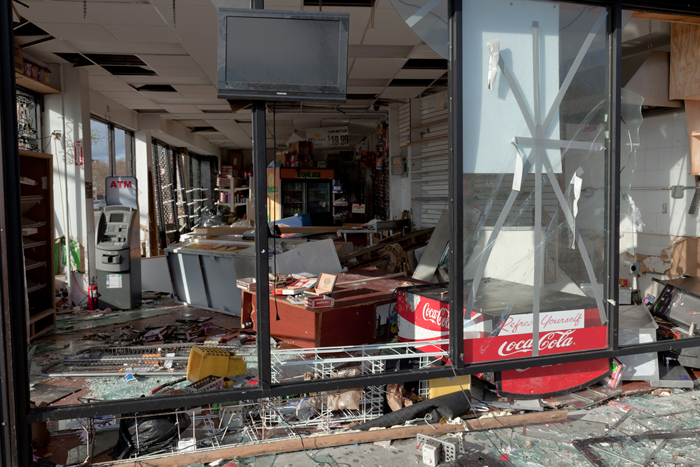
Looting is a common side effect of nearly every major disaster. This storefront shows the man-made disaster in New York City following Superstorm Sandy in 2012. (Vladimir Korostyshevskiy / Shutterstock.com)

Looters and Disaster Response

A few days after the landfall of Hurricane Katrina in 2005, most of the officers in the New Orleans Police Department were pulled off of rescue operations in an effort to pull the city back from the criminal element, especially looters.

It speaks loudly to the impact crime can have after a disaster. Every officer that was reassigned to handle looters and other lawlessness was an officer that couldn’t be out there looking for the elderly, disabled and injured.

Not All Looters are the Same

You could hold less animosity for the people in a state of panic who stole groceries and other provisions out of survival fears. You might have fewer problems with a family that climbed through a broken window and into the shoe store to put new pairs on each of their children after flooding washed away their belongings.

It’s something completely different when you consider those who loaded up on new furniture, expensive booze, big-screen televisions and other luxuries in the wake of all the chaos.

There were plenty of the latter. Many businesses were cleared out to their walls, and plenty of those goods went well beyond the realm of necessities.

Looters: Catch and Release

Regaining a sense of order was no easy task. Officers had to prioritize who they were hauling in, and in many cases, police were limited to a system of catch and release.

The jail sustained significant damage in the hurricane, leaving the capacity to house offenders at a high premium. It meant law enforcement simply let go many of those causing trouble unless they were involved in violent offenses.

Rampant crime not only affected the crucial work of rescuing those from the floodwaters, but it also stood in the way of those who came in to start repairs on the power grid and other infrastructure.

What’s the difference between a looter and someone scavenging for supplies? After Superstorm Sandy in 2012, this shop in New York City was cleaned out. (Vladimir Korostyshevskiy / Shutterstock.com)

Looters: Nothing New About Them

Though Hurricane Katrina was a unique situation in so many ways, it isn’t the only example. Reports of looting began to pile up in and near New York City in 2012 after Superstorm Sandy cleared.

Looters aren’t solely a modern phenomenon. Looting and crime were rampant following the major hurricane that battered New England in September 1938.

That hurricane came prior to our modern practice of assigning first names to storms, though it came to be known by many as “The Long Island Express” based on its landfall there on Sept. 21, 1938.

New England was blindsided by the storm, which stood among the very worst disasters of the 20th century. The hurricane touched 10 New England states before finally falling apart in southern Quebec, Canada.

The Express left several hundred dead in its wake and caused $4.7 billion in damage by modern monetary figures. Looters then, like the looters in modern times, took full advantage of the disorder.

It’s pertinent to consider the time frame. The hurricane wreaked its havoc amid the Great Depression, and desperation was already at a fevered pitch when the Express rolled through.

Certainly, you couldn’t generalize or pin specific motives on lawbreakers as a whole, whether thinking of long ago or during more recent history. Some looters might have stolen for survival then. Some might have stolen for survival in 2005 and 2012.

Some certainly had profit in mind. Authorities in some locales following the 1938 storm were given “shoot to kill” orders in efforts to restore safety and security among the chaos. Fast-forward 68 years, and police in the wake of Katrina received those same orders.

Looters: History will repeat itself

Some have claimed the modern era is far less civil than past generations. The criminal behavior at play in 1938 and again in the 21st century suggests it isn’t a matter of the era. Those building their natural disaster preparedness plans might note that those who ignore history are doomed to repeat it.

3 Rules: Choosing Centerfire Survival Handguns

7

Best-Survival-Handguns-Centerfire
Survival handguns in societal disorder situations have the same basic requirements that rifles and shotguns do. The survival gun characteristics of reliability, ruggedness, portability, simplicity, effectiveness, and sustainability are just as critical.

Survival Handguns Rule #1: Portability

Now, portability may seem to be an “oh, duh” type of requirement for a survival handgun, since they are designed to be portable, but it really isn’t.

For example, if you don’t expect your travels to carry you through wilderness areas where grizzly bears roam, than a handgun chambered in .500 Smith & Wesson or even “just” a .44 Magnum simply isn’t required and, in fact, can be detrimental.

Portability for a handgun also doesn’t mean you have to have a primary handgun as small as the Ruger LCP.

What you need is a standard size, standard make, law enforcement or military duty sidearm, in its most basic configuration, meaning lights, optics, or custom competition modifications of any kind are not only not needed, but detrimental to the mission.

Survival Handguns Rule #2: High Capacity

The survival handgun you choose should be a high-capacity firearm of a commonly available caliber. With the present ammunition shortage, go with what you know you can obtain now and later.

That may seem like another “duh” point, but a firearm becomes less reliable the harder it is to find ammunition.

Survival Handguns Rule #3: The Six Centerfire Calibers

There are six basic centerfire calibers to consider for survival handguns, and I will list them in order of my preference.

  • 9mm
  • .40 Smith & Wesson
  • .45 ACP
  • .357 Magnum
  • .38 Special (I know, these last two are for revolvers)
  • 5.7x28mm (just to stir things up a bit)

While I love the .357 SIG and .38 Super and would take them over the .40 in a gunfight (the .357 SIG was our duty caliber at the sheriff’s office), they are not easily obtainable
calibers.

Again, these are my personal favorites, but they are also top choices for survival handguns.

What Survival Handguns Do You Use?

What kinds of survival handguns do you use? Leave a comment below.

BOB: 3 Must-Have Emergency Water Storage Containers

0

Because a bug out bag (BOB) is a 72-hour kit, I suggest you pack a minimum of approximately three liters of fresh drinking water per person.

Even with three full liters, there is little margin for error. Certain weather climates increase the amount of water a person needs to survive. You’ll consume more water if your journey is especially rigorous.

Personal hygiene can also tap into your water supply. The water you carry will constitute a large percentage of the overall weight of your bug out bag.

The good news is that the weight will decrease as you hydrate. In a survival situation, a good emergency water storage container can be invaluable.


3 Types of Emergency Water Storage Containers

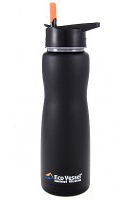
The Aqua Vessel Insulated Filter Bottle keeps water cold and filters as you drink.

Divide your supply up among three different emergency water storage containers. I never suggest carrying all three liters in a single emergency water storage container for two reasons:

1. If you have only one emergency water storage container and you lose or break it, you no longer have a viable way to carry and store water. This can present a very serious threat. Natural water-tight containers are not easy to find or make.

2. It’s easier to distribute weight in your bug out bag when it is divided into two or three smaller emergency water storage container. I suggest dividing your water into the following three different containers.

Emergency Water Storage Container #1: 32-oz. Wide-Mouth Nalgene Hard Bottle

Nalgene bottles are durable and crush resistant. Although “Nalgene” is actually a brand, the word has been adopted generically to describe any hardened plastic bottle (sort of like Kleenex and Xerox).

I have used Nalgenes in countless adventures and never has one failed me. I’ve even dropped one from 50 feet while rock climbing and it came out unscathed. Get the wide mouth version. They are easier to fill and they can double as a dish to eat from if necessary.

On their sides are printed measuring units, which is convenient for preparing dehydrated meals. I’ve also never had one leak. You can trust it in your pack.

Emergency Water Storage Container #2: Metal Water Bottle

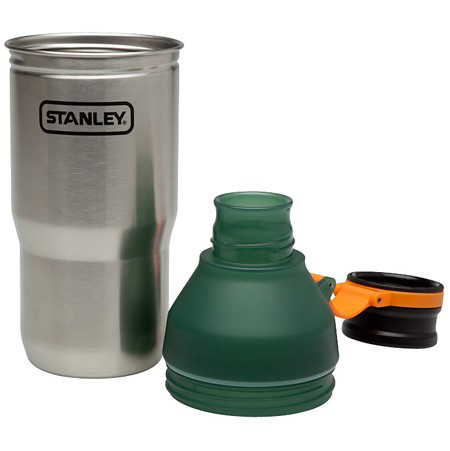
Get this Stanley metal emergency water storage container direct from Living Ready.
Get this Stanley metal emergency water storage container.

These canteens weigh about the same as any Nalgene bottle. Rather than just carrying two Nalgene bottles, I suggest opting for a metal alternative.

A metal emergency water storage container can be used to boil and purify drinking water collected “in the field” should your immediate supply run dry.


Emergency Water Storage Container #3: Collapsible Soft Bottle

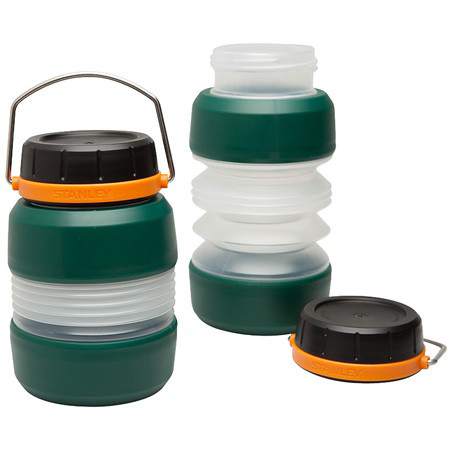
This Stanley collapsible emergency water storage container is one of the types of bottles the author recommends.

Packing a collapsible, soft emergency water storage container allows you to reduce bulk as water is used. Consume the contents of this emergency water storage container first.

When empty, they take up virtually no space and weigh just a few ounces.

They are not as durable, but with the two other containers listed above, you can afford to sacrifice durability for weight and space with this option.

What is a Mutual Assistance Group?

0

Mutual-Assistance-Groups

Here is why Mutual Assistance Groups are important for a bird’s eye view of preparedness in your community. Survival doesn’t have to mean going it alone.

Editor’s Note: This is part of a series from Charley Hogwood of P.R.E.P. on mutual assistance groups (MAG). 

Mutual Assistance Groups: Are They Right for You?

A Mutual Assistance Group is a group of like-minded individuals who pledge to assist each other in times of crisis. The idea is that many hands make light work.

It may or may not be in your best interest to be aligned with one. There are several important things to consider before joining/starting a Mutual Assistance Group.

  • Do I work well with others under austere conditions?
  • What might I have to offer a Mutual Assistance Group by way of specialized skills and equipment?
  • Will I participate regularly with others to build the group before the SHTF?
  • Is everyone in my family on board with teaming up with others?
  • Will I stay with the group or evacuate under differing scenarios?

If you answered “no” to any of the above questions, you may not be ready to join a Mutual Assistance Group.

Mutual Assistance Groups: It Must be a Team Effort

Keep in mind that the other members are going to depend on you if the time comes. You will need to participate and contribute regularly to build teamwork and confidence among the members.

Mutual Assistance Groups often fall apart under their own weight. The thrill diminishes, conflicts of personality arise and people just get busy with other things in life. The last thing anyone needs in the face of crisis is more drama. Choose carefully.

Mutual Assistance Groups: Considerations Before Joining

Too often people are so eager to join a Mutual Assistance Group that they ignore their gut instincts. They think that any obvious conflicts of interest will fade away as everyone pulls together when times are tough.

Here is what actually happens. Mr. or Mrs. Prepper feels outnumbered by the unprepared population and worried that they won’t be able to fend off the ill-prepared masses when the SHTF. So they start to search for like-minded people in their neighborhood, at work and online.

They find someone who has a similar interest and they eagerly hitch their wagons together. As with all new relationships, or even new employment for that matter, about a month on they start to notice the quirks.

At first Mr. or Mrs. Prepper tries to justify and ignore the problems as growing pains, hoping everything will work itself out in time. Trust me that time rarely comes.

Things don’t get better in a stressful situation, they get worse. So if you aren’t able to find some synergy in everyday pre-collapse life with your Mutual Assistance Group, it won’t be better when everyone is in the psychological abyss of a systemic collapse. You get about three days of Kumbaya around the campfire before the unstable people begin to unravel.

Mutual Assistance Groups: Pulling the Trigger

If you’ve still decided that a Mutual Assistance Group is something that you’re interested in, you’ll then have to determine whether you’d like to start one on your own, or whether you’d like to join an already established group. More to come on this topic in next week’s post.

5 Reasons to Own Survival Firearms

1
Here are five reasons why it makes sense to put survival firearms near the top of your prep list.

I carry a firearm every day. I do so recognizing that even a 911 call would be too little and too late when a dire threat is staring right into my eyes. That goes for disaster situations, too, which is why I own survival firearms.

But are survival firearms really necessary? People with limited funds may invest in other survival gear first. Every situation is different, but there are great reasons to put survival firearms at the top of the list. Here are five.

#5 Reason to Own Survival Firearms: Escalation

Time and again, violent struggles recorded by dispatchers ended up being homicide scenes by the time police arrived. If you’re put in a situation where it’s you or an attacker, you need to have the response options that only survival firearms can offer.

#4 Reason to Own Survival Firearms: You Won’t See Violence Coming

The mass shootings in the United States in recent years illustrate the speed by which violent episodes unfold. Though police arrived quickly, they arrived to several deaths. Now compound that level of calamity with a widespread disaster scenario. You’re on your own.

#3 Reason to Own Survival Firearms: Police Priorities

The priorities of police agencies expand during a post-disaster response. Police officers are relied upon as life savers and are appropriately pulled into search-and-rescue roles to bring the injured to safety. This limits their ability to deter criminal activity, which becomes a much larger issue compared to pre-disaster scenarios. Again, you’re on your own.

#2 Reason to Own Survival Firearms: Law Enforcement Officers are Also Experiencing the Disaster

On top of the previous reason, remember that individual officers are real-life people like anyone else.

When the shift is over and it’s time to change out of their uniforms, they head home to their families. They, too, experience their own losses amid catastrophe and have their own loved ones and a host of worries at the fronts of their minds.

They have to manage all those thoughts while still trying to give their best to a community in need.

When the community at large is dealing with chaos, members of law enforcement might often deal with stress at a far higher degree.

#1 Reason to Own Survival Firearms: Waiting Isn’t Always an Option

Even if law enforcement resources are available, sometimes after a disaster there’s no time to wait for police assistance. The same is true with everyday life.

Which is why I carry a firearm every day. What do you do to stay protected? Leave a comment below.

MAG: How to Meet Mutual Assistance Group Members

0

MAG-prepper-group

Editor’s Note: This is part of a series from Charley Hogwood of P.R.E.P. on mutual assistance groups (MAG). 

So you’ve thought about it long and hard and have decided to seek out others and join an existing mutual assistance group (MAG). Perhaps you have an interest in starting your own group with the preference of building it according to your own set of values. There are some things you’ll want to keep in mind to save yourself a lot of grief and misery down the trail.

Married to the MAG

First, decide what you want from this endeavor. You may begin to notice that much of this process involves soul searching. There is a reason for it.

Think of it as marriage, but with a survival twist. In this case, if it goes bad the spurned lover and possibly his or her friends will take all of your stuff (not just half!).

Practice MAG Ettiquette

With this in mind it is wise to vet everyone carefully before they gain important knowledge about your plans and supplies. This is known as OPSEC (operational security). This doesn’t mean that you become that creepy person who never speaks; just don’t share any specific details that could compromise your safety later on.

Practice etiquette when speaking with prospective friends:

  • Begin with small talk to get a feel for their views
  • Don’t ask questions you wouldn’t want to answer yourself
  • And never, ever say you are going to their house if the SHTF

Where are Potential MAG Members?

Where does one even begin to look for like-minded friends?  That is the big money question. Keep your eyes and ears open at all times but begin close to home, that’s where you are likely to need them the most.

Some ideas to meet others:

•    Join a CERT team
•    Frequent a local farmers market
•    Take classes in self reliance such as gardening, bee keeping, homesteading
•    Join an active local online meetup.com group that does things self reliance

Now that you know how and where to find others you’ll want to make sure you are what they’re looking for. To be a strong candidate you will need to offer something useful to the group. Some people think they can just buy their way into a group by way of money and equipment then just bask in the protections of others while having no discernible skills. That is a recipe for disaster.

Skills Useful to a MAG

What are some useful skills to a mutual assistance group?

  • Medical
  • Fishing
  • Hunting
  • Cooking
  • Teaching
  • Trapping
  • Carpentry
  • Tactical ops
  • Tool making
  • Gunsmithing
  • Metal working
  • Homesteading
  • Communications
  • Power generation
  • Animal husbandry
  • Gardening/farming

Meeting MAG Members

OK, now we know where to look, how to have a conversation and how to be of value to others.

Before you commit to anything, attempt to participate in some of the MAG’s meetings or team building events. Try to meet as many members as possible. The reason for this is to get an overall feel for how things work, who is in charge and what personalities stand out.

Once you become comfortable slowly ease in and show your willingness to participate as an equal by offering your skills and knowledge at events.

Hopefully, you’ll be able to have a mutually beneficial relationship and will begin to form the bonds necessary to move further into the organization and planning stages for the group.

.308 Winchester: A Top Survival Ammunition Choice

0

The .308 Winchester is a versatile cartridge for many purposes. Learn what makes it a top choice when it comes to survival ammunition.

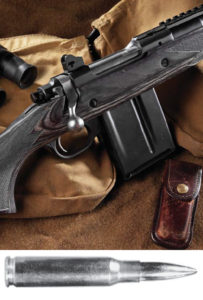
This Ruger Gunsite Scout Rifle is chambered in .308 Winchester, a top choice for those looking for survival ammunition with punch.

There are volumes of ink devoted to explaining the virtues of the .22 long rifle cartridge. For good reasons, it’s the reigning champ of the survival and preparedness crowd. But for those looking for something with a punch, the .308 Winchester is a prime choice.

.308 Winchester: Breaking It Down

In power, the .308 Winchester is superior to the .300 Savage and almost equal to the .30-06. It delivers about 100 fps less muzzle velocity than the larger .30-06 with any given bullet weight.

Most authorities consider the .308 suitable for most North American big game, although it’s on the light side for moose or brown bear. This chambering is a favorite of target shooters and has a reputation for excellent accuracy. It is the basis for a number of wildcat cartridges that have been adopted as factory chamberings: .243 Winchester, 6.5-08, 7mm-08 Remington, .358 Winchester, and the rimmed versions of the .307 Winchester and .356 Winchester.

.308 Winchester: Availability

Yes, the ammo shortage has everyone concerned. The .308 Winchester offers better odds, though. All major domestic and foreign ammunition companies offer this cartridge. Practically every manufacturer of high-powered sporting rifles chambers the .308 Winchester, since it will work through medium- or standard-length actions.

History of the .308 Winchester

Introduced by Winchester as a new sporting cartridge, in 1952, the .308 Winchester is nothing more than the NATO 7.62x51mm military round. This was a very smart move, to tack the Winchester name on what was sure to become a popular sporting number.

The Model 70 bolt-action and 88 lever-action Winchesters were the first American sporting rifles so chambered. It was adopted as the official U.S. military rifle cartridge, in 1954, although guns for it were not ready until 1957.

Jeff Cooper on the .308 Winchester

The late Jeff Cooper, one of the most influential firearm instructors and writers of the 20th Century, had this to say about the .308:

To be really useful a rifle must be as short, light and quick to use as is technically compatible with adequate power and useful accuracy.

Adequate power may be had with any of the 20-caliber family of military cartridges, the best of which was probably the 30.06, now largely pre-empted by its compacted offspring, the 308.

Useful accuracy is that which the shooter can put to use…Let us proceed on the assumption that we need a two-inch-shooting .308 as a base…A 30-caliber, 150-grain spitzer at 2700 fps may not be a “magnum,” but it has been logging one-shot kills all over the world for so long that one may well ask why anything more is necessary, unless one’s target weighs over 1,000 pounds.

Add it up, and the .308 Winchester is a top choice for survival ammunition.

Organizing Your Mutual Assistance Group

0

Editor’s Note: This is part of a series from Charley Hogwood of P.R.E.P. on mutual assistance groups (MAG). 

Why a Mutual Assistance Group (MAG) Needs Organization

Be wary of those claiming to be willing to leave others behind. That says a lot about how they are prepared to walk away when times are tough.

A mutual assistance group (MAG) is just like any other organization. It doesn’t matter what form you decide on, every group will need some version of leadership and organization if it is to be at the ready.

Many people can appreciate the benefits of belonging to a mutual assistance group, but many aren’t ready to hand over their personal sovereignty to be led by another.

After all, if you don’t want to depend on the government or anyone else to be there in hard times, why should you relinquish some of your independence to other people just because you are in a mutual assistance group?

We’ll call this the “Independence Conflict.”

5 Ways to Organize a Mutual Assistance Group

The Community Group

  • They live near enough to help each other in case of localized emergencies. MAG members live so close together that if there are travel restrictions, they wouldn’t be considered outsiders. Neighbors would fall into this category.
  • They usually communicate with each other through social media or in person, and even get together as friends in social situations or have a community arrangement of some sort.
  • They may or may not plan for an activation, but claim to be there for each other.
  • These MAG members are nearby neighbors, friends or family who form an alliance to take care of each other in times of need.
  • May be a group within a group on a more personal level.
  • May have specific plans to work together in advance of an emergency.

The Survival Group

  • An organized, like-minded group of individuals and/or families that seek each other out to form a self-reliant community with each other.
  • May move in or around each other or plan to meet in case of activation.
  • The group regularly gathers to plan and train for predetermined scenarios.

Networks

  • These are loosely organized, usually leaderless frameworks that will support individuals or families of the mutual assistance group who may need assistance or temporary lodging.
  • Frameworks will usually have contingency plans available to all MAG members to download and print for use in case of a total grid-down scenario.
  • Every MAG member will be aware of activation levels, marking techniques and possibly neighboring members. This will form a web of safety for evacuation in every direction should the situation require evacuation.

Ad Hoc or Hasty Groups

  • Usually formed out of necessity in a crisis, such as a major earthquake or other no-notice event where strangers may come together out of a natural desire to work together.
  • Little vetting of members, if any, and often there are very few materials or an unbalanced inventory of supplies on hand at the outset.
  • These may be survivors trapped in a building, a group lost in the wilderness or victims of a crash or sinking ship.

3 MAG Leadership Options

Mutual-assistance-group-photoThere are several leadership options available to a mutual assistance group that don’t require re-inventing the proverbial wheel. They may be executed independently or become merged to create the final leadership model.

Single Leader

  • A Single Leader MAG may be effective in small numbers. If the group increases in size, the leader will experience problems maintaining control over his/her subordinates.

Committee / Task Leadership

  • Committee Leadership groups are effective when there are enough MAG members to round out the many tasks of daily survival.

Consensus by Vote

  • Some MAGs may find that a visible majority vote by raised hand or anonymous written ballot will show the division and popularity of a decision.

Organization Depends on Compliance

Whichever structure you choose, it must be documented. Its authority must be accepted to obtain legitimacy. It doesn’t matter whether there are 10 or 100 members.

In order to maintain effectiveness, members of a mutual assistance group must all be on board or there will be problems when things get tough.


CMMG Expands Mk47 Mutant Line

0
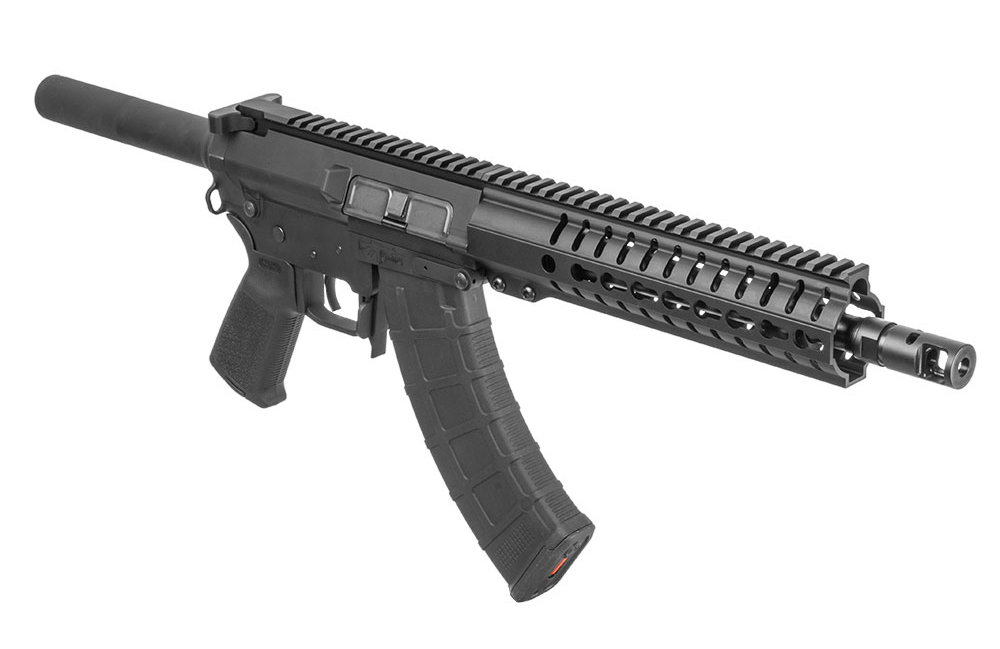
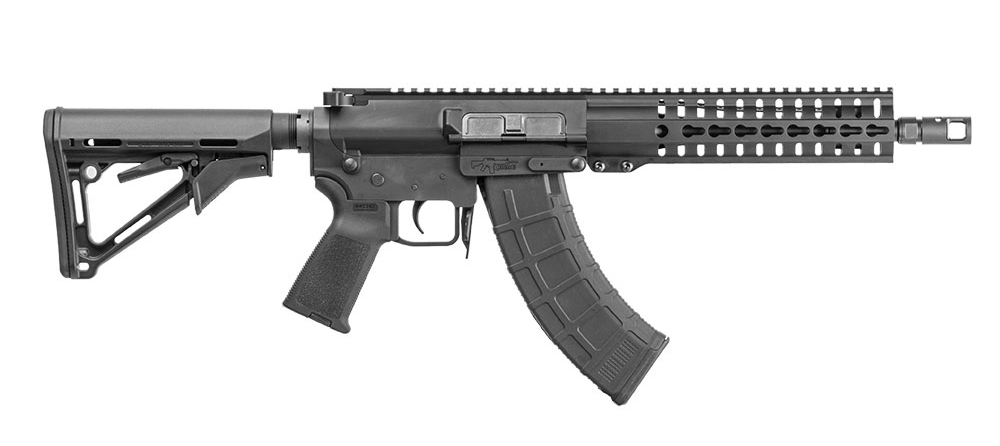
CMMG’s Mk47 Mutant has struck a cord with shooters with the line expanding to including a pistol (pictured), short barreled rifle and California compliant models.

CMMG’s Mk47 Mutant has struck a cord with shooters, with the line expanding to include a pistol, short-barreled rifle and California-compliant models.

CMMG made waves earlier this year with one of the most unique guns to hit the market in a spell.

The Missouri manufacturer’s Mk47 Mutant line offered shooters an AR that reliably fed off the all-pervading 7.62x39mm round. The project must have struck a cord, given it hasn’t taken long for CMMG to expand on the concept.

Recently, the company enlarged the Mutant line with the introduction of more compact models. In addition to its three original models, CMMG is now also offering the Mk47 Mutant as an AR pistol and short-barreled rifle. The company has also released California-compliant versions of the original Mutant rifles.

CMMG’s Mk47 K Pistol and SBR are fairly similar in design, each one built around a 10-inch medium taper barrel. There is a distinct difference between the two firearms, however—the most obvious being the SBR is outfitted with a buttstock.

This feature makes the rifle 27.5 inches in overall length, an inch longer than the Mutant pistol. And, more importantly to potential buyers, it also places the firearm under National Firearms Act regulation, requiring registration, transfer records and payment of a special tax.

The California-compliant Mutants, on the other hand, have undergone much simpler tweaks. The guns are shipped with 10-round magazines and a bullet button, in accordance with Golden State laws.

CMMG’s short barreled rifle (pictured) version of the Mutant, dang near the same size as the Mk47 pistol.
CMMG’s short-barreled rifle (pictured) version of the Mutant, dang near the same size as the Mk47 pistol.

The new additions utilize many of the same features as the earlier iterations of the Mk47. Chief among these is the firearm’s unique carrier group, which is based off the AR-10’s and features a beefier bolt face. These tweaks have been the key, the company has said, to making the venerable Russian cartridge workable on the AR platform.

The new firearms also accept AK magazines and drums, like the older versions. All of them feature the company’s single-stage trigger, except the AKM2, which is outfitted with Geissele’s SSA two-stage trigger.

The price on CMMG’s Mk47 K Pistol is $1,499; the Mk47 K SBR is $1,629. The California-compliant models’ MSRPs are similar to the originals: The Mk47 Mutant T CA is $1,549, while the Mk47 Mutant AKM CA is $1,699, and the Mk47 Mutant AKM2 CA is $1,899.

Market Trends: New Lone Star Retailer Caters to Hunters

0

msrAdam Batot — South Texas Headquarters, Harlingen, Texas

Business is good at South Texas Headquarters, a combination brick-and-mortar retailer and online store that opened up less than six months ago, with a customer base very focused on hunting.

For firearms, those hunters are buying AR-style rifles, especially Smith & Wesson M&P models in .223 Rem and, for bolt actions, the Remington Model 700 is tops. In demand calibers for this bolt-action are .308 Win, .30-06 Springfield and .300 Win. Mag.

“Local deer hunters often use ARs chambered in .223,” co-owner Adam Batot said. “But I’d guess it’s hog hunters who use the ARs the most. And we have a ton of hogs locally. A ton!”

Batot notes that while a good many hunters have been asking about various rifles chambered in .300 Blackout, there have been relatively few sales. Batot thinks these hunters are in the “research” phase on this round and platform; he expects some strong sales as the fall hunting season approaches.

South Texas HQ has also sold a decent number of AR’s chambered in .22LR because—unlike so many stores around the country—it has large quantities of .22LR.

Specifically, it’s well-stocked with Norma Tech .22LR, firing a 40-grain bullet. A 500-round brick sells for $56.99 here, and dozens of these bricks are sold every day.

Editor’s Note: This brief originally appeared in the July 2015 issue of Gun Digest the Magazine.


Top-Notch Gear and Resources

ABCs of Rifle Shooting

ABCs of Rifle Shooting

Game & Ammo Hunting Cartridge Poster

Mastering the Art of Long Range Shooting

The Dark Side of the Backyard Chicken Trend

0
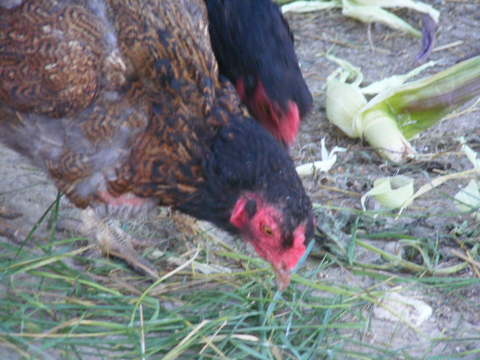
Chickens at the author’s ranch dig into a couple of their favorite foods: grass and corn husks. These chickens will be butchered. They’re fun to raise, but they’re not pets.

The growing trend of backyard chickens in recent years is encouraging for anyone interested in homesteading and self-sufficiency. Relaxed zoning regulations are allowing more and more people who wouldn’t otherwise consider backyard chickens to take a swing at it.

But there’s a dark side to raising chickens, especially in urban and suburban areas: owners are giving up their birds to crowded animal shelters.

Dark Side of Backyard Chickens: Fall Air Brings Dose of Reality

An article this week in the Minneapolis Star Tribune profiled a shelter that takes in unwanted birds. Drop-offs are on the rise.

“The numbers escalate in August as back-to-school mentality sets in, then increase as the fall progresses and explode when the cold weather actually hits,” said Mary Britton Clouse, founder of Chicken Run Rescue, a home-based shelter program in Minneapolis.

Chicken Run has seen its numbers increase dramatically in recent years, coinciding with the rise in urban hipsters and locavore foodies who have been inspired to try their hand at small back-yard poultry operations.

Dark Side of Backyard Chickens: Pets vs. Livestock

The words “urban hipsters” and “locavore foodies” should be red flags. They’re both examples of the divide within the backyard chicken arena.

On the one side are those who view chickens more like trendy pets. Although they will harvest eggs and manure for self-sufficiency purposes, the fun has an expiration date. When the chickens stop laying eggs or become inconvenient, they’re sold as pets, not for meat.

Now that her daughter is heading off to college, Meyer is hoping to downsize the flock of 16 hens and one rooster, “Cluck Gable.”

But she won’t sell them for meat, she said. “If I can’t find someone who wants ’em, I’ll just hang on to ’em.”

This is the wrong approach.

The other side of the backyard chicken divide views these animals for their utility. When the chickens stop laying eggs, they’re butchered for meat. It’s not a trend or a hipster fad. It’s a lifestyle of self-sufficiency, and it’s the right way to go about raising chickens. No crowded shelters. No hurt feelings. Just full stomachs.

Dark Side of Backyard Chickens: This Affects You, Dear Prepper

These two approaches to backyard chickens are not without consequences. If unwanted livestock overwhelms shelters, local governments may use zoning restrictions to limit backyard chickens. Negligent backyard chicken owners may ruin it for everyone else.

The Solution

There are two keys to preventing this from happening:

Don’t take in any animal, either pets or livestock, that you’re not fully committed to through its lifespan. If an animal will be raised for food, make plans for how the butchering will take place.

Get educated.

Ruger Mark II: The Best Survival Pistol?

0

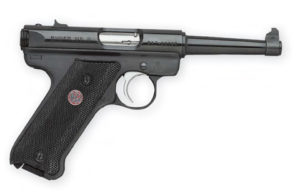
Here’s why the Ruger Mark II might be the best survival pistol. Do you agree? What’s your pick for the best survival pistol? Find ideas here.

Ruger-Mark-II-best-survival-pistol
If the .22 really is the best survival ammunition, then the best survival pistol must be something that uses these loads.

One that’s reliably thrown .22LR rounds downrange for about 30 years now is the Ruger Mark II. Could it be the best survival pistol? It does match the characteristics of the best survival pistols outlined in this previous Living Ready article.

Best Survival Pistol: The Case for the Ruger Mark II

The Ruger Mark II made an impression on John Farkas. To him, it’s the best survival pistol. Here’s why:

The Ruger Mark II rimfire pistol holds ten rounds of .22LR and is perfect as a lightweight hunting pistol. As an added bonus, ammo is cheap and plentiful.

John hopes that he will have a full-size pistol, or better yet, a rifle with him if the bag is ever needed. He keeps the Ruger in his bag as a backup.

In his own words, Farkas explains his bug out bag strategy.

I clean and refill my canteens every week. Clothing depends on the time of year. I try to keep this a 3-day bag. Weight is always a concern. I want to be as comfortable as possible, but still able to carry over long distances.

The contents change from time to time, but these are the basics that I always keep. I take this bag with me to work and vacation (as long as I’m not flying).

My wife and two children (9 and 10) each have a bag. They each contain basic clothing, canteens, food, first aid items, hygiene items, GPS radio, poncho and casualty blanket.

MUST READ ARTICLES