
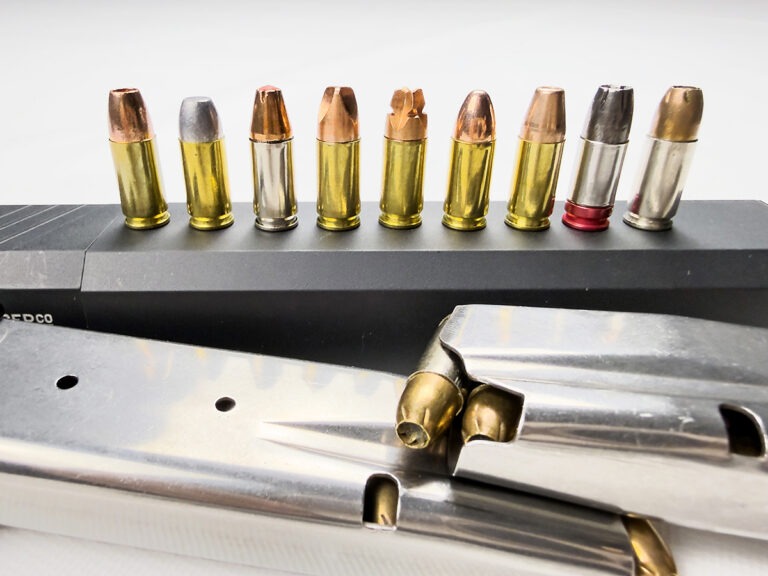
We look at a slew of different and interesting 9mm Luger loads, America’s favorite pistol cartridge.
The 9mm is, without a doubt, the most popular defensive handgun round in America. Shooters are blessed with not only a steadily growing number of guns chambered for this cartridge, including pistol-caliber carbines and an expanding array of SBR products. The cartridge is right in the middle of cost and performance, as well as accuracy and power. It makes sense in big guns and small guns, long guns and short guns.
As the 9mm market has expanded, so have the ammunition offerings. The variety is expansive these days, including some options that are truly unique.
Iffy Military Performance
The carrying of pistols was growing more common throughout the latter half of the 20th century but was still a fraction of what we see today. Many pistols of the era were derived from their military counterparts, which is something that shaped a great amount of public perception. Of course, there were lots of commercial pistols, but the greater discussion surrounded guns that would be used in the line of duty or in the military.
Now, for all the things our military does correctly, they also do a lot of things that could be considered questionable when it comes to small arms. Most of our service weapons have had revisions or teething problems, and as a result of this, there can be a bad taste left in the mouth of the public.
The choice of the military to go to 9mm over .45 ACP was contentious during the mid 1980s. It was also a fact that foreign pistols were being considered as U.S. military arms during an era that truly glorified and idolized World War II stories. The 1911, of course, chambered in .45 ACP, was considered to be the quintessential American fighting handgun and had been for two World Wars and dozens of other smaller conflicts. Sig and Beretta were, at least at the time, rather undesirable due to them being European and chambered for what was still considered to be a fairly weak cartridge.
So how did the 9mm, after all the doubt and skepticism, rise to such popularity?
The Culture of the Wonder Nine
It wasn’t impressive ballistics or performance that helped shift the public view on the 9mm in America. After the unpopular switch from .45 ACP, the Overton window of this time began to shift in favor of the 9mm, and the 1990s saw an increase in popularity, as the “little” cartridge began to have some cultural sticking power. Writers of the time began to take notice as well, and Hollywood certainly pushed the cartridge further into the public consciousness. But what made it transcend the barrier between commercial success and being considered a bit weak was the evolving bullet technology.
The 9mm, as a full metal jacket cartridge, is not particularly impressive. In the old days, bullet weight and diameter were considered to be the deciding factors—the 9mm can expand, but the .45 never shrinks. Now, there is ,in fact, quite a bit of relevant conversation on this point. Plenty of people deer hunt with the .45 ACP. I consider it to be an incredibly effective cartridge for big game. The 9mm? Not so much. Even though you can get ammo that cranks up the pressure and power, I have never encountered anyone who actively hunts with the cartridge, although I’m sure there is at least one of you right now out there reading this who has made the attempt.
Point being: There are material differences when it comes to the old rivalry of 9mm versus .45 ACP, but the adage is true that 9mm can’t make up the difference in mass, and if that matters to what you’re doing, it’s definitely a primary consideration. This debate isn’t settled, but the 9mm certainly is fully caught up for self-defense and combat use.
Bullet technology in 9mm has dramatically expanded. This isn’t just a pun: It truly has reshaped the handgun industry. The offerings you see in this article demonstrate that much can be done in the limited space offered by 9mm as far as case capacity and bullet weight. And considering most of it is being done in a 3- to 4 ½-inch barrel, we are looking at a very interesting situation.
The 9mm is obviously not a new cartridge. Designed in 1901, it was, in original form, nothing special. Realistically, it was just another European sidearm caliber that would have otherwise disappeared with time like dozens of others. In part, this is why it was considered to be relatively weak. Most European sidearm calibers of the time were quite anemic. American forces rolling into Europe with .45-caliber pistols designed expressly for combat use set the tone for the entire century of handgun discussion.
Still, low cost of production and high volumes manufactured of 9mm handguns saw it proliferate. Creating something of a chicken-or-egg situation, 9mm ammo and guns kept being produced to levels where they became self-reciprocated and pushed other rounds out. More guns and more ammo hand-in-hand created a huge market, which now dominates the conversation over bullet weight.
The Bullets of Tomorrow
The approach to bullet design involves so much more than putting holes in things; it’s also what happens during said process and how energy is transferred. There are several different ways that the 9mm achieves effectiveness while offering a user-friendly handling experience. Even the most powerful 9mm rounds are not going to recoil that much. That said, there are some pretty aggressive +P+ loads that make you feel it a little bit more, but I still consider the recoil curve to be under .45 ACP levels … in most cases.
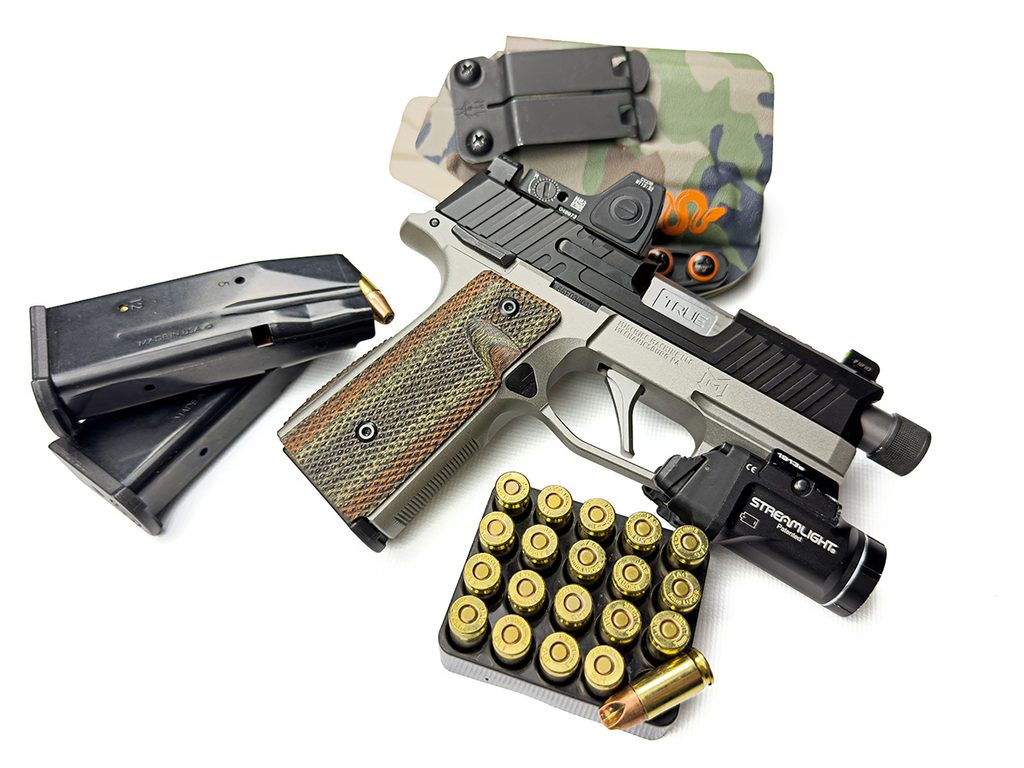
Traditional jacketed hollow-points have been around for some time, but again, their reliability has been spotty. Improvements in manufacturing led to more advanced testing procedures and more advanced material science. A major problem with the old hollow-points was that they clogged up with material such as fabric. This, of course, was an issue, which turned hollow-points into full metal jackets, leading to a complete failure to expand. Some modern bullets feature a polymer insert in the tip that allows them to negate this issue. This was a significant step up in technology.
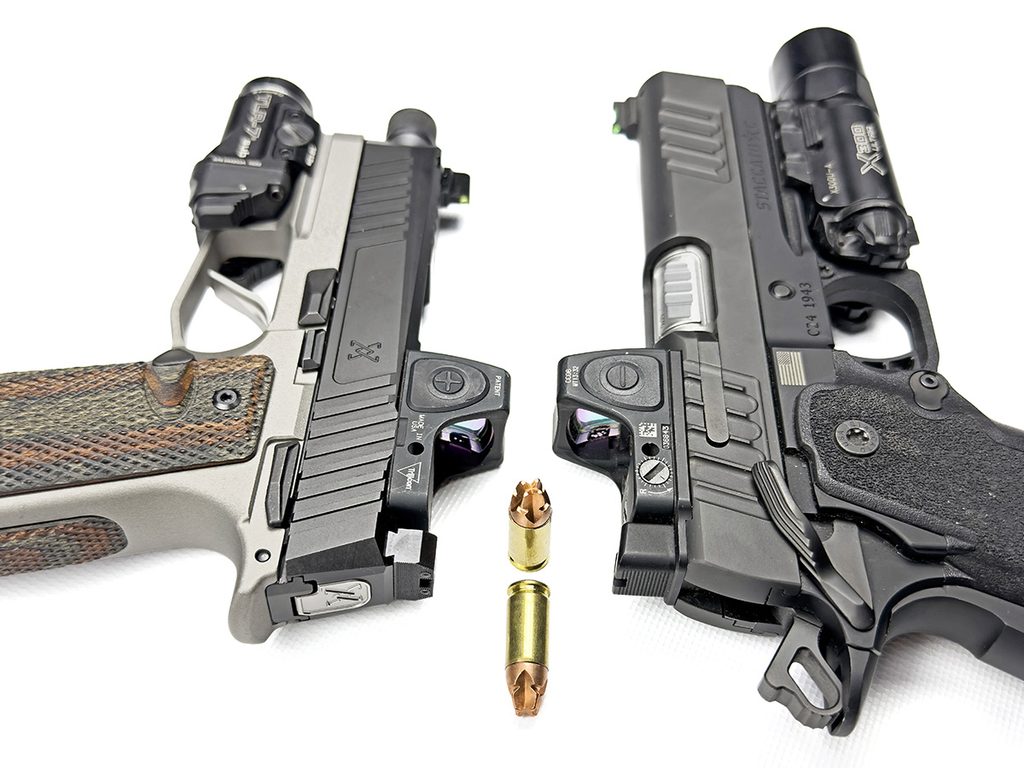
We also now have alloy bullets. These are much tougher than traditional bullets and made of a single type of metal. It’s interesting that these bullets have seen a lot of widespread acceptance, especially in our era of precision machining where there are a lot of fancy gimmicks. Solid alloy hollow-points tend to remain in one piece. They can also be manufactured with predetermined fracture points or blade-like pedals that expand on impact. Much of this can be machined right into the bullet itself, and as a result, they are very reliable and offer great accuracy.
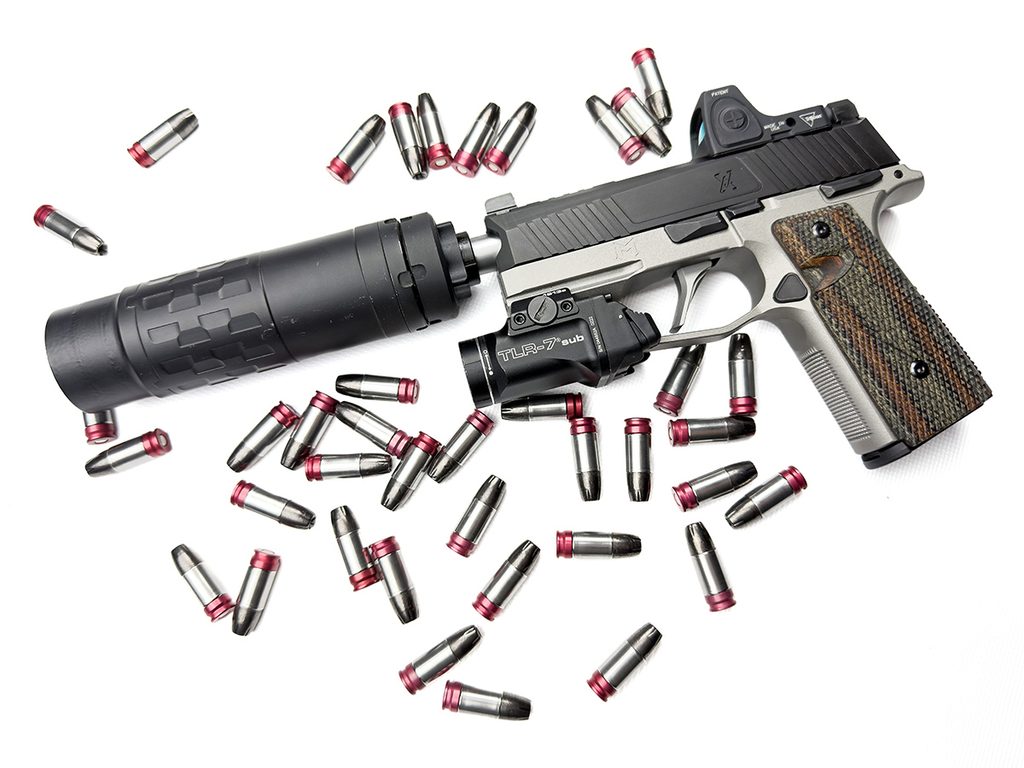
Some of these technologies, while they have been around for a while now, are only just beginning to receive a lot of widespread recognition. The velocity of most of these bullets is still relatively modest, but what we can do with 9mm in this smaller space is the creation of a very reliable host firearm that does not sacrifice accuracy or power to achieve devastating terminal results.
Now, all of these technologies translate to other types of guns, or even other calibers. While there is a variety of products available that make use of monolithic bullets, it’s inside the handgun arena that we see the greatest benefits. Because rifles can also rely heavily on velocity to achieve lethal effect, handguns must rely on bullet construction above anything else. If you’re limited to around 1,000 fps, give or take, you can’t scale the weight of the bullet up or down much without losing effectiveness one way or another.
It can be quite the conundrum when it comes to these bullets. That is why it is very important that we develop technologies that take advantage of the strength of the 9mm and not try to make it into something that it isn’t.
9 NINES TO KNOW
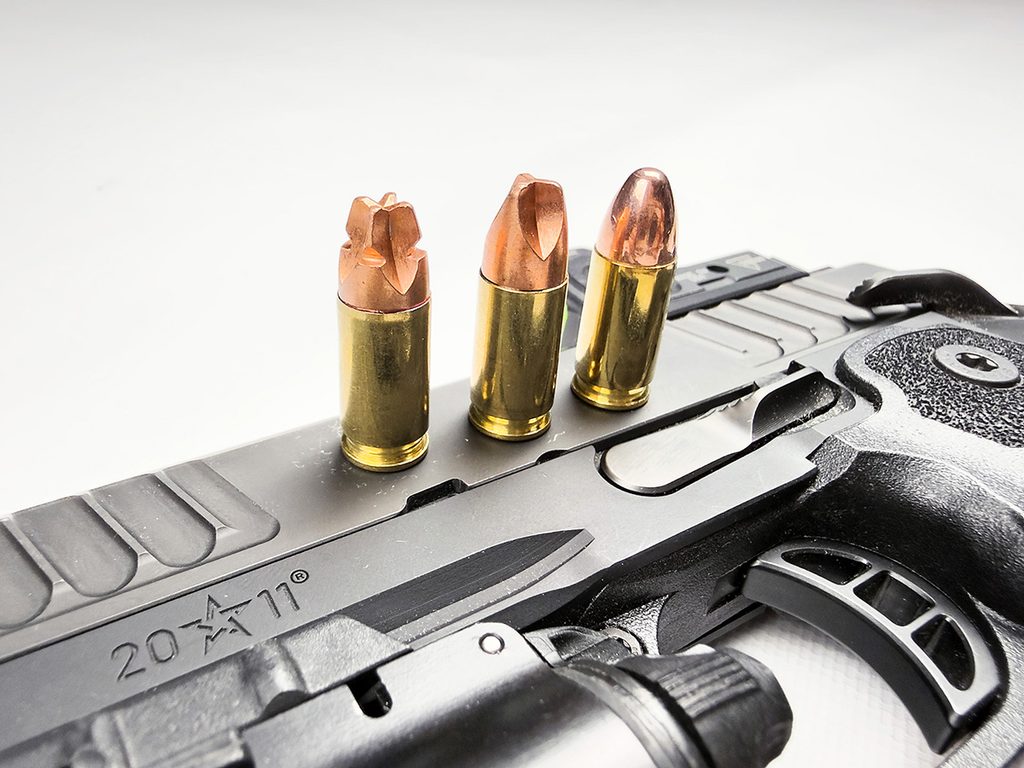
Black Hills 115-grain FMJ
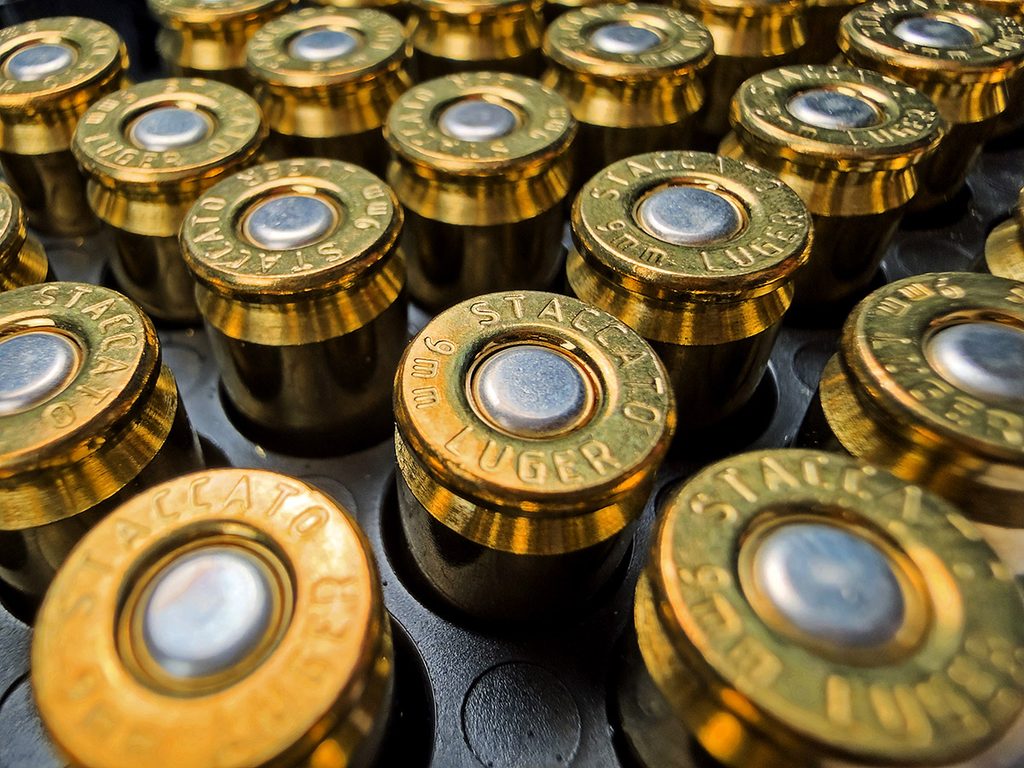
The discussion on 9mm loads would not be complete without including at least one standard load. BHA does a great job with this. It is arguably the most accurate and easy-to-shoot “range” ammo I enjoy using. And, it’s affordable, even in 2026, which is saying something considering it’s premium ammo. I’ve used versions of this going back to the dawn of my writing career, and it is my choice for the rare handgun matches I attend these days. I consider this to be the baseline 9mm ammunition for general-purpose use.
Black Hills Honey Badger 125-grain Subsonic
As an avid suppressor collector and shooter, I have come to appreciate the 9mm more than ever. Not every day at the range should be loud and exhausting, and if you’re on the trail and want to have a quiet means (legally, of course) of taking small game with a modern handgun you’re probably already carrying, this is an extremely solid choice. Taking advantage of monolithic construction, the 125-grain bullet runs very clean in a can.
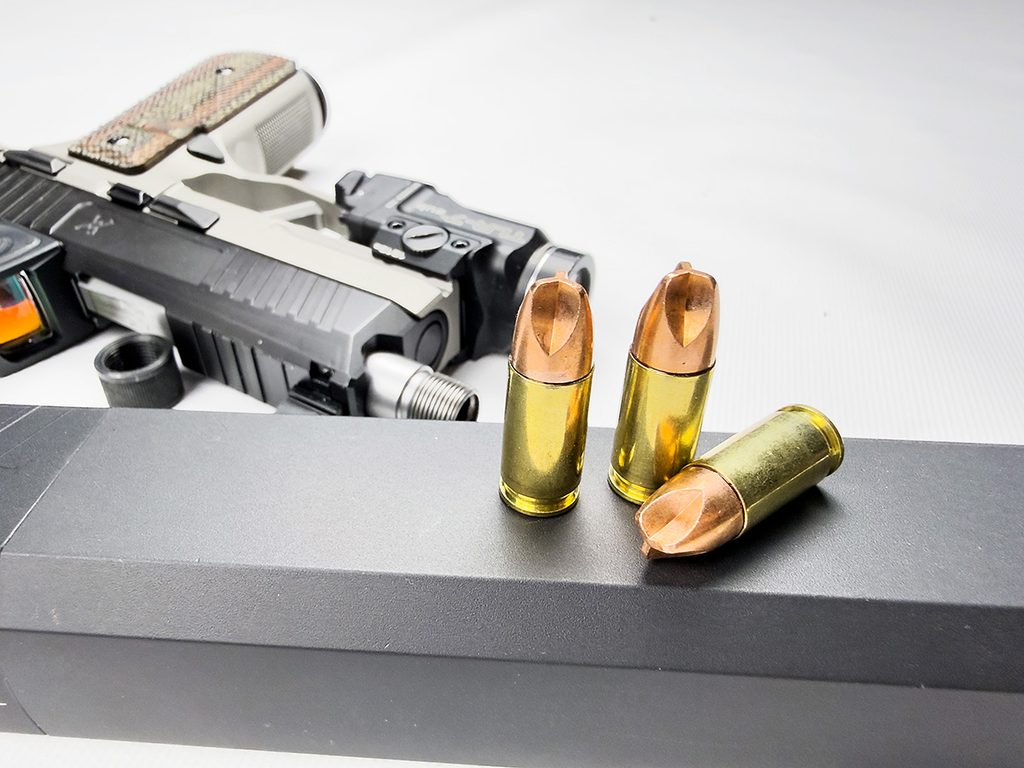
Black Hills Honey Badger 100-grain Supersonic
Another BHA option is the Honey Badger supersonic, a 100-grain bullet zipping at over 1,200 fps from a standard 4-inch duty length barrel. It takes advantage of “fluid displacement technology” and is very accurate. I’ve been testing with this load for the better part of a decade and I have come to think of it as a truly well-thought-out product that offers high velocity, high accuracy and very low recoil.
Remington Golden Saber 124-grain +P
This is a classic self-defense load that Remington continues to dominate with. I carry this load as a general-purpose choice that offers an extremely tough bullet design with lots of juice behind it. It handles a bit like a +P load because it is one, and it feels like one, unlike many modern +P loads that just feel a little snappier than range ammo. I take this load on road trips and trails; it is excellent at glass penetration and does well against sheet metal.
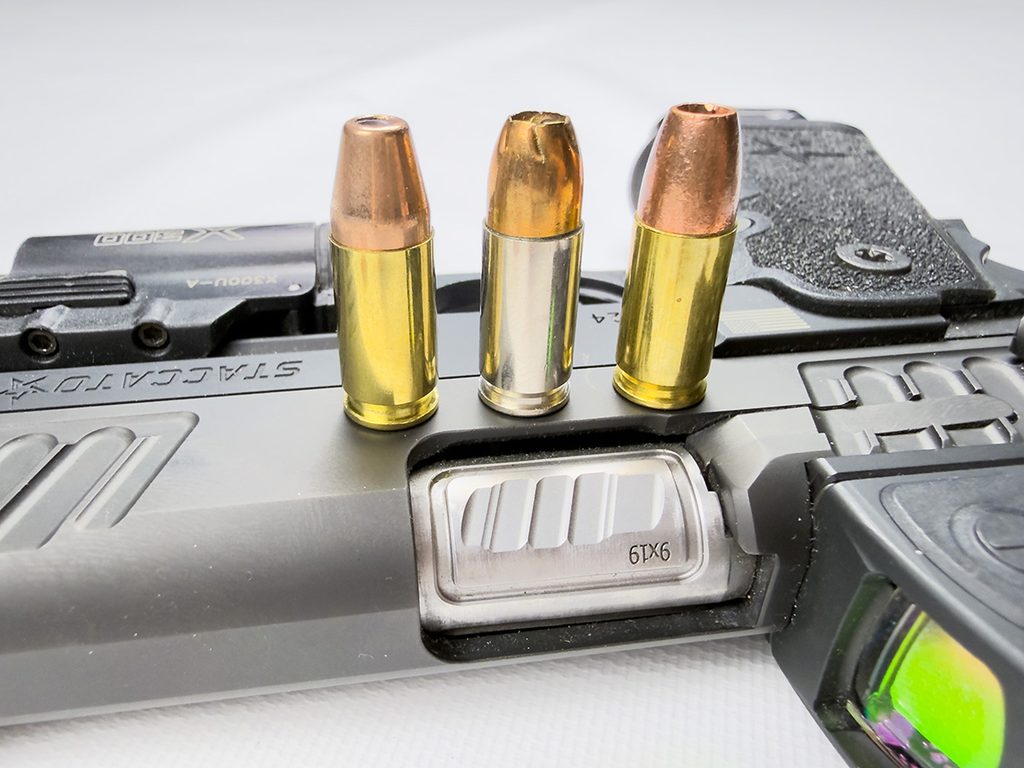
Hornady Critical Duty 135-grain +P
This represents one of the most important 9mm developments of the cartridge’s history. Hornady’s Critical Duty loads are extremely tough, accurate, reliable and deadly. I have been using and testing this ammo in dozens of guns over the years, and it has always brought out the best in any pistol. While it does offer that +P oomph like the Golden Saber, it does it with a different bullet design that features a polymer insert. This bit of tech has achieved laurels for its performance in real-world scenarios and against many, many materials.
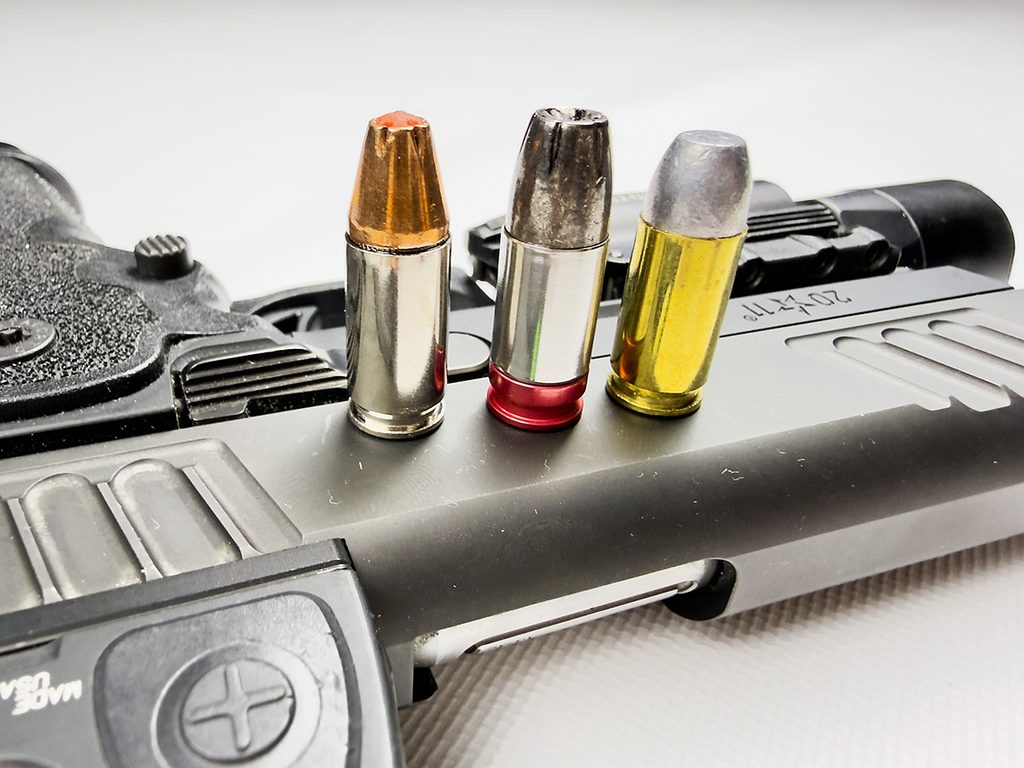
Staccato 136-grain Match
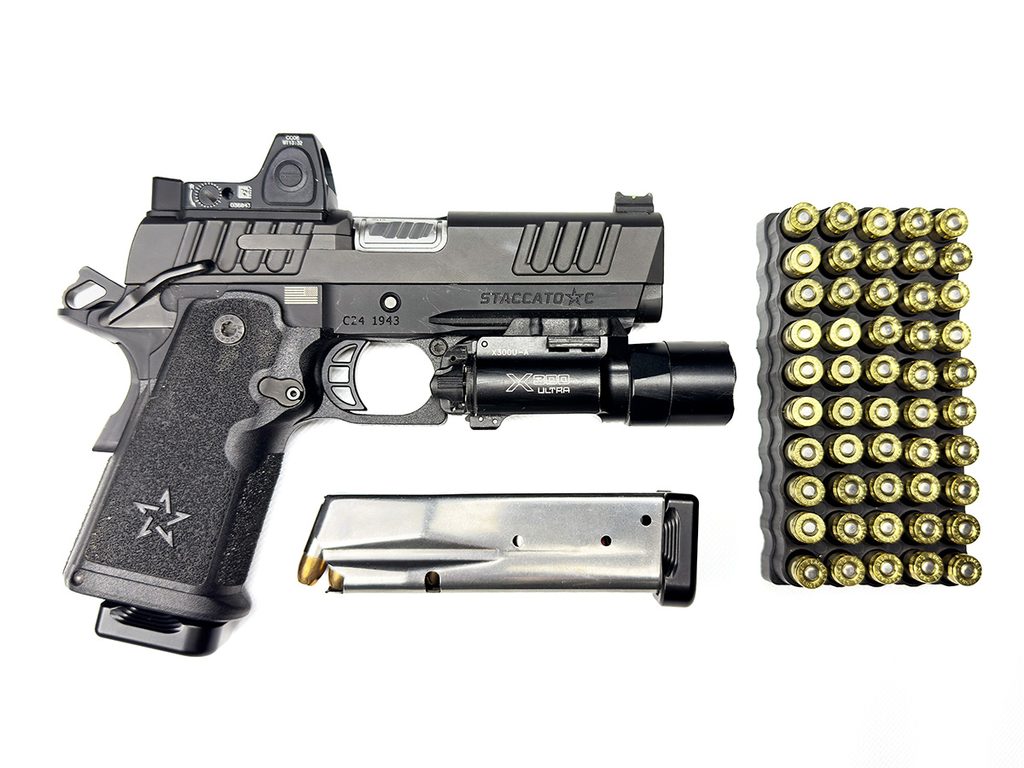
For dedicated match ammo, I like what Staccato put out under their brand. The Staccato ammo is very low recoil and offers a fun match-shooting experience. While not limited to Staccato pistols, using this ammo for fast-paced matches is like driving an old Cadillac: very smooth and enjoyable. This is also great ammo for suppressor use in shorter barrels.
Seismic 185-grain Quakemaker
This ammo is truly interesting and offers a super heavy 185-grain bullet that doesn’t slouch in velocity, easily making 900 to 1,000 fps in most common barrel lengths. This ammo isn’t a bear to shoot—instead, it’s mild and offers great accuracy. This is a great choice for suppressor use, as the benefits are obvious against the otherwise lightweight 9mm loads out there.
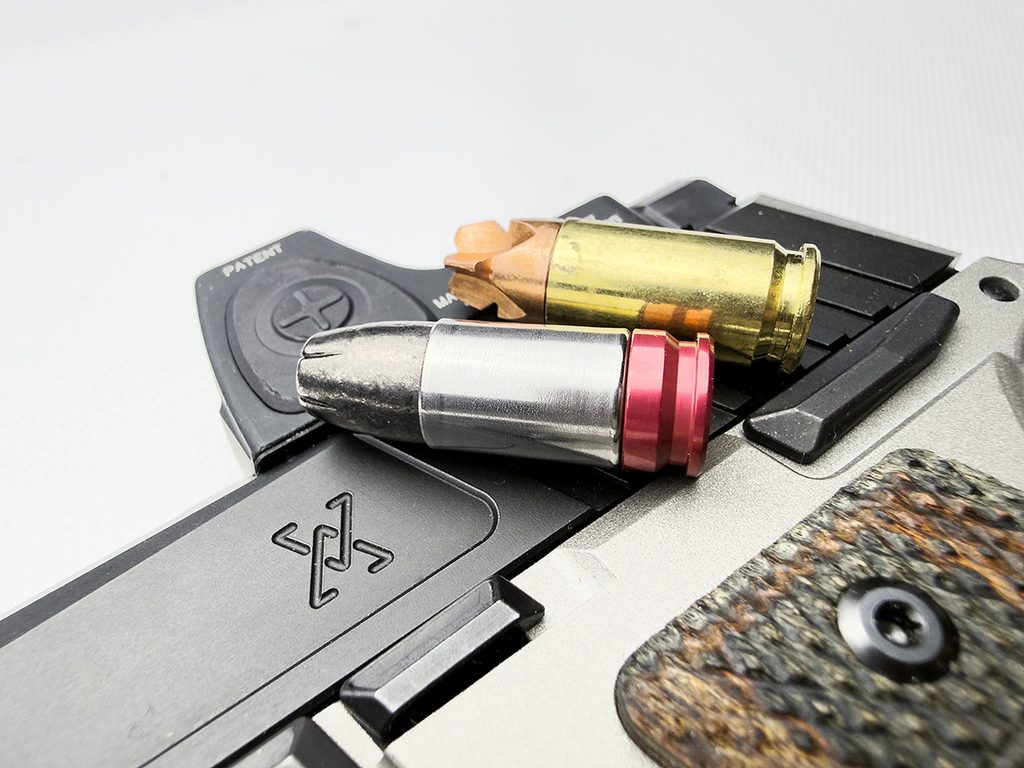
Buffalo Bore Outdoorsman 147-grain Hardcast +P
The Buffalo Bore Outdoorsman product line is well known to be the choice for backcountry buffs, and it is available in a number of chamberings. The 9mm offering is easy to shoot, albeit a bit smokey, and a good choice for bears in real-world use. If you have a 9mm and want to go to remote trout streams or after that big buck but don’t want to invest in a 500 Smith, the ammo here is a great choice to get the most out of your current pistol.
Buffalo Bore Barnes HP 115-grain +P+
On the opposite end of the Buffalo Bore spectrum, the lead-free Barnes 115-grain +P+ is truly a beast of a 9mm load that delivers a lot of power and speed. It’s rated at 1,400 fps, but for all the bark the bite isn’t bad, it offers relatively low recoil and creates a smooth shooting experience. I recommend this for 4 inches or longer barrels: It is a bit much from a pocket nine.
Editor’s Note: This article originally appeared in the October 2026 issue of Gun Digest the Magazine.
More 9mm Knowledge
- The Best Micro-Compact 9mm Pistols For Everyday Carry
- Best 9mm Pistol Options For Defense, Competition & Beyond
- Medium-Bore Match-Up: 9mm Vs .38 Special
- Best 9mm Revolvers For Everyday Carry
- Best 9mm Carbine: Affordable PCC Options
- Best Single Stack 9mm Concealed Carry Pistol Options
- Best Double Stack 9mm Pistols For Concealed Carry
Next Step: Get your FREE Printable Target Pack
Enhance your shooting precision with our 62 MOA Targets, perfect for rifles and handguns. Crafted in collaboration with Storm Tactical for accuracy and versatility.
Subscribe to the Gun Digest email newsletter and get your downloadable target pack sent straight to your inbox. Stay updated with the latest firearms info in the industry.



The author is roughly 81 years behind the times.
In 1945 the U.S. Military finally did some serious testing of the 9mm v/s the 45 acp 34 years after they adopted it and were horrified to find out the .45 acp bounced off of a Military helmet at a scant 35 yards while the 9×19 penetrated the helmet at an astonishing 125 yards and might have done so even further away but no one succeeded in hitting it beyond 125 yards. See the book “The Inglis Diamond”.
It is bullet placement and penetration that kills and that has been known since smokeless powder was first invented. Back then the people who were beating the “big bore black powder drums” wailed that the new smaller caliber smokeless powder rounds would get you killed when hunting in Africa. W.D.M. Bell proved them wrong by killing over 1,000 elephants with the 6.5mm and 7×57 Mauser. He proved it was bullet placement and penetration, not caliber that mattered period. In fact he proved the smaller rifle calibers penetrated better than most of the big bore elephant calibers.
I have killed large white tailed deer with the 9×19 and it works well. One weighed 165 lbs after field dressing and they say you should add 20% to get the live weight which would have put the live weight at 187 lbs.
Pistolero Magazine a delightful “off beat” gun testing magazine back in the 1980’s when bullet technology was not nearly as advanced as today went to Mexico to get around U.S. animal cruelty laws and shot barn yard pigs at point blank range and found zero difference in killing power between the 9×19, 45 acp, .38 special and .357 magnum. Proving that handgun calibers are not very powerful when it comes to killing quickly and that caliber is totally irrelevant.
Knockdown power? There is no such thing. Bill Judd who was and experienced elephant hunter was stomped to death after he and his son tried to stop an enraged big bull elephant at point blank range shooting it 6 times with big heavy caliber double barrel elephant rifles. So why did W.D.M. Bell survive with the pip squeak 6,5mm. Simple, he knew how to shoot straight and he knew caliber was irrelevant.
A number of years ago an elephant culling operation was filmed and game rangers using nothing more than the 7.62×51 aka .308 Winchester mowed down elephants and they fell like being hit with a lightening bolt and they did it with military full metal jacketed ammo. Once again it was straight shooting, not caliber that prevented them from being stomped to death.
When Col. Jeff Cooper was alive and spreading his usual rectum gas he often ranted against every failure he could find when the 9mm failed but never mentioned even once when the .45 acp failed. And of course never mentioned when the .44 magnum failed either.
People shoot much better with lower recoiling calibers i.e. the 9mm than they do with harder kicking calibers. The 9mm holds more ammo and is the superior machine gun cartridge for the reasons just mentioned. The 9mm handguns are usually more concealable and weigh less making them more comfortable to carry.
Ask yourself the question??? If you broke down in your car and were confronted by a bunch of gang bangers would you rather have an 18 shot and a spare magazine of another 18 rounds of 9mm or a 7 shot .45acp. I think even a mentally challenged person knows the answer to that question. Most people when even superficially wounded panic and lose the desire to press home an attack. This is where the 9mm shines with its superior fire power and it does kill make no mistake of that.
I might also mention a Massillon, Ohio Cop who was shot in the buttocks with a .30 Tokarev pistol. Its super high velocity .30 round caused the bullet tumble and to travel upward from the buttocks into the chest cavity like a buzz saw killing the cop with one shot instantly. Again the smaller caliber proved to kill way out of proportion to its size because of its extreme higher velocity.
In WWII Nationalist Chinese machine gun nests were taken out by Communist Chinese soldiers using .30 Mauser Broomhandle pistols after they went hand over hand on two remaining bridge cables that were left standing after the bridge they held up was blown down by Nationalist Soldiers. Again high velocity small caliber pistols i.e. the .30 Mauser were deadly.
The .45 acp went obsolete with the dinosaurs and it is no accident the most popular handgun self defense cartridge is the 9×19. Low recoil, superior firepower, superior penetration and better accuracy for the average Joe Blow make it hard to beat.