
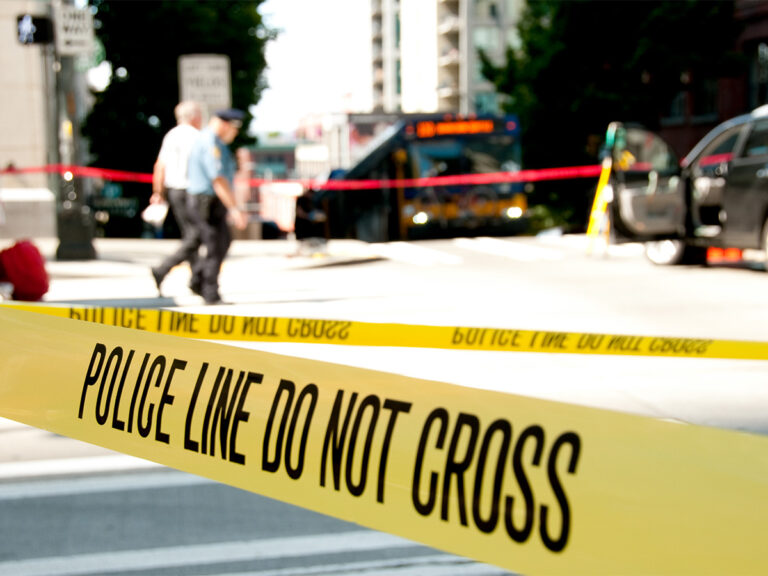
In an active shooter situation, waiting gets people killed. Here we discuss the importance of acting in the first 30 seconds.
There’s a dangerous lie baked into how Americans talk about mass violence.
We’re told that if there is an active shooter in a school, church, or grocery store, the solution will arrive in flashing lights and sirens. We are told to hide, lock doors, wait quietly and trust the system.
We are told that help is coming.
What we are not told—what many people desperately want to avoid confronting—is that the outcome of an active shooter attack is usually decided long before help arrives.
Ed Monk, a retired U.S. Army lieutenant colonel and the author of First 30 Seconds: The Active Shooter Problem, is one of the most serious thinkers on the active shooter issue. His conclusion is blunt: If a killer is not stopped within the first 30 seconds of an attack, the victim count almost always climbs into the double digits.
This isn’t ideology. It’s math.
Time, Math and the Myth of Rescue
Monk’s research shows that most active shooters fire a new shot every 3 to 5 seconds during the opening moments of an attack. By the 30‑second mark, the tenth victim is often already down. By the third minute, victim counts in the twenties and thirties are common.
Now, contrast that with reality. Even in cities with excellent police coverage, law enforcement response times typically fall in the 4‑ to 8‑minute range. That’s not incompetence. It’s physics, traffic, dispatch lag and geography. Police cannot teleport.
Even when officers perform heroically, they are almost always arriving after the decisive damage is done. That uncomfortable truth is not an indictment of law enforcement; it’s a recognition of the limits of our limited physical nature as humans.
Waiting for help is not a plan. It is a gamble … and the odds are terrible.
Lockdown Theater and the Illusion of Safety
Schools and institutions love lockdown drills because they are easy to implement, politically safe and emotionally comforting. They give administrators something to point to when asked, “What are you doing about safety?”
But lockdowns were never designed for internal threats. They were developed decades ago to deal with dangers outside a building, such as civil unrest, nearby crime and drive‑by shootings. Applying them to active killers already inside the structure is like using a fire drill to deal with a gas leak.
History has shown the flaw repeatedly. Locked doors and darkened rooms do not stop bullets. In some cases, they simply turn classrooms and offices into target‑rich environments for an attacker who has time and freedom of movement.
Lockdown drills work perfectly … right up until the day they don’t.
The Problem with ‘Run, Hide, Fight’
Much of modern active‑shooter training is built around the familiar mantra: Run, Hide, Fight. Monk’s criticism of this framework is not subtle.
His objection is not that fight is included, but rather that fight is placed last and treated as a shameful or reckless option to be used only when all else has failed.
From Monk’s perspective, this ordering is backward and deadly.
“Run, Hide, Fight” teaches people implicitly to delay resistance for as long as possible. Run if you can. Hide if you can’t run. Fight only when discovered. That approach might feel humane and non‑confrontational, but mathematically it guarantees higher victim counts.
Active shooters want people to run and hide. Those behaviors create chaos, isolate victims and allow the attacker to operate unopposed. Teaching people to fight only as a last resort amounts to telling them to let the shooter work freely until he reaches them.
Monk’s assessment is blunt: That is not a survival strategy—it’s surrender with extra steps.
Fight First: Not Everyone, but Someone
This is where Monk’s argument is often misunderstood.
He does not say that everyone should fight. He does not expect universal heroism. Instead, he points out a simple reality: In almost any crowd, there are usually one or two people who are mentally prepared, physically capable and morally willing to act decisively.
Those people should not be trained to hesitate or to run and hide.
The goal is not universal resistance, but rather early resistance. One person acting in the first moments of an attack does more to save lives than dozens of people running or hiding later. Think, for example, of Eli Dicken at Greenwood Park Mall; Jack Wilson at West Freeway Church of Christ; Stephen Willeford in Sutherland Springs; Greg Stevens in Colorado Springs; or Pastor David George in White Settlement.
That’s why Monk often reframes the model as Fight, Flee, Barricade with the understanding that everyone makes their own decision based on location and capability, but that fighting early is morally legitimate and strategically decisive.
Violence Is Not the Problem, Delay Is
One of the reasons Monk’s work unsettles people is that he refuses to sanitize language. He uses words like violence, counterattack and killing the attacker because euphemisms obscure reality.
An active shooter problem is not solved by policies, slogans or technology. It’s solved when someone physically stops the person pulling the trigger.
Firearms are the most efficient tool for that job, which is why police reach for them first.
But Monk is equally clear that guns are not the only means of resistance. Fire extinguishers, physical attacks, improvised weapons and coordinated action have all stopped killers in real‑world cases.
What matters is speed, disruption and commitment. A shooter who is being attacked cannot calmly aim and execute. Momentum breaks. Accuracy collapses. Lives are spared.
Responsibility Cannot Be Outsourced
The deeper issue underlying all of this is cultural. Americans have grown accustomed to outsourcing responsibility—to the police, to the government and to institutions.
But violence does not wait for systems to mobilize.
Responsible gun ownership has always meant more than marksmanship or equipment. It means accepting the moral weight of action when others cannot or will not act. It means understanding that being present, willing and capable matters far more than perfect plans written on paper.
Even law enforcement officers increasingly acknowledge this reality. They know they will do their best when they arrive, but they also know they cannot undo what happens in the first minutes.
The Conclusion We Avoid
The most disturbing conclusion of First 30 Seconds is not tactical. It is ethical.
If we know that early resistance saves lives, and we deliberately structure policies to prevent it, then we are choosing higher body counts in exchange for emotional comfort.
That is not safety—it’s negligence dressed up as compassion.
The first 30 seconds belong to the people already there. Whether they’re prepared to use them is a choice—one we make long before the first shot is fired.
Editor’s Note: This article originally appeared in the February 2026 issue of Gun Digest the Magazine.
More Knowledge For The Armed Citizen
- Carry Law: What Is A Righteous Shooting?
- Concealed Carry and the Right to Remain Silent
- Tips For Communicating With Police After Shootings
- Concealed Carry: After the Shooting
- Q&A: Massad Ayoob On Self-Defense

Next Step: Get your FREE Printable Target Pack
Enhance your shooting precision with our 62 MOA Targets, perfect for rifles and handguns. Crafted in collaboration with Storm Tactical for accuracy and versatility.
Subscribe to the Gun Digest email newsletter and get your downloadable target pack sent straight to your inbox. Stay updated with the latest firearms info in the industry.
Can’t argue anything you said, it is reality. Somehow those who will evaluate and judge your actions are sometimes stranger to common sense. Save your life, save the life of others but most of the time the aftermath won’t be anything close to “a walk in the park”. It could even be extremely expansive in lawyer fees and “personal disturbance” depending on where your actions took place.
Geography is Everything. IF you hear gunfire, find new geography immediately. If you see gunfire, but it does not see you, find new geography immediately. If you see gunfire and it sees you, shoot the crap out of it immediately, while moving toward it, in an arc to your left. (Oh, how would I know? Actually Been There, Done That. Tens of thousands of shots fired in Competition, countless hours of FoF Training, 40 years as an NRA Instructor)
Case in point – the shooting at the newspaper office in Annapolis MD a few years back. There were coppers right outside the front door which means the response was close to instantaneous and yet there were STILL multiple victims. Time is NOT your ally in an active shooter incident. Case closed.