Chasing free-range kudu across the veldt of southern Africa has a way of recalibrating one’s ego.
The giant stood 8-feet tall, rail thin yet strong as a century-old oak, haggard and worn to the point that it almost became part of the landscape in places—almost. As we drove past, I tried not to look directly at it, keeping my eyes on the horizon, but it was damned hard to miss.
I had plenty of warning it would be there and I knew I’d have to deal with it, which gave me significant time to prepare. And that helped. A little.
Sitting in the back of the truck, we pulled right up to the giant, the bumper so close we almost ran into it. And then, without hesitation, the PH hopped out, unlocked its gate, and we simply drove through it like it didn’t exist.
Game preserves are commonplace in many locales throughout Africa, especially South Africa—so much so that hunting within is as much of a normality as not hunting behind a fence is here in the States. “Poaching problems” seems like too convenient of an excuse to put up a big-ass fence to protect the investments that are the animals within, but it’s a real problem. A substantial problem, in fact.
And, of course, it does help outfitters manage their herds and provide high-opportunity hunts for adventurers potentially spending tens of thousands of dollars and multiple weeks of their hard-earned vacation. Plus, when you step outside the fences in South Africa, federal game laws and seasons dictate the rules. Inside the fence? Well, that’s up to the person holding the keys to the padlocks.
Now, to be fair, many of these game preserves are bigger than the ranches of West Texas, spanning tens and tens of thousands of acres. It’s entirely possible to pass through a high fence and hunt aggressively without again seeing the fence until the sun sags low in the sky and it’s time to leave. These plots are so big it’s difficult to fathom that someone owns contiguous plots of land that are so expansive.
And, honestly, I’ve had some incredible hunts in South African game preserves. Most are, in fact. But during the course of five trips to Africa, I’ve had a couple hunts that just didn’t quite feel right. I enjoyed the experience but elected not to shoot, and I can live with that outcome.
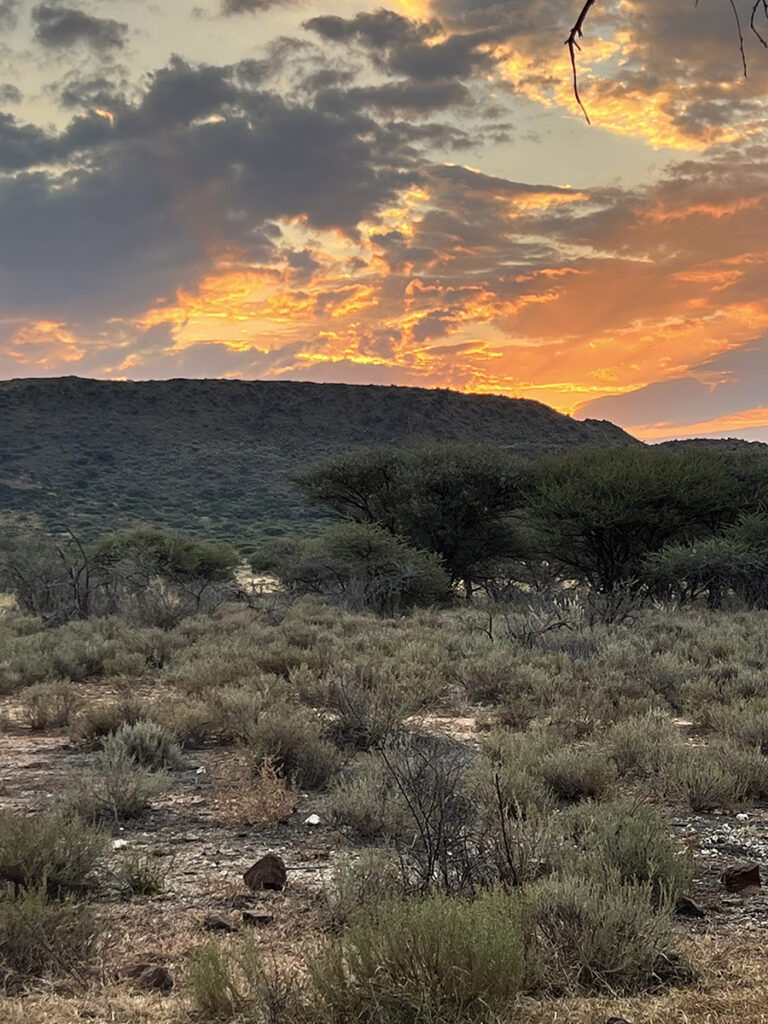
Do the animals know they’re in a fence? I have no idea, but I doubt it because animals are not capable of reasoning. However, I know the animals are in a fence—and I’ve come to accept it. When in Rome, do as the Romans do, right? As much as I hate this clichéd saying, sometimes ya just have to resign to the fact that “it is what it is.”
But it doesn’t have to be this way, either.
Even with so much of South Africa fenced, there’s an incredible amount of acreage—or hectares, as they’re referred to there—available for those with a sense of insatiable adventure and a willingness to burn serious boot leather across the country’s unparalleled landscape. The entire southern tier of the African continent—Namibia, Botswana, Zimbabwe, Zambia and Mozambique—offers free-range pursuits, but South Africa has become somewhat of a second home … and I have become quite partial to the people in it.
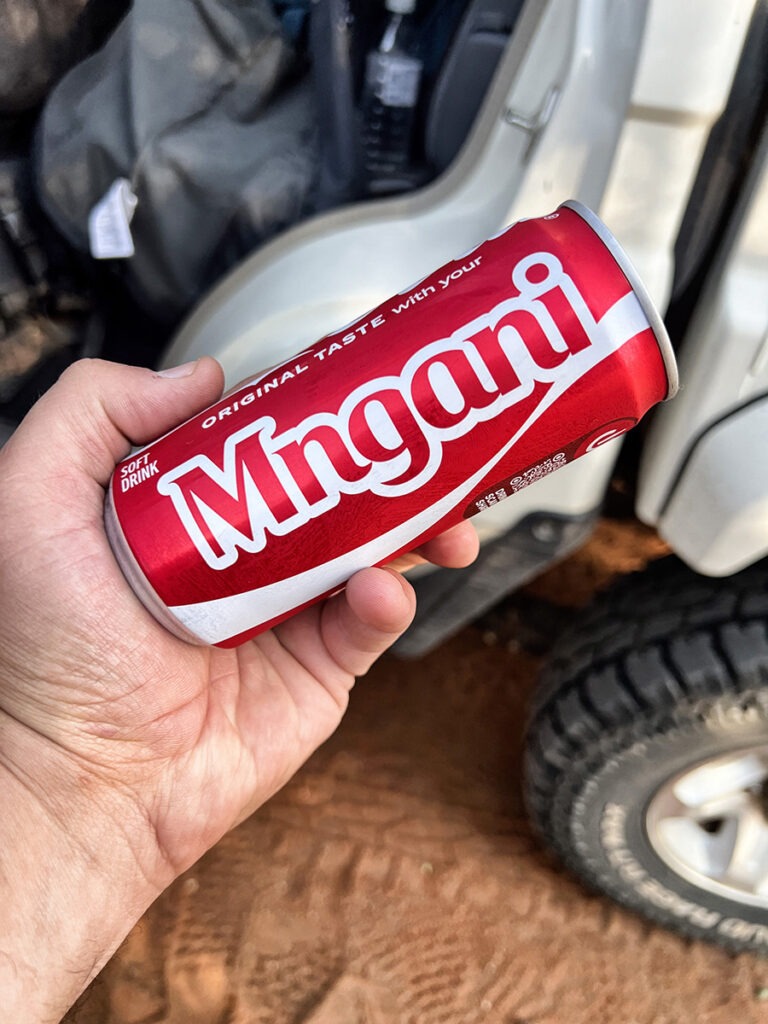
And just when you think you’re getting pretty good at this hunting thing, chasing free-range kudu across the veldt of southern Africa has a way or recalibrating one’s ego.
Be Patient and Shoot Far
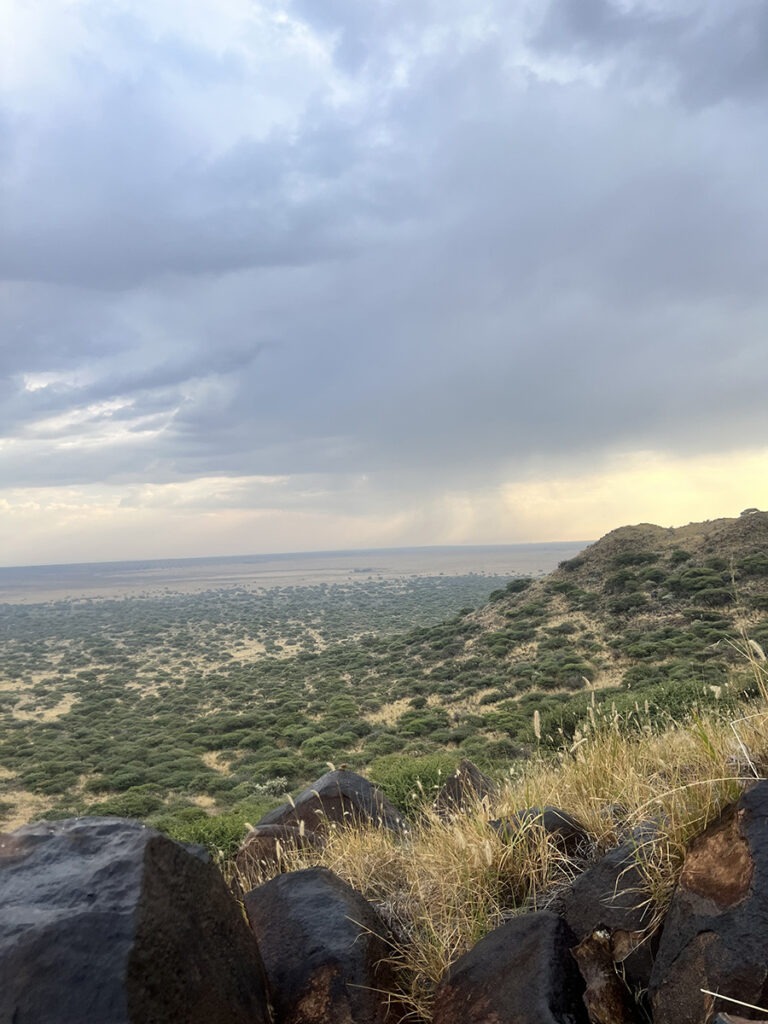
We first spotted the bull from atop Kudu Mountain, a collection of rust-colored moon rocks piled 600-feet high by the Earth some unknown-millions of years ago. It was a bitch to climb that ankle-rolling natural formation every morning, not just because of the rocks—but because every night the orb spiders would re-spin their webs with silk thick enough to entangle even the stoutest of hunters.
But, the vistas were spectacular, and, tactically, there was no better place to glass for kudu.
More than 1,100 yards distant, the spiraling horns of the bull peeked in and out of the acacia trees as he desperately tried to keep his harem tight. From above, it seemed impossible to lose sight of the bull for nearly a half-hour at a time, but that quickly became the norm: a glance here or a peek there, followed by long stretches at a time with nothing.
In this situation, one can hope to get lucky, but I’ve spooked more than my fair share of animals trying to put good effort toward a bad situation. It’s tough to stalk an animal when you don’t know where he’s going: The bull was running randomly without a clue where he was going, which meant I had even less to go on. The younger me would’ve kicked my own ass for even thinking this, but the older me has learned that, sometimes, the best thing to do is sit back and watch the sun set.
The reality was, those kudu cows were not going anywhere, and neither was he. Reluctantly but optimistically, we retreated for the day … all the while knowing I’d have to climb that damned mountain again.
It took me longer to catch my breath than it did that bull the following morning: Sure enough, that bull was within a few hundred yards of where we’d left him the evening prior. He was calmer, but that ol’ boy was interested in little more than keeping an eye on every single one of his ladies … exactly like a bull elk does during mid-September.
And this time he was closer. Well, a little closer.
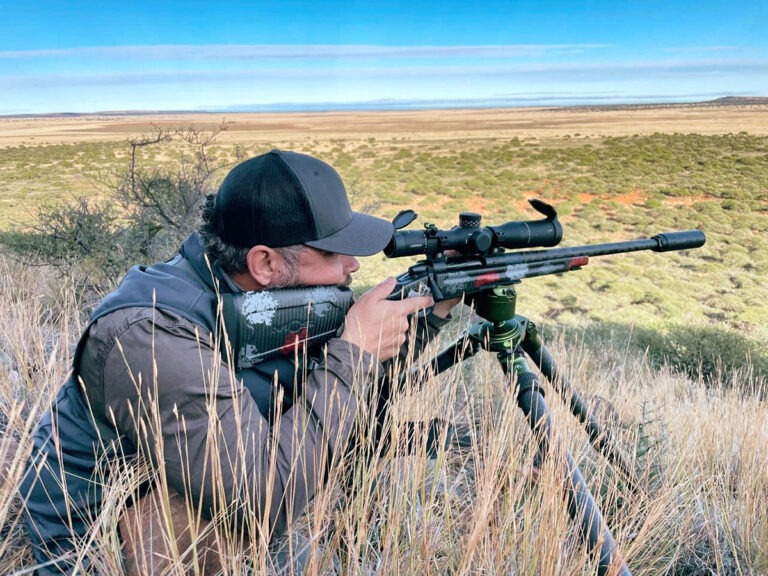
At 767 yards, the come-up was more than 17 MOA for the 7mm PRC in my hands. In other words, with my 100-yard zero, that 175-grain bullet drop is more than 138 inches. That’s nearly 12 feet, and that’s not even considering windage factors.
Why does all that matter? Because after that bullet left the muzzle, I have no idea where it went. Despite the rifle being locked into a tripod (I took a lot of sh*t for carrying that thing up and down that mountain, but its steadiness was incredible) and my confidence high, that bullet didn’t touch the bull. But it sure did scare him, although none of the kudu had a clue where the shot came from.
So, they started getting closer. And they eventually calmed down and once again took to browsing.
Range. 725 yards. Check dope. Dial. Find the bull in the crosshairs.
Range again. 681 yards. Check dope. Dial. Find the bull in the crosshairs.
It soon became apparent that the cows were not going to get any closer. Range. 652 yards. Check dope. Dial to 13.5 MOA. Find the bull in the crosshairs.
Send it.
With a slight quartering-away angle, the bullet entered in the paunch and dove forward, causing the bull to buckle hard, hunch up and take off with the herd. From our vantage point, it was possible to watch the cows and calves sprint away, though it wasn’t long before we could no longer see the bull running with the herd.
He was suddenly gone, and that was a very good news.
I quickly learned that the only thing more unappealing than fighting orb-spiderwebs while climbing Kudu Mountain is fighting those same webs while trying to get down the mountain … in a hurry. To be honest, I bet to this day there is spiderweb particles permanently woven into the shirt I was wearing that day.
Despite how open the terrain appeared from on high, it sure looked different once we got down into the thick of it. I didn’t know whether this bull would be piled up or still standing, but it became immediately apparent that finding even a 500-pound animal was going to be a challenge.
Until it wasn’t.
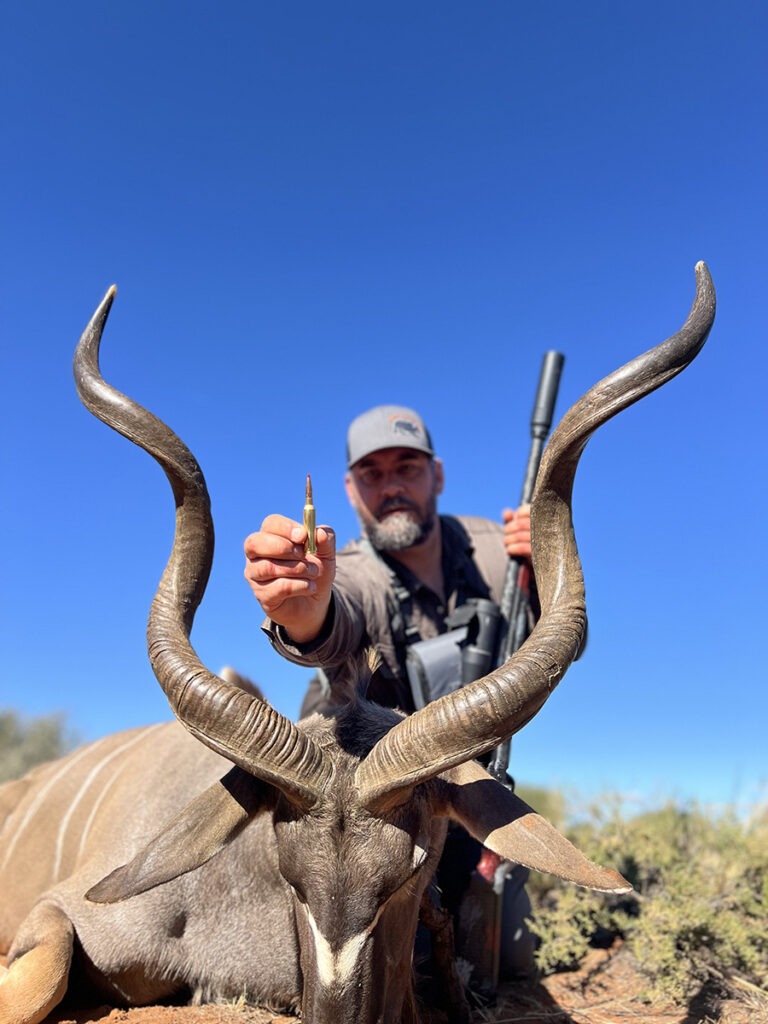
I’d like to tell you that I walked up to that bull kudu, and he was stone dead, but that wouldn’t be the truth because the first shot was just a little too far back. The truth is that, after a bit of a goat rope, my adrenaline dump was so significant that I puked. Yup. Breakfast came up right there next to the bull … with five people watching.
And to my surprise, not a one of them said a thing. It took a campfire conversation that evening to figure out why I didn’t take more sh*t in that moment, but the reason was simple: They’d all been there before, too.
When it comes to hunting, I’m learning that things rarely go exactly as planned … although most hunters seem to leave the less-than-sexy details out of their stories.
If I had to do it all again, I’d do a couple things differently. I wouldn’t have taken the shot at 767 yards. There are too many environmental factors that come into play at that distance when hunting, such as wind and a target that can move. There are a lot of things that can go wrong when a bullet is in the air for that long.
Would I take the 652-yard shot again? I think I would, but I’d find a way to get prone when shooting that far. Regardless of how good a tripod is, I’m saving those shots for less than 500 yards from here forward.
Ego recalibration?
Check.
Gear Notes: Nemo Arms Rifle
Next to making a living via hunting amazing locations with some truly incredible people, the best part of working in the hunting and shooting industry is testing new gear.
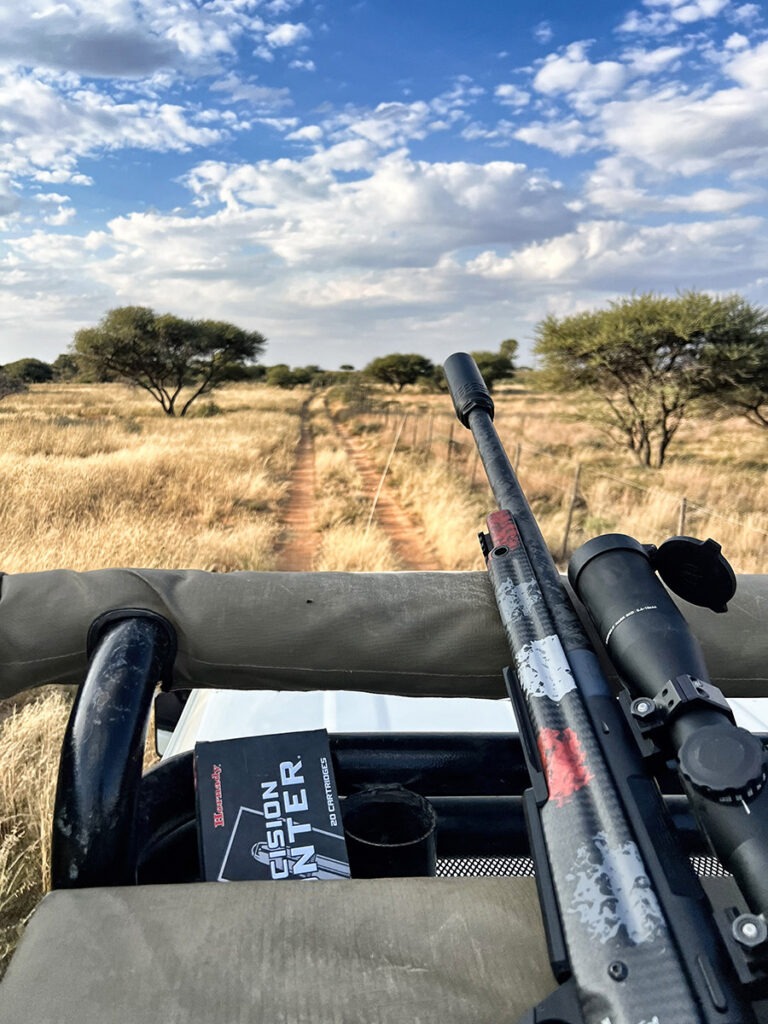
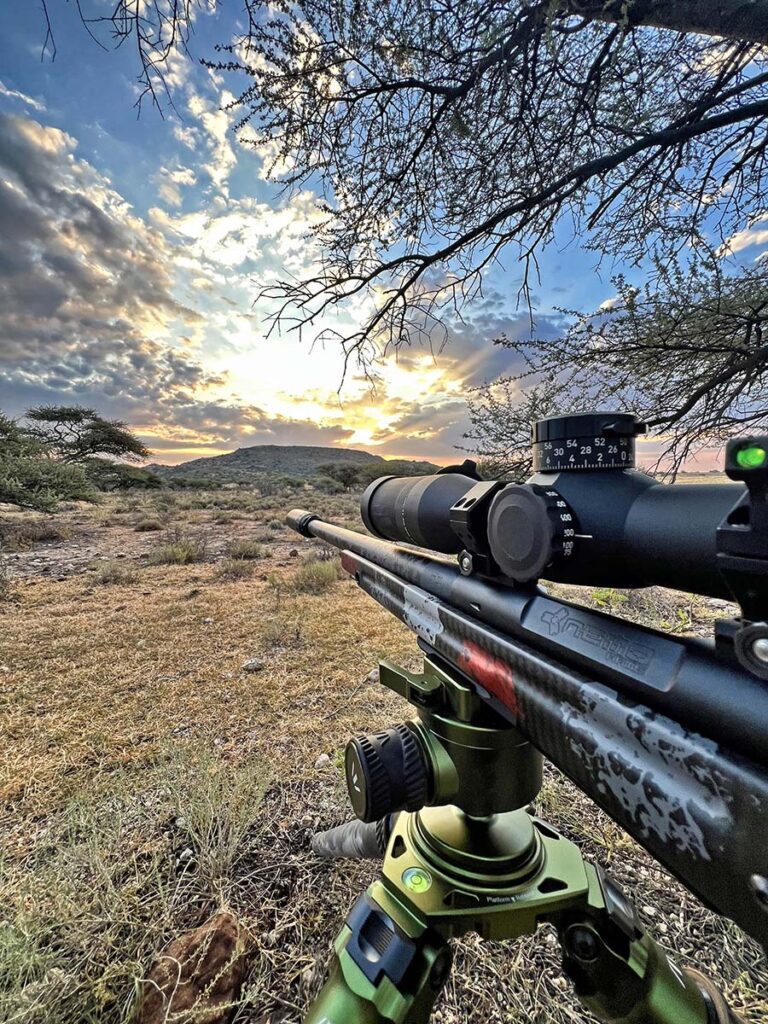
The rifle you see in each of the photos is this article is the new bolt-action rifle from Nemo Arms. And when I say “new,” I mean that it’s the first one that’s ever existed … like, it was built with haste for this hunt.
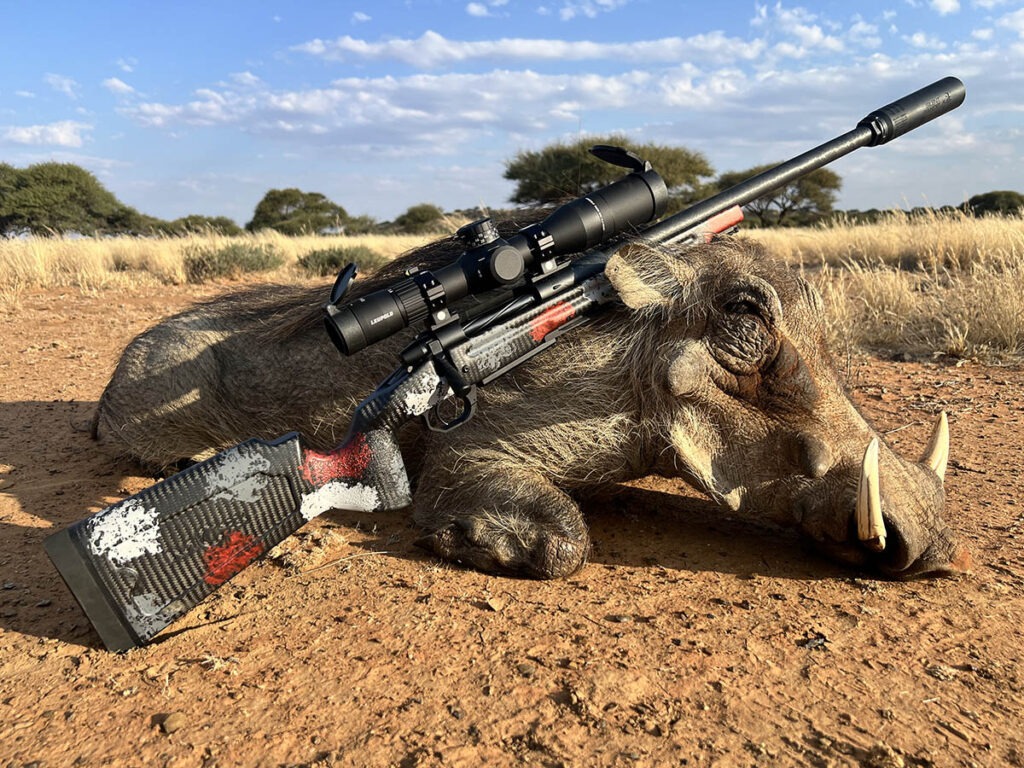
Long-known for ARs and more tactical-rifles, Nemo has tapped into the bald head of gun-building genius Jeff Sipe, who has been around the industry and has built quite the resume … along with some incredible guns. Nemo has tasked Sipe with building the company’s first bolt-action rifle, and as best I can tell, he’s been given a long leash and a big purse to complete the job.
Though this rifle is essentially a prototype, all the pieces are there, producing a ½-MOA rifle that’s capable of out-shooting my skillset. This gun is such a pleasure to shoot that it’s almost intimidating. And the rifle can shoot groups so tight that it’ll take away any excuse you can think of (you can always blame everything on the wind).
Want more details on the gun? Good. Because as soon as the design has been finalized and all the pieces are in place, I’ll have a full review for you at CarnivoreWeb.com.
Guide Notes: Geoffrey Wayland
When it comes to hunting in Africa, everyone seems to have a go-to guy. And if they’re happy, that’s great. But after five safaris, I’ve met a few of these go-to guys and have often been thoroughly unimpressed. I’ve dated more than a few girls who seemed like “the one” until I met someone else and realized the first one was crazy.
Know what I mean?
So, at the risk of him getting booked up and no longer having time for me, I hesitantly tell you that my go-to guy is Geoffrey Wayland of Fort Richmond Safaris (FortRichmond.co.za). It’s actually gotten to the point that my wife and I don’t want to hunt Africa without him, and when my kids have their first Africa hunts in the coming years, I don’t want anyone else beside them.
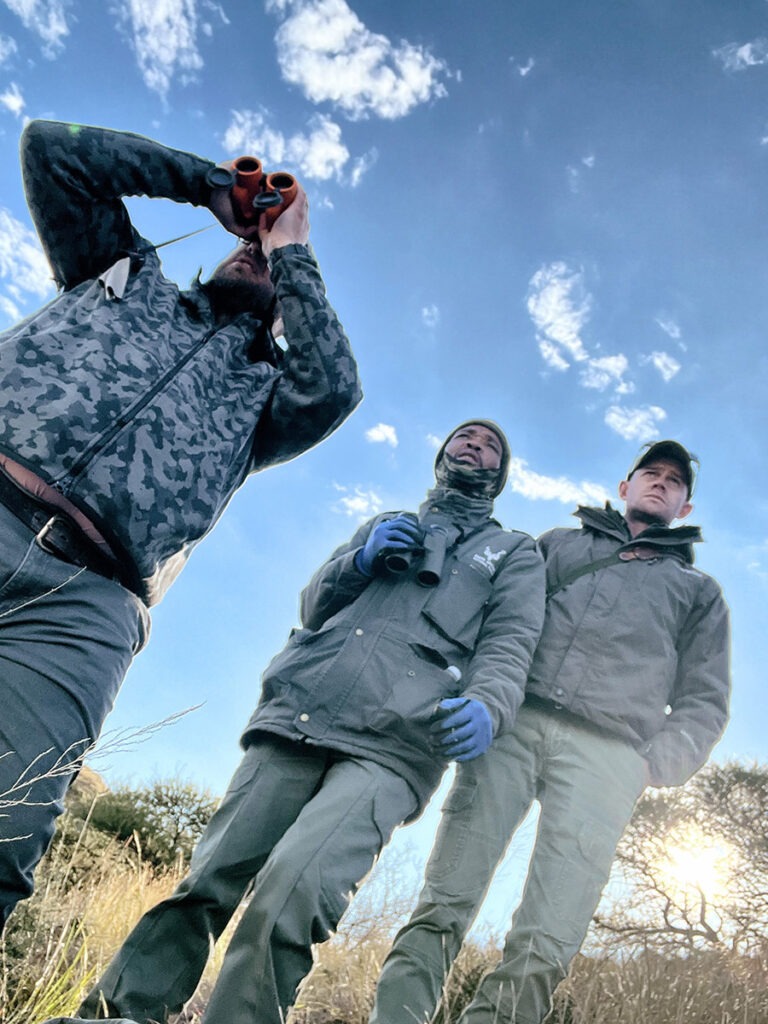
Would I lie to you? I did just admit to screwing up a kudu hunt, didn’t I?
Editor’s Note: This article is an excerpt from issue 11 of RECOIL Carnivore.
More On Hunting Rifles
- Franchi Momentum Review: Hands-On With The All-Terrain Elite
- Wilson Combat NULA Review: Continuing A Legacy
- Hunting For The Next Level: Stag Pursuit Bolt-Action Review
- On The Range With The Aero Precision Solus

Next Step: Get your FREE Printable Target Pack
Enhance your shooting precision with our 62 MOA Targets, perfect for rifles and handguns. Crafted in collaboration with Storm Tactical for accuracy and versatility.
Subscribe to the Gun Digest email newsletter and get your downloadable target pack sent straight to your inbox. Stay updated with the latest firearms info in the industry.