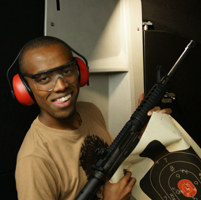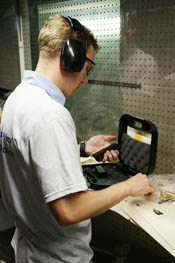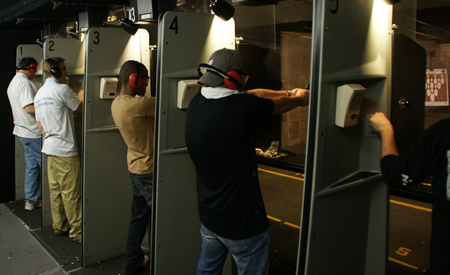
March will feature a quartet of interesting new releases for collectors and for people interested in personal protection.
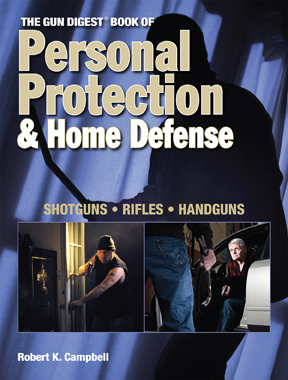 Here’s an excerpt from the upcoming book The Gun Digest Guide to Personal Protection & Home Defense:
There are skills we must have or no advanced practice will be beneficial. The basic skills are defined below. Study and understand each and implement them in your practice regimen. If you are aware of the demands of these skills, you will be way ahead in choosing a combat handgun.
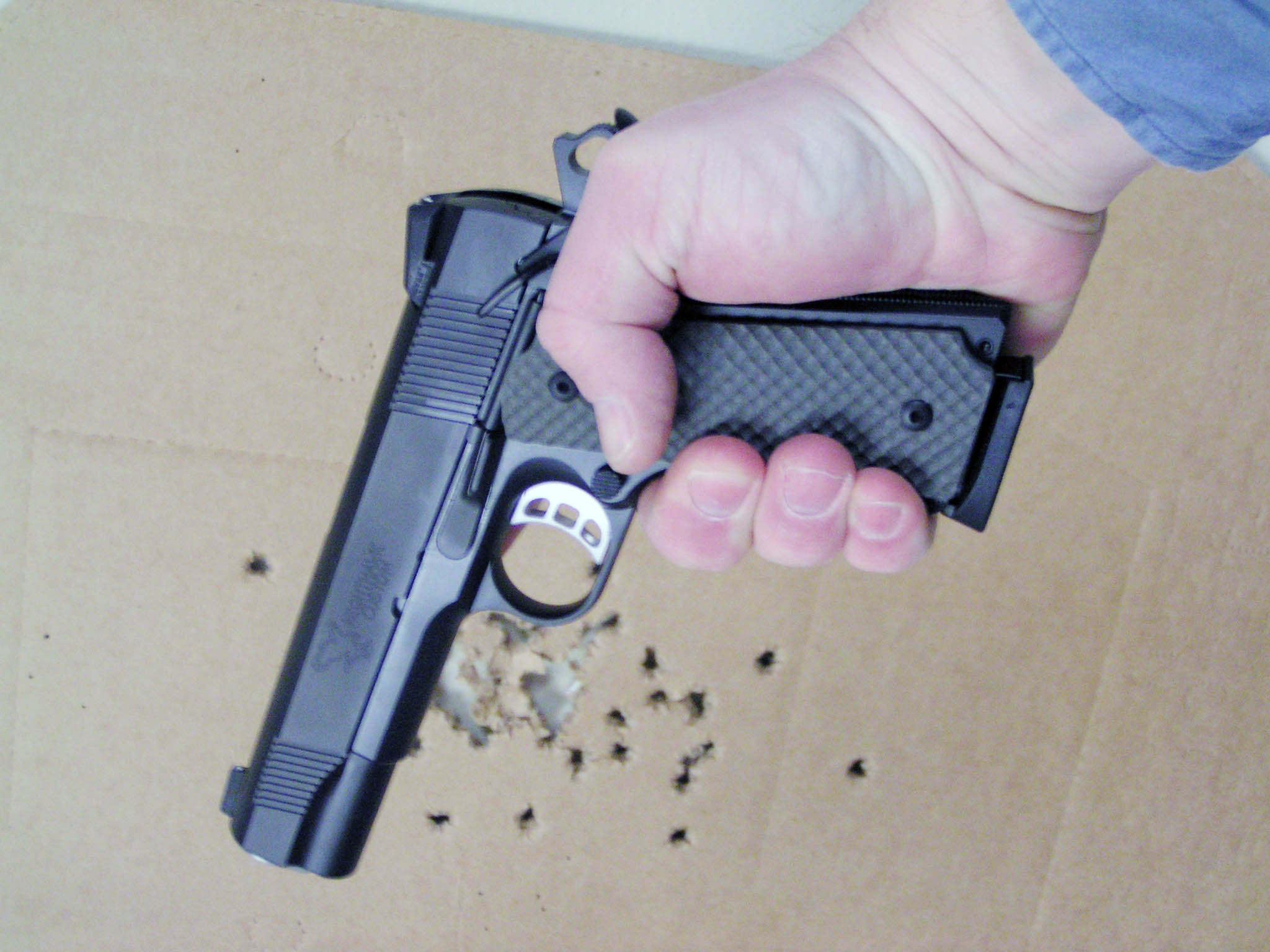
The Firing Grip
The hand should grasp the handgun firmly. The ideal grip is found when you squeeze the handle until your hand trembles then back off a bit. The grip should be firm but relaxed to allow proper motor movement. The fit of the handgun should allow the trigger finger to comfortably reach the trigger face and to properly control the trigger. A too-large handgun will be difficult to control. Few of us can manage a Glock Model 21 .45 well and quite a few shooters have problems with the Beretta 92. Large-frame .44 and .45 caliber revolvers are beyond most of us to quickly present from a holster and deploy effectively. If the pistol does not fit your hand well, it will not improve in fit with firing! Your hand will not conform.
The two-hand grip I have come to use depends on more force from the support hand, making for greater flexibility in the strong hand. I practice the competitor’s grip, with about 60 percent of the muscle force used in controlling the pistol coming from my non-dominant hand. It works for me; for others, it is at least worth an experiment. But in order to make use of these grip styles, the handgun’s handle must be comfortable in your hand. Consider the size and angle of the handgun grip first.
Trigger Press
This is the single most difficult element of marksmanship for most shooters to master. The trigger must be pressed firmly to the rear without any deviation from the path. To mash the trigger to one side or the other will cause a missed shot.
If the trigger feels heavy and rough in the gun shop, you will have a difficult time mastering the handgun. The trigger press must be rhythmic. You must have a certain cadence with the trigger – fire, reset, fire – with equal intervals between firing and the reset. You may be off a little on sight alignment at close range and make a hit, but if you jerk the trigger you will miss. If the trigger action of the handgun is hard, rough or inconsistent your practice time will be wasted. Dry fire practice is essential and must be done in a safe and controlled manner.
Sight Alignment
This is the alignment of the sights in perfect relation to the target. The front post should be squared in the rear notch with equal amounts of light on each side and the front post even with the top of the rear sight wings. If the sights are too small for rapid acquisition of the sight picture or your eyesight does not allow proper focus on the sights, then the particular handgun is not for you. Know what sight alignment is first, then choose a handgun with good sights.
Sight Picture
This is the superimposition of the sights on the target. The sights can be sighted to strike to the point of aim with care and adjustment. The dead-on hold means the bullet will strike the area the front post covers. The six o’clock hold means the bullet will strike just above the front post. Most of us prefer a front post that is small enough to allow a 2-1-2 sight picture. This simply means a good sight picture in which the post is smaller than the sides of the rear sight. A 2-2-2 sight picture as found on the blocky Glock sight is not the best for good shooting past conversational distance. Consider the sights on your chosen handgun.
Follow-Through
Follow-through means holding the weapon firmly after the shot is fired. Since the handgun recoils while the bullet is still in the barrel, follow-through is an important part of the overall picture. Grasp the handgun firmly at all times, keeping the sight picture steady as possible as the weapon recoils. Follow-through is very important and allows rapid controlled fire, regardless of the type of handgun.
Much is said concerning a handgun’s controllability. What sets the cadence of fire? It’s not how quickly you canpress the trigger. I am pretty certain a monkey could be trained to press the trigger quickly. Cadence of fire is determined by how quickly you are able to bring the sights back into line with the target and press the trigger. That is control. If you fire before the front sight is back in the rear notch you will get a high hit or a complete miss. How quickly you can fire accurately is what is important.
With these basic skills in mind, you are ready to choose a handgun. You have not yet mastered these skills but you know a little about the skills you need and the requirements the handgun must meet. I recommend you fire a few handguns before choosing one. A well-stocked range with rental handguns is ideal for this purpose. There you will find handguns with poor sights and others with excellent sights.
There are other considerations, too. Some handguns have grip frames that are not suited to your hand size and finger length. Others force a long reach on the trigger finger. The goal is to find a handgun that fits you hand perfectly from the start. Of course it’s possible to adjust your grip to fit nearly any handgun, but why bother? Why not choose a handgun that fits you? Choose well from the beginning or your practice may be wasted.
Once you have learned to operate the handgun safely and have begun producing hits with it, you will progress to combat shooting or speed shooting. The beginning drills build proficiency. Some of the drills discussed in this book may save your life.
Written by a seasoned law-enforcement professional, The Gun Digest Guide to Personal Protection & Home Defense provides authoritative advice about personal protection – both inside and outside the home – using commonly available handguns, rifles and shotguns. From an explanation of the legal issues involved with personal protection to the selection of personal defense firearms and skill-building drills and exercises, the book tells exactly how to keep a firearm safely and use it with confidence when the need arises.
The 256-page book has more than 300 photos and illustrations. It’s priced at $24.99 and is available through bookstores, gun shops, or at www.gundigestbooks.com.
For the beginner as well as the experienced gun owner, The Gun Digest Guide to Personal Protection & Home Defense includes:
• Explanation of the basics of personal protection
• Advice on choosing firearms and ammunition
• Specific instruction on rifles, pistols and shotguns
• Skill-building drills and exercises
Author Robert Campbell served for more than 23 years as a law enforcement officer and holds a degree in criminal justice. Today he serves as a professional in the private security sector and writes in the firearms, police and outdoor fields with over 600 articles to his credit. In addition, his credentials include 40 years of handgun/personal protection research.
Other books available in March
Standard Catalog of Civil War Firearms by John F. Graf (Krause/Gun Digest Books, 256 pages, 500+ photos, $27.99). This book focuses on firearms only — including rifles, muskets, carbines and revolvers of the Federal and Confederate forces, both Regular and Volunteer — and includes instructions on how to identify a particular model and what its approximate current value is. In addition, each firearm is given a “1 to 5 rarity index” rating that can guide your buying decision.
Standard Catalog of Browning Firearms (Krause/Gun Digest Books, 288 pages, 400+ photos, $29.99). Noted Browning collector and professional appraiser Joseph Cornell has brought together rare photographs, detailed descriptions, and accurate values in one informative volume, from the ornately-engraved and rarely-seen “Magnificent Twenty” collection of High Power rifles to today’s cutting-edge Cynergy shotgun.
The Official Gun Digest Book of Guns & Prices 2009 by Dan Shideler (Krause/Gun Digest Books, 1,200 pages, $21.99). The new updated edition contains everything you need to identify and price thousands of commercial cartridge firearms from around the world, based on data collected from internet auctions, gaveled auctions, and retail gun shops from around the country. The edition includes more than prices for rifles, pistols and shotguns. Other features include:
• An easy to use resource for internet auctions, gun shows and retail shops
• More than 10,000 firearms listings arranged by manufacturer, from A to Z
• More than 50,000 firearms values ranked by condition