
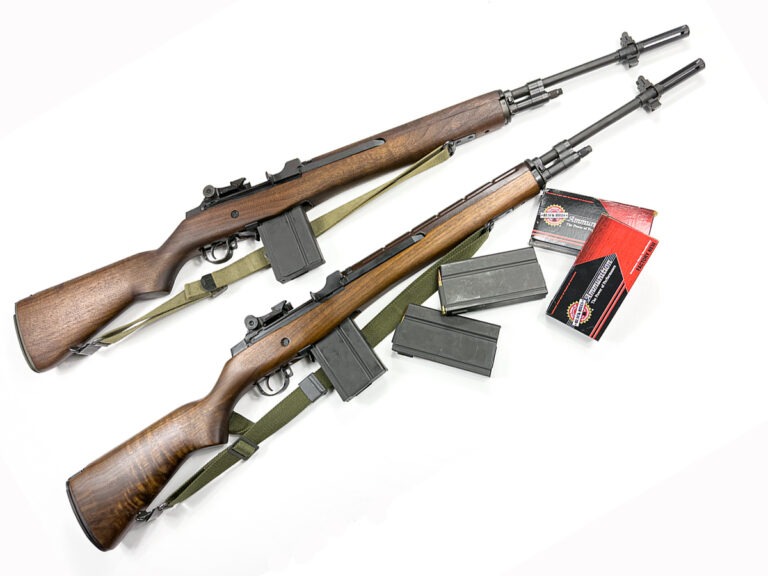
We take a look back at the life and times of the iconic M14, as well as where it stands today.
Retro has been all the rage in recent years, and the interest level in guns from the Cold War era has skyrocketed. Ignoring the nuclear reality of the geopolitical situation during the time period, the guns in question have become something of a cozy nostalgic experience against the constant barrage of bad international news and rampant domestic consumerism in the industry today.
Simpler times, if you will.
The past few years have seen a growing appreciation for the early War on Terror era and its various attempts to adapt Cold War systems to the needs of the time, among them the venerable M14. We look at the state of the rifle today and what might be to come for the legendary rifle.
The Best Rifle for a War Already Fought
There are certainly quite a few opinions surrounding the M14 and its merits. It has been accused of being too large, too powerful, not powerful enough, both very accurate and not able to hit the broad side of a barn, the shortest-lived service rifle and yet the one that kept coming back when the going got rough.
It seems like everyone has an opinion of this rifle, but the only true tragedy is that the gun didn’t come sooner. We could have had a rifle very similar to the M14 as early as the 1920s, but the government was hilariously concerned about soldiers losing magazines and wasting ammo, a thing that went so far as to be mockingly chalked up to as British custom (the SMLE had detachable magazines and a 10-round capacity).
For no reason that made sense, the U.S. government was deeply concerned with this and had been for decades, going so far as to put magazine cutoffs on the 1903 Springfield and doubting the need for stripper clip-fed bolt guns with the choice of the Krag rifle in the 1890s.
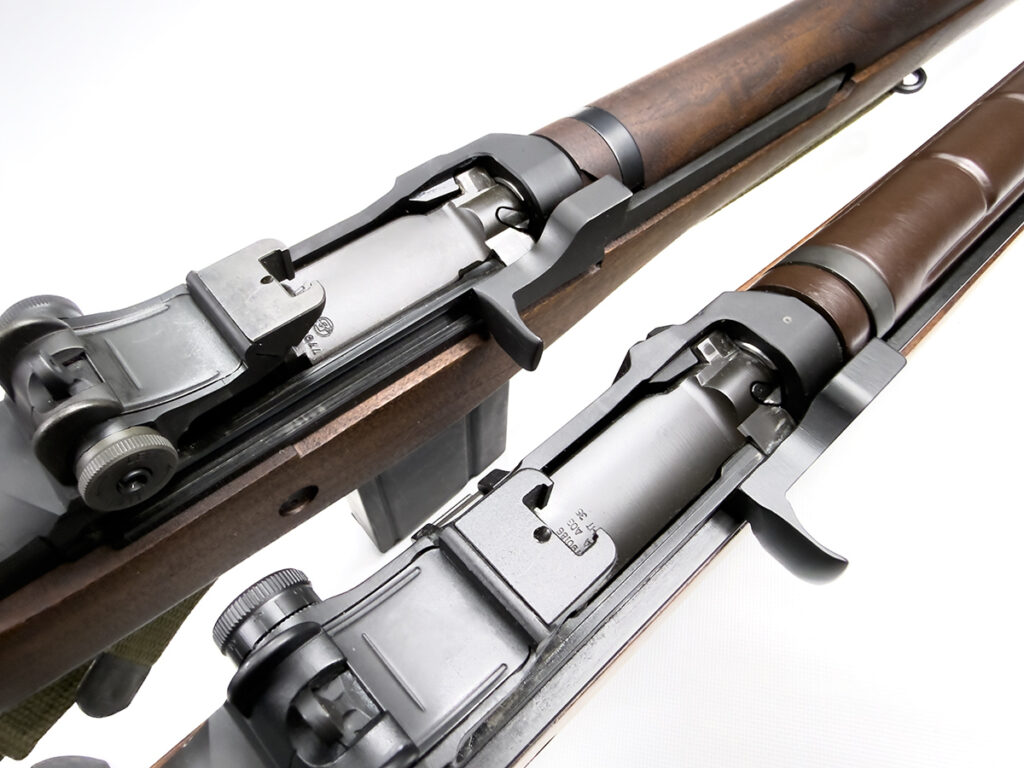
The experiences gained in World War II and Korea birthed the M14, and I stand by the fact that it would have been a great rifle for those conflicts … had it existed. For the naysayers, note that the Germans and Russians already had various attempts at detachable-magazine, full-power semi-auto or select-fire rifles that were developed actively in the war. The issues they encountered with the G43 and SVT40 (updated SVT 38) made them generally subpar, especially to the American M1 Garand.
Not only could they simply not make enough of these rifles; the ones that were produced were often of poor quality and the reception, especially of the later war G43s and the SVT series in general, for both accuracy and durability. The concept was solid, the execution not so much.
The desire to have this type of rifle was present in the American mind but unrealized in practice, and thankfully the M1 Garand was proven to be superior to Axis rifles in all ways except the issue of a detachable magazine. It should be noted that the Axis powers and Russia tried to mass-issue autoloading rifles, but they failed due to wartime stress. There were, of course, attempts to remedy this issue with the M1, but the war ended before any serious progress had been made. The M1’s lack of detachable magazine was notable, and it was, to many firearms experts, already obsolete during its production run.
The (Unwitting) Rifle of the Future
The American side of things had been slowly working on a general program for rifle improvement for some time, but there was a good deal of bureaucratic uncertainty involved and many competing ideas leading to a foot-dragging between various factions and their ideas of what was needed in service rifles.
After WWI, experiences gained led to a search for a self-loading rifle. This led to famous designs like the Pedersen rifle and the Garand, and it included a heavy debate on the merits of “small bore” rifles, namely chambered for .276 Pedersen. Of note is that most other world powers were capable of delivering on a detachable magazine semiautomatic rifle, while America wasted time much in the same way that they resisted bolt actions and stripper clip-fed rifles in the pre-WWI era.
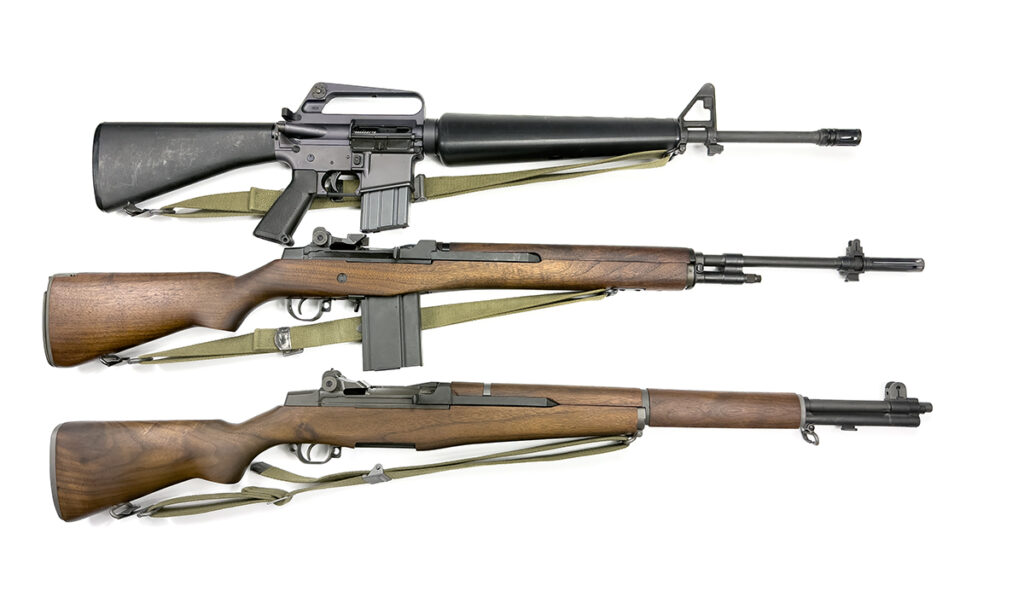
This amorphous program was referred to as the U.S. Light Rifle Program and led to many, many designs, both failed and successful. The general goal of the post-WWII program was to find a successor to the M1 Garand, and that is exactly what happened, just not in the most direct way. The program was lengthy, and there were many facets covered in both rifle and cartridge design.
The M14 came to us as the result of this program; however, the rifle did attempt to do a lot. In utilizing a compacted Garand-style action combined with a cartridge that was for all purposes very close in ballistic performance to .30-06 in the M1, the M14 was a guaranteed performer in terms of power. Making it select-fire and including magazines with capacity equal to the BAR (Browning automatic rifle) checked those boxes, making it able to provide squad support. Its overall size and weight made it easy to carry and point. On paper it was a great rifle, and in practice it was, too—but not in every role the military needed it for.
Like many jack-of-all-trade concepts, it was a compromise on several points, namely its powerful 7.62 NATO chambering and difficult handling in full-auto. World militaries at this time had only tinkered with what we call intermediate calibers, and the Western powers didn’t understand them well, comparing them to sub-machine guns in most period literature. A big culprit was the German StG44, what would be known as the granddaddy of assault rifles, of course chambered in the 8mm Kurz, an intermediate rifle round. The rifle was also referred to as the MP44, as in machine pistol.
What should be understood about the M14 and 7.62 NATO was that it was considered “normal” for the time, and the intermediate calibers like the USSR’s 7.62x39mm were effectively laughed at; the American mind was fixed on traditional rifles and long ranges. Intermediate cartridges were not taken seriously until they were encountered head-on.
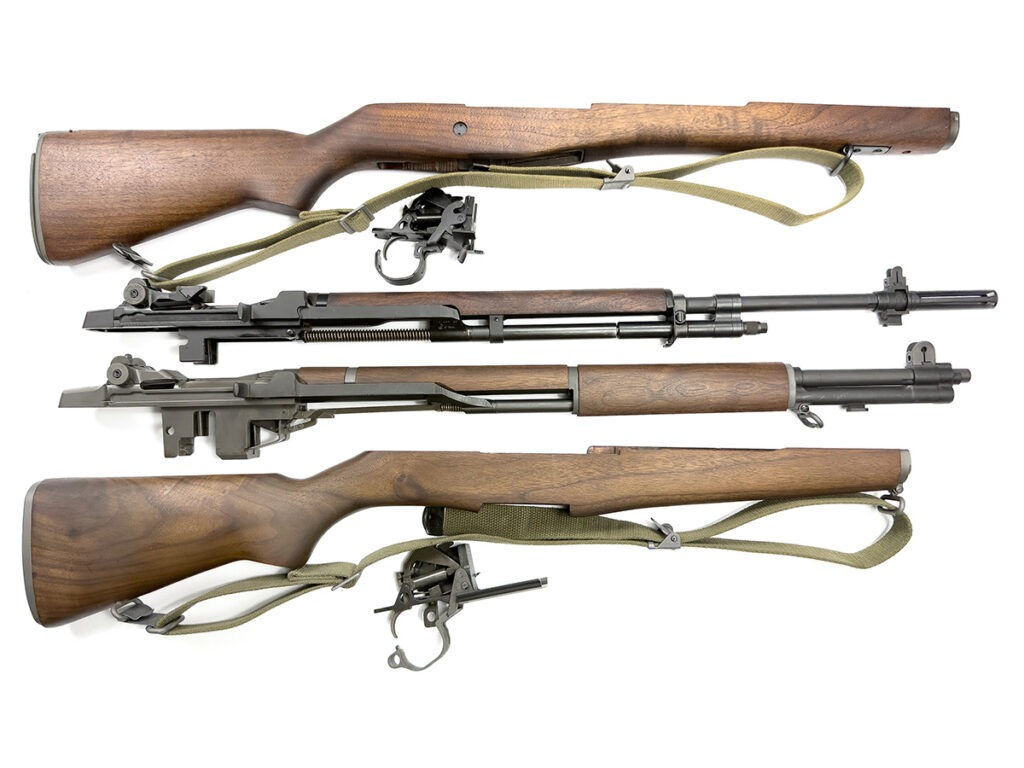
The idea that American and NATO forces had for their 7.62x51mm rifles was solid, but ultimately it would result in a back-and-forth with Eastern Bloc powers, resulting in the small-bore race in the 1960s. The 5.56 NATO eventually inspired the USSR to start looking for smaller and lighter options, and here we are today.
But, for the M14, going small had its hidden advantages. As wars changed and the demands of battle proved too much on the 5.56 NATO, the M14 was called back into service time and again. Sure enough, the War on Terror saw a complete resurgence and change of reputation for the M14, and it went from something of a pariah to a saving grace. Today, it’s held in high esteem thanks to its evolution into the storied EBR, and it’s now enjoying a resurgence in media and video games, with just a touch of nostalgia.
The M14 Today
So, there has to be a point made here that the civilian M14 and military M14 are not exactly the same rifle, despite accepting most of the same accessories. You can think of it the same way as any semi-auto “version” of a full-auto capable military weapon.
The simple reason this happens is because there is a wide commercial demand for these types of guns out of a simple desire for identical cosmetics. People love them, and they are fun. While nobody is going to say that a BAR or Tommy gun is going to be a great modern option, they will always turn more heads at the range than another AR. And, even at that, the retro AR options are always a bit more fun if you ask me.
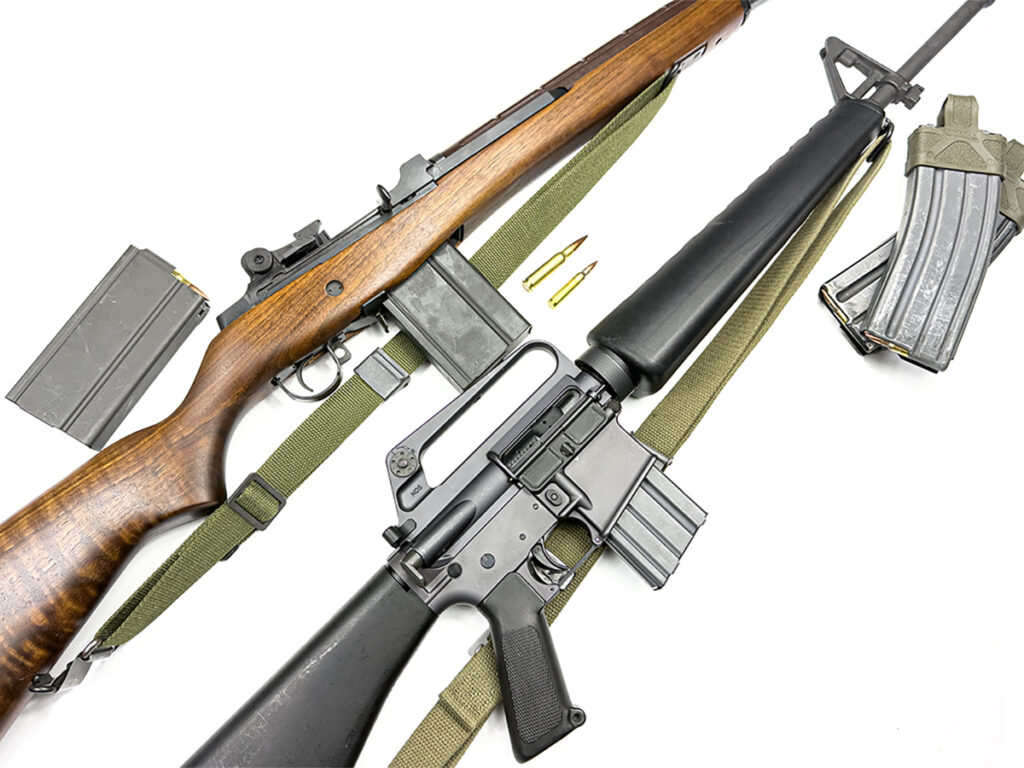
The civilian M14 doesn’t have a specific designation, and the M1A moniker belongs only to Springfield Armory. Calling a civilian semi-auto M14 an M1A is wrong unless it was specifically made by Springfield, the company that is responsible for bringing the original rifle to market in the 1970s after the government restricted the sale of converted military receivers to the public. Unfortunately for enthusiasts, the original receivers are machine guns and far harder to get, especially for people wanting to shoot at the time. That said, if you are into it, transferable select-fire originals are still around and don’t command outrageous prices compared to many legal machine guns.
The internals of the military M14 are different from the commercial guns, but the actual differences are not all that cosmetically significant. More people have seen and handled the commercial rifles at this point so the selector switch cutout isn’t a missed detail. Hardcore military clone builders can get their hands on a dummy switch and a corresponding stock pretty easily. The M14 today is somewhat unsupported by the aftermarket, and this has left a large gap after years of popularity decline.
Where Did the M14 Market Go?
So what happened to the M14 after all these years, and what is the deal with the surge in interest for it? The direct answer is that it simply lost relevance, as modern, AR-based designs filled in military roles and the stopgap measures eventually stopped appearing in the media. The M110 family started replacing the M14 EBR variants fairly early on, despite the incredible popularity of the latter in War on Terror media.
The classic 2000s-era guns we know and love were, for the most part, short-lived. The M4, M16A2 and A4 rifles that featured heavily were phased out for a variety of newer variants that were more easily able to accept the ever-changing accessories being used. Rail systems became popular, as did lights and lasers. The demands placed on rifles like the M14 proved too high for the old warhorses, and, despite being praised as reliable and universally loved for their aesthetic quality, they couldn’t keep up.
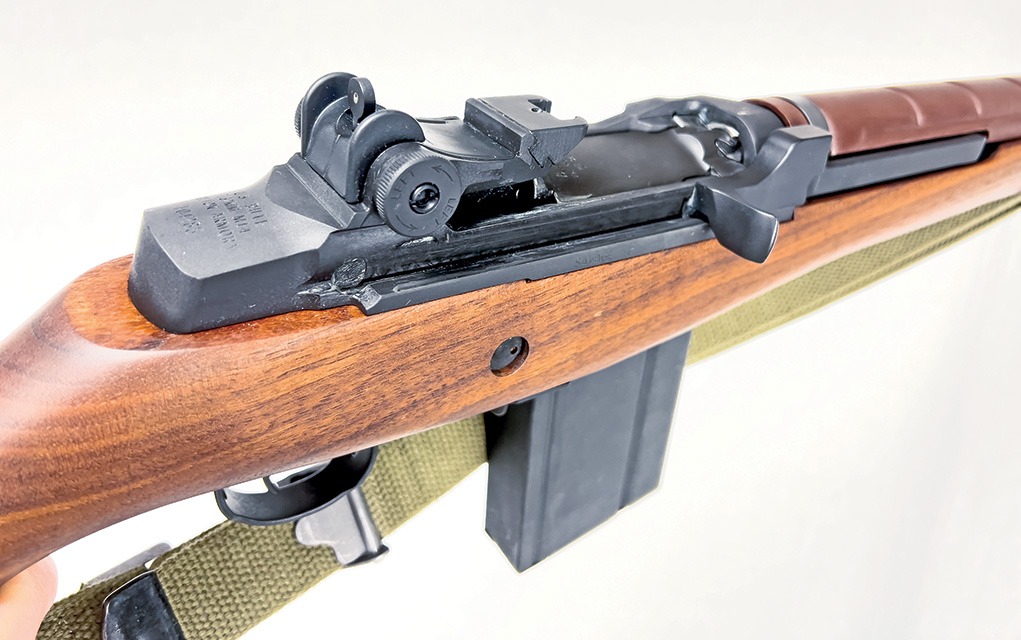
The civilian side of things saw the market dry up considerably, as military demand dwindled. And, having lived through it, the M14 peaked commercially around 2010, where it then sharply dropped off. Political trends in the country were gravitating toward support of the AR-15, which was the target of the Obama administration, but by his re-election in 2012, the entire 2A community was firmly behind preventing limits on the AR, the zombie thing was trending (just a reminder we did do this), and the M14 simply dropped off in popularity. The AR was truly the new big deal, and that trend has lasted to the point that the M14 market virtually went extinct.
This isn’t to say the M14 ceased to exist. The rifle remained popular in match shooting and some long-range events until it was also pushed out by the growing popularity of sports like PRS. It simply couldn’t adapt to the demands of changing rules, gear and advanced cartridges. However, these days the mood has changed, and the M14 is again being looked at, as things grow uncertain in the world and consumers burn out on modern guns. The retro wave has lasted far longer than anyone could have guessed.
The State of the M14
Today, companies are still making parts and accessories for the M14, but they are decidedly few in number. The main companies making this type of rifle are Springfield Armory, Fulton Armory, Bula Defense and LRB. There used to be quite a few more, including Chinese Norinco versions, but they have not been available in some time. Of note is that there are more companies making the M14; the James River rifle featured here has a Bula manufactured receiver.
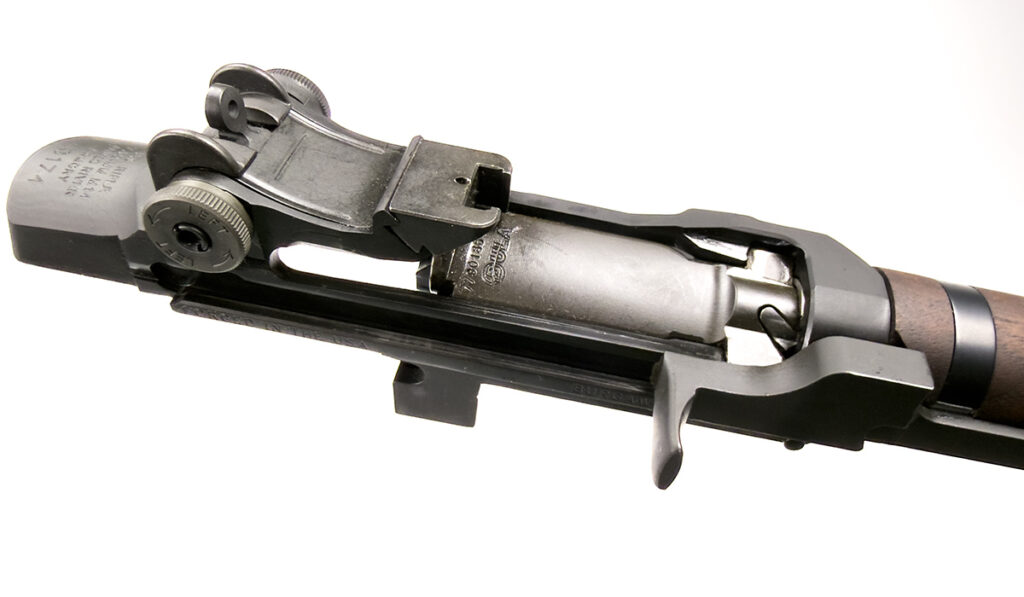
Stocks are available, but, again, few in quantity, as production never really ramped up after the drop off. Wood stocks can be had fairly easily as well as synthetic. Companies like Boyds make them, but you’ll need to be familiar with a bit of hand-fitting in some cases. Surplus stocks and a variety of fiberglass versions can be found on the surplus market as well. Forums and gun shows are a good way to source truly retro parts if you’re going for a certain look.
US Tactical Supply is currently releasing new production versions of the classic EBR chassis, but again, these are not exactly drop-in. You’ll need to be familiar with working on the M14’s barrel and gas system or get it sent off to be professionally installed. As with many of these older guns, they were not designed with modularity or easy servicing in mind. If you want it done right, you might not be able to do it yourself.
Barrels and small parts are a mixed bag. There’s still a good amount of like-new surplus floating around in terms of period-correct parts. Companies like Criterion make a number of barrels appropriate for the M14, but installation is a more professional endeavor. Headspacing is best left to a custom shop, as it’s a complicated procedure unlike the easy install on AR rifles or modern pre-fit bolt guns. Many of the quality barrels are chrome lined, and companies like Fulton Armory are experts at their installation, for which you can’t use a chamber reamer. The barrels must be intricately timed and headspaced to the receiver and the bolt. Suffice to say, it needs to be done right.
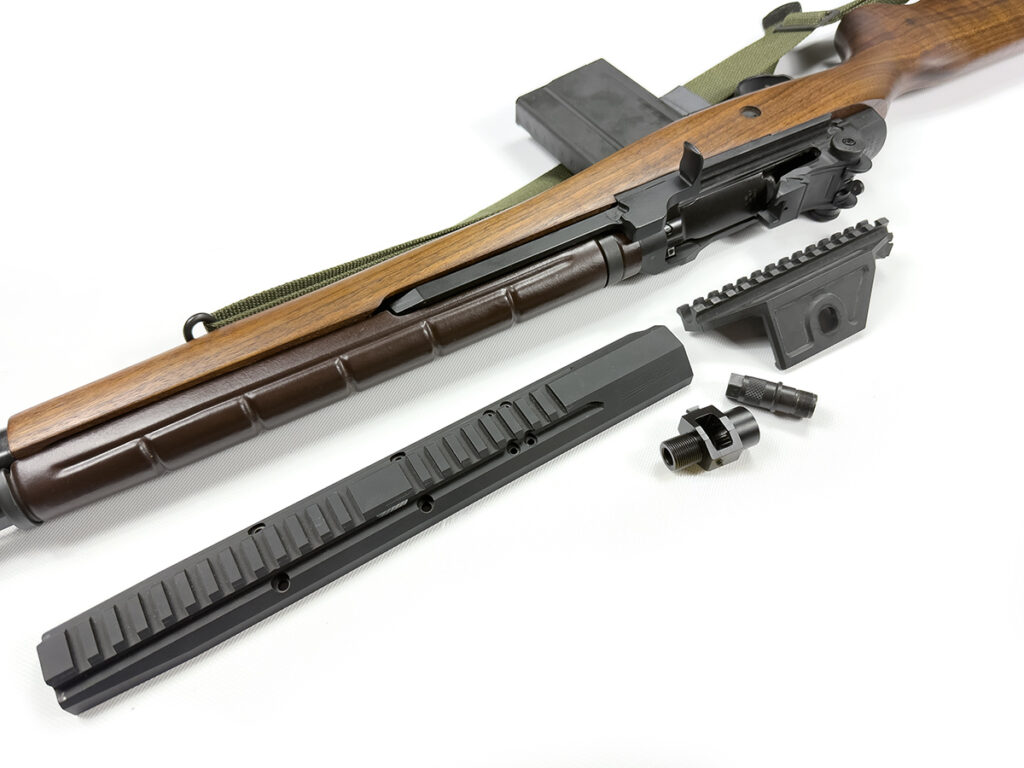
Optical mounts and the like are still widely available, and you can have your choice of receiver-mounted versions or scout style, like those from Ulitmak. I have had success with both of these, but again it should be noted that these are truly not the same as installation of parts on an AR. Installing an M14 receiver optic mount is a bit of a pain and, while not exactly 10/10 difficult, it does require know-how.
You might be sensing a trend here that these rifles aren’t exactly easy to work on.
Editor’s Note: This article originally appeared in the March 2026 issue of Gun Digest the Magazine.
More Classic Military Rifles
- The Karabiner 98k: The Best Combat Bolt-Action Rifle Ever Made
- SKS: Collecting & Identifying The Simonov
- All About The Mosin Nagant
- The Gewehr 43: The Road To Germany’s Garand
- Fusil Automatique Leger: Everything You Want To Know About The FN FAL
- Lee Enfield: The Right Arm Of The Empire
- The Rise And Fall Of The AR-10
- The M1 Garand: America’s Original Battle Rifle

Next Step: Get your FREE Printable Target Pack
Enhance your shooting precision with our 62 MOA Targets, perfect for rifles and handguns. Crafted in collaboration with Storm Tactical for accuracy and versatility.
Subscribe to the Gun Digest email newsletter and get your downloadable target pack sent straight to your inbox. Stay updated with the latest firearms info in the industry.



Lugs in the M14 receivers could have been machined off rendering them semi-auto only but instead Democrat Presidents Lyndon Johnson and Bill Clinton had 400,000 and 450,000 of them cut in half and scrapped.
The demilitarized M14s could have been sold through the Director of Civilian Marksmanship (DCM) or its successor, the Civilian Marksmanship Program (CMP) as are surplus M1 Garands to this day.
This would still be possible but there are only 66,000 left in the hands of the military and they still have a role as rifles for snipers and designated marksmen. Long range lethality is a good thing to have when diplomacy fails.
Correction: The M14 cannot be rendered semi-automatic simply by machining a lug in the receiver. Instead, full-auto capability on original select-fire M14 rifles was disabled by removing or modifying the external selector switch components.
Original M14s were select-fire rifles with a fire selector lever on the right side of the receiver. During standard military use, most of these were converted to semi-auto only to prevent soldiers from wasting ammunition, as the rifle was notoriously uncontrollable in full-auto.
The uncontrollable part is something I experienced myself. After a few bursts John Wayne style, I had no further interest in continuing in full auto.
Wish you would have addressed the issue of “out of battery fire”. From a technical standpoint, that doomed the M14 and still plagues the M1A variant. Battle is a notoriously dirty environment with mud and debris regularly fowling the actions. To have a rifle that can fire when the action is not quite locked up is ridiculous. The resulting injury to the shooter and the destruction of the action, control arm and trigger mechanism is not an acceptable price to pay. Shooters have lost eyes and had exploded pieces of the action embedded in their foreheads over this design flaw. A few have even been killed. The M-16 bolt lock-up design prevents out of battery fire. Please give us an article about this, and keep the good stuff coming!
M-1 design, with no external magazine, was based on the idea of keeping the rounds inside the gun’s frame, as extended magazines can get damaged and get in the way of prone firing positions, etc. The original .276 caliber gave the enblock design, I believe, 10 rounds. The Brits issued one magazine, maybe two, to their riflemen and reloaded with stripper clips in the first years of the war. By the time semi-auto designs came around, ammo wastage was not a big deal like it was with the Krag and Springfield. M-1 Carbine put a nail into the ammo usage complaint.
From what I’ve read in the past the M14 was basically doomed from the start. Some “brilliant” folks wanted the M14 to surplant the M1, the BAR, and the submachine gun. As those trying the FN FAL found, a full auto rifle in a +or- 10 lb. rifle was was almost always uncontrollable in a “Battle Rifle” caliber.