
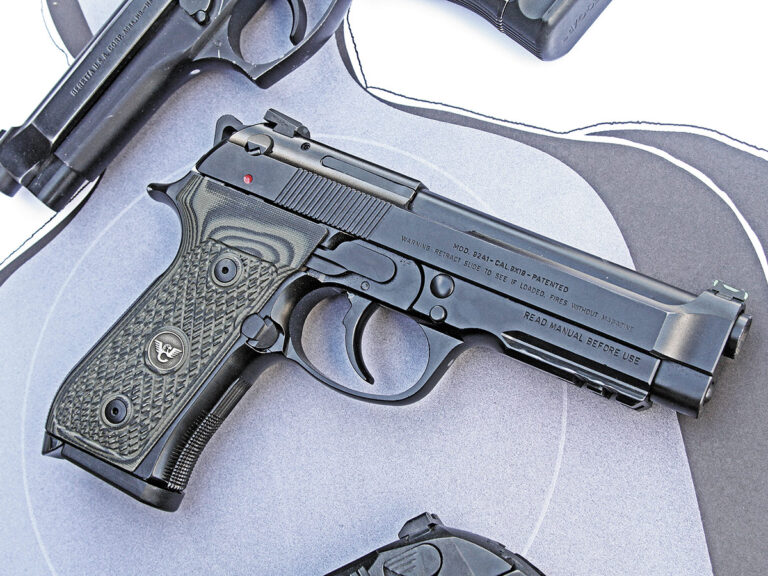
We discuss the pros & cons of double-action auto pistols and how to properly train with them.
Nobody’s perfect! Before reading this article, take a moment and remember the time you accidentally dropped your phone, stubbed your toe on the wall that had to have moved, or made a mistake that you thought was right. Yes, you’re human—it happens. When it comes to handguns, the extra margin of safety in the traditional double-action semi-automatic handgun (DA auto) is driving its resurgence. Far from it being a handicap, many of the top Production division competitors are using double-action/single-action (DA/SA) handguns in national and world practical competition, against guys running the latest striker-fired handguns. Is that pure coincidence? I don’t think so.
With a clear division between striker-fired handguns and DA autos, let’s take a look at the pros and cons of a DA system and some of the reasons I’ve chosen to stick with a DA auto. Then, we’ll discuss ways to master that long-pull trigger, and what to look for in a DA pistol.
The Cons Of Double-Action Autos
Common reasons people choose not to use the DA auto include:
“I don’t want to train to use two trigger pulls.” You have to make it a point to focus on training for that first DA trigger pull, but it’s by no means an insurmountable task.
“The long first trigger pull is too difficult for an accurate first shot.” No, the long first trigger pull isn’t too difficult to achieve an accurate first shot; with correct training and technique, it can become second nature. The first pull is longer, which requires the shooter to stay focused on aiming the gun and the intent of the first shot. Not only does this decrease the odds of anticipating the first shot, but it often results in better accuracy than a SA pull.
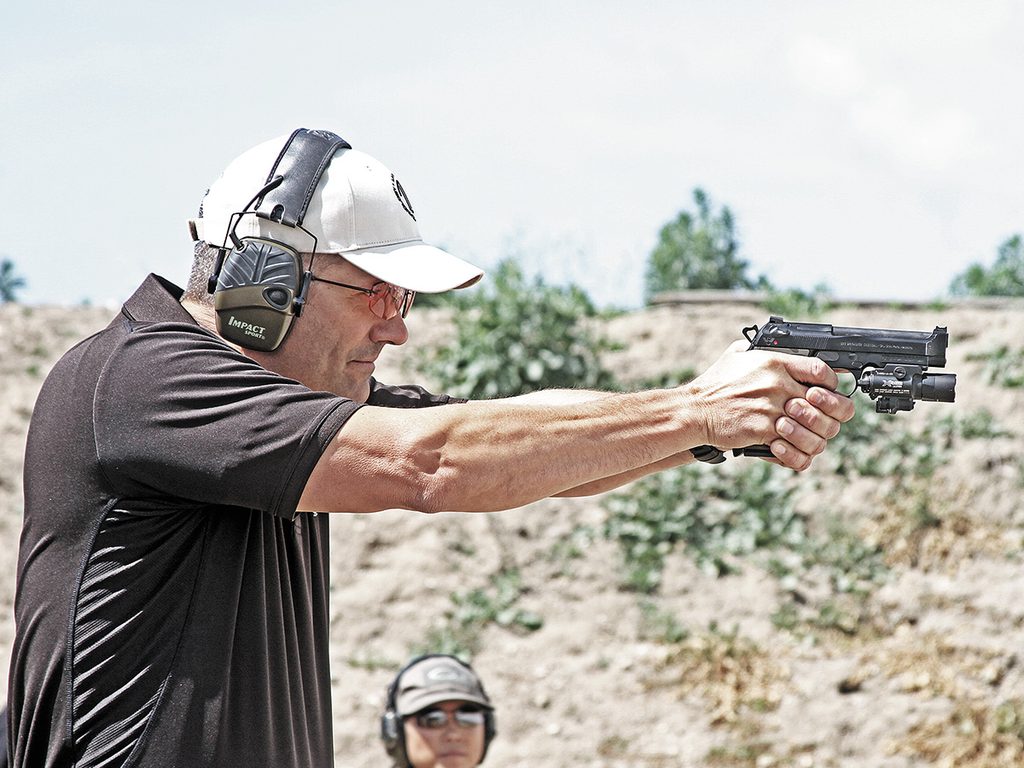
“It’s hard to train people to de-cock before holstering. We don’t want them holstering with the hammer back.” Let’s take a step back here. So, we believe we can train people to always keep their finger straight and outside the trigger guard unless they’re ready to shoot, but supposedly teaching them to de-cock is too difficult? Most trainers believe that carbines and 1911s should be put back on safe if you’re not actively engaging, and we train to that standard all the time.
This same standard should be applied to your manual of arms training for a DA auto. The truth is that holstering a DA auto with its hammer back isn’t much different than holstering many striker-fired guns on the market. Look closely at the inner workings of many striker-fired pistols and you’ll see that most of the newer, most popular striker-fired guns have a fully cocked striker, essentially making it a SA gun with no external safety apart from the one in the trigger face. You know, the one that gets disengaged if you shove it in a holster with a bit of your shirt in there …
The Pros Of Double-Action Autos
Confidence under extreme stress. Let’s face it—the first shot is the one that usually gets people in trouble. I’ve traveled the world, training shooters with varying skill levels. I still have to tell people all the time, “Keep your finger straight!” Even the elite and most well-trained shooters often need this reminder. Most of the guys I work with consider themselves to be well trained, yet when I say, “finger straight at the ready,” they have to look down at their own hand to realize I’m talking to them. In structured force-on-force training, it’s alarming to see the number of people who put their finger on the trigger when they get scared and amped up. Under extreme stress, people resort to putting their finger on the trigger when they shouldn’t, and the phenomenon of “finger checking” is well documented. The distance of the trigger travel is what helps keep people out of trouble with a DA gun.
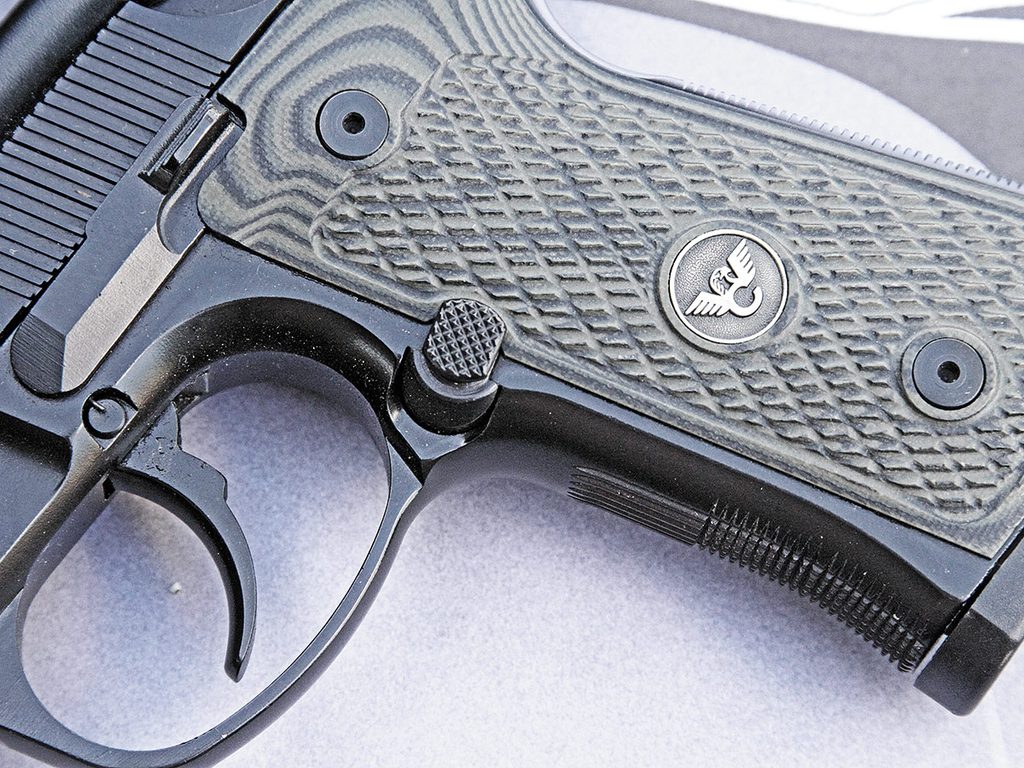
Aggressive to the trigger, with confidence! The first shot with a DA handgun has an advantage for most practical, real-world shooters. Once the decision has been made to shoot, a shooter can be really aggressive to the trigger and start pulling it much earlier in the presentation to the target than would be possible with a SA or striker-fired gun. For me, the biggest difference is that I have confidence that the gun won’t fire before I’m ready. Real success with a DA gun comes from combining the presentation of the pistol, aiming the gun, and pulling the trigger at the same time. The last part of the presentation to the target combines aiming and pulling through the rest of the DA trigger pull. With a SA or striker-fired gun, I have to wait until the last millisecond of the presentation and aiming to start pulling the trigger. Getting on the trigger early on a striker-fired mechanism leads to bad things happening.
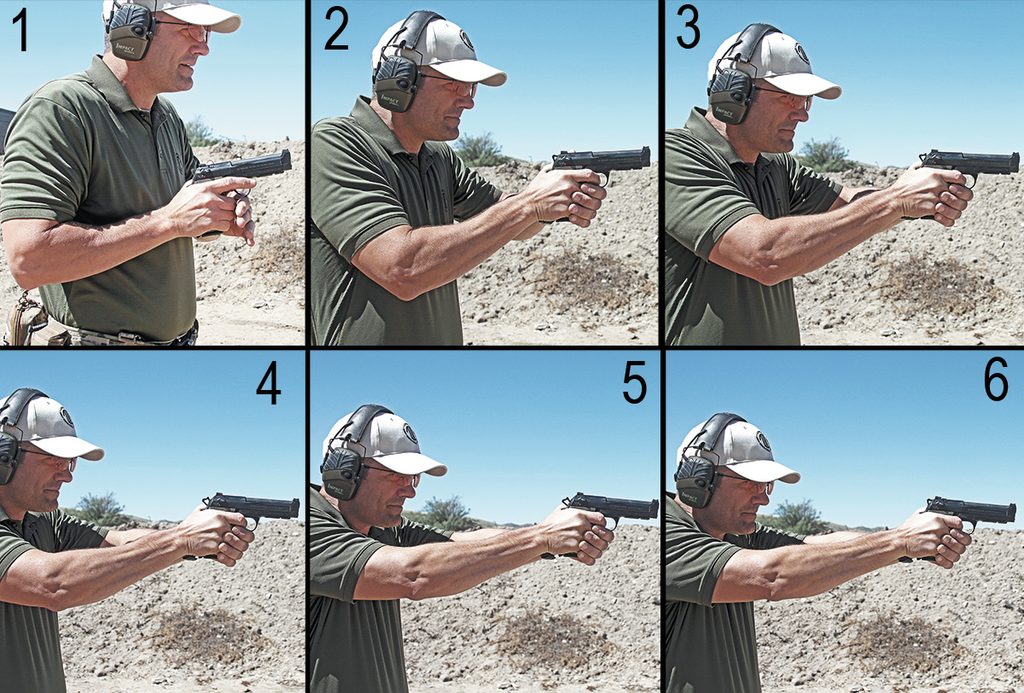
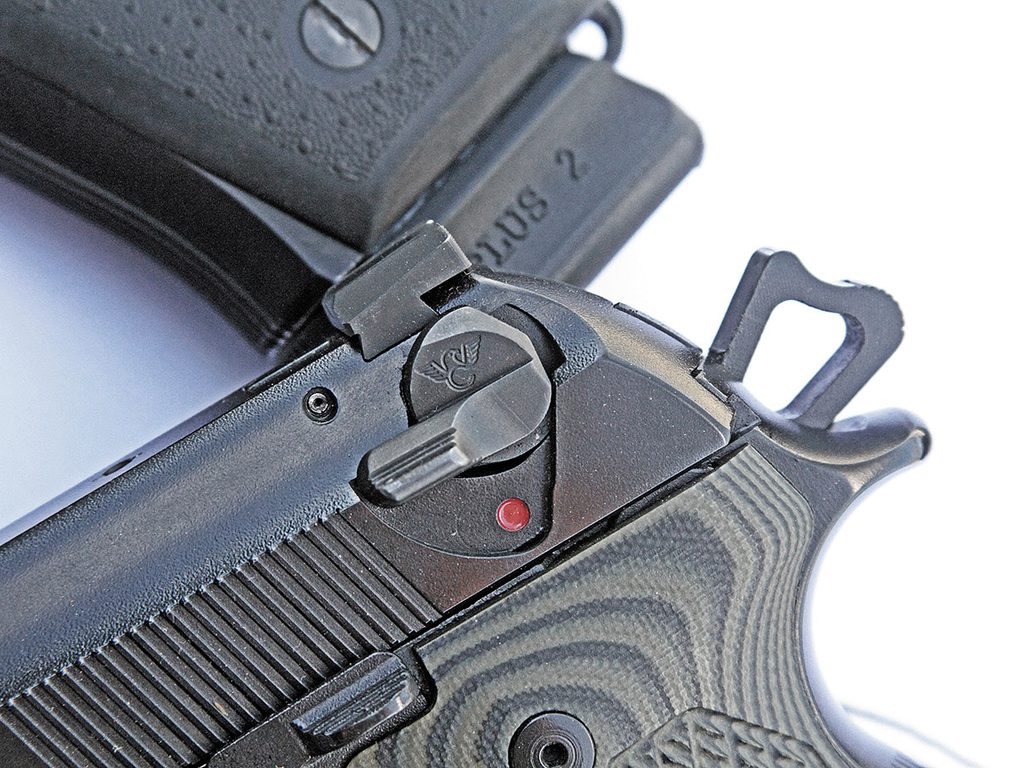
Complete control of firing mechanism when holstering. For years, I’ve taught shooters to put their strong thumb on the hammer when holstering a DA auto. This accomplishes two things:
- You know and can feel that you’ve de-cocked the gun when you holster.
- You have total control over the hammer and the firing mechanism.
If anything gets into the trigger guard, you’ll feel the hammer move long before the gun fires, allowing you the opportunity to stop and fix the problem before something bad happens. With the popularity of appendix carry, many people have switched back to DA handguns for this type of carry due to the added safety a hammer fired gun provides. I’ve personally been on the range when someone holstered a striker-fired gun with a shirt in the trigger guard, ending with a loud noise and a trip to the ER.
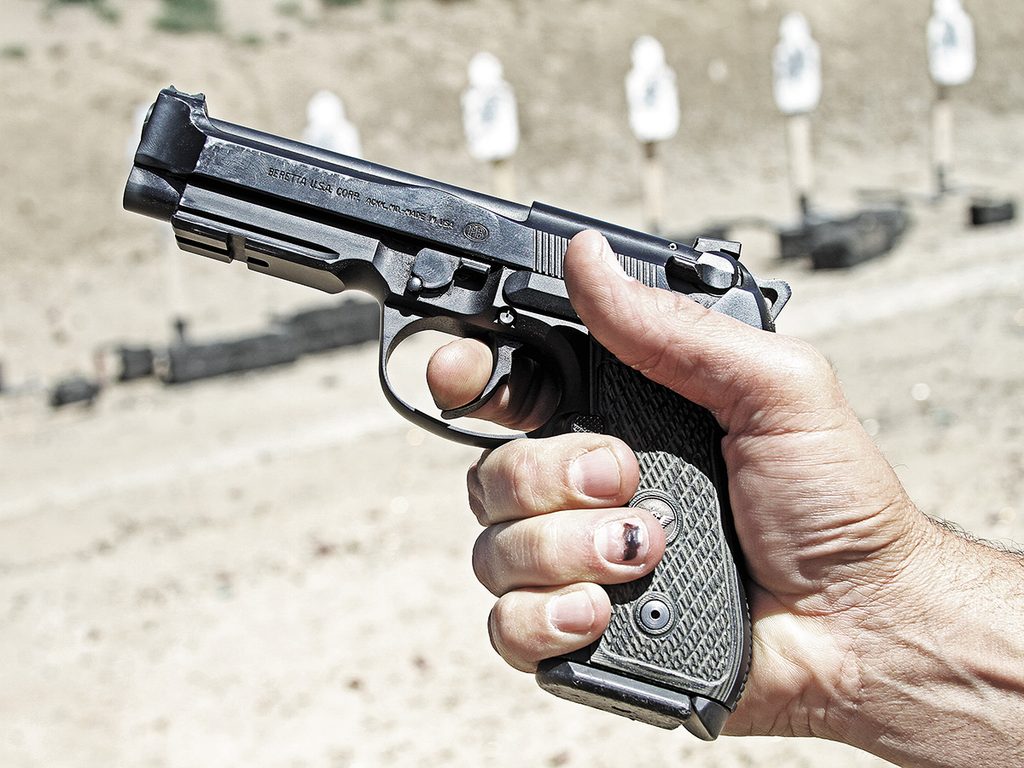
Better trigger pull after the first shot. One of the reasons many people love the DA auto is that after that first shot, you have a great SA trigger. The triggers on traditional DA/SA handguns have crisp, consistent trigger pulls each time in single action, while most striker-fired guns have a spongier, less consistent pull for every shot—the way they break isn’t as consistent pull after pull. A consistent trigger leads to faster and more accurate follow-up shots no matter the shooter.
How To Train The Double-Action Shot
One of the first things to learn is trigger finger placement. The DA trigger pull often requires the shooter to put more trigger finger on or past the trigger than you would with a 1911-type single action. When learning to pull a DA trigger, try sticking more trigger finger in and past the trigger, providing more leverage for you to pull the trigger straight to the rear. Test this in dry-fire, with the goal of the hammer falling with no movement of your sight picture at all.
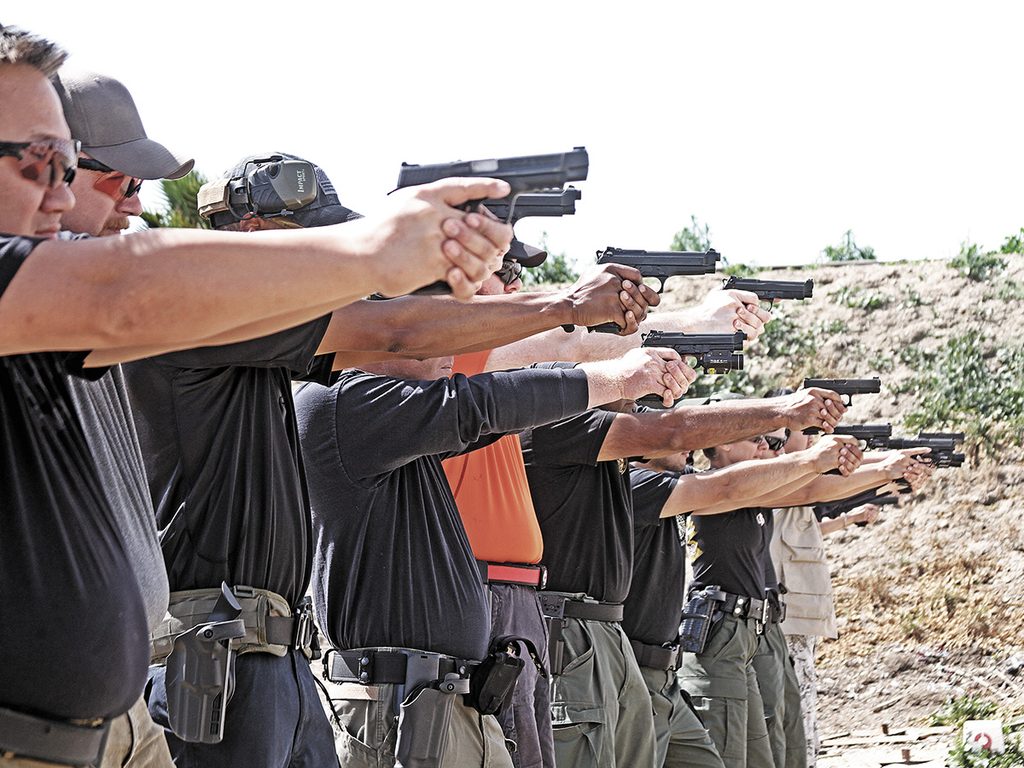
The key is to pull through the DA trigger at a constant speed. It can be very fast, but it needs to be consistent. The trap that many DA auto shooters fall into is trying to finish the DA pull by speeding up at the end. We start to pull the trigger smoothly and consistently, and then try to accelerate at the end of the pull to finish and get to the shot. For proper DA trigger control, you want to focus on stroking the trigger. Keep a constant, consistent speed.
What Do I Look For In A Double-Action Auto?
One of the key features in a DA auto is where the trigger pull breaks. The point at which the trigger breaks in DA mode and SA mode should be as close as possible. This allows you to train your trigger finger to go back to the same spot to release the trigger and cause the gun to fire, whether in double action or single action. Some DA autos release the hammer in DA mode at a much earlier point in the trigger pull than in SA mode. This causes an excessive amount of overtravel in double action and makes the shooter hunt for the trigger prep point in single action. I believe this makes it much harder to learn to shoot well with such a handgun.
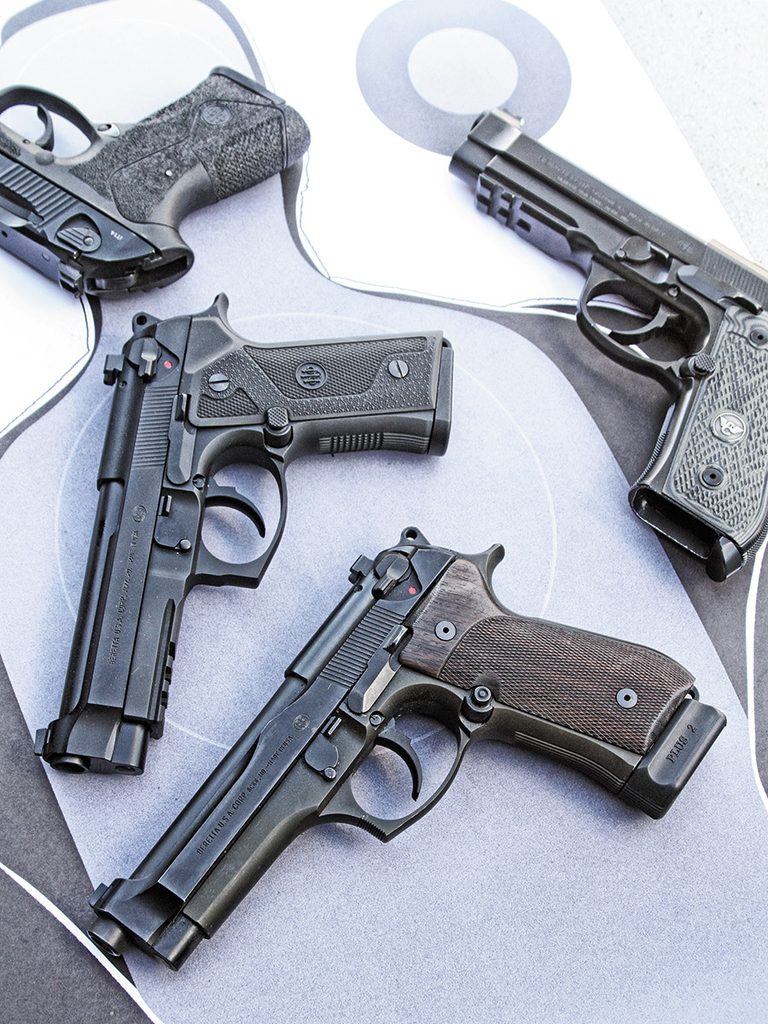
One of the reasons I’ve chosen to run the Beretta 92 platform is that I feel it has the best DA pull and the closest release points for both DA and SA trigger pulls. In his new book, Gun Guy, Bill Wilson, president and owner of Wilson Combat says, “If you look where the trigger is when the hammer falls on a Beretta, the trigger is in basically the same place double- and single-action. When you come back to the trigger for the second shot, the trigger is in the same place. You don’t have to search for it. That’s why you can transition from double to single so easily with a Beretta.” There are also many other great DA autos out there in many different sizes, shapes, and calibers.
Give Double-Actions A Try
The reason the DA auto came into existence was to give users a more forgiving trigger option in a semi-auto pistol. Users, mainly law enforcement and the military, wanted the capacity and shootability of the SA auto with the safety of a revolver. I think those reasons still stand true, and it’s still a safe and logical answer. At the very least, it’s worth a try. It might even make you a more well-rounded pistol shooter by practicing on a DA auto, no matter what gun you choose.
Editor’s Note: This article is an excerpt from Issue 46 of Concealment magazine, GDTM’s sister publication. For more info or to subscribe, go to RecoilWeb.com.
More Double-Actions Autos
- Three Classic Double-Action Autos That Still Do Their Job
- Sig Sauer P6 Review: Collectible But Usable
- Beretta 80X Cheetah Review: Good Kitty Or Damn Pity?
- Smith & Wesson 1006 Review: One Double-Ought Six
- SAR 2000 Review: A Turkish Take On The Czech Classic
Next Step: Get your FREE Printable Target Pack
Enhance your shooting precision with our 62 MOA Targets, perfect for rifles and handguns. Crafted in collaboration with Storm Tactical for accuracy and versatility.
Subscribe to the Gun Digest email newsletter and get your downloadable target pack sent straight to your inbox. Stay updated with the latest firearms info in the industry.

Growing up wth revolvers, the DA pull in a well made pistol never has been a problem. I hear flack all the time about how much faster a striker fired non-safety pistol can be deployed in a crisis. That double action start is reassuring when you’re awakening from a deep sleep and the goal is keeping the family nearby safe. Given how fast Jerry Miculek and his daughter accurately can empty a .44 magnum revolver on a target, I can’t imagine the DA/SA semi-auto being anything more than a training exercise.
In case of home defense, particularly in relatively close quarters and poor lighting conditions, for the average home owner I believe a double action is preferable. It gives him/her the opportunity to respond quickly but in a more considered situation than just a quick shot.
In another lifetime I was certified as a Beretta armorer so I guess I’m entitled to a reasoned opinion on this issue. The DA first shot is NOT in and of itself the issue. The issue is that for many (most?) shooters (myself included) in order to achieve a viable trigger pull the shooter has to slightly alter their grip for that first shot and then change back to a ‘normal’ grip/trigger squeeze for subsequent shots. NOT necessarily a deal breaker but it does add an extra dynamic to the pistol. As the article indicated, training can make a lot of difference.