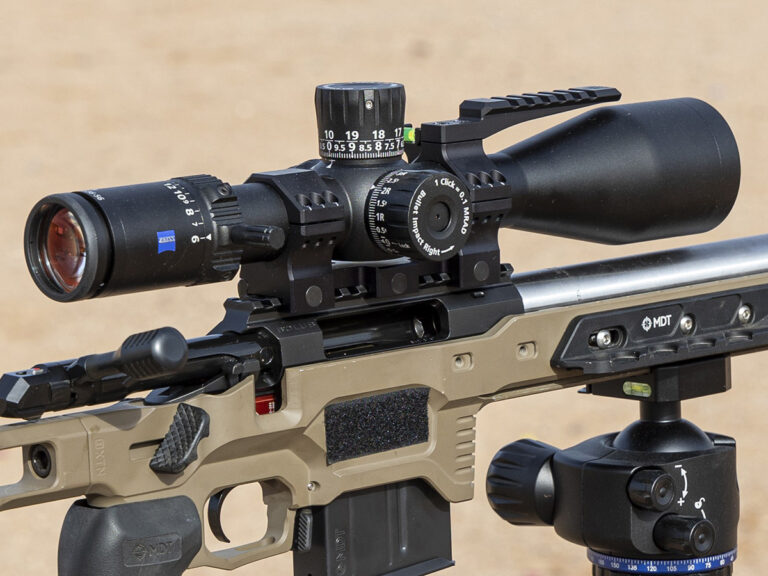
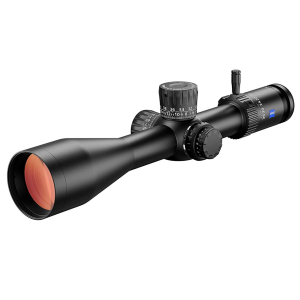
Good glass is expensive, but the Zeiss LRP S3 6-36×56 punches well above its weight.
6 months ago, if you asked me the top 10 rifle scopes for long range distance shooting, I would have honestly forgotten that Zeiss even made a scope for the job. Zeiss has been around since my grandfather’s grandfather was still trying to find the last potato in Ireland, and is one of those rare brands that is everywhere but often just out of sight.
Outside of the camera world and the world of precision optics for industrial applications, Zeiss isn’t a huge name in the hunting or competition world. But they absolutely should be.
Zeiss Is German For Great Glass
In 1846, Carl Zeiss founded the Zeiss brand with two partners, Ernst Abbe and Otto Schott. 180 years later, Zeiss is well-known in every field that requires optics of any kind. Zeiss is found in a lot of things you’ve heard of and a lot of things you haven’t, like ophthalmic lenses, lenses used in semiconductor manufacturing, microscopes, and even the optics used in the James Webb Space Telescope.
Little-known fact: without Zeiss, we literally wouldn’t have the modern world as we know it, since it was Zeiss that designed the unimaginably precise mirrors used in EUV Lithography production. Basically, if you use a smartphone, computer, or anything else with a microprocessor chip made in the last 20 years — thank Zeiss.
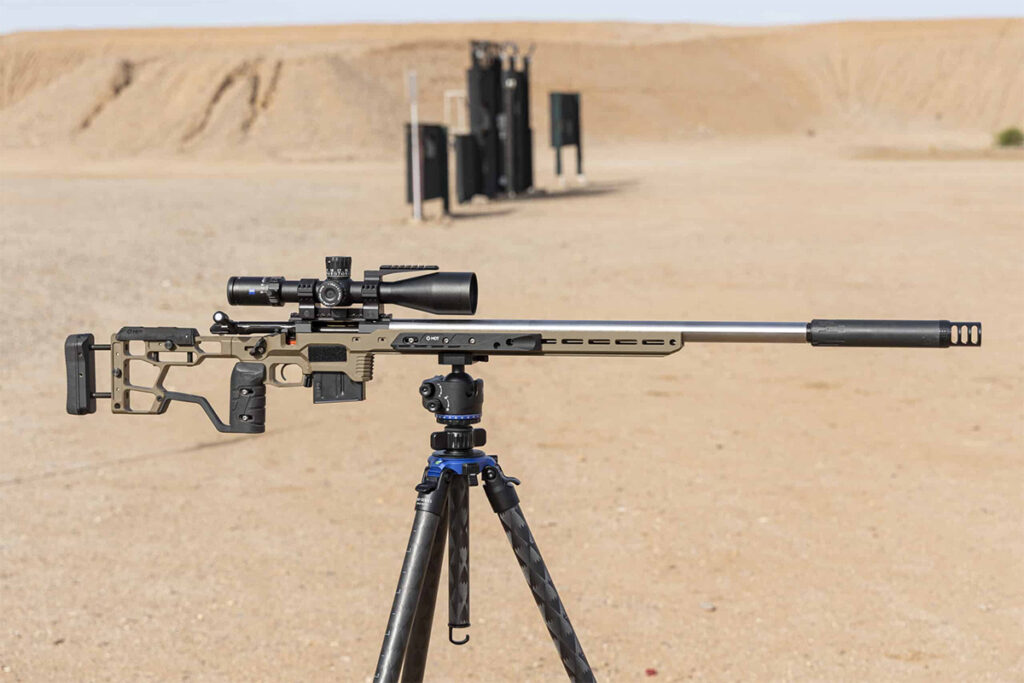
With over 46,000 global employees and a yearly revenue of over 11 billion dollars, the hunting and competition shooting market is small fries to a company like Zeiss. While Zeiss has offered binoculars, spotting scopes, and hunting-focused rifle scopes for a long time, it took most of us by surprise when Zeiss launched the LRP S5 and S3.
Since then, this has absolutely been an optic that is being slept on hard by the community.
Zeiss LRP S3 6-36×56 Specs & Features
- Magnification: 6–36×56
- Focal Plane: First
- Reticle Options: ZF-MOAi | ZF-MRi
- Light Transmission: 90 %
- Effective Lens Diameter: 56 mm
- Exit Pupil Diameter: 8.8 – 1.6 mm
- Twilight Factor: 17.7 – 44.9
- Field of View at 100 m (yds): 6.8 – 1.1 m (20.4 – 3.3 ft)
- Objective Viewing Angle: 3.9° – 0.6°
- Diopter Adjustment Range: + 3.0 | − 3.0 dpt
- Eye Relief: 80 – 90 mm (3.0 – 3.5″)
- Parallax Setting: 10 m – ∞
- Elevation Adjustment Range at 100 m: 32.0 MRAD | 110 MOA
- Windage Adjustment Range at 100 m: 14.6 MRAD | 50 MOA
- Adjustment per Click at 100 m: 0.1 MRAD | 0.25 MOA
- Main Tube Diameter: 34 mm
- Eyepiece Tube Diameter: 45 mm
- Objective Tube Diameter: 65 mm
- LotuTec: Yes
- T* Coating: Yes
- Nitrogen Filled: Yes
- Waterproof: 400 mbar
- Operating Temperature: − 25 °C | + 55 °C (− 13 °F | + 131 °F)
- Length: 384 mm (15.1″)
- Weight (Without Inner Rail): 1,107 g (39.1 oz)
On The Range
Two things are immediately noticeable when first using the Zeiss LRP S3. First, the glass is classic Zeiss, being incredibly bright and clear. This is the magic Zeiss has that no one else does. For brightness and color clarity, Zeiss is almost impossible to beat, even at high price points.
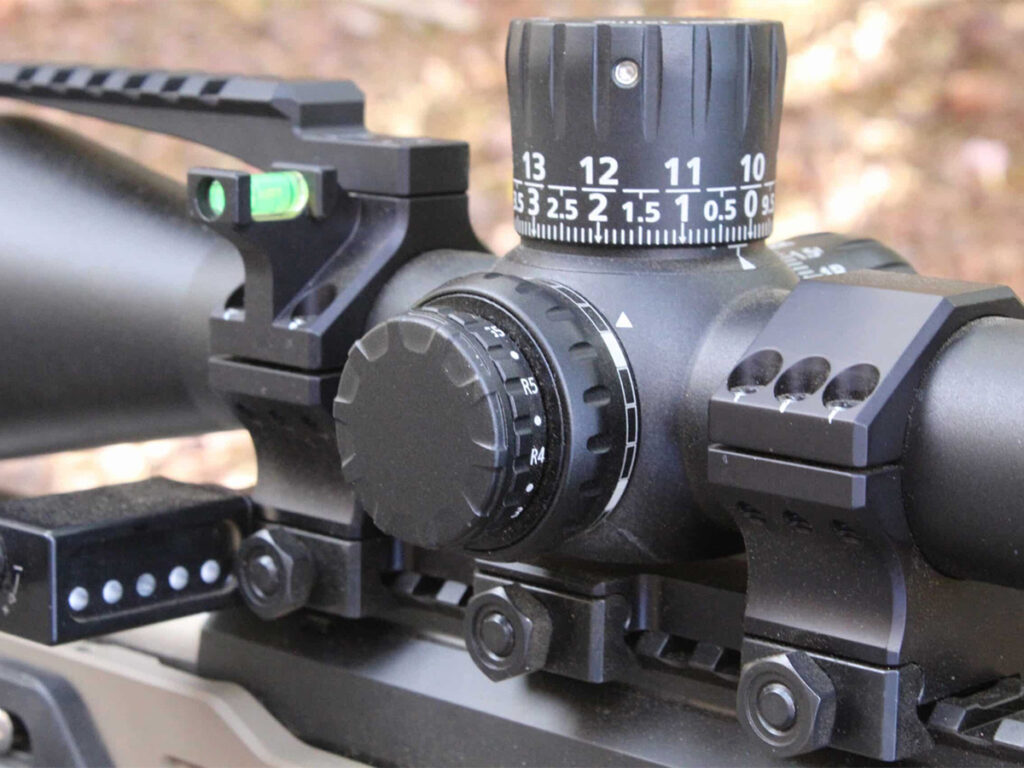
Second, the scope design feels a little foreign. Small things like the parallax not having range markings, the magnification level being written on the body of the scope instead of the adjustment ring, and even the style and size of the font used are just different choices than what most NA-based manufacturers choose. None of that is a bad thing, it’s just different.
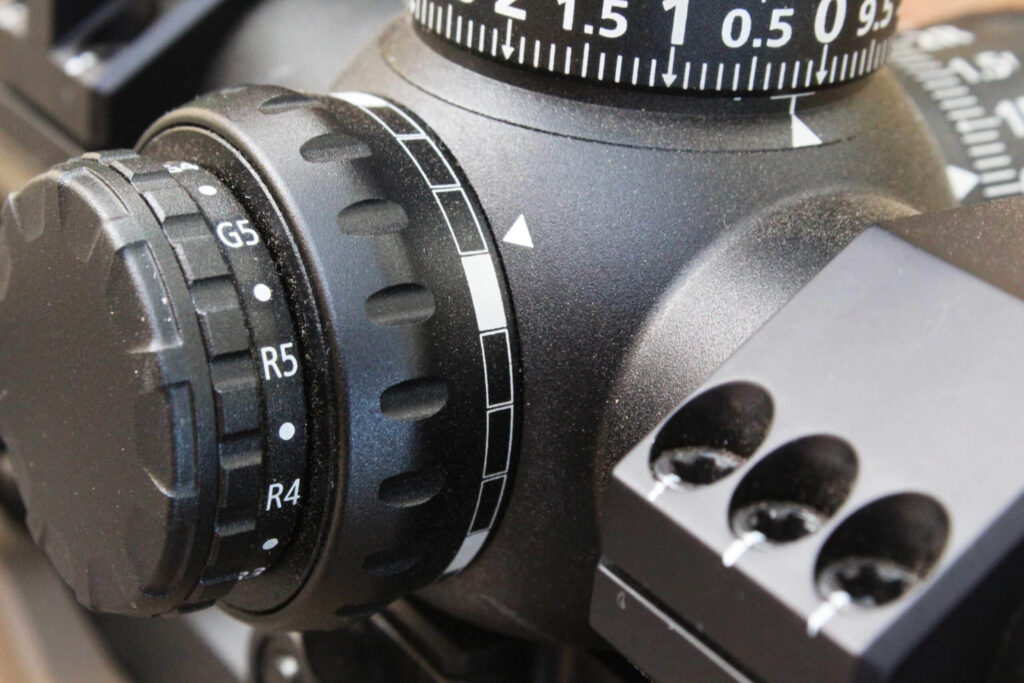
Those differences take a little getting used to if you’re like me and you’re coming off of years of using Vortex, Bushnell, NightForce, Burris, SIG Sauer (USA), etc. But after a few range trips, the differences are mostly forgotten.
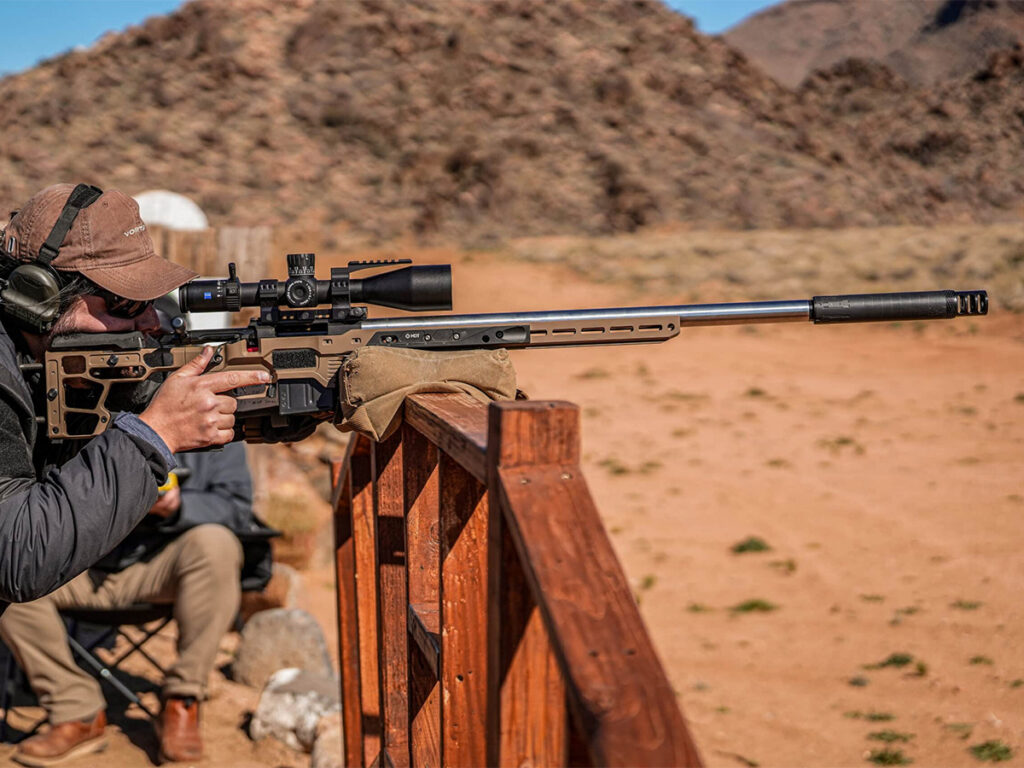
Putting the LRP to use on the clock has been nothing short of an absolute treat. First at a local PRS match and again at the Berger Precision Challenge, the Zeiss LRP performed amazingly well. The stunning glass of the LRP makes finding and IDing targets incredibly easy, even with they are beat up dark gray targets in the shade of a setting sun at the end of your day.
It’s really impossible to completely convey just how bright this glass is. Pictures won’t do it justice. You have to see it.
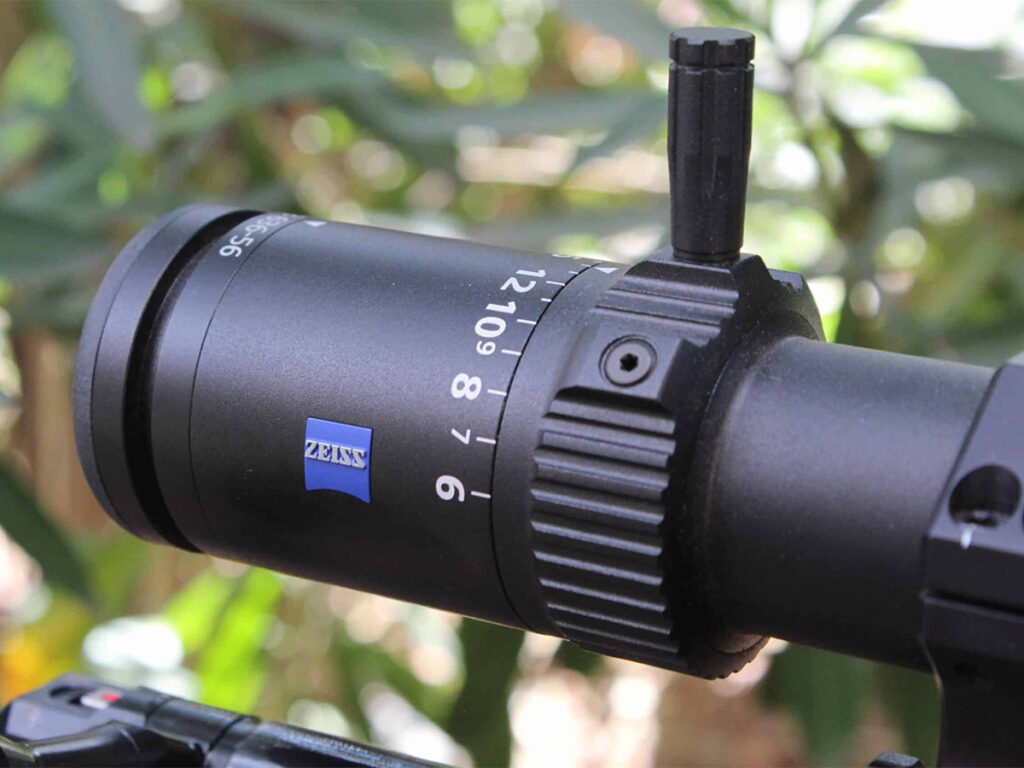
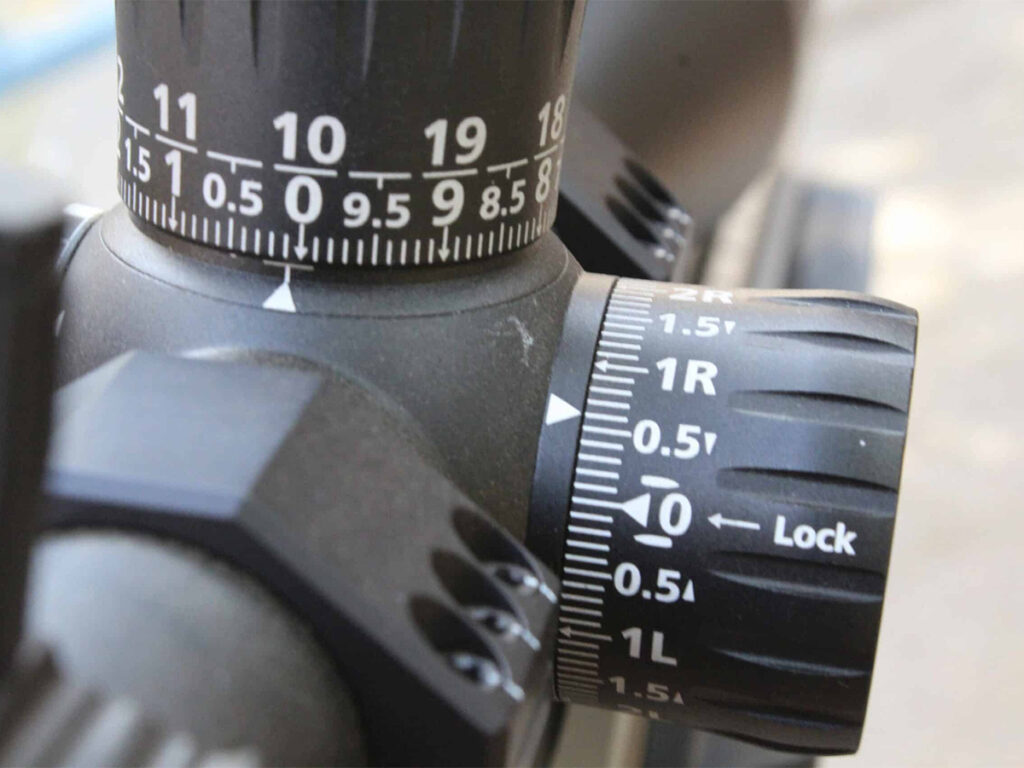
From 100-yard shooting groups to 1,000 yards banging steel for points at the Berger match, the Zeiss LRP never let me down. Turrets are clicky and easy to read, turret tracking has been perfect through hundreds of cycles, and even getting dropped on the ground didn’t shift zero. Partly thanks to the Hawkins heavy Tactical one-piece mount holding the LRP.
Pros & Cons
PRO:
- Zeiss legendary glass
- Robust, well-built scope
- Perfect tracing
- Extremely high-value for dollar price
CON:
- Turret zero stop is an older design
- Controls and reticle take some getting used to
The Best PRS Production Class Rifle Scopes: Zeiss 6-36×56
We live in the golden age of long range shooting. Never before have rifles so precise at such jaw-dropping distances been so accessible by the average shooter, assuming you have the money. While long distance shooting is addictive and insanely fun, it’s also a great way to stay poor.
Precision Rifle Series, or PRS, is the main body behind the sport of long range shooting. While other flavors of competition distance shooting exist, it’s normally PRS that anyone under the age of 50 is most interested in.
If you’re trying to save a buck, PRS has a production class that is limited to a $3,000 off-the-shelf rifle and a $2,500 off-the-shelf scope. While there is a long list of great options under that price tag, the Zeiss LRP S3 636-56 is likely the only one sporting Alpha glass. In my book, Zeiss is the clear winner for production class, and it’s not even a real contest.
For open class rifles, Zeiss is still a very strong contender. Getting significantly more out of your optic will only come with a $4,500+ price tag. Near-peer rivals to the Zeiss LRP S3 are worth considering, such as the Vortex Razor 3 or the Burris XTR Pro, but Zeiss still stands strong.
Loose Rounds
Zeiss is a juggernaut of an optics brand that makes most of their money outside the sporting optics world. Leveraging their technology developed for other applications and applying it to our shooting world provides some incredible optics for a surprisingly accessible price.
Nothing Zeiss does is cheap or on a budget, but it’s at least accessible and offers a shocking value-ratio.
For my eyes, the only glass on the market that might edge out Zeiss comes from ZCO. But ZCO starts at about double the price of the Zeiss LRP S3. Put into that context, the $2,500 MSRP of the LRP S3 is a lot more attractive.
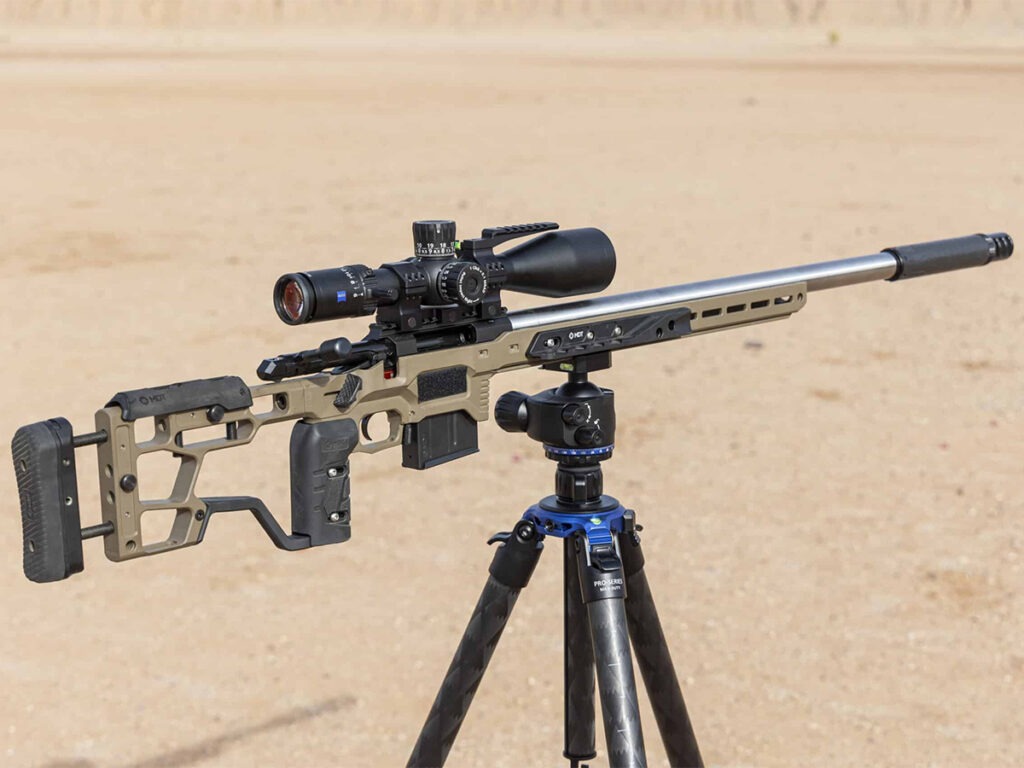
If you want alpha-tier glass and don’t have a trust fund fueling your lifestyle, Zeiss LRP S3 should be on the short-list of candidates.
Editor’s Note: This article originally appeared in the May 2026 issue of Gun Digest the Magazine.
More On Long-Range Shooting
- 9 Long-Range Shooting Fundamentals You Must Master
- Long-Range Hunting: Times And Tactics Have Changed
- Legacy Skills: Becoming A Well-Rounded Long-Range Marksman
- Your Precision Rifle Journey
- Practical Precision: A Return To The Fighting Rifleman
Next Step: Get your FREE Printable Target Pack
Enhance your shooting precision with our 62 MOA Targets, perfect for rifles and handguns. Crafted in collaboration with Storm Tactical for accuracy and versatility.
Subscribe to the Gun Digest email newsletter and get your downloadable target pack sent straight to your inbox. Stay updated with the latest firearms info in the industry.