We look at the pros and cons of Maztech’s X4-FCS digital aiming system.
The history of electronic technology integration into firearms can usually be summed up with a simple phrase: cautiously optimistic. Firearms are wonderfully mechanical devices, operating in a world where igniting gunpowder and high-pressure gases interact with precision machining, optical clarity, and the very laws of physics in such a way that they’re largely independent of batteries, circuit boards, and displays.
While some things—like weapon-mounted laser aiming modules, red-dot sights, and even weapon mounted laser rangefinders—have proven themselves to be viable and rugged enough to be accepted by the general firearms community, things such as digital displays in various forms haven’t seemed to enjoy the same success.
There’s been some attempts to combine the riflescope and laser rangefinder with a projected “holdover” point in the reticle in the past, and all were met with some level of compromise that ultimately didn’t earn the widespread praise they had hoped for.
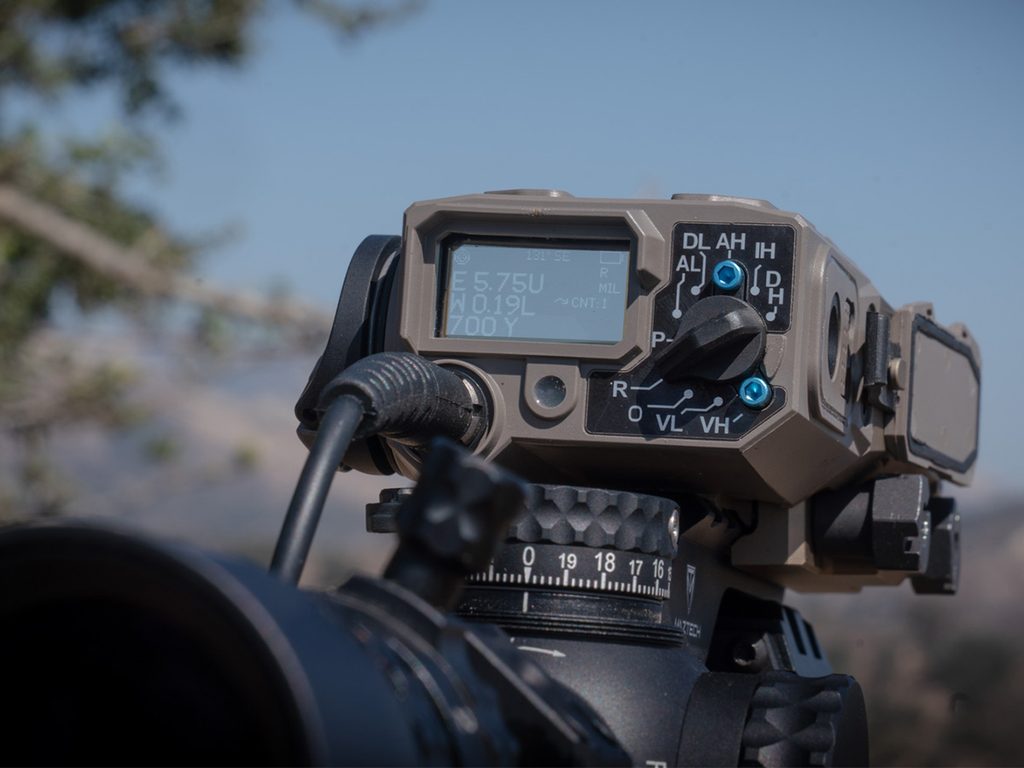
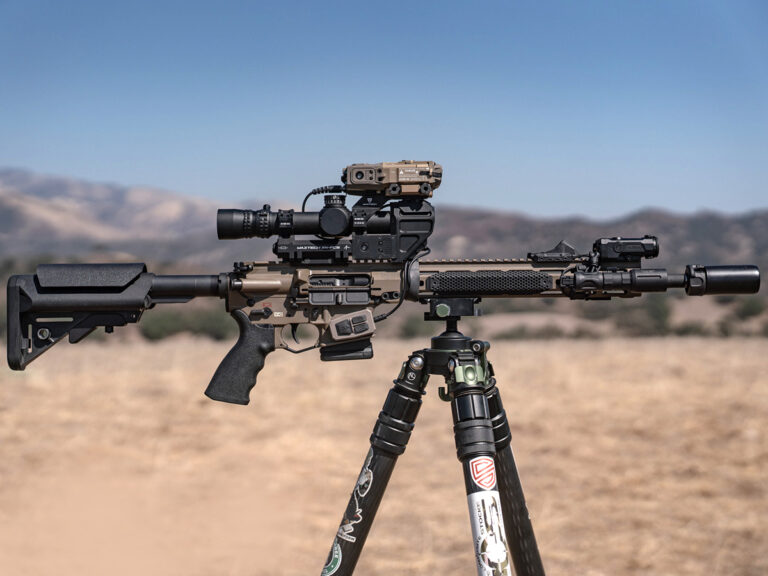
Maztech Industries hopes to offer a novel solution with their X4-FCS (Fire Control System), a module-based combination of the laser rangefinder, scope mount/projection display, and riflescope. Their philosophy of using separate modules to encompass the total system has some benefits and some drawbacks, and each individual user needs to determine which parts of the system apply to them and their situations.
First and foremost, without an accurate range to target, it becomes increasingly difficult to calculate a firing solution that’s much more than “send rounds and see what happens.” To fill this role, Maztech offers two separate options, and both can be used as standalone units independent of the FCS mount/projection display; the X4LRF in either 2k or 15k variants (model names referring to the maximum possible range capabilities in meters in good conditions on an appropriately reflective object).
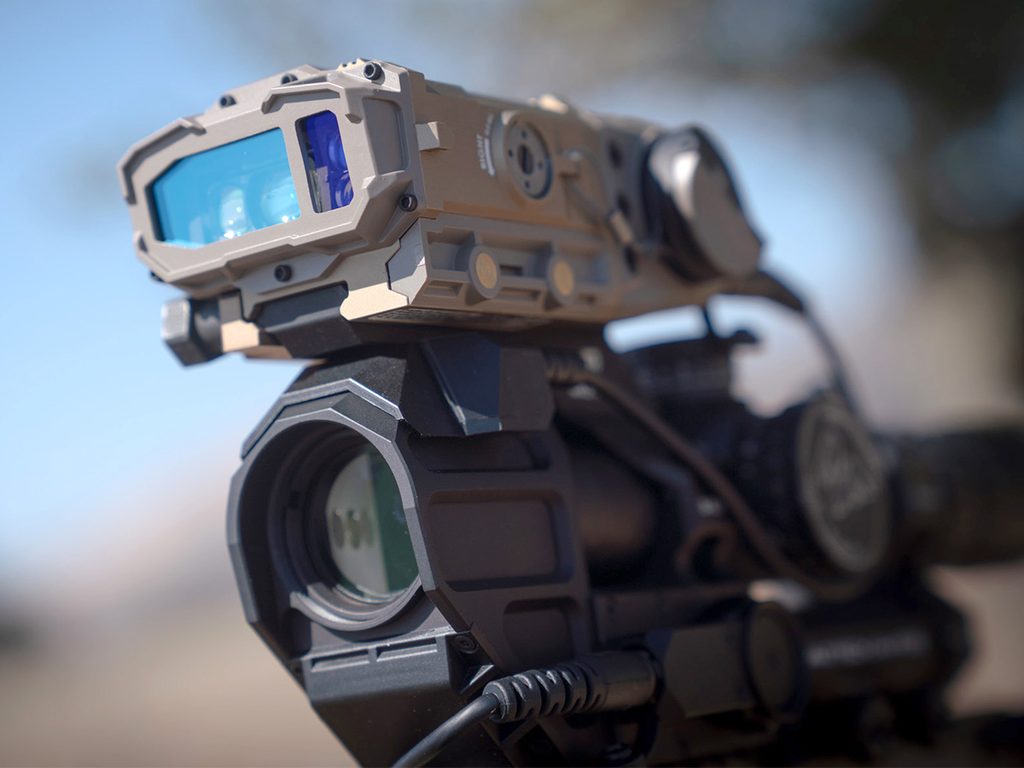
Both rangefinding units are identical aside from nuance in the ranging capabilities, and both have Applied Ballistics software integrated … so you’re not just getting a simple range to target but a final firing solution displayed to you as well. Setup is no different than mounting/aligning any other weapon-mounted rangefinder, with the Maztech app giving a more intuitive interface to the device settings and gun/ammo profile setup if needed.
The second module—and the most innovative part of the system—is the Maztech FCS scope mount/display. The magic in this unit is the divergence from attempts in the past to combine the riflescope and a digital display, and instead the user mounts their own scope of choice, and the digital display is projected onto the existing reticle within your riflescope. The FCS is designed to work with LPVO-style optics (1-6x, 1-8x, 1-10x style) in either 30 or 34mm tube diameters due to the straight-tube objective lens style provided by these optics. Mounting is actually simpler than many other scope mounts thanks to an alignment reticle option within the projector, meaning you can simply line up the scope reticle with the projected one and make sure nothing shifts while torquing the ring caps.
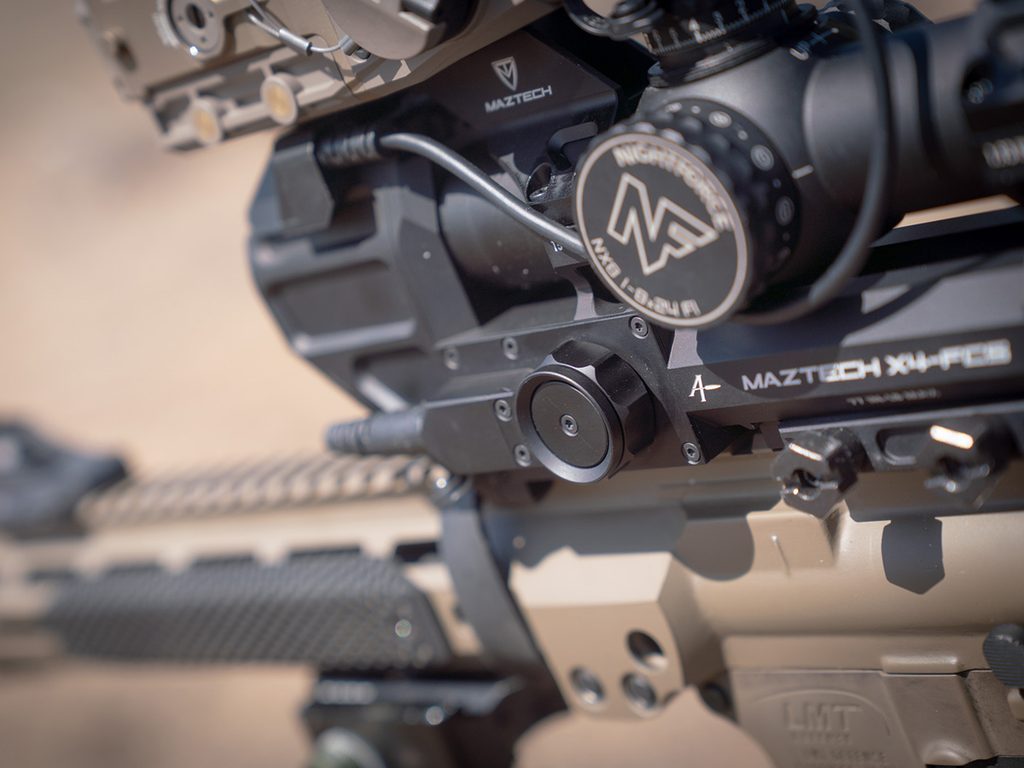
The same Maztech app connects to the FCS as well, and thanks to another Applied Ballistics software suite, the FCS can be used fully independently with the range-to-target being input manually with a roll-wheel. As a range is being input, a small “aiming” point moves vertically up and down, projected over the existing scope reticle, offering you a visual ballistic solution for your selected target range. This aiming point can be selected between a small chevron or the “T-dot” style selected here.
Now, while both these things can operate independently of each other, it’s not a stretch to think, “What if you combined it all so that you could push a button, the laser feeds data to the FCS, and it simply displays a hold point onto my favorite scope’s reticle?”
Well thanks to Maztech and a couple cable connections that’s exactly how this all comes together.
Connecting the laser rangefinder to the FCS is a trivial affair, and with the push of the remote button all of the wizardry happens behind the scenes to provide you a single visual representation of where you need to hold in order to have greater probability at first-round impacts.
I recently had the opportunity to get behind this system and experience it firsthand.
Setup of the entire system requires a chunk of unobstructed time to ensure that each step in the process is complete and verified before setting up the next item. The previously mentioned “alignment reticle” in the projector makes scope mounting a breeze, and the projection can also be adjusted left/right and up/down to better align with the riflescope reticle.
When the whole system is used together, it defaults to using the Applied Ballistics software within the FCS unit; however, I took the time to set up ballistic profiles in both the FCS as well as the X4 rangefinder just to stay on the safe side. The process for both is the same through the app—you just need to change which device you’re connected to.
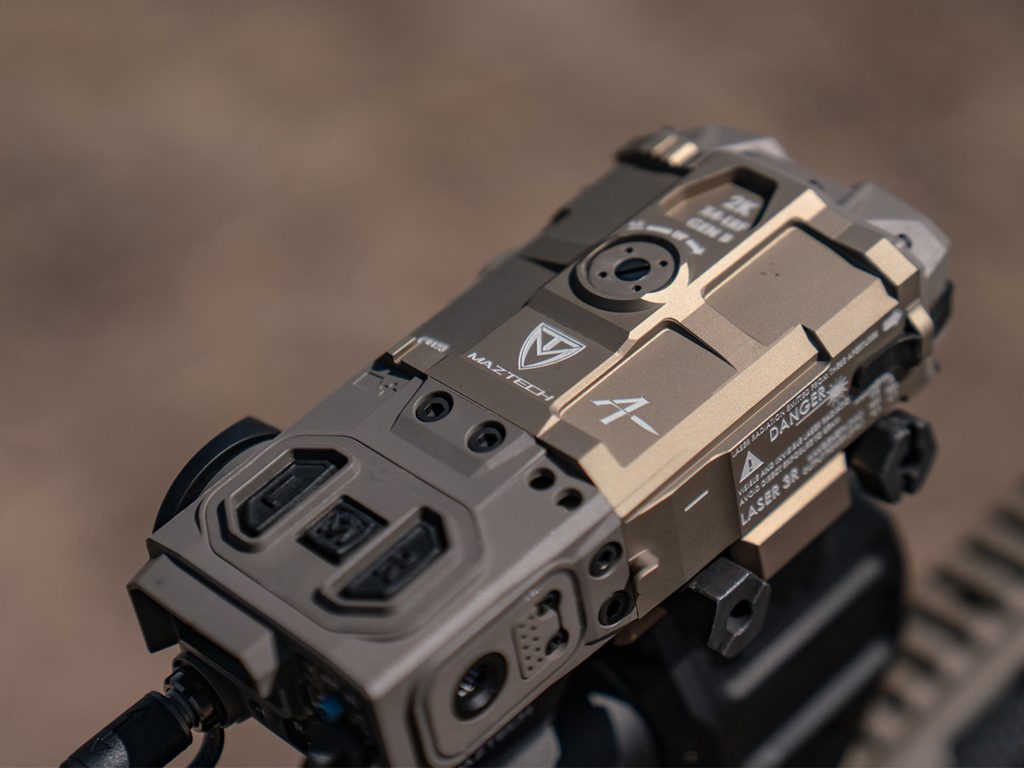
The riflescope is then zeroed at your chosen distance. Then, a supplied reflective laser alignment target is placed downrange and the marked offsets on it can be used to achieve a parallel alignment of the X4 laser to the scope’s erector tube, which is the same process used to align any weapon-mounted rangefinder.
Just Tap and Go
I got behind the rifle, tapped the button on the wired remote and was met with short haptic vibration feedback to let me know the system had acknowledged the command and was done processing the data. Immediately displayed was the range-to-target determined by the laser, and a small green aiming point changed position to one about 1-mil low, which, for my target at 330 yards is exactly what I expected to see. I placed the aiming point on target, breathed, pressed the trigger … and impact. I moved to the next target, pointed the riflescope reticle and pressed the ranging button. I experienced another short haptic vibration, and the aiming point dropped a little farther to 2 mils. I placed that aiming point on target and was gifted another impact at 405 yards.
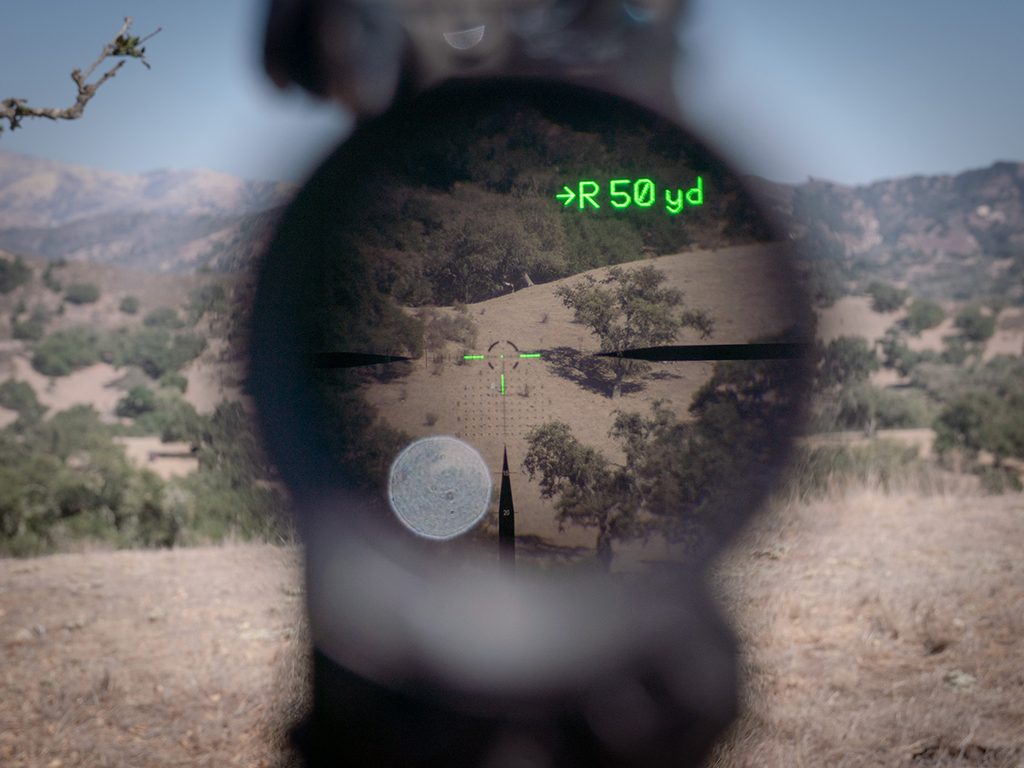
I handed the rifle to a shooter who was fairly new to the long-range space, and the same process was repeated with the system, displaying hold points for 330 and 405 yards perfectly. After some time working to find a third target at about 550 yards through the scope, they followed procedure and missed left. Another shot, another miss. And again, and again. So, no matter how advanced and simple electronic technology attempts to make long-range shooting, nothing consumer-grade is currently able to account for wind variables on the fly.
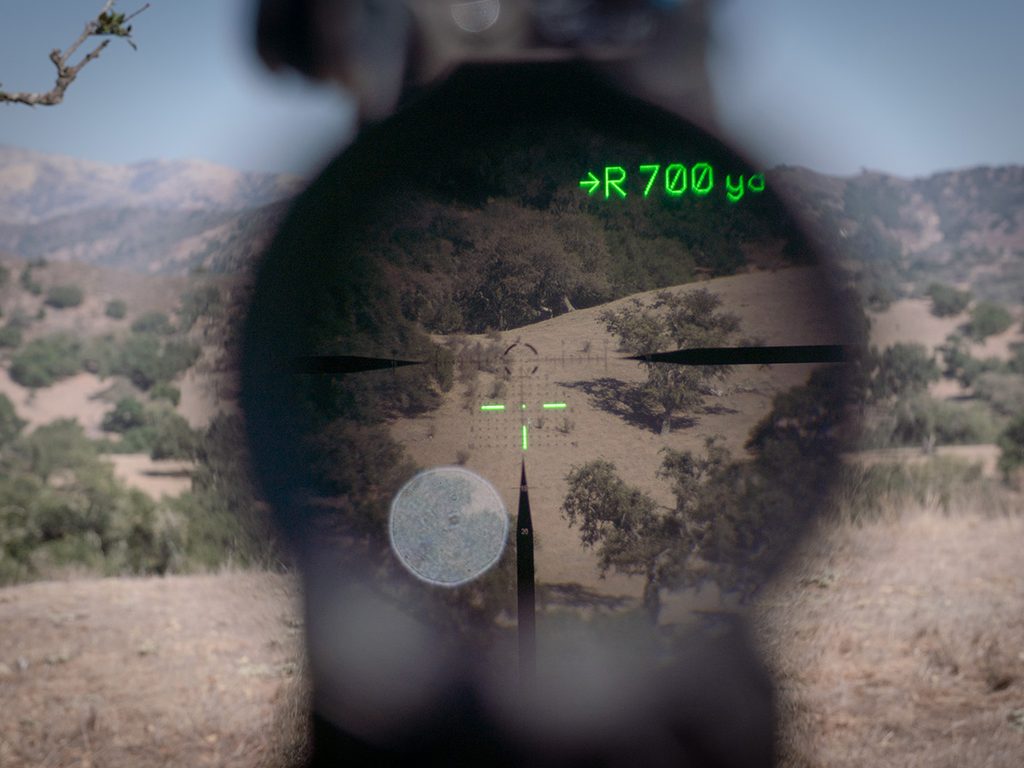
Maztech does include an option to manually input a wind speed/direction value, and that information is processed by the Applied Ballistics software; however, inputting that value takes attention away from the process of shooting, the validity of those inputs can be questionable, and in the process of determining and inputting a speed into the software the wind can change speed and/or direction. The initial false confidence of simply placing the aiming point on the target and pressing the trigger quickly faded.
You Must Bring the Skill
This device is designed to semi-automate and consolidate several tools, but that doesn’t mean you shouldn’t have a foundational understanding of the ballistics behind the process. And if you do have a solid foundational understanding of the ballistics, what’s stopping you from using only the laser rangefinding module in the system and applying its correction outputs to holdovers in your existing reticle without the FCS module at all?
Herein lies the struggle I have with this device. It exists in a space I’m not sure truly exists: a technological and unitized shortcut to long-range shooting.
So, what does all this mean for the Maztech X4 FCS? It appears well-made and the controls are intuitive, it’s integration to the X4 LRF is seamless and easy, and so far as ballistic solutions in the vertical plane it never let me down.
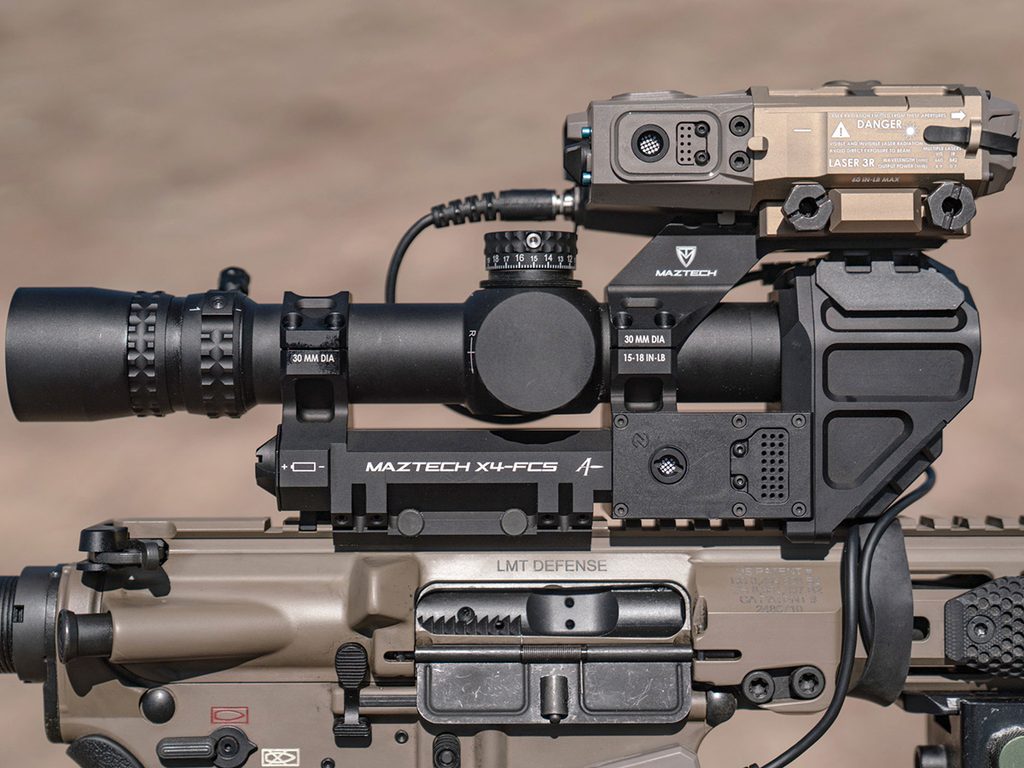
However, for a retail price of $3,495 before the X4 LRF and a scope, it does not come with the hard skills required to deal with arguably the single hardest thing in modern long-range shooting: the wind. And, due to the physical limitations of the unit it’s only available for straight-tube LPVO-style scopes at the time of writing, which can bring with it compromises—especially when shooting long range.
As for the X4 LRF? At $2,195 it’s comparable in price to some rangefinding binoculars and does provide a viable solution for on-weapon ranging and ballistic solutions so long as the environment and use case support the use of any weapon mounted laser rangefinder to begin with.
Using both the FCS and LRF together, I couldn’t help but shake thoughts of the Barrett BORS, the Burris Eliminator line, Sig BDX scopes or even TrackingPoint. All were attempts to build complex and expensive elevators to reach the top of the learning curve of long-range shooting … when the stairs were the solution all along.
Editor’s Note: This article originally appeared in the October 2026 issue of Gun Digest the Magazine.
More Long-Range Shooting
- 9 Long-Range Shooting Fundamentals You Must Master
- Long-Range Hunting: Times And Tactics Have Changed
- Legacy Skills: Becoming A Well-Rounded Long-Range Marksman
- Your Precision Rifle Journey
- Practical Precision: A Return To The Fighting Rifleman

Next Step: Get your FREE Printable Target Pack
Enhance your shooting precision with our 62 MOA Targets, perfect for rifles and handguns. Crafted in collaboration with Storm Tactical for accuracy and versatility.
Subscribe to the Gun Digest email newsletter and get your downloadable target pack sent straight to your inbox. Stay updated with the latest firearms info in the industry.