We separate the facts from the fluff surrounding self-defense training so you can focus on what really matters.
Let me state at the outset that the point of this article is not to declare that what you’ve been doing and have been taught about self-defense handgun application is wrong. The point of this article is to get you to apply some practical thinking to certain aspects of defensive handgun use in a life-or-death situation.
My observations are based on my experiences in the military and as a police officer, and while training at some well-respected schools. Sometimes we get so caught up in the dogma we fail to think for ourselves.
So, what I’m offering is that there might be another way. Could some of our training be based on myths?
Myth 1: You Must Reload Very Fast
If you scroll through social media much, you’ll see various influencers demonstrating their lightning-fast speed reloads. Many stress the importance of a fast reload because it will get you back in the fight sooner. However, you cannot reload fast enough to keep from getting shot. I conducted a test to see how long it would take me to conduct a speed reload from concealment, and another test to see how many shots I could fire in that same amount of time. The results were telling.
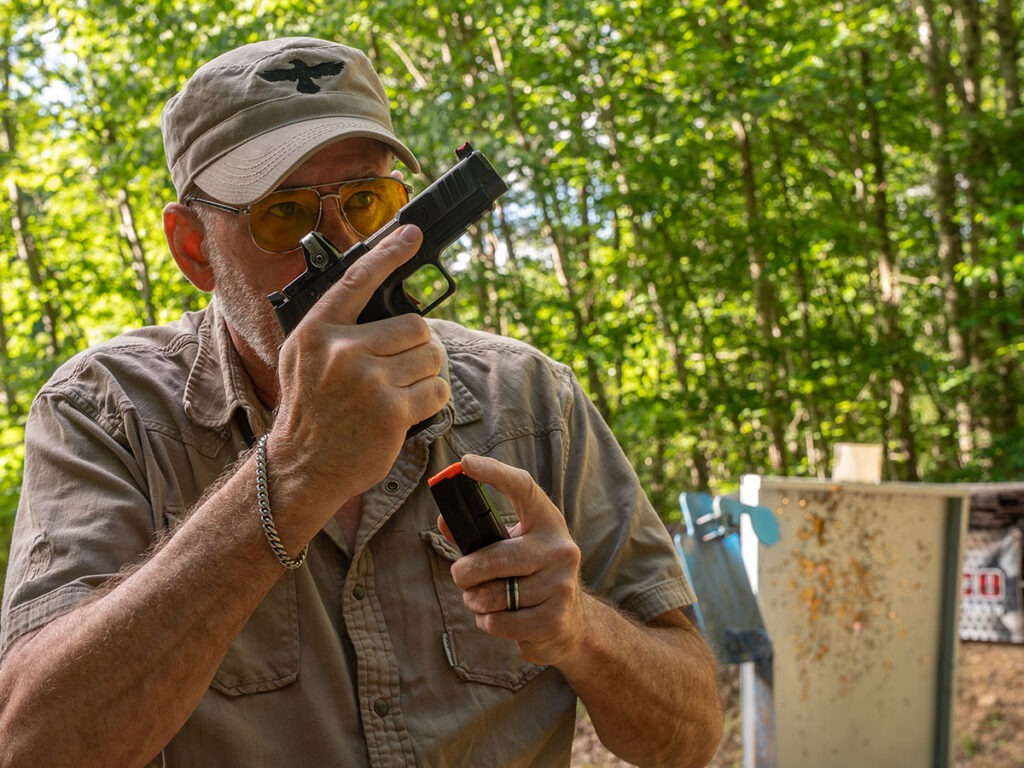
If I was in a shootout with myself and had to conduct a speed reload, the other me could shoot me about 10 times before I could get my pistol reloaded and shoot back. Even if I could conduct a speed reload in one second, the other me could shoot me about four times. This would suggest that standing still and conducting a speed reload during a gunfight is, well, stupid. It would also suggest that if your gun runs out of ammo you need to move—fast.
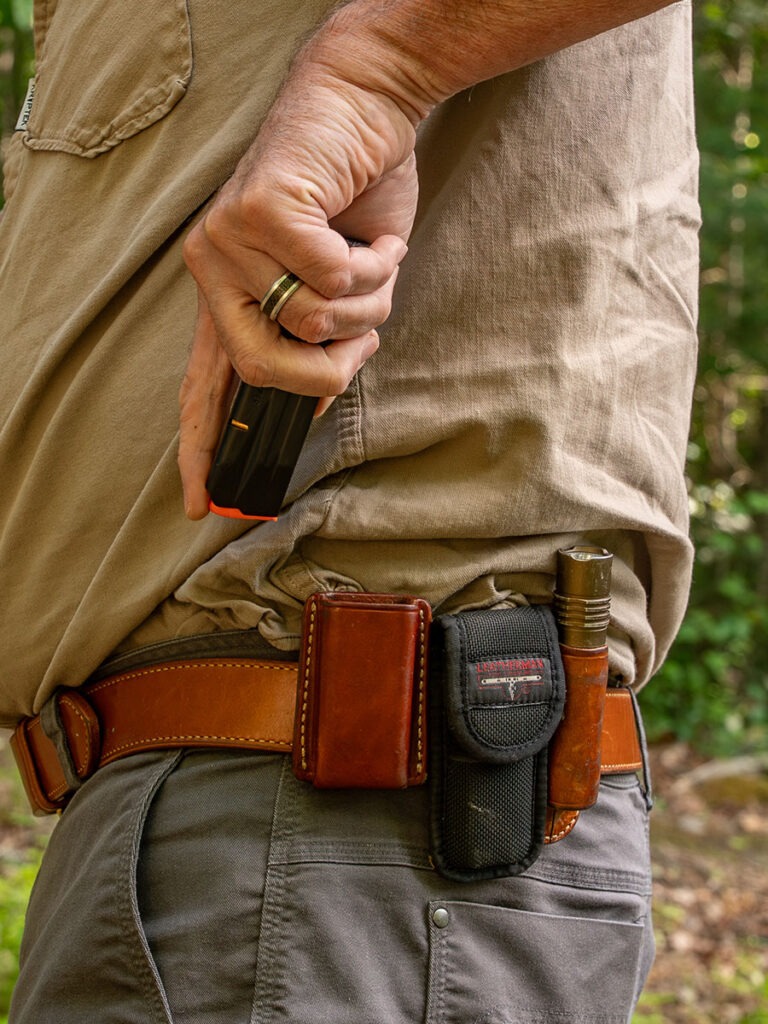
I’m not saying competition shooting is the best practice for self-defense, but if you watch competition shooters, they try to plan their reloads for when they’re moving so they don’t waste time. This is a savvy tactic, but it hardly applies to a self-defense situation where you won’t have the time to plan where you’re going to conduct a reload. If you need to reload it’s good to be able to do it fast, which also means you can probably do it without looking, while in the dark and while moving—and that is the point. If you need to reload you need to move because moving makes you harder to hit. But the problem is we don’t practice moving and reloading, especially in self-defense courses because of all the other folks on the line shooting with us.
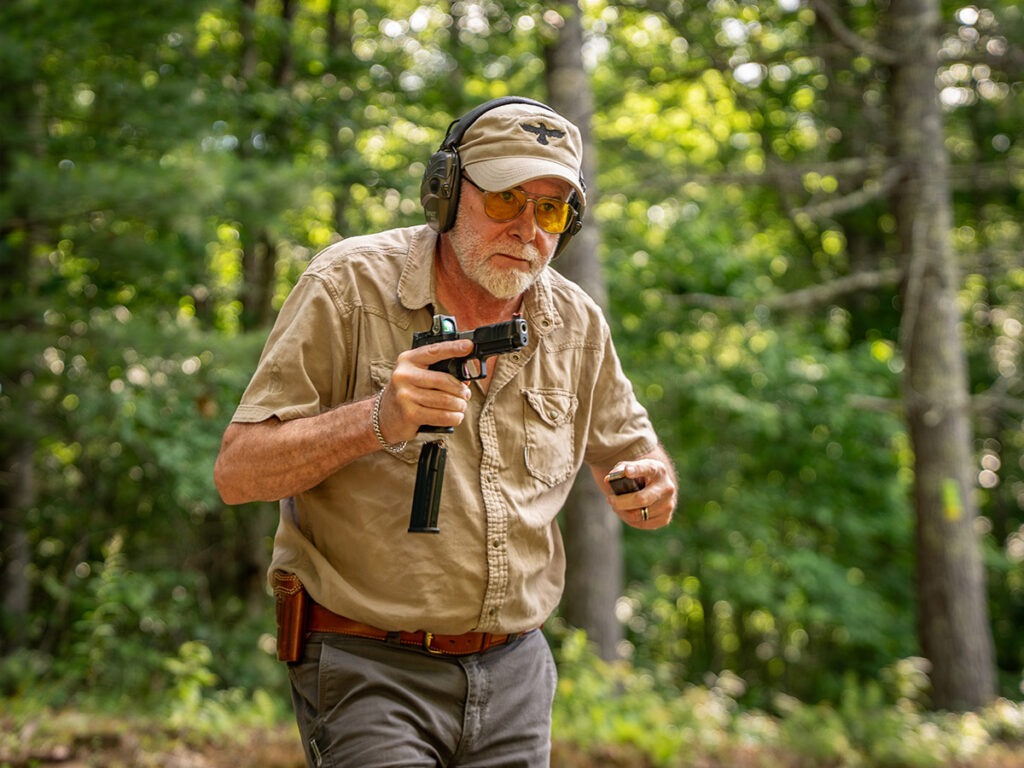
Work on your speed reload, but don’t ever think you’ll get fast enough at it to keep from getting shot while you’re doing it.
Myth 2: You Need To Understand Different Stoppages And How To Clear Them
If you ask experienced firearms trainers what’s the most common reason a gun fails to fire the answer will be universal—it’s because it’s out of ammo. The standard response that’s taught to correct a failure to fire is the tap, rack, ready—tap the magazine, rack the slide and ready yourself to continue the fight. But that technique will not solve the most common reason a gun will not fire, and beyond tap, rack, ready, everything gets complicated. If tap, rack ready, does not work, many teach that you should diagnose the problem and apply the appropriate action. In other words, you should determine the type of stoppage you have and apply the proper corrective procedure.
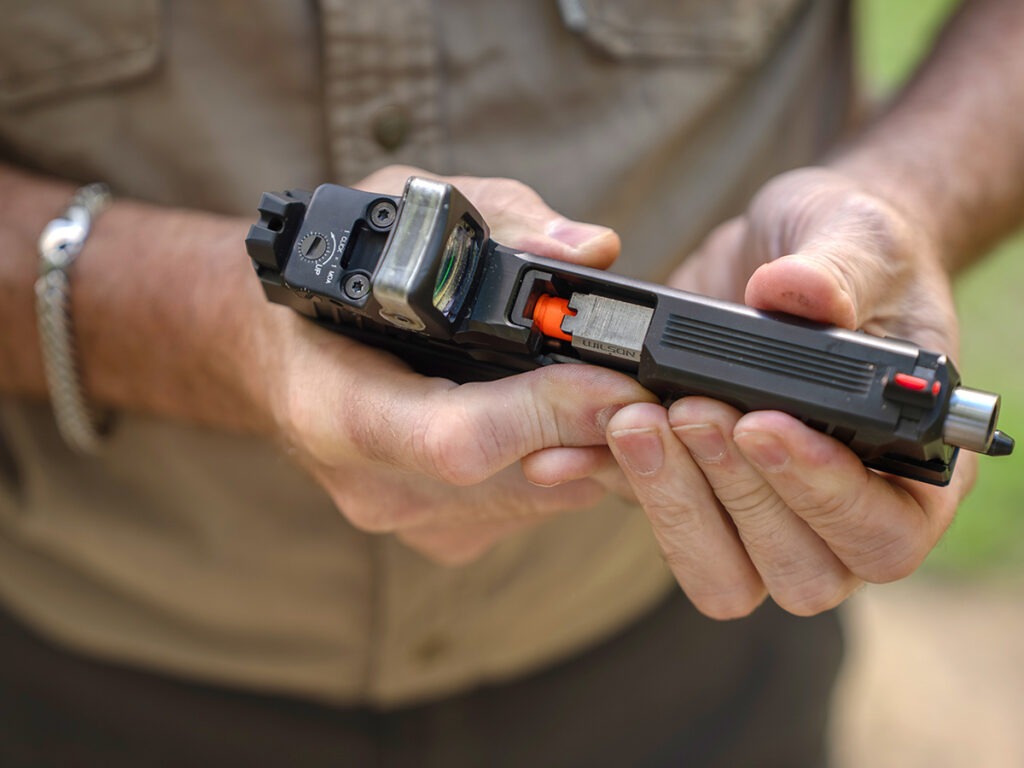
Let’s back up to the speed reload for a moment—you know—that thing you’ve been practicing. If the most common reason your gun fails to fire is because it’s out of ammo, the best default response would be to conduct a speed reload. Interestingly, if you have a failure to feed, fire or eject, a reload will correct that problem too. In fact, a reload will even resolve most double feeds. If a reload does not correct a gun that will not fire, you are most likely going to need tools and a lot more time to sort out the problem. The good news is that if you’ve been practicing your speed reload, you will most likely be able to perform it faster than you can diagnose a stoppage and apply the often instructed corrective action.
Those familiar with various types of stoppages know that with most double feeds in most pistols, if you press the magazine release the magazine will not drop free. This slows down a speed reload because you will have to pull the magazine from the pistol. The common corrective action for a type 3—double feed—stoppage is to lock the slide to the rear, remove the magazine, cycle the slide and then reload. If you just conduct a speed reload, you’re doing the same thing and if the magazine does not drop free, you can bet you have a double feed. Grip the fresh magazine, press the magazine release and if the magazine does not eject, you pull it out. Then, you insert the new magazine and manually cycle the slide all the way to the rear.
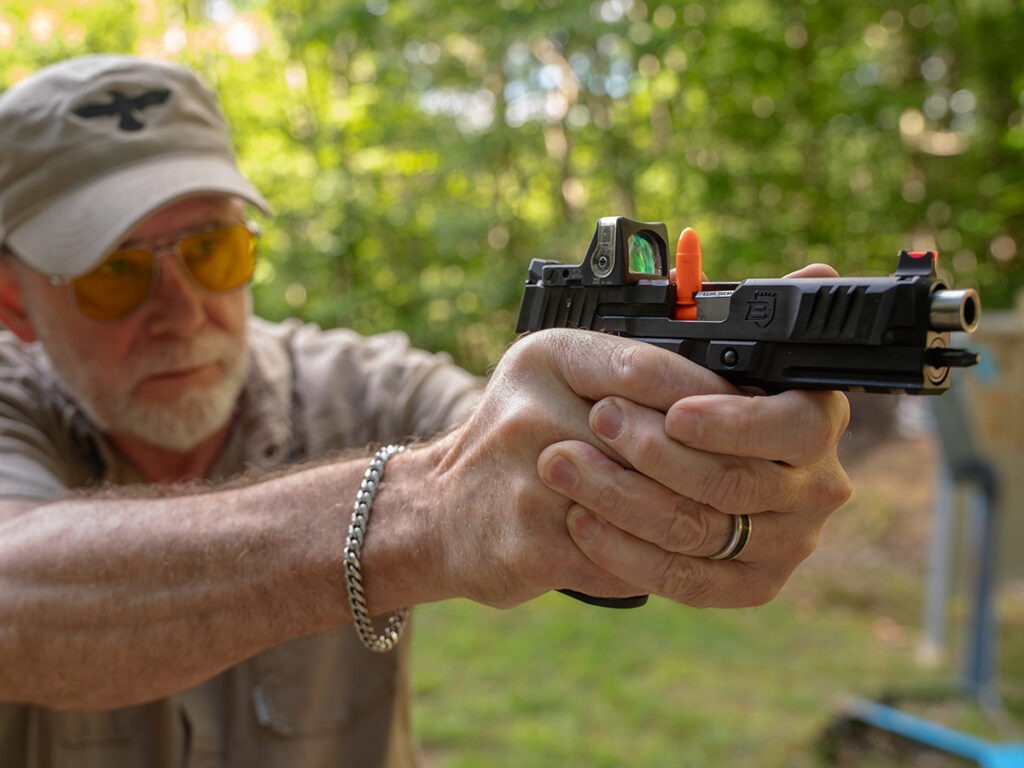
The advantage of this approach is that one response solves all problems. However, there are two things you need to remember. If you’re conducting a speed reload because you want to, you do not have to cycle the slide after inserting the magazine. It’s not wrong to do so, maybe you’re reloading because you thought you were about out of ammo—and you really were—but for some reason your slide did not lock back. If you’re conducting a speed reload because your gun will not go bang, you must cycle the slide after inserting the magazine. Slide cycling is part of every form of stoppage clearance.
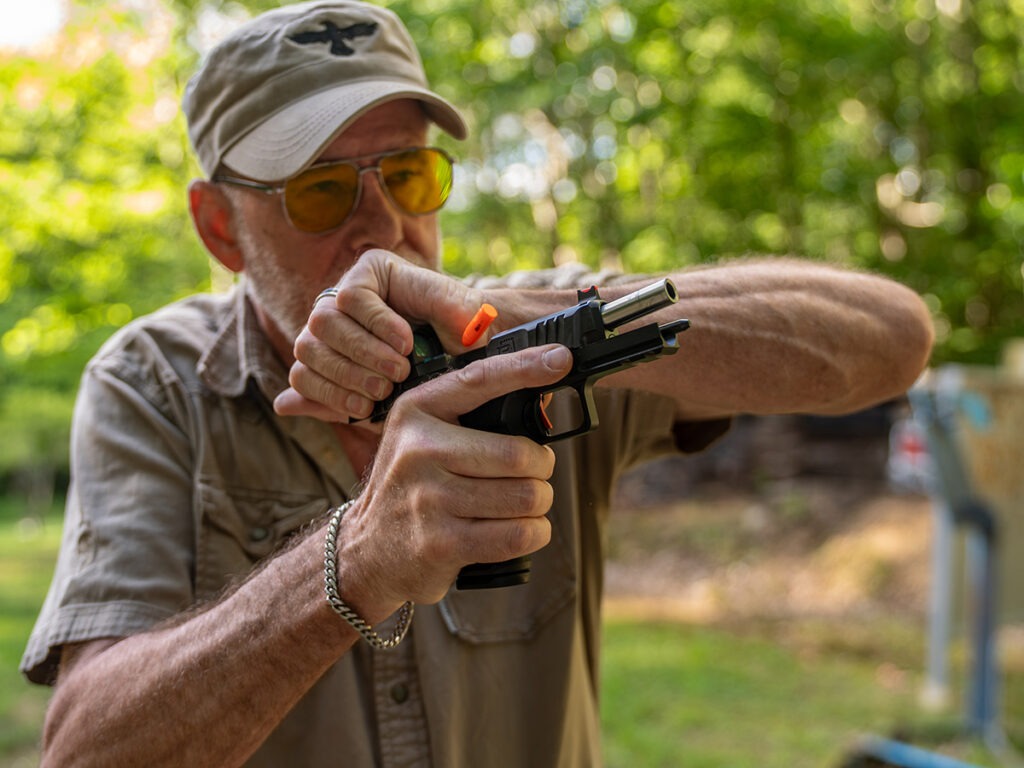
This brings up a heavily debated aspect of reloading, and that’s whether you should manually cycle the slide or use the slide stop? There’s no question that releasing the slide stop is faster than cycling the slide, but every form of stoppage clearance requires manual slide operation. Let’s assume it is dark, you’re in a fight, and your gun fails to go bang. Most experienced shooters can feel if the slide did not go forward, and that’s what it felt like, but you also know you might have expended all your ammo. So, you conduct a speed reload, depress the slide release, and nothing happens, because instead of an empty gun what you really had was a stoppage. Now, you must start all over.
If you approach all guns that will not fire as if they are out of ammo and conduct a reload and also cycle the slide anytime you insert a magazine, you’ve drastically simplified the solution to most guns that will not go bang, and it requires no diagnostic evaluation or decision in course of action on your part. What it does require is less practice, that you must carry a spare magazine, and that as mentioned earlier, movement when your gun is not working. If you stand still and try to do any of this, what you mostly are is a good target.
Myth 3: If You Can’t Find The Dot, Just Transition To Open Sights
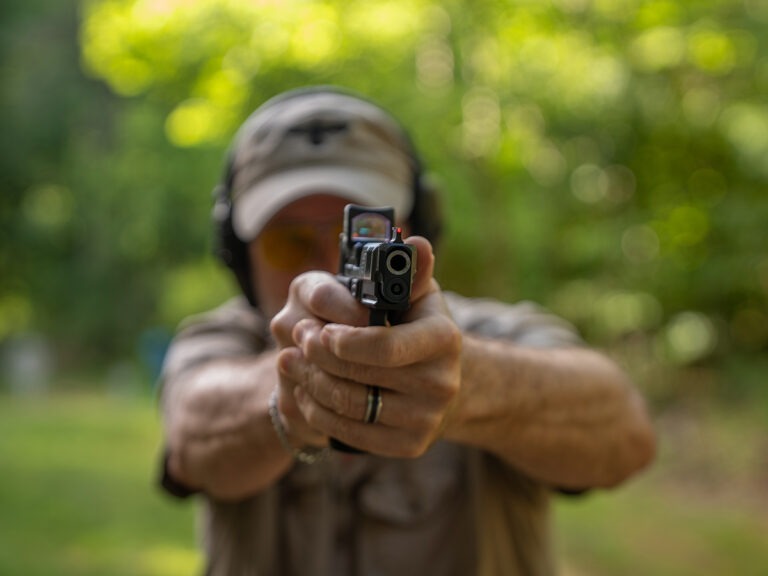
Some trust dot sights implicitly. I don’t. I’ve been called a Fudd for that, but I have seen so many fail, in so many ways, I do not trust them. The only thing that has let me down more often than humans are batteries, and for that reason, the only dot sight I will carry is the Trijicon dual illumination battery-free sight powered by the sun and fiber optics. Because of my experiences, I’ll not carry a dot-sighted pistol unless it’s also equipped with co-witnessing open sights. If that makes me a Fudd, so be it.
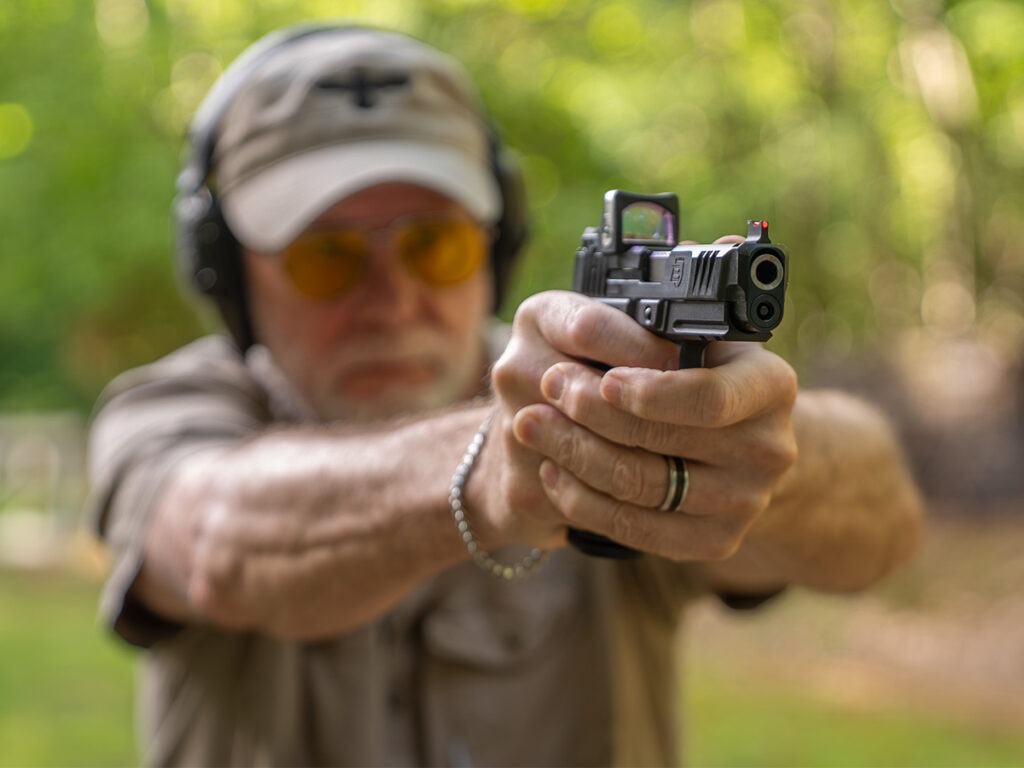
Regardless, I’m unconvinced co-witnessing sights are as valid of a backup to a dot sight as many people believe. Yes, if you know your dot sight is not working you have the luxury of using the co-witnessing sights. Where I see the problem is if you only discover your dot sight is not working when you’re attempting to shoot a bad guy.
When you started shooting a dot sight you struggled to find the dot in the sight window. This is universal and so is the response—you start wiggling the gun around searching to find the dot. This response to no dot becomes so ingrained in our brain, “searching” becomes our default. If you don’t see the dot instantly on presentation your brain believes you’ve failed to present your weapon correctly as opposed to the alternative that the dot is dead. How often do you practice with your dot sight turned off and use the co-witnessing sights? Probably not very much. The solution seems simple, practice with the co-witnessing sights more often. But that practice gives us false hope.
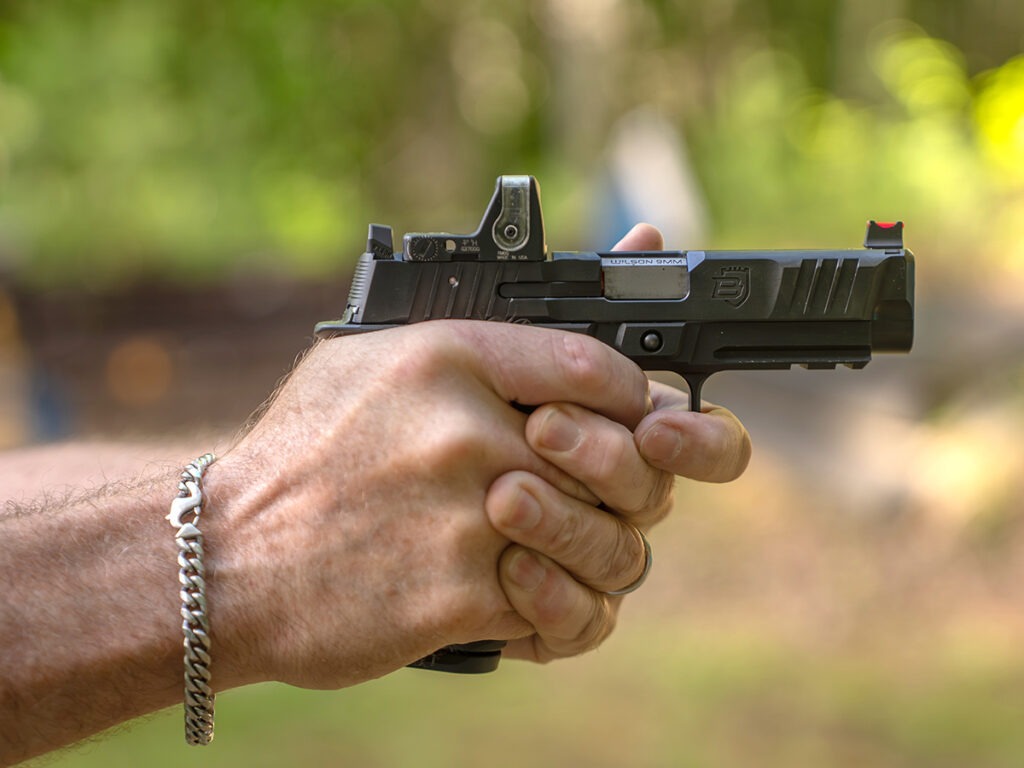
It’s flawed because just like when practicing stoppage clearance, you know and expect a stoppage to occur. Even if your buddy handles your gun before every drill—turning the dot off or leaving it on—you are planned-practicing a response to something that should be a surprise. Everyone says, “Well, if my dot doesn’t work, I’ll just use my open sights.” Great plan, but how long will you look for your dot before you realize it does not work?
So, what’s the solution?
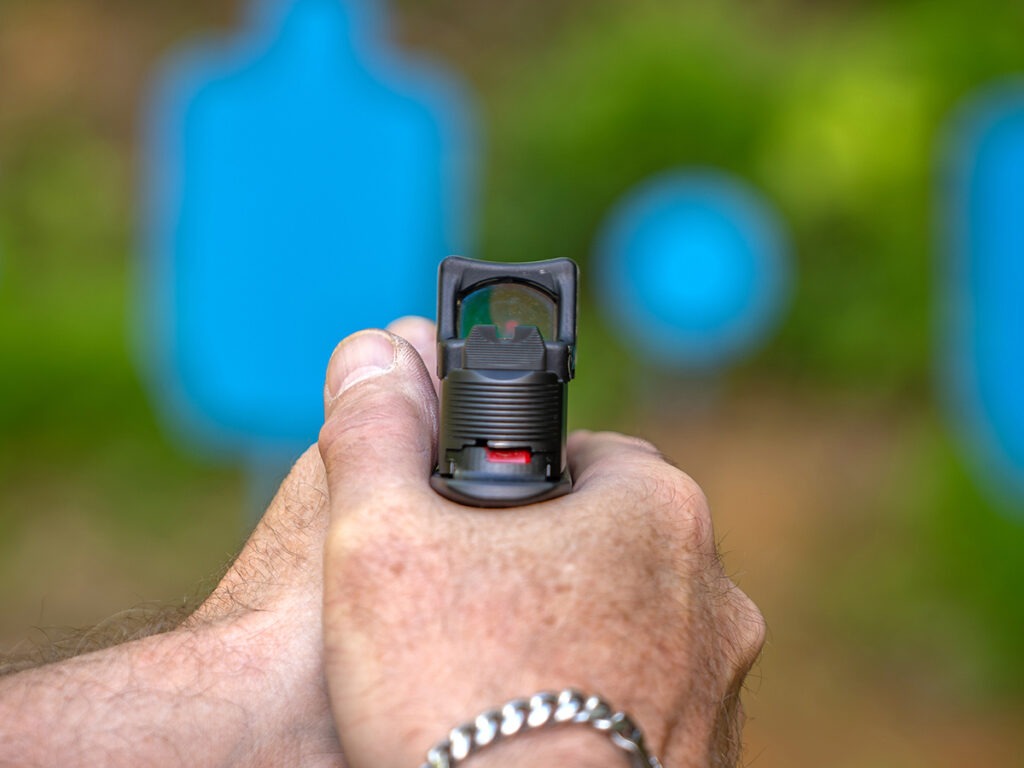
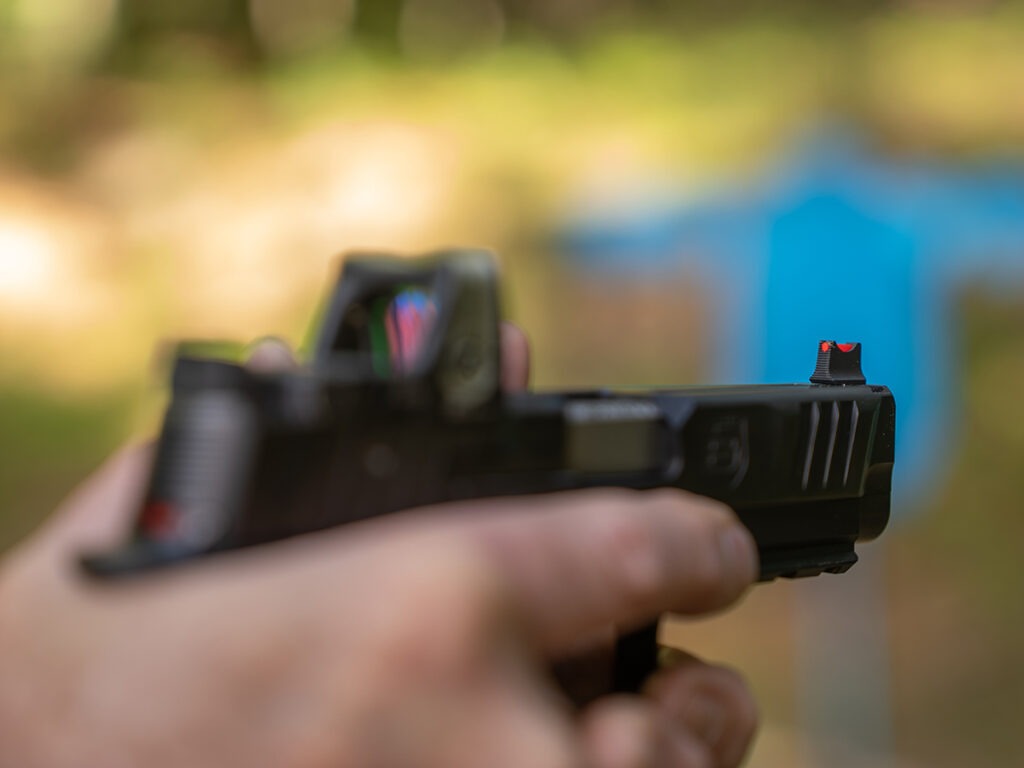
Maybe the solution is to draw your handgun with the intention of using the co-witnessing sights—after all, they’re always on. If you do it correctly, you’ll immediately see the dot—if its working—right above the front sight. And, if you see the dot, use it. If you don’t see the dot, you’ve drawn to your sights anyway. Someday your dot sight—which is without question your least dependable sight—will not work and when that happens what will you do? How many times can you get shot while you’re standing there with a bemused look on your face while wondering where in the hell your dot went?
The Bottom Line
When it comes to defensive handgun application there is no one way. It is a martial art that needs to be tempered based on the situation and its application needs to not only evolve but also be continually adjusted based on the applicant. Sometimes without thinking about it we can train ourselves into a corner because we train on a flat range and become slaves to the shot timer.
Regardless, here are some truths:
- You cannot reload fast enough to keep from getting shot.
- Diagnostic stoppage assessment slows down your response.
- Your most fragile sight should not be your primary sight.
Editor’s Note: This article originally appeared in the October 2026 issue of Gun Digest the Magazine.
More On Firearm Training
- Video: Target Transition Training With The Dot Drill
- The Shot Timer And Defensive Handgun Training
- Gun Digest’s 10 Best Shooting Drills And Firearms Training Posts
- MantisX: Simple And Effective Training
- Video: Is A Full-Sized Pistol The Best Training Option?
Next Step: Get your FREE Printable Target Pack
Enhance your shooting precision with our 62 MOA Targets, perfect for rifles and handguns. Crafted in collaboration with Storm Tactical for accuracy and versatility.
Subscribe to the Gun Digest email newsletter and get your downloadable target pack sent straight to your inbox. Stay updated with the latest firearms info in the industry.