
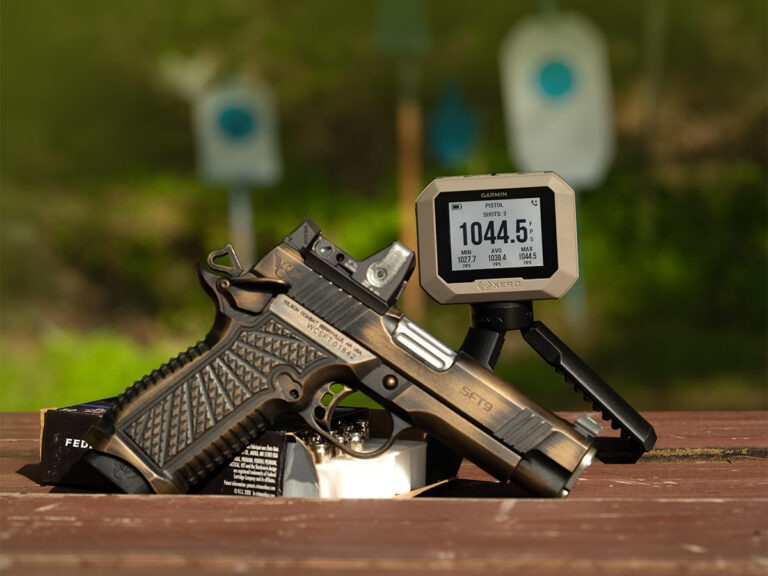
Trying to understand kinetic energy can be confusing, but here we break down how it affects terminal performance.
When shooters seek information about the performance of handgun ammunition for personal protection they most often look at bullet caliber and weight, plus muzzle velocity and muzzle energy. Of those four metrics, bullet caliber and weight and muzzle velocity are the easiest for us to wrap our heads around. We can see the size of the bullet, feel how much it weighs, and we are intimately familiar with speed. What shooters find difficult to comprehend is kinetic energy due to a lack of a familiar reference.
But by doing a little math we can better understand kinetic energy. A typical major league baseball is pitched at around 90 mph or 132 fps. A baseball weighs about 2,250 grains. Projectile weight and velocity determine kinetic energy, so a 90-mph fast ball would have 87 foot-pounds of kinetic energy. By comparison, a 115-grain 9mm bullet at 1,100 fps will have 309 foot-pounds of kinetic energy—3.5 times as much. That provides a decent frame of reference, but what exactly is kinetic energy?
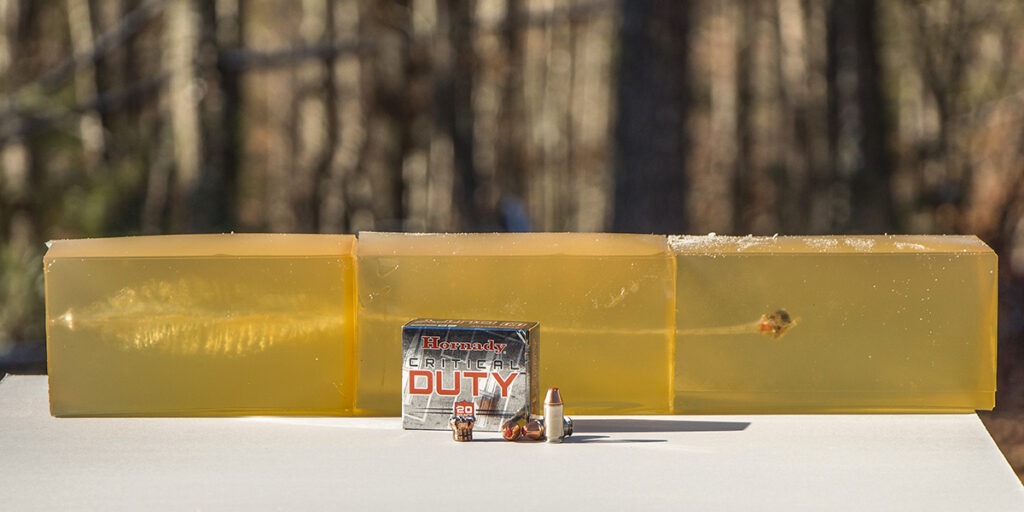
In physics, kinetic energy is defined as the form of energy an object possesses due to its motion. The kinetic energy of an object is equal to the work, or force in the direction of motion times its displacement needed to accelerate the object from rest to its given speed. And, most importantly for bullets, the same amount of work is done by the object when decelerating to a state of rest.
Many shooters assume kinetic energy is a reference to how hard a bullet hits something. This leads to the assumption that when it comes to comparing self-defense handgun ammunition that more kinetic energy is better. That can be true, but it is not always the case.

Kinetic energy does not directly translate to target damage. When a bullet impacts something, some of the kinetic energy is transformed to other types of energy like thermal energy, sound energy and mechanical energy. Mechanical energy is used by the bullet to change shape, thermal energy occurs because of friction and deformation, and the collision of the bullet and the target produces sound energy. Different bullets will use their kinetic energy differently.
Self-Defense Applications
At the most basic level, consider 9mm 115-grain FMJ and hollow-point bullets. On impact, the FMJ bullet will change its shape minimally or not at all, thus using very little mechanical energy. On the other hand, a hollow-point bullet that upsets as intended will use a great deal of mechanical energy. It takes a lot of energy to deform copper and lead. This deformation robs the bullet’s energy by reducing velocity through its larger frontal diameter. Friction slows both bullets, but the FMJ bullet retains more energy and because of that and its smaller undeformed frontal diameter, it penetrates deeper.
This same performance variation applies to all handgun bullet comparisons. Two hollow-point bullets of a different design will use more or less mechanical energy to deform, and this results in differences in tissue damage and penetration depth—terminal performance.
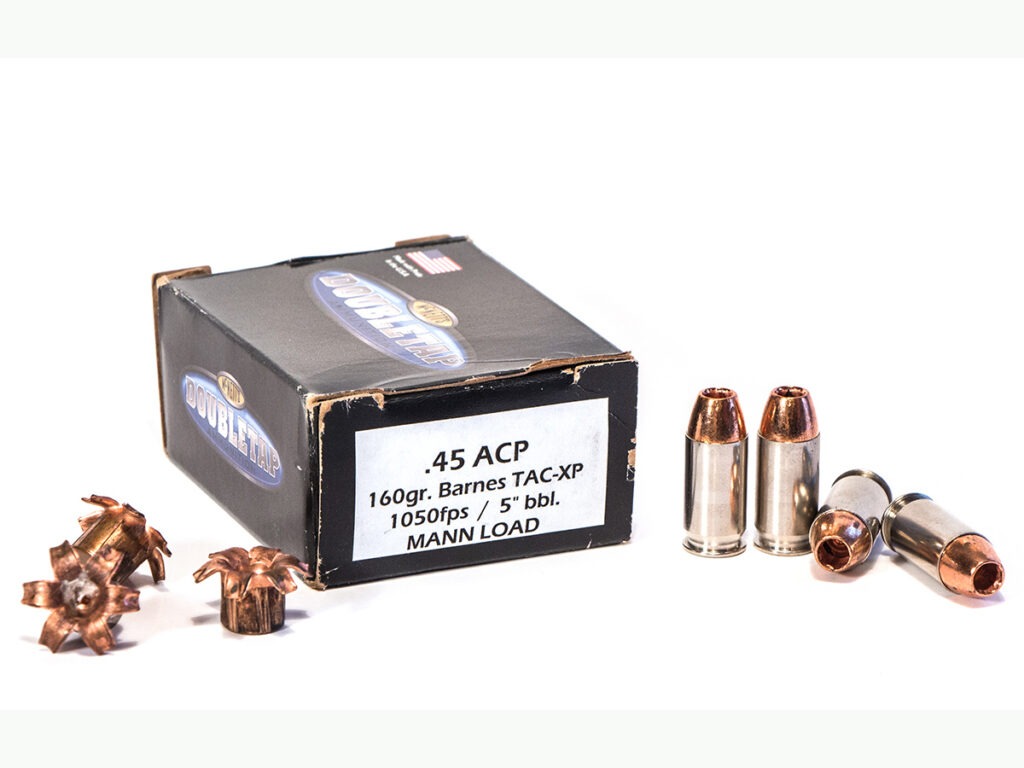
But do some bullets hit harder than others? For sure, but this harder hit is tempered by how the bullet uses its kinetic energy and another physics term called momentum. Momentum is calculated with mass and velocity just like kinetic energy, but with the momentum calculation, velocity is not squared. Momentum is easier to understand because we can see its results easier.
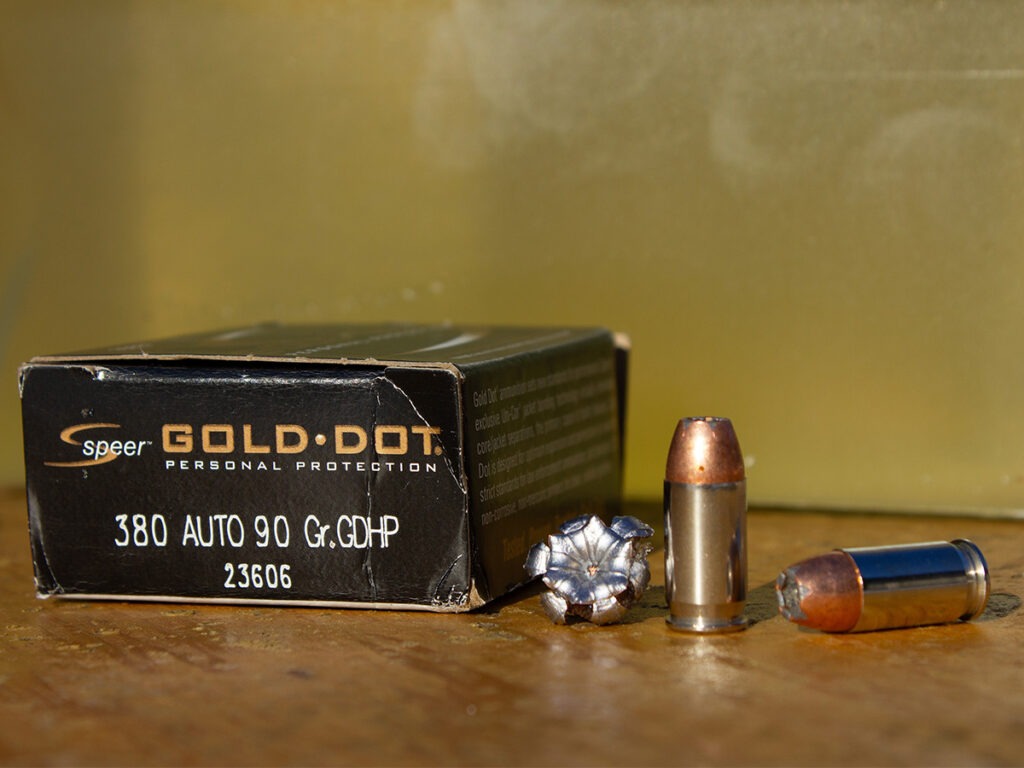
For example, you can set up a pepper popper target so that a 115-grain 9mm bullet at 1,100 fps with 309 foot-pounds of kinetic energy and 2.498 kg-m/s of momentum will not knock it down. However, at the same setting, a 230-grain .45 Auto bullet at 778 fps will also have 309 foot-pounds of kinetic energy, but it will have 3.534 (41 percent more) kg-m/s of momentum. The .45 Auto bullet hits harder and will knock the popper target over. However, because of the way kinetic energy is transformed to other forms of energy, it does not mean the .45 Auto bullet will deliver better terminal performance.
For example, at an impact velocity of only 778 fps, some .45 Auto loads using hollow-point bullets will not deform/expand at all. This means they will penetrate deep but will not make a very big hole because they essentially act like a FMJ bullet. Most every 115-grain 9mm hollow point bullet will fully deform as intended to about 1.5 times its unfired diameter when impacting at 1,100 fps.
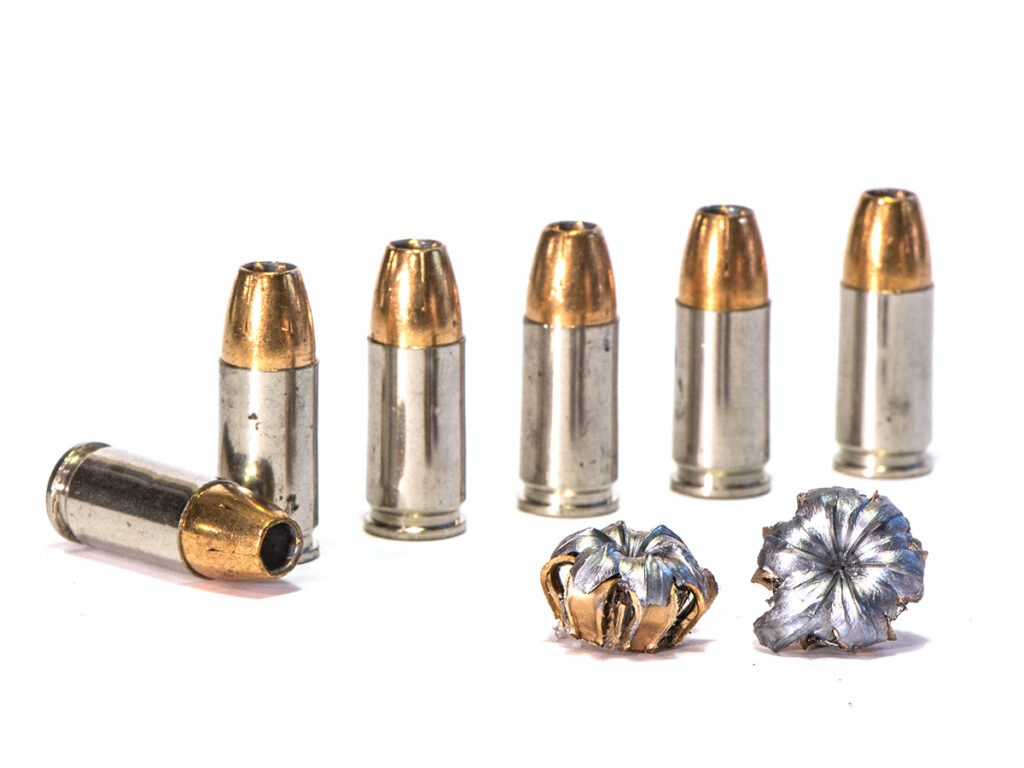
To further complicate everything, larger-caliber bullets that are more robustly constructed can require much more kinetic energy as they upset/deform/expand. This is why you can see what we consider better terminal performance—bullet upset and penetration balance—with some 9mm loads than you will see with some 0.40- and 0.45-caliber loads.
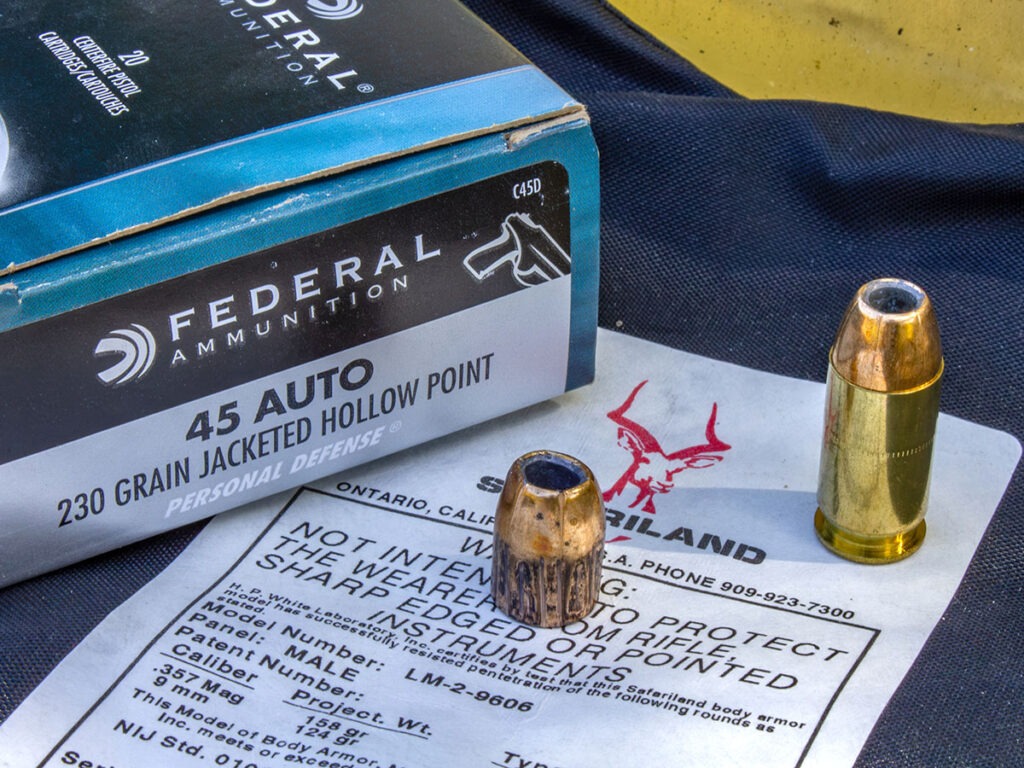
The way in which defensive handgun bullets perform when they impact the guy who is trying to beat you over the head with a hammer cannot accurately be expressed with kinetic energy or momentum. One is mostly a measurement of work potential, while the other is a representation of force. Neither are an accurate representation or prediction of how well the bullet might work to stop an attacker.
More kinetic energy and momentum are generally good things when it comes to defensive handgun ammo, but with both come increased recoil. When it comes to terminal performance, everything is a tradeoff and is sometimes unpredictable. This is why shot placement should always be consideration number one.
Editor’s Note: This article originally appeared in the October 2026 issue of Gun Digest the Magazine.
More Knowledge For The Armed Citizen
- Carry Law: What Is A Righteous Shooting?
- Concealed Carry and the Right to Remain Silent
- Tips For Communicating With Police After Shootings
- Concealed Carry: After the Shooting
- Q&A: Massad Ayoob On Self-Defense In Modern America

Next Step: Get your FREE Printable Target Pack
Enhance your shooting precision with our 62 MOA Targets, perfect for rifles and handguns. Crafted in collaboration with Storm Tactical for accuracy and versatility.
Subscribe to the Gun Digest email newsletter and get your downloadable target pack sent straight to your inbox. Stay updated with the latest firearms info in the industry.




I am a physicist. Kinetic energy is proportional to the mass of the object, here the bullet, and to the square of its velocity. Since air resistance is involved, the velocity is not strictly the muzzle velocity although it starts there. The other downside is folk use mass and weight interchangeably and that is not true. For example a mass of one gram has a weight of 0.0098Newtons. Grains of a bullet can be converted to pounds but also to mass. If you want to discuss this more, let me know. Mark Williams