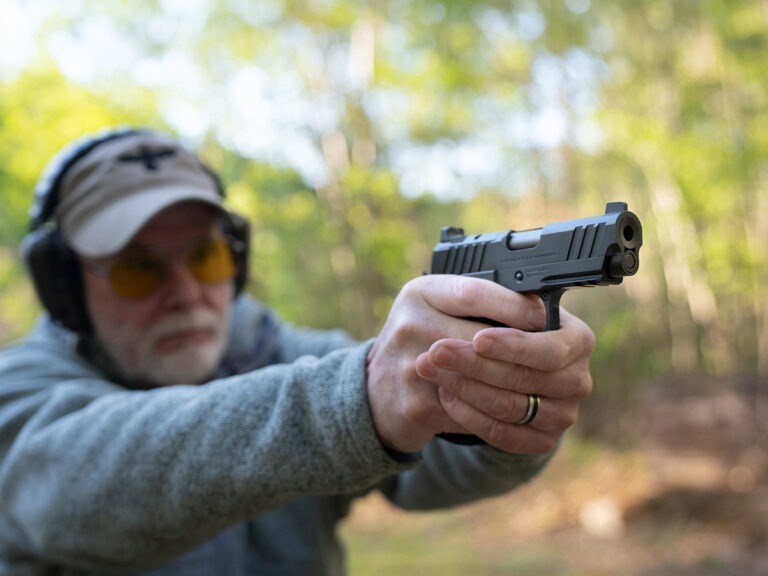
The trick to shooting handguns at long distance is an augmented sight picture.
The infatuation of shooting at long range seems to have infected everyone. It can be great fun to hit targets at extreme distances, and if you’re trying to do it with a rifle, there’s a whole world of guns and gear out there that you can buy to make it easier.
But what about long-range shooting with handguns?
I’m not talking about bolt-action pistols or other specialty handguns; I’m talking about everyday-carry-type handguns. Other than for fun, the practical reasons to shoot at long range with a carry gun are limited, and don’t expect to find accessories to help make it easier. If you’re going to hit at distance with a pistol, you gotta be able to shoot.
Before we get into some tips that can help you hit at distance with a carry gun and impress your friends while on the range, I have a story. I was doing some rifling training with Cody Carroll, who is a veteran with a resume that would make Captain America jealous. He was telling me about learning to shoot his Glock 19 out to 600 yards while preparing to conduct some training for a government agency down along a rough section of the Southern border. (The specifics of his contract would not allow him to carry a rifle.) I thought he was full of sheep dip until he explained how he was doing it. Carroll had a technique. I tried it, it worked, and I’ll explain it shortly.
‘Long’ Distance & Handguns
The first thing we need to do is define what long range really is. With rifles, I classify long range as anything beyond the distance the bullet can travel in one-third of a second. Why? Because no matter the rifle, within that distance you can zero your rifle so you can hold dead on a 6-inch target and—theoretically—get a hit.
It’s almost the same with pistols because gravity works the same on all bullets, but it’s different with pistols because the sight height on pistols is about an inch lower. Also, at least with carry guns, most will be zeroed at somewhere between 10 and 25 yards. This puts “long range” somewhere around and beyond about 75 yards.
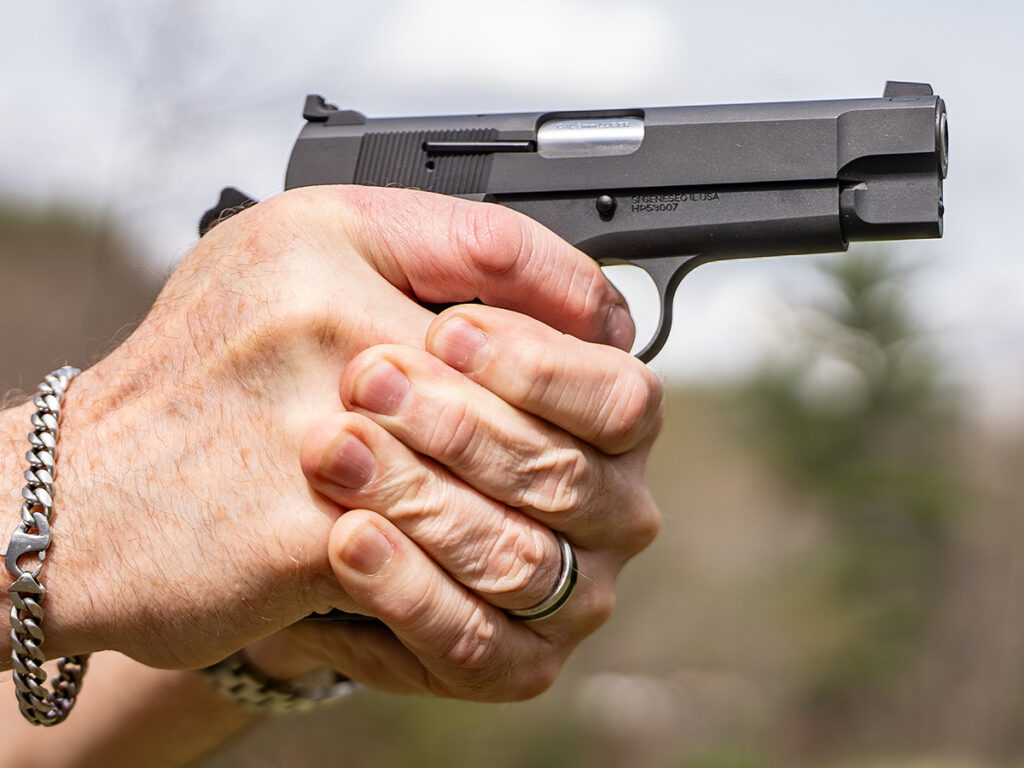
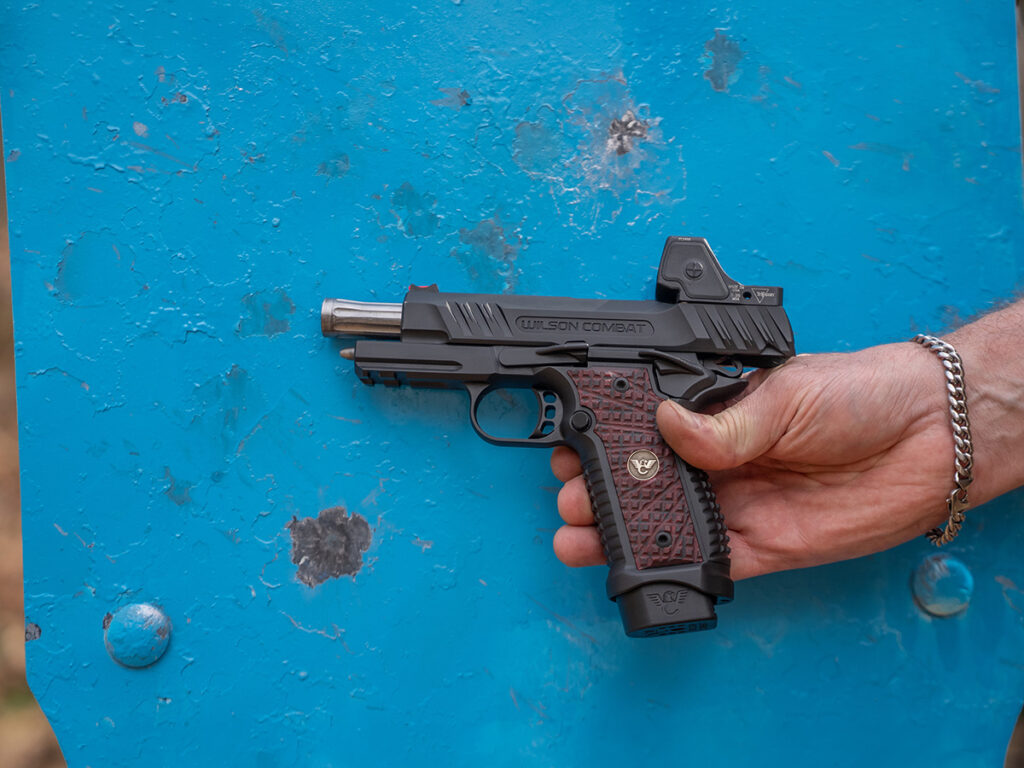
You also need to know the trajectory of the load you’re shooting. As an example, let’s use a common load, like Nosler’s 115-grain ASP JHP with a ballistic coefficient of 0.109 from a Browning Hi-Power. Out of my Hi-Power, it has an average muzzle velocity of 1,133 fps, and zeroed at 10 yards, it will drop about an inch at 50 yards, about 4.5 inches at 75 yards and about 10 inches at 100 yards. If you’re shooting at a torso-sized target, you should be able to hold center and hit near the bottom of the target at 100 yards. Out to about 130 yards, a hold on the head of the torso should allow a hit near the bottom of the target, but beyond that you’ll need to hold on air instead of hair—over the head of the target—to get a hit.
When it comes to long-range shooting, it’s all mostly a math problem; you’ll need to know how high to hold to get your hit. The problem with pistol sights is that, once you start holding over the target, you cannot see how far over the target you’re holding, because the sights are blocking the thing you’re trying to aim at.
This is where Carroll’s lesson comes into play. Instead of holding a traditional sight picture above the target, you hold a coarser sight picture … or more bead on the target. This allows you to use the front sight for elevation correction/trajectory compensation. (See diagrams 1 and 2.)

Notice how in Diagram 1, if you hold a common sight picture at the top of the target, your front sight covers the target. You cannot really tell if you’re at the top or how high you might be holding. In Diagram 2, you hold the top of the front sight at your desired point of impact, but you hold the front sight higher than the rear sight. This allows you to still use the rear sight’s relationship to the front sight for windage, while also using the front sight for elevation.
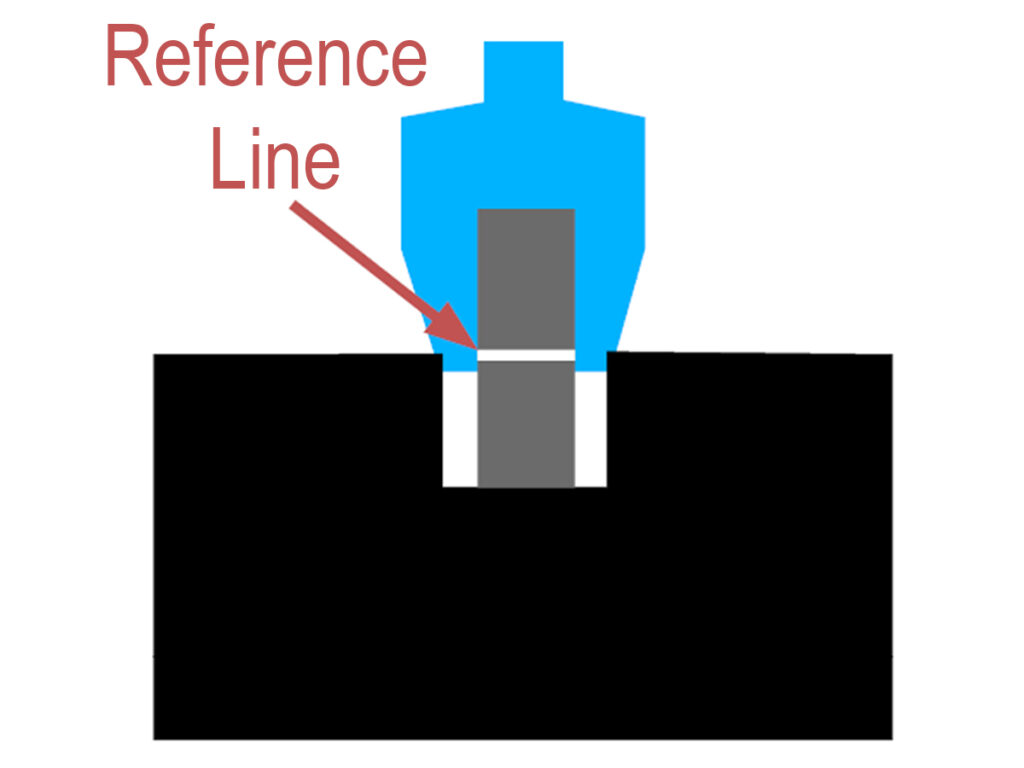
The trick is to know how much front sight to hold above the top of the rear sight. Once you determine that amount by math—or with practice—you can mark the front sight with a line to use as a reference for a certain distance.
When I was shooting bullseye/PPC competition with a 1911, I had my front sight marked for holdover at 50 yards. This is the same approach Carroll used at extreme range. The difference was that when he ran out of front sight at extreme range, he marked his slide and used those marks as a reference for the top of the rear sight to correct for elevation. (See Diagram 3.) He could still use the relationship between the front and rear sight for windage, but essentially, the pistol’s slide became an extension of the front sight.
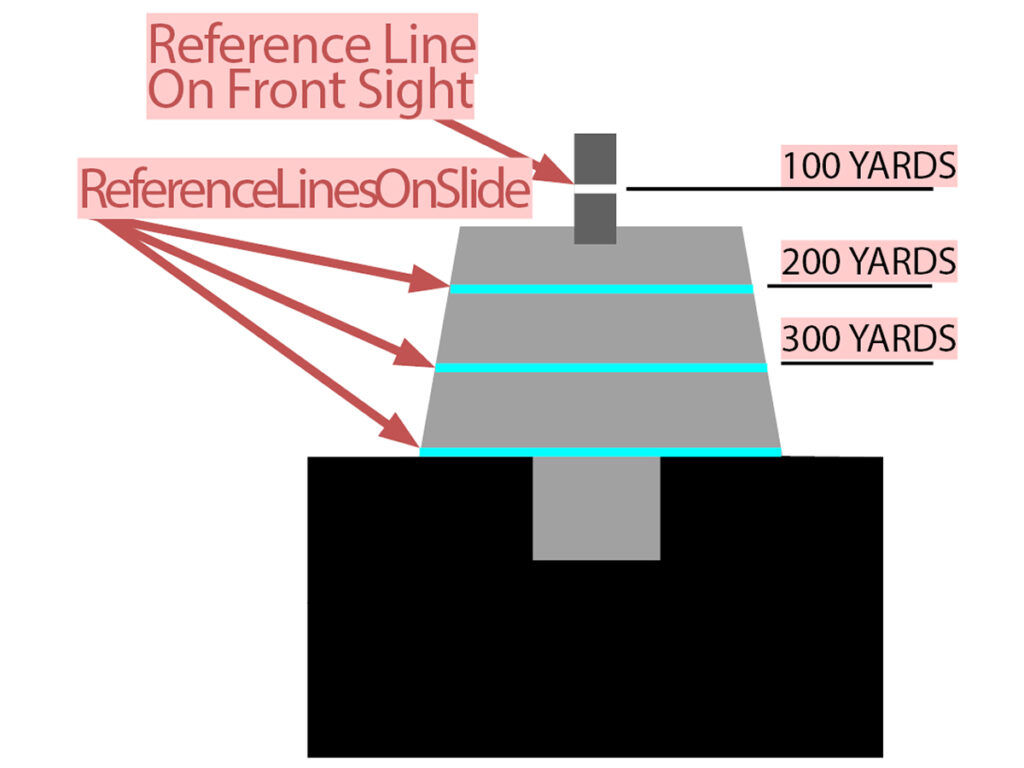
Carroll could not hit a silhouette target every time at 600 yards with his Glock 19, but you damned sure would not let him shoot at you or your best suit hanging on a rack at that distance.
The problem with many carry guns is that, instead of square post front sights, they now have fiber optic or more rounded front sights. They also can have Tritium inserts that can make this technique less effective, especially much past 150 or 200 yards. Still, by doing a bit of shooting and practicing a lot, you should be able to hit a torso-sized target out to around 200 yards and a little beyond, at least 25 percent of the time.
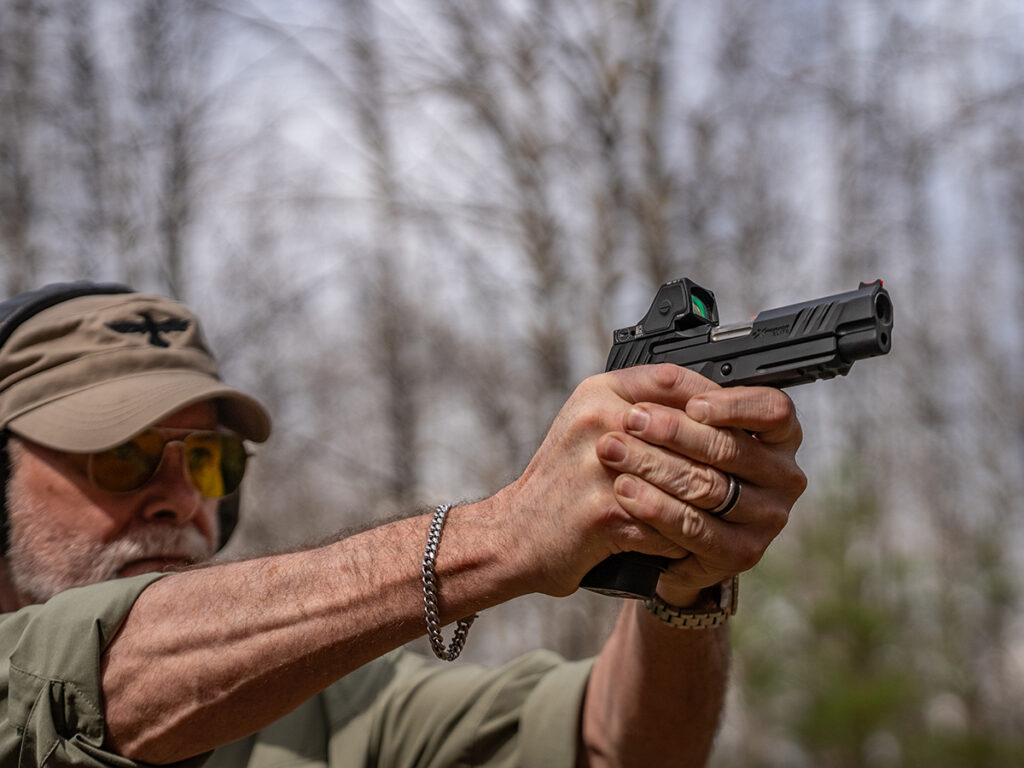
In the real world, there’s not much application for this unless you’re in the wide open and in a gunfight and don’t have a rifle. Or, unless you’re at the range trying to win $50 off your buddy.
Editor’s Note: This article originally appeared in the August 2026 issue of Gun Digest the Magazine.
More Shooting Skills
- Video: Target Transition Training With The Dot Drill
- The Shot Timer And Defensive Handgun Training
- Gun Digest’s 10 Best Shooting Drills And Firearms Training Posts
- MantisX: Simple And Effective Training
- Video: Is A Full-Sized Pistol The Best Training Option?
Next Step: Get your FREE Printable Target Pack
Enhance your shooting precision with our 62 MOA Targets, perfect for rifles and handguns. Crafted in collaboration with Storm Tactical for accuracy and versatility.
Subscribe to the Gun Digest email newsletter and get your downloadable target pack sent straight to your inbox. Stay updated with the latest firearms info in the industry.