A fast and smooth revolver reload isn’t easy to perform, but with enough practice and the right gear, you can keep your wheelgun fed.
Revolvers are routinely overlooked as defensive handguns. This is somewhat understandable, because pistols are easier to shoot than double-action revolvers, mostly because of their triggers, and they also come with higher capacity. But the revolvers today are not the same as back before the auto-pistol became the dominant defensive gun.
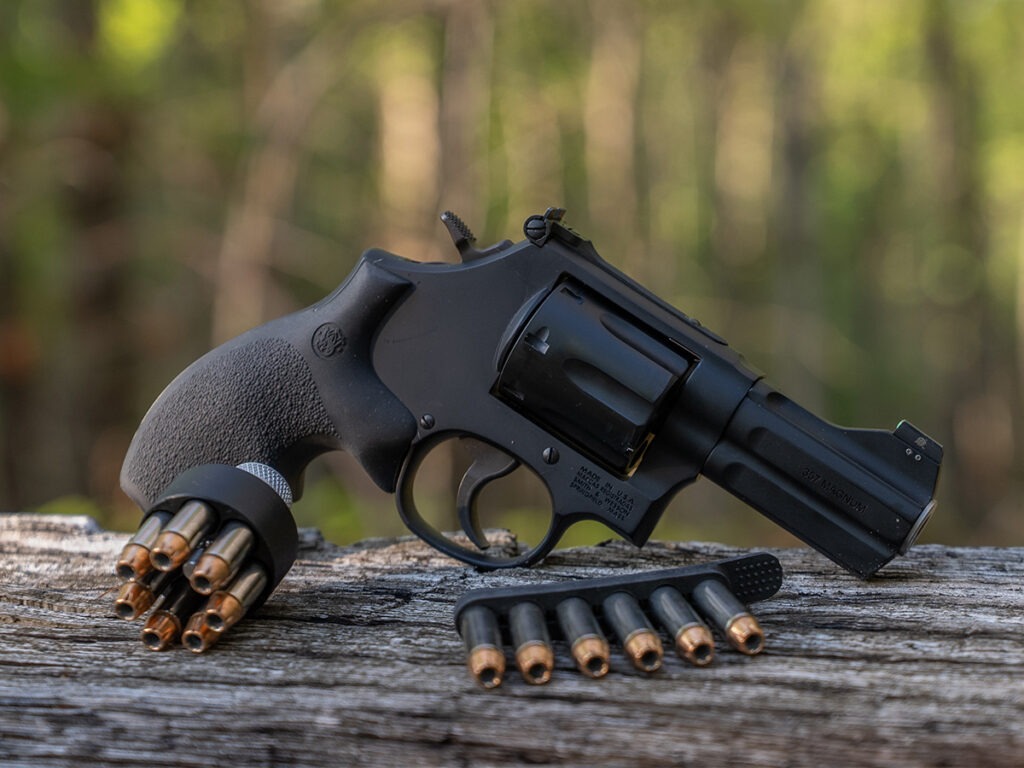
The New Model 386 Night Guard revolver from Lipsey’s is a seven-shot, weighing only 24 ounces, and it can handle .357 Magnum ammo, which is a more powerful cartridge than any pistol of the same weight can handle.
When I became a cop in 1992, I was issued a S&W Model 686 .357 Magnum. It held six rounds and weighed about twice as much as a Glock, which was the dominant service pistol of the time that also held more than twice as much ammo as the Model 686. When I went to the police academy, I was the only cadet armed with a revolver and still earned the top gun award.
The revolver might be an old design, but it can still effectively serve as a self-defense sidearm.
With practice, you can master its long, double-action trigger—but there is nothing you can do about the capacity other than learn how to efficiently reload a revolver. And even when you get good at reloading a revolver, you’ll still not be able to reload one as fast as you can reload a pistol.
As a military or law enforcement duty gun, the modern pistol is superior. However, for the civilian who needs a reliable carry gun, the revolver can still be a practical option, mostly because most civilian self-defense shootings rarely need the high capacity pistols offer—especially if you can shoot.
Reloading a revolver is different and much more complex, and because it’s not as intuitive as the reload of a pistol, it requires more practice.
Here’s a guide to the basics of revolver reloading with speed.
First Things First
To reload a revolver, you must first open the cylinder and position the revolver for the reload, and there are two schools of thought on how to best do this.
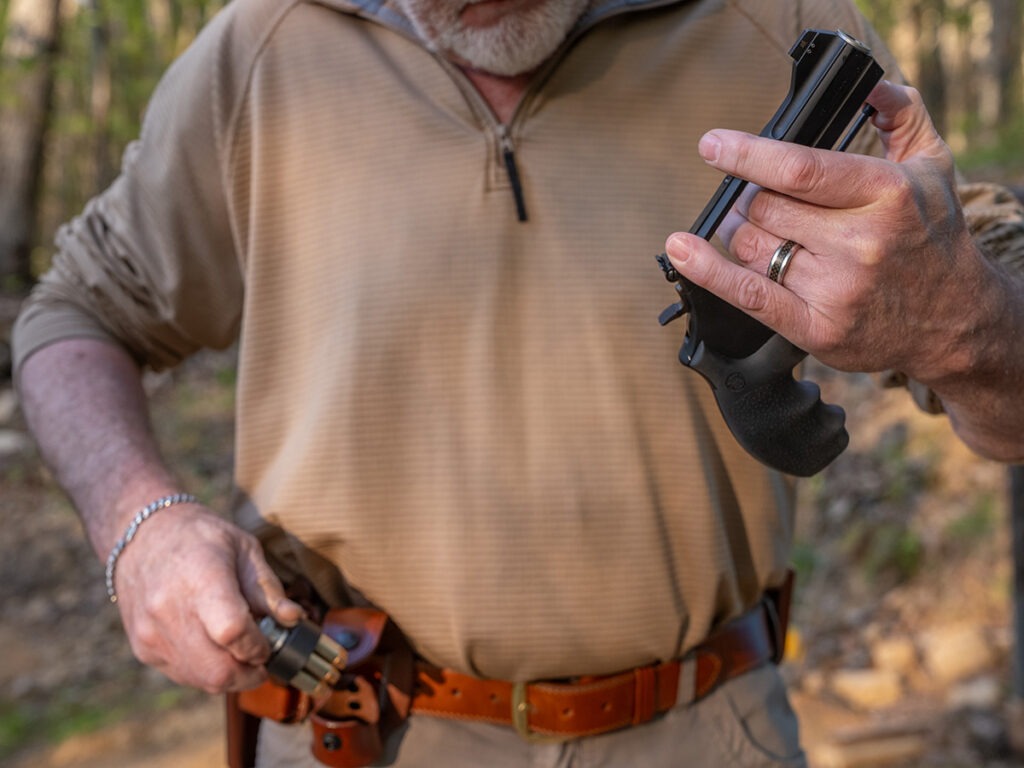
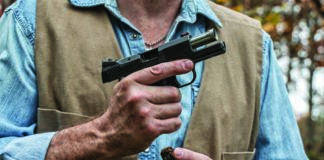
The traditional method is to press the cylinder release with the thumb of your shooting—right—hand and then slip the two middle fingers of your left hand through the cylinder opening, grasping the cylinder between those fingers and the thumb of your left hand. The downside to this technique is that you remove the revolver from your shooting hand. The upside is that it frees your shooting hand—your dominant hand that you generally have better dexterity with—for reloading.
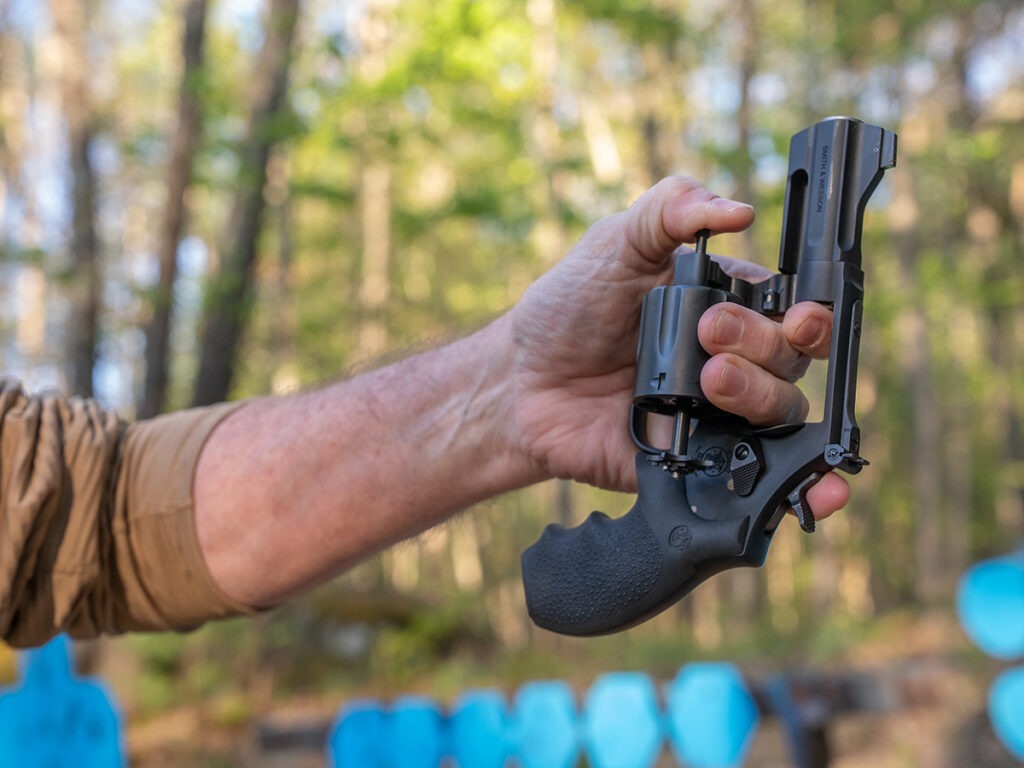
I call the other method the “retention” method because the revolver never leaves your shooting hand. You open the cylinder the same way, but you then stick your trigger finger through the cylinder opening and press it against the cylinder. Then, you move the thumb of your shooting hand from the left side of the revolver to the hammer. This clears the path for empty cases to be ejected and for live rounds to be inserted into the cylinder.
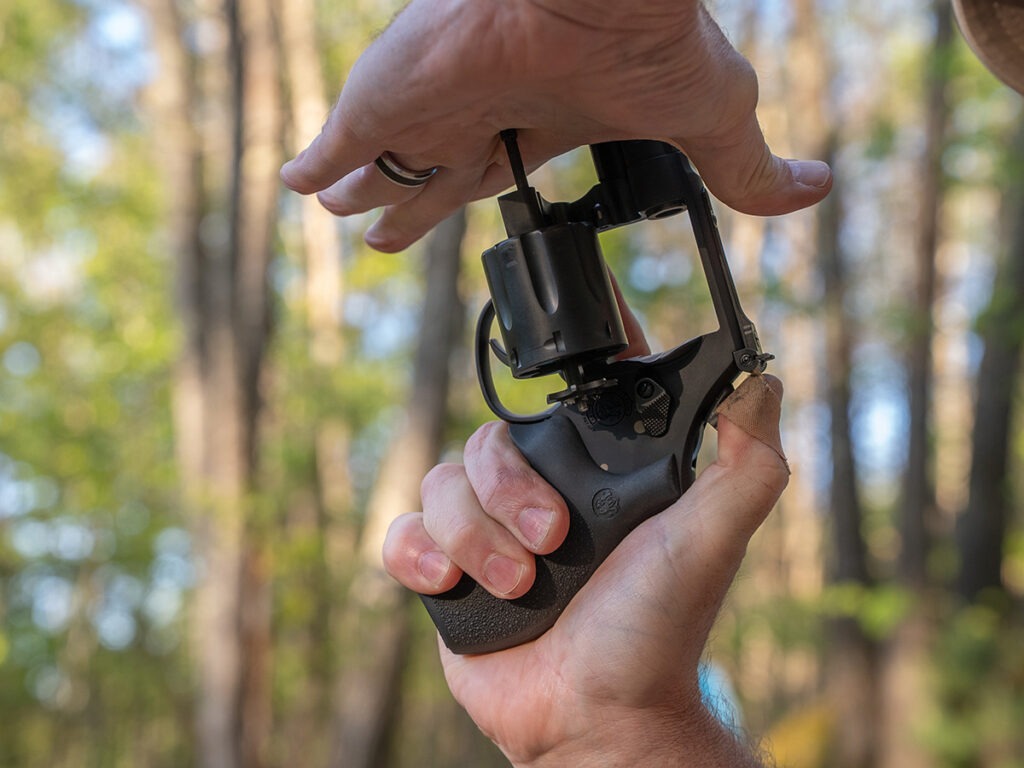
The downside to this technique is that you will have to conduct the reload with your often less agile left hand. But, on the plus side, you keep the revolver in the hand you shoot with.
You can argue the pros and cons of each technique, but the important thing is to find the one that works best for you. And if you’re a left-hand shooter, you still must use one of these techniques. Given the configuration of a revolver with the cylinder that swings out to the left, you cannot simply reverse the process.
Types of Reloads
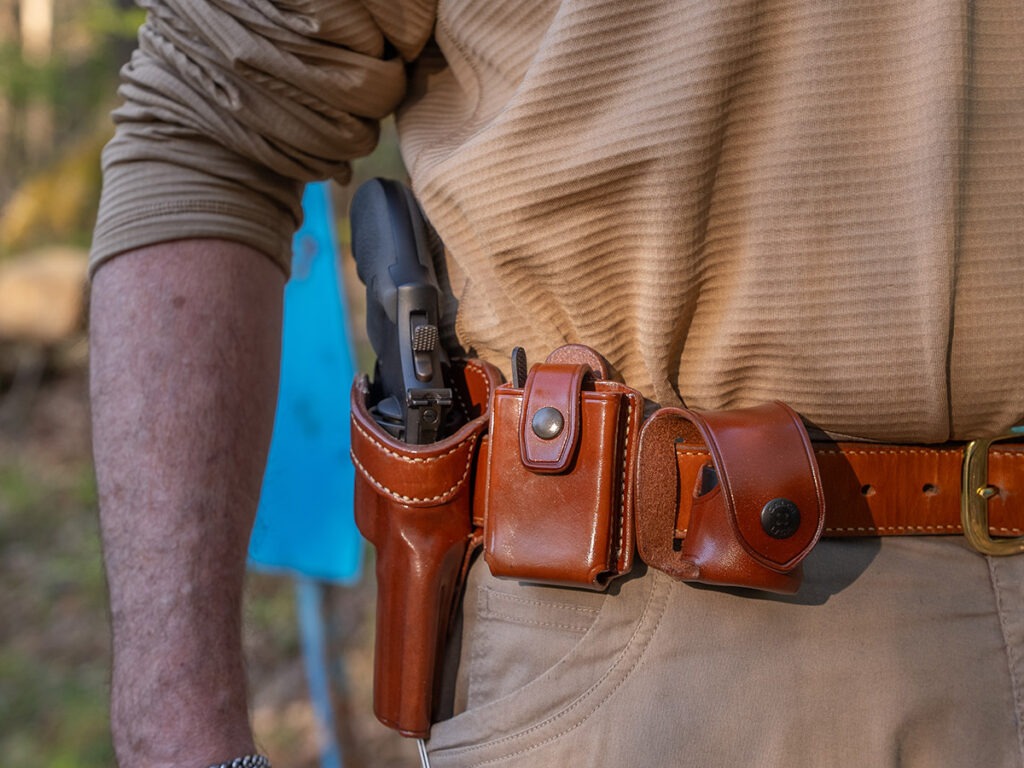
There are three types of situational reloads with a revolver. They include the administrative reload, the tactical reload and the speed reload. The reload you use is determined by the situation you’re in.
If you’re in a competition or a gun fight and have expended all your ammunition, you’ll need to conduct a speed reload with the goal of getting back in the fight or match as fast as possible. A tactical reload is a fighting reload where your goal is to get a fully loaded gun, but to also retain the unfired rounds that are in the cylinder because you might need them later. And finally, an administrative reload is just a range reload conducted at leisure.
Here’s where it gets a bit confusing. The retention method is a great way to conduct a speed reload, but it is not ideal for a tactical reload or for a partial administrative reload. In those instances, you’ll need to hold the revolver in one hand while simultaneously using the thumb of that hand to precisely operate the ejection rod. In the spirit of keeping things simple, this is a good argument for just using the traditional method all the time.
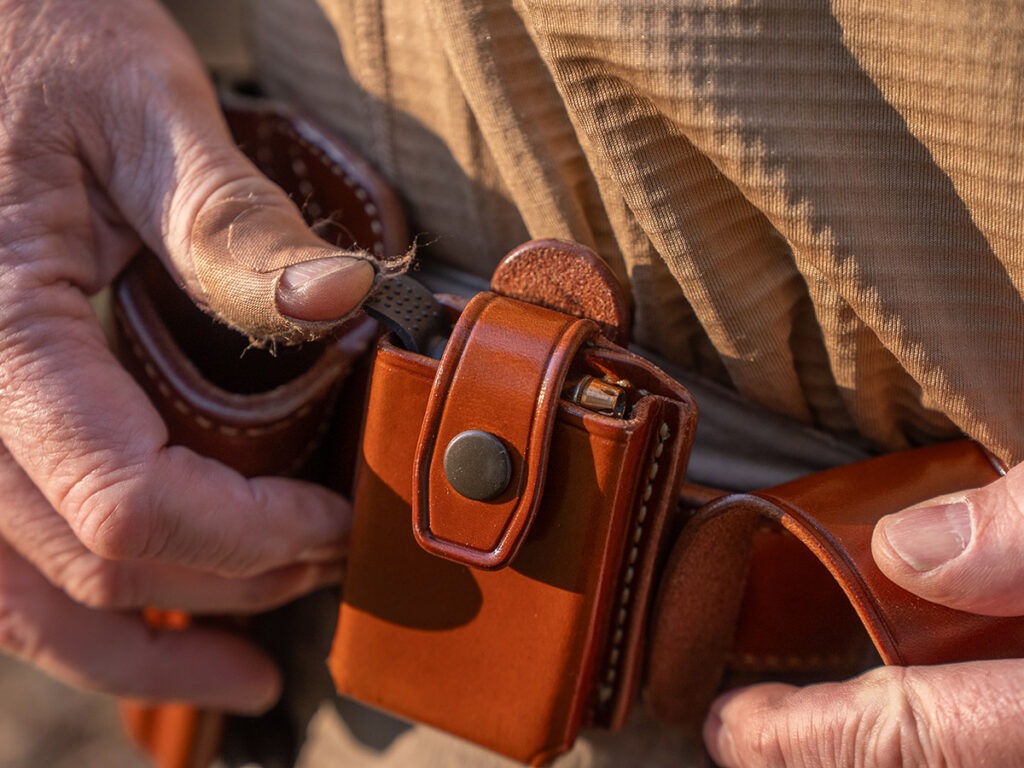
The Speed Load
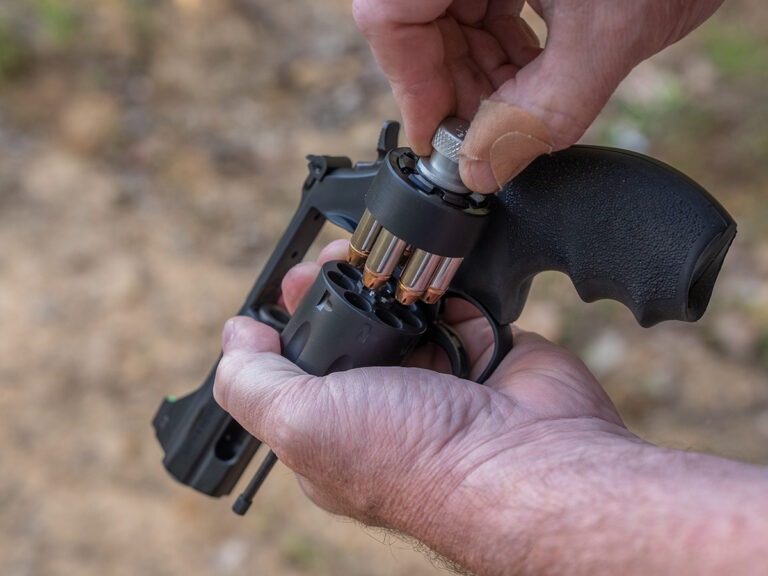
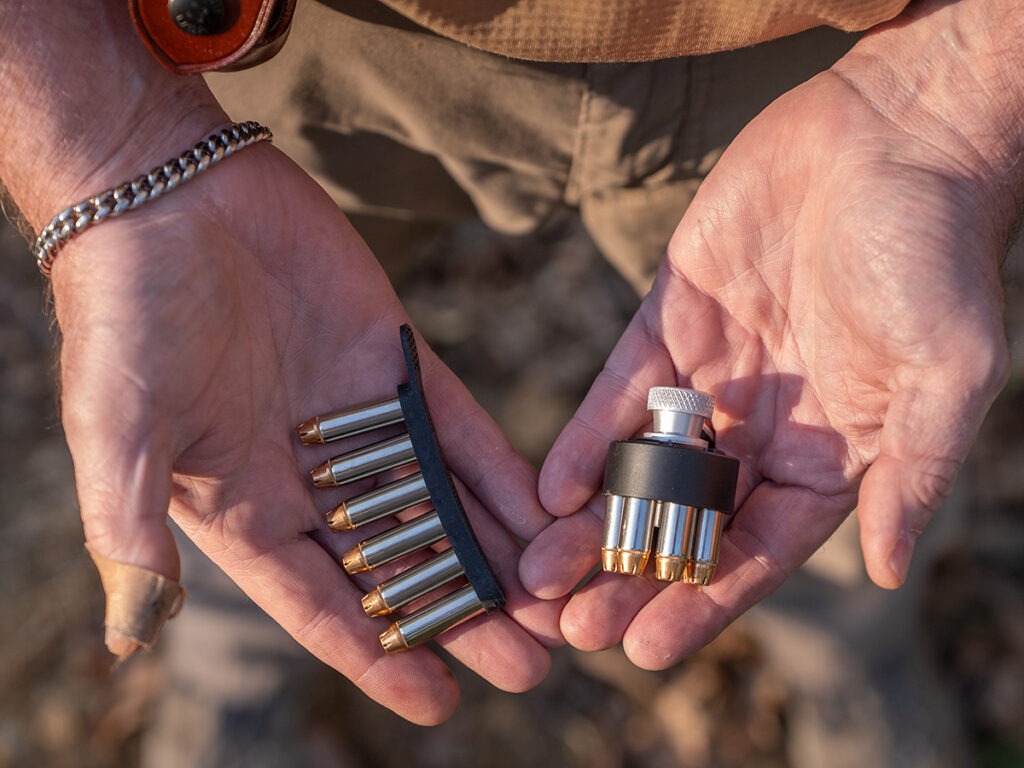
To conduct a speed load, you will need a speed loader, which is a small device that holds ammunition in a configuration matching the charge holes in a revolver’s cylinder. If you’re using the traditional method, once the cylinder is open, point the muzzle skyward to use gravity to your advantage and slap the ejector rod with your shooting hand, or press it with the thumb of your left hand, to empty the cylinder. The slap method is preferred because fired cases can sometimes be stubborn. If you’re using the retention method, slap the ejector rod with your left hand.
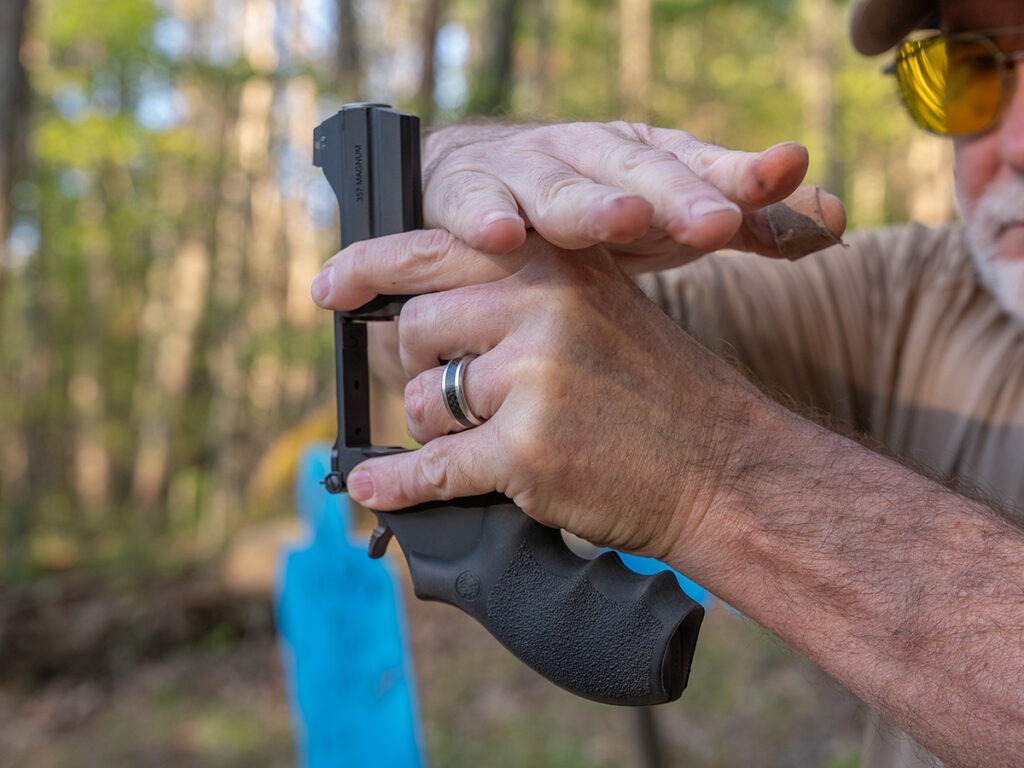
Next, rotate the revolver so the muzzle is pointed toward the ground, again using gravity to your advantage and—with your left or right hand, depending on the technique you are using—retrieve the speed loader, line it up with the cylinder, and twist it or press the release button. Then, drop the speed loader to the ground, close the cylinder and re-establish a two-hand shooting grip.
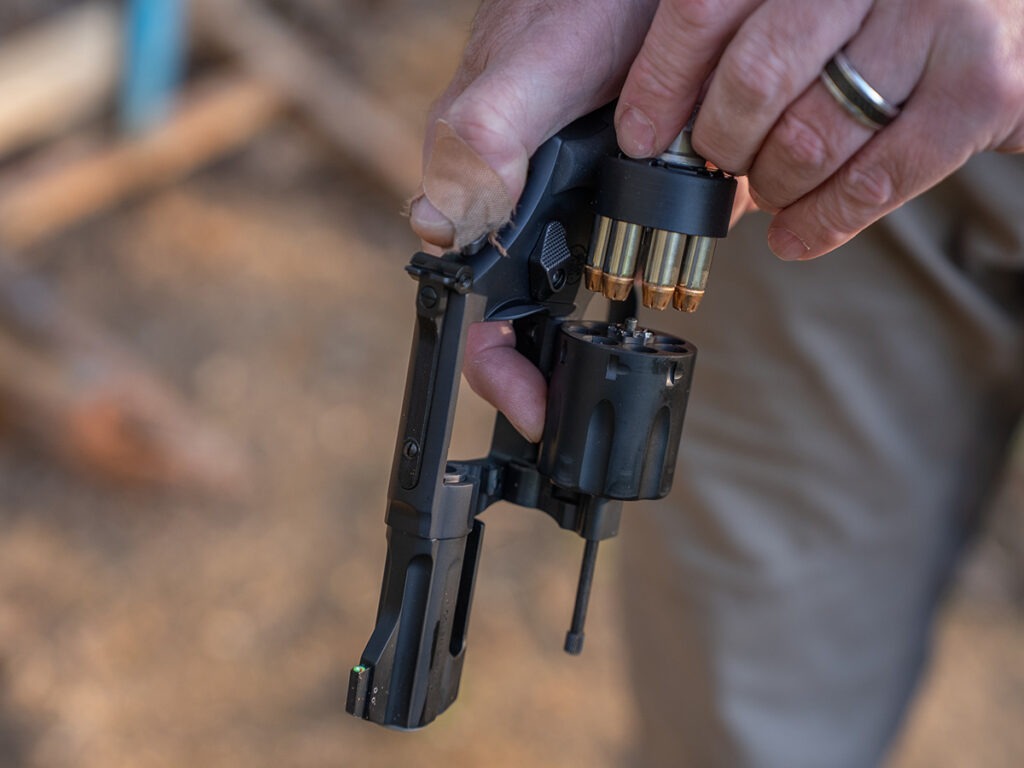
The Tactical Reload
Let’s say you’ve fired three of the six rounds in your cylinder, have secured cover and have some time. It would be a good idea to have your revolver fully loaded if the fight continues, so the concept of the tactical reload is to open the cylinder, remove the fired cases and replace them with live ammunition. You’ll also need access to individual rounds to replace the fired rounds.
Historically speed strips—rubber strips that hold cartridges in a line—are often used for this. One key to performing this type reload is to keep the revolver nearly level during the process. This keeps live rounds from accidentally falling from the cylinder.
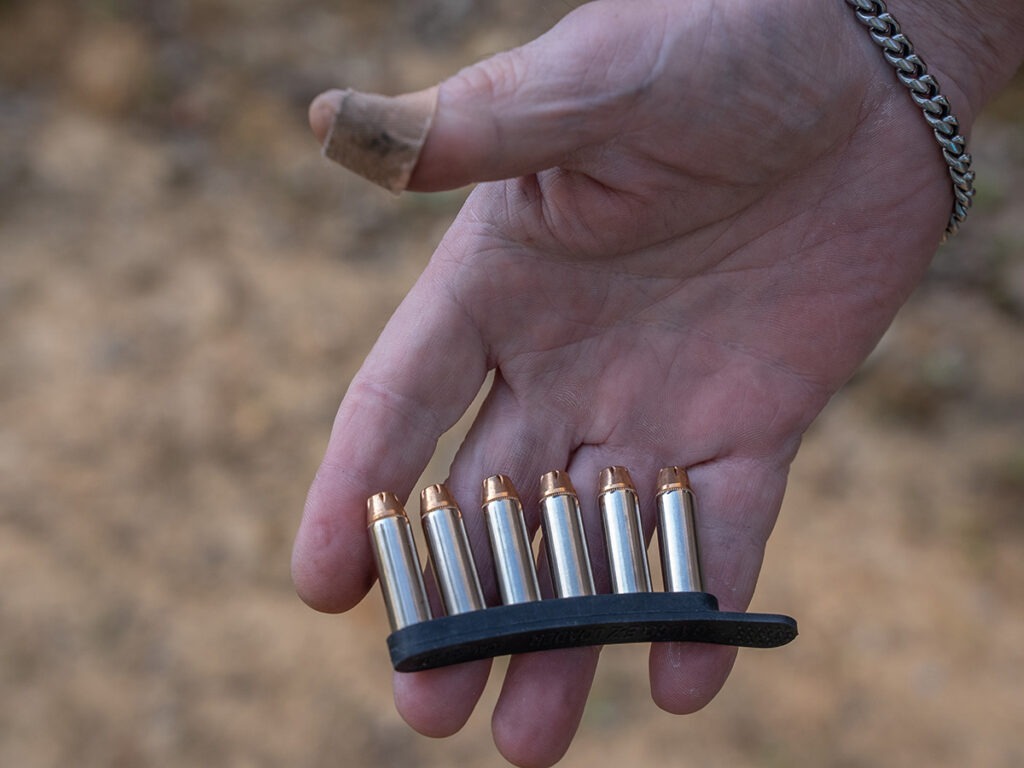
The problem with this approach is that it’s a very tedious exercise that also requires continued visual attention, and you must have enough light to see the indented primers of the fired cases, so you know which cases to remove. It’s also a very time-consuming process to just save a couple live rounds.
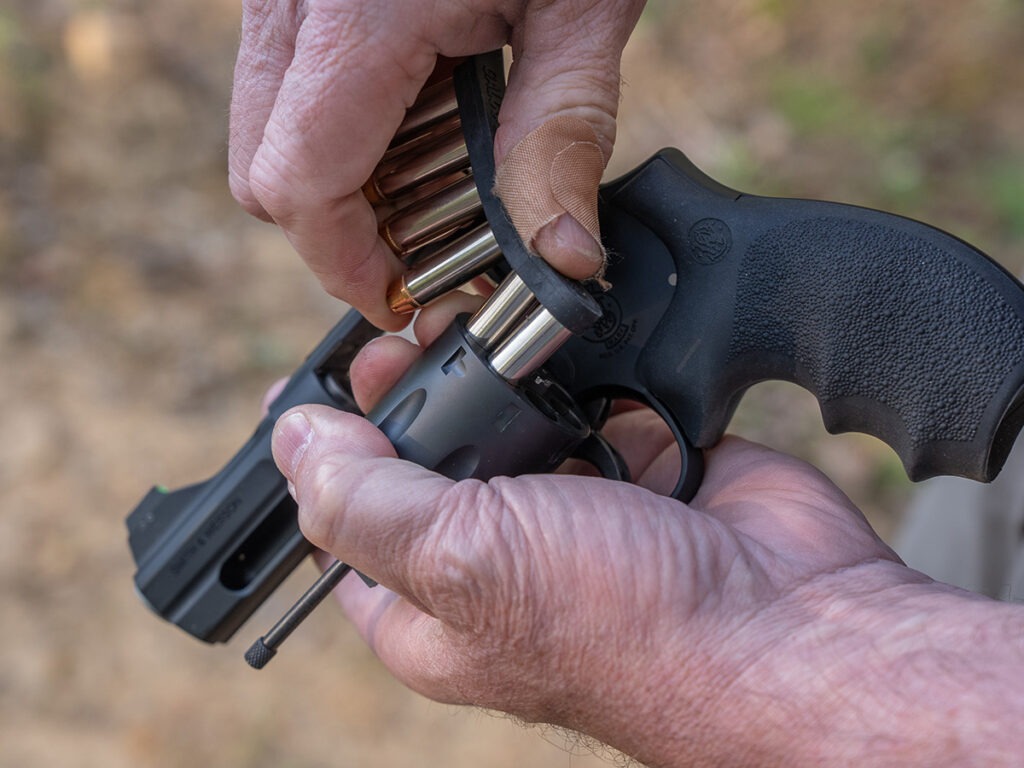
A more tactically sound approach is to just conduct a speed reload. However, instead of slapping the ejector rod and dumping the contents of the cylinder on the ground, press the ejector rod with your thumb, popping out the fired and unfired cartridges into your hand, and then dump them all into your pocket. If you empty all your speed loaders and still need more ammo, you can single-load from your pocket, discarding empties as you go.
The Administrative Reload
Essentially, the administrative reload is just a tactical reload conducted at leisure when you are on the range practicing or shooting recreationally. You can retain fired cases and unfired ammunition in your hand and use a speed loader to reload, or you can only remove the fired cartridges and replace them with live rounds, individually or from a speed strip. There are no tactical considerations here; you just want to get your revolver fully loaded safely.
Rehearsal and Repetition
The key to learning how to load a revolver, and to getting good at loading a revolver, is the same as with any other physical activity: It’s practice—routinely and correctly rehearsing and repeating the process.
The great thing about learning to reload a revolver is that you can practice with dummy rounds. This rehearsal is also where you will develop your own little tweaks to the process that help you better interface with your revolver. You’ll never get as fast at reloading a revolver as you can with a pistol, but you might be surprised at how fast you can be.
Gear Notes: Moon Clips
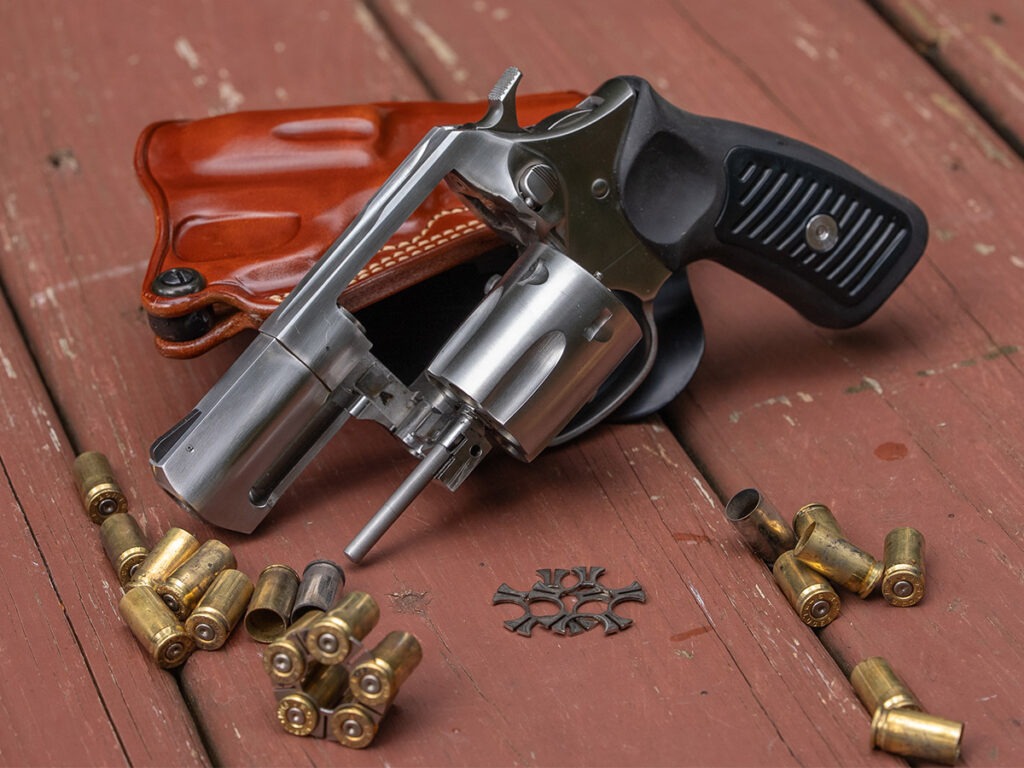
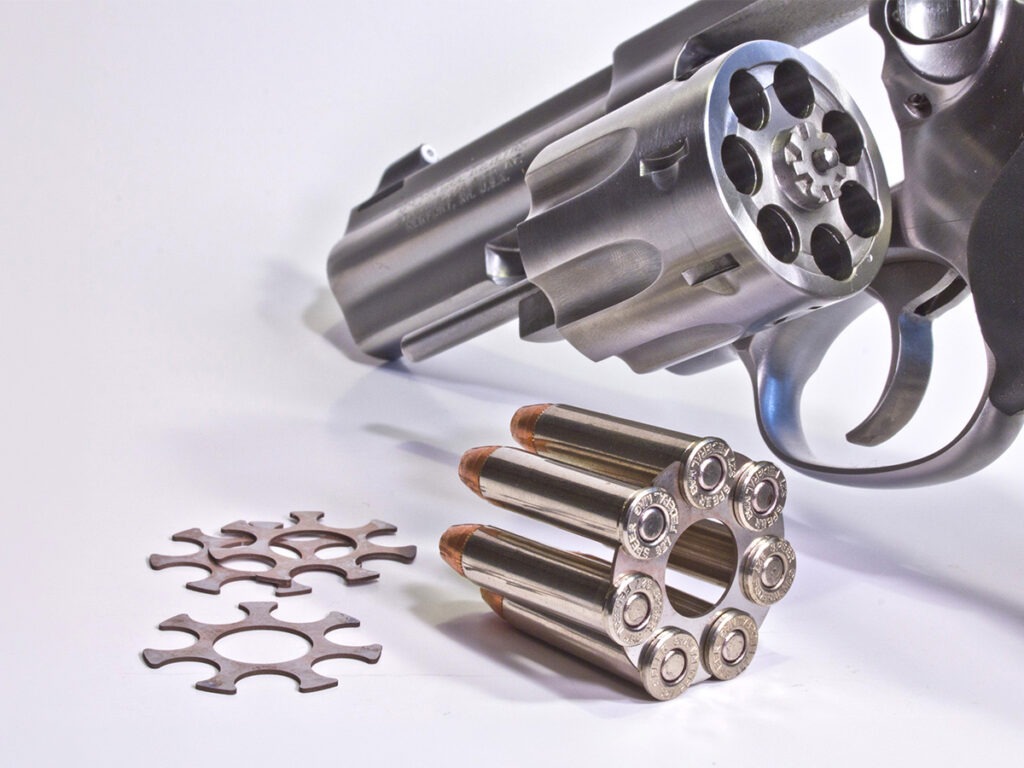
An alternative to speed loaders is moon clips. Moon clips are thin metal clips that slip over the rim of a cartridge case. Fully loaded, a moon clip holds a full cylinder load in the proper configuration to fall right into the cylinder with a little help from gravity. And, when you slap the ejector rod, the full moon clip with empty cases of loaded cartridges pops out.
Some revolvers—especially 9mm Luger revolvers—come with moon clips; however, you can have a talented gunsmith convert most revolvers to work with them.
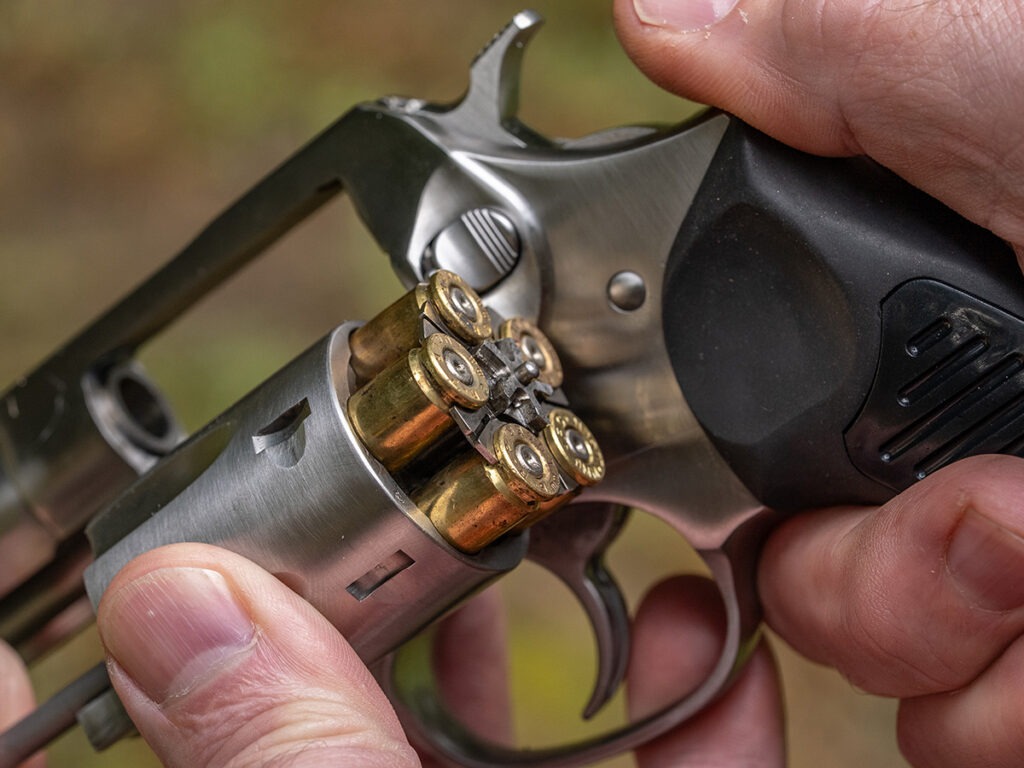
TK Customs is a great source for moon clips and moon clip conversions. They have done some excellent work for me in the past.
Editor’s Note: This article originally appeared in the August 2026 issue of Gun Digest the Magazine.
More On Training
- Video: Target Transition Training With The Dot Drill
- The Shot Timer And Defensive Handgun Training
- Gun Digest’s 10 Best Shooting Drills And Firearms Training Posts
- MantisX: Simple And Effective Training
- Video: Is A Full-Sized Pistol The Best Training Option?

Next Step: Get your FREE Printable Target Pack
Enhance your shooting precision with our 62 MOA Targets, perfect for rifles and handguns. Crafted in collaboration with Storm Tactical for accuracy and versatility.
Subscribe to the Gun Digest email newsletter and get your downloadable target pack sent straight to your inbox. Stay updated with the latest firearms info in the industry.