The legacy and ever-growing lineage of the Ruger 10/22, the world’s most popular rimfire platform.
Many readers of these esteemed pages had their first shooting experience with a .22 LR rifle, likely as a mere lad or lass fresh out of kindergarten … and some perhaps even earlier. The humble .22 LR is a staple of American life and is often the foundational element of one’s introduction to the shooting sports, be it hunting, target shooting, collecting or just an interest in the fascinating machines that this title is dedicated to.
There is very little that can’t be done with a .22 and, for a huge number of shooters out there, the 10/22 is synonymous with the cartridge. The 10/22 market is growing exponentially in our current day and is reaching incredible heights. Now is the best time ever to own this type of rifle, and we’re going to take a look at just what makes it so attractive.
Ruger’s Legacy
Just like the AR-15, Glock, Remington 700—and any other now modern, modular system—the Ruger 10/22 began life as just another design in a sea of comparable models from other companies. Like the guns listed above, you no longer need to go to the company that initially designed and introduced it to make one of your own; in fact, you can make 10/22 compatible gun without any Ruger parts at all.
The aftermarket for the 10/22 is the largest of any rimfire rifle, but just how did we get to this point when there were so many others out there in direct competition with it at the time it was introduced?
The 10/22 was introduced in 1964 and was, for the time, a relatively unique design that incorporated a rotary magazine. This was not to say that the era was populated with total garbage and the 10/22 kicked in the front door of the market. The rifle was simple and, above all else, reliable, which are large factors in what gained it attention. Semi-auto rimfire rifles have often had issues with reliability, owed largely to the design of .22 LR ammunition with its rim and heel-base bullets and how they interact with the mechanism of the rifle itself.
It could be argued that the 10/22 magazine is the real reason behind the success of the rifle, a far step ahead of the typical in-line magazines and tube-fed models, which themselves aren’t bad … just not great for semi-auto operation. Manually operated rifles are usually much more forgiving of magazine type, but in the case of the 10/22, a reliable rimfire magazine that prevents feeding errors was noteworthy for the time.
Fast-forward to today and the 10/22 has continued marching onward into a place of mundane abundances; the rifle is, by sheer numbers alone, one of the most popular single firearm models in the country. Literally millions and millions have been sold, and still more clones are in current production. The exact number is unknown, but it is likely hovering somewhere in the ballpark of 8-10 million. Recent ears have seen the aftermarket grow so large that real estimates are difficult to make. Ruger currently lists more than 60 individual models on their website as of this writing. This, coupled with the aftermarket, shows how enduring this reliable little design is.
The Aftermarket
For the sake of space in this article, this will not be a full review of every company that produces components and complete rifles, there is simply too much out there. A good place to start is just what makes the 10/22 platform a viable option for the aftermarket to begin with.
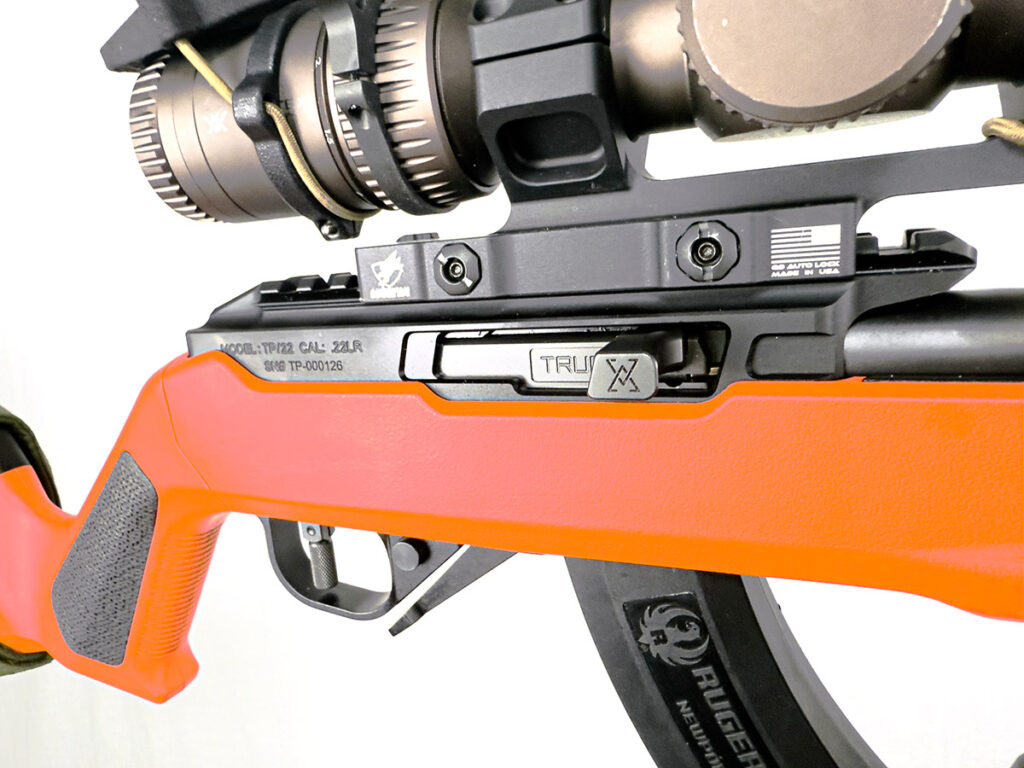
This is a somewhat simple concept in that the way the 10/22 was designed allows for it to be fully disassembled with basic tools … and in such a way that new parts can be installed with the same tools. While this seems like a very basic notion, it’s not—and the concept is the basis for all the modular systems we have today, such as the AR-15 and 700-footprint bolt guns.
Every single part of these modular systems is made by various companies, allowing you to build as you see fit. Guns that require actual gunsmithing and not just basic assembly have almost universally never achieved an aftermarket following, aside from basic things like stocks or grips.
The basis of the 10/22 is a barrel held onto the receiver with a simple V-block that interacts with a dovetail-style cut on the underside of the barrel. The barrel will self-time on installation using this method, so there isn’t a need to headspace or go about complicated gunsmithing tasks. The bolt and spring assembly also installs easily and, again, there are various types to choose from.
Building out a 10/22 platform rifle is extremely easy, even for a person who has never done something like it before. The AR-15, while extremely common, does require some know-how to assemble and all the right tools so you don’t scar the parts up installing roll pins and the like.
Now, this is an interesting point in the general conversation surrounding what we consider to be “modular.” Very few of the platforms that set the modular stage were originally designed to be that way down to the part. Instead, it was manufacturing choices that led us to start making easily installed, drop-in replacement parts. It is really that simple.
So, if something is too hard to work on, it usually remains just that, and the design never enters the public domain, so to speak. Companies can either love it or hate it, but, in general, once the aftermarket latches onto a design, the company in question can either embrace it and elevate or decide that design is theirs only and watch it stagnate.
As previously mentioned, the 10/22 aftermarket is the largest it has ever been, and it continues to grow daily. You can get not just new barrels and receivers, but complete rifles … and absolutely everything else in between.
Receivers
There is going to be some overlap here with barrel makers, so don’t be surprised. The 10/22 receiver is a somewhat simple design that lends itself to modular construction. Many companies make aftermarket receivers, among them are Faxon Firearms, True Precision, Volquartsen, Brownells, TacSol and a whole lot more. These receivers often come in the “takedown” versions as well, but it varies by company. In general, these are all high quality, and you can take your pick for features and cost. Some do get a little pricey, to the tune of being able to buy a stack of basic Ruger brand rifles instead, but that’s up to you, and I personally think the builds are a lot of fun.
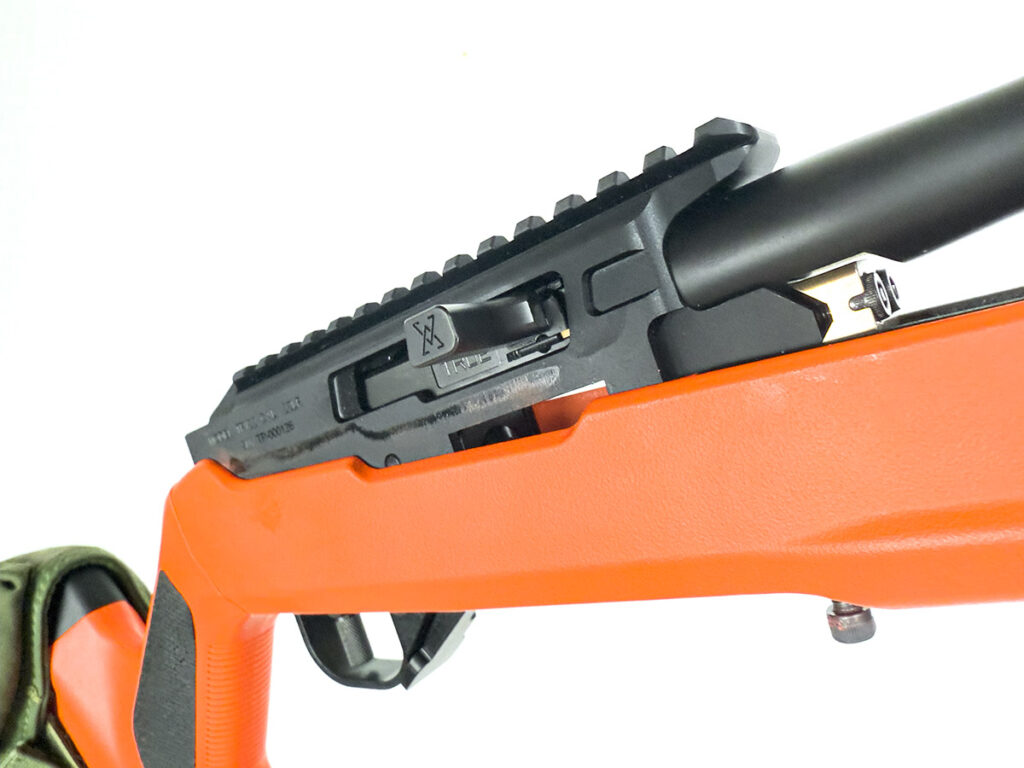
Lumping it in with receivers are internals. Fortunately, there isn’t much involved in this category, and you can again pick what you want, but most receiver makers will include their own bolt assembly. You can, of course, upgrade your charging handle and spring, depending on your needs.
Barrels
Barrels for the 10/22 platform are pretty neat these days. You can get some very cool colors to match your receiver—or go wild with mix and match. Installing them is exactly the same across the board, and, should you choose, you can have more than one type if you want to tinker around with them.
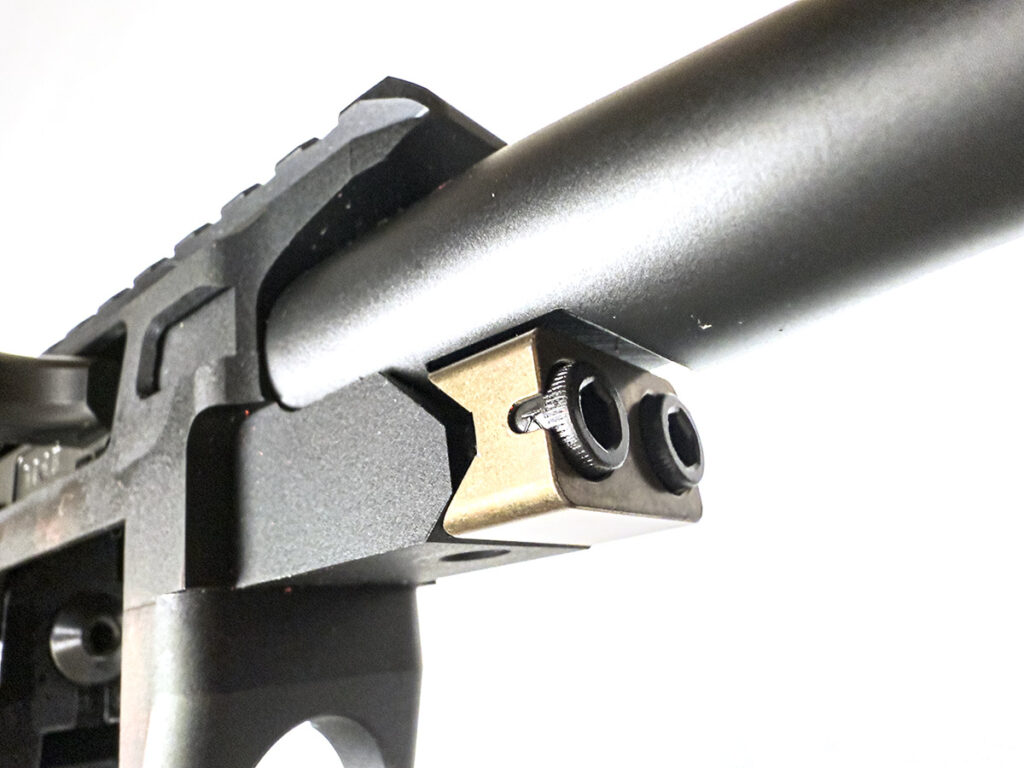
I’ve used a good number of barrels from Faxon over the years, and they are wonderful. Likewise, I’ve had extremely good experience with True Precision. Most of the aftermarket barrels available today come threaded at the muzzle as a standard option, which is great if, like me, you’re running suppressed.
In addition to the same companies that make receivers, other companies that make 10/22 barrels include ER Shaw, Green Mountain, Ballistic Advantage, Proof Research, Summit Precision and many more.
Triggers
Much like the Remington 700 and AR-15, you can easily get triggers for the 10/22 platform. I have gravitated almost exclusively to Timney and have them in all my 10/22 rifles. The trigger assembly is easy to use and usually installs to the receiver with no tools, although tight fitting pins do occasionally need a little bit of encouragement with a small plastic mallet, but don’t go to town on them.
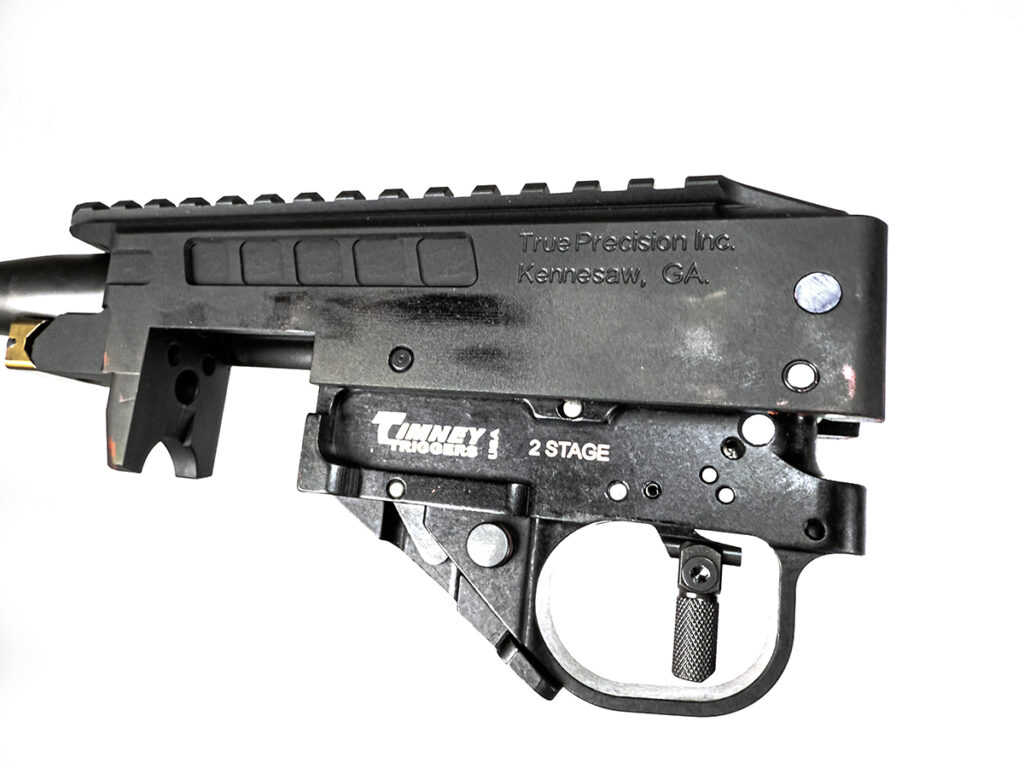
While I really like Timney, plenty of other companies make super high-quality trigger assemblies for the 10/22 in a wide range of colors and trigger types. Companies that make great triggers for the 10/22 include, but are not limited to: Volquartsen, Ruger, Powder River, JARD, CMC Triggers, Franklin Armory, Kidd and more.
Stocks
Luckily, stock installation on basic models of 10/22 are easily installed … with a single screw. Now, you might have added steps if you want to install a replica M1 Carbine stock assembly or a barrel band type stock, but, generally, dropping your action into a stock is twice as easy as on a Rem 700 with just one screw.
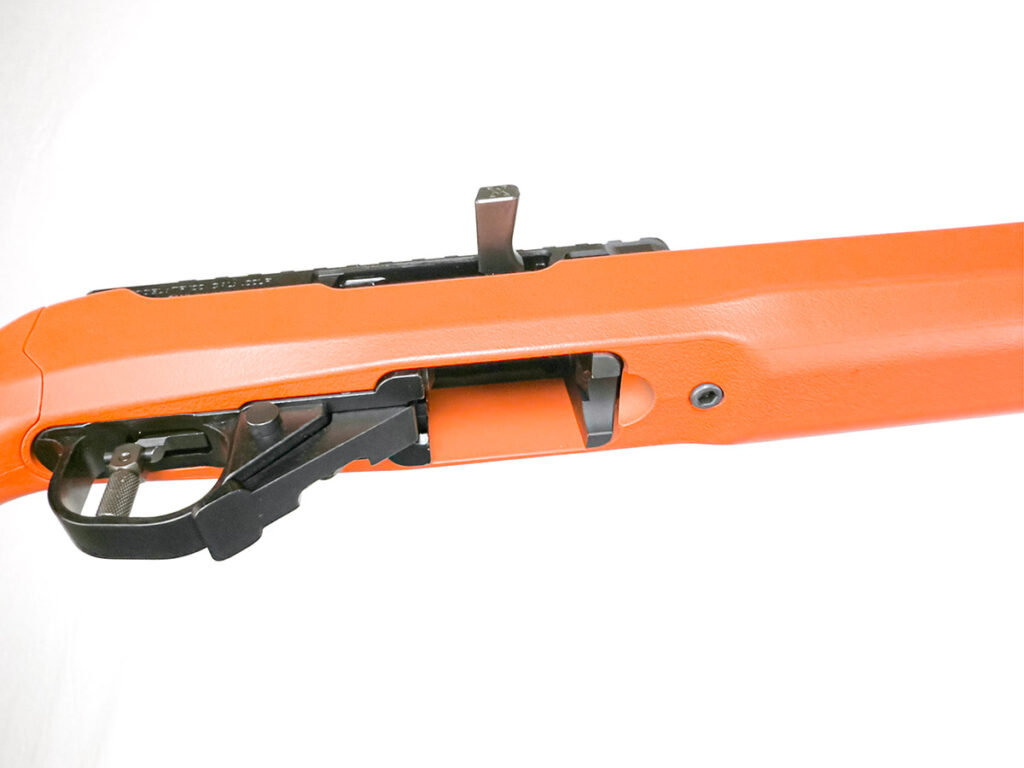
The aftermarket space for stocks is vast, but some big players include Magpul, Archangel, Grey Birch, Samson, WOOX, MDT, Luth-AR, Hogue and many, many more. The growing market for modular chassis builds is also worth watching; more are popping up all the time.

An Example of Excellence
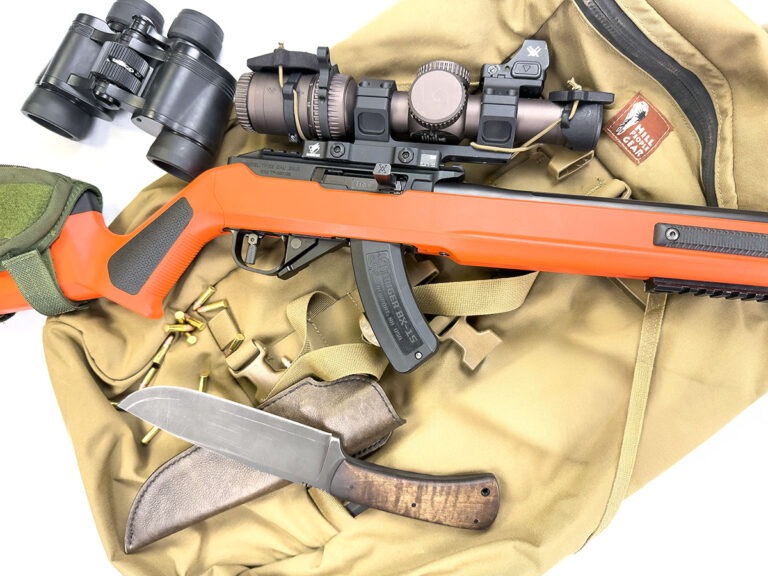
As you might have noticed in the photography for this article, this is quite an eye-catching rifle in the form of the True Precision TP/22 Hunter. According to True Precision, the rifle is a limited-edition release that includes a special orange Cerakote Magpul stock and Timney Calvin Elite trigger.
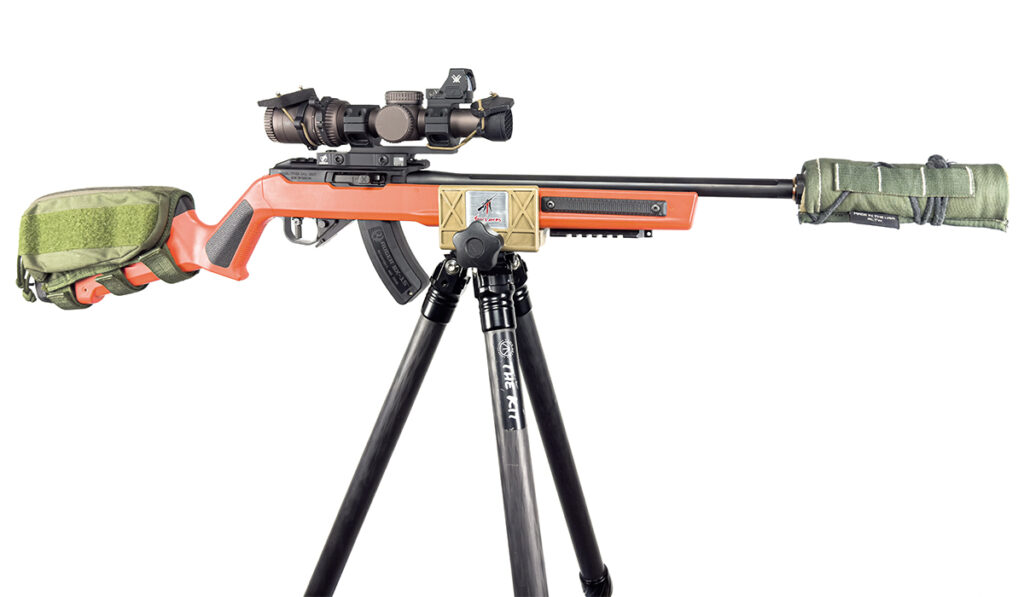
I’m still putting this gun through its paces, but it’s an example of just how good the semi-auto rimfire market has become. My first groups with the rifle using a Vortex optic and JK suppressor yielded not only very, very quiet shots … but one ragged hole at 25 yards, my typical zeroing distance for rimfire rifles. I backed it to 50 and then 100 yards, where it continued to deliver excellent results using standard velocity and supersonic CCI 40-grain ammunition.
Using subsonics, it was snap-your-fingers quiet. Lapua match loads dropped inside an inch at 100 yards, and at 50 yards, virtually all the ammo I used put them inside a half-inch off the bench.
In general, this type of performance is what I come to expect from high-end companies that stand behind their products, and you should expect your modern 10/22 platform to not just be reliable, but also extremely accurate. The best part about a ready-to-rock rifle like the TP/22 Hunter is that the gun has it all right out of the box, and you don’t have to fight to get it running well. Turnkey guns like this take advantage of the best of what is offered in one place, but still afford you the opportunity to make changes if you wish down the road.
The beauty of these modular platforms is that you aren’t married to one part, and you’re able to do a lot on just your existing receiver should you want to, and you can change barrels and stocks in literally a minute if you’re used to the process.
The future is certainly looking bright for the 10/22 platform—that much is certain.
Editor’s Note: This article originally appeared in the January 2026 issue of Gun Digest the Magazine.
More On The Ruger 10/22
- Aftermarket Ruger 10/22 Stocks
- AR-ing Your Ruger With The Rival Arms R-22
- Franklin Armory’s Binary 10/22 Trigger
- Customizing A 10/22 For Accuracy
Next Step: Get your FREE Printable Target Pack
Enhance your shooting precision with our 62 MOA Targets, perfect for rifles and handguns. Crafted in collaboration with Storm Tactical for accuracy and versatility.
Subscribe to the Gun Digest email newsletter and get your downloadable target pack sent straight to your inbox. Stay updated with the latest firearms info in the industry.