
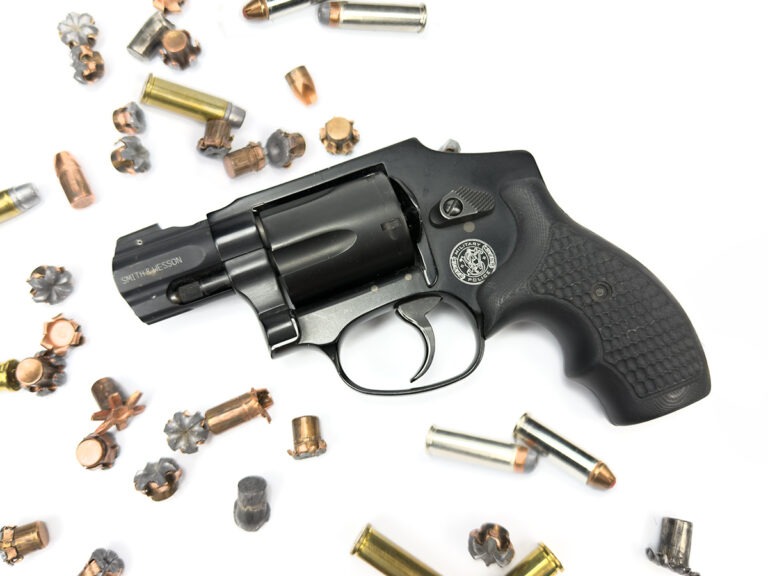
Snubnose revolvers are prolific in American cultural consciousness, but few people properly understand their practical capabilities.
One of the most quintessential American guns is the “snubnose” revolver, a staple of our heritage since it started to spin. The need for a compact and reliable weapon has never abated, and, sure enough, the little revolver has been there for us for countless generations. Due to the general saturation of this type of gun in the media and as an ingrained staple of our cultural consciousness, it’s both significantly overrepresented and, at the same time, poorly understood.
The Hollywood Effect on Snubnose Carry
In general, our focus here will be on the most commonly used chamberings inherent to the snubnose, the .38 Special and .357 Magnum. These rounds, while related and very closely intertwined, do behave like different animals in a small revolver, and the benefits largely depend on use.
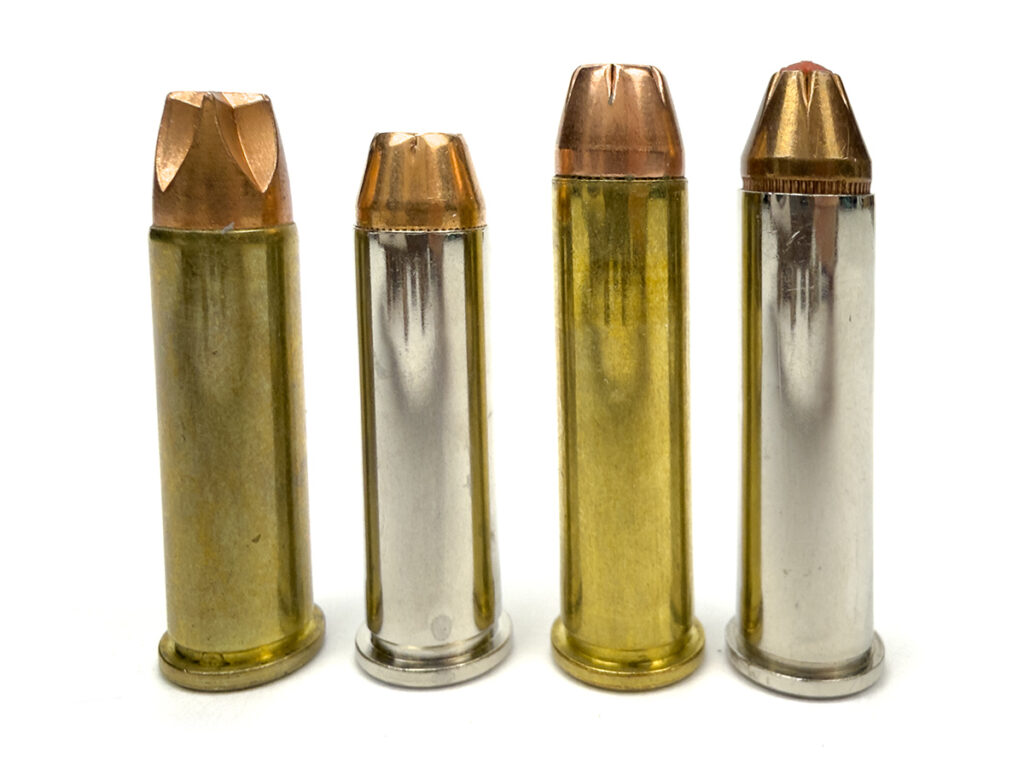
For our general purposes, we are limiting this discussion to the truly short barrels: the 2-inch class. While it might not seem like much, going longer starts to enter “big handgun” territory pretty fast, and even a 3-inch barrel is enough to start a whole new discussion when it comes to both .38 and .357 performance. However, most people looking at these guns don’t consider the ballistic performance when buying a gun like this. Most people carrying them don’t put a lot of weight on ammo choice or accuracy. The common idea is that it “just works,” a sort of set-it-and-forget-it mindset.
Now, this contrasts heavily with the ongoing debate about 9mm, 10mm and .45 ACP that never seems to end. The .40 S&W might have been ousted in general disgrace, but the discussion hasn’t stopped and, in fact, has even progressed now that suppressors are common and the rumble about subsonic performance has entered the arena. Barrel length, bullet weight and suppressor types are heavily reliant on each other. Now, we’re back at square one with many considerations, such as the superiority of .45 ACP in subsonic form over 9mm and 10mm—which really need that speed.
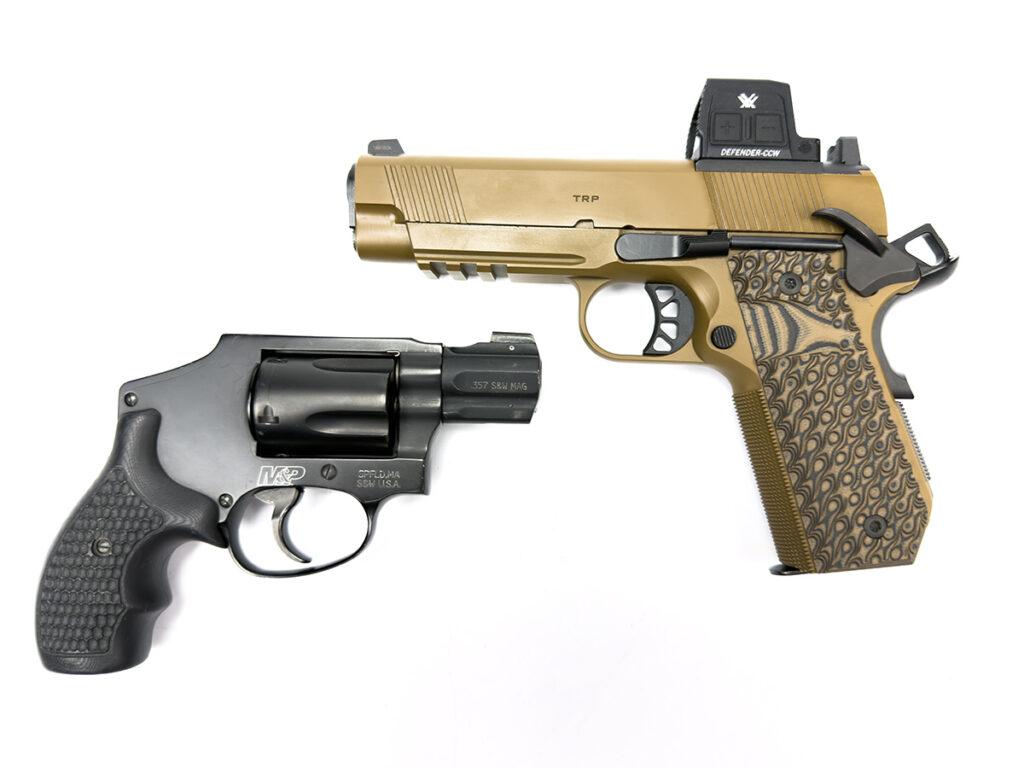
Yet here we are, looking at snubnose revolvers with no significant changes to the technology in generations, even in terms of ballistic performance. With all the hubbub about semiauto pistols and technology, is it true that revolvers are an afterthought in our modern age, or was it that we got it right so long ago?
To answer that, we need to look back at history and culture. Media, be it dime-store novels or detective TV shows and movies, has cemented the snubnose revolver as an expert’s choice. When that character has it slipped in his pocket, it speaks to the reliability of the character himself, the weapon choice being one that requires them to get into the thick of it, frequenting back alleys and smoke-filled bars in the little hours of the morning, always in just a bit of danger but not seeking out a fight. If that fight does come, it will be close and personal.
Media culture absolutely does impact the way we use and carry weapons. You’re not the only one who feels like a noir detective sticking that .38 in your pocket when you run a late-night errand. Yes, you could take a modern setup with lights and a red-dot, but there’s a special confidence that comes from a snubnose that is hard to define … yet certainly exists.
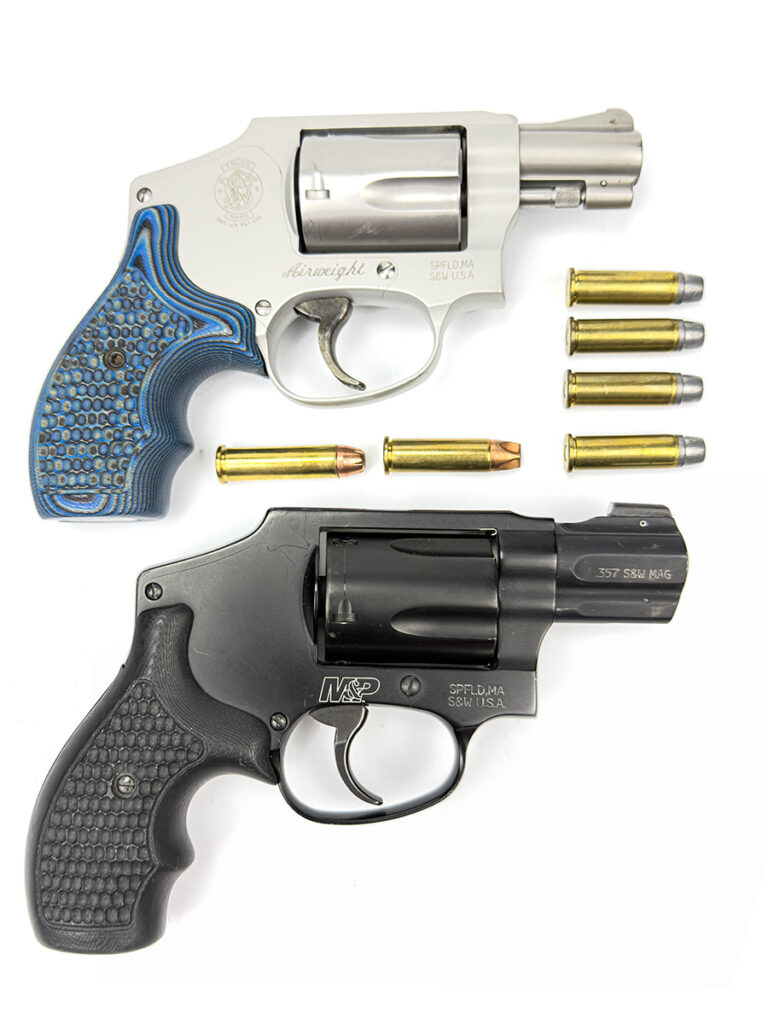
This metaphysical attribute isn’t backed up by ballistic science; there are some pretty serious performance issues with such short barrels. But what is certain is that there’s seldom any doubt that they will work as intended, a rare thing when it comes to the shooting world, where people actually believe that 5.56 will stop in drywall, big-bore rounds won’t get deflected by brush and any number of other bits of lore that people are completely sure makes a given gun or cartridge suck.
People put a great deal of emphasis on snubnose revolvers being the safest and purest choice for a carry gun, especially for women. Many think of it as something of a performance basement or starting point of sorts, but this is somewhat unfair to the good ol’ snubby. These guns have a lot going for them—although there are some myths (many recent) that need to be addressed.
Performance Myths and Gel Tests
While snubnose revolvers have always maintained their status in shooting culture, there has been, especially recently, quite a bit of speculation as to whether they are still relevant. The claim that ballistic science has advanced to the point where the 9mm is the superior firearm—and that there is only wasted energy out of a 1 7/8-inch barrel in .38 and .357—is based on shaky ground. There is a fundamental lack of understanding in terms of what these guns offer for the size, a misinterpretation of barrel length and a proliferation of media that has contributed to myth.
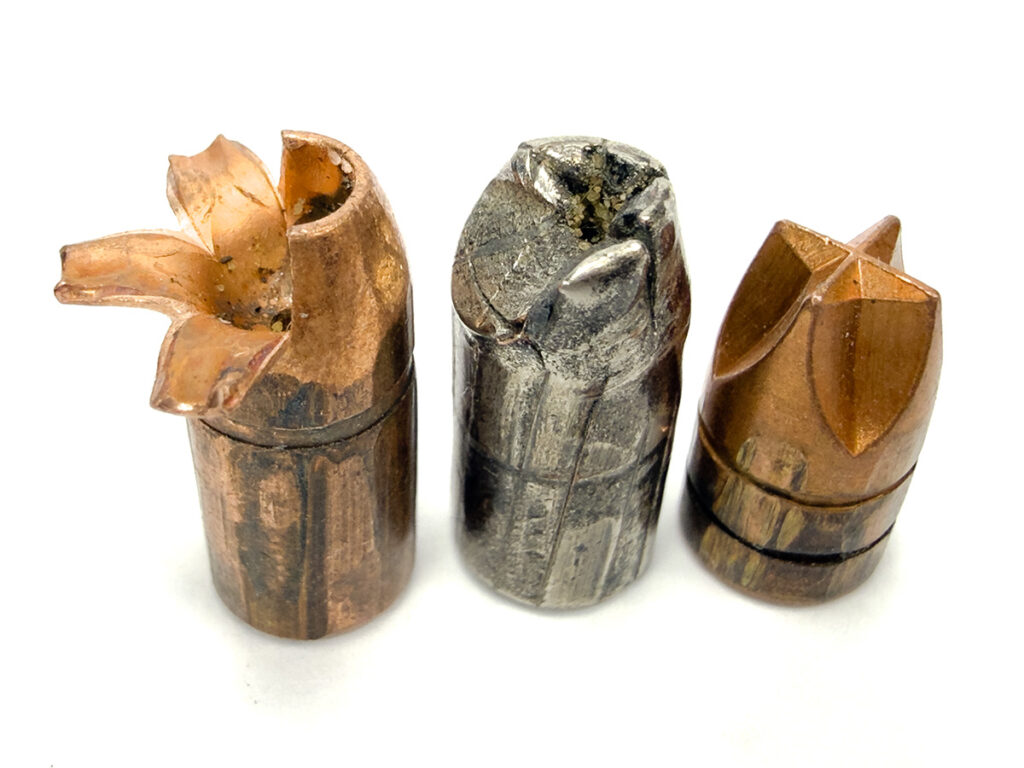
It seems like every other day there is an article popping up somewhere with a clickbait title claiming revolvers are dead. “Experts” are out there showing that the wound channels are small, and you need 21 rounds of 10mm +P+ JHP or whatnot to survive on the street. It is true that these short-barreled guns don’t generate the same “impressive” results as others, but it’s smoke and mirrors to a large extent.
In the real world, not our ramblings across online platforms, bullets kill, and it doesn’t take a lot to make that happen. In recent years, people have been trying to reinvent the wheel, so to speak, and develop “better” projectiles for snub revolvers, but all that we ended up with is snake oil.
I’ve written on this before, but ballistic gel testing is virtually all bunk: Gel is a standardized test, nothing more. The protocols that are specifically designed around gel testing are very specific to FBI requirements and are not, in fact, a universal standard for most ammunition types. When you start adding in fake bones, fake organs and all that stuff, it changes the initial test parameters, which was to provide a homogenized material simulating universal tissue and bone density. Living tissue does not behave like ballistic gel. Naturally, the slower velocities out of shorter barrels aren’t going to gather many clicks, except when trying to prove the point of disparaging them.
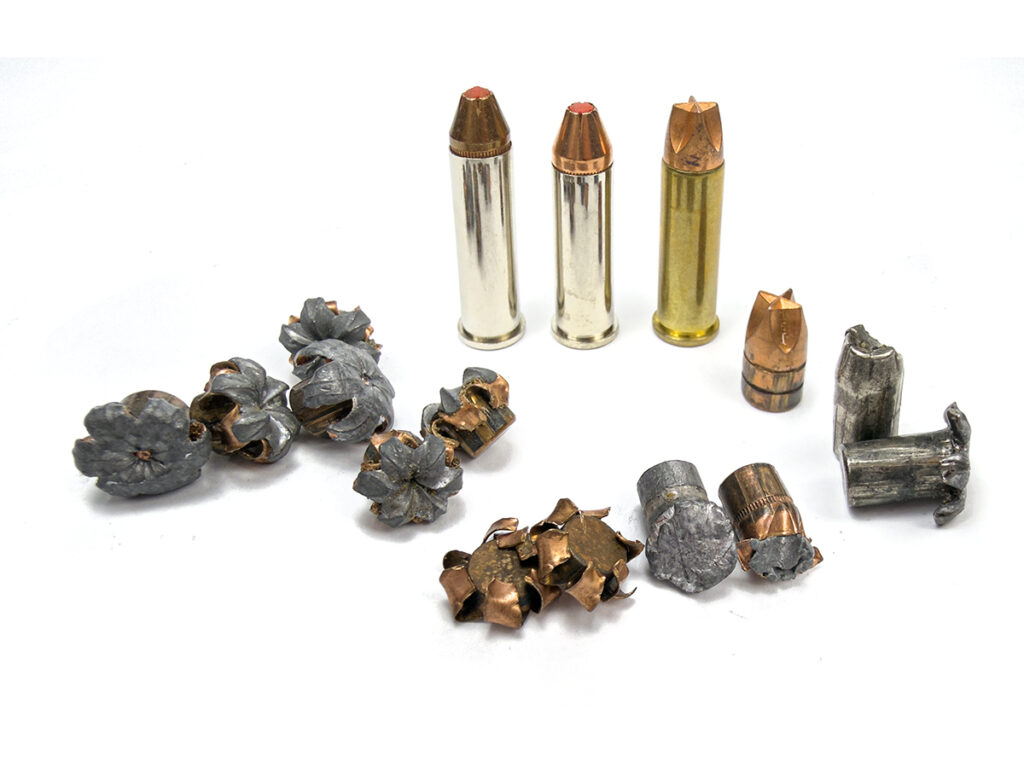
In general, the snubnose revolver is a truly lethal weapon. The velocity in these cartridges out of these short barrels can be lacking, and they can be difficult to handle with any degree of accuracy due to light weight and often heavy trigger pulls. The notion here is that they are inferior to more modern options, but the stats in real-world use don’t fully add up to this display of mediocrity. It doesn’t take much to kill a person, and you don’t need high-tech bullets to do it. A 158-grain hardcast Keith 38+Pat under 800 fps is easily able to go straight through a person, and you can create lethal injuries at even slower velocities. Just like with a knife, you don’t need a huge blade to create terrible injuries. This is what I mean when I talk about the infantilized view people have on these things. Many times I’ve heard that “38 Special will just piss them off,” and this is just absolute nonsense.
It is very easy to get more than 1,000 fps from these short barrels, even with .38 Special. With .357, you can very easily exceed 1,200 fps in this tiny space. What we run into is the fact that most projectiles out there are marketed with expansion in mind, and it is, in fact, difficult to achieve reliable bullet expansion from these barrels at modest velocity. We are asking a bullet to do a lot in such a small space, and this demand is our fault due to attempting to shoehorn performance where it doesn’t belong. Simple guns like these should have simple ammunition that won’t cast doubts. Penetration, not expansion, is king in both .38 and .357 snubnose revolvers.
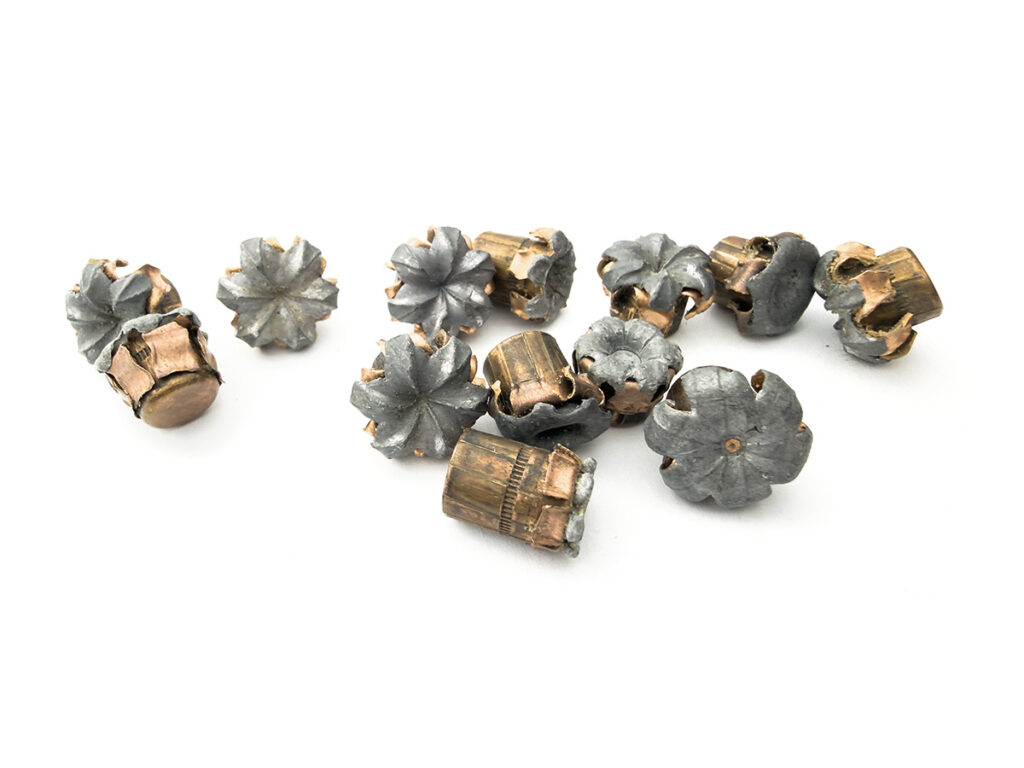
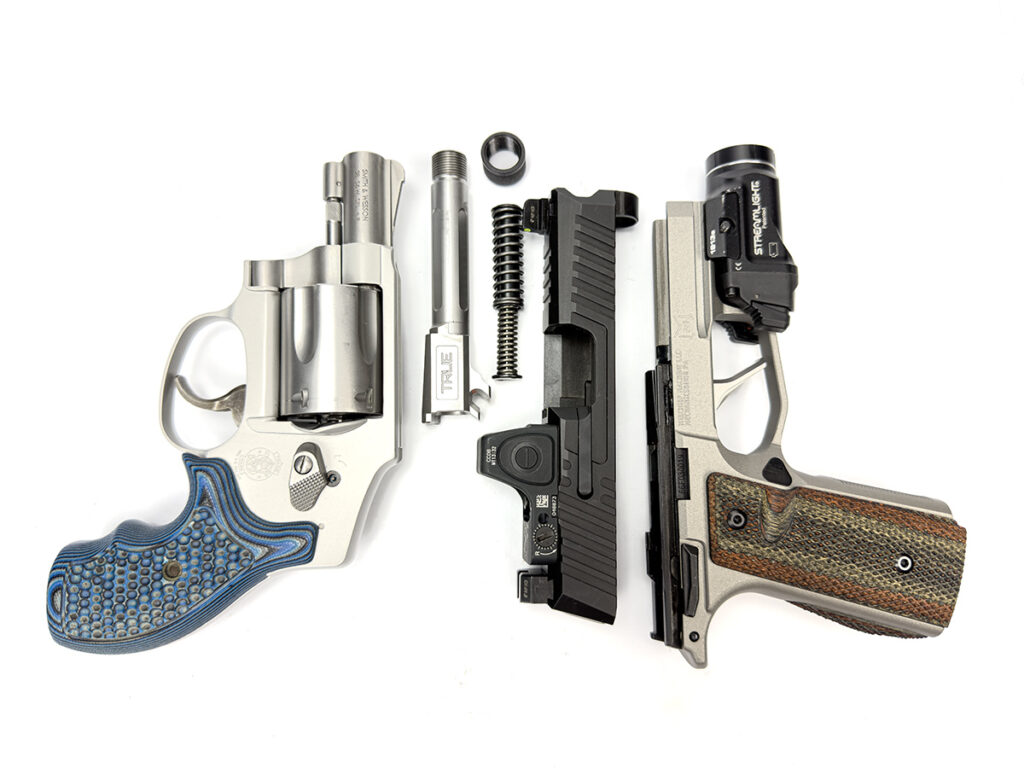
This is not to say that it’s impossible; focusing on a projectile construction out of a shorter barrel should be looked at differently. What we run into is a direct comparison between popular rounds and various barrel lengths in these calibers that end up muddying the waters significantly. Many “short” 9mm pistols would realistically qualify as midsized revolvers in terms of the space a cartridge occupies in the design. The missing component to a lot of this is that barrels are measured differently between semi-automatic pistols and revolvers. Barrel length on semi-auto pistols is measured to the breach face, meaning that the chamber is also included in that length. Revolver barrels are measured from the front of the cylinder gap to the muzzle. If we measured revolver barrels like we measure semi-auto barrels, it would change a part of our discussion.
Keith’s School Might Still Be in Session
After doing a substantial amount of testing on these calibers over the years out of these short barrels, it is my opinion that bullet construction needs to be solid. I believe that, at these lower velocities, the mechanical action by the bullet to expand in tissue is unreliable, and going with softer material more frequently leads to bullet fragmentation and projectile failure. Hard cast bullets have been around for well over a century and have never lost reliability. Point of fact, popular rounds such as the 10mm Auto gained a lot of their reputation based on this old technology. I would say that the 10mm especially owes its reputation to hard-cast bullets in bear country: Its performance with jacketed hollow-points and other modern ammunition types is not that impressive.
Most of the factory-loaded ammunition out there today is designed with a universal barrel length in mind. This is where we run into problems with projectile performance; not all bullets are designed to expand at lower velocities. Likewise, the burn rate of certain powders, and even the primer being used, don’t often take shorter barrels into account.
This is where you get a lot of the conversation that centers on using .38 or .38+ P in a .357, the idea being that they are more efficient for the smaller guns. I do tend to agree, and I have not found a .357 load that truly does well in a short barrel. The energy being released will, of course, create a great deal more recoil and noise, not to mention muzzle flash, but in all likelihood, you are launching a bullet meant for a much higher impact velocity, and there is some wasted potential. This is again something that is lost in translation. Bullets are designed to expand at certain velocities, not out of certain guns. Muzzle velocity and impact velocity are going to be critical for anything a projectile does.
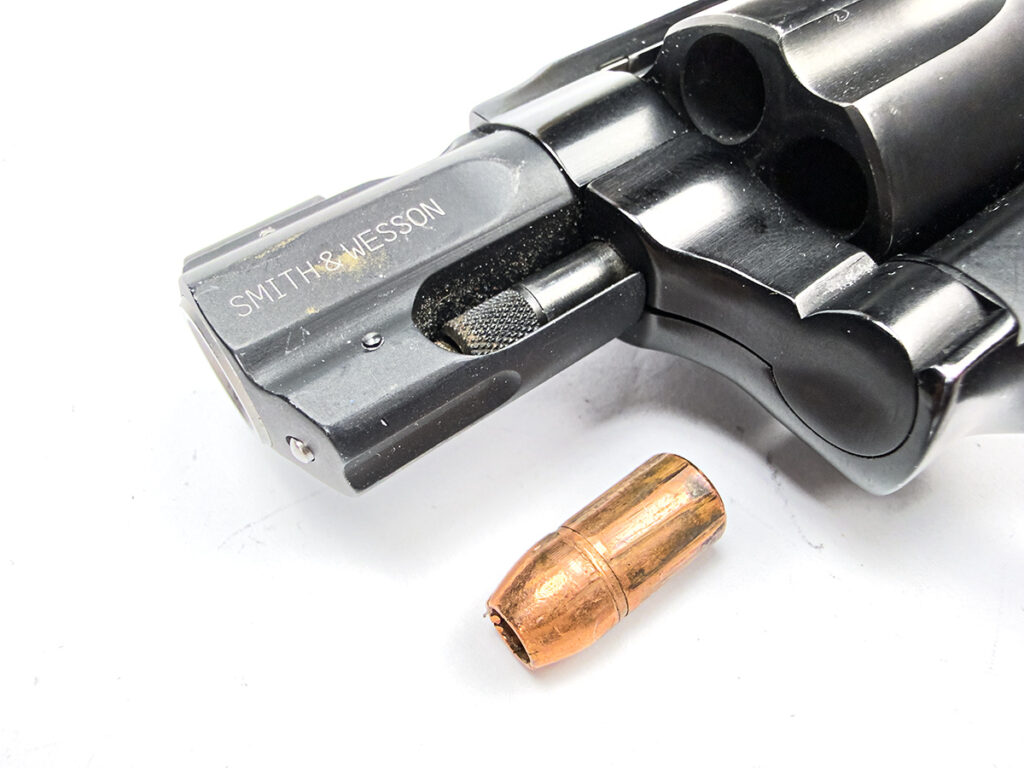
There are plenty of .357 loads clocking upward of 1,500 fps, but they lose significant speed to a snubnose barrel.
Students of Elmer Keith, such as myself, tend to look at constants as the best thing when it comes to handgun bullets. I believe that, when it comes to snubnose revolvers, bullet mass is more important than velocity, and simple bullet construction is more important than mechanical function.
It is, in my opinion, true that we did reach the pinnacle of revolver ammunition more than a century ago. Elmer Keith and his bullet designs have stood the test of time, a solid, high-mass projectile being the center of the discussion. Both .38 and .357 snubnose revolvers benefit substantially from a solid, high sectional density, flat-point bullet moving at around 800 to 1,100 fps. Nothing crazy, but easily the most reliable option for getting through clothing and moderate barriers at close distance. These will not produce crazy wound channels or spectacular results on ballistic gel, but they will be able to get through nearly anything an attacker is wearing and reach a vital spot.
Final Thoughts
Making simple things complicated is something that we are very good at in the gun world. We are constantly finding new things to add to our guns: new barrels, new cartridges and new stock materials. At the end of the day, most of this just ends up making things muddier with more things to go wrong … and more gear choices to question.
When it comes to snubnose revolvers, it is my advice to stop making things complicated. We had things right this whole time—the old detectives, dime-store novels, you name it.
A stout, lead bullet in a snubnose is hard to beat, and it is pretty cool to boot.
Ammo Notes
Buffalo Bore 38 Special +P 158-Grain Outdoorsman
If I had to pick one snubbie cartridge, this one is it. I have tested this load, and it’s one of the most reliable performers in both large and small guns. I personally carry this load in my J-frame revolvers; it’s very hard to beat out of a short barrel. Velocity is excellent, and penetration is deep.
My average velocity for this load ranges from about 950 to 1,025 fps depending on the revolver, but this is right where I want it.
Buffalo Bore .38 Special +P LSWCHP-GC 158-Grain
Right at the top of my list next to the outdoorsman is another Buffalo Bore product, this time a load very similar to the old FBI special. This is a mouthful of letters, but it works out to be a softer projectile with a non-jacketed hollow-point. This bullet hits hard, and it stays right around that 1,000-fps sweet spot that I really like. I do sometimes put a couple of these in my cylinder with three of the outdoorsman loads, just a nice little switch up.
Editor’s Note: This article originally appeared in the August 2026 issue of Gun Digest the Magazine.
More On Defensive Revolvers
- .357 Magnum Revolver: Controllable Concealed Carry Options
- Best Concealed Carry Revolvers For Personal Defense
- Fighting Revolver Project: Smith & Wesson Model 586
- Rolling With A .45 ACP Revolver
Next Step: Get your FREE Printable Target Pack
Enhance your shooting precision with our 62 MOA Targets, perfect for rifles and handguns. Crafted in collaboration with Storm Tactical for accuracy and versatility.
Subscribe to the Gun Digest email newsletter and get your downloadable target pack sent straight to your inbox. Stay updated with the latest firearms info in the industry.



I totally agree with you, Josh! Great article – thanks for writing it – and especially kudos for your choice in ammo. My research led to the same conclusion – Buffalo Bore +P! My sometimes daily carry weapon (sometimes back up) is a Taurus M85 with a red laser grip. It is amazingly powerful, accurate, and summer-clothing-concealable.
An interesting read, harkening to a bygone era. Guns like the Glock 26 surpassed the “sub nose” given fairly even dimensions with a greater ammunition load out and easier ergonomics. Whilst capacity is not the final word, I believe the article is rendered mute to the majority of gun owners today because no one actually knows how to shoot a revolver and there are very very very few instructors who know how to teach them correctly, and no it isn’t the same as autoloaders. Couple this to the general consensus of 1 lb triggers in striker guns, no one has the time, patience, or even aptitude to try to mess with a 12 lb. double action trigger.
I would rather use the lower recoil target wadcutters. Paul Harrel’s video “carrying the 38 Special concealed part 2” showed very good results and low recoil. there have been other test as well. the author’s ammo choices are nice out of a heavier gun but are up there in power and recoil. in a perfect world a wadcutter around 700 FPS would be Ideal. the Ultimate Defense Wadcutter from Georgia Arms seem close. one must worry about over penetration.