At GunDigest, we independently review products. However, we may earn a commission when you purchase through links on our site. Learn More
Carrying The Springfield SA-35 Compact
How does Springfield’s SA-35 4-inch stack up as a daily carry gun?
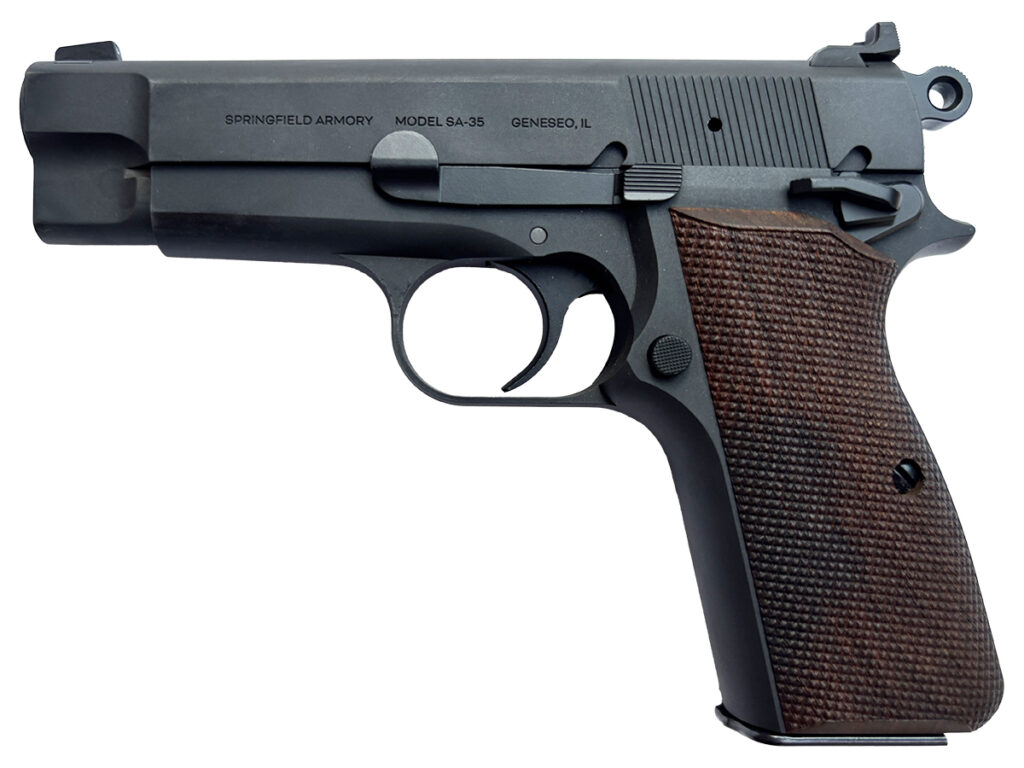
The very first pistol I ever bought was a Hi-Power clone, and to this day, it remains my favorite handgun. Besides the platform’s cool history and gorgeous looks, it fits my hand better than any other design, and the grip angle makes it a natural pointer for me as well. Of course, I’ve always wanted to carry it, but it’s just too big for me to comfortably do so. That’s why my ears perked up when Springfield Armory announced the SA-35 4-inch.
Standard Hi-Powers have a barrel length of 4.7 inches, so the .7-inch reduction on Springfield’s new compact model doesn’t sound like much, but it is. For average-sized guys like me, that slightly abbreviated barrel is the difference between getting jammed in the junk when carrying inside-the-waistband. For outside-the-waistband, it hides better under a cover garment, and in either case it makes it a bit faster out of the holster, too.

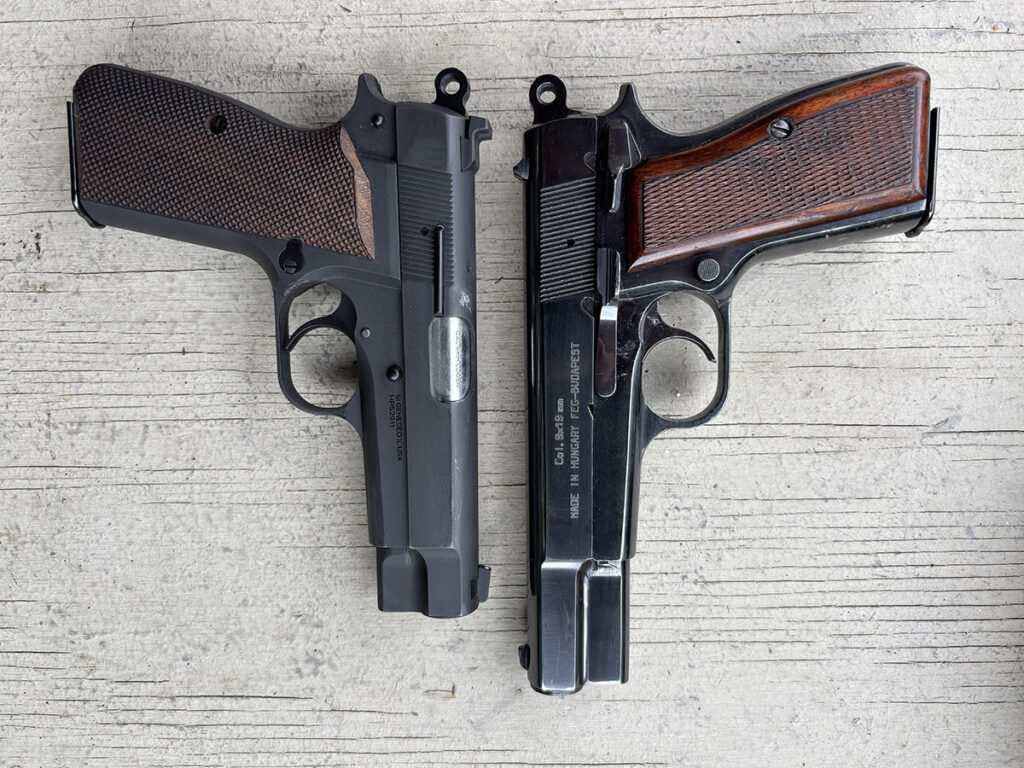
As far as its other dimensions go, the Hi-Power was already very well suited for concealed carry. It’s very slim, like a 1911, and the grip is relatively short despite its capacity of 15+1 rounds with modern magazines. The original barrel length was basically the only limiting factor when it came to shoving it in your pants. Springfield’s SA-35 4-inch addresses that, but how does it actually fare for daily carry?
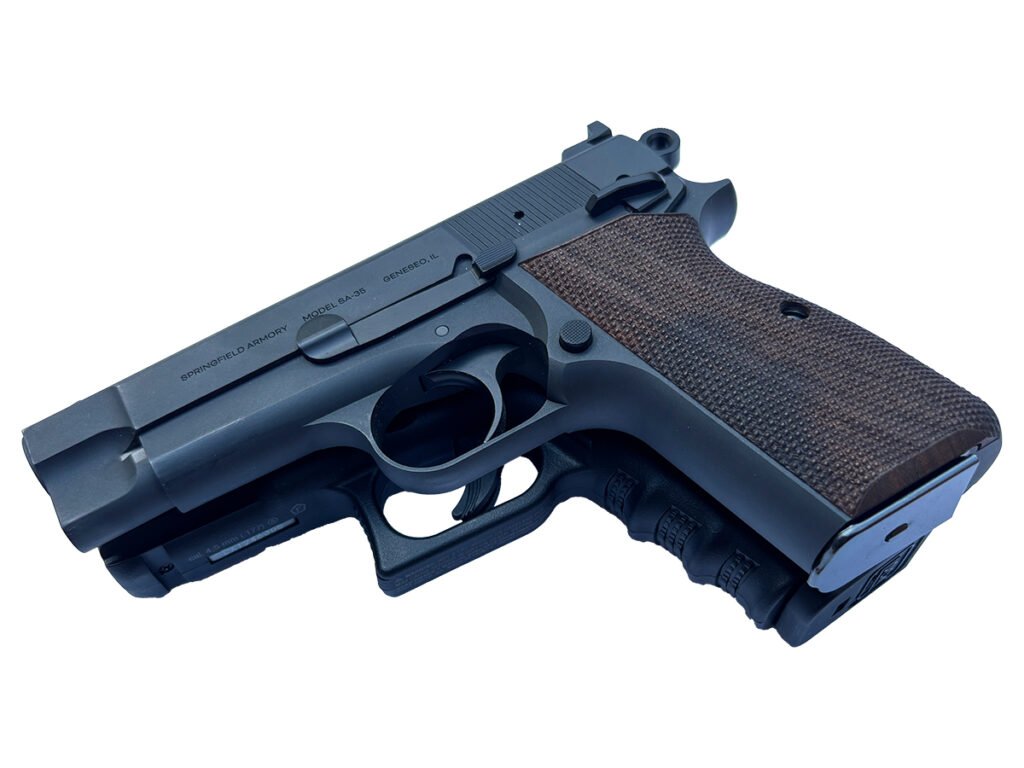
SA-35 4-Inch Specs
Caliber: 9mm
Action: Hammer-fired, Single Action Only
Capacity: 15+1
Barrel: 4 inches, Cold Hammer Forged, 1:10
Overall Length: 7.1 inches
Height: 4.8 inches
Weight: 29.8 ounces
Finish: Matte blued
Grip: Checkered walnut
Sights: White Dot Front, Serrated Tactical Rack Rear
Safety: Manual thumb, left side only
MSRP: $799
Pros:
- Very nice shooter
- Reliable
- Same size as a Glock 19
- Classic good looks
Cons:
- Safety is left side only
- Steel frame and SAO trigger, won’t be everyone’s cup of tea in modern era
Springfield’s Compact Hi-Power
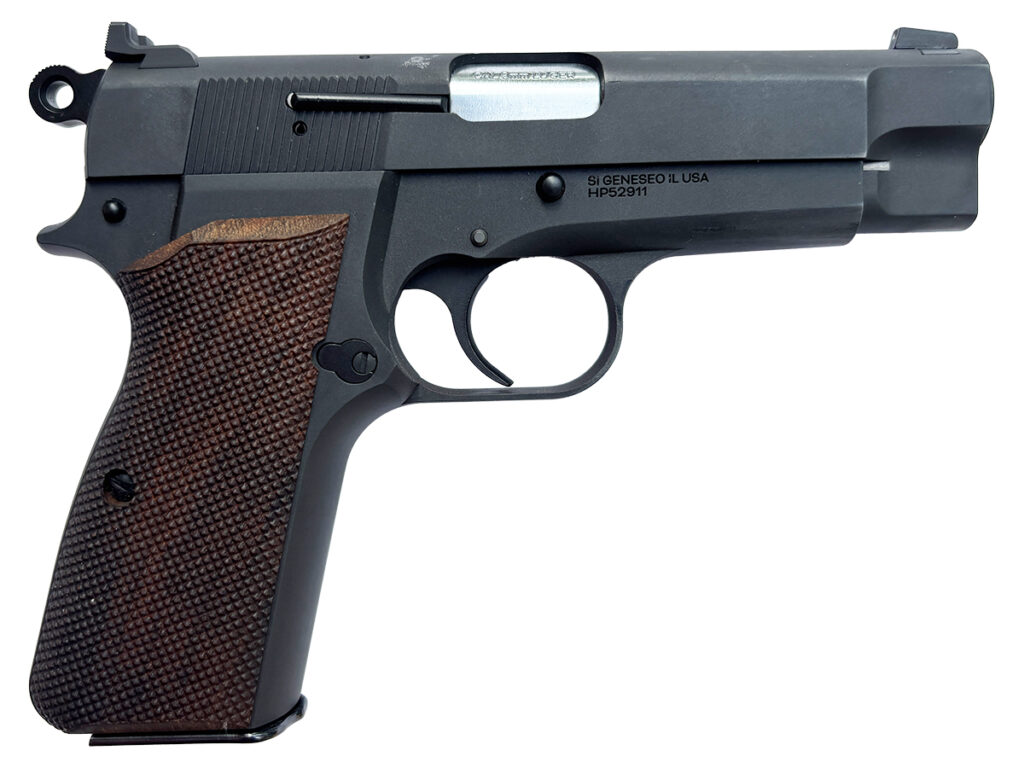
Regardless of how well a gun carries, it’s a moot point unless it’s reliable and shoots well too. Thankfully, the SA-35 4-inch checks both boxes.
In about 500 rounds, I only experienced a single malfunction, a failure to feed. It happened very early in the testing, so I’ll chalk that up to break-in. Besides that, it had no trouble eating the 124gr Federal American Eagle FMJ and 124gr Federal Punch JHP that I fed it. As far as mags go, the SA-35 comes with one 15-rounder. It’s emblazoned with Springfield’s logo, but I’m almost certain it’s a rebranded MecGar. Interestingly though, the Springfield-marked mag consistently rattled when only 14 rounds were loaded, while my MecGar-branded mags didn’t do this. That’s mildly annoying, but not an actual problem.
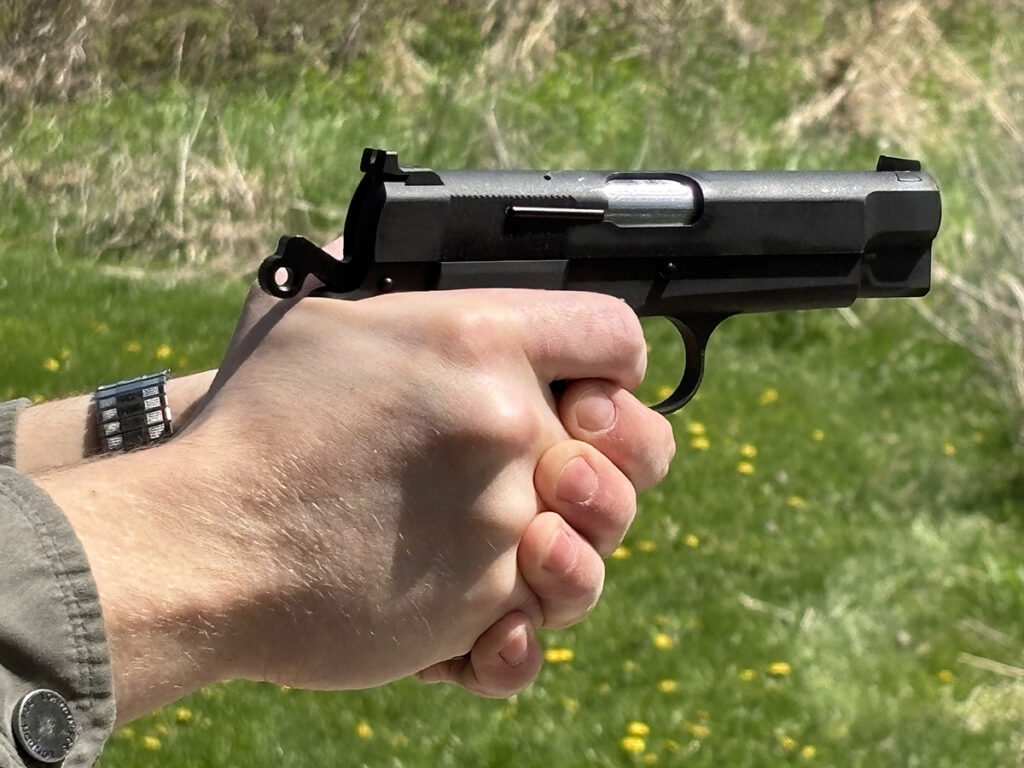
The only other minor issue I encountered was that the grip panels started to come loose after a few hundred rounds. If you buy an SA-35, I’d preemptively apply some threadlocker to the grip screws before they have the chance to work loose.
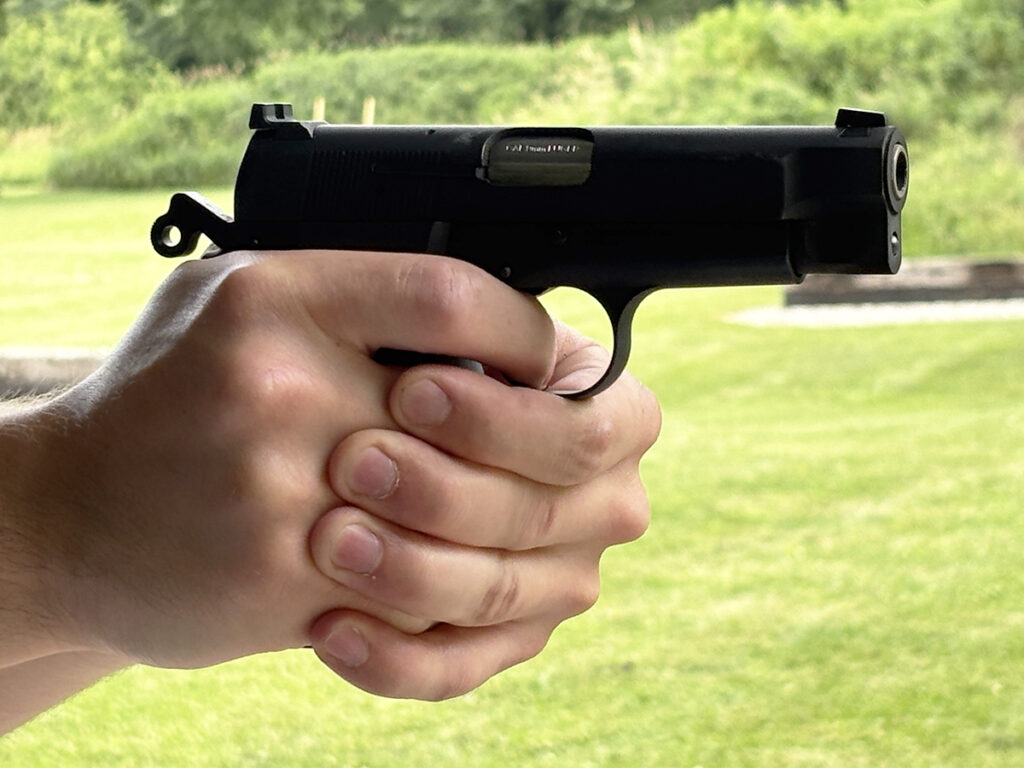
As far as shootability goes, the compact SA-35 left me very impressed. Considering how much I love shooting my full-size Hi-Power, that’s not too surprising.
What is surprising is that I expected to still prefer shooting my full-size at the end of the day, but that’s not the case. While the recoil was a bit snappier for the 4-inch, the muzzle seemed to settle back on target faster as well. Overall, I found the difference between shooting them to be pretty marginal, but I felt a bit faster and more capable with Springfield’s 4-inch.
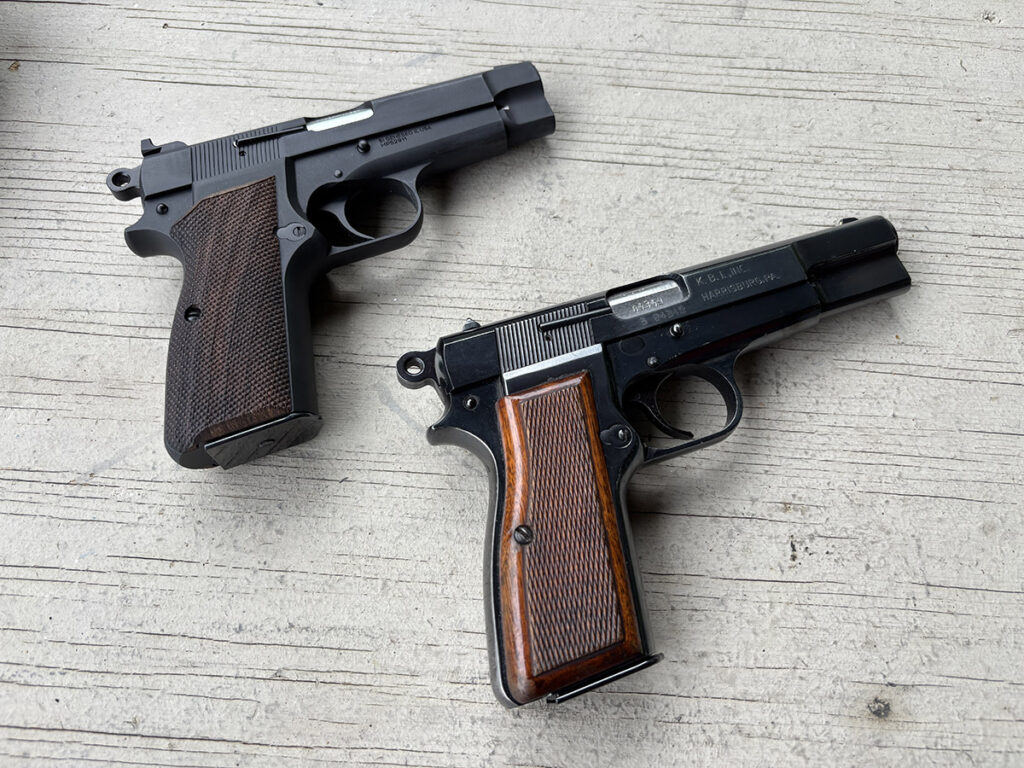
Something else that likely aided with that was the SA-35’s sights. There are a lot of Hi-Power variants out there with a slew of different types of irons, but my full-size Hungarian FEG clone features small 3-dot military-style sights. While serviceable, they’re definitely not as good as the SA-35’s. Springfield’s Hi-Power clones come sporting a white-dot front sight and a serrated black Tactical Rack rear sight. They’re taller than the sights on my FEG, and the U-notch on the rear is much larger and more forgiving as well. They’re not ideal for bullseye shooting, but this isn’t a bullseye pistol; it’s a defensive piece and the quick-acquisition combat sights suit it very well.
I mostly tested the SA-35 4-inch on steel, including a plate rack, a Texas star, and a hostage head-shot target. Given my prior experience shooting Hi-Powers, I picked up shooting the Springfield very quickly once I got used to the different sights. When shooting 6-inch plates at closer ranges, I found I had to aim on the higher side to make solid center hits, but after accounting for that, it was fast and easy to clear the rack and the star.
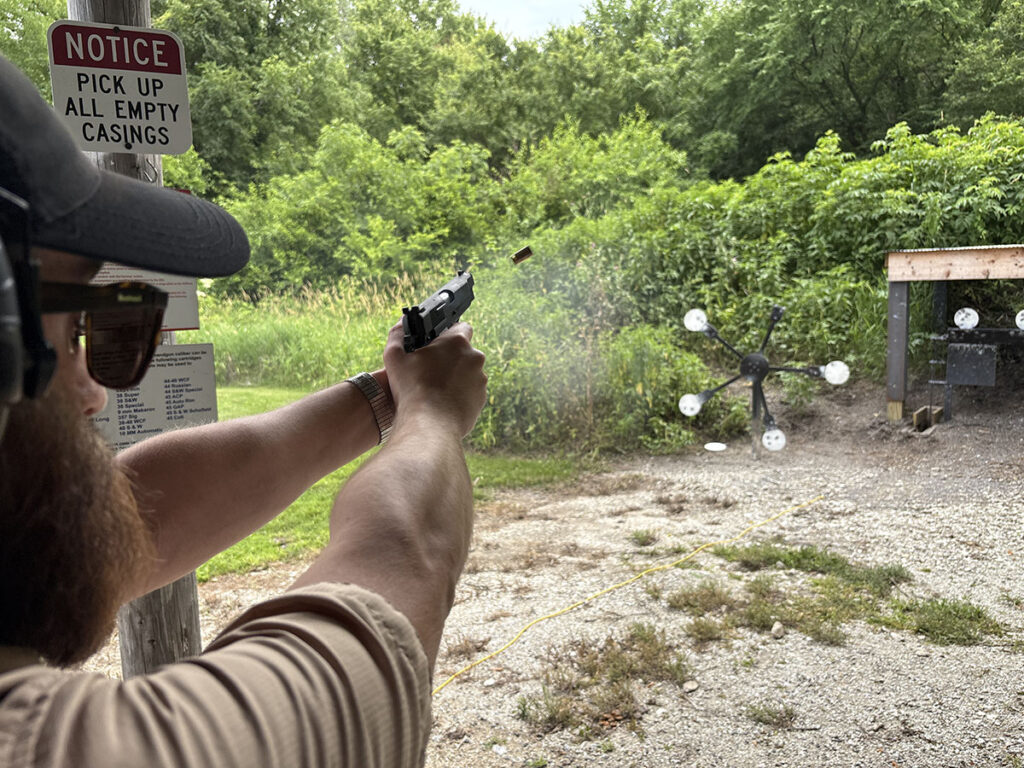
The single-action trigger felt excellent as well. Hi-Powers aren’t known for having great triggers, but that’s largely due to the magazine disconnect safety found on original models. I had to manually remove this from my FEG to improve its trigger, but thankfully, Springfield just omits it entirely from the factory. While the SA-35 trigger isn’t as nice as a fancy 1911’s, it’s certainly better than those of most striker-fired pistols. The take-up is short and the break is crisp. The biggest downside to the SA-35’s trigger is endemic to all Hi-Powers, and that’s its long reset. If you’re accustomed to more modern triggers with shorter resets, it will take some getting used to.
As a single-action-only pistol, the SA-35’s safety is another important consideration for anyone interested in carrying one. Thankfully, Springfield nailed that too. It very positively snaps into both positions, and its profile has been changed from the original Hi-Power design to make it easier to operate with your thumb. The safety solidly locks into each position, so I never worried about it accidentally disengaging while carrying it cocked and locked. The only potential downside is that it’s not ambidextrous, but that’s something for the wrong-handed to worry about.
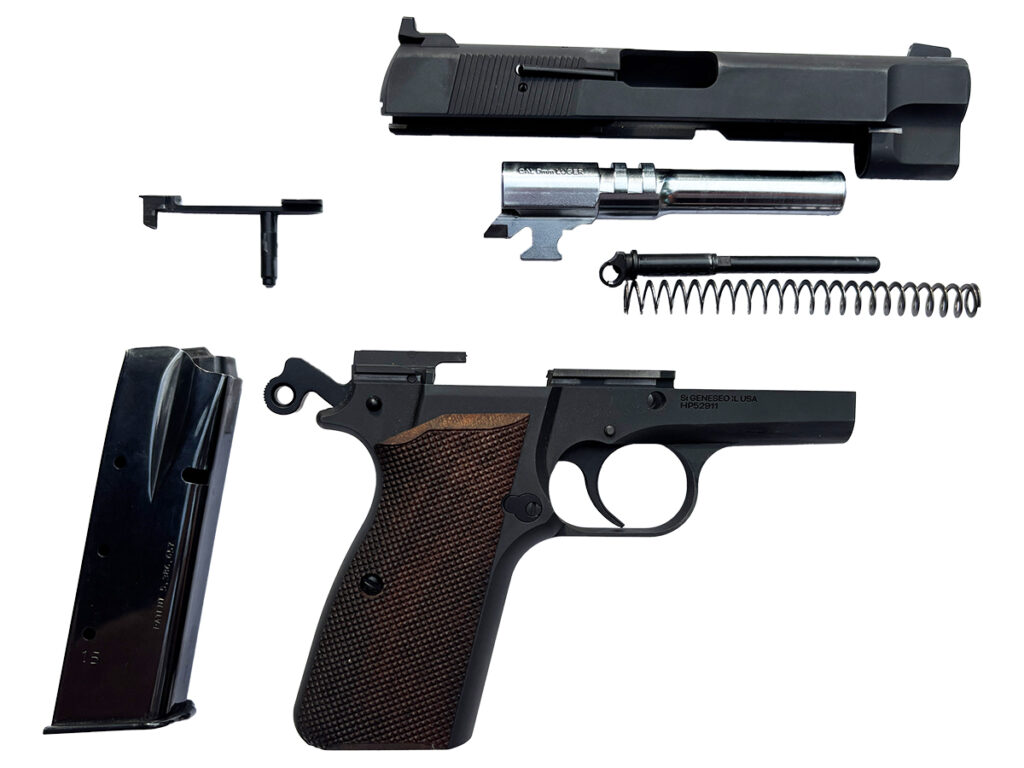
Another small change Springfield made to the original Hi-Power design was the addition of a slightly beveled magwell. It makes inserting magazines somewhat easier than with an original BHP, but it’s not a huge difference. It’s still a very tight magwell that takes a bit of practice to reload quickly. That said, I’m not overly concerned with the ability to speed-reload defensive handguns. With 15+1 rounds on board, I rarely carried a spare mag for the SA-35 anyway.
Carrying The SA-35 4-Inch
Since getting the SA-35 4-inch in April, I’ve been carrying it whenever I leave my house to try out some different holsters and carry methods. For a new and somewhat niche pistol, the holster selection for this model is actually pretty decent. Galco, DeSantis, BlackPoint Tactical, and Mitch Rosen all have options available.
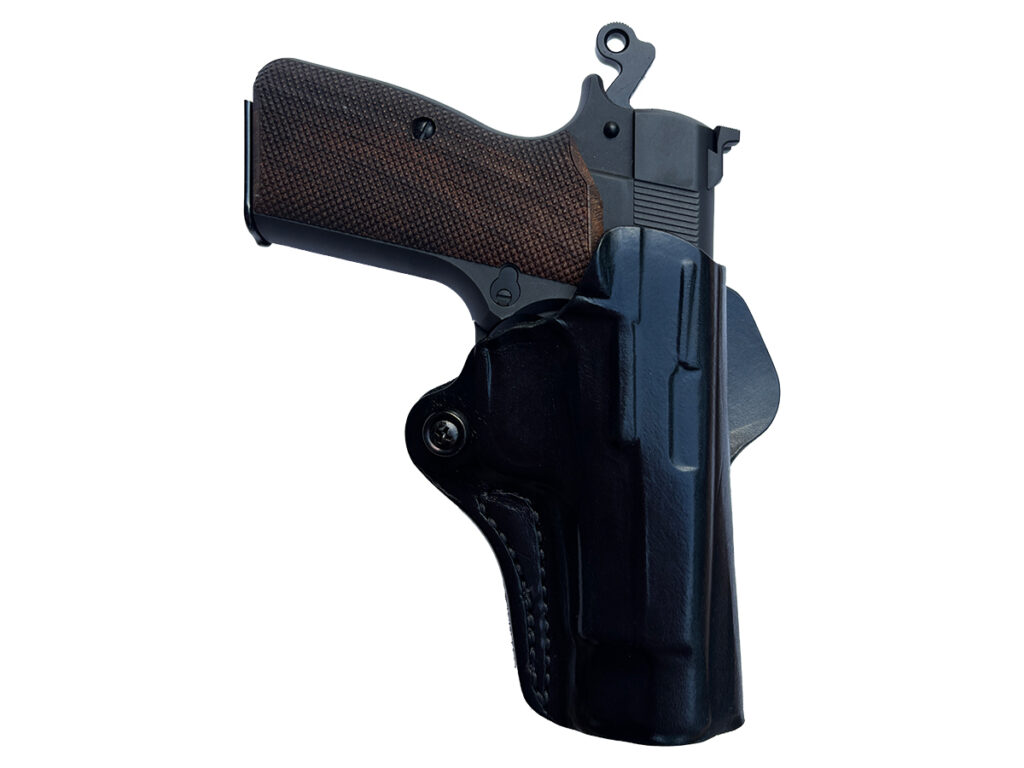
I carried it using a DeSantis Slim-Tuk IWB, a BlackPoint Tactical Mini Wing IWB, and a DeSantis Mini Scabbard OWB.
DeSantis Slim-Tuk IWB
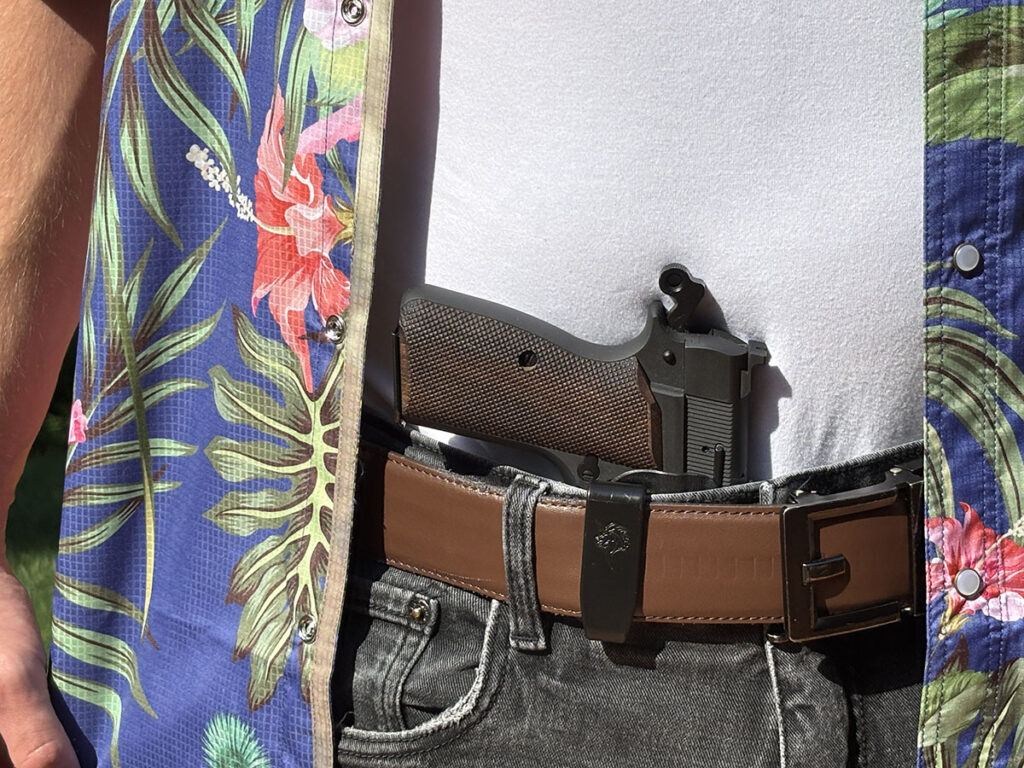
This was my least favorite holster of the bunch. It certainly works, but I found it to be uncomfortable. I think the design would work much better for something like a Glock that doesn’t have a manual safety. The biggest issue with it for carrying the SA-35 is that it doesn’t have a sweat guard between the gun and your body, so the safety can dig into your belly.
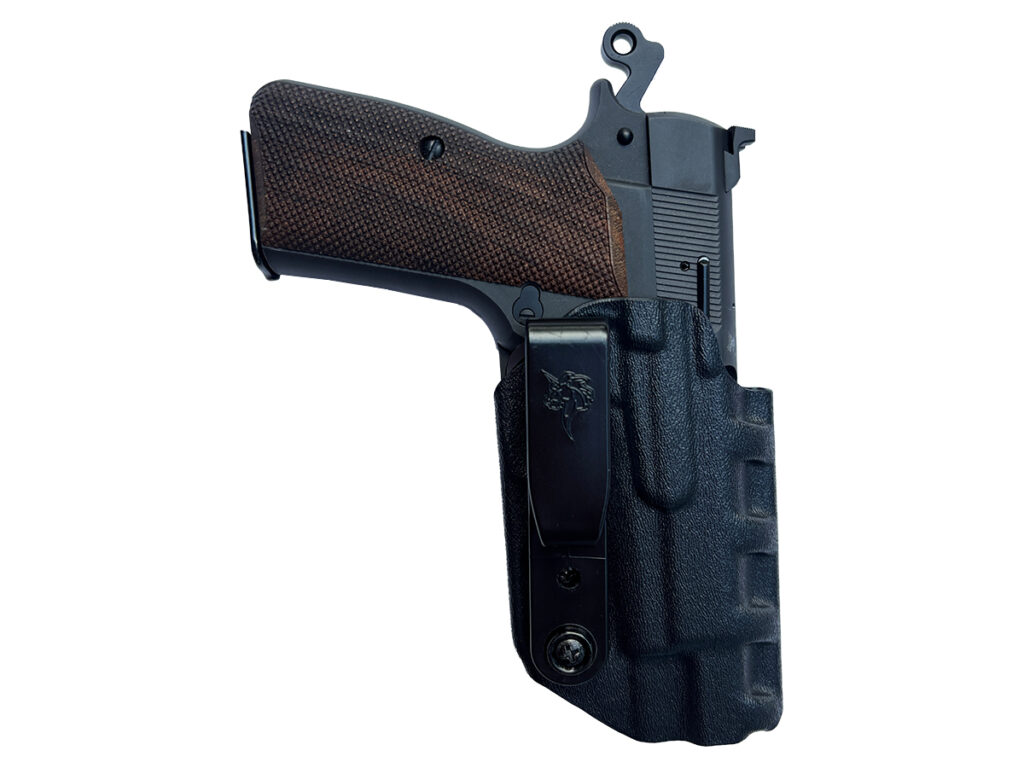
On the plus side, it has very positive retention and is the most affordable option I could find for the 4-inch SA-35.
BlackPoint Tactical Mini Wing IWB
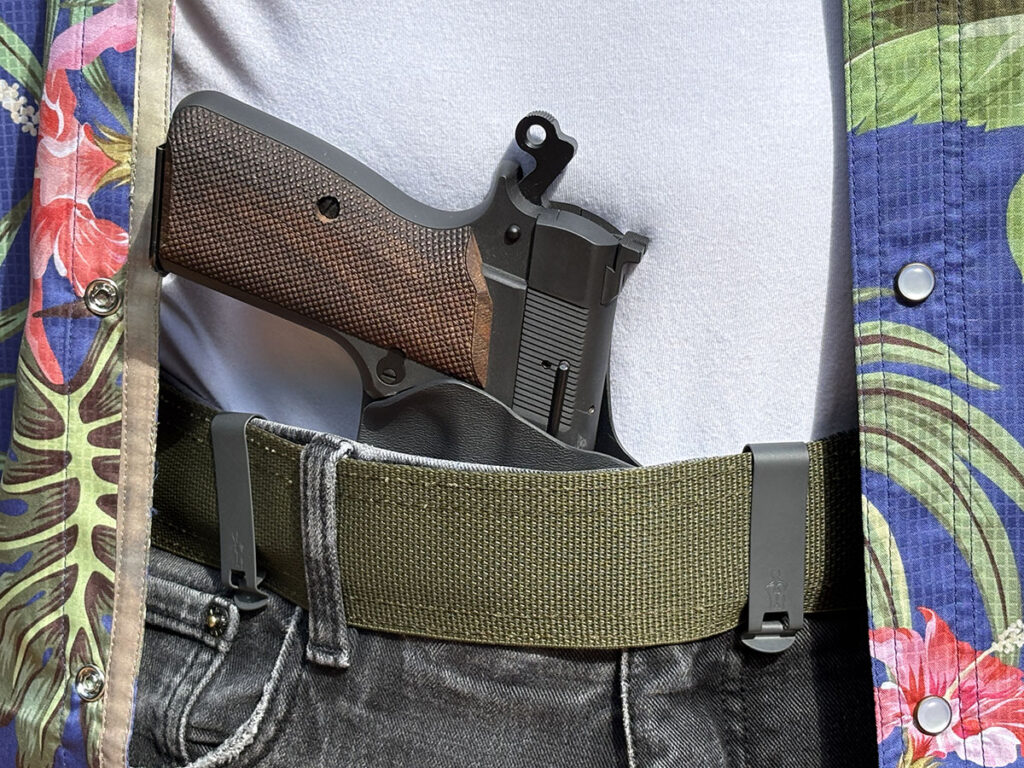
For IWB carry, I enjoyed BlackPoint Tactical’s Mini Wing much more than the DeSantis, but with some caveats. I typically carry appendix, and the BlackPoint’s biggest advantage here is that it has a generous sweat guard that fully covers the safety. That makes it more comfortable as far as its feel against the body goes. However, the positioning of the clips meant that I couldn’t carry it at 1 o’clock with my normal belt. That’s because the left clip wants to sit right where the buckle is. If you want to carry appendix with this holster, you’ll probably need to use a more tactical-style belt that doesn’t have a big, traditional buckle.
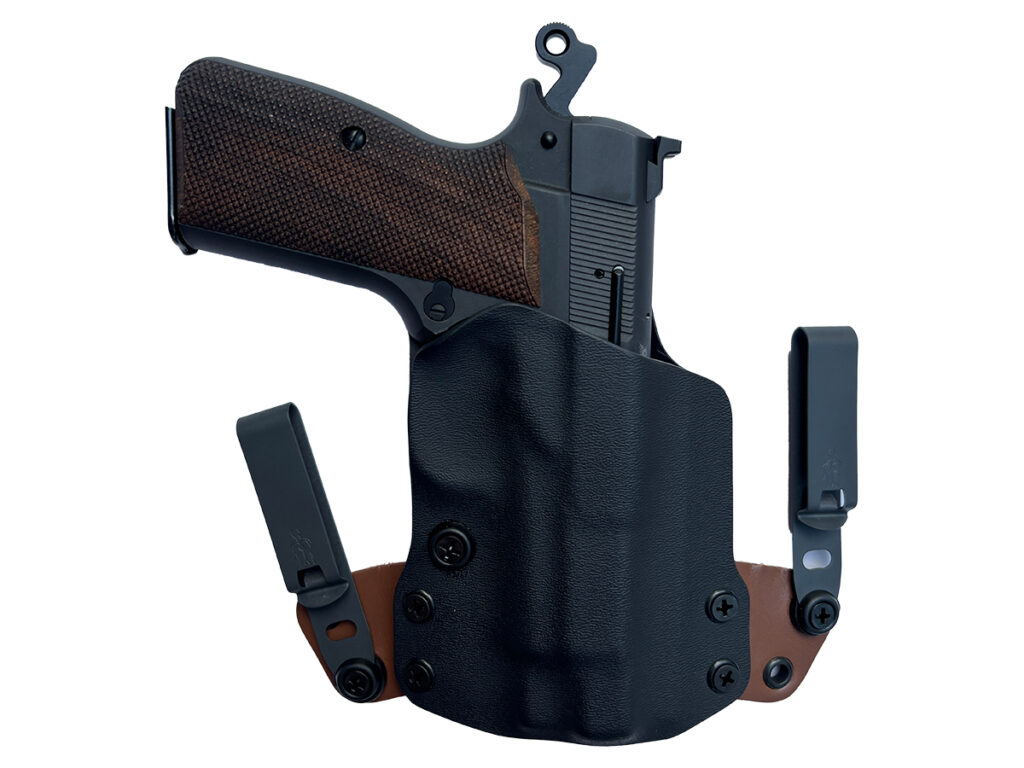
This forced me to carry the BlackPoint strongside at more of a 2 o’clock position. It works great in that placement, but it’s not my preference, mostly because I find it harder to build a good grip from the draw.
DeSantis Mini Scabbard OWB

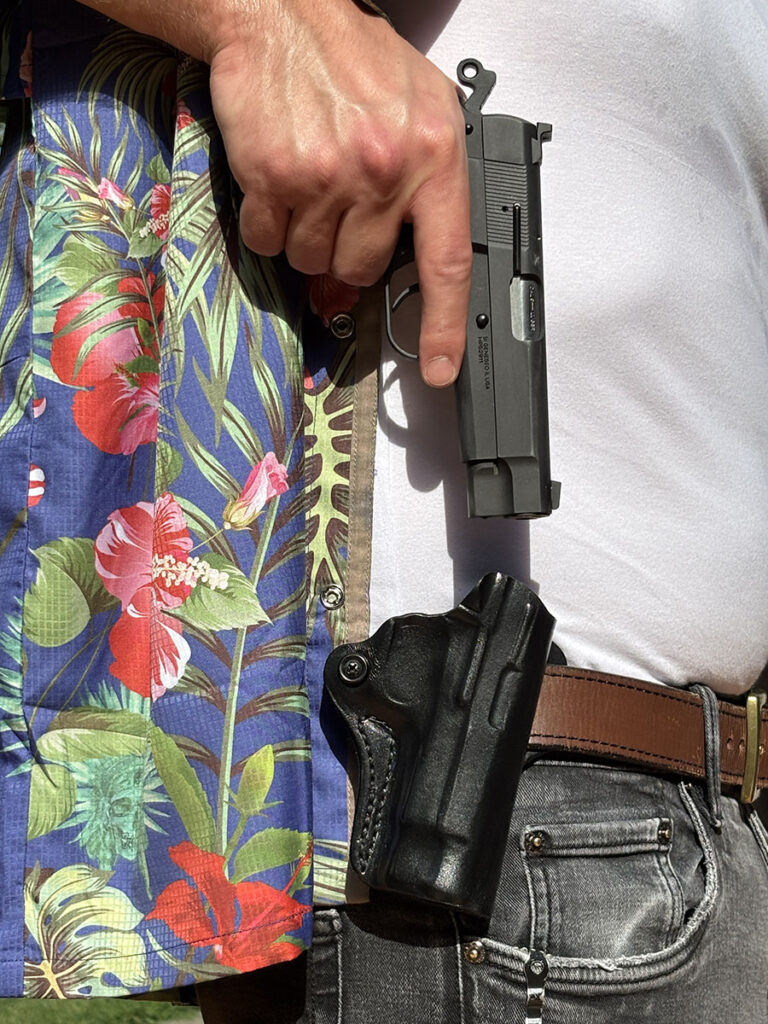
It shouldn’t be a surprise that the OWB holster was the most comfortable to wear of the bunch, and it quickly became my favorite. Even though it’s leather instead of Kydex, it secured the SA-35 perfectly. I was wearing this one while helping a buddy move, and the pistol never felt at risk of popping out even while jumping in and out of truck beds. Despite that, the draw was smooth and easy. Something about a leather holster just feels more appropriate for a Hi-Power, too.
Carry Considerations For The SA-35 4-Inch
Normally, I’m a simple T-shirt kind of guy, and my past carry guns have reflected that. I’ve typically preferred smaller pistols that I could conceal with just a T-shirt while carrying appendix in the warmer months. Lately, I’ve been wanting something a bit bigger and more shootable, but the reality is that desire just isn’t compatible with what T-shirt levels of concealment can provide with my body type. I found that to be the case with the SA-35 4-inch as well.
Both IWB holster options printed very obviously for me, even with baggier T-shirts, which forced me to wear a Hawaiian shirt as a cover garment to properly conceal the SA-35. That led me to the obvious conclusion: why bother with IWB holsters if I have to wear a cover garment anyway? The more comfortable OWB option just made more sense for my circumstances. I guess I’ll just have to be a Hawaiian shirt guy now.
Who’s This For?
The SA-35 4-inch is clearly not for everyone, and frankly, it wouldn’t be one I’d mention if someone asked me for a carry pistol recommendation. Does that mean it’s bad? Far from it. I really like this pistol. I like it enough that I ended up buying it from Springfield instead of sending it back after the review period. More than that, it’s going to be my new daily carry piece.
We’re spoiled for choice today as far as excellent concealed carry pistols go. And for most people looking to protect themselves, some polymer-framed striker-fired 9mm will almost always be the best option.
But I love Hi-Powers. I shoot the SA-35 better than I shoot the Glock 26 I was carrying previously, and there’s not a huge difference for me when it comes to concealing them. The SA-35 is reliable, has a good capacity, and it has soul. I respect those who view firearms as mere tools, but I wouldn’t have ended up in this industry if I felt the same. I like guns with good looks, interesting histories, and a bit of character. As long as they’re also effective, that’s the type of pistol I prefer to carry, and the SA-35 4-inch covers all those bases.
If you’re enough of a Hi-Power fan that you’d like to carry one, Springfield’s compact clone is well worth considering.
9mm Pistol FAQ
Is a 9mm Good For Self-Defense?
Yes, and many experts would even argue that a 9mm pistol is the best choice for self-defense. It may not be as powerful as 10mm Auto or .357 Magnum, but cartridges that big are difficult to shoot quickly and accurately as well. For most people, their ability to make good hits with a 9mm will be more effective at stopping a threat than having a bigger bullet. Further, defensive projectile technology has progressed leaps and bounds, so modern 9mm self-defense ammo provides excellent, reliable expansion and penetration.
Are 9mm Pistols Good For Beginners?
Yes, for the most part. Sometimes it’s best to start a first-time shooter with a .22 LR, but unless they’re small children, they should quickly be able to graduate to and handle a 9mm pistol. For able-bodied adults looking to get a pistol for defense, sport shooting or plinking, 9mm is the best choice.
Does 9mm Kick Hard
Not particularly, but it depends. Somewhat simplifying things, a handgun’s recoil is mainly a factor of the pistol’s weight and the power of the cartridge in question. A very small, light 9mm pistol loaded with a powerful +P will definitely kick hard, but a full-size steel gun loaded with range ammo will not. Generally speaking, 9mm is not considered to be a hard-kicking round.
More Hi-Power Stuff
- Going Old School: Carrying The Browning Hi-Power
- Hi Power Or High Power: What’s In A Name?
- Upgrading A Surplus Browning Hi-Power
- France, Belgium, Nazis And The FN Hi Power
- Browning Hi-Power Euology And Final Farewell
Next Step: Get your FREE Printable Target Pack

Enhance your shooting precision with our 62 MOA Targets, perfect for rifles and handguns. Crafted in collaboration with Storm Tactical for accuracy and versatility.
Subscribe to the Gun Digest email newsletter and get your downloadable target pack sent straight to your inbox. Stay updated with the latest firearms info in the industry.
