
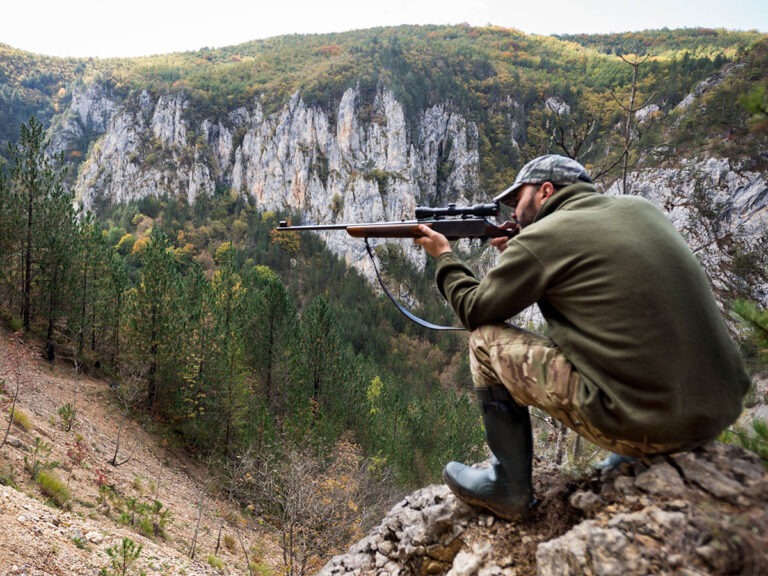
Uncontrollable variables and physics argue strongly against excessively long-range hunting. But how far is too far?
We don’t wish to create a political divide here. Nor can we, because the debate over long-range hunting has long existed. But technological advances over the past quarter century have accentuated it. Laser rangefinders. High magnification scopes. High-BC bullets. Pocket anemometers with barometric pressure gauges. Computerized scopes and binoculars. Turret dialing scopes. Even scopes that automatically illuminate the proper aiming dot for precise shot placement at any distance.

We have the equipment. Question is, do we have the wisdom?
You know the arguments…
“I have a world-class, ¼-MOA rifle, scope, and ammunition that prints 3-inch groups at 1,000 yards. All day, every day. Why shouldn’t I target deer and elk at that range?”
“Anyone who launches any bullet at any game animal beyond 300 yards isn’t a true hunter, but an unethical, irresponsible poacher!”
And those are the milder statements.
But which is right? How far is too far? How do we define unethical and irresponsible? And how can we enforce any limits on shooting distances? Or do we even need to try?
Let’s start by trying to define “ethical” hunting. This is an old idea that probably emerged with the wealthy, sporting royalty of Europe centuries ago. Before then, human hunters performed like most natural predators, pursuing and taking game at will—any time and any way they could. Winter, spring, summer and fall. Rocks, sticks, pits, even poison. Hunger is not well-acquainted with ethics. Hunting tactics such as driving herds of bison off cliffs raised no questions of fair play. A fawn tasted just as good as a mature buck and was much easier to capture.
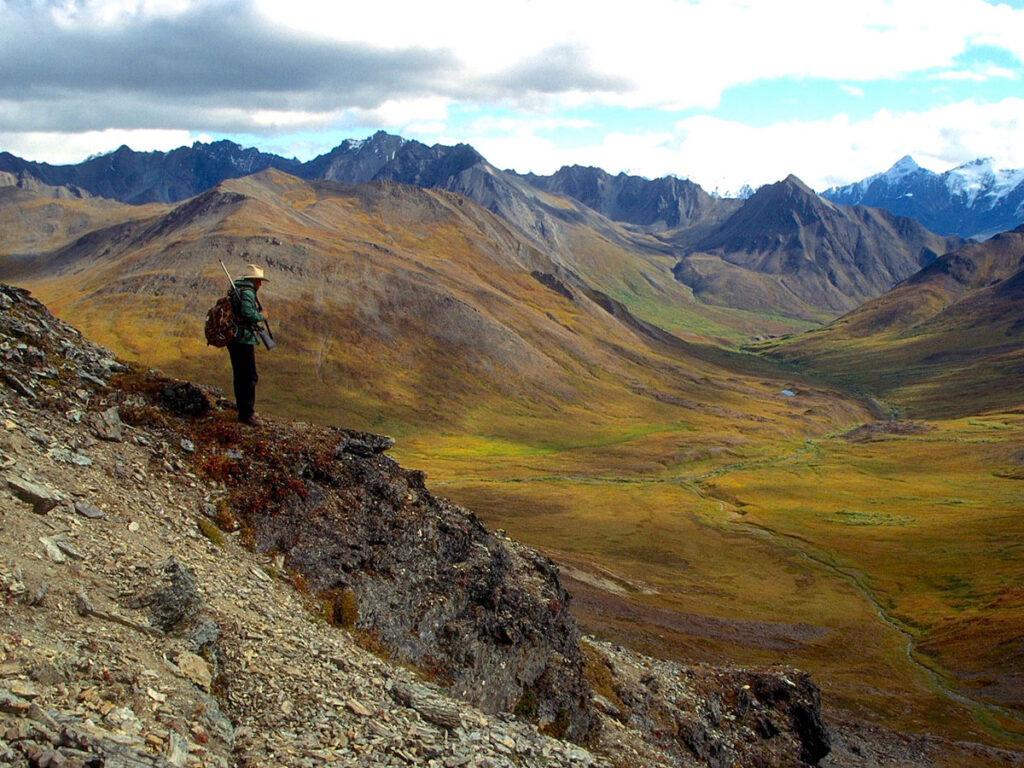
The first suggestion of hunting ethics is usually attributed to Saint Hubertus, a Frank nobleman who, upon the death of his young wife, retreated to the forests of the Ardennes around 690 A.D. There he hunted to the exclusion of nearly everything else until, as the apocryphal story goes, he saw a cross suspended between the antlers of a stag. He repented and became a venerated priest.
In the 15th century, nascent “sport” hunters began adopting Saint Hubertus as their model for ethical hunting. A code evolved in which one focused on old bucks, did not shoot females with young, and strove for quick, humane kills. Of course, only the wealthy and well-fed could afford to adopt such proscriptions.
In North America, Indians and pioneers prided themselves on fieldcraft, tracking, and stalking to get close and make clean shots, but that was probably more about conserving powder and ball and getting venison to the fire. Few had any highfalutin pretensions about ethics. Self-imposed limits on methods for taking game were likely rare until significant declines in wildlife populations in the late 19th century gave rise to the idea of conservation and sportsmanship—agreed-upon rules of behavior. These limitations defined the “playing field” of fair chase. While some of this smacked of privilege and pomposity, it was at its core an effort at conservation. By reducing easy killing, sportsmen who played by the rules earned their successes without endangering game populations.
This idea eventually led to proscriptions against jacklighting (originally done with fire as the light source), spring hunting, shooting females, punt guns (small cannons) and night hunting.
By the 1930s, most states and provinces had adopted additional regulations designed to “civilize” hunting behavior and conserve game populations. These were far from universal and often at odds with one another. Some jurisdictions closed bird hunting at sunset, some an hour before. Some opened daily, hunting a half-hour before sunrise; others not until mid-morning. Some outlawed centerfire rifles for deer hunting, others outlawed spears or bows and arrows. All prohibited hunting from automobiles and powered aircraft. Some forbade hunting deer over bait, others allowed it. Others shut down bear hunting with hounds, while some allowed dogs for bear and even deer.
On and on it went and still goes, various communities establishing what they considered sporting or ethical hunting behavior, but never agreeing 100 percent. One hunter’s unethical tactics were another’s traditional hunting method.
Fast-forward to 2026, throw in our latest technology, and we’re at the long-range shooting loggerhead.
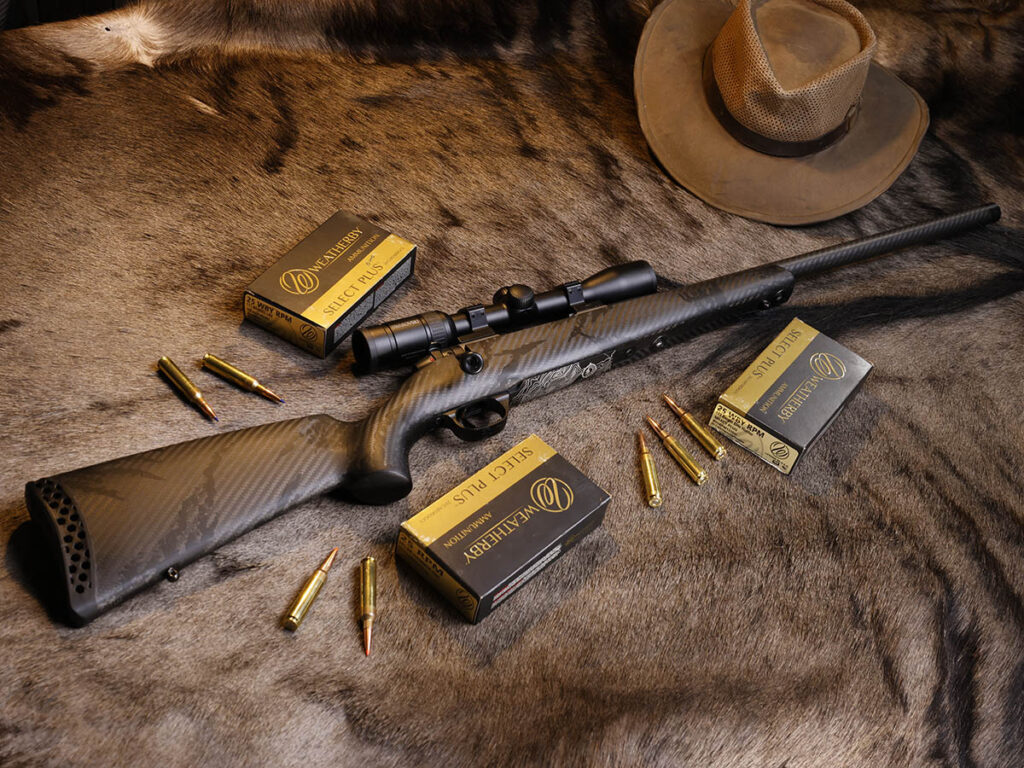
Of course, long-range shooting is nothing new. Blackpowder shooters in the 1870s were engaging 1,000-yard targets at the Creed farm in New York. Billy Dixon made his famous 1,538-yard hit during the second battle of Adobe Walls with a Sharps .50-caliber in 1874. Hunters have been striving for “a bridge too far” since rock-throwing days. And for just as long, we’ve been working to improve accurate reach. From spears to bows to muzzleloaders to centerfires to telescopic sights to internal ballistic calculators and illuminated reticles, we’ve innovated and engineered to shoot farther and farther, praising and rewarding anyone who made a long shot. Whooeeee!
By the end of the first quarter of the 21st century, we’d built the tools that allow skilled users to place bullets on targets as distant as 2.5 miles. That is fine and dandy for military snipers. But does this mean we should be attempting to hit game animals at such distances?
Some, I’m guessing, would say “yes,” pointing out that a skilled long-range shooter with the proper gear is more likely to place a bullet in a deer’s vitals at 1,500 yards than a poor shot with shoddy gear could at 50 yards. They are not wrong. Poorly trained or overly excited hunters have been missing and missing badly at spitting distances since caveman days. How do you regulate against that?
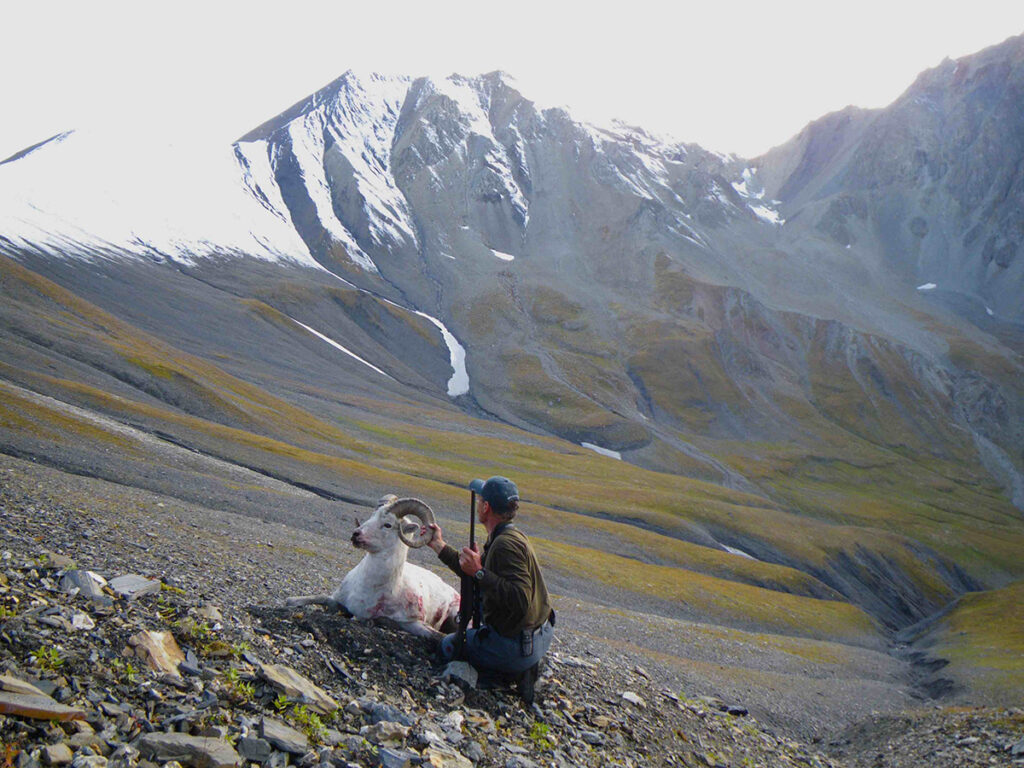
The simple truth is that perfect shot placement cannot be guaranteed at any distance. But let’s be honest, it can be achieved much more easily at close range than far because of basic Newtonian physics. So, if you’ll indulge what might strike you as obvious, let’s investigate the objective realities of extreme-range shooting.
Moving projectiles are influenced by gravity and the atmosphere. Gravity “pulls” every object on planet Earth at 32 feet per second each second and accelerates until reaching terminal velocity. This happens regardless of any other vector, such as downrange velocity. In other words, a bullet launched “level” with the ground at any velocity will hit the ground at the same time as it would if merely dropped from the same height. Just because a projectile is moving downrange does not mean it is not also being pulled toward the ground at 32 fps.
Fortunately, we can compensate for bullet “drop” by angling our shots above our target. If a particular bullet traveling 3,000 fps when it emerges from the muzzle drops 12 inches at 300 yards, we compensate by aiming it 12 inches above where we want it to land. Extend this concept to 600 yards, 800 yards, and 1,000 yards, and the math holds. Gravitational “pull” remains constant, and so does bullet drop. This makes it easy to park a bullet on target if you know the range and your bullet’s drop at that distance.
Sounds easy until we add in atmospherics. Air seems insubstantial until you pedal a bicycle into it or watch it blow over a house. Air molecules slow bullets via drag, basically friction. Moving air moves bullets. Right-angle breezes as slow as 5 mph can direct fast, aerodynamically efficient bullets 7 inches off the point of aim at 300 yards. Low-BC bullets can be pushed 3 feet off the point of aim! Even changes in barometric pressure or humidity alter bullet flight enough to turn a well-aimed shot into a wounding shot or miss.
This, then, is the hard and fast argument against extreme-range shooting. Even the most experienced long-range shooters cannot predict with 100-percent accuracy how air density and flow will affect their bullet’s impact point. Wind, air density, and air motion are inconsistent and variable.

But that’s not the end of the challenges. Even with perfect drop and wind compensation, no long-range shooter can predict animal action. A still, broadside bull elk could, at the instant your finger breaks the trigger, step forward or turn to the side. A sleek, high-BC bullet fired at 2,950 fps takes 1.37 seconds to travel 1,000 yards. That’s more than enough time for any target animal to move enough to convert a heart shot into a gut shot. Even a 0.5-second flight time at 500 yards is long enough for target movement to botch your shot.
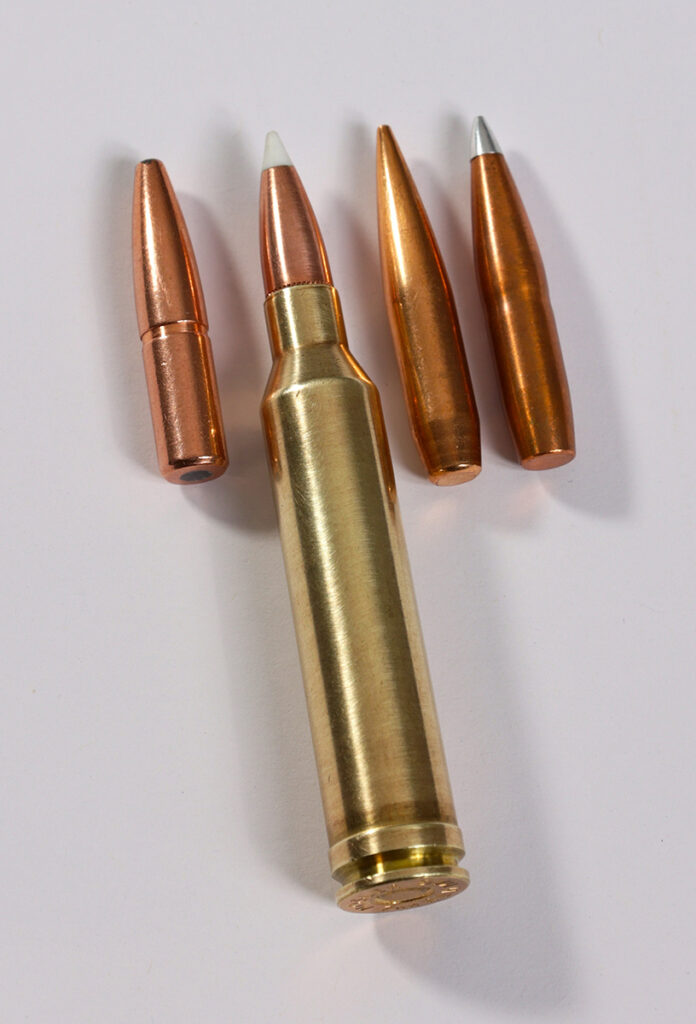
These, then, are the physical realities arguing against excessively long shots. Anyone with respect for his quarry, not to mention himself, should, nay, must, wrestle with this.
What, then, guides us in determining how far is too far? Because each of us brings varying skills to the game, it’s unrealistic to insist 300, 600 or 1,000 yards are too far for ethical shots. But we can turn to our bullet’s time of flight as a fair barometer. Many contend that 0.5 second is the limit. Even this much time might be sufficient for an animal to move excessively, so some hunters favor a 0.33-second flight time, taking into account the additional split seconds consumed by one’s brain saying “shoot,” one’s finger breaking the trigger, and one’s firing pin initiating the launch.
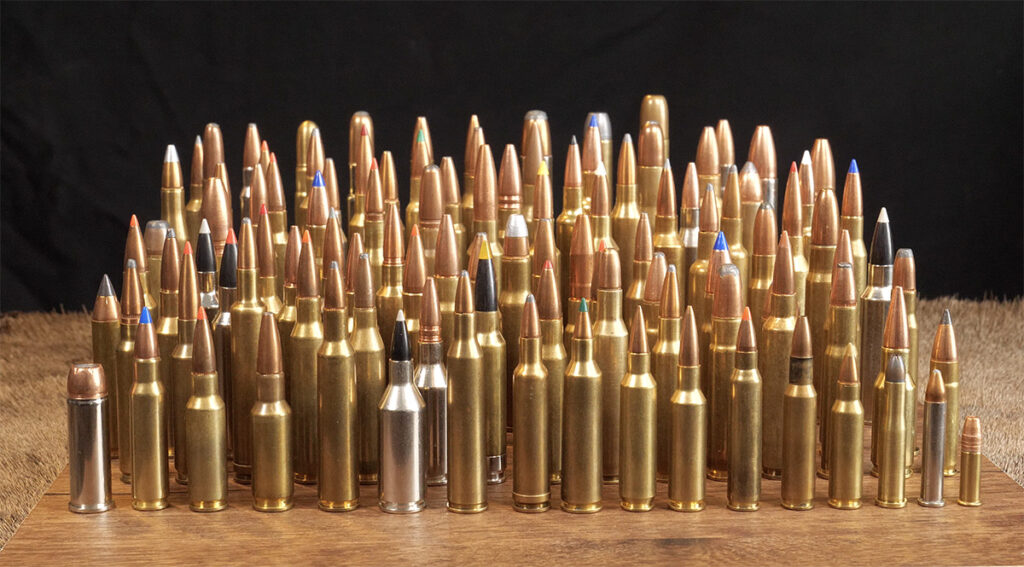
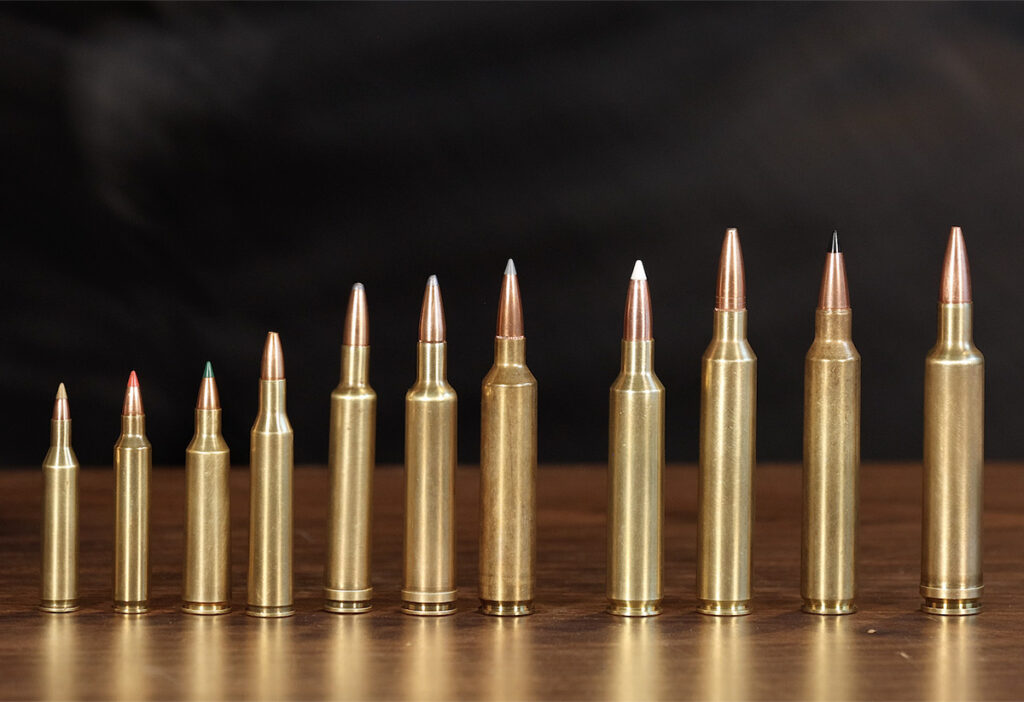
Discovering these flight times is as simple as consulting an online ballistics calculator. Enter muzzle velocity and bullet BC. The calculator will spit out a time of flight at various distances. A 143-grain Hornady ELD-X with a BC of .625 at 2,950 fps from a 6.5 PRC will fly for 0.58 second before reaching 500 yards. It requires 0.33 second to travel 300 yards. Objectively, then, time-of-flight might be the compass that guides the maximum shooting distance. But not everyone agrees.
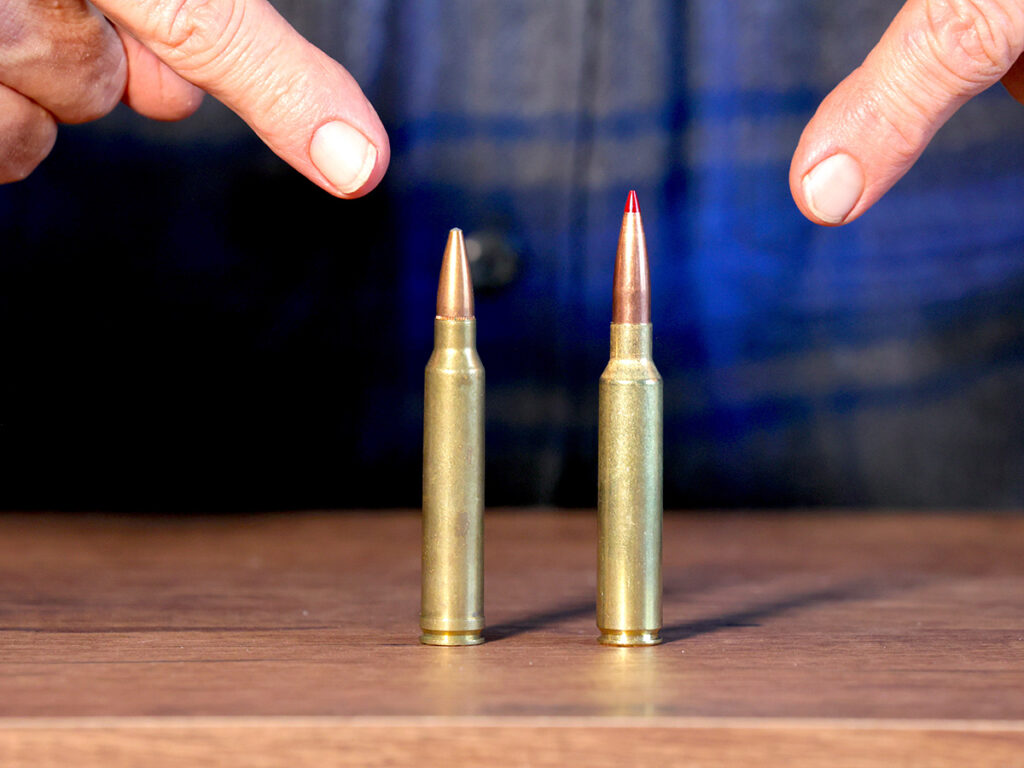
The time-of-flight restraint is a moving target depending on the quarry’s behavior. A calm, mid-morning buck standing broadside is unlikely to jump forward suddenly. The sound of a gunshot will not reach it as quickly as the bullet, so flight time could easily extend to 1 second with little or no chance that the target will move. Worth the risk, in the minds of some. Similarly, a bedded animal is unlikely to shift or move. Reading an animal’s body language is important and can pay off, but this is playing the odds. They might be good odds, but there’s always the chance, enough chance that the insistently ethical will reject such opportunities and insist everyone else should, too.
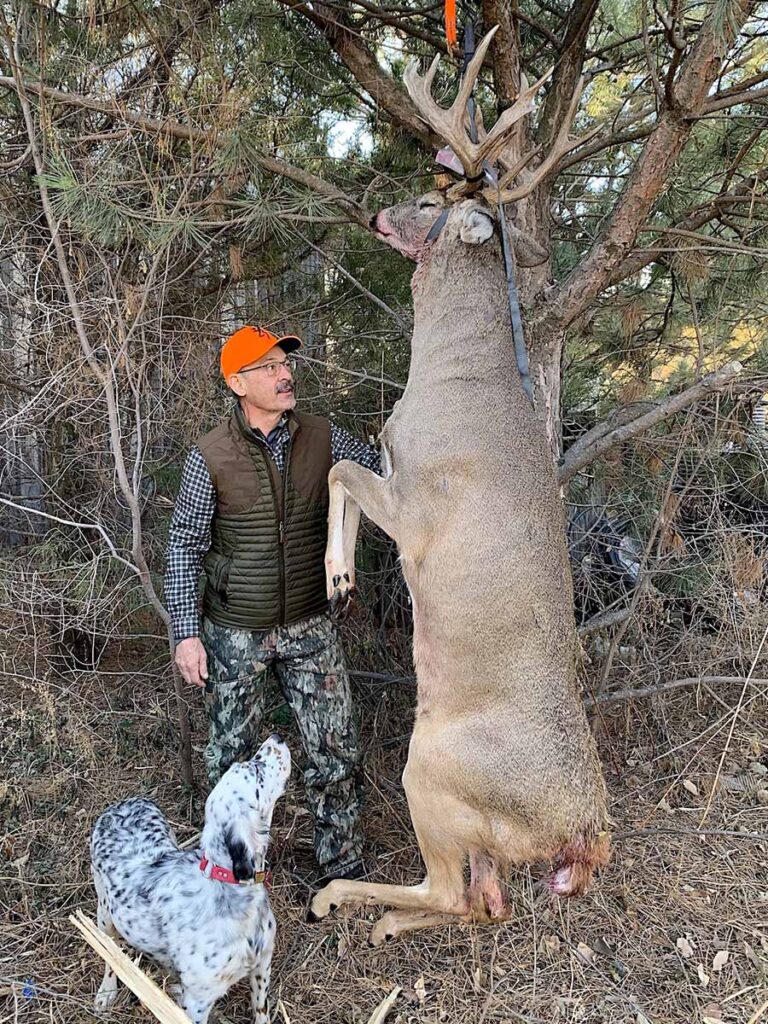
Finally, there is the reality of field accuracy. Most self-proclaimed long-range precision shooters probably cannot make first-shot hits at long range. How long? As near as 300 yards. YouTuber Jim Harmer (Backfire channel) challenged shooters to put their bullets where their mouths were. Fifty of them engaged life-sized animal targets from various field shooting positions, from prone with bipod support to sitting and kneeling with tripod support. Targets were set at varying distances from less than 300 yards to as far as 600 yards. Each shooter was free to engage or pass based on their own assessment of the likelihood of success. “They did not have to take any shot if they thought they couldn’t make it,” Harmer reported.
The average hit rate among all shooters was 30 percent.
I urge you to read that last sentence again and contemplate it. More than two-thirds of the time, experienced shooters with their best long-range equipment could not meet their own standards. What does that suggest the first-round hit rate on game would be for all hunters?
This brings us back to ethics, regulations and enforcement thereof. If we can assume that game shooting beyond 300 yards is a low-probability option, should we regulate against it? I think not. How could anyone enforce this? You’ve backpacked 17 miles into the mountains, found a bull elk standing at 423 yards in dead air and set up prone with bipod support. You’ve triple-checked your laser range readings, dialed your tried-and-true scope, and calmed your heart and breathing. Are you going to pass up the opportunity because there’s a law on the books against shooting past 300 yards? Who’s going to know?
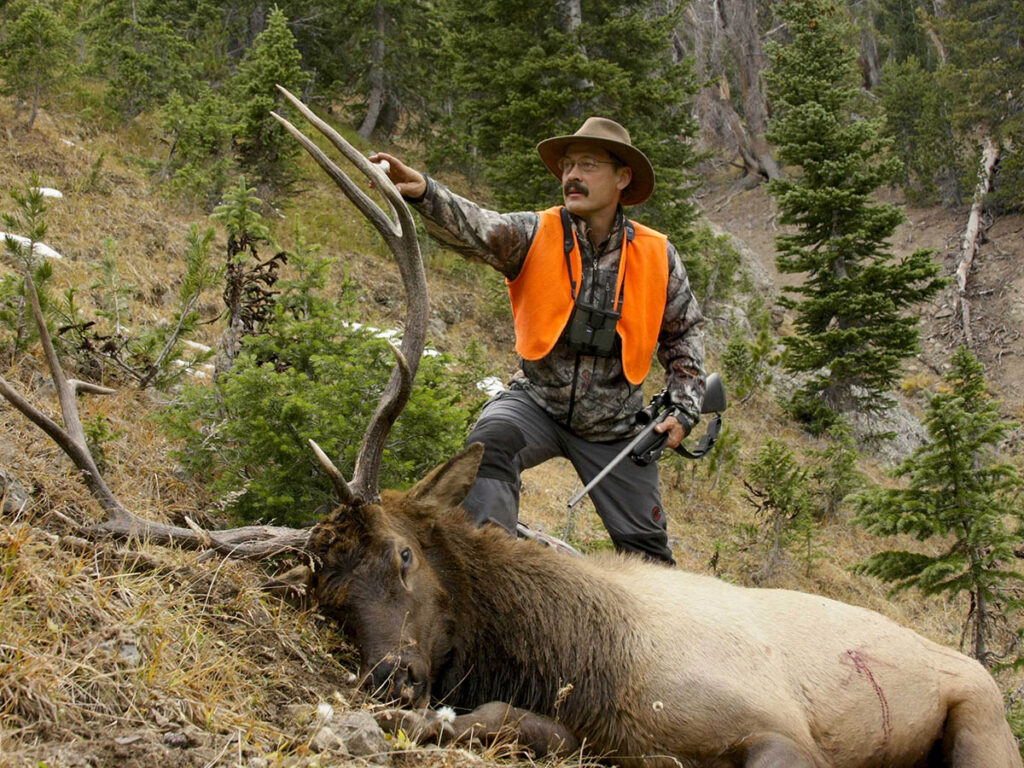
This doesn’t mean that we can’t, as a community of self-proclaimed conservationist hunters, advocate for and encourage more stalking, more self-restraint, and less long-range shooting. We absolutely should do this while also strongly encouraging both long-range and close-range target shooting from real-world field positions. Training to shoot well in the field will, in this author’s opinion, do more to reduce missing and wounding loss than any laws against long-range shooting.
The truth is that serious, well-trained and properly equipped long-range target shooters are probably more capable of making clean, one-shot kills at 300 to 600 yards than many poorly trained and equipped casual hunters can make at 100 yards. Instead of squabbling and pointing fingers, all of us should redouble our efforts to shoot carefully and well while first striving to get as close as possible. Let’s start taking pride once again in our hunter’s heritage of fieldcraft, woodsmanship, tracking and stalking. Add in plenty of serious, careful, long-range target shooting, and we’ll minimize wounding loss to the bare minimum. Hunt honest and shoot straight.
Editor’s Note: This article is an excerpt from the Gun Digest 2027, 81st Edition annual book.
More On Long-Range Shooting
- 9 Long-Range Shooting Fundamentals You Must Master
- Long-Range Hunting: Times And Tactics Have Changed
- Legacy Skills: Becoming A Well-Rounded Long-Range Marksman
- Your Precision Rifle Journey
- Practical Precision: A Return To The Fighting Rifleman

Next Step: Get your FREE Printable Target Pack
Enhance your shooting precision with our 62 MOA Targets, perfect for rifles and handguns. Crafted in collaboration with Storm Tactical for accuracy and versatility.
Subscribe to the Gun Digest email newsletter and get your downloadable target pack sent straight to your inbox. Stay updated with the latest firearms info in the industry.




I have considered long range shots as discussed because 1000 yards doesn’t seem that far with a scope when looking straight across to the target as the crow flies. Then I looked at my access to retrieve the game…. 2000′ down, 2000′ up, climbing over windfalls and scaling cliffs…foraging a creek and wet lands below… no roads or trails to shorten the walk. And if there is 3′ of snow? By the time I get there, the coyotes or wolves would have enjoyed their meal and left…I’ll concentrate on stalking closer game and making the journey as enjoyable as I can without getting myself hurt.
I’m positive some hunters are able to comfortably shoot long range and be responsible about it. Myself, I try getting the closest, safest shot possible. I like stalking, making it a little more exciting for me. I also continue to practice my shooting. I guess bottom line, if you are comfortable and more than anything responsible. Just respect the game.