
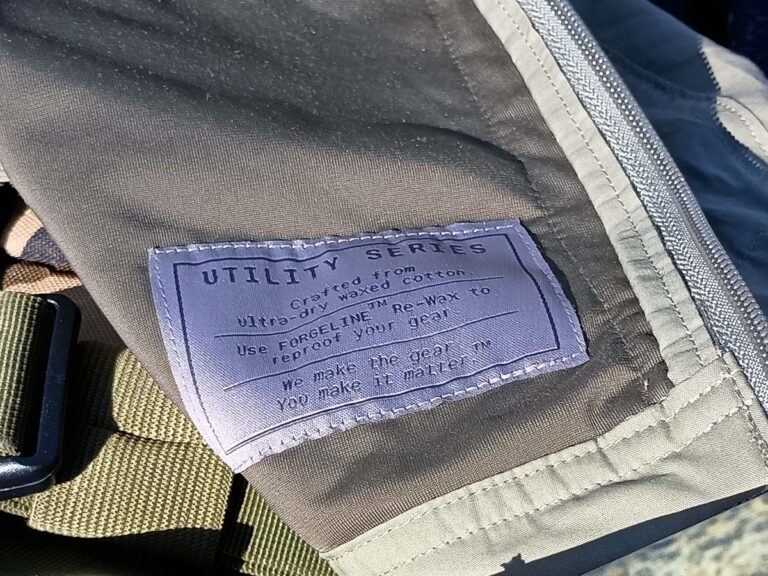
We put ForgeLine Solutions Performance Fieldwear to the test.
Those who have served—particularly in the SOF community—look upon ForgeLine Solutions fondly. The apparel born of Patagonia’s Lost Arrow Project served with recognition from Kabal to Kandahar and Baghdad to Balad.
Whether deployed for firefights, room clearings or intelligence-gathering operations, the clothing proved to be a durable, engineered asset that worked seamlessly to help high-risk missions come to fruition. That’s a hell of a pedigree, one that the company aims to carry on now in a civilian role.
Launched earlier this year, the ForgeLine Performance Fieldwear aims to extend high performance to Joes—the everyday variety, not G.I. I was lucky enough to get a sneak peek at the duds at the 2026 SHOT Show and was even luckier to get a set of the series recently to test in my very mission-possible day-to-day life.
Certainly, hauling lumber, stacking slash piles, enjoying some range time and getting a little shore fishing in didn’t push the Performance line to its brink. But it was more than enough to convince me ForgeLine is on to something with what they’ve stitched up for the consumer market.
Initial Impression
Similar to hunting clothes, the ForgeLine Performance apparel wasn’t conceived as standalone garments. Certainly, you could buy one piece and be good, but the entire line is a system designed to cover your hide—thus your rear—for nearly any field conditions.
The company begins with a base layer and builds outward with shell options, helping you adapt to the conditions at hand—be they sultry El Niño winds or a freezing autumn rain. Furthermore, the company achieves this with piston-ring-tight construction. No joke, there wasn’t a single strand or stray thread hanging off any of the clothing sent to me. Outside of the one tailored suit I’ve had in my life, I can’t recollect any other clothing where I can make this claim.
While tactical in application, the clothing is decidedly domestic in appearance, which I appreciate. Don’t get me wrong, I don’t mind a bit of a “don’t tread on me” look to clothing, but taken to the mall-ninja extreme and, face it, you beclown yourself. This isn’t the case with any of the Performance garments, which are more rugged, ready and damn sporting in form.
Heritage Solution
Undoubtedly, most have noticed a trend in hard-use apparel material—it’s synthetic. I’ll be the last to bash what polymers have brought to garb, but it does have limitations. Traditional natural fibers like canvas can still hold a distinct advantage when it comes to quiet movement, campfire spark resistance and structural body in the brush.
ForgeLine breaks from the herd with most of its Performance garb, turning to the same proven cloth it used for its military wear—cotton. But not just any cotton; they use an ultra-dry waxed cotton from British Millerain. The textile company is more than 140 years old and has perfected cotton cloth, offering users something that’s not only water-resistant, but lightweight and breathable. Additionally, the fabric is nearly snag-proof, and stacking slash piles in the pants, I tried my darndest to put a chink in this armor.
Improving the durability of the clothing, ForgeLine reinforces the garments with hex ripstop at high-wear zones. Quite simply, these are more reinforced areas where damage is expected, boasting a textile that halts a rip before it expands to the entire piece of clothing. Clever.
There is one note about the material: it does require some upkeep. Every so often, you’ll have to re-wax the cloth with dry wax to keep it impervious to the elements. ForgeLine sells rewaxing spray, and it is a fairly painless process that only has to be done upon occasion.
Grass Valley Jacket
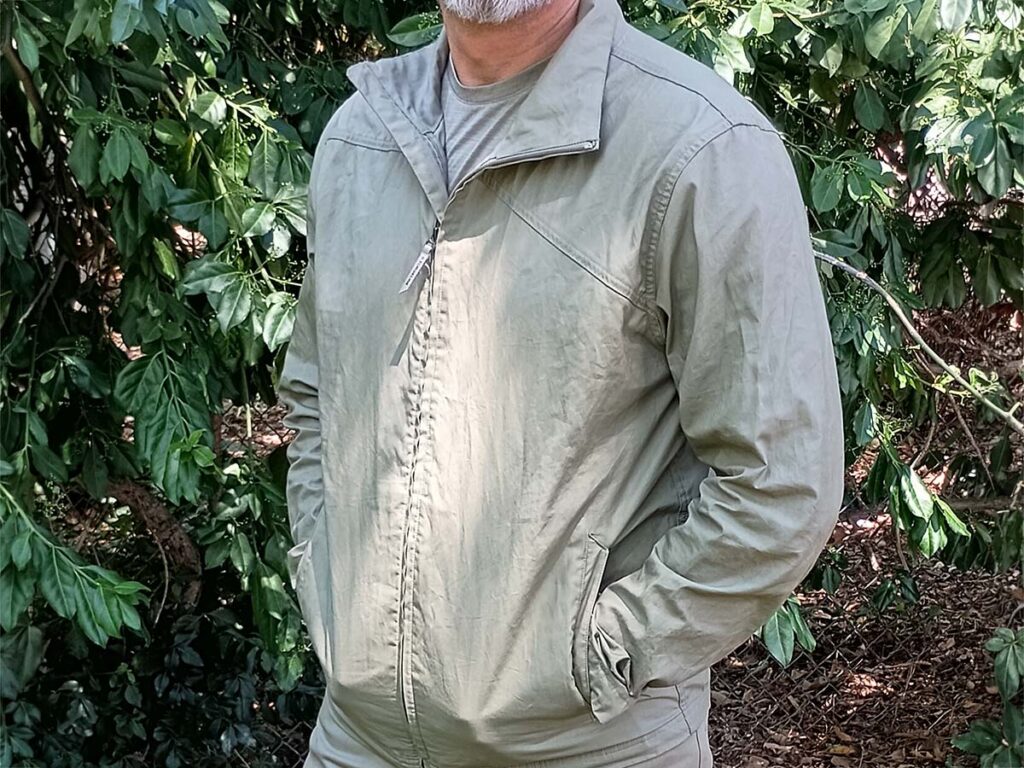
Color me surprised, but this lightweight windbreak has turned out to be my favorite in ForgeLine’s initial series. When I saw the samples and got the gear, I didn’t see this coming. The jacket handles hard use and fills the light-shell role better than anything I’ve encountered. This isn’t an easy hole to fill, given that a single-layer shell is generally somewhat fragile.
Having taken the jacket out for mid-spring lumberjacking and as a cover at the range, I walked away impressed with its resilience to abuse. Seriously, the jacket is spookily impervious to snags and is the perfect “what if” cover for anytime but deep winter. I find I throw the Grass Valley Jacket into my day ruck before anything else. I certainly feel the waxing is enough to make it back to my vehicle with a dry torso if the skies open on a fishing trip. But if I don’t need it, it doesn’t take up much space and is light enough to forget.
I think this jacket could fill many roles, but it best fits as an everyday option—no matter the task. It also might fill the role of a mid-layer with the Oak Camp or a thicker outer shell. The collar zips all the way up to keep cold winds off your neck, elastic cuffs seal the arms from the elements, ample pockets give room for possibles and an interplacket behind the zipper cuts any drafts.
The jacket nails classy, yet functional.
Oak Camp Jacket
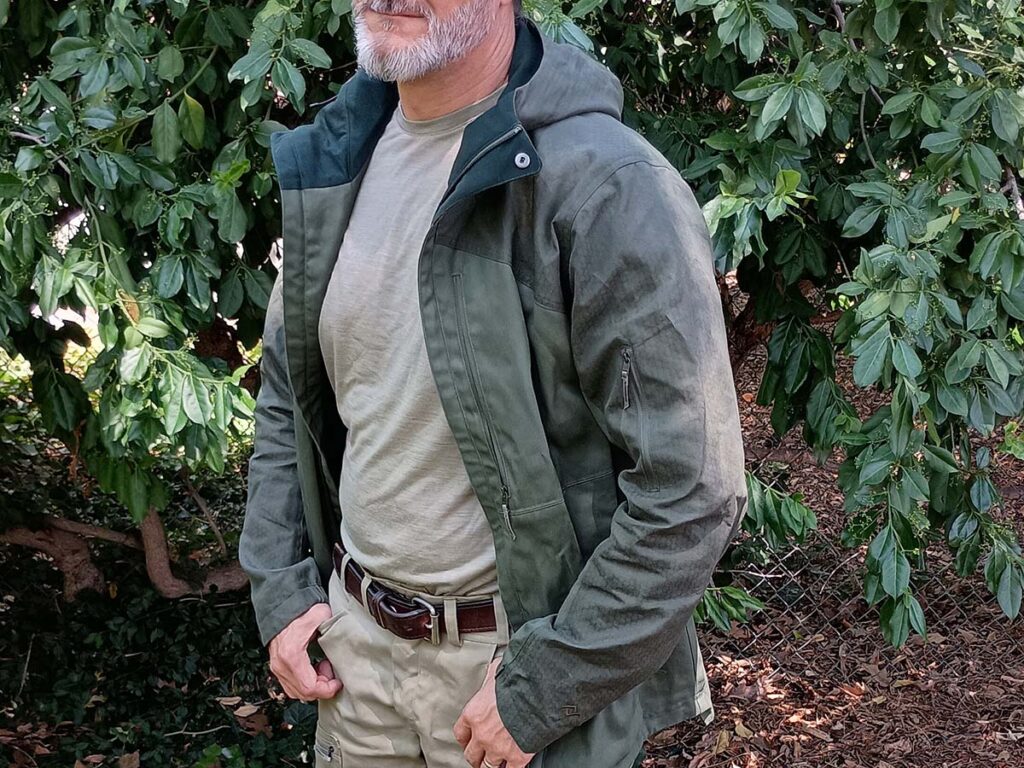
Pegging the Grass Valley Jacket as my favorite was tough, because had ForgeLine only created the Oak Camp, it likely would have been a weighty accomplishment. I’ve only had a few days this spring to truly put the cover through the wringer, because—despite being cotton—I think I could push it much further in the elements.
A few of the highlights of the Oak Camp jacket are a polyester liner, adjustable hood, ripstop reinforcements at the hood, shoulders and sleeves and ample pocket space. One of the most well-thought-out aspects is the adjustable hems with captured toggles. This is a big deal, because if you carry, you don’t have to worry about the toggles getting caught in your trigger guard—an event with very negative consequences.
In bad weather, you can really batten down the jacket and keep the drizzle or sleet out. And while feeling nearly tailored, it’s designed to incorporate a mid-layer.
Where I believe this jacket would excel in the field is mid-fall to early winter, before thermometers bottom out. I think it’d make a great scouting jacket or something light, yet warm to march through corn stubble in pheasant season. In town, the Oak Camp might get you all the way through the coldest month without blinking an eye. Maybe not in Minot, North Dakota, but about everywhere else.
Oak Camp Pants
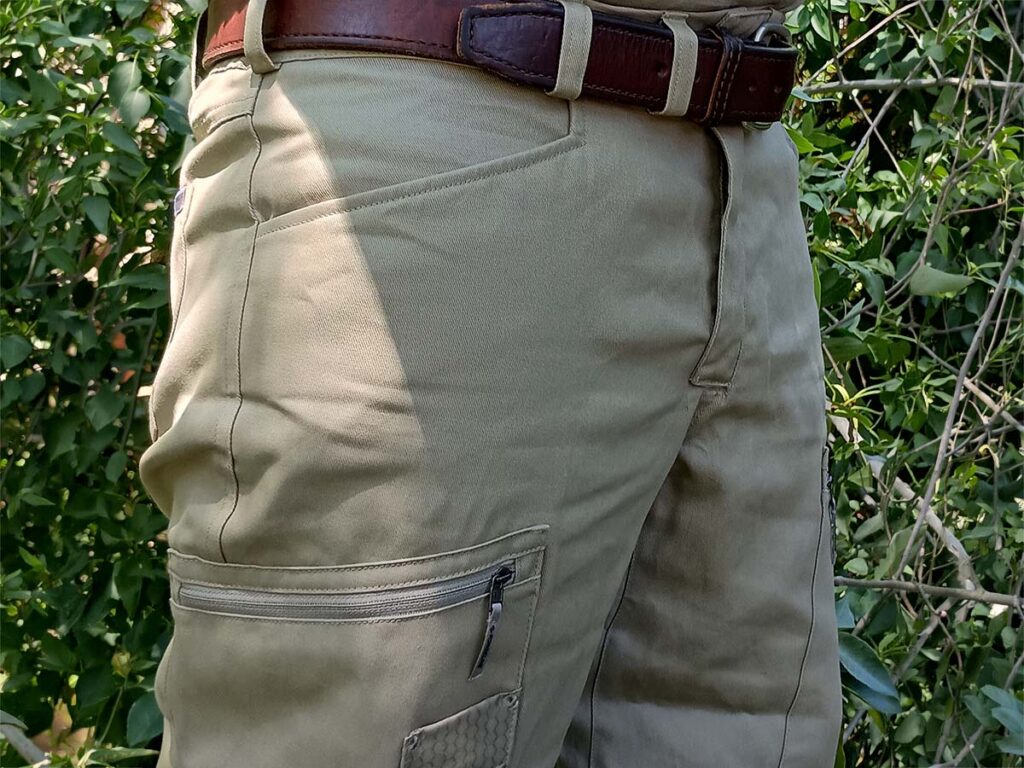
If there is a No. 2 on my personal ForgeLine hit list, it’s the company’s pants. My guess would be these will likely be the big sellers of the entire line. Once again, the slacks provide all the assets of the jackets—waxed Millerain cotton, ripstop in the right places and as abrasion resistant as the rest of the gear. But where they win me over is their wearability. That’s a fairly vague term; let me expound.
The pants seem to adapt to their circumstances. If it’s muggy and the sun is beating down on you, the fabric proves extremely breathable and facilitates the evaporation of sweat from your legs. In these conditions, the pants seem cool and a natural choice if you’re fighting brambles or scratchy stuff in hot weather.
Conversely, if you’re in inclement weather, the dried wax sloughs off moisture and keeps your skin dry, thus warmer. Additionally, the tight-knit fabric does a good job of blocking wind. So, they’re adequately comfortable when there’s a chill in the air.
Add to this, the cut—at least the pair I tested—seems tailored to my lower regions. Thus, they move as and where I move without a snag. Add on ample, but not ridiculous, storage options and you have a set of britches fit for nearly any outdoor task from hiking to a job site.
Sespe River Rain Jacket
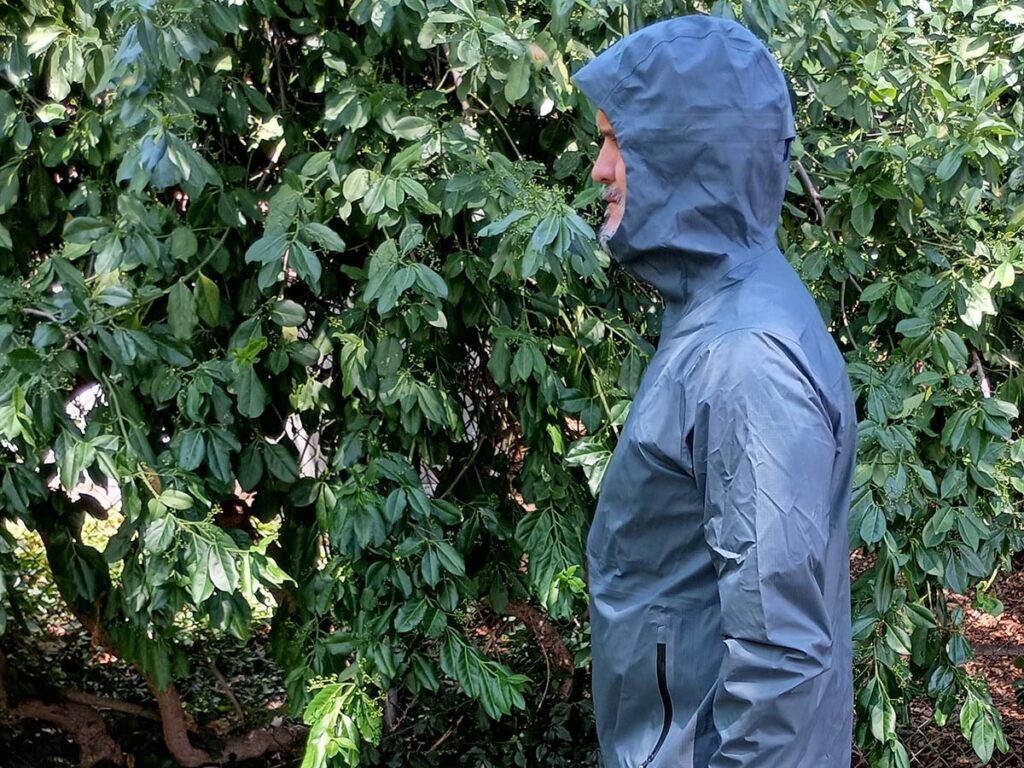
Honesty before anything, I’ve not had a true opportunity to put this jacket through the wringer. One of the downsides of residing in the semi-arid Rocky Mountain foothills. That said, against the scant spring precipitation I’ve pitted the Sespe against, it’s proven stalwart.
It’s somewhat the black sheep of the line, because it’s the only one not tailored from Millerain waxed cotton. A solid choice on Forgeline’s part, because the aim of the jacket is waterproof, not resistant. To this end, it’s created from a four-layer PFAS-free, silicone-coated fabric. You’d likely have to hit typhoon conditions to get water through it. At the same time, it doesn’t feel like you’ve wrapped yourself in a trash bag to stay dry; it allows freedom of movement and permits your body to breathe.
Aside from keeping you dry, the great advantage of the Sespe is its substantial yet lightweight nature. That is, when you have the garment on, it feels like you’re wearing clothing—not rain gear. However, it’s light enough to stuff into a day pack and still have room for all of your kit. Much like the Grass Valley Jacket, the raingear is designed for convenience, to remain out of sight and mind when it’s dry, but at hand when the heavens open.
Cozy Dell Merino Base Layer
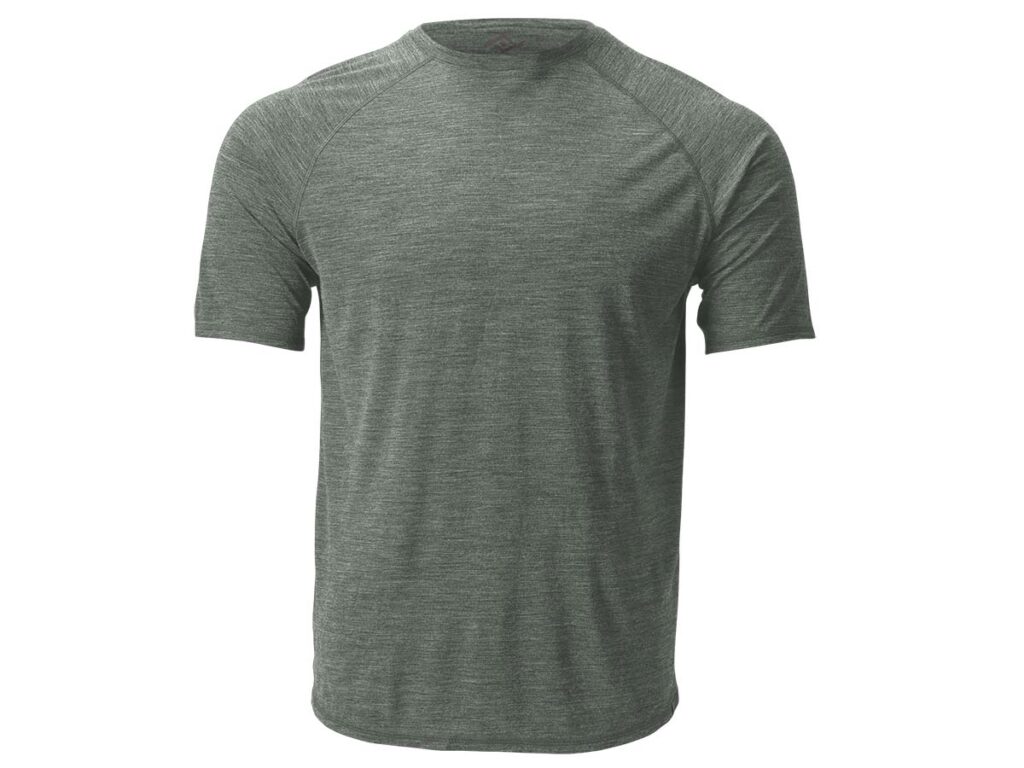
Important as they are, base layers don’t really inspire excitement. The same can be said of ForgeLine’s Cozy Dell. Given that its aim was an entire clothing system, this article was obligatory. That said, they did a good job. Anyone who’s dealt with Merino wool knows the big issue is the material stretching, which is only counteracted by blending it with another fiber—generally synthetic. In this case, the layer is 52 percent wool and 48 percent polyester. And it does what you expect a base layer to do: wick moisture from your skin and keep you comfortable and dry.
Check Out More Gear:
- Caldwell ClayCopter Review: The Next Evolution Of Shotgun Fun
- First Look: Federal Suppressor Case
- When Your Gun Safe Goes Bad
- First Look: ZeroTech Green Dot Trace H.A.L.O Reflex Sight

where are the prices?