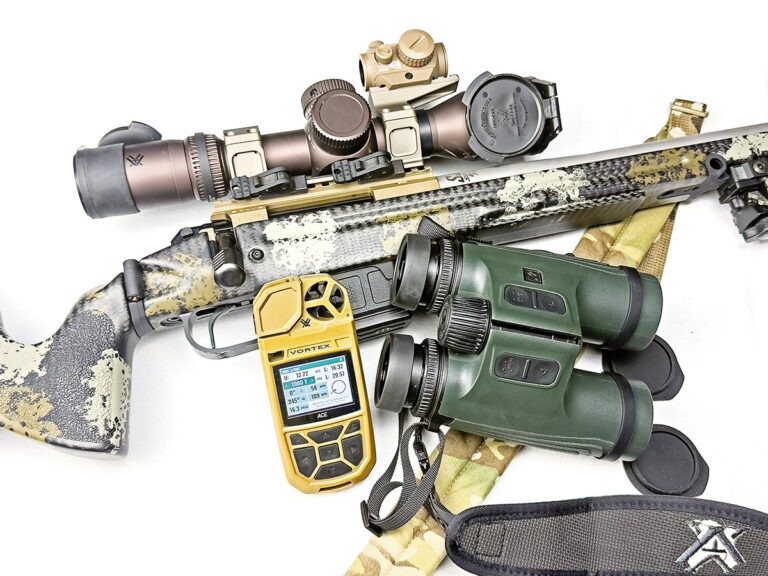
I hit the range with Vortex’s new Relay system to see just how much easier advanced technology can make shooting.
Technology is one of those funny things in the shooting industry. For some reason, people have this notion that batteries don’t belong in guns, and the simpler the better when it comes to their chosen SHTF scenario. However, just because something is common does not mean it’s simple, and firearms are fairly high on the list when it comes to their maintenance, requirements and what it takes to make them in the first place.
The shooting public has always been a little bit slow to embrace change. I think a lot of this has to do with our culture being fairly traditional—certain things are cherished while others are shunned. Regardless of how you feel when the wings of change come swooping down, it’s impossible to at least admit that Vortex’s Relay system is a truly amazing advancement for the shooter.
Somebody Call the IT Department
When it comes to guns, I have a fairly wide range of interests. I enjoy pretty much all firearms and have an appreciation for history as well as new technologies. One of the things that interests me a lot is the fact that, at some point in time, the things we consider old or simple were on the cutting edge for their day.
What’s more interesting is that there have been many technologies that have existed separately for long periods of time before they were eventually integrated into one system—consider the first attempts to combine telescopes with guns. Optical equipment is so common on guns these days that we barely give it a second thought.
Likewise, the idea that these computerized systems are too fragile or complex is due to unfamiliarity. For example, a guy joked with me at the range that he’d “need an IT degree” to use the Relay system … but it’s really not difficult to use at all.
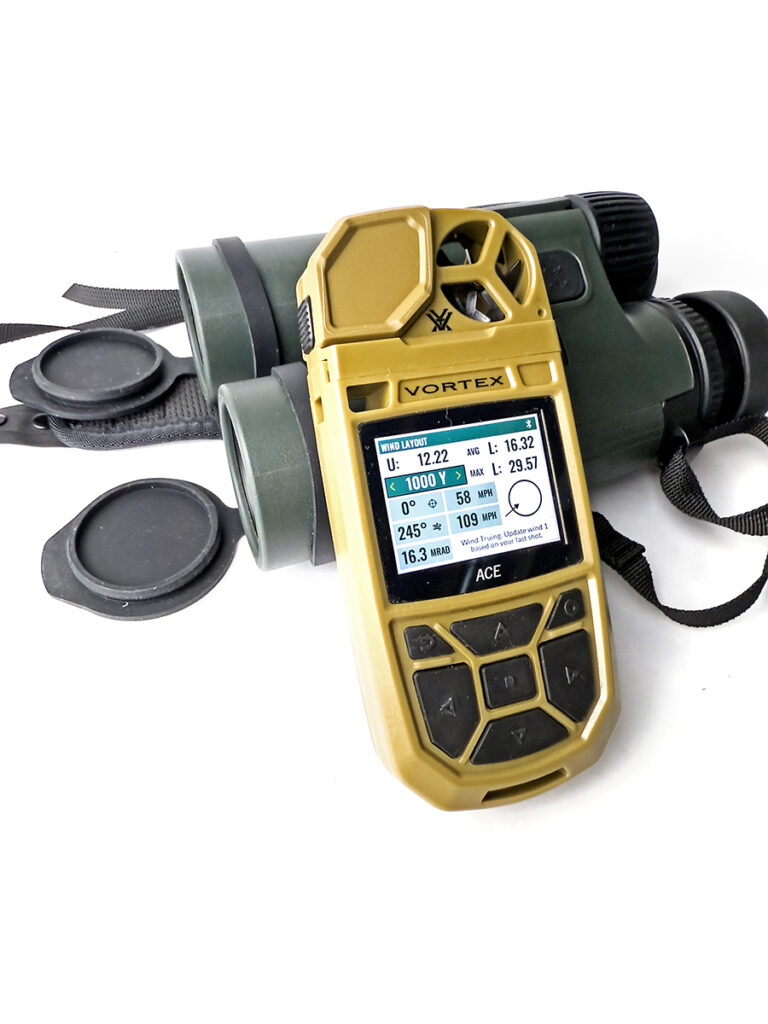
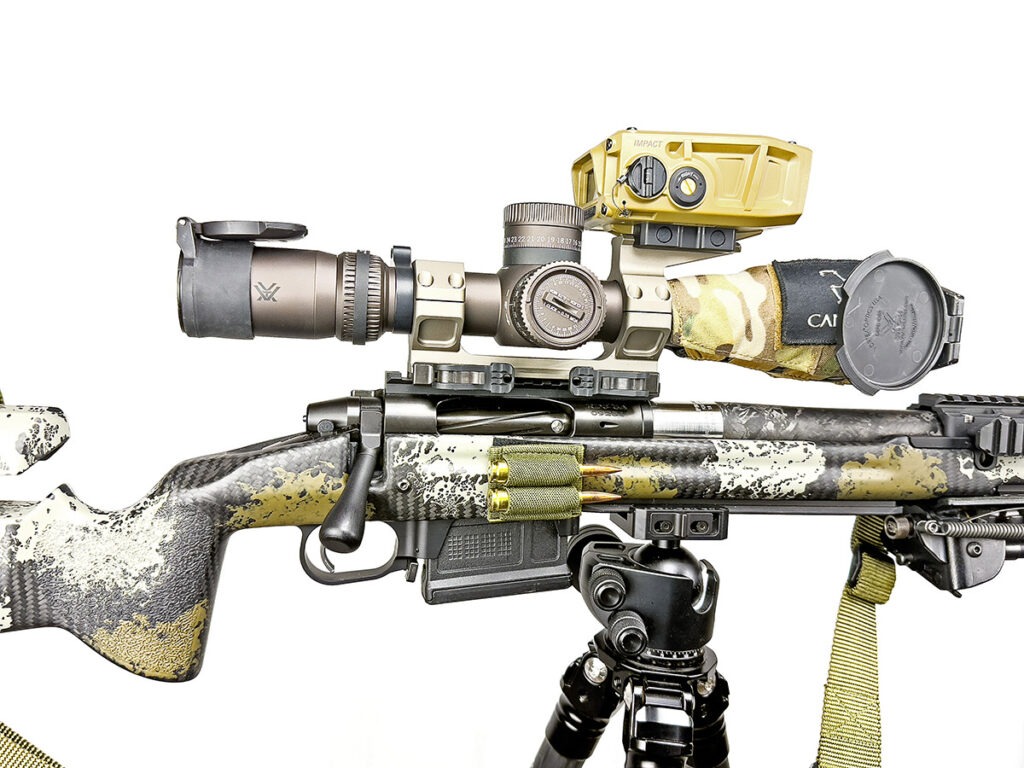
The Relay system comprises three units: the Impact 4000 gun-mounted rangefinder, Talon HD 10K 10x42mm binocular (includes five target modes and four ranging modes, and is tripod adaptable) and Ace ballistic weather meter. These can all be used as stand-alone units or as any combination of the three.
But here’s where things get interesting.
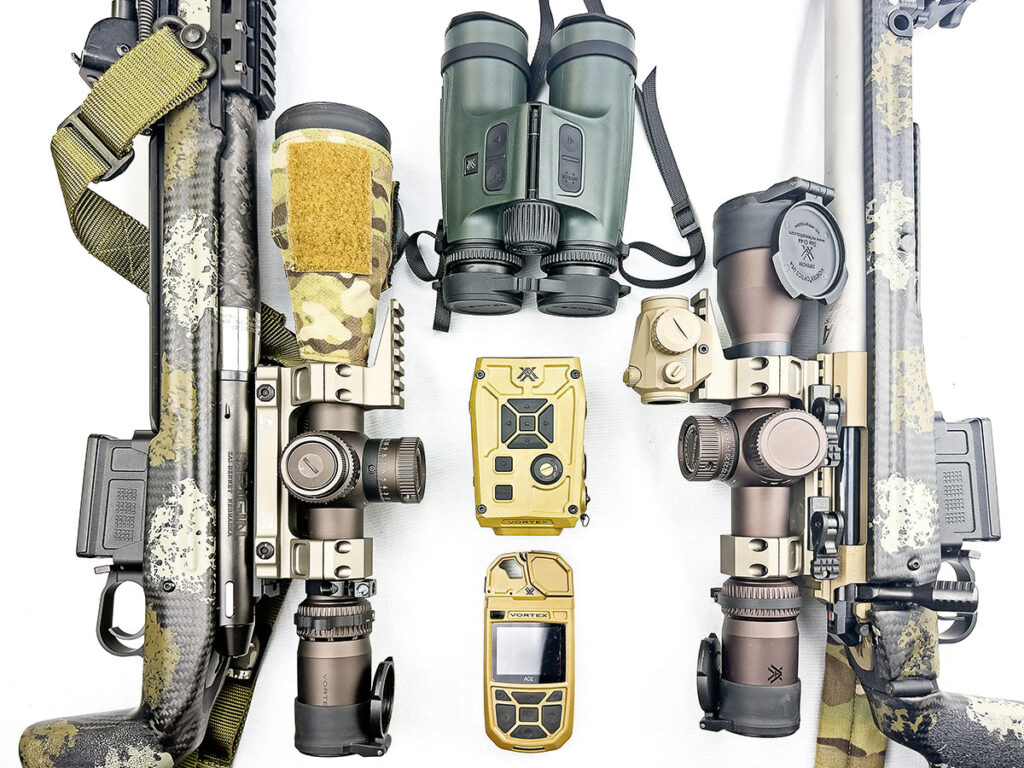
These devices can be tied to the Geoballistics app on your phone and provide real-time data to each other, and profiles can be carried over to each device. Yes, you read that right: Your binoculars can talk to your weather meter, and so on and so forth. The implications here are huge, as you can have real-time firing and spotting solutions updating live as you’re behind the gun.
I’ll get into more details on this in a moment, but I do want to do a bit of explaining here because this is a big concept, and it has far-reaching implications to our craft. In my time using this system, I’ve had some pushback, especially from those a bit set in their ways regarding technology at large. Not everyone wants a computer on their gun, but virtually all modern guns are the product of computerized manufacturing and design.
Don’t let enhanced capability get handicapped by sentiment—there are no simple guns.
The Tentative Marriage of Bullets and Batteries
Of course, guns and computers have a long history, and many early computers were developed to help track ballistics. However, the entire idea of putting computers onto your gun seems like a bridge too far for some.
The Relay system is inherently an electronics-based family (although you can still use the Talon as just a binocular). It has taken the shooting public decades to truly embrace electronic sights, and now they are so trusted and well established that they are on nearly every gun platform. The failure point of other systems is that they have typically been proprietary and did not have a communication feature.
I have six apps on my phone dedicated to a variety of products, and they don’t communicate with each other. This is an annoyance that has pushed people away from this type of electronic, not to mention limited product support and generational changes. If one failed, well, you were out of luck. That’s not so here, as each Relay product can carry the same data.
I can easily recall a time when electronic optic durability and reliability were in doubt. I found this to be interesting: The idea that a battery would fail when you need it most … when at any given time you’re only carrying a finite amount of ammunition. If you think of it this way, battery life is usually in the tens of thousands of hours for most electronic optics. During that run time, it’s the firearm that’s more likely to encounter a malfunction than the optic.
The anti-technology sentiment is, of course, based on a logical fallacy where people are comfortable with technology up to a certain line that is convenient for them. Everybody carries a cell phone these days, and you can be physically tracked using the Wi-Fi signal in your home, yet people are uncomfortable with their scopes having Bluetooth capability. If the government wants to spy on you, well, it’s not like you’ll know. In an era of electronic surveillance and deep saturation, you’re already being monitored, right down to your smartwatch and vehicle.
The Relay system is composed of technology elements that have existed separately for years. However, the way that it integrates them is quite novel and seamless. Obviously, handheld weather stations and rangefinders have been around for quite some time. The technology is well established and has become relatively inexpensive, to the point that they are commonly used for many types of recreation.
While I’m not a big-time golfer, my dad and all of his buddies have rangefinders—I’ve even heard of some using handheld weather stations. I will never be a good enough golfer to have a rangefinder or weather station matter for me, but it does make a difference for some of the people I’ve seen playing while I’m having a beer in the kart.
Shooting, on the other hand … well, there’s an area where I rely on these types of devices.
As time has passed, we’ve been migrating closer to what will eventually be something of a “peak” modern rifle, a large part of that modernization happening in the past five or so years. The modularity of both bolt action and AR platform rifles has created massive markets for each, and we are now seeing system integration with other existing technologies, such as the Arca Swiss rail interface, M-lok accessory attachment points, common chassis sizes, quick-detach suppressor capabilities and return-to-zero optic mounts.
On most of my rifles, I have some—if not all—of these elements. There will be a time in the very near future where off-the-shelf factory guns will have all of the features as my custom rifles currently do … for a fraction of retail cost. I believe that the Relay system is the foundation for a new generation of upgrades that will eventually migrate into being commonplace, and you’re hearing it here first.
The Relay System and Theory of Use
I’ve been using the Impact 4000 for a while, and it has caused some confusion as to why I’d want it. Some guys at the range are just comfortable with a handheld rangefinder and a printed out drop chart, and that’s fine. However, those shooters don’t see how far we’ve already come with different reticles alone. Remember: The mil dot was cutting-edge stuff.
The Impact 4000 is a very distinct piece of hardware that’s certainly noticeable on top of a rifle. The main comments I get about it are concerns with weight and ergonomics. I’ve also been asked about its durability and overall utility.
For me, the system has been working flawlessly; however, it should be noted that this technology is still in its infancy. What you are witnessing right now as you read these words on this page is the technology window shifting. What Vortex has achieved here is extremely impressive.
The Geoballistics app is the centerpiece of this system. You can build various gun and bullet profiles quickly and easily using the data you collect at the range or in the field. The app itself is easy to use and very fast. I’ve used some in the past that were good but clunky, and this one is truly understandable to any end user.
Let’s say you’ve got a few Vortex optics in ADM QD mounts, and a few rifles in different calibers. You have a .22 LR bolt gun for NRL, a lightweight 6GT you like for competition and coyote hunting, and a .300 Win. Mag. you take out West. Because Vortex is so consistent and the ADM mounts are well known for their return to zero abilities, you’re comfortable swapping your optics out from gun-to-gun.
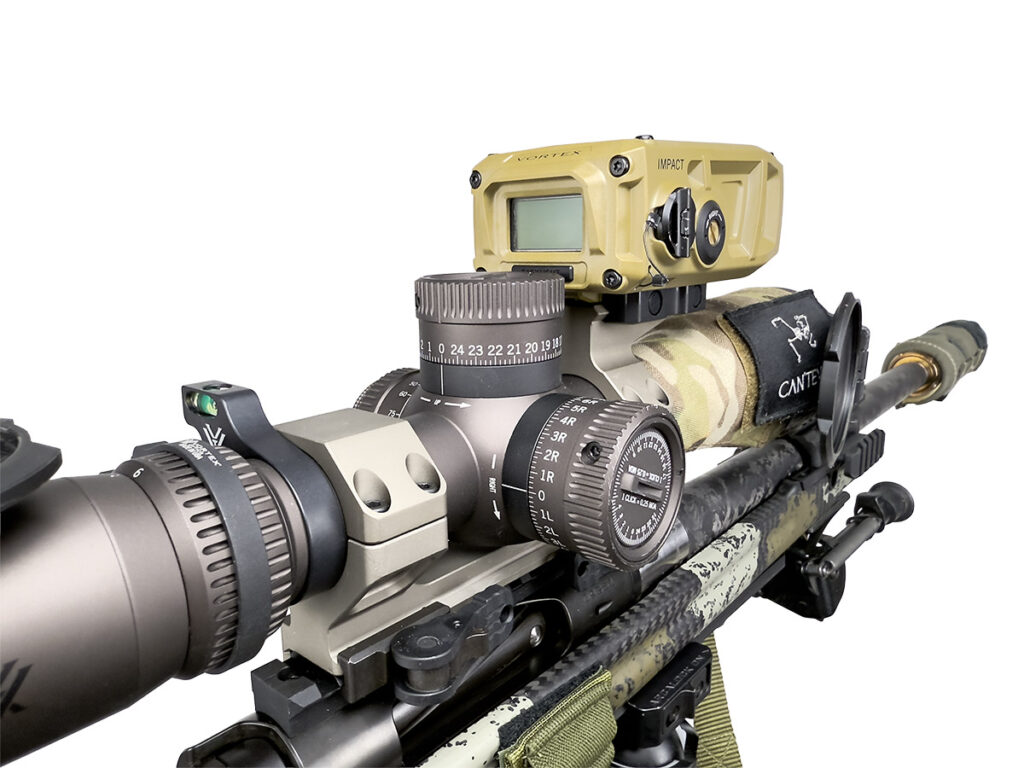
I do it, because it’s plenty easy and repeatable.
In your profile, for each gun, you have your chosen loads and notes on the scopes where your zeros are per caliber. One of your scopes has the Impact 4000 mounted on it, the other two don’t.
Let’s say you’re going hunting for elk in the mountains, and there’s close tree cover in some areas. You start low and spot using the Talon HD. This has an impressive maximum ranging distance of 10,000 yards, or more than 5.5 miles. This feature can help in land navigation, as it can provide you with accurate readings on landmarks to help you to plot a route.
Now, let’s say you have your .300 Win. Mag. and have put your new Razor HD 4-24x on it. You reset your turrets to your established zero, and you’re good to go. You spot an elk herd and stalk up; the wind is nasty because it always is, so you pull out the Ace and get in position. As you line up on the elk, you get live drop and windage correction looking at him through the Talon; it even corrects for a number of factors as you look … and it gives you a solution right in the display.
Now, you’re out solo for coyotes. You have the 6GT, and you’re posted up calling. You have your scope with the Impact 4000 mounted on it because you’re traveling light, and your shots are going to be on fast movers inside 500 yards, so you don’t bother with the Ace or Talon; you just need the speed of the Impact 4000 to give you ballistic data. They come in, and you knock them down as fast as you can get your drop readouts.
After all that, you and your buddies decide to see how far you can stretch out the .22 LR cartridge. You take the scope with the Impact 4000 mounted off your 6GT and get your known zero and profiles switched over. It’s windy so you pull out the Ace and start getting to work. Well, your buddy thinks he knows better, and you let him get on the gun. He’s unfamiliar with the Impact, but luckily you can be watching though the Talon and give him real-time updates on wind as he’s shooting.
While you’re there, your other pal wants to see what his iron-sighted M14 can do. He’s got no idea what his muzzle velocity is, but he’s shooting 168-grain Hornady match and he’s got National Match sights, so his adjustments are known. You check out the Hornady site for general velocity, plug that all into your app and build him out a profile. He takes a shot at 100 yards to confirm zero, and now you give him dope for 500. He clicks it in and it’s off, so he adjusts to hit, you adjust the MV number to correspond with his known drop, and then he’s trued out.
You give him correction for 500 and 600 yards, and a rock at 864—he clicks in and smacks it. Now your other buddy wants to try to hit it with your .22, so you quickly switch profiles, range it with the Talon and he fires.
Terrific Tech
So as far as my speculation goes, this is an incredible system that is highly flexible. When I started using it, I immediately thought about all the apps I have to manage my gear and how easy it could be instead.
This is just three products … and imagine the possibilities that exist: This technology can be integrated into spotting scopes and even thermal optics. Imagine being able to communicate in real-time with guides, spotters and other hunters without any guessing. It’s already possible to remotely watch the view through the scope on many thermal optics with wireless capabilities. You could be in the field as a spotter not only watching through your own optic that’s communicating data as you watch, but you could also be watching through your partner’s scope as well.
Instead of hours of setup and testing at the range, you get a new device and connect it, and all of your data is available instantly.
The possibilities here are somewhat endless. As a night hunter, it’s especially exciting. We are within the timeframe where we could have a single thermal optic that integrates a rangefinder and weather station into it that could instantly correct the digital reticle to the bullet drop and drift as you point it at a given object in real-time. This is huge, and the most impressive part of it all is that all you’d have to do is zero it for your rifle and port your data to it instantly, meaning your time getting into the field would be minimal and your efficiency would be maximized like never before. Thanks to Vortex and the Relay system, the average shooter can take a serious step into the future.
Editor’s Note: This article originally appeared in the February 2026 issue of Gun Digest the Magazine.
More On Long-Range Shooting
- 9 Long-Range Shooting Fundamentals You Must Master
- Long-Range Hunting: Times And Tactics Have Changed
- Legacy Skills: Becoming A Well-Rounded Long-Range Marksman
- Your Precision Rifle Journey
- Practical Precision: A Return To The Fighting Rifleman

Next Step: Get your FREE Printable Target Pack
Enhance your shooting precision with our 62 MOA Targets, perfect for rifles and handguns. Crafted in collaboration with Storm Tactical for accuracy and versatility.
Subscribe to the Gun Digest email newsletter and get your downloadable target pack sent straight to your inbox. Stay updated with the latest firearms info in the industry.