At GunDigest, we independently review products. However, we may earn a commission when you purchase through links on our site. Learn More
Should You Upgrade Your AR-15 Trigger?
These days, upgrading your AR-15 trigger is easy, but is it always a good idea?
Back in the not-so-good old days, triggers for ARs were crappy. All we had were mil-surplus parts or whatever Colt deigned to send us. The mil-spec was “anything under 7 or 8 pounds was good, anything under 6 was unsafe.”
So, of course, we went through all kinds of work to improve triggers.
Now? Really, you have to ask?
Triggers now come in two types and two flavors (I’m leaving out the forced-reset triggers because I’m not a fan): “packet” triggers and parts triggers.
Plug and Press
Packet triggers (sometimes called “cassette or drop-in triggers) are complete assemblies that you insert into your lower after you’ve removed the original parts. The hammer, trigger and disconnector are in the “box” or packet, and you install it as-is. The advantage is that since the packet is assembled by the maker, they can set the trigger pull to as clean and crisp as it can be and know that you won’t be messing with it. Also, the vagaries of trigger and hammer pin hole locations won’t mess up their work.

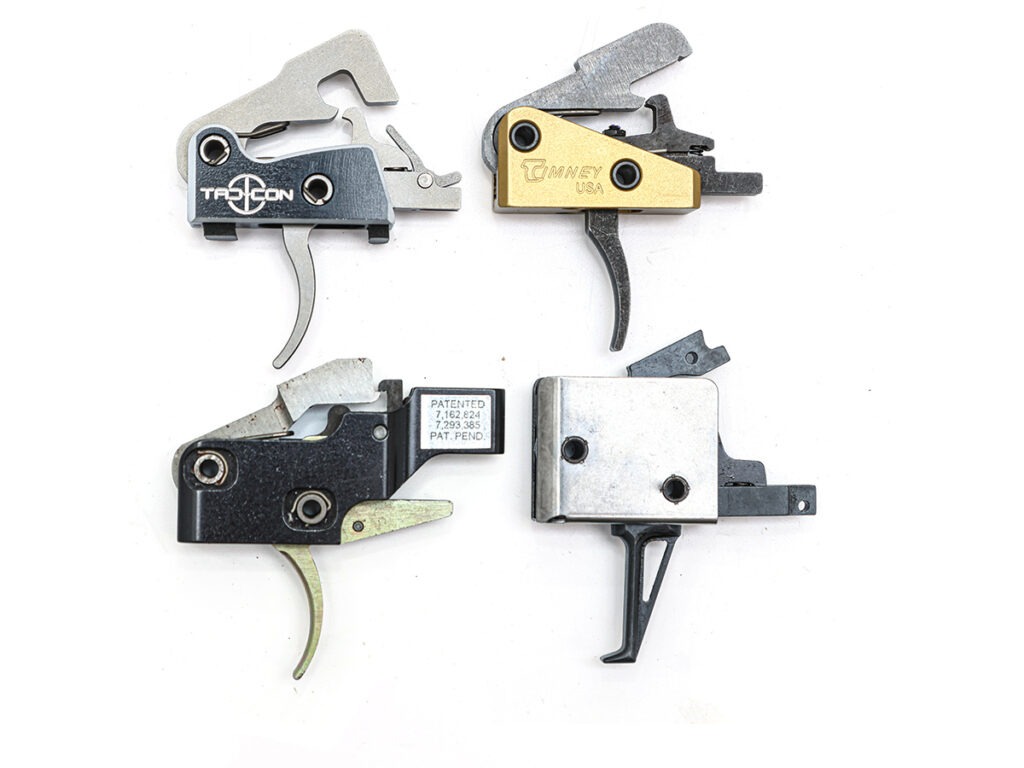
The original packet trigger was offered to eager shooters by the late Chip McCormick, and we snapped them up. The field is crowded now, which is good for us. It means we have lots of choices, and competition keeps quality up and prices down. Timney, TacCon and American Gold all offer packet triggers, and I’ve had excellent results with all of them.
Improved Pieces
Parts triggers are just that: individual parts like the ones currently in your AR lower, but better made and machined to closer tolerances. You remove the original parts and install the new set in their place. The maker still must account for the potential variances of hole locations. So, you may or may not get a significantly improved trigger pull, but it will be better.
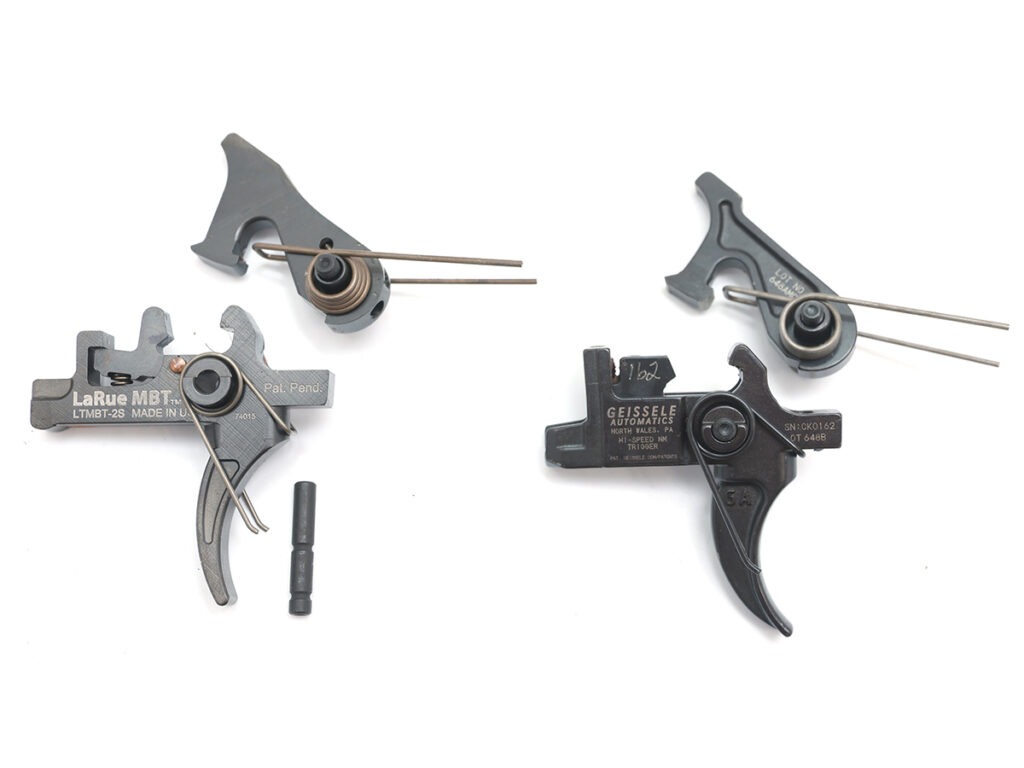
For parts triggers, I have had excellent results with Bravo (such good luck all the parts kits are currently inside of rifles and not available for red-carpet photos), LaRue, Geissele, ALG Defense and Wilson Combat. One detail that you will find common on improved parts kits is that the engagement surfaces of the hammer and trigger will be precision-ground and polished to a smooth surface.
Other Factors
It is the toolmarks on a GI trigger parts kit that causes the gritty, grungy press you feel. The weight? That the spring pressure and deeper notch needed, for extreme durability and supposed safety.
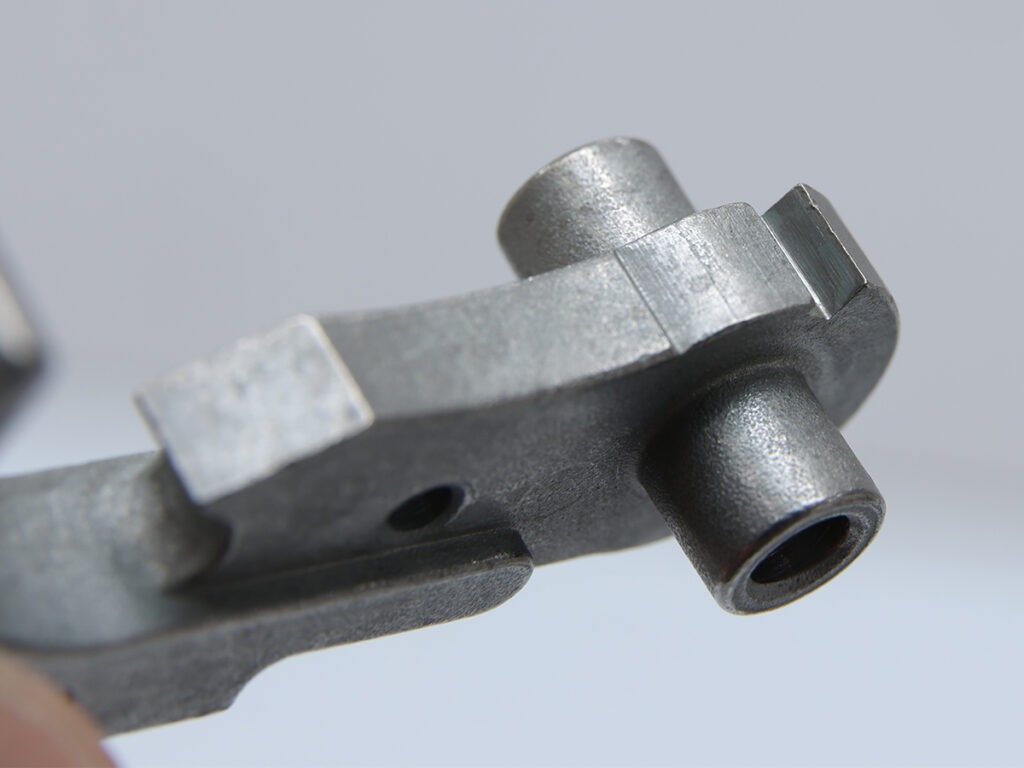
The two flavors are single- and double-stage. The original trigger design is a single-stage trigger. Here, the disconnector hands off the hammer to the trigger, with one hook or catch and one sear. So, the disconnector hands off the hammer to the trigger, and your press levers the trigger nose down out of the hammer notch and fires your AR-15.
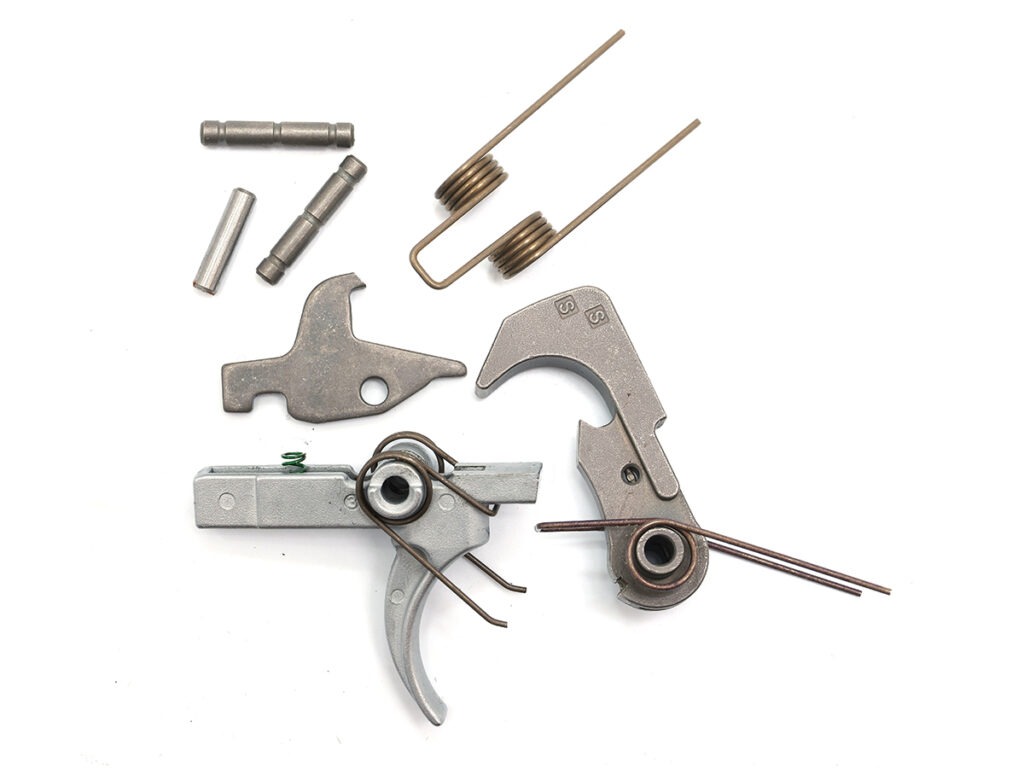
The two-stage trigger works a bit differently. The disconnector captures the hammer in a two-hooked assembly. The first hook is the initial press; some might call it taking up the slack. But the hooks are aligned in such a way that the second part of the press happens after the hammer hook contacts the spring-loaded stop built into the disconnector hooks. So, you have one hook to catch the hammer and start the press, and the second hook for the release. This permits the maker to keep a precise sear engagement for the second part of the press, regardless (well, pretty much, I’ve seen some epically awful lowers) of the hole alignment. The release happens on the second hook, and that can be precise because the first hook has taken up all the slop.

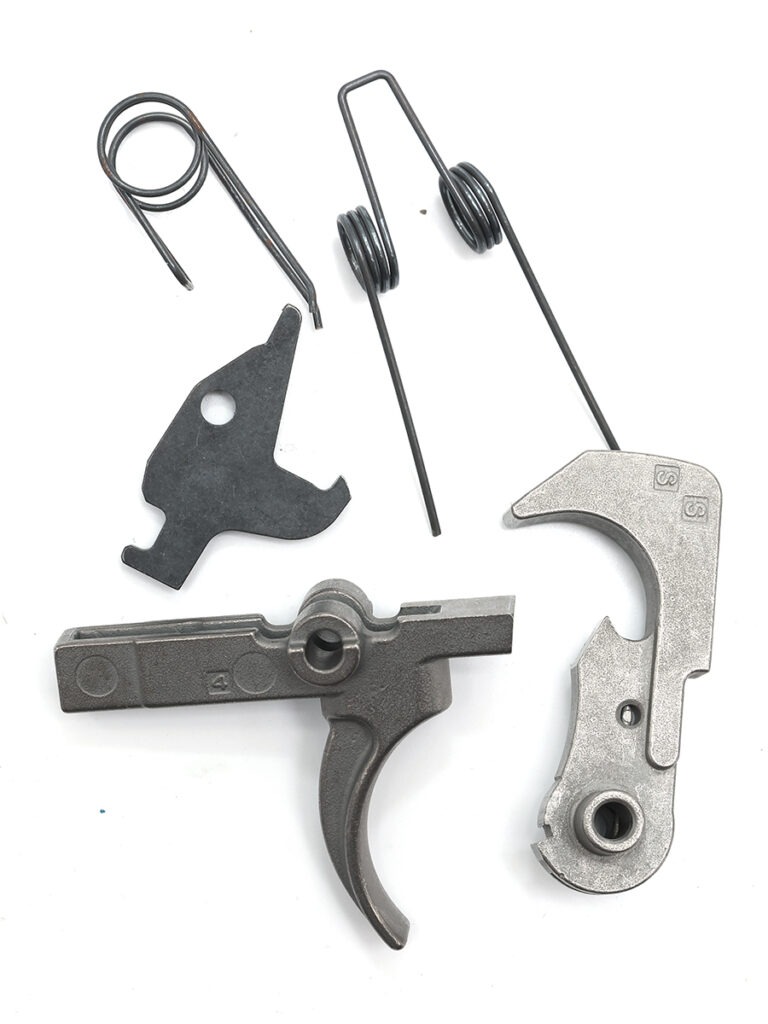
You can have single-stage or double-stack in either packet or parts kits.
You might think this two-stage trigger is the newest, latest and coolest thing to ever come out of an arms company. Well, yes, you’d be right—if you thought that the end of the 19th century was the apex of small arms design. The two-hook arrangement comes to us via John Moses Browning and his excellent Auto-5 shotgun, circa 1898. Since then, it has been used by other designers, including Garand and Kalashnikov.
It’s So Easy
Swapping trigger parts to improve trigger pull is easy: unload, remove the pistol grip, disassemble the lower internals, install the new parts or packet and install the safety as part of this. Check to make sure the safety functions as a block to firing. If it does, reinstall the pistol grip and the safety plunger and spring. (You can do the swap with the pistol grip still on, but it sometimes makes for more work. It’s better to just bite the bullet, take it off and have the freedom to install without hassle or cursing.) If the safety doesn’t block the parts properly, find out why. It may be that your new trigger needs its own special safety—it’s rare, but it happens.
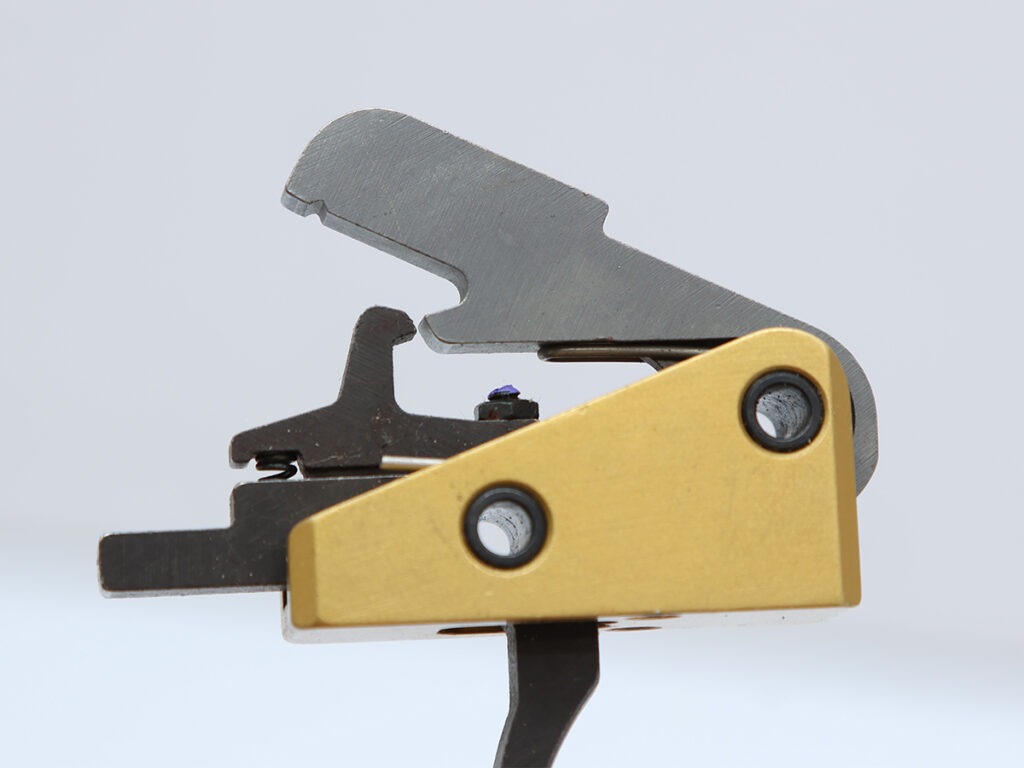
You now have an AR-15 with a nice, clean, crisp trigger, one that will let you shoot up to your skill level.
But Should You?
Next question: Should you? “Of course,” you say.
Sigh.
OK, here it goes. I call on my years of experience in teaching Patrol Rifle in LE classes. At the culmination of the classes, we’d end up on a National Guard base and use the RETS course. This is a computer-controlled, hit-sensitive-targets range with pop-up targets out to 300 meters. In the course of teaching, the instructors all shot the course, repeatedly. (The class specifically required it.) In those years, I never failed to pass the qual course, even with the most wretched trigger, a mil-spec M4 with a trigger pull in the 8-pound range. With that same trigger pull and iron sights, I proceeded to get 20 hits out of 20 targets on the RETS course.
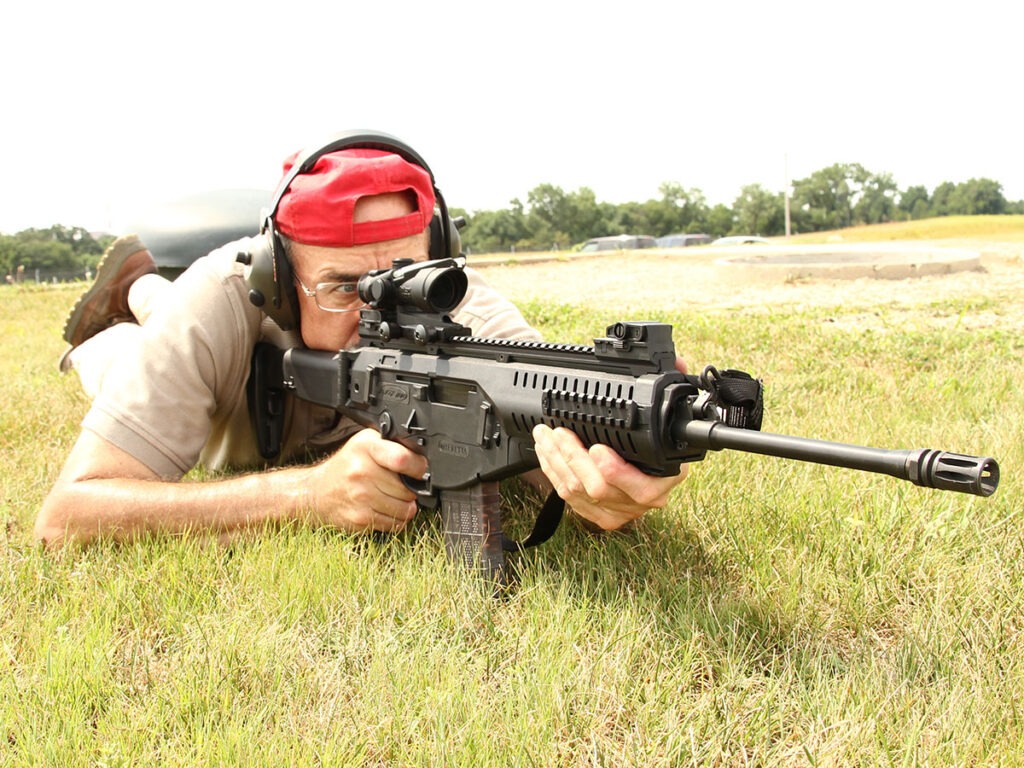
All bragging aside, trigger pull is not the sole determinate of outcomes. You don’t strive for an improved trigger pull to necessarily improve your skills; you do it to beat the other guy on the line you are competing against.
So, competition, cool, improve your trigger.
But, in those same LWE classes, I also saw an interesting (and at times a bit startling) event: ADs. An officer would step to the line to shoot the qual course. He had his new, match-trigger AR-15 in hand. On the commands, he’d be ready. When the “Fire” command was given, there’d be an early shot and a big puff of dust (or plume of mud) halfway downrange. What happened? Simple. In almost every case, we found that the officer had his issued pistol on him, and it was a Glock or some other heavy trigger-pull pistol. He had (this was also a common thread) recently fired his department’s pistol qual course.
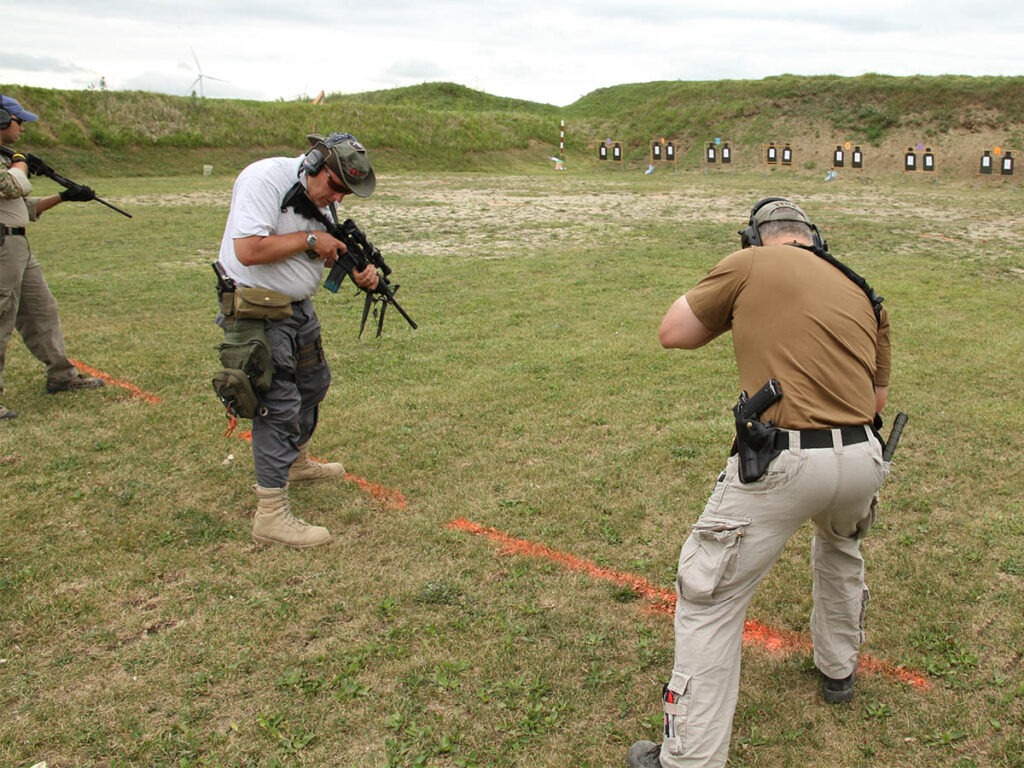
His mind and reflexes had been trained on the heavier, longer, mushier trigger of the Glock (not to pick on them, but they were common). On the fire command, as he raised the rifle, he was already prepping the trigger. Except, the AR-15 would fire halfway through the force, and trigger travel needed to discharge his Glock.
The disparity of trigger pulls created a potential hazard.
What About Handguns?
This leads to the next question: What is your handgun option? If you are in the habit of commonly carrying a pistol with a long, relatively heavy, trigger press, and you’ve shot it thousands of times, do you really want a match trigger on your AR-15? Especially if they are both going to be used for defense? Now, if your pistol trigger is an above-average trigger press, you might consider an improvement in the rifle’s trigger without going the full match trigger route. Changing a rifle trigger from 7 pounds to 5—to match your pistol—is prudent. But if your pistol is 7 pounds or more (not uncommon), adding a rifle trigger of 3 pounds to the mix is not prudent.
I can see someone who carries a 1911 with a nice trigger on it wanting their AR-15 to match. Conversely, if your daily carry pistol is a Glock (or other striker pistol) with the factory trigger parts and pull, you might be best served by sticking with the original AR parts. I know I say it perhaps too often but this is America, you have choices. Just make them wise ones.
Editor’s Note: This article originally appeared in the July 2026 issue of Gun Digest the Magazine.
More On Triggers
- Are Competition Triggers For Self-Defense A Good Idea?
- Timney AK Drop-In Trigger Review: Krispy Kalash
- Double-Dipping: Best Binary Trigger Buyer’s Guide
- The Nighthawk Drop-In 1911 Trigger
- Rifle Trigger Upgrades: Flipping The Switch
Next Step: Get your FREE Printable Target Pack

Enhance your shooting precision with our 62 MOA Targets, perfect for rifles and handguns. Crafted in collaboration with Storm Tactical for accuracy and versatility.
Subscribe to the Gun Digest email newsletter and get your downloadable target pack sent straight to your inbox. Stay updated with the latest firearms info in the industry.
