
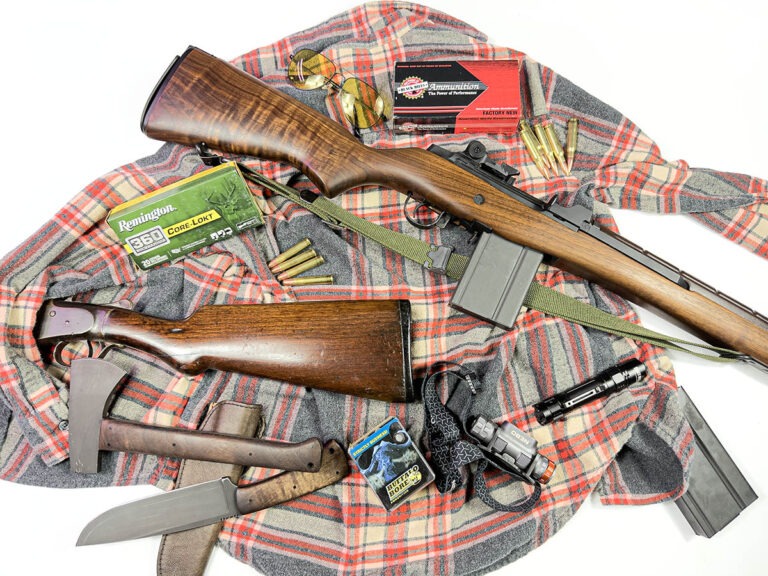
Guns evolve, and here we look at how the saddle carbines of yesteryear have morphed into the brush guns and truck guns of today.
One of the many things we really enjoy doing in our industry is finding excuses to put together new guns for ourselves. Every so often, an existing category pops up with new bells and whistles. It’s usually a little bit wild, and people often take an interest.
Just 10 years ago, the pistols that were commonly available with red-dot optics, lights and built-in compensators were considered exotic, with the concept being dubbed the “Roland Special” after a popular fictional character. Today, those setups are everywhere, and nobody bats an eye.
Another popular class of arms that has grown in the past few years is the “truck gun,” a concept that started with the uniquely American “brush gun,” itself a very wide category.
So, let’s look at brush guns and their derivatives, as well as a common set of myths regarding the category and theory of use.
Brush Gun Origins
Brush guns have something of an interesting history. Based on the research I have committed to this topic, it’s very regional and somewhat culturally diverse. Truck guns, what you could call a modern derivative of the brush gun, occupy effectively the same space that this particular class of arms has for centuries. Effectively, all of these owe their heritage to saddle carbines.
The common theme for all of these is the fact that they are shoulder-fired rifles designed to be compact for mounted use and offer benefits over a handgun for dismounted use.
If you look back into our history, one of the most common elements of the armed American is our habit of moving around with our weapons. America has a very unique relationship with transit and the ideas surrounding it. Something about it calls to our deeper selves, and there is a romance about it. However, that romance is also rooted in inherent risk: Taking the wrong one can often have unknown dangers.
It is the general unknown of the road that leads us to this fear of the unknown. You read the news saying to yourself, “Maybe they wouldn’t have gone missing if they had a gun.”
The roots of American culture are forever founded in frontier expansion. As a people, it’s who we are. And due to the vast nature of our country, we’ve always had a relationship with horses, trains and innovations that necessitated arms that fit our lifestyles … which has continued into the modern era.
The formative brush guns of the 1800s came about as repeating rifles, typically lever actions. These were saddle guns that were fast to deploy and often shared ammunition with a sidearm. This base concept of a fast moving, lightweight, repeating rifle is something that has continued to carry over for us. At the time, however, this was people using the best technology they had; they weren’t coming up with guns with the idea that it would be talked about for 150 years.
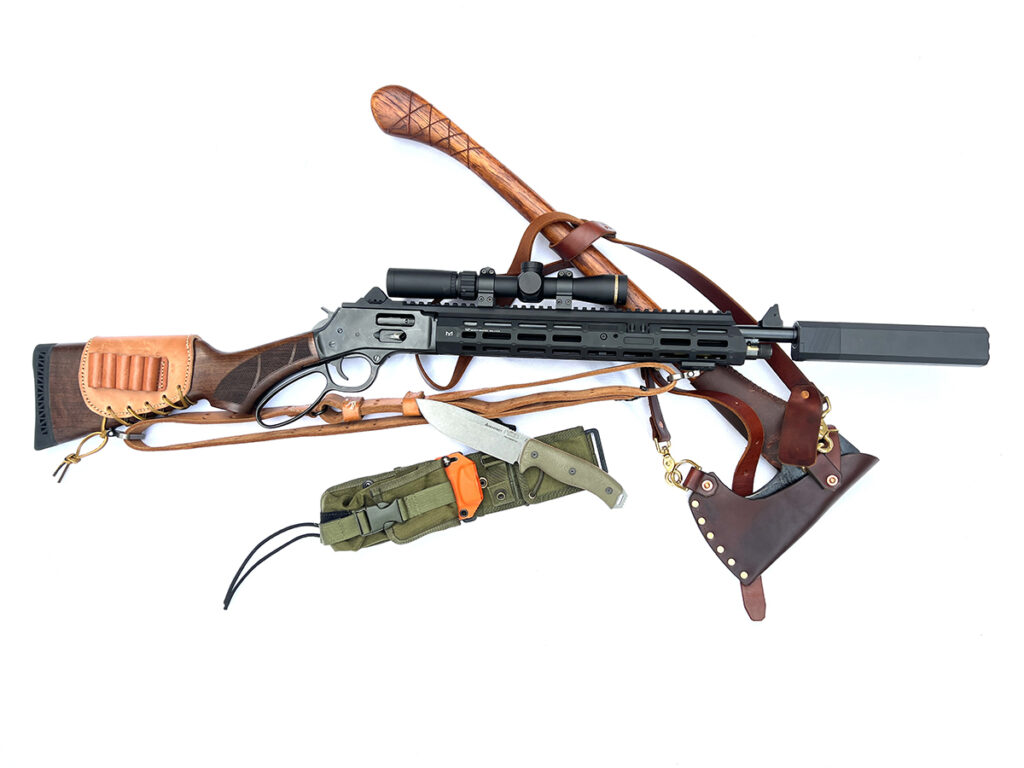
Now, there are a variety of things that should be addressed regarding this topic because our modern brush guns are often considered to be “big bores.” However, back when this technology was first emerging, there wasn’t a great deal of what we would consider to be small-bore center-fire rifles available, and once there was, bore sizes did shrink quite a bit. The .45-70, while always remaining steady, was not until somewhat recently considered to be an ideal brush gun caliber.
Rounds like .30-30 Winchester and other bottlenecked, high-velocity (for the time) cartridges were definitely preferred for heavy cover. Even back in the old days, people liked to have flat trajectories … and that hasn’t changed until recently as we look back, instead of forward, for inspiration.
Whether or not it’s apparent, the brush gun concept is severely outdated, and, today, the utility isn’t backed by any sort of fact other than nostalgia being a valid reason to have fun.
The Evolutionary Tree of Handy Rifles
In general, the distinctive brush gun that we know today is generally considered to be a medium range, big-bore repeating rifle. Truck guns, what you would likely consider the next evolution of “compact American transportation weapon,” is a more linear transition from the original saddle carbine intent. The original brush guns were high tech for their time; the Winchester repeater was state-of-the-art during its day.
Today, truck guns represent that same spirit, usually in the form of SBR-style centerfire rifles with detachable magazines. Most typically, these are chambered in 5.56 NATO, .300 Blackout or 7.62x39mm. It’s less common to find larger rounds, like .308 Win. or 6.5 Creedmoor, in truck guns.
Brush guns have taken on a much more uniform set of features lately. These being lever-action rifles with short barrels, typically in .30-30 Win., .45-70 Govt., .360 Buckhammer, .44 Rem. Mag. and .357 Mag., with the latter being less ideal given a dramatically reduced effective range. There are people, including myself, who argue these are marketing parameters the industry seems set on promoting rather than a distinct subgroup.
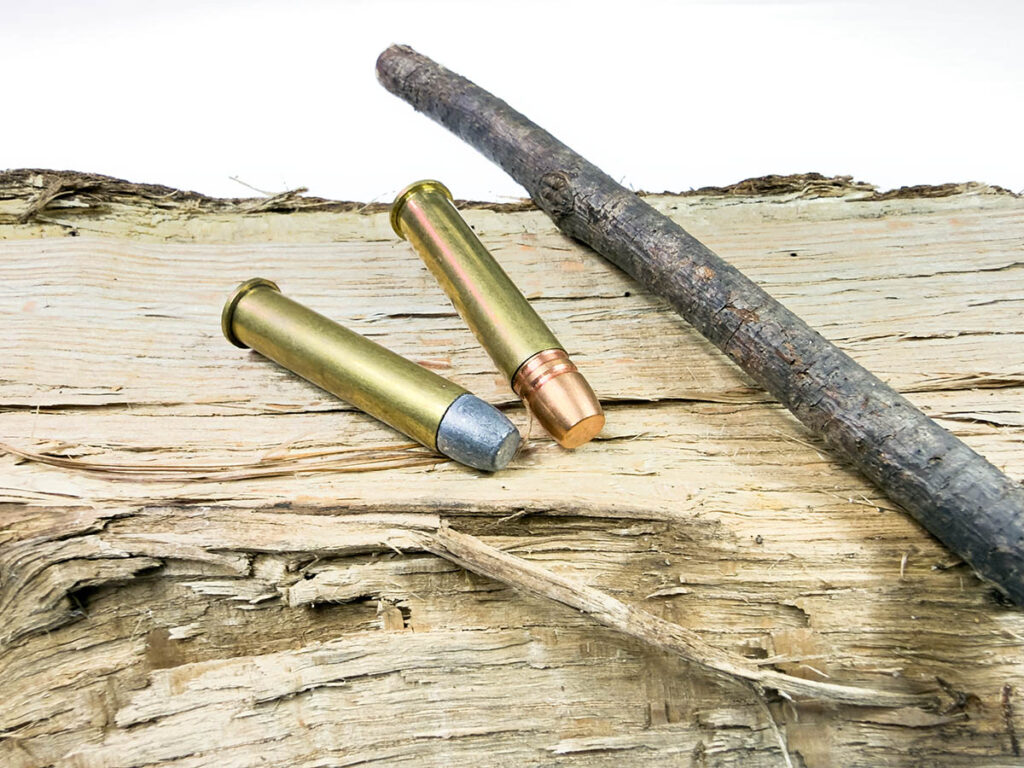
Branding and repeated tropes are being used to define this category, but since there is no strict definition, I want to examine what counts and what doesn’t. Lever guns have become very popular in the last few years, but I remain on the fence about their realistic utility compared to other options.
Brush guns are generally considered to be of big bore and short range, but what’s considered “short range,” and why do they need to have a big bore? What does big bore even mean?
Thirty-caliber isn’t, by common consensus, considered a big bore, yet the .30-30 Winchester is a common option for “brush busting.” Do they need to be intentionally handicapped in power and capacity to fit this definition, or does an M14 count? And, does it need to be a lever action? Lever actions aren’t superior to bolt guns or semi-autos. In fact, I’d argue they are severely inferior by a wide margin on virtually all criteria. Accuracy, capacity, reliability, reloading speed and ease of carrying ammunition are all against them.
Now, factor in that none of these common brush gun chamberings are as effective as .308 Win. or .30-06 at any barrel length. Well, you see where I’m going with this.
So, then, what is considered “medium range?” On man-sized targets, and we’re assuming up to deer-sized game, the effective range of a .30-30 is arguably better than larger bores. Again, .30-30 was very advanced for its day. You can take shots past 300 yards, but it’s more about the setup of the gun than the potential accuracy of the cartridge.
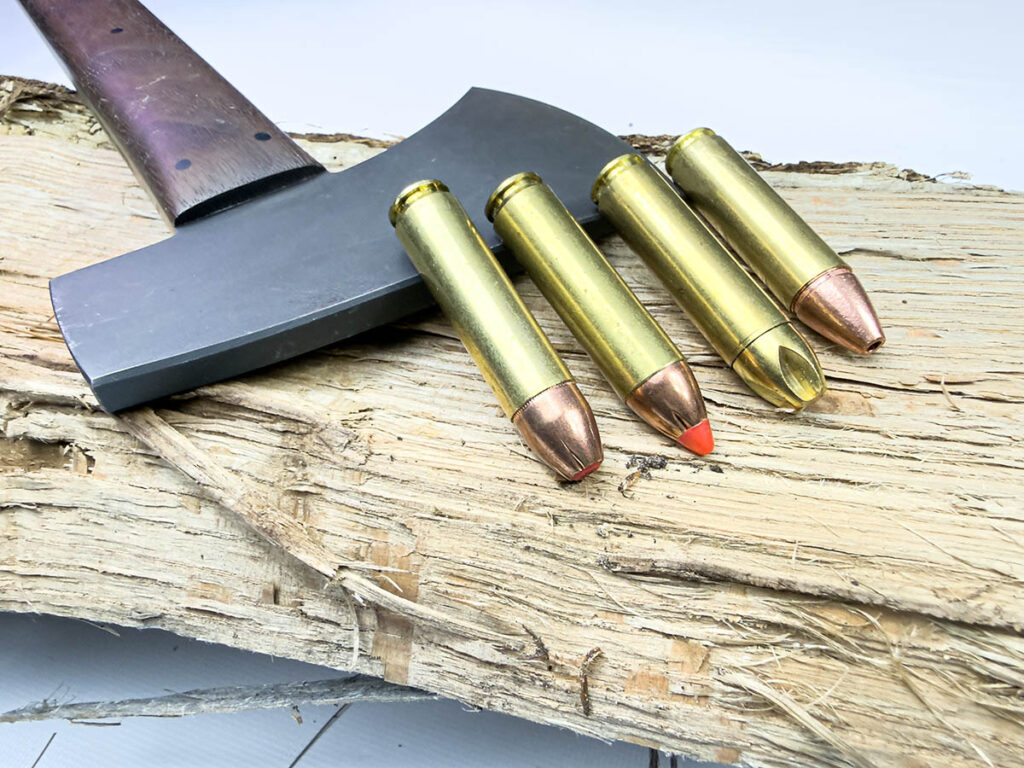
Rounds like .450 Bushmaster and most straight-walled cartridges are usually 200-ish-yard propositions due to their steep bullet drop. Most of these rounds are fine at modest hunting distances, but rounds like .357 Mag. and .44 Mag. are going to struggle past 100 yards. The closer the better for these guys.
Taking our M14 and adding a red-dot optic on a scout rail, we’re effective from zero to 800 yards easily, even more with a magnified optic. Plus, it’s more powerful than most “brush” chamberings with less recoil and greater magazine capacity.
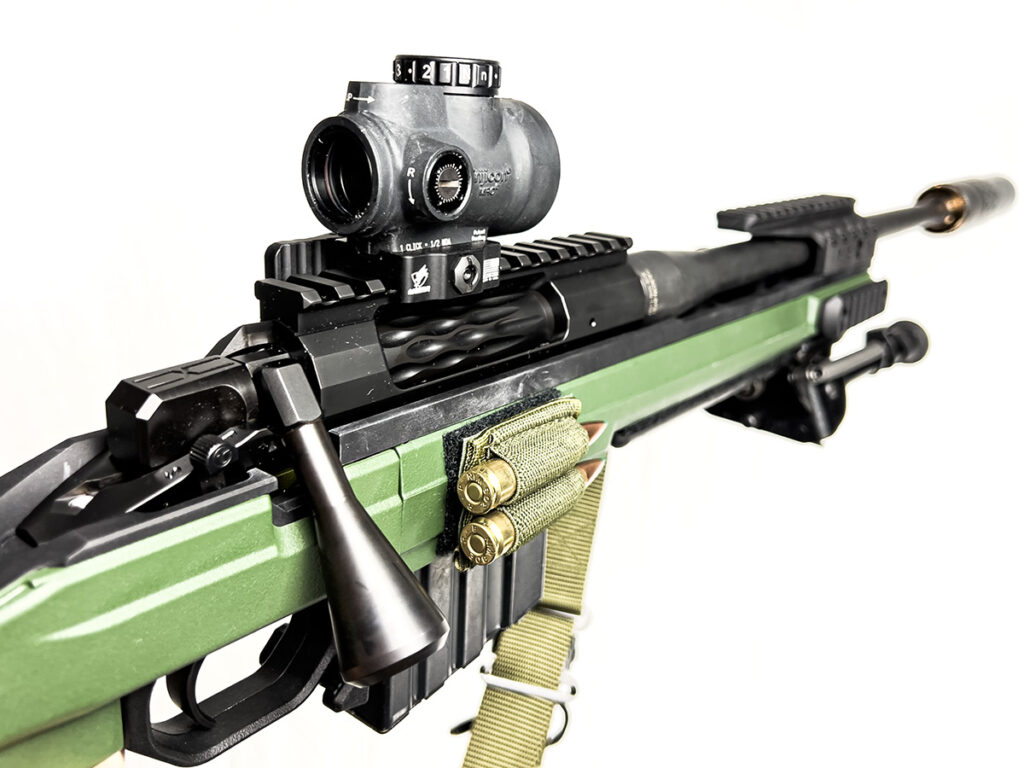
So, if that’s the case, is a traditional brush gun an intentionally bad idea or just dated? I think that there is a missing link in the brush/truck gun narrative … and that is the scout rifle. It has the DNA we’re looking for, but it doesn’t fit neatly into either other category. However, it delivers the best of all worlds—short, light, fast and powerful with good magazine capacity.
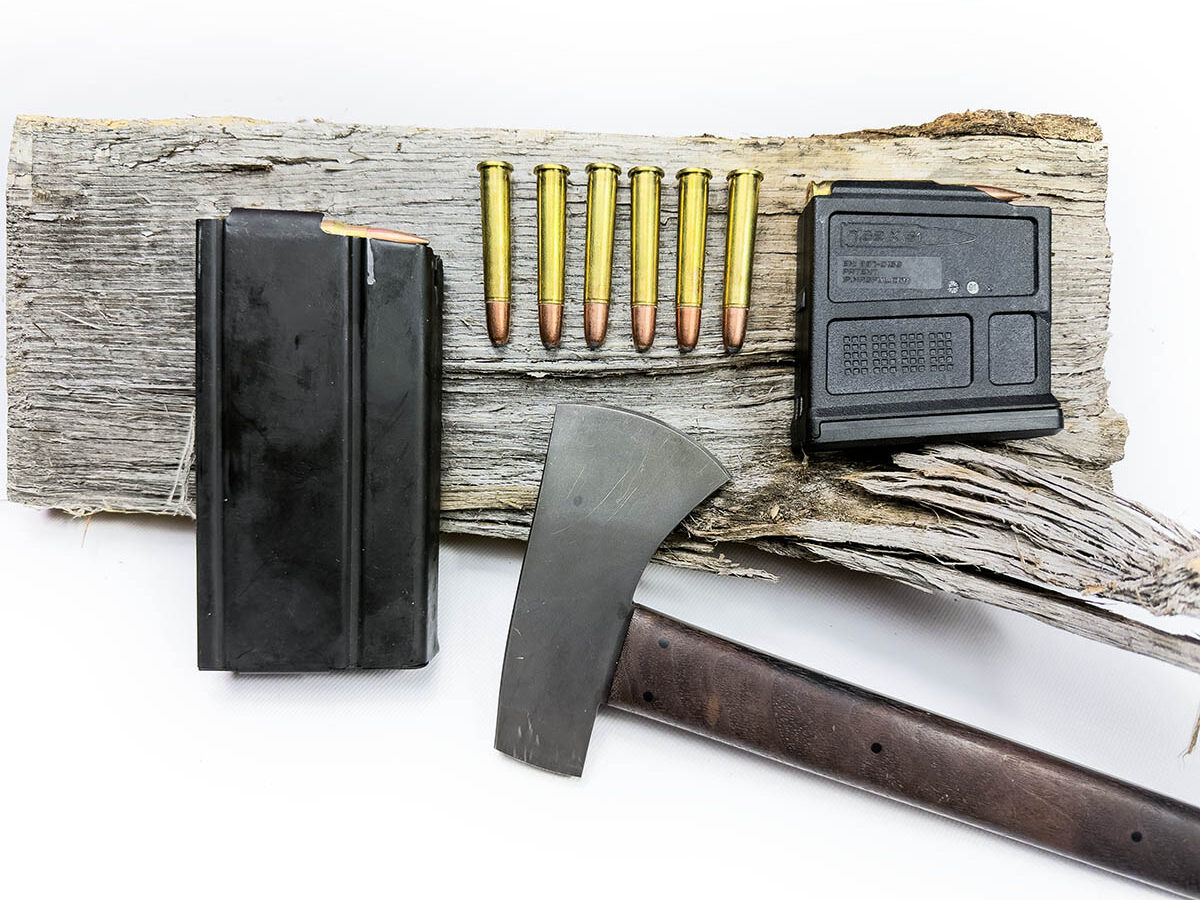
Jeff Cooper’s scout rifle was designed as a set of parameters to create a fantastic all-purpose rifle that could be used for survival, fighting or hunting. While he had his own definitions, the scout concept has evolved since Cooper has gone. Today, it encompasses a variety of rifles in full-power calibers, such as .308 and 6.5 Creedmoor, that offer superior ballistic performance to most anything you’re going to find in traditional lever-action chambers.
Unlike truck guns or brush guns, the scout concept was heavily defined and narrow in scope, but many common brush guns have borrowed scout features due to their effectiveness. I’d say that the brush gun concept is only relevant today because of the known relevance of the scout rifle concept and how those two have intermingled.
Beating the Brush
Brush gun lore has led to something akin to survivorship bias. Back in the old days, people just used what they had. Sporting rifles from generations back typically consisted of lever-action platforms because that’s simply what was available and what people thought they needed at the time. Because we live in a time where we’re actively resurrecting models of old guns and revisiting these concepts in an attempt to modernize them, we simply cannot break away from what is believed to be historical precedent.
The modern lever action, as the base of the brush gun category, is an anachronism. There have been better options for generations, yet people continue to buy marketed brush guns because they are led to believe that they are better in the brush. Again, there is absolutely no factual basis for this whatsoever.
While this might surprise you, brush guns are not better in the brush. Larger bullets do not deflect through foliage or brush any better than smaller bores. In general, in my own testing, I have discovered just the opposite. The takeaway that I have is that there is no such thing as a gun that is good in the brush. There is also no such thing as thick or thin foliage; it’s all foliage and will cause bullets to deflect.
Now, if you want to get into the weeds on this topic, even grass and leaves can divert a bullet’s trajectory. There was a good amount of discussion on this topic, although it’s somewhat dated now, that took place during the Vietnam era. There were attempts to create projectiles that did better through foliage, but the short version of this story is that shotguns with nail-like flechettes tended to do well at close range. There’s no real conclusive evidence I’ve seen that says the military ever arrived at a conclusion for rifles and machine guns.
The M193 cartridge does indeed perform poorly in very thick vegetation—this much is true from the issues had by soldiers using it in the jungle. The jury, however, is out on if the larger 7.62mm rounds did any better or worse.
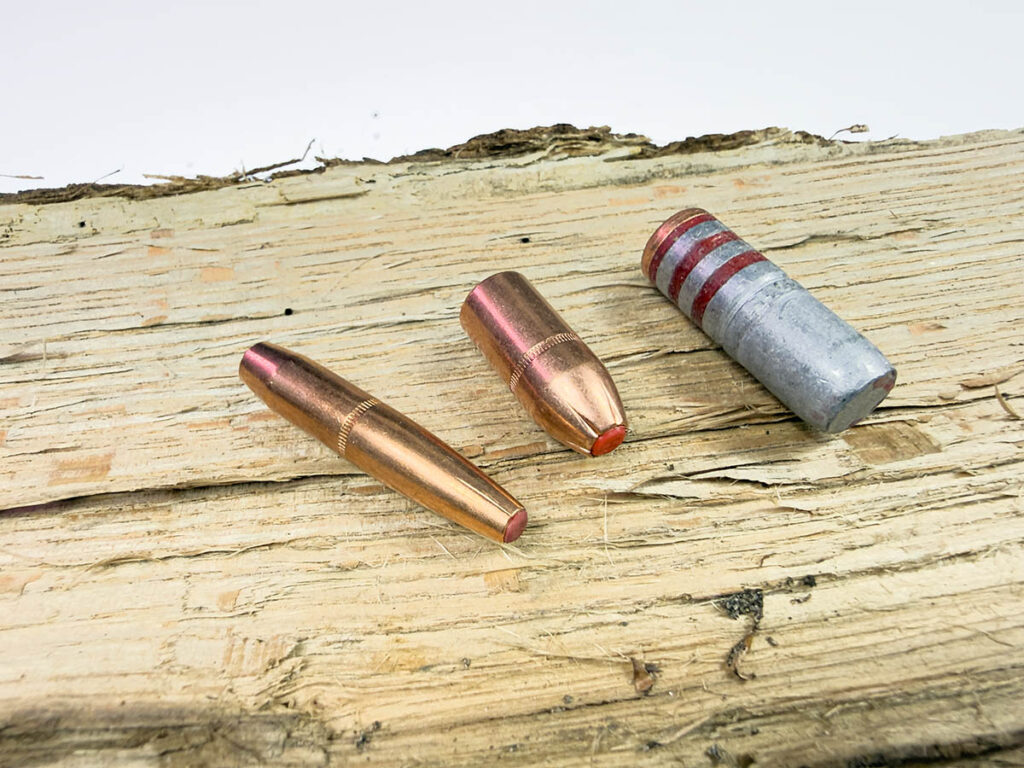
One of the conclusions that I have come to is that velocity and bullet shape matter quite a bit, with mass playing a secondary role. Bullets moving at speeds over 2,500 fps and of .30-caliber tend to be the best. The 175-grain .308 Winchester is, in my experience, the most effective at avoiding significant deflection in brush; the 6.5 Creedmoor and .30-06 are also quite good.
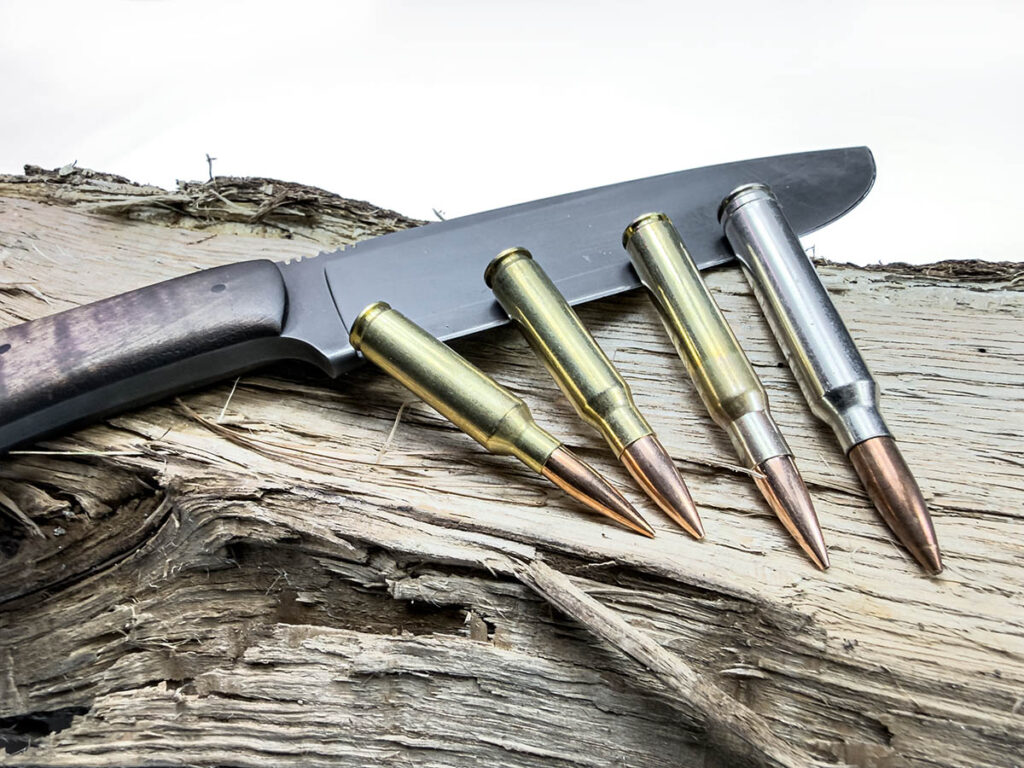
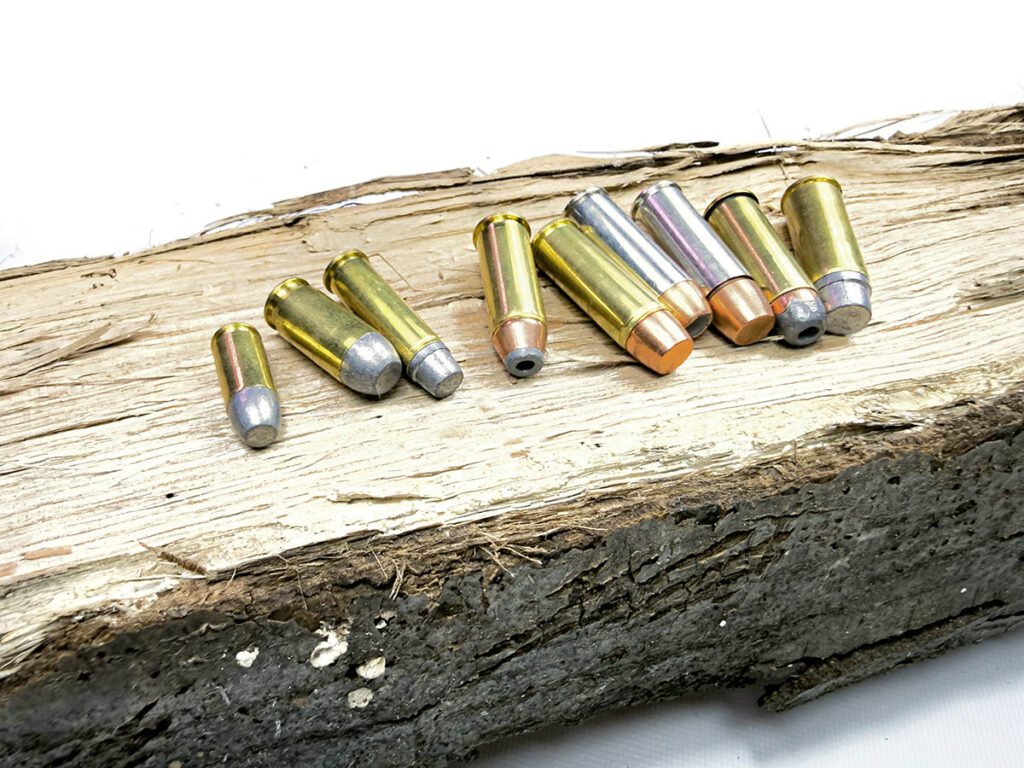
Testing handgun cartridges in brush is again sort of pointless. I will say that there aren’t many, if any, good ones. Velocity is not on the side of any handgun cartridge.
No Right Answers
Because our country is so vast, every region is going to have a firearm solution that makes the best sense for them. Here in Michigan, I’m limited to straight-wall cases for most of my fieldwork, and these cartridges are at a pretty severe disadvantage against bottlenecked cases. What you keep handy should fit what adventures you plan on having … and what dangers may be waiting for you.
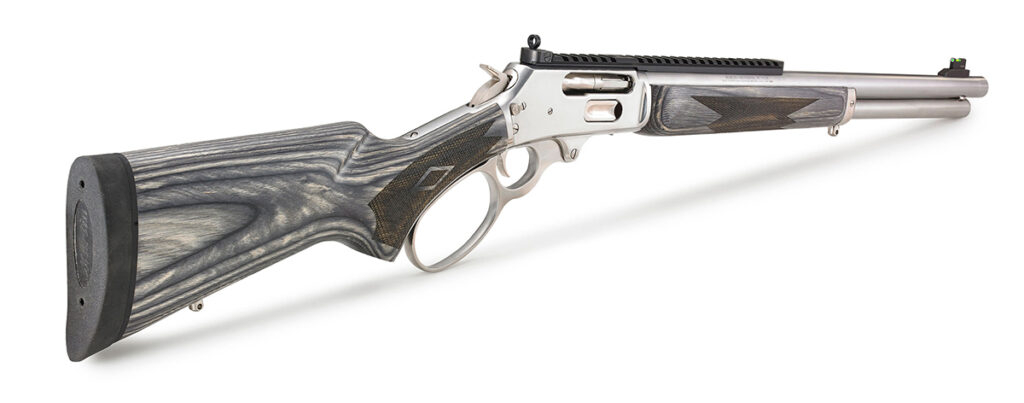
Either way, the brush gun, truck gun and scout rifle all have unique ties to our culture, and there are happy mediums across all categories. The silver lining is that you can define what you need, be it in your saddle scabbard or the backseat of your F-150.
The Author’s Top Brush Guns
As you might’ve gleaned from this article, I’m a big fan of maximizing potential. My number one brush gun would be an M14-type rifle with a forward scout rail. You can whip up your own or get a version of this from places like Fulton Armory or Springfield Armory. In my testing, the .308 Win. showed to be one of the better options working in cover. The rifle itself is lightweight and fast handling, can be loaded by stripper clips from the top if necessary … and has very little recoil.
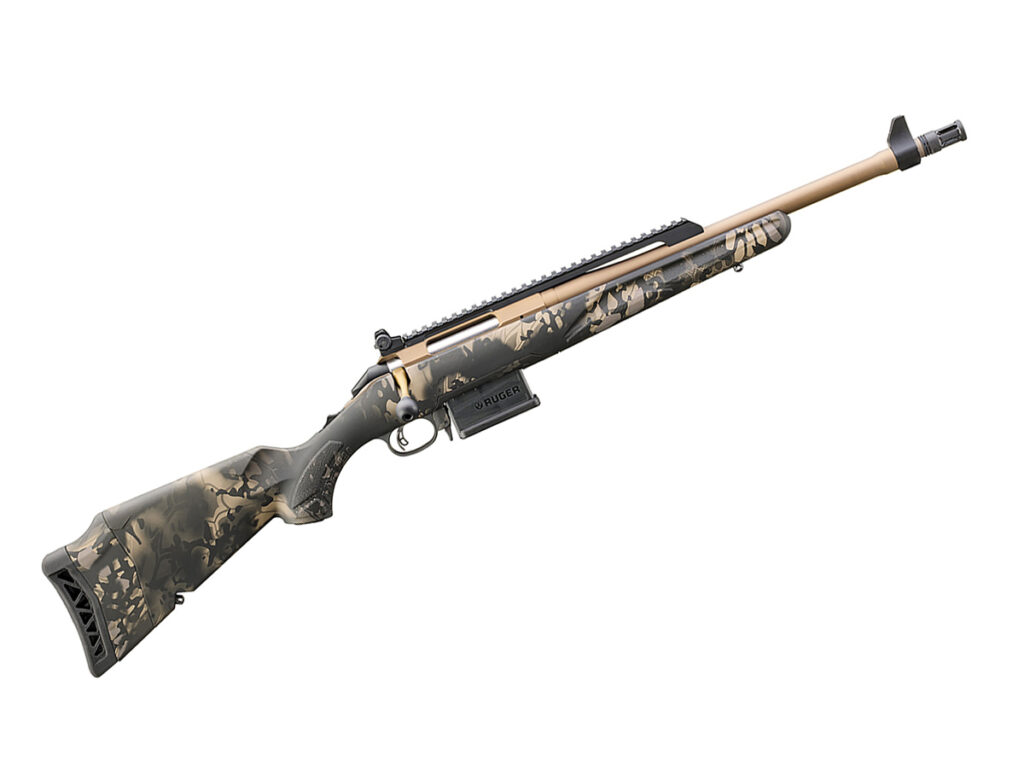
Ruger’s Scout rifle series, including their newest generation, offers a wide range of handy features, reliable feeding and a large number of chamberings. Their original Scouts are still highly desirable and offer virtually all the features important to Cooper. Marlin, now under Ruger, offers a wide range of lever-action rifles suitable as brush guns, scout rifles and truck guns.
Editor’s Note: This article originally appeared in the May 2026 issue of Gun Digest the Magazine.
More Compact Guns For Defense
- The Best MP5 Clone Buyer’s Guide
- Journey To An SBR: Getting Started With The NFA
- MKE AP5SD Review
- The Springfield Armory Kuna
- The KelTec KP50
Next Step: Get your FREE Printable Target Pack
Enhance your shooting precision with our 62 MOA Targets, perfect for rifles and handguns. Crafted in collaboration with Storm Tactical for accuracy and versatility.
Subscribe to the Gun Digest email newsletter and get your downloadable target pack sent straight to your inbox. Stay updated with the latest firearms info in the industry.


I lived and worked in Alaska for about 12 years as a geologist. I had a brush gun/bear gun that was purchased so that I had a weapon that I could carry and use in thick, heavy brush. It was a 12 gauge S&W shot gun (using 1 1/4 ounce slugs) with a folding stock and a pistol grip. When in thick brush, I would fold the stock and have it slung across my chest. I could work my way through thick brush without it snagging and yet be able to get it up and fire from the waist if I were to have a close encounter with either a black bear or grizzly. Thankfully I never had to use my ‘brush’ gun.